
7
Defining Key Variabilities and Uncertainties
Estimating potential human exposures to and health effects of radon in drinking water involves the use of large amounts of data and models for projecting relationships outside the range of the observed data. Because the data and models must be used to characterize population behaviors, engineered system performance, contaminant transport, human contact and dose-response relationships among different populations in different geographic areas, large uncertainties and variabilities are associated with the resulting risk characterization. In this chapter, the committee evaluates the importance of and methods for addressing uncertainty and variability that arise in the process of assessing multiple-route exposures to and health risks associated with radon. The data, scenarios, and models used to represent human exposures to radon in drinking water include at least five important relationships:
- The magnitude of the source-medium concentration, that is, the concentration of radon in the water supply or in ambient air.
- The contaminant concentration ratio, which defines how much a source-medium concentration changes as a result of transfers, transformation, partitioning, dilution, and so on before human contact.
- The extent of human contact, which describes (often on a body-weight basis) the frequency (in days per year) and magnitude (in liters per day) of human contact with a potentially contaminated exposure medium.
- The duration of potential contact of the population of interest as related to the fraction of lifetime during which an individual is potentially exposed.
- The averaging time for the type of health effects under consideration; for example, the appropriate averaging time could be a cumulative duration of expo-
- sure (as is typical for cancer and other chronic diseases) or it could be a relatively short exposure period (as is the case for acute effects).
On the basis of those five relationships, figure 7.1 illustrates the steps of the risk-assessment process for multimedia human exposure to radon. The emphasis in the figure is on the outcome calculated at each step and the types of data needed to calculate the outcomes.
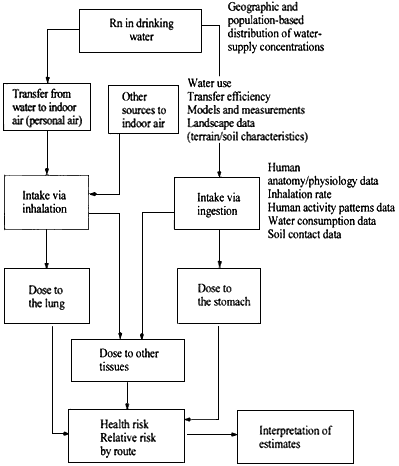
Figure 7.1
Steps of risk-assessment process for multimedia human exposure to radon, with emphasis on outcome calculated at each step and types of data needed to calculate outcomes.
This chapter begins with an overview discussion about factors that determine the reliability of a risk assessment and a discussion of methods for characterizing and evaluating the uncertainties in a risk assessment. Next is a summary review and evaluation of the uncertainty analysis for drinking-water radon that was carried out by the Environmental Protection Agency. That is followed by the committee's consideration of the steps of the risk-assessment process described in earlier chapters and of how uncertainty and variability apply to the assessment and the extent to which they can be quantified. Particular attention is given to the importance of uncertainty across the entire process of characterizing the unmitigated risk associated with radon in drinking water and the risk reduction achieved by various technologies used to reduce radon levels in water supplies.
Reliability Of A Health-Risk Assessment
To identify factors that affect the reliability of radon risk assessment, the committee reviewed the scientific literature, recommendations from other National Research Council studies, and findings reported by such organizations as the International Atomic Energy Agency (IAEA), the National Council on Radiation Protection and Measurements (NCRP), and the Presidential/Congressional Commission on Risk Assessment and Risk Management. According to IAEA (1989), five factors determine the precision and accuracy, that is, the reliability, of a risk characterization: specification of the problem (scenario development), formulation of the conceptual model (the influence diagram), formulation of the computational model, measurement or estimation of parameter values, and calculation and documentation of results, including uncertainties. In such a framework, there are many sources of uncertainty and variability—including lack of data, natural-process variation, incomplete or inaccurate data, model error, and ignorance of the relevant data or model structure.
The magnitude of human exposure to toxic agents, such as radon, often must be estimated with models that range in complexity from simple heuristic extrapolations from measured trends to large-scale simulations carried out on large computers. Regardless of its complexity, any model can be thought of as a tool that produces an output, Y, such as exposure or risk, that is a function of several variables, Xi, and time, t:

The variables, Xi, represent the various inputs to the model, such as radon concentration in water, and the transfer factors between water and air. Uncertainty analysis involves the determination of the variation or range in the output-function values—that is, risk values—on the basis of the collective variation of the model inputs. In contrast, a sensitivity analysis involves the determination of the changes in model response as a result of changes in individual parameters. An approach to express the combined impact of uncertainty and variability more
fully is to perform a two-dimensional Monte Carlo simulation consisting of an inner set of calculations embedded within an outer set. That was first described by Bogen and Spear (1987).
One of the issues that must be confronted in uncertainty analysis is how to distinguish between the relative contributions of variability (heterogeneity) and true uncertainty (measurement precision) to the characterization of predicted outcome. Variability refers to quantities that are distributed empirically—such factors as rainfall, soil characteristics, weather patterns, and human characteristics that come about through processes that we expect to be stochastic because they reflect actual variations in nature. These quantities are inherently random or variable and cannot be represented by a single value, so we can determine only their characteristics (mean, variance, skewness, and so on) with precision. In contrast, true uncertainty, or model-specification error (such as statistical estimation error), refers to an input that, in theory, has a single value, which cannot be known with precision because of measurement or estimation error.
Uncertainty in model predictions arises from a number of sources, including specification of the problem, formulation of the conceptual model, estimation of input values, and calculation, interpretation and documentation of the results. Of the factors that determine precision and accuracy, only uncertainties due to estimation of input values can be quantified in a straightforward manner on the basis of variance propagation techniques. Uncertainties that arise from mis-specification of the problem and model-formulation errors can be assessed using less straightforward processes, such as decision trees and event trees based on expert opinions. In some cases, using such methods as meta-analysis, model-specification errors can be handled with simple variance-propagation methods.
Environmental Protection Agency Process For Assessing And Evaluating Uncertainties In Radon Risk
In support of its proposed rule for radionuclides in drinking water, EPA has developed estimates of the cancer risk associated with radon in drinking water. The risk arises from multiple exposure pathways, including the direct ingestion of water that contains radon, the inhalation of indoor air that contains radon some of which has volatilized from water used in the home, and the inhalation of radon progeny that are introduced into indoor air as a result of radon decay. Because exposure and dosimetry are different for each pathway, EPA has estimated the risks associated with radon in drinking water by calculating the risk for each pathway separately and then combining risk to obtain the total risk related to all pathways. In an earlier risk assessment (EPA 1995), EPA estimated the total (all-pathways) average lifetime risk to the US population posed by radon in drinking water as 6.6 × 10⁻⁷ per picocurie per liter of radon in water.
After the risk estimates were performed, EPA obtained new data on radiation dosimetry that required revision of the estimates for radon in drinking water. The
new data included a National Research Council re-evaluation of the relative dosimetry of radon decay products in mines and homes (National Research Council 1991b). On the basis of the new data, the total (all-pathways) lifetime risk estimate for radon was changed to 7 × 10⁻⁷ per picocurie per liter. Although the total risk by pathway did not change substantially, the allocation of risk contributed by each pathway did. However, perhaps a more important component of the revised risk numbers was the inclusion of a detailed uncertainty analysis (EPA 1995). Appendix F provides the committee's summary and evaluation of the EPA uncertainty analysis. Our focus is on how the explicit analysis of uncertainty and variability can influence the process for setting standards and for setting priorities for intervention and future research.
In reviewing the EPA uncertainty and variability analysis, the committee found that the EPA approach demonstrated innovative methods and consistency with emerging policies, and provided an adequate characterization of the uncertainty in cancer risk factors. However, our analysis of and proposed revision in the risk models will result in changes in both the magnitude and the uncertainty ranges of some of the parameters in the EPA model. In particular, the magnitude of the risk associated with radon ingestion has been lowered in the committee's analysis, but the resulting uncertainty range is contained within the uncertainty range used by EPA (1995).
Although the EPA analysis was an important initial effort at uncertainty assessment, results of that analysis can be misleading. In particular, because the variability in the risk-per-dose factors cannot be specified, the variability in risk derived from this analysis includes only variability in exposure and not the actual variability in cancer risk among the population. Moreover, in reviewing the EPA models and uncertainty analysis, the committee observed that implicit in the development of this model is the assumption that the risk factor is independent of variability in the unit dose factor. That assumption requires that the radon-gas dosimetry be independent of the breathing rate—an assumption that is not consistent with the key issues of inhalation dosimetry described in chapter 5 of this report.
The committee had a particular interest in the radon-ingestion risk model because the ratio of ingestion risk to inhalation risk is an important component of the multimedia approach to radon risk management. The committee observed that the EPA risk assessment used an appropriate approach to obtain the uncertainty factor for the population cancer risk associated with ingestion of radon in water. EPA assigned a geometric standard deviation of 2.4 to the risk factor for ingestion-cancer risk. That implies that there is a 68% likelihood that the actual risk factor is within a range of roughly 2.4 times lower to 2.4 times higher than the estimated risk and a 95% likelihood that the actual risk factor is within a range of roughly 6 times lower to 6 times higher than the estimated risk factor. That uncertainty range reflects parameter uncertainty associated with the risk model used by EPA. However, the model is constrained by the assumption that radon is
instantaneously and uniformly distributed in the stomach after ingestion. The uncertainty range in the EPA results does not appear to reflect the bias and uncertainty associated with this assumption. Nevertheless, the 95% confidence interval of the uncertainty range developed by the committee for this report (in chapter 4) is essentially contained within the 99% confidence interval suggested by the EPA results. This reveals that the EPA did not underestimate their confidence interval. However, this committee's uncertainty range is at the lower bound of the EPA range, suggesting the likely upward bias of the EPA risk estimate.
The EPA risk assessment made no effort to assess the contribution of soil relative to that of water to indoor radon levels. Therefore, the study affords little input to the analysis of how any standard or policies can affect the risk associated with all radon exposures. Uncertainty of the ingestion: inhalation risk ratio is an important factor that was not addressed in the EPA analysis.
Issues In Uncertainty Analysis For Radon
For an agent like radon, which is ubiquitous, total exposure might reflect concurrent contacts with multiple media instead of continuous or multiple contacts with a single medium. Multimedia pollutants give rise to the need to address many types of ''multiples'' in the quantification or measurement of exposure and dose, such as the multiple media themselves (air, water, soil): multiple exposure pathways (or scenarios), multiple routes (inhalation, ingestion, and dermal), and multiple exposure target tissues for dose and effect.
There are many sources of uncertainty and variability in the process of exposure and human-health assessment. The variability and many of the uncertainties cannot be reduced. One common approach to addressing uncertainty in exposure and risk assessments is contrary to the accepted principles of decision-making in the presence of uncertainty. This is the practice of compounding upper-bound estimates as a means of basing decisions on a highly conservative estimate of exposure. Such compounding of upper-bound estimates leaves a decision-maker with no flexibility to address margins of error, to consider reducible versus irreducible uncertainty, to separate individual variability from true scientific uncertainty or to consider benefits, costs, and comparable risks in the decision-making process. Because the compounding of conservative estimates does not serve the exposure-assessment process well, there is a growing effort to include uncertainty analyses in the risk assessment process. EPA has taken the latter uncertainty-analysis approach in its risk assessment for radon, and the committee believes that it is important to continue this precedent.
For human populations, total-exposure assessments that include time and activity patterns and microenvironmental data reveal that an exposure assessment is most valuable when it provides a comprehensive view of exposure pathways and identifies major sources of uncertainty. In any issue involving uncertainty, it is important to consider a variety of plausible hypotheses about the world, to
consider a variety of possible strategies for meeting goals, to favor actions that are robust to uncertainties, to favor actions that are informative, to probe and experiment, to monitor results, to update assessments, and to modify policy accordingly and favor actions that are reversible (Ludwig and others 1993).
To make an exposure assessment consistent with such an approach, both sensitivity and uncertainty analyses should be incorporated directly into an iterative process in which premises lead to measurements, measurements lead to models, models lead to better premises, better premises lead to additional but better-informed measurements, and so on. In 1996, the EPA Risk Assessment Forum held a workshop on Monte Carlo analysis. Among the many useful discussions at the meeting was a call for a "tiered" approach to probabilistic analysis, which is iterative and progressively more complex. The need for formal uncertainty analysis and a tiered approach will require the development by the exposure-assessment community of new methods and will put greater demands on the number and types of exposure measurements that must be made. At least three tiers are needed, as follows:
- First, the variances of all input values should be clearly stated, and their effect on the final estimates of risk assessed. At a minimum, that can be done by listing the estimation error or the experimental variance associated with the parameters when these values or their estimation equations are defined. It would help to define and reduce uncertainties if a clear summary and justification of the assumptions used for each aspect of a model were provided. In addition, it should be stated whether the assumptions are likely to result in representative values or conservative (upper-bound) estimates.
- Second, a sensitivity analysis should be used to assess how model predictions are affected by model reliability and data precision. The goal of a sensitivity analysis is to rank input parameters on the basis of their contributions to variance in the output.
- Third, variance-propagation methods (including but not limited to Monte Carlo methods) should be used to map how the overall precision of risk estimates is tied to the variability and uncertainty associated with the models, inputs, and scenarios.
The Committee's Evaluation Of Uncertainties In Risk Assessment Of Radon In Drinking Water
Uncertainties in Molecular Biology of Cancer Induction by Radiation
As discussed in chapter 6, the exposure of human cells to the high-LET radiation from the decay of radon and its progeny initiates a series of events that can lead to lung and other cancers. This series of events is now thought to be well outlined, but the quantitative link between radon concentration in tissues and
cancer risk cannot yet be derived from a quantitative analysis of these processes. Before estimates of cancer risk posed by radon in air and drinking water can be based on quantitative models of biologic and molecular processes, these models must incorporate such difficult issues as individual and subpopulation variations in susceptibility. However, because of the large number of variables involved in such models, and the lack of detailed understanding of each step in the process, the models are still far too difficult computationally to be used for radiation risk assessment. For the near future, risk estimates must be based on current quantitative epidemiologic relationships between numbers of cancers and exposure in selected high-exposure populations. Neither this committee nor the BEIR VI committee has made risk estimates based directly on the emerging biophysical and cellular models.
However, the study of molecular and cellular mechanisms of radiation-induced cancer brings to the risk assessment process important insights about the nature and magnitude of the uncertainties associated with the dose-response models discussed in this report. In particular, the introduction of biophysical cellular models to the risk assessment process reveals both the limited reliability and potential bias of the existing risk assessment models. Biophysical models relate the amount and persistence of biological damage to factors such as radiation tracks, total doses and dose rates, damaged sites in DNA, and DNA breaks and their rejoining. These models can be used to explore inverse dose-rate effects and some of the age-variation in effects. Cellular models focus on changes in cell cycles, proliferation kinetics, cell killing, cell regulation, and other processes that alter the path from radiation deposition to cancer incidence. Although still in the early phase of development, these models may eventually be used to explore variations in susceptibility associated with age, gender, and other genetic characteristics. Nevertheless, these emerging models and the mechanisms of action being studied by radiation biophysicists have provided this committee and others guidance for estimating the uncertainties associated with dose-response functions. Perhaps the most important insight is the recognition of the uncertainty regarding the relevance of the population used to develop a dose-response model. Radon risk derived from a particular population, such as survivors of the atomic bombings of Hiroshima and Nagasaki or miners, cannot necessarily be used directly to estimate risk for a different population such as the US population exposed to radon. This inability to transfer the risk estimates occurs because radiation-induced cancer risk is a function of the underlying spontaneous-cancer incidence (see for example National Research Council 1990a). Average risk estimates are obtained from epidemiology studies that can detect radiation-induced effects in large groups. The problem of extrapolating from one population to another is often dealt with by assigning an appropriate uncertainty interval to the risk estimates. To assign appropriate uncertainties, however, there is a need for more detailed data for which the distribution of risks among individuals can be determined.
Uncertainty in Ambient Radon Levels
With regard to uncertainty and variability about radon levels in ambient air and groundwater, there are several key questions, including:
- What is the variation of radon levels in soil, groundwater, and drinking water in the United States? Not only must consideration be given to variation but also to how reliably it can be characterized on the basis of the number and geographic extent of the available measurements.
- What is the distribution in the US population of radon levels in water supplies and in the soil adjacent to residences? The issue here is to develop population-weighted distributions of radon levels in soil, indoor air, and in water supplies. Of particular importance is the joint distribution of radon levels in soil and water at the high end of their respective distributions. Because such joint probability distributions are not well characterized, constructing them involves judgment, assumptions, and approximations that will introduce uncertainty.
National data on indoor radon, radon in water, and geologic radon potential indicate systematic differences in the distribution of radon across the United States. From geologic-radon potential maps and from statistical modeling of indoor radon exposures, it is clear that the northern United States, the Appalachian and Rocky Mountain states, and states in the glaciated portions of the Great Plains tend to have higher than average indoor radon (see chapter 2).
Available data on radon in water from public water supplies indicate that higher concentrations of radon in water occur in the New England, Appalachian, and Rocky Mountain states and in small areas of the Southwest and Great Plains. Available data also indicate that small water supplies have higher average radon concentrations than large ones. The reasonable agreement of water concentration variation among the various studies suggests that the Longtin (1990) data used by EPA (1995) are adequate for representing variations in water-supply radon concentrations.
The ambient concentration of radon outdoors varies with distance and height from its principal source in the ground (rocks and soil) and from other sources that can locally or regionally affect it, such as bodies of water, mine or mill tailings, vegetation, and fossil-fuel combustion. However, diurnal changes due to air stability and meteorologic events account for most of the variability. As reported in chapter 2 of this report, the committee does not believe that the available data are sufficiently representative to provide a population-weighted annual average ambient radon concentration. From the available data, the committee has obtained an unweighted average of 15 Bq m-3 with a standard error of 0.3 Bq m-3. The committee recommends this value as the best available national average ambient concentration. In reviewing all the other ambient-radon concentration data that are available for other specific sites, the committee concluded
that the average ambient radon concentration would most likely be 14-16 Bq m-3. Thus, it is the committee's recommendation to treat the value of the average ambient radon concentration as being represented as a uniform distribution of range 14-16 Bq m-3 with a most probable value of 15 Bq m-3.
Variability and Uncertainty in Transfer Factors
The committee considered and re-evaluated the variability in the transfer of radon gas from water to indoor air. Assessing the increment of airborne radon in a home that arises from the use of water that contains dissolved radon is a problem that involves both uncertainty and variability. It involves the solubility of radon in water, the amount of water used in the home, the volume of the home, and the home ventilation rate. The amount of radon from the water is not constant throughout a home, but is higher in areas of active water use, such as bathrooms and kitchens. Table 7.1 summarizes the recommended values of the transfer factor and the parameters used to construct it.
The resulting geometric mean value is 5.5 × 10⁻⁵ or 3.9 × 10⁻⁵ with a geometric standard deviation (GSD) of 3.5. These values can be compared with those of Nazaroff and others (1987) who reported a geometric mean of 6.5 × 10⁻⁵ and a GSD of 2.8, and EPA (1995), which reported a geometric mean of 6.5 × 10⁻⁵ and a GSD of 2.9. There was reasonable agreement between the geometric mean of the transfer coefficient estimated by the model and the estimated value calculated from the measured data. The average of the measurements was 8.7 × 10⁻⁵ with a standard error of 1.0 × 10⁻⁵. With the modeled geometric mean ventilation of 1.07 air changes per hour, the calculated transfer coefficient is the same value as the measurements. However, if we use the estimate of the geometric mean of the ventilation rate of 0.77, the resulting estimate of the transfer coefficient is 1.2 × 10⁻⁴. The committee feels that there are problems with both the measurements of the transfer coefficient and the measurements that are the input values into the model. The committee recommends that EPA continue to use 1.0 × 10 -4 as the
Table 7.1
Parameters of the Lognormal Distributions for the Parameters in the Transfer-Factor Calculation
|
|
Committee's Values |
|
|
Parameter |
Geometric Mean |
Geometric Standard Deviation |
|
House volume per occupant, m3 person-1 |
115 |
2.0 |
|
Ventilation rate |
0.77 or 1.07 |
2.3 |
|
Transfer efficiency |
0.52 |
1.3 |
|
Water use per capita, m3 person-1 hr-1 |
9.4 10-3 |
1.8 |
|
Transfer coefficient |
5.5 × 10⁻⁵ or 3.9 × 10⁻⁵ |
3.5 |
best central estimate of the transfer coefficient that can now be obtained. Further, because of the uncertainty in the value of the ventilation rate and its distributional characteristics, the committee recommends that the transfer coefficient be assumed to be in the range 0.9-1.2 × 10⁻⁴. The committee is not assigning a specific uncertainty to the central estimate, but rather suggesting that it has the highest likelihood of lying within this range.
Those are not particularly large changes, suggesting that because the parameters have remained stable even as the amount of data relating to the transfer factor has increased, the uncertainty might now be lower than that suggested by the EPA analysis (EPA 1995). Further studies on transfer factors will not reduce the uncertainty substantially. The committee did not find a compelling need to go to a three-compartment model; it is not particularly more effective in characterizing either the uncertainty or the variability of the transfer-factor calculation.
An important issue is the integration of the dosimetry model with the model of radon-progeny buildup in the bathroom and in the rest of house volume after water uses. More studies on the buildup and distribution of radon progeny will have much more importance with regard to the overall uncertainty in the link between the concentration of radon in water and inhalation dose. These issues have been discussed in more detail in chapter 5.
One important issue regarding the transfer factor is the question of whether there is a correlation of the distribution of variability and uncertainty in the transfer factor with the distribution of ambient radon levels. For example, there is a need to consider further whether there is a joint occurrence of high radon-in-water levels with geographical regions with high temperature so that both increased tapwater intake and higher radon-in-water concentrations might correspond. Similarly, there is the question of whether high radon-in-water levels occur in regions with low annual temperatures and more tightly sealed homes so that the high radon levels in water would yield to the higher water-to-indoor-air transfer factors.
Inhalation Risk per Unit of Radon-in-Water Concentration for Inhalation
The committee did not conduct its own detailed uncertainty analysis for the risk model used for radon inhalation. Instead it reviewed the uncertainty analyses that have been carried out previously by EPA (1995) and by the BEIR VI committee (National Research Council 1999) to estimate the uncertainties associated with inhalation exposures.
As has been noted by the BEIR VI committee, it is not feasible to conduct a complete quantitative analysis of all potential sources of uncertainty and variability in the estimate of the lung-cancer risk associated with the inhalation of radon and its progeny. A key limitation of such an analysis is the difficulty in enumerating all factors that could influence the lung-cancer risk associated with indoor exposures to radon. An additional limitation is that existing information does not
support a fully quantitative characterization of the uncertainty and variability in some of these factors.
The BEIR VI committee focused its quantitative uncertainty analysis on the population attributable risk (AR) associated with radon. Because the AR is a measure of population risk rather than of individual risk, the variability among individuals was not quantified in the BEIR VI analysis. The uncertainty analysis was applied in BEIR VI to the BEIR VI committee's two preferred models—the exposure-age-concentration model and the exposure-age-duration model. BEIR VI uncertainty factors reflecting only uncertainty in the parameters of the BEIR VI risk models provide the geometric range of uncertainty associated with the BEIR VI model. For males, the ratio of the high to low values in the 95% confidence interval of AR is 2.7 for the exposure-age-concentration model and 2.3 for the exposure-age-duration model. The ratios are similar for females. On the assumption that those uncertainty ranges can be represented by log normal distributions, the BEIR VI committee derived from these ratios a GSD of approximately 1.3 for the exposure-age-concentration model and 1.2 for the exposure-age-duration model. From those results, we select an uncertainty factor of 1.3 to be applied to the inhalation risk factor for situations when the equilibrium factor used by BEIR VI applies.
There remains inadequate information to measure and characterize inter-individual variability in the inhalation-risk models that are available for this study. As a result, the cancer-risk models for inhalation described in the BEIR VI report are characterized only in terms of uncertainty, not of variability. However, when the AR is used as a measure of population rather than individual or subpopulation risk, the inter-individual variability in cancer risk is effectively averaged out in the analysis. A problem arises when population-based risk factors are applied to small populations or individual households (such as a small number of houses with high radon). In such cases, the failure to know the appropriate risk factors for this small population—where interindividual, variability may not average out—constitutes an important uncertainty.
Ingestion Risk per Unit of Water Concentration for Ingestion
One of the important uncertainties in our analysis involved the issue of radon gas behavior in the stomach. During the information-gathering phase of our analysis, the committee heard conflicting information about the potential of inert gases, such as radon, to be transferred from the contents of the stomach through the mucus layer and to the stem cells surrounding the stomach. The extent to which radon is transferred into and through the stomach wall has a large effect on the predicted radiation dose associated with water ingestion. Previous efforts were based on assumptions that either there was no diffusion through the stomach wall or that the entire stomach wall contains radon at the same concentration as the stomach contents (see chapter 4 for more discussion). These bounding as-
sumptions lead to disparate results regarding the estimated risk. To confront this issue of uncertainty better, the committee elected to develop a stomach model that allowed exploration of a range of diffusion conditions in the stomach and a model characterizing the behavior of radon dissolved in blood and body tissues. Once the radon has entered the blood, through either the stomach or the small intestine, it is distributed among the organs of the body according to the blood flow to the organs and the relative solubility of radon in the organs and in blood. Radon dissolved in blood that enters the lung will equilibrate with air in the gas-exchange region and is removed from the body; this model is described in detail in chapter 4 and in Appendixes A and B. The dosimetry model indicates that any radon absorbed in the stomach results in a higher risk per Bq than in the intestines. The need for the new models also arose from the lack of directly applicable experimental observations and from limitations in the extent to which one can interpret results of existing studies. Risk relevant to ingestion of radon in water depends heavily on the extent to which radon penetrates the stomach wall. With the new model, the committee was able to conduct a broader set of sensitivity and uncertainty analyses. The committee notes that limitations in the model structure with regard to the relative locations of the microvasculature structure (and its fractional capture of the diffusing radon) and stem cells are the major sources of uncertainty. The diffusion of radon within the stomach wall was modeled to determine the expected time-integrated concentration of radon at the depth of the cells of risk in the stomach wall. The committee's baseline (or median) estimate is based on a radon diffusion coefficient of 5 × 10⁻⁶ cm2/s. Using this value yielded an integrated radon concentration in the wall that is about 30% of the concentration in the contents of the stomach. Sensitivity and uncertainty analyses with this model helped the committee to bracket the range of risks that could plausibly be associated with ingestion of radon in water. The committee estimated that the diffusion coefficient in the stomach could have a plausible lower bound of 10-7 cm2/s and a plausible upper bound of 10-5 cm2/s (the diffusion coefficient of radon in water). That range of diffusion coefficients results in a median estimate of risk of 2.0 × 10⁻⁹ per becquerel per m3. However, the "no diffusion" and "saturated diffusion" limits in the calculations which were carried out were not intended as realistic limits and thus should not be interpreted as representing the range of uncertainty in the ingestion risk. This range was selected to reflect the current literature, in which some authors believe that diffusion is not a viable mechanism, others avoided the whole issue, and still others endorsed it with the intent of being conservative when setting a radiation-protection quantity. The committee's calculations in the extremes were largely for the purpose of illustrating the significance of this mechanism; that is, they were bounding calculations.
The committee has not carried out a detailed uncertainty analysis for the ingestion-risk model described in chapter 4. However, it has made some subjective judgments regarding uncertainties on the basis of what has been done and
what is now known about this problem. From this review, the committee makes the following observations:
- The literature on inert gases in the stomach clearly supports an assumption that movement into the stomach wall occurs, and diffusion is the probable mechanism.
- Physiologic processes and histologic structures prevent gastric acids from digesting the stomach, and it is reasonable to assume that they restrict to some degree the movement of gases into the wall.
- The basic input data for the calculations of stomach-cancer risk are based on risk factors derived from the Japanese atomic-bomb survivors, and a high background of stomach cancer among the Japanese population is well established. Thus, the Japanese data are transported to the US population with a relative-risk projection model that considers the background rate of stomach cancer in the United States. The incidence of stomach cancer in the US population involves a number of cofactors and has been declining in recent years.
It is the judgment of the committee that the risk of cancer posed by an absorbed dose in the stomach is probably not greater than 2.3 times the best estimate of 1.6 × 10⁻⁹ per Bq m-3 and it is probably greater than this value divided by 5; that is, it is probably between 3.8 × 10⁻¹⁰ to 4.4 × 10⁻⁹ per becquerel per m3. Assuming that these bounding values represent the 80% confidence interval—that is, a 3.3 standard-deviation range of risk, the committee estimates that the uncertainty in this risk factor has a GSD of 2.1, which is lower than the EPA-estimated GSD of 2.4. Thus, the proposed committee model gives an estimate of risk that is about a factor of 3 lower than the EPA median risk estimate and has a lower GSD that reflects uncertainty. Variations in ingestion are incorporated into this estimate of risk, but uncertainties in the nature and magnitude of diffusion processes in the stomach are dominant contributors to overall uncertainty.
Uncertainty and Variability with Regard to Mitigation
A key issue of uncertainty is quantification of the reduction in the level of radiation dose achieved by various mitigation technologies and how this reduction is distributed among the populations at risk. The actual performance of these technologies, compared with what it is assumed to be, is probably an important uncertainty. Variations in performance and reliability might be large and difficult to quantify.
Communication Of Uncertain Risk Information
The decision to expend societal resources to identify, estimate, and manage risk implies a valuation of the risk being controlled. Because of the inherent
uncertainty in risk characterization and risk management, it is important to consider how individuals and societies value uncertain adverse consequences. The committee expects such valuations to be expressed in terms of relative preferences, economic preferences, or ethical constraints. One issue that must be considered when there are large uncertainties in risk estimates is how to communicate this information to the affected public. The committee has found that it is often difficult to find the appropriate language for communicating and discussing uncertainties among ourselves. Thus, it is concerned that this difficulty will be amplified significantly when there is a need to communicate information about uncertainties to the less technically oriented community groups that must make decisions based on relative-risk estimates.
Another National Research Council report, Improving Risk Communication (National Research Council 1989), has reviewed a number of issues related to risk communication. That report provides some discussion regarding the problems of uncertainty and variability in risk communications. It is suggested that it is dangerous to quantitatively describe the uncertainties in risk messages. It is generally not possible to describe the complexity of the uncertainty analysis. However, it should be made available in ancillary documents. A key goal of their recommendations is to help audiences distinguish areas of scientific agreement amid what may appear as vast areas of policy disagreement. Careful delineation of existing scientific uncertainty is that it gives audiences a sense of the degree of scientific consensus and allows them to distinguish minor from major uncertainties. Thus, the description of uncertainties is both an essential and difficult part of the communication of risk to the public.
Communicating successfully with the public and with water utilities concerning the uncertainty of the risks of radon in air and in water, as well as the uncertainties regarding the likely benefits of risk-reduction strategies will require involving those parties in the process much earlier than was done previously. Risk managers have previously viewed risk communication as a one-way, temporal educational process in which experts pronounced and the audience listened and learned. An unsuccessful risk communication effort was blamed on audience failure to assimilate the information and act appropriately.
That unilateral approach is being replaced by a multilateral one as agencies with a communication mission work to involve the audience in planning and execution. Serving as an important catalyst for this change was the previously mentioned National Research Council (1989) report which declared "risk communication should be a two-way street," between experts and various groups, that should exhibit a spirit of open exchange in a common undertaking rather than a series of "canned" briefings restricted to technical "nonemotional'' issues and an "early and sustained interchange that includes the media and other message intermediaries."
Though involvement of the public is understood to enhance communication with those directly involved, relatively little understanding exists on how to best
express risk information and its related uncertainties to broad, nontechnical audiences who may have little contact time with the subject. For the various reasons discussed, communication about the uncertainty of the risks calculated here will remain as one of the most challenging of endeavors.
Discussion And Recommendations
The committee identified the issues of uncertainty and variability as likely to have important scientific and policy implications for the health effects attributable to radon in drinking water. One overarching issue is how uncertainty and variability can affect the reliability of estimated health effects of a given standard and the health benefits of alternative standards and control strategies.
The approach used in the EPA uncertainty analysis, which is summarized in Appendix F, was fully consistent with emerging EPA guidelines and protocols for uncertainty analysis. Moreover, the EPA document, which transmitted these results, has defined the state of the art for uncertainty analysis within EPA. The explicit separation of uncertainty and variability and the resulting two-dimensional Monte Carlo analysis express uncertainty and variability separately on the same graph. Those methods are innovative and useful for understanding the distribution of risk among populations and the impact of various mitigation strategies.
In reviewing the EPA effort, the committee observed that the EPA risk assessment used an appropriate approach to obtain the uncertainty factor for the population cancer risk associated with ingestion of radon in water. The uncertainty range used by EPA reflects parameter uncertainty associated with the EPA risk model. However, this model is constrained by the assumption that radon is instantaneously and uniformly distributed in the stomach after ingestion. The uncertainty range in the EPA results does not appear to have been set up to reflect the bias and uncertainty associated with this assumption. Nevertheless, the 95% confidence interval of the uncertainty range developed by the committee for this report is essentially contained within the 99% confidence interval suggested by the EPA results. That suggests that the EPA did not underestimate its confidence interval. However, the committee's uncertainty range is at the lower bound of the EPA range, and this suggests the likely upward bias of the EPA risk estimate.
Because current risk models must rely on epidemiologic relationships, it is difficult to accurately represent individual and subpopulation variations in susceptibility. However, the study of molecular and cellular mechanisms of radiation-induced cancer brings to the risk-assessment process important insight about the nature and magnitude of the uncertainties associated with the dose-response models discussed in this report. In particular, the introduction of biophysical cellular models to the risk-assessment process reveals both the limited reliability and the potential bias of the existing models.
One critical issue in defining the potential risk associated with waterborne
radon is the rate of diffusion of radon through the stomach wall toward the stem cells surrounding it. This rate is critical in defining the relative importance of the risks associated with waterborne radon compared with the risks associated with indoor airborne radon.
There remains insufficient information to quantify interindividual variability in the cancer-risk models that are available. As a result, the cancer-risk models for inhalation described in this report are characterized only in terms of uncertainty, not variability. In contrast, radon exposure data—including concentrations in water and in indoor air, transfer factors, and equilibrium factors—have been collected with sufficient resolution to explicitly represent population variability within the United States. However, uncertainties in the parameters—that is, distributional moments—describing this variability are not yet known with precision. The uncertainty in the parameters describing exposure variability can be measured with methods used by EPA (1995) and Rai and Krewski (1998), which use combined uncertainty and variability analysis to characterize the relative importance of the two sources of variance in risk estimate.


