
5
Considerations for a National Policy on Individual Fishing Quotas
This chapter addresses the specific issues raised by Congress in the Sustainable Fisheries Act of 1996 (Sec. 108[f]). These important issues are considered within the context of first principles, which are used to guide the analysis of the specific questions about individual fishing quota (IFQ) design and implementation posed by Congress and serve as the basis for the committee's recommendations. This chapter presents a variety of viewpoints, from which the committee has drawn the findings and recommendations discussed in the following chapter. From this analysis, a national policy on IFQs may be derived.
First Principles of Fisheries Management as a Policy Framework
A brief look at IFQ programs that have been implemented around the world reveals that these programs were designed for a spectrum of purposes because nations do not all share the same policy goals for their fishery resources. In New Zealand, for example, the move to institute IFQs on a broad scale was motivated by the desire of the national government to foster rapid development of a domestic fishing industry that could extract maximum benefits from the national resource. In Iceland, an IFQ program was set up to serve a variety of goals: biologic, economic, social, and administrative.
What principles are at work in the United States that can help answer whether the IFQ is an appropriate policy instrument in the U.S. economic setting and help shape the direction of U.S. IFQ programs? A set of foundational principles for U.S. fisheries management is embodied in the Magnuson-Stevens Act; therefore, all discussions of future management logically begins with this act, supplemented
by relevant international principles and agreements. The act's dominant purposes provide the reference points by which most, if not all, of the issues concerning IFQs—if, when, where, and how they should be used—can be answered. Since the act will undoubtedly be amended repeatedly in the future, however, recommendations about management should not be limited to its present content.
Over the course of the Magnuson-Stevens Act's history, its dominant purpose and policy goals have changed. The history of these changes is recounted briefly in Chapter 1. Also, the legal responsibilities of the United States as a coastal nation with respect to the biological resources within its exclusive economic zone (EEZ) have been clarified recently through the articulation of international norms and management criteria (Rieser, 1997a). The dominant purposes of U.S. fisheries law and policy may be gleaned from these obligations and from the far-reaching changes to the Magnuson-Stevens Act brought about by the 1996 amendments. The salient features of the 1996 amendments are the following:
- The express duty to end overfishing and to rebuild overfished stocks (Secs. 303[a][10], 304[e]);
- A new ecological imperative, with its emphasis on protecting essential fish habitat and reducing bycatch (Secs. 301[a][7], 305[b]);
- The mandate to consider fishing communities (Secs. 301[a][8], 303[a][9]);
- A concern with the fair and equitable allocation and distribution of fishing quotas (Secs. 303[d][5][C]); and
- The cautious approach to market mechanisms evidenced by the moratorium on development and implementation of new IFQ programs (Sec. 303[d]).
In these provisions, the act supports the notion that fish stocks are public resources to be conserved for future generations and for their ecological importance, and managed carefully for the benefit of local communities and the diverse array of citizens who derive benefit from them. From these features, the first principles of U.S. fisheries law appear to be as follows:
- Conservation and sustainability of biological resources have a high priority.
- Management programs must take careful account of the social context of fisheries, especially the role of communities and the importance of fishing as both a tradition and a profession.
- When harvests take place, they should maximize the net benefits (benefits minus cost) that society receives from their use.
- Management programs must consider equity, fairness, and the distribution of the benefits derived from marine resources.
Other principles stem from the public trust nature of fishery resources. For example, the public trust doctrine prohibits the permanent alienation of use rights
to fisheries; access must be balanced with conservation and the public should be compensated for any private, exclusive use of public trust resources.
Applying the Framework to Questions About Individual Fishing Quotas
With these principles in mind, it is possible now to turn to those questions that Congress posed as forming the basis for a national policy on the use of IFQs. This chapter presents the background information relating to specific issues referred to the committee by Congress and for which recommendations are presented in the following chapter.
Criteria for Determining Appropriate Fisheries for Application of Individual Fishing Quotas
Congress asked the National Academy of Sciences (NAS) to identify, if possible, "threshold criteria for determining whether a fishery may be considered for IFQ management, including criteria related to the geographic range, population dynamics and condition of a fish stock, the socioeconomic characteristics of a fishery (including participants' involvement in multiple fisheries in the region), and participation by commercial, charter, and recreational fishing sectors in the fishery" (Sec. 108[f][1][G]). This query implies the question of whether IFQ programs should be limited to fisheries in which overcapitalization exists or should be made available for application to all fisheries.
Two approaches to the development of threshold criteria are possible. The first is to be proactive and say that all fisheries are potential IFQ fisheries if there is some reasonable expectation that a total allowable catch (TAC) could be specified upon which IFQs could be based (perhaps eliminating fisheries with no TAC, such as some shrimp and crab fisheries1). The "threshold criteria" would then evolve more into conditions governing the rational development of IFQ programs (e.g., adequate data, clear objectives, full participation).
The second (reactive) approach, is that only fisheries that meet certain, presumably more restrictive, criteria are appropriate for IFQs. For example, these criteria could include the following:
- A TAC can be specified, upon which IFQs could be based.
- An excess of capital, participation, or effort with respect to the available TAC is present or likely to develop.
- Administrative or enforcement difficulties are present that could be remedied by an IFQ program.
- The fishery is in, or appears to be headed into, a "derby" situation.
- Bycatch either is insignificant or can be managed.
- Managers and stakeholders agree that market mechanisms should be relied on to allocate use privileges.
- The goals of improving economic efficiency and reducing the number of firms, vessels, and people in the fishery have higher priority than other goals.
The committee favors the first approach, that all fisheries that can be managed using a TAC are potential candidates for IFQs.
Process and Criteria for the Initial Allocation and Qualifications for Holding Individual Fishing Quotas
Deciding who should receive quota and how much quota they should receive is a difficult, highly political process as participants in a fishery attempt to ensure their continued participation. The controversy about initial allocations results from at least three factors: (1) the "windfall profit" to initial recipients, (2) the choice of criteria for allocation, and (3) the amount of quota received.
- Windfall profit—The initial value of quota shares depends on rational expectations about potential future profits; quota shares increase in value to the extent that an IFQ program improves the profitability of the industry. If the fishery is overexploited or if there is great pessimism about future prospects for the fishery at the time of program implementation, quota share value could be zero. Any value provides the initial recipients with capital they may be able to leverage for additional purchases of quota shares. The recipients of initial allocations of quota shares reap a windfall profit when they sell their shares, which is not available to subsequent holders of the quota shares who must purchase them. The committee knows of no cases in which initial recipients of IFQs have been charged for their quotas. An auction-based allocation could be expected to capture any expected windfall gain.
- Criteria used to determine quota allocations—Dozens of different criteria can be used, each one more or less appropriate and fair, depending on the goals of the IFQ program. The choice of criteria differentially affects fishermen. For example, if the harvest of the past two years is heavily weighted, newer entrants to the fishery benefit, but if the average harvest of the past ten years if used, long-term fishermen, or those who fished in the early part of the time period and then left the fishery, benefit. The particular years used to determine histori-
- cal participation and eligibility for IFQs can have profound social and distributional effects, advantaging some groups and disadvantaging others.
- Actual amount of quota received by each fisherman—IFQ programs may reduce the TAC initially, and in an attempt to include a broad class of stakeholders, quota is typically distributed to more individuals than are currently active participants in the fishery and recipients are allowed to use their best catch years as a basis for the initial allocation. This makes the total quota share pool greater than the actual harvest in the target years. Due to these factors, some fishermen who once were able to harvest sufficient fish to remain viable may receive too little quota to continue. Other fishermen may receive no quota at all because their participation did not coincide with the qualifying years. Still others may receive quota even though they are no longer active in the fishery.
The allocation process includes the procedures or mechanisms used to allocate IFQs, such as a program that distributes IFQs, an auction, or a lottery. Allocation criteria are those conditions or characteristics that individuals must meet in order to participate in the process used to allocate IFQs and to be eligible to purchase quota shares subsequently. There are numerous ways of allocating quota because there are many different combinations of procedures and criteria.
Evaluating Categories of Allocation Processes
The process of initial allocation is probably the most contentious issue in IFQ management. There are basically four different ways to allocate scarce resources:
- The open-access approach;
- A rule of equal opportunity—through a lottery, a first-come-first-served principle, or a same-for-everyone allocation (Edney, 1981; Fiske, 1991);
- The political approach (Edney, 1981) or priority ranking (Fiske, 1991), similar to the triage approach in allocating scarce medical care; and
- The market device—the scarce resource is distributed to those who are willing to pay the most for it.
All four categories of mechanisms have been used in fisheries to allocate valued things, whether licenses, quota, or prime fishing spots. Each type of mechanism should be evaluated in terms of its ability to provide economic returns to the public and its compatibility with the distribution of IFQs and other limited access permits.
Competitive or Market Mechanisms. This mode is politically attractive because once it is chosen, subsequent choices are decentralized and seem politically neutral (Edney, 1981). Responsibility for negative outcomes resides in an imper-
sonal force, the market, as well as in the actions of individual actors in the market. This mode involves bargaining and negotiated contracts (Fiske, 1991).
A common competitive mechanism for making an initial allocation of a good is the auction. Auctions match buyers and sellers of a good and can be structured in a wide variety of ways. A standard auction involves a seller receiving a number of bids from several buyers. A double auction involves the public posting of bids and offers from multiple buyers and sellers, similar to a securities market. In a first-price auction, which the U.S. Forest Service uses to sell timber, the person making the highest sealed bid purchases the timber for a price equal to his or her bid.
Auctions promote the economically efficient use of resources by allocating goods to their highest-valued uses. To realize the full value of the good, the person who "won" the auction must deploy his or her resources in the most profitable manner possible. For instance, a fisherman who was the highest bidder for a quantity of quota must organize his harvesting activities in the least-cost, or most efficient, manner possible, in order to recover the cost of the quota and earn a profit.
Although auctions may promote the efficient use of resources, they also raise a number of fairness issues. Only those individuals with adequate finances can participate, potentially excluding many people who have historically had access to fishery resources. Furthermore, depending on who is allowed to participate, an auction need not recognize the importance of fishing as both a tradition and profession. It may be possible, however, to address both of these fairness issues while still gaining the efficiency of an auction. People can be given the financial ability to participate in auctions through public loans or other financing mechanisms. Also, eligibility criteria for participating in an auction can be established that allow only those who have historically participated in a fishery to purchase quota in the fishery. Furthermore, auctions can be used as a mechanism by which to decrease windfall profits to initial recipients, allowing the public to be compensated for the private use of a public resource (see discussion of economic returns to the public later in this chapter).
Auctions may also promote resource conservation and biological sustainability in at least two ways. First, by requiring individuals to invest in fisheries by earning or purchasing quota, individuals may be more likely to care for the resource so as to protect their investment. This effect will occur only if the quota is auctioned off only once or at least for a long term. Second, some of the revenue collected by the government through an auction can be invested in the resource to support and enhance its productivity and to mitigate problems caused by human use.
Finally, auctions need not be used only to allocate initial quota shares. If IFQs are transferable, periodic auctions can be used to establish prices for quota, even if they are not used to raise revenue (Box 5.1). Auctions have not been used to allocate quota or to establish quota prices in any IFQ fishery in the United States.
|
BOX 5.1 The Zero-Revenue Auction Although auctions have many desirable allocation characteristics, their use has been limited by the reluctance of resource users to pay for the resources they use. One mechanism that has successfully circumvented this barrier is the zero-revenue auction. It is currently used in the Clean Air Act's Acid Rain Program to control sulfur emissions. After an initial allocation of IFQ shares based on historic catch or some other criterion, under a zero-revenue auction the government would take back some proportion of the allocation each year (approximately 3% in the sulfur allowance program) for sale in an auction. Quota holders are allowed to buy back the quota they put up to bid, but they will succeed only if they are the highest bidder. Revenue is returned to the holders of the auctioned quota shares. In principle, the auction could involve either quota shares (e.g., 0.5% of TAC) or annual quota (e.g., pounds of fish in 1999). Significantly, all components of auction transactions (e.g., price, identification of buyers, quantities transacted) are public information. Privately arranged transfers could also take place any time among eligible participants as long as the control authority was notified and the transfer was approved. A zero-revenue auction could improve an IFQ program in several ways. First. it provides excellent information about prices, which is helpful not only to fishermen in planning their investments, but also to bankers as they seek to value this uncommon form of collateral. Public information about prices also serves to facilitate private trades outside the auction. Second, the zero-revenue auction guarantees the steady flow of IFQs in the market, ensuring that potential entrants are not precluded from fishing. |
Random or Equal Opportunity Mechanisms. A good example of such mechanisms is provided by the people of Bikini, in the Marshall Islands, when they were removed to Rongerik after the U.S. hydrogen bomb tests. Food resources proved to be inadequate on Rongerik. Under their chief, the people pooled their harvests, and the chief divided the pool into equal shares per person.
A common random mechanism that may be used for the initial allocation of quota is the lottery. Lotteries may be structured in a variety of ways, but their essential feature is randomness. A person is randomly selected from a pool of participants to receive a good. Lotteries may be particularly useful when the demand for a good is greater than the supply and it is not desirable to allocate the scarce good on the basis of price.
Lotteries, unlike auctions, do not allocate quota to their highest-valued uses. Rather, lotteries promote equality (but not necessarily fairness) by treating all participants alike. Each participant is equally likely to receive valued goods. Lotteries may be an appropriate mechanism for allocating IFQs to new entrants. If there are more entrants than quota available, and if removing price barriers to entry is an important consideration, lotteries can be a fair allocation mechanism.
Although randomly allocating quota among a pool of eligible participants may at first appear to be unusual, random mechanisms can be used to achieve a variety of ecological and social goals in an equitable manner. For instance, in order to maintain the viability and health of fish stocks, the time and place of harvest may be important. A means of limiting the concentration of fishing effort to particular places and instead spreading it across a fish stock is to denominate quota as a proportion of a TAC and by area of harvest, as is done in the Alaskan halibut fishery. If some areas of harvest are less desirable than others, area quotas may be allocated by lottery, ensuring that fishermen equitably share both the desirable and less desirable areas.
Lotteries could be combined with other allocation rules. For example, considerable concern was expressed that the initial allocation rules for Alaskan halibut and sablefish IFQs were so liberal in recognizing past participation that ensuing quota shares were often too small to fish profitably. An alternative approach would have been to use the eligibility criteria to qualify individuals to participate in the lottery and then randomly award "fishable" quota shares to a subset of those deemed eligible.
Lotteries may be used to promote equality and to address different social and ecological issues, but lotteries do not promote economic efficiency. Other mechanisms, such as transferability of quota, would have to be combined with lotteries to promote efficiency. Lotteries have been used to award limited licenses in developing fisheries in Canada, such as the Newfoundland snow crab fishery. Such cases show the capacity for an initially fair allocation to result in later perceptions of inequity, unless the licenses are transferable or subject to periodic redistribution through additional lotteries or auctions (McCay, 1999).
Procedural or Priority-Ranking Mechanisms. Procedural mechanisms typically involve the development of a set of well-defined allocation criteria and subsequent allocation of valued goods based on these criteria. For instance, priority systems that allocate organs for transplant, or that allocate scarce public resources such as housing, are most familiar (Young, 1994). Allocation of fishing opportunities by the regional councils through various management systems provide other examples of procedural allocation mechanisms. A decision is made to allocate access to resources based on a social criterion. In the Polynesian community of Tikopia (Firth, 1959), people were ranked against one another on the basis of birth order among siblings and within ancestral sibling sets. When a devastating typhoon hit Tikopia, this system of ranking was used to allocate responsibility to take inventory of resources, determine the critical number who could be supported with those resources, and determine that those ranking below this number would go into permanent exile in their canoes.
Given that a group of people is devising a set of criteria that will be used to allocate valued goods, fairness issues, in terms of appropriate representation and participation in the group, are immediately obvious. The interests and values of the individuals participating will strongly influence the set of criteria adopted.
Neglecting particular interests or overrepresenting other interests may weaken the decisionmaking authority of the group, as the neglected individuals oppose the group's decisions or the legitimacy of the group's decisions is questioned if it is dominated by particular interests.
These fairness concerns may be addressed in a number of different ways. The initial design and structure of the group can require representation of all interests directly affected by the decisions of the group. In addition, oversight mechanisms can be adopted that allow for the review of group decisions and perhaps for overturning decisions that appear to be egregiously unfair or exploitative.
Another issue that often arises is the ability of the group to make decisions in a timely manner in the presence of conflict among its members. This issue may become particularly acute if the decisions that members are asked to make directly affect them and how they achieve their livelihoods, as is the case with some members of the regional fishery management councils. In settings in which members of a group are negotiating solutions to shared problems among themselves and the preferred form of decisionmaking is consensus, win-lose situations are particularly difficult. This is especially likely to arise in designing quota systems. Allocating quota among different gear types, or among different participants such as vessel owners, skippers, and crew members, sets up win-lose situations. Quota allocated to one gear type is not available to another, quota allocated to skippers is not available to vessel owners, and so on. Conflict can become intense, and reaching a decision may be very difficult (Hanna, 1995). Oftentimes, decisions, if they occur, are based on exhaustion and not on reasoned debate.
These decisionmaking issues may be addressed in a number of different ways. For example, fisheries may be disaggregated into more homogeneous subunits that are allowed to develop their own initial allocation formulas (and other program specifications), as in the case of the Pacific Whiting Conservation Cooperative (see Box 4.4). This would mean, for example, allocating portions of the TAC to relatively homogeneous areas, fishing sectors, or communities. This, of course, raises the question of who would allocate portions of the TAC. Another mechanism, used by Congress and state legislatures when faced with particularly difficult and contentious win-lose decisions, is the independent commission. A commission makes recommendations to the decisionmaking body, which then either rejects or accepts the commission's recommendations. This mechanism was used by Congress to close military bases and by the Arizona State legislature to make an initial allocation of groundwater rights. Relying on an independent, external commission to devise alternative allocation schemes removes much of the conflict from within the decisionmaking body and among its members, while still allowing it to make the final decision.
Actual systems of allocation are usually mixtures of the various modes, or movements from one to another, as is very clear for IFQs. How could other modes of allocation apply to an IFQ program? The rule of equal opportunity would suggest giving the initial allocation of a TAC in equal shares to eligible
parties. The problem is that with scarce and declining resources, the shares may be insufficient, leading to pressures to buy and sell them, which may result in sharp inequality of access over time unless other resources are available. The third mode of allocation, priority ranking, is found in decisions to restrict initial allocation of IFQs to certain classes of people (e.g., vessel owners; those who fished during a certain period of time and/or caught a certain amount of fish), as well as in rules of transfer and accumulation that favor some groups over others. Reliance on this allocation mechanism has led to the concern that those who are well connected to the council process may be unduly advantaged. After the initial allocation (which may be made on other grounds), the market is intended to provide the incentives and signals to direct economically appropriate individual behavior. Allocating quota shares on the basis of catch history and allowing individuals to buy and sell quota shares make it possible for more viable firms to compensate less viable firms before the latter leave the industry.
To date, federal IFQ programs have been limited in the allocation mechanisms used. Only the council process, a procedural mechanism, has been used. The council process is the central and necessary mechanism because, at the very least, it defines eligibility criteria, but it need not be the only allocation mechanism used. It can be combined with either auctions or lotteries to allocate and reallocate quota. Indeed, a combination of all three mechanisms might best allow IFQ programs to meet the various goals that the Congress (through the Magnuson-Stevens Act) and councils deem important to fisheries management.
In relation to IFQ programs, each of the allocation mechanisms—competitive, random, and procedural—can meet, to a greater or lesser extent, each of the first principles of fisheries management, discussed at the beginning of this chapter, depending on the design of the IFQ program and the allocation criteria used. These mechanisms, however, do not specify who will receive how much and why. Criteria have to be established to determine the eligibility of individuals to participate in one of the allocation mechanisms. Furthermore, criteria will be needed to determine how much of the valued goods should be allocated to each eligible recipient.
These criteria depend, in part, on the goals of the IFQ program and, in part, on the first principles. All federal IFQ programs have used two criteria for allocating quota: (1) historic participation in the fishery (catch history) and (2) vessel ownership. These criteria not only address the importance of fishing as a tradition and a profession, but also recognize the magnitude of investments already made in the fishery. For the other principles to be addressed, IFQ programs and the initial allocation of quota must take into account additional criteria. For instance, objectives related to the conservation and sustainability of biological resources could be reflected in a number of different criteria:
- Individuals who have a history of low bycatch (if this can be documented) could be eligible to purchase additional quota in an auction, allocated more chances in a lottery, or granted additional quota through a procedural allocation process.
- Individuals may be required to use relatively selective gear in order to participate in any one of the allocation mechanisms.
- Individuals need not intend to harvest their quota in order to be eligible to receive it (e.g., conservation groups could be eligible to purchase quota).
Such conservation-oriented criteria would have to avoid penalizing individuals unfairly, based on their use of legal gear and methods.
Objectives related to equity and the social distribution of the benefits derived from marine resources can be met by expanding the criteria for individuals who are eligible to participate in initial allocation mechanisms, rather than only vessel owners (see discussion of allocation to specific participants in the following section). Thus far, federal IFQ programs have been relatively limited both in the allocation mechanisms and in the criteria used to allocate quota initially. New quota programs should consider a more varied mixture of criteria and allocation mechanisms.
Framework for Devising An Allocation System
Given the many diverse fisheries that exist in the United States, it would be impossible to devise a single allocation system appropriate for all settings. Rather, the following questions should be considered when devising an allocation system (see Young, 1994, pp. 164-167).
- What are the eligibility criteria? Who is entitled to receive a share? These are most appropriately determined by the diverse set of stakeholders involved in the fishery. Furthermore, they must be related to the first principles and national standards of the Magnuson-Stevens Act. Eligibility criteria may be divided into several general categories, for example, residency, mode of production (which includes gear and fishing practices), time period of involvement in the fishery, and investment in the fishery (which includes catch levels; ownership of vessels, gear, or processing; employment in the fishery or a fishing-related industry).
- What counts in the distribution? Two people can be eligible to receive a right or bear a responsibility, yet differ in the amount of the right or responsibility they deserve. What is the basis for distribution? What are the relevant principles for making the distribution among all eligible participants? Such principles include (1) proportionality, (2) need, (3) ability, and (4) other factors.
- What are the relevant precedents? The appropriateness of a distributive principle depends on how customary its use is in a particular setting.
- How should competing principles and criteria be reconciled?
An individual transferable quota (ITQ) program does not have to preserve the same distribution of quota shares achieved by the initial allocation if such a distribution later becomes inconsistent with the long-run objectives of the fishery. Modifications can be made over time in such a way as to reward exemplary behavior and punish destructive behavior. The Australian “drop-through" system (see Box 5.2 and Figure 5.1) offers possibilities for subsequent reallocations of permits by taking into account such historical information as bycatch experience, compliance history, and willingness to adopt selective gear.
|
BOX 5.2 The Australian Drop-Through System One approach that attempts to address the inevitable tension between the need for administrative flexibility in managing an IFQ program and the need to provide sufficient security to IFQ holders so they can make efficient investments in the fishery involves a cascade of fixed-term entitlements. One variation of this approach has been proposed for the New South Wales fishery (Young, 1995). Under this scheme, initial entitlements of quota share (call them Series A entitlements) would be defined for a finite period, but one long enough to encourage investments (e.g., 30 years; see Figure 5.1). Periodically (e.g., every 10 years), a comprehensive review would be undertaken that would result in a new set of entitlements (Series B), each of which would also have a 30-year duration. These entitlements would confer a similar, but not necessarily identical, set of rights and obligations. Fishermen holding Series A entitlements could have the option to switch to the new set of entitlements at any time earlier than the expiration of their Series A entitlements. Once they switched, they would be able to hold Series B entitlements for the remaining life of the entitlement. This process would continue until it appeared that no more modifications were necessary. Although many changes in an IFQ program could be directly implemented by changing the governing regulations, in some cases it might enhance political feasibility to introduce changes of a more fundamental nature over a transition period. The definition of each new series offers the control authority the opportunity to phase in new requirements while attempting to provide adequate, if not complete, security for the holder's quota share. It also offers the possibility of combining new obligations with new privileges in such a way as to enhance the political feasibility of the changes. Finally, it provides an opportunity for offering positive incentives to individuals who engage in exemplary fishing (e.g., unusually low bycatch rates) or negative incentives to those who have compliance rates that are low, but not so low as to trigger quota seizure provisions. |
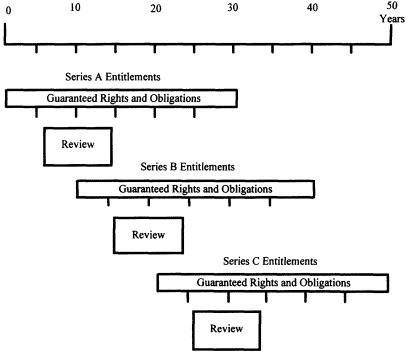
Figure 5.1
Australian "drop-through" permit design. Source: Based on Young and McCay (1995), Figure 7-1. Used with permission from the World Bank.
Allocation To Specific Participants
In the short history of IFQs, vessel owners are almost always awarded the initial allocation. This seems to reflect a bias toward capital ownership. Although the practice has been justified in the United States by reference to the lack of adequate fishing records for nonowning captains and crew members, the practice is also found in Iceland where crew participation is fully documented.
Crew Members and Skippers. The failure to include fishing vessel skippers and crew members in the initial allocation of quota shares in the Alaskan sablefish and halibut IFQ programs is perhaps their single most controversial element (see Alliance Against IFQs v. Brown 2). The committee was presented written and oral testimony, particularly related to North Pacific fisheries, indicating that nonowning skippers and crew members believe they should have been allocated
quota. The co-venturer status of most U.S. fishing crews suggests a strong rationale for considering hired skippers and crew members in the initial allocation. If this is not feasible because of inadequate records,3 special measures can be designed to compensate hired skippers and crew members for being excluded or to help them enter the market for IFQs if they desire (e.g., the North Pacific loan program).4 However, if crew members had been included, the initial allocation would have been even more diffuse and subject to increased criticism from vessel owners for allocating overly small quota shares.
Processors. The issue of allocating quota to processors arose in Alaska in the context of long-standing conflict between inshore and offshore processors and in response to the provisions of the Alaskan IFQ programs that make it impossible for processors to hold quota and change their relative bargaining power in negotiating exvessel prices of the landed fish. Some other programs (e.g., for surf clams/ocean quahogs) do not contain such provisions and processors can buy and hold quota.
There is a history under the Magnuson-Stevens Act of government policy favoring U.S. processors over foreign processing vessels. The act defines "U.S. processors" as "facilities located within the United States for, and vessels of the United States used or equipped for, the processing of fish for commercial use or consumption" (Sec. [3][41]). The term is used in the provisions by which U.S. processors are given a preference in access to U.S.-harvested fish over foreign processing vessels (Sec. 204[b][6][B]). Whether processors (1) should be accorded an individual processing quota, (2) should be among those receiving an initial allocation of harvesting quota, or (3) should be eligible to purchase harvesting quota raises different sets of policy considerations.
It can be argued that fish processors are an integral part of the fishing industry. Without processing, much of the fish being brought ashore would never make it to market and thus be useless to catch, but does this entitle processors to be considered for receiving or holding harvesting or processing quotas? The role of harvesting quotas is to ration the use of a limited natural resource, the fish stocks, so as to avoid economic waste. On the processing side there is no such limitation. Unlike fish stocks, fish processing facilities can be replicated to any extent needed, just as in any other manufacturing industry. Some places or areas may have a geographical advantage or disadvantage for fish processing, but this is not likely to be a seriously limiting factor. Some fish processing is most
effectively done on board factory vessels at sea and is thus an example of a "footloose" industry that can be located anywhere.
Nevertheless, there are arguments for allowing processors either to acquire harvesting quotas, or to be considered for initial allocation of harvesting or processing quotas. Each of these options is considered in turn.
Arguments for Allowing Processors to Hold Quotas. The arguments for allowing processors to acquire and hold harvesting quotas derive from (1) the possible advantages of vertical integration in the fishing industry and (2) the changes in bargaining power resulting from harvesting-only quotas. It may be advantageous to have firms that integrate the entire process from catching the fish to distributing the fish products to retailers integrated in a firm (the industry itself could nevertheless consist of many such firms, to avoid problems of monopoly). A vertically integrated firm might be better able to plan its operations and be more economically efficient than a processing firm having to negotiate with independent vessel owners about prices and delivery conditions. In fact, the committee was presented anecdotal evidence that IFQs may particularly disadvantage processing firms that are not vertically integrated. If the ownership of harvesting quotas is restricted to vessel owners or bona fide fishermen, vertical integration will not be possible, unless processing firms are recognized as vessel owners in their own right. In Iceland, the ownership of IFQs is restricted to vessel owners, but vertically integrated firms are recognized as vessel owners and such firms have been increasing their quota holdings in recent years.
It is possible that allowing processing firms to own IFQs would separate the ownership of quotas from vessel owners and bona fide fishermen, if a quota holder is not required to own a vessel. Under this scenario, vessel owners could become contractors to fish quotas held by processing firms; the firms would contract for fishing their quotas at times and places that would suit them best. This has already happened in the surf clam/ocean quahog (SCOQ) industry and there are tendencies of a similar kind in Iceland (see Appendix G).
Arguments for Initial Allocation of Harvesting or Processing Quota to Processors. The arguments for allocating harvesting or processing quota to processors derive from a desire to compensate those who will have to leave the industry because of excess processing capacity. By allocating harvesting quotas to vessel owners and crew members and allowing quotas to be bought and sold, some vessel owners and crew members can be bought out of the industry by those who are willing to pay a high enough price for their quota shares. This amounts to an industry-financed compensation to owners and crew members associated with redundant fishing vessels (in place of government-sponsored buybacks). However, the harvesting side of the industry is not the only one that may be characterized by redundant production capital; this may also happen on the processing side. This is particularly likely in fisheries characterized by short seasons. The processing sector may be structured to handle large amounts of fish in short periods of time. Not only is the harvesting process restricted to a shorter time
period than necessary, the same is true of the processing sector. If an IFQ-managed fishery results in a longer fishing season, some processing capacity will become redundant. Over time, the redundant processing capital will be forced out of the processing industry through price competition among processors. Some processors may be able to sell their businesses, while others may not.
If the decision is made to compensate processors for the introduction of IFQs, processors could be allocated some of the harvesting quotas, so that those who choose to leave the industry will be able to sell out. Another method is to implement processing quotas analogous to harvesting quotas and allow these to be bought and sold. Fish harvesters would then be required to sell their fish to those who hold a similar amount of processing quotas. Processors that choose to leave the industry could then sell their processing quotas to other processors, much as some vessel owners and crew members would sell their harvesting quotas to other vessel owners and crew members; in both cases, excess capacity is reduced. Matulich et al. (1996) suggest consideration of allocations that split harvest quotas among harvesters and processors, create separate harvesting and processing quotas, or pair harvesting and processing rights. Matulich and Sever (1999) suggest that pareto-safe one-pie and two-pie solutions exist in perfectly competitive markets (but are policy-infeasible) while only the two-pie allocation is pareto-safe in the case of a bilateral monopoly.
Arguments Against Allocation of Quota to Processors. There are some arguments, however, against processing quotas (in contrast to harvesting quotas) as a mechanism for compensating processors who leave the fishery following the introduction of IFQ management:
- Processing quotas would, presumably, be a permanent or a long-term arrangement, whereas processors' losses occur only once. It must be carefully considered whether it is desirable to put in place a permanent mechanism of this kind to fix a one-time problem, rather than compensating exiting processors through other means. This argument does not apply to harvesting quota because they have ongoing objectives beyond reducing capacity.
- Processing quotas are likely to strengthen the market power of processors in relation to fishermen.
- The two-pie system is likely to work less smoothly than allocating only harvesting quotas.
- In some fisheries, for example, the Alaska pollock fishery, vertically integrated and nonintegrated firms exist side by side. At some point in the past, firms decided to integrate or not to integrate, knowing that an IFQ program might be put into place. A decision not to integrate could be taken as a decision to forgo the benefits of quota allocation, since such allocations have so far been made only to harvesters.
To establish whether or not there is a case for compensating processors
through an initial allocation of harvesting quotas or by setting up processing quotas, the following are among the issues that should be considered:
- Has the processing capacity already been written off as depreciation, or has the government already provided compensation in the form of tax benefits to a processor equivalent to the value of the physical plant?
- What are the relations between processors and fishermen? Are they to some extent integrated through partial ownership of vessels by processors, long-term financial agreements, or other financial arrangements?
- Would processing quotas shift bargaining power too far in the favor of processors?
- What is the degree of foreign ownership in the processing sector?
The committee heard considerable testimony from processors in the North Pacific region that they would be economically disadvantaged and perhaps bankrupted by losing control over their ability to negotiate prices and control the timing of product flow through their plants, because harvesters in IFQ fisheries, as opposed to short derby fisheries, would have much greater opportunity to seek the highest price among processors. Processors also complained that awarding all the windfall gain to harvesters was not fair because processors and harvesters were partners in developing the fishery and the government had encouraged the processors to build processing plants. The committee was not convinced, however, that the solution to the perceived problems lies in the allocation of either harvesting or processing quota to processors.
Foreign Ownership
Congress asked if there are mechanisms available to prevent foreign control of the harvest of U.S. fisheries under IFQ programs (Sec. 108[f][1][B]). In particular, Congress asked whether there are mechanisms to prohibit persons who are not eligible to be deemed citizens of the United States for the purposes of operating a vessel in the coastwise trade under U.S. maritime statutes from holding IFQs (see Secs. 2[a] and 2[c] of the Shipping Act of 1916 in Appendix C). Implicit in this issue is the question of whether it is desirable policy to attempt to control foreign ownership of IFQs.
The history of public resources in the United States is replete with cases of perceived threats of foreign ownership. In the nineteenth century, large areas of rangeland were held by British and other companies who subsequently sold out during a period of severe losses. Fear of foreign ownership of real estate surfaced in the 1970s and 1980s when famous pieces of property such as Rockefeller Center and the Pebble Beach Golf Course were purchased by Japanese entrepreneurs.
Similarly, foreign ownership in the maritime industry in general and the fishing industry in particular has received considerable attention from Congress. If there is a consistent congressional policy, it can be characterized as resistance
to foreign ownership of fishing vessels and foreign exploitation of fish resources within the U.S. EEZ (e.g., 16 U.S.C. 1821[a], 1824[b][6]). The concerns giving rise to exclusion of foreign interests fall within several categories:
- Fear of foreign economic domination of the maritime industry and fisheries;
- Difficulties in regulating foreign-owned businesses;
- Threats to the social values of U.S. fishing communities; and
- Loss of potential economic benefits.
Experience with the U.S. IFQ programs and concerns voiced to the committee have dealt more with the concentration of quota share ownership rather than whether the holders are foreign or domestic. The issue of concentration, as well as foreign ownership, appears explicitly in the Magnuson-Stevens Act (16 U.S.C. 1851[4]).
Whether the issue is concentration of ownership or acquisition by foreign entities, economic incentives to maximize the value of quota shares may have led to many financial arrangements, for example, quota holders with different names, but the same address, and domestic holding companies for foreign owners. In addition, existing regulations that impose restrictions on the transfer of quota shares for halibut and sablefish have caused involuntary transfers pursuant to court order, by operation of law, or as part of a security agreement (see 50 CFR 679.2, 679.41[f]). Transfer to a foreign entity could result from such involuntary transfers, although the committee is not aware of any evidence of such transfers.
Explicit foreign ownership and control could be prohibited by defining the individuals and entities capable of owning quotas to include only U.S. citizens or entities owned and controlled by them. This, however, is only the beginning of an inquiry that must consider (1) the economic pressures to maximize the efficiency of quotas by making them freely transferable and available as collateral for loans; (2) the existing ownership structure; and (3) whether foreign ownership per se or concentration of economic power regardless of its origin is the primary concern; and (4) the cost of detecting and enforcing restrictions on foreign investment in U.S. fisheries.
It is important to acknowledge the presence of significant foreign participation in several U.S. fisheries, most notably the Bering Sea groundfish fishery, a potential candidate for IFQ-based management. Some U.S. fishing and processing companies have significant ownership by, or other financial connections to, foreign investors, and foreign companies have equity investments and other ties to these companies (Huppert, 1991). Yet, the notion that foreign companies could obtain controlling interests in the ownership of U.S. fishing rights raises concerns in some quarters. Moreover, even if it were determined that the benefits of freely tradable permits outweighed concerns about foreign ownership, if does not follow that foreign entities should qualify for the initial allocation of quota shares. Admittedly, the creation of tradable fishing privileges could create an-
other avenue for the participation of foreign citizens and companies in certain U.S. fisheries, which may be an attractive prospect for foreign investors given the lucrative overseas markets for certain fish products. It is useful to refer to the four possible idealized scenarios:
|
|
Benefits Returned to the Community |
|
|
|
(+) |
(-) |
|
Quota Holder |
|
|
|
Domestic |
1 |
2 |
|
Foreign |
3 |
4 |
Ranked in order of benefit to U.S. society at large and U.S. communities specifically, the results of these scenarios would be favored as follows: 1 > 3 > 2 > 4. Thus, foreign holders who provide positive returns to the community (scenario 3), either voluntarily or by law or regulation, would be preferable to domestic holders who provide no return (scenario 2).
If the IFQ or other fishing privilege (e.g., limited access license) is tied to vessel ownership through a standard requiring (for instance) that an eligible quota shareholder be an owner of a U.S. flag vessel that is licensed for commercial fishing, foreign ownership is automatically limited through the operation of the Merchant Marine Act of 1920, commonly known as the Jones Act. Also, the 1987 Commercial Fishing Industry Vessel Anti-Reflagging Act prohibited vessels built or rebuilt in foreign shipyards from operating in U.S. fisheries. This act also requires that owners of all U.S. fishing vessels be U.S. citizens and that the vessels obtain federal licenses. It limits foreign ownership by corporations owning U.S.-flag vessels by requiring that the controlling interest, as measured by a majority of voting shares in the corporation, be owned by U.S. citizens. Recent legislative activity has focused on closing loopholes in this act.
Thus, the issue for IFQ policy is whether there should be additional direct controls or limits on foreign ownership. Many countries seem predisposed to apply much stronger rules about foreign ownership to fishing vessels and fishing quotas than to other industries. For example, New Zealand requires quota shareholders to be either New Zealand residents or companies that have less than 40% foreign ownership. This is in marked contrast to the trend toward globalization in trade and ownership of the means of production.
The North Pacific Fishery Management Council (NPFMC) designed the sablefish and halibut IFQ programs to prevent foreign control of the fisheries via ownership of quota shares (Pautzke and Oliver, 1997). The program's design limits initial issuance and subsequent receipt of quota shares to individuals who are either U.S. citizens or U.S. companies. The council reports that although the level of foreign investment in fishing vessels and fishing companies is not moni-
tored directly by itself or the National Marine Fisheries Service (NMFS), no reports have been received of IFQs being purchased by an individual who is not a U.S. citizen or a company that was not registered or incorporated as a U.S. company. If Congress desires to limit foreign ownership of IFQs in all U.S. fisheries, it could model amendments to the Magnuson-Stevens Act after the provisions of the Alaskan halibut and sablefish IFQ programs.
New Entrants
The charge from Congress to the National Academy of Sciences includes the consideration of mechanisms to facilitate new entrants (Sustainable Fisheries Act, Sec. 108 [f][1][H]). The purpose of IFQs and other limited entry measures is to prevent excessive entry, so new entry must be balanced by the exit of existing quota shareholders. What mechanisms are available to facilitate new entry under IFQ programs? The Magnuson-Stevens Act currently requires that the regional councils and the Secretary of Commerce, in submitting and approving any new IFQ program after the expiration of the moratorium, address the issue of new entry. Specifically, they are required to have considered allocating a portion of the annual harvest in the fishery for entry-level fishermen, small-vessel owners, and crew members who do not hold or qualify for IFQs (Sec. 303[d][5]). The issue of new entrants is related to the issue of transferability, because market prices for quota shares can be significant barriers to new entrants, and without transferability, new entry can be difficult except by lottery or auction. A related issue is the availability of loans for the purchase of quota. The North Pacific loan program was created to make loans more available for quota purchases. The value of a registry of limited access permits, also mandated in the Magnuson-Stevens Act but not yet implemented by NMFS, is that it reduces the risk to lenders and may make loans more available for new entrants.
The committee received the suggestion that new entry could be facilitated by setting aside a certain part of the TAC each year for new entrants. An auction could then be held, with bidders limited to those with certain qualifications that ensure they are truly new entrants.
New entrants after the initial allocation could also be encouraged through the transfer of IFQs through direct sales, lotteries, a first-come-first-served arrangement, or other methods not based on historic use (Huppert, 1991). The zero-revenue auction (see Box 5.1) is another means to promote new entry. Whatever the mechanism, it should not (1) expand the number of quota shares or (2) artificially inflate the price of quota shares.
Diversity
The transferability restrictions adopted by the NPFMC were designed largely to maintain diversity in the fisheries and to protect the involvement of Alaskan
coastal communities in these fisheries (Pautzke and Oliver, 1997). To the extent that diversity is valued over economic efficiency, similar limitations on transferability would have to be incorporated into new IFQ programs.
Some governments address diversity in fisheries in a different manner by focusing on the distinction between individual and corporate ownership (although many single-owner vessels are legally organized as corporations). For example, corporations are not allowed to own Alaska salmon limited entry licenses or many Canadian IFQs. This restriction may not be desirable, however, for fisheries in which a large capital investment is necessary and where that investment can be attracted only with the limited liability of a corporate entity.
Recreational Sector
Recreational fisheries have received very little attention in IFQ programs. The allocation of quota to recreational anglers may serve as a way to let the market help solve the often contentious conflicts between the recreational and commercial sectors of a fishery (Squires et al., 1995). Initial allocation methods and increased enforcement needs undoubtedly would be major issues during implementation of IFQs for recreational fisheries.
Recreational fisheries are as diverse as their commercial counterparts in the types of gear involved and their levels of investment, ranging from shore-based anglers to for-hire operators. Cumulatively, recreational fisheries represent a large and growing potential to harvest fish, particularly in near-coastal waters, and there is a tendency for fisheries to evolve from commercial into recreational as coastal populations grow (Smith, 1986). Specification of a harvest quota in the form of a TAC allows fish to be taken by noncommercial interests, including recreational fishermen, but often does not specify how the allowance is to be made. In the United States, the proportion of TAC that goes to the recreational sector is left to the discretion of the regional councils but usually is based on historic use patterns within the fishery. Recreational allocations can also change with growth in the sector, but only through reductions in the commercial share. In some fisheries, the allocation of TAC to the recreational sector already is substantial (e.g., about 70% of the king mackerel TAC in the South Atlantic and Gulf of Mexico regions is allocated to the recreational fishery).
Inherent difficulties are associated with monitoring and enforcement of recreational fisheries because of their wide geographic range, multiple landing locations, and large numbers of fishermen. Consequently, recreational fishery-dependent data generally are of poor quality, especially with respect to the magnitude of recreational catch, effort, and the value of recreational fisheries to regional economies. Data problems are compounded by the commercial sale of fish caught by anglers and by individual fishermen from the for-hire sectors that fish commercially in recreational vessels when not operating for hire.
Recreational fisheries traditionally have been managed on the basis of fish-
ing seasons, gear restrictions, and size and bag limits, and there is widespread resistance by recreational anglers to limited access or licensing. Clear differences between the recreational and commercial sectors can often be observed in the preferred sizes of fish, with recreational fishermen often preferring larger “trophy" fish. Consequently, the optimal stock size for recreational fisheries may be larger due to preference for higher catch rates and larger fish.
Currently, there is little precedent (in the United States or elsewhere) for integration of a recreational fishery into IFQ or other quota management systems (e.g., Arnason, 1996). In some cases (e.g., New Zealand), recreational fisheries are virtually unregulated in harvest, with the estimated recreational catch subtracted from the TAC before the remainder is allotted to IFQ shareholders. However, unrestricted harvest by many noncommercial interests, while fisheries are managed for holders of IFQs, presents major management problems that potentially undermine the integrity of any IFQ program (Ackroyd et al., 1990), particularly when the recreational sector is growing in size. In New Zealand, where the preservation of a satisfactory recreational fishery is an objective of the IFQ program for commercial fisheries, several studies have addressed the problem of recreational fishery management. Ackroyd et al. (1990) identify significant problems presented by recreational fisheries and recommend that the recreational sector be placed under a quota, with trusts established to hold and manage the quota (e.g., similar to the "hunting club" or Ducks Unlimited approach).
Pearse (1991) recommends allocating the recreational sector an explicit quota to be held on behalf of recreational fishermen by local government or by organizations modeled after the regional councils. The New Zealand Fisheries Task Force (1992) also recommends that recreational fishermen be allocated a share of TACs, with establishment of organizations to hold and manage the quota. These studies suggest that IFQ programs for only the commercial sector may benefit and strengthen commercial claims on fishery resources, leaving the recreational sector with no grounds to protect its rights. Conversely, the opposite may be true. One of the greatest challenges to commercial fishing is the growing interest in recreational fisheries worldwide. By sheer numbers alone the recreational fishing community is powerful, and the political clout of recreational anglers is growing (De Alessi, 1998). Consequently, commercial fishermen are concerned that the wealth and power that reside in the recreational sector ultimately will result in its majority ownership of many fisheries if no limits on quota ownership and transferability are in place to protect commercial interests.
In the discussion of IFQs for the recreational sector, a distinction should be made between individual recreational anglers (for whom IFQs are probably not practical; see below) and the for-hire sector that concentrates units of individual anglers and may be practical for inclusion in IFQ programs. Individual quotas for recreational fisheries could be analogous to IFQs in the commercial sector. If feasible, recreational quotas could achieve at least partial integration of recreational fishing into a quota system.
Are quotas for individual anglers feasible? Public testimony indicates that the establishment and implementation of IFQs for recreational fishermen face a formidable problem with respect to equitable initial allocation of quotas among users because catch histories do not exist for most individual recreational fishermen. Thus, the most common basis for initial allocation in commercial fisheries cannot be used in recreational fisheries. Other initial allocation mechanisms, such as lotteries, auctions, charging some predetermined fee, basing quota share on the magnitude of the investment in recreational fishing (vessel, gear), or equal shares for all, also are problematic. Lotteries have been used to allocate big game and waterfowl hunting privileges and could be acceptable for some recreational fisheries. Recreational fishermen generally are great in number, cross many economic classes, and thus vary greatly with respect to economic investment in fishing. They also tend to be spread over a wide geographic area and land their catches at a variety of locations, potentially making quota monitoring a formidable problem. Recreational fishermen have fought strenuously against saltwater fishing licenses in many states. It is likely that recreational IFQs would face similar opposition.
Economic Returns to the Public
Fishing, whether under open access, IFQs, or other limited access programs, provides benefits and creates costs to the nation. In particular, the question arises whether the nation should share directly in the benefits that fishermen derive from their use of the public resource, and particularly of the benefits that IFQs and other limited entry permit recipients obtain from the initial allocation above and beyond capital gains taxes on the sale of the initial allocation. Mechanisms for capturing benefits for the nation include auctions, annual fees, transfer fees, and taxes. Some people are opposed to IFQ programs because they view them as awarding a large financial windfall to quota share recipients, and these windfalls could encourage unproductive behavior (e.g., expenditure of funds to influence the outcome of the implementation process) on the part of the fishery participants. Such windfall gains can be reduced by taxing the rents generated by IFQ programs. To the extent that IFQ programs are subject to taxes that are not used in other limited entry programs, however, support of the industry for IFQ programs will be diminished.
To what extent is the public entitled to a share in fishing rents? Opinions differ about the answer to this question, but it seems fair to some that the public receive some return for the use of public resources. The public trust nature of fishery resources lends greater weight to such a conclusion. In practice, however, schemes that extract a large percentage of the rent can undermine the degree to which the industry will support changes in the management regime; the support of the industry is likely to be related to the prospect of receiving some or all of the
resource rent. Alternatively, public support for quota programs may be undermined when only a small percentage of the rent is extracted for public purposes.
In all but the most extraordinary circumstances (Iceland, for example), taxes on fishing rents would be a nearly insignificant source of revenue for the national government, and even for state or provincial governments (except perhaps Alaska). However, such tax revenues are a significant source of income for local governments in Alaska and elsewhere.
Any fishery can be managed to produce some resource rent (see Chapter 1 for an explanation of rent), although most fisheries in the United States are not managed with this objective. The size of this rent depends on a number of factors, some of which are not influenced by fishing firms or the industry, such as the price of fish (in most cases determined in competitive markets), technology, and the cost of labor and other inputs. Other factors that influence rents, such as modes of organization internal to the firm and cost-cutting measures, are controlled by the firm.
The existence of rent is a consequence of an efficiently managed fishery and a naturally limited resource; instead of using too many vessels, employing too many people, or using too much gear and fuel, the redundant factors of production have been diverted to other purposes, where they create additional value in the production of other goods and services.
Three Rationales for Reclaiming a Public Share of Fishery Rent
Three rather different rationales are usually suggested for public sharing in the rent from a resource. These principles are not necessarily mutually exclusive; they can be applied simultaneously and to different degrees.
1. The public resources principle—Under this principle, the public is entitled to a share of the rent because the resources being exploited are owned by the public. This principle suggests returning to the public some of the value that is rightfully theirs.
2. The cost recovery principle—Under this principle, the government is entitled to reclaim the costs of creating and administering fishery management programs because the beneficiaries of government programs should bear the associated costs. Cost recovery programs can seek to cover some or all of the (1) administrative costs, (2) monitoring and enforcement costs, and (3) research and stock assessment costs.
In practice, cost recovery is becoming increasingly common. This principle is allowed to a limited extent by the Magnuson-Stevens Act in the form of fees levied to cover management and enforcement costs (Sec. 304[d][2]). It is also currently used in air pollution control to fund the administrative cost associated with the permit system (Title V of the Clean Air Act). New Zealand and Canada currently apply the cost recovery principle in their fisheries.
Costs are sometimes placed in two separate categories: attributable and avoidable costs. Attributable costs are those that can be directly charged to a specific activity and are essentially a transaction charge. Examples of attributable costs to the fishing industry in an IFQ program are the costs of allocating IFQs, costs of registering transfer of quota between IFQ holders, the costs of monitoring catch against quota, and costs of dockside monitoring. Avoidable costs for the commercial fishing industry are additional costs that exist because of the presence of a commercial fishing industry and are not transaction costs that can be charged to a specific activity. The presence of a commercial fishery will require fisheries management activities (e.g., research, enforcement, administration) and associated costs that are not assignable to specific fisheries, but are necessary to meet the government's goals.
In New Zealand, the commercial fishing industry has been required to reimburse both the attributable and the avoidable costs of fisheries management (Box 5.3). This has been controversial, with the industry agreeing to pay the attributable costs, but arguing against having to pay the full amount of the avoidable costs, maintaining that these costs are largely for the maintenance of a public good. Cost recovery is also practiced in some Canadian fisheries (see Boxes 4.2 and 4.5).
|
BOX 5.3 Cost Recovery in New Zealand In New Zealand, the costs of fisheries management are allocated to associated fisheries in such a way as to provide the correct economic signals and incentives to each fishery. For example, the costs of the research program on hake are charged only to hake ITQ shareholders. There is no research program on arrow squid, so squid ITQ shareholders pay only the general research and stock assessment levy covering general costs that cannot be allocated to specific fisheries. Similar charging arrangements are made for administration and enforcement costs. This system of allocating costs to associated fisheries has resulted in large differences in the cost recovery levies as a percentage of the landed value, from less than 1% in some fisheries to greater than 10% in other fisheries, as well as large year-to-year fluctuations in the levies for a specific fishery. The large year-to-year fluctuations in costs for some specific fisheries have made it difficult for fishing businesses to plan their operations. As a result, the structure of the existing cost recovery system is being reviewed. The total cost of fisheries management (administration, enforcement, research) is about $NZ45 million, with $NZ37 million being recovered from the commercial fishing industry. With a total landed value for the fisheries resource of about $NZ700 million, this means that the industry is paying about 5% of the landed value of the catch in cost recovery charges (J.H. Annala, unpublished data, 1998). |
Cost recovery charges or levies can be calculated in a number of different ways: based on the tonnage of quota held, the tonnage of fish landed, the value of quota held, the value of quota traded, the value of landings, or some combination of these (Huppert, 1991). In New Zealand, cost recovery levies are based on a combination of the tonnage of quota held and the value of the landings.
3. The compensation principle—According to this principle, a proportion of the rent should be reclaimed in order to compensate those who may be injured by the process of establishing a fisheries management program. Proponents of this principle may be motivated either by a concern that all parties be treated fairly or by the recognition that failing to compensate victims can undermine the political will necessary to implement the program. Victims who are seen as entitled to compensation under this principle may include both individuals and communities.
Existing examples of the application of this principle include the Canadian and New Zealand "buyback" programs with which the government reduced quota by buying it back from those leaving the industry and then retiring it so it could not be used by anyone else. Another example is the reduction of Alaskan IFQs to be reallocated as part of the community development (CDQ) program.
The compensation principle motivates the wide initial allocation of quota. In a broad allocation of transferable IFQs, compensation occurs indirectly as those with less-than-desired quotas sell or lease out to others. This is sometimes called "exiting with money in your pocket." A compensation system does not simply compensate individuals after some action has been taken; it can also create an incentive for individuals to overinvest in the factor that will be compensated. For example, implementing a buyback program (or even the expectation that one might be implemented) may create an incentive for fishermen to keep capital in a fishery longer than they might otherwise, in order to receive greater compensation for leaving later.
Mechanisms for Reclaiming Rent
The government has a number of different means available to extract rent from IFQ-managed fisheries.
Auctions. Periodic auctions can be held to sell quota shares (percentage of the TAC) or current quota (tons harvested during this fishing season). The government may keep a percentage of the proceeds. Auctions can be combined with a system that allocates quota on a historic basis by requiring a certain percentage of the quota to be placed in the auction every year (see Box 5.1).
Auctions are an ex ante activity, that is, they raise revenue prior to harvesting. In principle, the revenue from a competitive auction of all permits should equal the total of expected rent (Grafton, 1995). In practice, revenues from the auctions will equal actual rent only if the expectations about future TACs, fish prices, and fish costs are accurate and fishermen are not risk averse. Risk aversion will be significant if the quotas are auctioned for a long period, perhaps once
and for all, so a one-time auction or very infrequent auctions will not be very effective in extracting the rent, unless one asks for bids in terms of share of profit or in some terms that would alleviate the price and quantity risk.
With auctions, the bidder bears the price and harvesting risk associated with unrealized expectations. Since the payouts for auctions are before the fact, unusually poor harvests or prices mean that auction revenue could exceed the rent. The high cost of auctioned permits can prevent entry for those with inadequate access to capital markets. (This deficiency can be overcome by ensuring that all participants have adequate access to capital markets.)
Quota Shares Reserved for Government Use. Part of the quota can be set aside for use by the government or for compensation to individuals or communities. The revenue received by the public using this mechanism is volatile since it depends on market conditions such as prices and harvest levels. It also depends on how efficiently the shares are utilized. If retained by high-cost harvesters, the resulting value will be small.
The public may bear large administrative costs to secure the value of the quota shares. Shares have to be turned into revenue either by harvesting fish, which are then sold, or by transferring the quota to others. In either case, inexperience can translate into forgone rent.
Quota Attenuation. Under quota attenuation, a share of the quota would automatically revert to the control authority every year. This quota share could be sold by the government to the highest bidder. This works very much like an ad valorem tax on quota holdings, but it would not be necessary to monitor the value of quotas or of fish. A variant of this would be to apply this "tax" only on transactions (leasing and/or selling of quota shares). This has the advantage of easy monitoring and a market-based valuation.
In terms of efficiency of these mechanisms for reclaiming rent, quota shares set aside as compensation may not be used efficiently if the recipients choose not to do so, whereas attenuated quotas work like a tax on quota holders and efficiency is ensured if the shares obtained by attenuation are sold by auction or some other market mechanism.
Fees or Taxes. The government can reclaim rent through the use of fees or taxes levied on several different types of tax bases: landed harvest, quota shares, annual entitlements to harvest, income or profit, or capital gains (Box 5.4). The fees can be lump sum (dollars per fisherman or vessel), specific (a per-unit fee on each unit of the tax base), or ad valorem (a percentage levied on the value of the tax base). Consideration of using taxes to extract rent should be tempered by the fact that if the United States imposes export taxes on the products of foreign-controlled processors or catcher-processors, it could run afoul of the World Trade Organization.
Lump Sum Fees. For this particular mechanism, the revenue collected does not vary with the value of the rent received by any particular harvester. It also does not automatically reflect changes in the rent of the fishery. Compared to
|
BOX 5.4 The "Two-Fee" System If it is deemed desirable to extract rents from a fishery beyond those needed to cover monitoring, enforcement, and administrative costs, this could be accomplished with a two-fee system. This approach recognizes that the revenue-raising objectives are sufficiently different as to motivate separate fees.
|
other mechanisms with a similar amount of total rent captured, lump sum fees place a larger burden on small-scale fishermen. Unlike auctions or the allocation of quota share, with lump sum fees the recipient knows with a high degree of certainty how much rent will be extracted. There are at least two other major arguments for using lump sum fees. First, except for entry and exit decisions, lump sum fees do not penalize operational decisions and therefore do not create some of the distortions associated with other taxes. Second, because actions do not need to be monitored, transaction costs may be low. The latter may be the major reason some less developed countries use lump sum access fees for foreign fishing fleets operating in their EEZs.
Fees or Royalties on Quota or Harvest-Specific (Per-Unit) Fees. Fees can be imposed on quota or harvest. A fee on harvest would be paid only if fish are landed. A fee on quota would be paid whether or not the quota is being fished and would thus provide an incentive to use the quota. Fees, even ad valorem fees, may make the industry unprofitable if they are set too high. This would not occur in an auction process unless the bidders are mistaken about their prospects. Harvest fees have less "up-front" risk for harvesters than an auction since they are paid only if and when the harvest is landed. Both quota and harvest fees would lower the price of harvest quota because the quota would generate less revenue for the owner after the fees were paid. As long as the fees are not too high, specific fees on harvest or quota are generally consistent with efficiency incentives. Rent collected for harvest would be less for harvest quotas when some proportion of the quota remains unfished.
Ad Valorem (percentage of value) Fees. Ad valorem fees normally produce a greater variability of rent than specific fees or lump sum payments when prices vary over time. (Prices help determine the degree of rent capture for this mechanism, but not for specific fees or lump sum payments.) Because this is an ex post method of rent capture, it poses less up-front risk for the quota holder than an auction. The payments would depend on the value of the catch.
Transferability and Accumulation
Most IFQ programs used worldwide allow transferability (e.g., Box 5.5). Transferability is one of the most contentious issues in IFQ management. It can be expected that in fisheries that allow easier transferability, consolidation of quota will occur. Transfer of quota shares can lead to a concentration in the ownership of quota, which may have undesirable side effects. Transferability can create unemployment in isolated communities where there are limited economic alternatives to replace the loss of employment caused by a reduction in harvesting and processing capacity. The mechanisms used to dictate the nature of transfers within a fishery and the degree of transferability can significantly alter the nature of the fishery.
|
BOX 5.5 Transferability of Quotas in The Netherlands Transferability of Dutch IFQs was allowed officially in 1985, with certain restrictions. Quotas can be held only by those who have a fishing license, although banks and shipyards can hold quotas temporarily, presumably because quotas can be put up as collateral against debts. Quotas can be leased freely, but parts of an ITQ cannot be sold—the allocation must be sold as a whole. Fishermen circumvent this by having their producer organization or management group buy the quota and sell it in parts to individual members. Within a management group, quotas are freely transferable, but between groups, leasing is not allowed after the end of November. Individuals not belonging to any group cannot lease or rent out a quota after the end of February. Unused quotas cannot be transferred between calendar years. |
The issues of transferability and concentration limits must be considered in the context of balancing two opposing goals: economic efficiency and social equity. Economic efficiency is maximized when the following occur:
- Quota shares are freely transferable, in the long and the short term.
- Quota shareholders are allowed either to sell their quota shares permanently or to rent them out for any period of time.
- Quota shares are as divisible as practically possible; that is, a quota share holder is able to sell or rent out any portion of his or her quota share.
- The tenure of quota shares is either long term or permanent, in order to minimize uncertainty in the fishing business and encourage long-term planning and stewardship among quota holders.
Each of these factors has social and/or legal implications. A number of negative side effects of free transferability must be considered. To the extent possible, these effects should be reduced with as little infringement on transferability as possible, to minimize the economic losses involved. These side effects will differ from one fishery to another, and they should be analyzed in the context of each fishery to design the most appropriate program.
Economic Aspects of Transferability
Transferability of IFQs has two main, and related, economic purposes:
- Achieving rationalization of the industry by allowing some participants to leave the industry with a compensation financed by the industry itself, that is, to be bought out by other industry participants; and
- Ensuring that IFQs are held by those who are willing to pay the highest price for them. This promotes efficiency in the industry because those who are willing to pay the highest price for quotas would normally be those who expect to utilize them most profitably, either by doing so at a lower cost than others or by transforming the fish into a more valuable product.
At this point, a short remark on item (2) is appropriate. It is sometimes alleged that those who are willing to pay the highest price for quotas are the ones with the easiest access to capital. In efficiency terms, this is not a negative factor; there is often a strong relationship between having access to capital and being able to utilize quotas efficiently. The value of quotas as investment objects derives from the ability to use them for generating net profits from fishing. To achieve a return on investment in a high-priced quota, the quota holder will have to use it efficiently himself or to lease it to someone who can do so. It is not likely, however, that persons or financial institutions will invest their money in quotas unless they can be assured of a reasonable return on their investment, which again would contribute to greater economic efficiency in the fishing industry.
In addition to achieving greater economic efficiency, transferability is also intended to mitigate imbalances that may occur in the initial allocation. For example, although crew members did not receive initial allocations of IFQs in the Alaskan IFQ fisheries, they now own 11.2% of the halibut quota share and 4.6% of the sablefish quota share. This would not have been possible without transferability.
It is useful to distinguish between the ways in which transferable quotas may promote economic efficiency in the short and the long run. In the short run, transferability leads to lower operating costs and a higher production value in fisheries plagued by harvesting overcapacity. Those who can fish at the lowest cost or produce the most valuable product are able to buy or lease fishing quotas at a price that is acceptable to both buyer and seller. In the long run, transferability of quotas can be expected to produce optimally sized fishing fleets. A person or firm with a given quota will have no economic incentive to invest in more or larger fishing vessels than needed to take this quota. Alternatively, if there are economies of scale in fishing for the target species, those who wish to invest in vessels of an optimal size but have insufficient quota to utilize the vessels fully will be able to buy additional quota for this purpose.
Quota transactions may produce inequitable results, in the fishing industry as in other industries. Various methods can be employed to avoid or reduce inequitable results that otherwise would emerge from the marketplace, for example, restricting the types of vessels or the areas in which quota can be traded, establishing accumulation limits, and requiring owners to be on board vessels. However, since unfettered market transactions normally lead to enhanced efficiency, some trade-off between efficiency and equity is likely.
Other rules may be necessary to govern the subsequent transfer of initially allocated shares. It may be desirable to allow individuals who did not receive initial allocations to buy and hold IFQs. There must also be consideration of whether the distribution of quota shares among classes of holders and regions should be allowed to vary over time.
In designing the sablefish and halibut IFQ programs, the NPFMC considered a prohibition on transferability to avoid consolidation of ownership, divestiture of coastal Alaskan residents from the fishery, and creation of windfall profits from transfers (Pautzke and Oliver, 1997). Ultimately, the council decided to allow transfers, albeit restricted, to permit new entry into the fisheries and maintain significant Alaskan ownership. The amount of the total quota share pool that can be owned or controlled by individuals and companies is restricted, and quota transfer provisions and ownership limits are specified to prevent overconsolidation of quota share in the fleet. The council also created vessel size and operational quota share categories within which transfers are limited. Other controls include the requirement that certain categories of quota share may be purchased only by individual fishermen who must be on board the vessel and fish the quota share.
Social Aspects of Transferability
Free transferability of quota shares is likely to have a range of social implications, as judged from both theoretical predictions (Copes, 1986; see Figure 3.1) and the empirical evidence available (McCay et al., 1995; Pálsson and Pétursdóttir, 1997). These effects occur both among and within communities.
Impacts Among Communities. Freely transferable quota shares may concentrate over time in some communities while other communities lose part or all of their quota (Eythorsson, 1996). It is difficult to predict the pattern and overall movement of quota in advance, since these will depend on a host of contextual factors and the design features of the program in question; generally, however, one may expect communities with a large share of quota to gain more because of more infrastructure and better access to capital. Some smaller communities dependent on fisheries and without alternative means of support are likely to suffer severe unemployment and related social and economic problems. McCay et al. (1995) demonstrate a clear geographical shift in quota holdings for the SCOQ IFQ program, where quotas are freely transferable. The same applies, they believe, for the Canadian program they studied; here more constraints were placed on transfers as well as on accumulation and ownership by nonfishermen, but the constraints were generally ineffective against strong economic incentives to consolidate holdings. In contrast, the Alaskan IFQ programs, which include some area restrictions, have maintained (to date) similar participation by Alaskan and non-Alaskan fishermen both before and after the program was implemented. In Iceland, the main accumulators of quota are companies in the larger towns of the northern part of the country. Small communities, with less than 500 inhabitants, have lost a much greater share of their quotas than larger communities.
To some extent, regional concentration of quota shares is unavoidable, a healthy sign of increased economic efficiency. The social costs, however, may outweigh the gains in economic efficiency. As was the case when agriculture became increasingly intensive and took advantage of gains to scale, negatively affecting traditional farming communities, some fishing communities will undoubtedly thrive, whereas others' valued life-styles and traditions will be threatened.
One way of dealing with undesirable flows of quota is to limit the transferability of quotas from one community or region to another (see Box 3.3). It has to be kept in mind, however, that changes in fishing technology, fish processing, and transportation may make the location of the fishing industry in certain communities or regions obsolete and economically inefficient. Rather than preventing the realization of economic benefits from such changes by limiting the transferability of quota shares, it may be preferable to allow transfers, but also to compensate disadvantaged communities with a fair share in the gains of the overall fishery through payments or buyouts. An alternative approach is to design an IFQ program to allow municipalities, regional organizations, or other entities representing the needs of local communities to purchase IFQs and create local rules about their allocation and transferability.
It may be argued that in overcapitalized fisheries, transferable IFQs could lead to downsizing of fishing technology, smaller vessels, and greater efficiency. For example, testimony from some Alaskan fishermen stated that IFQs have helped the small-vessel fisheries because they are able to operate in better weather
with IFQs. Generally, however, the concentration of IFQs will depend on the economies of scale available for a specific fishery.
Impacts Within Communities. Transferability may have far-reaching repercussions on the internal dynamics of fishing communities. The social distribution of quota shares is one variable to consider. It is difficult to predict general effects, due to the existence of confounding factors. In some cases, for instance in the Mid-Atlantic SCOQ fishery (McCay et al., 1995), some of the large firms have broken up since the implementation of IFQs, countering the otherwise strong tendency for concentrated ownership in this industry. However, even in that case quota shares tended to concentrate in the hands of those with the largest shares at the initial allocation (McCay and Creed, 1994; Weisman, 1997). In the Icelandic case, those individuals or firms that own more than 1% of the total quota have increased their share from a quarter to about a half of the total in just over a decade, and in the SCOQ case, those with the largest allocations in 1990 had significantly increased their share of the quota by 1994 (see Appendix G).
Such concentration may make the issues of equity and social distribution pressing concerns, important features in the moral landscape of the affected fishing communities. In some extreme cases, resistance to conservation measures in the fishery may reduce or invalidate potential economic and ecological benefits of an IFQ program, resulting in fishermen's strikes and increased highgrading and bycatch.
Not only can transferability increase conflicts among quota holders, it also can alter relations of power between vessel owner and crew, with the latter increasingly losing power to quota-owning vessel owners. Iceland and Alaska provide some examples of this process. Again, however, the social impact of transferability will depend partly on the design features of the specific program, particularly the ways in which shares are initially allocated and the degree to which rents are returned to fishing communities.
One relevant community concern relates to the ways in which IFQs affect the prospects of marginal participants in fisheries, including “native" groups and women (regarding gender, see, for instance, Macinko, 1993, on Alaska and Skaptadóttir, 1996, on Iceland). As quotas tend to be concentrated and rights to the resource are removed from the communal frameworks to which fishing has been subjected, they tend to freeze or exaggerate existing patterns of occupational participation, making it more difficult for marginal participants to advance. In the New Zealand case, tribal claims were not anticipated and, when exercised, resulted in costly changes to the system (Cheater and Hopa, 1997).
Leasing of Quota Shares
Some of the opposition to IFQs centers on leasing. The reactions to leasing vary from one context to another. In the Icelandic case, fishermen have gone on strike three times in four years to protest against what they see as unfair "quota
profiteering" by absentee owners. The economic efficiency gained by the introduction of IFQs may be lost due to such strikes. It is important to differentiate between leasing to absentee owners and other fishermen. Although both have the same general economic effects, leasing to absentee owners (those "sitting on the beach" in fishermen's jargon) is much less acceptable in the fishing community than leasing to other active fishermen.
Absentee ownership can develop when the transfer of quotas is unrestricted. Rather than selling their quotas, quota shareholders may choose to lease them and gain unearned income on their quota wealth. This may tear at the social fabric in fishing communities, where absentee ownership is often seen as unfair. Fisheries that traditionally have been owner operated may be altered by the ability to lease quota shares, and relationships in a community can become more sharply divided between the "owners" of the resource and the "tenant" fishermen. In some cases, the crew members aboard leased vessels pay for the cost of the lease, effectively reducing both their average share and their overall income. One way to deal with absentee ownership is to require active participation of the quota holders in fishing—for example through “owner-on-board" provisions—or to impose geographical restrictions on transferability. However, this is not an economically efficient instrument in fisheries that are subject to economies of scale and scope; in these industries, economic efficiency is increased when large, vertically integrated firms, rather than individuals, hold the fishing quotas. Moreover, such provisions can work against attempts to meet social goals through community-based control of IFQs (or CDQs).
Leasing is often seen as a way for quota shareholders to fine-tune their operation to meet short-term needs arising from fluctuations in local, regional, and national markets and to deal with bycatch problems. Additionally, leasing can allow individuals to learn how an IFQ program and market works before they buy into or sell out of the program (perhaps prematurely). For example, the British Columbia halibut IVQ program allowed leasing, but not sales, of quota shares during the first two years of the program, to provide such learning time. Thus, in the beginning, the lessors are likely to be firms or individuals actively engaged in the industry, using their own IFQs for fishing. In time, however, IFQ holders may come to discern that profits might be made through leasing IFQs on a larger scale.
With increasing concentration of quotas, new and more formalized modes of leasing may emerge. In such transactions, the supplier of the IFQs is likely to be a large vertically integrated firm and the recipient a small-scale harvester. In time, this situation may create a new kind of social structure with permanent divisions among those who live from leasing quota shares and those who rent them and do the fishing. A similar social arrangement characterized the salmon, herring, and halibut fisheries of the Pacific Northwest, British Columbia, and Alaska from the mid-1800s through the early 1900s (Bay-Hansen, 1991; Newell, 1993). In the case of Alaska, the desire to eliminate this feudal structure was a
|
BOX 5.6 Concentration of Quota in The Netherlands' IFQ Program Since 1988, quotas have gravitated to the largest and the smallest vessels in The Netherlands, as shown in Table 5.1. ITQs are not concentrated in the hands of a few large operations: the largest holder owns no more than 3% of the total Dutch plaice and sole TAC. The leasing of ITQs by people who do not own fishing vessels (e.g., retired fishermen) is becoming an issue in the industry, with active fishermen resenting this practice. |
primary motivation for statehood. A residual of this sentiment is at the root of the owner-on-board provisions of the Alaskan halibut and sablefish IFQ programs.
There are several ways of avoiding the problems of the tenant fisherman; the applicability of various approaches will depend, again, on the design of the IFQ program in question, the fishery, and the cultural context. The proportion of quota that is leasable during any single year can be limited; this ceiling can be kept low, if desired, and subject to restrictions on the frequency of leasing permissible for individual quota shareholders. In addition, parts of the income from leasing can be distributed to the larger community through taxation. These measures are powerful tools for ensuring economic returns to the community and social equity.
Accumulation and Concentration
An ITQ program will almost inevitably lead to some accumulation of quota shares as excess capacity leaves the fishery (e.g., Box 5.6 and Table 5.1). If an overcapitalized fishery is put under an ITQ regime, some vessels will leave the
TABLE 5.1 Changes in Quota Holdings for Sole by Vessel Size in The Netherlands Between 1988 and 1996
|
|
Mid-1988 |
January 1996 |
||
|
Horsepower Group |
No. of Vessels |
% Sole Quota |
No. of Vessels |
% Sole Quota |
|
< 260 |
141 |
1.0 |
109 |
2.2 |
|
261-300 |
125 |
4.7 |
134 |
8.5 |
|
301-1,500 |
201 |
38.5 |
43 |
6.9 |
|
> 1,500 |
139 |
55.8 |
171 |
82.4 |
|
Total |
606 |
100 |
457 |
100 |
|
SOURCE: Salz (1996) |
||||
fishery sooner or later, and vessel owners will sell their quotas to others who can improve the utilization of their vessels. This is, indeed, part of the purpose of ITQs. However, even in a fishery that is not overcapitalized, some accumulation of quota will result if there are economies of scale in the industry, because larger and more efficient firms will be able to buy out smaller and less efficient firms.
Concentration of quota among a small number of quota-holding firms or individuals may unduly strengthen the market power of quota shareholders and adversely affect wages and working conditions of labor in the fishing industry. This could be a particular problem in rural coastal areas in which the alternatives for employment are limited. The ability of quota owners to dominate labor markets will depend on a number of factors, most importantly the supply of crew members and the general labor market. For example, the West Coast groundfish industry, in a region of positive economic growth and healthy economies, is currently experiencing a serious shortage in supply of experienced crew members, and accumulation of quota share would not be likely to have as great an effect on labor markets there as in other areas. The market power created by concentration can also marginalize smaller fishing firms, hurting their position vis-à-vis larger harvesting firms in competing for fish buyers in the markets.
One way of dealing with the problem of unreasonable power in the labor market is to set an upper limit on how large a share of the total quota pool can be held by any one firm or individual (concentration or accumulation limits). This method is applied in New Zealand, Icelandic, Canadian, and Alaskan IFQ fisheries; however, the limits vary from 0.5% in some Alaskan IFQs to 35% in some New Zealand IFQs. It is not possible to provide a general rule regarding an optimal percentage concentration; this will undoubtedly vary by fishery and the goals of fishery managers in the region. It seems necessary, however, that concentration limits of some degree be included in all new IFQ programs, because National Standard 4 of the Magnuson-Stevens Act prohibits the holding of excessive share (not defined by the act) by any individuals or entities and antitrust laws have not been effective in controlling concentration.
In regard to the conflict between concentration and efficiency, it is important to assess whether this conflict is serious and what trade-offs might exist. The usual antitrust arguments do not seem very relevant to management of IFQs. The fishing industry is not in a position to dominate its market to any appreciable extent. Fish from a particular IFQ-managed fishery compete with fish from other sources. In addition, fish markets are global and there are many possible substitutes for most fishery products from any given region; moreover, fish is but one particular food item and other food items compete substantially with and substitute for fish. Even if the IFQs of one particular fishery were owned by a single company, the company's influence on the market price of its fish is likely to be negligible. In contrast, such a firm might exert a strong influence in local factor markets (e.g., labor).
Effective Monitoring and Enforcement
Regardless of how well any fishery management plan is designed, noncompliance can prevent the attainment of its economic, social, and biologic objectives. Plans containing IFQs are no exception. Noncompliance not only makes it more difficult to reach stated goals, it also makes it more difficult to know whether the goals are being met, due to data fouling. Much of our understanding about the health of a fishery is derived from an analysis of its commercial catch. Therefore, if the landed catch is unrepresentative of what actually is harvested (as would be the case with highgrading or high rates of bycatch discards), incorrect inferences would be drawn from the landed catch. Not only would true mortality rates be much higher than apparent mortality rates, but the age and size distribution of landed catch would be different from the size distribution of the initial harvest (prior to discards).
Consequences of Implementing an IFQ Regime for Monitoring and Enforcement
Although it is true that any management regime raises monitoring and enforcement issues, regimes based on IFQs raise some special issues. One of the most desirable aspects of IFQs, their ability to raise income levels for fishermen, is a two-edged sword because it also raises incentives for quota busting and poaching (catching fish for which no quota is held). In the absence of an effective enforcement system, higher profitability could promote illegal fishing. Insufficient monitoring and enforcement could also result in failure to keep a fishery within its TAC (Box 5.7).
Do monitoring and enforcement costs rise under IFQ programs? The answer depends both on the level of required enforcement activity (greater levels of enforcement effort obviously cost more) and on the degree to which existing enforcement resources are used more or less efficiently. As has been argued above, there are some good reasons to expect that the degree of enforcement activity will increase with the implementation of an IFQ regime. On the other hand, IFQs also seem to introduce the opportunity to use existing resources more efficiently. Because IFQ fisheries have longer seasons, monitoring activity may be spread over more days of the year, decreasing the likelihood that the monitoring capacity would be overwhelmed, but possibly increasing the number of days that monitoring would be necessary. In fisheries that currently require onboard observers, the incremental cost of monitoring and enforcing an IFQ program may be inconsequential.
What has been the actual experience? In practice, the outcomes have varied. According to a survey by the Organization for Economic Cooperation and Development (OECD, 1997): "Higher enforcement costs and/or greater enforcement problems occurred in 18 fisheries compared to five that experience[d] improve-
|
BOX 5.7 Effects of Inadequate Monitoring and Enforcement Prior to 1988, the expected positive effects of ITQs did not materialize in the Dutch cutter fisheries. Fleet capacity increased further, the race for fish continued, and the quotas had to be supplemented by input controls such as a limit on days at sea. The reason for this appears to have been inadequate monitoring and enforcement; the race for fish continued because some fishermen overfished their quotas with impunity, and the fishery would be closed when the TAC had been taken, leaving other fishermen with a part of their quota unfished (this type of circumstance motivated the committee's recommendation that IFQ holders be provided legal recourse to pursue civil actions against quota busters). Fishermen who were unable to catch their quota sometimes sued the Dutch government, but without success. The continued race for fish is likely to have provided incentives to maintain or even increase fishing capacity. An additional incentive to invest was provided by a subsidy of up to 12% of the value of the vessel, a scheme that remained in effect until 1986 (these subsidies were not unique for the fishing industry but applied to other sectors of the economy as well). In 1988, enforcement of the Dutch quota program was tightened substantially. At the peak, there was one controller for every five vessels (or twenty fishermen). The cost of this system was quite high, about 2% of the value of landings or 5-6% of the value added. Since 1993, groups of fishermen have been given some autonomy to manage the activity of their members in a co-management system with self-enforcement. |
ments" (p. 84). Appendix H demonstrates that enforcement costs have increased for the Alaskan halibut and sablefish fisheries with IFQs.
Higher enforcement costs are not, by themselves, particularly troubling because they can be financed from the enhanced profitability of the fishery. Eliminating the race for fish provides an additional source of revenue to finance enhanced monitoring and enforcement efforts, through reimbursement of costs by the industry. Not only has the recovery of monitoring and enforcement costs become standard practice in some IFQ fisheries (New Zealand, for example), but funding at least some monitoring and enforcement activity out of rents generated by the fishery has already been included as a provision in the most recent amendments to the Magnuson-Stevens Act. (Note, however, that there are few, if any, instances in which a significant share of monitoring and enforcement costs is recovered from open-access or limited-access fisheries.)
Monitoring
In addition to the obvious potential for quota busting or poaching, unreported highgrading and bycatch discards may either increase or decrease with the introduction of an IFQ regime. Gilroy et al. (1996) demonstrated that highgrading did not appear to change in either the Alaskan halibut or sablefish fisheries. It was estimated that bycatch mortality should decrease because fishermen can own quota shares for both species, so that regulatory discards are reduced.
Whether these problems are intensified or diminished by the implementation of an IFQ program depends (in part) on the economic incentives confronting fishermen. The incentives for highgrading, for example, depend on the magnitude of price differentials for various types and sizes of targeted species. As the price premium for fish of a particular size and type increases, the incentive to use quota for especially valuable fish increases along with the incentive to discard less valuable fish.
Incentives for bycatch can vary considerably as well. The more leisurely pace of fishing afforded by IFQs allows fishermen to avoid geographic areas or times when bycatch is more likely. At the same time, the more leisurely pace reduces the opportunity cost of hold space and, consequently, may also provide fishermen with new opportunities to retain a greater proportion of the bycatch as joint products. For example, although the halibut fishery encounters significant bycatches of rockfish (Sebastes spp. and Sebastalobus spp.) and although most rockfish and thornyheads command high exvessel prices, most of this bycatch was discarded during the derby fishery because halibut were even more valuable. A greater portion of this bycatch is now being retained. On the other hand, implementing an IFQ regime may favor some technologies over others. If the favored technologies typically involve more bycatch, bycatch rates can rise in the absence of enforcement.
Ultimately, therefore, whether highgrading, bycatch, and bycatch discard increase or decrease under an IFQ regime depends both on local circumstances, whether highgrading and bycatch discards are legal (or even required5), and on the enforcement response. One way to assess the likelihood of one outcome in relation to another involves comparing fisheries before and after they have implemented some form of IFQs. According to a survey conducted by the OECD (1997):
- "[B]ycatch was reduced in a few IQ [individual quota] and ITQ fisheries and increased in nearly as many" (p. 83); and
- "Highgrading is a concern in many IQ and ITQ fisheries" (p. 83).
Every monitoring system must identify both the information that is needed to monitor the operation of the IFQ program and the management component that will gather, interpret, and act on this information. Data should also be collected on quota share transactions so that monitoring and analysis of the quota share market can take place. Effective monitoring systems are composed of data, data management, and verification components.
The Data Component. In general, the smooth implementation of IFQ programs requires two different kinds of data. First, periodic data on the condition of the fish stock are needed to evaluate the effectiveness of the program over time. These data are used as the basis for adjusting TACs as conditions warrant. Second, regional councils need sufficient data to monitor compliance with the various limitations imposed by the regulatory system.
Monitoring compliance with an IFQ program requires data on the identity of quota holders, amount of quota owned by each holder, quota use (harvest levels or cage tags), and quota transfers. Where programs have additional restrictions on quota use (such as type of equipment allowed or geographic areas fished) or allow quota transfers only to "eligible" buyers, the data must be complete enough to contain this information and to identify noncomplying behavior in a timely manner.
The precise data needed to implement any specific program depend on the nature of the program. Although it would be impractical to deal with all possibilities in this report, it is also unnecessary since the large number of operating programs now provide a ready supply of models for initiating new monitoring systems.
The Data Management Component. One key to a smoothly implemented IFQ program is ensuring that all data are input to an integrated computer system that is accessible by eligible users on a real-time basis. Such a system would provide up-to-date information on quota use to both users and enforcement agencies. It would ideally also allow short-notice transfers, such as when a vessel heading for shore has a larger than expected bycatch and needs to acquire additional quota for the bycatch species before landing. Facilitating this kind of flexibility would reduce the enforcement burden considerably by giving quota holders a legal alternative to illegal discarding without jeopardizing the objectives of the program. Such an approach is used in New Zealand.
The computer system should also provide easy data entry. Card swipe systems, such as used in the Alaska halibut and sablefish IFQ fisheries, automatically input all the necessary identification data so that only landings (and hence quota use) need to be recorded. It is also possible to have the harvest level recorded directly from the scales (with appropriate adjustments for "ice and slime" or the degree to which the fish are already processed). Entry terminals that are connected to the master computer system should be available at all authorized landing sites.
Data management systems should also facilitate periodic reviews of the effectiveness of an IFQ program. It is noteworthy that the committee's analysis of existing IFQ programs was hindered by the unavailability of the kinds of data
needed to examine the costs and benefits of existing IFQ programs or to contrast social and economic conditions before and after program implementation (see Appendix H).
The Verification Component. To ensure the accuracy of reported data, it is necessary to build a number of safeguards into the program. The first of these involves a notification component.
In many fisheries, landings at particular locations are sufficiently infrequent that it is not cost-effective to have an enforcement representative on station at all times. To provide adequate oversight of the recording of landings in these circumstances, it is necessary to ensure that enforcement agencies have some advance notice of the intention to land fish. In the Alaskan halibut and sablefish fisheries, for example, at least six hours' prior notification is required. Not only does this provide an opportunity for enforcement personnel to be present at the landing if desired, it also provides a means of identifying those who are intercepted heading for a landing site to discharge fish illegally without notifying authorities.
Proper control procedures include both onshore and at-sea components. An onshore system of checks would normally include a requirement that sales only be made to registered buyers and that both buyers and quota shareholders cosign the landings entries. These measures would create an audit trail that could be electronically monitored for instances in which a comparison of processed product weight and recorded purchases suggests suspiciously high product recovery rates. The at-sea component would include both onboard observers, where the fishery is profitable enough to bear the cost, and random checks at sea by the U.S. Coast Guard (or perhaps by video monitoring). Some believe that onboard observers are generally needed in IFQ fisheries in which bycatch and highgrading are expected to be problems.
Enforcement
Successful enforcement processes involve three essential components: (1) effectively coordinating onshore and at-sea enforcement activities, (2) devoting adequate resources to the enforcement process, and (3) targeting resources at the most important noncompliance problems.
In the United States, coordination of enforcement responsibilities is more difficult for fisheries than for other natural resources because multiple agencies are involved and fishing activities take place over a broad geographic area. Since many fisheries involve landings in multiple states and foreign nations, onshore enforcement may need to be coordinated among several agencies.6 Furthermore,
at-sea enforcement is the responsibility of the Coast Guard, a federal agency with an entirely separate chain of command from states or NMFS.
This multiplicity of enforcement agencies not only makes coordination of activities difficult, but also makes the coordination of funding difficult. Different agencies have different priorities (the Coast Guard also has drug interdiction and search and rescue responsibilities, for example), and this may lead to inadequate funding of fisheries enforcement. (At the committee's hearing in Alaska, the view that Coast Guard and NMFS enforcement funding is inadequate was expressed repeatedly by state officials and by a letter from the NPFMC to NMFS.)
A successful enforcement program also requires a carefully constructed set of sanctions for noncompliance. Penalties should be commensurate with the danger posed by noncompliance. Penalties that are unrealistically high may be counterproductive if authorities are reluctant to impose them and fishermen are aware of this reluctance. Unrealistically high penalties are also likely to consume excessive enforcement resources as those served with penalties seek redress through the appeals process. In many cases, predetermined administrative fines can be imposed by the enforcing agency itself for "routine" noncompliance. For example, the Alaskan IFQ programs allow overages of up to 10% above the fisherman's remaining IFQ balance to be deducted from the next year's IFQ permit amount. Overages greater than 10% are considered a violation and are handled by enforcement personnel. In an ideal system, more serious noncompliance in terms of either the magnitude of the offense or the number of offenses could trigger civil penalties (fines and possible seizure of catch, equipment, and quota). Criminal penalties should be reserved for falsification of official reports and the most serious violations.
Income levels from fishing are generally bolstered by the implementation of an effective IFQ program. An effective program presumes effective enforcement. Honest fishermen should be willing to contribute some of their increased rent to ensure the continued existence of an effective IFQ management regime.
Duration of Individual Fishing Quota Programs
Some arguments have been made for limiting duration of IFQ programs, and in fact, the House of Representatives version of the Sustainable Fisheries Act of 1996 contained a "sunset" provision for existing IFQ programs. Such approaches are based primarily on equity considerations, to prevent quota from being assigned in perpetuity to the original recipients. Although the committee does not
|
|
halibut and sablefish be similarly (but uniquely) marked before sale. The motivation for their request arises from a concern that Canadian fishermen may have an opportunity to conceal black-market sales by neglecting to mark their fish and claiming that the unmarked fish were obtained legally from Alaskan IFQ harvesters for subsequent resale. |
favor sunset provisions, it provides suggestions in the next chapter for how a limited duration IFQ program might be developed.
Impact on Fishing Communities and Other Fisheries
In social science literature, a community is often considered to be a relatively small, usually residential, spatially bounded unit, whose members deal with one another on a daily basis. For example, it has been defined as "the maximal group of persons who normally reside together in face-to-face association" (Murdock et al., 1945, p. 79). This type of definition has problems, in that such spatially bounded entities vary a great deal in the extent to which the people residing in them exhibit what is often referred to as a "sense of community." On the other hand, people who do not reside in the same locality, but who regularly work together in the same place or are fellow members of the same religious congregation, may have a strong sense of community. What makes for a community is not necessarily proximity but awareness of shared interests and concerns (Dyer and McGoodwin, 1994). Those who live and work together in close daily association are likely to share a number of interests. The greater the number of interests they share and the more intensely they feel about them, the greater is their sense of community likely to be. Small, relatively isolated, residential units that depend for their livelihood on a single industry are likely to have a strong sense of community in regard to this industry as a focus of intensely felt, common interest. Such communities of interest can be found in urban neighborhoods, and also in occupational enclaves within large urban settings and in farming and fishing communities. The effect of change on a community is larger or smaller in proportion to how the common interests that give rise to a sense of community are affected.
Culture, Community, and Individual Fishing Quotas
Many fisheries are based in coastal communities that receive significant economic inputs from the fishing industry. Coastal communities in turn, with assistance from state and federal governments, often provide the shoreside infrastructure (harbor jetties and docking facilities) that support the fisheries. In addition, they may supply important services to fishermen, such as food, fuel, and maintenance facilities. Many coastal communities are made up of multiple generations of families engaged in fishing. For others, there is significant movement of individuals into and out of the fishery over time so that even though there is a relatively constant presence of fishermen in the community, different people and families are represented over time. Coastal communities sometimes offer only limited alternative employment opportunities for displaced fishermen and fishing industry workers.
The social, economic, and cultural characteristics of U.S. fisheries are as
diverse as the characteristics of the fish stocks and fish habitats. Some are small-scale, artisanal fisheries conducted in estuarine areas or close to shore in small vessels with low levels of technology. Others are large-scale, industrialized fisheries conducted coastif not worldwide in large, highly capitalized vessels with sophisticated technology (McGoodwin, 1990). Some fisheries are traditionally conducted by members of communities with specific national or ethnic characteristics, whereas others are composed of large proportions of fishermen relatively new to the occupation and with no common social, economic, or cultural background. Some fisheries are primarily recreational (Spanish mackerel, striped bass); others are primarily commercial. Subsistence and ceremonial fishing are components of many U.S. fisheries.7
Significant regional and geographical variation can be observed in the social, cultural, and economic characteristics of fisheries. In Alaska, the Western Pacific region, Caribbean Sea, and many rural areas of the contiguous United States, fishing communities are small and relatively isolated, with few occupational alternatives and high levels of community cohesion. On the other end of the spectrum, participants in other fisheries are embedded within large metropolitan areas or may be composed of a significant number of fishermen with higher levels of education or training who have gravitated to fishing as a life-style choice or have relatively marketable skills in other occupations. All of these differences will have implications for the degree to which various policy objectives may be achieved with particular management options.
Communities can serve as important participants in fisheries management in situations in which institutional arrangements are developed by resource users and others to manage the resources (McCay and Acheson, 1987; Ostrom, 1990; Rieser, 1997b). The public debate about access rights in fisheries management has focused primarily on exclusive individual harvest privileges such as IFQs, neglecting alternative harvest access regimes, including those that build upon human communities and involve contractual “co-management" relationships between fishing communities (whether communities of place or of interest) and government (Rieser, 1997b). The concepts of "human ecology" (Pálsson, 1991) and "embeddedness" (Granovetter, 1985; McCay and Jentoft, 1998) emphasize unavoidable interactions among culture, ecosystems, and the economy, and the methodological flaws of the theories representing economics and public choice as merely the summation of individual actions. In the context of questions about
proper governance or management of "the commons," these authors argue for more attention to the search for alternatives and complements to (1) top-down "command-and-control" approaches and (2) private property, market-based approaches (e.g., IFQs) to environmental problems. In particular, they support current efforts to (1) improve the degree and nature of public participation in natural resource management; (2) develop and build on systems of community-based resource management; and (3) experiment with public-private partnerships in resource management, or co-management (Felt et al., 1997). IFQs and other fishery management tools have profound effects on human communities and can be designed, through participatory processes, to meet the needs and concerns of these communities (McCay et al., 1998). That is, they can be designed to reinforce community structures and to formalize common property regimes. The tendency for IFQs programs is to create a new community of interest, the holders of IFQs, whose interests and goals can diverge sharply from the rest of the community (McCay et al., 1998). Consequently, attempts to link IFQs with larger community values and interests must take great care to design IFQ programs that will in fact reinforce desired community structures and formalize common property regimes.
In many cases, common-pool resources have been rationally managed for centuries (Hanna, 1990). The likelihood of an effective agreement on resource use will depend on the resource in question, the chances of effective monitoring and enforcement, the ability to exclude outsiders, and the sense of community among resource users. IFQs are most likely to be successful when they reinforce communities by creating legal protection for informal mechanisms of common property management. This will be true only if the legal protections build on, rather than break apart, community capacities for common property management.
Community-Based Governance
The implicit assumption deriving from the influential arguments of Gordon, Hardin, Christy, and Anderson, is that fishermen will not take into account the effects of their own actions on each other and on the fish stocks they target. Even if they do attempt to consider these impacts, including expending ever greater effort to maintain harvest levels in the presence of declining populations or increasing competition for fish, they continue to face incentives to renege on any voluntary arrangements to limit harvesting effort, leading to the collapse of such arrangements. Consequently, under these assumptions one of two approaches must be taken: (1) a government agency must be given sufficient authority to impose and enforce rules and regulations that would induce fishermen to change their actions and limit the adverse impact of their uses of fisheries, or (2) fishermen must be given well-defined individual privileges to a portion of the harvestable fish stock. Individual harvest privileges presumably focus fishermen's attention on effectively
harvesting their own share of the quota. If fishermen are granted secure interests in a proportion of a TAC, they may attempt to harvest it as efficiently as possible, thereby reducing the undesirable effects on other fishermen and on the fish stock experienced under an open-access situation.
However, these two approaches to addressing the inefficient harvesting of fish ignore the hundreds of examples of fishing communities that organized themselves and have effectively managed their access to and use of fish stocks on which they were heavily dependent (e.g., NRC, 1986; McCay and Acheson, 1987; Berkes, 1989; Martin, 1989; Bromley, 1992). These community-based governing arrangements are not historic anomalies. Rather, they represent a viable alternative to central government and market-based approaches to addressing biologic, economic, and social problems related to fishing.
Communities of fishing people that have developed long-standing, successful (legal and extralegal) arrangements for governing their use of fish stocks and fishing grounds share several general characteristics:
- They are capable of effectively excluding outsiders from their fishing grounds. Effective exclusion may be based on physical, economic, or cultural isolation, legal authority, or other mechanisms.
- They have existed for long periods of time. Most likely, their families have fished in the areas for decades, and they want their children and grandchildren to have the opportunity to fish there in the future.
- They have extensive experience with their fishing grounds and the stocks they fish. They possess good information concerning the structure and functioning of their fishing grounds and variations over time.
- They share norms of trust and reciprocity.
- Community forums, whether the local bar or a social club, provide opportunities for community members to discuss and resolve shared problems.
- Community members have access to trusted conflict resolution mechanisms that allow them to settle their differences relatively peacefully (Ostrom, 1990; Schlager and Ostrom, 1992; Schlager, 1994).
- The communities are relatively small and largely homogeneous.
- The harvested stocks are largely independent of stocks outside the community's sphere of influence (largely nonmigratory), or the community is able to coordinate its actions with those of other communities.
The governing arrangements that guide and constrain communities' uses of fishing grounds also share several general characteristics:
- The rules are carefully matched to the situation or problem. The problems are those that community members have some control over and that can be resolved or reduced by changing actions and strategies.
- The rules are easily monitored, typically while fishermen are on the water
- harvesting fish. It is oftentimes in the self-interest of individual fishermen to monitor the rules; otherwise, they may be prevented from fishing.
- Rules are typically enforced first by threats and modest social sanctions. Only after repeated rule breaking are stronger sanctions imposed.
- The rules reflect communities' notions of fairness, particularly in the distribution of costs and benefits.
- Communities' norms and values interact with the rules governing access and use of fisheries, with each supporting the other. Rules governing fisheries resolve problems and reduce conflict in ways that support and help maintain the community of fishermen. Conversely, the community of fishermen in designing, implementing, and enforcing the rules supports their maintenance (Schlager, 1990, 1994). Depending on how the rules related to initial allocation and transferability are set up, IFQs could increase or decrease the security of a community's stake in a fishery.
Community-based governing structures possess several advantages over central government management8 and market-based management. First, community-based governing structures are based on local norms, values, and information and are matched to the situation. Government officials rarely, if ever, have access to the type of information that would allow them to design appropriate governance structures, unless they sponsor research that provides the necessary information. Second, community-based governing structures maintain the community and its norms of fairness. The interests of central government and the values of market-based approaches do not routinely give a high priority to the value of maintaining a community as such, nor are they likely to reflect a community's interests and values (Goodenough, 1963), although regulated market-based systems such as IFQs can be designed to do so (see Box 4.5). Third, monitoring and enforcement may be less troublesome and costly with a community-based system. Individuals who devise rules by which they will be governed are more likely to follow them and monitor others for compliance (Ostrom, 1990; Tang, 1992; Schlager, 1994). It is reasonable to conclude that IFQ programs are more likely to be successful if representatives of the relevant fishing communities have been active participants in devising the program and/or if such communities are themselves recipients of IFQ shares and are left to devise their own procedures for allocating these shares and monitoring their use.
Community-based governance is not necessarily incompatible with central government or market-based designs for managing fisheries. In cooperation with them, community-based management can deal with issues it cannot easily manage alone. Cooperation with central governments may make it possible to deal
effectively with larger, regional issues that extend beyond any single community in ways that meet the concerns of government (including the public trust), economic efficiency, and the maintenance of community.
Certain cases of fisheries management, such as those involving transnational migratory fishing fleets, highly migratory or anadromous fishery resources, or fisheries with a broad range of geographically dispersed constituencies pose particular challenges to the development of efficient, effective, equitable systems of management that allow some degree of responsibility or authority on the part of fishery constituents while conforming to overall public trust principles. The development of fishery policy and management with the maximum involvement of all constituents and sensitivity to both cultural traditions and broader public trust principles is clearly an appropriate goal.
The impact of IFQs on fishing communities is likely to be more or less stressful depending on how fishing and fishing-related activities are organized, the isolation of communities, and their ability to switch among fish species as stocks and exvessel values fluctuate. The members of some fishing communities derive significant income from work in processing plants located in their communities. The extent to which the impact of IFQ programs on processor-dependent communities can be mitigated is a matter to be determined for each fishery and each community and merits serious discussion when IFQ programs are contemplated.
Less isolated fishing communities, such as those found in New Bedford and Gloucester, Massachusetts, pose somewhat different problems. These and other communities like them in the northeastern United States have been intensively engaged in commercial fishing for at least several generations. Fishing is built into the established way of life and social values, and is a main contributor to people's sense of worth as respectable citizens. These communities have resisted the imposition of TACs and any kind of fishery management program that would effectively reduce overcapitalization by significantly limiting the number of people and vessels engaged in fishing. In doing so, they have contributed to developing crises in their fisheries that earlier, prudent management programs may have mitigated.
Some fishing communities may suffer a tension between the demands of fishing and other aspects of life. In New Zealand (Levine and Levine, 1987), IFQs shifted the competition among fishermen in the community from competition for fishing the ocean to competition in the marketplace for quota shares. At the same time, in other respects, the community's members valued maintaining a sense of community in spite of the divisiveness of fishing. The way management programs are set up can serve either to exacerbate the tension between competition and community or to reduce it. The Canadian Pacific coast fisheries managed on the basis of individual vessel quotas (IVQs) have proposed significant measures to encourage community development and proper treatment of crew (Box 5.8).
|
BOX 5.8 Groundfish Development Authority in Canada In the Canadian West Coast groundfish trawl fishery, the Pacific Region of the Department of Fisheries and Oceans has established procedures whereby 20% of the annual groundfish trawl TAC is set aside and managed by the Groundfish Development Authority, which is made up of representatives from coastal communities and fishermen's unions. The Groundfish Development Authority (GDA) is composed of seven voting members. The GDA was established in 1997 as the result of agreement between the Department of Fisheries and Oceans and various fishing industry and coastal community participants. The GDA reviews joint proposals from processors and shareholders who must commit IVQ shares to match the quota shares granted by the Authority. The purpose of the GDA is "to ensure fair crew treatment, to aid in regional development, to promote the attainment of stable market and employment conditions and to encourage sustainable fishing practices" (GDA, 1998). The proposals are rated on the basis of things such as processing and catch history, and fair treatment of crew members, and with respect to development objectives such as stabilization of employment, sustainable fishing practices, and training opportunities for new entrants. The 20% of the groundfish trawl TAC controlled by the GDA is authorized to be used in two separate programs: (1) 10% of the total TAC can be allocated to a Groundfish Development Quota to aid in regional development in coastal communities, and (2) 10% of the total TAC can be allocated to a Code of Conduct Quota for the purposes of protecting the interests of crew members under the new IVQ management plan. The GDA receives proposals for both Groundfish Development Quotas and Code of Conduct Quotas. Based on the criteria established for the programs and the ranking given the proposal by the Minister of Fisheries, an area- and species-specific quota will be allocated to those submitting proposals. Groundfish Development Quota proposals can be submitted by properly licensed vessel owners and processors. The GDA will evaluate how well the proposal meets qualifying criteria. These criteria include contributing to market stabilization, maintaining existing processing capability, stabilizing employment in the groundfish industry, contributing to economic development in coastal communities, providing economic benefits, increasing the value of groundfish production, providing training opportunities, and maintaining sustainable fishing practices. The proposals are ranked by the GDA, and quota is allocated for the Groundfish Development Quotas. Code of Conduct Quotas are allocated to vessel owners unless there have been valid complaints received from crew members of a vessel indicating that they have been asked to contribute to the cost of the vessel's original IVQ allocation; if they are coerced into contributing to the leasing of additional IVQ or any other costs not traditionally associated with the operation of the vessel; or if there are indications that crew safety is being compromised. If the complaints are verified, the GDA can recommend that the Minister of Fisheries withhold the Code of Conduct Quota from the vessel owner. |
Participants in Decisionmaking Processes
Who should participate in decisionmaking processes engenders considerable debate. A consensus is emerging among scholars and practitioners that those most directly affected by natural resource management should participate directly in devising management rules and regulations (Ostrom, 1990; Hanna, 1995, 1997). Users possess critical time and place information about natural resource stocks and about community norms and values. Furthermore, resource users bear the benefits and burdens of management regulations. In many cases, adopting new rules profoundly changes their lives.
Although it may be accepted that resource users should actively engage in defining, implementing, monitoring, and enforcing any management system, there is less agreement as to who should be considered a resource user and the level of participation that should be allowed.
Many people who do not directly harvest a resource nevertheless have made substantial investments in it. For instance, the families of harvesters, businesses that provide supplies and equipment to harvesters, processors of the harvested product, and the communities in which harvesters live, all have direct ties to the resource. Whether, and to what extent, such people and organizations should participate in designing management systems is subject to debate. Each group has different ties to the resource, a different set of interests, and perhaps, a different mixture of values. Likewise, there are nonconsumptive users of fish who may be interested in preserving fish, their predators, or the existing ecosystem structure. Defining the participation boundaries too narrowly increases the likelihood that important individuals and interests will not be represented, affects the quality of decisions, and makes these decisions vulnerable to external intervention. Excluded interests may take advantage of appeals processes or other avenues to nullify decisions (Hanna, 1994, 1995).
On the other hand, defining participation boundaries too broadly increases the likelihood that conflicts among represented interests will increase, making decisions more difficult to achieve and/or compromising their quality (Ostrom et al., 1994). Individuals without a direct stake in the natural resource, who have the authority to participate in decisionmaking, may introduce values and issues that are tangential to natural resource management. Although scholars and practitioners understand the problems of defining the set of participants too narrowly or too broadly, there are no widely accepted procedures for determining who should participate in decisionmaking. One factor that has been important for fishery management in Iceland is the political capacity of various components of fishing industries to respond. This raises the issue of the organization of various dimensions of fisheries and their political influence. In some areas, sportfishermen and environmentalists have considerable influence; in some, processors are well organized and influential; and in some, vessel owners are organized.
Decisionmaking Structure
Not only do the participants involved affect the quality of decisionmaking, so does the structure of decisionmaking. There are several issues involved in the structure of decisionmaking: (1) the role of resource users, (2) the types of problems resource users are asked to address, (3) the transparency of decisionmaking processes, (4) the deliberative aspects of decisionmaking processes, and (5) the information that is part of the decisionmaking process.
In decisionmaking processes, the role of natural resource users varies considerably. At one end of the participation spectrum, users may be asked to comment on management plans devised by managers. Under this scenario, managers are entrusted with the authority to define natural resource problems, devise regulations to address these problems, devise implementation structures for administering and monitoring the regulations, and solicit resource users' comments at various points in the development and implementation of the plans. At the other end of the participation spectrum, resource users define natural resource problems, devise regulations to address these problems, and devise implementation structures for administering and monitoring the regulations. In this scenario, managers act to support and facilitate users' decisionmaking activities.
How well a natural resource management system performs is determined in part by how well it is accepted by users of the resource. A management system is most likely to be well received if it addresses the problems experienced by resource users in ways that they perceive as legitimate and fair. This implies that resource users' participation in decisionmaking must extend beyond commenting (Pinkerton, 1989; Ostrom, 1990; Hanna, 1995).
Natural resource user participation may be structured in a variety of ways. Many U.S. federal agencies are experimenting with various procedures. For instance, the U.S. Environmental Protection Agency supports the creation of community advisory groups in relation to Superfund sites and national estuaries. Likewise, cattle ranchers and others participate in resource advisory committees sponsored by the Bureau of Land Management. Also, of course, fishermen and others participate in regional fishery management councils. Creating procedures that integrate resource users' participation in decisionmaking, however, does not ensure that they will choose to participate or will participate in meaningful ways. Participation requires a substantial commitment of resources. If resource users believe that their participation will be of no consequence in devising regulations or if they believe that their decisions may be easily overturned by managers, resource users are unlikely to invest in participation.
Norms, values, and expectations shape the outlooks and actions of individuals as they make use of fisheries. By ensuring the active participation of resource users in designing and implementing fishery management systems, users' norms, values, and expectations are more likely to be taken into account. Since management regimes are simply collections of rules, and rules guide and shape people's
behavior only to the extent to which they are followed, management approaches must, to a large extent, be consonant with a community's norms if they are to be meaningful. Norms and values concerning fairness, reciprocity, and work effort, among others, constrain and guide the types of rules and regulations most appropriate for a community. A community's sense of fairness concerning who should have access to a resource, how the resource should be used, and how rights of use should be transferred to others or passed to future generations must be accounted for in designing management systems if these systems are to be followed and not fought.
Furthermore, crafting management systems to better fit the characteristics of the fishery and the groups of people who use the resource may reduce the costs of implementing, monitoring, and enforcing a system, as well as enhance the probability that desired outcomes will be achieved. Management systems that closely match the physical and cultural environments in which they operate should reduce monitoring and enforcement costs because rule-following behavior is likely to be enhanced. People are more likely to commit to a set of rules if they believe these rules are fair, if they believe that other members of the community are committed to following the rules, and if noncompliance is observable and subject to meaningful sanctions. Well-designed management systems to which resource users are committed will also elicit significant levels of mutual monitoring and enforcement.
Process for Design and Adoption of Individual Fishing Quota Programs
Are regional councils the best forum for making the decision to adopt an IFQ program for a particular fishery? Testimony to the committee reflected the concern that at any given time, a council may include neither adequate voting representation of all of sectors that would be affected by the design choices in an IFQ program nor the broader public interest. The council appointment process is a political one, carried out by the governors of states in the council region and the Secretary of Commerce, and politics can skew the voting membership in favor of a more powerful sector of the commercial or recreational fishery. To some extent, however, the participatory nature of the council process can moderate unequal voting representation on a specific council.
The Secretary of Commerce is limited by the Magnuson-Stevens Act and by political realities in the degree to which he or she can correct for unbalanced representation and decisions in the design of IFQ programs. Currently, the Secretary may not approve or implement any fishery management plan, plan amendment, or regulation that creates a new IFQ program before October 1, 2000 (Sec. 104[d][l][A]). The Gulf of Mexico Fishery Management Council is further restricted from submitting and approving an IFQ program for the commercial red snapper fishery unless the preparation and submission of the IFQ program to the Secretary are approved in two separate referendums (Sec. 407[c]).
Even if the moratorium on the approval and implementation of IFQ programs were lifted, there are other procedures that the Secretary of Commerce must follow in order to approve any proposed IFQ program. The Secretary may disapprove or partially approve a council-developed IFQ program for inconsistency with the national standards (Sec. 304[a]), other provisions of the Magnuson-Stevens Act, or other applicable law, but the Secretary cannot rewrite a proposed IFQ program to change, for example, the criteria for the initial allocation (Sec. 304[a][1]). The Secretary may not adopt a provision establishing an IFQ program unless such a system is first approved by a majority of the voting members of the council (Sec. 304[c][3]). The act gives the Secretary the power to reject an IFQ program when he or she deems the initial allocation to be skewed in favor of sectors that have more weight on the councils, under National Standard 4, which requires any allocation of fishing privileges to be fair and equitable to all fishermen, to be reasonably calculated to promote conservation, and to give no particular individual, corporation, or other entity an excessive share (Sec. 301[a][4]).
Both the design and the implementation of IFQ programs can be delegated to other units. Examples of such co-managed or delegated authority regimes are found in the Canadian mobile gear groundfishery of Nova Scotia (see Appendix G; McCay et al., 1995, 1998) and the IFQ fishery of The Netherlands.


