
3
U.S. and Foreign Experience: Lessons Learned
This chapter reviews the genesis, characteristics, and outcomes of individual fishing quota (IFQ) programs that are currently implemented in the United States and abroad. The core case studies, summaries of which are presented in the text of this chapter, discuss the federal IFQ programs currently implemented under the Magnuson-Stevens Act, selected examples of IFQ programs in other countries, and the available literature on IFQ programs worldwide (e.g., ICES, 1996, 1997; OECD, 1997). The full texts of the selected case studies and associated literature citations are presented in Appendix G.
IFQ programs reviewed by the committee are a subset of a larger set of management alternatives intended to restrict fishing participation or effort (see Chapter 4). This larger set of alternatives includes license limitation and more direct effort controls such as transferable trap certificates. Each IFQ program currently in place was adapted to the particular circumstances of the fishery or fisheries in question. The common characteristics of these programs are summarized below, according to the following categories:
- Prior regulatory conditions in the fishery
- Prior biological and ecological conditions in the fishery
- Prior economic and social conditions in the fishery
- Problems and issues that led to consideration of an IFQ program
- Objectives of the IFQ program
- IFQ program development process and the transition to IFQs
- The IFQ program
- Outcomes of the IFQ program
Surf Clam/Ocean Quahog (SCOQ) Fishery1
General Description
Surf clams (Spisula solidissima) and ocean quahogs (Arctica islandica ) are bivalve mollusks that occur along the U.S. East Coast, primarily from Maine to Virginia, with commercial concentrations found off the Mid-Atlantic coast. Surf clam fishing began in the 1940s and ocean quahog fishing began in the 1970s. These two closely related fisheries are largely conducted by the same vessels, using hydraulic clam dredges. There are a small number of landing sites and processing facilities, some of which are vertically integrated in that they also own harvesting vessels. Most of the catch is shucked and processed into products such as minced clams, clam strips, juice, sauce, and chowder. In addition, a small fishery for fresh in-shell ocean quahogs in the Gulf of Maine began in the 1980s. Apart from a small bait fishery, recreational fishing is insignificant. The SCOQ fishery was the first to be managed under the Magnuson-Stevens Act and the first individual transferable quota (ITQ) program approved under the act.
Prior Regulatory Conditions in the Fishery
Prior to ITQs, the SCOQ fishery was managed through a combination of size limits, annual and quarterly quotas, and in the case of surf clams, fishing time restrictions intended to spread out the catch and even out product input to processors. All vessels were required to detail their catches in official logbooks. These logbooks yielded a clear record of individual vessel performance. Permits were required, but were not restricted in number or availability.
Prior Biological and Ecological Conditions in the Fishery
The biomass of surf clam and ocean quahog populations is dominated by a few large year classes, and year-to-year recruitment variability is high. Neither species demonstrates a statistically significant relationship between the size of the spawning stock and the number of clams recruited. Consequently, harvesters rely on a few large year classes to buffer interannual variability. Surf clams grow slowly and are long-lived, but are sedentary and thus easy to exploit when found. Surf clams were subject to heavy fishing pressure from the late 1960s to the mid-1970s, localized stocks were depleted, and the fishing fleet moved to new grounds. In 1976, a period of low dissolved oxygen killed a large portion of the surf clam stock off New Jersey, prompting tighter harvest restrictions.
|
1 |
See Appendix G for a more thorough review. |
Prior Economic and Social Conditions in the Fishery
A moratorium on new entrants into the fishery was begun in 1977. Under the moratorium, which lasted until 1990 when the ITQ program was implemented, the number of permitted vessels remained essentially unchanged at approximately 140. Nevertheless, fleet harvesting capacity increased because of the nature of the vessel replacement policy. In addition, the number of crew members employed declined during the moratorium period as vessel owners adapted to fishing time restrictions by using the same crew members on more than one boat. Thus, the moratorium significantly affected the social and economic character of the industry. Although crew members who continued to work on clam vessels received a greater number of fishing days and higher incomes, they were less likely to see fishing as a challenge or adventure than other types of commercial fishermen, and there was a somewhat lower degree of commitment to and dependence on clam fishing compared to other types of commercial fishing.
As early as 1980, a trend toward concentrated market power became evident in the processing sector, and market concentration continues to characterize the SCOQ processing sector. A few large, vertically integrated firms dominated the industry in their dealings with numerous small processors and independent vessel owners, including a few owners who themselves amassed large fleets during the moratorium. Many of the clam vessels were unionized prior to 1979 and thus captains and crew members had some union representation in their dealings with vessel owners. After that time when vessels were sold, mostly to their captains, unionization ended, and no association arose to represent the interests of captains and crews. However, both vessel owners and processors were very active in the management process, and several organizations appeared from time to time to help galvanize efforts to cooperate with the Mid-Atlantic Fishery Management Council (MAFMC).
Fishing ports and processor locations for the SCOQ industry are spread throughout the Mid-Atlantic region and into New England. Processors are found in both seaport and inland communities. The processing labor force is dominated by ethnic and racial minorities and in some places is dependent on immigrants transported from inner cities. The fishing fleets move around quite a bit over time, following clams or clam buyers; hence many crew members are long-distance commuters (e.g., between New Bedford, Massachusetts, and Cape May, New Jersey). Crew members often come from the hinterlands of port communities. Thus, the Atlantic City fleet has little direct connection with Atlantic City; the owners and crew live primarily in old "baymen" towns such as Absecon and Tuckertown, New Jersey. In ports such as Cape May and Wildwood, New Jersey, where fishing is one of the very few year-round occupations, the clam fleet is part of a much larger fishing fleet embedded in a seasonal tourism economy. Occupational health and safety issues loomed large in this fishery.
Vessels frequently sank and fishermen's lives were lost each year off the Mid-Atlantic coast through the late 1980s.
Problems and Issues That Led to Consideration of an ITQ Program
The moratorium established in 1977 was widely considered a success. In concert with other fishery regulations, it reduced the overharvest of surf clams and fostered development of the ocean quahog fishery. The regulatory system under the moratorium, however, was cumbersome and costly to enforce. The rules restricting fishing time, in particular, were complicated and led to a large “ghost fleet" of mostly unused fishing capacity and to health and safety problems resulting from the fishermen feeling that they had to fish in bad weather. Cheating in the form of ignoring regulations on time, area, and clam sizes was alleged to have been rampant. Excess capacity clearly existed in the fleet, and financial institutions were notably reluctant to support fishing ventures.
Objectives of the ITQ Program
The objectives of the 1977 SCOQ fishery management plan (FMP), as amended in 1987, included the following:
- ". . . [C]onserve and rebuild Atlantic surf clam and ocean quahog resources by stabilizing annual harvest rates throughout the management unit in a way that minimizes short-term dislocation";
- "Simplify. . .the regulatory requirements of clam and quahog management to minimize the government and private cost of administering and complying. . . .';
- ". . .[P]rovide the opportunity for industry to operate efficiently, consistent with the conservation of clam and quahog resources, which will bring harvesting capacity in balance with processing and biological capacity and allow industry participants to achieve economic efficiency including efficient utilization of capital resources by the industry"; and
- "A management regime and regulatory framework which is flexible and adaptive to unanticipated short-term events or circumstances and consistent with overall plan objectives and long-term industry planning and investment needs" (MAFMC, 1988, p. 1; MAFMC, 1996, p. 30).
ITQ Program Development Process and the Transition to ITQs
The 1977 moratorium was intended to be a temporary measure. Instead, it lasted for 12 years. During this period, a Plan Development Team, advised by the council's SCOQ Committee, worked though several phases of discussion regarding potential long-term management frameworks. Prominent in this period were the alternative of individual vessel allocations, which was eventually rejected,
and the issue of potential industry consolidation and the development of oligopsonistic2 or monopsonistic3 systems. The final ITQ program was adopted by the council in 1989 and approved by the Secretary of Commerce in 1990.
The ITQ Program
The ITQ Management Units. The ITQ has two components: (1) the "quota share" expressed in percentages of the total allowable catch (TAC) that can be transferred permanently, and (2) the "allocation permit" issued in the form of cage tags4 that are valid for, and can be transferred only within, a calendar year. Annual individual quotas are calculated by multiplying the individual quota share by the TAC in bushels. Bushel allocations are then divided by 32 to yield the number of cages allotted, for which cage tags are issued.
The Initial Allocation of Quota Shares. The initial allocation of quota shares was to owners of permitted vessels that harvested surf clams or ocean quahogs between January 1, 1970, and December 31, 1988. Different formulas were used for allocations of surf clams in the Mid-Atlantic region, surf clams in New England, and ocean quahogs in both regions. For Mid-Atlantic surf clams, 80% of the allocation was based on the vessel's average historic catch in the qualifying period, and 20% was based on a "cost factor" involving vessel capacity. For ocean quahogs and New England surf clams, the allocation was based solely on average catch during the qualifying years.
Accumulation and Transfer of Quota Shares. The minimum holding of SCOQ ITQ shares is five cage units. There is no maximum holding or limit to accumulation, except as might be determined by U.S. antitrust law. Anyone qualified to own a fishing vessel under U.S. law is entitled to purchase SCOQ ITQs.
Setting of Quotas and Other Biological Parameters. The SCOQ FMP is a framework plan that establishes an allowable range of harvest, but each year the MAFMC, in conjunction with an industry advisory panel, recommends specific TACs. Council policy is to set the quota within a specified range of optimum yield at a level that will allow fishing to continue at this level for a specified period (for surf clams, 10 years; for ocean quahogs, 30 years), "and within the
|
2 |
A market situation in which each of a few buyers exerts a disproportionate influence on the market (Merriam-Webster, Inc., 1998. The WWWebster Dictionary [Online]. [available: http://www.m-w.com/cgi-bin/dictionary] September 1, 1998). |
|
3 |
An oligopsony limited to one buyer. (Merriam-Webster, Inc., 1998; The WWWebster Dictionary [Online] [available: http://www.m-w.com/cgi-bin/dictionary] September 1, 1998). |
|
4 |
One tag is affixed to each cage, which is a large cubical mesh container holding 32 bushels of clams. |
above constraints the quota may be set taking into account economic information to set the quota to consider net economic benefits over time to consumers and producers, within the framework of greatest national benefit."5
Monitoring and Enforcement. The harvest is monitored through the cage tag requirement and vessel log and dealer reports. There is heavy emphasis on shoreside monitoring and enforcement, although some air and at-sea surveillance is also conducted.
Administration and Compensation. No resource rents are collected from SCOQ ITQ fisheries. Allocation permit fees are collected to help defray administrative costs.
Evaluation and Adaptation. Evaluation and adaptation take place through the FMP amendment process, as well as through reviews by the National Marine Fisheries Service (NMFS) and outside groups. After the defeat of several lawsuits filed by industry groups challenging various features of the ITQ plan, the general approach of industry appears to be acceptance and desire for consistency and predictability, as opposed to frequent change.
Outcomes of the ITQ Program
General. TACs have not been exceeded since implementation of the ITQ program. Natural growth of major year classes of clams and greater targeting of fishing effort subsequent to ITQ implementation led the MAFMC to suspend the minimum size limit on surf clams. The number of vessels active in the surf clam fishery in federal waters went from 128 in 1990, at the initiation of the ITQ program, to 33 in 1997, a 74% reduction. Active vessels in the ocean quahog fishery had less of a decline: from 52 in 1990 to 31 in 1997 (in 1997 14 boats were used in both fisheries; the total fleet numbered 50). Effects on employment have not been quantified, but reports suggest commensurate reductions in jobs, both at sea and on land, as well as increases in working hours at sea for crew.
Biological and Ecological Outcomes for the Fishery. Considerable uncertainty and contention exist regarding the status of the SCOQ stocks and the effects of clam dredging on seafloor habitats. The ITQ program is alleged to encourage targeting and selection of clam populations that meet industry demand, that is, high catch per unit effort (CPUE), achieved by harvesting relatively large clams from relatively pure aggregations. There has been a decline in the discard of
small clams under the ITQ program. Incentives for discards decreased when the council abolished minimum size limits because of data showing relatively low proportions of undersized clams. ITQs may have provided some of the incentive for more effort to find locations with large clams, although this has not been documented.
Economic and Social Outcomes for the Fishery. Evaluations of the SCOQ fishery have shown that economic efficiency has increased and excess harvesting capacity has declined since the introduction of ITQs. Although some small firms were resilient in the fishery, purchasing more quota shares, many small firms sold out in the first two years after implementation of ITQs. Medium-sized firms were the most likely to purchase more quota shares, while the largest firms remained essentially constant in their holdings. Many quota share recipients ceased fishing and leased their quota shares to other firms. Ownership became increasingly concentrated for ocean quahogs but did not change significantly for surf clams. Between 1988 and 1994, market share was unrelated to price received for catch, suggesting lack of monopoly power in the seller's market. After ITQs were implemented, a few buyer-processors gained dominance, and the processing sector has begun to move to southern New England. There has been a northward shift in landings, due in part to declining CPUE off Virginia and southern New Jersey and in part to the shift in processing locations. Reliance on a single buyer increased the likelihood of exiting the fishery by the end of 1993, while reliance on multiple buyers decreased the likelihood of exiting the fishery, suggesting the power of buyers in the system. The surf clam fishery tends to have a bimodal distribution of large versus small operators, whereas the ocean quahog fishery is more evenly distributed, with a middle class of quota shareholders as well as large operators.
Economic and Social Outcomes for Fishery-Dependent Communities. Employment in the clam industry has declined due to the reduction of vessels and a concomitant decline in the bargaining power of crew and captains, symbolized and to some degree exacerbated by changes in the share system of returns to owners and crew. No research has been done on the effects of ITQs on local communities. Improved safety was a major selling point for the ITQ program, given frequent losses of boats and lives prior to ITQs. Reducing the size of the fleet, removing older vessels, and replacing time limits with ITQs would remove pressures to fish in unsafe ways and conditions (McCay, 1992). However, between 1990, when ITQs went into effect, and February 1999 nine clam boats and at least fourteen lives have been lost in this fishery, a rate of loss comparable to that of the 1980s. Clearly, sea clamming remains a dangerous occupation. The role of ITQs in either mitigating or enhancing its dangers is not known.
Administrative Outcomes. Enforcement was problematic at the beginning of the program, although problems were mitigated somewhat by the cage tag, logbook, and dealer reporting systems. The issue of monitoring of concentration of ownership has been particularly problematic for two reasons. First, it is practically impossible to ascertain the exact identity of "owning persons" due to the nature of the record-keeping process. Second, the critical term "excessive share" is not defined in the Magnuson-Stevens Act or the SCOQ FMP, and thus far courts have not given attention to the issue of concentration unless it approaches monopoly levels, which does not appear to be the case in the SCOQ fishery.
Current Perceived Issues. The major current issues relating to the SCOQ ITQ program are (1) concern with the security of the program, given the recent attempts by Congress to hinder the existence of such programs; (2) perceived inadequacies in the stock assessment and economic studies used in the quota-setting process; (3) adequate enforcement in both state and federal waters; (4) concentration of quota share, even though it may be short of the official definition of "monopoly"; and (5) the need for a lien registry to improve lender confidence so that ITQs can better function as collateral.
South Atlantic Wreckfish Fishery6
The fishery for wreckfish (Polyprion americanus) takes place in a relatively small area of the U.S. South Atlantic region, in deepwater, using specialized gear. The product is sold in specialized market niches. The number of participants is small (<50), and the fishery was put under an IFQ program within five years of its inception.
Prior Regulatory Conditions in the Fishery
The fishery began in 1987 and was regulated by the South Atlantic Fishery Management Council (SAFMC) under the council's Snapper-Grouper FMP beginning in 1990. Prior to implementation of the ITQ program in 1992, the wreckfish fishery was regulated through a TAC, trip limits, a permit system, a spawning closure, restricted offloading hours, and a bottom longline restriction. A control date for establishing eligibility for potential limited entry was established in 1990.
Prior Biological and Ecological Conditions in the Fishery
Catch in the wreckfish fishery increased from 29,000 pounds in 1987 to more
than 4,000,000 pounds in 1990. Little was (or is) known about the biology of wreckfish or the dynamics of wreckfish populations due to the newness of the fishery and the lack of research and reliable stock assessments.
Prior Economic and Social Conditions in the Fishery
The number of vessels in the fishery increased from 2 in 1987 (prior to permits) to 80 permitted vessels in 1991. Most of the vessels were larger than 50 feet in length, had hold capacities of 5,000-20,000 pounds, and were used primarily in other fisheries, such as snapper, grouper, or shrimp. The fishery takes place far offshore (120 miles) compared to most other South Atlantic fisheries, and involves fiveto eight-day trips (SAFMC, 1991).
Wreckfish is a market substitute for snapper and grouper. Some economic analysis has been done on the fishery and individual fishing operation characteristics, but no sociological analysis has been conducted.
The relatively small number of participants in the wreckfish fishery come from a large and widely dispersed number of fisheries and communities throughout the South Atlantic region (primarily Florida to North Carolina). There is no discernible community that is significantly dependent on the wreckfish fishery.
Problems and Issues That Led to Consideration of an ITQ Program
The most important factor in the decision to consider an ITQ program for wreckfish was the rapid rise in both catch (29,000 to 4,000,000 pounds) and participation (2 to 80 vessels) in a short period of time (1987-1991); wreckfish are known to be long-lived, but information about the population dynamics and life history of this species is lacking. The rapid development of fishing capacity was already leading to shortening of the season due to a "derby" fishery. The development of the wreckfish fishery was viewed by the SAFMC as an opportunity to "rationalize" a fishery at its early stages.
Objectives of the ITQ Program
The ITQ program has a number of important objectives:
- To develop a mechanism to vest fishermen in the wreckfish fishery and create incentives for conservation and regulatory compliance whereby fishermen can realize potential long-run benefits from efforts to conserve and manage the wreckfish resource.
- To provide a management regime that promotes stability and facilitates long-range planning and investment by harvesters and fish dealers while avoiding, where possible, the necessity for more stringent management measures and increasing management costs over time.
- To develop a mechanism that allows the marketplace to drive harvest strategies and product forms to maintain product continuity and increase total producer and consumer benefits from the fishery.
- To promote management regimes that minimize gear and area conflicts among fishermen.
- To minimize the tendency for overcapitalization in the harvesting and processing-distribution sectors.
- To provide a reasonable opportunity for fishermen to make adequate returns from commercial fishing by controlling entry so that returns are not regularly dissipated by open access, while also providing avenues for fishermen not initially included in the limited entry program to enter the program.
ITQ Program Development Process and the Transition to ITQs
Development of the ITQ program occurred within the council process, as an amendment to the Snapper-Grouper FMP. Scoping and other meetings and workshops involved industry in developing the program and amending it. Economic analyses were performed on optimal fleet size and individual vessel economics and those data were used in the development of the IFQ program.
The ITQ Program
ITQ Management Units. The management units are percentage shares in the TAC each year. Specific poundages are calculated annually based on the TAC, and coupons are issued in the amount of this poundage to ITQ holders.
Initial Allocation of Quota Shares. Eligibility to receive initial ITQ shares was restricted to permittees who landed more than 5,000 pounds of wreckfish in either 1989 or 1990. Fifty percent of the shares were distributed in proportion to a permittee's landings in 1987-1990; the other 50 percent was distributed equally to all eligible permittees. No "single business entity" could receive more than 10% of initial shares.
Accumulation and Transfer of Quota Shares. There is no limit on accumulation of ITQ or coupon shares by permittees. Wreckfish ITQ shares are freely transferable; yearly quotas (coupons) are transferable separately, but only among permittees.
Monitoring and Enforcement. Monitoring is conducted by the SAFMC and NMFS; enforcement is by NMFS and the Coast Guard. Dealers must hold permits to buy wreckfish.
Administration and Compensation. The wreckfish ITQ program is administered by NMFS and the SAFMC.
Evaluation and Adaptation. Biological and economic parameters are evaluated each year by NMFS and the SAFMC. The program has not been changed since it was implemented and the TAC has remained constant.
Outcomes of the ITQ Program
Biological and Ecological Outcomes for the Fishery. Biological characteristics of landed fish have remained relatively constant and the TAC has remained constant. Landings have been significantly lower than the TAC every year since the inception of the ITQ program; in 1996, only 396,868 pounds were landed out of a total TAC of 2,000,000 pounds. This is due principally to a reduction in fishing trips. Underharvest of the TAC appears to be due primarily to low market prices of wreckfish compared to other species for which the same vessels can fish.
Economic and Social Outcomes for the Fishery. The number of ITQ shareholders has decreased from 49 in 1992 to 25 in 1996, only 8 of which landed wreckfish in the 1996-1997 season (April to April). Thus, shareholders are truly "holding" ITQ shares and coupons; most are engaged in other fisheries. The price for wreckfish has increased somewhat since the ITQ program went into effect, but no analysis has been done regarding the relationship between the ITQ program and exvessel price for wreckfish.
Economic and Social Outcomes for Fishery-Dependent Communities. Effort from the wreckfish fishery appears to have transferred into other fisheries in the South Atlantic region, particularly into the snapper-grouper and shrimp fisheries, fisheries from which the wreckfish fishermen came in the recent past. As mentioned earlier, the fishermen are based in a dispersed set of communities in the South Atlantic region, so the impact of the ITQ program on communities is difficult to discern. Presumably some flexibility has been lost for other, non-ITQ fishermen who might wish to fish for the unused portion of the quota. The other perspective is that these fish are being "banked" by quota holders and they or their offspring could be caught in later years.
Administrative Outcomes. The program is relatively small (25 ITQ holders), and much easier to administer, enforce, and monitor than the fishery management system in place prior to the ITQ program. The Magnuson-Stevens Act mandates the recovery of up to 3% of the costs for the administration and enforcement of IFQ programs, but NMFS and the SAFMC have not yet begun planning a cost recovery system for wreckfish. It is reported that the pressure to increase the TAC that existed before ITQs has disappeared.
Current Perceived Issues. The most controversial aspect of the wreckfish program is the fact that landings have decreased and are less than 25% of the TAC. This had led to some concern by non-IFQ holders that the fishery is not being fully utilized and that quota holders are unfairly excluding others from responsibly harvesting an available resource. The counterargument is that the wreckfish fishery is one for which the population parameters are largely unknown, wreckfish are a long-lived species subject to potential overexploitation, and any shortfall of actual landings below the TAC benefits the wreckfish population and future harvests.
Alaskan Halibut and Sablefish Fisheries7
Fisheries for Pacific halibut (Hippoglossus stenolepis) and sablefish (Anoplopoma fimbria) occur off the coast of the U.S. Pacific Northwest, British Columbia, and Alaska. Development of large-scale commercial fisheries for halibut8 was stimulated by the completion of transcontinental railroads in the late 1880s. The directed fishery for halibut uses longline gear. The directed fishery for sablefish uses longline, pot, and trawl gear. Most vessels engaged in these fisheries are catcher vessels, but there are a few catcher-processor vessels in the halibut fishery and a larger number in the sablefish fishery. Vessels engaged in the U.S. fishery are based primarily in the Pacific Northwest region and Alaska.
Prior Regulatory Conditions in the Fishery
Canada and the United States negotiated the Halibut Treaty of 1923 and established what came to be called the International Pacific Halibut Commission (IPHC) to investigate the halibut resource and recommend conservation measures to be implemented by the signatories. With passage of the Fishery Conservation and Management Act, limited entry and allocation decisions for U.S. waters were delegated to the North Pacific and Pacific Fishery Management Councils. Fishermen from each country have been excluded from the waters of the other since 1978. Annual limits on commercial catches of halibut are set for a number of subareas of the region by the IPHC. Commercial catches have historically been controlled through a combination of area, season, and gear restrictions, with amounts of harvest being allocated to particular gear types in particular areas and times. Halibut landings data are collected by the states of Alaska, Washington, and Oregon and by the Canadian government and forwarded to the IPHC. Sablefish catch data are collected by the individual states and NMFS. Both fisheries have had various logbook requirements.
|
7 |
See Appendix G for a more thorough review. |
|
8 |
Pacific halibut was an important component of trade among the Native peoples of the Pacific Northwest, with fishing removals comparable to modern commercial harvests and trade routes extending hundreds of miles inland (Bay-Hansen, 1991; Newell, 1993). |
Prior Biological and Ecological Conditions in the Fishery
Pacific halibut and sablefish are both long-lived demersal species. Their range includes the continental shelf and slope areas from the Sea of Japan, through the Bering Sea and Gulf of Alaska, and along North America's Pacific coast to central California. The distribution of sablefish extends as far south as Baja California. Each species is considered to be a single stock throughout its range. The coastwide biomass of halibut is currently above the 25-year average, but is declining and is expected to continue to decline in the near future. Sablefish biomass has been declining since 1986 and is currently 30% below the recent average (see Figure G.6).
Prior Economic and Social Conditions in the Fishery
In addition to being the focus of a directed commercial fishery, halibut is caught in treaty Indian fisheries, personal-use fisheries, sport fisheries, and as bycatch in a variety of other commercial fisheries. Sportfishing grew from 3% of the total 1984 catch to 11% of the 1996 catch (see Figure G.9). The treaty and personal-use fisheries account for a much smaller portion of the total catch. Halibut caught in the commercial fishery must be discarded if taken with other than hook-and-line gear, if taken when the fishery is closed, or if taken by a longline vessel that has already filled its available quota share. Similar restrictions apply to sablefish, although pots are a permitted gear in the Bering Sea, and a limited amount of the TAC is set aside for a directed trawl fishery. Analysis of the markets before IFQ implementation is limited for halibut (Herrmann, 1996) and nonexistent for sablefish. None of the models of halibut markets account for demand while simultaneously accounting for Canadian, U.S., and Russian supplies and export markets.
Participants in the halibut fishery were heterogeneous geographically, with home ports throughout the Pacific Northwest and Alaska. Although many vessels were specifically rigged for longlining, others were jury-rigged to fish for halibut for the duration of the short open seasons. Many halibut fishermen were engaged primarily in non-fishing occupations and took leave to participate in the short seasons. Halibut and sablefish have accounted, respectively, for 5% and 4% of the exvessel value of commercial catches off Alaska and are regionally significant (see Figure G.10).
Problems and Issues That Led to Consideration of an IFQ Program
The problems and issues that led to consideration of an IFQ program were allocation conflicts, gear conflicts, ghost fishing due to lost gear, bycatch loss in other fisheries, discard mortality, excess harvesting capacity, product quality as reflected in low real prices, safety, economic stability in the fishery and commu-
nities, and the development of a rural, coastal, community-based, small-boat fishery. The most striking evidence of some of these problems was the extremely short annual season for halibut, which averaged two to three days per year from 1980 to 1994 in the management areas responsible for the majority of catches (see Figure G.12).
Objectives of the IFQ Program
The North Pacific Fishery Management Council (NPFMC) defined the purpose of and need for action in the sablefish fishery (NPFMC, 1991a) as:
The problems associated with open access to fishery resources as well as other resources such as air, timber, and water have been widely discussed in the economic and environmental literature (Gordon, 1954; Hardin, 1968). With the current levels of participation and season lengths, there is an intensive race for fish. The amount of fish that a fisherman harvests is determined by how rapidly he can harvest fish before the sablefish TAC is taken and the race ends. Most of the ways in which a fisherman can increase his rate of catch impose increased current and future costs on himself and on others. The increased costs are not offset by increased landings for the fleet as a whole because the landings are constrained by the fixed gear apportionment of the sablefish TAC. The current costs may include increased harvesting and processing costs and decreased exvessel and product prices. The future costs may include higher debt service, additional fishing mortality not reflected in landings, increases in fishing accidents, and increased requests for the Council to resolve allocation problems.
When the race for fish is the allocation mechanism, additional vessels will enter the fishery and the fishing power of the vessels already in the fishery will increase until the increased fishing costs and decreased prices preclude further entry. At that point, the same level of landings could be taken with lower cost and could result in higher-valued products. This is not to say that some fishermen are not making a profit. Rather, they are making much less profit than they could if they were not racing for the sablefish.
The Council can use traditional management measures to mitigate most of the problems resulting from the race for fish, excluding the dissipation of profits. However, this amounts to treating the symptoms of the problem rather than eliminating the problem, implying that the treatment would have to be ongoing. The need for additional management measures continues with ever more restrictions on harvesting effort (closures, gear limits, etc.) and concurrent increases in fishing and management costs. The costs are expected to increase with respect to sablefish as harvesting and processing capacities for additional groundfish species exceed their TACs and additional vessels enter the sablefish fishery.
Similar language is used in relation to halibut IFQs (NPFMC, 1991b).
IFQ Program Development Process and the Transition to IFQs
Consideration of some form of limited entry in the North Pacific halibut fishery began as early as 1977. However, implementation delays resulted from various interactions with the IPHC and NMFS. IFQs began to be seriously considered for both the halibut and the sablefish fisheries in 1988. In December 1991, the NPFMC approved an IFQ program for both sablefish and halibut. The final rule creating the IFQ program was published in 1993, for implementation in 1995.
The IFQ Program
IFQ Management Units. The halibut IFQ program applies to all commercial hook-and-line harvests in state and federal waters off Alaska. The sablefish program is limited to longline and pot gear fisheries in federal waters off Alaska. The IFQ is the individual's annual allocation and is determined by dividing each individual's quota share by the sum of all quota shares in an identified region, and multiplying the result by the annual fixed gear portion of the TAC for each species. In general, IFQ owners are required to be on board the vessel when the IFQ is being fished.
Initial Allocation of Quota Shares. Halibut quota shares were allocated to the 5,484 vessel owners and leaseholders that had verifiable commercial landings of halibut during the eligibility years of 1988, 1989, or 1990. Specific allocations were based on the best five years of landings for each individual during the qualifying years of 1984-1990. Area-specific shares were allocated based on the geographic distribution of landings during these years. Sablefish quota shares were allocated to the 1,094 vessel owners and leaseholders that had verifiable landings of sablefish during the same eligibility years of 1988, 1989, or 1990, but specific allocations were based on catches from 1985 to 1990. The allocation of quota shares included an adjustment for implementation of the Community Development Quota program in the western Bering Sea region. An extensive review and appeals function accompanied the initial allocation of quota share.
Accumulation and Transfer of Quota Shares. Rules on the accumulation and transfer of quota share are continually evolving. In general, there are limits on accumulation and transferability. No person may own more than 0.5% of the total halibut quota share in combined areas 2C, 3A, and 3B; more than 0.5% of the total halibut quota share in areas 4A-E; or more than 1% of the total quota share for area 2C. No person may control more than 1% of the total Bering Sea-Aleutian Islands and Gulf of Alaska sablefish quota share or more than I % of the total sablefish quota share east of 140°W longitude. Individuals whose initial allocation exceeded the ownership limit were not required to sell quota share, but were prohibited from acquiring additional quota share. Transferability is re-
stricted across vessel sizes and categories. Catcher vessel quota share is transferable only to certain qualified buyers, whereas catcher-processor vessel quota share is transferable to any person. Lease restrictions apply to certain quota shares. Quota shares of less than 20,000 pounds are “blocked" so that they cannot be further subdivided.
Setting of TACs and Other Biological Parameters. The setting of TACs continues to be based on the process that existed prior to the adoption of the IFQ program. The IPHC (for halibut) and the NPFMC (for sablefish) determine the allowable biological catch and overfishing limits. The NPFMC is responsible for setting the TAC for the commercial fisheries such that the sum of the commercial, sport, subsistence, treaty, and bycatch mortality is less than the overfishing limit. Once the TAC has been determined, the determination of IFQ for halibut is straightforward. In the case of sablefish, approximately 10% of the TAC is set aside for the trawl fishery, and the IFQs are based on the residual.
Monitoring and Enforcement. Monitoring is accomplished through a combination of real-time and posttransaction auditing. Deliveries can only be made to registered buyers following a six-hour notice to NMFS. The real-time accounting is through IFQ Landing Cards and transaction terminals. Posttransaction accounting compares the records submitted by registered buyers with the fishermen's landings records. Some (larger) vessels carry observers for catch and bycatch estimation. Provisions exist for over- and underharvests, where limited amounts of annual quota share can be either deducted or credited to the next year's allocation.
Administration and Compensation. The NMFS Alaska Region Restricted Access Management (RAM) Division was created to oversee the initial allocation of quota shares, approve transfers, and monitor compliance. There were no special taxes or fees to cover the cost of developing and administering the IFQ programs before their inception to the present. In keeping with the new Magnuson-Stevens Act requirements, a cost recovery program is now being developed.
Evaluation and Adaptation. The first amendments to the halibut and sablefish IFQ programs had been submitted to the Secretary of Commerce before the program was implemented in 1995. Virtually every meeting of the NPFMC since January 1995 has addressed one or more refinements to the program.
Outcomes of the IFQ Program
Biological and Economic Outcomes for the Fishery. The IPHC estimates that halibut fishing mortality from lost and abandoned gear decreased from 554.1 metric tons in 1994 to 125.9 metric tons in 1995. The discard of halibut bycatch
is estimated to have dropped from 860 metric tons in 1994 to 150 metric tons in 1995. However, there is considerable uncertainty surrounding these estimates. There is no clear difference in sablefish bycatch before and after the IFQ program was implemented. There is no evidence of significant underreporting of catches of either halibut or sablefish. The frequency of exceeding the TAC for the fisheries was significantly reduced after the introduction of IFQs (see Figure G.4). There is no evidence that quota holders have tried to increase the halibut or sablefish TACs. The spatial and temporal distribution of halibut catches has changed, but these variables have not been evaluated for sablefish. The biological and ecological consequences of these changes have not been evaluated for either species. With respect to stock assessment methods, it is not certain whether the relationship between CPUE and stock size has changed in the post-IFQ fisheries.
Although there is anecdotal evidence of highgrading, comparisons of halibut size-composition data from Alaskan and Canadian commercial landings and from IPHC surveys suggest that if highgrading occurs, it is not statistically significant. Moreover, no instances of highgrading have been documented or prosecuted. Preliminary comparisons of the size distribution of sablefish in the commercial landings and catches in the NMFS sablefish longline survey suggest that highgrading, if it occurs, is not widespread.
Economic and Social Outcomes for the Fishery. Due to lack of studies and data it is not possible to quantify the net economic impact of the IFQ programs (see Appendix H). Although season length has increased from less than 5 days to 245 days per year for both species and landings are now broadly distributed throughout the season, it is uncertain how costs and revenues have been affected. There are indications that the IFQ program has had a positive effect on the exvessel price of sablefish, but without a comprehensive model of exvessel price formation, and in the face of declining catches and variations in the dollar-yen exchange rate, it is not possible to assign the exact cause of this price increase. The exvessel price of halibut increased slightly with the implementation of IFQs (see Figure G.7), but it is uncertain whether the price increase was the continuation of an upward trend in price or the shift in marketing from frozen halibut to higher-price fresh product. Exvessel price is not a simple function of product form, however; prices depend primarily on supply (affected by the TAC level, landings, and inventory of frozen fish) and demand. The effect of the IFQ programs on halibut exvessel price and on costs and revenues for processors, communities, and consumers are even less well understood. There is anecdotal evidence that an increasing number of halibut fishermen are bypassing traditional processors and marketing directly to wholesalers and retailers, but the magnitude and impact of this phenomenon has not been documented. Casey et al. (1995) showed that in the Canadian halibut fishery implementation of IFQs resulted in a replacement of many of the larger frozen product processors with more individual buyers who
added value to the system by searching out new niches and markets for the increased flow of fresh product.
The top five halibut ports have remained the same, with occasional reordering (see Appendix H). The top sablefish ports have also been generally consistent, but since the primary final market for sablefish is Japan, the opportunities for directly marketing are limited, so no change in ports would be expected. The quota share market has been active, with more than 3,800 permanent transfers in the halibut fishery and more than 1,100 in the sablefish fishery. These transfers have led to some consolidation. The number of quota holders declined by 24% in halibut and 18% in sablefish between January 1995 and August 1997. However, the number of quota shareholders still exceeds the annual maximum number of participants in the pre-IFQ fisheries. In both fisheries, the bulk of the consolidation has taken place in the smaller holdings. There is anecdotal evidence that fishermen have reduced crew size and that quota shareholders are crewing for each other. However, since there are few data on pre-IFQ crewing practices, it is difficult to determine the magnitude of changes or the opportunity costs of crew who are no longer in these fisheries.
Economic and Social Outcomes for Fishery-Dependent Communities. The economic and social outcomes of the halibut and sablefish IFQ programs for dependent communities are largely anecdotal. Continued low prices for salmon have made halibut and sablefish catches increasingly important for regional fishing economies. The regional impacts of reductions in crew size are unknown because information on crew participation in the pre-IFQ fisheries, their residencies, demographics, and opportunity costs is limited and has not been compiled adequately.
Administrative and Enforcement Outcomes. Currently, the increased costs of managing and enforcing the IFQ programs are not being recovered from the quota shareholders. However, a cost recovery program is being developed that will assess up to 3% of the exvessel value, which compares favorably with the budget of the RAM Division (see Appendix H). NMFS has successfully prosecuted one case of a sablefish fisherman exceeding his quota share holdings and falsifying landing records. The case resulted in the fishermen forfeiting part of his quota share, and a fine of $16,320 was assessed.
Current Perceived Issues. Some dissatisfaction over the initial allocation continues. This dissatisfaction is related to the delay between the qualifying years and the implementation of the program, and the exclusion of crew members and processors from the initial allocation. The delays in implementation resulted in the exclusion of some fishermen who were active in the years immediately preceding implementation, but were not active during the qualifying years. Similarly, there was dissatisfaction with the award of quota shares to individuals who
were active during the qualifying years but inactive in the years immediately preceding implementation. Crew members and processors are discontented that the initial allocation rewarded vessel owners and changed market power in favor of quota shareholders. There are ongoing concerns about the adequacy of enforcement and about community impacts. IFQ implementation has been accompanied by a heightened awareness of subsistence and sport catches and an effort to define harvest limits on these competing fisheries. This competition has led to concerns about localized depletion and preemption of productive sportfishing grounds by commercial fishermen. Expansion of the fishery for sablefish in Alaska state waters and the possible creation of a Gulf of Alaska community development quota (CDQ) program are also of concern.
The characteristics of the U.S. IFQ programs are summarized in Table 3.1.
Iceland's Individual Transferable Quota Program9
Prior Regulatory Conditions in the Fishery
The waters around Iceland are highly productive, and many nations have harvested fish from these waters for hundreds of years. Being keenly aware of their dependence on the sea, Icelanders attempted to reserve their coastal fish stocks by passing a law in 1948 claiming ownership of the living resources in the waters above Iceland's continental shelf. On the basis of the 1948 law, Iceland extended its fishing limits several times in the following decades.
Iceland embarked on an ambitious vessel construction program in the early 1970s and expanded rapidly into the void created by the displacement of foreign fleets with the establishment of Iceland's exclusive economic zone (EEZ). Only a few years later, overcapacity of the fleet and overexploitation of Icelandic fish stocks, particularly cod, were occurring. Gradually, it was recognized that it would be necessary to reduce fishing effort and the capacity of the fishing fleet in order to build up the stocks and increase the catches and the profitability of the industry. From 1977 onward, attempts were made to limit the size of the fishing fleet. These attempts were not particularly effective; in 1977-1983, the value of the fishing fleet increased by about 17% (2.6% annually) and the TAC for cod was consistently exceeded despite a limitation in the number of fishing days. By 1982, politicians and interest groups increasingly believed that more radical measures would be needed to limit effort.
Prior Biological and Ecological Conditions in the Fishery
Major fisheries in Iceland focus on cod, herring, capelin, haddock, and saithe. Following the establishment of Iceland's EEZ, Icelanders rapidly replaced for-
|
9 |
See Appendix G for a more thorough review. |
TABLE 3.1 Characteristics of U.S. Fisheries Managed Under Individual Fishing Quotas
|
|
Surf Clam |
Ocean Quahog |
Wreckfish |
Halibut |
Sablefish |
|
Prior Management Strategy |
|
|
|
|
|
|
TAC |
Quarterly apportioned |
Yes, but nonbinding |
Yes |
Yes |
Yes |
|
Size limit |
No |
No |
No |
No |
No |
|
Season |
No |
No |
Yes |
Yes |
Yes |
|
Fishing time restrictions |
Yes |
No |
No |
No |
No |
|
Area restrictions |
No |
No |
No |
Yes |
Yes |
|
Gear |
Hydraulic dredge |
Hydraulic dredge |
LL, except bottom LL |
LL |
LL, TR, Trap |
|
Vessel moratorium/license limitation |
Yes |
No |
Yes |
No |
No |
|
Trip limits |
No |
No |
Catch |
During end-of-season mop-up |
No |
|
Mandatory logbooks |
Yes |
Yes |
Trip coupon |
No |
No |
|
Program |
|
|
|
|
|
|
Type |
% of TAC |
% of TAC |
% of TAC |
% of TAC |
% of TAC |
|
Year implemented |
1990 |
1990 |
1992 |
1995 |
1995 |
|
Initial Allocation |
|
|
|
|
|
|
Initial recipient |
Vessel owner |
Vessel owner |
Vessel owner |
Vessel owner or lease holder |
Vessel owner or lease holder |
|
Basis for allocation |
Weighted catch history and "cost factor" |
Weighted catch history |
50% based on catch history, 50% equiproportionate |
Catch history |
Catch history |
|
Initial concentration limit |
None |
None |
10% |
None |
None |
|
Characteristics of IFQ |
|
|
|
|
|
|
Durability |
Perpetual |
Perpetual |
Perpetual |
Perpetual |
Perpetual |
|
Divisibility |
160 bushel minimum |
160 bushel minimum |
No minimum |
Minimum blocks |
Minimum blocks |
|
Concentration limits |
None |
None |
None |
0.5% of regional TAC |
1% of regional TAC |
|
|
Surf Clam |
Ocean Quahog |
Wreckfish |
Halibut |
Sablefish |
|
Transferability |
Eligible to own U.S. fishing vessel |
Eligible to own U.S. fishing vessel |
Unrestricted |
Initial recipients, qualified crew, limits on transfers between vessel size classes |
Initial recipients, qualified crew, limits on transfers between vessel size classes |
|
Leasing |
Eligible to own U.S. fishing vessel |
Eligible to own U.S. fishing vessel. |
QS holders may lease form each other |
Initial recipients may lease up to 10% of their QS during first 3 years |
Initial recipients mat lease up to 10% of their QS during first 3 years |
|
QS holder required to be on board |
No |
No |
No |
Yes, unless owner is a corporation or partnership |
Yes. unless owner is a corporation or partnership |
|
Limits on Exvessel Sales |
|
|
|
|
|
|
Port |
No |
No |
No |
Any port with a registered buyer |
Any port with a registered buyer |
|
Notification prior to landing |
Yes |
Yes |
No, but must be offloaded between 8 a.m. and 5 p.m. |
6 hours |
6 hours |
|
Eligible buyers |
Permit required |
Permit required |
Permit required and dealer may only receive fish from a permitted vessel |
Permit required |
Permit required |
|
Cost Recovery |
|
|
|
|
|
|
Windfall tax |
No |
No |
No |
No |
No |
|
License fee |
Yes |
Yes |
Nominal |
Nominal |
|
|
Transfer tax |
No |
No |
No |
No |
|
|
Landings tax |
No |
No |
No |
2% |
2% |
|
Rent recovery tax |
No |
No |
No |
No |
No |
|
Capacity Reduction |
|
|
|
|
|
|
Buyback |
No |
No |
No |
No |
No |
|
Uncompensated retirement |
No |
No |
No |
No |
No |
eigners in the harvest of cod and other demersal fish; foreign fishing around Iceland virtually came to a halt in 1976. Icelandic catches of cod increased from around 250,000 metric tons annually in 1971-1975 to a peak of 461,000 metric tons in 1981. In the late 1960s, the Atlanto-Scandian herring stock collapsed, probably because of lower sea temperatures and excessive fishing pressure by Icelandic and Norwegian vessels allowed by the invention of the power block. Two smaller local Icelandic herring stocks also collapsed, and one is believed to have disappeared altogether. The second herring stock was put under a moratorium in 1972, and after a partial recovery the fishery was reopened on a small scale in 1975.
Prior Economic and Social Conditions in the Fishery
The Icelandic economy is heavily dependent on its fisheries. About 73% of the value of goods exported in 1996 consisted of fish and fish products. In 1995, about 11% of the population was employed in fishing and fish processing, which contributed about 15% of the gross domestic product (GDP).
Approximately 90% of Iceland's population lives in villages and towns with more than 200 inhabitants and 60% lives in the capital city of Reykjavik and its suburbs. The towns and villages are located primarily on the coast and scattered almost all around the island, with fishing being a dominant industry in most of these.
Problems and Issues That Led to Consideration of an ITQ Program
Two primary factors led to the initiation of the ITQ program: a desire to improve conservation and a desire to increase economic efficiency. Traditional controls of fishing effort and fleet capacity had not been very effective, and the TAC for cod was consistently exceeded. The politically influenced system of limiting investment in fishing vessels did not succeed in preventing the expansion of a fleet that was already oversized. The system of limiting the number of fishing days was wasteful, since all vessels would try to catch as much cod (the most valuable species) as possible, when they were permitted to catch it. Existing methods of dealing with overcapacity and overfishing in the cod fishery were seen to be too complex, uneconomical, and ineffective. The fleet continued to grow, and temporary bans on fishing on particular grounds failed to reduce the fishing effort. As a result, it was argued, more radical measures would be needed to limit effort. The demand for IFQs also was partly motivated by a general demand for extending the boundaries of the free market and the role of private property in Iceland. Finally, it was argued that an IFQ program would solve other perennial problems, including the problem of safety at sea and the burden of administration.
Objectives of the ITQ Program
The objectives of ITQs were
- To contribute to the conservation of fish stocks by ensuring that the total catch would stay within the limits set by the TAC;
- To make fishing more efficient and reduce overcapacity; and
- To simplify the management program and make it less political and more efficient.
ITQ Program Development Process and the Transition to ITQs
Herring and Capelin. In 1976, vessel quotas were introduced, but each vessel received a very small allocation, due to the low TAC and the large number of vessels with a catch history. At first, the quotas were not transferable, but because of the small size of the quotas and the difficulty of fishing them profitably, transfers were allowed from 1979 on. In 1980, vessel quotas were introduced in the capelin fishery, and in 1986 they were made transferable.
Groundfish. By 1982, Icelandic politicians and interest groups increasingly believed that radical measures would be needed to prevent collapse of the cod stock and to reduce overcapitalization. An ITQ program was introduced by the Icelandic Parliament in 1983 to deal with the problems of the cod fisheries. A new licensing scheme stipulated that new vessels could be introduced to the fisheries only if one or more existing vessels of equivalent size (in gross registered tons [GRT]) were eliminated in return.
The ITQ Program
The fishing law in 1990 incorporated most fish stocks around Iceland into the quota management program. For groundfish, the main exemption is that vessels less than 6 GRT are subject to limitations in the number of fishing days and an overall limit on how much they can catch. Quota allocations are of an indefinite duration and could be revoked by the Icelandic Parliament at any time.
ITQ Management Units. Quota shares are expressed as a percentage of the TAC in metric tons.
Initial Allocation of Quota Shares. When the groundfish (cod) ITQ program was first implemented, each fishing vessel over 10 tons was allotted a fixed proportion of future TACs for cod and five other demersal species. Catch quotas for each species were allotted annually on the basis of this ITQ share. The ITQ
program divided access to the resource among vessel owners on the basis of their fishing record during the three years preceding implementation of the program.
Accumulation and Transfer of Quota Shares. In order to be eligible for holding quota, a person or company must have access to a vessel to which the quota is allocated. Initially, groundfish ITQ shares could only be bought or sold undivided along with the fishing vessel to which they were originally allotted, although they could be leased relatively freely; that is, ITQ shares were not fully divisible or independently tradable. Quota shares now can be leased or permanently sold. Leasing of quotas cannot be repeated indefinitely, however; to retain their quota allocations, quota holders must fish at least half of their quotas every second year. Twenty percent of a year's groundfish quota can be shifted to the subsequent year, and an overage of 5% is permitted in any year, without a penalty.
If a quota is to be leased or sold to a vessel operating from a different place, the consent of the municipal government and the local fishermen's union must be acquired. Trading of quotas appears to be brisk; in the "fishing year" 1993-1994 the trading of cod and saithe quotas amounted to 44% and 96%, respectively, of the total catch. Note, however, that the same quota can be traded more than once.
Monitoring and Enforcement. The ITQ program has made it necessary to strengthen monitoring and enforcement. A new government agency has been set up for this purpose. Its role is to issue fishing permits and quota shares, to record information about catches and landings, and to ensure that rules about weighing and landings are followed. Employees of this agency occasionally monitor fishing operations and take samples of landings. There are registered weighing stations in every harbor, and all fish must be weighed and recorded in one of them. Penalties are issued for the discarding, landing, processing, or trading of illegal catches. The penalties for illegal catches are modest or equivalent to the value of the catch. These penalties form a fund that is earmarked to support research and monitoring. Gross violations of the laws about catches and landings are met with legal action and forfeiture of fishing permits. During the last fishing year (1997-1998), there were 57 cases of forfeiture of fishing permits. These, however, are temporary, from one day to one year depending on the seriousness of the violation. There is anecdotal evidence of highgrading and discarding, and some cases of dumping fish not covered by quota have been discovered.
Administration and Compensation. The ITQ program has changed the administrative requirements of Icelandic fisheries. In particular, it has become necessary to strengthen monitoring of landings and activities at sea. The previous system of controlling investment in fishing vessels, which was highly political and not very effective, has been abandoned. Likewise, the system of limiting the number of fishing days for cod and related enforcement activities have been abolished. The Minister of Fisheries determines the fee required to recover the cost of monitor-
ing. This fee cannot be greater than 0.4% of the expected value of the quota in question. There is no compensation to the public beyond this small fee.
Evaluation and Adaptation. The ITQ program was initially put in place for only one year and was seen by many as a temporary emergency measure, to be abolished when the stocks recovered. It was, however, successively prolonged for two or three years at a time, and in 1990 a program of quotas of indefinite duration was emplaced.
With the fisheries law of 1990 passed by Parliament, the program was reinforced and extended into the distant future. First, the program was extended by allocating ITQ shares to approximately 900 smaller vessels (6-10 GRT) that had been fishing without restrictions. As a result, the number of ITQ holders increased by 156% (from 451 in 1990 to 1,155 in 1991). Second, the ITQ program was extended to include all major fisheries. Finally, and arguably most significantly, ITQs became fully divisible and independently transferable.
The 1990 fisheries law is still controversial, however; on December 3, 1998, the Icelandic Supreme Court unanimously concluded that the clause in existing fisheries laws (Art. 5, 38/1990) which privileges those who derive their fishing rights from ownership of vessels during a specific period (during which their “fishing history" was established) is unconstitutional. This privilege, the Court concludes, violates both the Constitutional rule against discrimination (Art. 65) and the rule about the "right to work" (Art. 75). The Court reasoned that while temporary measures of this kind may have been both necessary and constitutional in the beginning, to prevent the collapse of fish stocks, the indefinite legalization of the discrimination that follows from Art. 5 38/1990 is not justified. That Article, in principle, the Court went on, prevents the majority of the public from enjoying the right to work, and the relative share in the common property represented by the fish stocks, to which they are entitled. The implications of the Court's decision will, no doubt, be far-reaching.
Outcomes of the ITQ Program
Biological and Ecological Outcomes for the Fishery. Since the collapse of Icelandic herring stocks in the late 1960s, management of the herring stock has been very successful. Catches have increased gradually, from less than 20,000 metric tons in 1975 to about 140,000 metric tons in the 1994-1995 season, but they fell in the 1996-1997 season to about 100,000 metric tons. Whether or not ITQs have contributed to the general recovery is difficult to determine. The primary tool for conservation is the TAC. To the extent that ITQs have kept the total catch below the TAC, they have helped promote conservation.
Management of the Icelandic cod stock has been much less successful than management of herring, despite the fact that cod is included in the ITQ program and much more important for the Icelandic economy. The cod stock reached an
all time low in 1992, but has recovered somewhat since then. The primary reason for the population decline is probably an excessive TAC and catches that have surpassed this TAC by about 12% annually between 1984 and 1996. Overruns of the cod TAC have resulted because of fisheries exempted from the quota program, such as fishing by vessels less than 6 GRT and the hook-and-line fishery in winter. Discards at sea of bycatch and small and immature fish may also be reducing populations of cod and other species.
Economic and Social Outcomes for the Fishery. The ITQ program appears to have improved the profitability of Icelandic fishing firms considerably. The price that fishing firms are prepared to pay for renting cod quota is a possible measure of this profitability. This price has risen from the equivalent of US$0.05-0.09 per kilogram in 1984 to US$0.90-1.00 per kilogram in 1994, and quotations from the summer of 1997 showed prices of up to US$1.25 per kilogram, which is more than one-half of the normal exvessel price. The increase in quota price is much greater than the rate of inflation, so the real price of quota has undoubtedly risen substantially. It must be noted, however, that these figures reflect not only increased profitability of fishing operations but also increasing scarcity of cod. The total productivity of capital and labor in the fishing industry increased by 67% over 1973-1990, despite the fact that the fish stocks were less plentiful in 1990 than in 1973.
ITQs in the herring fishery have led to a substantial increase in economic efficiency. The number of vessels participating in the herring fishery decreased drastically from more than 200 vessels in 1980 to 29 vessels in 1996, at the same time the total catch increased (from 53,000 metric tons in 1980 to approximately 140,000 metric tons in 1994-1995).
The number of decked vessels in the Icelandic fishing fleet began to decline in 1990 when it had reached a peak of about 1,000 and had fallen to 800 by 1996. The size of the fleet in terms of GRT has increased since 1990, when ITQs were extended indefinitely. Thus, there has been a development towards fewer and larger vessels. The Icelandic government initiated a buy-back program in 1994, aimed at removing vessels from the fisheries. The existence of this program indicates that expectations that the ITQ program and the market approach to management would eliminate or reduce overcapacity have not been fulfilled.
Effects on Equity. There has been a steady decrease in the total number of quota holders, with a gradual increase in the number of firms holding more than 1% of the quota each. Currently, 24 of these large firms own almost half of the total quota (a decade earlier these larger firms owned only a quarter of the total quota), and the share of the largest quota holder is about 6%.
Effects on Remuneration and Relative Power. Vessel owners have been permitted to lease their ITQs from the onset of the program. At first, ITQ leasing did not seem to be a particularly common practice, and it was probably undertaken mainly on a small scale by operators who needed extra ITQs after a particu-
larly successful fishing season using their own ITQs. Over time, however, some ITQ holders came to realize that considerable profits could be earned through leasing ITQs on a larger scale, particularly with many fishing operations suffering from the "devaluation" of ITQ shares resulting from repeated reductions in the TAC for cod after 1988. Recently, new and more formalized modes of ITQ leasing have begun to emerge. These transactions involve long-term contracts between large ITQ holders and smaller operators, where the former provide the latter with ITQs in return for the catch and a proportion of the proceeds. Small-scale operators may pay a lease price of up to one-half of the value of the catch and crew shares may be reduced by a similar amount.
Effects on Property Rights. ITQs remain, according to the first clause of the 1990 fisheries management legislation, the "public property of the nation." The laws that eventually were passed reinforced such a conclusion by stating categorically that the aim of the authorities was not to establish private ownership. The issue of ownership, however, is still contested, and quota shares are gradually acquiring the characteristics of private property, despite legal clauses to the contrary.
Effects on Communities. Some companies that have encountered economic difficulties have sold their quota to companies located elsewhere. Also, when TACs are decreased, some quota holders sell out because their share is not viable anymore. Whatever the reason for movement of quota out of communities, it affects the entire community, causing employment problems and eroding the tax base of some municipalities. Small communities, with fewer than 500 inhabitants, have lost a much larger share of their quota than larger communities. In some cases, rural municipalities have tried to reverse the process of decline by buying or leasing quota or investing in local fishing firms.
Effects on Safety. Between 1966 and 1986, 132 fishermen had fatal accidents at sea (108 died by drowning) (Rafnsson and Gunnarssdóttir, 1992), resulting in a mortality of 89.4 per 100,000 person-years. The mortality rate has not changed appreciably during the ITQ period. It is difficult to evaluate the impact of the ITQ program on safety for a variety of reasons: the structure of the fleet and the number of fishermen at risk have changed, there are new regulations on safety precautions, safety data combine ITQ and other fisheries, and no systematic study of the safety effects of ITQs has been conducted.
Current Perceived Issues. Current discontent with the ITQ program can be summarized in several points:
- Many people oppose the privatization of fishing rights within Iceland's EEZ.
- The initial allocation of quota only to vessel owners is often criticized. Prior to the program, fishing was typically regarded as a "co-venture" of vessel owners and crews and many crew members now feel disenfranchised.
- At the present time, industry pays very little in the way of user fees; a fee of up to 0.4% of the catch value is collected to defray the costs of ITQ regulations. The fishing industry is, not surprisingly, adamantly opposed to any collection of fees beyond what would be needed to cover the cost of fisheries management.
- Many Icelanders are wary of the rapid concentration of ITQs in the hands of large vertically integrated companies. Parliament decided in 1998 to set the limit at 10% for cod and haddock and 20% for other species.
- There is much resistance to profit-oriented exchange of fishing rights. Vessel owners who engage in such transactions are labeled "quota profiteers."
- Fishermen and others are concerned with the emergence of the relations of dependency associated with "fishing for others," prompting at least three strikes by fishermen in the past five years.
- The complexity of bureaucratic practices and regulations related to Iceland's fisheries has not been significantly reduced under its ITQ program.
- There is much concern over the threat of municipal bankruptcy in fishing villages that have lost most or all of their quota, with massive unemployment and dissolution of communities. There are demands for effective limitations on quota transfers between regions and communities, to avoid extreme uncertainty in employment.
New Zealand's Individual Transferable Quota Program10
Prior Regulatory Conditions in the Fishery
Prior to the declaration of the 200-mile New Zealand EEZ in 1978, marine fisheries were small and confined to an inshore domestic industry, fishing mostly in depths less than 200 meters. In 1978, a moratorium was introduced on the issuance of additional permits to fish for rock lobsters and scallops. This was followed in 1982 by a moratorium on the issuance of new permits to fish for finfish. The moratoriums limited entry into the fisheries but did not limit fishing power, which continued to increase. In 1979, a number of separately managed limited entry fisheries were established for rock lobsters. Licenses were nontransferable and entry to and exit from the fisheries were managed by a government licensing authority. This system of limited entry failed to control the increase in effort and investment in these fisheries.
Subsequently, the Fisheries Act 1983 was passed, replacing legislation dating from 1908. The new act consolidated previous fisheries legislation and introduced the concept of fishery management plans. The act, and by extension
|
10 |
See Appendix G for a more thorough review. |
the management plans, recognized the goal of maximizing the economic returns from fisheries, as well as biological conservation, but did not integrate these goals.
Also in 1983, the government issued a Deepwater Fisheries Policy that introduced a system of enterprise allocations for the deepwater trawl fisheries based on company individual quotas. In 1986, the government passed an amendment to the Fisheries Act 1983 that allowed for the introduction of an ITQ program in the inshore fishery and for its broader application to the deepwater fishery.
Prior Biological and Ecological Conditions in the Fishery
Prior to the introduction of ITQs in 1986, there was a widespread perception within government and industry (based primarily on falling catch rates because few quantitative stock assessments existed at that stage) that the harvest from inshore fisheries could be increased in the long term by a short-term reduction in fishing. Initial TACs for most of the inshore finfish stocks were based on average reported landings during periods when the catches were considered to be sustainable. This was a largely qualitative rather than quantitative assessment. For a number of the prime inshore species, the initial TACs were set at levels up to 75% below the catches reported immediately prior to the introduction of ITQs.
Prior Economic and Social Conditions in the Fishery
Prior to the introduction of ITQs in 1986, there was a widespread perception within government and industry that profits from inshore fisheries could be increased in the long term by a short-term reduction in fishing. Again, there was limited economic information to support this perception. The only published information available was a statement that the harvesting sector was overcapitalized by about NZ$28 million, based on insured value (Anon., 1984).
Problems and Issues That Led to Consideration of an ITQ Program
The problems and issues that led to the introduction of the ITQ program were based on the perception that New Zealand's fishery resources would be more productive, both biologically and economically, if fishing activity were reduced temporarily. The industry was overcapitalized, crippled by excessive government management intervention, and subject to rapidly declining economic performance. Recreational fishermen were also concerned about the decline of their fishery.
Objectives of the ITQ Program
During the development of the proposed ITQ program, the government is-
sued a consultation document titled Inshore Finfish Fisheries—Proposed Policy for Future Management (Anon., 1984). This document clearly stated the objectives and aims of the proposed ITQ program:
- To achieve the long-term, continuing, maximum economic benefits from the resources; and
- To preserve a satisfactory recreational fishery.
A proposed management regime was developed and used as the basis for discussion. Within this management regime, ITQs were seen as the best mechanism for maintaining the balance between the harvesting sector and the fish stocks, delivering government restructuring assistance, and maintaining profit and equity within the industry.
The aims of the proposed management policy using ITQs as the main management mechanism were as follows:
- To rebuild fish stocks to their former levels;
- To ensure that catches would be limited to levels that could be sustained over the long term;
- To ensure that these catches would be harvested efficiently with maximum benefits to fishermen and the nation;
- To allocate catch entitlement equitably based on fishermen's commitment to the industry;
- To manage the fishery so that fishermen would retain maximum security of access to fish and flexibility of harvesting;
- To integrate the ITQ programs of the inshore and deepwater fisheries;
- To develop a management framework that could be administered regionally in each fishery management area;
- To assist the harvesting sector financially to restructure its operations to achieve the above aims; and
- To enhance the recreational fishery.
ITQ Program Development Process and the Transition to ITQs
The important steps leading up to the implementation of the ITQ program included the following:
- Between 1983 and 1985, possible solutions to overfishing were explored by government and industry, including (1) regulatory intervention based on input controls and (2) actions to establish long-term economic management principles, followed by the reductions of government interference to allow market forces to operate within biologically sustainable levels. After consultation, ITQs were chosen as the preferred management option, with industry support.
- During 1982, a moratorium on new entrants into the inshore fishery was implemented. During 1983-1984, regulations prohibited the participation of part-time fishermen (those deriving less than 80% or their income or NZ$10,000 per year, or both, from fishing).
- In 1982, an enterprise allocation scheme was introduced for seven important species in the deepwater and offshore trawl fisheries.
- The Fisheries Amendment Act 1986 was passed, making the introduction of ITQs possible.
- TACs were established for the inshore and deepwater finfish species that were included in the program.
- TACs were allocated among fishermen, based on their catch history over a period of qualifying years.
- The government provided adjustment assistance to the fishing industry in the form of a buyback of quota entitlements in certain fisheries.
- A computerized reporting system was implemented in 1986, including monthly reports from fishermen and fish buyers, catch logs for vessels, and reports of all quota transfers.
- The ITQ program was implemented on October 1, 1986, and the tendering process was completed by the end of 1986.
The ITQ Program
ITQ Management Units. As of October 1, 1997, there were 30 species or species groups in the quota management system (QMS). The fishery for each species in the QMS is divided into a number of different management units, officially designated as Fishstocks. The number of Fishstocks ranges from 2 to 10 for any given species, with a total of 179 different Fishstocks in the QMS.
Initial Allocation of Quota Shares. The initial allocation of ITQs was made free of charge. ITQs were allocated in perpetuity and authorized the holders to take specified quantities of each species annually in each quota area (as opposed to a percentage share of an annually adjusted TAC). Except for the species included in the enterprise allocation system introduced into the deepwater and offshore fisheries in 1983, initial allocation was made on the basis of catch history, modified by the results of a buyback scheme and administrative reductions used to match effort more closely to the available resource.
Initial allocations to the deepwater and offshore trawl fisheries were made on the basis of investment in catching, onshore capital, and onshore throughput. These allocations were converted to ITQs in 1986. Where the sum of the initial allocation was less than the initial TAC, the balance was allocated by tender.
Accumulation and Transfer of Quota Shares. Maximum and minimum holdings of ITQs have been set. No person or company can hold more than 35% of the
total of ITQs (for all areas combined) for each of the seven deepwater and offshore species originally allocated under the enterprise allocation scheme or more than 20% of the total ITQ for any single Fishstock area for any other species. These limits apply to the total of owned and leased quota. A minimum quota holding of 5 metric tons was specified for finfish species and 1 metric ton for shellfish.
ITQs may not be held by persons not ordinarily resident in New Zealand or by companies with overseas control. ITQs may not be allocated to or held by owners of licensed foreign fishing vessels, and the government has the sole right to lease ITQs to such vessels. Except for the restrictions described above, ITQs are freely transferable on the open market.
Monitoring and Enforcement. The New Zealand ITQ monitoring and enforcement system is based on documented product flow control that establishes and tracks a fish "paper trail." Fishermen must sell only to licensed fish receivers. All persons selling, transporting, or storing fish must keep business records establishing that the product has been purchased from a licensed fish receiver. Cost-effective enforcement is enhanced by the use of sophisticated electronic monitoring and surveillance information and analytical systems. The system through which quotas are reported and monitored is based on three documents that can be cross-checked—the Catch Landing Log, the Quota Management Report, and the Licensed Fish Receivers Return. The Ministry of Fisheries obtains information from three other sources that can be compared with the information submitted through the quota monitoring and reporting system: the Catch and Effort Returns system, the Observer Programme, and the Vessel Monitoring System. Offenses against the ITQ program are treated not as traditional fishing violations, but as commercial fraud. Penalties include significant fines and forfeiture of fish, vessel, and quota, and are part of an effective deterrent.
Quota busting is known to occur in some fisheries, especially those for high-value species such as rock lobster, paua, snapper, and orange roughy. The illegal catch of rock lobsters in 1993 was estimated as 715 metric tons, about 25% of the total rock lobster TAC (Annala, 1994). Industry is taking a more active role in helping to reduce illegal fishing, especially in the rock lobster and paua fisheries. The discarding or "dumping" of species in the QMS is illegal, except in very limited circumstances. In the multispecies inshore trawl fisheries, fishermen have been known to dump quantities of non-target QMS species rather than use one of the legal mechanisms for dealing with bycatch. In the deepwater trawl fisheries, vessels carrying observers have reported larger quantities of bycatch than vessels fishing the same area that do not carry observers, indicating that discarding probably occurs on vessels without observers. Highgrading has occurred in both the inshore and the deepwater fisheries when a premium price is paid for fish of a certain size or quality and when small fish are discarded because of their unsuitability for processing.
Administration and Compensation. The New Zealand ITQ program is administered primarily by the Ministry of Fisheries, except for quota trading, which is carried out directly among quota holders or through private brokers. The Ministry of Fisheries is consulting with fisheries stakeholders on the transfer of responsibility to the commercial industry for administering the ITQ program. Some of the major administrative issues encountered during the first 10 years of the New Zealand ITQ program include bycatch problems in multispecies fisheries, TAC overruns, and the complicated nature of the quota management system.
Evaluation and Adaptation. One of the glaring gaps in the New Zealand ITQ program is the lack of any systematic, quantitative evaluation of the benefits and costs of the program either by government agencies or by the fishing industry. There is not much in the way of objective, quantitative information available, but there is a great deal in the way of perceptions. A number of adaptations have been made in the first 10 years of the New Zealand ITQ program. The important ones include reducing bycatch problems in multispecies fisheries, settlement of Maori fisheries claims, the change to proportional ITQs from fixed tonnages, and implementation of strategies for adjusting TACs in situations with limited information.
Outcomes of the ITQ Program
Biological and Ecological Outcomes for the Fishery. The major biological and ecological outcomes of New Zealand's ITQ program include improved biological status of fish stocks and development of an open and transparent stock assessment and TAC-setting process. Of the 179 Fishstocks in the QMS as of October 1, 1997, 30 were created for administrative purposes around an offshore island group that is only lightly fished for a few species. Of the remaining 149 Fishstocks, only 11 (7.4%) were estimated to be below a level of biomass that will sustain a stock's maximum sustainable yield (BMSY). Sixteen (10.7%) Fishstocks were estimated to be above and 27 (18.1%) at or near BMSY. The status of the remaining 95 (63.8%) Fishstocks relative to BMSY was not known.
One of the strengths of the New Zealand QMS is the completely open and transparent stock assessment and TAC-setting process. The process is open to all users of the resource and all groups with interests in the fisheries, including Maori, the commercial industry, recreational fishermen, and environmental or conservation groups. All stock assessment data collected by the Ministry of Fisheries are made available (at cost) to all participants in the process. The data are provided only in an aggregated form so that individual fishermen and/or companies cannot be identified. The foundation of the stock assessment process are the Fishery Assessment Working Groups. The working groups analyze the available fishery and research data and prepare draft reports giving the details of the stock assessments and status of the stocks according to agreed terms of reference for all 179 Fishstocks in the QMS. Fishstocks for which the stock
assessments indicate a substantial change in the yield estimates or status of the stocks are referred to the Fishery Assessment Plenary (open to all participants in the process). Advice from the plenary session is provided to the Minister of Fisheries and includes other information relevant to the socioeconomic and environmental aspects of each fishery.
Economic and Social Outcomes for the Fishery. The major economic and social outcomes of New Zealand's ITQ program include secure access to the resource; a market-oriented industry structured by market forces; reduced overcapitalization; greater industry freedom, flexibility, and responsibility; and improved industry efficiency, competitiveness, and profitability.
Administrative Outcomes. Sissenwine and Mace (1992) concluded that the QMS had not reduced government intervention. Indeed, the advent of the QMS saw the introduction of new record-keeping and reporting requirements such as the quota-monitoring and reporting system and the bycatch trades system. In addition, most input controls—for example, minimum size restrictions, closed seasons and areas—have remained in place.
Current Perceived Issues. In 1996, a new Fisheries Act was passed by the New Zealand Parliament. The act concluded the review of fisheries legislation that had been ongoing since 1991. It provided a complete revision of the Fisheries Act, building on the strengths of the QMS, refined some aspects of the QMS, and added other fishery management features. The act has the following principal components that address many of the current issues with regard to the ITQ program.
Environmental Principles. The act provides the following general environmental principles:
- Stocks must be maintained at or above defined levels. TACs must be set at a level that will maintain stocks at or above a level or move them toward levels that will produce the MSY.
- The effects of fishing on associated and dependent species must be taken into account.
- The biological diversity of the aquatic environment must be conserved.
Consultation. The act formalizes the processes for consultation with sector-user groups. This replaces the current informal advisory group structure. The creation of a National Fishery Advisory Council, with representation from all the sector-user groups, has been authorized.
Conflict Resolution. The act formalizes the resolution of conflicts concerning access to resources. The process first encourages the various sector-user groups to sort out their differences. If the parties are unable to negotiate a
solution, the Minister may appoint a commissioner to hold an inquiry and report back to the Minister. All such disputes will be resolved by the Minister.
Addition of New Species to the Quota Management System. The government intends to move all commercially harvested species into the QMS over the next three years. Twenty percent of all new quota will be allocated to the Maori. For most species, the remainder of the quota will be allocated on the basis of catch history. There will be an appeals process for quota allocations, but the process will be stricter than previously. The process will not result in any increases to TACs, and there will be a time limit for filing appeals.
Simplification of the Quota Management System. The new Fisheries Act separates the property right (ITQ) from the catching right by introducing a system of annual catch entitlements (ACEs). For most species, fishermen will no longer be required to hold ITQs before going fishing but will be required to hold ACEs. At the beginning of each fishing year, every person who holds quota will be allocated an ACE based on the amount of quota held. ACEs are superficially similar to an annual lease of quota and are tradable rights like ITQs. When the catch exceeds the ACE, a deemed value is payable. The existing provision allowing 10% overrun of ITQs (with mitigating remedies required) will be abolished.
Institutional Reform. Another issue is the reform of the delivery of fisheries management services. Recent reforms include the provision of services by agencies outside the Ministry of Fisheries (including fisheries research), the transfer of fisheries stock assessment research into a Crown Research Institute, and the establishment of a stand-alone Ministry of Fisheries. The role of the Ministry of Fisheries is being reduced to one of policy advice; determining the standards and specifications for, and purchasing, monitoring, and auditing of, the contestable services; liaison and facilitating conflict and dispute resolution; and enforcement, compliance, and prosecutions.
General Summary11
Prior Regulatory Conditions in the Fishery
All the programs evaluated here had operated under some combination of traditional management measures prior to creation of the IFQ program. Attempts had often been made to achieve the same objectives as IFQs through such mechanisms as trip or vessel quotas, restricted seasons or areas, or even license limitation systems. The transition from traditional management to IFQ management
has usually proceeded with some intermediate step involving a moratorium on licenses or some other restriction on new entry into the fishery.
Prior Biologic, Economic, and Social Conditions in the Fishery
Prior to the implementation of IFQ programs in the evaluated fisheries, TACs typically had been established, and these catch limits had led to shortened fishing seasons, intensified competition and conflict, changes in historic distributions of costs and benefits from the fishery, and other effects such as increased dangers from fishing in bad weather due to restricted season openings. These factors were in almost all cases exacerbated by an excess of fishing capital, participation, and effort with respect to the available amount of fish under the quota. Many of the subject fish stocks either were overutilized or showed some signs that the populations were being harvested at a greater level than would be sustainable in the long term.
Problems and Issues That Led to Consideration of an IFQ Program
The most common problem cited in IFQ fisheries prior to the adoption of the IFQ program was an excess of capital, participation, and/or effort with respect to the available amount of fish, often resulting in shortened seasons (see Figures 1.1 a and b). This had led variously to increased competition and conflict, undesirable price and market effects, increased physical danger to fishermen, administrative and enforcement problems, and potential for undesirable biological impacts through changes in fishing effort patterns. IFQ programs have sometimes been considered for situations in which administration or enforcement of an existing system was costly or difficult under traditional management mechanisms (e.g., surf clams/ocean quahogs). In many cases, some historical participants in the fishery requested the management entity to implement IFQs or some other form of limited entry to address biological, social, or economic issues in the fishery (e.g., halibut, sablefish, wreckfish).
Objectives of IFQ Programs
Despite the claims by some that IFQs have the sole purpose of economic allocation or are a tool for social engineering, a mix of objectives has most often governed the use of IFQs: some biologic (effective implementation of a TAC); some economic (reducing overcapitalization, increasing overall economic efficiency of the fishery); some social (preserving traditional fishing patterns, allocating benefits among individuals, avoiding conflict); and some administrative (more cost-efficient administration, reduction in gear conflicts, better enforcement). The specific objectives of the programs, however, have not always been clear or adequately communicated.
General Characteristics of Existing IFQ Programs
Although no two IFQ programs are exactly the same, the existing programs do exhibit some common characteristics in terms of the initial allocations, how the programs were developed, the nature and duration of IFQs, limits on transferability and accumulation, monitoring and bycatch, and provisions for cost recovery.
Initial Allocation of, and Qualifications for Holding, IFQs
The most common criteria for the initial allocation of IFQs have been those based on catch history. Without any exceptions of which the committee is aware, IFQs have been allocated initially to some license holder of record, most often the vessel owner or skipper. The issue of the lack of initial allocation to those who are not officially associated with the ownership of fishing vessels, such as hired skippers, crew members, or processors, has been raised prominently in several cases (e.g., halibut, sablefish, surf clams, ocean quahogs). The potential for market-based initial allocations such as auctions has been widely discussed, but the committee is not aware of the use of such mechanisms in existing programs. The initial allocation decision is one of the most controversial aspects of an IFQ program, in part because the act of considering IFQs or other limited entry systems often leads to speculative entry. This speculative entry results in increases in participation and effort and dilution of the initial allocation such that most participants will be allocated less than the average of their historic catches. Thus, attempts to be equitable can be unfair.
In terms of qualification for holding IFQs, some programs require IFQ holders to be licensed, if not actually active, fishermen in the fishery (e.g., halibut, sablefish). Some IFQ fisheries have no ownership qualification, except for administrative and record-keeping requirements (e.g., the surf clam/ocean quahog program requires eligibility to own, but not actual ownership, of a vessel). Many programs allow leasing of IFQs to those other than the “owners" of the IFQ (e.g., surf clams; ocean quahogs; wreckfish; several Canadian, New Zealand, and Icelandic programs). Other programs, such as for Alaskan halibut and sablefish, provide limited opportunities for leasing.
IFQ Program Development Processes
The U.S. federal fishery management system under the Magnuson-Stevens Act gave general authority to the regional councils to develop, and the Secretary of Commerce to approve, limited entry programs under a specified set of criteria (Sec. 303[b][6]) that had included IFQ programs until the moratorium set by the Sustainable Fisheries Act of 1996. The processes through which existing IFQ programs have been developed vary widely worldwide. Some have been essentially "top down," with scientists and managers initiating the process and making
major decisions. Others have been initiated by scientists and managers but developed substantially by fishermen (e.g., wreckfish). Most have used some form of collaborative process, usually involving task forces, advisory committees, public hearings, and workshops (through regional fishery management councils for U.S. federal fisheries), to gain input from a wide variety of constituents (e.g., for surf clam/ocean quahog, Alaskan halibut and sablefish, and New Zealand fisheries). Few, if any, programs have been developed under a full "co-management" arrangement as this term is currently used, in the sense that fishermen and other stakeholders are full participants in the development process.
Nature and Duration of the IFQ
Most of the existing IFQ programs define the legal status of an IFQ as a "revocable privilege," not a permanent enfranchisement. The quota management program in New Zealand, however, is a prominent exception, granting rights in perpetuity. The more widespread notion is that as long as the program is meeting its stated objectives, it will continue, but the government reserves the right to revoke the privilege for cause. Because none of the major IFQ programs have been significantly altered or abolished, the power of the revocable privilege argument has not been tested. The closest phenomenon has been the "buyback," where privileges were purchased back from the holder by the public sector (e.g., in New Zealand) and retirement of spiny lobster trap certificates (see Appendix G). Some programs have attempted buybacks with funds generated by the fishery via landings or other taxation, with little success. The issue of “sunset" periods for privileges is often raised, but rarely implemented due to the argument that the market transferability and stewardship features of IFQ programs will not work if they have a limited or unknown duration.
Transferability and Accumulation
The majority of existing programs employ IFQs transferable through market mechanisms, some with qualifiers (e.g., transferable only after a certain time period, or among qualified individuals or certain classes). The concern about the potential monopolization of fisheries through IFQ accumulation or aggregation is prominent, and significant (although not legally monopolistic) accumulation or aggregation of IFQs has clearly occurred in some fisheries subsequent to, and as an artifact of, an IFQ program. Some programs have internal rules governing accumulation or aggregation, typically in the form of the maximum amount of IFQ one individual or entity may own or control (e.g., halibut, sablefish, spiny lobster), and other programs do not (e.g., surf clams, ocean quahogs, wreckfish). The latter fisheries did not include accumulation limits because it was believed that rules and procedures external to the fishery itself, such as antitrust laws, would be adequate to address this issue. It is generally true, however, that limits
under antitrust legislation are considered unacceptably liberal for most fisheries (Millikin, 1994). For those programs in which transferability is allowed, the quota shares seem to transfer fairly actively (wreckfish being an exception), although the ability to purchase IFQs may be more difficult for those who do not have adequate access to capital.
Monitoring and Enforcement
Most evaluations of existing IFQ programs have questioned the adequacy of catch monitoring and enforcement (e.g., Matthews, 1997, for halibut and sablefish). Problems with enforcement increase in direct proportion to the geographic extent of the fishery, the number of fishing units in the fishery, the number of landing or sale points, and the ability to sell the fish in a retail market without processing. The use of dealers who must be registered with the fishery management program with exclusive ability to purchase IFQ fish is common (e.g., halibut, sablefish, wreckfish). Few programs have adequate internal, long-term monitoring built into the program itself, and most rely on periodic, specialized evaluations and assessments. The New Zealand ITQ program is an exception, with ongoing monitoring and enforcement activity built into it. In the Alaskan halibut and sablefish programs, enforcement actions have decreased over time (Table 3.2), although enforcement activities have increased since the implementation of IFQs (Appendix H).
Cost Recovery for Administration of the Program and Payments to the Public
Most of the existing IFQ programs provide for minimal, if any, cost recovery for administration of the program. The New Zealand program is a notable exception, in which the attributable and avoidable costs are fully recovered from quota holders. As noted above, most programs essentially give the originally issued
TABLE 3.2 Enforcement Actions in Relation to the Alaskan Halibut and Sablefish IFQ Programs
|
Year |
# IFQ Cases |
Overages > 10% |
Other |
|
1994 |
9 |
0 |
9 |
|
1995 |
601 |
436 |
165 |
|
1996 |
453 |
302 |
151 |
|
1997 |
294 |
179 |
115 |
|
SOURCES: 1994-1996: Matthews (1997), Table 1; 1997: John Kingeter, NMFS. |
|||
IFQs to recipients at the initiation of the program. The U.S. IFQ programs now have the mandate to recover up to 3% of exvessel landings value of IFQ fisheries for administrative and enforcement costs and 0.5% of quota value at transfer for the limited access registry system, but none have implemented cost recovery activities yet.
Outcomes of Current IFQ Programs12
There are several generalizable outcomes of currently implemented IFQ programs, as reviewed above. These outcomes vary in terms of their costs and benefits to individuals socially (Figure 3.1) and economically.
- IFQ programs tend to reduce the number of vessels in an ITQ-managed fishery (see Box 3.1 and Figure 3.2). For example, the number of vessels landing halibut has decreased by 42% and sablefish catcher vessels decreased by 52% in Alaskan fisheries. However, some fisheries have actually experienced increases in fishing effort even after IFQs and other limited entry systems were instituted (e.g., in some New Zealand fisheries). As another measure of economic efficiency, IFQs appear to have improved the profitability of Icelandic firms considerably. Quota holdings by size of vessel have changed in programs that do not limit transfers among size classes (e.g., in Iceland; see Box 3.2 and Figure 3.3).
- Many IFQ programs reviewed have experienced a lengthening of the fishing season and, in some cases, increases in exvessel fish prices. For example, Herrmann (1996) reported a statistically significant increase in Canadian exvessel prices for halibut after implementation of an individual vessel quota program.
- Data on changes in human safety in IFQ fisheries are anecdotal for some fisheries, but positive in that fishermen generally report feeling less constrained to fish in bad weather (e.g., in the halibut and sablefish fisheries). However, others emphasize continued pressures to fish in unsafe conditions due to market demands (e.g., surf clams, ocean quahogs). The annual average number of search and rescue missions conducted by the U.S. Coast Guard in Alaska's halibut and sablefish fisheries decreased significantly (p = 0.009) and substantially (about 63%) following implementation of IFQs in Alaska (Table 3.3). In Iceland, there did not appear to be significant improvements in safety with the introduction of IFQs (Figure G.20; see Rafnsson and Gunnarssdóttir, 1992). In the U.S. SCOQ fishery, losses of life and vessels at sea continued for two years after IFQs were
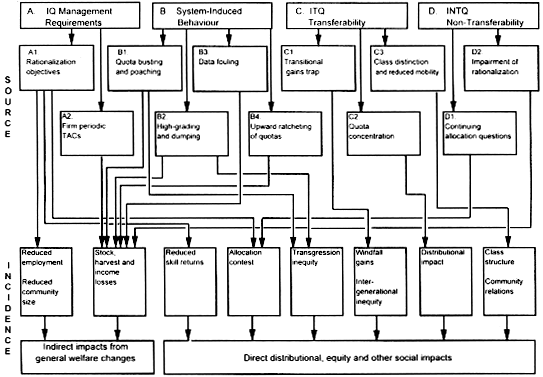
|
BOX 3.1 Effect of IFQs on Fleet Capacity The Netherlands. ITQs have been used in fisheries management in The Netherlands since 1976. The development of fleet capacity and effort since enforcement was tightened is consistent with the effect expected from effective ITQ management. The number of vessels declined from 533 in 1990 to 437 in 1996, and total engine capacity (1,000 units of horsepower) from 544 in 1990 to 467 in 1996 (Smit et al., 1997). It is difficult to ascribe this effect to the workings of the ITQ program alone because other management measures have also been in place, such as licensing of capacity (horsepower) and limits on the number of days at sea. Some of the decline in capacity and effort is due to a stricter enforcement of these measures. Norway. Figure 3.2 shows the number of licensed vessels and the aggregate licensed cargo capacity of the purse seine fleet in Norway. In the early 1970s, a limited entry system was instituted in the Norwegian purse seine fleet for vessels of more than 1,500-hectoliter hold capacity or longer than 90 feet. Individual vessel quota (IVQs) were introduced also, with the quota allocation of each vessel being determined by the licensed hold capacity through a formula that gave relatively smaller quotas to the larger vessels. Because of economies of scale in the fleet, there was a development toward fewer, larger vessels. In the beginning the total licensed capacity actually increased, due to liberal practice of the rules of capacity replacement when old vessels were replaced by new ones. The reduction in total fleet capacity in the 1980s was due, at least in part, to a buyback program financed by the government. Iceland. Whether or not IFQs have reduced the excessive capacity of the fleet in the IFQ fisheries is still an open question. The size of the entire Icelandic fishing fleet in terms of gross register tons has increased slightly since 1990, the year when quotas became long-term and could be expected to have an impact on fleet size. However, some of the increase in capacity may be due to increased distant water fishing, which requires large vessels suitable for long trips. |
- implemented, and no lives were lost between 1992 and 1998; however, the sinking of four vessels in early 1999 resulted in the deaths of 10 fishermen.
- Decreases in total harvest-sector employment have been documented in some IFQ fisheries, primarily as a result of decreased numbers of vessels participating and secondarily as a result of less intensive demand for labor compared to "derby" fisheries. However, the length of employment has increased for those who remain employed in some fisheries (e.g., in the Canadian Pacific groundfish fisheries: Bruce Turris, presentation to the committee).
A common perception is that "power" (bargaining for prices or employment; influence over the management structure; economic influence in communities)
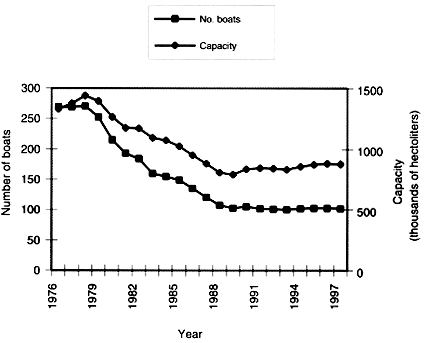
Figure 3.2
Number of license purse seiners and total fleet capacity in Norway.
|
BOX 3.2 Shift in Vessel Size in Icelandic ITQ Fisheries In the Icelandic case, there has been a significant change in the distribution of quota among vessel size classes from the onset of the ITQ program. Many vessel owners have been dropped out of the program, and a large majority of these were the smallest operators. At the same time, quotas are becoming concentrated in the hands of fewer vessel owners and companies (Figure 3.3; see Appendix G for additional details). Many Icelanders are wary of the rapid concentration of ITQs in the hands of large vertically integrated companies. A committee appointed by the Ministry of Fisheries recommended that a ceiling for any single quota holder be fixed by law. The Icelandic Parliament decided to set the limit at 10% for cod and haddock and 20% for other species. |
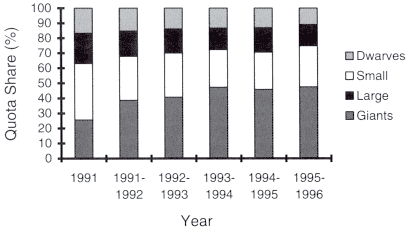
FIGURE 3.3
Changes in holdings of quota share by size of quota holding.
- has shifted in many IFQ-managed fisheries. This is usually attributed both to the generation and ownership of new economic value reflected in IFQs and to the fact that ownership of originally issued IFQs is generally concentrated among vessel owners, rather than the crew or processing sectors.
Concern exists in many IFQ-managed fisheries that certain interest groups or communities will become winners or losers due to the shifts in ownership or control of IFQs over time. Thus, some communities fear the loss of an economic base through the exit of IFQs from the community, and some commercial fishermen fear eventual control of IFQs by environmental or recreational interests. Neither of these outcomes has been documented to date, although some IFQ
TABLE 3.3 Search and Rescue Statistics from Alaskan IFQ Fisheries
|
Year |
No. of Search and Rescue Cases |
Mortalities |
|
1992 |
24 |
5 |
|
1993 |
26 |
0 |
|
1994 |
33 |
1 |
|
(IFQs Implemented) |
|
|
|
1995 |
15 |
0 |
|
1996 |
7 |
2 |
|
1997 |
9 |
1 |
|
SOURCE: U.S. Coast Guard. |
||
|
BOX 3.3 Limitations on Interregional Transfers in Norwegian Individual Vessel Quota (IVQ) Programs In 1996, a new Norwegian regulation allowed a person who buys a licensed vessel and scraps it to retain a part of the quota allocation of that vessel for 13 years. How large a part an individual is allowed to retain depends on whether the vessel is being sold from the northern part of the country to the southern part, vice versa, or within each of these areas:
This policy was implemented because most purse seiners previously located in northern Norway have been sold to operators in the southern part of the country, a trend that the government is trying to reverse. The part of the quota that the buyer of a vessel looses is divided among all the licensed vessels in the fleet. |
- programs have been designed to discourage transfer of quota shares among regions (Box 3.3). Few community-based organizations (e.g., municipalities, cooperatives, development associations) have taken the opportunity to serve as lenders for the purchase of IFQs by individuals, although some of the Bering Sea Community Development Quota groups have done so.
IFQs may be used as collateral at commercial lending institutions in some programs, but this option is weakened in the United States by a delay in the implementation of a lien registry.
- Several of the programs reviewed showed clear evidence of the aggregation of IFQs subsequent to the initiation of the program (e.g., surf clams, ocean quahogs). However, other programs, particularly those that had been designed with provisions intended to prevent aggregation, did not show evidence of aggregation beyond the design parameters of the program (e.g., halibut, sablefish). Thus, aggregation appears to have occurred in those programs that were not designed to prevent it, and not to have occurred in those that were designed to prevent it.
Lessons Learned
The following are the general lessons that can be drawn from the above cases and summaries and from the more complete descriptions in Appendix G.
Social, Economic, and Management Issues
- IFQs have had different effects in different fisheries. Within the broad category of "limited entry or access," IFQs are directed toward different objectives and have different effects from other limited entry or access approaches. For example, under IFQs the number of fishing units or participants may vary; under a license limitation program there are generally a fixed number of licenses (if licenses are not transferable). Neither IFQs nor limited entry directly controls fishing effort, although they may create incentives for changes in the amount or distribution of fishing effort.
- Setting clear objectives that are specifically related to the potential effects of IFQ programs is critical. Confusion often exists regarding the mix of biological versus social or economic objectives in the implementation of IFQ programs. The implementation of IFQ programs clearly has the potential to alter, and in some cases the demonstrated record of altering, (1) the distribution of costs and benefits within the fishing community and (2) the management structure. These actual or potential effects may achieve or conflict with the goals and objectives of the Magnuson-Stevens Act and other applicable law.
- The success of IFQ programs in fulfilling their objectives depends on other provisions of the fishing policy and management program. For example, if the TAC is set too high, the program may fail to meet its biologic objectives, and therefore many of the economic and social objectives also.
- All policy and management, in fisheries or any other sector, involves trade-offs. Achieving the goals of increased overall economic efficiency, more effective enforcement or administration, or more effective conservation through the use of IFQs may lead to reduced breadth of participation by fishermen, reduced total employment in the harvesting sector, and other shifts in the distribution of benefits from the fishery. The critical point is that these trade-offs be clearly identified, estimated prior to decisionmaking, and monitored subsequent to program implementation to provide information for adjusting the program over time and for designing subsequent programs.
- For a variety of reasons—from adequate design to increased acceptance of resulting programs—broad involvement of constituents in all phases of program design and implementation is critical.
Stewardship and Biological Conservation Issues
IFQs are not primarily a biological conservation tool; the TAC and other management measures are the main conservation tools in IFQ-managed fisheries. However, IFQs may benefit the resource by addressing either biological conservation or stewardship objectives. Biological conservation can result indirectly from changes in the behavior of fishermen who improve the efficiency of their fishing operations. The effects are largely second-order ones that follow from
IFQ management, such as decreased ghost fishing, decreased bycatch due to improved selection for target species or marketable sizes, and decreased TAC overruns. These behavioral changes usually result from actions on the part of individual quota holders rather than collective actions on the part of all quota holders. Moreover, it is likely that the immediate biological conservation effects of an IFQ program will not necessarily be an indication of the long-term effects (e.g., increased fish size or recruitment); some of the effects may not be measurable for several years (Gilroy et al., 1996; see also Appendix H).
Stewardship. Stewardship objectives are addressed by the direct actions taken by IFQ holders to promote the health of the fisheries resource and the wider ecosystem supporting the resource. In theory, IFQs provide collective incentives for quota holders to undertake actions such as directly funding research to determine biomass and sustainable yields, decreasing bycatch, reducing the effects of fishing on the environment, or voluntarily accepting TAC reductions to promote conservation of the resource because these actions increase the value of the quota and the potential for increased TACs in future years. These incentives may be stronger with fewer quota holders and the incentive for stewardship may be related directly to the strength of property rights, particularly the length of quota tenure. Alternatively, as mentioned in Chapter 1, stewardship may not be improved by IFQ programs, because like other forms of fisheries management, any individual fisherman reaps the full benefits of illegal actions and the much smaller average costs of the same action. In Nova Scotia, ITQ holders cooperated with government officials to develop improved conservation measures for their fishery; however, official and anecdotal reports of highgrading and data fouling continued (McCay et al., 1998).
Only limited experience is available regarding whether such theoretical results occur in practice. In a few fisheries in New Zealand, quota holders have formed companies that directly fund research to determine biomass and sustainable yields, to conduct fisheries enhancement projects, and to promote voluntary TAC reductions to enhance conservation of the resource. Likewise, wreckfish IFQ holders have underfished the TAC significantly since implementation of the wreckfish IFQ program. However, the committee also received testimony that IFQs do not promote stewardship.
Biological Conservation. Excess harvesting capacity is a fundamental problem with respect to conservation of fishery resources, and biological conservation is an expressed objective of most IFQ programs. Insofar as an IFQ program contributes to reduction in harvest capacity such that directed effort and catches (fishing mortalities) are reduced and/or the fishery is constrained to its TAC, conservation benefits may be real. In New Zealand, the majority of quota holders perceive biological conservation to be the greatest benefit of their IFQ program (Dewees, 1989; Boyd and Dewees, 1992). In Nova Scotia, McCay et al. (1995, 1998) found evidence of collective efforts to improve conservation through adoption of gear changes and closed areas to protect undersized and spawning fish.
If single-species management, the current practice, is indeed the most effective way to prevent overfishing, IFQ programs as a means to control harvest capacity may promote conservation. Although there is limited experience with the application of IFQs to multispecies fisheries, early experience from New Zealand and British Columbia indicates that appropriately structured IFQs can be an effective management tool for multispecies fisheries (Squires et al., 1998).
In actuality, the TAC, combined with size limits, gear restrictions, protection of spawning areas, and other measures, is the primary conservation measure for many exploited fish species. Thus, biological conservation is best achieved by monitoring, enforcement, compliance, and acceptance of stock assessment findings and the management process. Insofar as an IFQ program contributes to the efficacy of any of the above, real biological conservation benefits may result. The following specific issues have bearing on the efficacy of IFQ programs as conservation measures and have been identified in the refereed literature and public testimony to the committee.
Derby Fishing (the race for fish). IFQ programs have been effective in eliminating the derby nature of fisheries to which they have been applied, thereby decreasing directed effort, stabilizing the supply of fish, and decreasing the potential for quota overruns attributable to the difficulty of monitoring catches during short, frantic fishing seasons. On the other hand, some public testimony, especially by those involved in enforcement, has cautioned that a slower pace and prolonged fishing season place an increased burden on those responsible for monitoring and enforcement, thus making it more difficult to prevent quota overruns. It simply becomes much more difficult to know who should and should not be fishing at any given time and place, increasing the potential for “cheating," especially if exvessel prices are high. This makes at-sea enforcement costs higher for some IFQ programs than under a derby (e.g., halibut and sablefish; see Appendix H).
Data Collection and Data Fouling (underreporting catches, falsifying effort and location data, and making honest mistakes). With the implementation of an IFQ program, the nature of how fish are landed, with respect to both time and space, may change dramatically, thus changing how landings must be monitored. Cheating and data fouling can make the TAC-setting process even more difficult.
Empirical evidence from New Zealand indicates that deliberate underreporting of catches (quota busting) has not increased since implementation of IFQ management, although accurate estimates of fishing effort have been more difficult to obtain because of major changes in fishing operations (Boyd and Dewees, 1992). Similarly, quota busting appears to be minimal in the IFQ-managed Alaska halibut fishery (Gilroy et al., 1996). Some evidence suggests, however, substantial underreporting of total sablefish catches in some years, which may be attributable in part to poor estimates of discarded catch (Gilroy et al., 1996). In New Zealand (Dewees, 1989; Boyd and Dewees, 1992; Annala, 1996) and in the Australian southeast trawl fishery (Squires et al., 1995), the
primary resource-related problem identified with IFQ management is the high rate of discarding. This includes both discarding of bycatch for which fishermen do not possess quota (see discussion below) and highgrading to ensure that only the highest-priced portion of the catch is landed and counted against quota. However, fishermen encouraged by high-profile enforcement have learned to modify fishing operations to reduce the amount of illegal discarding as time has progressed (Annala, 1996).
Bycatch and Ghost Fishing. Elimination of the race for fish may provide time for fishermen to search for lower-bycatch fishing grounds (e.g., halibut bycatch in the groundfish fishery in Pacific Canada) and to better care for bycatch species while on deck, thereby decreasing discard mortality. Nevertheless, as Squires et al. (1998) asserted, managing fisheries where several species are caught jointly is especially difficult—part of the mix is likely to be overfished and excessive discards of bycatch can occur.
In New Zealand, IFQs are used in multispecies fisheries and lessons learned there suggest that this form of management can work if sufficient flexibility exists for balancing catches after the fact by acquiring additional quota holdings for bycaught species by the end of some specified time period (Boyd and Dewees, 1992). However, matching the mix of quota held to catches remains a real problem, and excessive bycatch has proven to be a difficulty in certain New Zealand fisheries. In addition, in contrast to U.S. fisheries, in the New Zealand quota management system fishing can continue in multispecies fisheries when either the IFQ or the TAC of a particular species has been filled, if the quota of other associated species has not been caught (Annala, 1996). Thus, many of the overruns in New Zealand TACs have resulted from bycatch in multispecies fisheries (Boyd and Dewees, 1992; Annala, 1996). However, fishermen appear to be adjusting their operations as time passes such that fewer overruns have occurred in recent years (Annala, 1996). Gilroy et al. (1996) estimated that fishing mortality from lost and abandoned gear decreased by 77% in the first year of halibut IFQs. Bycatch discards of halibut in sablefish fisheries decreased by 83%.
Highgrading. In the absence of derby fishing, the incentive for highgrading may be increased as fishermen hunt for fish of the most marketable size and species, but more time for better treatment of discards while on deck may decrease discard mortality of fish caught with some gear types (but not trawls). Empirical evidence from the Alaskan halibut and sablefish fisheries following implementation of the IFQ program indicates that highgrading is not significant in these fisheries (Gilroy et al., 1996; see Appendix G). Indeed, the generalization that highgrading in unlikely to be profitable can be demonstrated (Box 3.4). There is theoretical evidence that the occurrence of highgrading will depend on the unique conditions in each fishery (Anderson, 1994).
Empirical evidence for highgrading in other IFQ-managed fisheries (including some state programs) is mixed. Data from Wisconsin lake trout and Ontario walleye fisheries indicate serious highgrading (Wisconsin lake trout IFQs are
|
BOX 3.4 The High Cost of Highgrading What's to keep fishermen from highgrading—throwing back all their smaller halibut or sablefish in hopes of catching bigger fish—under an IFQ program? British Columbia IVQ fishermen say they can't afford to highgrade halibut. They plan deliveries, aim for maximum efficiency, and don't want to increase operating costs by highgrading. What's the bottom line on highgrading? Figured at September 1991 prices, highgrading would increase a fisherman's revenue by 3.7%, but he or she would have to catch 24.4% more fish to make up for the discards. The IPHC sampled a delivery of 2,537 legal-sized halibut totaling 74.514 pounds. They found 38.47% of the fish (19.65% by weight) were 10-20 pound halibut. A fisherman could discard those 14,639 pounds of 10- to 20-pound halibut and try again, but would have to catch 18,217 more pounds of halibut—620 additional fish—to make sure to land at least 14,514 pounds of fish larger than 20 pounds. The additional catch would earn $5,300 more, but would rack up excess operating expenses. In other words, you would forego $30.058 in revenues from the fish discarded to earn an additional $5,300 (see below). The table shows how much more fish a harvester would have to catch to make up for highgrading, and the minimal revenue that highgrading would produce. Results would be similar for sablefish. Sept. '91
|
||||||||||||||||||||||||||||||||||||||||||||||||||||||||||||||||||
expressed in numbers of fish), but it appears to be minimal in the Gulf of St. Lawrence trawl, Australian bluefin tuna, and San Francisco Bay herring roe fisheries (Squires et al., 1995). Fisheries in which highgrading is not a serious problem seem to be characterized by minimal price differentials among fish sizes and/or relatively high costs of catching replacement fish (Squires et al., 1995).
Discarding of small and immature fish during fishing operations and
highgrading of the catch seem to continue to be a serious problem in the Icelandic fishery, and the problems may have escalated with IFQs. Since quotas are fixed and excessive catch is a violation of the law and subject to prosecution, a quota holder tends to land only the portion of the catch that generates the highest income. It is difficult to estimate the scale of such practices, but the Icelandic Parliament expressed grave concerns and passed strict laws on the treatment of fishing catches in June 1996. Concerns about highgrading, quota busting, and discards are most prominent in fisheries that lack onboard observers. If IFQ-managed fisheries develop bycatch discard problems, it may be necessary to implement or expand observer programs for these fisheries.
Stock Assessment and TAC Setting. Accurate and timely stock assessments to set TACs are an integral part of most IFQ programs because IFQs represent a privilege to harvest part of the TAC. An IFQ program may affect data quality and data collection programs used to set TACs and assess the stocks (Squires et al., 1995). For example, IFQ programs can affect stock assessments due to changes in fishing behavior (Squires et al., 1995). Shifts in fishing location or seasonal patterns may alter catch rates and indices of stock abundance derived from CPUE; there may be changes in the selectivity for different sizes of fish that alter the maximum sustainable yield and the target rates of exploitation on which the TACs are based. TAC setting is invariably a somewhat unpredictable process; these uncertainties affect the expectations of fishermen in their decisions about involvement in IFQ and other limited entry programs.
Underfishing TACs. Clark (1985b) presents a theoretical model that predicts the level that catches will underrun the TAC when managed under an IFQ program. Copes (1986) argued that IFQs hamper reaching the TAC because fishermen are punished for catching more than their quotas. In New Zealand, many TACs have been substantially underfished, even when very large catch reductions were imposed at the time IFQs were introduced (Boyd and Dewees, 1992). The precise reasons for underfishing are unknown, but Boyd and Dewees (1992) suggest that quota busting has been substantially reduced and that fishermen are undercatching many species (especially in multispecies fisheries) because of the limiting effect of possessing sufficient IFQs for other species in their catch mix. Thus, many fish stocks are probably benefiting from lower catch rates, resulting in faster rebuilding of some stocks that were formerly overfished (Boyd and Dewees, 1992; Annala, 1996). Similar reductions in landings of Alaska halibut (a 10% decrease) occurred immediately following the implementation of the halibut IFQ program (Gilroy et al., 1996; Knapp, 1997a, b), but landings have since increased to within a few percentage of the TAC (see Figure G.4). In the wreckfish IFQ program, the TAC has been so substantially underfished that some other factor must be operating. For example, wreckfish fishermen may be maximizing their profit by limiting the supply of wreckfish sold to certain amounts or certain times of the year.


