
4
Accounting for Renewable and Environmental Resources
The previous chapter reviewed issues involved in extending the national accounts to include subsoil assets. This chapter focuses on two other aspects of environmental accounting: renewable and environmental resources. BEA has proposed covering these two categories of resources in future work on integrated accounting. As discussed in Chapter 1, Phase II of that work would focus on different classes of land (e.g., agriculture, forest, and recreation land), on timber, on fisheries, and on agricultural assets such as grain stocks and livestock. Phase III would address environmental resources, including, for example, air, uncultivated biological resources, and water.
The general principles set forth in Chapter 2 indicate that increasingly severe obstacles are likely to arise as the national accounts move further from the boundaries of the market economy. The discussion in this chapter confirms the premise that BEA's Phase III raises the most difficult conceptual, methodological, and data problems. This finding presents a dilemma that must be faced in expanding the accounts: Should follow-on efforts focus on those resources that can be most easily included given existing data and methods, or should BEA focus on including those resources that would have the largest impact on our understanding of the interaction between the U.S. economy and the environment? The panel's investigation, while based on data that are highly imprecise and in some cases speculative, suggests that the development of the accounts proposed for Phase III would be likely to encompass the most significant
economy-environment interactions. This observation is tempered by the realization that to date nothing approaching adequate comprehensive environmental accounting for a country of the complexity of the United States has yet been undertaken. For BEA or the federal government to prepare a full set of environmental accounts would require a substantial commitment.
This chapter provides a review of the issues involved in accounting for renewable and environmental resources. It is not intended to be a comprehensive review of work in this area. Rather, it delineates the issues that are involved in environmental accounting and presents two important specific examples that illustrate these issues. The first section reviews BEA's efforts in environmental accounting to date. Next, we analyze how stocks and flows of residuals from human activities relate to natural sources of residuals, natural resource assets, stock, flows, and economic activity. The third section examines issues involved in accounting for renewable and environmental resources. The chapter then turns to general issues associated with the physical data requirements of environmental accounting and with valuation. We next investigate in greater detail the cases of forests and air quality to illustrate how augmented accounting might actually be done. The chapter ends with the panel's conclusions and recommendations in the area of accounting for renewable and environmental resources. Appendix B identifies potentially useful sources of data for developing supplemental accounts identified by the panel in the course of its investigation.
BEA Efforts to Date in Accounting for Renewable and Environmental Resources
This section reviews BEA's initial design for its supplemental accounts for natural-resource and environmental assets. A more complete evaluation of BEA's efforts on forests is included later in the chapter. As discussed in Chapter 2, a critical issue involved in the development of augmented accounts is setting the boundary. How far from the boundary of the marketplace should the purview of the environmental accounts extend? Table 4-1 shows BEA's tentative decisions on how it proposed to structure its supplemental accounts (BEA's Integrated Environmental and Economic Satellite Accounts [IEESA] from Bureau of Economic Analysis, 1994a:Table 1). Phase II of BEA's development of supplemental tables focused on assets listed in rows 22-35 and 42-47 of Table 4-1, while Phase III considers rows 48-55. Because BEA has not completed Phases II and III, actual decisions on what will be included have yet to be made. Each of the following sections of this chapter considers an element of how to draw the line. While an ideal set of accounts would contain "everything,"
TABLE 4-1 IEESA Asset Account, 1987 (billions of dollars). This table can serve as an inventory of the estimates available for the IEESA's. In decreasing order of quality, the estimates that have been filled in are as follows: For made assets, estimates of reproducible tangible stock and inventories, from BEA's national income and product accounts or based on them, and pollution abatement stock, from BEA estimates (rows 1-21); for subsoil assets, the highs and lows of the range based on alternative valuation methods, from the companion article (rows 36-41); and best available, or rough-order-of-magnitude, estimates for some developed natural assets (selected rows 23-35 and 42-47) and some environmental assets (selected rows 48-55) prepared by BEA. The "n.a."—not available—entries represent a research agenda.
|
|
|
|
Change |
|
|
|
|
|
|
Row |
Opening Stocks |
Total, Net (3+4+5) |
Depreciation, Depletion, Degradation |
Capital Formation |
Revaluation and Other Changes |
Closing Stocks (1+2) |
|
PRODUCED ASSETS |
|
|
|
|
|
|
|
|
Made assets |
1 |
11,565.9 |
667.4 |
-607.9 |
905.8 |
369.4 |
12,233.3 |
|
Fixed assets |
2 |
10,535.2 |
608.2 |
-607.9 |
875.8 |
340.2 |
11,143.4 |
|
Residential structures |
3 |
4,001.6 |
318.1 |
-109.8 |
230.5 |
197.4 |
4,319.7 |
|
Fixed nonresidential structures and equipment |
4 |
6,533.6 |
290.1 |
-498.1 |
645.3 |
142.9 |
6,823.7 |
|
Natural resource related |
5 |
503.7 |
23.1 |
-19.2 |
30.3 |
12.0 |
526.8 |
|
Environmental management |
6 |
241.3 |
8.4 |
-7.0 |
10.6 |
4.7 |
249.6 |
|
Conservation and development |
7 |
152.7 |
3.6 |
-4.4 |
5.3 |
2.7 |
156.4 |
|
Water supply facilities |
8 |
88.5 |
4.8 |
-2.5 |
5.3 |
2.0 |
93.3 |
|
Pollution abatement |
9 |
262.4 |
14.7 |
-12.2 |
19.7 |
7.3 |
277.1 |
|
Sanitary services |
10 |
172.9 |
12.8 |
-5.6 |
13.7 |
4.8 |
185.8 |
|
Air pollution abatement and control |
11 |
45.3 |
.6 |
-4.1 |
3.5 |
1.3 |
45.9 |
|
Water pollution abatement and control |
12 |
44.2 |
1.3 |
-2.5 |
2.6 |
1.2 |
45.5 |
|
Other |
13 |
6,029.9 |
267.0 |
-478.9 |
615.0 |
130.9 |
6,296.9 |
|
|
|
Change |
|
|
|
|
|
|
|
Row |
Opening Stocks |
Total, Net (3+4+5) |
Depreciation, Depletion, Degradation |
Capital Formation |
Revaluation and Other Changes |
Closing Stocks (1+2) |
|
Inventories |
14 |
1,030.7 |
59.3 |
................. |
30.1 |
29.2 |
1,090.0 |
|
Government |
15 |
184.9 |
6.8 |
................. |
2.9 |
3.8 |
191.7 |
|
Nonfarm |
16 |
797.3 |
62.4 |
................. |
32.7 |
29.7 |
859.7 |
|
Farm (harvested crops, and livestock other than cattle and calves) |
17 |
48.5 |
-9.9 |
................. |
-5.5 |
-4.4 |
38.6 |
|
Corn |
18 |
10.2 |
.3 |
................. |
-1.1 |
1.4 |
10.5 |
|
Soybeans |
19 |
5.0 |
-.1 |
................. |
-1.0 |
.9 |
4.9 |
|
All wheat |
20 |
2.6 |
0.0 |
................. |
-.2 |
.2 |
2.6 |
|
Other |
21 |
30.7 |
-10.1 |
................. |
-3.2 |
-6.9 |
20.6 |
|
Developed natural assets |
22 |
n.a. |
n.a. |
n.a. |
n.a. |
n.a. |
n.a. |
|
Cultivated biological resources |
23 |
n.a. |
n.a. |
n.a. |
n.a. |
n.a. |
n.a. |
|
Cultivated fixed natural growth assets |
24 |
n.a. |
n.a. |
n.a. |
n.a. |
n.a. |
n.a. |
|
Livestock for breeding, dairy, drought, etc. |
25 |
n.a. |
n.a. |
n.a. |
n.a. |
n.a. |
n.a. |
|
Cattle |
26 |
12.9 |
2.0 |
n.a. |
-.3 |
2.3 |
14.9 |
|
Fish stock |
27 |
n.a. |
n.a. |
n.a. |
n.a. |
n.a. |
n.a. |
|
Vineyards, orchards |
28 |
2.0 |
.2 |
n.a. |
0.0 |
.2 |
2.2 |
|
Trees on timberland |
29 |
288.8 |
47.0 |
-6.9 |
9.0 |
44.9 |
335.7 |
|
Work-in-progress on natural growth products |
30 |
n.a. |
n.a. |
................. |
n.a. |
n.a. |
n.a. |
|
Livestock raised for slaughter |
31 |
n.a. |
n.a. |
................. |
n.a. |
n.a. |
n.a. |
|
Cattle |
32 |
24.1 |
7.5 |
................. |
0.0 |
7.5 |
31.6 |
|
Fish stock |
33 |
n.a. |
n.a. |
................. |
n.a. |
n.a. |
n.a. |
|
Calves |
34 |
5.0 |
.9 |
................. |
-.5 |
1.4 |
5.9 |
|
Crops and other produced plants, not yet harvested |
35 |
1.8 |
.3 |
................. |
.1 |
.2 |
2.1 |
|
Proved subsoil assets |
36 |
270.0-1066.9 |
57.8-116.6 |
-16.7-61.6 |
16.6-64.6 |
58.0- -119.6 |
299.4-950.3 |
|
Oil (including natural gas liquids) |
37 |
58.2-325.9 |
-22.5-84.7 |
-5.1--30.6 |
5.8-34.2 |
-23.1- -88.3 |
35.7-241.2 |
|
Gas (including natural gas liquids) |
38 |
42.7-259.3 |
6.6-57.2 |
-5.6--20.3 |
4.1-14.9 |
8.1- -51.8 |
49.4-202.2 |
|
Coal |
39 |
140.7-207.7 |
2.2-3.4 |
-5.4--7.6 |
4.4-6.3 |
3.2- -2.1 |
143.0-204.2 |
|
Metals |
40 |
(*)-215.3 |
67.2-29.5 |
-.2--2.2 |
2.2-9.2 |
65.2-22.5 |
38.5-244.8 |
|
Other minerals |
41 |
28.4-58.7 |
4.3-.8 |
-.4- -.9 |
.1-0.0 |
4.6-.1 |
32.8-57.9 |
|
Developed land |
42 |
n.a. |
n.a. |
n.a. |
n.a. |
n.a. |
n.a. |
|
Land underlying structures (private) |
43 |
4,053.3 |
253.0 |
n.a. |
n.a. |
n.a. |
4,306.3 |
|
Agricultural land (excluding vineyards, orchards) |
44 |
441.3 |
42.4 |
n.a. |
-2.8 |
45.2 |
483.7 |
|
Soil |
45 |
n.a. |
n.a. |
-.5 |
n.a. |
n.a. |
n.a. |
|
Recreational land and water (public) |
46 |
n.a. |
n.a. |
-.9 |
.9 |
n.a. |
n.a. |
|
Forests and other wooded land |
47 |
285.8 |
28.8 |
n.a. |
-.6 |
29.4 |
314.6 |
this chapter examines practical issues that arise in constructing actual accounts based on available data and tools. As will be seen, the practical is likely to fall far short of the ideal.
Pollution Abatement and Control Expenditures
One particular entry in the environmental accounts—pollution abatement and control expenditures—has been the subject of detailed investigation by BEA for many years. These items are shown for 1987 in rows 5-12 of Table 4-1. The Bureau of the Census began collecting these data and BEA reporting them in 1972 (with some breaks in the series); these efforts were suspended in 1995 because of budget cuts. Reporting of these costs does not extend the accounts, but rather reorganizes the existing accounts to provide a better indication of the interaction between the environment and the economy.
The limitations of these data are well recognized and were discussed in Chapter 2. Many of the costs included in the data overstate the cost of pollution control, while other pollution-reducing costs are omitted because they involve changes in processes. There is also controversy about the extent to which stringent pollution control regulations may have a chilling effect on innovation and technological change. Finally, little thought has been given to the appropriate treatment of purchases of emission permits, which are likely to become a more important feature of environmental regulation in the future. Despite their limitations, however, data on pollution abatement are likely to be among the most precise of the data in the environmental accounts, and they have been extremely useful for understanding trends and levels in control costs and for examining how environmental programs have affected productivity. The panel finds that the data on pollution abatement expenditures are valuable and, as noted in the final section of this chapter, recommends that funds be provided to improve the design and recommence collecting these data.
Other Sectors of the Proposed Accounts
As reported by BEA, the quality of actual entries in published supplemental accounts for Phase II and III assets ranges from relatively good to conceptually defective.1 For Phase II assets, estimates within the category ''developed land" are described as "of uneven quality" (p. 45). According to BEA, agricultural land values are "relatively good and are based on U.S. Department of Agriculture estimates of farm real estate
values less BEA's estimates for the value of structures" (p. 45). BEA has not attempted to estimate the value of recreational land, but has entered federal maintenance and repair expenditures as an investment (see Table 4-1) and "assumed that these expenditures exactly offset the degradation/depletion of recreational land" (p. 45). BEA indicates that this assumption is made only for purposes of illustration and is "not to imply any judgment about the true value of degradation/depletion" (p. 45). A more detailed discussion of BEA estimates for timber and land in forests is presented later in this chapter.
For Phase III assets, BEA has entered "n.a." for most of the items, indicating that these estimates have not yet been developed. Entries for investment in and degradation of water, air, and undeveloped land are included, however. As in the case of developed recreational land, BEA has assumed that maintenance exactly offsets degradation, noting that this assumption provides entries that "are simply place markers" (p. 46). In the panel's view, the use of maintenance expenditures as degradation costs is highly misleading, and this procedure should not be followed in the future. Entering "n.a." would be more accurate. The panel notes, however, that these estimates do not necessarily reflect BEA's planned approaches, but were included by BEA to show the current state of data and research.
Regarding future plans, the United Nations System of Integrated Environmental and Economic Accounting (SEEA) "does not recommend that the stock of air—which is truly a global common—or water be valued; instead it recommends that valuation be limited to changes in these assets—their degradation and investments in their restoration" (p. 46). It should be emphasized that the entries for environmental assets in Table 4-1 are highly oversimplified. Some components of air quality, such as greenhouse gases and stratospheric ozone, are truly global assets and services; others, such as reductions in urban smog, are local and regional public goods. Additional dimensions that need to be incorporated are relations to external events, spatial resolution, and nonlinearities in damages. The discussion of air quality later in this chapter illustrates its multiple dimensions. Similarly, water quality and quantity, undeveloped land, and uncultivated biological resources are composites of many different assets and quality characteristics that provide multiple goods and services.
BEA's efforts have focused on the asset accounts. A preliminary table for a production account without entries is included in BEA's report on its development of the IEESA (Bureau of Economic Analysis, 1994a, 1994b). Production of market goods and services from these natural assets—e.g., timber, agricultural crops, fish—is already in the core production accounts. Greater attention is needed to identifying, measuring, and valu-
ing the specific types of nonmarket goods and services produced by these assets.
Pollutant Emissions and Their Relation to Stocks, Flows, and Economic Activity
Before constructing environmental accounts, it is necessary to determine the interactions between natural resources and the environment and economic activity. It is essential to understand the key physical flows and stocks and how they affect humans and economic activities and values. A complete accounting requires detailed knowledge of the physical properties of resources and pollutants as described in fate, transport, and impact or damage models, as well as the service flows to market and nonmarket sectors.
Figure 4-1 illustrates key relationships among emissions, stocks of pollutants, natural- resource assets, and economic activities in different sectors. As the figure shows, economic activities produce a variety of uninternalized emissions and residuals that find their way into the environment. Many of the pollutants of concern are residuals that also have natural sources—sulfur, carbon dioxide, carbon monoxide, nitrogen compounds—and are emitted during volcanic eruptions, produced by forests and wetlands, or released from wildfires. Other residuals of concern—such as chlorofluorocarbons (CFCs) and many pesticides used in agriculture—are anthropogenic and have no natural sources. In terms of effects on human activities, the sources of the residuals are not important. What may be important is that human activities have increased the levels occurring in the environment, concentrated them to a degree that makes them dangerous, or relocated them to areas where people or economic activities are exposed to them at high levels.
Whether from natural sources or human activities, environmental variables can affect economic well-being in three general ways, as illustrated in Figure 4-1: (1) direct effects on consumption or income of households, industry, and government; (2) accumulation in the environment of stocks of residuals that then affect economic activities or economic assets; and (3) effects on the service flows of economic assets (capital stock, natural resources, or human resources), such as recreation, clean air to breathe, and navigable river channels free of sedimentary deposits.
Direct Effects
Environmental variables affect human and natural systems directly. Urban smog, whose concentrations change daily or even hourly, is an obvious example. Sulfate and nitrate aerosols, pollutants contributing to acid precipitation, remain in the atmosphere for a matter of days. These
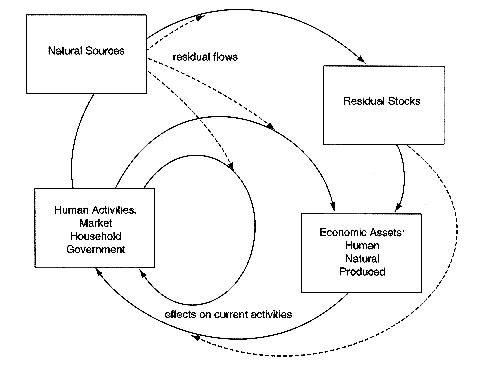
Figure 4-1
Human Activities, Residuals, and Economic Assets.
pollutants have short-term health effects, reduce visibility, interfere with recreational activities, affect crop growth, and present their own set of problems for accounting. In many cases, the substances emitted are precursor emissions; that is, they react chemically in the atmosphere with other substances to form the substance that is ultimately damaging to humans or ecosystems. There are also complex nonlinearities because the formation of the damaging substance depends on the level of precursor emissions, weather conditions, and the presence of other substances with which the precursor emissions react. All of these processes vary on an hourly, daily, and seasonal basis. Emissions, concentrations, and impacts of damaging substances also vary spatially, and there may be important threshold effects as well. Above all, there is the "weed syndrome"—the fact that the same substance may be beneficial or harmful depending on where it is, how much of it there is, the time and duration of exposure, and what organism is absorbing it. Virtually every substance on earth, from water to plutonium, can be an economic good or an economic weed depending on the circumstances.
One of the most important difficulties is that the physical measurements used are often inaccurate indicators of actual human exposures. Average emissions of the precursor pollutant, average concentrations over the year, or concentration data for limited sites are generally not representative of concentrations to which the population is exposed and may be a misleading basis for developing damage estimates. For example, tropospheric ozone forms mainly in warm weather. Thus total annual hydrocarbon emissions, the precursor to tropospheric ozone, are a poor indicator of potential levels of tropospheric ozone. Tropospheric ozone levels also very significantly over the distance of a few city blocks. One of the major challenges both for better environmental policy and for the construction of environmental accounts is to obtain better measures of direct human exposure to the important harmful substances among a representative sample of people.
Accumulation of Stocks
Many environmental problems result from the accumulation of residuals. These substances include most radiatively active trace gases, which remain in the atmosphere for decades or centuries, and many radioactive materials, which have half-lives of decades or centuries. Similarly, recovery from stratospheric ozone depletion is a process requiring years or decades. And agricultural chemicals often migrate very slowly through soils, contaminating drinking water only after several years or decades.
Environmental accounting therefore needs to develop and include appropriate methods to account for those persistent pollutants, such as heavy metals that accumulate in the environment and last for many years. Each year's emissions or production of residuals adds to the stock in the environment, and it is necessary to understand the processes by which these stocks decay or dissipate. In some cases (as with radioactive substances), those processes are easily understood, while in other cases (such as subsoil toxins or the carbon cycle), understanding the processes poses enormous scientific challenges. In the economic accounts, the stock-flow dynamics are similar to those of gross investment and depreciation of capital. While there is a conceptual similarity, however, there is no readily observable market price for these stock changes. Hence, valuation of a change in stock requires estimating the value of the impact of additions over the lifetime of the stock, accounting for dissipation, and appropriately discounting future effects. It should also be recognized that, with a few exceptions, the stocks are extremely heterogeneous, so that measuring a simple "environmental capital stock" is likely to be extremely difficult.
Effects on Economic Assets
Both short-lived and long-lived residuals can affect economic activity over a number of years through their effects on other economic assets, in particular produced capital goods such as buildings and equipment. For example, acid precipitation can cause deterioration of buildings. Accumulated greenhouse gases can result in coastal flooding and higher storm surges, thereby adversely affecting the value of existing coastal structures. Pollutants such as lead can cause long-lasting health consequences, impacts on intellectual functions, and premature death.
Issues Involved in Accounting for Renewable and Environmental Resources
The previous section addressed the major ways in which natural resources and the environment interact with economic activity. Depending on the intended uses of the data, there are different approaches to structuring environmental and natural-resource accounts. The most complete accounting structure would treat all the relationship in Figure 4-1. However, constructing such a complete set of accounts is infeasible today, and governments must choose areas for investigation strategically in accordance with their national economic and environmental goals and interests. This section delineates some possible approaches to accounting for natural and environmental resources and activities.
Production and Income Accounts
A complete set of production accounts would identify all the cross-relationships among industry, household, government, and natural sources of emissions or residuals, as well as the nonmarketed current account input services provided by nature and the productive contribution of nature to final demand. Current-year activities would include production of residuals, just as traditional economic accounts include production accounts. A complete set of accounts would incorporate flows of residuals from abroad, similar to imports of goods and services. It would also be necessary to calculate the "price"—negative or positive—indicating whether the effect was adverse or beneficial. The accounting for current-year activities would include final uses of residuals, identifying effects on final consumption, flows abroad, and contributions to capital stocks, just as traditional accounting frameworks identify final consumption of goods and services, exports, and gross capital accumulation.
Accounting for Capital Assets
It is important to measure the volumes and values of the nation's natural assets for many reasons. One purpose is simply to determine general trends. Another, illustrated in Table 4-1, is to determine the relative magnitudes of different assets. A further reason arises in the context of sustainable economic growth. As discussed in Chapter 2, one can calculate measures of sustainable income if one corrects conventional measures of national income by including the value of the change in the stocks of natural and other assets.
For all of these reasons, we would ideally like to have measures of the value and volume of the nation's natural assets; thus we must include measures not only of "made assets," such as houses and computers, but also renewable resources, such as timber or the fertility of land, and non-renewable assets, such as oil and mineral resources. It is important to know whether the economy is generating an ever-growing stock of damaging environmental residuals that will pose a large economic burden on future generations. We want to know whether the economic value of investments in tangible, human, and technological capital is more than offsetting whatever depletion of natural assets is occurring.
There is a close connection between the production accounts and the asset accounts (see Chapter 2). As noted above, measures of comprehensive income or of sustainable income include not only current consumption flows, but also the value of the change in the stocks of assets. Hence augmented accounting requires careful and accurate measurement of both assets and consumption flows. Such measurement is currently undertaken within the boundary of the marketplace, but augmented accounting would require extending that boundary for both assets and consumption in a consistent manner. The conceptual basis for asset valuation in environmental accounts parallels closely that in the conventional accounts. Depletion and degradation of natural resources is conceptually similar to depreciation of produced capital assets. Stocks of residuals can decay or dissipate, a process that is again conceptually similar to depreciation of produced assets. Natural growth of biological resources, recharge of groundwater resources, and accumulation of residuals are conceptually similar to gross capital formation or investment. Net accumulation of assets is equal to the value of the change in stocks. Many of the issues involved in constructing chain indexes of values and volumes translate directly into measurement of resource and environmental stocks.
However, some special conceptual difficulties arise in measuring stocks of natural assets. Natural-resource assets (like a physical plant or piece of equipment) are complex systems of component parts that have value because of the way they work together. Since produced capital assets are
generally purchased or constructed as modules, they can be valued on the basis of their own market prices, rather than their synergistic contribution to output. To take an analogy, a baseball player's contribution to the team is a complex function not only of hitting, pitching, and fielding, but also of temperament, teamwork, and verbal abilities; from an accounting perspective, however, the economic contribution is simply wages and other compensation. For environmental assets, determining the value will become difficult when the effort extends beyond the market boundary. Consider a forest. How can the value of the stumpage in the forest be separated from the forest's contribution to erosion control, air quality, and biodiversity?
Even when markets produce evidence of the value of a bundle of assets—the composite value of soils, timber, nearness to water, and recreation—it may be difficult to separate out the values of the different components without applying complicated statistical procedures. Sometimes, the separation is misleading, as when the value of the components depends on their being together. An assembled bicycle is different from a pile of parts; similarly, forests, lakes, rivers, farmland, and coastal estuaries are valuable because of the way they are assembled.
One possible way of avoiding this difficulty is to redefine assets in terms of particular functions or characteristics, an approach similar to that taken in hedonic valuation, whereby goods are viewed as packages of characteristics. This approach would be similar to redefining an automobile as a combination of transportation mode, public-health menace, and status symbol. Under this approach, an asset is valued in terms of the sum of the values of its various characteristics. In this view, there is little point in trying to analyze the total value of holistic assets such as land or air or climate; rather, one undertakes the more modest task of looking at the different functions involved.2 BEA's treatment of soil erosion is consistent with this approach; agricultural land is treated as the asset and the soil depth and organic-matter content as characteristics of the land. Other aspects of land quality—local climate or ambient level of pollution—can be considered in a similar manner. Identification of the economic effects of erosion on the value of land makes the resource link explicit.
Thus, a potentially useful alternative to considering the holistic value of assets is to consider how changes in air quality affect the value of agricultural land, forests, residential property, and human capital. Thus, fundamental nonhuman assets might include forests, lakes, rivers, estuaries, coastal regions, wetlands, farmland, and residential property. This
approach has two further attractive features: it allows better integration with existing accounts, since some of these assets (such as residential property and forests) have an extensive existing database; and it allows incremental development of a set of valuations, building upon those in the market sector.
Practical Choices in Expanding the Accounting Framework
A complete accounting system including interactions in the production and asset accounts would be a significant undertaking. Deciding on the scale of augmented accounting and the next steps to be taken will require considerable strategic thought. One question is whether the accounts will be used for scorekeeping or for management (see the discussion in Chapter 2).
Scorekeeping, which involves developing a better measure of the performance of the economy over time, is one perspective. It addresses the questions of trends in the values of environmental assets and whether current consumption is sustainable. If scorekeeping of this type is the purpose of supplemental environmental accounts, it will simplify the enterprise because there will be no need to consider intermediate interactions between production sectors. Tracing where pollutants were produced and how they affect intermediate product is unnecessary as long as one can measure final consumption and changes in assets. For example, a dying forest is a deteriorating asset; whether the deterioration is caused by acid precipitation, tropospheric ozone, or pest infestation is secondary from a scorekeeping perspective. What is important is to measure the deterioration accurately. Similarly, the overall health and skills of human populations is a central issue in measuring whether the economy as currently structured is leading to an increase or decrease in the stock of human capital. Why the change is occurring—whether because of changes in health care or education expenditures or reductions in blood lead—is secondary to the measurement issue. Overall scorekeeping would note the substantial improvements in the health status of Americans over this century rather than decreases in particular ailments.
The second broad perspective on the function of environmental accounts is that of environmental management. This perspective focuses on the sources, transportation, and ultimate disposal of residual pollutants, particularly their contributions to outcomes of economic and ecological consequence. Knowing to what extent particular emissions of residuals come from utilities, automobiles, or volcanic eruptions is critical to developing strategies for control. If human sources are dwarfed by natural sources, for example, efforts to control human sources may be futile. Similarly, knowing that life expectancies have increased dramatically is not
very useful to understanding whether there are benefits to tightening controls on small particles or ozone. Improvements in health care, occupational safety, and traffic safety may result in increasing life spans and health status more than pollutants are shortening life span—but reducing pollution further could extend lives further. Thus, if the supplemental accounts are meant to support environmental management decisions, knowing the sources of pollutants and the specific causes of changes in asset quality are essential.
Analogy with Economic Accounts
The discussion in this section has emphasized the complexity involved in constructing environmental accounts. It is useful to compare environmental with conventional economic accounting. A little reflection suggests that economic activity has a similar, almost fractal complexity when one looks under the surface. It would be just as difficult to measure the physical flows in economic life as in environmental life, and indeed many of the same processes come into play. Consider the problems involved in accounting for a simple loaf of bread. Doing so would require measuring and valuing a wide variety of flows of water, fertilizer, pesticides, labor, climate, and capital inputs that go into producing the wheat; the fuels, transport vehicles, emissions, weather-related delays, induced congestion, or floods involved in transportation; the molds, spores, and miscellaneous rodents and their droppings that invade the storage silos; the complex combination of human skills, equipment, and structures that go into milling the wheat; the entrepreneurship of the baker and the software in the computer-operated baking and slicing machinery; the complex chemistry and regulatory environment involved in the wrapping materials; and the evolving ecology of the distribution network. Behind each of these elements, in addition, is the complex general equilibrium of the marketplace, which determines the selection of production processes by prices, taxes, and locations, along with the further complexity of needing to unravel the input-output structure of the inputs into each of the steps just described.
It appears unlikely that anyone would try, and safe to conclude that no one could succeed in, describing the physical flows involved in this little loaf of bread. Fortunately, however, economic accounting does not attempt such a Herculean task. Rather, the national accounts measure all these activities by the common measuring rod of dollars. Although the dollar flows are routinely broken down into different stages—wheat, transportation, milling, baking, and distribution—one could never hope to describe the flows physically and then attach dollar values to each physical stage. Yet this is just what would be required for a full and
detailed set of environmental accounts. The above comparison may give some sense of why accounting for environmental flows outside the marketplace is such a daunting task.
Physical Data Requirements: General Issues
Some of the analytical questions involved in environmental accounting have been analyzed in the previous section. To construct actual accounts requires both obtaining accurate physical data (discussed in this section) and valuing the flows (discussed in the next section).
Accurate data on physical flows and stocks are a prerequisite for developing any accounting system and are the focus of national accounting systems under development in several European nations. In some areas, ample physical data are available as a by-product of regulatory monitoring and resource management systems. Appendix B lists a number of databases identified by the panel that may be of use in further work on supplemental accounts.
Three concerns are fundamental to understanding data and measurement requirements for the development of environmental accounts: (1) the dose-response relationship, (2) measurement of actual doses experienced, and (3) the fate and transport of residuals in the environment. The first, the dose-response relationship, is the physical relationship between the concentration of or exposure to an environmental change and the response of the subject experiencing the dose. The dose-response relationship is applied to many different situations, for example, the response of trees and crops to chemicals such as carbon dioxide, tropospheric ozone, or acid deposition and the response of humans to pollutants such as lead, particulate matter, or radiation.
Dose-response relationships are often difficult to determine because they may be affected by complex interactions and intervening factors. For example, there are extensive medical data on causes of death and, less universally, illness. To determine impacts of environmental changes on human or natural ecosystems requires separating out the different causes of premature death or illness. In some areas, such as the impact of tobacco or lead, the relationships are relatively well established; in other areas, such as the impact of particulate matter or ozone, much uncertainty persists. For many of these relationships, average exposure over the year is rarely the relevant measure. Damage may be related to extreme levels or to periods in which the subject is particularly sensitive to the agent; acute effects may differ from chronic effects related to long-term, low-level exposure.
Resolving these uncertainties about dose-response relationships is important for policy decisions, such as the level at which to set primary
air-pollution standards. Resolution of these uncertainties would also allow construction of environmental accounts. The panel's review of work in this area indicates that the preparation of estimates of the economic impacts of air pollution is feasible today, but there are enormous uncertainties at virtually every stage of the effort. While BEA or those preparing environmental accounts would not necessarily be involved in preparing dose-response estimates, the accountants will need to work closely with public-health, agricultural, forestry, and ecological experts to use the best information available.
In addition to understanding the dose-response relationship, national accounting requires regular, statistically valid monitoring of the relevant populations and the doses they are receiving. A basic limitation of much of the data currently collected is that ambient concentration levels in areas where individuals, crops, forests, or other relevant entities actually reside are poorly measured. Most measurements occur at sites of convenience rather than sites of relevance. Air pollution monitors are often placed with other monitoring devices where airplanes congregate rather than where people live.
A full account of economic-environmental interactions also requires tracking the fate and transport relationship, or the connection between the emission of a particular pollutant or pollutant precursor at one time and geographic point and the level, time, and location of the pollutant at the point where it affects an economic asset or activity. These relationships are generally highly complex and variable. For air pollutants, wind direction and speed, temperature, cloudiness, and precipitation all affect how a pollutant is dispersed or concentrates. Precursor pollutants sometimes do not create damage themselves, but react chemically in the atmosphere to create other agents that are damaging. Acid precipitation and tropospheric ozone are examples. The formation of these pollutants depends on the presence of other agents that may limit, speed, or slow the process. Monitoring of emissions, concentrations, exposures, and consequences would provide the physical foundation for a complete set of environmental accounts, and is also a critical part of environmental management.
The goals of environmental accounting will dictate the assignment of priorities for improved data. Extensive data on the fate and transport of emissions and concentrations of pollutants are a lower priority if the goal is scorekeeping; even dose-response relationships may be secondary to more direct measurement of consumption flows or changes in important capital and environmental assets and human health status. If one is interested primarily in measuring the sustainability of economic activity, understanding the health status of human and natural systems is more important than understanding why conditions have changed. On the other
hand, understanding these technical relationships is essential if environmental accounts are to serve as a data set to support environmental management, in which the goals are to understand the severity and causes of environmental problems, along with remedies needed to mitigate those problems.
Valuation: General Issues
Once appropriate physical data have been developed, the next step in developing integrated accounts is to value changes in the physical measures. Physical data alone are often interesting and useful for policy making, and improvements in physical environmental data could enhance policy-making efforts. Indeed, most countries have not gone beyond developing physical measures and indicators because of the difficulties involved in valuing nonmarket goods. Without valuation, however, physical data alone have serious limitations for both scorekeeping and environmental management. Aggregate physical measures, such as areas of agricultural land, forest, or wetlands or tons of sulfur, toxic wastes, or particulate emissions, provide incomplete evidence on the effects of these chemicals on economic well-being or economic sustainability over time. For example, losing 1000 acres of prime Florida Everglades would probably impose a greater economic and ecological loss than losing an equivalent area of frozen wetlands in northern Alaska. Thus an accounting entry of ''total wetland acres" lost would not be a useful measure. Furthermore, a simple measure of wetland area would fail to capture improvements in quality that might occur as a result, for example, of current efforts to restore the Everglades as a fully functioning ecosystem.
For many issues, it is necessary to weight the physical measures by their importance. There are approaches to weighting physical quantities other than valuing all impacts in dollar terms; for example, different environmental residuals can be weighted by how they affect human mortality. However, such weights would be incomplete because they would exclude impacts on morbidity or on the health of ecosystems. In economic accounting, the "importance weights" are the economic values, usually market prices. The advantage of using economic valuation is that comparisons can be made across very different environmental effects and with goods that are part of the market economy. While relying on economic values has many desirable features, there are a number of difficulties involved in usefully applying nonmarket valuation studies and techniques to environmental accounting, as discussed below (see also Chapter 2).
Valuation Techniques
Markets provide the conventional valuation for market goods and services. A variety of methods for valuing nonmarket goods and services has been developed. Table 4-2 indicates the potential and actual uses of various valuation methods for many environmental problems, including the dose-response method discussed above. These methods have been developed over a number of years and have been applied to many specific problems.3
The dose-response method, as a valuation method in and of itself, is directed toward converting exposure to a specified dose of a substance, from which is calculated a physical response for which a direct market price can be observed. For example, exposure to ozone or particulate matter results in wheat-yield loss or lost work-days due to respiratory illness; using the market price of wheat or of labor, an estimate of economic value can be made. The valuation techniques in this approach are consistent with prices used in the economic accounts. Incomparability or additional uncertainties are introduced only through imputation of output by use of the dose-response relationship, which converts the environmental effects into market-good terms.
Travel-cost and hedonic methods also use behavior and observed market transactions as a basis for estimating values, but the activities involve time use and expenditures on goods and services related to use of the environmental or natural-resource good, rather than on the resource itself. For example, a recreational site might be valued using the travel-cost method by estimating the time and out-of-pocket costs involved in reaching the site.
Hedonic methods use statistical techniques to explain variations in market prices based on the bundle of characteristics of a good. This approach is currently used in the national accounts. Computers, for example, are considered bundles of attributes such as speed, memory, and random access memory (RAM), and the value of the computer is a weighted sum of the values of its attributes.
For resource and environment valuation purposes, hedonic methods are used to explain variations in land values that reflect natural-resource or environmental characteristics. Such estimates are based on observed price differences of land with different amenities or disamenities such as noise, pollution, and crime. Hedonic wage studies—looking at the wage premiums of high-risk jobs—are currently the standard approach to esti
mating the value of workplace hazards; the results are often used as estimates of the value of life-threatening effects due to such causes as air pollution or traffic accidents.
Contingent value (CV) methods are survey techniques that ask people directly what they would pay for goods and services. Applications in the area of environment and natural resources include, for example, asking individuals what they would be willing to pay to reduce smog, to increase visibility in places such as the front range of Colorado, and to clean up an oil spill in a coastal area. CV methods differ from the other methods discussed above in that there are no budget constraints or behavioral observations involved; the results reflect respondents' estimates of the value of a hypothetical change, rather than a dollar or time cost actually incurred. While widely used for environmental valuation, CV is highly controversial because it often fails elementary tests of consistency and scaling and is subject to a wide variety of potential response errors if not carefully constructed.
The overriding problem with all these methods is that they require voluminous data and statistical analysis and can hardly be used routinely for a large number of products in constructing environmental accounts. Where existing CV studies are used for environmental or natural-resource valuation, they often employ valuation approaches that are inappropriate for national accounts. For example, many estimates used in environmental management rely on average value (including consumer surplus), rather than the prices or marginal values that are the convention in national income accounting.4 In a competitive economy, market prices measure both the incremental value to the economy of consuming another unit of the good and the incremental cost to the economy of producing that unit. Therefore, prices are a useful benchmark for valuation.
In one sense, the market value underestimates the total value of goods and services to consumers. Because consumers pay the price of the last or marginal unit for all units consumed, they enjoy a surplus of total satisfaction over total cost. The term used for the extra utility consumers receive over what they pay for a commodity is consumer surplus (see also Chapter 2). Consumer surplus introduces a complication in comparing market prices with nonmarket values. For goods without markets, value is often measured by total willingness to pay for the good. Such values are not directly comparable to market prices because the values include
|
4 |
Marginal costs and marginal values are central concepts in determining economic efficiency. For example, knowing the marginal value of reductions in atmospheric lead is more useful to the policy maker than knowing the average value of all reductions. Marginal cost and marginal value are defined in Appendix D. |
TABLE 4-2 Methods for Environmental Valuation
|
|
|
|
Techniques for estimation impacts |
||||
|
Pollution |
Type of Effect |
Impact |
Hedonic Property |
Hedonic Wages |
Travel Cost |
Contingent Valuation |
Dose Response |
|
Air pollution |
|||||||
|
Conventional pollutants: (total suspensed particulate [TSP], sulfur dioxide [SO2], nitrous oxides [NOx]) |
Respiratory illness |
WLD; RAD; Medical suffering |
L |
L |
X |
_ |
_ |
|
|
Respiratory illness |
Death |
L and _ |
_ |
X |
X |
_ |
|
|
Aesthetics |
Visual, sensory |
_ |
L |
X |
_ |
X |
|
|
Recreation |
Visits, especially to forests |
L |
X |
_ |
_ |
X |
|
|
Materials |
Maintenance/repair |
X |
X |
Poss |
Poss |
_ |
|
|
Vegetation |
Crop losses |
L |
X |
X |
X |
_ |
|
Water pollution |
|||||||
|
Conventional pollutants (e.g., biochemical oxygen demand [BOD]) |
Recreation (e.g., fishing, boating) |
Visit behavior |
L |
X |
_ |
_ |
X |
|
|
Commercial fisheries |
Stock losses |
X |
X |
X |
X |
_ |
|
|
Aesthetics |
Turbidity, odor, unsightliness |
_ |
X |
L |
_ |
X |
|
|
Ecosystem |
Habitat and species loss |
X |
X |
X |
_ |
_ |
|
Trace concentrations |
Drinking water |
Illness, mortality |
X |
X |
X |
Poss |
_ |
|
|
Fisheries |
Stock losses |
X |
X |
X |
X |
_ |
|
Toxic substances |
|||||||
|
Air (benzene, polychlorinated Biphenyls [PCBs], pesticides) |
Illness, mortality |
WLD; RAD; Medical expenses; Pain and suffering |
_ |
X |
_ |
_ |
_ |
|
Chemicals hazardous to land |
Aesthetics; Ecosystem |
Unsightliness; Anxiety, ecosystem losses |
X |
X |
X |
_ |
_ |
|
Radiation |
Illness, mortality |
WLD; RAD; Lives lost |
Poss |
_ |
X |
L |
_ |
|
Marine pollution |
|||||||
|
Oil, radioactive substances, sewage |
Aesthetics; Swimming |
Unsightliness; Visit behavior; Illness; Fish/livestock losses |
_ |
X |
_ |
_ |
_ |
|
Noise |
Nuisance |
Annoyance |
_ |
X |
X |
_ |
L |
|
_ = Used technique; Poss = Not developed, but possible; X = Inapplicable technique; WLD = Work loss days; L = Very limited applications; RAD = Resource activity days. Source: Adapted from Organization for Economic Cooperation and Development (1989), as appearing in Costanza (1997). |
|||||||
the consumer surplus. In other words, when nonmarket goods are valued according to total willingness to pay, the value of those goods is overstated relative to the market value of marketed goods. For example, travel costs can provide the average value of a recreational service, but the marginal value of the resource for an open-access beach or forest with no fee may be zero. This discussion illustrates the importance of ensuring comparability in estimating values in the construction of nonmarket economic accounts.
Classes of Economic Goods
The valuation of environmental goods and services raises an issue that is largely overlooked in conventional accounting—the distinction between private and public goods. These deceptively common terms are used in a specialized sense here (see Samuelson, 1954, 1955). Private goods are ones that can be divided up and provided separately to different individuals, with no external benefits or costs to others. An example is bread. Ten loaves of bread can be divided up in many ways among individuals, and what one person eats cannot be eaten by others. Public goods, by contrast, are ones whose benefits are indivisibly spread among the entire community, whether or not individuals desire to purchase them. An example is smallpox eradication. It matters not at all whether one is old or young, rich or poor, American scientist or African farmer—one will benefit from the eradication whether one wants to or not. The example of smallpox eradication is a dramatic case of a public good. The economy is replete with activities, such as pollution abatement, new scientific knowledge, national defense, and zoning, that have public-good characteristics.5
The distinction between public and private goods is central for many nonmarket and environmental commodities. In a perfectly competitive market, the price of a marketed private good is the marginal value of consumption to the consumer. Similarly, while observed prices do not exist for nonmarket private goods, the marginal value of the consumption of such goods is conceptually equivalent to a market price. The national accounts value food produced and consumed on farms, even though it is not marketed, the same way food sold in the marketplace is valued.
Valuation of public goods is an especially difficult problem because their value to all consumers must be reckoned with. For example, improvements in air quality affect everyone. Conceptually, therefore, one should value public goods by adding up the marginal values of changes to the entire affected population. Doing so poses severe measurement difficulties for two reasons. First, the "personal prices" or marginal values of the public good are sure to vary across people—some may be significantly affected and therefore place a high value on air quality, while others may be relatively indifferent. Second, determining the values of public goods is extremely difficult because people make few decisions that reveal their preferences in this regard. People cannot choose how much defense or smallpox eradication they would like to consume; these decisions are made collectively. Since people cannot choose different levels of a public good, there are no behavioral traces of their preferences or personal prices.
For the above reasons, constructing environmental accounts will necessarily be different for private and public goods. For private goods, particularly near-market goods that have close relatives in the market economy, valuation appears feasible and has a level of reliability that approaches that of the current national income accounts. Most public goods, by contrast, present greater measurement and conceptual problems. Table 4-3 shows examples of each type of goods that have these different characteristics.
Strategies for Valuation
Near-market natural-resource and environmental goods (which are largely private goods) offer the most promise for valuation and inclusion in the accounts. Often there are markets for comparable goods that provide direct evidence of the value of the nonmarketed goods or services. This approach is consistent with the use of market prices used elsewhere in the accounts and has precedent in the valuation of owner-occupied housing services. Thus, the methods for including these near-market goods have already been established. A potential source of error in using this approach is that the quality may differ for goods or services pro-
TABLE 4-3 Classes of Goods and Services
|
|
|
Public (examples) |
|
|
Type of goods |
Private (examples) |
Related to Markets |
Independent of Markets |
|
Market |
Bread |
Knowledge and innovations that are patented and copyrighted |
None |
|
|
Cars |
Pollutants with tradeable permits |
|
|
|
Restaurant meals |
|
|
|
|
Housing rentals |
|
|
|
Nonmarket |
Household prepared meals |
Air and water quality |
Passive or nonuse value (e.g., knowledge of the existence of species, unique national treasures such as Yellowstone National Park) |
|
|
Leisure time |
Climate |
|
|
|
Television viewing |
Mosquito control |
|
|
|
Groundwater for drinking |
|
|
|
|
Rental values of owner-used assets |
|
duced or provided in the household and those produced in the market. It would be appropriate to undertake a modest research program to investigate the adjustments necessary to make market and near-market activities comparable.
Two basic types of near-market goods are of interest. The first is the service flow from a natural resource. Here, as in the case of timber from forests or crops from farmland, the service flow is already in the core accounts, and the returns to these assets appear as profits and/or returns to other assets, but the accounting is incomplete because it omits the nonmarket activities. The second case is a good not currently in the accounts, such as recreation services enjoyed by households; in this case, the value that is attributable to the service is equal to the value of household labor and capital services, plus a service flow from a natural resource.
Public goods that affect markets offer opportunities for using observations of actual market transactions to generate valuation estimates. An example would be concessionaire activity within a national park. The hedonic property and wage techniques can be explored as a basis for developing values or imputing how changes in these public goods affect markets. There are some potentially sound ways to make the links between these public goods and the market explicit in the accounts, but there is not yet a consensus on how to include them, and each provides a challenge for data development and estimation of values.
Other classes of public goods, particularly those that are national or global in nature and do not leave behavioral traces of individual preferences, are currently problematic for the national accounts. Most of these public goods, such as those involving nonuse values of natural-resource and environmental assets, can be valued only with CV methods. Some reviews have conveyed cautious approval for use of these methods in limited circumstances. For example, a panel convened by the National Oceanic and Atmospheric Administration to review CV methods for use in federal compensation decisions identified "a number of stringent guidelines for the conduct of CV studies" that, when followed, allow "CV studies [to] convey useful information" (see Arrow et al., 1993:4610). However, the accuracy of the values developed with these methods remains controversial among those in the economics profession (see Portney, 1994; Hanemann, 1994; Mitchell and Carson, 1989; and Diamond and Hausman, 1994).
As discussed above, the hypothetical nature of the valuation makes these methods quite different from other methods that are based on actual market transactions. For these reasons, while CV is sometimes useful for other purposes, the panel has determined that it is currently of limited value for environmental accounting. This means that, for many important environmental assets, environmental accounts will omit a portion of the value of the assets. That is, it appears to be feasible to work toward accounting for goods such as recreation activities associated with the Florida Everglades, Yellowstone National Park, and similar sites. However, it is beyond the ability of current techniques to provide reliable measures of the value of the public-goods services provided by these assets, even though we may suspect that these services are precious to the nation.
In the remaining sections we explore the issues raised in the preceding sections in far more detail for the cases of forests and air quality.
Forests: A Renewable Natural Resource
Forests are a prime example of renewable natural-resource assets. They present many of the same national economic accounting issues as other renewable natural-resource assets, such as agricultural land, fisheries, and coastal and freshwater resources. Many of the products derived from natural-resource assets are included in the production accounts of the existing core NIPA. But these assets are not generally included in national asset accounts, and the production accounts themselves exclude many nonmarket goods and services derived from these natural-resource assets. Forests are a useful example because much effort has been devoted internationally to forest accounting.
While the NIPA as currently structured are not intended to include the full range of forest values, regular reports of economic activity as measured by the NIPA are widely noted and interpreted as measuring important aspects of economic well-being. It is logical to try to capture in these accounts more of the important relationship between forests and humans. Forests support human material and spiritual welfare in countless ways. They harbor many important species of plants and animals. They form an aesthetically pleasing backdrop for recreation and for everyday life. They filter and regulate the flow of much of the U.S. water supply. They have been a reservoir for land available for conversion to agriculture and other developed activities. Wood is one of the world's most important industrial raw materials and a ubiquitous source of energy. And worldwide, literally millions of indigenous people call forests home.
This section examines, in five parts, methodological and practical issues that arise with regard to including forests in national economic accounts. It begins with a discussion of the nature of the economics of forest values, providing a general framework for assessing those values. The second subsection translates this general discussion into a more precise statement of how forest values might be incorporated in the U.S. economic accounts. Given this context, the third subsection comments on BEA's work to date and provides a brief discussion of the extensive international literature on forest accounting. This is followed by discussion of a recommended approach for measuring the net accumulation of timber. The section ends with the panel's conclusions on forest resources.
The Nature of Forest Values
Forests produce economic value through three principal classes of economic goods: private goods traded in markets, private goods not traded in markets, and public goods. These goods can affect both the national asset accounts and the NIPA.6 These three classes of forest goods and services are discussed in decreasing order of availability of data and of accepted analysis required to include them in the national economic accounts.
Private, market-related activities.
Some forest-based market-related activities are already included in the national income accounts; examples are all forest products used in manufacturing (logging, lumber production, the manufacture of paper, wooden furniture, and musical instruments). Some fuel wood production would fall into this category; the part that flows through the market economy would enter the accounts, while the part that is produced for own consumption would not.
The major issue in the current treatment of private, marketed forest-based goods and services is the failure to account for changes in the value of the standing timber. Most of the conceptual problems involved in doing so have been fully considered and developed, as discussed below. Accounting for changes in the timber inventory would address one of the major shortcomings of the existing forest accounts.
Private goods not traded in markets.
Forests produce many private goods and services that—for reasons of custom, law, or economics—society has elected not to allocate through markets.7 For example, the water flowing from forested watersheds has considerable economic value. Indeed, the rationale for forest conservation in the late nineteenth century related primarily to protection of forested upland watersheds. Protection of navigation was the explicit constitutional basis for creation of the eastern national forests, and congressional agricultural interests concerned about irrigation provided the principal support for withdrawing the national forests from the western public-domain lands. A study by Bowes et al. (1984) of the Front Range of the Rockies around Denver and informal estimates for the Quabbin Watershed servicing Boston demonstrate that in some locations, the value of the water produced from a forest may far exceed the value of the timber production. Changes in forest attributes can affect stream flow and therefore the value of water ''produced." Interestingly, Bowes et al. (1984) demonstrate that when water is valuable, it is optimal to keep timber stocks low to reduce evapotranspiration and therefore increase runoff.
Public goods.
Public goods are ones for which consumption by one individual does not reduce the amount available for others to consume. Forests produce many public goods, including aesthetically pleasing landscapes, a carbon sink, and a store of biological diversity. Given data on changes in forest inventories, it may be possible to value some of these services (e.g., the value of carbon sequestration), although the uncertain-
ties of such valuation should not be underestimated. In other cases, the valuation problems go far beyond the results of current research.
The interactions among these three sources of forest value—private marketed goods, private nonmarketed goods, and public goods—can be complex. For example, cutting trees leads to increases in manufacturing activity. This in turn might cause an increase in water yields and thereby reduce the costs of industrial and household production. It might also cause a shift of species diversity away from late-seral-stage organisms, such as spotted owls, and toward early-seral-stage ones, such as elk. It would lead to an immediate release of carbon associated with logging and forest products manufacturing, but might result in a long-term increase in carbon sequestration with forest growth if the wood products were sequestered in long-lived furniture or houses. Given the site-specific nature of such production relationships and the lack of current scientific understanding of many of the underlying ecological processes, there is currently an insufficient scientific basis for specifying a full set of such linkages in supplemental accounts.
Incorporation of Forest Values in the National Economic Accounts8
To be most useful, the economic accounts would identify the separable contributions of forests to the national economy. It is convenient to discuss the problems involved in incorporating forest values in the U.S. national economic accounts first for the production accounts and then for the asset accounts.
Adjustments to Production Accounts
A full treatment of forests in the production accounts would involve the following adjustments to national income and product.
Timber income.
Sales of timber are already included, although some are recorded as part of personal income, some as part of manufacturing income, and some as part of government receipts. The principal difficulty is ascribing these income streams to the forest sector; in this respect, the issues are very similar to those encountered in the treatment of mineral incomes discussed in Chapter 3. Ordinary production costs associated with forest production activities are similarly covered by the current NIPA, but may not be easily associated with the forests themselves, rather than forest-products manufacturing. Problems remain with the alloca-
tion of joint costs. For example, forest roads are a costly input to the production of many forest products, including timber, minor forest products, and recreation. Yet standard accounting practices, especially for the national forests, attribute the full cost of these roads to the timber program. As currently constructed, the NIPA include the costs of road construction, but exclude the benefits produced by the road.
Near-market forest products.
To the extent that near-market forest products, such as fuel wood, berries, mushrooms, and Christmas trees, are produced by households but not purchased through markets, they would be included in the forest accounts.
Contributions to household production (e.g., recreation).
The accounts would include the value of household production of activities such as hiking, hunting, and fishing. However, if there is uncongested, open access to the forest-based inputs needed for household production, the contribution of these inputs to household value on the margin is zero. Current practice often uses average rather than marginal values, so care must be taken, particularly for open-access forests, to ensure consistent valuation in order to prevent overvaluation of nonmarket activities.
Environmental services used by other industries (e.g., watershed protection, domestic/industrial water supply).
Some of the impacts of forests are already included in the NIPA. For example, if forests moderate water flows and reduce the cost of agricultural production, this benefit is fully incorporated in the NIPA. Ascribing the benefit to the forest sector, while a difficult task, would be required for a full accounting.
Public goods (e.g., carbon sequestration, biodiversity, species preservation).
At present, the only public goods that have been the subject of widespread attempts at valuation are those associated with carbon sequestration (Brown, 1996). While quantitative data on carbon sequestration are available, valuation is still highly uncertain. Moreover, because valuation of carbon sequestration is based on global benefits, the issue of how such benefits would be incorporated in a single nation's accounts is unresolved.
There are few comprehensive studies of the total value of forest products. Recent work on goods and services produced on public lands managed by the U.S. Forest Service indicates that more forestland value is due to recreational and wildlife services than to timber, mineral, and range goods (U.S. Department of Agriculture Forest Service, 1995). For example, of the estimated total $9 billion value of forest goods and services in 1993 (valued at market prices), recreational and wildlife services accounted for 80 percent, whereas the production of minerals and timber and grazing range services accounted for just 20 percent.
While the above estimates illustrate the importance of nonmarket
production, they should be interpreted with caution. First, they include only land managed by the U.S. Forest Service, which is not representative of all forestland. By contrast, on private lands that are intensively managed for timber production, much of the value is due to timber harvesting. Second these estimates do not include all nonmarket values; for example, they omit the potential value of carbon sequestration. A recent estimate is that U.S. forests sequestered 211 million metric tons of carbon in 1992 (Birdsey and Heath, 1995). At $10 per ton, a value consistent with the Intergovernmental Panel on Climate Change (IPCC) estimates of the marginal value of emission reductions (see Bruce et al., 1996), the annual value of carbon sequestration in all U.S. forests would be $2.1 billion; the numbers could be an order of magnitude larger if the U.S. adopted stringent emission controls under the Kyoto Protocol of 1997. Third, the Forest Service presents different types of estimates for the value of forest services, market-clearing prices being only one of these.9
Forests Asset Accounting
A key conceptual problem with the present NIPA is the lack of any accounting for changes in asset values of U.S. forests. Accomplishing this task was part of the Phase II work outlined by BEA (see Chapter 2). We address this issue in some detail for two reasons. First, from a conceptual standpoint, natural-resource assets should be treated consistently with produced capital assets, adding net accumulation or subtracting net decumulation from gross domestic product (GDP) to arrive at a measure of net national product (NNP) more closely associated with a sustainable-income concept. Second, the capacity exists to rectify this omission with respect to the value of forests that is linked to marketed production.
While adjustments in an asset account are conceptually similar to net investment of "made assets," for forests it is more precise to call the change in asset values net accumulation to reflect the fact that, even at constant prices, the asset value of a forest can either increase or decrease. Most generally, net accumulation is defined as the change in an asset
value from one period to the next. Because asset values cannot generally be inferred, economists infer the value of the asset from assumptions about timber markets. A full analysis of this issue is presented in Appendix C. Three major alternative approaches to accounting for changes in asset values of forests are described below.
Hotelling model.
The first approach is analogous to the literature on nonrenewable resources discussed in Chapter 3. In a sense, this approach treats the exploitation of primary, old-growth forests as timber mining. Since it is generally uneconomic to replace primary forests with forests of a similarly old age, this analogy is not as odd as it might appear. Under these circumstances, the change in the value is the volume of the harvest times the difference between the price and the marginal extraction cost. This model of net accumulation is called the Hotelling model to emphasize the connection between mining old growth that will not be replaced and mining minerals that cannot be replaced.
Based on historical studies, this approach appears to be a reasonable approximation of empirical trends in forest development (see Berck, 1979; Lyon, 1981; Sedjo and Lyon, 1990; and Sedjo, 1990). In the early stages of development, net growth of the forest is nil: photosynthesis just balances the death of plant tissues and entire trees. Because growth is nil, any harvest at all exceeds the growth of the forest. Since the harvest is greater than the growth, the timber inventory declines. As the inventory of old-growth timber declines, timber becomes more scarce, and timber prices rise. In addition, harvesting costs increase as logging extends into increasingly remote sites. Prices rise until the purposeful husbandry of second-growth timber and the use of nonwood substitutes (stone, concrete, and steel for construction; fossil fuels, solar energy, and conservation for energy) becomes economic. This analysis is broadly consistent with the development of the forest sector in the United States. Harvest exceeded growth until the 1950s. Timber prices rose at a real rate of about 4.6 percent per year between 1910 and World War II and 3.1 percent per year from that period to the mid-1980s (Clawson, 1979; Sedjo, 1990; and Binkley and Vincent, 1988).
Transition models.
While the Hotelling model may be appropriate for the case of pure depreciation under the assumption of perfect capital markets,10 it misses several important aspects of the forest sector, includ-
ing (1) "discovery" of new old-growth forest stocks (e.g., the rapid expansion of logging in the British Columbia interior to serve U.S. markets once U.S. prices had risen to the point that accessing this comparatively remote region became economic), and (2) the fact that the old-growth forests were replaced with faster-growing second-growth forests. Both effects attenuate price increases, causing the ordinary Hotelling model to overstate forest depreciation. These effects are the forest analog of mineral deposits analyzed in Chapter 3.
Transition models account in part for these problems by recognizing that forest growth offsets harvests. Assuming constant prices and a forest inventory recognized only by total net growth, this model suggests net accumulation is given by the difference between price and marginal harvesting cost times growth minus harvesting (rather than simply minus harvesting in the Hotelling model). By recognizing forest growth, such a formulation improves on the ordinary Hotelling approach, but still suffers the defects of (1) ignoring endogenous price changes in the sector, and (2) characterizing the forest only by net growth and not its more complex underlying age-class structure.
Managed second-growth forests.
Economic theory suggests that, once the transition between old- and second-growth forests is complete, timber prices will stabilize, and the economic return to holding forests will arise solely from forest growth. Vincent (1997) has analyzed this case and developed the appropriate measures of net accumulation for optimally managed second-growth forests. The appropriate estimate of the value of asset accumulation is more complicated here (see Appendix C for a full discussion). Accumulation depends on the forest age structure, discount rate, timber-yield function, and economically optimal rotation age. While this approach improves on both the Hotelling and transition approaches, certain shortcomings remain. In particular, this approach assumes that forest owners cut their trees at the economically optimal time and that timber prices grow at a constant rate. This theory of forest valuation can be used to formulate a practical approach to measuring the economic depreciation of forests. Before turning to that recommended approach, it is useful to examine BEA's work on forests and the international literature in this field.
BEA's Approach and International Comparisons
As noted, forests are part of Phase II of BEA's IEESA effort. As a consequence, BEA's work on forests to date has not been extensive and may need refinement (see Howell, 1996). In its current work, BEA separates forestland from the timber inventory. "Forests and other wooded land" are valued at the average value of agricultural land. In general,
edaphic and geomorphologic factors make forestland less valuable than agricultural lands, and the rate of change in forestland prices is uncorrelated with the rate of change in farmland prices (see Washburn, 1990). BEA updated their estimates of the timber inventory each period using separate Forest Service estimates in physical terms of growth and removals. Starting with physical inventory estimates, BEA added physical estimates of growth (additions) and removals (depletion) to derive closing stocks. Each year's closing stock estimate became the following year's opening stocks (except in the Forest Service inventory years, when inventory estimates of standing timber were used). Opening and closing stocks, additions, and depletions were then valued at the stumpage prices; the difference between the opening stocks plus additions less depletion and closing stocks, in monetary terms, was placed in revaluations.
BEA uses the Hotelling model to value the timber stock in each period. Timber is valued at the national average stumpage rate, with species divided into two categories, softwood and hardwood. When measured at a national level, marginal extraction costs are probably nonzero (production increases are accomplished by turning to increasingly costly regions). There is some evidence that extraction costs are constant within regions, however (Adams, 1997). One conceptual flaw in BEA's current approach is that it measures the depreciation of recreational land on the basis of the costs of repair and maintenance of federal government expenditures for parks. The panel has noted in numerous places the flaw in this approach. Having accounted for one of the costs of providing recreational services, BEA does not adjust national income to reflect the benefits. BEA recognizes the criticisms of this approach and plans to use other approaches in the future. BEA publishes a full account for 1987, although it produces data on the value of timber stocks for 1952-1992. Using BEA's data, the net accumulation of timber in 1987 was $2.1 billion at 1987 prices and $47.0 billion if price changes are included.
While BEA's methods can and should be refined as the environmental accounts are developed, they are consistent with current international practice. Table 4-4 provides a summary of 29 studies from around the world that have attempted to extend the treatment of forests in national income and product accounts. Most of these efforts use variants of the so-called "net price" approach (see equations C.3 and C.4 in Appendix C). Many fail to distinguish marginal and average extraction costs. Accounting for net timber accumulation is well established in the international literature. None of the studies appears to use the third method described in the previous subsection of a managed second-growth forest.
TABLE 4-4 Summary of Forest Accounting Studies
|
|
|
Valuation Method |
|||
|
Study Area |
Reference |
Net Price |
El Serafy |
NPV |
Other |
|
Global |
World Bank (1997) |
T |
|
_ |
|
|
Asia |
Vincent and Castaneda (1996) |
|
G |
|
|
|
Australia I |
Young (1993) |
|
|
_ |
|
|
Australia II |
Skinner (1995), Joisce (1996) |
H |
|
_ |
_ |
|
Austria |
Sekot et al. (1996) |
H |
|
_ |
_ |
|
Canada I |
Anielski (1992a, 1992b, 1994, 1996) |
T |
|
|
|
|
Canada II |
Statistics Canada (1997), Baumgarten (1996) |
H |
|
_ |
|
|
Chile |
Claude and Pizarro (n.d.) |
? |
? |
? |
? |
|
China |
Li (1993) |
T |
|
|
|
|
Costa Rica I |
Repetto et al. (1991) |
? |
? |
? |
? |
|
Costa Rica II |
Aguirre (1996) |
T |
|
|
|
|
Ecuador |
Kellenberg (1995) |
T |
|
|
_ |
|
Finland I |
Koltolla and Mukkonen (1996) |
T |
|
|
|
|
Finland II |
Hoffrén (1996) |
T |
|
|
|
|
Indonesia |
Repetto et al. (1989) |
T |
|
|
|
|
Malaysia I |
Vincent et al. (1993) |
T |
|
|
|
|
Malaysia II |
Vincent (1997), Vincent et al. (1997) |
|
G |
|
|
|
Mexico |
van Tongeren et al. (1993) |
T |
_ |
|
|
|
Nepal |
Katila (1995) |
T |
|
|
|
|
New Guinea |
Bartelmus et al. (1992, 1993), Bartelmus (1994) |
X |
X |
X |
X |
|
New Zealand |
Bigsby (1995) |
H |
|
|
|
|
Philippines I |
IRG et al. (1991, 1992) |
T |
|
_ |
|
|
Philippines II |
Cruz and Repetto (1992) |
T |
|
|
|
|
Sweden I |
Hulkrantz (1992) |
T |
|
|
|
|
Sweden II |
Eliasson (1996) |
T |
|
|
|
|
Tanzania |
Peskin (1989a) |
X |
|
X |
X |
|
Thailand |
Sadoff (1993, 1995) |
T |
|
|
_ |
|
United States |
Howell (1996) |
H |
|
|
|
|
Zimbabwe |
Crowards (1996) |
T |
|
|
|
|
Key: H = Hotelling approach; T = transition approach; G = generalized El Serafy approach (elasticity of marginal cost not infinity); X = no timber valuation performed; ? = no information; _ = used technique; NPV = net present value. Source: Vincent and Hartwick (1997). References in original |
|||||
A Recommended Approach for Measuring Net Accumulation of Timber
The three alternative approaches to accounting for changes in asset values of forests discussed above incorporate many restrictive assumptions. The panel investigated other alternatives and identified one (developed by Vincent [1997]) that is similar to the second-growth forests ap-
proach, but allows for the possibility that forest managers may deviate from ideal wealth-maximizing behavior. This approach is described in detail in Appendix C. A review of available data indicates that the approach can be readily implemented for the United States using data maintained by the U.S. Forest Service.
Conclusions on Forest Resources
BEA has initiated a useful effort to recognize the economic contributions of forests in the NIPA. Doing so is consistent with a wide international interest in such accounts. The data and methods employed by BEA to date are reasonably consistent with the body of international work in this area. At the same time, data are available for U.S. forestlands that can enable much more complete estimates of net timber accumulation than either those developed to date by BEA or those available in the literature for other countries. BEA could fruitfully work with the U.S. Forest Service in developing annual estimates of net timber accumulation using these data.
This work could also be related to other important values of the forest, particularly recreation and other nonmarket activities. While the data and analytical methods are not yet adequate to provide precise estimates of the value of all forest-sector flows to the economy, nonmarket forest values for the nation as a whole appear to exceed the value of timber by a substantial amount. Many of these forest values (such as recreation or self-produced fuel wood) are best understood conceptually in the context of household production. The household combines specific aspects of the forest resource with household capital and labor to produce valuable nonmarket goods and services. Viewed in this context, forests present many of the same challenges for national accounting as do such important products and services as home-cooked meals and in-home education or childcare. It is therefore logical for BEA to consider these aspects of environmental accounting as part of the larger problem of valuing the contributions of nonmarket activity to economic well-being.
In conclusion, constructing a set of forest accounts is a natural next step in developing integrated economic and environmental accounts. At the same time, it must be recognized that there are many thorny problems involved in forest accounting. Given the available data and methods, the panel concludes that this accounting is a useful next step in developing the IEESA.
Air Quality: A Public Environmental Good
Air quality is one of the most important examples of a public environmental good and thus should be among the top priorities for inclusion in
environmental accounts. It also presents issues for environmental accounting similar to those encountered with other environmental assets, such as water quality and climate change. Severely degraded air quality in many cities of the United States in the 1960s generated a number of federal regulations during the early 1970s designed to reduce emissions of pollutants that contributed to this degradation. Air quality has many dimensions, and early regulations focused on some of the more obvious and easily addressed problems. As scientific research further illuminated the less immediately obvious impacts of degraded air quality, such as chronic effects on health, these earlier controls were tightened, and new regulations addressed a wider range of pollutants.
The first subsection below examines the various market and nonmarket impacts of air quality. The second reviews some major pollutants that result in degradation of air quality and their primary physical effects. This is followed by review of a recent attempt to estimate comprehensively the benefits associated with improvements in air quality. The fourth subsection addresses the relevance of these damage estimates to environmental accounting. The section ends with the panel's conclusions on accounting for air quality.
Air Quality Impacts on Market and Nonmarket Activities
Degraded air quality can have a harmful effect on both market activities (e.g., reduced crop yields or lost work-days) and nonmarket activities (e.g., losses due to illness beyond those related to paid labor, such as those to retired persons, and reduced amenities in recreational facilities). These air quality effects belong in the production accounts of environmental accounts. Moreover, degraded air quality can affect the value of natural-resource assets (e.g., acid deposition damage to forests), can cause deterioration of physical capital (e.g., damage to the exterior of buildings), and has long-term health impacts that affect human capital (e.g., premature death and effects of lead on measured IQ of children). Such effects might be included in the asset component of environmental accounts. With assets as with production, there are both market and nonmarket effects: market impacts include capital asset deterioration and forest timber loss, while nonmarket impacts include lost value due to damaged landmarks or degradation of forests for recreational purposes.
Major Air Pollutants and Their Health and Ecological Effects
Table 4-5 lists some important health and ecological effects of exposure to six air pollutants for which the U.S. Environmental Protection Agency (EPA) has established National Air Quality Standards—carbon
TABLE 4-5 Environmental Protection Agency's Six Criteria Air Pollutants
|
Pollutant Trends (1986-1995) |
|
Major Effects |
Leading Source |
|
Ground-level ozone (O3) |
|
Respiratory illness/lung damage |
Transportation* (37%) |
|
Concentration |
-6% |
Crop/forest damage |
Solvent utilization (28%) |
|
Emissions |
-9% |
Building/material damage |
|
|
|
|
Visibility problems |
|
|
Carbon monoxide (CO) |
|
Reduced oxygenation of blood |
Transportation (81%) |
|
Concentration |
-37% |
Heart damage |
|
|
Emissions |
-16% |
|
|
|
Sulfur dioxide (SO2) |
|
Respiratory illness |
Electric utilities (66%) |
|
Concentration |
-37% |
Building/material damage (acid rain) |
|
|
Emissions |
-18% |
Crop/forest damage |
|
|
|
|
Visibility problems |
|
|
Nitrogen dioxide (NO2) |
|
Respiratory illness/lung damage |
Transportation (49%) |
|
Concentration |
-14% |
Building/material damage (acid rain) |
Electric utilities (29%) |
|
Emissions |
-3% |
Crop/forest damage |
|
|
|
|
Visibility problems |
|
|
Lead (Pb) |
|
Infant mortality |
Metals processing (smelters, battery plants) (39%) |
|
Concentration |
-78% |
Reduced birth weight |
Transportation (31%) |
|
Emissions |
-32% |
Childhood IQ loss |
|
|
|
|
Hypertension |
|
|
|
|
Heart attacks |
|
|
Particulate matter (PM-10) |
|
Lung disease |
Fugitive dust (68%) |
|
Concentration |
-22% |
Mortality |
Agriculture and forestry (20%) |
|
Emissions |
-17% |
|
|
|
* Based on volatile organic compounds (VOC) emissions. Source: U.S. Environmental Protection Agency (1996). |
|||
monoxide, ground-level ozone, lead, nitrogen dioxide, particulate matter, and sulfur dioxide. These chemicals are sometimes referred to as ''criteria pollutants." In addition, there are many other constituents of the atmosphere that may have impacts of economic consequence. Table 4-6 lists some other components of air pollutants, including air toxins (e.g., benzene), stratospheric ozone depleters (e.g., CFCs), and greenhouse gases
TABLE 4-6 Other Pollutants of Air Quality Identified by Environmental Protection Agency
|
Pollutant |
Major Effects |
Leading Source |
|
Air toxins (188 in total, e.g., dioxins, benzene, arsenic, beryllium, mercury, vinyl; chloride) |
Thought to cause cancer or other serious health effects, such as birth defects or reproductive effects Ecosystem damage (particularly freshwater fish) |
Transportation, wood combustion, chemical plants, oil refineries, aerospace, manufactures, dry cleaners |
|
Stratospheric ozone depleters (e.g., chlorofluorocarbons [CFCs], halons, carbon tetrachloride, methyl chloroform) |
Skin cancer Cataracts Suppression of the immune system Ocean food chain stresses |
Fossil fuel, industrial cleaners |
|
Greenhouse gases (e.g., carbon dioxide, methane, halogenated fluorocarbons [HFCs]) |
Broad-scale changes in temperature and precipitation affecting agriculture, health, water resources, recreation, ecosystems Sea level rise |
Fossil fuel, combustion, landfills |
|
Source: U.S. Environmental Protection Agency (1996). |
||
(e.g., carbon dioxide and methane). As indicated, EPA has identified 188 air toxins alone.
Exposure to air pollution has a wide range of impacts, including respiratory illnesses (which result from ground-level ozone, sulfur dioxide, nitrogen dioxide, particulate matter, and air toxins); child IQ loss, infant mortality, strokes, and heart attacks (which result from lead); skin cancer (which is the indirect consequence of stratospheric ozone depleters); and increased mortality (resulting from particulate matter, lead, and air toxins) (see Pearce et al., 1996). Ecological effects include impacts on agricultural, forest, and aquatic ecosystems. Airborne chemicals have both positive and negative effects on production of marketed goods and services. Ground-level ozone harms crops, while nitrogen deposition and carbon dioxide enhance plant and timber growth. Ground-level ozone and sulfur dioxide reduce crop yields and timber growth, while air toxins and sulfur dioxide reduce freshwater fish yields. In other cases, atmospheric trace gases have subtle effects that will occur far in the future affecting
biological diversity (for greenhouse gases) or ocean food web stresses, and ultimately causing severe sight damage for many mammals (for stratospheric ozone depleters).
Table 4-5 also shows the change in emissions and sampled concentrations of EPA's six criteria pollutants from 1986 to 1995.11 Primarily as a result of the Clean Air Act and the Clean Air Act Amendments, emissions of the six primary pollutants have decreased substantially. For example, installing scrubbers and switching to low-sulfur coal caused a 19 percent decline in emissions from coal utility plants, which in turn resulted in an overall 18 percent decline in sulfur dioxide emissions from 1986 to 1995. A 16 percent decline in carbon monoxide emissions during the same period resulted primarily from a 20 percent decline in carbon monoxide emissions of on-road motor vehicles. Similarly, a 32 percent decline in lead emissions was primarily a result of the ban on leaded gasoline.
Declines in nitrogen dioxide (14 percent) and ground-level ozone emissions (6 percent) were less dramatic, but are expected to become more pronounced as the Clean Air Act Amendments of 1990 become effective. For example, reformulated fuel requirements (for oxygen and volatility) for on-road vehicles are likely to reduce carbon monoxide and ground-level ozone emissions. Similarly, the Acid Rain Program (Title IV) requires a 40 percent reduction in sulfur dioxide and a 10 percent reduction in nitrogen dioxide emissions from 1980 to 2010. Particulate matter may be more difficult to control given that almost 70 percent of anthropogenic-related emissions result from fugitive dust (e.g., unpaved roads), with an additional 20 percent coming from agriculture and forestry.
The declines in emissions are, of course, linked to lower concentrations of the six primary pollutants. Whereas emissions are estimated on the basis of industrial activity, technology, fuel consumption, and vehicle miles traveled, concentrations of pollutants are measured at selected monitoring sites across the country. Based on these measurements, estimated airborne concentrations of lead have fallen by 78 percent since 1986, while concentrations of airborne carbon monoxide, sulfur dioxide, and particulate matter have fallen by 37, 37, and 22 percent, respectively. Smaller declines occurred for ground-level ozone and nitrogen dioxide (6 and 14 percent, respectively).
Data on other air chemicals vary widely. Excellent data are available on emissions and concentrations of many of the greenhouse gases (particularly carbon dioxide) and stratospheric ozone destroyers. EPA pres-
ently monitors national ambient concentrations for few of the 188 air toxins identified in the Clean Air Act Amendments. Rather, the agency sets technology-based performance standards to control emissions of these substances. As a result, EPA has only begun developing a National Toxins Inventory.
Monetized Benefits of Clean Air Regulations
Although a great deal of work has been done on valuing components of air quality, there is currently no comprehensive measure of the economic impacts of air pollution for the United States. However, a recent EPA study evaluating the economic costs and benefits of clean air regulations provides a useful benchmark that sheds light on this issue (U.S. Environmental Protection Agency, 1997). The estimates given are subject to many uncertainties due to the difficulty of estimating exposure and the incidence of effects related to exposure and valuing the effects. In addition, data on air toxins have only recently become available, making it difficult to develop comparable estimates for these pollutants. The EPA study includes no physical or monetary assessments of the impacts of changes in air quality on ecosystem health, physical capital, or global public goods, such as slowing climate change and preventing ozone depletion. Moreover, many of the estimates of benefits, particularly those involving the valuation of health benefits and the discount rate, have been the subject of major criticism (see Clean Air Act Council on Compliance, 1997).
Notwithstanding these limitations, the EPA study provides an indication of the overall economic importance of changes in air quality, as well as a sense of the relative importance of the various air pollutants and the impacts on different sectors. The study estimates the economic benefit of actual air pollution relative to a counterfactual baseline that assumes no controls imposed after 1970; roughly speaking, the counterfactual is for emissions to grow with the economy, rather than declining as described above. The major result presented is that the economic benefits of reduced air pollution in 1990 are estimated to be worth $1,248 billion. Reduced mortality benefits ($1,004 billion) account for 80 percent of this total; together, avoided human health effects account for 99 percent of the total. In addition, benefits of improved visibility are estimated at $3.4 billion, those of reduced household soiling at $4.0 billion, and those of increased agricultural income from reduced yield losses due to ozone at about $1.0 billion. With regard to specific pollutants, most of the benefits are attributed to reductions in particulate matter (PM-10) and lead; the benefits of ozone reduction are estimated to be only on the order of $2 billion.
Caution is warranted in drawing too many conclusions from these estimates and comparisons. Certain assumptions might have had the effect of exaggerating the economic benefits, and there are major uncertainties about the health impacts, particularly because of weaknesses in human exposure data. Moreover, the study omits some of the major effects of acid deposition on forests, lakes, and buildings, and the impact of tropospheric ozone on ecosystems is not valued. The figures presented should therefore be viewed as order-of-magnitude estimates. Even with all these qualifications, however, it appears that the economic impacts of air quality on human health are highly significant.
Air Quality Benefits and Supplemental Accounts
The estimates of the benefits of pollution control just discussed reflect the value of changes in the level of air pollutants resulting from proposed regulations. They are relevant for regulatory or cost-benefit purposes, but they are not the appropriate values for economic accounts. Production accounts should measure the damages associated with remaining levels of pollution, in terms of both production accounts and change in asset values. This difference between abatement and residual damage can be quantitatively large. For example, ozone concentrations fell only 6 percent between 1986 and 1995. As a result, regardless of the benefits of preventing higher levels of ozone than those of 1986, the value of changes in ozone concentrations over this period would be relatively small. In contrast, lead and PM-10 concentrations fell 78 and 22 percent, respectively, over the same period, and consequently the damages from these chemicals would be much smaller in 1995 than in 1986. In other words, whereas comprehensive consumption would have a substantial negative entry due to lead and PM-10 in 1986, the negative values would be of much smaller magnitude in 1995. The result might be a substantial increase in the estimate of growth of comprehensive consumption over this period.
As discussed earlier, air pollution affects production activities, assets, and nonmarket activities. Most of the estimates from the EPA study refer to the production accounts: days of work lost, shortness of breath and acute bronchitis, loss of visibility, and crop losses are effects on production activities. Crop losses and the output losses from lost work-day are already included implicitly in the accounts because these relate to market activities. Supplemental accounts that would identify these losses separately would serve to connect them specifically to air pollution. The estimates for shortness of breath and acute bronchitis include both damages that may already be reflected in the production accounts (i.e., re-
duced worker productivity while on the job) and damages that would be reflected only if the accounts were expanded to include household production (e.g., impacts on tennis and jogging). Many of the effects not estimated by EPA, such as those of acid deposition on forest health, freshwater quality, or ecosystem function, would also include effects on both market activities already in the accounts, such as timber or commercial fishing, and nonmarket goods, such as recreation.
Asset effects present greater complexity, as was seen above for the case of forests. Some impacts, such as those on soil or fish farms, would be reflected in the market value of these assets. Others, such as mortality and chronic bronchitis, are long-term effects on human resources. These effects would require adjustments in the asset accounts if a full set of asset accounts for human health and capital were constructed.
One particular concern arises if the accounts are to include the impact of air pollution on human health. The impact of air pollution and other environmental activities on human health is often taken out of the context of other health-related activities. If one were to track environmental trends alone, it might be concluded that until the 1970s, growing environmental problems were leading to a deterioration in the health status of Americans. This conclusion is, in fact, incorrect. Activities outside the environmental arena—including improved sanitation, vaccinations, and public-health measures—led to improved life expectancy over the first seven decades of this century. It would therefore be misleading to enter only a large health negative into a set of augmented income accounts. The positives and negatives in the environmental entry in a set of health accounts would have to be placed in the context of the vast changes in health status of the American population.
Conclusions on Air Quality
The basic finding emerging from the above discussion is that air quality is likely to be a major nonmarket effect. While EPA's estimates of benefits of $1.2 trillion per year due to reduced air pollution are highly uncertain, do not include all effects, and measure a somewhat different concept than would be appropriate for the accounts, it is likely that a realistic assessment of reduced damages due to improved air quality would yield a much larger figure than the $27.1 billion in air pollution control expenditures used by BEA as a placeholder. In the panel's view, no other area of natural-resource and environmental accounting would have as great an impact as the potential correction from air quality. The magnitude of this impact indicates that the development of supplemental accounts for air quality is a high priority. Indeed, the overall review of
augmented accounting in Chapter 2 reveals only a few areas close in importance, such as the value of leisure, health status, and nonmarket educational investments.
At the same time, air quality is a most elusive concept since it has so many different components. To include these effects in the accounts, several data and measurement obstacles must be overcome. First, determination of the physical impacts of changes in air quality, generally estimated through dose-response functions, should be focused on the effects of actual human exposure to air pollution. Second, the damage estimates must separate the market effects of changes in air quality that are currently captured in the accounts (lost productivity) from the nonmarket effects that are not currently captured (lost leisure activities). Third, there is a need for reliable and objective physical and monetary damage estimates associated with exposure to air pollutants, including air toxins, ozone depleters, and greenhouse gases. Fourth, significant data gaps with respect to the impacts of air pollution and changes in air quality on ecosystem health must be filled. And finally, the estimates must represent year-to-year changes, rather than changes from a hypothetical level of pollution without regulations.
Developing a set of accounts in this area, along with the associated physical measures and valuations to apply to those measures, is a major long-run task for the nation. This task far transcends the scope and budget of BEA, and much of the necessary work lies outside BEA's specialized expertise. The task for the short run, therefore, is to continue basic research on the underlying science and economics of estimating the benefits of public goods such as clean air. Many years of concerted research are likely to be required before the materials for a set of augmented accounts in this area are available. But the payoff from the research would be large, not only in producing the raw materials for improved environmental accounts, but more important in proving the data and analysis needed for improved public policy concerning the environment. In short, the task of constructing environmental accounts for important public goods should be part of a more general goal of improving the nation's information and analytical systems in this area.
Conclusions and Recommendations on Renewable and Environmental Resources
General Approach
4.1 The panel recommends that BEA continue its work toward accounting for changes in natural-resource assets and for the flow of services from these assets.
Environmental variables affect economic well-being in three major ways: direct effects on consumption or income of households, industry, and government; accumulation in the environment of stocks of residuals that then affect economic activities or economic assets; and effects on the service flows of economic assets, including capital stock, natural resources, and human resources. The main value of natural-resource accounting is in providing a complete picture of the role these resources play in the economy. Sometimes this information can be used to judge the overall sustainability of the use of resources, while at other times it can be used to manage natural and environmental resources and to inform public policy choices.
Valuation
4.2 For valuation, the panel recommends that BEA rely primarily on market values or proxies of market values that are based on actual behavior. Contingent valuation, while sometimes useful for other purposes, is currently of limited value for environmental accounting in the context of the economic accounts.
Valuing environmental goods and services requires distinguishing between private and public goods. Market prices provide the marginal valuations for private goods, but determining the value of public goods requires the summation of individual values. Moreover, there may be no behavioral traces for individual valuation of public goods.
Price data are relatively reliable for private market goods produced from forest and agricultural assets, such as timber stumpage, livestock, and land use and quality. Values for near-market goods—those that have direct counterparts in the market—can be constructed by comparing the near-market goods with their market counterparts, adjusting for quality as necessary. Techniques for valuation of public goods are still under development. Some techniques—such as hedonic or travel-cost studies—rely on behavioral or market-based estimates; while these estimates are subject to significant measurement errors, they are conceptually appropriate in economic accounts. Other techniques, such as contingent valuation, are not based on actual behavior, are highly controversial, and are subject to potential response errors.
Quantitative Data
4.3 Quantitative data on many natural-resource assets are currently relatively adequate. However, the data on many environmental variables are at present poorly designed for the construction of environmental accounts. The panel recommends that greater emphasis be
placed on measuring effects as directly as possible. Of particular importance are measures of actual human exposure to air and water pollutants, rather than modeled measures of exposure based on ambient pollutant levels at current monitoring sites.
Quantitative data for natural resources are often of high quality relative to the other quantitative data in the NIPA because there are well-established units of measure for many natural resources. Quantitative data on near-market activities such as fuel wood for own use are conceptually straightforward, and many of these data are currently collected by federal agencies. Measurement of nonmarket goods and services and explicit accounting for quality changes, particularly for those that have public-good characteristics, are currently subject to severe methodological difficulties and insufficient data. There are relatively good data on emissions of many residuals from industrial and human activities, but for most harmful pollutants except lead there is very little systematic monitoring of human exposures.
Inclusion of Public Goods
4.4 The panel finds that more work will be needed on techniques for establishing production flows and values for the assets and services of public goods to place them on a comparable basis with the prices and quantities used in the core accounts.
True public goods, for example biodiversity, species preservation, and national treasures such as the Florida Everglades and Yellowstone National Park, present severe conceptual and measurement issues for incorporation into a national accounting system.
Data Collection
4.5 The panel encourages BEA to help mount a concerted federal effort to identify the data needed for measuring changes in the quantity and quality of natural-resource and environmental assets and associated nonmarket service flows.
Many different federal agencies collect data or have expertise that will be essential to BEA, particularly as its efforts expand to include Phase III assets and associated flows. BEA already cooperates with other agencies in collecting data for the core accounts; supplemental environmental accounts will require cooperation with, for example, the Environmental Protection Agency, the Department of Agriculture, the Department of the Interior, the Bureau of Labor Statistics, the Bureau of the Census, the Energy Information Administration, the National Institute of Environmental Health Sciences, and the Department of Health and Human Services.
Regional Resolution
4.6 The panel recommends BEA focus on developing supplemental accounts for the nation as a whole as a first priority. At the same time, BEA should preserve regional detail where it exists so that these data are available for analysts interested in developing accounts at the regional level.
The development of national estimates will require sampling, measurement, and valuation techniques that reflect the fact that the quality and value of natural-resource assets and associated flows vary geographically. While some assets and flows may not be important to the national economy, they could be far more important to regional and local economies.
Next Steps
4.7 The panel recommends that funds be provided to reinitiate and improve the design of the collection of data on pollution control and abatement expenditures.
4.8 As BEA further develops its natural-resource and environmental accounts, an important step is to incorporate near-market goods and services—those that have close counterparts in marketed goods and services. There is a clear basis here for measuring quantities and establishing values in a manner comparable to that used for the core accounts.
4.9 Construction of a set of forest accounts is a natural step in developing integrated economic-environmental accounts. The United States has much of the data needed for such an effort, and the analytical techniques are relatively well developed.
4.10 Based on available information, the economic impacts of air quality are likely to be the most significant element in the environmental accounts; development of such accounts is a central task for environmental accounting. At the same time, because of the unresolved conceptual issues and the need for appropriate physical measures, the development of stock and flow accounts for air quality and other important public goods poses awesome difficulties. This task far transcends the scope, budget, and expertise of BEA. A major goal for the near term is to continue basic research on the underlying science and economics in this area.


