Work Factors, Personal Factors, and Internal Loads: Biomechanics of Work Stressors
Robert G. Radwin, Ph.D. University of Wisconsin-Madison Department of Biomedical Engineering and Department of Industrial Engineering
and
Steven A. Lavender, Ph.D. Rush Presbyterian St. Luke's Medical Center Department of Orthopedic Surgery
1. Introduction
Physical stress imparted to internal tissues, organs and anatomical structures in manual work is rarely measured directly. Due to the obvious complexities and risks associated with invasive internal physical stress measurements, investigations often employ indirect internal measures or external measurements that are physically related to internal loading of the body. Indirect internal physical stress measures include electrophysiological measurements such as electromyograms, or non-specific physiological measures such as heart rate, oxygen consumption, substrate consumption, or metabolite production. More commonly, external loads are assessed either from measuring (1) the kinetics and kinematics of the body, (2) the physical and temporal aspects of the work performed, or (3) correlates to physical and temporal characteristics used as surrogate measures of internal load. The strength of the association between these measures and internal loads generally decreases from the former to the later.
External kinetic and kinematic measurements include physical properties of exertions (forces actually applied or created) or the motions that individuals make. These measurements have the most direct correspondence to internal loads because they are physically and biomechanically related to specific anatomical structures of the body. When kinetic and kinematic measures cannot be obtained, quantities that describe the physical characteristics of the work are often used as indirect measures of the kinetics and kinematics including: (a) measures of loads handled, (b) the forces that must be overcome in performing a task, (c) the geometric aspects of the workplace which govern posture, (d) the characteristics of the equipment used, or (e) the environmental stressors produced by the workplace or objects handled. Alternatively less directly correlated aspects of the work, such as production and time standards, classifications of tasks performed, or incentive systems are sometimes used to quantify the relationship between work and physical stress.
The objective of this manuscript is to review the state of available scientific evidence concerning the relationships between work factors, including host factors, and the resulting internal tissue loads. The paper will focus on the biomechanical stresses placed on the tissues and the methodological issues encountered when estimating tissue loads as people perform work tasks.
2. Internal Tissue Loading
The musculoskeletal system is the load bearing structure within vertebrate animals. Boney structures resist gravitational forces and maintain the body's shape. As such, bones are the primary load bearing tissue within the body. Forces applied to the body, including gravity, attempt to compress or bend the bones. Ligaments hold together the bony structure by crossing articulations where bones inter-connect. Ligaments also act as a pulley system by guiding tendons around articulations. Tendons are the connective tissues that attach muscle to bone and therefore transmit muscle forces to the skeletal system to produce voluntary movements and exertions. A consequence of force exerted by the body, or acting against the body, is that adjacent tissues are subjected to mechanical loads. These include cartilage, disc, bursa, and nerve. A detailed examination of how each of the tissues is subjected to mechanical loading follows.
2.1. Bone
When an individual performs a movement or exertion, forces are generated within the body to initiate and control it. The bones must resist tensile, compressive, shear, and torsional forces, in addition to bending moments. Bone is an adaptable tissue that acts according to Wolfs Law, which states that bone material is added where there is increased stress and bone material is resorbed where stresses on the tissue are reduced.
Relatively little emphasis has been placed on the injuries created by the repetitive loading of bone during occupational activities. Although, recent studies have shown that stress fractures in the lower extremities are not uncommon in new military recruits (Linenger and Shwayhat, 1992; Anderson, 1990; Giladi et al, 1985, Jordaan and Schwellnus, 1994). This suggest that the bone remodeling associated with Wolf s Law is a slow process and that the vigorous training that occurs during the initial weeks of boot camp does not allow this adaptation to occur. Others have reported that osteoarthritis (OA) in the hip and knees is more prevalent in individuals employed in occupations that experience greater loading of the lower extremity (Kohatsu and Schurman, 1990; Lindberg and Axmacher, 1988; Lindberg and Montgomery, 1987; Vingard et al., 1991). Anderson and Felson (1988) found a relationship between the frequency of knee bending and OA. These same authors also report that knee strength demands were also predictive of knee OA in women aged 55 to 64 years. Taken together, these studies begin to demonstrate the link between workplace activities and changes in bone tissues.
2.2. Ligaments and Connective Tissues
By their nature, as the connective tissues linking bones within the skeletal system, ligaments are primarily exposed to tensile loads. A typical stress strain curve for ligamentous tissue reveals that the tissue initially offers little resistance to elongation as it is stretched, however, once the resistance to elongation begins to increase, it does so very rapidly. Thus, the ligaments, while loosely linking the skeletal system, begin to resist motion as a joint's full range of motion is approached. Adams et al. (1980),by severing ligaments in cadaveric lumbar motion
segments, showed the supraspinous/interspinous ligaments segments are the first ligamentous tissues to become stressed with forward bending of the lumbar spine. Stability and movement of the spine or any other articulation within the low tensile region of the ligamentous stress-strain curve must be accomplished using muscular contraction. This is not to say that ligaments don't contribute to joint loading. Several authors have showed that with extreme flexion (forward bending) of the torso there is an electrical silence in the spinal musculature (Floyd and Silver, 1955; Golding, 1952; Kippers and Parker, 1984, Toussaint et al, 1995). This finding suggests that at times ligaments are used to resist the bending moments acting on the spine. The degree of ligamentous contribution to the forces placed on the inter-vertebral disc during manual material handling tasks has been debated in the scientific literature (Cholewicki and McGill, 1992; Dolan et al., 1994; Potvin et al., 1994). Nevertheless, there is consensus that ligaments are subjected to tensile stress with extreme movements, and hence, can contribute to the mechanical loads placed on the body's articulations including the inter-vertebral disc.
When ligaments act as a turning point for tendons (pulleys), they are exposed to shear forces and contact stresses. For example the transverse carpal ligament, in bridging the carpal bones in the wrist forms a pulley by which the path of the finger flexor tendons is altered when the wrist is flexed. Similarly, the palmer ligaments maintain the path of the tendons from the finger flexor muscles to the distal phalanges. Goldstein et al. (1987) showed that the tendon strain on the proximal side of the transverse carpal ligament was greater than the strain on the distal side of the ligament. This finding indicates that the friction between the tendon and the ligament results in the ligament being exposed to shear loads in addition to normal loads. Even though ligaments act as pulleys, the ligaments themselves are rarely the tissues damaged in work related musculoskeletal injuries. Instead, it is the tendons that experience the morphological changes which result in symptoms and injuries.
2.3. Tendons
Tendons are a collagenous tissue that forms the link between muscle and bone. The orientation of the collagen fibers in tendons is in the form of parallel bundles (Chaffin and Andersson, 1991). This arrangement of fibers minimizes the stretch or creep in these tissues when subjected to tensile loading. With repeated loading tendons can become inflamed, particularly where the tendons wrap around bony or ligamentous structures. In more severe cases the collagen fibers can become separated and eventually pulverized wherein debris containing calcium salts creates further swelling and pain (Chaffin and Andersson, 1991).
Mechanical relationships between external forces, postures and internal tendon loading were demonstrated by Armstrong and Chaffin (1979) for the carpal tunnel of the wrist using the analogy of a pulley and a belt. A tendon sliding over a curved articular surface may be considered analogous to a belt wrapped around a pulley. That model reveals that the force per arc length F1, exerted on the trochlea is a function of the tendon tension Ft, the radius of curvature r, the coefficient of friction between the trochlea and the tendon m, and the included angle of pulley-belt contact q such that:

(1)
When the extrinsic finger flexor tendons wrap around the trochlea, the synovial membranes of the radial and ulnar bursas surrounding the tendons are compressed by forces in both flexion and extension. The resulting compressive force is directly proportional to the tension developed in the tendons and the finger flexor muscles, which are related to the external force of exertion by the hand.
Normally the coefficient of friction between the tendon and trochlear surface would be expected to be very small. The model predicts that if the supporting synovia became inflamed and the coefficient of friction m increased, F1 would increase (Chaffin and Andersson, 1991). This would also result in increased shearing forces Fs as the tendons attempt to slide through their synovial tunnels, since shear forces are generally proportional to F1 and the coefficient of friction:
Fs = F1μ. (2)
This gives rise to the concept that repeated compression could aggravate further synovial inflammation and swelling.
Armstrong and Chaffin (1979) also showed that the total force transmitted from the belt to a pulley FR, depends on the wrist angle q, and the tendon load Ft as described by the equation:
FR = 2Ft sin(θ/2) (3)
Consequently the force acting on adjacent anatomical structures such as ligaments, bones, and the median nerve, depends on the wrist angle. The greater the angle is from a straight wrist, the greater the resultant reaction force on the tendons. The same equation also shows that the resultant force transmitted by a tendon to adjacent wrist structures is a function of tendon load.
2.4. Muscles
2.4.1. Force Generation and Biomechanics
Skeletal muscles provide locomotion and maintenance of posture through the transfer of tension by their attachment to the skeletal system via tendons. Tension is developed through active contraction and passive stretch of contractile units, or muscle fibers.
The musculoskeletal system employs simple mechanics, such as levers, to produce large angular changes in adjoining body segments. Consequently the amount of muscular force required to produce a desired exertion or movement depends on the external force characteristics (resistance or load dynamics handled), and the relative distance from the fulcrum to the point of external force application and from the fulcrum to the point of muscular insertion. While the effective distance between the fulcrum and the point of insertion for a specific muscle varies depending on the angle of the joint, the leverage of the muscles is almost always very small relative to the load application point, hence the internal muscle forces are usually several times larger than the external forces. As a result, most of the loads experienced by the joints within the
body during exertions result from the internal muscle forces as they work in opposition to the external forces.
2.4.2. Co-contraction
The synergistic activation of the muscles controlling an articulation is often referred to as co-contraction. In many cases the co-contraction is between muscles working fully or partially in opposition to one another. From a biomechanical perspective, co-contraction is a way in which joints can be stiffened, stabilized, and moved in a well-controlled manner. Co-contraction, however, also has the potential to substantially increase the mechanical loads (compression, shear, or torsion) or change the nature of the loads placed on the body's articulations during an exertion or motion. This is because any co-contraction of fully or partially antagonistic muscles requires increased activation of the agonistic muscles responsible for generating or resisting the desired external load. Thus, the co-contraction increases the joint loading first by the antagonistic force, and second by the additional agonist force required to overcome this antagonistic force. Therefore, work activities where co-contraction are more common impose greater loads on the tissues of the musculoskeletal system.
2.4.3. Localized Muscle Fatigue
As muscles fatigue the loadings experienced by the musculoskeletal system change. In some cases the changes result in alternative muscle recruitment strategies or substitution patterns where-in other secondary muscles, albeit less suited for performing the required exertion, are recruited as replacements for the fatigued tissues. This substitution hypothesis has received experimental support from Parnianpour and colleagues (1988) who showed considerable out of plane motion in a fatiguing trunk flexion/extension exercise. It is believed that the secondary muscles are at greater risk of over-exertion injury in part due to their smaller size or less biomechanically advantageous orientation, and in part due their poorly coordinated actions. Alternatively, larger adaptations may occur which result in visible changes in behavior. For example, changes in lifting behavior have been shown to occur when either quadriceps or erector spinae muscles have be selectively fatigued (Novak et al., 1993; Trafimow et al., 1993; Marras and Granata, 1997). Fatigue may also result in ballistic motions or exertions in which loads are poorly controlled and rapidly accelerated, which in turn, indicates there are large impulse forces within the muscles and connective tissues.
Localized muscle fatigue can also occur in very low level contractions, for example those used when supporting the arms in an elevated posture. In this case the fatigue is further localized to the small, low force endurance fibers (slow twitch) within the muscle. Because the recruitment sequence of muscle fibers during exertions works from smaller to larger fibers, the same small slow twitch fibers are repeatedly used and fatigued even during low level contractions (Sjogaard, 1996 ). Murthy et al. (1997), using near infrared spectroscopy to quantify tissue oxygenation as an index of blow flow, found reduced oxygenation within 10 to 40 seconds of initiating sustained contractions at values as low as 10 percent of the muscles maximum capacity, thereby indicating an interference with the metabolic processes.
2.5. Inter-vertebral Disc
The intervertebral disc serves as a joint since it permits rotation and translation of one vertebra relative to another. It also maintains the space between vertebrae so that spinal nerves remain unimpinged, and protects the upper body and head from the large peak forces experienced in the lower extremities. Anatomically, the disc is comprised of two parts: the nucleus pulposus, and the annulus fibrosis. The nucleus pulposus is in the central region of the disc and is comprised of a gelataneous mixture of water, collagen, and proteoglycans. The annulus fibrosis is comprised of alternating bands of angled fibers oriented approximately 30 degrees relative to the horizontal (White and Panjabi, 1990). In essence, the disc behaves as a pressure vessel and transmits force radially and uniformly. Thus, the disc is capable of withstanding the large compressive forces that result from muscular recruitment. Hutton and Adams (1982) found that cadaver discs from males between the ages of 22 and 46 could, on average, withstand single loads of over 10,000 N before failure occurred. In most cases, the failure was in the thin bony membrane which forms the boundary between the disc and the vertebral body (vertebral endplate) rather than through nuclear prolapsed. Since the disc is an avascular structure, the health of the endplate is critical for nutrient exchange, and even small failures may hasten the degenerative process.
Researchers have found that prolapsed discs occurred more frequently when the vertebral segments were wedged to simulate extreme forward bending of the spine (Adams and Hutton, 1982). In this position the anterior portion of the annulus fibrosis undergoes compression while the posterior portion is under tensile stress. Over 40 percent of the cadaver discs tested by Adams and Hutton (1982) prolapsed when tested in this flexed posture, and with an average of only 5,400 N of compression force applied. This finding shows that the disc is particularly susceptible to bending stresses. In a later study where Adams and Hutton (1985) simulated repetitive loading of the disc, previously healthy discs failed at 3,800 N, again mostly through endplate fracture. Taken together, these studies show that the disc, especially the vertebral endplate, is susceptible to injury when loading is repetitive or when exposed to large compressive forces while in a severely flexed posture.
It should be clear from earlier discussions of muscle that the internal forces created by the muscles can be quite large in response to even modest external loads. When the muscles which support, move, and stabilize the spine are recruited, forces of significant magnitude are placed on the spine. Several investigators have quantified spine loads during lifting and other material handling activities. The earliest attempts to quantify the spinal loads used static sagittal plane analyses (Morris et al., 1961; Chaffin, 1969). Validation for these modeling efforts came from disc pressure and electromyographic studies (Nachemson et al., 1964). More advanced models have been developed to quantify the three dimensional internal loads placed on the spine. Schultz et al. (1982a) developed and validated an optimization model to determine the three dimensional internal spine loads that results from asymmetric lifting activities. Compression estimates ranged from 520 N for upright unloaded standing, to 1560 N for unloaded subjects flexed 30 degrees, and up to 2660 N for the same group of subjects, flexed 30 degrees while holding an 80 N weight with their arms extended (Schultz et al., 1982b). In asymmetric tasks, for example lateral bending or resisted twisting, the lateral shear forces ranged exceeded 150 N, depending in part upon the optimization criteria used (Schultz et al., 1982c). Others have sought to predict the internal
muscle forces directly from electromyographic signals, and then used these muscle forces in conjunction with a geometric models of the torso to compute the resulting forces acting on the spine. Typically these models have been validated using computed moments from a link segment model (McGill and Norman, 1986), or by measured external torque (Marras and Sommerich, 1991). McGill and Norman reported compression values on the L4/L5 disc ranging between 6 and 8 thousand Newtons as their subjects lifted 450 N loads. Anterior shear forces ranged between 200 and 1200 Newtons for the same lifts. During lateral bending exertions McGill (1992) reported compressive loads of 2500 N, lateral shear forces over 80 N, and anterior shear forces as high as 239 N. Marras and Granata (1997) have shown that the compression and shear values during lateral bending (extension) are dependent upon the movement speed. Similar velocity effects were reported for twisting exertions (Marras and Granata, 1995).
Others have quantified spine loads indirectly by examining the reaction forces and moments obtained with linked segment models. McGill et al. (1996) have shown that there is a very strong predictive relationship (r2=.94) between the external spine moments and the spine reaction forces generated by their electromyographic assisted model. This indicates that the changes observed in the more readily quantifiable spine reaction moments, due to changes in the modeled task parameters, are representative of the changes in actual spine loading. Increased lifting speed, lower initial lifting heights, and longer reach distances all significantly increase the spine reaction moments, and hence, have a significant impact on the compressive and shear forces acting on the disc (De Looze et al., 1993; Frievalds et al., 1984; Leskinen et al., 1983; McGill and Norman, 1985; Schipplein et al., 1995; Buseck, et al. 1988; De Looze et al., 1994; Dolan et al., 1994; Tsuang et al., 1992). More recently, three-dimensional dynamic linked segment models have been developed to evaluate the spine loading during asymmetric tasks (Gagnon et al., 1993; Gagnon and Gagnon, 1992; Kromodihardjo and Mital, 1987; Lavender et al., 1998). These later models have been useful for documenting the spine loads (indirectly) that stem from lifting activities that involve twisting and lateral bending.
2.6. Nerves
Nerves, while not contributing either actively or passively to the internal forces generated by the body, are exposed to forces, vibration, and temperature variations that affect their function. Carpal tunnel syndrome is believed to result from a combination of ischemia and compression of the median nerve within the carpal canal of the wrist. Evidence of compression of the median nerve by adjacent tendons has been reported by direct pressure measurements (Tanzer, 1959; Smith, et al., 1977). Electrophysiological and tactile deficits consistent with carpal tunnel syndrome has been observed under experimentally induced compression of the median nerve (Gelberman, et al., 1981; Gelberman, Szabo, and Williamson, 1983). The biomechanical model of the wrist developed by Armstrong and Chaffin (1979) in Equation 3 predicts that median nerve compression will increase with increased wrist flexion and extension, or finger flexor exertions. Increased intra-carpal canal pressure was observed by Armstrong, et al. (1991) wrist and finger extension and flexion, and for increased grip exertions. Rempel (1995) reports similar findings and for repetitive hand activity and during typing.
Environmental stimuli, for example cold temperatures and vibration, have been shown to affect the response of peripheral nerves. Low temperatures, for example, can affect cutaneous
sensory sensitivity and manual dexterity. Vibratory stimuli, with repeated exposure, is believed to cause via a reflex response (nerve) contraction of the smooth muscles of the blood vessels associated with Reynaud's Syndrome (Chaffin and Andersson, 1991). Less severe nerve damage resulting from, vibratory stimuli has been associated with paresthesias and tingling sensations.
3. External Loading Factors
The literature contains numerous methodologies for measuring physical stress in manual work. Studies from different disciplines and research groups have concentrated on diverse external factors, workplaces, and jobs. Factors most often cited include forceful exertions, repetitive motions, sustained postures, long vibration exposure and cold temperatures. An example of the variety of factors cited is contained in Table 1. Although the literature reports such a great diversity of factors, it is possible to group these methodologies into a coherent body of scientific inquiry. A conceptual framework is now presented for organizing the physical parameters in manual work.
3.1. Physical Stress
Physical stress can be described in terms of fundamental physical quantities of motion, force, vibration, and temperature. These basic quantities comprise the kinematic, kinetic, oscillatory and thermal aspects of work and energy produced by, or acting on the human in the workplace.
3.1.1. Motion
Motion describes the displacement of a specific articulation or the relationship between adjacent body parts. Motion of a body segment relative to another segment is most commonly quantified by angular displacement, velocity or acceleration of the included joint. Motion is specific to each joint and therefore motions of the body are fully described when each individual body segment is considered in total. Motions create internal stress by imposing loads on the involved muscles and tendons in order to maintain the position, transmitting loads to underlying nerves and blood vessels, or creating pressure between adjacent structures within or around a joint.
3.1.2. Force
Force is the mechanical effort for accomplishing an action. Voluntary motions and exertions are produced when internal forces are generated from active muscle contraction in combination with passive action of the connective tissues. Muscles transmit loads through tendons, ligaments and bone to the external environment when the body generates forces through voluntary exertions and motions. Internal forces produce torques or rotation about the joints, and tension, compression, torsion, or shear within the anatomical structures of the body.
External forces act against the human body, and may be produced by an external object or in reaction to the voluntary exertion of force against an external object. Force is transmitted back
to the body and its internal structures when opposing external forces applied against the surface of the body. Localized pressure against the body can transmit forces through the skin to underlying structures such as tendons and nerves. Pressure increases directly with contact force over a given area and decreases when the contact area is proportionally increased.
Contact stress is produced when the soft tissues are compressed between bone and external objects. This may occur when grasping tools, parts or making contact with the work station. Contact stress may be quantified by considering contact pressure (force/area). An increase in contact force or a decrease in contact area will result in greater contact stress. Pounding with the hands or striking an object will give rise to stress over the portion of body contact. Reaction forces from these stress concentrations are transmitted through the skin to underlying anatomical structures.
3.1.3. Vibration
Vibration occurs when an object undergoes oscillatory motion. Human vibration, the term commonly used, is produced by the acceleration of an external object. Vibration is transmitted to the human body through physical contact either with seat or the feet (whole body vibration), or by grasping a vibrating object (hand-arm vibration). Whole-body vibration is associated with vibration from riding in a vehicle or from standing on a moving platform. Hand-arm, or segmental vibration may be introduced when using power hand tools or operating controls such as steering wheels on off-road vehicles. Physiological responses to human-transmitted vibration include endocrine and metabolic, vasodilatation/constriction, motor, sensory, central nervous system and skeletal responses.
External vibration transmits from the distal location of contact to proximal locations of the body and sets into motion the musculoskeletal system, receptor organs, tissues and other anatomical structures. Vibration transmissibility is dependent on vibration magnitude, frequency, and direction. Dynamic mechanical models of the human body describe the transmission characteristics of vibration to various body parts and organs. Such models consider the passive elemental properties of body segments, such as mass, compliance, and viscous damping. Vibration transmission is affected by these passive elements and is modified by the degree of coupling between the vibration source and the body. The force used for gripping a vibrating handle and the posture of the body will directly affect vibration transmission. Vibration can introduce disturbances in muscular control by way of a reflex mediated through the response of muscle spindles to the vibration stimulus. This reflex is called the tonic vibration reflex which results in a corresponding change in muscle tension when vibration is transmitted from a vibrating handle to flexor muscles in the forearm (Radwin, Armstrong and Chaffin, 1987).
3.1.4. Temperature
Heat loss occurs at the extremities during work in cold environments, such as in food processing, handling cold materials, working outdoors, or exposure to cold air exhaust from pneumatic hand power tools. Local peripheral cooling inhibits biomechanical, physiological, and neurological functions of the hand. Exposure to localized cooling has been associated with decrements in manual performance and dexterity, tactility and sensibility, and strength. These
effects are attributable to various physiological mechanisms.
3.2. Physical Stress Properties
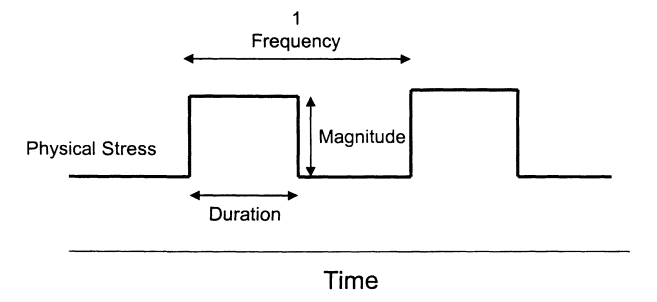
The physical stresses described in Section 3.1 may be present at varying levels. These variations can be characterized by three properties: magnitude, repetition, and duration. The relationship between physical stresses and their characteristic properties are illustrated in Figure 1.
Magnitude is the extent to which a physical stress factor is involved. Magnitude quantifies the amplitude of the force, motion, vibration, or temperature time-varying record, and has the physical units of the corresponding physical measure.
Repetition is the frequency or rate that a physical stress factor repeats. The frequency that the physical stress in Figure 1 repeats is the inverse of the period between repeated exertions, motions, vibration, or cold temperature, and the physical units of time-1.
Duration refers to the time that one is exposed to a physical stress and is quantified in physical units of time.
3.3. Interactions
The characteristic properties of physical stresses together quantify exposure to external stress. Combinations of different physical stresses and properties can be used to represent factors that are commonly reported for quantifying exposure. These relationships are summarized in Table 2. Physical stresses are quantified in a similar manner as shown in Table 3. Force measurements quantify force amplitude, in addition to the rate and time of force application. Motion of individual joints include the magnitude of angular displacement, velocity or acceleration, the frequency of motions and the time the motion is sustained. Vibration magnitude is quantified as acceleration of the vibrating objects, and repetition and duration is a measure of the frequency and time the vibration occurs. Similarly, cold temperature and associated frequencies and amplitudes quantify cold exposure.
This organization is useful because it provides a construct for comparing and combining studies using different measurements and methodologies, as represented in Table 1, into a common framework. For example, physical stress measurements using a survey methodology that simply assesses the presence and absence of highly repetitive wrist motions can therefore be compared with a study that measures the frequency of motions using an electrogoniometer. This is possible because both studies have quantified the repetition property of wrist motion. Similarly a study that considers the weight of objects lifted may be compared with a study that assesses muscle force using electromyography because both studies quantify the magnitude of force. Therefore, a body of scientific knowledge from diverse investigations emerges.
External physical stress factors described in Sections 3.1 and 3.2 relates to distinct internal physical stress factors. This relationship is summarized in Table 4. For example, force magnitude is directly related to the loading of tissues, joints and adjacent anatomical structures, as is the metabolic and fatigue processes of contracting muscles. The strength of these relationships depends on the particular measurement and the type of stress. Biomechanical and physiological mathematical models have been developed to quantitatively describe some of these
relationships. Similar relationships between external and internal factors have been recognized by Moore, Wells and Ranney (1991) and Armstrong, et al. (1993).
4. Assessment of Workplace Factors
Physical stress factors in the workplace have been evaluated at different levels of detail, depending on the specific research instrument and measurement methodology used. Survey methods involve observational study at the job or task level. Production and time data may be obtained from existing records such as time standards and process planning data, or from measured data using work sampling or time and motion studies. More detailed job analysis methods analyze the job at the element or micro level using by direct physical measurements. These analyses involve breaking down the job into component actions, measuring and quantifying physical stress factors.
4.1. Survey Methods
Survey methods include interviews, self-reported questionnaires, or observation and checklists. Questionnaires, diaries and interview techniques are easily administered and are commonly used for quantifying physical work load. The method relies on the firsthand observations and experiences of the employee /supervisor. An employee interview consists of asking questions regarding job/task attributes and associated physical stress exposures (Bernard, et al., 1994). One advantage of these methods are their ability to assess exposure over long time intervals, infrequently performed tasks, or multiple methods at performing tasks. which is a feature not usually available for other methodologies. However the method depends on subjective data.
Observational methods are the most common method employed. The most developed methodologies are for postures and motions of different articulations and use of the hands. These include posture classification systems like OWAS (Karhu, et al., 1977; Karhu, et al., 1981). Some observational methods integrate posture classification and a checklist of exertions, tool use and assessment of repetition with a breakdown of task elements (Keyseling, et al., 1993; McAtamney, and Corlett, 1993).
4.2. Production and Time Data
Many of these methods are rooted in traditional work measurement, which is historically based on time and motion study that is used for quantifying the temporal aspects of work. Time data is important for understanding the duration of work and rest, for quantifying repetition, and for determining the duration that work is performed. Suitable time data may be available to investigators at various levels of detail. The average daily time allotted for performing a job can be estimated from the shift time. The average time for specific tasks may be obtained from a task rotation or production schedule. Cycle time describes the time for completing a single cycle of production, and may be determined from production rate data. The time to perform a specific element may be available from a time and motion study.
Although use of production or cycle time data may be convenient and easily obtained, it
is limited in that the motions and exertions performed in completing the task may be related to these data, but may not correspond directly. For example, a manual assembly operation may involve fastening four screws using a power screwdriver for every unit assembled. Consequently the production rate would indicate one quarter of the actual number of repetitive motions performed each cycle. Alternatively, use of production data for a similar assembly operation where the work is distributed among two operators in a cell who alternate the fastening operation would indicate a greater amount of repetitions over the course of a work day. The necessity to directly observe the work performed when using production data becomes apparent. Job rotations and other work organization aspects of the job further complicate the use of these data.
Some investigators collect original time and motion data specifically for assessing the temporal aspects of physical stress exposure. Work sampling can be used for estimating the proportion of time that an employee is engaged in specific activities or tasks. Keyserling (1986) combined time study with posture classification for estimating the time that specific postures are assumed.
4.3. Detailed Analysis
Several techniques are available for describing and quantifying postures. They range from simple gross descriptions, for example pinching or pressing (Armstrong et. al., 1979), to categorical descriptions joint angles (Armstrong et al., 1982; McAtamney and Corlett, 1993), to full quantitative measurement of three dimensional angles. Joint angles are most often described in terms of the orthopedic angles as defined by the American Academy of Orthopedic Surgeons (1965). Other systems quantify postures by determining each body segment's orientation relative to a global coordinate system. This type of postural description is required to use the 2D and 3D Static Strength Prediction Models developed by the University of Michigan (Chaffin, 1970; Chaffin et al., 1977). In general, however, the better you can describe the problem that exists the better chance that your will solve the problem. Thus, the more quantitative the description the better the reading of the true problem.
When measuring orthopedic angles a goniometer can be used to quantify postures. However, it is imperative that the measurements be obtained without interfering with the work process. Therefore, most of the time postural measurements are made from videotapes rather than from the observed individuals directly. This introduces a number of errors into the process however. Ideally the video camera is oriented in a plane orthogonal to the plane of measurement and adjusted such that the center of the image corresponds to the articulation of interest. With two dimensional motions, for example lifting tasks within the mid-sagittal plane, locating the camera in an orthogonal plane is a possibility. High contrast adhesive markers attached to the limbs and the torso facilitate the extraction of measurements from videotape by providing consistent reference marks on the limbs and joint center locations. In reality most studies need to quantify the posture of multiple body parts at the same time thereby leading to wider camera angles and increased error in measuring postures further from the center of the video camera lens.
With tasks that create postural deviations in three dimensions it becomes very difficult to accurately measure postures from the screen directly. The necessary information can be extracted from a two dimensional image on the video monitor to simulate the observed posture.
The simulated posture is then measured. The use of multiple video cameras increases the accuracy of three dimensional postural descriptions. A synchronization signal is used to insure that video data are describing the same motion or posture.
When the evaluation is focused on specific body parts, for example the spine or the wrist, electrical goniometers may be used. The simplest version of an electrogoniometer consist of two rigid tangs that can be affixed to the adjacent body segments hinged by a potentiometer. These devices are usually strapped or taped to the skin such that the axis of rotation aligns with the joint's axis of rotation. For the elbow an electrical goniometer designed to measure flexion should be should be positioned such that it is on the lateral side of the upper and lower arm with the potentiometer centered over the joint between the humerus and the radius. A single axis potentiometer works well if the joint can be conceptualized as a hinge joint. With the knee, for example, this assumption may not be valid as there can be three dimensional motion in addition to a shifting center of rotation as the femur tibial contact point changes with knee flexion. Thus, for extremely accurate measurements a more complex arrangement of goniometers may be needed (Chao, 1976).
Trunk postures and motions have been measured using various types of instrumentation. Nordin et al. (1984) reported a flexion analyzer that was essentially an inclinometer strapped on the back. This device provides data indicating the duration of the working time that was spent in 5 flexed postures consisting of 18 degree intervals between 0 and 90 degrees. This device is useful for obtaining an overall picture of the trunk postures required in a job across many tasks and work cycles. The device clearly distinguished the difference between dentists, who flexed forward only moderately, and warehouse workers who worked in deeply flexed postures. The same device was later used by Magnusson et al. (1990) to study the trunk postures in assembly line workers performing highly repetitive work. Snijders et al. (1987) reported on the development of a device that can be worn beneath the clothing and can collect three-dimensional trunk postural data throughout a work shift of eight hours or more. The data are stored on a multi-channel tape recorder and can be analyzed at a later time. Marras et al. (1992) have developed the Lumbar Motion Monitor, which in addition to measuring the instantaneous posture of the lumbar and lower thoracic spine in three dimensions, provides the angular velocities and accelerations associated with the movements. The LMM gives very precise information regarding the postures and motions from each individual activity sampled. If one is looking at primarily static task then the postural data is the primary focus of the analysis. If one is looking at a dynamic material handling task then the motion parameters such as range of motion, velocities, and accelerations become the focus of the analysis.
4.3.1.1 Force
The force associated with industrial tasks are sometimes estimated from indirect measurements of the task requirements rather than measuring the exertions of individuals performing the task. These include measuring the weight of objects carried or lifted, or measuring the force necessary to do work, such as pushing or pulling a control. Direct force measurements should consider variability among individuals.
At the most detailed level, force is measured for specific operations, such as grasps or moves. Less detailed analyses may measure forces exerted for individual elements. An estimate
of specific exertions in a task may suffice for many practical analysis purposes.
Instruments applicable to force measurements range from simple mechanical instruments to electromechanical devices. Simple mechanical devices such as a spring scale or dynamometer can be used to estimate lift/pull/push forces in many instances. Direct force measurements are often difficult to obtain. Forces can often be roughly calculated using the weight of the objects, estimates of the frictional forces, the power settings on tools, and simple physics equations.
Mechanical force transducers are most suitable for static force measurements such as determining the weight of a stationary object or for measuring quasi-static, or very slowly changing forces such as the force needed to overcome friction and push or pull a rolling cart along the floor. Electronic force transducers overcome many of the limitations of mechanical force transducers. Strain gage load cells are capable of measuring static force, and they are much better suited for measuring forces that change with time than mechanical spring scales.
Internal muscle forces are difficult to measure directly, but can be estimated with electromyography (EMG). Under controlled conditions, internal muscle forces can be estimated by simulating the motions and exertions in a laboratory setting. If internal forces are measured, sufficient replicate measurements should be made to account for variability within and between individuals performing the task.
Pressure and force can be measured using ink force sensors and strain gages, but this is rarely done due to difficulties in using the equipment. The conditions that cause high contact stresses are well recognized and are usually eliminated without measuring the level of stress.
Exertions in industrial tasks may be directly measured by installing strain gage force sensors directly inside handles and objects grasped. For example, Armstrong, et al. (1994) installed strain gage load cells directly underneath computer keyboards for measuring finger exertions during typing., and Radwin, et al. (1991) investigated the grip forces involved in operating a pistol grip power hand tools. Although direct measurements are possible, it is very limited in practicality for most situations because of the great amount of preparation required.
4.3.1.2 Vibration
Vibration acceleration may be measured using accelerometers mounted on objects contacting the body. Accelerometers contain a small mass and a piezoelectric or piezoresistive element that measures the resulting force when the mass accelerates. Therefore accelerometer sensitivities are generally proportional to their mass. It is important that the total mass of an accelerometer is sufficiently small not to interfere with the measurement by loading the vibrating body. The smaller the accelerometer, the less sensitive it is. Smaller accelerometers have greater resonant frequencies and are usable over a greater frequency range. Accelerometers are also influenced by temperature changes, humidity, and other harsh environmental conditions.
Human occupational vibration exposure is usually assessed by measuring vibration acceleration and determining acceleration magnitude, frequency characteristics, and exposure time (duration).
The relative effects of hand-transmitted vibration and other physical stress factors are often difficult to separate because many jobs using vibrating hand tools also involve considerable use of the upper limb. For instance, vibrating hand tool operators may also have to assume extreme postures dictated by a specific tool-handle location and work piece orientation.
Vibrating power tool handles and triggers may introduce contact stress from sharp edges against the fingers or palm. The hands may also be exposed to cold air produced from pneumatic tool exhaust outlets.
Furthermore, physical stress factors can adversely affect vibration transmission exposure. For example, forceful exertions will result in increased vibration transfer to the tool operator's hand and arm because of improved coupling between the vibrating handle and the hand. Highly repetitive work can affect vibration exposure through accumulated doses of repeated vibration exposures.
4.3.1.3 Cold
Ambient temperature is measured by a thermometer. A thermistor or thermocouple sensor is used to measure surface temperature readings (e.g. measuring cold exhaust of an air tool venting across the wrist).
5. Workplace Design Factors and Physical Stress Exposure
5.1. Workplace Layout
The previous discussion has shown that the postures assumed and forces exerted affect internal tissue loading. Given that the design of the workplace affects the forces exerted and postures and motions exhibited by an individual, it is reasonable to expect that the tissue loads are, in part, a function of the way in which the work and the workplace is designed. The strength of these relationships will depend upon how much variation is possible in work methods and other anthropometric considerations. For example, lifts from low levels typically result in greater torso flexion than do lifts from higher levels. Thus, low level lifts result in greater spine moments and disc compressive forces than higher level lifts (Drury et al., 1989b; Schipplien et al, 1991), which in turn, leads to greater spine compression due to muscle recruitment (McGill et al., 1996). Although, the actual amount of forward bending that occurs in a particular lift, and hence, the magnitude of the forward bending moment, will be affected by the lifting technique used (De Looze et al., 1993; Buscek, 1988; Bush-Joseph et al., 1988), the lengths of various body segments, and the relative strengths and endurance of the muscles recruited for task performance (Novak et al., 1993; Trafimow et al., 1993).
How material flows through a work place can have a profound impact on the tissue loads people experience. Clearly the weight of the objects (material) handled in performing one's job has a direct impact on internal tissue loads. Thus, decisions as to the size and weight of shipping containers have a direct influence on tissue loads. In addition to increased weight that typically accompanies increases in object size, larger objects result in greater horizontal distances between the object's center of mass and the body's articulations, and consequently greater external moments (Schipplein et al., 1995). Likewise, the orientation of objects, and the accessibility of objects impacts the reach distance and the magnitude of the external moments.
How well an object can be grasped, often referred to as the ''coupling" between the object and a worker, affects the internal loads on the spine and lowers the strength demands (Frievalds et al., 1984; Garg and Saxena, 1980; Drury et al., 1989a,b). Lower strength demands implies a
reduction in the internal forces generated by the body. In addition, several other material flow issues affect tissue loading including:
- Adhesion between items—modifies the actual external force required to handle an object.
- Pacing—affects movement speed, and hence, internal forces. May be controlled by conveyor speeds or time allowances in a work standard.
- Coefficient of friction between an item and a person—affects the amount of internal force used to grasp and hold an object.
-
5.2. Interactions with Objects
The use of hand tools and handling of containers and other objects should be considered in evaluating physical stress since there are numerous aspects of these objects that affect force, posture, vibration and cold exposure. The combined effects of hand tool geometry, work location, orientation and operator position can have a dramatic effect on upper limb posture. How tool operators hold a particular hand tool might affect their posture and the manner in which the hand grips the tool. Posture can affect muscle length relative to its resting length, introduce passive forces from tendon strain, and alter biomechanical aspects of exertions involved in operating the tool.
It is not simply the use of a particular tool, but the way the tool is used that imposes physical stress on the tool operator. The relative effects of various physical stress factors involving work with hand tools are difficult to separate because many jobs using hand tools also involve extensive use of the upper limbs. For instance, hand tool operators may have to assume extreme postures dictated by a specific tool handle shape and work piece orientation. The same tool may be used for repetitive, short-cycle tasks, resulting in exposure to repetitive exertions and motions. Some power hand tools can also introduce vibration, and triggers may cause contact stress from sharp edges against the fingers and palm. The hands may also be exposed to cold air produced from pneumatic tool exhaust outlets.
5.3. Work Scheduling
The duration of and the time between exertions are critical parameters when evaluating the impact of work scheduling on tissue loads. The ability to perform static contractions decays rapidly over time. Static contractions result in reduced blood flow, ischemia, and metabolite retention in the contractile tissues. The scheduling of work can have a significant impact on the duration of muscular exertions. Job rotation, when well planned, provides for relief of affected body parts so that tissue recovery processes can occur throughout the day. Job rotation schemes should be evaluated carefully to insure that these goals are met. For example, an employee may move from a set of tasks that requires shoulder abduction to a set of tasks that require low level lifting and thereby allow the shoulders to be in a non-flexed and non abducted posture. Job enlargement, or the adding of tasks to relatively simple jobs allows for tissue recovery within the on-going work process. Clearly, tasks must be carefully selected to allow insure exposure to risk factors is reduced.
5.4. Force Requirements
The force applied to the work material to accomplish a task is only one aspect of force that affects the operator. Power hand tools also generate forces, which in turn act against the operator. The torque at a power screwdriver blade, for example, transfers a force back to the tool handle. The human operator must react against this force by exerting an equal and opposite force to hold onto the tool handle as the tool is operated.
The amount of force exerted by the muscles on the tendons and fingers is related to the hand posture. Armstrong (1986) argues that since muscle force is less when objects can be grasped using a power grip posture, than exertion of force with a power grip will be less stressful than exerting an equivalent amount of force with a pinch grip posture.
5.5. Individual Factors
There are several individual factors the modulate the tissue loads experienced by an individual. For example, Giladi et al (1991) reported the influence of individual factors on the incidence of fatigue fractures, specifically, they found individuals with narrow tibiae, and/or a grater external rotation of the hip were more likely to experience fatigue fractures. Cowan and colleagues (1996) reported the relative risk of "overuse" injuries was significantly higher in military recruits with most valgus knees. Moreover, these authors showed the "Q" angle, which defines the degree of deviation in the patellar tendon from the line of pull on the patella by the quadriceps muscles, was predictive of stress fractures. Thus, anthropometric differences, differences in the strength capacities between individuals, and variations in the work methods used will all affect the tissue loads experienced by an individual as work tasks are performed.1
Variation in the anthropometric characteristics between individuals will have an impact on the biomechanical properties of the musculoskeletal system, which in turn will impact the internal loads that anatomical structures experience. Sources of anthropometric variation that impact tissue loading include:
- Bone lengths—Affects the leverage of the external loads and the postures attained while performing a work task.
- Tendon Attachment points relative to joint centers of rotation—Affects the leverage of the muscles.
-
- Muscle mass—One of the determinants as to how much force can be generated by an individual.
- Muscle Fiber type distributions—Determines an individuals relative capacity for high power versus endurance work.
- Ligament laxity—Determines range of motion and force production within the normal working range of a joint.
- Disc cross sectional area—Affects the stress on the disc (force per unit area) .
- Fluidity of the disc nucleus—Affects forces transmission through disc tissues.
- Variations Tendon size—Affects stress within the tendon, may directly or indirectly affect the frictional forces between the tendon and other anatomical structures.
- Size of the carpal tunnel—Affects frictional forces within the tunnel.
Numerous factors between individuals can affect vibration transmission to the body. Physical differences between individuals affect the dynamic responses of their bodies, and consequently the variability in vibration transmission. While body size and mass can influence the physical response to vibration, changes in body posture often have the greatest affect on vibration transmission. Age and gender may have an effect because of varying biodynamic responses (Griffin, 1990).
The internal loads on the tissue should be independent of strength capacity, assuming all individuals have at least enough strength capacity to use similar work methods. This is because the tissue loads are largely governed by the biomechanical characteristics of the exertion being performed. The physiological consequences of the loading could be quite different since one individual may be capable of exerting much more force than another. Hence, one individual may be working closer to his or her maximal capacity relative to that individuals co-workers. Thus, fatigue rates would be expected to vary. Likewise, strength capacity differences are also affected by the relative distributions or fast and the slow twitch muscle fibers within the contractile tissues used. Individuals with a preponderance of slow twitch fibers may be able to perform sustained tasks requiring low muscular force over an extended period without fatigue, however, they may experience an inability to generate high forces repeatedly due to an inadequate reserve of fast twitch fibers. Individuals with a preponderance of fast twitch fibers may be capable of providing high force exertions, but not be able to maintain sustained low forces exertions.
The wrist biomechanical model developed by Armstrong and Chaffin (1979) predicts that wrist size affects wrist loading such that greater tendon load per unit length is inversely proportional to the radius of curvature of the pulley. Variations in work methods will result in different tissue loading due to variations in the postures, motions, and magnitude of the external forces experienced. While variations in work methods may result variation in anthropometric properties and strength differences, variations in skill levels, work habits, underlying tissue tolerances, pain sensitivity, and response to work organization characteristics (productivity standards, incentive programs).
6. Discussion
Given the diverse measurement methodologies available to researchers, the framework for quantifying physical stresses and properties described in Section 3 makes it possible to
compare studies that are based on seemingly different variables. The studies listed in Table 5 demonstrate how data from a wide variety of methods available for quantifying physical stress exposure can be grouped into corresponding physical stress and property categories. For example, the wrist posture classification and time study approach used by Armstrong, et al. (1979) may be comparable with the wrist electrogoniometer methods described by Marras and Schoenmarklin (1993) since both studies quantify motion magnitude. There are however marked differences between the two methodologies.
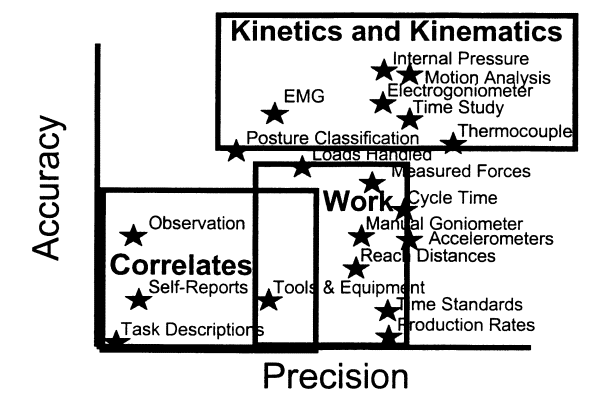
Different instruments have different qualities of accuracy and precision . Accuracy is the difference between the quantity being measured and its true value. All measurements have varying levels of accuracy. For example, a measure of the weight of an object handled using a spring scale is less accurate for evaluating the internal stress of muscle loading than using electromyography for directly measuring muscle electrical activity. Although one type of measurement is more accurate than another, both measurements can provide useful data within their limits of accuracy. When accuracy is diminished by random error, accuracy can often be improved by making multiple measurements and averaging. Therefore a study utilizing a measurement instrument that is inherently less accurate than another may achieve comparable accuracy by collecting a greater number of data samples.
Precision is the ability of an instrument to reproduce the same measurement. Precision affects how many levels or states that the measurement can resolve. A posture classification instrument that measures wrist flexion/extension in five levels (hyper-flexion, flexion, neutral, extension, and hyper-extension) has considerably less precision than a manual goniometer that has angles marked in five degree increments.
It is possible to have two different instruments with different levels of precision, but with the same accuracy. A manual goniometer may have the same accuracy as posture classification but better precision since both methods involve visual estimates of joint angle. Genaidy, et al. (1993) found no significant differences between observational estimates of shoulder flexion angle in three ranges (low: 1°-60°, medium: 61-120°, and high: 121°-180°) compared with goniometer measurements both taken from a video display screen, although observers tended to slightly overestimate the true angle in the low range and to underestimate the true angle in the medium and high angle ranges. Kilbom (1994) and Kurinka and Forcier (1995) have reviewed numerous instruments for assessing physical stress exposure in relation to musculoskeletal disorders. While survey and production time data may have less accuracy and precision, the methods are more practical for observing a greater numbers of subjects over longer observation periods.
Based on the relationships between external physical stress factors and properties described, Table 6 considers selected external measurement methodologies and the physical stresses that each is capable of measuring. The relative accuracy and precision of these measurements are also compared. A plot of estimated accuracy and precision for each of the measurement methodologies discussed appears in Figure 2.
7. Summary
The aim of this paper was to explore the relationships between work and tissue loading. First we reviewed the means by which the key tissues involved in the development of work-
related musculoskeletal disorders (i.e. bone, ligament, tendon, muscle, disc, and nerve) are loaded during the performance of work tasks. Second we examined the relationship between external physical stresses and internal tissue loading. Furthermore we describe a system for characterizing external physical stresses. Third we describe various ways that physical stress in manual work can be measured, and how these measurement techniques relate to tissue loading. Fourth we examined the relationship between workplace design factors and physical stress exposure, and showed how individual differences can mitigate tissue loads for a given work place design. Finally we briefly considered the relationship between work organizational factors and external loads. After considering the instruments used to characterize physical stress exposure, it is clear that there is substantial variation in their accuracy and precision, yet they address similar underlying factors. Clearly the relationships between work and tissue loading are complex, however we believe there is a sufficient body of research that supports the link between the physical characteristics of work and the resulting tissue loads.
8. References
1. Adams, M.A., Hutton, W.C. (1982). Prolapsed intervertebral disc: A hyperflexion injury. Spine, 7, 184-191.
2. Adams, M.A., Hutton, W.C. (1985). Gradual disc prolapsed. Spine , 10, 524-531.
3. Adams, M.A., Hutton, W.C., Stott, J.R.R. (1980). The resistance to flexion of the lumbar intervertebral joint. Spine, 5, 245-253.
4. American Academy of Orthopaedic Surgeons (1965.) Joint Moiton—Method of Measuring and Recording. American Academy of Orthopaedic Surgeons, Chicago, IL.
5. Anderson, J.J., Felson, D.T. (1988). Factors associated with osteoarthritis of the knee in the first national health and nutrition examination survey (HANES I). American J. of Epidemiology, 128, 179-189.
6. Anderson, E.G. (1990). Fatigue fractures of the foot. Injury, 21, 275-279.
7. Andersson, B.J.G., Ortengren, R., Nachemson, A., Elfstrom, G. (1974). Lumbar disc pressure and myelectric back muscle activity during sitting: IV. Studies on car driver's seat. Scand. J. of Rehab Med., 6, 128-133.
8. Armstrong, T. J., Chaffin, D. B., and Foulke, J. A. (1979). A methodology for documenting hand positions and forces during manual work, Journal of Biomechanics, 12, 131-133.
9. Armstrong, T. J., Foulke, J. A., Joseph, B. A., and Goldstein, S. A. (1982) Investigation of cumulative trauma disorders in a poultry processing plant, American Industrial Hygiene Association Journal, 43(1), 103-116.
10. Armstrong, T. J., Werner, R. A., Waring, W. P., and Foulke, J. A. (1991). Intra-carpal canal pressure in selected hand tasks: a pilot study, Designing for Everyone, Proceedings of the Eleventh Congress of the International Ergonomics Association, Taylor & Francis, London, 156-158/.
11. Armstrong, T.J., Radwin, R. G., Hansen, D. J., and Kennedy, K. W. (1986). Repetitive trauma disorders: Job evaluation and design, Human Factors, 28(3), 325-336.
12. Armstrong, TJ, Buckle, P, Fine, LJ, Hagberg, M, Jonsson, B, Kilbom, A, Kuorinka, IA, Silverstein, BA, Sjogaard, G, Viikari-Juntura, ER. (1993). A conceptual model for work-related neck and upper-limb musculoskeletal disorders. Scand J Work Environ Health, 19, 73-84.
13. Armstrong, T. J. (1986). Ergonomics and Cumulative Trauma Disorders. Occupational Injuries, 2(3), 553-565.
14. Armstrong. T. J. and Chaffin, D. B. (1979). Some biomechanical Aspects of the carpal tunnel, Journal of Biomechanics, 12, 567-570.
15. Arndt, R. (1987). Work pace, stress, and cumulative trauma disorders. The Journal of Hand Surgery, 12A(5), 866-869.
16. Bernard, B, Sauter, S, Fine, L, Peterson, M, Hales T. (1994). Job task and psychosocial risk factors for work-related musculoskeletal disorders among newspaper employees. Scand J Work Environ Health, 20, 417-26.
17. Bovenzi, M, Zadini, A, Franzinelli, A, Borgogni, F. (1991). Occupational musculoskeletal disorders in the neck and upper limbs of forestry workers exposed to hand-arm vibration. Ergonomics, 34:5, 547-562.
18. Buseck, M.D., Schipplein, O.D., Andersson, G.B.J., Andriacchi, T.P. (1988). Influence of dynamic factors and external loads on the moment at the lumbar spine in lifting. Spine, 13, 918-921.
19. Bush-Joseph, C., Schipplein, O., Andersson, G.B.J., Andriacchi, T.P. (1988). Influence of dynamic factors on the lumbar spine moment in lifting. Ergonomics, 31, 211-216.
20. Ceron, R. J., Radwin, R. G ., Henderson, C. J. (1995). Hand skin temperature variations for work in moderately cold environments and the effectiveness of periodic rewarming. American Industrial Hygiene Association Journal, 56, 558-567.
21. Chaffin, D. B. and Andersson, G. B. J. (1991). Occupational Biomechanics (Second Edition), John Wiley & Sons, New York.
22. Chaffin, D. B., Baker, W.H. (1970). A biomechanical model for analysis of symmetric sagittal plane lifting . AIIE Transactions, 2, 16-27.
23. Chaffin, D. B., Herrin, G.D., Keyserling, W.M., Garg, A. (1977). A method for evaluating the biomechanical stresses resulting from manual materials handling jobs. Amer. Ind. Hygiene Assoc, J., 38, 662-675.
24. Chaffin, D. B. (1969). A computerized biomechanical model -Development of and use in studying gross body actions. J. of Biomechanics, 2, 429-441.
25. Chao, E. Y. (1976). Experimental methods for biomechanical measurements of joint kinematics. CRC Handbook of Engineering in Medicine and Biology, CRC Press, Cleveland, OH, 385-411.
26. Chiang, H. C., Chen, S. S, Yu, H. S., Ko, Y. C. (1990). The occurrence of carpal tunnel syndrome in frozen food factory employees. J Med Sci, 6, 73-80.
27. Cholewicki, J., McGill, S. M. (1991). Lumbar posterior ligament involvement during extremely heavy lifts estimated from fluoroscopic measurements. Journal of Biomechanics, 25, 17-28.
28. Cowan, D. N., Jones, B. H., Frykman, P. N., Polly, D. W., Harman, E.A., Rosenstein, R. M.,
Rosenstein, M. T. (1996). Lower limb morphology and risk of overuse injury among male infantry trainees. Medicine and Science in Sports and Exercise, 28, 945-952.
29. De Looze, M .P., Kingma, I., Thunnissen, W., Van Wijk, M. J., Toussaint, H. M. (1994). The evaluation of a practical biomechanical model estimating lumbar moments in occupational activities. Ergonomics , 37, 1495-1502.
30. De Looze, M. P., Toussaint, H. M., Van Dieen, J. H., and Kemper, H. C. G. (1993). Joint moments and muscle activity in the lower extremities and lower back in lifting and lowering tasks. J. of Biomechanics, 26, 1067-1076.
31. Derksen, J. C. M., Van Riel, M. P. J. M., Wingerden, J. P., Snijders, C. J. (1994). A comparison of working postures of parcel sorters using three different working methods. Ergonomics, 37:2, 299-309.
32. Dolan, P., Mannion, A. F., Adams, M. A. (1994a). Passive tissues help the back muscles to generate extensor moments during lifting. Journal of Biomechanics, 27, 1077-1085.
33. Dolan, P., Earley, M., Adams, M. A. (1994b). Bending and compressive stresses acting on the lumbar spine during lifting activities. J. of Biomechanics, 27, 1237-1248.
34. Doormaal, M. T. A. J., Driessen, A. P. A., Landeweerd, J. A., and Drost, M. R. (1995). Physical workload of ambulance assistants. Ergonomics, 38, 361-376.
35. Drury, C.G., Deeb, J.M., Hartman, B., Woolley, S., Drury, C.E., Gallagher, S. (1989a). symmetric and saymmetric manual materials handling part 1: physiology and psychophysics. Ergonomics, 467-489.
36. Drury, C.G., Deeb, J.M., Hartman, B., Woolley, S., Drury, C.E., Gallagher, S. (1989b). symmetric and saymmetric manual materials handling part 2: biomechanics. Ergonomics, 565-583.
37. Feuerstein, M, Fitzgerald, T. E. (1992). Biomechanical factors affecting upper extremity cumulative trauma disorders in sign language interpreters. Journal of Occupational Medicine, 34(3), 257-264.
38. Floyd W.F., Silver P.H.S. (1955). The function of the erectores spinae muscles in certain movements and postures in man. Journal of Physiology (London) 129, 184-203.
39. Freivalds, A., Chaffin, D.B., Garg, A., Lee, K.S. (1984). A dynamic biomechanical evaluation of lifting acceptable loads. J. of Biomechanics , 17, 251-262.
40. Gagnon, D., Gagnon, M. (1992). The influence of dynamic factors on triaxial net muscular moments at the L5/S 1 joint during asymmetrical lifting and lowering. J. of Biomechanics, 25, 891-901.
41. Gagnon, M., Plamondon, A., Gravel, D. (1993). Pivoting with the load: An alternative for protecting the back in asymmetrical lifting. Spine, 18, 1515-1524.
42. Garg, A., Saxena, U. (1980). Container characteristics and maximum acceptable weight of lift. Human Factors, 22, 487-495.
43. Genaidy, A. M., Simmons, R. J., Guo, L., and Hidalgo, J. A. (1993). Can visual perception be used to estimate body part angles?, Ergonomics , 36(4), 323-329.
44. Giladi, M., Ahronson, Z., Stein, M., Danon, Y.L., Milgrom, C. (1985). Unusual distribution and onset of stress fractures in soldiers. Clinical Orthopaedics & Related Research, 192, 142-146.
45. Giladi, M., Milgrom, C., Simkin, A., Danon, Y. (1991). Stress fractures. Identifiable risk factors. American Journal of Sports Medicine, 19, 647-652.
46. Golding, J.S.R. (1952). Electromyography of the erector spinae in low back pain. Postgrad Medical Journal 28, 401-406.
47. Goldstein, S.A., Armstrong, T.J., Chaffin, D.B., Matthews, L.S. (1987). Analysis of cumulative strain in tendons and tendon sheaths. Journal of Biomechanics, 29, 1-6.
48. Hutton, W.C., Adams, M.A. (1982). Can the lumbar spine be crushed in heavy lifting. Spine, 7, 586-590.
49. Hymovich, L, Lindholm, M. (1966). Hand, wrist, and forearm injuries. Journal of Occupational Medicine, 8(11), 573-577.
50. Jordaan, G., Schwellnus, M.P. (1994). The incidence of overuse injuries in military recruits during basic military training. Military Medicine, 159, 421-426.
51. Karhu, O, Harkonen, R, Vepsalainen, P. (1981). Observing working postures in industry: Examples of OWAS application. Applied Ergonomics , 13-17.
52. Karhu, O, Kansi, P, Kuorinka, I. (1977). Correcting working postures in industry: A practical method for analysis. Applied Ergonomics, 199-201.
53. Keyserling, M. W., Stetson, D. S., Silverstein, B. A., Brouwer, M. L. (1993). A checklist for evaluation ergonomic risk factors associated with upper extremity cumulative trauma disorders. Ergonomics, 36(7), 807-831.
54. Keyserling, M. W. (1986). A computer-aided system to evaluate postural stress in the workplace. Am. Ind. Hyg. Assoc. J., 47, 641-649.
55. Kilbom, Å, (1994). Assessment of physical exposure in relation to work-related musculoskeletal disorders - what information can be obtained from systematic observations?, Scandinavian Journal of Work, Environment Health, 20 (Special Issue), 30-45.
56. Kippers, V., Parker, A.W. (1984). Posture related to myoelectric silence of erectores spinae during trunk flexion. Spine, 9, 740-745.
57. Kohatsu, N.D., Schurman, D.J. (1990). Risk factors for the development of ostearthrosis of the knee. Clinical Orthopaedics and Related Research , 261, 242-246.
58. Kromodihardjo, S. and Mital, A. (1987). Biomechanical analysis of manual lifting tasks. Transactions of the ASME, 109, 132-138.
59. Lavender, S. A., Li, Y. C., Andersson, G. B. J., Natarajan, R. N. (1998). The effects of lifting speed on the peak external forward bending, lateral bending, and twisting spine moments, Ergonomics, 41, in press.
60. Lee, Y. H., Chiou, W. K. (1995). Ergonomic analysis of working posture in nursing personnel: Example of modified Ovako Working Analysis System application. Research in Nursing and Health, 18, 67-75.
61. Leskinen, T. P. J., Stalhammar, H. R., Rautanen, M. T. (1992). Biomechanically and electromyograpically assessed load on the spine in self-paced and force-paced lifting work. Ergonomics, 35, 881-888.
62. Linenger, J. M., Shwayhat, A. F. (1992). Epidemiology of podiatric injuries in US Marine recruits undergoing basic training. Journal of the American Podiatric Medical Association, 82, 269-271.
63. Lindberg, H., Axmacher, B. (1988). Coxarthrosis in farmers. Acta Orthop. Scand., 59, 607.
64. Lindberg, H., Montgomery, F. (1987). Heavy labor and the occurrence of gonarthrosis. Clinical Orthopaedics and Related Research, 214, 235-236.
65. Magnusson, M., Granqvist, M., Jonson, R., Lindell, V., Lundberg, U., Wallin, L., and Hansson, T. (1990). The loads on the lumbar spine during work at an assembly line: The risks for fatigue injuries of vertebral bodies. Spine, 15, 774-779.
66. Malchaire, J. B., Cock, N. A., Robert, A. R. (1996). Prevalence of musculoskeletal disorders at the wrist as a function of angles, forces, repetitiveness and movement velocities. Scand J Work Environ Health, 22, 176-181.
67. Marras, W. S., Granata, K. P. (1997a). Spine loading during trunk lateral bending motions, J. of Biomechanics, 30, 697-703.
68. Marras W. S., Granata K. P. (1997b). Changes in trunk dynamics and spine loading during repeated trunk exertions. Spine, 22, 2564-70.
69. Marras, W. S. and Schoenmarklin, R. W. (1993). Wrist motions in industry, Ergonomics, 36(4), 341-351.
70. Marras, W. S., Fathallah, F. A., Miller, R. J., Davis, S. W., and Mirka, G. A. (1992). Accuracy of a three-dimensional lumbar motion monitor for recording dynamic trunk motion characteristics. Int. J. Ind. Ergonomics, 9, 75-87.
71. Marras, W.S., Granata, K.P. (1995). A biomechanical assessment and model of axial twisting in the thoracolumbar spine. Spine, 20, 1440-1451.
72. Marras, W. S., Lavender, S. A., Leurgans, S. E., Rajulu, S. L., Allread, W. G., Fathallah, R. A., and Ferguson, S. A. (1993). The role of dynamic three-dimensional trunk motion in occupationally-related low back disorders. Spine, 617-628.
73. Marras, W. S., Sommerich, C. M. (1991). A three-dimensional motion model of loads on the lumbar spine: II Model Validation. Human Factors , 33, 139-150.
74. Marras, W. S. (1993). Wrist motions in industry. Ergonomics, 36:4, 341-351.
75. McAtamney, L. and Corlett, E. N. (1993). RULA: a survey method for the investigation of work-related upper limb disorders. Applied Ergonomics, 24, 91-99.
76. McGill, S. M. (1992). A myoelectrically based dynamic three-dimensional model to predict loads on lumbar spine tissues during lateral bending. J. of Biomechanics, 25, 395-414.
77. McGill, S. M., Norman, R. W. (1985). Dynamically and statically determined low back moments during lifting. J. of Biomechanics, 18, 877-885.
78. McGill, S. M., Norman, R. W. (1986). Partitioning of the L4-L5 dynamic moment into disc, ligamentous, and muscular components during lifting. Spine, 11, 666-678.
79. McGill, S. M., Norman, R. W., Cholewicki, J. (1996). A simple polynomial that predicts low-back compression during complex 3-D tasks. Ergonomics, 39, 1107-1118.
80. Moore, A., Wells, R. and Ranney, D. (1991). Quantifying exposure in occupational manual tasks with cumulative trauma disorder potential, Ergonomics, 24(12), 1433-1453.
81. Morris, J. M., Lucas, D. B., and Bresler, B. (1961). Role of the trunk in stability of the spine. The Journal of Bone and Joint Surgery , 43-A, 327-351.
82. Murthy, G., Kahan, N. J., Hargens, A. R., and Rempel, D. M. (1997). Forearm muscle oxygenation decreases with low levels of voluntary contraction. J. of Orthopaedic Research, 15, 507-511.
83. Nachemson, A., and Morris, J. M. (1964). In vivo measurements of intradiscal pressure. The J. of Bone and Joint Surgery, 46-A, 1077-1092.
84. Nordin, M., Ortengren, R., and Andersson, G. B. J. (1984). Measurement of trunk movements during work. Spine, 9, 465-469
85. Novak, G. J., Schipplein, O. D., Trafimow, J. H., and Andersson, G. B. J. (1993). Influence of erector spinae muscle fatigue on the lumbo-sacral moment during lifting. European J. Exp. Musculoskeletal Research, 2, 39-44.
86. Parnianpous, M., Nordin, M., Kahanovitz, N., and Frankel, V. (1988). The triaxial coupling of torque generation of trunk muscles during isometric exertions and the effect of fatiguing isoinertial movements on the motor output and movement patterns. Spine, 13, 982-992.
87. Potvin, J. R., Norman, R. W, McGill, S. M. (1991). Reduction in anterior shear forces on the L4/L5 disc by the lumbar musculature. Clinical Biomechanics, 6, 88-96.
88. Punnett, L., Fine, L. J., Keyserling, W. M., Herrin, G. D., and Chaffin, D. B. (1991). Back disorders and nonneutral trunk postures of automobile assembly workers. Scan. J. Work Env. Health, 17, 337-346.
89. Radwin, R. G., Armstrong, T. J., and D. B. Chaffin. (1987). Power hand tool vibration effects on grip exertions, Ergonomics, 30 (5), 833-855.
90. Radwin, R. G., Lin, M. L., and T. Y. Yen. (1994). Exposure assessment of biomechanical stress in repetitive manual work using frequency-weighted filters, Ergonomics, 37(12), 1984-1998.
91. Radwin, R. G. and Lin, M. L. (1993). An analytical method for characterizing repetitive motion and postural stress using spectral analysis. Ergonomics, 36(4), 379-389.
92. Rempel, D. (1995). Musculoskeletal loading and carpal tunnel pressure, Repetitive Motion Disorders of the Upper Extremity, American Academy of Orthopedic Surgeons, Rosemont, IL, 123-132.
93. Schipplein, O. D., Reinsel, T. E., Andersson, G. B. J., and Lavender, S. A. (1995). The influence of initial horizontal weight placement on the loads at the lumbar spine while lifting. Spine, 20, 1895-1898.
94. Schipplein, O. D., Trafimow, J. H., Andersson, G. B. J., Andriacchi, T. P. (1990). Relationship between moments at the L5/S 1 level, hip and knee joint when lifting. J. of Biomechanics, 23, 907-912.
95. Schultz, A., Andersson, G., Haderspeck, K, Nachemson, A., (1982a). Loads on the lumbar spine: Validation of a biomechanical analysis by measurements of intradiscal pressures and myoelectric signals. The J. of Bone and Joint Surgery, 64-A, 713-720.
96. Schultz, A., Andersson, G. B. J., Ortengren, R., Bjork, R., Nordin, M. (1982b). Analysis and quantitative myoelectric measurements of loads on the lumbar spine when holding weights in standing postures. Spine, 7, 390-396.
97. Schultz, A. B., Andersson, G. B. J., Haderspeck, K. H., Ortengren, R., Nordin, M., Bjork, R. (1982c). Analysis and measurement of lumbar trunk loads in task involving bends and twists. J. of Biomechanics , 15, 669-675.
98. Silverstein, B. A., Fine L. J., and Armstrong, T. J. (1986). Hand wrist cumulative trauma disorders in industry. British Journal of Industrial Medicine, 43, 779-784.
99. Sjogaard, G. (1996). The significance of sustained muscle loading versus dynamic muscle loading at low forces in workplace design. In D. Rempel and T. Armstrong (eds.) Marconi Computer Input Device Research Conference Proceedings, University of California at Berkley, 19.
100. Snijders, C.J., Van Riel, M. P. J. M., and Nordin, M. 1987. Continuous measurements of spine movements in normal working situations over periods of 8 hours or more. Ergonomics, 30, 639-653.
101. Tanzer, R. C. 1959. The carpal-tunnel syndrome. The J. Bone and Joint Surgery, 41-A, 626-634.
102. Toussaint, H. M, de Winter, A. F., de Looze, Y. H. M. P, Van Dieen, JH, Kingma, I (1995). Flexion relaxation during lifting: implications for torque production by muscle activity and tissue strain at the lumbo-sacral joint. J. of Biomechanics, 28, 199-210.
103. Trafimow, J. H., Schipplein, O. D., Novak, G. J., Andersson, G. B. J. (1993). The effects of quadriceps fatigue on the technique of lifting. Spine, 18, 364-367.
104. Tsuang, Y. H., Schipplein, O. D., Trophema, J. H., Andersson, G. B. J. (1992). Influence of body segment dynamics on loads at the lumbar spine during lifting. Ergonomics, 35, 437-444.
105. Tveit, P., Daggfeldt, K., Hetland, S., and Thorstensson, A. 1994. Erector spinae lever arm length variations with changes in spinal posture. Spine, 19, 199-204.
106. Vingard, E., Alfredsson, L., Goldie, I., Hogstedt, C. (1991). Occupation and osteoarthrosis of the hip and knee: A register-based cohort study. International J. of Epidemiology, 20, 1025-1031.
107. White, A. A., Panjabi, M. M. (1990). Clinical Biomechanics of the Spine: Second Edition. J.B. Lippincott Company: Philadelphia.
108. Wieslander, G., Norback, D., Gothe C. J., Juhlin, L. (1989). Carpal tunnel syndrome (CTS) and exposure to vibration, repetitive wrist movements, and heavy manual work: a case-referent study. British Journal of Industrial Medicine, 46, 43-47.
109. Winkel, J. and Mathiassen, S. E., (1994). Assessment of physical work load in epidemiological studies: concepts, issues and operational considerations, Ergonomics, 37(6), 979-988.
Table 1: Examples of Physical Stress Factors Cited in The Literature
|
Reference |
Factors Considered |
|
Armstrong, et al., 1981 |
Repeated exertions with certain postures Stressful exertions High forces |
|
Armstrong, et al., 1986 |
Repetitive and sustained exertions Certain postures Vibration Low temperatures Mechanical stresses |
|
Arndt, 1997 |
Work pace |
|
Bernard, et al., 1994 |
Working time Time pressure Hours of computer use |
|
Bovenzi, et al., 1991 |
Vibration acceleration Vibration exposure |
|
Chiang, et al., 1990 |
Local exposure to cold |
|
Derksen, et al., 1994 |
Poor working postures |
|
Feuerstein and Fitzgerald, 1992 |
Rest-break frequency Deviations from neutral Work envelope excursions High-impact hand contacts Pace of movements Intensity of muscular tension Smoothness of movements |
|
Keyserling, 1986 |
Awkward working postures |
|
Keyserling, et al., 1993 |
Repetitiveness Local mechanical contact stress Forceful manual exertions Awkward posture Hand tool use |
|
Marras and Schoenmarklin, 1993 |
Angular velocity Angular acceleration |
|
McAtamney, and Corlett, 1993 |
Posture Muscle use (repetitive or static) Force or load |
|
Silverstein, et al., 1986 |
Repetitive motion Forceful exertions |
|
Wieslander, et al., 1989 |
Exposure to vibration Heavy loads on the wrist |
Table 2. Theoretical Framework for the Relationship Between External Physical Stress Factors and Properties as Typically Described in the Scientific Literature
|
|
Property |
||
|
Physical Stress |
Magnitude |
Repetition Rate |
Duration |
|
Force |
Forceful Exertions |
Repetitive Exertions |
Sustained Exertions |
|
Motion |
Extreme Postures and Motions |
Repetitive Motions |
Sustained Postures |
|
Vibration |
High Vibration Level |
Repeated Vibration Exposure |
Long Vibration Exposure |
|
Cold |
Cold Temperatures |
Repeated Cold Exposure |
Long Cold Exposure |
Table 3. Relationship Between External Physical Stress Factors and their Properties as They are Typically Measured
|
|
Property |
||
|
Physical Stress |
Magnitude |
Repetition Rate |
Duration |
|
Force |
Force generated or Applied |
Frequency that Force is Applied |
Time that Force is Applied |
|
Motion |
Joint Angle, Velocity, Acceleration |
Frequency of Motion |
Time to Compete Motion. |
|
Vibration |
Acceleration |
Frequency that Vibration Occurs |
Time of Vibration Exposure |
|
Cold |
Temperature |
Frequency of Cold Exposure |
Time of Cold Exposure |
Table 4. Relationships Between External and Internal Physical Stress
|
|
Property |
||
|
Physical Stress |
Magnitude |
Repetition |
Duration |
|
Force |
|
|
|
|
Motion |
|
|
|
|
Vibration |
|
|
|
|
Cold |
|
|
|
Table 5: Examples of External Physical Stress Measurements Cited in the Literature
|
|
|
Physical Stress Measured |
Body Region |
|
Individual Factors |
|||
|
Reference |
Method |
Force |
Motion |
Vibration |
Cold |
Application |
||
|
Wieslander, et al., 1988 |
Survey of job classification questionnaire |
Duration |
Duration |
Duration |
|
Wrist |
CTS cases and other surgical referents |
|
|
Chiang, et al., 1990 |
Survey of job activities |
|
Repetition |
|
Magnitude |
Wrist |
Frozen food factory |
|
|
Bernard, et al., 1994 |
Survey of job activities and work organization conditionquestionnaires |
Duration |
Duration |
|
|
Neck Shoulders Wrist Hand |
Newspaper employees |
|
|
Armstrong, Chaffin & |
Electromyography |
Magnitude |
Magnitude |
|
|
Hand |
Garment workers |
|
|
Foulke, 1979 |
Posture classification Time study from motion picture film |
|
Duration |
Duration |
|
|
|
|
|
Armstrong, et al., 1982 |
Posture Classification Elemental analysis fromvideo tape |
Magnitude Repetition Duration |
Magnitude Repetition Duration |
|
|
Shoulder Elbow Wrist Hand |
|
Poultry processing |
|
Silverstein, Fine and Armstrong, 1986 |
Time study & production rates from video tape Weight of objects handled and electromyography |
Magnitude Repetition |
|
|
|
Wrist Hand |
Electronics, appliance, investment casting, apparel sewing, iron foundry and bearing manufacturing |
|
|
Keyserling, 1986 |
Posture Classification Time and motion study in real-time off video tapes Time spent in each posture |
Magnitude Repetition Duration |
|
|
|
Trunk Shoulder |
Automobile assembly |
|
|
Keyserling, et al., 1993 |
Risk factor checklist No. Occurrences per cycle Cycle Time |
Magnitude Repetition Duration |
Magnitude Repetition Duration |
Magnitude Repetition Duration |
|
Shoulder Elbow Wrist Hand |
Engine plant, metal stamping plant, part distribution center |
|
|
Bovenzi, et al., 1991 |
Manual goniometer Observation checklist ISO 5349 frequency-weighted vibration Survey of personal attributes |
|
Magnitude |
Magnitude Duration |
|
Neck Shoulder Elbow Forearm Wrist Hand |
Chainsaw operators, mechanics, electricians and painters |
|
|
Marras & Schoenmarklin, 1993 |
Electrogoniometer Angle, velocity and |
|
Magnitude |
|
|
Wrist |
Automotive parts & building products |
|
|
|
|
Physical Stress Measured |
Body Region |
|
Individual Factors |
|||
|
Reference |
Method acceleration |
Force |
Motion |
Vibration |
Cold |
Application manufacturing |
||
|
Moore, Wells & Ranney, 1991 |
Electrogoniometer Electromyography |
Magnitude Repetition |
Magnitude Repetition |
|
|
Wrist Hand |
Simulated pistol grip tool operation |
|
|
Latco, et al., |
Observer ratings |
|
Repetition |
|||||
|
Derksen, et al., 1994 |
Electrogoniometer |
|
Magnitude Duration |
|
|
Trunk |
Parcel shipping |
|
|
Radwin & Lin, 1993 |
Electrogoniometer Spectral analysis |
|
Magnitude Frequency |
|
|
Wrist |
Laboratory simulation |
|
|
Radwin, et al., 1994 |
Electrogoniometer Local discomfort frequency-weighted filters |
|
Magnitude Repetition Duration |
|
|
Wrist |
Laboratory simulation |
|
|
Cemon, Radwin and Henderson, 1995 |
Thermistors |
|
|
|
Magnitude Frequency Duration |
Hand |
Poultry processing |
|
|
Marras et al., 1993 |
Electrogoniometer |
Magnitude Repetition |
Magnitude Repetition |
|
|
Back |
Industrial Workers |
Anthropometry |
|
Punnett et al., 1991 |
Observer ratings |
Magnitude |
Magnitude Duration |
|
|
Back |
Automotive Workers |
Age. Back Injury history |
|
Andersson et al., 1974 |
Intradiscal Pressure |
Magnitude |
|
|
|
Back |
Sitting in a Vehicle Seat |
|
|
Doormaal et al., 1995 |
Posture Coding, Biomechanical Model |
Magnitude |
Magnitude Duration |
|
|
Back, Shoulder Hip, Neck Knees |
Ambulance Assistants |
|
|
Lee and Chiou |
Postural Coding |
Magnitude |
Magnitude Repetition |
|
|
Back |
Nursing Personnel |
|
Table 6. Selected External Measurement Methodologies and Their Relationship to Internal Stress
|
External Measure |
Physical Stresses That Can Be Assessed |
Accuracy of Estimate |
Precision of Estimate |
|
Job or Task Title |
Indeterminate |
||
|
Task Descriptions |
Force (Magnitude, Repetition, Duration) Motion (Magnitude, Repetition, Duration) Vibration (Magnitude, Repetition, Duration) Cold (Magnitude, Repetition, Duration) |
Low |
Low |
|
Employee Self-Reports |
Force (Magnitude, Repetition, Duration) Motion (Magnitude, Repetition, Duration) Vibration (Magnitude, Repetition, Duration) Cold (Magnitude, Repetition, Duration) |
Low |
Low |
|
Tools, Materials and Equipment Handled or Operated Vibration (Magnitude) |
Force (Magnitude) Motion (Magnitude) Cold (Magnitude) |
Low |
Medium |
|
Observation |
Force (Magnitude, Repetition, Duration) Motion (Magnitude, Repetition, Duration) Vibration (Magnitude, Repetition, Duration) Cold (Magnitude, Repetition, Duration) |
Medium |
Low |
|
Production Rates |
Force (Repetition) Motion (Repetition) Vibration (Repetition) |
Low |
High |
|
Time Standards |
Force (Duration) Motion (Duration) Vibration (Duration) Cold (Duration) |
Low |
High |
|
Measured Cycle Times |
Force (Duration) Motion (Duration) Vibration (Duration) Cold (Duration) |
Medium |
High |
|
Time and Motion Study (elemental times) |
Force (Repetition, Duration) Motion (Repetition, Duration) Vibration (Repetition, Duration) Cold (Repetition, Duration) |
High |
High |
|
Loads Handled (mass) |
Force (Magnitude) |
Medium |
Medium |
|
Forces Opposed (force gages, load cells, force sensors) |
Force (Magnitude) |
Medium |
High |
|
Electromyography |
Force (Magnitude, Repetition, Duration) |
High |
Medium |
|
Internal Compartmental Pressure |
Force (Magnitude, Repetition, Duration) |
High |
High |
|
Posture Classification |
Motion (Magnitude) |
Medium |
Medium |
|
Reach Distances and Workstation Layout |
Motion (Magnitude) |
Low |
High |
|
Manual Goniometer |
Motion (Magnitude) |
Medium |
High |
|
Electrogoniometer |
Motion (Magnitude, Repetition, Duration) |
High |
High |
|
Motion Analysis (video, optical, electromagnetic) |
Motion (Magnitude, Repetition, Duration) |
High |
High |
|
Biomechanical Models Using Reach Distances, Loads Handled and Time |
Force (Magnitude) |
High |
Medium |
|
External Measure |
Physical Stresses That Can Be Assessed |
Accuracy of Estimate |
Precision of Estimate |
|
Study |
|||
|
Biomechanical Models Using Electrogoniometers/Motion Analysis and Forces Opposed |
Force (Magnitude) |
High |
High |
|
Accelerometers Attached to Objects Contacted |
Vibration (Magnitude, Repetition, Duration) |
Medium |
High |
|
Ambient Temperature |
Cold (Magnitude) |
Low |
Medium |
|
Temperature of Extremities |
Cold (Magnitude) |
Medium |
High |
|
Continuous Monitoring of Extremity Temperature |
Cold (Magnitude, Repetition, Duration) |
High |
High |