
1  Introduction
Condensed-matter and materials physics has played a key role in many of the scientific and technological revolutions that have changed our lives so dramatically in the last fifty years. The years ahead will see equally dramatic advances, making this an era of great scientific excitement for research in this field. It is also a time of stress on the institutions that support the field. The goal of this report is to give the reader a sense of what condensed-matter and materials physics is about—of the excitement that scientists feel, the importance of their work, and the challenges they face.
Within our lifetimes, improvements in our understanding of materials have transformed the computer from an exotic tool, used only by scientists, to an essential component of almost every aspect of our lives. Computers enable us to keep track of extraordinarily complex data, from managing financial transactions to forecasting weather. They control automobile production lines and guide aircraft around the world.
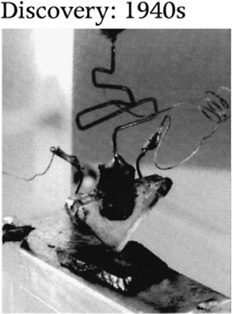
FIGURE 1.1 The world's first transistor, developed in 1947. It was a point-contact device roughly one centimeter across. (Courtesy of Lucent Technologies Bell Laboratories.)
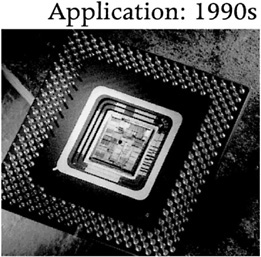
FIGURE 1.2 A Pentium®chip with 3.3 million transistors. Such micro-processors are at the heart of today's personal computers. (Courtesy of Intel Corporation.)
During the same period, telecommunication has evolved from rudimentary telephone conversations to instantaneous simultaneous worldwide transmission of voice, video images, and data. The cellular phone is even unleashing us from telephone wires.
Almost every American can now enjoy, while relaxing in the living room or driving the car or even while jogging, music of a
quality that in previous generations was available only to concertgoers.
Just a few generations ago, a trip across the United States was a great adventure. Today, jets whisk us safely across the continent or the oceans in only a few hours.
Making these extraordinary accomplishments possible are a wide variety of polymeric, ceramic, and metallic materials, as well as the transistor, the magnetic disk, the laser, the light-emitting diode, and a host of other solid-state devices. The development of these materials and devices depended on our ability to predict and control the physical properties of matter. That ability is the realm of condensed-matter and materials physics (CMMP), the subject of this report.
Fifty years ago, the major intellectual challenge facing researchers in CMMP was to understand the physical properties of nearly perfect single crystals of elements, simple compounds, and alloys. Today our challenge is to extend that understanding to much more complex forms of matter—high-temperature superconductors, multicomponent magnetic materials, disordered crystals, polymers, glasses—and to more complex phenomena like the fracture of solids and the continuous hardening of glass as it cools. Ever in view in today's CMMP is another scientific revolution, the dramatic change under way in the biological sciences. Great opportunities lie ahead as condensed-matter and materials physicists increasingly work together with biological scientists.
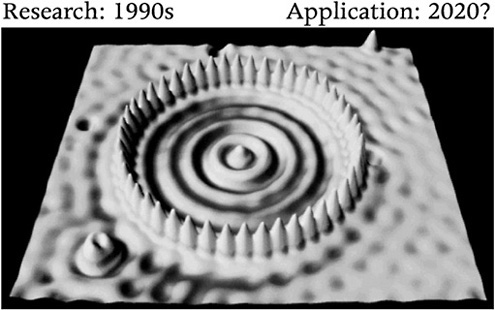
FIGURE 1.3 A scanning tunneling microscope (STM) image that shows the wave nature of electrons confined within a “quantum corral,” 14 nanometers in diameter, made up of 48 individually positioned iron atoms on a copper surface. Devices formed by precise positioning of atoms or molecules may one day play an important role in ultrahigh-performance computer chips. (Courtesy of IBM Research.)
Part 2 of this report illustrates the vital impact of CMMP on our daily lives. It consists of a brief story—a few simple events that happen every day—accompanied by descriptions that highlight a sampling of the scientific and technological advances in CMMP that make those everyday events possible.
Part 3 explores the nature of the CMMP endeavor itself. CMMP is a diverse, evolving, interdisciplinary field linked strongly to other science and engineering disciplines, which benefit from and contribute to its successes. Indeed, CMMP is distinguished by its extraordinary interdependence with other science and engineering fields. Its practitioners include those who make and refine new materials, those who seek to understand such materials at a fundamental level through experiments and theoretical analysis, and those who apply
the materials and understanding to make new devices. This work is done in universities, in industry, and in government laboratories.
Part 3 speaks, as well, of a field in transition. New linkages with disciplines such as polymer chemistry and the biological sciences are growing in importance.
The evolution of CMMP is taking place within an evolving national and international context, as described in Part 4. The great industrial laboratories, so prominent over the last half century, have shifted the scale, scope, and emphasis of their R&D investments in CMMP to adjust to changes in the global marketplace. Industry is looking more and more to universities and government laboratories to perform basic research that will lead to the next generation of technology. Yet these very academic and government institutions are themselves facing considerable stresses that limit their abilities to respond to new demands.
Part 4 also discusses issues arising from the growing dependence of CMMP on shared large and medium-size experimental facilities. Increasingly sophisticated equipment has become necessary for scientific innovation, from electron-beam instruments to giant x-ray synchrotrons. These facilities are essential for continued advances in the invention, understanding, and control of increasingly complex materials. They are required for a broad range of scientific and technological endeavors, not only in CMMP but also in many other fields of science and in industry. But funding large facilities strains the resources of the agencies that have traditionally provided research support to universities and government laboratories, even as those institutions are being asked to play a broader role.
CMMP promises to be a dynamic field of research for many years to come. If the challenges currently facing the field can be met, there are enormous opportunities for scientific and technological advances that will improve our lives.


