
6
The Electronics Industry
Background
Electronics, computers, and associated software have transformed every facet of society. In addition to providing the basis for the information revolution, electronics enable many of society's vital support systems, including those that provide for such necessities as food, water, energy, transportation, health care, telecommunications, trade, and finance.
The electronics sector produces a diversity of devices and equipment. Industries in this sector fall under U.S. Department of Commerce Standard Identification Code (SIC) 35 and 36. SIC 35 describes industries that produce electronic computers, computer storage devices, computer terminals, computer peripheral equipment, calculating and accounting equipment, and office machines. SIC 36 describes industries that produce electron tubes, printed circuit boards, semiconductors and related devices, electronic capacitors, electronic coils and transformers, electronic connectors, and electronic components. Due to the great diversity of electronics products and the desire to provide an in-depth analysis, this chapter will focus on those metrics used in the manufacture of semiconductor devices and consumer electronics products.
The Semiconductor Manufacturing Process
Semiconductor manufacture begins with a solid crystalline material whose electrical conductivity falls between that of metal and insulator. The most common materials used are silicon and germanium. These are processed to produce
semiconductors (commonly referred to as integrated circuits, or ICs), defined as miniature electronic circuits produced within and upon a single semiconductor crystal (McGraw-Hill Book Company, 1995). Semiconductors serve two purposes: they act either as a conductor, guiding or moving an electrical current, or as an insulator, preventing the passage of heat or electricity. Typical functions of semiconductors in electronic products include information processing, displays, power handling, data storage, signal conditioning, and converting light energy to electrical energy, or vice versa.
IC manufacturing is complex and involves the use of ultra-high-purity liquids and gases. Semiconductor manufacturing can be broken down into six basic steps (Box 6-1). The primary concern during manufacturing is contamination of the product. All steps are. therefore, carried out in very clean environments that consume as much as 60 percent of the electrical power used in wafer fabrication
|
BOX 6-1 Steps in the Manufacture of Semiconductors  Step One: Design The circuit is designed using computer modeling techniques. A structural description of the design is developed from the given electrical specifications. After the circuit has been designed, the design is verified using computer simulation to test functionality and to develop and test layouts of the circuit path. The layout phase identifies the location of the circuits on the silicon surface and their interconnections. Computer simulation analyzes the completed layout to verify complex geometrical constraints. The designers develop a set of mask descriptions when the layout is complete. A prototype chip is manufactured and returned to the designers for extensive testing, including diagnostic testing in which actual performance is compared with design expectations. Step Two: Wafer Production A wafer is a thin, round slice of a semiconductor material, usually silicon. In wafer production, purified polycrystalline silicon, created from sand, is heated to a molten liquid. A small piece of solid silicon (seed) is placed on the molten liquid. As the seed is slowly pulled from the melt, the surface tension between the seed and molten silicon causes a small amount of the liquid to rise with the seed and cool. The resulting crystal ingot is then ground to a uniform diameter and a diamond saw blade cuts the ingot into thin wafers. The wafer is processed through a |
|
series of machines, where it is ground smooth and chemically polished to a mirror-like luster. The wafers are then ready to be sent to the wafer fabrication area, where they are used as the starting material for manufacturing integrated circuits (Harris Corporation, 1998). Semiconductors are extremely sensitive to contamination. Airborne particulates, even 1 µm in size, can cause defects. Special precautions are taken in production to reduce the amount of particulates in the air. For example, lint-free garments are worn by the process personnel to minimize operator-induced particulates. Step Three: Wafer Processing Wafers are typically processed in batches of 25 to 40. Semiconductor fabrication is very complex. First, films are deposited or grown, usually through oxidation, on the single-crystal surface, which can serve to provide a protective barrier, can be used as a dielectric, or can serve to isolate devices or layers. The typical next step, usually called photolithography, is one of the most crucial. It is often repeated 8 to 15 times. Photolithography imprints patterns onto the silicon substrate. Incorrect patterning affects the semiconductor's electrical properties. An etching step usually follows to remove selected portions to create patterns. Etching is often followed by a series of steps that introduce controlled amounts of chemical impurity, or dopants, into the film. Dopants are typically used to enhance the semiconducting properties. One of the last steps in the wafer fabrication process is called metallization. One or more layers of a metal alloy are deposited on the wafer surface. This metal provides the physical and electrical contacts with the silicon. A final protective oxide layer is put on the wafer's surface. This layer protects the semiconductor and insulates it from contact with other external metal components. Step Four: Wafer Assembly and Testing The semiconductor is next tested to ensure that it is performing as designed. A drop of ink is placed on semiconductors that do not meet the design specifications. This minimizes packaging costs since nonconforming semiconductors are discarded during assembly operations. This step also provides information on process yields. Assembly transforms the device into a useable form while protecting its quality and reliability. Semiconductors are assembled by mounting the wafer onto a metal frame, connecting the wafer to metal strips (leads), and enclosing the device to protect against mechanical shock and the external environment. The enclosure can be plastic or ceramic. Today, the majority of devices manufactured are enclosed in plastic. Step Six: Final Testing A final series of tests are performed on the device to evaluate conformance to published specifications. SOURCES: Adapted from McGraw-Hill Book Company (1995), Texas Engineering Extension Service (1994). |
facilities, also known as wafer fabs. Some clean rooms have particle levels as low as one to five per cubic foot of air. By comparison, operating rooms have particle levels of 10,000 to 100,000 per cubic foot, and outside air contains about 500,000 to 1,000,000 particles per cubic foot of air. Hazardous materials such as sulfuric acid, hydrofluoric acid, hydrochloric acid, and phosphoric acid are widely used during processing. Patterns are imprinted and developed on the silicon substrate using organic chemicals.
Environmental Performance Improvements
The use of metrics for decision making within the semiconductor industry, as for the other industries studied, is generally driven by regulation. One exception is efforts to reduce energy and water use, which generally result from a desire to lower operating costs. The electronics industry is critically dependent on rapid technological innovation, and it is beginning to apply similar efforts to meeting environmental challenges. In the early 1990s the industry began developing a "road map" that identifies research needs for improved semiconductor products and processes. Recently, environmental considerations have been integrated into every aspect of this technological road map.1 The 1997 road map identifies several environmental challenges. These are summarized in Table 6-1 along with the environmental issues and potential metrics associated with each.
The three most difficult technical challenges identified in the road mapping exercise are to ensure early distribution of information about the toxicity and safety of chemicals to users, reduce water and energy use, and reduce perfluorocarbon (PFC) emissions (Semiconductor Industry Association, 1997). PFCs are used to etch silicon wafers and to clean plasma chambers used in semiconductor manufacture. If released to the atmosphere, these long-lived compounds act as greenhouse gases. Many semiconductor companies have voluntarily entered into a memorandum of understanding with the U.S. Environmental Protection Agency (EPA) to address PFC emissions.
Current Use of Environmental Performance Metrics
Metrics help semiconductor companies choose chemicals, processes, or products that have minimal environmental risk. Metrics, such as chemical use, identify processes that are material intensive or that use high-risk chemicals. Energy or natural resource consumption and state regulatory requirements are often considerations in choosing a location for a new facility. Environmental metrics can
Table 6-1 Environmental Challenges in the Semiconductor Industry
|
Challenges |
Summary of Issues |
Possible Metrics |
|
Anticipated Before 2006 (circuitry dimensions < 100 nma) |
||
|
New chemical qualification |
Need to conduct thorough new chemical reviews and ensure that new chemical processes can be utilized in manufacturing without jeopardizing human health or the environment or delaying process implementation. |
Number of new chemical reviews conducted |
|
Reduce PFC emissions |
These gases are used in plasma processing. There are no known alternatives. International regulatory scrutiny is growing. |
PFC emissions |
|
Reduce energy and water use |
Availability of energy and water may limit location and size of wafer fabrication facilities in certain geographic regions. |
Energy and water use, alternative reuse opportunities |
|
Integrated ESH impact analysis capability |
There is no integrated way to evaluate and quantify the impact of process, chemicals, and process tools. |
EHS cost per unit of production |
|
Anticipated After 2006 (circuitry dimensions < 100 nma) |
||
|
Eliminate PFC emissions |
There are no known alternatives and international regulatory pressure. |
PFC emissions |
|
Know detailed chemical characteristics before use |
Need to document toxicity and safety characteristics because of international regulatory pressure. |
Number of risk assessments conducted on new chemicals |
|
Lower use of feed water by a factor of 10 and halve cost of water purification |
Reducing use and cost of water will improve productivity curve and increase flexibility of factory siting. |
Water use, alternative reuse opportunities, cost to provide purer water |
|
Halve energy use per unit of silicon |
Desire to reduce global-warming impact of energy use. Energy availability in market area. |
Energy use |
|
Integrated ESH impact analysis capability for new designs. |
Lack of an integrated way to make ESH a design parameter in development procedures for new tools and processes |
Partnering with manufacturing tool suppliers to develop metrics for cleaner tools |
|
NOTE: PFC = perfluorocarbon; ESH = environment, safety, and health. anm (nanometer) refers to the width of a beam of light from the lithographic light source. With smaller dimensions of the circuitry (i.e., lines and spaces), narrower beams are required. SOURCE: Semiconductor Industry Association (1997). |
||
be a factor in any of these decisions. Success stories involving the use of environmental metrics can work to the benefit of a firm during permit or regulatory negotiations.
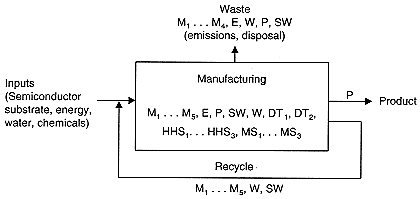
Figure 6-1 shows the resource inputs, product outputs, waste, and associated metrics of a standard semiconductor manufacturing facility. Regulated materials, such as Toxic Release Inventory (TRI) chemicals, are often tracked throughout the manufacturing process. Depending upon the characteristics of a company's materials and design capabilities, some materials are recycled through a closed loop within the facility. Others are sent to recyclers or disposed of off site.
Environmental Burden
Environmental burden in the electronics industry relates primarily to chemicals that have the potential to be released to the air, water, or land. In 1995 the electronics industry accounted for 446.7 million pounds of TRI releases and transfers, of which 15.8 million pounds were associated with the semiconductor industry (Right-to-Know Network, 1998). Since the expected growth rate of the semiconductor market is projected to be 20 percent over each of the next three years (Semiconductor Industry Association, 1997), chemical management is critical to the industry. In addition to TRI emissions, the industry also tracks ozone-depleting substances, EPA 33/50 chemicals, and hazardous waste. Some within the industry also track PFCs.
Chemical management involves monitoring chemicals that are used and released into the environment as well as tracking regulatory inspections and compliance issues. The goal of chemical management is to minimize risks to safety, public and employee health, and the environment. To date, the industry has successfully applied pollution prevention principles to the management of chemicals and emissions (Box 6-2). The industry can also boast of having essentially eliminated Class I ozone-depleting substances from its manufacturing processes.
The industry's ability to use new chemicals depends on a robust chemical assessment and selection process. The challenge lies in developing tools that will assist in the selection of chemicals that meet the needs of semiconductor manufacturing while also improving environmental performance. As part of this effort, it is important for managers and designers to get information about the environmental and health characteristics of potential new process materials as early as possible, thus limiting health risks, environmental liabilities, and potential downtime.
Resource Use
Beyond the chemical requirements, other primary resource inputs to semiconductor manufacturing are the semiconductor substrate, water, energy, and packaging material. Innovations have allowed an increase in wafer size but at the
|
M1 = TRI chemicals |
MS1 = Environmental management systems |
|
M2 = Ozone-depleting substances |
|
|
M3 = 33/50 chemicalsa |
MS2 = Regulatory inspections |
|
M4 = Hazardous waste |
MS3 = Compliance issues |
|
M5 = SARA chemicals |
HHS1 = Accidents/injuries per 100 employees |
|
E = Energy use (electricity, natural gas, and fuel) |
HHS2 = OSHA recordable injuries and illnesses |
|
W = Water use |
|
|
P = Packaging materials |
HHS3 = Lost and restricted day casesb |
|
SW = Nonhazardous solid waste |
|
|
DT1 = Environmental cost accounting |
|
|
DT2 = Design for environment (e.g., number of environmentally designed products) |
|
Figure 6-1 Metrics used in semiconductor manufacturing.
NOTES: TRI = Toxic Release Inventory; SARA = Superfund Amendments and Reauthorization Act; OSHA = Occupational Safety and Health Administration.
a The U.S. Environmental Protection Agency's (EPA's) 33/50 program (also known as the Industrial Toxics Project) is a voluntary pollution reduction initiative that targets releases and off-site transfers of 17 high-priority toxic chemicals. Its name is derived from its overall national goals—an interim goal of 33 percent reduction by 1992 and an ultimate goal of a 50 percent reduction by 1995, with 1988 being established as the baseline year. The 17 chemicals are from EPA's Toxic Release Inventory. They were selected because they are produced in large quantities and subsequently released to the environment in large quantities and are generally considered to be very toxic or hazardous, and the technology exists to reduce releases of these chemicals through pollution prevention or other means. Although the goals have been met—a 40 percent reduction was achieved by 1992, and 50 percent reduction was reached ahead of schedule in 1994 (United States Environmental Protection Agency, 1999)—companies continue to track these 17 chemicals.
b Lost and restricted days are those in which a worker is unable to perform a particular function due to illness or injury but is able to perform other tasks.
|
BOX 6-2 Pollution Prevention Efforts Reduce Emissions Organic solvents are frequently used to remove contaminants from wafer surfaces in semiconductor manufacturing. Typical cleaning processes involve the use of industry standard equipment that specifies parts placement and dictates how solvents are to be applied. Through innovative parts placements and modification of the solvent application technique, engineers at IBM Burlington (Vermont) were able to substantially increase the number of parts processed per batch and improve cleaning efficiency. The new process reduced the site's solvent use by 1,860 metric tons in 1996 and saved over $5 million in chemical and production costs. Similarly, through the development and implementation of no-clean fluxes in three processes, IBM's Bromont (Canada) facility has achieved a 70 percent reduction in its perchloroethylene (perc) emissions since 1993. The plant's goal is to completely eliminate perc emissions by the end of 1998. SOURCE: International Business Machines (1998). |
cost of more process steps. This has resulted in a need for water of greater purity and more water use per wafer. Increased water needs can be met by a combination of strategies, including higher-efficiency rinse processes, recycling of higher-quality water for process applications, and reuse of lower-quality water for nonprocess applications. At Intel, 50 to 70 percent of industrial water is recycled ultrapure water (Intel, 1998). Typical metrics for water use are gallons per year or gallons per employee per day. Wastewater reuse may be tracked as total gallons or as a percent of total wastewater.
The industry also faces a challenge in the area of energy use. In 1995 the U.S. semiconductor companies consumed a total of 8.4 billion kWh of electricity (Semiconductor Industry Association, 1997). Table 6-2 shows operating expenses of a typical semiconductor facility. The electric bill can be the largest or second-largest expense item, representing 25 to 40 percent of a facility's operating budget (excluding capital and construction expenditures; Semiconductor Industry Association, 1997).
Mounting Components and Packaging
Once a semiconductor assumes final form, it is usually mounted onto a circuit board. Circuit boards often contain many semiconductors and capacitors. Epoxy compounds are frequently used to attach components to the board. Although excellent at reinforcing the interface between components and substrates,
Table 6-2 Operating Expenses of a Typical Semiconductor Facility
|
Category |
$1,000s |
Percent of Total Expenses |
|
Central plant |
3,720 |
7.1 |
|
Building/structure |
3,838 |
7.3 |
|
Ultrapure water |
539 |
1.0 |
|
Chemical services |
479 |
0.9 |
|
Gas services |
247 |
0.5 |
|
Electricity |
21,890 |
41.5 |
|
Water |
1,423 |
2.7 |
|
Natural gas |
2,481 |
4.7 |
|
Custodial (cleaning service) |
1,953 |
3.7 |
|
Landscaping |
102 |
0.2 |
|
Trash |
158 |
0.3 |
|
Hazardous waste |
774 |
1.5 |
|
Salary/benefits |
15,105 |
28.7 |
|
SOURCE: Allenby (forthcoming). |
||
these polymers make it difficult to recover portions of assemblies or remove and recycle chips and components. Some in the electronics industry, such as consumer and office equipment manufacturers, are beginning to recycle their products, a trend that is driving IC makers to find new mounting materials. Companies that produce both semiconductors and consumer electronics products have addressed this by developing alternative adhesive compounds. IBM Research, for example, has developed a new epoxy compound that is easily removed, allowing for rework or disassembly of components for recycling. The new epoxy can be dissolved in specially designed, water-based, mildly acidic systems, yet it still meets all the performance requirements of a typical epoxy (Buchwalter and Kosbar, 1996). This is an example of how design for environment2 (DFE)
practices can positively affect the recyclability and longevity of a product, thereby saving money.
Increasing production volumes are driving companies to look for ways to reduce the amount of materials being used, including shipping containers. Many companies have identified opportunities to minimize or to reuse packaging material. Texas Instruments (TI) has successfully reduced packaging by 70 percent and increased shipping capacity by 33 percent. TI also worked with one of its customers, Ford Motor Company, to develop packaging material that is reusable or made from recyclable material. Today, 91 percent of packaging material shipped between TI and Ford is recyclable or reusable (Texas Instruments, 1998).
Human Health and Safety
As is true for many other industries, worker health and safety is tracked in terms of accidents and injuries per 100 employees, OSHA recordable injuries and illnesses, and lost or restricted day cases. 3 The Semiconductor Industry Association road map suggests that in the future more attention will be focused on improving manufacturing equipment for semiconductors and the selection of process chemicals to provide additional worker protection. Part of the chemical selection process will involve the use of risk assessment and risk management procedures. There will, however, still be an ongoing need to identify reliable, cost-effective tools to monitor work areas for potential exposure to toxic chemicals. Other issues related to worker protection that must be considered include improved information flow at worksites to ensure that accurate, appropriate information is disseminated to all employees; increased attention to maintenance operations; and better understanding of the risks and implications of physical hazards in the workplace.
Design Approach
Semiconductor manufacturers tend to focus on cost, yield, and logistics when selecting products and processes. However, because of the costs of coping with them, environment, safety, and health (ESH) risks are also becoming important drivers in design and operational decision making. When not considered initially, ESH issues have resulted in major postinstallation changes to processes and increased operating costs. To reduce ESH-related costs, risk factors must be evaluated and dealt with at an early stage in the design process. The DFE approach is intended to produce products that are environmentally acceptable throughout their life cycle.
In semiconductor manufacturing, DFE usually entails
- designing out the source of or the regulatory requirement for the environmental concern,
- using design options that pose less environmental risk,
- using fewer materials and processes to reduce waste,
- minimizing materials or processes that may create an environmental risk, and
- using design constraints and engineering controls that reduce the potential for undesirable environmental effects or releases.
These principles ensure that the environmental consequences of a product's life cycle are understood and addressed before or as manufacturing decisions are made. Design teams use checklists, guidelines, Web pages, and supplier specifications to choose processes and product features that are less harmful to the environment. The intent is to produce the most environmentally sound product design that will also meet function, cycle time, cost, and quality goals. Progress toward meeting these goals is tracked through specific metrics associated with each principle.
Summary
Metrics are often used as indicators to guide the design or retrofitting of a facility or manufacturing operation. They can also be used to forecast operational and risk-based expenses, track facility performance, establish goals and targets for a corporation, and create a baseline of company performance that can be used to benchmark against other companies in the industry.
To examine the use of environmental performance metrics by semiconductor companies, the committee surveyed member companies of SEMATECH (SEmiconductor MAnufacturing TECHnology), a nonprofit research and development consortium of U.S. semiconductor manufacturers.4 using publicly available information, such as websites and environmental annual reports. A summary of the results is shown in Appendix B. The survey illustrates that even within an industry sector the types of environmental metrics that are reported vary depending on the structure of the company and its products. IBM and Digital, for example, produce more than semiconductors and therefore report on their performance in terms of a full range of products. Consequently, their environmental reports are not readily comparable with a company like Intel,
whose primary product is integrated circuits. Meaningful comparisons can, therefore, be difficult even within a single industry.
A compilation of environmental metrics used by semiconductor manufacturers appears in Table 6-3.
Challenges and Opportunities: Semiconductors
Semiconductor technology changes very rapidly. ICs are decreasing in size as their performance and capacity increase. At the same time, wafer size is increasing, allowing more of the smaller ICs on each wafer. Moore's Law, which predicts that IC performance will double every 18 months, is expected to hold true through 2010 (Semiconductor Industry Association, 1997). Because of this rapid pace of change and the industry's concurrent engineering practices, IC manufacturers tend to be adapt quickly. As a result, the industry is able to adjust to new environmental factors more rapidly than industries that have products and processes with longer life cycles. Applying DFE to effect such changes, however, is relatively new, and the tools and techniques being used appear to be somewhat rudimentary, often involving the use of guidelines and checklists. Efforts to build more sophisticated tools and have them adopted by companies have not always met with great success (Hoffman and Scheller, 1998).
Currently, most semiconductor companies are not factoring the recyclability of the final products into design processes. Efforts like IBM's development and use of epoxy alternatives, however, give some cause for optimism.
The lack of comparable metrics is an important issue in the industry. Unlike financial reports, where metrics are standardized, there is no uniformity in the type of information included in company environmental reports or in the units used to report it. Standardization is needed for meaningful comparisons, but until the financial community demands such standardization, it is unlikely to happen. Meanwhile, there are reports in the financial media that some investment fund managers are using environmental performance to augment the traditional screening process used to rank companies (Deutsch, 1998). If this practice becomes commonplace, it will likely bring greater standardization to industrial environmental performance metrics. Efforts by grassroots organizations to get companies to comply with certain standards, such as principles developed by the Coalition for Environmentally Responsible Economies (CERES), through stockholder proposals are becoming more common.5
The International Organization for Standardization (ISO), particularly through ISO 14031, has sought to provide some much-needed definitional and
Table 6-3 Environmental Metrics Used in Semiconductor Manufacturing
|
Manufacturing |
Product Use |
|
Resource Related |
|
|
Chemical Management
|
Natural Resources
Design Tools
|
|
Design Tools
|
|
|
Environmental Burden Related |
|
|
Chemical Management
|
Natural Resources
|
|
Human Health and Safety |
|
|
Worker Protection
|
|
|
NOTE: TRI = Toxic Release Inventory; ODS ozone-depleting substances; DFE design for environment. a The U.S. Environmental Protection Agency's (EPA's) 33/50 program (also known as the Industrial Toxics Project) is a voluntary pollution reduction initiative that targets releases and off-site transfers of 17 high-priority toxic chemicals. Its name is derived from its overall national goals—an interim goal of 33 percent reduction by 1992, and an ultimate goal of a 50 percent reduction by 1995, with 1988 being established as the baseline year. The 17 chemicals are from EPA's Toxic Release Inventory. They were selected because they are produced in large quantities and subsequently released to the environment in large quantities; they are generally considered to be very toxic or hazardous; and the technology exists to reduce releases of these chemicals through pollution prevention or other means. Although the goals have been met—a 40 percent reduction was achieved by 1992, and 50 percent reduction was reached ahead of schedule in 1994 (United States Environmental Protection Agency, 1999)—companies continue to track these 17 chemicals. b Lost and restricted days are those in which a worker is unable to perform a particular function due to illness or injury but is able to perform other tasks. |
|
comparability guidelines to industry. The basic premise of ISO 14031 is that business strategy should drive metrics rather than the other way around. Environmental metrics should, therefore, reflect the nature and scale of the operations, and selected metrics should provide managers with sufficient information to evaluate progress toward environmental goals. In addition, the ISO standards suggest that in some instances quantitative metrics may be substituted by qualitative indicators (such as those discussed in Chapter 10).
The Electronics Life Cycle
Semiconductors are critical to the operation of virtually all electronics, although they account for only a small portion of sales for the nearly $400 billion U.S. electronics industry. The semiconductor industry and related high-technology industries now account for 30 percent of America's economic growth. Fifty percent of semiconductors are used in computers, 17 percent are used in consumer electronics, and the remainder are installed in cars, communications systems, industrial applications, instruments, and defense systems (Semiconductor Industry Association, 1998). A simplified hierarchy of the electronics industry is shown in Figure 6-2.
The life-cycle concerns of each segment of the industry vary widely. For example, in semiconductor manufacturing, environmental concerns are primarily at the process level. They include PFC use and recovery, hazardous waste use and management, chemical disposal, water and energy use, and in-process recycling. Product take-back and stewardship are not much of a concern, since semiconductors are integrated into larger products, which themselves may be the subject of corporate environmental stewardship efforts.
Printed circuit board manufacturers, like semiconductor manufacturers, are concerned with the use and disposal of hazardous materials. Their products are typically the components of consumer electronic products and may be returned to them at some future date. Hence, these firms might also be concerned with heavy metals and recycling of scrap boards and metals.
Manufacturers of consumer electronics products, on the other hand, are like automobile manufacturers: They have to take into account consumer as well as
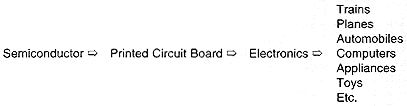
Figure 6-2
Hierarchy of the electronics industry.
environmental factors. In general, their environmental objectives are related to energy efficiency minimizing electromagnetic signal emissions, and ensuring that there are no measurable outgasing or toxicity hazards from materials and components of the electronic product. Materials used in the product must meet safety standards and emit no toxics in case of fire. Plastics are increasingly being used because of their light weight and low cost, but the use of halogenated plastics and fire retardants is a concern because of their potential to form dioxin during a fire. Use of substances such as cadmium in batteries also poses risk to the environment. This segment of the industry is beginning to establish recycling centers to take back their products for reuse or recycling (Box 6-3).
Life-Cycle Studies and DFE Metrics
Studies of electronics products have revealed that environmental impacts occur throughout their life cycles. Given the rapid change in the industry, the accuracy of these data is short lived. For example, the results of a much-quoted study (Box 6-4) were from data collected in the early 1990s. The computer workstation that served as the focus of the study has changed dramatically, making specific results less relevant, but trends related to product energy use are still valid.
A growing body of literature on DFE in the electronics industry suggests several common practices related to life-cycle factors and waste-stream issues in the disposal of products. Broader concerns about the end of product life are evident in DFE principles, which include
|
BOX 6-3 Computer Equipment Recycling Centers Digital Equipment Corporation, which recently merged with Compaq, operates two computer recovery centers—one in Contoocook, New Hampshire, and the other in Nijmegen, Netherlands. At the centers, incoming computer equipment is first inspected to determine the best approach for recovery. Usable equipment is repaired, refurbished, or sold for reuse. Unusable and obsolete equipment goes through a disassembly operation. Generic components with commercial value such as integrated circuits, memory chips, and disk drives are extracted and sold for reuse. The remaining assemblies are then dismantled and separated. These groups of materials are dispatched to specialized vendors for recycling or disposal using controlled, prequalified processes. SOURCE: Digital Equipment Corporation (1998). |
|
BOX 6-4 Environmental Profile of a Computer Workstation 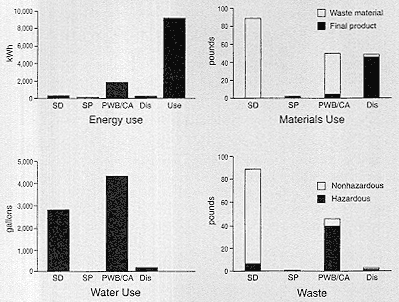 Results of a life-cycle study of the computer workstation are summarized in the graphs above. The computer workstation studied was assumed to contain one 1/6-inch-thick silicon wafer (about 28 square inches), 220 integrated circuits (213 in plastic and 7 in ceramic packages), about 500 square inches (3.6 square feet) of single and multilayer printed wiring board, and a 20-inch monitor. The subcomponents included in the study were semiconductor devices (SD), semiconductor packaging (SP), printed wiring boards and computer assemblies (PWB/CA), and display units (Dis). The profiles of energy, material, and water use and waste reveal some aspects of the environmental impacts of an electronics product. Energy Use As in the case of the automobile, the greatest energy is consumed on a per-product basis during computer use. Although energy consumption during use continues to dominate the energy profile of the computer, several more recent models feature components that require less power and that ''power down'' when inactive. EPA recognizes such products through its Energy Star program. which many manufacturers use for product marketing purposes. Materials Use Both product and process materials are used to manufacture a computer. Product materials become part of the product, while process materials are used in |
|
the processing of parts and components but do not end up in the product. Process materials include various gases and cleaning solvents. The processing of various computer subcomponents generates differing quantities of waste. The production of semiconductor devices and printed wiring boards is the most materials-intensive portion of the computer manufacturing process. The production of printed wiring boards involves several lithographic, plating, and etching processes that require significant amounts of chemicals. The display terminal uses the least amount of process materials but is the greatest contributor to the weight of the computer. Water Use Water is critical to the manufacture of the various computer subcomponents. Substantially more water is used in the manufacture of printed wiring boards than semiconductor devices and other subcomponents. Water used per unit of product is greater for semiconductor manufacture than for printed circuit board manufacture. Hazardous and Nonhazardous Waste Hazardous and nonhazardous wastes are residuals resulting from the manufacture of computers. Printed circuit board production results in the greatest. amount of hazardous waste among the four manufacturing processes evaluated in this study. SOURCE: Microelectronics and Computer Technology Corporation (1993). |
- design for disassembly and separability, or simplifying product disassembly and material recovery using techniques such as color-coding plastics or snap fasteners to hold components together;
- design for recyclability, or ensuring both high recycled content in product materials and maximum recycling so there is minimum waste at the end of product life; design for reusability, or ensuring that components are compatible with different product lines and recovered, refurbished, and reused across product lines;
- design for remanufacture, or enabling recovery of postindustrial or postconsumer materials for recycling as input to the manufacture of new products; and
- design for disposability, or ensuring that all materials and components can be safely and efficiently disposed of.
Electronics companies with large, leased-based products have also begun to incorporate another practice: product life extension. The practice reduces product or component materials that end up in the waste stream. The idea is to
provide and market the functionality of the product in lieu of new hardware (Stahel, 1997). In addition to the DFE practices outlined above, this approach requires making sure that parts common to several products are designed to be interchangeable, and it necessitates managing the logistics and distribution of leased products in the marketplace. One electronics company that is aggressively applying this practice is Xerox (Box 6-5). An appropriate metric in this circumstance would be "life of a part or product." There are limits to this practice, however, as older stock cannot always be upgraded to the newer digital technologies. What is emerging in the electronics industry is a flexible system of product management. A variety of metrics have merged along with these practices.
Common metrics used in the electronics industry are summarized in Box 6-6. They are not dissimilar to those used in semiconductor manufacturing, except that they include metrics related to product use and disposal.
Challenges and Opportunities: Consumer Electronics
DFE-related metrics and those driven by regulations are useful in the design phase of a product. Individually, however, they are not representative of the environmental performance of a company, except in specific instances such as energy use or release of TRI chemicals. Global environmental metrics are not readily available today. Indeed, the many ways in which the uses of electronics lead to environmental improvement and contribute to sustainable development are not captured in the current set of environmental metrics. Meeting the needs of the present without compromising the needs of the future is the thrust of sustainability, and industrial environmental performance is an important barometer of success. Cleaner air, cleaner water, and reduced exposure to toxics all indicate progress toward sustainable development.
Electronics, a vital part of the telecommunications and computer revolutions, have and continue to transform industrial production and management throughout the economy (Freeman, 1992). The impacts of this revolution on improving environmental performance are already being felt, particularly in the monitoring and control of energy emissions and materials use, in aiding quality and inventory controls, and through improved control of manufacturing processes. Many energy-saving technologies and process changes that promote cleaner production depend on the incorporation of electronic sensors and monitors. System models of production processes are often complicated and their use requires computers. Sensing and monitoring instruments provide essential inputs to the models making it possible to achieve many regulatory objectives. The list of technological advances on the horizon is endless. Electronics-based applications that are likely to reduce societal energy demands include smart buildings, telecommuting, lightweight electronic materials (e.g., electric "paper"), intelligent transportation systems, and improved air traffic management (World Resources Institute, 1998).
|
BOX 6-5 Asset Management and DFE at Xerox Xerox has adopted modular design as a way of reducing raw material use and waste. Modular design allows for similar parts to be interchanged among several product lines. This makes it easier for the company to recover its leased products and refurbish them for re-lease or resale. By marketing and selling the functions of its products (through leases), the company is in essence managing its leased products as inventory. Part of that management involves recovering usable and interchangeable parts, as shown below. 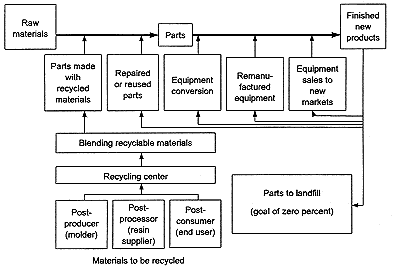 To optimize its recovery of material assets, Xerox has changed its product delivery process; applied DFE practices of disassembly, material recycle, life extension, commonality of parts, and remanufacture and conversion; and developed effective processes for the recovery of used products. As a result of these efforts, the company has reduced solid waste generation by 73 percent, increased the factory recycle rate by 141 percent, reduced releases to the environment by 94 percent, and realized over $200 million in annual savings. SOURCE: Calkin (1998). |
|
BOX 6-6 Environmental Performance Metrics Used in the Consumer Electronics Industry Environmental Burden
Resource-Use Metrics
Economics
|
Capturing such complex issues in sustainability metrics is a formidable challenge for the future.
References
Allenby, B.R. Forthcoming. The information revolution and sustainability: Mutually reinforcing dimensions of the human future. In Green Tech·Knowledge·y. D.J. Richards, ed. Washington, D.C.: National Academy Press.
Buchwalter, S.L., and L.L. Kosbar. 1996. Cleavable epoxy resins: Design for Disassembly of a thermoset. Journal of Polymer Science and Polymer Chemistry 34(1):249–260.
Calkin, P. 1998. Encouraging modular design. Paper presented at National Research Council/National Academy of Engineering Workshop on Materials Flows Accounting of National Resources, Products, and Residues in the United States, January 26–27, Washington, D.C.
Digital Equipment Corporation. 1998. Environment, Health, and Safety Features of DIGITAL Commercial Desktop Personal Computers. Available online at http://www.windows.digital.com/resources/whitepapers/ehs%5Fdesktop.asp. [August 10, 1998].
Deutsch, C. 1998. For Wall Street, increasing evidence that green begets green. New York Times. July 19. Section 3, p. 7.
Freeman. 1992. Economics of Hope—Essays on Technical Change, Economic Growth and the Environment . London: Pinter Publications.
Harris Corporation. 1998. How Semiconductors Are Made. Available online at http://rel.semi.harris.com/doc/lexicon/manufacture.html. [July 30, 1998].
Hoffman, W., and H. Scheller. 1998. Design for Environment at Motorola. Paper presented at NAE Workshop on Industrial Environmental Metrics, January 28–29, Washington, D.C.
Intel. 1998. Water Conservation. Available online at http://www.intel.com/intel/other/ehs/ may97report/water.html. [August 10, 1998].
International Business Machine. 1998. Environment: Pollution Prevention. Available online at http://www.ibm.com/ibm/environment/annual97/prevent.html. [August 10, 1998].
McGraw-Hill Book Company. 1995. McGraw-Hill Encyclopedia of Science and Technology. New York: McGraw-Hill Book Company.
Microelectronics and Computer Technology Corporation (MCC). 1993. Environmental Consciousness: A Strategic Competitiveness Issue for the Electronics and Computer Industry. Austin, Tex.: MCC.
Right-to-Know Network. 1998. Toxic Release Inventory Database, 1995. Available online at http://www.rtk.net/www/data/tri_gen.html. [August 10, 1998].
Semiconductor Industry Association (SIA). 1997. The National Technology Roadmap for Semiconductors. San Jose, Calif.: SIA.
Semiconductor Industry Association (SIA). 1998. Annual Report. San Jose, Calif.: SIA.
Stahel, W. 1997. The functional economy: Cultural and organizational change. Pp. 101–116 in The Industrial Green Game, D.J. Richards, ed. Washington, D.C.: National Academy Press.
Texas Engineering Extension Service. 1994. Semiconductor Processing Overview. Bryan, Tex.: Texas A&M University System.
Texas Instruments. 1998. Taking Responsibility for Our Products. Available online at http://www.ti.com/corp/docs/esh/responsib.htm. [August 10, 1998].
United States Environmental Protection Agency (USEPA). 1999. 33/50 Program: The Final Record. EPA 745-4-99-004. Office of Pollution Prevention and Toxics. Washington, D.C.: USEPA. Also available online at http://www.epa.gov/opptintr/3350/33fin00.htm. [May 19, 1999].
Winner, R.I., J.P. Pennell, H.E. Bertrand, and M.M. Slusarczuk. 1988. Role of Concurrent Engineering in Weapons Systems Acquisition. Report IDA-R-338. Alexandria, Va.: Institute for Defense Analysis.
World Resources Institute. 1998. Taking a Byte Out of Carbon: Electronics Innovation for Climate Protection. Available online at http://www.wri.org/cpi.carbon. [August 10, 1998].
| This page in the original is blank. |


