
CHAPTER 2
Socioeconomic and Demographic Risk Factors and Resources Among Children in Immigrant and Native-Born Families: 1910, 1960, and 1990
Donald J. Hernandez and Katherine Darke
All children share the same basic needs. Children in immigrant families are no different from others in the United States in their need for food, clothing, shelter, physical safety, psychological nurturing, health care, and education. They also share a dependence on adults—family members, communities, government—to assure their healthy development. Despite the similar needs of children in immigrant families, many have recently been denied equal access to publicly funded health and social benefits, or decisions regarding eligibility for such benefits have been devolved from the federal to state governments.
Although the basic needs of all children are similar, children in immigrant families may also have special needs, or special access to resources, because of their current circumstances or conditions associated specifically with immigration. Historical trends in the numbers and socioeconomic and demographic circumstances of children in immigrant families, compared to children in native-born families, reflect key conditions that influence the needs and resources of these children.
The purpose of this chapter is to provide historical perspective on the changing experiences of children in immigrant families in the United States, compared to those in native-born families, and on differences across first-, second-, and later-generation children in 1990 regarding socioeconomic and family risk factors and resources and potential risks specific to children in immigrant families. The 1990 decennial census provides the best and most recent source of information on risk factors for children with origins in a large number of countries. Historical changes are assessed in this study using the 1910, 1960, and 1990 decennial censuses to allow an examination of risk factors following the decade of peak immigration to the United States (1901 to 1910), the subsequent era of very low immigration (1931 to 1960), and the most recent decades of increasing immigration for which census data are available (1970 to 1990).
This assessment is the first to use decennial census data with children as the unit of analysis to study long-run historical changes in the lives of children in immigrant and native-born families. The assessment draws on analytical approaches to identifying first-, second-, and later-generation children developed in recent years (Hernandez, 1993; Jensen and Chitose, 1997; Oropesa and Landale, 1995, 1997a, 1997b; Landale et al., 1997). As defined here, the first generation is children ages 0 to 17 who were born in a foreign country, the second generation is children born in the United States to at least one foreign-born parent, and later-generation children are native-born children with native-born parents. Conclusions from decennial census data concerning socioeconomic and demographic assimilation across various generations must be treated as preliminary for reasons discussed in Appendix 2A.
NUMBER AND COUNTRIES OF ORIGIN OF CHILDREN IN IMMIGRANT FAMILIES
Immigrants from various countries of origin may differ enormously in their socioeconomic and demographic characteristics, their language and culture, and their racial and ethnic composition. The number and countries of origin of children in immigrant families have changed greatly during the twentieth century.
The number of children in immigrant families living with at least one parent dropped from 9.3 million in 1910 to 3.7 million in 1960 and then jumped to 8.2 million in 1990, nearly returning to the level of 1910. But the total population of children was rising as well. Hence, children in immigrant families as a proportion of all children plummeted from 28 percent in 1910 to only 6 percent in 1960, but the subsequent rise to 13 percent in 1990 represented only one-half the level of 1910.
Turning to country of origin, among children in immigrant families (first-or second-generation children) in 1910 who lived with at least one parent, most had origins in Europe (87 percent) or Canada (10 percent). The Northwestern European countries of Germany, Scandinavia, Ireland, and the United Kingdom accounted for the largest proportions, at 20, 11, 10, and 9 percent, respectively. Southeastern European countries of origin for many children included Italy, Poland, and Austria, at 9, 7, and 6 percent, respectively. Russia and Hungary each accounted for an additional 3 percent. Immigrants speaking Yiddish or Jewish have been a focus of recent research on ethnicity and country of origin using the 1910 census (Watkins, 1994). Adopting the same approach here, children identified as Jewish, based on their own or their parents' mother tongue, accounted for 7 percent of children in immigrant families in 1910, most in families emigrating from Russia.
At the turn of the century, perceived differences in culture and race separating Southern and Eastern European immigrants from native borns were viewed as enormous. In the massive government study of the time, the Joint U.S. Immigration Commission (popularly known as the Dillingham Commission) drew sharp distinctions between the ''old" Northern and Western European immigrants and the "new" Southern and Eastern European immigrants (U.S. Immigration Commission, 1911). Anthropologists, scientists, and policy makers of the era shared the public sentiment that the new immigrants were likely to dilute both the racial and cultural purity of native-born Americans with a mainly Northwestern European heritage. Despite these concerns, however, a comprehensive assessment using 1980 census data found that, while white ethnic groups maintain some distinctive patterns, differences on many measures have disap-
peared, including fertility rates and socioeconomic measures such as educational attainment. A high degree of assimilation among white ethnic groups also is reflected in high levels of intermarriage across ethnic lines (Lieberson and Waters, 1988).
By 1960 children with European or Canadian origins accounted for a substantially smaller proportion of children in immigrant families with at least one parent in the home than they did in 1910, only 71 percent, at 56 and 15 percent, respectively. The largest numbers from Europe had origins in Germany, the United Kingdom, and Italy, at 10 or 11 percent each, followed by Poland, Scandinavia, Ireland, and the former Soviet Union, at 3 percent each. By 1990 only 18 percent of children in immigrant families with at least one parent in the home had origins in Europe or Canada, with only Germany, the United Kingdom, and Canada accounting for as much as 2 or 3 percent each (Table 2A-1a).
Corresponding increases have occurred since 1910 among sending countries in Latin America and Asia. The proportion of children in immigrant families from Central or South America, Mexico, or the Caribbean jumped from only 2 percent in 1910 to 18 percent and then to 55 percent in 1960 and 1990, respectively, with most having origins in Mexico, at 2, 13, and 31 percent, respectively, during these years. Meanwhile, the proportion of children in immigrant families from Asia jumped from 1 to 7 percent between 1910 and 1960 and then to 25 percent in 1990. The most important sending countries in Asia as of 1990 were China, India, Korea, the Philippines, and Vietnam, but each accounted for only 2 to 5 percent of children in immigrant families with at least one parent (Table 2A-1a).
Since the beginning of the twentieth century, then, the countries of origin of children in immigrant families have become increasingly diverse, as reflected in the shrinking number of countries that individually account for substantial proportions of children and in the broadening global distribution of these countries, with increasing numbers from Latin America and Asia. The lone partial exception to this generalization is Mexico, which has rapidly increased as a source of children in immigrant families, accounting for one-third of all such children in 1990. Associated with these shifts in country of origin are rising proportions of children in immigrant families who are classified according to the
racial and ethnic stratification system of the United States as Hispanic or Asian minorities.
A final indicator of diversity in 1990 is suggested by the fact that children in immigrant families from 34 different countries each amounted to at least 50,000 (Table 2A-1a). Given that 50,000 persons is the minimum size for a city to be officially classified by the federal government as a metropolitan area, these estimates indicate that if the children in immigrant families from each of these countries of origin were concentrated in a single city the number of children in immigrant families is large enough that they could be classified as constituting 34 separate metropolitan areas representing 34 different countries of origin.
RISK FACTORS AMONG CHILDREN GENERALLY
The extent to which the risks and needs of children in immigrant and native-born families differ depends, at least in part, on the extent to which they are similar or different in certain family circumstances. These circumstances include poverty, parental educational attainments, paid work by various family members, living in a one- or a two-parent family, living with a small or a large number of siblings, and exposure to overcrowded housing conditions.
One of the best-documented relationships in epidemiology and child development is that social and economic inequality has negative consequences for health and other important outcomes for persons of low socioeconomic status—that is, persons experiencing poverty, job insecurity or unemployment, and limited educational attainment (U.S. Department of Health and Human Services, 1981; Starfield, 1982, 1991, 1992; Hill and Duncan, 1987; Newacheck and Starfield, 1988; Montgomery et al., 1996; Wilkinson, 1996; Duncan and Brooks-Gunn, 1997). Parents of children living in poverty do not have enough money to purchase necessary goods and services, such as housing, food, clothing, and health care.
Parental educational attainments are important not only because they influence parental occupation and income as well as current parental values in socializing but also because they influence the levels of education and income that children achieve
when they, in turn, become adults (Blau and Duncan, 1967; Kohn, 1969; Sewell and Hauser, 1975; Featherman and Hauser, 1978; Sewell et al., 1980; Kohn and Schooler, 1983; Alwin, 1984). Thus, children whose parents have completed relatively few years of school are disadvantaged compared to children with more highly educated parents because their parents are less likely to have paid jobs that provide access to health insurance and to the income required to buy other important goods and services and because these children are less likely to complete high school or college themselves and hence are less likely to achieve economic success in adulthood.
Because paid work by parents is the primary source of family income for most children, the number of parents who work for pay and whether they work part time or full time are key determinants of whether children live in poverty, in middle-class comfort, or in luxury. Father's paid work has been the primary factor determining trends in child poverty since the Great Depression, but mother's paid employment has become increasingly important (Hernandez, 1993, 1997).
Children who live with only one parent are at risk for a variety of current and long-term negative life outcomes because children with two parents in the home have greater access, potentially, to parents as personal caregivers and as economic providers than do children living with one parent and because children in one-parent families often experience greater personal or parental stress (Featherman and Hauser, 1978; Kominski, 1987; Sewell and Hauser, 1975; Kohn, 1969; Kohn and Schooler, 1983; Blau and Duncan, 1967; Hetherington et al., 1978; Sewell et al., 1980; Alwin, 1984; Hernandez, 1997; Wallerstein et al., 1988; Wallerstein and Kelly, 1989; Cherlin et al., 1991; McLanahan and Sandefur, 1994).
Many children in one-parent families live in poverty partly because their fathers' incomes may not be available in the home and partly because low socioeconomic status strongly influences both family disruption and out-of-wedlock childbearing. Poverty has major effects on child outcomes that are independent of family structure; but children living with only one parent are also at risk of negative life outcomes, beyond the effects of poverty (Elder, 1974; Conger et al., 1990; Hernandez, 1993; Conger and Elder, 1994; McLanahan and Sandefur, 1994).
Most children live not only with one or two parents but also with one or more brothers or sisters who are potential sources of lifelong loving companionship, as well as potential competitors for the scarce time and economic resources parents can devote to their children. Although research has found that the number of siblings has little effect on a child's psychological well-being in adulthood, children in families with five or more siblings tend to complete fewer years of schooling than children from smaller families and therefore are less likely as adults to enter high-status occupations with high incomes (Featherman and Hauser, 1978; Glenn and Hoppe, 1982; Blake, 1981, 1985, 1987, 1989). In addition, overcrowded housing conditions often associated with low family income can facilitate the transmission of communicable diseases (Hernandez and Charney, 1998).
Poverty and Income Inequality
Children in immigrant families in the 1990 census experienced a somewhat greater risk of living in poverty (in 1989) than did children in native-born families (22 versus 17 percent; Table 2A-1a). Most of the difference was accounted for by the high poverty rate among the first generation (33 percent), while the second generation was only slightly more likely (19 percent) to be poor than children in native-born families (17 percent; Tables 2A-1a and 2A-2a). In the 1960 census the opposite was true, overall, because children in immigrant families were less likely to be poor (in 1959) than those in native-born families (19 versus 26 percent), although, as in the 1990 census, the risk was greater for the first generation than for the second in the 1960 census (23 versus 19 percent).
Poverty rates differed enormously in both the 1960 and the 1990 censuses among children in immigrant families with various countries of origins and among children in native-born families by race and ethnicity. For example, in the 1990 census the poverty rate for non-Hispanic white children in native-born families was only 11 percent but was three to four times greater for black, Hispanic, and American Indian children in native-born families, at 40, 31, and 38 percent, respectively (Figure 2-1, Table 2A-1a).
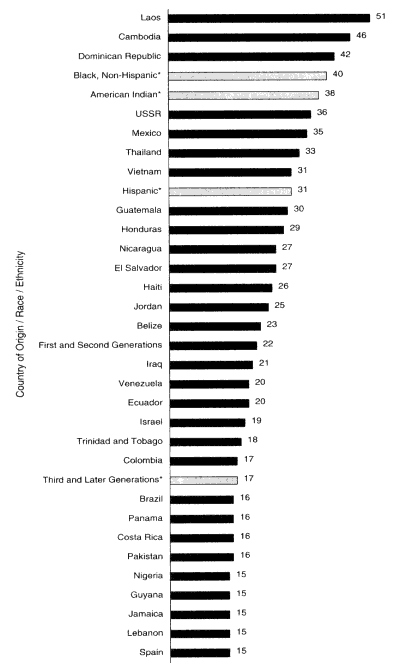
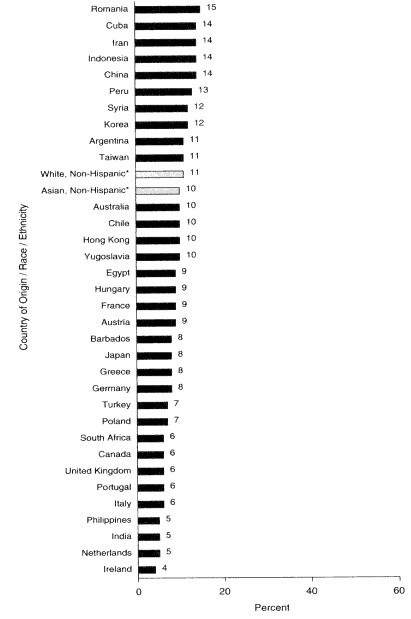
Similarly, among children in immigrant families from about two dozen countries spread across Latin America and the Caribbean, Asia, Europe, the Middle East, and Africa, poverty rates were about equal to, or substantially less than, the rate of 11 percent for non-Hispanic white children in native-born families in the 1990 census (Figure 2-1, Table 2A-1a). But for children in immigrant families from 12 other countries in the 1990 census, poverty rates were quite high, ranging from 26 to 51 percent depending on the country of origin. In view of the negative risks associated with poverty generally, the situation of children from these 12 countries is of particular concern.
Five of the 12 countries are the source of many officially recognized refugees (the former Soviet Union, Cambodia, Laos, Thailand, and Vietnam); three are war-torn countries in Central America (El Salvador, Guatemala, and Nicaragua); and three are small and impoverished Central American or Caribbean countries (Honduras, Haiti, and the Dominican Republic) that are sources of unskilled labor migrants. The twelfth country is Mexico, which has sent the largest number of both legal and illegal unskilled laborers to the U.S. economy (Romo, 1996; Rumbaut, 1996). Within the racial and ethnic stratification system of the United States, most children from 11 of these 12 countries, with the former Soviet Union as the sole exception, are classified as Hispanic, Asian, or black.
Children with origins in these 12 countries accounted for 46 percent (3.9 million) of all children in immigrant families in 1990 (8.4 million), but they accounted for about 80 percent of the children in immigrant families who lived in poverty. Moreover, Mexico alone accounted for 31 percent (2.6 million) of all children in immigrant families but 50 percent of those officially classified as poor in the 1990 census.
In fact, the number of children in immigrant families, especially those from Mexico, who live in poverty is at least somewhat higher. Additional analyses commissioned by the Committee on the Health and Adjustment of Immigrant Children and Families (Mines, this volume) using the National Agricultural Workers Survey indicate that more than 67 percent of U.S.-based children in migrant farmworker families lived in poverty in each year from 1993 to 1995—that is, more than 590,000 of the 880,000
in total. Insofar as a substantial portion of migrant farmworker families and their children, especially those of Mexican origin who account for 69 percent of the U.S.-based children in the survey, are not enumerated in the decennial census, the total number (and percentage) of children in immigrant families, especially of Mexican origin, who were living in poverty is higher, perhaps by several hundred thousand (and several percentage points), than indicated by the decennial census data.
Poverty rates for children in immigrant families in the 1990 census were lower, sometimes much lower, for second-generation children than for the first generation for nearly all countries of origin, including most of the 12 countries with the highest poverty rates. But for children with origins in Mexico, which accounts for about two-thirds of the children in immigrant families from these 12 countries, poverty rates for the second and later generations were quite similar, at 32 and 28 percent, respectively, which is two and one-half to three times greater than for non-Hispanic white children in native-born families (Tables 2A-2a and 2A-3a).
Among children with origins in the four Central American countries (El Salvador, Guatemala, Honduras, and Nicaragua) for which information is available for all three generations (Tables 2A-2a and 2A-3a), the decline in poverty from the second to later generations is somewhat larger than for Mexican children, and the levels for the poverty rates for the later generations is 14 to 17 percent, only somewhat greater than for non-Hispanic white children in native-born families (11 percent). This might reflect greater intergenerational assimilation of children from these four countries than from Mexico. But a plausible alternative explanation derives from the possibility that immigrants from these countries during the past two decades, especially those escaping war-torn conditions in El Salvador, Guatemala, and Nicaragua, may have had substantially lower socioeconomic status, on average, than did immigrants from the same countries during earlier decades. For example, among children in immigrant families with Central American origins in 1960, the proportions with fathers in the home who graduated from high school were 61 and 69 percent, respectively, for the first and second generations, compared to 51 percent for non-Hispanic white children in native-born families. Thus, the apparent improvement between the second and
later generations of children in 1990 from these Central American countries may reflect differences in the socioeconomic status of parents as they entered the United States rather than intergenerational socioeconomic assimilation.
Children in immigrant families with origins in the Dominican Republic and Haiti also had very high poverty rates in the 1990 census, but their rates were nearly the same for the first and the second generations (41 and 42 percent, respectively, for the Dominican Republic; 30 and 24 percent for Haiti), and available data for the Dominican Republic indicate no change for the later generation (40 percent).
The continuing high poverty rates of second- and later-generation children from these Caribbean countries and Mexico suggest that black and Hispanic children from these countries may be subject to racial and ethnic stratification that greatly limits their opportunities, even in the case of Mexican-origin children after many generations. For Mexicans the pattern has been quite consistent since at least 1960, when the poverty rates for the first, second, and later generations were 58, 48, and 53 percent, respectively—that is, about two and one-half to three times greater than the rate of 19 percent for non-Hispanic white children in native-born families. Thus, in both the 1960 and the 1990 censuses, the poverty rate for third- and later-generation children of Mexican origin was 70 to 80 percent as high as among black and American Indian children.
Although official poverty rates declined by approximately two-fifths between the 1960 and 1990 censuses for children in native-born families belonging to each of these racial and ethnic groups, Mexican-origin, black, and American Indian children all have continued to experience highly elevated risks of poverty, compared to non-Hispanic white children. This continuity of economic deprivation among children belonging to these racial and ethnic minorities raises the following question for the new Central American immigrant populations of Hispanic origin: Will they tend to assimilate socioeconomically to the level of non-Hispanic whites or to the level of Mexican-origin Hispanics?
Of course, it is possible that a substantial portion of children in native-born families with a Mexican-origin parent or grandparent also have a non-Mexican-origin parent or grandparents
and that such children tend not to be reported as being of Mexican origin and tend to have lower poverty rates than children with two Mexican-origin parents of four Mexican-origin grandparents. But as of 1990, only 9 percent of children in native-born families who were identified as being of Mexican origin, or as having at least one Mexican-origin parent, had a Mexican-origin parent but were not themselves identified as being of Mexican origin. Hence, the exclusion of these children from the poverty estimates above cannot affect the poverty rates of third- and later-generation Mexican-origin children by more than a percentage point or two. Additional research is required to assess the possible effect of outmarriage by Mexican-origin grandparents or great-grandparents on the identification of children as Mexican origin and on poverty. Available evidence suggests, however, that the lack of change in the pattern of very high poverty rates across generations for Mexican-origin children, compared to non-Hispanic whites, between 1960 and 1990 may reflect the continuing power of racial and ethnic stratification in determining the life chances of children of Mexican origin, as has been the case historically for minority black and American Indian children.
Alternative measures of ''relative poverty" and of income inequality are valuable for historical and international comparisons because they take into consideration changes in the real standard of living that occur through time and that exist across countries (Smith, 1776; Galbraith, 1958; Fuchs, 1965; Rainwater, 1974; Expert Committee on Family Budget Revisions, 1980; Ruggles, 1990; Hernandez, 1993; Smeeding and Torrey, 1995; Citro and Michael, 1995). These "relative" measures (taking family composition into account in a fashion similar to the official poverty measure) are defined as follows: relative poverty is an income that is less than 50 percent of the median family income during a given year; near-poor frugality is at least 50 percent but less than 75 percent of the median family income; middle-class comfort is at least 75 percent but less than 150 percent of the median family income; and luxury-level income (listed as "Very Well-Off Financially" in the tables) is 150 percent or more of the median family income level (Hernandez, 1993).
The relative and official poverty rates were quite similar in the 1960 census, but by the 1990 census relative poverty rates were
substantially higher. Among children in immigrant families from the 12 countries of origin with the highest official child poverty rates, the relative poverty rates were about three- to six-tenths higher than the official poverty rates (Table 2A-1a). Hence, the official poverty rates ranged from 26 to 51 percent for these countries, compared to 39 to 65 percent using the relative poverty measure. Overall, the relative poverty rate for children in immigrant families was 33 percent, compared to 24 percent for children in native-born families in the 1990 census. The patterns of relative poverty across the first, second, and later generations were similar to the patterns in official poverty but at generally higher levels. For example, the relative poverty rates for the second generation were somewhat greater than for the third and later generations, at 29 and 24 percent, respectively, but enormously larger at 47 percent for the first generation (Tables 2A-1a and 2A-2a).
At the other end of the income distribution, middle-class or luxury-level family incomes represent important resources for children. Although poverty rates for children in immigrant families exceeded those for children in native-born families by 5 and 9 percentage points, respectively, using the official and relative measures, the proportion with luxury-level incomes was nearly as high for children in immigrant families as for children in native-born families, at 19 and 22 percent, respectively (Table 2A-1a). In fact, among children from 36 of the 62 countries of origin that each accounted for at least 15,000 children in immigrant families in 1990, the proportions living in luxury were 25 percent or more—that is, at a level at least equal to or exceeding the 26 percent rate for non-Hispanic white children in native-born families. These 36 countries included 13 of 14 European countries, 10 of 14 Asian countries, three of six Middle Eastern countries, four of the eight South American countries, Egypt, South Africa, Australia, and Canada but only one Caribbean country (Cuba) and no Central American countries.
Among children in immigrant families from most of these countries, the combined proportion with middle-class or luxury-level family incomes also equaled or exceeded the proportion for non-Hispanic white children in native-born families (68 percent). Thus, children in immigrant families from more than half of the countries of origin accounting for at least 15,000 children in 1990
experienced family economic resources at least as great as non-Hispanic white children in native-born families.
Across the income spectrum, then, children in immigrant families were much more likely than those in native-born families to have family incomes below the relative poverty threshold in 1989 (1990 census) but only slightly less likely to have incomes at the luxury level. Hence, children in immigrant families experience substantially greater economic inequality than children in native-born families. Moreover, children in immigrant families from various countries are extremely diverse with respect to economic resources. Children in immigrant families from about a dozen countries experience levels of economic deprivation similar to those of black, Hispanic, and American Indian children in native-born families, and most of the children from these countries are Hispanic, black, or Asian. At the opposite extreme, children in immigrant families from more than two dozen countries experience economic resources similar to or greater than those of non-Hispanic white children in native-born families; these countries are in all regions of the world except Central America and, with one exception, the Caribbean.
Parents' Education
First-, second-, and later-generation children in families with fathers in the home were about equally likely in 1990 to have fathers who had graduated from college (24 to 26 percent), and the various generations in families with mothers in the home were about equally likely to have mothers who had graduated from college (16 to 18 percent; Table 2A-1d). In addition, in 1990 among children in immigrant families from about two dozen countries, 35 percent or more had a father in the home who had graduated from college—higher than the 28 percent recorded for non-Hispanic whites in native-born families. For a similar number of countries, 25 percent or more had a mother in the home who had graduated from college, notably higher than the 20 percent for non-Hispanic whites in native-born families. All of these proportions with parents graduating from college were two to three times greater than the corresponding rates for black, Hispanic, and American Indian children in native-born families.
But children in immigrant families, overall, were also much more likely than children in native-born families to have parents with very low educational attainments, and this was especially true for the 12 countries of origin with children at greatest risk of living in poverty, with the sole exception of the former Soviet Union (Tables 2A-1a and 2A-1d). For example, among children living with their fathers, the overall proportions with fathers not graduating from high school were two to three times greater for the first and second generations than for the later generations, at 49, 36, and 15 percent, respectively, and this difference is accounted for mainly by differences in the proportions with fathers completing no more than eight years of schooling, which for the three generations were 34, 23, and 3 percent, respectively. Patterns in mothers' education were quite similar (Tables 2A-1a, 2A-1d, 2A-2a, and 2A-2d).
Generational differences in parental education followed a similar pattern in 1960, although differences in the proportions with very low educational attainments were substantially smaller than in 1990. The only measure of educational attainments available in the 1910 census is the illiteracy rate. Second and later generations of children were similar in their chances of having a parent in the home who was illiterate, at 9 to 14 percent, respectively, but the first generation was substantially more likely to have an illiterate father (22 percent) or mother (34 percent).
As with poverty, parental educational attainments vary enormously by country of origin for children in immigrant families and by race and ethnicity among children in native-born families (Tables 2A-1a and 2A-1d), both historically and today. In 1990 children in immigrant families from the 12 countries with the highest poverty rates were also, with the exception of the former Soviet Union, somewhat to enormously more likely than non-Hispanic whites in native-born families to have parents in the home who had not graduated from high school or elementary school.
Among children from these 11 countries, parental educational attainments generally increased substantially from the first to the second to the third generations. Most third-generation children from the countries for which estimates are available had parents who had completed nine or more years of schooling, but few had parents who had completed college, largely a result of the high
proportion of these children with origins in Mexico (Table 2A-3e). Moreover, the proportion of Mexican-origin children in native-born families with parents not graduating from high school remained in the range of 30 to 34 percent, similar to the level for black children in native-born families and for American Indian children (26 to 29 percent) and two to three times greater than for non-Hispanic white children in native-born families (12 percent) (Table 2A-3a).
The disadvantage in parental educational attainments for Mexican-origin children, compared to non-Hispanic whites, has remained large throughout the twentieth century, at a level similar to that for black and American Indian children. For example, in 1960 among Mexican-origin children living with a father, the proportion with a father who had completed no more than eight years of schooling was 76 to 79 percent for first-and second-generation children in immigrant families and for later-generation Spanish-surname children in the five southwestern states. Although some third-and later-generation Mexican-origin children lived outside the five southwestern states in 1960, and some Spanish-surname children in these five states were not of Mexican origin, the estimates for these children are, no doubt, approximately equal to the proportion for third-and later-generation Mexican-origin children throughout the United States at that time. These educational attainments are somewhat less than the corresponding proportions of 61 to 64 percent, respectively, for blacks and American Indians in 1960. But each of these minority groups was about two and one-half to three times more likely than non-Hispanic white children (26 percent) to have a father with this little education.
Similarly, at the upper end of the education distribution, the proportions with fathers in the home who had completed 12 years of schooling were only 13 to 19 percent for first- and second-generation Mexican-origin children, third- and later-generation Spanish-surname children in the five southwestern states, and blacks and American Indians. The corresponding proportion for non-Hispanic white children was more than two and one-half times greater at 51 percent.
Parental illiteracy rates are the only measure in the 1910 census reflecting parental educational accomplishments. Among
children with a father in the home, the illiteracy rate was 66 percent for first-generation Mexican-origin children and 37 to 39 percent for second-and later-generation Mexican-origin children as well as for black and American Indian children. The corresponding father's illiteracy rate for white children was about one-sixth as great, at only 6 percent.
Between the early and mid-twentieth century, then, the relative educational attainments of fathers in the homes of Mexican-origin, black, and American Indian children may have improved compared to non-Hispanic whites. Since then educational attainments have improved for all groups, and the absolute gaps between these minorities and non-Hispanic whites have narrowed. But the relative disadvantage has remained about the same, and children from all three racial and ethnic groups—Mexican-origin, black, and American Indian—have experienced fairly similar levels of disadvantage. Patterns of educational attainment across these groups and across the century for mothers in the home have been generally similar to those for fathers in the home.
Parents' Labor Force Participation
Throughout the twentieth century the overwhelming majority of children in both immigrant and native-born families with fathers in the home have had fathers who worked in the labor force. Among first-, second-, and later-generation children the proportions were 95 to 96 percent in 1910; 96 to 97 percent in 1960; and, as of 1990, 88 percent for the first generation and 94 to 95 percent for the second and later generations. The combined proportion for the first and second generations in 1990 was 93 percent, only slightly less than the 95 percent for the third and later generations (Tables 2A-1c, 2A-2c, and 2A-3c). Differences in labor force participation among fathers in the homes of immigrant children cannot, therefore, account for most of the poverty differences between the two in the 1960 and 1990 censuses. Even among children in immigrant families from the 12 countries of origin with very high poverty rates, the proportions with fathers in the home who were not in the labor force exceeded 11 percentage points for only five countries (Cambodia, Laos, Thailand, Vietnam, and the former Soviet Union) (Table 2A-1c).
Despite high levels of employment among fathers in the homes of children in immigrant families, overall and for most specific countries of origin, many fathers worked less than full time year-round in 1990 (Table 2A-1c). Little difference existed between children in immigrant and native-born families in 1960 in their chances of having a father in the home who worked full time year-round (72 to 73 percent), but by 1990 the difference had expanded to 10 percentage points (69 versus 79 percent). In fact, it is the lack of full-time year-round work among fathers in the home, along with the fathers' very low educational attainments and linguistic isolation from English-speaking culture, that are especially common among children from the 12 countries of origin with very high poverty rates.
Although children in immigrant families from an additional 16 countries in 1990 had very high proportions of fathers who did not work full-time year-round, children from most of these 16 countries had two advantages compared to children from the 12 very high poverty countries of origin. Most did not have high proportions with very low parental educational attainments, and most had at least one person in the household, no doubt often a parent, who spoke English exclusively or very well. Thus, very high poverty rates for children in immigrant families tended to occur among children from countries with very low parental educational attainments (eight years of schooling or less), fathers who could find full-time year-round work, and parents who did not speak English exclusively or very well. These results suggest that the combination of very limited father's educational attainments and linguistic isolation of the household are key factors that make it difficult for fathers in immigrant families to obtain full-time year-round work that pays well enough to lift the family out of poverty (Tables 2A-1a, 2A-1c, and 2A-1d).
Of course, many mothers also contribute to family income by working for pay. Among children with mothers in the home, historical trends in mothers' labor force participation have been broadly similar for those in immigrant and native-born families, rising from 6 and 12 percent, respectively, in 1910 to 27 percent in 1960, and 58 and 66 percent, respectively, in 1990. Full-time year-round employment rates for mothers have also been similar, ris-
ing from 9 percent for children from immigrant and native-born families in 1960 to 28 and 31 percent, respectively, in 1990.
As of 1990, of the 12 countries of origin with high proportions (50 percent or more) of children with mothers who were not in the labor force, seven had high proportions (68 to 80 percent) with fathers working full time year-round. Children in immigrant families from the remaining five countries were among the 12 with very high poverty rates, and they had comparatively high proportions with fathers not working full time year-round (38 to 68 percent), but they also had high proportions with mothers not graduating from high school (55 to 76 percent), and four had high proportions with five or more siblings in the home (14 to 35 percent) (Tables 2A-1a and 2A-1c). This pattern suggests that among mothers with very low educational attainments large family size may often be inconsistent with mother's employment outside the home, perhaps because of a trade-off between mother's work and providing care for children in the home.
One-Parent Families
The proportion of children living with only one parent was smaller for the second generation than for the first generation overall and for most countries of origin in 1990. Risk levels for both generations were similar to or less than the risk for native-born non-Hispanic white children, except for children with origins in Cambodia, Vietnam, and most Central American and Caribbean countries. For most countries of origin with available data, the third and later generations were much more likely than the second generation to live in a one-parent family in 1990, with levels at least twice as great as the 18 percent recorded for native-born non-Hispanic white children. For third- and later-generation children with origins in most countries of Central and South America and the Caribbean, these proportions sometimes reach or exceed the level of 62 percent for black children in native-born families (Tables 2A-2a and 2A-3a).
Focusing on children in immigrant families from the 12 countries of origin with very high poverty rates in the 1990 census, those from Cambodia and the six Central American and Caribbean countries (Dominican Republic, El Salvador, Guatemala,
Haiti, Honduras, and Nicaragua) were substantially more likely to live in one-parent families (26 to 48 percent) than were non-Hispanic white children in native-born families (18 percent). Children from these countries tended to have smaller proportions with five or more siblings in the home than children from those high-poverty countries with higher proportions in two-parent families, and they tended to have higher proportions with mothers in the labor force (Tables 2A-1a and 2A-1c). Thus, children in immigrant families from the 12 countries of origin with very high poverty rates in the 1990 census tended to live in families with a large number of siblings and comparatively few working mothers or they tended to live in one-parent families but not both.
Overall, first-, second-, and later-generation children in 1960 were about equally likely to live in one-parent families. First-generation children from Mexico, Central America, and the Caribbean were, however, substantially more likely to live in one-parent families (16 to 17 percent versus 9 to 10 percent), although the differences disappeared for children from Mexico and Central America by the second generation. One-fourth of black children in native-born families lived in one-parent families in 1960. First-, second-, and later-generation children were about equally likely to live in one-parent families in 1910, although black children in native-born families were substantially more likely than others to live in one-parent families, at 19 percent versus 8 to 10 percent.
Families with Many Siblings
The pattern of change across generations in 1990 for the risk of living in a family with a large number of siblings was quite different from the pattern of change for one-parent family living. In 1990 the proportion of children living in families with five or more siblings dropped steadily across generations from 17 to 9 to 4 percent, respectively, between the first, second, and later generations (Tables 2A-1a and 2A-2a). For many specific countries of origin, not only did the second generations in 1990 have smaller proportions in large families than first-generation children from the same countries, the proportions usually were similar to native-born non-Hispanic white children, at 4 percent or less for the second generation. Risk levels for third- and later-generation chil-
dren also were similar, overall, to native-born non-Hispanic whites.
Nonetheless, among children in immigrant families from the 12 countries of origin with very high poverty rates, four of the five that did not have high proportions in one-parent families (excluding only the former Soviet Union) had high proportions with large numbers of siblings, and children in immigrant families from three countries experienced elevated risks of both living with one parent only and with a large number of siblings (Cambodia, Haiti, and Nicaragua).
In 1960 and 1910, first-, second-, and later-generation children were about equally likely to live in families with many siblings, at 17 to 21 percent in 1960 and 38 to 43 percent in 1910. In both 1910 and 1960 an extraordinary 51 percent of first-generation children with Mexican origins lived in large families, but the proportion declined sharply from 61 to 48 percent between 1910 and 1960 for the second generation and from 59 to 40 percent for the third and later generations. Meanwhile, the proportion of black children in families with five or more siblings remained about constant at 45 to 48 percent.
By 1990 the proportions of children with five or more siblings were much smaller for all groups. Among first-, second-, and later-generation Mexican-origin children, 19, 12, and 6 percent, respectively, lived in families with five or more siblings. Thus, among children in native-born families, those of Mexican origin were somewhat less likely than blacks to live in large families, at 6 versus 7 percent, respectively, and somewhat more likely than non-Hispanic whites to live in such families (4 percent) (Tables 2A-2a and 2A-3a).
Overcrowded Housing
In 1990 only 12 percent of third-generation children lived in overcrowded housing with more than one person per room compared to elevated risks of 38 percent for the second generation and 62 percent for the first generation (Tables 2A-1b and 2A-2b). Children in immigrant families from most specific countries of origin in 1990 also had elevated risks of living in overcrowded housing, although children in immigrant families from the 12
countries with very high poverty rates were much more likely than most to live in such conditions. For children from most of these 12 countries, declines in overcrowding are substantial across the first and second generations and, where measurable, to the third and later generations. But third and later generations continued to experience high levels of overcrowding, especially Mexican-origin children at an extraordinary 31 percent, which is similar to the 26 and 34 percent experienced, respectively, by black and American Indian children and is more than four times greater than the 7 percent experienced by white, non-Hispanic children in native-born families (Tables 2A-2b and 2A-3b).
Overall levels of overcrowding were much higher among children in 1960 than in 1990 but were about equal for first-, second-, and later-generation children at 31 to 36 percent. However, 75 percent of first- and second-generation Mexican-origin children and 69 to 70 percent of black children and third- and later-generation children of Mexican origin lived in overcrowded conditions in 1960.
POTENTIAL RISK FACTORS SPECIFIC TO CHILDREN IN IMMIGRANT FAMILIES
Children in immigrant families from countries where English is not the native language or is not widely taught may be at special risk, compared to children in native-born families, because they may not themselves speak English well or they may live with parents who do not speak English well. A lack of English fluency can limit effective communication and functioning in health care facilities, schools, and other settings that provide essential resources to children and their families.
Children who are undocumented are not eligible for most public benefits and services, and under the Personal Responsibility and Work Opportunity Reconciliation Act of 1996 children who are legal immigrants but not citizens may also be ineligible for important medical and social services (Hernandez and Charney, 1998). Equally important, native-born children in immigrant families who are eligible for such services may not receive them because immigrant parents who are not themselves eligible for services may not be aware that their children are or
may fear contact with the government agencies that administer services. Because legal immigrants and U.S. citizens experienced essentially the same welfare eligibility requirements prior to the welfare reform legislation of 1996, for legal immigrants not being a U.S. citizen has become a potential risk factor for immigrant children and families only recently.
The devolution of responsibilities, under welfare reform, from the federal government to the states also implies that eligibility for and access to publicly funded health, medical, and social services by children in immigrant families will depend increasingly on decisions and investments by state and local governments (Hernandez and Charney, 1998). Because children in immigrant families are concentrated in a few states, and a small number of states have comparatively high proportions of children from immigrant families, the eligibility rules in those states will be critical both to these children and to state expenditures.
English-Language Fluency
In 1990 at least 60 percent of children in immigrant families from most countries of origin spoke a language other than English at home. Among the exceptions were English-speaking countries of origin as well as Austria, Egypt, France, Germany, Hungary, Indonesia, Italy, Japan, the Netherlands, and Panama (Table 2A-1e). But for only 13 countries of origin did the proportion of children in immigrant families not speaking English exclusively or very well reach the substantial risk level of 30 percent or more. Eleven of these countries are among the 12 with children at highly elevated risk of living in poverty (excluding only Haiti), and the remaining two were China and Hong Kong.
Generational differences are large, however, as the proportion who speak English exclusively or very well rises from only 55 percent for the first generation to 81 percent for the second (Tables 2A-2e and 2A-3d). For children in immigrant families from the 12 countries with very high poverty rates, the range is 35 to 53 percent for the first generation but rises to 65 to 91 percent for the second generation for 10 of 12 countries (excluding Cambodia and Laos).
Lack of English fluency may not pose enormous difficulties
for immigrants in communities that have a large number of residents from their home country, but it does isolate immigrants from mainstream American society. The U.S. Bureau of the Census defines a linguistically isolated household as one in which no person age 14 or over speaks English either exclusively or very well. Among children in immigrant families in 1990, 26 percent lived in linguistically isolated households. But for children from each of the 12 countries of origin with children at high levels of socioeconomic risk, the proportions in linguistically isolated households were 34 to 38 percent for three countries, 41 to 46 percent for seven countries, and 60 percent for two (Laos and Cambodia). Children from only five additional countries had 30 percent or more in linguistically isolated households (China, Hong Kong, Taiwan, Korea, and Colombia) (Table 2A-1a).
No language information was collected in the 1960 census, but historical changes are best measured by comparing ''mother tongue" data for 1910 to "language spoken at home" in 1990. In 1910 the proportions of children in immigrant families for whom English was not the mother tongue for either the father or the mother were 84 to 85 percent, and for 79 percent of children in immigrant families with two parents in the home, neither parent had English as a mother tongue. In 1990 the proportions of children in immigrant families who lived with a mother or father who did not speak English at home were 76 to 78 percent. In households with both mother and father at home, the proportion was 70 percent. Although these measures of language are not identical, they are similar, wand the similarity of results for 1910 and 1990 suggests that historical differences in the proportion of children in immigrant families with parents speaking or not speaking English were about the same at the end of the century as at the beginning.
U.S. Citizenship
Of the 8.4 million children in immigrant families in the United States in 1990, 75 percent were U.S. citizens by birth, 4 percent were naturalized citizens, and 21 percent (1.7 million) were not U.S. citizens. Of the U.S. citizen children, 54 percent (3.6 million) had at least one parent in the home who was not a U.S. citizen;
thus, approximately two-thirds of children in immigrant families in 1990 were either themselves not U.S. citizens or lived with a noncitizen parent (Hernandez and Charney, 1998). Welfare eligibility exclusions are most important for children with family incomes below or near the official poverty level. In the 1990 census the official poverty rate for noncitizen children was 34 percent, and the rate for children who were not citizens or had at least one noncitizen parent was 28 percent.
Children in immigrant families from nine of the 12 countries of origin with high levels of poverty were especially likely to be noncitizens, at 29 percent or more. The proportion was 21 to 23 percent for the remaining high-risk countries (the Dominican Republic, Mexico, and Haiti). Three additional countries had 29 percent or more of children who were noncitizens and poverty rates that were greater among native-born non-Hispanic whites (Venezuela, Romania, and Guyana). For children in immigrant families with origins in two of the 12 countries with high poverty rates, 62 or 63 percent were not U.S. citizens or had at least one parent in the home who was not a U.S. citizen; this rose to 73 to 78 percent for five of these countries and 81 to 89 percent for the remaining five countries. The figure was 50 percent or more for 18 of the other 27 countries of origin with child poverty rates at least as high as for native-born non-Hispanic whites (11 percent). Thus, eligibility rules that exclude noncitizens from public benefits and services may have important consequences for children with many different countries of origin.
State of Residence
California accounted for 35 percent of all children in immigrant families in 1990, followed by New York, Texas, Florida, Illinois, and New Jersey, at 12, 11, 7, 5, and 4 percent, respectively, for a total of 74 percent in six states (Figure 2-2). An additional six states had at least 2 percent of children in immigrant families (Arizona, Massachusetts, Michigan, Pennsylvania, Virginia, and Washington). Three less populous states also had comparatively high proportions (higher than the national average of 14 percent) of children in immigrant families (Hawaii, Rhode Island, and Ne-
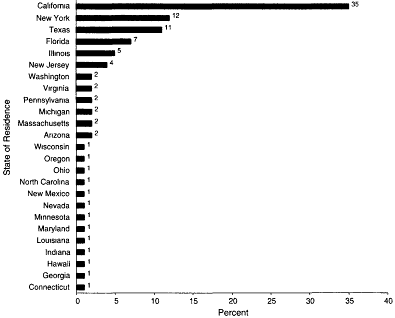
FIGURE 2-2 Percentage of first- and second-generation immigrant children (ages 0 to 17) by state, 1990 (for states ).
vada; Figure 2-3). These 15 states accounted for 84 percent of all children in immigrant families.
SUMMARY
Children generally have been found to be at risk of negative health or educational outcomes if they have family incomes below the poverty threshold, parents with low educational attainments, only one parent in the home, five or more siblings in the home, or overcrowded housing conditions. Children in immigrant families in 1990 were, overall, less likely than children in native-born families to have only one parent in the home, but they were somewhat more likely to live in poverty or in families with many siblings and much more likely to have parents with very
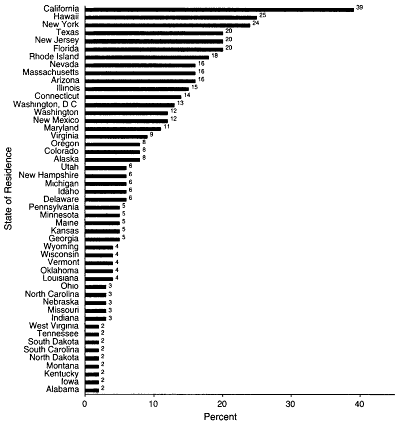
FIGURE 2-3 Percentage of total state child population (ages 0 to 17) who are first- or second-generation immigrants, 1990.
low educational attainments (eight years of schooling or less) and to live in overcrowded housing.
Children from 12 countries of origin, however, experienced extremely high risks of living in poverty. Five are the source of many officially recognized refugees (the former Soviet Union, Cambodia, Laos, Thailand, and Vietnam); three are war-torn countries in Central America (El Salvador, Guatemala, and Nicaragua); three are small impoverished Central American or Caribbean countries that are strong sources of unskilled labor migrants (Honduras, Haiti, and the Dominican Republic) for the United
States; and the twelfth (Mexico) is the largest source of both legal and illegal unskilled labor migrants. Children in immigrant families from 11 of these 12 countries (excepting only the former Soviet Union) experience very high risks of having parents with less than eight years of schooling, of living in overcrowded housing, and of living in either a one-parent family or a family with many siblings.
Risk levels decline for most of these factors between the first and the second generations for most countries of origin. However, data available for selected countries suggest that for third-and later-generation children with origins in Mexico and the Dominican Republic, and perhaps to a lesser extent for children with origins in Central American countries, the risks of living in poverty with parents who have not graduated from high school, in overcrowded housing conditions, and with only one parent remain quite high. Thus, racial and ethnic stratification may limit the opportunities for children from these countries to assimilate into the mainstream middle class (Lieberson and Waters, 1988; Lalonde and Topel, 1991). These risks for third-and later-generation children from Mexico and the Dominican Republic approach or exceed the high levels experienced by black and American Indian native-born children. In fact, third-and later-generation Mexican-origin children have experienced disadvantaged circumstances at or near the level of black and American Indian children throughout the twentieth century.
It should be remembered, however, that children in immigrant families from about two dozen other countries spread across Latin America and the Caribbean, Asia, Europe, the Middle East, and Africa have poverty rates about equal to or substantially less than the rate of 11 percent for non-Hispanic white children in native-born families, and many experience levels of risk along other dimensions that are less than those for children in native-born families, including non-Hispanic white children.
Children in immigrant families may experience additional risk factors growing out of their immigrant circumstances. Lack of English fluency can limit effective communication and functioning in health care facilities, schools, and other settings that provide resources essential to children and their families. Most children in immigrant families from most countries speak a lan-
guage other than English at home, but the vast majority (73 percent) of children in immigrant families speak English exclusively or very well, and language assimilation occurs rapidly across generations, as reflected in the rise from 55 to 81 percent between the first and second generations.
Not being a U.S. citizen became a potentially important risk factor with the passage of federal welfare reform legislation in 1996 for noncoverage by public health and social benefits programs. One-fourth of children in immigrant families in this country are not U.S. citizens, but two-thirds of children in immigrant families are not U.S. citizens or have at least one parent in the home who is not a U.S. citizen. Thus, a large majority of children in immigrant families may be ineligible for important benefits or have parents who are ineligible and who therefore are hesitant to secure benefits on behalf of their children. Moreover, reductions in the benefits available to such families will reduce overall resources within families.
Not only are children in immigrant families from the 12 countries with the highest poverty rates especially likely to experience the socioeconomic risk factors of low parental education, living with one parent or many siblings, and overcrowding, they also often have the highest risk of not speaking English exclusively or very well, of living in a linguistically isolated household, and of not being U.S. citizens or having a parent in the home who is not a U.S. citizen.
The devolution of responsibilities under welfare reform from the federal government to the states also implies that eligibility for and access to publicly funded health and social services may vary greatly across states, making state of residence a potentially important risk factor. Eighty-four percent of children in immigrant families live in 15 states. The largest is California (with 35 percent), followed by New York, Texas, Florida, Illinois, and New Jersey (with 12 to 4 percent each), and Arizona, Massachusetts, Michigan, Pennsylvania, Virginia, and Washington (with 2 percent each). Three additional states have proportions with immigrant children higher than the national average of 14 percent (Hawaii, Rhode Island, and Nevada).
Overall, children in immigrant families experience moderately elevated socioeconomic and demographic risks along a va-
riety of dimensions; these risks tend to decline across generations (with the exception of increases in one-parent families). But there are enormous differences among children with various countries of origin. Children in immigrant families from about two dozen countries have moderate to low levels of risk that are often no greater or even smaller than levels experienced by non-Hispanic white children in native-born families.
In striking contrast, children in immigrant families fleeing the former Soviet Union, the war-torn countries of Southeast Asia and Central America, or impoverished countries in Central America and the Caribbean, and Mexico experience highly elevated risks along virtually all of the dimensions reviewed here: poverty, low parental education, families with only one parent or many siblings in the home, lack of English fluency, and not being a U.S. citizen or having a parent in the home who is not a U.S. citizen.
ACKNOWLEDGMENTS
The authors thank the Population Studies Center at the University of Michigan for providing access to computing facilities and Public Use Microdata Samples and Integrated Public Use Microdata Samples datasets, without which this research would not have been possible. We are especially indebted to Lisa Neidert for providing invaluable technical assistance in conducting analyses for this study.
REFERENCES
Alwin, D.F. 1984 Trends in parental socialization values: Detroit, 1958-1983. American Journal of Sociology 90(2):359-382.
Blake, J. 1981 Family size and the quality of children. Demography 18:321-342.
1985 Number of siblings and educational mobility. American Sociological Review 50:84-94.
1987 Differential parental investment: Its effects on child quality and status attainment. Pp. 351-375 in Parenting Across the Life Span: Biosocial Dimensions, J.B. Lancaster et al., eds. New York: Aldine de Gruyter.
1989 Family Size and Achievement. Berkeley: University of California Press.
Blau, P.M., and O.D. Duncan 1967 The American Occupational Structure. New York: Wiley.
Cherlin, A.J., E.E. Furstenburg, E.L. Chase-Lansdale, K.E. Kiernan, P.K. Robins, D.R. Morrison, and J.O. Teitler 1991 Longitudinal studies of the effects of divorce on children in Great Britain and the United States. Science 252:1386-1389.
Citro, C.G., and R.T. Michael, eds. 1995 Measuring Poverty: A New Approach. Committee on National Statistics, National Research Council. Washington, D.C.: National Academy Press.
Conger, R.D., and G.H. Elder 1994 Families in Troubled Times: Adapting to Change in Rural America. Hawthorne, N.Y.: Aldine de Gruyter.
Conger, R.D., G.H. Elder, Jr., F.O. Lorenz, K.J. Conger, R.L. Simons, L.B. Whitbeck, J. Huck, and J.N. Melby 1990 Linking economic hardship and marital quality and instability. Journal of Marriage and the Family 52:643-656.
Duncan, G.J., and J. Brooks-Gunn, eds. 1997 Consequences of Growing Up Poor. New York: Russell Sage Foundation.
Elder, G.H., Jr. 1974 Children of the Great Depression: Social Change in Life Experience. Chicago: University of Chicago Press.
Expert Committee on Family Budget Revisions 1980 New American Family Budget Standards. Madison, Wisc.: Institute for Poverty Research.
Featherman, D.L., and R.M. Hauser 1978 Opportunity and Change. New York: Academic Press.
Fuchs, V.E 1965 Towards a theory of poverty. Pp. 79-91 in The Concept of Poverty. Washington, D.C.: U.S. Chamber of Commerce.
Galbraith, J.K. 1958 The Affluent Society. Boston: Houghton Mifflin.
Glenn, N.D., and S.K. Hoppe 1982 Only children as adults: Psychological well-being. Journal of Family Issues 5:363-382.
Hernandez, D.J. 1986 Childhood in sociodemographic perspective. Annual Review of Sociology 12:159-180.
1993 America's Children: Resources from Family, Government, and the Economy. New York: Russell Sage Foundation.
1997 Poverty trends. Pp. 18-34 in Consequences of Growing Up Poor, G.J. Duncan and J. Brooks-Gunn, eds. New York: Russell Sage Foundation.
1998 The well-being of immigrant children, native-born children with immigrant parents and native-born children with native-born parents. Pp. 421-543 in Office of the Assistant Secretary for Planning and Evaluation, Trends in the Well-Being of America's Children and Youth. Washington, D.C.: U.S. Department of Health and Human Services.
Hernandez, D.J., and E. Charney, eds. 1998 From Generation to Generation: The Health and Well-Being of Children in Immigrant Families. Committee on the Health and Adjustment of Immigrant Children and Families, National Research Council and Institute of Medicine. Washington, D.C.: National Academy Press.
Hetherington, E.M., M. Cox, and R. Cox 1978 The aftermath of divorce. In Mother-Child, Father-Child Relations, J.J. Stevens, Jr., and M. Matthews, eds. Washington, D.C.: National Association for the Education of Young Children.
Hill, M.S., and G.J. Duncan 1987 Parental family income and the socioeconomic attainment of children. Social Science Research 16(1):39-73.
Jensen, L., and Y. Chitose 1997 Immigrant generations. Pp. 47-62 in Immigration and the Family: Research and Policy on U.S. Immigrants, A. Booth, A.C. Crouter, and N.S. Landale, eds. Mahwah, N.J.: Lawrence Erlbaum Associates.
Jacobs, J.A., and M.E. Greene 1994 Race and ethnicity, social class, and schooling, in After Ellis Island: Newcomers and Natives in the 1910 Census, S.C. Watkins, ed. New York: Russell Sage Foundation.
Kohn, M.L. 1969 Class and Conformity. Homewood, N.J.: Dorsey Publishing.
Kohn, M.L., and C. Schooler 1983 Work and Personality. Norwood, N.J.: Ablex Publishing.
Kominski, R. 1987 What's It Worth? Educational Background and Economic Status. Current Population Reports, Series P-70, No. 21. Washington, D.C.: U.S. Government Printing Office.
Lalonde, R.J., and R.H. Topel 1991 Labor market adjustments to increased immigration. Pp. 167-199 in Immigration, Trade, and the Labor Market, J. Abowd and R.B. Freeman, eds. Chicago: University of Chicago Press.
Landale, N.S., R.S. Oropesa, and D. Llanes 1997 Schooling, Work and Idleness Among Mexican and Non-Latino White Adolescents. Unpublished manuscript, Population Research Institute, Pennsylvania State University.
Lieberson, S., and W.C. Waters 1988 From Many Strands: Ethnic and Racial Groups in Contemporary America. New York: Russell Sage Foundation.
McLanahan, S., and G. Sandefur 1994 Growing Up with a Single Parent: What Hurts, What Helps. Cambridge, Mass.: Harvard University Press.
Montgomery, L.E., J.L. Kiely, and G. Pappas 1996 The effects of poverty, race, and family structure on US children's
health: Data from the NHIS, 1978 through 1980 and 1989 through 1991. American Journal of Public Health 86:1401-1405.
Newacheck, P.W. 1994 Poverty and childhood chronic illness. Archives of Pediatric and Adolescent Medicine 148:1143-1149.
Newacheck, P.W., and W.J. Jameson 1994 Health status and income: The impact of poverty on child health. Journal of School Health 65:229-233.
Newacheck, P.W., and B. Starfield 1988 Morbidity and use of ambulatory care services among poor and nonpoor children. American Journal of Public Health 78:927-933.
Oropesa, R.S., and Nancy S. Landale 1995 Immigrant Legacies: The Socioeconomic Circumstances of Children by Ethnicity and Generation in the United States. Working Paper 95-01R, Population Research Institute, Pennsylvania State University.
1997a Immigrant legacies: Ethnicity, generation, and children's familial and economic lives. Social Science Quarterly 78(2):399-415.
1997b In search of the new second generation: Alternative strategies for identifying second generation children and understanding their acquisition of English. Sociological Perspectives 49(3):429-455.
Rainwater, L. 1974 What Money Buys: Inequality and the Social Meanings of Income. New York: Basic Books.
Romo, H. 1996 "The Newest Outsiders": Educating Mexican migrant and immigrant youth. Pp. 61-91 in Children of La Frontera, J. Flores, ed. Charleston, W. Va.: ERIC Clearinghouse on Rural Education and Small Schools.
Ruggles, E 1990 Drawing the Line. Washington, D.C.: The Urban Institute.
Ruggles, S., and M. Sobek 1995 Integrated public use microdata series: Version 1.0. Minneapolis: Social History Research Laboratory, University of Minnesota.
Rumbaut, R.G. 1996 Origins and destinies: Immigration, race, and ethnicity in contemporary America. Pp. 21-42 in Origins and Destinies: Immigration, Race, and Ethnicity in America, S. Pedraza and R.G. Rumbaut, eds. Belmont, Calif.: Wadsworth.
Sewell, W.H., and R.M. Hauser 1975 Education, Occupation, and Earnings. New York: Academic Press.
Sewell, W.H., R.M. Hauser, and W.C. Wolf 1980 Sex, schooling, and occupational status. American Journal of Sociology 83(3):551-583.
Smeeding, T., and B.B. Torrey 1995 Revisiting Poor Children in Rich Countries. Unpublished manuscript.
Smith, A. 1776 Wealth of Nations. London: Everyman's Library. Cited in Alternative
Measures of Poverty, staff study prepared by the Joint Economic Committee, U.S. Congress, October 18, 1989.
Starfield, B. 1982 Family income, ill health, and medical care of U.S. children. Journal of Public Health Policy 3:244-259.
1991 Childhood morbidity: Comparisons, clusters, and trends. Pediatrics 88:529-526.
1992 Effects of poverty on health status. Bulletin of the New York Academy of Medicine 68(1):17-24.
U.S. Department of Health and Human Services (DHHS) 1981 Better Health for Our Children: A National Strategy. Report of the Select Panel for the Promotion of Child Health to the United States Congress and the Secretary of Health and Human Services, Executive Summary. Washington, D.C.: DHHS.
U.S. Immigration Commission 1911 Report of the Immigration Commission, Vol. 4. Emigration Conditions in Europe. Washington, D.C.: U.S. Government Printing Office.
Wallerstein, J.S., and J.B. Kelly 1980 Surviving the Breakup: How Children and Parents Cope with Divorce. New York: Basic Books.
1989 Second Chances: Men, Women, and Children a Decade After Divorce. New York: Ticknor & Fields.
Wallerstein, J.S., S.B. Corbin, and J.M. Lewis 1988 Children of divorce: A 10-year study. Pp. 197-214 in Impact of Divorce, Single Parenting, and Stepparenting on Children, E.M. Hetherington and J.D. Arasteh, eds. Hillsdale, N.J.: Lawrence Erlbaum Associates.
Watkins, S.C. 1994 After Ellis Island: Newcomers and Natives in the 1910 Census. New York: Russell Sage Foundation.
Wilkinson, R.G. 1996 Unhealthy Societies: The Afflictions of Inequality. London: Routledge.
APPENDIX 2A
Data Sources. Estimates in this paper were derived from the Integrated Public Use Microdata Samples files for the 1910 and 1960 censuses (Ruggles and Sobek, 1995) and the 1990 census Public Use Microdata Samples 5 percent sample.
Generation. Children ages 0 to 17 were identified as first generation if foreign born, as second generation if native born with at least one foreign-born parent, and as third generation if native born with native-born parents. In 1990 parents' birthplaces could be ascertained only for parents living in the child's home, with the result that some second-generation children were misclassified as third-generation offspring because their parents' status as foreign born was not reported in the decennial census.
Country of Origin. First-generation children were classified by their own country of birth. Second-generation children were classified by their parents' country of birth or, if the parents were foreign born in different countries, by the mother's country of birth. In 1910 the mother tongue of a child or parent(s) was also used to identify certain countries of birth, in accordance with procedures used by Jacobs and Greene (1994). In 1990 the countries of origin for third-and later-generation children were approximated by using the race or Hispanic origin of each child as a proxy for the country of birth, leading to misclassification of family country of origin for some children.
Parental Characteristics. Other than country of birth in 1910 and 1960, parental characteristics (e.g., labor force participation, educational attainments) were available only if the parent was present in the household. Hence, all estimates of father's or mother's characteristics are based on only those children who have the indicated parent in the household.
Poverty. In 1960 poverty was calculated by using the federal government's U.S. poverty definition as of 1980. Poverty years are designated according to the year of data collection, rather than the year during which income was obtained. Thus, in this paper 1990 poverty is reported by the Census Bureau as 1989 poverty from the 1990 decennial census.
Parental Labor Force Participation. Full-time year-round work
is defined as 48 or more weeks worked last year and 35 or more hours worked last week.
Siblings. The number of siblings in a child's home is estimated as the number of children ever born to the child's mother. Thus, estimates are available only for children living with their mothers.
Major Limitations to Inferences. Beyond the limitations to inferences cited above in the context of specific variables, it is essential to note that differences between generations may be due to intergenerational assimilation; alternatively, they may be due to changes in the characteristics of immigrants through time. For example, the 1990 poverty rate declined from 27 to 17 percent between the second and the third and later generations of Guatemalan-origin children. If parental educational attainments of Guatemalan immigrants had been constant for 30 years, this decline could be attributed to intergenerational increases in parental educational attainments. But parental educational attainments for first-and second-generation Guatemalan-origin children were much higher in 1960 than in 1990, suggesting that the decline in parental educational attainments between 1960 and 1990 may account for poverty differences between the second and later generations.
TABLE 2A-1a Social and Economic Risk Factors for First-and Second-Generation Children by Country of Origin, for First and Second Generations Combined, and for Third-and Later-Generation Children by Race and Ethnicity: 1990
|
|
Number of children (thousands) |
Children in official poverty (percent) |
Children in relative poverty (percent) |
Children in middle-class comfort (percent) |
|
All First and Second Generations |
8,373 |
22 |
33 |
31 |
|
All Third and Later Generations |
52,685 |
17 |
24 |
39 |
|
Third and Later Generations by Race and Ethnicity: |
||||
|
White, Non-Hispanic |
40,201 |
11 |
17 |
42 |
|
Black, Non-Hispanic |
8,031 |
40 |
51 |
25 |
|
Asian, Non-Hispanic |
329 |
10 |
14 |
38 |
|
American Indian |
562 |
38 |
51 |
24 |
|
Hispanic |
3,489 |
31 |
42 |
31 |
|
First and Second Generations by Country of Origin: |
||||
|
Laos |
113 |
51 |
65 |
16 |
|
Cambodia |
64 |
46 |
62 |
19 |
|
Dominican Republic |
179 |
42 |
55 |
24 |
|
USSR |
62 |
36 |
42 |
23 |
|
Mexico |
2,618 |
35 |
52 |
22 |
|
Thailand |
69 |
33 |
42 |
29 |
|
Vietnam |
226 |
31 |
42 |
29 |
|
Guatemala |
101 |
30 |
46 |
24 |
|
Honduras |
52 |
29 |
46 |
26 |
|
El Salvador |
203 |
27 |
44 |
26 |
|
Nicaragua |
74 |
27 |
43 |
28 |
|
Haiti |
105 |
26 |
39 |
30 |
|
Jordan |
19 |
25 |
35 |
31 |
|
Belize |
16 |
23 |
31 |
35 |
|
Iraq |
20 |
21 |
30 |
39 |
|
Ecuador |
64 |
20 |
31 |
36 |
|
|
Children very well-off financially (percent) |
Children in one-parent families (percent) |
Children whose fathers have less than a high school education (percent) |
Children whose mothers have less than a high school education (percent) |
Children with 5 or more siblings (percent) |
Children who live in linguistically isolated households (percent) |
|
All First and Second Generations |
19 |
17 |
39 |
42 |
8 |
26 |
|
All Third and Later Generations |
22 |
26 |
15 |
16 |
4 |
1 |
|
Third and Later Generations by Race and Ethnicity: |
||||||
|
White, Non-Hispanic |
26 |
18 |
12 |
12 |
4 |
0 |
|
Black, Non-Hispanic |
9 |
62 |
26 |
29 |
10 |
0 |
|
Asian, Non-Hispanic |
37 |
25 |
7 |
9 |
6 |
1 |
|
American Indian |
7 |
40 |
28 |
29 |
10 |
4 |
|
Hispanic |
11 |
42 |
30 |
35 |
8 |
9 |
|
First and Second Generations by Country of Origin: |
||||||
|
Laos |
2 |
15 |
54 |
73 |
35 |
60 |
|
Cambodia |
4 |
26 |
57 |
76 |
18 |
60 |
|
Dominican Republic |
5 |
48 |
49 |
55 |
5 |
41 |
|
USSR |
26 |
10 |
20 |
18 |
5 |
46 |
|
Mexico |
4 |
19 |
74 |
74 |
14 |
38 |
|
Thailand |
16 |
13 |
34 |
56 |
17 |
42 |
|
Vietnam |
13 |
19 |
39 |
54 |
11 |
45 |
|
Guatemala |
7 |
28 |
56 |
61 |
5 |
43 |
|
Honduras |
8 |
31 |
42 |
44 |
5 |
34 |
|
El Salvador |
5 |
31 |
61 |
65 |
6 |
46 |
|
Nicaragua |
8 |
27 |
34 |
40 |
8 |
43 |
|
Haiti |
10 |
36 |
38 |
43 |
8 |
34 |
|
Jordan |
14 |
7 |
25 |
31 |
13 |
10 |
|
Belize |
12 |
29 |
29 |
29 |
6 |
4 |
|
Iraq |
17 |
5 |
32 |
42 |
10 |
16 |
|
Ecuador |
14 |
24 |
34 |
35 |
3 |
29 |
|
|
Number of children (thousands) |
Children in official poverty (percent) |
Children in relative poverty (percent) |
Children in middle-class comfort (percent) |
|
Venezuela |
22 |
20 |
25 |
37 |
|
Israel |
60 |
19 |
25 |
31 |
|
Trinidad and Tobago |
52 |
18 |
28 |
37 |
|
Colombia |
117 |
17 |
27 |
37 |
|
Pakistan |
39 |
16 |
23 |
36 |
|
Costa Rica |
23 |
16 |
26 |
38 |
|
Panama |
40 |
16 |
25 |
37 |
|
Brazil |
31 |
16 |
24 |
39 |
|
Romania |
26 |
15 |
22 |
32 |
|
Spain |
27 |
15 |
21 |
39 |
|
Lebanon |
36 |
15 |
23 |
34 |
|
Jamaica |
132 |
15 |
25 |
37 |
|
Guyana |
46 |
15 |
22 |
41 |
|
Nigeria |
34 |
15 |
27 |
35 |
|
China |
131 |
14 |
24 |
30 |
|
Indonesia |
17 |
14 |
19 |
37 |
|
Iran |
76 |
14 |
19 |
32 |
|
Cuba |
211 |
14 |
22 |
38 |
|
Peru |
61 |
13 |
25 |
37 |
|
Korea |
231 |
12 |
19 |
38 |
|
Syria |
15 |
12 |
21 |
33 |
|
Taiwan |
97 |
11 |
15 |
33 |
|
Argentina |
35 |
11 |
19 |
38 |
|
Yugoslavia |
44 |
10 |
16 |
42 |
|
Hong Kong |
56 |
10 |
16 |
33 |
|
Chile |
21 |
10 |
18 |
37 |
|
Australia |
18 |
10 |
16 |
32 |
|
Austria |
21 |
9 |
14 |
41 |
|
France |
41 |
9 |
13 |
34 |
|
Hungary |
25 |
9 |
14 |
35 |
|
Egypt |
29 |
9 |
15 |
36 |
|
Germany |
258 |
8 |
14 |
40 |
|
|
Children very well-off financially (percent) |
Children in one-parent families (percent) |
Children whose fathers have less than a high school education (percent) |
Children whose mothers have less than a high school education (percent) |
Children with 5 or more siblings (percent) |
Children who live in linguistically isolated households (percent) |
|
Venezuela |
25 |
12 |
14 |
15 |
2 |
19 |
|
Israel |
32 |
5 |
16 |
19 |
16 |
12 |
|
Trinidad and Tobago |
20 |
37 |
23 |
19 |
5 |
1 |
|
Colombia |
16 |
23 |
29 |
30 |
2 |
31 |
|
Pakistan |
27 |
6 |
8 |
18 |
6 |
13 |
|
Costa Rica |
17 |
19 |
28 |
31 |
3 |
17 |
|
Panama |
23 |
23 |
12 |
16 |
3 |
7 |
|
Brazil |
25 |
14 |
20 |
20 |
3 |
22 |
|
Romania |
30 |
8 |
25 |
25 |
18 |
21 |
|
Spain |
27 |
14 |
23 |
26 |
3 |
12 |
|
Lebanon |
24 |
6 |
28 |
29 |
8 |
11 |
|
Jamaica |
21 |
36 |
27 |
22 |
4 |
0 |
|
Guyana |
18 |
31 |
25 |
28 |
4 |
1 |
|
Nigeria |
15 |
16 |
2 |
5 |
7 |
4 |
|
China |
30 |
9 |
31 |
35 |
2 |
41 |
|
Indonesia |
31 |
8 |
8 |
11 |
3 |
21 |
|
Iran |
37 |
9 |
6 |
11 |
1 |
18 |
|
Cuba |
27 |
21 |
28 |
27 |
2 |
16 |
|
Peru |
19 |
18 |
18 |
19 |
3 |
25 |
|
Korea |
26 |
9 |
6 |
18 |
0 |
34 |
|
Syria |
29 |
4 |
22 |
25 |
4 |
17 |
|
Taiwan |
42 |
10 |
5 |
8 |
1 |
36 |
|
Argentina |
29 |
11 |
21 |
20 |
2 |
15 |
|
Yugoslavia |
27 |
10 |
30 |
32 |
3 |
11 |
|
Hong Kong |
37 |
8 |
24 |
29 |
1 |
35 |
|
Chile |
28 |
15 |
14 |
17 |
3 |
18 |
|
Australia |
44 |
9 |
8 |
11 |
7 |
1 |
|
Austria |
38 |
8 |
8 |
8 |
10 |
2 |
|
France |
41 |
11 |
9 |
9 |
5 |
6 |
|
Hungary |
39 |
9 |
14 |
13 |
9 |
10 |
|
Egypt |
39 |
6 |
4 |
8 |
5 |
10 |
|
Germany |
32 |
11 |
8 |
11 |
3 |
2 |
|
|
Children very well-off financially (percent) |
Children in one parent families (percent) |
Children whose fathers have less than a high school education (percent) |
Children whose mothers have less than a high school education (percent) |
Children with 4 or more siblings (percent) |
Children who live in linguistically isolated households (percent) |
|
Greece |
25 |
6 |
39 |
32 |
1 |
12 |
|
Japan |
41 |
7 |
4 |
7 |
1 |
28 |
|
Barbados |
21 |
39 |
25 |
21 |
8 |
0 |
|
Poland |
32 |
10 |
19 |
15 |
1 |
22 |
|
Turkey |
38 |
8 |
18 |
18 |
2 |
11 |
|
Italy |
30 |
6 |
34 |
29 |
2 |
7 |
|
Portugal |
22 |
8 |
61 |
58 |
1 |
23 |
|
United Kingdom |
41 |
10 |
6 |
9 |
3 |
0 |
|
Canada |
39 |
9 |
10 |
10 |
5 |
1 |
|
South Africa |
57 |
5 |
2 |
7 |
1 |
1 |
|
Netherlands |
38 |
7 |
7 |
6 |
6 |
1 |
|
India |
47 |
4 |
7 |
12 |
1 |
11 |
|
Philippines |
32 |
12 |
8 |
13 |
3 |
9 |
|
Ireland |
39 |
8 |
15 |
14 |
4 |
0 |
TABLE 2A-1b Household and Housing Risk Factors for First-and Second-Generation Children by Country of Origin, for First and Second Generations Combined, and for Third-and Later-Generation Children by Race and Ethnicity: 1990
|
|
Number of children (thousands) |
Children in households with no car or truck (percent) |
|
All First and Second Generations |
8,373 |
11 |
|
All Third and Later Generations |
52,685 |
8 |
|
Third and Later Generations by Race and Ethnicity: |
||
|
White, Non-Hispanic |
40,201 |
3 |
|
Black, Non-Hispanic |
8,031 |
30 |
|
Asian, Non-Hispanic |
329 |
4 |
|
American Indian |
562 |
14 |
|
Hispanic |
3,489 |
17 |
|
First and Second Generations by Country of Origin: |
||
|
Laos |
113 |
17 |
|
Cambodia |
64 |
29 |
|
Dominican Republic |
179 |
54 |
|
USSR |
62 |
23 |
|
Mexico |
2,618 |
10 |
|
Thailand |
69 |
15 |
|
Vietnam |
226 |
13 |
|
Guatemala |
101 |
18 |
|
Honduras |
52 |
22 |
|
El Salvador |
203 |
15 |
|
Nicaragua |
74 |
13 |
|
Haiti |
105 |
24 |
|
Jordan |
19 |
8 |
|
Belize |
16 |
19 |
|
Iraq |
20 |
4 |
|
Ecuador |
64 |
24 |
|
Venezuela |
22 |
6 |
|
Israel |
60 |
13 |
|
Trinidad and Tobago |
52 |
29 |
|
Colombia |
117 |
13 |
|
Pakistan |
39 |
7 |
|
Costa Rica |
23 |
14 |
|
|
Children with no telephone in their homes (percent) |
Children living in houses built before 1950 (percent) |
Children in crowded homes (percent) |
|
All First and Second Generations |
7 |
24 |
44 |
|
All Third and Later Generations |
8 |
24 |
12 |
|
Third and Later Generations by Race and Ethnicity: |
|||
|
White, Non-Hispanic |
5 |
23 |
7 |
|
Black, Non-Hispanic |
18 |
27 |
26 |
|
Asian, Non-Hispanic |
3 |
18 |
21 |
|
American Indian |
32 |
17 |
34 |
|
Hispanic |
15 |
25 |
30 |
|
First and Second Generations by Country of Origin: |
|||
|
Laos |
4 |
28 |
78 |
|
Cambodia |
4 |
31 |
74 |
|
Dominican Republic |
19 |
50 |
52 |
|
USSR |
2 |
32 |
40 |
|
Mexico |
15 |
23 |
69 |
|
Thailand |
3 |
24 |
49 |
|
Vietnam |
1 |
19 |
58 |
|
Guatemala |
9 |
33 |
67 |
|
Honduras |
9 |
26 |
56 |
|
El Salvador |
8 |
29 |
75 |
|
Nicaragua |
10 |
24 |
71 |
|
Haiti |
10 |
33 |
53 |
|
Jordan |
2 |
23 |
31 |
|
Belize |
7 |
35 |
44 |
|
Iraq |
1 |
17 |
34 |
|
Ecuador |
8 |
41 |
43 |
|
Venezuela |
4 |
18 |
30 |
|
Israel |
1 |
28 |
27 |
|
Trinidad and Tobago |
7 |
39 |
30 |
|
Colombia |
6 |
27 |
42 |
|
Pakistan |
2 |
17 |
35 |
|
Costa Rica |
4 |
28 |
33 |
|
|
Number of children (thousands) |
Children in households with no car or truck (percent) |
|
Panama |
40 |
16 |
|
Brazil |
31 |
7 |
|
Romania |
26 |
8 |
|
Spain |
27 |
8 |
|
Lebanon |
36 |
4 |
|
Jamaica |
132 |
22 |
|
Guyana |
46 |
30 |
|
Nigeria |
34 |
10 |
|
China |
131 |
18 |
|
Indonesia |
17 |
4 |
|
Iran |
76 |
4 |
|
Cuba |
211 |
6 |
|
Peru |
61 |
11 |
|
Korea |
231 |
3 |
|
Syria |
15 |
2 |
|
Taiwan |
97 |
3 |
|
Argentina |
35 |
6 |
|
Yugoslavia |
44 |
6 |
|
Hong Kong |
56 |
9 |
|
Chile |
21 |
6 |
|
Australia |
18 |
5 |
|
Austria |
21 |
5 |
|
France |
41 |
5 |
|
Hungary |
25 |
8 |
|
Egypt |
29 |
4 |
|
Germany |
258 |
3 |
|
Greece |
68 |
4 |
|
Japan |
100 |
3 |
|
Barbados |
15 |
29 |
|
Poland |
80 |
5 |
|
Turkey |
15 |
4 |
|
Italy |
179 |
4 |
|
Portugal |
77 |
4 |
|
United Kingdom |
209 |
3 |
|
Canada |
263 |
2 |
|
|
Children with no telephone in their homes (percent) |
Children living in houses built before 1950 (percent) |
Children in crowded homes (percent) |
|
Panama |
6 |
25 |
25 |
|
Brazil |
2 |
24 |
24 |
|
Romania |
2 |
32 |
31 |
|
Spain |
3 |
28 |
20 |
|
Lebanon |
2 |
26 |
20 |
|
Jamaica |
5 |
30 |
29 |
|
Guyana |
4 |
40 |
36 |
|
Nigeria |
3 |
18 |
50 |
|
China |
1 |
33 |
39 |
|
Indonesia |
1 |
16 |
29 |
|
Iran |
1 |
12 |
21 |
|
Cuba |
3 |
17 |
28 |
|
Peru |
4 |
26 |
36 |
|
Korea |
1 |
13 |
33 |
|
Syria |
0 |
20 |
23 |
|
Taiwan |
0 |
11 |
24 |
|
Argentina |
2 |
20 |
24 |
|
Yugoslavia |
1 |
31 |
16 |
|
Hong Kong |
1 |
26 |
34 |
|
Chile |
2 |
21 |
28 |
|
Australia |
0 |
23 |
9 |
|
Austria |
0 |
27 |
11 |
|
France |
1 |
29 |
11 |
|
Hungary |
2 |
26 |
14 |
|
Egypt |
1 |
24 |
20 |
|
Germany |
3 |
22 |
8 |
|
Greece |
1 |
26 |
9 |
|
Japan |
1 |
15 |
12 |
|
Barbados |
4 |
41 |
22 |
|
Poland |
1 |
32 |
10 |
|
Turkey |
1 |
22 |
16 |
|
Italy |
1 |
31 |
7 |
|
Portugal |
2 |
43 |
14 |
|
United Kingdom |
2 |
22 |
7 |
|
Canada |
2 |
20 |
8 |
TABLE 2A-1c Parents' Labor Force Participation for First-and Second-Generation Children by Country of Origin, for First and Second Generations Combined, and for Third-and Later-Generation Children by Race and Ethnicity: 1990
|
|
Number of children (thousands) |
Children with fathers not in the labor force (percent) |
Children with fathers not working full-time, year-round (percent) |
Children with mothers not in the labor force (percent) |
|
All First and Second Generations |
8,373 |
7 |
31 |
42 |
|
All Third and Later Generations |
52,685 |
5 |
21 |
34 |
|
Third and Later Generations by Race and Ethnicity: |
||||
|
White, Non-Hispanic |
40,201 |
4 |
19 |
34 |
|
Black, Non-Hispanic |
8,031 |
11 |
34 |
33 |
|
Asian, Non-Hispanic |
329 |
4 |
18 |
29 |
|
American Indian |
562 |
14 |
46 |
40 |
|
Hispanic |
3,489 |
8 |
30 |
43 |
|
First and Second Generations by Country of Origin: |
||||
|
Laos |
113 |
48 |
68 |
66 |
|
Cambodia |
64 |
41 |
60 |
65 |
|
Dominican Republic |
179 |
11 |
38 |
52 |
|
USSR |
62 |
21 |
54 |
46 |
|
Mexico |
2,618 |
7 |
38 |
50 |
|
Thailand |
69 |
30 |
46 |
53 |
|
Vietnam |
226 |
19 |
42 |
46 |
|
Guatemala |
101 |
5 |
31 |
41 |
|
Honduras |
52 |
8 |
37 |
41 |
|
El Salvador |
203 |
5 |
32 |
34 |
|
Nicaragua |
74 |
5 |
32 |
31 |
|
Haiti |
105 |
8 |
36 |
22 |
|
Jordan |
19 |
11 |
30 |
68 |
|
Belize |
16 |
9 |
33 |
31 |
|
Iraq |
20 |
10 |
30 |
61 |
|
Ecuador |
64 |
4 |
30 |
39 |
|
Venezuela |
22 |
8 |
28 |
47 |
|
Israel |
60 |
7 |
26 |
54 |
|
Trinidad and Tobago |
52 |
8 |
34 |
25 |
|
|
Number of children (thousands) |
Children with fathers not in the labor force (percent) |
Children with fathers not working full-time, year-round (percent) |
Children with mother not in the labor force (percent) |
|
Colombia |
117 |
4 |
28 |
38 |
|
Pakistan |
39 |
4 |
26 |
60 |
|
Costa Rica |
23 |
8 |
31 |
38 |
|
Panama |
40 |
6 |
27 |
29 |
|
Brazil |
31 |
6 |
28 |
47 |
|
Romania |
26 |
9 |
26 |
46 |
|
Spain |
27 |
5 |
26 |
40 |
|
Lebanon |
36 |
9 |
27 |
61 |
|
Jamaica |
132 |
6 |
29 |
17 |
|
Guyana |
46 |
6 |
28 |
26 |
|
Nigeria |
34 |
6 |
38 |
26 |
|
China |
131 |
5 |
27 |
31 |
|
Indonesia |
17 |
10 |
29 |
41 |
|
Iran |
76 |
8 |
28 |
46 |
|
Cuba |
211 |
4 |
22 |
34 |
|
Peru |
61 |
4 |
27 |
35 |
|
Korea |
231 |
6 |
26 |
39 |
|
Syria |
15 |
8 |
32 |
58 |
|
Taiwan |
97 |
6 |
23 |
40 |
|
Argentina |
35 |
3 |
21 |
44 |
|
Yugoslavia |
44 |
6 |
26 |
42 |
|
Hong Kong |
56 |
6 |
21 |
31 |
|
Chile |
21 |
3 |
19 |
38 |
|
Australia |
18 |
4 |
16 |
49 |
|
Austria |
21 |
4 |
19 |
35 |
|
France |
41 |
3 |
20 |
43 |
|
Hungary |
25 |
5 |
20 |
41 |
|
Egypt |
29 |
4 |
23 |
42 |
|
Germany |
258 |
3 |
18 |
37 |
|
Greece |
68 |
6 |
26 |
46 |
|
Japan |
100 |
4 |
20 |
58 |
|
Barbados |
15 |
5 |
23 |
20 |
|
Poland |
80 |
4 |
21 |
34 |
|
Turkey |
15 |
4 |
20 |
48 |
TABLE 2A-1d Parents' Education for First-and Second-Generation Children by Country of Origin, for First and Second Generations Combined, and for Third-and Later-Generation Children by Race and Ethnicity: 1990
|
|
Number of children (thousands) |
Children with fathers who have 8 or fewer years of education (percent) |
Children with mothers who have 8 or fewer years of education (percent) |
Children whose fathers have four or more years of college education (percent) |
Children whose mothers have four or more years of college education (percent) |
|
All First and Second Generations |
8,373 |
25 |
26 |
24 |
16 |
|
All First and Second Generations |
52,685 |
3 |
3 |
26 |
18 |
|
Third and Later Generations by Race and Ethnicity: |
|||||
|
White, Non-Hispanic |
40,201 |
3 |
2 |
28 |
20 |
|
Black, Non-Hispanic |
8,031 |
6 |
4 |
12 |
9 |
|
Asian, Non-Hispanic |
329 |
1 |
1 |
40 |
31 |
|
American Indian |
562 |
8 |
6 |
9 |
7 |
|
Hispanic |
3,489 |
9 |
10 |
12 |
7 |
|
First and Second Generations by Country of Origin: |
|||||
|
Laos |
113 |
41 |
60 |
7 |
3 |
|
Cambodia |
64 |
42 |
60 |
6 |
2 |
|
Dominican Republic |
179 |
27 |
30 |
9 |
5 |
|
USSR |
62 |
8 |
6 |
41 |
36 |
|
Mexico |
2,618 |
55 |
52 |
4 |
2 |
|
Thailand |
69 |
25 |
45 |
24 |
13 |
|
Vietnam |
226 |
21 |
32 |
18 |
8 |
|
Guatemala |
101 |
35 |
38 |
9 |
5 |
|
Honduras |
52 |
23 |
24 |
13 |
7 |
|
El Salvador |
203 |
37 |
40 |
6 |
4 |
|
Nicaragua |
74 |
17 |
17 |
21 |
11 |
|
Haiti |
105 |
14 |
17 |
14 |
10 |
|
Jordan |
19 |
11 |
12 |
29 |
11 |
|
Belize |
16 |
10 |
7 |
14 |
7 |
|
Iraq |
20 |
13 |
21 |
25 |
16 |
|
|
Number of children (thousands) |
Children with fathers who have 8 or fewer years of education (percent) |
Children with mothers who have 8 or fewer years of education (percent) |
Children whose fathers have four or more years of college education (percent) |
Children whose mothers have four or more years of college education (percent) |
|
Ecuador |
64 |
14 |
13 |
18 |
9 |
|
Venezuela |
22 |
6 |
5 |
45 |
28 |
|
Israel |
60 |
5 |
6 |
41 |
32 |
|
Trinidad and Tobago |
52 |
7 |
5 |
18 |
12 |
|
Colombia |
117 |
11 |
12 |
22 |
13 |
|
Pakistan |
39 |
3 |
8 |
65 |
41 |
|
Costa Rica |
23 |
11 |
12 |
20 |
13 |
|
Panama |
40 |
2 |
3 |
26 |
17 |
|
Brazil |
31 |
9 |
10 |
40 |
29 |
|
Romania |
26 |
9 |
10 |
38 |
31 |
|
Spain |
27 |
12 |
12 |
29 |
19 |
|
Lebanon |
36 |
14 |
12 |
35 |
21 |
|
Jamaica |
132 |
8 |
5 |
19 |
15 |
|
Guyana |
46 |
6 |
8 |
23 |
12 |
|
Nigeria |
34 |
0 |
2 |
80 |
45 |
|
China |
131 |
18 |
20 |
39 |
28 |
|
Indonesia |
17 |
2 |
4 |
54 |
34 |
|
Iran |
76 |
2 |
3 |
68 |
39 |
|
Cuba |
211 |
12 |
9 |
25 |
16 |
|
Peru |
61 |
5 |
6 |
29 |
17 |
|
Korea |
231 |
2 |
7 |
43 |
28 |
|
Syria |
15 |
10 |
11 |
41 |
19 |
|
Taiwan |
97 |
3 |
4 |
73 |
52 |
|
Argentina |
35 |
9 |
7 |
34 |
25 |
|
Yugoslavia |
44 |
18 |
19 |
18 |
14 |
|
Hong Kong |
56 |
13 |
14 |
43 |
30 |
|
Chile |
21 |
5 |
5 |
33 |
22 |
|
Australia |
18 |
3 |
1 |
50 |
33 |
|
Austria |
21 |
2 |
1 |
45 |
37 |
|
France |
41 |
4 |
2 |
49 |
36 |
|
Hungary |
25 |
6 |
3 |
39 |
29 |
|
Egypt |
29 |
1 |
2 |
67 |
44 |
|
Germany |
258 |
2 |
2 |
35 |
22 |
TABLE 2A-1e Children's Language Use and Citizenship for First-and Second-Generation Children by Country of Origin, for First and Second Generations Combined, and for Third-and Later-Generation Children by Race and Ethnicity: 1990
|
|
Number of children (thousands) |
Children who do not speak English at home (percent) |
|
All First and Second Generations |
8,373 |
67 |
|
All Third and Later Generations |
52,685 |
6 |
|
Third and Later Generations by Race and Ethnicity: |
||
|
White, Non-Hispanic |
40,201 |
3 |
|
Black, Non-Hispanic |
8,031 |
3 |
|
Asian, Non-Hispanic |
329 |
8 |
|
American Indian |
562 |
18 |
|
Hispanic |
3,489 |
43 |
|
First and Second Generations by Country of Origin: |
||
|
Laos |
113 |
96 |
|
Cambodia |
64 |
93 |
|
Dominican Republic |
179 |
93 |
|
USSR |
62 |
84 |
|
Mexico |
2,618 |
91 |
|
Thailand |
69 |
66 |
|
Vietnam |
226 |
87 |
|
Guatemala |
101 |
90 |
|
Honduras |
52 |
79 |
|
El Salvador |
203 |
94 |
|
Nicaragua |
74 |
89 |
|
Haiti |
105 |
75 |
|
Jordan |
19 |
62 |
|
Belize |
16 |
18 |
|
Iraq |
20 |
69 |
|
Ecuador |
64 |
85 |
|
Venezuela |
22 |
70 |
|
Israel |
60 |
65 |
|
Trinidad and Tobago |
52 |
6 |
|
Colombia |
117 |
84 |
|
Pakistan |
39 |
72 |
|
|
Children who do not speak English exclusively or very well (percent) |
Children not U.S. citizens (percent) |
Children who are not U.S. citizens, or who have at least 1 parent in the home who is not a citizen (percent) |
|
All First and Second Generations |
27 |
21 |
65 |
|
All Third and Later Generations |
2 |
N/A |
N/A |
|
Third and Later Generations by Race and Ethnicity: |
|||
|
White, Non-Hispanic |
1 |
N/A |
N/A |
|
Black, Non-Hispanic |
1 |
N/A |
N/A |
|
Asian, Non-Hispanic |
3 |
N/A |
N/A |
|
American Indian |
7 |
N/A |
N/A |
|
Hispanic |
15 |
N/A |
N/A |
|
First and Second Generations by Country of Origin: |
|||
|
Laos |
61 |
39 |
89 |
|
Cambodia |
59 |
42 |
85 |
|
Dominican Republic |
39 |
23 |
73 |
|
USSR |
45 |
51 |
62 |
|
Mexico |
40 |
21 |
78 |
|
Thailand |
39 |
48 |
75 |
|
Vietnam |
44 |
34 |
63 |
|
Guatemala |
40 |
31 |
81 |
|
Honduras |
31 |
29 |
73 |
|
El Salvador |
44 |
34 |
83 |
|
Nicaragua |
46 |
51 |
83 |
|
Haiti |
29 |
22 |
75 |
|
Jordan |
11 |
9 |
38 |
|
Belize |
5 |
16 |
72 |
|
Iraq |
11 |
12 |
44 |
|
Ecuador |
24 |
17 |
76 |
|
Venezuela |
23 |
31 |
76 |
|
Israel |
19 |
18 |
42 |
|
Trinidad and Tobago |
1 |
18 |
71 |
|
Colombia |
23 |
21 |
70 |
|
Pakistan |
19 |
20 |
55 |
|
|
Number of children (thousands) |
Children who do not speak English at home (percent) |
|
Costa Rica |
23 |
68 |
|
Panama |
40 |
42 |
|
Brazil |
31 |
67 |
|
Romania |
26 |
73 |
|
Spain |
27 |
64 |
|
Lebanon |
36 |
71 |
|
Jamaica |
132 |
6 |
|
Guyana |
46 |
7 |
|
Nigeria |
34 |
23 |
|
China |
131 |
81 |
|
Indonesia |
17 |
41 |
|
Iran |
76 |
68 |
|
Cuba |
211 |
81 |
|
Peru |
61 |
81 |
|
Korea |
231 |
65 |
|
Syria |
15 |
61 |
|
Taiwan |
97 |
80 |
|
Argentina |
35 |
69 |
|
Yugoslavia |
44 |
61 |
|
Hong Kong |
56 |
79 |
|
Chile |
21 |
74 |
|
Australia |
18 |
13 |
|
Austria |
21 |
26 |
|
France |
41 |
46 |
|
Hungary |
25 |
43 |
|
Egypt |
29 |
56 |
|
Germany |
258 |
18 |
|
Greece |
68 |
70 |
|
Japan |
100 |
54 |
|
Barbados |
15 |
3 |
|
Poland |
80 |
66 |
|
Turkey |
15 |
55 |
|
Italy |
179 |
37 |
|
Portugal |
77 |
75 |
|
United Kingdom |
209 |
7 |
|
|
Children who do not speak English exclusively or very well (percent) |
Children not U.S. citizens (percent) |
Children who are not U.S. citizens, or who have at least 1 parent in the home who is not a citizen (percent) |
|
Coata Rica |
18 |
16 |
68 |
|
Panama |
13 |
12 |
48 |
|
Brazil |
25 |
28 |
76 |
|
Romania |
23 |
33 |
47 |
|
Spain |
15 |
17 |
65 |
|
Lebanon |
16 |
15 |
40 |
|
Jamaica |
2 |
24 |
66 |
|
Guyana |
2 |
31 |
62 |
|
Nigeria |
7 |
12 |
82 |
|
China |
36 |
22 |
46 |
|
Indonesia |
18 |
23 |
50 |
|
Iran |
20 |
28 |
67 |
|
Cuba |
18 |
11 |
47 |
|
Peru |
26 |
26 |
67 |
|
Korea |
23 |
23 |
55 |
|
Syria |
15 |
12 |
43 |
|
Taiwan |
28 |
27 |
52 |
|
Argentina |
17 |
24 |
60 |
|
Yugoslavia |
10 |
9 |
44 |
|
Hong Kong |
35 |
24 |
39 |
|
Chile |
17 |
19 |
64 |
|
Australia |
3 |
18 |
76 |
|
Austria |
9 |
4 |
29 |
|
France |
10 |
15 |
56 |
|
Hungary |
13 |
9 |
27 |
|
Egypt |
13 |
10 |
34 |
|
Germany |
4 |
5 |
36 |
|
Greece |
11 |
3 |
36 |
|
Japan |
29 |
31 |
73 |
|
Barbados |
1 |
17 |
58 |
|
Poland |
15 |
18 |
54 |
|
Turkey |
8 |
15 |
51 |
|
Italy |
8 |
3 |
39 |
|
Portugal |
16 |
14 |
63 |
|
United Kingdom |
2 |
13 |
64 |
|
|
Children who do not speak English exclusively or very well (percent) |
Children not U.S. citizens (percent) |
Children who are not U.S. citizens, or who have at least 1 parent in the home who is not a citizen (percent) |
|
Canada |
3 |
11 |
62 |
|
South Africa |
3 |
30 |
58 |
|
Netherlands |
3 |
5 |
43 |
|
India |
14 |
22 |
68 |
|
Philippines |
11 |
15 |
44 |
|
Ireland |
1 |
8 |
48 |
TABLE 2A-2a Social and Economic Risk Factors for First-and Second-Generation Children by Country of Origin for First and Second Generations Separately: 1990
|
|
Number of children (thousands) |
Children in official poverty (percent) |
Children in relative poverty (percent) |
Children in middle-class comfort (percent) |
|
All First-Generation Children |
2,084 |
33 |
47 |
24 |
|
All Second-Generation Children |
6,288 |
19 |
29 |
33 |
|
Third and Later Generations by Race and Ethnicity: |
||||
|
White, Non-Hispanic |
40,201 |
11 |
17 |
42 |
|
Black, Non-Hispanic |
8,031 |
40 |
51 |
25 |
|
Asian, Non-Hispanic |
329 |
10 |
14 |
38 |
|
American Indian |
562 |
38 |
51 |
24 |
|
Hispanic |
3,489 |
31 |
42 |
31 |
|
First-and Second-Generation Children by Country of Origin: |
||||
|
Laos - 1st Generation |
49 |
51 |
64 |
16 |
|
Laos - 2nd Generation |
64 |
50 |
65 |
15 |
|
Cambodia - 1st Generation |
30 |
52 |
68 |
14 |
|
Cambodia - 2nd Generation |
34 |
41 |
57 |
23 |
|
Dominican Republic - 1st Generation |
48 |
41 |
57 |
21 |
|
Dominican Republic - 2nd Generation |
131 |
42 |
54 |
25 |
|
USSR - 1st Generation |
38 |
51 |
60 |
17 |
|
USSR - 2nd Generation |
24 |
11 |
14 |
32 |
|
Mexico - 1st Generation |
643 |
44 |
63 |
14 |
|
Mexico - 2nd Generation |
1,975 |
32 |
49 |
24 |
|
Thailand - 1st Generation |
36 |
59 |
73 |
12 |
|
Thailand - 2nd Generation |
33 |
5 |
10 |
46 |
|
Vietnam - 1st Generation |
99 |
42 |
54 |
23 |
|
Vietnam - 2nd Generation |
33 |
23 |
32 |
35 |
|
Guatemala - 1st Generation |
35 |
36 |
54 |
19 |
|
Guatemala - 2nd Generation |
66 |
27 |
42 |
27 |
|
|
Children very well-off financially (percent) |
Children in one-parent families (percent) |
Children whose fathers have less than a high school education (percent) |
Children whose mothers have less than a high school education (percent) |
Children with 5 or more siblings (percent) |
Children who live in linguistically isolated households (percent) |
|
All First-Generation Children |
11 |
23 |
49 |
54 |
17 |
41 |
|
All Second-Generation Children |
21 |
15 |
36 |
38 |
9 |
21 |
|
Third and Later Generations by Race and Ethnicity: |
||||||
|
White, Non-Hispanic |
26 |
18 |
12 |
12 |
4 |
0 |
|
Black, Non-Hispanic |
9 |
62 |
26 |
29 |
10 |
0 |
|
Asian, Non-Hispanic |
37 |
25 |
7 |
9 |
6 |
1 |
|
American Indian |
7 |
40 |
28 |
29 |
10 |
4 |
|
Hispanic |
11 |
42 |
30 |
35 |
8 |
9 |
|
First-and Second-Generation Children by County of Origin: |
||||||
|
Laos - 1st Generation |
1 |
17 |
60 |
75 |
29 |
55 |
|
Laos - 2nd Generation |
2 |
13 |
50 |
72 |
39 |
63 |
|
Cambodia - 1st Generation |
3 |
27 |
65 |
80 |
19 |
58 |
|
Cambodia - 2nd Generation |
6 |
25 |
50 |
73 |
17 |
63 |
|
Dominian Republic - 1st Generation |
2 |
51 |
63 |
65 |
6 |
49 |
|
Dominican Republic - 2nd Generation |
7 |
47 |
44 |
52 |
4 |
38 |
|
USSR - 1st Generation |
14 |
11 |
26 |
23 |
7 |
64 |
|
USSR - 2nd Generation |
45 |
10 |
11 |
10 |
2 |
19 |
|
Mexico - 1st Generation |
2 |
23 |
83 |
85 |
19 |
52 |
|
Mexico - 2nd Generation |
5 |
18 |
71 |
71 |
12 |
33 |
|
Thailand - 1st Generation |
3 |
16 |
63 |
76 |
33 |
67 |
|
Thailand - 2nd Generation |
29 |
9 |
6 |
36 |
1 |
15 |
|
Vietnam - 1st Generation |
7 |
23 |
51 |
64 |
15 |
46 |
|
Vietnam - 2nd Generation |
19 |
15 |
30 |
47 |
9 |
44 |
|
Guatemala - 1st Generation |
3 |
32 |
66 |
73 |
6 |
53 |
|
Guatemala - 2nd Generation |
9 |
26 |
52 |
55 |
5 |
38 |
|
|
Number of children (thousands) |
Children in official poverty (percent) |
Children in relative poverty (percent) |
Children in middle-class comfort (percent) |
|
Honduras - 1st Generation |
17 |
37 |
59 |
19 |
|
Honduras - 2nd Generation |
35 |
25 |
40 |
29 |
|
El Salvador - 1st Generation |
77 |
32 |
50 |
21 |
|
El Salvador - 2nd Generation |
126 |
25 |
41 |
29 |
|
Nicaragua - 1st Generation |
39 |
36 |
55 |
20 |
|
Nicaragua - 2nd Generation |
35 |
18 |
29 |
37 |
|
Haiti - 1st Generation |
28 |
30 |
49 |
25 |
|
Haiti - 2nd Generation |
77 |
24 |
36 |
32 |
|
Jordan - 1st Generation |
2 |
47 |
54 |
26 |
|
Jordan - 2nd Generation |
17 |
22 |
33 |
31 |
|
Belize - 1st Generation |
3 |
23 |
39 |
30 |
|
Belize - 2nd Generation |
12 |
23 |
28 |
36 |
|
Iraq - 1st Generation |
4 |
34 |
46 |
34 |
|
Iraq - 2nd Generation |
17 |
19 |
27 |
40 |
|
Ecuador - 1st Generation |
12 |
26 |
40 |
30 |
|
Ecuador - 2nd Generation |
52 |
19 |
28 |
38 |
|
Venezuela - 1st Generation |
8 |
33 |
39 |
27 |
|
Venezuela - 2nd Generation |
15 |
13 |
18 |
41 |
|
Israel - 1st Generation |
13 |
23 |
30 |
35 |
|
Israel - 2nd Generation |
46 |
18 |
24 |
30 |
|
Trinidad and Tobago - 1st Generation |
12 |
30 |
43 |
27 |
|
Trinidad and Tobago - 2nd Generation |
41 |
14 |
23 |
39 |
|
Colombia - 1st Generation |
29 |
19 |
34 |
33 |
|
Colombia - 2nd Generation |
88 |
16 |
24 |
39 |
|
Pakistan - 1st Generation |
11 |
24 |
34 |
32 |
|
Pakistan - 2nd Generation |
28 |
13 |
18 |
38 |
|
Costa Rica - 1st Generation |
4 |
29 |
40 |
36 |
|
Costa Rica - 2nd Generation |
19 |
14 |
23 |
38 |
|
Panama - 1st Generation |
6 |
27 |
39 |
39 |
|
Panama - 2nd Generation |
33 |
15 |
23 |
36 |
|
Brazil - 1st Generation |
9 |
21 |
35 |
33 |
|
Brazil - 2nd Generation |
21 |
13 |
20 |
42 |
|
|
Children very well-off financially (percent) |
Children in one-parent families (percent) |
Children whose fathers have less than a high school education (percent) |
Children whose mothers have less than a high school education (percent) |
Children with 5 or more siblings (percent) |
Children who live in linguistically isolated households (percent) |
|
Honduras - 1st Generation |
2 |
41 |
49 |
56 |
8 |
49 |
|
Honduras - 2nd Generation |
10 |
27 |
39 |
39 |
3 |
26 |
|
El Salvador - 1st Generation |
3 |
36 |
69 |
75 |
8 |
48 |
|
El Salvador - 2nd Generation |
7 |
29 |
57 |
60 |
5 |
45 |
|
Nicaragua - 1st Generation |
3 |
30 |
40 |
46 |
11 |
54 |
|
Nicaragua - 2nd Generation |
14 |
24 |
28 |
34 |
5 |
30 |
|
Haiti - 1st Generation |
5 |
39 |
49 |
57 |
10 |
39 |
|
Haiti - 2nd Generation |
12 |
35 |
35 |
38 |
8 |
32 |
|
Jordan - 1st Generation |
8 |
16 |
36 |
40 |
11 |
23 |
|
Jordan - 2nd Generation |
15 |
6 |
24 |
30 |
13 |
8 |
|
Belize - 1st Generation |
11 |
34 |
40 |
42 |
6 |
10 |
|
Belize - 2nd Generation |
13 |
27 |
26 |
26 |
6 |
3 |
|
Iraq - 1st Generation |
10 |
6 |
46 |
59 |
14 |
14 |
|
Iraq - 2nd Generation |
18 |
5 |
29 |
38 |
9 |
16 |
|
Ecuador - 1st Generation |
7 |
32 |
43 |
49 |
4 |
42 |
|
Ecuador - 2nd Generation |
16 |
22 |
32 |
32 |
3 |
26 |
|
Venezuela - 1st Generation |
15 |
19 |
21 |
23 |
2 |
36 |
|
Venezuela - 2nd Generation |
30 |
9 |
10 |
12 |
2 |
10 |
|
Israel - 1st Generation |
23 |
7 |
15 |
17 |
12 |
22 |
|
Israel - 2nd Generation |
35 |
5 |
17 |
20 |
18 |
9 |
|
Trinidad and Tobago - 1st Generation |
10 |
46 |
37 |
33 |
4 |
2 |
|
Trinidad and Tobago - 2nd Generation |
23 |
35 |
20 |
16 |
5 |
0 |
|
Columbia - 1st Generation |
9 |
32 |
34 |
42 |
3 |
44 |
|
Colombia - 2nd Generation |
18 |
21 |
27 |
27 |
1 |
27 |
|
Pakistan - 1st Generation |
13 |
10 |
10 |
20 |
6 |
21 |
|
Pakistan - 2nd Generation |
32 |
4 |
7 |
17 |
6 |
10 |
|
Costa Rica - 1st Generation |
6 |
26 |
41 |
36 |
5 |
34 |
|
Costa Rica - 2nd Generation |
20 |
17 |
26 |
30 |
2 |
14 |
|
Panama - 1st Generation |
9 |
34 |
15 |
22 |
3 |
19 |
|
Panama - 2nd Generation |
26 |
21 |
11 |
14 |
2 |
5 |
|
Brazil - 1st Generation |
16 |
19 |
24 |
23 |
2 |
45 |
|
Brazil - 2nd Generation |
29 |
12 |
18 |
19 |
4 |
11 |
|
|
Number of children (thousands) |
Children in official poverty (percent) |
Children in relative poverty (percent) |
Children in middle-class comfort (percent) |
|
Romania - 1st Generation |
11 |
18 |
27 |
33 |
|
Romania - 2nd Generation |
15 |
13 |
18 |
31 |
|
Spain - 1st Generation |
6 |
37 |
47 |
28 |
|
Spain - 2nd Generation |
22 |
9 |
15 |
42 |
|
Lebanon - 1st Generation |
8 |
25 |
39 |
22 |
|
Lebanon - 2nd Generation |
28 |
12 |
18 |
37 |
|
Jamaica - 1st Generation |
40 |
18 |
30 |
36 |
|
Jamaica - 2nd Generation |
92 |
14 |
23 |
37 |
|
Guyana - 1st Generation |
18 |
18 |
28 |
38 |
|
Guyana - 2nd Generation |
28 |
13 |
19 |
43 |
|
Nigeria - 1st Generation |
5 |
28 |
37 |
29 |
|
Nigeria - 2nd Generation |
29 |
13 |
25 |
36 |
|
China - 1st Generation |
34 |
25 |
42 |
28 |
|
China - 2nd Generation |
97 |
10 |
18 |
30 |
|
Indonesia - 1st Generation |
4 |
45 |
50 |
22 |
|
Indonesia - 2nd Generation |
13 |
4 |
9 |
43 |
|
Iran - 1st Generation |
24 |
27 |
34 |
29 |
|
Iran - 2nd Generation |
52 |
8 |
12 |
33 |
|
Cuba - 1st Generation |
27 |
27 |
40 |
30 |
|
Cuba - 2nd Generation |
184 |
13 |
19 |
39 |
|
Peru - 1st Generation |
18 |
22 |
39 |
27 |
|
Peru - 2nd Generation |
43 |
10 |
19 |
41 |
|
Korea - 1st Generation |
67 |
20 |
29 |
33 |
|
Korea - 2nd Generation |
163 |
9 |
15 |
40 |
|
Syria - 1st Generation |
2 |
28 |
41 |
41 |
|
Syria - 2nd Generation |
13 |
9 |
18 |
31 |
|
Taiwan - 1st Generation |
32 |
19 |
26 |
35 |
|
Taiwan - 2nd Generation |
65 |
7 |
10 |
31 |
|
Argentina - 1st Generation |
10 |
18 |
32 |
30 |
|
Argentina - 2nd Generation |
26 |
9 |
14 |
41 |
|
Yugoslavia - 1st Generation |
5 |
12 |
19 |
44 |
|
Yugoslavia - 2nd Generation |
39 |
10 |
15 |
42 |
|
|
Children very well-off financially (percent) |
Children in one-parent families (percent) |
Children whose fathers have less than a high school education (percent) |
Children whose mothers have less than a high school education (percent) |
Children with 5 or more siblings (percent) |
Children who live in linguistically isolated households (percent) |
|
Romania - 1st Generation |
21 |
9 |
32 |
32 |
19 |
34 |
|
Romania - 2nd Generation |
36 |
7 |
21 |
21 |
17 |
13 |
|
Spain - 1st Generation |
12 |
19 |
43 |
43 |
3 |
29 |
|
Spain - 2nd Generation |
31 |
12 |
20 |
23 |
3 |
8 |
|
Lebanon - 1st Generation |
18 |
11 |
47 |
47 |
8 |
21 |
|
Lebanon - 2nd Generation |
26 |
5 |
23 |
24 |
8 |
9 |
|
Jamaica - 1st Generation |
13 |
44 |
37 |
31 |
5 |
0 |
|
Jamaica - 2nd Generation |
25 |
33 |
24 |
18 |
4 |
0 |
|
Guyana - 1st Generation |
10 |
36 |
38 |
40 |
5 |
2 |
|
Guyana - 2nd Generation |
23 |
28 |
17 |
21 |
4 |
1 |
|
Nigeria - 1st Generation |
7 |
22 |
4 |
8 |
16 |
7 |
|
Nigeria - 2nd Generation |
16 |
15 |
2 |
5 |
6 |
4 |
|
China - 1st Generation |
9 |
10 |
45 |
53 |
3 |
59 |
|
China - 2nd Generation |
37 |
9 |
26 |
28 |
1 |
35 |
|
Indonesia - 1st Generation |
12 |
15 |
20 |
29 |
3 |
48 |
|
Indonesia - 2nd Generation |
38 |
6 |
5 |
6 |
3 |
11 |
|
Iran - 1st Generation |
24 |
14 |
13 |
19 |
1 |
34 |
|
Iran - 2nd Generation |
43 |
6 |
3 |
7 |
1 |
10 |
|
Cuba - 1st Generation |
9 |
25 |
60 |
60 |
2 |
39 |
|
Cuba - 2nd Generation |
29 |
21 |
24 |
22 |
2 |
13 |
|
Peru - 1st Generation |
12 |
21 |
19 |
23 |
3 |
42 |
|
Peru - 2nd Generation |
22 |
16 |
18 |
18 |
2 |
19 |
|
Korea - 1st Generation |
19 |
11 |
12 |
18 |
0 |
48 |
|
Korea - 2nd Generation |
29 |
9 |
4 |
18 |
0 |
28 |
|
Syria - 1st Generation |
4 |
5 |
32 |
39 |
4 |
40 |
|
Syria - 2nd Generation |
34 |
4 |
20 |
22 |
4 |
12 |
|
Taiwan - 1st Generation |
24 |
17 |
9 |
13 |
1 |
47 |
|
Taiwan - 2nd Generation |
51 |
6 |
3 |
6 |
1 |
31 |
|
Argentina - 1st Generation |
18 |
13 |
32 |
32 |
1 |
32 |
|
Argentina - 2nd Generation |
33 |
10 |
17 |
15 |
3 |
9 |
|
Yugoslavia - 1st Generation |
19 |
11 |
31 |
35 |
3 |
27 |
|
Yugoslavia - 2nd Generation |
28 |
10 |
30 |
31 |
3 |
9 |
|
|
Number of children (thousands) |
Children in official poverty (percent) |
Children in relative poverty (percent) |
Children in middle-class comfort (percent) |
|
Hong Kong - 1st Generation |
17 |
26 |
35 |
31 |
|
Hong Kong - 2nd Generation |
39 |
3 |
8 |
35 |
|
Chile - 1st Generation |
5 |
19 |
28 |
33 |
|
Chile - 2nd Generation |
17 |
8 |
15 |
38 |
|
Australia - 1st Generation |
3 |
13 |
17 |
27 |
|
Australia - 2nd Generation |
14 |
10 |
16 |
33 |
|
Austria - 1st Generation |
1 |
33 |
42 |
30 |
|
Austria - 2nd Generation |
20 |
7 |
12 |
42 |
|
France - 1st Generation |
7 |
11 |
14 |
30 |
|
France - 2nd Generation |
34 |
8 |
13 |
35 |
|
Hungary - 1st Generation |
3 |
17 |
20 |
33 |
|
Hungary - 2nd Generation |
22 |
8 |
13 |
35 |
|
Egypt - 1st Generation |
5 |
20 |
29 |
42 |
|
Egypt - 2nd Generation |
25 |
7 |
12 |
35 |
|
Germany - 1st Generation |
16 |
25 |
32 |
31 |
|
Germany - 2nd Generation |
243 |
7 |
12 |
41 |
|
Greece - 1st Generation |
3 |
16 |
24 |
44 |
|
Greece - 2nd Generation |
65 |
8 |
15 |
42 |
|
Japan - 1st Generation |
32 |
11 |
13 |
26 |
|
Japan - 2nd Generation |
68 |
6 |
11 |
41 |
|
Barbados - 1st Generation |
3 |
6 |
25 |
36 |
|
Barbados - 2nd Generation |
11 |
8 |
14 |
51 |
|
Poland - 1st Generation |
18 |
14 |
22 |
42 |
|
Poland - 2nd Generation |
62 |
5 |
9 |
45 |
|
Turkey - 1st Generation |
3 |
11 |
23 |
20 |
|
Turkey - 2nd Generation |
12 |
6 |
11 |
35 |
|
Italy - 1st Generation |
8 |
14 |
20 |
36 |
|
Italy - 2nd Generation |
171 |
6 |
11 |
45 |
|
Portugal - 1st Generation |
14 |
11 |
17 |
50 |
|
Portugal - 2nd Generation |
64 |
5 |
10 |
51 |
|
United Kingdom - 1st Generation |
31 |
10 |
13 |
31 |
|
United Kingdom - 2nd Generation |
178 |
5 |
9 |
39 |
|
|
Children very well-off financially (percent) |
Children in one-parent families (percent) |
Children whose fathers have less than a high school education (percent) |
Children whose mothers have less than a high school education (percent) |
Children with 5 or more siblings (percent) |
Children who live in linguistically isolated households (percent) |
|
Hong Kong - 1st Generation |
14 |
15 |
49 |
57 |
3 |
54 |
|
Hong Kong - 2nd Generation |
47 |
5 |
14 |
17 |
1 |
26 |
|
Chile - 1st Generation |
17 |
18 |
21 |
28 |
0 |
37 |
|
Chile - 2nd Generation |
31 |
14 |
13 |
14 |
4 |
12 |
|
Australia - 1st Generation |
45 |
11 |
9 |
14 |
2 |
3 |
|
Australia - 2nd Generation |
43 |
9 |
8 |
10 |
9 |
1 |
|
Austria - 1st Generation |
13 |
18 |
23 |
26 |
16 |
24 |
|
Austria - 2nd Generation |
40 |
7 |
7 |
7 |
10 |
0 |
|
France - 1st Generation |
48 |
11 |
10 |
14 |
1 |
24 |
|
France - 2nd Generation |
39 |
11 |
9 |
9 |
5 |
3 |
|
Hungary - 1st Generation |
26 |
8 |
18 |
21 |
13 |
37 |
|
Hungary - 2nd Generation |
41 |
9 |
14 |
12 |
8 |
6 |
|
Egypt - 1st Generation |
19 |
12 |
5 |
10 |
4 |
27 |
|
Egypt - 2nd Generation |
43 |
5 |
4 |
8 |
5 |
7 |
|
Germany - 1st Generation |
25 |
22 |
10 |
18 |
4 |
11 |
|
Germany - 2nd Generation |
33 |
11 |
8 |
10 |
3 |
1 |
|
Greece - 1st Generation |
17 |
10 |
45 |
51 |
0 |
33 |
|
Greece - 2nd Generation |
26 |
6 |
39 |
31 |
1 |
11 |
|
Japan - 1st Generation |
52 |
3 |
3 |
4 |
1 |
63 |
|
Japan - 2nd Generation |
36 |
9 |
5 |
8 |
1 |
12 |
|
Barbados - 1st Generation |
13 |
54 |
33 |
35 |
7 |
0 |
|
Barbados - 2nd Generation |
24 |
35 |
24 |
17 |
8 |
0 |
|
Poland - 1st Generation |
23 |
15 |
18 |
15 |
1 |
44 |
|
Poland - 2nd Generation |
35 |
8 |
19 |
15 |
1 |
16 |
|
Turkey - 1st Generation |
36 |
4 |
18 |
23 |
0 |
16 |
|
Turkey - 2nd Generation |
38 |
9 |
18 |
17 |
2 |
9 |
|
Italy - 1st Generation |
25 |
10 |
45 |
48 |
4 |
23 |
|
Italy - 2nd Generation |
30 |
6 |
34 |
28 |
2 |
6 |
|
Portugal - 1st Generation |
14 |
12 |
82 |
83 |
2 |
37 |
|
Portugal - 2nd Generation |
24 |
7 |
56 |
53 |
1 |
20 |
|
United Kingdom - 1st Generation |
45 |
16 |
8 |
15 |
1 |
2 |
|
United Kingdom - 2nd Generation |
41 |
9 |
6 |
8 |
3 |
0 |
|
|
Children very well-off financially (percent) |
Children in one-parent families (percent) |
Children whose fathers have less than a high school education (percent) |
Children whose mothers have less than a high school education (percent) |
Children with 5 or more siblings (percent) |
Children who live in linguistically isolated households (percent) |
|
Canada - 1st Generation |
47 |
12 |
11 |
13 |
2 |
5 |
|
Canada - 2nd Generation |
38 |
8 |
11 |
10 |
5 |
1 |
|
South Africa - 1st Generation |
58 |
7 |
1 |
6 |
1 |
2 |
|
South Africa - 2nd Generation |
56 |
5 |
2 |
8 |
1 |
0 |
|
Netherlands - 1st Generation |
42 |
18 |
5 |
7 |
3 |
3 |
|
Netherlands - 2nd Generation |
38 |
7 |
7 |
6 |
6 |
1 |
|
India - 1st Generation |
27 |
13 |
5 |
23 |
1 |
18 |
|
India - 2nd Generation |
53 |
5 |
95 |
8 |
1 |
9 |
|
Philippines - 1st Generation |
20 |
12 |
88 |
15 |
6 |
16 |
|
Philippines - 2nd Generation |
35 |
7 |
93 |
13 |
2 |
7 |
|
Ireland - 1st Generation |
26 |
24 |
76 |
23 |
7 |
3 |
|
Ireland - 2nd Generation |
41 |
14 |
86 |
13 |
4 |
0 |
TABLE 2A-2b Household and Housing Risk Factors for First- and Second-Generation Children by Country of Origin for First and Second Generations Separately: 1990
|
|
Number of children (thousands) |
Children in households with no car or truck (percent) |
|
All First-Generation Children |
2,084 |
17 |
|
All Second-Generation Children |
6,288 |
9 |
|
Third and Later Generations by Race and Ethnicity: |
||
|
White, Non-Hispanic |
40,201 |
3 |
|
Black, Non-Hispanic |
8,031 |
30 |
|
Asian, Non-Hispanic |
329 |
4 |
|
American Indian |
562 |
14 |
|
Hispanic |
3,489 |
17 |
|
First-and Second-Generation Children by Country of Origin: |
||
|
Laos - 1st Generation |
49 |
18 |
|
Laos - 2nd Generation |
64 |
17 |
|
Cambodia - 1st Generation |
30 |
32 |
|
Cambodia - 2nd Generation |
34 |
27 |
|
Dominican Republic - 1st Generation |
48 |
60 |
|
Dominican Republic - 2nd Generation |
131 |
51 |
|
USSR - 1st Generation |
38 |
32 |
|
USSR - 2nd Generation |
24 |
8 |
|
Mexico - 1st Generation |
643 |
15 |
|
Mexico - 2nd Generation |
1,975 |
8 |
|
Thailand - 1st Generation |
36 |
27 |
|
Thailand - 2nd Generation |
33 |
2 |
|
Vietnam - 1st Generation |
99 |
18 |
|
Vietnam - 2nd Generation |
33 |
10 |
|
Guatemala - 1st Generation |
35 |
20 |
|
Guatemala - 2nd Generation |
66 |
17 |
|
Honduras - 1st Generation |
17 |
26 |
|
Honduras - 2nd Generation |
35 |
21 |
|
El Salvador - 1st Generation |
77 |
16 |
|
El Salvador - 2nd Generation |
126 |
15 |
|
Nicaragua - 1st Generation |
39 |
17 |
|
Nicaragua - 2nd Generation |
35 |
8 |
|
|
Children with no telephone in their homes (percent) |
Children living in houses built before 1950 (percent) |
Children in crowded homes (percent) |
|
All First-Generation Children |
10 |
26 |
62 |
|
All Second-Generation Children |
6 |
24 |
38 |
|
Third and Later Generations by Race and Ethnicity: |
|||
|
White, Non-Hispanic |
5 |
23 |
7 |
|
Black, Non-Hispanic |
18 |
27 |
26 |
|
Asian, Non-Hispanic |
3 |
18 |
21 |
|
American Indian |
32 |
17 |
34 |
|
Hispanic |
15 |
25 |
30 |
|
First- and Second-Generation Children by Country of Origin: |
|||
|
Laos - 1st Generation |
4 |
29 |
78 |
|
Laos - 2nd Generation |
4 |
27 |
79 |
|
Cambodia - 1st Generation |
5 |
31 |
76 |
|
Cambodia - 2nd Generation |
4 |
30 |
73 |
|
Dominican Republic - 1st Generation |
22 |
49 |
63 |
|
Dominican Republic - 2nd Generation |
18 |
51 |
48 |
|
USSR - 1st Generation |
3 |
35 |
54 |
|
USSR - 2nd Generation |
0 |
28 |
17 |
|
Mexico - 1st Generation |
21 |
24 |
83 |
|
Mexico - 2nd Generation |
13 |
23 |
64 |
|
Thailand - 1st Generation |
4 |
34 |
79 |
|
Thailand - 2nd Generation |
1 |
14 |
16 |
|
Vietnam - 1st Generation |
2 |
21 |
67 |
|
Vietnam - 2nd Generation |
1 |
17 |
50 |
|
Guatemala - 1st Generation |
10 |
32 |
79 |
|
Guatemala - 2nd Generation |
8 |
34 |
61 |
|
Honduras - 1st Generation |
12 |
27 |
71 |
|
Honduras - 2nd Generation |
8 |
25 |
49 |
|
El Salvador - 1st Generation |
8 |
28 |
82 |
|
El Salvador - 2nd Generation |
7 |
30 |
71 |
|
Nicaragua - 1st Generation |
13 |
25 |
84 |
|
Nicaragua - 2nd Generation |
6 |
22 |
57 |
|
|
Number of children (thousands) |
Children in households with no car or truck (percent) |
|
Haiti - 1st Generation |
28 |
30 |
|
Haiti - 2nd Generation |
77 |
21 |
|
Jordan - 1st Generation |
2 |
15 |
|
Jordan - 2nd Generation |
17 |
7 |
|
Belize - 1st Generation |
3 |
33 |
|
Belize - 2nd Generation |
12 |
16 |
|
Iraq - 1st Generation |
4 |
10 |
|
Iraq - 2nd Generation |
17 |
3 |
|
Ecuador - 1st Generation |
12 |
34 |
|
Ecuador - 2nd Generation |
52 |
22 |
|
Venezuela - 1st Generation |
8 |
11 |
|
Venezuela - 2nd Generation |
15 |
4 |
|
Israel - 1st Generation |
13 |
11 |
|
Israel - 2nd Generation |
46 |
13 |
|
Trinidad and Tobago - 1st Generation |
12 |
40 |
|
Trinidad and Tobago - 2nd Generation |
41 |
25 |
|
Colombia - 1st Generation |
29 |
17 |
|
Colombia - 2nd Generation |
88 |
11 |
|
Pakistan - 1st Generation |
11 |
10 |
|
Pakistan - 2nd Generation |
28 |
6 |
|
Costa Rica - 1st Generation |
4 |
18 |
|
Costa Rica - 2nd Generation |
19 |
13 |
|
Panama - 1st Generation |
6 |
25 |
|
Panama - 2nd Generation |
33 |
15 |
|
Brazil - 1st Generation |
9 |
10 |
|
Brazil - 2nd Generation |
21 |
6 |
|
Romania - 1st Generation |
11 |
10 |
|
Romania - 2nd Generation |
15 |
7 |
|
Spain - 1st Generation |
6 |
10 |
|
Spain - 2nd Generation |
22 |
7 |
|
Lebanon - 1st Generation |
8 |
9 |
|
Lebanon - 2nd Generation |
28 |
3 |
|
Jamaica - 1st Generation |
40 |
29 |
|
Jamaica - 2nd Generation |
92 |
19 |
|
Guyana - 1st Generation |
18 |
42 |
|
Guyana - 2nd Generation |
28 |
23 |
|
Nigeria - 1st Generation |
5 |
19 |
|
Nigeria - 2nd Generation |
29 |
9 |
|
|
Children with no telephone in their homes (percent) |
Children living in houses built before 1950 (percent) |
Children in crowded homes (percent) |
|
Haiti - 1st Generation |
13 |
34 |
68 |
|
Haiti - 2nd Generation |
9 |
33 |
47 |
|
Jordan - 1st Generation |
9 |
15 |
46 |
|
Jordan - 2nd Generation |
1 |
24 |
29 |
|
Belize - 1st Generation |
7 |
35 |
59 |
|
Belize - 2nd Generation |
6 |
35 |
40 |
|
Iraq - 1st Generation |
3 |
31 |
47 |
|
Iraq - 2nd Generation |
1 |
14 |
31 |
|
Ecuador - 1st Generation |
11 |
46 |
60 |
|
Ecuador - 2nd Generation |
7 |
40 |
39 |
|
Venezuela - 1st Generation |
4 |
21 |
50 |
|
Venezuela - 2nd Generation |
5 |
16 |
20 |
|
Israel - 1st Generation |
2 |
25 |
32 |
|
Israel - 2nd Generation |
1 |
29 |
26 |
|
Trinidad and Tobago - 1st Generation |
9 |
45 |
43 |
|
Trinidad and Tobago - 2nd Generation |
6 |
37 |
26 |
|
Colombia - 1st Generation |
9 |
29 |
59 |
|
Colombia - 2nd Generation |
5 |
26 |
36 |
|
Pakistan - 1st Generation |
2 |
20 |
49 |
|
Pakistan - 2nd Generation |
2 |
16 |
29 |
|
Costa Rica - 1st Generation |
11 |
22 |
52 |
|
Costa Rica - 2nd Generation |
3 |
30 |
28 |
|
Panama - 1st Generation |
3 |
28 |
46 |
|
Panama - 2nd Generation |
7 |
25 |
22 |
|
Brazil - 1st Generation |
2 |
24 |
38 |
|
Brazil - 2nd Generation |
3 |
25 |
18 |
|
Romania - 1st Generation |
5 |
37 |
41 |
|
Romania - 2nd Generation |
0 |
29 |
23 |
|
Spain - 1st Generation |
4 |
31 |
31 |
|
Spain - 2nd Generation |
3 |
27 |
17 |
|
Lebanon - 1st Generation |
1 |
32 |
34 |
|
Lebanon - 2nd Generation |
2 |
24 |
16 |
|
Jamaica - 1st Generation |
5 |
33 |
39 |
|
Jamaica - 2nd Generation |
5 |
28 |
25 |
|
Guyana - 1st Generation |
3 |
46 |
49 |
|
Guyana - 2nd Generation |
5 |
36 |
28 |
|
Nigeria - 1st Generation |
4 |
18 |
62 |
|
Nigeria - 2nd Generation |
3 |
18 |
48 |
|
|
Number of children (thousands) |
Children in households with no car or truck (percent) |
|
China - 1st Generation |
34 |
36 |
|
China - 2nd Generation |
97 |
12 |
|
Indonesia - 1st Generation |
4 |
11 |
|
Indonesia - 2nd Generation |
13 |
2 |
|
Iran - 1st Generation |
24 |
8 |
|
Iran - 2nd Generation |
52 |
3 |
|
Cuba - 1st Generation |
27 |
12 |
|
Cuba - 2nd Generation |
184 |
6 |
|
Peru - 1st Generation |
18 |
13 |
|
Peru - 2nd Generation |
43 |
10 |
|
Korea - 1st Generation |
67 |
5 |
|
Korea - 2nd Generation |
163 |
2 |
|
Syria - 1st Generation |
2 |
6 |
|
Syria - 2nd Generation |
13 |
2 |
|
Taiwan - 1st Generation |
32 |
4 |
|
Taiwan - 2nd Generation |
65 |
2 |
|
Argentina - 1st Generation |
10 |
6 |
|
Argentina - 2nd Generation |
26 |
6 |
|
Yugoslavia - 1st Generation |
5 |
13 |
|
Yugoslavia - 2nd Generation |
39 |
5 |
|
Hong Kong - 1st Generation |
17 |
19 |
|
Hong Kong - 2nd Generation |
39 |
5 |
|
Chile - 1st Generation |
5 |
8 |
|
Chile - 2nd Generation |
17 |
5 |
|
Australia - 1st Generation |
3 |
6 |
|
Australia - 2nd Generation |
14 |
5 |
|
Austria - 1st Generation |
1 |
20 |
|
Austria - 2nd Generation |
20 |
4 |
|
France - 1st Generation |
7 |
5 |
|
France - 2nd Generation |
34 |
5 |
|
Hungary - 1st Generation |
3 |
16 |
|
Hungary - 2nd Generation |
22 |
7 |
|
Egypt - 1st Generation |
5 |
7 |
|
Egypt - 2nd Generation |
25 |
3 |
|
Germany - 1st Generation |
16 |
5 |
|
Germany - 2nd Generation |
243 |
3 |
|
|
Children with no telephone in their homes (percent) |
Children living in houses built before 1950 (percent) |
Children in crowded homes (percent) |
|
China - 1st Generation |
2 |
41 |
59 |
|
China - 2nd Generation |
1 |
30 |
32 |
|
Indonesia - 1st Generation |
2 |
11 |
53 |
|
Indonesia - 2nd Generation |
1 |
17 |
21 |
|
Iran - 1st Generation |
1 |
13 |
38 |
|
Iran - 2nd Generation |
1 |
12 |
14 |
|
Cuba - 1st Generation |
4 |
18 |
48 |
|
Cuba - 2nd Generation |
3 |
17 |
25 |
|
Peru - 1st Generation |
4 |
26 |
53 |
|
Peru - 2nd Generation |
4 |
27 |
29 |
|
Korea - 1st Generation |
1 |
15 |
49 |
|
Korea - 2nd Generation |
1 |
12 |
27 |
|
Syria - 1st Generation |
0 |
25 |
42 |
|
Syria - 2nd Generation |
0 |
19 |
19 |
|
Taiwan - 1st Generation |
0 |
13 |
34 |
|
Taiwan - 2nd Generation |
0 |
10 |
19 |
|
Argentina - 1st Generation |
3 |
15 |
35 |
|
Argentina - 2nd Generation |
2 |
22 |
20 |
|
Yugoslavia - 1st Generation |
4 |
39 |
38 |
|
Yugoslavia - 2nd Generation |
1 |
30 |
14 |
|
Hong Kong - 1st Generation |
1 |
33 |
57 |
|
Hong Kong - 2nd Generation |
0 |
23 |
24 |
|
Chile - 1st Generation |
3 |
27 |
37 |
|
Chile - 2nd Generation |
1 |
19 |
26 |
|
Australia - 1st Generation |
1 |
17 |
9 |
|
Australia - 2nd Generation |
0 |
24 |
9 |
|
Austria - 1st Generation |
0 |
29 |
35 |
|
Austria - 2nd Generation |
0 |
27 |
10 |
|
France - 1st Generation |
2 |
21 |
11 |
|
France - 2nd Generation |
1 |
30 |
11 |
|
Hungary - 1st Generation |
2 |
27 |
33 |
|
Hungary - 2nd Generation |
2 |
25 |
12 |
|
Egypt - 1st Generation |
2 |
24 |
35 |
|
Egypt - 2nd Generation |
1 |
24 |
17 |
|
Germany - 1st Generation |
3 |
19 |
17 |
|
Germany - 2nd Generation |
3 |
22 |
7 |
|
|
Children with no telephone in their homes (percent) |
Children living in houses built before 1950 (percent) |
Children in crowded homes (percent) |
|
Greece - 1st Generation |
2 |
36 |
15 |
|
Greece - 2nd Generation |
1 |
26 |
9 |
|
Japan - 1st Generation |
0 |
13 |
14 |
|
Japan - 2nd Generation |
2 |
16 |
12 |
|
Barbados - 1st Generation |
3 |
65 |
39 |
|
Barbados - 2nd Generation |
4 |
34 |
16 |
|
Poland - 1st Generation |
1 |
38 |
19 |
|
Poland - 2nd Generation |
1 |
30 |
8 |
|
Turkey - 1st Generation |
1 |
25 |
20 |
|
Turkey - 2nd Generation |
2 |
22 |
16 |
|
Italy - 1st Generation |
3 |
35 |
18 |
|
Italy - 2nd Generation |
1 |
31 |
6 |
|
Portugal - 1st Generation |
2 |
53 |
23 |
|
Portugal - 2nd Generation |
1 |
41 |
12 |
|
United Kingdom - 1st Generation |
1 |
17 |
11 |
|
United Kingdom - 2nd Generation |
2 |
23 |
7 |
|
Canada - 1st Generation |
1 |
13 |
12 |
|
Canada - 2nd Generation |
2 |
21 |
7 |
|
South Africa - 1st Generation |
0 |
14 |
10 |
|
South Africa - 2nd Generation |
1 |
23 |
6 |
|
Netherlands - 1st Generation |
1 |
11 |
9 |
|
Netherlands - 2nd Generation |
1 |
23 |
8 |
|
India - 1st Generation |
1 |
20 |
42 |
|
India - 2nd Generation |
0 |
11 |
18 |
|
Philippines - 1st Generation |
1 |
20 |
58 |
|
Philippines - 2nd Generation |
1 |
14 |
33 |
|
Ireland - 1st Generation |
3 |
29 |
15 |
|
Ireland - 2nd Generation |
1 |
39 |
7 |
TABLE 2A-2c Parents' Labor Force Participation for First- and Second-Generation Children by Country of Origin for First and Second Generations Separately: 1990
|
|
Number of children (thousands) |
Children with fathers not in the labor force (percent) |
Children with fathers not working full-time, year-round (percent) |
Children with mothers not in the labor force (percent) |
|
All First-Generation Children |
2,084 |
12 |
41 |
45 |
|
All Second-Generation Children |
6,288 |
6 |
28 |
41 |
|
Third and Later Generations by Race and Ethnicity: |
||||
|
White, Non-Hispanic |
40,201 |
4 |
19 |
34 |
|
Black, Non-Hispanic |
8,031 |
11 |
34 |
33 |
|
Asian, Non-Hispanic |
329 |
4 |
18 |
29 |
|
American Indian |
562 |
14 |
46 |
40 |
|
Hispanic |
3,489 |
8 |
30 |
43 |
|
First- and Second-Generation Children by Country of Origin: |
||||
|
Laos - 1st Generation |
49 |
51 |
68 |
64 |
|
Laos - 2nd Generation |
64 |
46 |
68 |
67 |
|
Cambodia - 1st Generation |
30 |
51 |
69 |
70 |
|
Cambodia - 2nd Generation |
34 |
34 |
53 |
62 |
|
Dominican Republic - 1st Generation |
48 |
12 |
40 |
45 |
|
Dominican Republic - 2nd Generation |
131 |
10 |
38 |
54 |
|
USSR - 1st Generation |
38 |
31 |
75 |
53 |
|
USSR - 2nd Generation |
24 |
5 |
21 |
34 |
|
Mexico - 1st Generation |
643 |
7 |
43 |
50 |
|
Mexico - 2nd Generation |
1,975 |
7 |
37 |
50 |
|
Thailand - 1st Generation |
36 |
58 |
73 |
74 |
|
Thailand - 2nd Generation |
33 |
4 |
21 |
32 |
|
Vietnam - 1st Generation |
99 |
30 |
57 |
52 |
|
Vietnam - 2nd Generation |
33 |
11 |
33 |
42 |
|
Guatemala - 1st Generation |
35 |
6 |
32 |
36 |
|
Guatemala - 2nd Generation |
66 |
5 |
31 |
44 |
|
Honduras - 1st Generation |
17 |
10 |
42 |
38 |
|
Honduras - 2nd Generation |
35 |
8 |
35 |
43 |
|
|
Number of children (thousands) |
Children with fathers not in the labor force (percent) |
Children with fathers not working full-time, year-round (percent) |
Children with mothers not in the labor force (percent) |
|
El Salvador - 1st Generation |
77 |
3 |
35 |
30 |
|
El Salvador - 2nd Generation |
126 |
5 |
31 |
36 |
|
Nicaragua - 1st Generation |
39 |
6 |
38 |
25 |
|
Nicaragua - 2nd Generation |
35 |
4 |
26 |
37 |
|
Haiti - 1st Generation |
28 |
10 |
43 |
21 |
|
Haiti - 2nd Generation |
77 |
7 |
33 |
22 |
|
Jordan - 1st Generation |
2 |
26 |
60 |
65 |
|
Jordan - 2nd Generation |
17 |
9 |
27 |
68 |
|
Belize - 1st Generation |
3 |
11 |
44 |
29 |
|
Belize - 2nd Generation |
12 |
8 |
30 |
32 |
|
Iraq - 1st Generation |
4 |
21 |
43 |
59 |
|
Iraq - 2nd Generation |
17 |
8 |
28 |
61 |
|
Ecuador - 1st Generation |
12 |
6 |
40 |
31 |
|
Ecuador - 2nd Generation |
52 |
4 |
28 |
41 |
|
Venezuela - 1st Generation |
8 |
14 |
38 |
54 |
|
Venezuela - 2nd Generation |
15 |
5 |
24 |
44 |
|
Israel - 1st Generation |
13 |
13 |
34 |
55 |
|
Israel - 2nd Generation |
46 |
5 |
24 |
54 |
|
Trinidad and Tobago - 1st Generation |
12 |
13 |
49 |
24 |
|
Trinidad and Tobago - 2nd Generation |
41 |
6 |
30 |
25 |
|
Colombia - 1st Generation |
29 |
5 |
35 |
34 |
|
Colombia - 2nd Generation |
88 |
4 |
26 |
40 |
|
Pakistan - 1st Generation |
11 |
9 |
35 |
63 |
|
Pakistan - 2nd Generation |
28 |
3 |
23 |
59 |
|
Costa Rica - 1st Generation |
4 |
15 |
43 |
47 |
|
Costa Rica - 2nd Generation |
19 |
7 |
29 |
36 |
|
Panama - 1st Generation |
6 |
8 |
32 |
34 |
|
Panama - 2nd Generation |
33 |
6 |
26 |
28 |
|
Brazil - 1st Generation |
9 |
8 |
36 |
46 |
|
Brazil - 2nd Generation |
21 |
5 |
25 |
48 |
|
Romania - 1st Generation |
11 |
12 |
33 |
45 |
|
Romania - 2nd Generation |
15 |
6 |
22 |
47 |
|
Spain - 1st Generation |
6 |
7 |
48 |
42 |
|
Spain - 2nd Generation |
22 |
4 |
21 |
40 |
|
|
Number of children (thousands) |
Children with fathers not in the labor force (percent) |
Children with fathers not working full-time, year-round (percent) |
Children with mothers not in the labor force (percent) |
|
Lebanon - 1st Generation |
8 |
12 |
40 |
63 |
|
Lebanon - 2nd Generation |
28 |
8 |
24 |
60 |
|
Jamaica - 1st Generation |
40 |
5 |
32 |
12 |
|
Jamaica - 2nd Generation |
92 |
6 |
28 |
19 |
|
Guyana - 1st Generation |
18 |
4 |
30 |
24 |
|
Guyana - 2nd Generation |
28 |
6 |
27 |
27 |
|
Nigeria - 1st Generation |
5 |
7 |
51 |
30 |
|
Nigeria - 2nd Generation |
29 |
6 |
36 |
25 |
|
China - 1st Generation |
34 |
9 |
41 |
27 |
|
China - 2nd Generation |
97 |
4 |
22 |
32 |
|
Indonesia - 1st Generation |
4 |
34 |
63 |
59 |
|
Indonesia - 2nd Generation |
13 |
4 |
20 |
35 |
|
Iran - 1st Generation |
24 |
17 |
45 |
50 |
|
Iran - 2nd Generation |
52 |
5 |
21 |
44 |
|
Cuba - 1st Generation |
27 |
7 |
37 |
37 |
|
Cuba - 2nd Generation |
184 |
4 |
20 |
34 |
|
Peru - 1st Generation |
18 |
4 |
34 |
31 |
|
Peru - 2nd Generation |
43 |
4 |
25 |
36 |
|
Korea - 1st Generation |
67 |
9 |
38 |
37 |
|
Korea - 2nd Generation |
163 |
5 |
22 |
39 |
|
Syria - 1st Generation |
2 |
13 |
51 |
62 |
|
Syria - 2nd Generation |
13 |
7 |
29 |
57 |
|
Taiwan - 1st Generation |
32 |
13 |
36 |
43 |
|
Taiwan - 2nd Generation |
65 |
4 |
18 |
39 |
|
Argentina - 1st Generation |
10 |
6 |
28 |
41 |
|
Argentina - 2nd Generation |
26 |
2 |
19 |
45 |
|
Yugoslavia - 1st Generation |
5 |
4 |
32 |
42 |
|
Yugoslavia - 2nd Generation |
39 |
6 |
26 |
42 |
|
Hong Kong - 1st Generation |
17 |
13 |
41 |
33 |
|
Hong Kong - 2nd Generation |
39 |
3 |
13 |
30 |
|
Chile - 1st Generation |
5 |
4 |
28 |
42 |
|
Chile - 2nd Generation |
17 |
3 |
16 |
36 |
|
Australia - 1st Generation |
3 |
7 |
17 |
74 |
|
Australia - 2nd Generation |
14 |
3 |
16 |
43 |
|
Austria - 1st Generation |
1 |
11 |
32 |
64 |
|
Austria - 2nd Generation |
20 |
4 |
18 |
33 |
|
|
Number of children (thousands) |
Children with fathers not in the labor force (percent) |
Children with fathers not working full-time, year-round (percent) |
Children with mothers not in the labor force (percent) |
|
France - 1st Generation |
7 |
4 |
18 |
57 |
|
France - 2nd Generation |
34 |
3 |
20 |
40 |
|
Hungary - 1st Generation |
3 |
5 |
26 |
46 |
|
Hungary - 2nd Generation |
22 |
5 |
19 |
40 |
|
Egypt - 1st Generation |
5 |
7 |
32 |
42 |
|
Egypt - 2nd Generation |
25 |
3 |
22 |
43 |
|
Germany - 1st Generation |
16 |
6 |
22 |
52 |
|
Germany - 2nd Generation |
243 |
3 |
18 |
36 |
|
Greece - 1st Generation |
3 |
7 |
35 |
51 |
|
Greece - 2nd Generation |
65 |
6 |
26 |
46 |
|
Japan - 1st Generation |
32 |
5 |
22 |
90 |
|
Japan - 2nd Generation |
68 |
3 |
19 |
43 |
|
Barbados - 1st Generation |
3 |
1 |
28 |
14 |
|
Barbados - 2nd Generation |
11 |
6 |
22 |
22 |
|
Poland - 1st Generation |
18 |
4 |
26 |
31 |
|
Poland - 2nd Generation |
62 |
4 |
19 |
35 |
|
Turkey - 1st Generation |
3 |
11 |
23 |
52 |
|
Turkey - 2nd Generation |
12 |
2 |
20 |
47 |
|
Italy - 1st Generation |
8 |
6 |
30 |
55 |
|
Italy - 2nd Generation |
171 |
5 |
21 |
47 |
|
Portugal - 1st Generation |
14 |
5 |
37 |
31 |
|
Portugal - 2nd Generation |
64 |
6 |
25 |
28 |
|
United Kingdom - 1st Generation |
31 |
3 |
15 |
51 |
|
United Kingdom - 2nd Generation |
178 |
3 |
17 |
36 |
|
Canada - 1st Generation |
33 |
4 |
19 |
46 |
|
Canada - 2nd Generation |
230 |
3 |
18 |
37 |
|
South Africa - 1st Generation |
5 |
6 |
19 |
50 |
|
South Africa - 2nd Generation |
10 |
2 |
15 |
46 |
|
Netherlands - 1st Generation |
2 |
3 |
16 |
48 |
|
Netherlands - 2nd Generation |
36 |
2 |
14 |
39 |
|
India - 1st Generation |
45 |
4 |
27 |
31 |
|
India - 2nd Generation |
130 |
2 |
16 |
37 |
TABLE 2A-2d Parents' Education for First-and Second-Generation Children by Country of Origin for First and Second Generations Separately: 1990
|
|
Number of children (thousands) |
Children with fathers who have 8 or fewer years of education (percent) |
Children with mothers who have 8 or fewer years of education (percent) |
Children whose fathers have four or more years of college education (percent) |
Children whose mothers have four or more years of college education (percent) |
|
All First-Generation Children |
2,084 |
34 |
38 |
23 |
14 |
|
All Second-Generation Children |
6,288 |
23 |
22 |
25 |
17 |
|
Third and Later Generations by Race and Ethnicity: |
|||||
|
White, Non-Hispanic |
40,201 |
3 |
2 |
28 |
20 |
|
Black, Non-Hispanic |
8,031 |
6 |
4 |
12 |
9 |
|
Asian, Non-Hispanic |
329 |
I |
1 |
40 |
31 |
|
American Indian |
562 |
8 |
6 |
9 |
7 |
|
Hispanic |
3,489 |
9 |
10 |
12 |
7 |
|
First- and Second-Generation Children by Country of Origin: |
|||||
|
Laos - 1st Generation |
49 |
48 |
66 |
8 |
6 |
|
Laos - 2nd Generation |
64 |
36 |
56 |
7 |
2 |
|
Cambodia - 1st Generation |
30 |
51 |
68 |
3 |
2 |
|
Cambodia - 2nd Generation |
34 |
35 |
53 |
9 |
2 |
|
Dominican Republic - 1st Generation |
48 |
42 |
43 |
8 |
4 |
|
Dominican Republic - 2nd Generation |
131 |
22 |
25 |
10 |
6 |
|
USSR - 1st Generation |
38 |
11 |
8 |
36 |
32 |
|
USSR - 2nd Generation |
24 |
4 |
3 |
49 |
41 |
|
Mexico - 1st Generation |
643 |
67 |
69 |
3 |
2 |
|
Mexico - 2nd Generation |
1,975 |
51 |
48 |
4 |
3 |
|
Thailand - 1st Generation |
36 |
50 |
68 |
8 |
4 |
|
Thailand - 2nd Generation |
33 |
2 |
21 |
39 |
21 |
|
|
Number of children (thousands) |
Children with fathers who have 8 or fewer years of education (percent) |
Children with mothers who have 8 or fewer years of education (percent) |
Children whose fathers have four or more years of college education (percent) |
Children whose mothers have four or more years of college education (percent) |
|
Vietnam - 1st Generation |
99 |
32 |
44 |
11 |
5 |
|
Vietnam - 2nd Generation |
33 |
14 |
23 |
22 |
9 |
|
Guatemala - 1st Generation |
35 |
45 |
52 |
7 |
3 |
|
Guatemala - 2nd Generation |
66 |
30 |
32 |
10 |
6 |
|
Honduras - 1st Generation |
17 |
33 |
36 |
13 |
6 |
|
Honduras - 2nd Generation |
35 |
19 |
19 |
13 |
8 |
|
El Salvador - 1st Generation |
77 |
47 |
51 |
5 |
3 |
|
El Salvador - 2nd Generation |
126 |
33 |
35 |
7 |
4 |
|
Nicaragua - 1st Generation |
39 |
22 |
23 |
23 |
11 |
|
Nicaragua - 2nd Generation |
35 |
11 |
12 |
19 |
11 |
|
Haiti - 1st Generation |
28 |
19 |
23 |
7 |
4 |
|
Haiti - 2nd Generation |
77 |
13 |
15 |
17 |
12 |
|
Jordan - 1st Generation |
2 |
14 |
17 |
31 |
11 |
|
Jordan - 2nd Generation |
17 |
11 |
11 |
29 |
11 |
|
Belize - 1st Generation |
3 |
20 |
14 |
7 |
7 |
|
Belize - 2nd Generation |
12 |
8 |
5 |
16 |
7 |
|
Iraq - 1st Generation |
4 |
21 |
41 |
23 |
9 |
|
Iraq - 2nd Gene ration |
17 |
12 |
17 |
25 |
17 |
|
Ecuador - 1st Generation |
12 |
22 |
20 |
16 |
9 |
|
Ecuador - 2nd Generation |
52 |
12 |
12 |
18 |
9 |
|
Venezuela - 1st Generation |
8 |
11 |
11 |
45 |
25 |
|
Venezuela - 2nd Generation |
15 |
4 |
3 |
45 |
30 |
|
Israel - 1st Generation |
13 |
5 |
6 |
50 |
34 |
|
Israel - 2nd Generation |
46 |
5 |
6 |
38 |
32 |
|
Trinidad and Tobago - 1st Generation |
12 |
15 |
12 |
13 |
6 |
|
Trinidad and Tobago - 2nd Generation |
41 |
5 |
4 |
19 |
13 |
|
Colombia - 1st Generation |
29 |
15 |
19 |
20 |
12 |
|
Colombia - 2nd Generation |
88 |
10 |
9 |
22 |
13 |
|
Pakistan - 1st Generation |
11 |
2 |
12 |
57 |
38 |
|
Pakistan - 2nd Generation |
28 |
3 |
7 |
68 |
41 |
|
|
Number of children (thousands) |
Children with fathers who have 8 or fewer years of education (percent) |
Children with mothers who have 8 or fewer years of education (percent) |
Children whose fathers have four or more years of college education (percent) |
Children whose mothers have four or more years of college education (percent) |
|
Costa Rica - 1st Generation |
4 |
16 |
21 |
18 |
10 |
|
Costa Rica - 2nd Generation |
19 |
10 |
10 |
20 |
13 |
|
Panama - 1st Generation |
6 |
2 |
8 |
24 |
10 |
|
Panama - 2nd Generation |
33 |
2 |
3 |
26 |
18 |
|
Brazil - 1st Generation |
9 |
11 |
13 |
44 |
31 |
|
Brazil - 2nd Generation |
21 |
9 |
9 |
38 |
28 |
|
Romania - 1st Generation |
11 |
13 |
18 |
34 |
28 |
|
Romania - 2nd Generation |
15 |
7 |
5 |
42 |
34 |
|
Spain - 1st Generation |
6 |
30 |
28 |
28 |
15 |
|
Spain - 2nd Generation |
22 |
8 |
8 |
30 |
19 |
|
Lebanon - 1st Generation |
8 |
28 |
23 |
18 |
11 |
|
Lebanon - 2nd Generation |
28 |
10 |
9 |
40 |
24 |
|
Jamaica - 1st Generation |
40 |
12 |
8 |
14 |
9 |
|
Jamaica - 2nd Generation |
92 |
7 |
4 |
21 |
18 |
|
Guyana - 1st Generation |
18 |
12 |
13 |
14 |
4 |
|
Guyana - 2nd Generation |
28 |
3 |
5 |
27 |
16 |
|
Nigeria - 1st Generation |
5 |
0 |
4 |
77 |
41 |
|
Nigeria - 2nd Generation |
29 |
0 |
1 |
80 |
46 |
|
China - 1st Generation |
34 |
30 |
35 |
28 |
17 |
|
China - 2nd Generation |
97 |
13 |
15 |
43 |
32 |
|
Indonesia - 1st Generation |
4 |
9 |
16 |
56 |
27 |
|
Indonesia - 2nd Generation |
13 |
1 |
1 |
53 |
36 |
|
Iran - 1st Generation |
24 |
4 |
7 |
60 |
29 |
|
Iran - 2nd Generation |
52 |
1 |
1 |
71 |
43 |
|
Cuba - 1st Generation |
27 |
30 |
29 |
11 |
9 |
|
Cuba - 2nd Generation |
184 |
10 |
7 |
26 |
17 |
|
Peru - 1st Generation |
18 |
6 |
8 |
26 |
14 |
|
Peru - 2nd Generation |
43 |
5 |
5 |
30 |
19 |
|
Korea - 1st Generation |
67 |
5 |
8 |
46 |
31 |
|
Korea - 2nd Generation |
163 |
1 |
7 |
42 |
27 |
|
Syria - 1st Generation |
2 |
16 |
21 |
27 |
14 |
|
Syria - 2nd Generation |
13 |
9 |
9 |
44 |
20 |
|
|
Number of children (thousands) |
Children with fathers who have 8 or fewer years of education (percent) |
Children with mothers who have 8 or hewer years of education (percent) |
Children whose fathers have four or more years of college education (percent) |
Children whose mothers have four or more years of college education (percent) |
|
Taiwan - 1st Generation |
32 |
7 |
7 |
62 |
35 |
|
Taiwan - 2nd Generation |
65 |
1 |
3 |
77 |
60 |
|
Argentina - 1st Generation |
10 |
14 |
15 |
31 |
26 |
|
Argentina - 2nd Generation |
26 |
7 |
4 |
35 |
24 |
|
Yugoslavia - 1st Generation |
5 |
14 |
20 |
28 |
17 |
|
Yugoslavia - 2nd Generation |
39 |
19 |
19 |
17 |
14 |
|
Hong Kong - 1st Generation |
17 |
28 |
31 |
15 |
7 |
|
Hong Kong - 2nd Generation |
39 |
7 |
8 |
53 |
39 |
|
Chile - 1st Generation |
5 |
9 |
10 |
28 |
17 |
|
Chile - 2nd Generation |
17 |
4 |
4 |
35 |
23 |
|
Australia - 1st Generation |
3 |
1 |
2 |
63 |
32 |
|
Australia - 2nd Generation |
14 |
3 |
0 |
48 |
33 |
|
Austria - 1st Generation |
1 |
12 |
3 |
47 |
38 |
|
Austria - 2nd Generation |
20 |
1 |
1 |
45 |
37 |
|
France - 1st Generation |
7 |
7 |
8 |
65 |
45 |
|
France - 2nd Generation |
34 |
3 |
1 |
45 |
34 |
|
Hungary - 1st Generation |
3 |
5 |
6 |
51 |
32 |
|
Hungary - 2nd Generation |
22 |
6 |
2 |
38 |
29 |
|
Egypt - 1st Generation |
5 |
2 |
5 |
75 |
59 |
|
Egypt - 2nd Generation |
25 |
1 |
2 |
66 |
41 |
|
Germany - 1st Generation |
16 |
2 |
5 |
47 |
27 |
|
Germany - 2nd Generation |
243 |
2 |
1 |
34 |
22 |
|
Greece - 1st Generation |
3 |
24 |
26 |
24 |
12 |
|
Greece - 2nd Generation |
65 |
23 |
18 |
21 |
17 |
|
Japan - 1st Generation |
32 |
2 |
2 |
78 |
45 |
|
Japan - 2nd Generation |
68 |
2 |
2 |
44 |
26 |
|
Barbados - 1st Generation |
3 |
10 |
13 |
19 |
12 |
|
Barbados - 2nd Generation |
11 |
8 |
2 |
18 |
14 |
|
Poland - 1st Generation |
18 |
7 |
6 |
32 |
27 |
|
Poland - 2nd Generation |
62 |
6 |
5 |
30 |
22 |
|
Turkey - 1st Generation |
3 |
13 |
17 |
46 |
34 |
|
Turkey - 2nd Generation |
12 |
9 |
7 |
40 |
32 |
TABLE 2A-2e Language Use and Citizenship for First-and Second-Generation Children by Country of Origin for First and Second Generations Separately: 1990
|
|
Number of children (thousands) |
Children who do not speak English at home (percent) |
|
All First-Generation Children |
2,084 |
87 |
|
All Second-Generation Children |
6,288 |
58 |
|
Third and Later Generations by Race and Ethnicity: |
||
|
White, Non-Hispanic |
40,201 |
1 |
|
Black, Non-Hispanic |
8,031 |
1 |
|
Asian, Non-Hispanic |
329 |
3 |
|
American Indian |
562 |
7 |
|
Hispanic |
3,489 |
15 |
|
First- and Second-Generation Children by Country of Origin: |
||
|
Laos - 1st Generation |
49 |
97 |
|
Laos - 2nd Generation |
64 |
95 |
|
Cambodia - 1st Generation |
30 |
97 |
|
Cambodia - 2nd Generation |
34 |
87 |
|
Dominican Republic - 1st Generation |
48 |
97 |
|
Dominican Republic - 2nd Generation |
131 |
91 |
|
USSR - 1st Generation |
38 |
96 |
|
USSR - 2nd Generation |
24 |
57 |
|
Mexico - 1st Generation |
643 |
97 |
|
Mexico - 2nd Generation |
1,975 |
88 |
|
Thailand - 1st Generation |
36 |
95 |
|
Thailand - 2nd Generation |
33 |
32 |
|
Vietnam - 1st Generation |
99 |
97 |
|
Vietnam - 2nd Generation |
33 |
76 |
|
Guatemala - 1st Generation |
35 |
98 |
|
Guatemala - 2nd Generation |
66 |
83 |
|
Honduras - 1st Generation |
17 |
93 |
|
Honduras - 2nd Generation |
35 |
69 |
|
El Salvador - 1st Generation |
77 |
98 |
|
El Salvador - 2nd Generation |
126 |
90 |
|
Nicaragua - 1st Generation |
39 |
97 |
|
Nicaragua - 2nd Generation |
35 |
75 |
|
|
Children who do not speak English exclusively or very well (percent) |
Children who are not U.S. citizens (percent) |
Children who are not U.S. citizens, or who have at least 1 parent in the home who is not a citizen (percent) |
|
All First-Generation Children |
45 |
84 |
87 |
|
All Second-Generation Children |
19 |
N/A |
59 |
|
Third and Later Generations by Race and Ethnicity: |
|||
|
White, Non-Hispanic |
N/A |
|
N/A |
|
Black, Non-Hispanic |
N/A |
|
N/A |
|
Asian, Non-Hispanic |
N/A |
|
N/A |
|
American Indian |
N/A |
|
N/A |
|
Hispanic |
N/A |
|
N/A |
|
First- and Second-Generation Children by Country of Origin: |
|||
|
Laos - 1st Generation |
57 |
89 |
91 |
|
Laos - 2nd Generation |
65 |
N/A |
88 |
|
Cambodia - 1st Generation |
62 |
89 |
92 |
|
Cambodia - 2nd Generation |
54 |
N/A |
80 |
|
Dominican Republic - 1st Generation |
55 |
85 |
89 |
|
Dominican Republic - 2nd Generation |
31 |
N/A |
68 |
|
USSR - 1st Generation |
61 |
83 |
84 |
|
USSR - 2nd Generation |
12 |
N/A |
29 |
|
Mexico - 1st Generation |
59 |
86 |
89 |
|
Mexico - 2nd Generation |
32 |
N/A |
74 |
|
Thailand - 1st Generation |
65 |
93 |
94 |
|
Thailand - 2nd Generation |
9 |
N/A |
56 |
|
Vietnam - 1st Generation |
52 |
78 |
81 |
|
Vietnam - 2nd Generation |
34 |
N/A |
51 |
|
Guatemala - 1st Generation |
56 |
89 |
91 |
|
Guatemala - 2nd Generation |
26 |
N/A |
76 |
|
Honduras - 1st Generation |
48 |
88 |
92 |
|
Honduras - 2nd Generation |
18 |
N/A |
64 |
|
El Salvador - 1st Generation |
53 |
89 |
91 |
|
El Salvador - 2nd Generation |
35 |
N/A |
79 |
|
Nicaragua - 1st Generation |
58 |
96 |
97 |
|
Nicaragua - 2nd Generation |
22 |
N/A |
69 |
|
|
Number of children (thousands) |
Children who do not speak English at home (percent) |
|
Haiti - 1st Generation |
28 |
91 |
|
Haiti - 2nd Generation |
77 |
67 |
|
Jordan - 1st Generation |
2 |
98 |
|
Jordan - 2nd Generation |
17 |
55 |
|
Belize - 1st Generation |
3 |
28 |
|
Belize - 2nd Generation |
12 |
14 |
|
Iraq - 1st Generation |
4 |
90 |
|
Iraq - 2nd Generation |
17 |
62 |
|
Ecuador - 1st Generation |
12 |
98 |
|
Ecuador - 2nd Generation |
52 |
80 |
|
Venezuela - 1st Generation |
8 |
95 |
|
Venezuela - 2nd Generation |
15 |
49 |
|
Israel - 1st Generation |
13 |
91 |
|
Israel - 2nd Generation |
46 |
54 |
|
Trinidad and Tobago - 1st Generation |
12 |
7 |
|
Trinidad and Tobago - 2nd Generation |
41 |
5 |
|
Colombia - 1st Generation |
29 |
96 |
|
Colombia - 2nd Generation |
88 |
78 |
|
Pakistan - 1st Generation |
11 |
94 |
|
Pakistan - 2nd Generation |
28 |
60 |
|
Costa Rica - 1st Generation |
4 |
94 |
|
Costa Rica - 2nd Generation |
19 |
61 |
|
Panama - 1st Generation |
6 |
86 |
|
Panama - 2nd Generation |
33 |
32 |
|
Brazil - 1st Generation |
9 |
93 |
|
Brazil - 2nd Generation |
21 |
50 |
|
Romania - 1st Generation |
11 |
91 |
|
Romania - 2nd Generation |
15 |
54 |
|
Spain - 1st Generation |
6 |
91 |
|
Spain - 2nd Generation |
22 |
56 |
|
Lebanon - 1st Generation |
8 |
92 |
|
Lebanon - 2nd Generation |
28 |
62 |
|
Jamaica - 1st Generation |
40 |
7 |
|
Jamaica - 2nd Generation |
92 |
6 |
|
Guyana - 1st Generation |
18 |
8 |
|
Guyana - 2nd Generation |
28 |
7 |
|
|
Children who do not speak English exclusively or very well (percent) |
Children who are not U.S. citizens (percent) |
Children who are not U.S. citizens, or who have at least 1 parent in the home who is not a citizen (percent) |
|
Haiti - 1st Generation |
47 |
84 |
90 |
|
Haiti - 2nd Generation |
21 |
N/A |
71 |
|
Jordan - 1st Generation |
28 |
72 |
79 |
|
Jordan - 2nd Generation |
8 |
N/A |
33 |
|
Belize - 1st Generation |
10 |
72 |
80 |
|
Belize - 2nd Generation |
3 |
N/A |
70 |
|
Iraq - 1st Generation |
13 |
72 |
78 |
|
Iraq - 2nd Generation |
10 |
N/A |
37 |
|
Ecuador - 1st Generation |
38 |
87 |
90 |
|
Ecuador - 2nd Generation |
20 |
N/A |
73 |
|
Venezuela - 1st Generation |
36 |
90 |
92 |
|
Venezuela - 2nd Generation |
12 |
N/A |
68 |
|
Israel - 1st Generation |
28 |
74 |
75 |
|
Israel - 2nd Generation |
15 |
N/A |
31 |
|
Trinidad and Tobago - 1st Generation |
4 |
84 |
86 |
|
Trinidad and Tobago - 2nd Generation |
1 |
N/A |
68 |
|
Colombia - 1st Generation |
38 |
87 |
90 |
|
Colombia - 2nd Generation |
17 |
N/A |
64 |
|
Pakistan - 1st Generation |
29 |
74 |
80 |
|
Pakistan - 2nd Generation |
14 |
N/A |
46 |
|
Costa Rica - 1st Generation |
38 |
88 |
91 |
|
Costa Rica - 2nd Generation |
13 |
N/A |
63 |
|
Panama - 1st Generation |
31 |
77 |
79 |
|
Panama - 2nd Generation |
9 |
N/A |
43 |
|
Brazil - 1st Generation |
47 |
91 |
96 |
|
Brazil - 2nd Generation |
11 |
N/A |
68 |
|
Romania - 1st Generation |
33 |
77 |
79 |
|
Romania - 2nd Generation |
14 |
N/A |
25 |
|
Spain - 1st Generation |
26 |
83 |
85 |
|
Spain - 2nd Generation |
12 |
N/A |
60 |
|
Lebanon - 1st Generation |
26 |
69 |
71 |
|
Lebanon - 2nd Generation |
12 |
N/A |
32 |
|
Jamaica - 1st Generation |
2 |
81 |
85 |
|
Jamaica - 2nd Generation |
2 |
N/A |
59 |
|
Guyana - 1st Generation |
2 |
80 |
81 |
|
Guyana - 2nd Generation |
2 |
N/A |
51 |
|
|
Number of children (thousands) |
Children who do not speak English at home (percent) |
|
Nigeria - 1st Generation |
5 |
59 |
|
Nigeria - 2nd Generation |
29 |
15 |
|
China - 1st Generation |
34 |
97 |
|
China - 2nd Generation |
97 |
74 |
|
Indonesia - 1st Generation |
4 |
88 |
|
Indonesia - 2nd Generation |
13 |
20 |
|
Iran - 1st Generation |
24 |
93 |
|
Iran - 2nd Generation |
52 |
49 |
|
Cuba - 1st Generation |
27 |
98 |
|
Cuba - 2nd Generation |
184 |
77 |
|
Peru - 1st Generation |
18 |
98 |
|
Peru - 2nd Generation |
43 |
69 |
|
Korea - 1st Generation |
67 |
92 |
|
Korea - 2nd Generation |
163 |
50 |
|
Syria - 1st Generation |
2 |
93 |
|
Syria - 2nd Generation |
13 |
52 |
|
Taiwan - 1st Generation |
32 |
96 |
|
Taiwan - 2nd Generation |
65 |
68 |
|
Argentina - 1st Generation |
10 |
96 |
|
Argentina - 2nd Generation |
26 |
55 |
|
Yugoslavia - 1st Generation |
5 |
94 |
|
Yugoslavia - 2nd Generation |
39 |
57 |
|
Hong Kong - 1st Generation |
17 |
97 |
|
Hong Kong - 2nd Generation |
39 |
66 |
|
Chile - 1st Generation |
5 |
94 |
|
Chile - 2nd Generation |
17 |
66 |
|
Australia - 1st Generation |
3 |
27 |
|
Australia - 2nd Generation |
14 |
8 |
|
Austria - 1st Generation |
1 |
84 |
|
Austria - 2nd Generation |
20 |
22 |
|
France - 1st Generation |
7 |
91 |
|
France - 2nd Generation |
34 |
35 |
|
Hungary - 1st Generation |
3 |
99 |
|
Hungary - 2nd Generation |
22 |
35 |
|
Egypt - 1st Generation |
5 |
88 |
|
Egypt - 2nd Generation |
25 |
48 |
|
|
Children who do not speak English exclusively or very well (percent) |
Children who are not U.S. citizens (percent) |
Children who are not U.S. citizens, or who have at least 1 parent in the home who is not a citizen (percent) |
|
Nigeria - 1st Generation |
27 |
89 |
89 |
|
Nigeria - 2nd Generation |
3 |
N/A |
81 |
|
China - 1st Generation |
63 |
83 |
85 |
|
China - 2nd Generation |
23 |
N/A |
32 |
|
Indonesia - 1st Generation |
43 |
89 |
92 |
|
Indonesia - 2nd Generation |
6 |
N/A |
37 |
|
Iran - 1st Generation |
34 |
89 |
90 |
|
Iran - 2nd Generation |
10 |
N/A |
57 |
|
Cuba - 1st Generation |
36 |
84 |
89 |
|
Cuba - 2nd Generation |
15 |
N/A |
42 |
|
Peru - 1st Generation |
42 |
88 |
89 |
|
Peru - 2nd Generation |
16 |
N/A |
59 |
|
Korea - 1st Generation |
38 |
81 |
85 |
|
Korea - 2nd Generation |
14 |
N/A |
43 |
|
Syria - 1st Generation |
35 |
77 |
77 |
|
Syria - 2nd Generation |
10 |
N/A |
37 |
|
Taiwan - 1st Generation |
41 |
80 |
81 |
|
Taiwan - 2nd Generation |
16 |
N/A |
39 |
|
Argentina - 1st Generation |
26 |
89 |
91 |
|
Argentina - 2nd Generation |
12 |
N/A |
50 |
|
Yugoslavia - 1st Generation |
22 |
77 |
86 |
|
Yugoslavia - 2nd Generation |
8 |
N/A |
39 |
|
Hong Kong - 1st Generation |
54 |
77 |
78 |
|
Hong Kong - 2nd Generation |
22 |
N/A |
23 |
|
Chile - 1st Generation |
32 |
87 |
90 |
|
Chile - 2nd Generation |
12 |
N/A |
57 |
|
Australia - 1st Generation |
3 |
93 |
95 |
|
Australia - 2nd Generation |
3 |
N/A |
71 |
|
Austria - 1st Generation |
32 |
68 |
71 |
|
Austria - 2nd Generation |
7 |
N/A |
26 |
|
France - 1st Generation |
30 |
90 |
91 |
|
France - 2nd Generation |
5 |
N/A |
49 |
|
Hungary - 1st Generation |
28 |
75 |
81 |
|
Hungary - 2nd Generation |
11 |
N/A |
20 |
|
Egypt - 1st Generation |
27 |
65 |
67 |
|
Egypt - 2nd Generation |
10 |
N/A |
28 |
|
|
Children who do not speak English exclusively or very well (percent) |
Children who are not U.S. citizens (percent) |
Children who are not U.S. citizens, or who have at least 1 parent in the home who is not a citizen (percent) |
|
Germany - 1st Generation |
15 |
78 |
84 |
|
Germany - 2nd Generation |
4 |
N/A |
34 |
|
Greece - 1st Generation |
27 |
58 |
69 |
|
Greece - 2nd Generation |
10 |
N/A |
34 |
|
Japan - 1st Generation |
66 |
96 |
97 |
|
Japan - 2nd Generation |
10 |
N/A |
62 |
|
Barbados - 1st Generation |
2 |
72 |
76 |
|
Barbados - 2nd Generation |
1 |
N/A |
53 |
|
Poland - 1st Generation |
31 |
80 |
86 |
|
Poland - 2nd Generation |
9 |
N/A |
45 |
|
Turkey - 1st Generation |
18 |
79 |
84 |
|
Turkey - 2nd Generation |
5 |
N/A |
44 |
|
Italy - 1st Generation |
21 |
60 |
71 |
|
Italy - 2nd Generation |
7 |
N/A |
37 |
|
Portugal - 1st Generation |
28 |
80 |
85 |
|
Portugal - 2nd Generation |
12 |
N/A |
58 |
|
United Kingdom - 1st Generation |
3 |
90 |
92 |
|
United Kingdom - 2nd Generation |
1 |
N/A |
59 |
|
Canada - 1st Generation |
5 |
91 |
92 |
|
Canada - 2nd Generation |
2 |
N/A |
57 |
|
South Africa - 1st Generation |
4 |
84 |
84 |
|
South Africa - 2nd Generation |
2 |
N/A |
43 |
|
Netherlands - 1st Generation |
10 |
89 |
88 |
|
Netherlands - 2nd Generation |
3 |
N/A |
41 |
|
India - 1st Generation |
24 |
84 |
90 |
|
India - 2nd Generation |
10 |
N/A |
60 |
|
Philippines - 1st Generation |
27 |
72 |
76 |
|
Philippines - 2nd Generation |
5 |
N/A |
36 |
|
Ireland - 1st Generation |
5 |
87 |
90 |
|
Ireland - 2nd Generation |
0 |
N/A |
44 |
TABLE 2A-3a Social and Economic Risk Factors for Third-and Later-Generation Children for Selected Race and Ethnic Groups: 1990
|
|
Number of children (thousands) |
Children in official poverty (percent) |
|
Black, Non-Hispanic |
8,031 |
40 |
|
Dominican Republic |
12 |
40 |
|
American Indian |
562 |
38 |
|
Hispanic |
3,489 |
31 |
|
Mexico |
2,203 |
28 |
|
Cuba |
32 |
24 |
|
Guatemala |
4 |
17 |
|
El Salvador |
7 |
17 |
|
Ecuador |
4 |
15 |
|
Peru |
4 |
15 |
|
Honduras |
4 |
14 |
|
Nicaragua |
4 |
14 |
|
Columbia |
13 |
13 |
|
White, Non-Hispanic |
40,201 |
11 |
|
Panama |
4 |
11 |
|
Asian, Non-Hispanic |
329 |
10 |
|
Philippines |
41 |
10 |
|
China |
35 |
5 |
|
Japan |
80 |
3 |
|
Korea |
64 |
3 |
|
|
Children in relative poverty (percent) |
Children in middle-class comfort (percent) |
Children very well-off financially (percent) |
|
Black, Non-Hispanic |
51 |
25 |
9 |
|
Dominican Republic |
50 |
24 |
8 |
|
American Indian |
51 |
24 |
7 |
|
Hispanic |
42 |
31 |
11 |
|
Mexico |
39 |
32 |
11 |
|
Cuba |
31 |
35 |
21 |
|
Guatemala |
23 |
31 |
26 |
|
El Salvador |
24 |
36 |
29 |
|
Ecuador |
21 |
38 |
25 |
|
Peru |
21 |
41 |
31 |
|
Honduras |
23 |
36 |
29 |
|
Nicaragua |
16 |
42 |
25 |
|
Columbia |
18 |
33 |
40 |
|
White, Non-Hispanic |
17 |
42 |
26 |
|
Panama |
16 |
45 |
17 |
|
Asian, Non-Hispanic |
14 |
38 |
37 |
|
Philippines |
16 |
45 |
24 |
|
China |
7 |
34 |
52 |
|
Japan |
6 |
37 |
51 |
|
Korea |
5 |
40 |
47 |
|
|
Children whose mothers have less than a high school education (percent) |
Children with 5 or more siblings (percent) |
Children who live in linguistically isolated households (percent) |
|
Black, Non-Hispanic |
29 |
10 |
0 |
|
Dominican Republic |
46 |
4 |
15 |
|
American Indian |
29 |
10 |
4 |
|
Hispanic |
35 |
8 |
9 |
|
Mexico |
34 |
6 |
6 |
|
Cuba |
19 |
3 |
3 |
|
Guatemala |
17 |
4 |
3 |
|
El Salvador |
17 |
4 |
6 |
|
Ecuador |
12 |
1 |
4 |
|
Peru |
11 |
0 |
4 |
|
Honduras |
13 |
2 |
5 |
|
Nicaragua |
16 |
4 |
5 |
|
Columbia |
10 |
4 |
3 |
|
White, Non-Hispanic |
12 |
4 |
0 |
|
Panama |
13 |
3 |
0 |
|
Asian, Non-Hispanic |
9 |
6 |
1 |
|
Philippines |
16 |
3 |
1 |
|
China |
4 |
4 |
2 |
|
Japan |
2 |
1 |
0 |
|
Korea |
2 |
4 |
0 |
TABLE 2A-3b Household and Housing Risk Factors for Third-and Later-Generation Children for Selected Race and Ethnic Groups: 1990
|
|
Children with no telephone in their homes (percent) |
Children living in houses built before 1950 (percent) |
Children in crowded homes (percent) |
|
Black, Non-Hispanic |
18 |
27 |
26 |
|
Dominican Republic |
20 |
45 |
40 |
|
American Indian |
32 |
17 |
34 |
|
Hispanic |
15 |
25 |
30 |
|
Mexico |
14 |
19 |
31 |
|
Cuba |
8 |
25 |
15 |
|
Guatemala |
1 |
30 |
21 |
|
El Salvador |
5 |
26 |
22 |
|
Ecuador |
6 |
34 |
14 |
|
Peru |
3 |
24 |
10 |
|
Honduras |
3 |
26 |
10 |
|
Nicaragua |
2 |
25 |
21 |
|
Columbia |
6 |
27 |
12 |
|
White, Non-Hispanic |
5 |
23 |
7 |
|
Panama |
3 |
23 |
25 |
|
Asian, Non-Hispanic |
3 |
18 |
21 |
|
Philippines |
3 |
17 |
29 |
|
China |
2 |
20 |
13 |
|
Japan |
1 |
13 |
13 |
|
Korea |
1 |
24 |
4 |
TABLE 2A-3c Parents' Labor Force Participation for Third-and Later-Generation Children for Selected Race and Ethnic Groups: 1990
TABLE 2A-3d Children's Language Use for Third-and Later-Generation Children for Selected Race and Ethnic Groups: 1990
TABLE 2A-3e Parents' Education for Third-and Later-Generation Children for Selected Race and Ethnic Groups: 1990
|
|
Children with mothers who have 8 or fewer years of education (percent) |
Children whose fathers have four or more years of college education (percent) |
Children whose mothers have four or more years of college education (percent) |
|
Black, Non-Hispanic |
4 |
12 |
9 |
|
Dominican Republic |
12 |
17 |
8 |
|
American Indian |
6 |
9 |
7 |
|
Hispanic |
10 |
12 |
7 |
|
Mexico |
9 |
11 |
6 |
|
Cuba |
3 |
24 |
17 |
|
Guatemala |
4 |
37 |
31 |
|
El Salvador |
3 |
41 |
31 |
|
Ecuador |
4 |
44 |
30 |
|
Peru |
3 |
39 |
29 |
|
Honduras |
4 |
48 |
42 |
|
Nicaragua |
2 |
29 |
13 |
|
Columbia |
3 |
52 |
34 |
|
White, Non-Hispanic |
2 |
28 |
20 |
|
Panama |
0 |
35 |
23 |
|
Asian, Non-Hispanic |
1 |
40 |
31 |
|
Philippines |
2 |
21 |
15 |
|
China |
1 |
59 |
49 |
|
Japan |
0 |
47 |
41 |
|
Korea |
0 |
56 |
45 |


