
5
Evaluation of Pest-Control Strategies
In an effort to identify the circumstances under which chemical pesticides might be required in future pest management, the committee received input from experts during the information-gathering phase of its study. Perspectives were received in the form of invited presentations, written input, and informal responses from university and industrial scientists, pest-management practitioners, policy analysts, and other people with expertise in current practices and impacts of pesticide use. On the basis of input from workshops and other information sources, the committee concluded that the diversity of the US agricultural enterprise and other sectors of pesticide use makes generalizing virtually impossible.
Pesticides are used in a multiplicity of settings—agricultural crop and livestock production, silviculture, homes and lawns, schools, golf courses, rights of way, wildlands, and others. Pest managers use an array of chemical pesticides, cultural practices, biological control, and genetically modified organisms to control a broad spectrum of pest species. Moreover, even in a single production system, the utility of chemical pesticides can vary. Although generalizing is difficult, experts who provided input to the committee agreed that pest-management practices can improve in all managed ecosystems. The intent here is to provide some insights on circumstances in which pesticides are in use and to illuminate the variation in pest-management practices in some managed and natural ecosystems.
PESTICIDE USE IN MANAGED AND NATURAL ECOSYSTEMS
For purposes of classification, the committee used both biological and cultural criteria to recognize six major classes of agroecosystems. In the context of agronomic crop production, biological constraints differ between perennial systems—which include silviculture, orchards and vineyards, forages and turf—and annual systems—which include row crops, vegetables, and cereals. Stored-products systems have unique attributes; climate and temperature are factors for all of the systems, but manifest themselves in unique ways in that stored-products systems are often indoors and spatially constrained. Animal-production systems (including those for swine, ruminants, poultry, such nonfood animals as horses and llamas, and aquaculture) present a different set of biological constraints. Urban pest-management systems—indoors for vermin, structural pests, and companion animals; and outdoors for lawn, garden, golf courses, ornamentals, rights of way, and nuisance insects—present cultural and biological constraints that differentiate the process of management from that in other systems. Finally, wildland systems (including rangelands, forests, conservation holdings, and aquatic systems) often present species-conservation priorities that make nontarget effects important in pest-management strategies.
Perennial Cropping Systems
The longevity of perennial crop plants (particularly trees) creates a distinctive challenge in that both time and vegetational structure promote biological diversity (Lawton and Gaston 1989). Thus, management decisions in these systems targeted at particular pests often have community-level implications. For example, use of conventional pesticides for control of major pests can preclude adoption of nonchemical alternative methods of controlling other pests (Brunner 1994); use of conventional pesticides remains heavy in these agroecosystems. In 1995, over 90% of acres on which the five most widely grown fruit crops (grapes, oranges, apples, grapefruits, and peaches) were grown were treated with at least one pesticide, and most of the acres received herbicide, fungicide, and insecticide treatment (Economic Research Service 1995).
Explanations for the heavy reliance on conventional pesticides are numerous and include shortages of trained consultants, institutional limits on information transfer, and unavailability of pesticides with appropriate specificity (Brunner 1994). Cultural factors enter in as well; because of consumer aesthetic concerns, crops grown for fresh market receive more intensive pesticide use to ensure quality. Among perennial crops,
regional and seasonal variation affects the intensity of pesticide use. Disease, weed, and arthropod pest complexes vary with locality, climate, and cultivars grown. For example, in the 1994–1995 growing season, while insecticides were applied to 96% of grape acreage grown in Michigan, they were applied to only 17% of grape acreage in Washington (Economic Research Service 1997). Many of the pesticides traditionally used in tree crop systems raise concerns regarding human and environmental exposure and have been either canceled or substantially restricted (for example, phosalone, ethyl parathion, daminozide, ethion, EBDC, and cyhexatin); positive effects of regulatory action are evident in reduced residue detection (chapter 3). The cancellations, however, have increased reliance on fewer products and raised concerns about the availability and competitiveness of alternatives (CAST 1999) and about increased rates of resistance acquisition. A subject of lingering concern, arising at least in part out of failure to enforce laws, is continuing exposure of applicators and farmworkers to remaining traditional chemical pesticides. Institutional and regulatory barriers constrain adoption of nonchemical alternatives under many circumstances (Brunner 1994).
Annual Cropping Systems
Because of the vast acreage dedicated to annual crops, variability —in regional, seasonal, climatic conditions and in cultivar availability —characterizes production in these agroecosystems. Consequently, pest-management practices for these crops reflect variability, as seen in Table 5-1 and Table 5-2.
Corn is the most widely planted crop in the United States and production is overall chemically intensive; in 1995, herbicide was applied to 98% of corn acreage in 10 states surveyed, amounting to 55,850,000 acres (Economic Research Service 1997). Insecticide use in that year, however, was restricted to 26% of the acreage. Sweet corn, however, which is grown for fresh market, received insecticides in 41% of the acreage in Washington and 82% in Illinois. Soybean crops also are widely planted, in diverse soil types, climate regimes, and biotic communities. Herbicide use after planting is high in soybeans, in general, and rose from 52% of acreage in 1990 to 74% in 1995. The diversity of weeds in the weed seed bank, particularly across the diverse acreages planted in soybean (over 45 million acres in major producing states), presents opportunities for weed species shifts and a challenge to single-strategy management plans (Gunsolus et al., 2000).
In contrast with corn and soybean crops, wheat, although one of the largest field crops, currently demands considerably less pesticide use. In 1994, although wheat constituted 29% of all surveyed acreage, it repre-
sented only 4% of pesticide use. Season profoundly affects herbicide use in wheat; winter wheat can establish itself over the fall and winter and compete well with spring weeds, but spring wheat is often treated with herbicide to provide seedlings with a competitive edge against weeds. Cotton, another major crop, remains pesticide-intensive at least in part because of geographic and climatic factors. Winter survival of pests, particularly insects, tends to be higher in southern states, where cotton is extensively grown.
By virtue of volume alone, pest-management practices on field crops have a high potential for adverse environmental effects. Resistance is a major concern, at least in part because of the intensity of the selection pressure applied to pests. Nontarget effects can be considerable simply by virtue of volume. The fact that corn cultivars producing transgenic Bacillus thuringiensis endotoxin constitute over 20% of planted acres in 1999 has raised concerns that pollen shed by these plants and expressing the toxic protein can have unintended effects on nontarget butterflies on plants growing in the vicinity of cornfields (Losey et al. 1999). Roundup-Ready ® soybeans were planted on more than 25 million acres in the United States in 1998 (K. Marshall, Industry Affairs Director, Monsanto, personal communication, August 8, 2000); there is concern that such herbicide-resistant varieties will not reduce weed control to one herbicide application because of a lack of residual weed control.
Although vegetable crops, like field crops, are annuals, characteristics of vegetable production systems resemble tree fruit crops in their diversity and in the cultural constraints on production. More than 60 types of vegetables are grown in the United States (Zehnder 1994); this biological diversity is accompanied by a diversity of crop-specific pest species. Regional, seasonal, and cultivar variation also contributes to the composition of the pest community. Potatoes, for example, differ in their response to defoliation by Colorado potato beetle, depending on the region in which they are grown (Zehnder and Evanylo 1989); composition of the potato pest fauna depends on region (Zalom and Fry 1992). Cultivar differences can also influence the efficacy of different pest-management approaches. For example, low-growing spinach varieties require greater amounts of pesticide for aphid control than do upright varieties because of inadequate coverage by the pesticide.
Thus, one barrier to adopting more nonchemical alternative management strategies is the idiosyncratic nature of each crop; integrated pest management (IPM) programs must be both crop-specific and region-specific. Box 5-1 provides an example of a weed management approach that includes the role of timing in effective weed control.
Broad-spectrum pesticides thus have considerable appeal to many vegetable growers (Gianessi 1993, Gooch et al. 1998). Yet another factor
Table 5-1 Pest Management Practices for Major Field Crops in Major Producing States, 1990-1997a
|
Crop |
1990 |
1991 |
1992 |
1993 |
1994 |
1995 |
1996 |
1997 |
|
Wheat |
||||||||
|
Planted area, 1,000 acres |
33,600 |
26,950 |
30,400 |
31,550 |
29,750 |
28,840 |
26,810 |
29,900 |
|
Land receiving herbicides, % |
38.2 |
30 |
35.2 |
44.5 |
49.9 |
59.3 |
54.6 |
46.9 |
|
Treatments, average no. |
1.1 |
1.1 |
1.1 |
1.1 |
1.1 |
1.1 |
1.2 |
1.4 |
|
Ingredients, average no. |
1.5 |
1.5 |
1.6 |
1.8 |
1.8 |
1.8 |
2 |
2 |
|
Acre-treatments, average no. |
1.5 |
1.6 |
1.6 |
1.8 |
1.8 |
1.9 |
2 |
2.1 |
|
Amt. of herbicide applied, lb./acre |
0.28 |
0.29 |
0.29 |
0.32 |
0.34 |
0.26 |
0.45 |
0.43 |
|
Before or at plant only, % |
3.5 |
2.8 |
2.5 |
3.6 |
5 |
4.4 |
5.8 |
5.2 |
|
After plant only, % |
33.7 |
25.8 |
31.9 |
39.6 |
42.9 |
53 |
45.2 |
36.9 |
|
Both, % |
1 |
1.4 |
0.8 |
1.3 |
2 |
1.9 |
3.6 |
4.8 |
|
Land receiving insecticides, % |
4.7 |
8.1 |
6.4 |
2.5 |
12.9 |
6.6 |
13.4 |
6.5 |
|
Treatments, average no. |
1.1 |
1 |
1 |
1 |
1.1 |
1 |
1 |
1.2 |
|
Ingredients, average no. |
1.1 |
1 |
1.1 |
1 |
1 |
1 |
1 |
1.2 |
|
Acre-treatments, average no. |
1.1 |
1 |
1.1 |
1 |
1.1 |
1.1 |
1 |
1.3 |
|
Amt. of insecticide applied, lb./acre |
0.46 |
0.23 |
0.35 |
0.27 |
0.4 |
0.37 |
0.38 |
0.49 |
|
Before or at plant only, % |
0.2 |
0.4 |
na |
0.1 |
0.5 |
0.2 |
1.4 |
0.1 |
|
After planting only, % |
4.5 |
7.7 |
6.4 |
2.4 |
12.4 |
3.4 |
12 |
3.4 |
|
Spring and durum wheat |
||||||||
|
Planted area, 1,000 acres |
16,700 |
14,700 |
16,850 |
16,800 |
17,600 |
17,450 |
19,350 |
18,300 |
|
Land receiving herbicide, %s |
92.3 |
93.5 |
90.7 |
95.2 |
96.1 |
94.6 |
82.9 |
81.7 |
|
Treatments, average no. |
1.3 |
1.3 |
1.2 |
1.3 |
1.2 |
1.3 |
1.5 |
1.5 |
|
Ingredients, average no. |
1.9 |
2.1 |
2.1 |
2.2 |
2.2 |
2.4 |
2.7 |
2.9 |
|
Acre-treatments, average no. |
1.9 |
2.1 |
2.1 |
2.3 |
2.3 |
2.5 |
2.9 |
3.1 |
|
Amt. of herbicide applied, lbs./acre |
0.59 |
0.53 |
0.53 |
0.53 |
0.55 |
0.57 |
0.74 |
0.79 |
|
Before or at plant only, % |
1.1 |
3.1 |
5.8 |
4.3 |
4.2 |
1.9 |
0.7 |
4.4 |
|
After plant only, % |
78.4 |
77.7 |
76.5 |
80.2 |
81 |
82.9 |
63.6 |
55 |
|
Both, % |
12.8 |
12.7 |
8.4 |
10.7 |
10.9 |
9.8 |
19 |
22.3 |
|
Soybeans |
||||||||
|
Planted area, 1,000 acres |
39,500 |
42,050 |
41,350 |
42,500 |
43,750 |
45,150 |
45,950 |
49,250 |
|
Land receiving herbicide, % |
95.8 |
96.8 |
98.2 |
97.5 |
98.4 |
97.6 |
97.4 |
97.7 |
|
Treatments, average no. |
1.5 |
1.5 |
1.6 |
1.6 |
1.7 |
1.7 |
1.8 |
1.8 |
|
Ingredients, average no. |
2.3 |
2.3 |
2.4 |
2.5 |
2.7 |
2.7 |
2.8 |
2.7 |
|
Acre-treatments, average no. |
2.3 |
2.3 |
2.4 |
2.5 |
2.8 |
2.8 |
2.9 |
2.9 |
|
Amt. of herbicide applied, lbs./acre |
1.42 |
1.32 |
1.14 |
1.12 |
1.17 |
1.1 |
1.26 |
1.26 |
|
Before or at plant only, % |
44.2 |
39.1 |
35.9 |
27.7 |
28.1 |
23.4 |
20.2 |
16.4 |
|
After plant only, % |
20.1 |
26.1 |
27.9 |
29.7 |
28.5 |
32.1 |
27.8 |
33.4 |
|
Both, % |
31.5 |
31.6 |
34.4 |
35.1 |
41.6 |
42.2 |
49.4 |
47.9 |
|
Amount banded, % |
13.2 |
11.8 |
11.5 |
9.5 |
8.4 |
8.5 |
6.7 |
8 |
|
Cottonb |
||||||||
|
Planted area, 1,000 acre |
9,730 |
10,860 |
10,200 |
10,360 |
10,023 |
11,650 |
10,025 |
9,265 |
|
Land receiving herbicides |
94.7 |
91.5 |
90.6 |
91.9 |
93.6 |
97.1 |
92.8 |
96.1 |
|
Treatments, average no. |
2.1 |
2.3 |
2.4 |
2.5 |
2.6 |
2.7 |
2.6 |
2.8 |
|
Ingredients, average no. |
2.3 |
2.4 |
2.7 |
2.7 |
2.7 |
2.8 |
2.8 |
2.9 |
|
Acre-treatments, average no. |
2.7 |
2.9 |
3.2 |
3.2 |
3.4 |
3.3 |
3.2 |
3.4 |
|
Amt. of herbicide applied, lbs./acre |
1.81 |
2.07 |
2.08 |
2.04 |
2.33 |
2.07 |
1.91 |
1.98 |
|
Before or at plant only, % |
57.7 |
52 |
49.1 |
45 |
41.2 |
46.3 |
36.4 |
34.2 |
|
After plant only, % |
5.7 |
5.1 |
9.2 |
9.5 |
6.2 |
6.7 |
6.2 |
4 |
|
Both, % |
31.3 |
34.5 |
32.5 |
37.5 |
46.1 |
44.1 |
50.2 |
57.9 |
|
Amount banded, % |
42.1 |
42.5 |
43 |
44.6 |
42.9 |
47.4 |
48.7 |
48.6 |
|
Land receiving insecticides, % |
na |
66.4 |
64.8 |
64.9 |
71 |
75.3 |
78.6 |
73.7 |
|
Treatments, average no. |
na |
3 |
4.5 |
4.9 |
5.7 |
6.1 |
4.4 |
4.9 |
|
Ingredients, average no. |
na |
2.3 |
3.2 |
3.4 |
3.5 |
3.8 |
3 |
2.8 |
|
Acre-treatments, average no. |
na |
3.7 |
6 |
6.6 |
7.6 |
7.9 |
5.3 |
5.4 |
|
Amt. of insecticide applied, lbs./acre |
na |
1.49 |
3.7 |
3.96 |
2.47 |
2.35 |
1.8 |
2.33 |
|
Land receiving other pesticides, % |
na |
56.5 |
47.3 |
63.5 |
66.8 |
55.8 |
60 |
67.9 |
|
Treatments, average no. |
na |
2 |
1.8 |
1.7 |
2 |
2.1 |
1.9 |
1.8 |
|
Ingredients, average no. |
na |
2 |
2 |
1.9 |
2 |
2.1 |
2.4 |
2.2 |
|
Acre-treatments, average no. |
na |
2.4 |
2.3 |
2.2 |
2.6 |
2.7 |
2.8 |
2.5 |
|
Amt. of other pesticides applied, lbs./acre |
na |
1.59 |
2.29 |
1.79 |
1.71 |
2.44 |
2.15 |
1.59 |
|
Corn |
||||||||
|
Planted area, 1,000 acre |
58,800 |
60,350 |
62,850 |
57,350 |
62,500 |
55,850 |
61,500 |
62,150 |
|
Land receiving herbicides, % |
94.8 |
95.5 |
96.9 |
97.5 |
97.9 |
97.5 |
93.3 |
96.7 |
|
Treatments, average no. |
1.4 |
1.4 |
1.4 |
1.4 |
1.5 |
1.5 |
1.5 |
1.6 |
|
Ingredients, average no. |
2.2 |
2.1 |
2.3 |
2.3 |
2.5 |
2.4 |
2.6 |
2.7 |
|
Acre-treatments, average no. |
2.2 |
2.2 |
2.3 |
2.4 |
2.5 |
2.5 |
2.7 |
2.8 |
|
Amt. of herbicide applied, lbs./acre |
3.25 |
2.97 |
2.91 |
2.94 |
2.8 |
2.77 |
2.85 |
2.77 |
|
Before or at plant only, % |
39.3 |
38.4 |
33 |
34.7 |
29.4 |
30.4 |
23.4 |
22.4 |
|
After plant only, % |
29.1 |
34.1 |
36.4 |
36.8 |
38.1 |
37.9 |
35.4 |
38.7 |
|
Both, % |
26.4 |
23 |
27.2 |
25.6 |
30.2 |
29 |
34.5 |
35.6 |
|
Amount banded, % |
12.8 |
13.6 |
15.2 |
13.7 |
13.7 |
11.6 |
11.3 |
10.2 |
|
Land receiving insecticides, % |
32.3 |
30.5 |
28.6 |
28.2 |
26.6 |
26.1 |
29.1 |
30.4 |
|
Treatments, average no. |
1.1 |
1.1 |
1.1 |
1.1 |
1.1 |
1.1 |
1.1 |
1.2 |
|
Ingredients, average no. |
1.1 |
1.1 |
1.1 |
1 |
1.1 |
1.1 |
1.2 |
1.2 |
|
Acre-treatments, average no. |
1.1 |
1.1 |
1.1 |
1.1 |
1.1 |
1.1 |
1.2 |
1.3 |
|
Amt. of insecticide applied, lbs./acre |
1.18 |
1.14 |
0.97 |
0.94 |
0.82 |
0.75 |
0.67 |
0.7 |
|
Before or at plant only, % |
25.8 |
22.7 |
22.5 |
22.3 |
18.5 |
18 |
18.5 |
19.1 |
|
After plant only, % |
4.4 |
5.6 |
4.9 |
5.2 |
6.5 |
6.8 |
7.9 |
8.2 |
|
Both,% |
2.1 |
2.1 |
1.3 |
0.7 |
1.5 |
1.3 |
2.7 |
3.1 |
|
Fall potatoes |
||||||||
|
Planted area, 1,000 acre |
605 |
620 |
586 |
616 |
640 |
625 |
641 |
609 |
|
Land receiving herbicides, % |
93.8 |
90.6 |
93.1 |
91.3 |
91.5 |
93.6 |
91.4 |
88.2 |
|
Treatments, average no. |
1.3 |
1.4 |
1.3 |
1.4 |
1.4 |
1.4 |
1.2 |
1.4 |
|
Ingredients, average no. |
1.6 |
1.7 |
1.6 |
1.7 |
1.8 |
1.8 |
1.8 |
1.9 |
|
Acre-treatments, average no. |
1.6 |
1.7 |
1.7 |
1.8 |
1.9 |
1.9 |
1.8 |
2 |
|
Amt. of herbicide applied, lbs./acre |
2.18 |
2.31 |
1.88 |
2.13 |
2.49 |
2.53 |
2.58 |
2.31 |
|
Before or at plant only, % |
22.5 |
16.3 |
18.1 |
18.3 |
16.6 |
11.9 |
25 |
15.9 |
|
After plant only, % |
64.9 |
67.1 |
70 |
64.9 |
62.3 |
74.4 |
62.2 |
65.9 |
|
Both,% |
6.4 |
7.2 |
5 |
8.1 |
12.6 |
5.3 |
4.2 |
6.4 |
|
Amount banded, % |
4 |
5.2 |
1.7 |
1.9 |
2 |
1.4 |
0.2 |
0.3 |
|
Land receiving insecticides, % |
86 |
92.9 |
87.6 |
86.3 |
82.7 |
84.6 |
91.5 |
90.9 |
|
Treatments, average no. |
1.9 |
1.9 |
2 |
1.9 |
2.2 |
2.1 |
1.7 |
2.2 |
|
Ingredients, average no. |
1.7 |
1.7 |
1.7 |
1.7 |
1.9 |
1.8 |
1.6 |
1.9 |
|
Acre-treatments, average no. |
2 |
2 |
2.2 |
2 |
2.4 |
2.2 |
1.9 |
2.3 |
|
Amt. of insecticide applied, lbs./acre |
3.62 |
2.89 |
3.13 |
2.89 |
3.7 |
2.91 |
2.15 |
3.08 |
|
Before or at plant only, % |
24.6 |
20 |
23.2 |
22.6 |
25.3 |
19.7 |
17 |
20.2 |
|
After plant only, % |
45 |
52.1 |
46.3 |
47.3 |
42 |
44.7 |
61.8 |
32.5 |
|
Both,% |
16.4 |
20.8 |
18.1 |
16.4 |
15.4 |
20.2 |
12.7 |
38.2 |
promoting dependence on chemical pesticides is the nature of consumer expectations for vegetables for the fresh market; there is a considerable demand for damage-free produce. In the vegetable-processing industry, federal regulations permit only very low levels of contaminating material, such as insect parts. The US Food and Drug Administration (FDA) identifies acceptable levels for these contaminants—Defect Action Levels—and they are typically measured in either the number of foreign parts per weight of food item or by percentage of foreign contamination by weight of food product (FDA 1998). At the same time, consumer concern about pesticide residues in vegetables and fruits (NRC 1993) can restrict the utility of these chemical pesticides in the future, as might concern about worker exposures, given the nature of nonmechanized harvesting procedures in many cropping systems. Registrations of pesticides for use on vegetable crops are decreasing, in part because of the Federal Insecticide, Fungicide, and Rodenticide Act reregistration process; availability of either chemical or nonchemical alternatives is reduced for many crop systems.
Stored-Products Systems
Pest problems in stored products are influenced by a number of factors, including time in storage, grain temperature and moisture, and type of management (Kenkel et al. 1994). Moisture and temperature in turn are affected by locality; moisture at the time of harvest of wheat can vary by a factor of almost 2 (Hagstrum and Heid 1988). Problems are more likely to arise in the Southwest (Oklahoma and Texas) than in the relatively cool, dry Great Plains states (North and South Dakota and Montana) (Kenkel et al. 1994). Because chemical costs are low and alternative management practices few in number, use of chemicals predominates. Low cost also promotes scheduled fumigations irrespective of whether pest populations merit treatment. Accordingly, resistance has been a persistent problem, increasing in grain elevators, in flour mills and on farms (Beeman and Wright 1990). Many of the broad-spectrum chemicals on which stored product pest-management practices are based, such as phosphine, dichlorvos, methyl bromide, and ethyl dibromide are under review and, because of adverse health and environmental effects, are unlikely to be registered for many of their current uses (EPA 1999). The lack of ready alternatives, either chemical or nonchemical, is likely to present problems to the industry in the future.
TABLE 5-2 Fruit and Vegetable Acreage Treated with Pesticides, Major Producing States, 1992 - 1997
|
1993 |
|||||
|
Herbicide |
Insecticide |
Fungicide |
|||
|
Fruit: |
|||||
|
Grapes, all types |
64 |
66 |
93 |
||
|
Oranges |
94 |
90 |
57 |
||
|
Apples, bearing |
43 |
99 |
88 |
||
|
Grapefruit |
93 |
93 |
85 |
||
|
Peaches, bearing |
49 |
99 |
98 |
||
|
Prunes |
40 |
93 |
84 |
||
|
Avocados |
50 |
12 |
10 |
||
|
Pears |
44 |
98 |
92 |
||
|
Cherries, sweet |
45 |
94 |
87 |
||
|
Lemons |
71 |
88 |
14 |
||
|
Cherries, tart |
49 |
98 |
99 |
||
|
Plums |
70 |
89 |
79 |
||
|
Olives |
67 |
27 |
33 |
||
|
Nectarines |
84 |
98 |
95 |
||
|
Blueberries |
75 |
91 |
81 |
||
|
Total Application, 1,000 lbs. (1997) |
1,000s of Planted Acres |
No. of States Surveyed |
|||
|
Herbicide |
Insecticide |
Fungicide |
(1997) |
||
|
Fruit: |
|||||
|
Grapes, all types |
1306.4 |
3552.7 |
39875.6 |
893.6 |
6 |
|
Oranges |
3399.3 |
47361.1 |
2088.6 |
832.9 |
2 |
|
Apples, bearing |
710.6 |
9459.5 |
5170 |
350.8 |
10 |
|
Grapefruit |
518.7 |
10604.5 |
1056.7 |
159 |
2 |
|
Peaches, bearing |
160.2 |
2014.6 |
4376.5 |
135.9 |
9 |
|
Prunes |
90.2 |
1220 |
476.2 |
100.5 |
1 |
|
Avocados |
68.8 |
84.3 |
95.8 |
62.5 |
2 |
|
Pears |
132.3 |
4655.9 |
1335.3 |
67.9 |
5 |
|
Cherries, sweet |
73.5 |
1108.4 |
633.7 |
48 |
4 |
|
Lemons |
142.5 |
6813.2 |
147 |
49 |
1 |
|
Cherries, tart |
48.6 |
157.2 |
872.3 |
32.4 |
4 |
|
Plums |
64.3 |
1141.8 |
360.3 |
44 |
1 |
|
Olives |
66.2 |
162.1 |
95 |
37.4 |
1 |
|
Nectarines |
75.5 |
1153.9 |
273.9 |
38 |
1 |
|
Blueberries |
61.7 |
127.2 |
234.5 |
34.2 |
5 |
|
1995 |
1997 |
||||
|
Herbicide |
Insecticide |
Fungicide |
Herbicide |
Insecticide |
Fungicide |
|
74 |
67 |
90 |
75 |
60 |
87 |
|
97 |
94 |
69 |
91 |
88 |
65 |
|
63 |
98 |
93 |
60 |
96 |
90 |
|
92 |
89 |
86 |
58 |
62 |
71 |
|
66 |
97 |
97 |
54 |
82 |
84 |
|
46 |
73 |
84 |
48 |
71 |
|
|
24 |
9 |
1 |
44 |
33 |
12 |
|
65 |
96 |
90 |
57 |
90 |
85 |
|
61 |
92 |
93 |
61 |
84 |
80 |
|
83 |
73 |
64 |
78 |
73 |
66 |
|
67 |
94 |
98 |
78 |
98 |
99 |
|
48 |
75 |
71 |
74 |
85 |
69 |
|
54 |
14 |
30 |
53 |
16 |
30 |
|
82 |
97 |
96 |
73 |
82 |
79 |
|
73 |
86 |
87 |
67 |
83 |
88 |
Animal-Production Systems
Alternatives to chemical pesticides are few for pest management in animal- production systems. Among the constraints on development of alternatives are mobility of both host animals and pest arthropods, general unavailability of economic-injury threshold data, and lack of competitiveness (in both cost and efficiency) of pesticide alternatives (Campbell 1994). Concerns about nontarget effects through food residues are of little concern, because of the existence of strict Environmental Protection Agency (EPA) and FDA regulations. The strict regulatory environment, however, has created reluctance among pesticide producers to invest in new products or to reregister old products (Campbell 1994). Their reluctance translates into a heavy reliance on a relatively small number of control chemicals and concomitantly high potential for resistance acquisition in target species (Campbell 1994). Estimates of the magnitude of environmental impact of many of the control chemicals of choice (including avermectins and their metabolites) are under debate (Wratten and Forbes 1996, Spratt 1997).
In the context of companion-animal pest management, the ready availability of many products and the absence of strict requirements for applicator training contribute to increased health risks to both private consumers and professionals. The Department of Pesticide Regulation of
|
1992 |
|||||
|
Herbicide |
Insecticide |
Fungicide |
|||
|
Vegetables: |
|||||
|
Sweet corn, proc. |
92 |
75 |
19 |
||
|
Tomatoes, proc. |
90 |
81 |
92 |
||
|
Greenpeas, proc. |
91 |
49 |
1 |
||
|
Lettuce, head |
68 |
97 |
76 |
||
|
Snap beans, proc. |
95 |
68 |
55 |
||
|
Watermelon |
37 |
53 |
71 |
||
|
Sweet corn, fresh |
75 |
84 |
41 |
||
|
Onion |
86 |
79 |
83 |
||
|
Broccoli |
58 |
95 |
31 |
||
|
Tomatoes, fresh |
75 |
95 |
86 |
||
|
Carrots |
67 |
37 |
79 |
||
|
Cantaloupe |
44 |
78 |
73 |
||
|
Cucumbers, proc. |
74 |
34 |
32 |
||
|
Asparagus |
86 |
64 |
28 |
||
|
Snapbeans, fresh |
52 |
77 |
62 |
||
|
Total Application, 1996 |
1,000s of Planted Acres |
No. of States Surveyed |
|||
|
Herbicide |
Insecticide |
Fungicide |
(1996) |
||
|
Vegetables: |
|||||
|
Sweet corn, proc. |
1177.5 |
214.6 |
12.2 |
416.6 |
5 |
|
Tomatoes, proc. |
582.9 |
297 |
11436.3 |
318 |
1 |
|
Greenpeas, proc. |
194.1 |
32.8 |
3.8 |
221.7 |
5 |
|
Lettuce, head |
160.6 |
504.3 |
430.7 |
194.9 |
2 |
|
Snap beans, proc. |
429 |
149.7 |
63.7 |
134.2 |
4 |
|
Watermelon |
90.1 |
88.1 |
670.9 |
163.8 |
6 |
|
Sweet corn, fresh Onion |
728.7 |
180.9 |
921.7 |
127.4 |
8 |
|
Broccoli |
201.4 |
260.2 |
44.3 |
106 |
1 |
|
Tomatoes, fresh |
765.9 |
400 |
1694.6 |
88.7 |
6 |
|
Carrots |
153.2 |
55.9 |
469.1 |
108 |
6 |
|
Cantaloupe |
na |
na |
na |
na |
na |
|
Cucumbers, proc. |
67.8 |
24.1 |
76.7 |
71.5 |
6 |
|
Asparagus |
177.1 |
81.3 |
70.2 |
72 |
3 |
|
Snapbeans, fresh |
63.4 |
75.6 |
258.2 |
66.5 |
7 |
|
Source: ERS, 1997; USDA, 1997; USDA, 1998. |
|||||
|
1994 |
1996 |
||||
|
Herbicide |
Insecticide |
Fungicide |
Herbicide |
Insecticide |
Fungicide |
|
94 |
66 |
9 |
90 |
74 |
11 |
|
76 |
71 |
86 |
78 |
71 |
90 |
|
93 |
50 |
89 |
35 |
2 |
|
|
60 |
100 |
77 |
52 |
98 |
76 |
|
91 |
58 |
41 |
90 |
72 |
49 |
|
41 |
45 |
64 |
43 |
41 |
65 |
|
79 |
81 |
36 |
79 |
89 |
42 |
|
88 |
76 |
89 |
88 |
83 |
89 |
|
67 |
96 |
36 |
64 |
96 |
37 |
|
52 |
94 |
91 |
54 |
93 |
90 |
|
72 |
34 |
71 |
89 |
40 |
78 |
|
41 |
82 |
41 |
na |
na |
na |
|
77 |
48 |
30 |
76 |
36 |
34 |
|
91 |
70 |
23 |
88 |
56 |
33 |
|
60 |
79 |
63 |
49 |
75 |
73 |
the California Environmental Protection Agency, for example, identified pet grooming facilities as a potential source of problems after several cases of pesticide poisoning were reported in 1995 (California EPA 1997). Investigations revealed that pet groomers in many establishments received virtually no training and regularly immersed their hands in pesticide solutions. Label changes might reduce such exposures.
Urban Pest-Management Systems
Residential pest control is performed or coordinated by consumers to manage nonstructural pests and enhance the value of properties for aesthetic or recreational purposes. Real expenditures for pesticides applied by homeowners were roughly constant from 1979 to 1995 (Templeton et al. 1998). About 12% of households in the United States hired lawn-care companies in 1995; fertilizer or pesticide application was the main service provided by the companies (Templeton et al. 1998). Lawn-care experts indicate that homeowners tend to worry less about costs than about having weed-free lawns. At the same time, some owners of lawn-care companies worry about applicator exposure in residential environments. Although applicator exposures have not generally been well characterized, at least in part because of the unstructured nature of the industry, there are indications that exposures and accompanying health effects are fre
|
BOX 5-1 Assessing Integrated Weed Management from Biological Time Constraints and Their Impact on Weed Control and Crop Yield In recent years, herbicide technology—combined with mechanical, cultural, biological, and other nonchemical methods of weed control—has increased the scope of available techniques for control of weeds in many crops. Herbicides decrease the manual labor required to control weeds, thus freeing producers to do other tasks. Herbicides can also cause unintentional problems such as off-target movement to sensitive crops (drift) and small amounts of residual herbicides can persist in the soil and disrupt future crop rotations. In addition, weed populations can shift in response to herbicides and other production practices, and establishment of the new weed pests can lead to crop losses. Because producers expect that clean fields free of weeds will increase agricultural productivity, they will probably continue to use chemical herbicides as a primary method of weed control. The continued efficacy of any weed control, however, will depend on its proper timing. For example, if herbicides are used too often, selection pressure for weed growth increases and the herbicide becomes a less effective control. Integration of chemical and nonchemical techniques will increase the complexity of weed management. Introduction of genetically engineered row crops resistant to nonresidual broad-spectrum herbicides will continue to influence how many row-crop producers manage weed populations. Postemergence herbicide sprays, such as glufosinate and glyphosate, are sprayed onto fields to protect crops against a broad spectrum of weeds. These chemical sprays are nonselective; they do not distinguish between weeds and crop plants. To avoid crop injury, industrial scientists developed genetically enhanced crop plants, such as corn and soybeans that could tolerate over-the-top applications of these chemical herbicides. Producers of largeacreage commodity crops now can plant these herbicide-resistant varieties and apply the herbicide over the entire field without fear of injury to the crop. Because the herbicides have little soil residual activity, must be timed carefully to control weeds. The producers need to be aware of biological time constraints that can affect weed control and crop yield. In the context of a single application of a nonresidual broad-spectrum postemergence herbicide, weeds must be considered that emerge before the treatment and are controlled by it and, emerge before the treatment but are not controlled by it, and that emerge after treatment. The relative impact of these weeds on crop yield depends on the time of weed emergence, the rate of weed growth, and the time of weed removal. Those factors are referred to as biological time constraints. Understanding these biological time constraints can help producers to evaluate whether an integrated weed-management system can be integrated into the crop-production system. Weed-emergence Periods Diversity of weed species and emergence patterns will influence the time of herbicide application. For example, research on annual weed-emergence patterns in the midwestern United States indicates that peak annual weed-emergence flushes can begin as early as mid-April (such as wild mustard) and as late as early July |
|
(such as common waterhemp). That is most important with nonresidual postemergence herbicides. Order and duration of weed emergence will influence the timing of postemergence application. Diversity of weed species often makes two-pass weed control necessary. Rate of Weed Growth The rate of weed growth depends upon environmental conditions. Slow early-season weed growth can lull one into an warranted sense of security. For example, under most Minnesota spring and early cropping conditions, foxtail reach 10 cm in height in about 4 weeks and 20 cm in about 6 weeks. If the label indicates that maximal efficacy is at a height of 10–20 cm, the producers have about 2 weeks to complete a glyphosate weed-management program in soybean. Disruption of the framework of application by wet fields, windy spray conditions, or time or labor constraints could result in poor weed control or yield loss because of weed-crop interference. Critical Period of Weed Control The greatest yield loss is associated with full-season competition. Crops can coexist with weeds for some period without yield loss (critical period). There are two critical periods: early-season competition and late-emerging weeds. For example, weeds usually do not interfere with corn growth until 2-5 weeks after their emergence; soybeans are more competitive with weeds for 4-6 weeks after emergence. The time over which weed-control efforts must be maintained before a crop can effectively compete with late-emerging weeds and prevent crop-yield loss is about 4–5 weeks after crop emergence for corn and soybean. Therefore, the critical period of weed interference indicates that postemergence weed-control programs in corn are associated with more risk of yield loss, because of untimely control of early-emerging weeds than are postemergence weed-control programs in soybean. Implementation of a pest-management strategy based on biological timing should be considered in relation to its economic feasibility. A pest-management strategy is more likely to be adopted if it can reduce an important pest population to a level that no longer limits profitability. Because farmers generally are risk-averse, pest-management tools that minimize variability of crop yield and net returns across the field and over growing seasons are more likely to be implemented. In addition, producers have limited time and labor to complete operations in the field. Herbicides often meet this need, and in row crops, such as corn and soybean, at least two weed-control tactics per field per growing season are necessary. Communication between weed scientists and producers is essential to align time and labor-management issues with site-specific biological time constraints. It is the weed scientist 's role to address biological time constraints and risk from the crop producer's perspective of time and labor constraints and to demonstrate how weed biology affects the economics of crop production. An understanding of biological time constraints and risk-management analysis can help producers to carry out integrated weed-management programs better. Sources: Adapted from Gunsolus et al., 2000. |
quent (Gadon 1996). Health and safety training is neither required nor uniformly available in the industry; certification requirements are highly variable. Health effects of homeowner exposure are even more difficult to measure; despite the potential risk, particularly for homeowner applicators, virtually no statistics are available to allow a thorough evaluation of the problem.
Wildland Systems
For the purposes of the report, natural ecosystems include rangelands, forests, conservation holdings, rights of way, and aquatic systems. Preservation of target species to conserve biodiversity is the main goal of management efforts; as a consequence, nontarget impacts have greater importance in dictating management practices than in many other systems. Biological control, for example, can have more nontarget effects if the biocontrol agent is insufficiently host-specific and is capable of shifting onto native hosts (Louda et al 1997, Onstad and McManus 1996). Researchers and practitioners indicated that improved weed control is necessary for all these systems. Land managers can use an array of tactics—including hand-pulling weeds, biocontrol, and chemical pesticides—to protect native flora and fauna of natural parks, wildlands, and habitats preserved for conservation. In some cases, herbicides might be selected in preference to other tools, but this decision depends on site-specific conditions. Much herbicide use involves spot treatments with backpack sprayers, and overall quantities of pesticides used are generally low—an entire national park might require less than 1,000 gallons/year (John Randall, The Nature Conservancy, August 10, 1999, personal communication). With spot treatments, low-quantity use, and selection of lower-hazard and less-mobile herbicides, human health and environmental impacts are considered low. Nonetheless, public concerns about herbicide use in private and public forests remain high because of potential effects of these chemicals on water quality, species biodiversity and habitats, and other environmental characteristics.
DECIDING AMONG ALTERNATIVE PEST-MANAGEMENT STRATEGIES IN DETERMINING THE UTILITY OF CHEMICAL PRODUCTS
Even a perfunctory examination of the diverse agroecosystems contributing to the US agricultural enterprise leads inevitably to the conclusion that such diversity precludes a simple formulaic approach to specifying which chemical products, if any, will play a role in the future. Evaluating alternative management approaches or alternative manage
ment products necessitates taking into account a wide array of variables. This section presents two approaches for comparing pest-management strategies in different agroecosystems.
METHODS FOR ASSESSING PEST-MANAGEMENT STRATEGIES
Assessment of pest-management strategies will improve if it is conducted through transparent processes that use quantitative analysis to take into account all the implications of alternative policy options. Here, we introduce the key elements of such a framework. It is presented as a cost-benefit analysis, a method that is increasingly used to assess resource management and environmental policies; for example, it has been used to assess water projects. This approach monetizes all costs and benefits so that they are measured in dollars, and its full implementation might be constrained by data limitations and difficulties in monetizing human and environmental health risks. But, we introduce it here as an integrative conceptual framework that will provide directions for future data collection and identify some key considerations that have to be quantitatively balanced in making strategic choices.
Regulatory agencies have used components of this framework in their analyses, but it has not been integrated, and decisions in many cases are based on partial quantitative information. EPA regulatory decisions about pesticide use have used separate analysis of economic benefits and environmental and health risks. For years, benefit analyses relied on partial budgeting (the yield and cost effects of banning a pesticide were considered without taking into the account the effect on prices), but that was recently changed. Present studies on the benefits of pesticide use recognize the market effect, the uncertainty of key parameters, and distributional effects on consumers and producers (Lichtenberg et al. 1988; Zilberman et al. 1991; White and Wetzstein 1995; Sunding 1996; Deepak et al. 1999; and Carpenter et al. 1999). Even these studies do not consider the effects of pesticide policies on the chemical industry. Furthermore, their analysis tends to be static, whereas effects vary over time. The framework presented below attempts to correct those flaws of the current model.
The policy process might not assign explicit values to life and limb, but actual choices imply economic evaluations of lives saved. Cropper et al. (1992) argue that the value of statistical life implied by pesticide regulations varies widely across regulations, and this is consistent with the findings on the impact of other regulations that affect environmental health (Cropper and Freeman 1990). Policy-making can improve if choices become more consistent. For example, decisions that imply a very low value of life are obviously too lenient, and decisions that imply a value of hundreds of millions of dollars might be too strict. Several studies (Harper
and Zilberman 1989; Lichtenberg et al. 1989; and Sunding and Zivin 2000) estimated the economic and health effects of various pesticide regulations, derived implied values of life, and determined consistent optimal policies under various assumptions regarding value of life. The approach presented here can provide regulatory choices under alternative assumptions regarding the value of life and limb; alternatively, it can provide the quantitative tradeoffs between economic benefits and the risks that have to be explicitly considered in decision-making. The previous studies provide partial estimates of tradeoffs but suggest that, in principle, quantitative assessments of the tradeoff between health cost and environmental benefits are feasible. More data and policy-relevant research are required for tradeoffs to be useable in actual decision-making. Our framework provides basic formulations and identifies some of the data needed to implement them.
Benefit-cost figures must be adjusted for time differences through discounting. When there are uncertainties, the net benefits are weighted by their probabilities. This approach of expected discounted net benefits is used to evaluate a strategy that lasts several years and has uncertain outcomes.
What matters for our purposes is not the final presentation of results, but the exact information and assessments that we need to compare different pest-management strategies. Therefore, we first present market-outcome categories (impacts on quantities and prices and goods traded in markets) and then nonmarket outcomes of pesticide strategies (impacts on government, health, and assets not traded or valued directly by markets). We then discuss factors that will enable us to analyze them quantitatively. We emphasize some of the links between the biological considerations and economic outcomes, and we identify some of the gaps in our knowledge and suggest where new and better information will be needed. Although we present a general method for assessing the impact of a new strategy on the economy, at the end we provide a more detailed discussion that assesses some of the impacts of pest-management strategies at the farm level.
A pest-management strategy will affect several markets, including markets of final products (such as wheat) and markets of inputs in the agricultural production process (such as water, pesticides, and labor) and in the production of pest-control devices (such as research and development, and chemicals). It can also have a monetary effect on the environment in terms of drift damage to structures or animals that can be monetized. The welfare-economics discipline (Just et al. 1982) developed methods to quantify effects on different markets. Benefit-cost assessment studies the effects of various policies on buyers and sellers in each market.
Several important markets are affected by pest-control strategies, and we define below some of the most important categories within these markets.
Producers' Surplus
Producers' surplus (PS) is the difference between the income that an output generates and the cost of its production. New pesticide technologies affect several markets, including the markets for agricultural products and pest-control inputs. In evaluating a new pest-control strategy, we should establish a benchmark for comparison and consider two types of effects on producers ' surplus.
Pest-control Suppliers' Surplus (SS)
SS is the difference between the income of pest-control suppliers and their production costs. Pest-control suppliers can consist of several integrated organizations. For example, in the case of chemical pesticides, the supply chain includes the chemical company and its dealers and representatives. The same strategy can be used on several crops or in several regions, so let i be an indicator of a distinct region and let it assume values from 1 to I. The acreage in region i used in the strategy is Ai, and the income per acre from providing input for the strategy is mi. Thus, the total income of the suppliers is

Pest-control suppliers have three primary cost categories:
Acreage related costs (VSA)
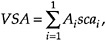
where scai is the variable cost per acre at region i. These costs include scouting costs (if they are provided by suppliers) and material and application costs that are in proportion to acreage.
Variable costs of aggregate production (VSP)
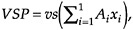
where xi is per-acre quantity in region i. These costs include the cost of producing chemical, biological, or other types of materials for pest control.
Fixed costs (FS)
These involve the costs of R&D and registration and other costs that do not depend on the acreage or volume of materials used.
The pest-control suppliers' surplus is
SS = SI − VSA − VSP − FS.
In analyzing the feasibility of new pest-control strategies, we should first evaluate whether they generate surplus for pest-control suppliers (whether SS > 0). Several issues can arise in quantifying SS.
-
Dynamic Considerations. Introduction of new strategies is a dynamic process that takes time, and each element of the surplus has a time dimension. For a more detailed analysis, let Sst denote SS at year t. Assume that we evaluate strategies being developed at year t = 0, where r is the discount rate and the planning horizon is of T years. In this case

Each of the SS elements can be decomposed similarly to the discounted sum of annual items. The various elements of SS evolve differently over time. For example, most fixed costs are initial investments in R&D, production, and marketing capacities that occur during the product introduction stages. But, pest-control supply incomes occur much later. It can be 6–10 years from the initial investment in a new strategy to the marketing of products. Furthermore, the use acreage at various locations changes after a diffusion process, which is generally an S-shaped time function. The variable cost of production may decrease over time, reflecting the process of learning by using.
The choice of discounting factors may significantly affect the value of SS due to the relatively heavy load of expenditures at the earlier stages of a strategy and the concentration of earning at the later stages. Higher discount factors will reduce the weight of benefits in SS and increase the likelihood of negative outcome, while lower r will likely increase the SS 1. Thus, availability of low interest-funds for investment in a new strategy is an important condition in facilitating such investments.
-
are not known with certainty. Technology assessment exercises must use different kinds of estimates. Quantitative policy assessments will obtain estimates of reliability (variance) and provide a range of values for SS and each component (for example, the estimated mean of SS and a confidence interval where SS will likely exceed a 95 % probability). The confidence interval is defined by lower and upper limits that represent the outcome of lowand high-case scenarios.
-
Regulatory Costs. Pest-control supplier's expenditures are affected by regulations. The fixed cost of R&D includes costs needed to comply with registration requirements. Environmental and safety regulations and the legal framework make suppliers liable for some of the environmental costs caused by pest-control activities, and these costs (insurance costs) are incorporated into both the fixed and variable costs of operation. Stricter regulations can increase the cost of operation and investment, reduce SS, and make some strategies economically less feasible. However, imposing payment of environmental costs on the parties responsible will prevent introduction of strategies that are undesirable from an overall societal perspective and will reduce excess environmental and health costs. Thus, legislators face the challenge of designing the optimal legislative framework that will enable innovation and technological change to take into account production, environmental, and health costs.
-
Price Determination. The suppliers' income per acre reflects prices received for materials and services. The prices vary throughout the life of the pest-control strategy, reflecting supply, demand, and market-power considerations. Suppliers have monopoly power if a patent protects their strategy for several years immediately after it is introduced. Because a strategy can be used in several separate markets, the supplier will behave like a discriminatory monopolist (Carlton and Perloff 1990) and set different prices for different markets. Technically, the economic rule for setting prices in each market is that the increase in supplier revenue resulting from incremental sales increases is equal to the incremental increase in production costs. For example, in the case of a biological pesticide, the supplier will set the price for a particular region; thus, for the quantity sold, the incremental increase in revenues is equal to the cost of producing the extra quantity.
The supplier's revenue in a region is the product of price and quantity and reflects the acreage on which a strategy is being used and its value to the user. The latter value (discussed in more detail later) depends on the benefits to the user, which depend on price of the output, the impact of the technology on yield and costs, and the availability, impact, and costs of alternative technologies. As technology adoption increases and the technology is applied on more acres, the total revenue potential increases. However, the value per acre from adoption by later users of the technol-
ogy is likely to be smaller; thus, the price might actually decrease over time. For example, if a new technology to address soilborne disease in tomatoes is introduced, the earlier adopters might be producers of fresh tomatoes who have a higher ability to pay, and adoption by producers of lower-value processed tomatoes will lag behind.
The factor that will probably maintain the price of a technology and even reduce it over time in spite of increasing sales volumes is a reduction in the cost of supply. This reflects both learning by doing and increased productivity that capitalizes on increasing returns to scale in production and distribution of strategy components.
To estimate the price dynamics of a pest-control strategy in different markets, we need a good understanding of the demand for the technology and the evolution of cost over time. Those elements have to be incorporated into the calculus of the monopolistic supplier to generate estimated prices during the period when the patent is in effect (see Stoneman and Ireland 1983, for a formula for pricing products and the resulting adoption behavior when the supplier is a monopolist).
When patent rights expire there can be several suppliers of the strategy, the market for strategy components will be more competitive, and the price will be closer to the average cost of production. The suppliers ' surplus in the later years of a strategy's life will be substantially reduced. That suggests that suppliers ' surplus will increase as the time it takes to develop and introduce a technology becomes shorter and as the length of the patent life increases. Thus, policy regulations that affect development time (through registration requirements) and patent life can significantly affect SS and the introduction of new technologies.
Users' Surplus (US)
US is the difference between the income of pest-control users and the cost of their products. The analysis here is geared largely to assessing the impact of a pest-control strategy on farmers' surplus. US can be divided into several main categories:
Users' Revenues (UR)
UR, is the sum of the products' per acre revenues in each region, , and the acreage of the region. Thus,

The per-acre revenues are the product of output price, pi, in the region and yield per acre, yi; thus, rvi= piyi. A pest-control strategy can affect
revenues by reducing crop-damage, increasing yield (relative to the initial situation, which serves as a benchmark), or increasing product quality and its price. Assessment of yield and quality effects is essential for quantitatively estimating the impacts of a pest-control strategy.
Users' Nonpest Costs (UNC)
UNC is the sum of nonpest costs in all regions.
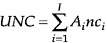
where nci is the nonpest-control cost per acre in region i. UNC includes land preparation, fertilizer, harvesting, and nonpest-control postharvesting costs.
Pest-control Costs (UPC)
UPC is the sum of pest control in all regions.
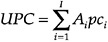
where pci is pest control per acre in region i. UPC includes application, material, and other costs per acre associated with pesticide use. We separate pest control and nonpest control for simplicity, but this is not always feasible. Separation is difficult, for example, when the cultivation practices (such as crop rotation) are a major element of the pest-control effort. Pest-control costs can be further divided by the pest problems they address and can also include the cost of pest damage to the environment and the cost of worker safety that are borne by users.
Using those definitions,
US = UR − UNC − UPC.
A pest-management strategy is feasible only if it generates a surplus for its users; therefore, when assessing strategies, we should investigate first whether US is greater than zero.
Several issues can arise in quantifying US.

where Ait is acreage in region i used under the strategy in year t and rvit, ncit, and pcit are per-acre revenues, nonpest costs, and pest-control costs, respectively, at year t in region i.
Ait varies over time, reflecting an adoption process. As mentioned earlier, adoption decisions depend on investment costs and on future and present benefits. Users recognize dynamic processes that affect the costs and benefits associated with investment in new technologies, and they might wait to adopt a new strategy (McWilliams and Zilberman 1996). A formal quantitative assessment of the impact of technologies requires estimates of the key parameters that determine the diffusion process. The estimates are used to trace an estimated path of acreage used with a new strategy over time.
Revenues per acre with strategy i, rvit, can vary over time. This is a product of price (pit) and yield per acre (yit) in region i at year t. In many cases, yields increase over time as farmers' use of a new strategy increases because of learning. But, prices can decline in response to increased supply. In some cases, a new strategy's yield declines over time because of pest resistance or infestation of secondary pests, and this must be taken into account in the modeling of yield dynamics and the resulting pest-management strategy (see models by Hueth and Regev 1974, Regev et al. 1976). Similarly, nonpest costs can change over time because of input-use efficiency (which can reduce cost) and increased input price (which may increase cost). Pest-control costs can decline after an initial period that requires investment in new pest-control equipment and training; however, pest resistance can increase costs over time. Thus, assessment of a new strategy's profitability requires quantitative modeling of cost and yield dynamics derived from a quantitative understanding of adoption dynamics, learning processes, and pest resistance.
-
Uncertainty and Risk Considerations. Estimations of US are affected substantially by risk and uncertainty considerations for two reasons. First, there are significant variances in pest-control users' behavior and estimates of price productivity and cost parameters. The high uncertainty of the estimated parameters reflects lack of knowledge and a high degree of heterogeneity even within regions. Therefore, rather than obtaining a single estimate of US, it is useful to obtain a confidence interval for a range of values in which US might be within, say, a 95 % probability.
Second, many farmers are not neutral to risk, and their choices are affected strongly by the risks (related to yields, prices, and so on) that they face. Risk aversion can lead to lower supply (Sandmo 1971) or induce further adoption of risk-reducing techniques. Carlson and Wetzstein (1993) have surveyed results that demonstrate the important role of risk and risk aversion in pesticide use and pest-control technology choices. Pest-control strategy assessments should estimate the impact of risks
facing users and analyze how risk considerations influence the extent of the adoption of the strategy on US.
-
Regulatory and Policy Considerations. Pest-control users are affected by government policies and regulations. The policies can be in the form of price supports and subsidies that affect revenues. Lichtenberg and Zilberman (1986) showed that when supports play an important role in agriculture, models of revenue generation and market equilibrium have to be modified to reflect it. Price-support policies tend to reduce risks faced by farmers and to increase average prices, and this can lead to a tendency to adopt new technologies including new pest-control strategies. Agriculture is now going through a period where price supports are reduced, and analyses of the impact in some sectors (peanuts, tobacco, and dairy) should not ignore the impact of support policies. Those policies might also be introduced in the future. Thus, computation of US should be adjusted to take these support payments into account.
Derivation of pesticide costs should take into account the costs associated with pesticide regulation. These can include purchase costs of extra protective equipment and insurance, compensation, and penalty costs associated with pest control use. The costs affect the profitability of farm operations but also influence the tendency of farmers to adopt particular pest-control strategies. Although financial incentives do not play a major role in efforts to reduce pesticide use, they could play a bigger role in the future, and regulatory costs might have a bigger impact on US. One set of incentives involves granting entitlements to participate in price support programs based on conduct of specific practices. An obvious example is the past use of a land diversion requirement as a condition for receiving deficiency payments. Such incentives might induce adoption of agricultural practices, and they should be considered in policy evaluation and design.
-
Price determination. When a pest-control strategy has a significant effect on user output, and these users have substantial market shares in their products, then the strategy can affect the output price. Agricultural industries tend to be competitive, and producers are price takers. Acreage and output with a given technology are functions of the output price, and we can denote as the supply curve of the industry, where
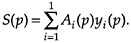
The supply curve is an increasing function of price. The product also has a demand curve, D(p), that represents the quantities that consumers are willing to buy at a given price. Industry equilibrium, which is defined by output price and aggregate output, is determined at the point where supply and demand intersect.
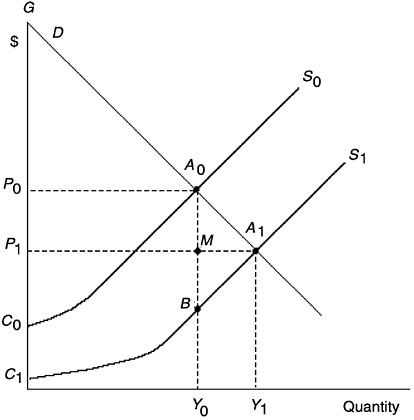
FIGURE 5-1 Equilibrium in output market when supply shifts as a result of technological change.
Price determination of the output market is demonstrated in Figure 5-1. Curve D denotes the demand for output, and curve S0 is the supply curve for an initial pest-control technology 0. The intersection of the two curves, at A0, and it results in output price P0 and output quantity Y0. If a new pest-control technology, technology 1, will increase supply, it will result in a shift of the supply curve to the right, from S0 to S1. As supply shifts from S0 to S1, the intersection of supply and demand moves from A0 to A1, at which total output increases from Y0 to Y1 but price decreases from P0 to P1.
The analysis in Figure 5-1 suggests that assessment of impacts of pest-control strategies should not always take output prices as given. When the introduction of a pest-control strategy is likely to increase output supply significantly, and the demand for this output is inelastic (in the sense that prices change significantly with relatively small changes in quantity consumed), introducing the strategy will reduce output price.
The negative price feedback that can be associated with yield-increasing pest-control strategies is important because it will lead to reduction in adoption relative to what would have happened with the initial price. It might also lead to reduction in producers' profits.
Figure 5-1 provides a graphic presentation of US; this is the area between the supply curve and the output price. For technology 0, this is P0A0C0, and for technology 1, it is P1A1C1. The increase in output associated with the transition from technology 0 to technology 1 is a source of increase in US, but the reduction in price is a source of US, and the net effect depends on the properties of the specific demand and supply curve. When the demand for the final product is very inelastic, US can actually decline from the introduction of a supply-increasing pest-control strategy because of the significant drop in price and the relatively small increase in output that the technology entails.
Consumers' Surplus (CS)
This category of market impact can intuitively be defined as the difference between the value of a volume of output to consumers (the maximal amount that consumers will be willing to pay for a quantity of product) and the amount that they actually do pay. The magnitude of CS depends on the responsiveness of demand to prices. If the price does not change as quantity changes (for example, in the case of agricultural products that have close substitutes), CS will not be very substantial. But in products with inelastic demands, where changes in quantity can substantially affect price, the impact of supply enhancement on CS can be substantial because of the significant price reduction. Therefore, CS considerations might not be very important when one analyzes the impact of pest control that affects commodities that are internationally traded and where the United States is playing a small role or that are produced in regions with relatively small impact on the market. They also might not be important for specialty crops with close substitutes. However, CS effect could be substantial when pest-control strategies are used by producers of agricultural commodities that have a significant market share and products with inelastic demand. For example, Knutson et al. (1993), found CS effects to be substantial in their analysis of the impact of banning pesticides in field crops. Zilberman et al. (1991) found similar results in their analysis of impacts of pesticide bans in major fruit and vegetable crops in California.
In terms of Figure 5-1, when pest-management strategy 0 is being used, CS is equal to GP0A0. When strategy 1 is introduced and the price goes down to P1, CS will increase and consumers will gain because they will consume more and pay less. That gain is measured by the area
P0A0A1P1. It represents the reduced expenditures associated with prior production quantities and some of the added value associated with increased consumption of pesticides. The sum of the consumers' and users' surpluses from the use of strategy 0 is measured by the area GA0C0, and the output market surplus with strategy 1 is GC1A1. The effect of the introduction of the supply-increasing strategy is to increase CS and the overall surplus in the output market (the net market effect on producers and consumers is given by the area A0A1B in Figure 5-1), but the impact on US, as mentioned earlier, is unclear and might be negative.
Some special CS considerations associated with pest-control strategies are the following:
-
Product Quality. Pest-control strategies can affect consumer welfare by increasing product quality. Babcock et al. (1992) found that the impact on apple quality accounted for at least 33 % of the benefit of fungicides used on apples in North Carolina. Consumers will pay much more for produce that is available earlier in the season, has higher sugar content, and is without blemishes. The method of hedonic pricing by Rosen has been introduced to estimate the price effect of improved product characteristics (see Cropper et al. 1988, Parker and Zilberman 1993).
The impact of higher product quality can be represented by an outward shift of the demand curve. For example, if an increase in sugar content will increase the value of consumption by 5 % per unit, the demand curve will shift upward appropriately because consumers will be willing to pay a higher price for every level of quantity demanded. As shown in Figure 5-2, a shift from the initial strategy (strategy 0) to a new strategy that increases quality but has the same supply costs (strategy 1) will shift demand from D0 to D1. The output price will increase from P0 to P1, and output will increase from Y0 to Y1. The overall increase in the output market surplus in this case will be equal to the area C0A0A1C1 in Figure 5-2. The analysis suggests that assessment of the impact of pest-control strategies should quantify the product-quality effect and assess its influence on production, prices, and overall welfare.
-
Dynamic Considerations. An assessment of impact of pest-control strategy on consumer welfare must recognize that the impact changes over time. If Cst is consumer surplus at year t, CS associated with a given pest-control strategy is a discounted sum of surpluses over the years and can be written as
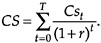
The price effect of the pest-control strategy can change over time. For example, if a new supply-increasing strategy is introduced, adoptions in
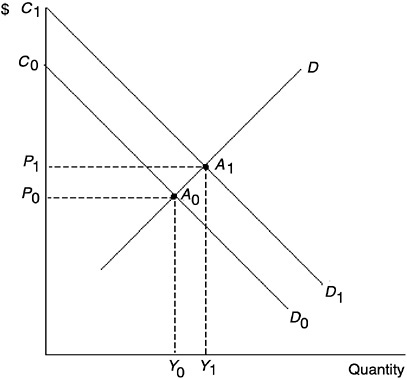
FIGURE 5-2 Equilibrium in output market with change in product quality.
-
early years might be low and the price effect not very significant.Over time, increased adoptions would lead to outward price reduction. The CS can change over time because of exogenous factors, such as population growth. Increased population might tend to increase the demand for a product and the annual CS associated with the pest-control strategy.
-
Final versus Intermediate Good. Many agricultural commodities are intermediate goods for the production of final goods. For example, alfalfa, corn, and soybeans are used as feed products in the production of meats. Therefore, analysis of CS effects have to incorporate factors that affect both the grain market and the final-product market. Knutson et al. (1990) show that a pesticide ban in grain crops will reduce consumer welfare substantially through its impact on the price of meats. They separated the impacts of the ban into impacts on feed-crop growers, livestock operators, and final consumers. When agricultural products go through several stages of processing, intermediate surpluses have to be derived.
Environmental and Health Costs (EHC)
Pest-control strategies have significant effects on human health and various dimensions of environmental quality. Some of the effects can be quantified and monetized, and the quantification should be incorporated into the cost-benefit analysis.
The health costs associated with pest-control strategies are denoted by HC and are in several categories shown below.
-
Worker safety costs (WSC). WSC is the sum of several cost categories. These consist of sick days and their attributed costs (e.g., the costs of medical treatment, earnings lost, and pain and suffering (Viscusi and Magat 1987). An even more sensitive category is statistical mortality, which is multiplied by an attributed value. Zeckhauser (1975) and Thaler and Rosen (1976) provided methodological guidelines to value statistical life, and Cropper et al. (1996) provide an overview of the implied valuation of life associated with existing pesticide policies. (The notion of statistical death reflects the estimate that there is a small probability of accidental death due to worker use of a pest-control strategy. This probability, multiplied by the size of the population involved, provides an estimate of statistical death.)
Risk-assessment method have been developed to quantify the various types of accidents associated with different production activities, including pest-control activities. If we consider the number of worker sick-days per period (year) associated with a particular pesticide strategy, SD,

where Ai is the acreage in regioni and i is the sick-day-per acre coefficient, SD depends on the material used in the pest-control strategy and the exposure level (which depends on quantity of material used, how it is applied, type of protection gear worn, weather conditions during application, and vulnerability of the exposed population).
-
Food-safety costs (FSC). FSC includes the effects on human health of exposure to materials used in pest-control strategies during and after production. The effects vary with age, location, and individual and are a source of major concern. FSC is also a sum of subcategories, including sick-day costs, mortality costs, and costs of disposal and treatment of contaminated food. For each subcategory of cost, the expected number of accidents is proportional to the quantity of output produced in each region multiplied by coefficients that reflect the risk per unit of output. The coefficients are affected by residue levels, toxicity of materials, and vulnerability to the materials.
When it comes to FSC, costs are associated with perceptions and uncertainty. Consumers might view some treatment of food products as less desirable than others because they feel that it makes products less safe or wholesome. Some studies have estimated willingness to pay for pesticide-free food (van Ravenswaay and Hoehn 1991). Assessment of pest-control strategies should take into account that some perceptional cost or benefit is associated with the use of strategies in production of foods. When everything else is equal, these considerations could make some strategies more desirable.
-
Other exposure costs (OEC). OEC include exposure to residues of material used in pest-control strategies. People might be exposed to toxic materials when they enter a sprayed field or fumigated storage area. OEC also includes accidental poisoning associated with mistaken consumption of chemicals. Humans might be exposed to chemical residues in the water or materials carried through the air. Again, assessment of strategies has to recognize the magnitude of accidental effects on third parties. When the effects are deemed substantial, the estimation of mortality and morbidity cases will provide the foundation for computing the OEC.
HC can be estimated:
HC = WSC + FSC + OHC.
Several important issues can arise in quantifying HC.
-
Dynamic Considerations. The health effects of different pesticide strategies might occur at different times, and they require adjustment in computation procedures. Therefore, it could be useful to break each category of HC into annual components. HC is then the discounted sum of the annual costs. Some materials might cause acute problems, others may cause chronic problems that will be discovered years later. There is also the issue of cumulative exposure. It is useful to break the annual health costs into these subcategories.
-
Uncertainty Considerations. Quantification of health risks is an immense challenge, and variances of risk assessment are important. A major problem is that different risk assessment coefficients are estimated at various levels of reliability. For example, some studies provide average risks posed by a particular pest-control strategy, and others provide risk estimates that may not be exceeded at 99 % probability. For consistent quantification, all risk estimates should be converted to the same degree of reliability, say, the mean of a level that is not exceeded at 95 % probability. Harper and Zilberman (1989) demonstrate that the quantitative health risk estimates associated with alternative pesticide use regulations in California's Imperial Valley vary by several orders of magnitude when derived with different degrees of reliability. They and others also demon-
-
strate how tradeoffs between health risks and economic benefits can be meaningful only when all health risk estimates are consistent.
Environmental Costs and Benefits (ECB)
Several categories of environmental costs can be associated with pesticide strategies. The strategies might also have some benefits relative to an initial situation. The categories of environmental costs and benefits are described briefly below.
Nontarget Species Costs (NTC)
Environmental nontarget costs are borne by society and distinguished from production nontarget costs (damage to beneficial pests that reduces productivity), which are borne by users. Pest-control activities can harm species that provide benefits through various use categories (for example, hunting, fishing, birdwatching, and pollination), through biodiversity, and through existence (see Randall and Stoll (1983) for discussion of such benefits and how to assess them). NTC can be presented as

where βi is nontarget species cost per acre in region i, and it is multiplied by the acreage to provide an estimate of the regional NTC.
Damage to Property and Resources (DRC)
Various pesticide strategies can lead to residues that contaminate nearby property. For example, aerial spraying of pesticides might cause damage to nearby land and structures. A more severe problem is groundwater and surface-water contamination by chemicals, which can cost hundred of millions of dollars to clean (see Lichtenberg et al. (1988) for studies on the clean-up costs of 1,2-dibromo-3-chloropropane, DBCP). Environmental damage depends on the manner of application. When applying materials like chemicals, one can separate applied input and effective input, and the application technology will determine the input use efficiency (percentage of material that is actually used in production). The residue coefficient is 1 minus the input use efficiency. Higher penalties for environmental contamination would lead to adoption of more precise application technologies that would reduce residues and environmental damage (Khanna and Zilberman 1997).
Environmental Costs and Benefits of Resource Use (ECBR)
Various pest-control strategies affect directly and indirectly the amounts of resources used in agricultural activities. For example, a pesticide strategy might increase yield per acre substantially and thus reduce agricultural land and water use relative to an initial benchmark. The released land might provide substantial environmental benefits as habitat for wildlife- preservation activities. Another pest-control strategy that might be perceived as environmentally friendly but decreases productivity per acre and lead to expansion of the land base and water resources used. If γi is the environmental cost of an acre added to production in region i because of an environmental strategy,

As with other cost categories, dynamic and uncertainty considerations affect environmental costs and benefits. When it comes to the nontarget costs, quantification and monetization present serious problems. It is extremely important in an assessment to at least be aware of the different types of environmental costs and, when possible, quantify them in physical units.
Government Net Costs (GNC)
Implementation of different pest-control strategies might require substantial government involvement. Government might need to finance some of the basic and applied research that leads to establishment of such strategies and need to spend resources on education, extension, monitoring, and enforcement of regulations. Or, government might receive income through taxes and penalty payments. All those costs have to be taken into account when benefits and costs of various categories are considered.
Evaluation
All the different benefit and cost items that are associated with a pesticide strategy are summed to generate the net benefit (NB) of the strategy:
NB = CS + PS − EHC − GNC.
NB equals the sum of consumer surplus and producer surplus, minus environmental health costs and government net costs. Detailed calculations require quantification of each of the subcategories, recognizing time
variation and discounting net benefits of different years, and finally adjusting for uncertainty. Such an adjustment can be provided by a range of net benefit values rather than one number.
The analysis thus far might have ignored international trade considerations, which can be important in assessing pesticide strategies, especially because more than 50 % of the output of some products is exported. Knutson et al. (1990) developed applications that specifically consider the trade effect of pesticide bans. Our analysis has emphasized the importance of economy wide changes and regional heterogeneity in obtaining realistic assessments of various strategies. For a more detailed understanding of how some of the biological considerations should enter into impact assessment, we present below a farm-level framework of analysis.
MODEL FOR DESIGN AND EVALUATION OF PEST-MANAGEMENT STRATEGIES ON THE FARM SCALE
A generalized model for design and evaluation of pest-management strategies on the farm scale is based on modification of the model presented by Higley and Wintersteen (1992). The model evaluates the benefits and costs associated with a set of alternative strategies. In addition, it identifies the pest-management strategies that fit some minimal criteria and those which maximize “net good”. Net good could include net economic returns, low environmental impact, maximal durability, or an optimization over a set of these and other criteria. Optimization over all the factors requires a common currency for net good and can be used to determine the pest densities required to use a pesticide on the basis of accumulated costs. For example, the conceptual model can be expressed as follows for a crop on a farm, with the common currency units (in this example, dollars) listed below each parameter:
net return = [Agricultural Production × (price received − dockage from pest)] − costs

where agricultural production (yield) is a function of pest abundance (here assumed to be additive among different pests),
Pest Abundance = (Nw + Ni + Np + Nj)
where Nw is weed abundance, Ni is insect pest abundance, Np is pathogen abundance and Nj is any other pest abundance that can have an impact on agricultural production.
Costs include all the management costs associated with growing a crop or producing an agricultural product on the farm. The pest-management costs can be summed as follows:
Mw + Mi + Mp + Mj
where Mw is cost of weed management, Mi is cost of insect management and Mp is cost of pathogen management and Mj is cost of other pest management. The cost associated with the evolution of resistance to a pesticide is referred to as “durability cost” and is the cost difference between the current pesticide and an alternative management method (Md) required after the evolution of resistance in the pest. The cost associated with pest impact on human health (Hp) and pest management on human health (Hpm) can also be included. The cost of environmental degradation associated with pest management (Epm) and associated with the pest itself (Ep) on the farm are also variables that can be included. Higley and Wintersteen (1992) demonstrated the use of contingent valuation surveys to estimate monetary costs associated with environmental degradation resulting from agricultural pest management. The cost of special technology and information for pest management (Tpm), and all other costs associated with growing the crop (O) are additional variables that can be included in the estimation of net return.
Net return = [yield × (price received − dockage from pest) − (Hp + Ep)] − [(Mw + Mi + Mp + Mj + Md + Hpm + Epm + Tpm + O)]
Assessment with Model
If net return (NR) is less than zero across the possible range of pest abundance, the logical conclusion is to reject the pest-management strategy. NR must be greater than zero to conclude that a pesticide is worth using in the system. If NR is greater than zero, then its value relative to other practices assessed in the same manner to manage the same pest(s) determines the relative importance of the pesticide in the management system. This example uses NR as the dependent variable, but other measures of response to pesticides —such as crop yield, environmental quality, or human effects—could be used.
Identifying Research Needs
The model presented above could be used to identify which parameters and their interactions are most important in determining the net return from a particular pest- management practice. Research would focus on the interrelationships between parameters in the model. Various portions of the model require research:
-
The relationship between cost of management and its impact on the pest needs study. For example, herbicide evaluation is usually based on the proportion of the weed population killed, whereas crop yield might be adequately increased by weed injury that could be achieved with rates of much lower herbicide use.
-
The model provides the ability to quantify interactions among pests (insects, pathogens, and weeds) and their management. Different pests in the same agroecosystem are often managed independently, and this can lead to wasted pesticide applications if there are interactions among the pests or the methods used to manage them. For example, two major pests of dry-land spring wheat are wild oats (weed) and wheat-stem-sawfly (insect). The wheat-stem-sawfly life cycle is broken in the presence of wild oats because the larvae do not survive in the stems of wild oats and there is no selective preference for laying eggs in the wheat or wild oats (Sing et al. 1999). Thus, the weed has positive value for reducing the impact of the insect pest, which would increase the economic injury level for the weed.
-
The model does not include future impacts of pests that are left behind when the current pest density is below the economic injury level (EIL). Studies that determine parameters for pest population temporal and spatial dynamics
REFERENCES
Babcock, B.A., E. Lichtenberg, and D. Zilberman. 1992. Impact of damage control and quality of output: estimating pest control effectiveness. Am. J. Ag. Econ. 74:163–172.
Beeman, R. W., and V. F. Wright. 1990. Monitoring for resistance to chlorpyrifos-methyl, pirimiphos-methyl and malathion in Kansas populations for stored-product insects. J. Kansas Ent. Soc. 63(3):385–392.
Brunner, J. F. 1994. Integrated pest management in tree fruit crops. Food Rev. Int. 10:135–157.
California EPA. 1997. Overview of the California Pesticide Illness Surveillance Program – 1995. Sacramento: California Environmental Protection Agency, Dept. of Pesticide Regulation .
Campbell, J. B. 1994. Integrated pest management in livestock production. Food Rev. Int. 10:195–205.
Carlson, G. A. and M. E. Wetzstein. 1993. Pesticides and pest management. Pp. 268–318 in Agricultural and Environmental Resource Economics, G. A. Carlson, D. Zilberman, and J. A. Miranowski, eds. New York and Oxford: Oxford University Press.
Carlton, D. W., and J. M. Perloff. 1990. Modern Industrial Organization. Glennview, Ill. and London: Scott, Foresman/Little, Brown Higher Education.
Carpenter, J., L. Gianessi, and L. Lynch. 1999. The Economic Impact of the Scheduled US Phaseout of Methyl Bromide . National Center for Food and Agricultural Policy, Report supported by USDA's Economic Research Service.
CAST (Council for Agricultural Science and Technology). 1999. The FQPA: A Challenge for Science Policy and Pesticide Regulation . [Online]. Available: HtmlResAnchor http://www.cast-science.org/fqpa/fqpa-06.htm
Cropper, M. and A. M. Freeman III. 1990. Valuing Environmental Health Effects. Discussion Paper QE90-14. Washington, D.C.: Resources for the Future, Quality of the Environment Division.
Cropper, M. L. 1996. The determinants of pesticide regulation: a statistical analysis of EPA decision making. In The Political Economy of Environmental Protection: Analysis and Evidence , R. D. Congleton, ed. Ann Arbor: University of Michigan Press.
Cropper, M. L., L. B. Deck, and K. E. McConnell. 1988. On the choice of functional form for hedonic price functions. Review of Economics and Statistics LXX/4:668–675.
Cropper, M., W. N. Evans, S. J. Berardi, M. M. Ducla-Soares, and P. R. Portney. 1992. The determinants of pesticide regulation: a statistical analysis of EPA decision making. Journal of Political Economy 100:(1):175–197.
Deepak, M. S., T. J. Spreen, and J. J. Van Sickle. 1999. Environmental Externalities and International Trade: The Case of Methyl Bromide. In Flexible Incentives for the Adoption of Environmental Technologies in Agriculture, C. F. Casey, A. Schmitz, S. M. Swinton, and D. Zilberman, eds. Boston: Kluwer.
Economic Research Service. 1995. Agricultural Resources and Environmental Indicators. Agricultural Handbook No. 712, Washington, DC: Economic Research Service (US Department of Agriculture).
Economic Research Service. 1997. Agricultural Resources and Environmental Indicators, 1996-1997. Agricultural Handbook No. 712. Washington DC: US Government Printing Office.
EPA (US Environmental Protection Agency). 1999a. Implementing the Food Quality Protection Act. EPA 735-R-99001. Washington, DC: EPA, Office of Pesticide Programs.
FDA (US Food and Drug Administration). 1998. The Food Defect Action Level Handbook.. [Online]. Available: http://vm.cfsan.fda.gov/~dms/dalbook.html
Gadon, M., 1996. Pesticide poisonings in the lawn care and tree service industries . J. of Eco. 38:794–799.
Gianessi, L. 1993. The quixotic quest for chemical-free farming. Iss. in Sci. and Tech. 1993:29–36.
Gooch, J. J., A. Sray, and C. Greenleaf. 1998. The fight to save OPs, carbamates. Farm Chemicals 161:18–22.
Gunsolus, J. L., T. R. Hoverstad, B. D. Potter, and G. A. Johnson. 2000. Assessing integrated weed management in terms of risk management and biological time constraints. Pp. 373–383 in Emerging Technologies for Integrated Pest Management: Concepts, Research, and Implementation, G. G. Kennedy and T. B. Sutton, eds. St. Paul, Minn: APS Press.
Hagstrum, D. W., and W. G. Heid, Jr. 1988. US S. wheat-marketing system: an insect ecosystem. Bull. Ent. Soc. Am. 34(1):33–36.
Harper, C. R. and D. Zilberman. 1989. Pest externalities from agricultural inputs. Am. J. Ag. Ec. 71(3):692–702.
Higley, L. G.,. and W. K. Wintersteen. 1992. A novel approach to environmental risk assessment of pesticides as a basis for incorporating environmental costs into economic injury levels. Am. Ent. 38:34–39.
Hueth, D. And U. Regev. 1974. Optimal agricultural pest management with increasing pest resistance . Am. J. Ag. Ec. 56:543–552.
Just, R. E., D. L. Hueth, and A. Schmitz. 1982. Applied Welfare Economics and Public Policy. Englewood Cliffs, NJ: Prentice Hall.
Kenkel, P., J. T. Criswell, G. W. Cuperus, R. T. Noyes, K. Anderson, and W. S. Fargo. 1994. Stored product integrated pest management. Food Rev. Int. 10:177–193.
Khanna, M., and D. Zilberman. 1997. Incentives, precision technology and environmental protection. Ecol. Ec. 23(1):25–43.
Knutson, R. D., C. R. Hall, E. G. Smith, S. D. Cotner, and J. W. Miller. 1993. Economic Impacts of Reduced Pesticide Use on Fruits and Vegetables . Washington, DC American Farm Bureau Federation.
Knutson, R. D., C. R. Taylor, J. B. Penson, and E. G. Smith. 1990. Economic Impacts of Reduced Chemical Use. College Station, Tex.: Knutson and Associates
Lawton, J. H., and K. J. Gaston. 1989. Temporal patterns in the herbivorous insects of bracken: A test of community predictability. J. An. Ec. 58:102–1034.
Lichtenberg, E., and D. Zilberman. 1986. The welfare economics of regulation in revenue-supported industries: The case of price supports in US S. agriculture. Am. Ec. Rev. 76(5):1135–1141.
Lichtenberg, E., D. D. Parker, and D. Zilberman. 1988. Marginal Analysis of Welfare Costs of Environmental Policies: The Case of Pesticide Regulation. Am. J. Ag. Ec. 70(4):867–874.
Lichtenberg, E., D. D. Parker, and D. Zilberman. 1988. Marginal analysis of welfare effects of environmental policies: The case of pesticide regulation. Am. J. Ag. Ec. 70:867–874.
Lichtenberg, E., D. Zilberman, and K. T. Bogen. 1989. Regulating environmental health risks under uncertainty: groundwater contamination in California. J. Env. Ec. and Mgmt. 17:22–34.
Losey, J. E., L. S. Rayor, and M. E. Carter. 1999. Transgenic pollen harms monarch larvae. Nature. 399:214.
Louda, S. M., D. Kendall, J. Connor, and D. Simberloff. 1997. Ecological effect of an insect introduced for biological control of weeds. Science. 277:1088–1090.
Maxwell, B. D. 1992. Weed thresholds: the space components and considerations for herbicide resistance evolution. Weed Tech. 6:205–212.
McWilliams, B., and D. Zilberman. 1996. Time of technology adoption and learning by using. Econ. Innov. New. Tech. 4(2):139–154.
NRC (National Research Council). 1993. Pesticides in the Diets of Infants and Children. Washington, DC: National Academy Press.
Onstad, D. W., and M. L. McManus. 1996. Risks of host range expansion by parasites of insects. Bioscience 46(6):430–435.
Parker, D. D., and D. Zilberman. 1993. Hedonic estimation of quality factors affecting the farm-retail margin . Am. J. of Ag. Ec. 75:458–466
Randall, A. and J. Stoll. 1983. Existence Value in a Total Valuation Framework. In Managing Air Quality and Scenic Resources at National Parks, R. Rowe and L. Chestnut, eds. Boulder, Col.: Westview Press.
Regev, U., A. P. Guitierrez, and G. Feder. 1976. Pests as a common property resource: a case study of alfalfa weevil control. Am. J. Ag. Ec. 58(2):1861–197.
Sandmo, A. 1971. On the theory of the competitive firm under price uncertainty. Am. Ec. Rev. 61:65–73.
Sing, S., B. Maxwell, and G. D. Johnson. 1999. Wheat stem sawfly-wild oat interactions in Montana dryland spring wheat. Bull. Ecol. Soc. Am.
Spratt, D. M. 1997. Endoparasite control strategies: implications for biodiversity of native fauna. Int. J. Parasitol. 27:173–180.
Stoneman, P., and N. J. Ireland. 1983. The role of supply factors in the diffusion of new process technology . Ec. J. Supp. Mar. 83:66–78.
Sunding, D. 1996. Measuring the Marginal Cost of Non-Uniform Environmental Regulations . Am. J. Ag. Ec. 78:1098–1107.
Sunding, D., and J. Zivin. 2000. Insect Population Dynamics, Pesticide Use and Farmworker Health. Am. J. Ag. Ec. forthcoming.
Templeton, S., D. Zilberman, and S. J. Yoo. 1998. An economic perspective on outdoor residential pesticide use. Env. Sci. Tech.. 21:416–423.
Thaler, R. and S. Rosen. 1976. The value of saving a life. In Household Production and Consumption, N.E. Tereckyj, ed. New York: National Bureau of Economic Research.
USDA (US Department of Agriculture). 1997. Agricultural Chemical Usage. Vegetables.1996 Summary. US Department of Agriculture, National Agricultural Statistics Service (NASS), Agricultural Statistics Board. Washington, D.C.: US Government Printing Office.
USDA (US Department of Agriculture). 1998. Agricultural Chemical Usage. Fruits. 1997 Summary. US Department of Agriculture, National Agricultural Statistics Service (NASS), Agricultural Statistics Board. Washington, D.C: US Government Printing Office.
van Ravenswaay, E. O., and J. P. Hoehn. 1991. Willingness to pay for reducing pesticide residues in food: Results of a nationwide survey. Staff paper no. 91-18. East Lansing: Michigan State University, Department of Agricultural Economics.
Viscusi, W. K. and W. A. Magat. 1987. Learning About Risk: Consumer and Worker Responses to Hazard Information . Cambridge, Mass.: Harvard University Press.
White, F. C., and M. E. Wetzstein. 1995. Market effects of cotton integrated pest management. Am. J. of Ag. Ec. 77:602–12.
Wratten, S. D., and A. B. Forbes. 1996. Environmental assessment of veterinary avermectins in temperate pastoral ecosystems. Ann. Appl. Biol. 128:329–348.
Zalom, F.G., and W. E. Fry. 1992. Food, Crop Pests, and the Environment. St. Paul, Minn: American Phytopathological Society.
Zeckhauser, R. 1975. Procedures for valuing lives. Public Policy 23:427-464.
Zehnder, G. W. 1994. Integrated pest management in vegetables. Food Rev. Int. 10:119-134.
Zehnder, G. W., and G. K. Evanylo. 1989. Influence of extent and timing of Colorado potato beetle (Coleoptera: Chrysomelidae) defoliation on potato tuber production in eastern Virginia. J. Ec. Ent. 82(3):948-953.
Zilberman, D., A. Schmitz, G. Casterline, E. Lichtenberg, and J.B. Siebert. 1991. The economics of pesticide use and regulation. Science 253:518-522.


