
4
Changes in the Structure and Content of Work
The purpose of this chapter is to explore what workers do and how what they do is changing. The relative growth and decline of broad occupational categories used by the Bureau of Labor Statistics (BLS) are useful for providing a picture of the changing mix of occupations. BLS data clearly show the decline of farm and blue-collar workers and the rise of professional, technical, and what have traditionally been called white-collar (managerial/administrative, marketing/sales) workers. However, they tell us little about what is happening to the nature of work within these categories or whether the categories are themselves useful for distinguishing among the activities and experiences of workers in different occupations.
In the sections that follow we examine closely the changes occurring within occupations by using the following broad categories: blue-collar, service, technical/professional, and managerial workers. However, even as we draw on the literature describing the nature of work within each of these conventional categories, we demonstrate that the categories themselves are losing much of their descriptive and analytic meaning. The nature of work is changing not only within these categories but also in ways that blur the traditional distinctions among them. This observation is supported by the WorkTrends™ data reported in
Table 2.3. Statistical regression analyses of worker attitudes on occupational groupings revealed that occupations accounted for a decreasing amount of variance in attitudes toward work and employment between 1985 and 1996. The ability to predict work attitudes based solely on respondents' occupations diminished from 1985 to 1996.1
We analyze the nature of work within these categories by considering four dimensions along which work varies and appears to be changing in significant ways:
- The degree of discretion or decision-making power workers have over how to do their jobs. We refer to this as autonomy-control.
- The range or breadth of the tasks embedded in a job. We refer to this as task scope.
- The substantive (or cognitive) complexity, or the degree of cognitive activity and analysis needed to do a job. We will refer to this dimension as cognitive complexity.
- The extent to which the quality of social interactions, including their emotional quality, is critical to job performance. We refer to this as the relational or interactive dimension of work. It includes emotional labor, which is a relatively new concept and an increasingly well-recognized, if not an increasingly important, component of many jobs in which interactions are critical tasks.
We view these as key dimensions of work. In various scientific literatures, they are the primary concepts that have been used to study the relationship between skills and wages, between skills and compensation, and other features of jobs and occupations. The exception is industrial and organizational psychology, which tends to use more refined indicators for skill. These four dimensions also are broadly supported by multivariate studies that factor analyze more detailed measures of work in search of underlying factors or dimensions (for example, see National Research Council, 1980; for a review, see Spenner, 1990). Thus, these
dimensions have empirical as well as conceptual merit. Finally, these dimensions open useful conceptual windows on the increasing heterogeneity of work, the debureaucratization of work, increased choices for structuring jobs, and increased interdependence among work structures.
The first two dimensions—autonomy-control and task scope—are well established in the job design and analysis literatures (Hackman and Oldham, 1975; Hackman, 1987). Because autonomy-control reflects the vertical division of authority in an organization, it is also found in the organizational design literature and it parallels the legal distinctions that define employee rights and organizational obligations. Task scope has been the subject of considerable debate over the years and focuses on the horizontal division of labor. Ever since scientific management and early industrial engineers formulated narrow specialization as a principle of job design, scholars and practitioners have debated the trade-offs of specialization versus job enlargement, job rotation, team-based work systems, and other means of expanding the scope of a job.
The cognitive complexity dimension is normally treated in job analysis as the depth of expertise one needs to do a job. In comparison with major sociological approaches, our definition of cognitive complexity is nearly identical to the definition used by Kohn and colleagues in their program of research (Kohn and Slomczynski, 1990). They define substantive (or in our terms cognitive) complexity as the degree to which performance of the work requires thought and independent judgment. Our definition is more restrictive than that proposed by Spenner (1990), who includes not only cognitive demands, but also interpersonal demands and task scope in his definition of substantive complexity.
The social interaction dimension includes both relations between workers and their customers or clients, and relations among workers. Although interpersonal work may long have been important in many jobs, it has become more salient for a number of reasons. Relations between workers and customers have become more prominent because of the growth of customer-contact jobs and because of the increased importance that employers give to competing on the basis of customer service (e.g., Albrecht and Bradford, 1989; Reichheld, 1996; Zemke and Schaff,
1989). Relations between employees at all levels of the organization appear to be more important because of the spread of collaborative forms of work organization. Employers have gone from introducing groups as a stable building block of organizations to using multiple types of permanent and temporary groups to accomplish organizational goals—supervised teams, self-managed teams, cross-functional teams, quality circles, labor-management committees, problem-solving groups, project teams, task forces, top management teams, etc. The job analysis literature has traditionally defined the interactive dimension to include communication and negotiating skills, but has paid little attention to emotional labor. Making someone happy, excited, calm, or committed is a crucial skill in a growing number of jobs.
In the following sections, we also discuss the increasing importance of information technology, not because it represents a fundamentally new dimension of work, but because information technologies are creating an array of new jobs and changing how existing jobs are performed. In addition, we examine the influences of changing markets, changing workforce demographics, changing organizational structures, and changing employment relationships on the structure and content of work.
Blue-Collar Work
Blue-collar workers are usually viewed as workers who are nonmanagerial (i.e., covered by the National Labor Relations Act) and nonexempt (i.e., covered by the wage and hour provisions of the Fair Labor Standards Act). Although the Bureau of Labor Statistics does not use "blue-collar work" as a specific occupational category, their categories that come the closest to encompassing the popular notion of blue-collar work are "skilled and semi-skilled production" and "craft workers," "operatives," and "laborers." Using these categories, blue-collar workers represented approximately 25 percent of the labor force in 1996, down from 40 percent in 1950. In this section, we focus on blue-collar work in manufacturing, since this is the typical image associated with this category. Perhaps the most distinguishing feature of blue-collar work is its presumed position in an organization's vertical division of labor. Blue-collar workers are assumed to be supervised
by managers and, therefore, to have low levels of autonomy and control over their work. The distinction arises out of the presumption that those who conceive how work is to be done can be separated from those who execute the work. Those who "execute" are, of course, the blue-collar workers. Frederick Taylor's scientific management methods elevated this distinction to a normative principle: conception should be separated from execution in order to organize work efficiently and reward workers in ways that satisfy their economic needs. Not surprisingly, this principle has been the subject of debate since it was first enunciated. How much control over work-related decisions is delegated to those doing the work has become an especially important part of job and organizational design decisions, as some firms restructure and move decision making down to lower levels, while others centralize it further with the aid of digital control technologies.
Scientific management also emphasized the scope of blue-collar work by stressing the importance of segmenting work into clearly defined tasks that formed discrete jobs requiring narrow skills. This approach to job design fit well with the growing mass markets and need for standardization associated with the factory system. The design of jobs was perceived largely as an engineering task aimed at producing mainly physical results (the number of boxcars loaded; the number of parts cut, polished, or painted).
The Changing Nature of Blue-Collar Work
The types of organizational restructuring discussed in Chapter 3 are challenging traditional principles for the design of blue-collar jobs. Blue-collar production work in many firms is expanding to include more decision-making tasks that in the past would have been part of a supervisory or managerial job. This, more than anything else, makes the term "blue-collar work" or "blue-collar workforce" less useful as an analytical or practical tool. Moreover, for some production workers, narrow job definitions are giving way to broader involvement in work teams and interactions with external customers, clients, and patients.
Part of our understanding of the changing nature of blue-collar work builds on research concerning the adoption of "high-involvement" or "high-performance" work systems. The basic
argument in this literature is that blue-collar work structures are changing because the highly specialized division of labor that supported cost minimization in mass production is no longer compatible with current markets. Under the logic of mass production, which emphasized quantity over quality, work was divided into individualized, repetitive jobs that required low discretion and skill. Today's markets demand competitiveness on the basis of quality, innovation, and customization (Piore and Sabel, 1984; Appelbaum and Batt, 1994).
Under the logic of high-involvement systems, quality and innovation result from work designed to utilize high skills, discretion, and the participation of front line workers in operational decision making. Human resource practices such as training, performance-based pay, and employment security provide complementary incentives for participation (Ledford et al., 1992; Osterman, 1994; Kochan and Osterman, 1994). A central hypothesis in this literature is that work structures are part of a larger internal labor market system or set of complementary work and human resource practices (Milgrom and Roberts, 1992). Thus, the content of work must be analyzed as part of this larger system in order to understand how work structures affect outcomes of critical interest to different stakeholders. This point will feature prominently not only in this section on blue-collar work but also in discussion throughout this chapter.
Effects of Teams on Skills and Work Content
At the heart of the movement to high-performance work systems lies the growing emphasis given to teamwork and work structures organized around work units or groups rather than individual jobs. The decision to implement teams affects both the degree of control delegated to nonsupervisory workers and the scope of tasks that workers are expected to perform. As such, it changes both the vertical and horizontal divisions of labor. Team-based work structures also increase cognitive complexity and the interaction requirements of blue-collar work.
A number of studies demonstrate that both cognitive and interactive skills are becoming more important in blue-collar jobs, as team-based work structures are more widely used in blue-
collar work. Morgan et al., (1986) identified giving suggestions/criticisms, cooperation, communication, building team spirit/morale, adaptability, coordination, and acceptance of suggestions/criticisms as critical teamwork skills and behaviors. Perhaps the most extensive research on team competencies, however, has been carried out at the Naval Air Warfare Center Training Systems Division (Tannenbaum et al., 1992; Cannon-Bowers et al., 1995). It developed a model of team effectiveness (see Figure 4.1) that focuses on the influences of organizational, work, and task characteristics on requirements for both individual task competencies and team competencies. Subsequent work has concentrated on decomposing team and task competencies. There are, as seen in Figure 4.2, four basic types of teamwork competencies: "transportable," "task contingent," "team contingent," and "context-driven." The two categories most relevant to occupational
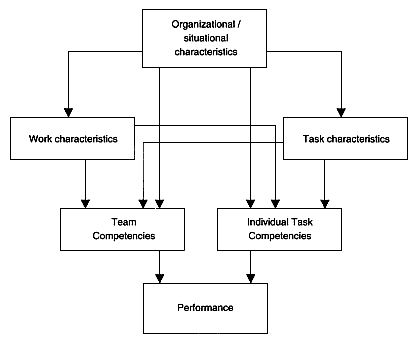
Figure 4.1
Team effectiveness model: Conceptual framework.
Adapted from Tannenbaum, Beard, and Salas (1992)
|
|
Team Generic |
Team Specific |
|
|
Transportable competencies: generic competencies that generalize to many tasks and team structures |
Team-contingent competencies: competencies that are specific to a particular configuration of team members, but not to any particular task situation |
|
Task Generic |
Examples: project teams, task forces Only knowledge really necessary is the knowledge of teamwork skills and behavior. These skills are necessary to individuals involved in multiple teams. |
Task situations include requiring a team of perform competently on a number of different tasks—e.g., quality circles, functional department teams, self-managed work teams. |
|
|
Task-contingent competencies: competencies that are related to a specific task, but that hold across different team member configurations. |
Context-driven competencies: competencies that are dependent both on a particular task and team configuration. These vary as either the task or team members change. |
|
Task Specific |
Apply to team situations where membership changes frequently due to organizational policy (learn many jobs) or high personnel turnover (e.g., military cockpit crews who rotate to relieve one another). Knowledge is detailed on the task, not about the teammates. |
Important for teams performing highly demanding tasks—emergency personnel, sports teams, aircrews, military teams. Require flexibility and rapid adaptation. |
Figure 4.2
Types of team competencies
analysis are those that are generic across all teams. Thus the focus should be on team competencies that either will generalize across tasks and team situations ("transportable") or that are related to specific tasks regardless of who the other team members are ("task contingent"). Work in these categories requires the development of interactive as well as cognitive skills.
Both qualitative case studies and quantitative studies of the changing nature of blue-collar work have documented the importance of communications, problem solving, and coordination within and across teams (Adler, 1993; MacDuffie, 1996; Rubinstein, forthcoming; Appelbaum and Berg, 1997). Rubinstein
found that quality performance in the team-based production process employed at the Saturn Corporation was significantly influenced by the amount of communication among team leaders. His study illustrates the links between cognitive and interactive skills, since he showed how the union at Saturn had created a dense social network among these team leaders that facilitated communication, coordination, and problem solving on production and organizational issues.
Appelbaum and Berg (1999) demonstrated the growing importance of coordination and communication in a three-industry study of work organization. They found that, compared with workers in traditional job structures, those working in teams reported higher levels of participation in problem solving, communications with supervisors and managers both in their units and in other parts of the organization, and greater responsibility for a wide range of duties traditionally reserved for supervisors and managers. One effect of these changes is to blur the traditional lines of demarcation between blue-collar and managerial work in settings that rely heavily on teams, as well as the distinction between blue-collar workers and the technicians and other professionals who design and support the technical and organizational systems associated with their work. Box 4.1 illustrates the blurring of these traditional occupational boundaries in several industries.
Relationship management for blue-collar workers is not limited to shop floor work teams, labor-management committees, or cross-functional problem-solving groups. By reorganizing work from functionally driven lines to product- or customer-focused centers, employers are able to more directly link customers to workers, and blue-collar workers need to develop customer relationship management skills. Box 4.2 provides an example of this; it is taken from a case study of Corning, Inc., a company that has worked collaboratively with the American Flint Glass Workers Union to create team-based work systems.
Effects of Information Technology
A large number of recent empirical studies have shown that technology is changing blue-collar work in significant but
|
BOX 4.1 Blurring of Occupational Boundaries in the Steel, Apparel, and Electronics Components Industries (Appelbaum and Berg, 1999) In many of the plants in the three industries in our sample, workers are expected to engage in problem solving whether or not there are self-directed teams. . . . Front line workers have increased responsibility for coordinating production activities, and offline teams are widespread. Nevertheless, the survey results indicate that self-directed teams have responsibilities that go beyond this, and that there are significant distinctions between these responsibilities and those of other workers. . . . [M]uch of the information in these plants is collected and remains at the bottom levels, where it is acted on directly by workers who call on subject matter experts, confer with workers and managers outside their work groups, and make decisions that affect product quality, maintenance of production equipment, and adherence to production schedules. . . . In tandem with the reductions in the number of supervisors and with greater reliance on front line workers in many of the plants in our sample, there has been a major change . . . in the supervisors' role. Supervisors are expected to coordinate with purchasing or with earlier stages of the production process about the quality and availability of incoming materials as well as with internal and external customers downstream from them. As we have seen, they participate extensively in offline teams that deal with product quality, cost reduction, equipment purchases or modification, working conditions, or training; and they usually have responsibility for facilitating these meeting. They are also called on to resolve differences of opinion among blue-collar workers and to provide structured on-the-job training for workers, who now require greater skills. Where self-directed teams have been introduced, either formally or de facto, supervisors spend very little time "watching other people work." |
nondeterministic ways (Hirshhorn, 1984; Jaikumar, 1986; Kelley, 1986; Keefe, 1991; Adler, 1992). Moreover, these studies suggest that past debates over the effects of technology have been framed too narrowly. To ask whether the net effect of technology is to "upskill" or "downskill" blue-collar work fails to capture the
|
BOX 4.2 Teams and Customer Interactions at Corning, Inc. (Batt, 1997) Corning, Inc., and the AFGWU [American Flint Glass Workers Union] undertook a joint plant redesign at General Machine Shop [GMS], a supplier of machined parts for Corning's consumer and television tube production plants. The 1992 redesign replaced prior functional departments with product-oriented groups (serving consumer, lighting, and TV products), and within those groups, teams dedicated to producing parts for particular customer plants (e.g., Pressware, Martinsburg, and Greenville plants). The "real change" according to machinists, was ". . . the team-focus on the customer and their product." In the past, customers complained that no one at the plant would even answer their calls. This was due in large part to functional specialization. Under the team-based system, teams are responsible for end-to-end production—from providing quotes to customers for jobs to arranging for materials from suppliers to interfacing directly with the customer during design and production phases to meeting delivery dates. Because workers are now organized into product-focused teams, customers can directly contact team members on the floor to get updates on the production process and to collaborate over product design and cost. Now, GMS machinists go back and forth on designs and specifications with customers, who also supply the cast iron mold and the blueprint; the machinists also go back and forth with their engineers as needed until they "get it right." The machinists are also more heavily involved in training the workers in customer plants on the new equipment provided by GMS. In addition, each team also has its own annual budget for tools and supplies; whereas in the past, the supervisor had to sign a materials purchase order, machinists now purchase anything under $200. They go to trade shows and interact with equipment suppliers to purchase new equipment. Teams also absorb traditional personnel tasks of scheduling, arranging vacations, and determining overtime. |
multidimensional ways in which technology affects the content of work.
For example, Zuboff (1989) found that a major effect of information technology on blue-collar work is to replace physical activity with mental and more abstract forms of analysis and response: "Your past physical mobility must be translated into a
mental thought process" (p. 71). A worker in Zuboff's study described the implications of this change and its link to the cognitive dimension of work (Zuboff, 1989:73–74):
Before computers, we didn't have to think as much, just react. You just knew what to do because it was physically there. Now, the most important thing to learn is to think before you do something, to think about what you are planning to do. You have to know which variables are the most critical and therefore what to be most cautious about, what to spend time thinking about before you take action.
The implication of these changes is that information technology changes the mix of skills that are required. "Informated" jobs require less sensory (touch, smell) and less physical skill, and more of what Zuboff labels "intellective skills," such as abstract reasoning, inference, cause-effect analysis, and trust in symbols.
Another important lesson from efforts to introduce advanced technology into work settings has been the need to integrate technology and organizational practices. Shimada and MacDuffie (1987) described the differences between American engineering practices and those found in Japanese auto plants operating in the United States. They observed that U.S. engineers tended to see technology as a standalone technical solution, with work system design considerations to be addressed in the implementation phase of the design and decision-making process. In contrast, Japanese engineers tend to see the hardware or technical features of the work process as inseparable from the human dimensions of the work process.
The differences in effect were brought home vividly in the auto industry in the 1980s by experience of General Motors (GM). In the early 1980s, GM embarked on a major high-technology strategy designed to regain its competitiveness by introducing the most advanced automated technologies available. Over the first half of the 1980s, GM invested over $50 billion in pursuit of this objective, only to find at the end of the investment cycle that it still had the highest-cost manufacturing operations in the industry. The company concluded that it had failed to adequately integrate human resource and work organization considerations with the new technology and subsequently began to revamp its approach to introducing technology.
MacDuffie (1996) went on to document the effects of these two different strategies by showing that high-technology plants were not among the most productive in the industry worldwide. However, using high technology in conjunction with workplace innovations and transformed human resource practices did produce the highest levels of productivity and quality in auto assembly plants around the world. Black and Lynch (1997) also found the percentage of blue-collar employees using computers has a positive effect on productivity of a national sample of manufacturing plants. As in the auto industry studies, the effect of computer use is increased when combined with innovative work practices and cooperative labor-management relations.
Effects of Industrial/Organizational Restructuring
To illustrate the changing nature of blue-collar work and its consequences, three industry examples are summarized below. Each case illustrates the interdependent nature of the content and contexts of work—that is, the changes occurring in blue-collar work are part of a larger organizational restructuring that encompasses other features of the internal labor market.
The Steel Industry The steel industry in the United States experienced enormous competitive pressures in the 1980s and 1990s that set in motion restructuring and changes in traditional job structures. One detailed case study of the restructuring process in an integrated mill reported reductions in job classifications among skilled trades were reduced from 69 to 16 (Yamagami, 1987). Most integrated mills underwent similar changes and moved toward greater teamwork for both production and craft jobs.
The United Steelworkers of America supported these changes in return for greater voice in organizational decision making at the workplace and, in the 1990s, up through the strategic levels of the firm. The union noted, however, that craft consolidation should proceed without sacrificing the deep knowledge and skills associated with traditional skilled trade jobs: "In the area of trade jobs, the primary objective must be to 'deepen' the skill base of the trades and create tradespeople with greater knowledge within
their trade, rather than to 'broaden' the skill base of the trades and create tradespeople with industrial knowledge in a multitude of areas. In some cases, a secondary objective may be to train trades in new skills in order to allow them to complete their job, provided, however, that the integrity of the trade is not undermined" (USW Guidelines for Participation in Work Organization, 1992:3, quoted in Klein, 1994:151).
A study of the effects of different degrees of change in job structures and related human resource management practices in this industry demonstrated the value of making these changes. Ichniowski, Shaw, and Prennushi (1997) identified four distinct systems of work organization and complementary human resource practices in this industry. They found that the system embodying the most innovative practices produced the highest levels of productivity and quality.
The Auto Industry The auto industry also underwent major changes in the 1980s and 1990s, again in response to international competitive pressures. Empirical studies (Katz et al., 1987; MacDuffie, 1996) demonstrated that the greatest payoffs to productivity and quality came from a systemic transformation of work structures from traditional narrow jobs to team-based work systems accompanied by changes in complementary human resource and labor-management relations. A traditional auto assembly plant might have over 100 different job titles, whereas at the Saturn Corporation, where work is organized around a team system, there is one title for production workers and six titles for skilled trades. But studies done at Saturn and other parts of the industry (Katz et al., 1987; Rubinstein, forthcoming) have found that the payoffs to quality and productivity depend not only on the team-based structures but also on the extent to which teams are embedded in a broader set of complementary human resource innovations and team members and leaders are engaged in high levels of within-team and cross-team communications and problem solving.
The Japanese-based plants located in the United States—Honda, Toyota, Nissan, Mazda, and Mitsubishi—have all introduced variants on team-based work systems. Partial or fully developed team systems and related work and human resource
practices are found in some plants of the large American firms (General Motors, Ford, and Chrysler); however, the majority of these older facilities are characterized by a mix of traditional and team-based systems (MacDuffie and Pil, 1997).
The Apparel Industry The apparel industry epitomizes labor-intensive, low-wage production work. Traditional work organization arrangements in apparel are described as the "bundle system," in which work is divided into narrow individual jobs governed by piece rate compensation systems. Studies of this industry show that this is still the dominant arrangement (Dunlop and Weil, 1996; Appelbaum and Berg, 1999); however, in apparel plants that supply retailers requiring rapid replenishment of stocks (with the aid of shared information systems), the bundle system has been replaced with a team-based modular production system. Modular systems serve to reduce total costs in large part by reducing work-in-process inventories and allowing more flexible, quicker responses to fluctuation in retail sales and other demands. The best estimates are, however, that less than 15 percent of apparel industry work in the United States has shifted to modular systems (Dunlop and Weil, 1996). The rate of change in this industry is therefore dependent on the rate at which retailers require manufacturers to support rapid replenishment strategies.
Summary
The predominant trends in blue-collar work are toward team-based work systems and toward work that increases the degree of control and task scope and that requires higher cognitive and interactive skills and activities. When advanced technologies are integrated with these changes in work content, team-based work systems achieve higher levels of productivity and quality. Not all blue-collar work is, however, changing in this way: the best estimates are that perhaps one-third of the blue-collar workforce is experiencing these types of changes. Blue-collar work may thus be increasing in diversity at the same time that it is leading to a blurring of the boundaries across blue-collar, managerial, and technical work.
There has been considerable research on blue-collar work and
we can summarize with some confidence how this type of work has changed. The autonomy of blue-collar workers has increased to include decisions over process and quality control, formerly the purview of supervisors, in settings in which team organization is practiced. In some cases, new technologies have given blue-collar workers discretion, for example when a data interface rather than a supervisor gives instructions. Worker autonomy, when it occurs, is limited to task autonomy and not strategic autonomy—how to perform work rather than determining the work to be performed.
Not all blue-collar workers have increased discretion, not even all workers organized in teams, as the character of the team makes a difference (Bailyn, 1993). Nor do all workers appreciate increased discretion. Some researchers have found, for example, that work organized in teams may substitute one type of explicit control structure for conformance to more implicit behavioral norms that also limit individual autonomy and discretion (e.g., Barker, 1993).
Job redesign, team structures, and computer-integrated manufacturing have broadened the task scope of much blue-collar work. There has been a clear reduction in the number of job categories and the combining of jobs. For example, workers in self-directed teams often interact with customers and take and track orders, as well as produce the product or service. New technologies have eroded the distinction between some traditional craft boundaries, too. For example, repairs of mechanical equipment may now have electrical and electronic components, with a single person making both types of repairs. The increase in the range of tasks performed by blue-collar workers does not mean, however, that they demand greater skill or increased cognitive complexity.
Craft work has always had high levels of cognitive complexity, but some other blue-collar jobs are increasing in their analytic content. Total quality management programs often include the mastery of productivity modeling, flow charts, and statistical analysis of the production process by the work team, but this varies substantially from setting to setting. More generally, there has been an increase in analytic forms of work at the expense of manual labor.
Finally, we know that the interaction-emotional labor component of blue-collar jobs has increased dramatically. Team-based work and the need to coordinate with customers and technical personnel requires that workers motivate, placate, encourage, and please others as central requirements of their jobs.
Service Work
This section considers the changing nature of service work—jobs in which face to face or voice to voice interaction is a fundamental aspect of work (MacDonald and Sirianni, 1996). Service work is historically categorized into three occupational groups: (personal) service, clerical and administrative support, and sales. For simplicity, we use the terms service workers, service jobs, or service occupations in discussing common aspects of these three broad occupational groups. Together these service jobs comprise roughly 41 percent of the workforce. Service jobs grew from 11 to 14 percent of the workforce between 1950 and 1996; clerical jobs grew from 12 to 15 percent; and sales, from 7 to 12 percent. Although women and minorities historically have filled many of these jobs, men have increased their relative numbers. In personal service, male workers rose from 38.3 percent of the workforce in 1983 to 41.9 percent in 1996; in clerical, males rose from 19.4 to 21.2 percent of the workforce; and in sales, from 42.5 to 45.3. This is in contrast to technical and professional work, in which the percentage of men fell by 4 percentage points in technical and 2 percentage points in professional occupations (Current Population Survey merged annual earnings files).
There is considerable variation in the content of work in these occupations along the dimensions we have identified. For example, many clerical occupations circa 1975 were still located in small, local establishments. Business office or customer service staff had moderate levels of autonomy, task scope, and cognitive complexity, more relational interactions with customers, but very low levels of technology use. By contrast, large service organizations included telephone operators, data processors, and typing pools, all of whom had very low levels of autonomy, task scope, and cognitive complexity; their interactions were transactional in nature, and their jobs were heavily mediated by technology and
automation. Secretaries could score low on all five dimensions of job content if they worked in a typing pool or moderate to high if they were the only secretary in a small business or if they served an executive who delegated considerable authority and discretion to his or her assistant.
In personal services, there would have been similar variation. The job content of restaurant work would have ranged from very low on all dimensions of work in a fast food restaurant to moderate at a local diner, and relatively high if the waiter was employed at a five-star restaurant. Most health care and child care workers and domestic help would score low on cognitive complexity and technology use, but moderate on autonomy and task variety (because their jobs are not highly rationalized) and high on relational interaction, when the affective or emotional content of jobs is very demanding.
In sales, the content of work would have varied both by product complexity and by customer or client. Given the fact that manufacturing was characterized by the mass production of standardized goods, however, product variety and complexity was limited, and this in turn led to considerable standardization in the content of sales jobs. Retail sales workers in large department stores would have scored low on all five dimensions of work, but sales workers in small businesses would have scored higher. Jobs that involved the sale of more complex or luxury goods (industrial products, wholesale distributors, yachts) encompassed considerably higher levels of autonomy, variety, complexity, and relational interactive content. In summary, although many of the jobs in service occupations required low formal education and received low pay, the range of variation in work along other dimensions was considerable, varying by occupational specialty and organizational context.
The common denominator in all service work is the interaction with a customer—what researchers have referred to as "interactive service work" (Leidner, 1993:26–27). Leidner argues that there are three types of interactive service work in which the success of the work depends on the quality of the interaction. In one type, the interaction is inseparable from the product being sold or delivered, for instance, in child care. In the second type, a product exists apart from the interaction, but a particular type of expe-
rience is an important part of the service. For example, airline passengers who buy tickets primarily to get from one place to another are promised friendly service on their journey (Hochschild, 1983). Finally, in some jobs the interaction is a crucial part of the work process even though it is not part of a product being sold or provided. The success of salespeople, fund-raisers, bill collectors, and survey interviewers depends on the workers' ability to construct particular kinds of interactions.
The content of interactive service work differs in fundamental ways from the content of production work in manufacturing for several reasons. First, services are produced and consumed simultaneously, so there is little or no opportunity for post-production quality control. Second, the customer typically participates in production. The consumer as "coproducer" is extremely important in defining work content, both because of variation in customer characteristics and demands and because the customer introduces uncertainty into the service production process. As discussed below, control over customer uncertainty plays an important role in management strategies—perhaps as important as control over work processes and behaviors of employees. Third, services are intangible, heterogeneous (no two alike) and perishable (they cannot be inventoried), making performance measurement systems more difficult to develop and implement (Bowen and Schneider, 1988; Zimmerman and Enell, 1988).
In general, interactive service work can be categorized as "relational" or as "rationalized" (Herzenberg et al., 1998; Gutek, 1995; Levitt, 1972). Relational service work emphasizes the personal relationship between the service provider and the customer. Over time the content of such work emerges through the interaction of customer and provider and is defined in such terms as how attachments, trust, and interdependence are built into the relationships. Examples of relational service work include personal service workers (gardeners, hairdressers, housekeepers) and some local service providers (bank tellers, cashiers at the corner store). Such jobs are generally characterized by significant autonomy and variety, moderate cognitive complexity, and minimal use of technology.
The rationalized approach to service work, in contrast, em-
phasizes routinization. It adopts standardized rules of behavior (Leidner, 1993) and a production-line approach to delivery of services, entailing division of labor, mechanization, and management of customer behavior to achieve conformance with the operation of the system (Lovelock, 1990). Examples of this type of service work are the scripted behaviors of flight attendants (Hochschild, 1983) and the routinized activities of telephone operators (Norwood, 1990; Kohl, 1993) and clerical workers (Garson, 1975; Lowe, 1987; Anderson, 1988; Fine, 1990). Rationalized service work typically reduces autonomy, task scope, and cognitive complexity and can be associated with significant use of technology.
It is important to note that although many of the jobs in service occupations have required low formal education and received low pay, and generalizations can be made with respect to the characteristics of relational and rationalized service work, the variation in work processes is considerable. These variations in autonomy, task scope, cognitive complexity, and use of technology run across occupational specialties and organizational contexts.
The Changing Nature of Service Work
In the last two decades, the direction of change in service occupations appears to be twofold. First, there has been a blurring of boundaries across these occupations. Clerical and sales jobs, and to a lesser extent personal service, have come to resemble each other more closely because of the further diffusion of work rules and advanced information systems—a process that sociologists refer to as rationalization. Modern management strategies have served to integrate service and sales as well. Second, there has been an increase in variation within the occupational categories due to changes in markets (the proliferation of customized goods and services) and to variation in customer service strategies (ranging from highly transactional to relationship-oriented). For clerical and sales work, both changes are arguably different in kind and in pace than changes in the past. Personal service work, by contrast, is much more stable in content, and rationalization of
work behavior has continued to take place in ways that are consistent with the past.
Common Strategies and Technologies Across Occupations
Advances in computer technologies and information systems have facilitated the further diffusion of mechanization and automation in service work. A recent management text notes, "Led by franchisers, more and more service firms are standardizing their operating procedures. Costs are reduced as a result of economies of scale, and bottlenecks become easier to identify and eliminate. Quality control is aided by increased conformance to clear specifications. And standardization of job tasks allows the organization to recruit relatively unskilled, inexpensive workers who require only limited training to perform highly routinized tasks" (Lovelock, 1990:352). Evidence of the expansion of this kind of rationalization to more occupational subgroups is found in a series of studies of clerical and retail workers (e.g., Bluestone et al., 1981; National Research Council, 1986b; Garson, 1988; Kohl, 1993; Batt and Keefe, 1999), Electronic monitoring, once associated only with telephone operator jobs, is now available for use in covering a much broader range of work.
More recently, automation has expanded from the back office (typists, data processors, operators) to the front office (customer service and sales employees). Mechanisms such as toll-free telephone numbers, automatic call distribution and routing systems, and voice recognition systems have made it possible to achieve dramatic improvements in economies of scale through centralized distribution channels serving wider geographic areas. What were once local customer service and/or sales operations providing personal service to repeat customers have become large "call centers" providing remote service through toll-free numbers. Examples include call centers in telemarketing operations, banking (Hunter, 1998a), telecommunications (Batt and Keefe, 1999), and insurance (Keltner and Jenson, 1998). Although research on information technology in the 1980s found no increase in productivity associated with investments in technology (e.g., National Research Council, 1994), more recent studies are beginning to change that view (e.g., Brynjolfsson and Yang, 1996). Automation
of low-skilled and redundant clerical work has led to productivity gains. The remaining jobs may require more skill but may also incorporate additional routine work tasks (see, for example, Levy and Murnane's 1996 study of accounting jobs in banking).
The shift from small local offices to large-scale mega-centers changes the content of work in a number of ways: (a) it increases the standardization of work (reducing autonomy, task scope); (b) it increases technology mediation; (c) it shifts knowledge from specific, tacit, and substantive knowledge of customers to formal knowledge of programs and procedures; and (d) it shifts social interactions from relational to transactional. For example, a large northeastern telephone company consolidated several local offices of 75 employees each into a regional mega-center of 600 workers. According to one account (Mary Batt, 1999, personal communication):
In the old office there were 70 or 80 of us. . . . We knew the crews in the area, and could call them to find out where an installation stood. We knew where the cables were down because of weather problems . . . everyone knew each other . . . we used to talk to each other about problems . . . there were more informal arrangements for getting things done. Now, there's reams of paper, too much to read, and new product information that comes online. If there's a service problem we can't handle, we're supposed to send a note to special reps, but don't go and talk to them ourselves. Now we don't have to leave our desk for anything. . . . Now with 600 [workers], standardization is the rule. . . . We're supposed to adhere to our schedule [be on-line taking calls] 85 percent of the day. Calls are 340 seconds each. If I'm talking to a customer and it's ten to twelve and I'm on until twenty after, the system cannot be automatically adjusted so that I'm not penalized if I was supposed to go to lunch at noon. Instead I'm out of adherence and I have to call into the managerial force.
Recent examples of the use of work rules to routinize or script customer/provider interactions include Leidner's ethnography of MacDonalds workers (1993), Biggart's (1988) study of direct sales workers, and Butterfield's (1985) study of Amway. They show how service work rules are more all-encompassing and invasive than in the past: "quality control is not a matter of standardizing products but of standardizing the workers themselves. This involves extending organizational control to aspects of the
workers' selves that are usually considered matters of personal choice or judgment" (Leidner, 1993:24–25).
At the same time, however, and unlike in the past, there is evidence of an opposite trend—an overall increase in technical skill requirements and cognitive complexity of service jobs. The initial impact of information technology involved a shift from manual to computer-mediated information processing, but more recent applications involve the manipulation of a variety of software programs and databases. Even more recently, the rapid diffusion of access to the Internet has increased the potential for greater information processing and cognitive complexity. Secretaries at universities, for example, now often act more like research assistants than typists or receptionists. In the mid-1980s, the National Research Council (1986b) signaled the potential for information technologies to increase the skill and complexity of clerical work; over the last decade, there is more evidence of that trend occurring.
An additional source of cognitive complexity is the growth of business strategies that compete on product variety, customization, and innovation rather than low-cost, standardized goods. Workers who service and sell "mass customized" goods with shorter product development time and shorter product life cycles (Pine, 1993) must absorb much more product knowledge and constantly changing information that corresponds to the particular features, pricing, servicing, and legal regulations governing the products for which they are responsible.
Many companies also have adopted business strategies that compete on service quality, as advocated by management consultants from the mid-1980s on (e.g., George and Marshall, 1985; Albrecht and Bradford, 1989; Zemke and Schaff, 1989; Heskett et al., 1990; Schneider and Bowen, 1995). Arguably, to do so requires the redesign of customer service approaches so that workers have more autonomy, a variety of responses, and the ability to interact personally with customers and provide "one-stop shopping" (Schlesinger and Heskett, 1991). The approach advocates a "bridge from service to sales"—blurring the line between occupations that primarily service the customer (inquiries, billing, repairs) and those that primarily sell.
In some ways, these trends represent an attempt to return to
the type of personalized or relational approach to services of the past. The difference is that service providers are now based in large-scale organizations and service is customized through the use of databases of information. The customer usually develops a relationship with the organization (through brand loyalty, frequent flyer programs, special cards, etc.) rather than a particular employee—what Gutek calls "pseudo-relationships" (1995:197–211). In any case, the content of service work involves considerably more discretion, variety, and cognitive complexity and use of technology than that found in a strict production line approach. Case studies of the adoption of this approach are found in a wide range of personal service, clerical, and sales work across various industries—including nursing homes (Eaton, 1997; Hunter, 1998b), insurance (Carre, 1997; 9to5, 1992), secretaries in manufacturing concerns (9to5, 1992), retail banking (Hunter and Lafkas, 1998), commercial banking (Keltner and Finegold, 1996), telecommunications (Batt, 1999a), and retail stores such as Home Depot and 9 West (Bailey and Bernhardt, 1997). Examples also exist of better performance outcomes associated with the use of self-managed teams in services (see Cohen and Bailey, 1997). In sum, there is evidence of adoption of both strategies of rationalization and of relationship management in the last two decades.
Differentiation and Stratification Within Occupations
The second dynamic of change—variation in the skill content of jobs within occupations—has also occurred to a greater extent in clerical and sales work than in personal services. Within-occupation variation has grown as a result of the combined effects of new technologies and markets and management strategies in response to these changes. Increased variation in products and services has led to a growth of specialization in service jobs not unlike what has occurred in technical and professional occupations. In addition to product-based specialization, customer segmentation strategies have created new forms of within-occupation stratification that differ in important ways from the past. One indicator of this change is in the extent of variation in the level of formal education within occupations. Notably, be-
tween 1983 and 1996, variation decreased in all occupations (as older individuals retire) except sales, in which it increased slightly.
With respect to product-based specialization, the argument is that, under mass production, new technologies gave rise to new generations of products and services, but variation within each product line was not great. Under mass customization, if workers are responsible for too many different products, the costs of training increase and the ability to sell or provide quality service decreases. For both quality and efficiency reasons, therefore, there is a tendency to shift to greater specialization in jobs in service delivery and distribution. This increased specialization does not show up in statistical data, however; a sales representative is still referred to as a sales representative, although the qualitative evidence suggests that specialization within the category has grown.
Differentiation by customer segment, made possible through advances in marketing research and information systems, has also emerged as an organizing principle for work (Ames and Hlavacek, 1989; Day, 1990; Whitely, 1991). Moreover, variation in the ability to pay has increased with the growth of income inequality, with the population at the higher end of the distribution with more disposable income for luxury goods and services. A succinct statement of the principle comes from Pine (1993:223): "The basics of market-driven management are to segment, target, position, and create. Segment your customers and potential customers into meaningful groups that have homogeneous needs within each group. Target those market segments that (1) match the capabilities of the firm and (2) have the highest business potential (generally done in terms of revenue, profit, or return on assets). Position your firm and its existing and potential products and services in each of the target segments; positioning provides the reason for being, the unique differentiating characteristics that would cause targeted customers to purchase from you. Finally, create the products and services that meet the requirements of your target market segments."
Customer segments are then linked to groups of service providers, with variation in the content of work and human resource practices driven by customer characteristics. There is nothing new about attempts to find the right match between the social characteristics of the service workforce and the clients that they
serve. An early example is AT&T's historic selection of white middle-class, highly educated women to fill office jobs so that the public face of the telephone company would match the characteristics of the middle-and upper-class people who could afford telephones. After passing extensive entrance examinations, women received intensive training in rules of behavior, speaking, and scripts that constituted an important dimension of work content (Schacht, 1985). The large sociological literature on stratification also shows the historic significance of gender, race, age, and sexuality as important characteristics in defining the content of work (Hochschild, 1983; Rollins, 1985; Woody, 1989).
What is qualitatively different is that new matching processes are based not on identity characteristics per se, but on skill, specialized knowledge, or formal educational criteria. In remote service centers, automatic call distribution and skill-based routing systems link customer segments directly to service workers based on specialized customer or product knowledge, language, or other characteristics. The result has been a distinct reconfiguration of customer service and sales jobs: these jobs are more differentiated by skill and education requirements, discretion, use of technology, compensation, and career opportunities. Service jobs at the low end are transactional and have low autonomy, variety, and complexity but high levels of computer-related skills. Jobs at the high end are the opposite. This approach to work organization is in distinct contrast to the direction of change in blue-collar jobs in manufacturing, in which high-involvement work systems offering high skill and high pay, such as those at Toyota and Saturn, produce cars for the large low-end or middle-market customer base.
An example of matching based on product complexity comes from an information services help desk. Callers who phone in to ask for help are sorted according to the type of software program they need help on, for example Microsoft Word. A skill-based routing system links them to a worker who specializes in providing support for the program. A skill-based pay and occupation ladder is in place so that, once certified in a simple program, an employee can be trained and certified on the next more complex program at a higher pay grade, provided there is a need. There are 12 grades in all; however, no employee is allowed to provide
support for more than 3 programs at once because customer service tends to suffer if employees generalize. Interactions with customers are much more transactional for calls pertaining to simple programs, but they increase in relational content as the complexity of the software and the problems increase.
An example of customer segmentation comes from telecommunications (Batt and Keefe, 1999). In the past, business office employees had broadly defined jobs, handled a wide variety of customers and types of inquiries, and received the same rate of pay. They provided personal, face-to-face and phone service to an undifferentiated public. Under reorganized market-driven business units, they now serve particular customer segments: residential (retail), small business, and large businesses or institutions. Job functions are further divided into sales and service, billing, collections, and repair services.
A typical residential call center houses between 500 and 1,500 customer service representatives, who handle 90–100 customers per day and have a call cycle time of about 3–5 minutes. They complete transactions with customers on-line and are discouraged from interacting with fellow employees. As soon as one call ends, an automatic call distribution automatically sends another customer call to the "open" representative. Despite the use of automation and reductions in cycle time, these jobs are not low-skilled; they usually require manipulation of several software systems, knowledge of the product and service information in databases, the ability to integrate new product information on a daily basis due to constant change in marketing campaigns, and customer management and negotiation skills. The extent to which customer interactions are scripted varies across employers. Customer service representatives need to master the art of sincere and authentic customer interactions while manipulating several databases or reading from a scripted text. Electronic monitoring records the content of customer-employee interactions and the time employees spend in each type of work activity.
Call centers for small business representatives generally house 100 to 200 employees, and business representatives handle approximately 30 calls per day. Because their orders are somewhat complex, they cannot be handled on-line with the customer on hold. Rather, the business representative takes down the infor-
mation, enters some of it into a computerized database, but spends considerable time off the telephone completing the order. More complex order entry may also be handed off to another employee. The pace in small business centers is moderate, and representatives freely consult with each other to solve nonroutine problems or get advice on how to handle a customer.
For large business and institutional accounts, companies hire college-educated account executives who are supposed who serve as case managers to corporate clients. Job titles vary by the value of the client served. Employees provide customized and personalized service through on-site and electronic exchanges and usually rely on teams of additional support staff and customer service representatives to handle the mechanics of orders and service requests. Advanced information systems serve as a resource for product information and service order processing, but it is not the main tool that case managers or account executives use as they spend considerable portions of their day in the field. Skill in the manipulation of computer software and databases is not as important here as it is for customer service representatives serving customers with less complex needs.
Evidence of the extent of diffusion of segmentation strategies is scarce. Keltner and Jenson's (1998) quantitative case study of banks, insurance, and telecommunications shows that segmentation strategies are viable in each, but do not address the diffusion of segmentation strategies throughout the industries. Batt (1999b) finds that customer segmentation is a primary determinant of work content in a nationally representative sample of customer service and sales establishments in telecommunications. Hunter (1998a), by contrast, finds that retail banks have had difficulty developing a coherent strategy of customer segmentation because segments are difficult to identify and because top managers disagree on the future functions of branch banks.
Summary
Existing research suggests that, in jobs serving the mass market, there has been a shift from unsystematic and labor-intensive work to more routinized processes through consolidation into remote delivery channels, adoption of standard work practices, and
the use of information systems. At the same time, there has been some increase in specialization, information processing, and cognitive complexity associated with mass customization. When these trends converge, the content of work in these jobs includes less independent discretion and scope than in the past, more surface acting than involvement in relationships or negotiation with customers, and more computer use and cognitive complexity. Whereas standardization or rationalization of work has been an ongoing historical process, the combination of process reengineering, information systems, and customization has produced jobs that differ considerably in content from those of the past. These changes have cut across jobs in personal, clerical, and sales occupations.
At the same time, variation within occupations is greater than in the past because of greater variation in product demand and customer characteristics. The majority of jobs continue to serve the mass market, but jobs serving high-end retail, specialized niches, and business clients offer greater opportunities for independent discretion and complexity, and require a more sophisticated set of communication and negotiating skills than previously. However, given the ubiquitousness of computer-mediated work, a much larger proportion of service work, even in these more autonomous settings, is electronically monitored and measured by standard performance criteria.
This review of historically low-skilled occupations has some interesting implications for the military in terms of opportunities for reentry into civilian life. Given the type of technical training that the military provides and the predominantly male recruits, the low-skilled, predominantly female service occupations are not of particular interest. There may be a better match of skills, however, in information service jobs that offer greater cognitive complexity and opportunities for the use of computer skills. To the extent that rationalization and other management strategies improve productivity and added value, these jobs may also offer higher wages. In addition, the relative proportion of men in service jobs has increased, and to the extent that services are provided remotely rather than in person, the importance of gender in employee selection is likely to decline.
Managerial Work
Managerial workers, a broad and diverse group, generally include managers, executives, and administrators. One way of thinking about what managers do is to argue that they process information and pass on the results to higher levels (Scott, 1981:215). Technical developments that increase the effectiveness with which information can be processed may therefore reduce demand for managers. Clearly the explosion of distributed computer power in recent years lends considerable plausibility to this explanation.
It does not necessarily follow that technical change that can substitute for managers will reduce their overall employment. This is because the change may be so powerful that product price reductions will increase product demand sufficiently to offset the reduced use of managers for a fixed level of production. It is also true that some managers—for example, managers of information systems—are complements to computers. Nonetheless, what evidence we have suggests that increased computer power will lead to a fall in managerial employment (e.g., Osterman, 1996). Scott, O'Shaughnessy, and Cappelli describe how the spread of expert systems in the insurance industry has reduced the need for some categories of managers (Scott et al., 1996).
Greater efficiencies can be gained not simply through physical technology, such as computers, but also via new ideas and insights about how to organize people. There is good reason to believe that this is an important part of the recent story.
Effects of Organizational and Internal Labor Market Restructuring
In the decades from the end of World War II to the mid-1970s, the role of management was viewed in both the academic and the business literature as a defense and justification of formal and fairly lengthy managerial bureaucracies (Chandler, 1977; Thompson, 1967; Williamson et al., 1975). The organizational forms implied by this research were widely accepted when the environment was stable. From the mid-1970s onward, however, the economic environment facing American firms became increasingly
unpredictable, and this turbulence brought with it new ideas about how to manage organizations, many of which have been inspired by Japanese management practices. Production processes, both in manufacturing and in services, are being transformed via innovations such as total quality management and just-in-time production. As we discussed in Chapter 3, management itself is changing, as ad hoc teams become more common and firms seek to break down traditional internal boundaries, such as those between design and manufacturing or between marketing and manufacturing.
Changes in the way firms are organized have exerted changes on the career structure of managers; however, it is also apparent that the trends are not unidirectional. Indeed, two quite different tendencies that appear in the data can be characterized as a conflict between cost-cutting and empowerment (Batt, 1996). Another useful distinction is between centralization and decentralization.
In the cost-cutting/centralization model, local autonomy is reduced and layers of managers eliminated. This is made possible by concentrating more power in headquarters and making greater use of information technology and expert systems to manage. This model essentially represents an effort to perfect the traditional hierarchical model of organizations. It does not represent a fundamental shift in views about the purpose or structure of organizational forms. By contrast, the empowerment/decentralization model is based on a different vision of the firm, one in which organizational boundaries become diffuse (due to networks across organizations and teams within them) and in which managers have greater responsibility and discretion for managing these relations.
The Changing Nature of Managerial Work
Traditionally, the most distinguishing feature of managerial work has been its place in the vertical division of labor. From the earliest days of classical management theory and scientific management, the function of management was conceived of as planning, directing, supervising, and controlling the use of resources to achieve the organization's goals. Although these functions and
responsibilities have not changed significantly, the ways in which they are carried out and the organizational and employment contexts and conditions under which managers work are changing as American firms restructure what they do and how they work. With management positions normally came status, power over subordinates and resources, and employment security. However, as corporations have downsized, flattened their large bureaucracies, and moved from impersonal and authoritative controls to team-based peer controls, the role of managers has changed. New forms of work organization are based less on individuals' compliance with rules or supervisors' orders, and more on their commitment to organizational goals, fellow workers, and to satisfying their customers both inside and outside the organization.
In these new organizational forms, managers' jobs have been redefined. No longer supervisors issuing commands, they are now called on to be social supports and coaches of the teams that nominally work for them. Donnelly and Kezsbom (1994:33–41) describe the transition of many organizations to a structure based on horizontal, interdisciplinary project teams. The researchers surveyed 238 project specialists, project managers, and their functional managers, in a variety of technology-oriented companies, to ascertain which skills and competencies are required to effectively lead cross-functional, multidisciplinary teams. According to the results of their survey, five fundamental skills are necessary in the new organization:
|
1. |
Managerial competency, the interest and ability to use varying combinations of directive and supportive relationships appropriate to the particular subordinate and situation; |
|
2. |
Analytical competency, the ability to understand complex situations, make decisions involving many elements, and retain overall vision; |
|
3. |
Integrative competency, the ability to synthesize a useful systemic outcome from the varying points of view expressed by individuals and organizational units; |
|
4. |
Collaborative competency, interest and ability to work with others, placing value on the formation of alliances; and |
|
5. |
Organizational know-how, the ability to practice one's work within the context of the organization, insight into organizational |
- culture and politics, as well as the effective use of political influence.
The results of this survey clearly show that managerial jobs in project team organizations involve the successful management of social processes within the team, as well as relations between teams and the rest of the organization.
Another trend is the growing importance of skills in dealing with organizations and people external to the firm. For senior management, according to Useem (1996), this means a focus on external investors and relationships with groups such as boards of directors. For manufacturing managers, there is an increased premium on the capacity to work effectively with external suppliers as the boundary of the firm has weakened and more operations take place through outsourcing and joint ventures (Cappelli, 1999). The importance of teams is growing, as is the consequent premium on team skills. As discussed in Chapter 3, required skills are becoming less functionally oriented and, in some senses, broader in response to the demands of managerial teams that substitute for bureaucratic hierarchies. Managers need to be much more flexible, working in organizations with multiple bosses and at the same time having many more direct reporting channels as the hierarchies flatten.
An important aspect of managers' jobs today is the requirement that they "coach," and many business press and managerial articles have explored this metaphor. For example, Hodes (1992) compares business to sports, with the manager as coach. According to him, in sports a game is fun, an activity that engages one passionately and voluntarily. All players, regardless of their skill level, need coaches who are instrumental to their development. Coaches never get on the field because their main task is to ensure the effectiveness of the players. In the coaching model, Hodes says, the manager is a resource for employees and his or her role is to empower them. Standing on the sidelines gives the coach a perspective different from those on the field and allows him or her to intervene in the process, not in the execution of the work. Critical to coaching in sports and business is maintaining the emotional energy and direction of the team. Emotion management by supervisors is often described as "leadership," "fa-
cilitation," and "team support." Like sports team coaches, modern managers' repertoire of skills includes inspiring commitment and high standards of performance, encouraging passion for the product and service to the customer, and facilitating relations between workers (Manz et al., 1990; Hutzel and Varney, 1992; Jackson and Humble, 1994).
In industries in which innovation, rather than standardized performance, is at a premium, managers-as-coaches have become a common conceptualization of the managerial role. In contrast, a traditional, hierarchical structure assumes that "the manager knows best" and does not provide for employees' input. Olalla and Echeverria (1996:16) argue that, when managers serve as coaches, they can unlock knowledge held by team members and facilitate interactions that lead to innovation. The job of coach is to "provide resources, remove obstacles and support the team's well-being so that it can learn, solve problems and continually enhance its effectiveness." However, team-based work can also lead to conflict, emotional exhaustion, and misplaced euphoria, demanding the emotional management skills of facilitators or coaches. Olalla and Echeverria, typical of the managerial literature, argue that managers should have a wide range of emotion management and social process skills and should be able to facilitate open conversations that support productivity, display sensitivity to employees' moods, generate trust, help employees accept their shortcomings so they can learn and move on, listen and observe in order to identify breakdowns in conversational flow, promote autonomy, ask rather than tell, and accept the emotional aspect of work rather than promote a "rational" orientation. As is typical of the literature, the authors base their list on nonsystematic observation. However, if this list is indeed representative of work in "new" organizations, there has been an incorporation of multiple forms of emotional labor into managerial jobs.
Confirmation of these general statements comes from case studies of managerial work. In her research at a Regional Bell Operating Company, Rosemary Batt conducted surveys of managers. She found that (1996:69):
The overall picture that emerges from survey data is of managers in the midst of a transition to a more decentralized and participa-
tory culture along some dimensions of work, but constrained and frustrated by top management decisions with respect of cost and downsizing. . . . Over 60% of lower-level managers in customer services cited technical (computer skills) as the most important new ones, whereas 75% of middle mangers cited "soft" skills in leadership, general management, quality, and labor relations. . . . With respect to decentralization of decision making, the evidence shows that middle and lower managers are experiencing more discretion. . . . The evolution of a more participatory culture is also evident: three-quarters of managers surveyed had participated in at least one form of collaborative or problem solving team.
Similar patterns emerge in other industries. For example, John Paul MacDuffie examined the changing role of managers in automobile companies with the introduction of "lean production," the system of operation that all American firms are borrowing from the Japanese. He found that (1996:106):
Four . . . observations about lean production lie at the heart of changes in conceptions of managerial authority and responsibility: (1) Managers are much more exposed to market pressures and customer demands under lean production . . . ; (2) Managers are no longer able to devote themselves exclusively to "conceptual" tasks given the absence of protective buffers that shield them from "execution" tasks, yet as a result they develop a greater breadth of knowledge about the production system to guide their subordinates in integrative problem solving; (3) managers are more concerned about the process of decision making undertaken by their subordinates and are less likely to make substantive decisions by fiat . . . (4) managers are forced into much greater independence with managers from other functions and even from other companies.
Finally, Sara Beckman describes similar patterns at the high-technology firm, Hewlett-Packard (1996:167–173):
That environment [for managers] is more networked externally, with more critical vendor relationships and tighter outbound partnerships, as well as internally across both functional and divisional boundaries. . . . Many manufacturing managers in today's environment share the need to accomplish their objectives through influence rather than direct control. Forced to operate in teams . . . interpersonal, negotiation, and business skills are far more critical than technical skills.
Summary
In the post-World War II era, there were several studies of the rise of the new class of managerial workers. Books such as White-Collar (Mills, 1951) and The Organization Man (Whyte, 1956) chronicled the personal and professional lives of the corps of people, mostly men, managing the large new firms of America's industrial economy. In recent years, however, there has been little scholarly study of this group of workers, and we can say less with certainty about how their jobs have changed than with any other group of workers. Much of what we think we know comes from the popular press and by inference from popular management books.
There appears to be some loss of directive autonomy by managerial workers, particularly loss of control over subordinates by low-level supervisors. Many of these managers are now coaches and facilitators of work teams. The rhetoric of management has changed to conceptualize supervisory work as responsible for mentoring and supporting subordinates.
The scope of managerial work appears to have moved away from concern with downward control issues to a focus outward toward colleagues in the organization and toward customers. Because more work in firms is organized by project, managers are increasingly project managers rather than functional managers. Project managers manage the process and flow of work, rather than people.
Traditional management work was cognitively demanding, but new ways of managing are demanding different forms of cognition. Managers now need coordination skills as much as control skills, and many managers appear to have direct responsibility for the financial performance of their units or projects. Indeed, performance-based pay, such as stock options, appears to be increasingly important for all levels of management, not just executives.
Managers no longer appear to have job security. Like blue-collar workers, more of them are subject to dismissal when business declines. This, along with a speed-up of work generally, probably has made managerial labor more subject to stress.
Professional and Technical Work
The most significant development in professional and technical work is its increase in number and importance in the overall workforce and economy. The professional and technical workforce has figured prominently in discussions of the future of work since Daniel Bell (1973) published his influential treatise on the rise of the service economy 25 years ago. Bell was among the first to argue that experts and knowledge workers would become increasingly critical to economic growth in industrialized countries. Although he conceded that managers and lower-level service workers might constitute the majority of a postindustrial workforce, Bell argued that its elite would be those who create and deploy scientific and technical knowledge. Among the elite Bell counted scientists, engineers, doctors, lawyers, computer programmers, technicians, and most other occupations that sociologists and economists classify as professions or semiprofessions. Although Bell's thesis was hotly contested until the late 1980s, trends seem to have vindicated his vision (Block, 1990; Barley, 1996a).
Analysts most commonly define the professional and technical labor force using the two broad occupational categories of the Bureau of Labor Statistics, "Professional Specialty Occupations" and "Technicians and Related Support Personnel."2 The occupations that fall within these categories are listed in Box 4.3. Since mid-century these occupations and the work they perform have become increasingly prominent in the U.S. economy, growing 125 percent to become 18 percent of the workforce in 1996. Although there is a long-standing debate among sociologists over how to define who is and who is not a professional (Wilensky, 1964; Carey and Eck, 1984; Nelson and Barley, 1993), we use these categories as our working definition for the purposes of this analysis. We
|
BOX 4.3 Occupations Counted by the Bureau of Labor Statistics as a Professional Specialty or as a Technician Occupation PROFESSIONAL SPECIALTY OCCUPATIONS Engineers Aeronautical and astronautical engineers Chemical engineers Civil engineers, including traffic engineers Electrical and electronics engineers Industrial engineers, except safety engineers Mechanical engineers Metallurgists and metallurgical, ceramic, and materials engineers Mining engineers, including mine safety engineers Nuclear engineers Petroleum engineers All other engineers Architects and surveyors Architects, except landscape and marine Landscape architects Surveyors Life scientists Agricultural and food scientists Biological scientists Foresters and conservation scientists Medical scientists All other life scientists Computer, mathematical, and operation research occupations Actuaries Computer systems analyst, engineers, and scientists Computer engineers and scientists Computer engineers Database administrators, computer support specialists, and all other computer scientists Systems analysts Statisticians Mathematicians and all other mathematical scientists Operations research analysts Physical scientists Chemists Geologists, geophysicists, and oceanographers |
|
Meteorologists Physicists and astronomers All other physical scientists Social scientists Economists Psychologists Urban and regional planners All other social scientists Social, recreational, and religious workers Clergy Directors, religious activities and education Human services workers Recreation workers Residential counselors Social workers Lawyers and judicial workers Judges, magistrates, and other judicial workers Lawyers Teachers, librarians, and counselors Teachers, preschool and kindergarten Teachers, elementary Teachers, secondary school Teachers, special education College and university faculty Other teachers and instructors Farm and home management advisors Instructors and coaches, sports and physical training Adult and vocational education teachers Instructors, adult (non-vocational) education Teachers and instructors, vocational education and training All other teachers and instructors Librarians, archivists, curators, and related workers Curators, archivist, museum technicians, and restorers Librarians, professional Counselors Health diagnosing occupations Chiropractors Dentists Optometrists Physicians Podiatrists Veterinarians and veterinary inspectors Health assessment and treating occupations Dietitians and nutritionists |
|
Pharmacists Physician assistants Registered nurses Therapists Occupational therapists Physical therapists Recreational therapists Respiratory therapists Speech-language pathologists and audiologists All other therapists Writers, artist, and entertainers Artists and commercial artists Athletes, coaches, umpires, and related workers Dancers and choreographers Designers Designers, except interior designers Interior designers Musicians Photographers and camera operators Camera operators, television, motion picture, video photographers Producers, directors, actors, and entertainers Public relations specialists and publicity writers Radio and TV announcers and newscasters Reporters and correspondents Writers and editors, including technical writers All other professional workers TECHNICIANS AND RELATED SUPPORT OCCUPATIONS Health technicians and technologists Cardiology technologists |
|
Clinical laboratory technologists and technicians Dental hygienists Electroneurodiagnostic technologists EKG technicians Emergency medical technicians Licensed practical nurses Medical records technicians Nuclear medicine technologists Opticians, dispensing and measuring Pharmacy technicians Psychiatric technicians Radiologic technologists and technicians Surgical technologists Veterinary technicians and technologists All other health professionals and paraprofessionals Engineering and science technicians and technologists Engineering technicians Electrical and electronic technicians and technologists All other engineering technicians and technologists Drafters Science and mathematics technicians Technicians, except health and engineering and science Aircraft pilots and flight engineers Air traffic controllers and airplane dispatchers Broadcast technicians Computer programmers Legal assistants and technicians, except clerical Paralegals Title examiners and searchers All other legal assistants, including law clerks Programmers, numerical, tool, and process control Technical assistants, library All other technicians |
will return to this debate when we discuss how the lines of demarcation across these traditional categories are blurring.
The Increasing Growth in Professional and Technical Work
Four related trends account for the expansion of the professional and technical labor force: corporate growth, the commercialization of scientific knowledge, demographic changes, and technological advances.
Corporate Growth
Organizations, like individuals, consume professional services, and corporate growth has both directly and indirectly increased the demand for professional services. As organizations have become more numerous over the 20th century, corporate demand has augmented individual demand for professional services, thereby enlarging the market for professionals. In some occupations, such as law and accounting, corporate demand has surpassed individual demand (Derber and Schwartz, 1991). Corporations have also discovered that it is sometimes cheaper, if not more effective, to provide for themselves some of the expertise that they formerly purchased from solo practitioners or professional firms. Thus, corporations widely hire their own professionals, which has further increased demand.
Corporate growth has affected the demand for professional services indirectly as well. Aside from engineers, most professionals at the turn of the century worked as solo practitioners or in small partnerships. Doctors, lawyers, and accountants served clients from homes or offices and played economic roles similar to small business owners. Over the 20th century, solo practice dwindled. Between 1931 and 1980, self-employment among physicians fell from 80 percent to about 50 percent (Derber and Schwartz, 1991). Similarly, less than one-third of all lawyers in the United States now work as private practitioners, whereas in 1950 over half were so employed (Spangler, 1986). Even in relatively rural areas, professional services are now dispensed by law firms, accounting firms, hospitals, urgent care centers, and other
professional bureaucracies that hire professionals as salaried employees.
Professional bureaucracies create employment opportunities for professionals in two ways. First, because hospitals and other professional bureaucracies have access to more resources than do solo practitioners, they can afford equipment and facilities that enable them to provide services that clients could not otherwise obtain. The availability of such services, in turn, increases the population's demand for professionals' expertise, thereby enabling professional bureaucracies to support more practitioners per capita than would have worked under a regime of solo practice. Second, professional bureaucracies create an organizational context supportive of specialization. Because professional bureaucracies collocate practitioners, they can employ specialists and still provide broad expertise to clients. However, providing breadth of expertise under a regime of specialization means that more practitioners must become involved in a case. Thus, as specialists replace generalists, more professionals are required to meet a client's needs.
Commercialization of Scientific Knowledge
The increasing economic importance of scientific knowledge is the second reason for the expansion of the professional and technical workforce. One researcher has estimated that, by the 1960s, scientific output was doubling every 6 to 10 years, a rate of growth "much faster than that of all nonscientific and nontechnical features of our civilization" (Price, 1986:141). He also noted that 90 percent of all scientists who ever lived are alive today. The explosive growth of science has been sustained, in part, by the realization that scientific and technical knowledge can generate considerable profit. The commercialization of chemistry and physics during the late 19th and early 20th centuries gave rise to the industries on which the U.S. economy currently pivots: aerospace, automobiles, energy, pharmaceuticals, petrochemicals, and electronics. Advances in the life sciences, especially in immunology, microbiology, biophysics, and biochemistry, underwrote the expansion of the health care industry that began after World War II. More recently, molecular biology and its associated technolo-
gies have opened opportunities for entirely new industries and have revolutionized others (Teitelman, 1989; National Research Council, 1986a). The explosion of scientific activity, both basic and applied, created a wellspring of demand for scientists, engineers, technicians, and health professionals. However, the commercialization of science did not simply enlarge existing fields; it triggered a proliferation of new technical occupations via two processes: specialization and the elimination of low-level work tasks.
As the stock of knowledge in a discipline becomes more complex, scientists and related professionals find it difficult to remain generalists. Although generalists may be effective at screening problems, they are less prepared than specialists to advance a field's knowledge or provide state-of-the-art services. Because the latter activities are highly valued in technical cultures, most of the sciences and professions have adopted a strategy of carving cognate areas into ever narrower subfields. Specialization increases the number of professionals by opening up new territory and by requiring collaboration: under a regime of specialization, few individuals can execute alone tasks that require both breadth and depth of expertise.
Overburdened professionals have also sought to curb workloads by allocating routine duties to other groups. Many of the technician occupations that have flourished in the latter half of the 20th century originated in the giving off of "dirty" work by the established professions. The phenomenon has been most visible in the health care industry: licensed practical nurses and an expanding array of technicians have coalesced into occupations around tasks discarded by their more prestigious colleagues (Hughes, 1958). The dynamic is also prevalent in other industries, where it has given birth to a plethora of technical occupations ranging from the well-known—paralegals, electronics technicians, chemistry technicians—to the obscure—test and pay technicians (see Kurtz and Walker, 1975).
Demographic Change
Increasing life spans and the upward shift in the age distribution have also contributed to the increasing prominence of professional and technical work. As people age, they require more
health and social services. A significant proportion of these services are delivered by doctors, nurses, health care technicians, social workers, and other professional and technical occupations. Between 1996 and 2006, the Bureau of Labor Statistics expects professional and technical health and social service occupations to create 1.9 million new jobs. Since BLS estimates that all professional and technical occupations will generate 5.8 million jobs over the next decade, health and social service occupations will account for 33 percent of the growth (Silvestri, 1997).
Technological Change
Perhaps the most important reason for growth in the professional and technical labor force is technological change. New technologies have shifted the workforce toward professional and technical occupations in several ways. The first has been by generating entirely new occupations. Throughout history technologies have spawned occupations: the wheelwright, the blacksmith, the machinist, the automobile mechanic, and the airline pilot are illustrations. In the past, technologies created occupations across the entire division of labor. Although modern technologies have also sired occupations in all strata, those with high technical content appear to have become more common (Adler, 1992). Commentators usually credit this change to the advent of the computer. In 1950, few people worked with computers, and most who did were mathematicians (Pettigrew, 1973). By the 1970s, computers had given birth to such well-known occupations as programmer, systems analyst, operations researcher, computer operator, and computer repair technician. These occupations, which now employ over 1.8 million workers, continue to be among the fastest growing. By 2006, computer-related occupations are anticipated to provide employment for 3 million people or 2 percent of the labor force (Silvestri, 1997).
The explosion of occupations directly related to the computer, however, is only the most visible sign that technology may now favor the professional and technical workforce. Numerous professional and especially technician occupations have been created over the last four decades by technologies other than the computer: air traffic controllers, nuclear technicians, nuclear medical
technicians, broadcast engineers, technical writers, and materials scientists are examples. Although many technician occupations that have arisen de novo center on the maintenance of a technology, not all of them do. For instance, sonographers rarely repair ultrasound equipment, yet their work arose with the use of ultrasound in medical imaging (Barley, 1990). Technicians who monitor the controls of nuclear power plants and EEG technologists are further examples of occupations spawned by new technologies that have little role in the technology's maintenance.
Ironically, technological change has also augmented the professional and technical labor force by automating blue-collar and lower white-collar jobs. Computerized technologies typically automate the most routine parts of a job simply because routines are easier for designers to program. To successfully deskill or eliminate workers via automation, firms must also reallocate the more complex aspects of a target occupation's work to another occupation. Since the occupations that benefit from such reallocations tend to acquire cognitive and technical responsibilities, deskilling unintentionally expands the number of technical workers. For instance, Smith (1987) has argued that a reallocation of tasks once exercised by craftsmen and foremen was largely responsible for the birth of such technician occupations as rate-fixers, estimators, and inspection and planning engineers. Similar arguments have been made for the rise of programmers and schedulers in machine shops (Braverman, 1973).
Even when skills are not reallocated, automation may still skew a firm's labor force toward technical and other highly skilled employees, if the employment of unskilled and semiskilled labor declines disproportionately (Spenner, 1995). Several researchers have shown that two decades of computerization have altered the mix of jobs in the insurance and banking industries by precisely such a path (Baran, 1987; Attewell, 1987, 1992). Although office automation enabled firms to reduce their reliance on lower-level clerks, the relative importance of more highly skilled workers (particularly those who program and maintain computers and databases) increased as the number of clerical employees fell. Thus, when computerized automation occasions layoffs among lower-skilled workers, it leaves in its wake a work structure more heavily weighted toward members of professional and technical
occupations. For similar reasons, the trend toward downsizing, even in the absence of computerized technology, should have favored the increasing importance of professional and technical work, since professionals and technicians are less likely to be downsized than are middle managers and members of other occupational categories.
Implications of the Growth of Professional and Technical Work
The expansion and proliferation of recognized professional and technical occupations, combined with the possibility that other lines of work are becoming increasingly technical, carry tremendous implications for vertical (autonomy/control) and horizontal (task scope) divisions of labor and for the importance of cognitive and interactive skills among the labor force.
Vertical and Horizontal Dimensions
Professional and technical workers have never fit easily into the hierarchical structures of most bureaucratic organizations (Whalley, 1986; Freidson, 1973). As Weber (1968) long ago noted, the legitimacy of a vertical division of labor is premised on the assumption that expertise can be nested: superiors ought to be able, at least in principle, to understand the work that their subordinates perform. But unless a professional's superior is also a member of the same profession, the superior's ability to understand and thereby legitimately direct or control the subordinate's work becomes suspect. Historically, three organizational forms have emerged to manage discontinuities between hierarchies of authority and expertise.
The first is the staff department. Locating professionals in staff positions removes them from the vertical division of labor and places them in the role of advisers to top executives. Organizations often use staff positions to manage lawyers and information systems specialists, for instance. The difficulty is that staff positions are only viable when the number of professionals is relatively small and when their work is not central to the organization's primary line of work.
Second, some organizations in which professional and technical work is crucial to the primary mission create two hierarchies: one to manage administrative issues and other to coordinate technical matters. Most hospitals and many research and development laboratories have such a structure. A hospital's administrative hierarchy handles such tasks as admissions, billing, procurement, and personnel, and the medical hierarchy, which is managed by physicians, coordinates patient care. Note, however, that the organizational logic of the medical hierarchy differs substantially from the organizational logic of a bureaucratic hierarchy. Whereas the nodes of a bureaucratic hierarchy are composed of positions, the nodes of a medical hierarchy are typically composed of occupations: doctors, nurses, and technicians. Occupational hierarchies not only tend to be flatter than bureaucratic hierarchies, but also they are more loosely coupled with respect to task performance. Doctors certainly set the agenda for a patient's care, but they often do not possess the specific skills or knowledge of a nurse or a technician. Accordingly, nurses and technicians are typically given considerable leeway to perform their duties as their occupational expertise dictates. As Derber (1982), Bailyn (1985), and other observers of professional work in organizational contexts have repeatedly noted, in an occupational hierarchy, superiors may be able to set goals but they are less capable of dictating practice.
The third organizational form, which Stinchcombe (1959) called "craft administration," is currently best exemplified by the construction industry. Construction projects are typically managed by a contractor who takes responsibility for coordinating the project. The contractor, in turn, usually subcontracts aspects of the project to tradespersons: plumbers, carpenters, masons, and electricians. Although the contractor sets timetables, secures resources, and ensures that the work meets specifications, the contractor does not manage the actual details of how the work is performed. The latter is the domain of the trades. Craft forms of administration are notable because they function by all but eliminating hierarchy. Although craft coordination is most well known among the trades, which are typically considered blue-collar occupations, it is also common in research and development laboratories, in advertising, in film making (Faulkner, 1983) and in other
forms of artistic work that have a project structure. There is evidence that project organization is spreading to other organizational contexts, in part, because of the spread of professional and technical work. The parallels between craft, professional, and technical forms of organizing highlight a crucial and often overlooked implication of the spread of professional and technical work: the increasing prominence of horizontal divisions of labor.
A horizontal division of labor implies a dispersion of authority among experts from distinct occupational groups. The logic behind this way of dividing work and authority is that knowledge and skills are domain specific and too complex to be fragmented and nested; thus individuals, rather than positions or jobs, become vessels of expertise. Knowledge is preserved and transmitted through extended training rather than through the rules and procedures that characterize bureaucracies. Occupational groups retain authority over their own work, while interacting with members of other groups to manage their respective components of a task. In a horizontal division of labor, knowledge and skills tend to be transportable across work sites. Prior to the industrial revolution, except for the military and the church, horizontal divisions of labor were the primary forms of organizing. It was only with the development of the factory system that vertical divisions of labor become more prominent.
A resurgence in the horizontal division of labor should pose problems for organizations and individuals quite distinct from those they have faced in the recent past. One such problem concerns the nature of careers. Research has long demonstrated that relatively few scientists, doctors, or lawyers desire careers structured around hierarchical advancement. The same is true for most engineers. Although the literature frequently suggests that engineers desire managerial careers and although there can be no doubt that engineers move into management at greater rates than do members of other professions (Perrucci, 1971; Ritti, 1971; Zussman, 1985; Whalley, 1991), surveys of engineers nevertheless routinely indicate that two-thirds of all engineers are more interested in careers that involve increasing technical challenge (Bailyn and Lynch, 1983; Allen and Katz, 1986). In a series of studies of technicians, Zabusky and Barley (1996) report that most techni-
cians also aspire to "careers of achievement" rather than "careers of advancement."
The difficulty for both technicians and engineers is that organizations have historically not supported careers of achievement for three reasons. First, the range of work that most organizations can offer is not sufficiently broad to provide most technical workers with substantive challenges that are occupationally meaningful. Second, offering careers of achievement requires that organizations and human resource managers understand how members of an occupational community conceptualize skill and then plot opportunities in those terms. Such career paths are difficult to envision if one is not also a member of the occupation, which is certainly the case for most managers. Finally, definitions of success in most organizations, if not society as a whole, are still defined in terms of advancement. Thus, to pursue careers of achievement, technical professionals must often move from organization to organization in search of new challenges and skills. The desire for careers of achievement partially explains the growing popularity of contract work among technical professionals. Thus, as the professional and technical labor force expands, one might well expect independent contracting to become increasingly common.
Cognitive Work
Professional and technical work has always required considerable cognitive and analytical skill and familiarity with esoteric bodies of knowledge. There is little reason to believe that this will become any less or any more common among most established professional and technical occupations. Far more likely is the possibility that scientific and technical developments will require professionals to learn new bodies of knowledge continually in order to avoid becoming obsolete. Technological obsolescence has long been a concern among scientists and engineers; advanced technologies may increase the risk in other professions as well. For instance, Barley (1990) demonstrated how the advent of computerized medical imaging has inverted the status hierarchy in most radiology departments, because younger radiologists
were more likely than older radiologists to understand how to interpret ultrasound, CT, and MRI images.
As work becomes increasingly technical, however, we can expect analytical skills to become more important for an ever-larger segment of the workforce and even in lines of work that have not historically been viewed as requiring analytical skills. For instance, the digitization of control systems and the integration of previously discrete subcomponents of production systems requires operators to begin to coordinate production systems via a symbolic interface instead of relying on immediate sensory data such as tastes, smells, and sights (Zuboff, 1989). Symbolic interfaces require individuals to work with increasingly abstract representations of phenomena. However, it would be a mistake to believe that technical work eliminates the need for contextual knowledge of materials and techniques, as some analysts have suggested. What is more likely is that work will increasingly require a more complex interweaving of analytical and contextual knowledge that the culture's current system for classifying work has difficulty accommodating. Technicians' work illustrates the point.
Most technicians work at an interface between the material world and a world of representations (Barley, 1996b). Using sophisticated techniques and technologies, they transform aspects of the material world into symbols that can be used for other purposes and by members of other occupations, typically professionals or managers. For instance, in medical settings, technicians produce images, counts, and other data useful for medical diagnosis. Technicians in nuclear power plants and other automated facilities create and monitor flows of information on production systems. Science technicians reduce physical phenomena to data or "inscriptions" from which scientists construct arguments, papers, and grants (Latour and Woolgar, 1979). Technicians, however, do more than generate representations and information; most are also responsible for taking care of the physical entities they oversee. Technicians ensure that machines, organisms, or other physical systems remain intact and in good working order. Care taking often requires technicians to make use of the very representations they create. Thus, emergency medical technicians take action on the basis of diagnoses made at the site of an acci-
dent. Microcomputer support technicians use the results of tests and probes to alter the functioning of computer systems.
The dual processes of transformation and care taking that define the core of technical work also make it culturally anomalous. To be effective troubleshooters at an empirical interface, technicians must comprehend the principles of the technologies and techniques they employ as well as be familiar with more abstract, systematic bodies of knowledge. In this respect, technicians resemble professionals. For instance, emergency medical technicians require knowledge of biological systems, pharmacology, and disease processes to render diagnostically useful information. And because technicians manipulate entities to achieve practical ends, they must also possess extensive contextual knowledge of their materials, technologies, and techniques. This knowledge is usually highly situated, acquired through practice, and difficult to articulate, much less codify. Contextual knowledge resides in an acquired ability to read subtle visual, aural, and tactile cues where novices see no information at all. At present, our culture prefers to divide work neatly into mental and manual occupations. We do not have culturally meaningful categories for making sense of work that requires both. As a result, organizations typically either treat technicians as junior professionals or as a modern variant of blue-collar labor, both of which misrepresent the technician's role in a production system and sometimes undermine their effectiveness (Barley, 1996b).
Interactive-Emotion Work
The ability to manage human relationships is key to the work of many professionals. Doctors, lawyers, teachers, and social workers are expected to be particularly adept at ministering to their clients' emotional as well as their physical, legal, and educational needs. In fact, one of the primary complaints about professionals is that they often treat clients too distantly, as a mere case. Engineers and other technical professionals are even more maligned for their inability to relate to others. Increasingly, however, even the work of engineers and programmers requires considerable interpersonal skills. Technical work is today typically performed in the context of a team whose members must
not only coordinate with each other but also must communicate effectively with clients in order to develop reasonable understandings of the requirements of the systems they design and build.
Thus expansion of professional and technical work is likely to necessitate that an even larger proportion of the workforce possess effective interpersonal skills. A shift to a horizontal division of labor will place an increasing premium on the ability of people with different types of expertise and information to collaborate and coordinate. Without widespread interaction and communication skills, organizations will become increasingly ineffective because managers will be unable to coordinate the details of work processes, since they will not possess the requisite substantive knowledge. In a world of technical and professional experts, systems of command and control can not ensure coordination, the communication of requisite information, or effective problem solving. In a world of experts, such activities require the involvement of specialists who know the capabilities as well as the limits of their own expertise and therefore how to work effectively in teams in order to assemble breadth of knowledge from the deeper knowledge of distributed experts. Team-based professional and technical work also demands effective emotional labor.
Summary
Professional and technical workers have always enjoyed considerable autonomy, and we expect that this will generally remain the case. However, the employment of professionals by organizations, such as the employment of physicians by managed-care firms, may make some professionals increasingly subject to bureaucratic controls. For example, physicians in health maintenance organizations are typically required to prescribe drugs from an approved formally, a bureaucratic limitation on their professional autonomy.
The scope of these workers' tasks is influenced by the gradual expansion of professional and technical work within organizations in which occupations collaborate. Technicians and professionals do not fit easily into the vertical blue-collar/managerial divide that dominated the rise of large-scale factory systems. In-
stead, because they hold the knowledge and expertise that is derived from their formal education and training and craft-based experience, the boundaries of their expertise tend to be determined by the scope of their training and experience—i.e., by the horizontal boundaries of their craft or profession. Thus, the placement of and interactions across these horizontal boundaries becomes a more salient feature for professional and technical workers and the organizations that employ them.
Cognitive complexity is a central feature of professional and technical work, but its substance is shifting quickly in many occupations. Draftsmen have moved from skilled constructors of material images to operators of software for computer-aided design. Technological changes in engineering have blurred the category between some electrical and mechanical engineers: "mechatronics" fuses digital and mechanical systems. Social changes have forced civil engineers to incorporate concern for and develop expertise in environmental impact assessment.
Increasingly, the use of cross-functional teams requires professional and technical workers to have the cognitive and interactive skills needed to communicate, negotiate, and solve problems across traditional horizontal boundaries. In the helping professions such as nursing and medicine, workers have become more astute at managing the emotional encounter between patients and caregivers, understanding that healing may have as much to do with emotional as with physical care. Many other professionals and technicians that work with customers and clients are now being trained in the emotional labor aspects of their work.
Conclusions
Given the heterogeneity subsumed by any aggregate of occupations, attempting to draw conclusions about the general directions in which the content of work may be changing within a broad occupational classification is a risky proposition. It is even riskier to make proclamations about the direction in which the workforce as a whole is moving. Most of the data on the changing content of work comes from case studies of specific organizations, ethnographies of particular occupational groups, and a handful of surveys that assess a wider population of workers,
albeit much more superficially than do situated studies. For some lines of work, especially management, there is almost no research on which to draw. In these instances, students of the changing nature of work must, at present, turn to accounts written by consultants and managers and then attempt the difficult interpretive task of separating self-serving rhetoric from substantiated observations.
Ideally, researchers and policy makers should be able to turn to a continually updated, national, and longitudinal database on job skills and occupational structures to identify with less ambiguity the kinds of trends with which this committee has wrestled. Unfortunately, it is precisely the absence of such a database that occasioned this report in the first place. We do not believe, however, that the absence of systematic and consistent data on a large number of occupations precludes drawing any conclusions whatsoever. Although the data are uneven, accumulating evidence concerning some occupational groups does seem to point in consistent directions. It is reasonable to treat these consistencies as a form of replication that constitutes reasonable evidence. And it is equally important to underscore where there is considerable variation in what researchers have observed as well as to indicate what we do not, but should, know.
At the moment, evidence for what is happening to blue-collar jobs, especially jobs in manufacturing settings, is the most well developed and consistent. Our relatively greater understanding of the changing content of blue-collar work probably reflects several facts. First, social sciences have a long history of studying factory work, so there are baselines for judging change. Second, it is much easier for researchers to gain access to blue-collar settings than it is to gain access to any other type of work, with the possible exception of clerical, technical, and professional work. Third, techniques for describing and analyzing physical work are better developed than techniques for describing and studying mental and interpersonal work. Finally, the transformation of production processes has been a key concern in business and engineering since the early 1980s and hence has attracted considerable attention from responsible journalists.
Aside from the well known fact that blue-collar employment has fallen precipitously since mid-century, four other develop-
ments seem reasonably widespread. Although these developments are occurring unevenly across industries and although one can surely find within any particular industry instances to the contrary, compared with the past an increasing number of blue-collar jobs seem (a) to offer workers more autonomy and control over their work processes, (b) cover a wide range of tasks, (c) demand more interpersonal skill, and (d) possibly have become more analytic if not cognitively complex. The adoption of lean production techniques, the growing acceptance of team-based work systems, and the spread of computer-integrated manufacturing technologies appear to be primarily responsible for these changes in the content of blue-collar jobs. Of these various developments, the least well-documented concerns the implications of computer-integrated manufacturing systems for analytic skills. In particular, we don't know whether the increasing importance of symbolically mediated work is confined to particular types of jobs or whether it is associated with specific types of production systems. We do know that the best evidence for the increasing analytic complexity of blue-collar work comes from studies of computerized control systems in continuous process industries: steel, chemicals, and paper manufacturing.
Developments in the content of service work are far less consistent. For instance, studies of service work sometimes indicate a reduction in autonomy and control, less cognitively complex tasks, a narrowing of task scope and more routinized and scripted interpersonal interactions. Other studies indicate precisely the reverse. Our sense is that this variance is not an artifact of the studies that have been published, but an accurate reflection of what is happening in the service industries. Although social scientists have long studied clerical work, few other service occupations have attracted the attention of researchers until recent years. As a result, our ability to differentiate between types of service work is poorly developed. If nothing else, recent research indicates the utility of developing more grounded concepts for conceptualizing different types of service work. Researchers have shown that the ability to make even rudimentary distinctions, such as a typology of customers or the difference between relational and transactional interactions, greatly improves the ability to identify trends, at least within subsets of service work.
Nevertheless, despite situational variance in the findings of existing studies, several tentative conclusions regarding service work seem plausible. First, a significant percentage of service jobs are probably becoming more routinized, in large measure because new information technologies enable greater centralization and control over work activities. Second, there is a tendency toward the blurring of clerical and sales jobs. Although the heterogeneity of work within specific service occupations appears to be increasing, this heterogeneity reflects, at least in part, the tendency to structure work differently according to market segments. Finally, interpersonal and emotional skills remain critical to service work, although the nature of these skills varies and the language for describing them is primitive.
The nature of most professional and technical work is probably not changing in dramatic ways, even though scientific and technical advances can completely alter what professional and technical workers need to know in a relatively short span of time. Professional and technical jobs continue to afford considerable autonomy and control over work processes, to have considerable scope, to offer cognitively complex challenges, and to demand high levels of interpersonal skills. The primary trends in professional and technical work are continued expansion and increasing specialization, which tends to generate even more professional and technical occupations. When taken together, professionals and technicians now represent the largest occupational sector of the U.S. labor force. This constitutes a significant change in the demography of employment in the United States and other Western economies.
Finally, solid empirical evidence on changes in the content of managerial work is nearly nonexistent. There is no broad occupational sector that demands more careful empirical study. This situation is ironic given the amount of attention paid to managerial work in the business press and by consultants and educators in business schools. The dearth of research on the changing nature of managerial work probably exists for several reasons. First, many descriptors used to inventory managerial skills (for example, makes decisions, engages in planning, etc.) are insufficiently detailed and too imprecise to register evidence of change. Second, the language for making distinctions among managerial
jobs is poorly developed, perhaps, in part, because an intense belief in the importance of general management skills has precluded attempts to map functional specialization in management and to inventory the kinds of skills that such specialization requires. The situation is analogous to claiming that there are no meaningful differences between the work of a neurosurgeon and the work of dermatologist because both are doctors. Finally, as most ethnographers of work know, it is notoriously more difficult to gain access to observe the work of managers than it is to gain access to study the work of those whom managers supervise.
Nevertheless, the tremendous consistency in the business press's portrayal of how management is changing indicates that substantial changes may indeed be occurring in the nature of managerial work. These changes appear to have been occasioned by the same developments that have altered blue-collar work: namely, downsizing and the shift to team-based work systems. Two developments seem especially plausible, although they are in need of much better documentation and they are likely to exhibit considerable variation across firms, industries, and hierarchical levels. First, at least lower-level managers appear to have experienced some loss in authority and control. Second, the need to communicate horizontally across the internal and external boundaries of organizations may be becoming more important than the supervision of an employee's work. There is also considerable talk about the substantive content of managers' jobs, shifting toward the procurement and coordination of resources, toward coaching as opposed to commanding employees, and toward project management skills. In attempting to assess these changes, however, it is particularly difficult to separate rhetoric from reality.
Given the variation of developments within and between broad occupational groups and the paucity of research on service and especially managerial work, it is difficult to draw many strong conclusions regarding general trends in the nature of work. Nevertheless, considering all available evidence, the committee believes two conjectures concerning the broader trajectory of work in a postindustrial economy seem particularly plausible and worthy of considerably more scrutiny. First, it does not appear that work is becoming more routine or less skilled than in the
past, but we are unwilling, at present, to claim that the reverse is true. Second, and far more intriguing, is the increasing importance of what sociologists call the horizontal division of labor. By a horizontal division of labor, sociologists tend to mean an occupational division of labor in which expertise is distributed among groups of specialists. In a vertical division of labor, expertise is lodged in organizations and structured in series of proper subsets that form an inclusion tree or a hierarchy in which superiors know what subordinates know and more. The tendency toward the reduction of job categories and the increasing scope of work in blue-collar work, the expansion and proliferation of professional and technical jobs, the segmentation of service work by problem area and market, and the hypothesis of increasing specialization of managerial work all point to a more horizontal system for organizing tasks, skills, knowledge, and responsibility. In horizontal divisions of labor, coordination occurs though the ongoing collaboration of experts rather than through a system of command and control. Should the general nature of work change to favor a more horizontal division of labor, it would represent a reversal of one of the primary attributes of the industrial era: the primacy of bureaucracy and hierarchy. In an economy marked by a horizontal division of labor, content and knowledge would become more important than command and control as vectors for organizing.


