
5
Implications for Occupational Analysis Systems
The changes in work that we have described in this book pose two major challenges to occupational analysis systems. First, the external and organizational contexts and the content of work are changing. Second, the full scope and direction of the changes are not well known because, in part, we lack the data needed to track and assess the consequences of the changes that are occurring. What is needed is an occupational analysis system that tracks changes in the nature of work in a way that assists in both projecting future conditions and designing new jobs. This is what we mean by forward-looking, using historical data to both project the future and influence design decisions.
In this chapter, we therefore explore two questions: How can occupational analysis systems support efforts to both track and assess the changes in work occurring now and in the future? And how can occupational analysis systems support organizational and individual planning, counseling, and decision-making processes to adapt to these changes and achieve the outcomes from work that are critical to them?
More specifically, we ask: What are the implications of the changing world of work for occupational analysis tools and methods, and for occupational structures? How can occupational
analysis and occupational structures best remain current, relevant, and useful? Can the changes be successfully addressed by existing systems? If not, how must occupational analysis and classification systems be designed to better address the changes? What are the implications (if any) of the failure of occupational analysis to adapt to changes at work for the performance of the institutions that use occupational analysis?
Occupational analysis refers to the tools and methods used to describe and label work, positions, jobs, and occupations. Among the products of occupational analysis is an occupational category system, or an occupational structure. Our use of these terms is closest to that of organizational and industrial psychology, and it is somewhat different from the use of terms by other communities and disciplines. For example, sociologists and economists would ascribe additional meaning to the term occupational structure, including patterns of occupational recruitment and retention and inter- and intragenerational patterns of occupational mobility. For us, occupational classification has two general meanings: (a) the act of classifying positions, jobs, or occupations into an existing occupational category system and (b) the set of occupational categories in an occupational category system.
Occupational structures reflect the nature of work, its organization, employment relationships, demographics, and other factors. They also reflect their intended purposes and influence, both directly and indirectly, the variety of outcomes depicted in Figure 1.1. Occupational structures are the lenses through which we categorize and view the system of work. Over time, they also help shape the system of work by providing the labels and categories that we use to bundle tasks and duties into positions, jobs, and occupations—in effect telling analysts, employers, and recruiters what is salient about work and what is not.
For example, organizations that rely heavily on existing occupational classification systems and categories for the recruitment of personnel may be less likely to identify new task mixtures in their existing job structure, and also less likely to import new occupational distinctions from other organizations in the same industry. Similarly, organizations that use category systems that afford little or no attention to teamwork features of work organization may lag in the adoption of such structures and the moni-
toring of their effectiveness. Occupational structures serve a defining function that tends to be backward-looking, reflecting what existed in the past, rather than forward-looking, reflecting trends in the changing organization of work.
Choices of methodology and technology for occupational analysis are guided by theories of work and occupations, represented most clearly by existing occupational structures. The primary consideration in occupational analysis is to devise a system that provides a basis for understanding the world of work, one that is grounded in this reality. Any arbitrary structure will not suffice. The relevance of a system issues from its connection to reality (recognizing that the structure and the reality can never be fully separated), along with the extent to which it serves its intended purposes. To the extent that reality is changing or undergoing significant shifts, an occupational analysis system should be able to measure the change, and the categories should reflect it.
We begin our discussion with a brief history of occupational analysis systems; then we describe contributions of two different types of systems—descriptive and enumerative—and assess how well the most current system under development performs the two key functions of occupational analysis: tracking changes in work and supporting employment decisions and career counseling. In our analysis we examine the extent to which existing and prototype systems of occupational analysis systematically address the major themes of heterogeneity detailed throughout this volume: increasing heterogeneity of the workforce, increasingly fluid boundaries between who performs which jobs, and the increasing range of choices around how work is organized and structured.
History
The development and evolution of occupational analysis systems has been closely tied to wars and other major social changes. Most observers note that occupational analysis systems evolved principally in response to one or another practical personnel problem, and they have often involved a key role for government in their initiation and definition (see Primoff and Fine, 1988; Mitchell
and Driskill, 1996). For example, following the Civil War, the early attempts at civil service reform were aimed at more orderly placement of people in federal jobs to overcome the political spoils system (Primoff and Fine, 1988). At about the same time, the U.S. Census Bureau began to do more formal grouping and analysis of occupational titles, beyond mere listing (National Research Council, 1980). In their historical account, Mitchell and Driskill (1996) noted the widespread misuse of personnel during World War I, due primarily to a lack of definition of job requirements. The response of the U.S. Army was to commission leading psychologists to improve personnel testing and placement. Among the results were the Army Alpha and Beta tests for selecting and classifying recruits, as well as other occupational analysis efforts after the war aimed at improving the match between people and jobs.
In the period between the two world wars, there also were major developments in occupational analysis and category systems. The U.S. Civil Service Commission launched major new efforts in the early 1920s to analyze a comprehensive set of jobs and occupations in terms of their duties, requirements, and advancement prospects (Mitchell and Driskill, 1996). The Wagner-Peyser Act of 1933, passed by Congress at the depths of the Great Depression, established the U.S. Employment Service with the basic aim of helping workers find suitable jobs. The act also established an extensive occupational research program. This research endeavor, closely coordinated with the Social Science Research Council and the National Research Council, eventually produced the first edition of the Dictionary of Occupational Titles, with subsequent editions produced by the Employment Service in 1949, 1965, 1977, and 1991. During this period, key research communities in industrial psychology were formed, including such figures as Sidney Fine, Ernest McCormick, Ernest Primoff, and Carroll Shartle, individuals who would later develop occupational analysis methodologies that substantially inform the current state of the art.
Occupational analysis methodologies underwent further developments in and around World War II in both the military and the civilian sectors, as well as in their intersection. For example, during World War II the War Manpower Commission could sanction firms for labor pirating (Jacoby, 1985:262). That commission
also asked firms in the civilian sector to classify jobs into the categories defined in the recently released Dictionary of Occupational Titles (DOT). The goals included providing better training and more systematic ways to transfer labor to needed areas. Social and behavioral scientists who did occupational analysis played key roles in the development of more sophisticated personnel selection, training, and promotion systems in occupations ranging from Air Force pilots to Navy submarine crews. Similarly in the civilian sector, by 1947 an estimated 20 percent of U.S. industrial firms used employment tests for hiring and placement (Jacoby, 1985).
The development of occupational analysis after World War II is interwoven with: (a) the dramatic expansion of higher education, including the number of sociologists and economists specializing in the analysis of occupations and labor markets, and research and practice communities in industrial and organizational psychology, vocational guidance, and employment training; (b) the expansion of survey research activities facilitated by improved sampling and item analysis procedures as well as by the advent of statistical data processing via computers; and (c) the expansion of employers' efforts to systematize hiring, training, promotion, and compensation systems.
Most of the major systems described in this chapter had their origins in this period. That includes the DOT, the Standard Occupational Classification System (SOC), the Occupational and Employment Statistics Classification System (OES), and the Military Occupational Specialties (MOS) system as it is underpinned by the Comprehensive Occupational Data Analysis Program (CODAP), which was not fully implemented until the 1960s (Mitchell and Driskill, 1996). Beginning in the late 1950s, a number of occupational analysis systems were developed for use in the private sector, many of which built on work completed in the military and government sectors (Fleishman, 1967, 1992; McCormick et al., 1972; McCormick, 1979; Cunningham et al., 1971; Cunningham, 1988).
The SOC has recently undergone revision. The new system will be used by all federal agencies to collect occupational data; it will provide the occupational classification system for the 2000 census; and it will be used for coding jobs in the latest revision of
the DOT, known as O*NET™. Although there is no external crisis, such as war or depression, driving the development of O*NET, this new system offers a response to many of the weaknesses in previous systems. At present, O*NET™ is at the prototype stage of development; moving it to an operational system will require a strong sponsor. In the committee's judgment, O*NET™ holds significant promise for dealing with changing work contexts and content. In a later section of this chapter, we provide a detailed description of its key features. Appendix A presents additional details and a discussion of its prototype development and evaluation.
Types of Occupational Analysis Systems
A useful way to organize a review of occupational analysis systems is to distinguish between systems that emphasize occupational categories and subsequent enumeration, and systems that emphasize descriptive analysis of the content of work. The characteristics of these two types of systems are quite different; the differences arise because their purposes, historical roots, and methods of development have differed. Wootton succinctly states this (1993:3–9):
As was the case for the U.S. [Dictionary of Occupational Titles], other national dictionaries [descriptive analysis systems] were developed from the "bottom up" through expensive and extensive job analyses, mostly with enterprises. Specification of detailed occupations was weighted towards manufacturing and production occupations that were dominant in the early post-war period. Some countries, particularly English speaking nations, tended to borrow other countries' dictionaries before they had their own. Initial versions of dictionaries usually were developed between the 1940's and the early 1970's.
Most statistical occupational classification systems [enumerative] were developed to serve the needs of population censuses. These structures usually were developed from the "top down" according to analytical principles. Occupational categories tend to be fewer in number and broader than those in dictionaries, and they provide little information other than occupational title, alternate titles, and a brief description of tasks. Occupational coding is based on these items. Aggregation principles often appear to be heterogeneous
within the same system—a mix of tasks performed, function, industry, and education or training required.
Figure 5.1 presents an abstract model that shows a useful way to conceptualize the relationship between descriptive analytic systems and category/enumerative systems. The rows in this matrix represent occupational categories. These categories can and do vary in their specificity, representing quite specific jobs in some systems (e.g., police detective) and relatively broad occupational families in others (e.g., public safety occupations). The columns in the matrix represent requirements or other characteristics that are descriptive of the categories or rows, for example, the knowledge and skills required by occupations (geography, biology, negotiation, troubleshooting), characteristics of the environment of occupations (work schedule, indoors/outdoors, presence of hazardous materials), and work activities completed in occupations (analyzing data or information, handling and moving objects, assisting and caring for others). The cell entries (e.g., cell 1,1; cell 3,2) are numerical values or other information that denotes the standing of each occupation on each attribute. For example, if attribute 1 is "presence of hazardous materials" and category 1 is "police detective," then the value in cell 1,1 might be a rating of the frequency with which police detectives encounter hazardous materials in the course of doing their jobs.
|
|
|
Occupational Attributes (e.g., required work activities, skills, knowledge, number of incumbents, compensation) |
|
|||
|
Occupational Categories (e.g., occupations, occupational families) |
|
|
|
|
|
|
|
|
|
Att. 1 |
Att. 2 |
Att. 3 |
. . . . . |
Att. ZZZ |
|
|
Cat. 1 |
Cell 1,1 |
Cell 1,2 |
Cell 1,3 |
|
Cell 1,ZZZ |
|
|
Cat. 2 |
Cell 2,1 |
Cell 2,2 |
Cell 2,3 |
|
Cell 2,ZZZ |
|
|
Cat. 3 |
Cell 3,1 |
Cell 3,2 |
Cell 3,3 |
|
Cell 3,ZZZ |
|
|
. |
|
|
|
|
|
|
|
. |
|
|
|
|
|
|
|
. |
|
|
|
|
|
|
|
Cat. N |
Cell N,1 |
Cell N,2 |
Cell N,3 |
|
Cell N,ZZZ |
Figure 5.1
Matrix depicting conceptual relationship between categories of occupations and attributes of occupations.
By conceptualizing the category/enumerative and descriptive analytic systems as the rows and columns, respectively, of a matrix, a more complete and integrated view of occupational analysis and structure is possible. Furthermore, if a hierarchy is imposed on both the rows and columns of such a matrix, allowing the aggregation and assembly at differing levels of specificity, then it is possible to think of a complete occupational analysis/structure system that can meet varying user needs.
Our discussion is divided into three sections. The first section presents an overview of the descriptive/analytic systems; the second presents category and enumerative systems; and the third presents systems that combine the enumerative and descriptive approaches (e.g., DOT, O*NET™, MOS). Appendix B presents additional details of most of the systems mentioned.
Descriptive Analytic Systems
As noted above, descriptive analytic systems have as their primary purpose the detailed description of occupations in terms of a number of attributes. These systems often do not concern themselves at all, or only secondarily, with a particular structure or category system of occupations. The systems discussed below are primarily descriptive, borrowing their categorical structures from elsewhere or creating such structures for particular applied purposes, sometimes employing the descriptive data obtained through their system to create the structure. Table 5.1 contains summary information about six illustrative descriptive analytic systems. These systems, taken together, represent the long stream of research on occupational analysis arising out of the Great Depression and World War II eras, as well as more recent developments that attempt to capitalize on the lessons learned through that research. They illustrate the utility of descriptive analytic systems that are appropriate for a large proportion, if not all, occupations through the use of a set of common attributes for describing occupations. These systems rely on a variety of data sources described in Appendix B. They are listed below:
- Position Analysis Questionnaire: This is perhaps the best-known example of a worker-oriented job analysis technique
TABLE 5.1
Type of Jobs, Descriptors, and Applications for Some Illustrative Descriptive Analytic Systems
- (McCormick et al., 1969). It has a long history of development and research and its strengths and weaknesses are well known. The questionnaire has 187 items listing work behaviors and job elements at a level of abstraction that permits work to be described across a broad range of occupations.
- Fleishman Job Analysis System: This system is likewise based on a long history of research, primarily in the area of human ability testing (Fleishman and Quaintance, 1984). A unique contribution of this system was the development of behaviorally anchored rating scales to assist subject-matter experts (job incumbents, supervisors, or other persons knowledgeable about the jobs to be rated) in estimating the amount of each ability required to perform a job or job task (Fleishman, 1992).
- General Work Inventory: This inventory grew out of the research on the occupational analysis inventory (Cunningham et al., 1990; Cunningham, 1988) and had its origins primarily in occupational education and guidance.
- Common Metric Questionnaire: This is a more recently developed "worker-oriented" job analysis instrument intended to apply to a broad range of jobs and to overcome some of the perceived inadequacies of earlier systems, particularly the relatively difficult reading level of descriptor items and the relative (as opposed to absolute) nature of the ratings obtained for jobs (Harvey, 1991).
- Multipurpose Occupational Systems Analysis Inventory-Closed Ended (MOSAIC): This system, recently developed by the Office of Personnel Management, is designed to collect and distribute data about tasks and competencies (combinations of knowledge, skills, and abilities) for occupations within large occupational families (Gregory and Park, 1992).
- Work Profiling System: This system likewise uses instruments tailored to occupational families rather than a single instrument intended to apply across all jobs in the workforce (Saville and Holdsworth Ltd. USA, Inc., 1990).
Category/Enumerative Systems
This section describes international systems, national systems outside the United States, and major U.S. systems. In the discus-
sion of U.S. systems, we focus attention on the current revision plans for the Standard Occupational Classification. This revision promises a number of important advances over existing systems, including the provision for assimilating new occupations into the system on an ongoing basis.
International Standard Classification of Occupations
The International Standard Classification of Occupations (ISCO) has three objectives: (1) to facilitate international communication about occupations through its use internationally; (2) to provide international occupational data for research, decision making, and other activities; and (3) to serve as a model, but not a replacement, for countries developing or revising their national occupation classifications. The development of this structure was based on the recommendations and decisions of the Thirteenth and Fourteenth International Conferences of Labour Statisticians, held at the International Labour Office, Geneva, in 1982 and 1987. The underlying source data consist of population censuses, statistical surveys, and administrative records maintained at the national level. ISCO-88 is the 1988 revision of the 1968 version of the classification system (International Labour Office, 1990).
The ISCO system uses two key concepts: job and skill. Job is defined as "a set of tasks and duties executed, or meant to be executed, by one person." Skill is defined as "the ability to carry out the tasks and duties of a given job." The ISCO-88 structure is hierarchical, with 10 major groups at the top, 28 submajor groups, 116 minor groups, and 390 unit groups.
Although ISCO-88 was not intended to be the single structure that would fit all nations, many nations have adopted the ISCO system with little or no modification (Elias, 1993). Western nations have tended to make more substantial modifications to ISCO-88 or to devise their own structures (Wootton, 1993). Australia, Canada, the United Kingdom, and the Netherlands are primary examples. Table 5.2 presents comparative information about ISCO-88 and its adaptation for use in those countries. Shown are the key classification concepts, the number of levels in the hierarchical ladder, and the number of occupational groups in each level. All of the systems have fewer than a dozen broad
TABLE 5.2
Key Concepts and Occupational Groups per Hierarchical Level for Some National Occupational Classification Systems
groups at the top of the hierarchy, and 26 to 52 groups at the next level. In all cases but one, nations have developed systems with more units at the lowest level than are found in ISCO-88. Some of these nations have tried to be closely compatible to ISCO-88 and others have revised their existing systems, by using classification principles modeled on ISCO-88 or reasonably similar to those principles.
Elias (1993) and Wootton (1993) drew some lessons for the United States based on their experiences with and review of these
and other classification systems. Elias cautioned against spending too much money on a new system, urging revision rather than complete rebuilding. His other points of counsel included: establish a long-term program rather than attempt a one-shot revision, use criteria for revising the classification system but be prepared to ignore them in the interests of practicality, use a committee of producers of occupational statistics and description to make the revisions but have consultation with users, be prepared to handle the advocacy of specific occupational groups, seek advice from industry-based organizations, expect strong academic criticism of any revision effort, put resources into automated coding and user-friendly guides, and, finally, know that both the enumerative and the descriptive systems are essential and both must be maintained. In agreement with Elias, Wootton does not think ISCO-88 is useful for U.S. needs. First, it offers no added value over existing U.S categorical systems; second, its use of skill level and type as an aggregating principle has produced a grouping structure that is inconsistent across nations. However, she believes it "provides some useful general guidelines" for the U.S. revision process—one is the move toward "replacement of multiple, fragmented classification systems with a unified structure, another is the shift in the basis of classification towards an explicit recognition of occupational skills" (1993:329).
Major U.S. Systems
Several enumerative systems are used in the United States:
- the Classified Index of Occupations and Industries (U.S. Department of Commerce, 1990a),
- the Occupational Employment Statistics Structure (U.S. Department of Labor, 1992),
- the Standard Occupational Classification (U.S. Department of Commerce, 1980).
In the past, a patchwork of cross-walks has been required to link the occupational categories across these systems (National Occupational Information Coordinating Committee, 1993), and
the quality and currency of these cross-walks are uneven. The latest revision of the SOC is expected to alleviate the need for these cross-walks.
U.S. Bureau of the Census Classified Index of Occupations and Industries Employment information is collected as part of the decennial census. Questions are asked of a sample of the census population about the job title of each family member and the duties of the job. Their responses are coded by Census Bureau staff using its Classified Index of Occupations and Industries. Since the census data are available only every 10 years, the Current Population Survey (CPS) was established; this survey is conducted monthly by trained interviewers who visit a carefully selected sample of households to obtain responses from a household member, whose responses are coded by Census Bureau staff using the alphabetical Index of Industries and Occupations (U.S. Department of Commerce, 1990b). Dempsey (1993) characterizes the CPS data as, until recently, the largest and single most important source of comprehensive data on employment by occupation and still the primary source of local data and information on worker characteristics. He lists the strengths of the CPS as historical continuity (over 50 years of monthly surveys), provision of detailed information about adult workers, and the use of interviewers, which provides the opportunity to explain the meaning of questions and otherwise enhance the quality of the data collected. However, he notes that the CPS sample is too small to provide data on specific occupations on a monthly basis.
Occupational Employment Statistics (OES) The OES program is conducted by the Bureau of Labor Statistics and state employment security agencies to obtain counts of wage and salary employment in all nonagricultural establishments. The Bureau of Labor Statistics provides technical guidance and support as well as survey design, and the state agencies collect the data from business establishments. The survey is conducted so that the entire economy is covered within a 3-year cycle. The classification system used by the OES is compatible with the SOC, but not identical.
Standard Occupational Classification (SOC) The SOC was first released in 1977 and was intended to provide a mechanism for cross-referencing and aggregating occupation-related data collected by social and economic statistical reporting programs. This work began in 1966 to address a long-standing need to establish a single occupational classification system for governmental agencies. As noted above, the SOC has been revised and is intended to be the primary occupational category system used by all federal agencies (Office of Management and Budget, 1997).
All federal agencies that collect occupational data will use the new system; similarly, all state and local government agencies are strongly encouraged to use this national system to promote a common language for categorizing occupations. The new SOC system will be used by the OES program of the Bureau of Labor Statistics for gathering occupational information. It will also replace the Census Bureau's 1990 occupational classification system and will be used for the 2000 census. In addition, the new SOC will serve as the framework for information being gathered through the Department of Labor's Occupational Information Network (O*NET™), which is in the process of replacing the Dictionary of Occupational Titles.
The revision process of the SOC began with the establishment of the Standard Occupational Classification Revision Policy Committee (SOCRPC). The SOCRPC used the Bureau of Labor Statistics' OES system, together with O*NET™, as the starting points for the new SOC framework. It laid out 10 criteria for revising the SOC (Box 5.1). Although these are similar to the principles outlined for the original system, there are some important differences. The scope of the SOC is extended to include "all occupations in which work is performed for pay or profit"; only occupations unique to volunteers are excluded. Wording was added to the second principle, reflecting that the structure should be flexible enough to assimilate new occupations as they become known, a feature of particular importance in light of the changing context and content of work. A new principle, the third, indicates the need for a linkage with past systems. The fourth principle significantly extends the kinds of factors that would be used to classify occupations, from just work performed, to work performed plus skills, education, training, licensing, and credentials.
|
BOX 5.1 Standard Occupational Classification: Criteria for Revised System
SOURCE: SOC Federal Register Notice 1998:3. |
The eighth principle acknowledges the decrease in the hierarchical nature of work by noting an exception to the principle of separately identifying supervisors from those they supervise. For professional and technical occupations, supervisors or lead workers are to be classified with the workers they supervise. The suggested changes should enhance the capacity to effectively capture changes in work.
With publication of the revised SOC on July 7, 1997, the SOCRPC invited public comment and suggestions for revision. More than 200 responses were received. As a result, the SOCRPC published another revision on August 5, 1998, with a significantly modified hierarchical structure and numbering system. In the proposed revision of the SOC, there are four major levels of aggregation: (1) major group (designated by the first two digits of the SOC code), (2) minor group (designated by the third digit of the SOC code), (3) broad occupation (designated by the fourth and fifth digit of the SOC code), and (4) detailed occupation (the sixth digit of the SOC code). The proposed structure contains 810 detailed occupations, 449 broad occupations, 98 minor groups, and 23 major groups. At the minor group level, older versions of the SOC are compatible with the Census 3-digit occupations, but not identical.
This structure is more differentiated than the 1980 SOC, which enumerated 665 occupations. According to the 1997 version of the revision the number of occupations in computers, design, science, health, law, education, and arts increased from 192 to 286 (about a 50 percent increase), whereas the number of mechanical and production occupations decreased from 246 to 157 (a decrease of 35 percent). These changes are in agreement with the trends in the changing content of work noted in Chapter 4. Military occupations are listed with their civilian counterparts in this revision, except for 20 military occupations for which no civilian counterpart could be found. These occupations make up the military occupations group.
The SOC Revision Policy Committee, noting that it has been 18 years between revisions of the SOC, recommended the establishment of a standing committee, the Standard Occupational Classification Review Committee, to maintain the currency and appropriateness of the SOC to the world of work. We regard the
adoption of a uniform occupational coding system as a critical development with distinct policy implications. On balance, a uniform system is more desirable than the current collection of discrete systems strung together with cross-walks made at various times by various agencies. However, because the needs of potential users vary, some flexibility in its use should be maintained. Furthermore, we concur with the recommendation of the SOC Revision Policy Committee to form a standing body to perform such functions as continuous updating. This would relieve the need for cross-walks for rapidly changing or emerging occupations. Likewise, deficiencies in the system for particular consumers of occupational information could be routinely identified and handled, again mitigating the need to form new structures for consumer needs not properly addressed in the decennial revisions.
Systems Combining Descriptive and Enumerative Features
Dictionary of Occupational Titles
The Dictionary of Occupational Titles (DOT) was developed by the U.S. Employment Service to provide a catalogue of the occupational titles used in the U.S. economy as well as reliable descriptions of the type of work performed in each occupation. The latest revision of the fourth edition of the DOT was issued by the Department of Labor in 1991 (U.S. Department of Labor, 1991 [1972]). In this revision, the key distinction was a concentration on occupations in industries that had undergone "the most significant change" since 1977. In almost every other respect, there was no change: the basic concepts (e.g., element, task, position, job, and occupation) were defined as before; each of over 12,000 occupations was still "defined" by seven items: occupational code, title, industry designation, alternate titles, body of the definition (lead statement, task element statements, "may" items), undefined related titles, and definition trailer.
The DOT occupational code has nine digits. The first three digits indicate a particular occupational group, the second three digits provide the "data, people, and things" codes for the occupation, and the final three digits differentiate an occupation from
all other occupations. When there are two or more occupations in a group (as defined by the first three digits of the code), then they are assigned codes alphabetically, in multiples of four. Occupations are grouped by "similarity" according to the information contained in the body of the definition, i.e., the lead statement and the task element statements.
The data in the DOT are collected by occupational analysts in U.S. Employment Services offices using methods described in the Handbook for Analyzing Jobs (U.S. Department of Labor, 1991). Essentially, the occupational analyst observes and interviews workers on the job and then completes a job analysis report. The handbook contains instructions for completing this report, including lists of codes and anchors for rating scales to rate data, people, and things. These dimensions are the crux of functional job analysis, a methodology developed by Sidney A. Fine during the 1950s (Fine and Wiley, 1971); it begins with the premise that all worker-job situations are an interplay of the worker with the dimensions of data, people, and things. The purpose of job analysis is to ascertain the functionality of the relationship of the worker to data, people, and things—that is, the complexity of interplay with elements needed to accomplish task objectives. In addition, the fourth edition of the DOT has associated data on just over 60 variables. These include training time, aptitudes, interests, temperaments, and various physical demands and working conditions. Most of the variables are binary in form. The last time the variables were systematically updated was in the middle 1970s, and some would argue (National Research Council, 1980) that this update was minimal, hence the data refer to the world of work in the middle 1960s. This is a serious limitation in a world of work that is changing.
Evaluations of the DOT lauded its value and high level of use by government agencies, researchers, and others concerned with occupational information, but they tended to criticize its unwieldy size and the growing disparity between its definitions and the real world of work (National Research Council, 1980; Spenner et al., 1980; Advisory Panel for the Dictionary of Occupational Titles, 1993). The DOT's principal weaknesses were identified:
- Jobs are described at a level of job-specific detail that makes it difficult to conduct cross-occupation comparisons. Thus, it would be difficult to determine to what extent the incumbents of one occupation would have the necessary general skills for easy transition to other work. As a result, the goal of using the system as a resource for workers transitioning from obsolete or downsized occupations could not be realized.
- Jobs are described solely according to tasks. Information about the skills, abilities, knowledge, and other individual qualities needed to perform jobs is not directly collected. The latter information may be crucial to answer questions inherent in person-job matching, training, skill transfer, and wage and salary administration.
- The DOT provides some information about the physical and ergonomic aspects of jobs, such as noise, temperature, and work schedules. However, other contextual factors, such as interpersonal demands and stressors, organizational influences, and exposure to other hazards, are not covered.
- The time and expense involved in updating descriptive job information ensure that a substantial portion of the information in the DOT is outdated at any given time.
- The discrete, qualitative descriptions in the DOT do not allow for linkages with other occupational or labor-market databases.
This evaluation led to the development of a prototype to address these weaknesses and replace the DOT. This replacement was named the Occupational Information Network or O*NET™.
Occupational Information Network (O*NET™)1
The Occupational Information Network—O*NET™—is an electronic database of information, rather than a book. In it, the information about each occupation has been considerably expanded and the number of occupations included in the system
has been considerably reduced. We believe that O*NET, when fully developed and given adequate support and maintenance, will provide a useful tool for tracking changes in work, assisting in job design, and in supporting employment decisions. The following discussion of O*NET™ is divided into three sections—a description of the components of the content model, a general statement regarding prototype evaluation, and a brief presentation of the electronic database and sample screens. More detail on the evaluation is found in Appendix A.
The Content Model The system was conceptualized as a way to aid a wide range of users, such as job applicants, career counselors, training specialists, displaced workers, vocational rehabilitation counselors, recruiters, state and federal labor and manpower specialists, and public- and private-sector employers. The system was designed to address an impressive array of tasks, including:
- determining aptitude and skill requirements for jobs,
- assessing a person's suitability for an occupation,
- developing training standards and competency standards for jobs,
- comparing the skills required for a displaced worker's previous and prospective jobs, and
- documenting physical and contextual demands of jobs.
Although it may seem difficult to envision an occupational information system capable of serving so many goals and the needs of so many users, this was nonetheless the design goal for O*NET™.
The content model developed for O*NET™ is based on three key postulates (Peterson et al., 1995, 1999). First, jobs can be described quantitatively according to variables that generalize across jobs. For example, they may be described in terms of inductive reasoning or the physical requirements that apply to many jobs. The content model is designed to be a general, reasonably stable descriptive system. Second, multiple windows (organizing systems) can be used to observe the world of work. Each window reflects a set of descriptors associated with an applied use of the system. For example, skills and knowledge are of pri-
mary interest when one is concerned with specifying training needs, whereas selection and placement decisions are more likely to be made on the basis of abilities and educational credentials. Multiple windows allow the system to address multiple applications. Third, within a given domain of descriptors, variables can be organized hierarchically. Hierarchical arrangement of descriptors allows users to access multiple levels of specificity and provides a way to organize job-specific descriptors, such as tasks, within a more general cross-job structure. The content model covers six domains:
- worker characteristics,
- worker requirements,
- experience requirements,
- occupational requirements,
- occupation-specific requirements, and
- occupational characteristics.
Broadly speaking, the content model assumes that jobs can be described according to either the demands placed on the people doing the work (worker-oriented descriptors) or the work being done (occupational descriptors). The first three domains relate to worker-oriented requirements. Workers bring to the job certain characteristics, such as abilities and interests, and, as a function of their experiences, develop certain capacities that help them do the job. Worker requirements also include the skills and knowledge people must acquire to do the work. The last three domains relate to the work people do—occupational requirements. These are described by generalized work activities, for example operating heavy equipment, and by job-specific tasks, such as the steps involved in operating a specific type of forklift. These work activities, however, are influenced by requirements imposed by the job environment or work context, as well as requirements imposed by the organizational structure or context. As such, these contextual variables are also subsumed in the occupational requirements domains. Finally, all of these variables, in turn, interact with the global features of the organization and its operating environment; such occupation characteristics make up the final
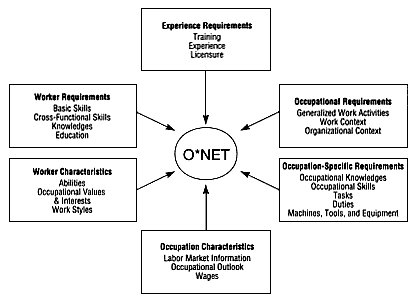
Figure 5.2
Descriptive domains of O*NET™ content model.
domain. The six domains contained in O*NET™'s content model are depicted in Figure 5.2 and summarized below.
Worker Characteristics Worker characteristics reflect relatively enduring features of the individual that might influence job performance. They include: (1) abilities, (2) values and interests, and (3) work styles. The ability constructs are predominantly drawn from Fleishman's ability requirements taxonomy and include basic cognitive, psychomotor, physical, and perceptual abilities, virtually all of which are known to have direct relevance to many jobs. Interests are described under the rubric of Holland's six-factor taxonomy, a typology that is extensively used in the career counseling literature and in conjunction with the current Dictionary of Occupational Titles. The six orientations include realistic, investigative, social, artistic, enterprising, and conventional (Holland, 1985). Occupational values are described using the 21 descriptors of the Occupational Values Questionnaire, which is based on the Minnesota Job Description Questionnaire (MJDQ)
(Dawis and Lofquist, 1984). The MJDQ is a unique values-type measure, in that it describes occupations relative to the needs they reinforce. These include such noncognitive, stylistic reinforcers as authority, creativity, security, and variety. Finally, work styles refers to personality characteristics that are either directly relevant to job performance or that may facilitate development of requisite knowledge and skills. The taxonomy of work styles was drawn from recent efforts to formulate models of adaptive personality characteristics encompassing five to nine factors—the seven first-order constructs in the model are achievement orientation, social influence, interpersonal orientation, adjustment, conscientiousness, independence, and practical intelligence.
Worker Requirements Worker requirements are the skills and knowledge that people develop as a function of education, practice, and experience. Skills are broadly defined as sets of general procedures that underlie the effective acquisition and application of knowledge in various domains of behavior. Thus, skills are viewed as more tractable and less stable than abilities, in that they can be enhanced more quickly through practice, and as more proximal to effective work performance than abilities, in that they are usually more closely associated with particular types or classes of tasks. The general skills and knowledge in the O*NET™ system are thought to be transferable across jobs and thus should play a progressively more important role as organizations seek to develop a workforce capable of adapting to new types of job demands.
Skills are organized into six broad categories likely to be involved in virtually all jobs. The first is basic skills—developed cognitive capacities that allow for learning or knowledge acquisition. Basic skills are divided into content skills, such as reading, listening, oral and written communication, and declarative knowledge, such as mathematical procedures, and process skills, such as critical thinking, learning strategies, and application of principles. The remaining five categories are termed cross-functional skills, skills that facilitate performance across a variety of settings. They include problem solving, social skills, technological skills, system skills, and resource management skills. In addition to basic and cross-functional skills, the occupation-specific
skills of each occupation must also be considered. They facilitate work across a variety of settings.
Knowledge is defined as a collection of discrete but related and original facts, information, and principles about a certain domain. Accordingly, types of knowledge were identified by determining basic types of concepts likely to be applied in a variety of different jobs (i.e., basic concepts involved in electronics, psychology, and transportation were considered, among other areas). In all, 33 broad knowledge areas were identified, with each area subsuming a number of more specific concepts. For example, biology might subsume cellular biology, ecology, genetics, and biochemistry.
Experience Requirements Experience requirements refer to training and career history events that influence knowledge and skill development. In contrast to skills, abilities, and knowledge, which describe the actual capabilities and competencies that an individual may bring to a job, variables in this domain either provide evidence that the person has actually performed the same or similar work previously (experience), or provide evidence that the person does or did possess the knowledge and/or skills necessary to perform the job (education, training, or licensure). Relevant work experience refers to job tenure in related jobs and training experiences in the work context, including apprenticeships, on-site training, and on-the-job training, whereas educational and licensure requirements focus on the amount and type of education or licensure required. The information in the experience domain may be used differently by various O*NET™ users. Those seeking jobs or career guidance would most likely be interested in the amount and type of education or licensure required, whereas potential employers would be most interested in evidence of competence signified by completion of a particular educational or training regimen.
Occupational Requirements Three major areas are included within the occupational requirements domain—generalized work activities, work context, and organizational context.
Generalized work activities are defined as an aggregation of
similar job activities/behaviors that underlies the accomplishment of major work functions. These broad types of job activities occur to different degrees in a very broad spectrum of occupations. The 42 generalized work activities included in O*NET™ were identified through earlier factor analyses of job analysis inventories, with generalized work activities subsumed under four general categories: information input, mental processes, work output, and interacting with others inside and outside the organization.
Work context variables describe the conditions under which job activities must be carried out. They include physical conditions (e.g., temperature and noise) as well as social psychological conditions (e.g., time pressure and dependence on others) that might influence how people go about performing certain activities. Although some occupations are carried out across a wide range of settings, many others can be said to have a typical work context, such as indoor/outdoor work, degree of danger and exposure to elements and hazardous materials, and degree of involvement or conflict with other persons.
Organizational context refers to variables that might interact with the operational environment and how people go about doing their work. For example, a flatter, more open organizational structure may require workers who possess a broader range of skills, placing a premium on problem-solving skills and an independent work style. O*NET™ organizational context variables were identified after a review of studies assessing the impact of organizational structure on how work gets done, with a special focus on high-performance organizations. Other examples of organizational context variables include industry characteristics; a range of characteristics of organizational structure and human resource systems and practices; organizational values; individual and organizational goals, processes and characteristics; and various features of role relationships, including conflict, negotiability, and overload. Given that incumbents of occupations reside in a wide variety of organizational and industry contexts, the eventual O*NET™ system will need to attend to multiple sources of data and will need to measure not only typical contexts but also the variety of contexts in which occupations reside.
Occupation-Specific Requirements Occupation-specific descriptors such as tasks, duties, machines, tools, and so on cannot generally be derived from literature reviews; they require input from job holders and their supervisors. In the prototype O*NET™ system, tasks were the sole occupation-specific variables included, and these tasks were primarily extracted from existing DOT descriptions, supplemented by other sources. Additional kinds of occupation-specific descriptors are being generated for occupations and organized according to the broader cross-job structure. So far, research suggests that identification of job-specific descriptors can be facilitated by the availability of a broader, cross-job organizing structure. Furthermore, it appears that by organizing the specific descriptors in terms of a broader common language, it becomes possible to apply job-specific information more efficiently.
Occupational Characteristics Occupation characteristics refer to economic conditions that shape the nature of the organization, its market, and employment conditions. Measures of these constructs are drawn into O*NET™ by linking with databases, such as those maintained by the Bureau of Labor Statistics, for example, the Occupational and Employment Statistics Classification System and the Current Population Survey. Many but not all of these variables, such as compensation and employment projections, will be of interest to both those considering or counseling about entry into specific jobs and those doing manpower and succession planning for organizations or industry trade associations.
Field Test and Prototype Evaluation The current O*NET™ is a prototype for an eventual fully developed system, the goal being a comprehensive, flexible occupational information and analysis system that is national in scope and that tracks changes in a way that provides a basis for future projections and the design of new jobs. The developers of the system, along with those working on its validation now, have several years of experience with O*NET™, including initial technical evaluations and valuable lessons learned about the potential problems, prospects, and policy issues associated with a full-scale system.
An initial set of studies was conducted with the O*NET™
instruments (Peterson et al., 1996, 1999). Data were collected from job incumbents in approximately 30 of an initial targeted sample of 70 occupations. In addition, occupational analysts rated 1,122 occupations on a subset of O*NET™ descriptors using information from the DOT to guide their ratings. Taken as a whole, the analyses of the prototype provide good initial support for the appropriateness of the O*NET™ content model and provide some guidance on its possible utilization. However, there is still much that could be done to further this understanding. The availability of the database of analyst ratings of 1,122 occupational units made many of the analyses possible. The available incumbent datasets, however, are still relatively small and may not be representative of all 1,122 occupational units. The conclusions we draw based on the data available to date must be reevaluated when a more complete dataset of job incumbents is available. A detailed discussion of the prototype evaluation is provided in Appendix A. This includes a discussion of cross-domain analysis, grouping operations, aggregation of descriptor variables, and linking job analysis to assessment using the job component validation model.
The Electronic Database The O*NET™ electronic database was created using the data collected during the field test of the O*NET™ questionnaires and the data provided by the analysts' ratings (Rose et al., 1996, 1999). A user interface was developed to allow users to access the data and become familiar with the system. Some of the functions that can be performed with this prototype system are illustrated in Figures 5.3 through 5.7. These illustrations apply only to the prototype software interface; it is intended that users develop specific interfaces for their particular applications. Also, the Department of Labor will issue updated databases and interfacing software as they are developed.
Figure 5.3 shows the opening screen O*NET™ prototype system, a typical Windows™ interface. Buttons along the top show the various functions that can be performed with the data, including browsing, matching, filtering, exporting, and printing. The titles of the first 20 occupations in the "Incumbent" database are displayed in the "O*NET™ Occupation Title" window; scrolling down or using the alphabetical tabs allows viewing of the rest of the occupational titles. Or one could directly
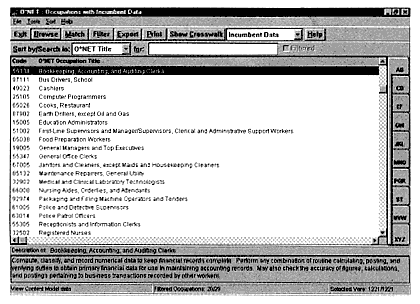
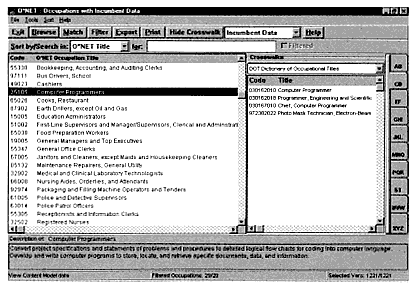
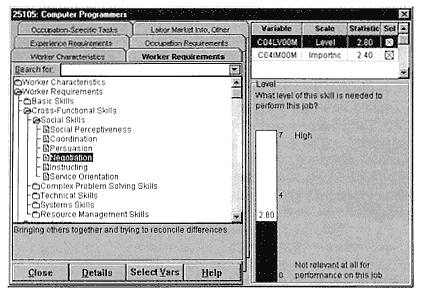
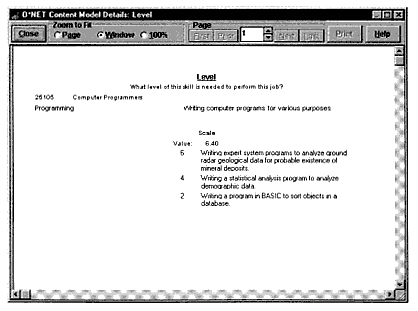
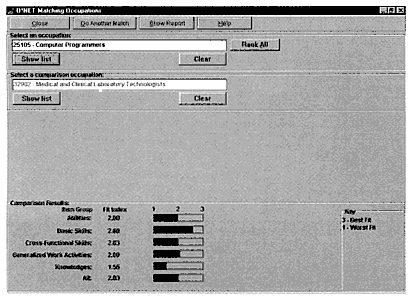
Figure 5.7
Computer display screen showing the match function of the O*NET™ prototype system.
search by entering the title or code of an occupation directly in the "Sort by/Search In" window. Note that the definition of the highlighted occupation is displayed in the window at the very bottom.
In Figure 5.4, the "Computer Programmers" occupational unit is displayed and the DOT codes corresponding to this unit are shown in the "Crosswalks" window, directly to the right of the O*NET™ title window. Cross-walks are available to a number of other systems.
Figure 5.5 shows the "browsing" function of O*NET™; here the "Negotiation" skill level rating for computer programmers is shown (it is 2.8 on the 7-point scale). This information was obtained by "drilling down" from the top of the O*NET™ job descriptor hierarchy, through "Worker Requirements," to "Cross-functional Skill," to "Negotiation." Note that an importance rating is also available for this skill.
Figure 5.6 shows the details of the rating scale anchors for "Programming." These are the actual anchors used by job incum-
bents in making the ratings of their jobs during O*NET data collection. A screen like this is available for any of the O*NET™ variables using level, importance, or frequency ratings.
Finally, Figure 5.7 shows the results of using the "Match" function to estimate the degree of similarity between "Computer Programmers" and "Medical and Clinical Laboratory Technologists." Similarities are computed using the level ratings, weighted by importance, for the abilities, skills, generalized work activities, and knowledge. The screen prototype shows the degree of similarity on a 3-point scale (1 = little similarity, 3 = high similarity). These pairwise comparisons are computed in fractions of a second and can be computed against all other occupations (but with more time required). This function was included in the prototype purely as an illustration of the potential capability of the O*NET™ approach; more research would be required to identify the best matching algorithm for particular purposes.
These figures depicting O*NET™'s prototype computer display screens illustrate its potential versatility due to its sophisticated electronic medium in contrast to a static dictionary like the DOT (although the contents of the DOT have been available in electronic format for some time). The data can be explored and played with; with the development of end-user applications, a large number of user needs could be addressed.
Advances In the committee's judgment, O*NET™ offers several important advances over previous systems in its job description variables and associated data collection instruments, in its electronic databases with job incumbent and occupational analyst ratings, and in the initial technical evaluations. First, O*NET™ offers the prospect of a system that brings together the most current category and enumerative systems and the most comprehensive descriptive analytical systems and makes the database readily accessible in electronic format. Coupled with its goal of being national in scope and its coverage of the economy, when fully developed it will be the first available system with these features.
Second, O*NET™ has a theoretically informed and initially validated content model with a more detailed set of job descriptors than other available systems, particularly if considered in a national context.
Third, the O*NET™ database can be accessed and used through multiple windows or modes, including not only entering with job titles or occupations at varying levels of hierarchical detail, but also entering at the level of work descriptors (i.e., knowledge, skills, abilities, other contextual factors). The latter window of access is extremely important in a world of work that is changing. It allows the user to build up inductively to the level of job or occupation, in contrast to systems that proceed deductively, starting with a job or occupational category that is nested in the past and may not be current in its ratings or job descriptive information. When fully developed, this will be a valuable feature for users wishing to depict presently emerging or newly designed jobs, or even to design a new occupation.
Fourth, O*NET™ offers a significant improvement over earlier systems, particularly DOT-based systems, in the ease of conducting cross-occupational analyses and comparisons.
Finally, the O*NET™ system, by utilizing the cross-walks supplied by the National Occupational Information Coordinating Committee, allows mapping to other major category and enumerative systems, including military classification systems. The O*NET™ system will include the revised SOC classification categories as its primary designation of lowest-level occupational units, although some of the SOC units may need to be further split—just as some of the current OES units were split in the prototype development effort. (O*NET™ occupational units were developed by analysts who estimated the similarity of occupations using a combination of DOT and OES information. The SOCRPC considered O*NET™ occupational units in revising the SOC categories, which in turn were adopted in some instances for use in O*NET™.) Given the apparent new widespread commitment of federal statistical agencies to use the revised SOC system, all such applications and data gathering efforts would in effect be seamlessly interleaved (or nearly so) with the O*NET™ categories and database. This would allow, for example, information collected in the Current Population Survey or the Occupational and Employment Statistics Surveys to be merged, providing continuous updates of selected occupational information in the O*NET™ database.
Military Occupational Specialties
Each branch of the military maintains its own occupational classification system, but cross-walks have been completed that relate each military occupational category to civilian counterparts in the DOT. In general, the military systems include occupations grouped within occupational families, with comprehensive lists of job tasks carried out in each occupation. Recent defense cutbacks have led to serious reexamination of the purposes and methods used by the military to conduct occupational analysis and classification (Bennet et al., 1996; Sellman, 1995). One promising alternative is to apply the methodology of O*NET™ to classifying military occupations. Chapter 6 takes up the discussion of the Military Occupational Specialty System and the application of O*NET™.
Assessment
O*NET™ in conjunction with SOC represents the latest developments in enumerative and descriptive systems. In this section, we focus on how well such systems capture and help track changes in work contexts and content. In the committee's view, a system such as O*NET™, when fully developed, can be effectively used to meet the needs of the changing workplace.
The changes in the world of work raise two types of issues for occupational analysis: (1) what information is gathered about work and (2) how and from whom the information is gathered. The first is referred to as content, the latter as process. Figure 5.8 depicts the changing elements of organizations and work identified in this book and guides the discussion here. This figure uses the framework provided in the introduction to summarize key findings related to environmental forces, organizational structure, worker attributes, work content and structure, and work outcomes.
There are several important factors to consider in assessing an occupational analysis system. The first is how well it incorporates the influences of environmental forces on work context and content. For example, as shown in the figure, employers have a wide range of choices in modifying their organizations to take
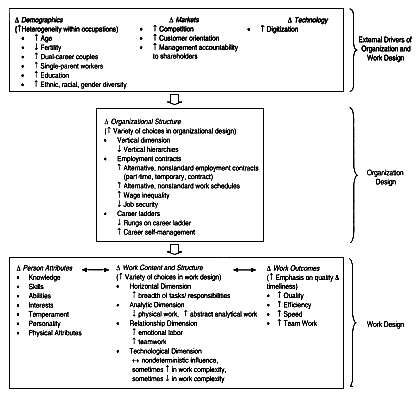
Figure 5.8
Changing elements of organization and work design.
into account the heterogeneity resulting from shifts in demographics, markets, and technology. An effective occupational analysis system must also be able to adequately reflect the changing content of work. As organizations shift toward self-managing teams to organize individual workers, there is a decrease in the vertical dimension and an increase in the horizontal dimension of work. As the nature of work changes, so do worker requirements—that is, the character of the job influences the attributes of the people who will fill the jobs (represented as the persons component in the figure). It is important to note that this is a two-way relationship, as the available talent pool can also influence the design of the job.
Content Issues and Requirements
We have made the case throughout this book that work is changing: it is becoming more technical and analytical due to the increased availability of digital information technology; it is becoming more team-based due to organizational restructuring; and it is becoming increasingly customer oriented. We have also concluded that the workforce is becoming more diverse, that there are more nonstandard employment contracts, and that people are moving between occupations with more frequency than in the past. All of these changes have potential implications for the tools and methodologies of occupational analysis. Since we expect changes in work to continue, there is a need for a system that can incorporate changes as they occur.
Current changes indicate that job incumbents must have greater abstract analytical knowledge. As work is increasingly performed in teams, teamwork skills are becoming more critical. The rise of the service economy requires workers who are skilled in the domain of emotional labor. At the same time, physical labor is declining as a component of many occupations.
O*NET™ provides the most comprehensive set of person, task, and organizational descriptors of any repository of occupational analysis information (see Appendix A). The O*NET™ descriptor dictionaries were assembled after exhaustive reviews of the literature on the definition and measurement of worker and task characteristics. In the domain of cognitive abilities alone, there are seven categories (i.e., verbal, idea generation and reasoning, quantitative memory, perceptual, spatial, and attentiveness) and several specific abilities within each category (e.g., within the idea generation category, problem sensitivity, deductive reasoning, and inductive reasoning are three of seven abilities). Each person attribute is defined and accompanied by rating scales for the level and importance of the attribute for job performance. With regard to the increasing orientation toward customers and the resulting increase in jobs with emotional labor and teamwork, for example, O*NET™ offers a promising avenue for both classification and research by including an interpersonal orientation category with elements such as cooperation, concern for others, and social orientation. In the committee's judgment, the
O*NET™ dictionaries, because of their comprehensiveness, provide the best single source of descriptors for both workers and jobs.
Although the O*NET™ database is far from complete, and it remains for future research to determine if its descriptors are sufficient to capture the nuances of changes in work, the committee regards the potential of O*NET™ as superior to any alternative enumerative or descriptive occupational classification system. Its database and viewers will permit searching, sorting, and classifying on the basis of job titles, and also on the basis of hundreds of other building-block work descriptors in the content model. Although these capabilities are not exclusive to O*NET™, they are far more advanced in O*NET™ than in other occupational information systems. They are at the heart of its design and represent the real enabling potential of the system with respect to changes in the nature of work. When fully developed, O*NET™ will not only assist in new job design but will also serve as an analytic framework for monitoring change in the nature of work. The scientific state of the art of these relatively young methodologies needs to be advanced—not only do the statistical issues associated with clustering need illumination, but also theoretical and conceptual guidance is needed to inform clustering of occupations, based on these kinds of work descriptors. As evidence accumulates about the changing nature of work, difficult decisions about the implications of these changes for O*NET™ work descriptors and structure will have to be addressed.
Process Issues and Requirements
Changes in work have implications for such issues as whom to sample when analyzing a job or occupation, how to reach them, which questions to ask, what survey technology to use, and how often to update the analysis. The increasing diversity of employment contracts, for example, raises questions about who should be considered to be a job incumbent and therefore included in the analysis; employees with all types of employment contracts who work either on- or off-site should presumably be included. As boundaries between jobs become more permeable and duties are increasingly shared among team members who have different job
titles, the question of whom to ask for what information becomes more salient, as does whether the proper unit of occupational analysis is the team member or the team. Traditional approaches to job analysis commonly rely on supervisors as well as job incumbents as subject-matter experts. In many organizations today, supervisor subject-matter experts have been replaced by self-managing teams.
These issues pose challenges to occupational analysis, although most if not all of them can be met with adaptations of methodology. An important question underlying these process issues, however, is the status of job titles as indicators of work performed. O*NET™ was specifically designed to permit access to occupational information by avenues other than job titles, in recognition of the limitations of titles in today's workplace. The committee regards this as an important conceptual advance in occupational database technology and one that is important in characterizing the changing nature of work.
Other changes in work discussed in the preceding chapters have potential implications for occupational analysis processes. For example, the discussion of emotional labor in Chapter 4 also raises what may be more subtle questions about sampling procedures in occupational analysis. It is standard practice to gather task and worker attribute ratings from supervisors as well as from job incumbents. As suggested by the research literature, if emotional work processes are performed differently by men and women, or are perceived differently by male and female supervisors (e.g., emotional behaviors regarded by male supervisors as voluntary are seen by female supervisors as prescribed), then these differences are likely to appear in job analysis ratings. This in turn has potential implications for such procedural details as sampling of subject-matter experts, rating instructions, and survey contents.
Conclusions
The quality and usefulness of particular occupational structures and data can be summarized by considering two related questions: Is the world of work adequately represented in the occupational information system in question? Can system users
successfully apply the information to achieve their purposes? In this final section, we consider how these questions can be answered in terms of O*NET™, the most recent attempt to develop a comprehensive occupational information system.
Representativeness of Occupational Structures and Data
Occupational information systems are created from data about what people do at work. The quality of an occupational information system is therefore determined by how well it represents what workers do and how their work is organized. Data about what people do at work are typically gathered using occupational analysis tools and methodologies. The quality of an occupational information system built from such data therefore rests fundamentally on the adequacy of the instruments and techniques used to gather the data and the adequacy of the samples on which the data are gathered.
Occupational information systems are derived from samples of subject-matter experts defined in various ways. O*NET™ developers gathered data from incumbents of 30 occupations employed by a stratified random sample of 1,240 establishments listed in the Dun and Bradstreet files. Whether or not this is an adequate sample depends on the inferences the developers wished to draw from the data. Before a representative sample can be drawn, the population of interest must be defined and a sampling plan for gathering data must be specified. In the absence of these, the adequacy of a sample cannot be determined and valid inferences about a population cannot be reached.
The term validity refers to the correctness of inferences about a population derived from observations (measurements) of a sample of that population. For inferences to be valid, several components must be in place: the research question must be formulated (e.g., what do working U.S. citizens do for a living?); the population must be defined (e.g., the U.S. working population); a sampling plan must be established (e.g., a random sample of 10,000 U.S. households with all working household members included); measurements must be taken that are relevant to the topic (e.g., using an established job analysis instrument); the sample must be realized (e.g., all potential respondents partici-
pate); and the measurement data must be correctly analyzed and interpreted.
Data collection to complete O*NET™'s database will continue for the next several years. Any evaluation of the representativeness of the current database is therefore premature. If data collection for the O*NET™ prototype was a test case of procedures for the full database, however, several implications for future data gathering can be inferred. The establishment-based sampling plan yielded only a 27 percent participation rate for employers who initially agreed to participate. In addition to remedies for increasing this rate (see Appendix A), we also suggest that the question of representativeness of the data be considered. If O*NET™ is intended to encompass all forms of work activity in the U.S. economy, then data collection based solely on an establishment-based sampling plan will probably be inadequate. An employer-based sampling plan is likely to yield a sample of employees, that is, people holding traditional full-time jobs. It is less likely to include part-time, contract, temporary, job-sharing, telecommuting, and self-employed workers than a sampling plan based, for example, on U.S. households. To draw correct inferences about the U.S. working population from an establishment-based sample, one would have to know how the employer population differs from the working population as a whole.
Most job analyses are conducted locally, in a specific organization to support particular human resource applications. Some job analysis databases are designed to be national in scope to provide normative comparisons for client organizations (e.g., the Position Analysis Questionnaire). Historically, the U.S. Department of Labor has systematically sampled employers and jobs in order to maintain the currency of the DOT. There is thus considerable precedent for gathering occupational analysis information by sampling establishments; indeed, this has been the norm. Nevertheless, one must be careful in drawing inferences from such a sample. Occupational information contained therein probably generalizes to work as it is done in establishments that participate in such surveys (which may be most of them); it probably does not generalize to the U.S. workforce as a whole. Establishment-based samples can contribute information about how work is organized within organizations, a topic of increasing importance
given the increasing reliance on teams and alternative employment contracts. However, the committee is unaware of any systematic establishment-based occupational surveys that gather detailed information about work organization.
If work is changing (due to different uses of technology, a greater diversity of employment contracts, demographic changes of workers, etc.), then adequately representing change in occupational information systems requires an adequate sampling plan for measuring change. At a minimum, this would require repeated measurements of a representative sample of the U.S. workforce. A cross-sectional plan repeated periodically would be adequate to identify changing trends and patterns of work. A longitudinal sampling plan including the same respondents over time would be needed to track the changing career paths of workers.
Since the nature of the sample determines the type of data collected and its usefulness for various applications, and an adequate sampling plan is critical to the next stage of O*NET™ development, in the committee's judgment, high priority should be given to evaluating the appropriateness of alternative sampling strategies.
Usefulness of Occupational Structures and Data
Issues of the usefulness of an occupational information system like O*NET™ include the quality level of the data, enabling potential for coping with change, cross-walks among related systems, system maintenance and control, and further technological developments.
Validity and Reliability Studies
Initial validity and reliability studies were undertaken during the first three years of O*NET™ prototype development (Peterson et al., 1996,1999). Such research is important to establish the measurement integrity of the instruments and the reliability of the data gathering procedures. In the committee's view, these studies should continue and should be expanded to include laboratory and field studies comparing various conditions of data collection, such as differing demographic makeup of job experts,
expanded contents of questionnaires (e.g., new or additional knowledge, skill, and ability), mode of data collection (paper and pencil questionnaires versus computer-administered or Internet-administered), and studies designed to further illustrate the validity and utility of O*NET™ data for various applications. Practical issues concerning reading level and length of O*NET™ questionnaires should also be further investigated from the stand-point of gathering incumbent data for the nearly 1,100 occupations remaining.
Scientific Quality of the Enabling Potential of the System
Because of its relational database structure, O*NET™ not only can assist in new job design/redesign but also can serve as an analytic framework for monitoring changes in the nature of work. Looking to the long-term future, one can envision a decentralized data collection design in which a multitude of individual users from across the economy—perhaps each with different purposes and level of use of the system—might contribute incumbent data on job descriptors organized into a system for identifying new jobs and work arrangements and regularly updating the information in the database. Dramatic changes in the uses of information technology in the workplace and at home increasingly bring such a system closer to the present. As with the 1998 SOC, accommodating new occupational information that has implications for content and structural changes to an existing database is a technical challenge that should be addressed by a standing O*NET™ Revision Policy Committee. We advise that such a mechanism be established.
Coordination with Other Analysis and Classification Systems
At present there appears reasonable prospect of the coordinated use of a single occupational classification system (the 1998 revised SOC) by various federal agencies, one that would be seamlessly interleaved with O*NET™. The committee fully endorses such coordination. For mappings or cross-walks to other systems (i.e., historical, international, private-sector), it is important to know the scientific quality of the cross-walks and the locus
of responsibility for their generation, maintenance, and quality control.
Military and Civilian Systems
The military and civilian occupational analysis and classification systems are presently integrated through the use of cross-walks. The revised SOC more fully integrates military occupations into the civilian sector. However, the descriptive information on military occupations is largely restricted to lengthy lists of discrete tasks that do not generalize across occupations. Some work has been completed in the Air Force using more generalized job descriptors like those in O*NET™ to analyze military occupations (Ballentine et al., 1992; Cunningham et al., 1996). O*NET™, if used by the military services, could serve as a common language to describe military and civilian occupations, enhancing the ability to move personnel smoothly across both sectors in cases of national emergency, or even for the relatively more common task of placing veterans into civilian occupations. Some questions surrounding this issue include: How well does O*NET™ meet military needs going into the next century? What additions (or deletions) to O*NET™ would be required to make it a practical and valuable tool for the military? What synergies can be attained by using the same system in military and civilian sectors?
Ownership, Control, and Liability
Who will own and maintain quality control over future editions of O*NET™? A federal entity? A private but federally funded entity? A private entity? What are the legal implications—if occupational classification technologies are misused, who will be liable? What are the costs of fully developing and maintaining O*NET™? Who will pay? What are the ownership, privacy, and liability implications for users and for applications that are based on O*NET™ databases and methodology? Answering these questions will be part of the full implementation of the system. We urge the U.S. Department of Labor to address and resolve these issues soon.
Moving from Prototype to an Operational System
As we have emphasized elsewhere in this chapter, moving O*NET™ from a prototype to a fully operational system is a significant undertaking. Data collection is paramount in this regard. Some of the more important issues in data collection include identifying samples of establishments and data sources (incumbents, analysts, or others); securing cooperation from establishments and sources; accounting for important contextual variations within occupations; and appropriately aggregating data for use in the O*NET™ database.
These issues and data collection, in general, must be approached in a systematic manner. Clearly, there is a requirement for a long-range plan that identifies which occupations will be targeted for data collection at what times, both for collecting the original O*NET™ data and for updating that data on a regular basis. Such a schedule can be difficult to adhere to, but it seems essential to do so if the database is to maintain integrity and credibility with users. Probability sampling of establishments and data sources is the most desirable method for ensuring the representativeness of the obtained data, and it is perhaps the best way to ensure that contextual variations are accounted for in the data. However, simple probability sampling approaches may not always be feasible. For example, the distribution of members of some newer occupations across establishments may not be well known. Also, as we note elsewhere, some occupations may not be easily accessed through establishments because individuals in those occupations are primarily self-employed. More targeted approaches may be necessary in such cases. Such approaches could include the use of unions, professional associations, business groups, or other institutions to assist in identifying samples and data sources and in securing cooperation from members of the occupation. Given that random sampling, stratified random sampling, and nonrandom targeted sampling approaches are likely to be used and that, at any given point in time, data sources may include occupational incumbents, supervisors, job analysts, or some other type of occupational expert, it seems important that extreme care be taken in both aggregating data to the individual occupational level and in labeling the approaches taken and sources used in the collection of data for occupations.
There are approximately 1,100 occupations anticipated in the O*NET™ database if, as planned, the Standard Occupational Classification forms the basis for the O*NET™ occupational classification scheme. Using the standard of five years for currency of occupational information, it becomes clear that the populating and maintenance of the O*NET™ database is an enormous undertaking. If all occupational information is outdated after five years, then data for about 220 occupations must be collected and integrated annually. Of course, it may be that many occupations will not require updating on this frequency, but others may require more frequent updating. It seems that a systematic method of monitoring changes in occupations to identify "out-of-sequence" needs for updating, as well as a regular schedule for updates, would be essential. All of these activities are both technically and practically feasible given adequate resources.
An essential element is securing the cooperation of establishments and data sources identified as possessing the knowledge to provide data for O*NET™. Usually, a job analysis is carried out for an organization that, for one reason or another, wishes to obtain information immediately. This ensures a fairly high level of cooperation from establishment(s) and people in the organization knowledgeable about the occupation or occupations that are the foci of the analysis. Such is not the case for the O*NET™ database. It is a national database intended for widespread use by a variety of users and, as such, constitutes an extremely valuable resource for many institutions, organizations, and individuals. However, for each individual establishment and data source, randomly or otherwise selected and asked to cooperate in providing data, there is no immediate payoff for offering the access to data sources and time taken to provide information. In a few years, the incentive to cooperate may be the visible utility of the O*NET™ information in a variety of applications useful to schools, government organizations, private-sector businesses, individuals, unions, and others. Unfortunately, that situation does not yet exist. Therefore, it may be necessary to consider a variety of more immediate incentives to encourage cooperation—for example, money, provision of services such as customized data analysis and reports, or symbolic recognition of some sort (e.g., an O*NET™ all-star organization).
New Technological Horizons
As of this writing, O*NET™ has just been released in its first operational version, called O*NET™ 98. The U.S. Department of Labor anticipates that O*NET™ 98 will enable DOT users to prepare for O*NET™ in the 21st century, when it will formally replace the DOT. The capabilities of O*NET™ as an electronic repository of occupational information, in conjunction with the Internet as a global communications medium, expand the potential of the computer software industry to serve the needs of users of occupational information through the development of highly customized applications interface software. It is also possible, and therefore likely, that the technologies that will facilitate access of the user community to O*NET™ will also be capable of providing information to the Department of Labor (or other O*NET™ maintenance entities) about the uses of O*NET™ data. These technologies could also be used in data gathering to update O*NET™'s databases.
Throughout this volume we have repeatedly emphasized the need for up-to-date occupational information systems that serve the needs of job seekers, career counselors, training specialists, public-and private-sector employers, and state and federal labor and manpower specialists. Occupational information that is broadly encompassing of work as it is performed by a substantial majority of the American workforce, coupled with user-friendly technologies that make the information accessible to users, will facilitate achievement of such objectives as designing new jobs and redesigning existing ones, combining similar jobs or splitting overly complex ones, creating teams and cross-training members, and maintaining systems for staffing, training, and compensation.
This new technical potential may fundamentally alter what is accomplished with occupational information, how it is accomplished, and by whom. Furthermore, technology is likely to keep changing how these systems run and who runs them. For example, making occupational analysis systems available over the Internet may change the way employers recruit and screen candidates, and it may change who does the recruiting and screening. America's Job Bank is an example of an employment service sponsored by a partnership between the Department of Labor and the
state-operated Public Employment Service that has been available on the Internet for several years (at www.ajb.dni.us). The number of Internet sites that provide similar services, targeted to particular geographic regions, occupations, and industries, is proliferating rapidly (e.g., the ComputerJobs Store, Inc., sponsors a web site for those seeking jobs in the computer industry at www.computerjobs.com). As we discuss in detail in Chapter 6, similar challenges face the U.S. military as it adapts its occupational structures to new technologies and changing missions. For example, the U.S. Army task lists are 50 percent shorter than in the past, and they are now updated by training school personnel rather than Army Research Institute staff.
The committee anticipates that the availability of O*NET™ will accelerate the development of applications software available from private-sector vendors to serve the needs of the user community. It seems likely that increasing use of O*NET™ databases will increase pressure on the Department of Labor to complete the full database and maintain its currency. It also seems likely that occupational software applications will proliferate, with competitive pressures of the marketplace determining product success. We note that the same phenomenon occurred for products based on the DOT; however, because of the much greater scope of work descriptors of O*NET™ and its electronic medium, we expect that the number and variety of occupational software products available within a few years will be much greater than in the past.
Research and developmental work are needed in both the public and private sectors before these predictions become reality. However, the advent of O*NET™ and the Internet make some version of this scenario virtually inevitable. We conclude with speculations about how O*NET™, when coupled with applications software, could satisfy user needs and, in so doing, contribute to national economic development. Specifically, we provide two brief illustrations of how O*NET™-based occupational information technology could be used to address today's workforce challenges.
Consider the cases of Sal Carpinella and Stan Adamchick, two workers displaced by a defense shipyard in Philadelphia. They found their way into new jobs with the help of career search and
job placement software available at the career transition center on base. If Sal and Stan were to face a similar situation again, they could, in the not too distant future, conduct their career searches with their home computers and the Internet.
Sal, who wished to remain an electrician, could request a listing of job openings for electricians in the Philadelphia area. He could also search by O*NET™ occupational code number, or SOC code, to produce a somewhat broader range of options (jobs that require the skills of an electrician but that have a different title would also appear) and could filter the solution further according to employer requirements (e.g., amount of related work experience required, work schedule), job characteristics (e.g., whether the work is performed in a team context, the type of equipment to work on), or other features of work described by the hundreds of work descriptors in O*NET™. Once suitable prospective employers were identified, Sal could electronically transmit his resume to them.
Stan's use of the same Internet occupational database might be quite different than Sal's, due to his desire to change career directions. Stan could explore his options by filtering the database for occupations that match his interests (e.g., thinking creatively) and skills (e.g., troubleshooting problems with electrical systems). He could then investigate the occupations that meet his criteria in great detail, browsing the work descriptors for each occupation. Finally, he could explore the job prospects in his geographic area by searching, as did Sal, for employers with job openings in his chosen field.
Consider another scenario, the case of Tom Johnson, a business unit manager of an auto plant. His company has evolved its vehicle assembly process from a traditional assembly line operation with narrowly defined sequential jobs to team-based assembly with closely coordinated jobs. Workers are now organized into assembly teams and cross-trained to perform a broader array of tasks. This process redesign has paid off in fewer defects per vehicle. Tom is contemplating additional changes by linking technical support staff (helper-mechanics, industrial engineering technicians) more closely to teams, perhaps using a modified matrix model. He is uncertain whether it would be more efficient to add competencies to assembly teams by adding members with de-
sired skills, or to expand the skill sets of team members via training.
Tom and his assistant Jill Turbanski use a software application based on O*NET™ to help answer his questions. They begin by identifying the jobs in the O*NET™ database that correspond most closely to the assembly team and staff support jobs, considering such factors as title, tasks performed, and tools and equipment used. Examination of the broad array of descriptors in the O*NET™ database, however, leads to a discussion between Tom and Jill about which factors are most important to consider in deciding between the alternatives. Jill suggests that a job matching function in the database can be used to explore the similarities and differences between the jobs. Before running the match, they decide to limit the factors included to the specific knowledge, skills, and abilities required for each job. They know that the tasks performed by incumbents of each job are different (hence the idea to add capabilities to the team), so there is no point in comparing jobs on tasks performed. Likewise, there is little need to consider other more general types of work descriptors for this purpose, such as generalized work activities and personality and interest variables, as the issue is work process redesign rather than staffing or vocational counseling. Comparing jobs on knowledge, skill, and ability requirements is the appropriate level of detail, as it addresses the capabilities of the workers to perform the work.
Tom and Jill focus on the top six factors in each category for each job, with factors ranked according to level or amount of each required. In a nutshell, this analysis reveals that the similarities between the assembler and helper-mechanic jobs are much greater than those between the assembler and industrial engineering technician jobs. Assembler and helper jobs require similar amounts of knowledge of mechanics (i.e., machines and tools), engineering and technology (i.e., uses of equipment, tools, and mechanical devices), building and construction (i.e., materials, methods, and appropriate tools), and mathematics (i.e., numbers, their operations and interrelationships). Likewise, they correspond closely on the skill levels required in the areas of operation and control (i.e., controlling operations of equipment), installation (i.e., installing equipment, machines, wiring, or programs), and equipment selection (i.e., determining the kind of tools and
equipment needed). Finally, they require similar amounts of ability in manual dexterity (i.e., making coordinated hand movements) and near vision (i.e., seeing details at close range). There is little correspondence between the knowledge, skills, or abilities required of assemblers and industrial engineering technicians.
Tom decides to increase the equipment maintenance and repair skills of the assembler teams by training selected team members. He increases the capabilities of the teams to monitor and optimize their work processes by designating an industrial engineering technician as a part-time member of each team. Before instituting these changes, Jill will gather local data on specific knowledge and skills of both assembler and engineering tech jobs at the plant to supplement O*NET™ information. These data will be used both as a check on O*NET™ results and, being more detailed, in designing the equipment maintenance training program for assemblers.
Final Comment
It may be that O*NET™ and the SOC will receive adequate human and financial resources and will fulfill the objectives that they have been designed to meet. Even if they do not, however, we believe the nation needs an accurate, current occupational classification system that encompasses both occupational categories (the SOC role) and occupational attributes (the O'NET™ role) as depicted in Figure 5.1. Individuals and institutions need the information in such a system to plan their futures in the changing world of work, and the development and maintenance of the information in the system is unlikely to be successfully achieved by the private sector. The private sector will no doubt do a superb job of shaping the information resident in the system to meet a wide variety of anticipated and unanticipated consumer needs, but the resources necessary to collect, screen, and integrate occupational data into the system in a timely fashion are properly found in the public sector. A timely and flexible national occupational information system, although a monumental undertaking, is an indispensable public resource and should be supported by public funds.
If these data collection and quality control functions are left to
the private sector, it is the committee's opinion that the result will be a patchwork of databases of uneven or unknown quality. Larger, better-financed private-sector organizations or industry sectors may develop occupational information systems to meet their needs, but these systems would, naturally enough, cover only those occupations and descriptive variables that would be of most current interest to them. They may, again understandably, maintain proprietary control over the information to retain a competitive edge. Smaller organizations and sectors may have no systems at all. Trying to put together a national occupational database by building on such a collection of independently developed databases is doomed to failure. Developing and maintaining a common, national occupational database allows private organizations and individuals to apply their resources to augment, enhance, and build on the national information to compete in a global marketplace. Competition is not eliminated, it is likely to be raised to another level—a good thing for the entire country.
One missing element in the present vision of an occupational information system is a closer tie-in of the day-to-day labor transactions and the occupational information system. If daily recruiting, hiring, and firing activity could be linked with occupational categories and, in turn, with the associated skills, abilities, and other attributes of the categories, then trends in desired or required occupations and occupational attributes could be more dynamically monitored. Furthermore, historical data could be accumulated that would be extremely useful for disentangling relatively minor or momentary trends from longer-term shifts in the world of work, something that we have shown to be a difficult undertaking. It seems to us that many of the pieces for such a linkage are already or nearly in place.
To achieve a dynamic, accurate occupational information system, some compromises will no doubt need to be made between breadth of coverage (numbers of occupational categories), depth of coverage (number and types of attributes of occupations), and currency of information (frequency of updating). One possible compromise that strikes us as attractive is to forgo the routine, random sampling of small-frequency occupations or occupations that are extremely difficult to access. The cost per bit of informa-
tion may be extremely high for such occupations. Such occupations should not be ignored, especially not those that are thought to be emerging or fast-growing occupations, but more directed efforts at data collection that are less costly should be considered. For example, it might be possible to sample from locations where the occupations are known to exist in some numbers and to use matrix sampling of occupational attributes (rather than collecting data on all attributes).
Making predictions about the future is hazardous in any field, and the future of occupations is no exception. However, the existence of an accurate, comprehensive, current occupational database, especially if it is linked to labor transactions as mentioned above, should provide an empirical base for making statistical, algorithmic projections as well as a solid footing for subjective estimates by occupational experts of all stripes.


