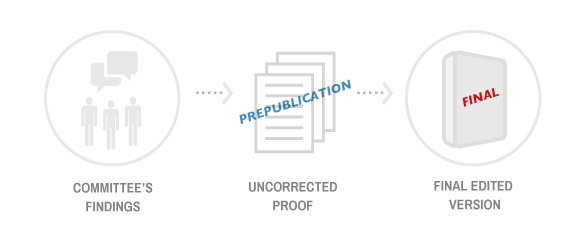
Below are the first 10 and last 10 pages of uncorrected machine-read text (when available) of this chapter, followed by the top 30 algorithmically extracted key phrases from the chapter as a whole.
Intended to provide our own search engines and external engines with highly rich, chapter-representative searchable text on the opening pages of each chapter.
Because it is UNCORRECTED material, please consider the following text as a useful but insufficient proxy for the authoritative book pages.
Do not use for reproduction, copying, pasting, or reading; exclusively for search engines.
OCR for page 132
How SufQty NQt Providers OrQ
Adopting to the NEW EnVIrOnmQn!
Safety net providers have actively been working to adjust to the new
health care environment, and many have become important participants
in a wide range of managed care arrangements (Kaye et al., 1999; Solloway
and Darnell, 1998~. As has been stated elsewhere, Medicaid programs
vary widely across the states in terms of their eligibility requirements, the
depth and breadth of benefits that they provide, their provider payments,
and their administrative structures and processes. The diversity of their
populations, the political and economic environments, their experience
with managed care, and their health system infrastructure will influence
the ways in which states develop Medicaid-like programs and how these
programs will position safety net providers to participate and compete in
the new health care marketplace (Gold, 1999; Gold et al., 1996~.
A number of Medicaid managed care programs and local market
conditions have proved to be particularly instrumental in shaping the
direction of safety net providers' responses to the changing marketplace
and potential for success (Baxter and Mechanic, 1997; Harrington et al.,
1998; Norton and Lipson, 1998~. The major relevant characteristics of Med-
icaid managed care programs of importance to safety net providers in-
clude (1) the extent of mandatory full-risk contracting, (2) the scope and
speed of implementation, (3) the degree of contracting and other protec-
tions for safety net providers (e.g., procedures for enrollment and default
assignment), and (4) payment policies. Key market factors of relevance to
safety net providers include (1) the level of Medicaid managed care pen-
etration, (2) the degree of competition for Medicaid patients, (3) the scope
of consolidation and conversion in the local health care market and the
132
OCR for page 133
ADAPTING TO THE NEW ENVIRONMENT
133
level of for-profit health care organization, (4) the relative strengths and
weaknesses of local and state policies that support of vulnerable popula-
tions, and (5) safety net providers' relative market share.
Researchers at the Alpha Center surveyed safety net providers in 10
communities, representing 6 states, to assess how these providers per-
ceived the relative importance of market forces and Medicaid program
policies on their ability to succeed in the more competitive environment
(Alpha Center, 1998~. Survey results showed substantial differences in
how hospitals and other safety net providers view the influence of these
different factors in obtaining contracts. Hospitals saw local market condi-
tions and their own organizations' strengths and weaknesses as the key
determinants of contracting success. Federally qualified health centers
(FQHCs) and local health departments (LHDs) also recognized the im-
portance of their organizations' strengths and weaknesses but viewed
state and local Medicaid policies as more influential to their survival.
States have adopted managed care to control their Medicaid budgets,
expand access to health care for the uninsured population, and make
health care providers and health plans more accountable for performance
and quality (Horvath et al., 1997; Iglehart, 1995~. Individual states may
prioritize these overall objectives differently (Wooldridge et al., 1997~. For
example:
· The state of Hawaii, with the lowest number of uninsured people
in the nation, moved to mandated Medicaid managed care enrollment
primarily to slow the growth of Medicaid costs and to improve the inte-
gration of Medicaid and other state programs for low-income vulnerable
populations.
· Rhode Island's Section 1115 waiver program (RIte Care) was imple-
mented to expand benefits and coverage for uninsured children and preg-
nant women with family incomes of 250 percent of the federal poverty
level. As part of the waiver, a health plan of community health centers
(CHCs) with a long track record of serving vulnerable populations was
established.
· Tennessee moved rapidly to Medicaid managed care to avert a
major budget crisis and to address the problem of large numbers of people
without insurance.]
1As this report was being completed, TennCare's future fiscal viability was in significant
jeopardy unless major funding to operate the current $4.3 billion program covering 1.3
million people became available. This latest crisis in the program's stormy 6-year history
was generated by a December, 1999 announcement by Blue Cross Blue Shield that they
would no longer participate in the program unless the state assumes some of the risk of
covering TennCare enrollees. Blue Cross covers about half of TennCare's enrollees (Conover
and Davies, 2000~.
OCR for page 134
134 AMERICA'S HEALTH CARE SAFETY NET: INTACT BUT ENDANGERED
These different priorities can influence both how states implement
their managed care programs and how safety net providers respond to
new requirements and incentives.
Given the diversity of the nation's safety net, few generalities can be
made about how and in what form safety providers are participating in
managed care. However, the highly competitive health care marketplace
is making it virtually mandatory for safety net providers to do so
(Harrington et al., 1998; Lipson, 1997~. With most states (the exceptions
are Alaska and Wyoming) having implemented managed care programs,
nonparticipation in managed care is a viable option only for safety net
providers that have a unique market niche or that operate in immature
managed care environments. This chapter reviews the current Medicaid
managed care marketplace, some of the leading strategies safety net pro-
viders are pursuing to respond to managed care, the key elements of
successful adaptation to managed care, and the major lessons being
learned.
THE CHANGING MEDICAID MANAGED CARE MARKETPLACE
Although federal Medicaid regulations require states to ensure access
to traditional safety net providers, managed care programs can nonethe-
less reduce the levels of Medicaid beneficiary utilization of safety net
providers and the Medicaid revenues for these providers through a vari-
ety of means. Program design features, special waivers, or ambiguous
state contractual requirements can serve to limit safety net provider par-
ticipation in managed care programs (Alpha Center, 1998; Rosenbaum,
1997~. Given the continuing pressure to increase states' flexibility in de-
signing managed care programs, existing financial and guaranteed-access
protections may be substantially modified or diminished.
Additional pressures for safety net providers transitioning to man-
aged care have come from the conversion in many states from the volun-
tary to mandatory enrollment of Medicaid beneficiaries in managed care
plans.2 In some markets this transition has taken place very rapidly, pro-
viding less time for safety net providers to prepare and to solidify rela-
tionships with patients before the competitors of safety net providers try
to enroll patients in the competitors' plans (Harrington et al., 1998~. The
design of state enrollment and assignment policies can also facilitate or
hamper safety net providers' relationships and participation in managed
care.
2In 199S, 37 states (82 percent of states with risk programs) reported mandatory rather
than voluntary risk programs (Kaye et al., 1999~.
OCR for page 135
ADAPTING TO THE NEW ENVIRONMENT
135
An important aspect of the changing Medicaid market is the change
in the trend in managed care plans' participation in Medicaid. Between
1993 and 1996 the expansion of state Medicaid managed care programs
together with increasing competition for existing market share attracted
the interest of many large commercial plans that had not previously par-
ticipated in Medicaid (Felt-Lisk and Yang, 1997~. During that period the
number of commercial plans participating in Medicaid increased from
160 in 1993 to 335 in 1996, resulting in a net gain of 189 plans participating
in Medicaid (some plans left the market or were acquired by other plans).
Since 1996, however, a number of large commercial plans have exited this
market, citing low reimbursement rates, the difficulties and high cost of
administering Medicaid programs, and the complexity of Medicaid regu-
lations (BNA's Health Care Policy Report, 1998; Hurley and McCue,1998~.
A 1998 follow-up study in 15 high-volume Medicaid managed care mar-
kets by Felt-Lisk (1999a) showed a 15 percent decline in the rate of partici-
pation in Medicaid by commercial plans from 1996 to 1998.
The exit of commercial plans has been accompanied by rapid growth
in the number of Medicaid-only or Medicaid-dominated plans. These di-
verse plans tend to be smaller; more than half of these plans have less
than 25,000 members, and only 15 percent have more than 50,000 enroll-
ees (44 percent of all full-risk managed care organizations have more than
50,000 enrollees) (Felt-Lisk,1999b). Approximately one-half of these plans
are provider based, with hospitals being the most common type of pro-
vider-owner. A growing number of these plans are owned and operated
by traditional safety net providers, and these are represented by a wide
variety of organizations, alliances, and approaches to managed care (Gray
and Rowe, 2000~. CHCs, public hospitals, other hospitals, and academic
medical centers all sponsor substantial minorities of these plans.
Some policy makers have expressed concern that the decline in the
level of commercial plan participation in Medicaid may jeopardize states'
ability to offer "mainstream" plans to most Medicaid enrollees. Others
suggest that current withdrawals may just represent a natural evolution
or shakeout of the Medicaid managed care market. Despite considerable
turnover in the commercial plans that participate in Medicaid, commer-
cial plans retain a key role in serving Medicaid enrollees, even in states
where multiple plans have withdrawn from Medicaid managed care (Felt-
Lisk, 1999a). As the market continues to change and evolve, more re-
search is needed on how participation in Medicaid by commercial plans
influences access to mainstream care and how market instability may be
affecting quality of care (Kaye et al., 1999~.
OCR for page 136
136 AMERICA'S HEALTH CARE SAFETY NET: INTACT BUT ENDANGERED
SAFETY NET PROVIDER PARTICIPATION IN MANAGED CARE
The resolve by safety net providers to participate in managed care has
chiefly been motivated by the growing competition for Medicaid patients
and revenues. This competition has been further sharpened in the face of
declining national Medicaid rolls (Holahan et al., 1998~. Over the years,
Medicaid became the engine that enabled CHCs to expand their services
for both beneficiaries and the uninsured population. In 1980, Medicaid
revenues represented only 14 percent of health center operating revenues;
by 1997 that proportion had increased to 34 percent (Hawkins and
Rosenbaum, 1998~.
Preservation of Medicaid revenues has thus become critical to the
survival of many safety net providers and, concomitantly, their ability to
provide health care for the vulnerable population. By actively seeking
and participating in managed care contracting, safety net providers have
four major goals: (1) to maintain or expand their patient and revenue
bases, (2) to reap the potential financial benefits of risk contracting, (3) to
increase leverage in the Medicaid market and benefit from economies of
scale through networking and other collaborative efforts, and (4) to main-
tain the ability to continue to serve uninsured individuals.
In striving to achieve these goals, safety net providers have identified
several strategies directed to the following:
· seeking contracts with the state or managed care organizations
(MCOs) on either a partial- or a full-risk basis;
· networking, affiliating, or merging with partners to gain leverage
for managed care contracting and also to benefit from economies of scale
that partnering can provide;
· implementing strategies and programs to diversify funding
streams;
· developing and putting in place administrative and clinical proto-
cols to improve performance and accountability;
· enhancing customer-oriented services to increase patient satisfac-
tion and loyalty;
· making infrastructure and capital improvements designed to cre-
ate attractive and efficient locations for patients to receive medical care on
a regular basis;
· realigning medical staff and employees to improve productivity
and to meet managed care requirements; and
· influencing the external environment by increasing advocacy ef-
forts at all levels of government to receive more financial support.
Although it has become virtually essential for all safety net providers
OCR for page 137
ADAPTING TO THE NEW ENVIRONMENT
137
to pursue these strategies, the missions, roles, and competitive positions
of different safety net providers make some adaptive mechanisms more
important than others.
Federally Qualified Health Centers and
Other Ambulatory Care Providers
In 1998, 65 percent of the nation's FQHCs participated in managed
care nearly a 16 percent increase over the previous year's level (Bureau
of Primary Health Care, 1998~. Most clinics contract for primary care only,
thereby avoiding arrangements that would place them at risk for services
not provided by the center, such as specialty services and hospital-based
care (Harrington et al., 1998; Lewin-VHI, Inc., 1996~.
CHCs are often viewed as important providers in managed care net-
works because of their geographic locations, primary care capacities, and
culturally sensitive services, as well as because of the special infrastruc-
ture and expertise they have developed to serve the Medicaid population
and those with special needs (Kalkines, Arky, Zall and Bernstein, LLP.,
1998; Lipson and Naierman, 1996; West, 1999~. The ability of CHCs to
offer such important enabling services as transportation, case manage-
ment, and translation also is viewed as desirable. Representatives from
health centers contend that since they typically operate on constrained
budgets, they have ample experience in managing the utilization of ser-
vices to control the costs of care (Rosenbaum et al., 2000~. Centers are now
being asked to demonstrate these qualities in the new marketplace.
For many community-based safety net providers, the advent of man-
aged care has demanded a virtual re-creation of their legal, organiza-
tional, clinical, and financial bases. Without much prior experience, pro-
viders have been asked to assume direct and legal financial risks as part of
their contractual relationships with MCOs. In some parts of the United
States, this dramatic conversion has taken place at a very rapid pace, with
potentially dire consequences for those that do not participate or that do
not meet managed care's expectations (Darrell et al., 1995~.
In seeking managed care contracts, CHCs have focused their efforts
on developing alliances and networks,3 ranging from the "messenger
3As defined by the American Hospital Association, a network is a group of providers,
insurers or community agencies that work together to coordinate a broad spectrum of ser-
vices to their community. An alliance is a formal organization, usually owned by share-
holders or members, that works on behalf of its individual members in the provision of
services and products and in the promotion of activities and ventures ~Moscovice et aL,
1999~.
OCR for page 138
138 AMERICA'S HEALTH CARE SAFETY NET: INTACT BUT ENDANGERED
model"4 organization for negotiating managed care contracts to full-risk
MCOs. By 1998, more than 50 percent of CHCs nationwide participated in
some kind of managed care provider network (Harrington et al., 1998~.
Partnerships and networks are viewed as helping centers gain better ac-
cess to self-paying patients covered by private insurance and financial
resources, as well as affording them a greater chance to continue to serve
existing Medicaid patients (Lipson and Naierman, 1996~. By diversifying
the services that they provide CHCs view the potential of attracting a
broader array of patients and funding streams (e.g., funds for public em-
ployees, state corrections systems, and the State Children's Health Insur-
ance Program). Joint ventures also help centers to invest as a group in
information and quality monitoring systems, which are deemed essential
tools for successful managed care contracting.
Twenty-five CHC-owned health plans are in operation in 19 states;
six have the largest slice of the Medicaid market in their communities
(Rhoda Abrams, Health Resources and Services Administration, personal
communication, December 1999~. Some of these CHC-owned plans and
other aspects of CHCs and FQHCs are described in the following sec-
tions.
Community Health Plan of Washington
One of the best known CHC-owned plans is the Community Health
Plan of Washington (CHPW), with approximately 50 percent of its 140,000
members enrolled in Medicaid managed care (Nichols et al., 1997~. Ac-
cording to Dennis Braddock, the plan's chief executive officer, formation
of the plan "has brought a sense of security and financial stability to the
participating centers" (Dennis Braddock, CHPW, interview, November
1998~. Unlike most other networks, the CHCs contract only with CHPW.
According to Braddock, the plan has benefited the CHCs by assuming
contractual risk, and savings are returned to the CHCs to expand and
extend clinic operations and develop new facilities. The plan assumes risk
for all but primary care services. CHPW contracts with non-FQHC clinics,
but contracts with FQHCs for a majority of its enrollment (80 percent).
Neighborhood Health Plan
Another example of effective horizontal integration is the Neighbor-
4The messenger model is a method of setting fees for loose, non-risk bearing MCOs. A
designated agent must act as a "messenger," shuttling individual physician information to
the payer and vice versa. This method meets the criteria of antiturst laws that bar physi-
cians from sharing any practice or fee information (Casualty Actuarial Society, 2000~.
OCR for page 139
ADAPTING TO THE NEW ENVIRONMENT
139
hood Health Plan (NHP) in Massachusetts. NHP, which became opera-
tional in 1988, is a licensed not-for-profit health maintenance organization
(HMO) that serves most communities in the state. In partnership with 45
CHCs and other providers, NHP provides comprehensive health care
and coverage to 107,000 members. As the largest Medicaid HMO in the
state, NHP contracts with more than 140 subscriber groups representing a
broad range of public- and private-sector businesses (Robert Master,
Neighborhood Health Plan, Massachusetts site visit testimony, tune 1998~.
Looking ahead at an increasingly competitive Medicaid environment,
NHP became an affiliate of Harvard Pilgrim Health Cares in 1998 as a
way of maintaining market share and adequate resources for infrastruc-
ture development. Most of NHP's participating CHCs still are being paid
on a primary care case management (PCCM) or capitated primary care
basis. The leadership of NHP is encouraging some of the stronger CHCs
to move to full capitation, in the belief that a community-based primary
care infrastructure can be more cost-effective than hospital-based ambu-
latory care. The issue of risk-taking was discussed during a committee
site visit with executive directors of some of NHP's major participating
community health centers.6 Several of the participants expressed con-
cerns about assuming more risk and addressed the potential advantage of
affiliating with a local hospital system that can help provide the needed
capital for facility and system improvements. According to tackle lenkins
Scott, executive director of Boston's Dimock Community Health Center,
"Most CHCs work on small, or no margin. Under those circumstances if
you make the wrong call, you are putting your constituency at risk" (Jackie
Jenkins Scott, Dimock Community Health Center, June 1998~.
Rural Health Care Group
The challenge of adequately responding to today's more competitive
environment with no or very limited cash reserves was underscored again
during the committee's July 1998 site visit to the Rural Health Care Group,
Incorporated (RHCG) in northeastern North Carolina. RHCG operates in
a rural service area of 100,000 people, a quarter of whom use RHCG as
50n December 8,1999, the state of Massachusetts agreed to purchase Harvard Pilgrims
seven medical centers for $147.6 million and then lease the centers back to the insurer.
Harvard Pilgrim, which insures 1.2 million people in Massachusetts, Maine, and New
Hampshire, had an estimated revenue loss of $100 million in 1999 qacob,1999~.
6Present at the June 24,1998, meeting were representatives from Dimock community
Health center, Great Brook Valley community Health center, Greater New Bedford com-
munity Health center, East Boston Neighborhood Health center, and the Massachusetts
League of community Health centers.
OCR for page 140
140 AMERICA'S HEALTH CARE SAFETY NET: INTACT BUT ENDANGERED
their primary care provider. In 1998 the center had a $10 million budget,
with 76 percent of its patients receiving Medicare or Medicaid coverage;
16 percent being uninsured; and 8 percent having commercial coverage.
lane McCaleb, medical director of RHCG, pointed out that the center's
major problem was a lack of financial reserves, stating, "Our daily costs
are $27,000, our reserves $4,000" (amounting to approximately two hours
of operation in an emergency). Inadequate reserves and the inability to
purchase needed technical assistance were inhibiting the center's ability
to respond to the demands of a rapidly changing marketplace. "You can't
afford to spend time or dollars to move in what may turn out to be the
wrong direction," was a theme echoed at other committee workshops and
site visits. Although the work of the Health Resources and Services
Administration (HRSA) in providing technical assistance to CHCs was
considered valuable, the committee heard extensive testimony on the im-
portance to CHCs and other safety net providers of more personalized
technical assistance specifically targeted to the special circumstances of
local providers and their market environments.
Primary Care Development Corporation
As another part of its fact-finding, the committee conducted a work-
shop in New York City, in January 1999, sponsored by The Common-
wealth Fund. The committee heard a presentation on New York City's
Primary Care Development Corporation (PCDC), a unique initiative that
provides access to capital financing to increase the primary care capacity
for medically underserved communities in New York City.7 PCDC pro-
grams work from the principle that safety net providers must fundamen-
tally change the way that they do business to survive in a more cost-
competitive, less regulated market. Established in 1993 and supported
with city, state, federal, and private-sector grants, PCDC has provided
low-cost loans to 28 facilities and increased the primary care capacity so
that health care can be provided for more than 700,000 patients. Each
funded project also receives technical assistance. PCDC began developing
technical assistance programs in 1997 and has found that "striking opera-
tional improvements are possible even among the best providers."
The underlying premises in the creation of PCDC were that primary
care would be at the core of the new managed care delivery system and
that primary care providers could sustain themselves through patient
care revenues. An associated premise was that adequate payment rates
would be developed for the effective and efficient delivery of care. All of
7Testimony of Ronda Koteichuk, executive director, PCDC.
OCR for page 141
ADAPTING TO THE NEW ENVIRONMENT
141
these premises are now being questioned by PCDC as funded projects
realize smaller and even negative margins and the risk of doing business
becomes ever greater. The rising number of uninsured individuals in
New York City is taking an added toll on providers and the vulnerable
populations that they serve. PCDC showed preliminary evidence that
uninsured individuals may be receiving less primary and preventive care
as community-based ambulatory care providers operate under increasing
fiscal pressures.
CareOregon
In Oregon, a group of safety net providers Oregon Health Sciences
University, the Multnomah County Health Department (in Portland), and
a number of CHCs formed CareOregon in 1994 to provide care for pa-
tients in the Oregon Health Plan (OHP). CareOregon highlights some of
the challenges of providing care to a disproportionate share of the high-
risk patients in an environment of growing competition for Medicaid
beneficiaries who are relatively healthy. CareOregon, which provides
health care for 15 percent of the enrollees in the OHP, reports that it
provides services to 50 percent of OHP's patients with human immuno-
deficiency virus (HIV) infection or AIDS (Oregon Department of Admin-
istrative Services, 1999~. Although a risk-adjusted payment methodology
is beginning to be introduced, these reforms may not adequately compen-
sate for the dramatically reduced Medicaid managed care reimbursement
that the state's FQHCs now receive under Oregon's Section 1115 waiver,
which no longer requires Medicaid or the plans with which it contracts to
pay "reasonable" costs to FQHCs. In addition, belt-tightening measures
have been introduced for OHP to compensate for the rising costs and
declining cigarette tax revenues that help fund the plan. The cutbacks are
reported to have had some negative spillover effects on safety net provid-
ers such as CareOregon that find themselves with a weakening ability to
care for those who remain uninsured (BNA's Health Care Policy Report,
1998~.
Status of Community Health Centers Under Different
Participation Strategies
A Mathematica Policy Research study for HRSA looked at how
FQHCs in eight national markets were faring under different participa-
tion strategies, specifically in the areas of plan and network formation
(Harrington et al., 1998~. Many of these efforts received start-up funds
from the Bureau of Primary Health Care of the U.S. Department of Health
and Human Services. Most plans and networks in the study were local in
OCR for page 142
142 AMERICA'S HEALTH CARE SAFETY NET: INTACT BUT ENDANGERED
nature, reflecting historic affiliations of network providers facing the same
market conditions; were not-for-profit organizations; and had at least
seven members. The major findings were as follows.
· FQHCs opt to form plans to gain greater control of the funding
stream and to potentially achieve greater savings, which requires them to
take on greater risk. Many of the networks have a long-term goal of re-
ducing their dependence on Medicaid enrollment and gaining Medicare
and commercial contracts.
· There is an assumption that participating health centers will con-
tribute substantial numbers of Medicaid enrollees to the network and
manage costs effectively.
· In states that do not require participating plans to be licensed
HMOs, networks are favoring a provider-sponsored organization (PSO)8
instead of an HMO strategy. PSO formation tends to be less capital inten-
sive and is viewed as offering a more gradual transition to managed care.
Furthermore, PSOs allow members to focus more on their provider role
and mission of serving vulnerable populations. Some states have more
limited entry requirements for PSOs compared to HMOs, which tends to
make the PSO model attractive to providers.
· The more successful centers appeared to be those that are larger,
have a secure market niche, are led by people with strong managed care
expertise, are housed in adequate facilities and have solid operating and
information systems, or are supported by strong local programs for vul-
nerable populations.
· There are few hard rules on how centers should participate in man-
aged care, but they cannot avoid participating at some level.
· All of the FQHCs were seeing more uninsured patients, reflecting
increases in the number of both former Medicaid and now uninsured
individuals and new uninsured patients. With growing numbers of unin-
sured individuals, FQHCs will require continued and expanded support
for uncompensated care to replace some of the disappearing cross-subsi-
dies that in the past have helped support such care.
The results of the Mathematica study suggest that FQHCs should
give strong consideration to the inclusion of non-FQHC plans and pro-
~PSOs were created by the Balanced Budget Act of 1997 as a new way for providers to
participate in both Medicare and Medicaid managed care programs. They are risk-bearing
entities sponsored and operated primarily by providers that contract directly with Medi-
care and Medicaid to deliver care to beneficiaries and are often referred to as "Safely Net
Plans."
OCR for page 148
148 AMERICA'S HEALTH CARE SAFETY NET: INTACT BUT ENDANGERED
in 1998 and (3) declining reimbursement from government payers (Rick
Langfelder, Health and Hospital Corporation, personal communication,
March 2000~.
Many safety net hospitals in Texas are facing an uphill battle in adapt-
ing to Medicaid managed care, given their inexperience in contracting
with other plans, the growing competition for Medicaid patients, the stag-
nant if not declining local funding for care for the indigent population,
and the state's general lack of supportive policies for safety net providers.
A recent report on Health System, a public hospital system in urban Bexar
County, Texas (San Antonio), highlights both the promise and the prob-
lems of the new funding environment (Begley et al., 1999~. In response to
a more competitive market for Medicaid patients, the Health System has
been moderately effective at restructuring and establishing a managed
care HMO that serves both Medicaid and privately insured patients, as
well as a managed care product for uninsured individuals. The level of
enrollment in the Medicaid HMO has been below expectations, primarily
because of competing PCCM plans that appear to be more attractive to
potential enrollees. Lack of primary care providers is impeding the goal
of offering uninsured individuals a place to receive regular medical care;
most of these patients are still seen in clinics. State-imposed marketing
restrictions were found to be another important factor limiting enroll-
ment growth (Begley et al., 1999~.
TennCare has had a major financial impact on Memphis, Tennessee's,
leading public teaching hospital, the Regional Medical Center, colloqui-
ally referred to as "The Med." Under TennCare, traditional safety net
providers typically have not received any special consideration in man-
aged care contracting (Gold, 1999~. In efforts to expand coverage,
TennCare suspended disproportionate care hospital and graduate medi-
cal education payments and reduced payments for Medicaid services.
Although some of this funding was eventually restored, the temporary
suspension of payment resulted in a loss of $20 million for the state's
academic health centers in 1995 and a weakened ability to care for the
indigent population (Meyer and Blumenthal, 1996~.
The sudden and dramatic changes ("trial by fire") imposed by
TennCare propelled The Med as well as the state's other academic health
centers to develop strategies to deal with the challenges of reform and
managed care. These strategies included the sale of clinical services
through networking and product line development, reducing the costs of
producing clinical services and of education and research, and improving
community responsiveness and patient-customer services (Meyer and
Blumenthal, 1996~. Despite some positive outcomes, Medicaid revenues
for academic health centers declined dramatically and increased competi-
tion has resulted in adverse selection (Gold, 1999~. As an example, deliv-
OCR for page 149
ADAPTING TO THE NEW ENVIRONMENT
149
cries at The Med decreased from 8,000 to 4,000, and 3,500 of these were for
high-risk pregnancies (Meyer and Blumenthal, 1996~.
Safety Net Providers Operating in Rural Areas
Although Medicaid managed care enrollment is growing at an explo-
sive rate in other parts of the country, in many rural areas HMOs are still
struggling to take root. A recent survey of Medicaid officials in all 50
states suggests that to date there is little evidence that HMOs can save
money in rural markets (Slifkin et al., 1998~. Mandatory fully capitated
programs appear to be less common in rural counties than in urban coun-
ties (10 versus 23 percent) because of provider resistance, inadequate pro-
vider supply, and other market dynamics. Rural communities are likely
to have an undersupply rather than an oversupply of hospitals and phy-
sicians. Some 237 rural community hospitals closed from 1981 through
1989; during the last 3 years of that period more than two-thirds of all
community closures nationwide were in rural communities (Wysong et
al., 1997~. Thus, although Medicaid HMOs have had their greatest im-
pacts in cities by cutting expensive emergency department and inpatient
hospital use, in rural areas without excess capacity, Medicaid patients
often just forego care (Slifkin et al., 1998~.
Many states, however, are determined to overcome these obstacles at
least partially and have taken flexible approaches to implementing Med-
icaid managed care in rural areas. Programs that work in metropolitan
areas cannot simply be extended to rural markets without modification.
The move to managed care is also being propelled by MCOs in neighbor-
ing urban locations; in order acquire contracts with major employers,
MCOs must be able to serve employees in all locations where the com-
pany operates. Such inroads by large commercial plans, however, can
pose a threat to the stability of fragile local delivery systems, particularly
safety net providers (Wysong et al., 1997~.
Most rural states have initially concentrated on developing PCCM
and partial-risk models. The expansion of primary care management pro-
grams has provided many patients with a place for regular medical care
for the first time (Slifkin et al., 1998~. To overcome provider resistance to
managed care, states like Arkansas and South Dakota have instituted
temporary case management programs that pay doctors a $2 or $3
monthly fee per patient to oversee a patient's care and that reimburse
doctors on a fee-for-service basis. Other states with large rural areas (e.g.,
Tennessee) are easing practice restrictions and are forming strategies to
supplement a meager supply of rural family physicians with the use of
registered nurses and midlevel providers.
Looking at rural sites in 10 states, Mathematica Policy Research as-
OCR for page 150
150 AMERICA'S HEALTH CARE SAFETY NET: INTACT BUT ENDANGERED
sessed the impact of managed care on rural health care providers serving
low-income populations (Felt-Lisk et al., 1999~. The study found that the
implementation of PCCM and captitated programs is feasible even in
remote rural areas but that it takes more time for the programs to accom-
modate to the rural health infrastructure and that they have increased
difficulty in developing adequate networks. Most sites offered some pro-
tections for safety net providers, primarily in the form of cost-based re-
imbursement. Many providers changed their mix of services and staffing
to become more efficient, maximize revenues, and better meet consum-
ers' demands.
The Mathematica Policy Research study suggests that the move to
managed care in rural areas may be improving access to primary care and
creating a healthy competition for Medicaid patients. In addition, the
study includes some preliminary evidence that access to specialists and
hospitals may have improved for Medicaid providers, however, they have
experienced increased administrative responsibilities and costs as they
transitioned to managed care, and any added fees have been offset by
administrative burdens. The study found that rural safety net providers
in Tennessee and Oregon were having to cut back on some staff and
nonmedical services and that health departments at a number of the sites
were cutting back on the provision of well-child services and other clini-
cal services. Like other studies of rural safety net providers, the impact of
capitated programs on providers had no clear patterns. Safety net provid-
ers were both better and worse off depending on a combination of their
market power, their proactive response, the protective payment policies
available, the level of negotiated payment rates, and the specific charac-
teristics of the state program.
Local Health Departments
The move to Medicaid managed care and competition for Medicaid
patients by private providers and plans have placed many of the nation's
3,000 city and county public health agencies in a particularly vulnerable
position (Martinez and Closter, 1998~. As more states opt for mandatory
Medicaid managed care, the revenue stream for public health depart-
ments is waning, compromising their ability to care for poor patients who
do not qualify for Medicaid. In Washington, D.C., for example, where 15
publicly funded clinics once operated, only 5 remain.
For LHDs, the move to mandated managed care has brought into
sharp relief the role that Medicaid program expansions have played in
redirecting the core activities if not the missions of many of these agen-
cies. Over the years, the increased availability of Medicaid funds exacer-
bated tensions and ambiguities that have long existed around the degree
OCR for page 151
ADAPTING TO THE NEW ENVIRONMENT
151
to which (if at all) LHDs should provide direct clinical services and should
move away from their traditional public health functions of epidemiol-
ogy and surveillance. Like other core safety net providers, LHDs have
always been precariously funded, depending largely on federal, state,
and local grants together with local government tax revenues. The growth
in Medicaid eligibility and benefits provided incentives for many LHDs
to increase their presence in direct services delivery, particularly primary
care and care for special-needs populations such as individuals with HIV
infection or AIDS and other infectious diseases. In many of the southern
states with poor Medicaid programs or a dearth of participating provid-
ers, LHDs have long been major players in direct services delivery and
are a critical component of these communities' health care safety nets
(Long and Marquis, 1998~. These public health agencies have proven to be
well adapted to meeting the complex needs of populations that have
cultural, language, educational, and other differences, such as minority
and immigrant populations (Brumback and Malecki, 1996~.
State Medicaid contracts generally encourage health plans to form
relationships with a wide variety of public health agencies, including
school-based health clinics, providers of health care for homeless people,
and other providers of special services. Rarely, however, do states set
specific requirements for comprehensive involvement of LHDs. Some
state contracts are more likely to spell out a role for LHDs on a service-by-
service basis, particularly for infectious diseases. In California, for ex-
ample, the state contract specifies that patients with tuberculosis who
require directly observed therapy be referred to the LHD (Zuckerman et
al., 1998~. For the most part, however, contracts are vague and lack clarity
with respect to how health departments might be paid for services ren-
dered, and primary responsibility for services formerly provided by
health departments has shifted to managed care providers (Alpha Center,
1998; Rosenbaum et al., 1998~.
As mandated Medicaid managed care continues to make inroads,
public health departments are developing three distinct strategies for the
creation of partnerships with MCOs, strategies that may allow them to
survive and thrive in the new environment (Martinez and Closter, 1998~.
One strategy is to coordinate patient services and information between
health departments and Medicaid managed care plans. For example, the
Onondaga County Health Department (OCHD) in Syracuse, New York,
established a memorandum of agreement with four LHDs for an inte-
grated system of public health and managed care services. OCHD is reim-
bursed by the health plan for the population-based surveillance. Another
strategy, used by Denver Health in Denver, Colorado, as well as a num-
ber of private plans, is to integrate traditional public health functions such
as health promotion and disease prevention into their managed care plans.
OCR for page 152
152 AMERICA'S HEALTH CARE SAFETY NET: INTACT BUT ENDANGERED
A third strategy establishes formal systems of reimbursement for health
departments and other essential community providers that are part of a
managed care plan's benefits package. For example, Medicaid managed
care contracts in New York City allow the LHD to provide certain screen-
ing services for which the health plan is required to pay.
Other Special Service Safety Net Providers
Other special service safety net providers (e.g., family planning clin-
ics, school-based centers, not-for-profit visiting nurse associations, and
public dental clinics) are generally experiencing much greater difficulty
obtaining managed care contracts because they are not able to meet some
of the key contracting provisions of managed care related to staffing and
coverage. For example, under most state laws, provider groups seeking
managed care contracts must prove their ability to offer a full range of
primary care services and 24-hour care, a difficult hurdle for many special
. · .
service provlaers.
A survey of community-based safety net organizations, primarily spe-
cial service providers operating in Connecticut, offers some interesting
perspectives (Grogan and Gusmano, 1999~. Two-thirds of the safety net
providers that responded to the survey said that they were participating
in the state's Medicaid managed care program. The circumstances under
which these organizations are participating vary widely, and this varia-
tion extends to how they are reimbursed (e.g., capitation versus fee-for-
service) as well as the relative adequacy of the payment rates that they
receive. The survey found that having favored legal status under the
state's managed care laws does not automatically guarantee managed
care contracts or adequate reimbursement. The study's most important
finding points to the general lack of information that a state like Connecti-
cut has about how safety net providers are responding to system changes
and how these changes are affecting the care of Medicaid and uninsured
patients.
NEW FEDERAL SAFETY NET INITIATIVE
As a way to foster further innovation and integration among safety
net providers, the Clinton Administration's fiscal year 2000 budget re-
quest included a 5 year $1 billion safety net initiative to provide local
community grants that would enhance collaboration and cooperation as
well as innovation and greater efficiency among safety net clinics and
hospitals. A major objective of the initiative is to assist communities and
their safety net providers in developing integrated health care delivery
systems that serve the uninsured and underinsured populations with
OCR for page 153
ADAPTING TO THE NEW ENVIRONMENT
153
greater efficiency and improved quality of care. The budget request in-
cluded $25 million as seed funding for fiscal year 2000 and $250 million
per year for each of the next 4 years to finance reforms to the health care
safety net in up to 100 communities around the country. The $25 million
seed money for providing health care for the uninsured and underinsured
populations has been appropriated under the FY 2000 U.S. Department of
Health and Human Services Appropriations Act. The new program the
Community Access Program will be administered by HRSA (Fox, 2000~.
IMPORTANCE OF STATE AND LOCAL POLICIES
Whatever strategies and adaptive mechanisms safety net providers
develop, state policies and the regulatory environment will ultimately
determine whether these survival strategies succeed or falter. Safety net
plans, particularly on the ambulatory care side, tend to be thinly capital-
ized, heavily reliant on Medicaid with little ability to shift costs, and
relatively small in size (less than 40,000 members). They also often lack
the brand-name recognition of larger commercial plans. Although some
hospitals may have deeper pockets and more resources for infrastructure
improvement, their legal commitment to care for the uninsured popula-
tion and the community's reliance on them for high-cost, low-margin
tertiary-care services place these mission-driven institutions in a poor
position to compete successfully in a highly competitive, price-driven
environment. Within this framework, the environment and political-so-
cial culture in which safety net providers operate remain critical factors.
A growing number of states are fostering contracts between plans
and traditional providers (Kaye et al., 1999~. A 1998 survey by the Na-
tional Academy of State Health Policy found that Medicaid agencies are
more likely to encourage plans to contract with traditional providers than
they are to require them to do so. The survey found that states are most
likely to require plans to contract with FQHCs and encourage but not
require contracts with other traditional providers (Kaye et al., 1999~.
Most of the states studied by the Urban Institute's Assessing the New
Federalism program have included special measures in the Medicaid
managed care initiatives that are aimed at encouraging commercial health
plans to include safety net providers in their networks or facilitating the
creation of managed care plans centered on safety net providers (Coughlin
et al., 1998~. Minnesota requires all plans that serve Medicaid beneficia-
ries to include FQHCs, rural health centers, and LHDs in their networks.
California, Michigan, Florida, New York, and Washington award bonus
points to the bids of managed care plans when they contract with safety
net providers. New lersey and Massachusetts encouraged safety net pro-
viders to form their own plans and sought Section 1115 waivers to seek
OCR for page 154
154 AMERICA'S HEALTH CARE SAFETY NET: INTACT BUT ENDANGERED
exemption from the 75/25 enrollment requirement.l° Other states pro-
vide incentives to MCOs to contract with safety net providers by requir-
ing that health plans meet specific access criteria (e.g., geographic pri-
mary care availability) or service criteria (e.g., family planning, targeted
case management, and the provision of enabling services) that safety net
providers are especially well-qualified to deliver. Some states have used
automatic enrollment and automatic assignment policies to help the par-
ticipation of safety net providers in managed care arrangements. For ex-
ample, in California's Two-Plan model managed care initiative Medicaid
beneficiaries who do not choose a plan are automatically enrolled in the
"local initiative" safety net provider plans. Regardless of state incentives
and requirements, many health plans recognize the unique value of con-
tracting with safety net providers as part of their strategy to increase
market share.
Given the ongoing evolution and diversity of local health care mar-
kets, it is difficult to come to any definitive conclusions regarding the
priority strategies that safety net providers will need to pursue to succeed
in the new environment. As part of its research, expert hearings, and
meetings with key officials, the committee developed and field tested a
list of characteristics and capabilities that are viewed as necessary for
safety net organizations to succeed in today's challenging environment
(see Box 4.1. It was clear that successful adaptation goes well beyond
simply participating effectively in managed care. Like any other success-
ful health care enterprise, the successful safety net provider needs excel-
lent leadership, financial viability, community support, patient-focused
quality care, the ability to diversify its funding streams, and access to
capital.
In summary, most safety net providers are developing or participat-
ing in a variety of managed care programs, including networks, affilia-
tions, or stand-alone managed care programs, to compete effectively in
the Medicaid managed care arena. Overall, these providers are experienc-
ing some success in obtaining risk-based contracts. Many safety net pro-
viders are making concerted efforts to assume broader risk, negotiate
1OThe 75/25 rule, which required that 25 percent of a plan's enrollment be privately
insured, was waived by the BBA of 1997 and replaced with a number of required managed
care safeguards that states must build into their programs if they are to receive federal
funding (see Chapter 1~.
1lThe committee developed the information contained in Box 4.1 through a deliberative
process using the literature, expert hearings, and regional testimony. In each case, a list of
common factors was developed and field tested to establish content validity in consultation
with key informants from across the nation representing safety net providers, MCOs, and
state and local authorities.
OCR for page 155
ADAPTING TO THE NEW ENVIRONMENT
155
OCR for page 156
156 AMERICA'S HEALTH CARE SAFETY NET: INTACT BUT ENDANGERED
more favorable capitation rates, aggressively preserve their Medicaid
base, and establish revenue replacement strategies. The ease or difficulty
in achieving these objectives appears to be closely related to the state in
which these providers operate, the design of the Medicaid program, and
the types of Medicaid populations covered by mandatory enrollment
(Norton and Lipson, 1998~. However, virtually across the board, safety
net providers are seeing more uninsured patients while at the same time
they are experiencing a decrease in overall levels of reimbursement, in the
number of people eligible for Medicaid, and in the subsidies that have
helped finance care for indigent populations. Whether in the future safety
net providers can respond to the new market requirements and achieve a
viable balance between margin and mission may ultimately determine
whether poor people in the United States continue to receive access to
health care.
REFERENCES
Alpha Center. 1998. Medicaid Managed Care and Safety Net Providers: A Technical Assistance
Guidefor Managed Care Organizations. Princeton, NJ: Center for Health Care Strategies,
Inc.
Baxter, R., and Mechanic, R. E. 1997. The Status of Local Health Care Safety Nets. Health
Affairs, 16~4), 7-23.
Begley, C., Setzer, J., Lairson, D., Masotti, P., Ribble, J., De Nino, L., and McCandless, R.
1999. Strategies of a Public Hospital System Under Medicaid Managed Care. Princeton, NJ:
Center for Health Care Strategies, Inc.
BNA's Health Care Policy Report. 1998. Losses Driving Some Managed Care Organizations
Out of Medicaid. BNA's Health Care Policy Report, 6~39), 1579-1582.
BNA's Health Care Policy Report. 1999. City Public Hospitals Project Deficit from Medicaid
Managed Care Revenue Drop. BNA's Health Care Policy Report, 7~12), 516.
Bovbjerg, R., and Marsteller, J.1998. Health Care Market Competition in Six States: Implications
for the Poor. Paper No. 17. Washington, DC: The Urban Institute.
Brumback, C., and Malecki, J. 1996. Health Care Reform and the Role of Public Health
Agencies. Journal of Public Health Policy, 17~2), 153-169.
Bureau of Primary Health Care. 1998. Uniform Data System. Bethesda, MD: Bureau of
Primary Health Care/Health Resources and Services Administration, U.S. Department
of Health and Human Services.
Casualty Actuarial Society. 2000. Glossary of Terms in Managed Health Care [WWW docu-
ment]. URL: http://www.casact.org/health/glossary.htm (accessed March 20, 2000~.
Conover, C.J., and Davies, H.H. 2000. The Role of TennCare in Health Policy for Low-Income
People in Tennesse. Occasional Paper No. 33. Washington, DC: The Urban Institute.
Coughlin, T., Wiener, J., Marsteller, J., Stevenson, D., Wallin, S., and Lipson, D. 1998. Health
Policyfor Low-Income People in Wisconsin. Washington, DC: The Urban Institute.
Darnell, J., Rosenbaum, S., Scarpulla-Nolan, L., Zuvekas, A., and Budetti, P. 1995. Access to
Care Among Low-Income, Inner-City, Minority Populations: The Impact of Managed Care on
the Urban Minority Poor and Essential Community Providers. Washington, DC: Center for
Health Policy Research, The George Washington University.
Feldman, R., Baxter, R., and Omata, R. 1997. Staying in the Game: Health System Change
Challenges Caring for the Poor. Fairfax, VA: The Lewin Group.
OCR for page 157
ADAPTING TO THE NEW ENVIRONMENT
157
Felt-Lisk, S. 1999a. The Changing Medicaid Managed Care Market: Trends in Commercial Plans'
Participation. Washington, DC: The Henry J. Kaiser Family Foundation.
Felt-Lisk, S. l999b. The Changing Medicaid Managed Care Market: The Characteristics and Roles
of Medicaid-Dominated Plans. Washington, DC: Mathematica Policy Research, Inc.
Felt-Lisk, S., and Yang, S. 1997. Changes in Health Plans Serving Medicaid, 1993-1996.
Health Affairs, 16(5), 125-133.
Felt-Lisk, S., Silberman, P., Hoag, S., and Slifkin, R. 1999. Medicaid Managed Care in Rural
Areas: A Ten-State Follow-up Study. Health Affairs, 18~2), 238-245.
Fox, C.E. 2000. Availability of Funds for Grants for the Community Access Program (DOCID:
fro4feO0-99) [WWW document]. URL: http://. wais.access.gpo.gov (accessed March
13, 2000~.
Gabow, P. 1997. Denver Health: Initiatives for Survival. Health Affairs, 16~4), 24-26.
Gold, M. 1999. Insight from Oregon and Tennessee: The Influences of State Context on
Medicaid Initiatives and Health Care for Low-Income Populations. Pp. 199-221. In:
Access to Health Care: Promises and Prospects for Low-Income Americans, M. Lillie-Blanton,
R.M. Martinez, B. Lyons, and D. Rowland (eds.~. Washington, DC: The Henry J. Kaiser
Family Foundation.
Gold, M., Sparer, M., and Chu, K. 1996. Medicaid Managed Care: Lessons from Five States.
Health Affairs, 15~3), 153-166.
Gray, B., and Rowe, C. 2000. Safety-Net Health Plans: A Status Report. Health Affairs, 19~1),
185-193.
Grogan, C., and Gusmano, M. 1999. How Are Safety-Net Providers Faring Under Medicaid
Managed Care? Health Affairs, 18~2), 233-237.
Harrington, M., Frazer, H., and Aizer, A. 1998. Medicaid Managed Care and FQHCs: Experi-
ences of Plans, Networks and Individual Health Centers. Washington, DC: Mathematica
Policy Research, Inc.
Hawkins, D., and Rosenbaum, S. 1998. The Challenges Facing Health Centers in a Chang-
ing Healthcare System, pp. 99-122. In: The Future U.S. Healthcare System: Who Will Care
for the Poor and Uninsured? Altman, S., Reinhardt, U., and Shields, A. (eds.~. Chicago,
IL: Health Administration Press.
Hoag, S., Norton, S., and Raj an, S. 1999. Effects of Medicaid Managed Care Demonstrations on
Safety Net Providers in Hawaii, Rhode Island, Oklahoma, and Tennessee. Princeton, NJ:
Mathematica Policy Research, Inc.
Holahan, J., Zuckerman, S., Evans, A., and Rangaraj an, S. 1998. Medicaid Managed Care in
Thirteen States. Health Affairs, 17~3), 43-63.
Horvath, J., Kaye, N., Pernice, C., and Mitchell, E. 1997. Medicaid Managed Care: Program
Characteristics and State Survey Results, Vol. 1. Washington, DC: Congressional Research
Service/The Library of Congress.
Hurley, R., and McCue, M. 1998. Medicaid and Commercial HMOs: An At-Risk Relationship.
Princeton, NJ: Center for Health Care Strategies, Inc.
Iglehart, J. K. 1995. Health Policy Report: Medicaid and Managed Care. New England Journal
of Medicine, 332~25), 1727-1731.
Jacob, J. 1999. Massachusetts Bailing Out Health Plan. American Medical News, 42~48), 13-14.
Kalkines, Arky, Zall and Bernstein, LLP. 1998. Safety Net Plans: The Role of Provider-Sponsored
Health Plans in Maintaining the Safety Net in a Managed Care Era. New York, NY: United
Hospital Fund.
Kaye, N., Pernice, C., and Pelletier, H. (eds.~. 1999. Medicaid Managed Care: A Guidefor States,
4th ed. Portland, ME: National Academy for State Health Policy.
Lagnado, L. 1997. Inner-City Hospital Begs for Life Support. The Wall Street Journal, Febru-
ary 12, pp. B1-B2.
OCR for page 158
158 AMERICA'S HEALTH CARE SAFETY NET: INTACT BUT ENDANGERED
Lewin-VHI, Inc. 1996. An Evaluation of the Impact of the Social Security Act Section 1115(a)
Waivers on Federally Qualified Health Centers. Fairfax, VA: Lewin-VHI, Inc.
Lipson, D. 1997. Medicaid Managed Care and Community Providers: New Partnerships.
Health Affairs, 16(4), 91-107.
Lipson, D., and Naierman, N. 1996. Effects of Health System Changes on Safety-Net Provid-
ers. Health Affairs, 15~2), 33-48.
Long, S., and Marquis, S. 1998. The Effects of Florida's Medicaid Eligibility Expansion for
Pregnant Women. The American Journal of Public Health, 88~3), 371-376.
Martinez, R.M., and Closter, E. 1998. Public Health Departments Adapt to Medicaid Managed
Care. Issue Brief 16. Washington, DC: Center for Studying Health System Change.
Meyer, G., and Blumenthal, D. 1996. The Initial Effects of TennCare on Academic Health Cen-
ters. New York, NY: The Commonwealth Fund.
Moscovice, I., Wellever, A., and Stensland, J. 1999. Rural Hospitals: Accomplishments and
Present Challenges. Minneapolis, MN: Rural Health Research Center, University of Min-
nesota.
Nichols, L., Ku, L., Norton, S., and Wall, S. 1997. Health Policy for Low-Income People in
Washington. Washington, DC: The Urban Institute.
Norton, S., and Lipson, D. 1998. Public Policy, Market Forces, and the Viability of Safety Net
Providers. Occasional Paper No. 13. Washington, DC: The Urban Institute.
Oregon Department of Administrative Services. 1999. Analysis of Oregon Health Care
Safety Net Services. Salem, OR: Oregon Department of Administrative Services; Office
for Oregon Health Plan Policy and Research.
Rosenbaum, S. 1997. A Look Inside Medicaid Managed Care. Health Affairs, 16~4), 266-271.
Rosenbaum, S., Shin, P., Zakheim, M., Shaw, K., and Teitelbaum, J. 1998. Negotiating the
New Health System: A Nationwide Study of Medicaid Managed Care Contracts. Spe-
cial Report: Mental Illness and Addiction Disorder Treatment and Prevention. Wash-
ington, DC: Center for Health Services Research and Policy, The George Washington
University.
Rosenbaum, S., Shin, P., Markus, A., and Darnell, J. 2000. A Profile of America's Health Cen-
ters. Washington, DC: The Henry J. Kaiser Family Foundation.
Savela, T., Chimento, L., and Stacy, N. 1998. The Performance of C/MHCs Under Managed
Care: Case Studies of Seven C/MHCs and Their Lessons Learned. Fairfax, VA: The Lewin
Group.
Slifkin, R., Hoag, S., Silberman, P., Felt-Lisk, S., and Popkin, B. 1998. Medicaid Managed
Care Programs in Rural Areas: A Fifty-State Overview. Health Affairs, 17~6), 217-227.
Solloway, M., and Darnell, J. 1998. The Impact of Medicaid Managed Care on Essential Commu-
nity Providers. Portland, ME: National Academy for State Health Policy.
West, D. 1999. Medicaid Managed Care: Linking Success to Safety-Net Provider Recruit-
ment and Retention. Journal of Ambulatory Care Management, 22~4), 28-32.
Wooldridge, J., Ku, L., Coughlin, T., Dubay, L., Ellwood, M., Raj an, S., and Hoag, S. 1997.
Reforming State Medicaid Programs: First-Year Implementation Experiences from Three
States. Washington, DC: Mathematica Policy Research, Inc.
Wysong, J., Rosenthal, T., James, P., Bliss, M., Horwitz, M., and Danzo, A. 1997. Introducing
Medicaid Managed Care in Rural Communities. Buffalo, NY: New York Rural Health
Research Center.
Zuckerman, S., Coughlin, T., Nichols, L., Liska, D., Ormond, B., Berkowitz, A., Dunleavy,
M., Korb, J., and McCall, N. 1998. Health Policy for Low-Income People in California.
Washington, DC: The Urban Institute.
Representative terms from entire chapter:
net providers