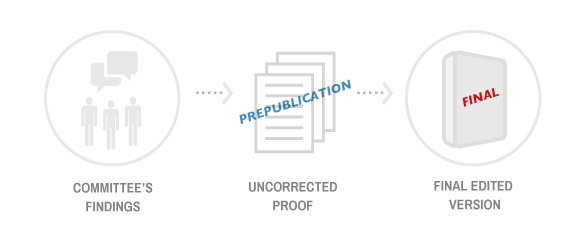
Below are the first 10 and last 10 pages of uncorrected machine-read text (when available) of this chapter, followed by the top 30 algorithmically extracted key phrases from the chapter as a whole.
Intended to provide our own search engines and external engines with highly rich, chapter-representative searchable text on the opening pages of each chapter.
Because it is UNCORRECTED material, please consider the following text as a useful but insufficient proxy for the authoritative book pages.
Do not use for reproduction, copying, pasting, or reading; exclusively for search engines.
OCR for page 205
Findings and i7ccommcndntions
The committee believes that the first priority of any national health
care policy should be to ensure that each individual has access to needed
health care services. In the absence of comprehensive health care cover-
age, the United States has relied on a set of loosely organized community-
based safety net providers to address the health care needs of the un-
insured and other populations. The collapse of the safety net in a community
may require this population to face formidable barriers to obtaining the
health care that they need. The health care safety net has historically
functioned in a precarious fiscal environment, suffering through many
changes in the national and local economies, changes in public policies,
changes in the health care market, and changes in funding sources. Despite
today's robust economy, safety net providers especially core safety net
providers are being buffeted by the cumulative and concurrent effects
of major health policy and market changes. The convergence and poten-
tially adverse consequences of these new and powerful dynamics leads
the committee to be highly concerned about the future viability of the
safety net. Although safety net providers have proven to be both resilient
and resourceful, the committee believes that many providers may be
unable to survive the current environment. Taken alone, the growth in
Medicaid managed care enrollment; the retrenchment or elimination of
key direct and indirect subsidies that providers have relied upon to help
finance uncompensated care; and the continued growth in the number of
uninsured people would make it difficult for many safety net providers to
205
OCR for page 206
206 AMERICA'S HEALTH CARE SAFETY NET: INTACT BUT ENDANGERED
survive. Taken together, these trends are beginning to place unparalleled
strain on the health care safety net in many parts of the country.
In most communities the core safety net has continued to survive and
to respond to the new requirements of managed care, but its underlying
structure and long-term viability are increasingly threatened. The conse-
quences of looming cuts in disproportionate share hospital (DSH) pay-
ments and the elimination of cost-based reimbursement for federally
qualified health centers (FQHCs) have not yet been fully felt. Adding to
these mounting pressures is new evidence that private providers and
institutions operating in more advanced managed care markets have
become less able or less willing to maintain their past commitments to the
provision of uncompensated care. Cuts in the Medicare program and
other related consequences of the Balanced Budget Act of 1997 (BBA) may
further reduce the capacities of these providers to continue to provide
service to the uninsured population, adding to the burden of the core
safety net.
Ironically, these developments and retrenchments are taking place
against the backdrop of a strong economy, a low rate of inflation in health
care costs, and budget surpluses at the federal, state, and local levels. At
the same time, however, significant increases in health insurance pre-
miums and the number of uninsured adults are projected. Any downturn
in the economy will further degrade the increasingly tenuous safety net
system. The committee believes that the effects of these combined forces
and dynamics demand the immediate attention of public policy officials
and recommends a series of actions to help ensure the continued viability
of a core health care safety net for the nation's most vulnerable popula-
tions.
FINDINGS
Finding 1. The shift to Medicaid managed care can have adverse
effects on core safety net providers and the uninsured and other
vulnerable populations who rely on them for care. These dynam-
ics demand greater attention and scrutiny by policy leaders and
administrative agencies at the federal, state, and local levels.
The growth in price competition and the reduced payments made by
private payers has made Medicaid a more attractive payer in many com-
munities. Providers that previously shunned this market because of low
reimbursement rates are now competing for Medicaid patients, especially
with the introduction of managed care. The committee heard evidence
that in some communities these developments have had the positive effect
of offering beneficiaries a broader network of providers from which to
OCR for page 207
FINDINGS AND RECOMMENDATIONS
207
choose. Enhanced choice of quality providers is desirable as a matter of
equity and fairness and can create needed incentives for all providers to
improve their performance and be more responsive to patients.
The committee is concerned, however, that programs that promote
choice are not always implemented in a manner that adequately
· considers the impact on the ability of core safety net providers to
sustain their missions to provide care for indigent populations,
· ensures that patients are adequately informed about their choices
and that those choices are facilitated,
· ensures that patients who require complex coordinated care are
supported by the necessary enabling services, and
· ensures that continuity of care is not seriously disrupted as patients
cycle on and off Medicaid and plans enter and exit the Medicaid managed
care market.
Given the special characteristics of the Medicaid population, the com-
mittee heard and read testimony suggesting that expanded choice could
hold unintended risks for beneficiaries and those who provide care for
indigent populations. For example:
· The categorical and episodic nature of Medicaid eligibility means
that individuals tend to cycle off and on coverage, often with long spells
without insurance. Most managed care organizations and their providers,
especially those new to the Medicaid market, often have no formal responsi-
bility or mission to take care of patients when they become uninsured.
These new dynamics can impair continuity of care for patients who may
have switched from a provider who will serve them whether or not they
have Medicaid coverage to a provider who can only serve them when
they are receiving Medicaid benefits. The dynamics can also undermine
the stability of a community's safety net if core safety net providers lose
their Medicaid patient base and other safety net providers find it difficult
to shift the costs for additional uninsured patients in a increasingly com-
petitive environment.
· Although Medicaid was not originally intended to support care for
the uninsured population, over the years Medicaid revenues have come
to provide a critical "silent subsidy" that helps core safety net providers
pay for fixed infrastructure costs, freeing limited grant funds and other
revenues to pay for care for uninsured patients. Thus, care for Medicaid
and uninsured patients became inexorably linked, creating an interde-
pendency in the absence of more explicit state or federal subsidies and
policies regarding care for the uninsured population. The increasing sepa-
ration of care for Medicaid beneficiaries and care for the growing number
OCR for page 208
208 AMERICA'S HEALTH CARE SAFETY NET: INTACT BUT ENDANGERED
of uninsured individuals may have the effect of destabilizing the safety
net in many communities.
· A number of states have been successful in encouraging commer-
cial and other plans to enter the Medicaid market by creating a hospitable
market environment and offering attractive premium rates. Recently,
however, a number of major commercial plans have exited all or major
parts of the market because of the complexities of serving Medicaid
patients, the inability to make a profit, and administrative requirements
that they perceive to be burdensome. These developments have spurred
the growth of Medicaid-only plans, which are organized in many cases by
local safety net providers. Thus, safety net providers are once again pro-
viding care for their traditional patient populations, but often with fewer
overall resources, more administrative requirements, and an increased
demand for uncompensated care.
Finding 2. Managed care principles offer significant potential for
improved health care for Medicaid patients, but implementation
problems can undermine this potential.
The literature holds convincing evidence on the potential of managed
care principles to improve the quality and efficiency of care for most
patients and accountability to patients. When properly implemented,
managed care can (1) promote comprehensive, integrated care with an
emphasis on primary care, prevention, and population health; (2) offer
greater incentives for efficient and appropriate care; and (3) provide a
greater accountability for performance on the part of providers.
In addition, the growth of competition and choice in an environment
of Medicaid managed care has produced new and powerful incentives for
safety net providers to raise the bar in areas of operating efficiency, admin-
istrative and information systems, customer service, and general account-
ability to patients and payers. Safety net providers operating in a managed
care environment may be able to offer vulnerable populations additional
benefits in the important enabling, social, and outreach services that many
of these patients require.
Despite this potential, however, the committee collected substantial
evidence that raises the following concerns:
· The health plans and providers that serve Medicaid beneficiaries
may have conflicting incentives that can diminish the potential value of
managed care. For example, since poor patients tend to go on and off
Medicaid, some health plans may see little advantage in investing in pre-
ventive care or other services to improve the long-term health of their
Medicaid members.
OCR for page 209
FINDINGS AND RECOMMENDATIONS
209
· To remain viable a number of community-based providers are cre-
ating joint ventures with large hospitals or academic health center-owned
systems. For example, many safety net providers do not have sufficient
capital to invest in the management information systems and other capital
improvements necessary to succeed in managed care. Although affilia-
tions with a hospital or an academic health center may hold significant
advantages, these uneven partnerships, if not properly structured, could
affect the long-term ability of community-based safety net providers to
maintain their past commitments to the uninsured population.
· Inadequate capitation rates in many states and the absence of ade-
quate risk-adjustment tools may be forcing many safety net providers to
assume substantial financial risk without sufficient reserves or other pro-
tections against insolvency.
The transition of state Medicaid programs from bill payer to prudent
purchaser requires the development of specific new skills by program
administrators, including skills in contracting, premium rate setting,
quality and financial oversight, patient education, and enrollment proto-
cols. The committee finds that in many states the implementation of man-
aged care has been attempted with insufficient preparation and staffing.
Although some states have moved to managed care to improve access
and quality of care, in recent years, a priority objective for most states
appears to be program cost savings.
The committee finds it difficult to gauge the success of the states'
Medicaid managed care initiatives. Results have been inconsistent and
vary widely from state to state. The committee found that better methods
are needed to both capture and disseminate the lessons that have been
learned and the problems that need to be avoided, as well as to help
diminish inappropriate and potentially harmful interstate variations in
the provision of safety net services.
Finding 3. The financial viability of core safety net providers is
even more at risk today than in the past because of the combined
effects of three major dynamics: (1) the rising number of unin-
sured individuals; (2) the full impact of mandated Medicaid man-
aged care in a more competitive health care marketplace; and
(3) the erosion and uncertainty of major direct and indirect subsi-
dies that have helped support safety net functions.
Safety net providers have always operated in a precarious financial
environment and over the years have learned to survive in both good and
bad economic times. The committee believes that, absent new policies, the
increasing demand for care for indigent populations, the diminishing
OCR for page 210
210 AMERICA'S HEALTH CARE SAFETY NET: INTACT BUT ENDANGERED
resources to support such care, and the mounting access barriers faced by
uninsured people will endanger the fragile patchwork of providers and
institutions that serve this nation's most vulnerable groups.
Finding 4. The patchwork organization and the patchwork fund-
ing of the safety net vary widely from community to community,
and the availability of care for the uninsured and other vulner-
able populations increasingly depends on where they live.
Although federal Medicare, Medicaid, and other policies (such as
cost-based reimbursement for FQHCs) have a critical impact on the finan-
cial viability of the safety net system, the strength and viability of a
community's safety net system are highly dependent on state and local
support, state Medicaid policies, the structure of the local health care
marketplace, and the economic health of the community. With the devo-
lution of responsibilities from the federal government to state and local
governments, care for vulnerable populations is increasingly determined
by local economic, political, and social factors. These trends are resulting
in ever widening state and community variations in care for vulnerable
populations and the adequacy of the health care safety net.
The committee found substantial evidence that states with the great-
est demands for safety net services often have the weakest economic,
political, and social infrastructures to effectively respond to local needs.
Although policies of Revolution have contributed to innovative pro-
grams and policies directed to care for vulnerable populations, they have
also made it more difficult to collect adequate and comparable data to
track and monitor the changing status of state and local safety net organi-
zations and how program and policy changes are affecting care for vul-
nerable populations.
Finding 5. The committee found that most safety net providers
have thus far been able to adapt to the changing environment.
Even for these providers, however, the stresses of these changes
have made it increasingly difficult for them to maintain their mis-
sions while protecting their financial margins. In addition, the
full consequences of changing market forces, increases in the
number of uninsured, and reduced levels of reimbursement have
not yet been felt by these providers in some communities. The
committee further observed that the current capacity for monitor-
ing the status of safety net providers is inadequate for providing
timely and systematic evidence about the effects of these forces.
Although the committee heard frequent testimony and studied a
OCR for page 211
FINDINGS AND RECOMMENDATIONS
211
number of reports about the negative consequences of the various changes
in the environment of safety net providers, it was continuously frustrated
by its inability to find a single source where such information was col-
lected and analyzed. It was also evident that the information that was
available took many years to assemble and that important data was often
missing or only describing the situation in a few communities.
In some parts of the country, all of the major forces of change, includ-
ing growth in the numbers of uninsured individuals, high rates of pen-
etration of mandated Medicaid managed care, strong market competi-
tion, and the full impact of the BBA of 1997, have not yet converged,
making it possible for many core safety net providers to maintain their
missions to provide care for the uninsured population. The committee
believes, however, that in the current policy and political environment,
these forces will continue to have increasingly adverse effects.
Safety net providers are placing major emphases on gaining contracts
with managed care organizations, developing partnerships and networks
to gain leverage and to benefit from economies of scale, diversifying fund-
ing streams, improving clinical and administrative protocols, and improv-
ing customer-oriented services.
· Virtually all safety net providers have come to realize that they
must participate in Medicaid managed care, but little is known about
what adaptive strategies appear to be the most successful.
· Although on the whole the safety net has remained intact, many of
these organizations are becoming increasingly fragile given the growing
number of uninsured individuals and cutbacks in grants and revenues.
New studies show that managed care cost pressures are forcing other
providers to retrench on the provision of care for vulnerable populations,
placing an even greater burden on the core safety net.
· State and local policies and programs that support care for vulner-
able populations have proved to be critically important to the ability of
community safety net systems to remain viable while maintaining their
missions to provide care for the uninsured population.
· At this stage of Medicaid managed care and restructuring of the
U.S. health care system, few reliable and consistent data exist to deter-
mine clearly how beneficiaries are faring in the new environment.
The patchwork and categorical nature of funding for the safety net
has created barriers to systems building, integration, and more flexible
responses to new requirements, all of which are critical for successful
adaptation to managed care. Safety net organizations are not well inte-
grated at the regional or local level. There are only a few examples of
communities in which core safety net providers have integrated into a
OCR for page 212
212 AMERICA'S HEALTH CARE SAFETY NET: INTACT BUT ENDANGERED
more seamless system (e.g., Denver Health and Cambridge Hospital in
Massachusetts). In most cases, community health centers, public hospi-
tals, and public health departments do not have common governance,
shared physical or information infrastructures, joint staffs, common pa-
tient identifiers, or defined integration of services. The historical separa-
tion of funding streams as well as the different missions and constituen-
cies of various providers have worked against effective collaboration.
A resurgence of inflation in health care costs, an economic downturn,
or further increases in the rolls of the uninsured could further destabilize
the safety net and place essential care for America's vulnerable popula-
tions at the risk of significant peril. In light of these circumstances, the
committee finds a compelling need for a stronger ongoing capacity to
monitor the changing status of the safety net.
RECOMMENDATIONS
Recommendation 1. Federal and state policy makers should
explicitly take into account and address the full impact (both
intended and unintended) of changes in Medicaid policies on
the viability of safety net providers and the populations they
serve.
In making this recommendation, the committee believes that the fol-
lowing issues need heightened public policy attention:
· failure to take into consideration the impact on safety net pro-
viders of changes in Medicaid policy could have a significant negative
effect on the ability of these providers to continue their mission to serve
the uninsured population, particularly those who move back and forth
between being eligible for Medicaid and being uninsured;
· the adequacy and fairness of Medicaid managed care rates;
· the erosion of the Medicaid patient base and the financial stability
of core safety net providers that must continue to care for the uninsured
population;
· the declining ability or willingness of non-core safety net providers
to provide care for the uninsured population; and
· the current instability of the Medicaid managed care market includ-
ing the rapid entry and exit of plans and the impact of this churning of
program beneficiaries.
Recommendation 2. All federal programs and policies targeted
to support the safety net and the populations it serves should
be reviewed for their effectiveness in meeting the needs of the
uninsured.
OCR for page 213
FINDINGS AND RECOMMENDATIONS
213
Major new forces have altered the financing and delivery of health
care services, including the move to managed care by both private and
public payers, the separation of care for Medicaid patients from care for
uninsured individuals, the erosion and retrenchment of direct and indi-
rect subsidies that have helped provide care for those without coverage,
and the increasing concentration of care for the uninsured population
among fewer providers. These dynamics call for a careful review of pro-
grams and policies that were designed to improve access to care for vul-
nerable populations and support the providers that serve them to make
sure that these programs are still effectively targeted to meet their origi-
nal objectives. The committee believes that such an analysis is especially
important given the growing number of uninsured Americans and the
declining ability to meet their health care needs. Federal health care pro-
grams that provide direct or indirect support for safety net providers and
for services for vulnerable populations should be reviewed and modified
to ensure that any funding allocation formula specifies explicit criteria for
the delivery of services to the uninsured population as a basis for support.
Eligibility for Medicaid and Medicare DSH funds should also be reexam-
ined to include a greater focus on the level and share of services for the
uninsured. Although the committee believes strongly that no funds
should be diverted from the core safety net, any funds that become avail-
able as a result of this reexamination should be distributed in a manner
that ensures that providers of both ambulatory and inpatient care are
eligible to receive support.
Recommendation 3. The committee recommends that concerted
efforts be directed to improving this nation's capacity and abil-
ity to monitor the changing structure, capacity, and financial
stability of the safety net to meet the health care needs of the
uninsured and other vulnerable populations.
The committee believes that the fragility of local safety nets has the
potential to become a national crisis, and therefore, it calls for stronger
federal tracking, direction, and targeted direct support. At this time, no
single entity in the federal government has the responsibility for monitor-
ing and tracking the status of America's health care safety net and its
ability to meet the needs of those who rely on its services. Various agen-
cies have responsibility for programs and policies that affect one part of
the safety net delivery system (e.g., the Health Resources and Services
Administration, the Centers for Disease Control and Prevention, the Sub-
stance Abuse and Mental Health Services Administration, the Health Care
Financing Administration, the Head Start program, the Indian Health
OCR for page 214
214 AMERICA'S HEALTH CARE SAFETY NET: INTACT BUT ENDANGERED
Service, and the Departments of Veterans Affairs, Defense, Agriculture,
and Housing and Urban Development), but no comprehensive, coordi-
nated tracking and reporting capability exists. Although it acknowledges
the appropriate roles and responsibilities of the various agencies and the
benefits of state and local innovations, the committee believes that such a
tracking capability could promote public accountability, as well as a more
coordinated approach to data collection, technical assistance, and the
application and dissemination of best practices.
A number of organizational settings could be considered for the place-
ment of an enhanced safety net tracking and monitoring activity, includ-
ing an existing agency, department, or program, or a newly established
entity. Although the committee elected not to come to a final decision on
where such an entity could be placed, it did discuss and identify the major
organizational attributes that would be needed to enable a safety net
oversight entity to successfully carry out its mission. The committee
strongly believes that such an entity should be independent; organized as
an ongoing activity with dedicated staff; nonpartisan in its membership;
and include a range of expertise required to carry out its charge. Such an
oversight body would affect a number of state and local entities and
would cut across several federal agencies. In identifying these attributes
the committee viewed with favor an organization like the Medical Pay-
ment Advisory Commission (MedPAC) with its mandate to report directly
to Congress. Alternatively, the oversight body could reside in the execu-
tive branch at a Departmental level. As an example of the executive branch
model, the committee was impressed with the work and impact of the
President's Advisory Commission on Consumer Protection and Quality
in the Health Care Industry. However, the Quality Commission had a
limited term, consistent with its mandate to produce recommendations
for action and implementation by other parts of the federal government
and the private sector. The committee's proposed tracking and monitor-
ing activity would require an ongoing term of operation, since its major
function would be to assess, monitor, and report on the status of America's
health care safety net over time. The committee in its deliberations referred
to the monitoring and oversight entity as the Safety Net Organizations
and Patient Advisory Commission (SNOPAC).
To carry out its mission, the committee recommends that the initial
activities of a safety net oversight entity include the following:
· monitor the major safety net funding programs (e.g., Medicaid, the
State Children's Health Insurance Program [SCHIP], Title V, FQHCs, and
the various government DSH payment plans) to document and analyze
the effects of changes in these programs on the safety net and the health of
vulnerable populations;
OCR for page 215
FINDINGS AND RECOMMENDATIONS
215
· track the impact of the BBA of 1997 and other forces on the capacity
of other key providers in the safety net system to continue their sunnort-
ive roles in the core safety net system;
· monitor existing data sets to assess the status of the safety net and
health outcomes for vulnerable populations;
· wherever possible, link and integrate the existing data systems to
enhance their current ability and to track changes in the status of the
safety net and health outcomes for vulnerable populations;
· support the development of new data systems where existing data
are insufficient or inadequate;
· establish an early-warning system to identify impending failures
of safety net systems and providers;
· provide accurate and timely information to federal, state, and local
policy makers on the factors that led to the failures and the projected
consequences of such failures;
· help monitor the transition of the population receiving Supple-
mental Security Income into Medicaid managed care including careful
review of the degree to which safety net-based health plans have the
capacity (e.g., case management and management information system
infrastructure) to provide quality managed care services to this popula-
tion and the degree to which these plans may be overburdened by adverse
selection; and
· identify and disseminate best practices for more effective applica-
tion of the lessons that have been learned.
Recommendation 4. Given the growing number of uninsured
people, the adverse effects of Medicaid managed care on safety
net provider revenues, and the absence of concerted public poli-
cies directed at increasing the rate of insurance coverage, the
committee believes that a new targeted federal initiative should
be established to help support core safety net providers that
care for a disproportionate number of uninsured and other vul-
nerable people.
Funding would be in the form of competitive three-year grants. Grants
will vary in size, based on the scope of the project. Sources of financing
could include funds available from the federal budget surplus and unspent
funds from SCHIP and other insurance expansion programs. Although
the committee projects such a new initiative may require a minimum of
$2.5 billion ranging over five years, the specific size and scope of this
program should be determined by the administration and the U.S. Con-
gress and should be modified based on an assessment of the parameters
OCR for page 216
216 AMERICA'S HEALTH CARE SAFETY NET: INTACT BUT ENDANGERED
of the problem by the safety net oversight entity. These assessments
should be an ongoing responsibility of the safety net oversight entity.
The following principles should govern the distribution of these
funds:
· Because the committee recognizes the challenges of delivering
coordinated, seamless care for the poor uninsured and other vulnerable
individuals at a time when the number of such people is increasing, the
new initiative should concentrate on both the infrastructure for such care
and subsidies of the care itself. Multiple models could be funded under
this initiative, mirroring the multiple models of safety net arrangements
in the various states and local communities. For example, in some areas a
large safety net hospital could take the lead and join with other providers,
including community-based clinics. A state or local government could
stimulate cooperative efforts in other areas, participating with its own
service-delivery capacity. In still others, coalitions of ambulatory care pro-
viders, such as community health centers allied with local private physi-
cians, could form and undertake the initiative.
· Funds could be used for infrastructure improvements (e.g., for
equipment, rehabilitation of unattractive and inefficient buildings, and
management information systems) or to help defray costs or support items
and activities such as legal and other costs related to establishment of the
network (in ways to avoid charges of antitrust and fraud and abuse),
improvements in quality of care (e.g., patient tracking systems,
reengineering, and programs targeted to high-risk patients), and, where
needed, the health care itself.
· Funds would be available to communities that demonstrate the
potential capacity to deliver comprehensive services, to track patients and
their outcomes as they move through the system, and to provide appro-
priate outreach and marketing efforts to reach patients with special needs.
The allocations would specifically reward initiatives with demonstrated
commitment and capacity to improve access and health outcomes for
poor uninsured individuals in the community. Continuation of funding
would be based upon ongoing satisfactory performance and accountability.
· Eligibility for funding would include a maintenance of effort
requirement with documentation that the new funding would supple-
ment and not replace state or local funding already directed to this effort.
During the time the committee was completing its study, the U.S.
Department of Health and Human Services (DHHS), as part of its FY 2000
budget request, proposed a five year initiative designed to increase the
capacity and effectiveness of the nation's health care safety net providers.
To begin this effort, $25 million in the form of grant funding was appro-
OCR for page 217
FINDINGS AND RECOMMENDATIONS
217
priated under the FY 2000 Appropriations Act. The committee believes
this new national program, the Community Access Program, which will
provide funding for approximately 20 communities in the coming year,
represents a good first step.
Recommendation 5. The committee recommends that technical
assistance programs and policies targeted to improving the op-
erations and competitive position of safety net providers be
enhanced and better coordinated.
Several federal agencies including the Health Resources and Services
Administration, the Health Care Financing Administration, the Substance
Abuse and Mental Health Services Administration, and the Centers for
Disease Control and Prevention currently provide technical assistance to
some safety net providers, but these funds are usually targeted exclu-
sively to the programs funded by the respective agencies. The committee
strongly believes that technical assistance funds should promote capacity
building and the management and operating capabilities of safety net
providers seeking to compete in a managed care environment. Technical
assistance programs should promote rather than deter the development
of partnerships and collaborations that can contribute to these objectives.
The committee believes the following areas require specific attention:
· management of service delivery and implementation of changes,
including improvements in management information systems, appoint-
ment scheduling systems, patient telephone access, efforts to streamline
operations, and reengineering of services so that they are more respon-
sive to patients;
· development of new business skills such as negotiating managed
care contracts and developing marketing techniques to maintain and
expand the patient base of safety net providers;
· development and collection of reliable data on which to calibrate
rates and assign appropriate risks to develop appropriate reimbursement
systems; and
· nonmedical factors that affect utilization and health outcomes of
low-income and other vulnerable patients using the health care delivery
system (e.g., care-seeking behavior, cultural competence, and public
health interventions).
OCR for page 218
APPENDIXI
UDS
VA
WIC
.
Uniform Data System
Veterans Affairs
Veterans Health Administration
Special Supplemental Nutrition Program for Women, infants, and Children
~3
Representative terms from entire chapter:
net providers