
5
Analysis of Waiting Times
Task 3: Assess current policies and the potential impact of the Final Rule on waiting times for organ transplants, including (1) determinations specific to the various geographic regions of the United States, and, if practical, waiting times for each transplant center by organ and medical status category, and (2) impact of recent changes made by the Organ Procurement and Transplantation Network in patient listing criteria and in measures of medical status.
Abstract. There is concern that the current system of organ allocation and transplantation does not ensure that available organs reach the patients most in need of a transplant. Large differences among organ procurement organizations (OPOs) in median waiting times for transplantation have been given as evidence that needier patients in one OPO may be left waiting while less needy patients in another OPO are receiving organs sooner. Median waiting times for liver transplantation in neighboring OPOs have been reported to differ by as much as 100 days.
The committee examined 68,000 individual records of liver transplant patients and made several observations. Among these are the following. First, median waiting time is a misleading metric as used previously for comparing waiting times among OPOs. As calculated, median waiting time is determined by the waiting time of status 3 patients and has no relationship to the waiting time of status 1 patients. Second, the committee finds that the current system of organ allocation is reasonably equitable within the category of status 1 patients because they are as likely to receive a transplant in a small OPO as in a large one. Third, based on limited data from currently existing sharing arrangements among OPOs, there seems to be (1) a beneficial effect in decreasing mortality among status 2B patients, (2) an increase in status 1 transplantation rates, and (3) a reduction in transplantation for status 3 patients without an increase in mortality. Lastly, the committee concludes that patients awaiting liver transplants will be better served by an allocation system that facilitates broader sharing within a minimum population base of approximately 9 million people than by the current smaller sharing areas.
A transplant candidate's "waiting time" is the period between registration for transplantation and one of three other events: transplantation of a donor organ, death without transplantation, or removal from the waiting list for other reasons. Waiting times for status 1 liver transplant candidates, those most seriously ill, can be measured in days, while the wait for status 2 patients, who are less seriously ill,
is measured in months. For status 3 (or 4) patients, who have the least urgent need for transplantation, waiting times may reach years. Historically, more than 50 percent of the patients awaiting liver transplants at any given time have been classified as status 3 (see Table 5-1 and Appendix B, Tables B-1, B-4, B-6, and B-9).
In issuing the Final Rule, the Department of Health and Human Services (1998b) used regional differences in median waiting times for all patients combined as a basis for claiming that inequities exist in the allocation of organs to transplant patients. Panel 1 of Figure 5-1 illustrates the differences in median waiting times among the 11 UNOS regions, grouped by quartiles, for all liver transplant candidates registered between January 20, 1998, and January 19, 1999. Although dividing the waiting time distribution into quartiles oversimplifies these data, this method is similar to that used in previous analyses by DHHS. On this basis, median waiting times are shortest in the South and upper Midwest and longest in New England and the Northwest (including Alaska). However, given that the majority of transplant patients are classified as status 3, these differences principally reflect the differences in waiting time of status 3 patients (see panel 5), who have the least serious need and, therefore, the longest wait for transplantation. Panels 2 and 3 show that statuses 1 and 2A patients contribute little or no regional variability in overall waiting times. Panels 4 and 5 show that variability in overall waiting time is produced almost entirely by statuses 2B and 3 patients.
TABLE 5-1 Characteristics of Liver Transplant Patients by Status, 1995-1999
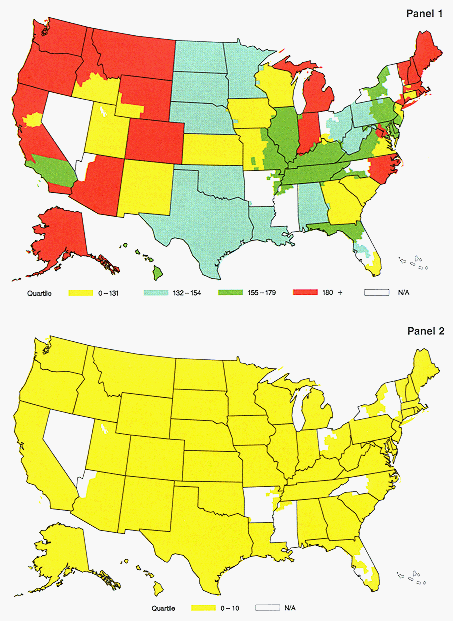
FIGURE 5-1
Median waiting times for liver transplantation, all status groups, registrations added January 20, 1998 to January 19, 1999. Panel 1: all patients; panel 2: patients ever in Status 1; panel 3: patients ever in Status 2A; panel 4: patients ever in Status 2B; and panel 5: patients ever in Status 3. SOURCE: M. D. Ellison, UNOS, personal communication, May 10, 1999.
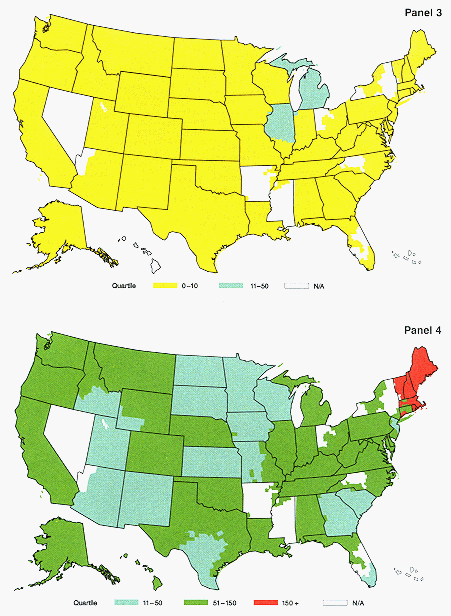
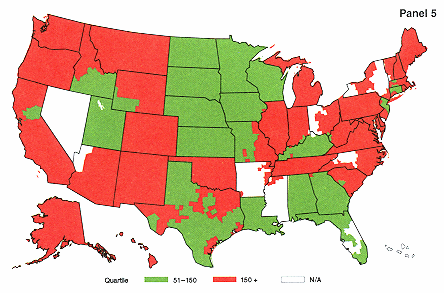
As discussed later in this chapter, numerous factors influence the waiting times of status 3 patients; none of these are related to severity of illness, or the likelihood of transplantation or death. For example, transplant centers vary in their policies for listing statuses 2B and 3 patients, with some centers choosing to list statuses 2B and 3 patients much earlier in the course of their illness than others.
The remainder of this chapter presents the results of the committee's more detailed statistical analysis of data on transplantation waiting time. The analysis is based on approximately 68,000 records representing each transition made by each patient on the waiting list for liver transplantation from 1995 through the first quarter of 1999. This analysis reveals the strengths and weaknesses of the current organ allocation system and points to directions for change.
METHOD OF ANALYSIS
Analysis of the existing organ allocation program was performed using a mixed-effects multinomial logistic regression model, which is a simple generalization of the mixed effects ordinal logistic regression model originally developed by Hedeker and Gibbons (1994) as described by Hedeker (in press) and is presented in Appendix A. Because of the large differences in waiting times by status, analyses were performed separately for status levels 1, 2B, and 3. (There were insufficient data to evaluate waiting time in status 2A.) The majority of status 1 patients receive a transplant or die within 7 days. For patients in status 2B, the typical waiting time is a few months, whereas status 3 patients may wait a year or more. Patients also change status frequently and can shift from status 1 to status 2 or 3 as well as from a less urgent to a more urgent status.
The unit of analysis is time (number of days or months) spent within a particular status level. For example, in the analysis of status 1, a patient who is initially listed as status 1 for 2 days, shifts to status 2 for 1 month, and returns to status 1 for 1 day and is transplanted would have an outcome of transplant and a status 1 waiting time of 3 days. A patient who is in status 1 for 3 days and dies would have an outcome of death and a status 1 waiting time of 3 days. A patient listed as status 1 for 4 days who is then delisted because he or she is too sick to undergo the transplant (status 9) has an outcome of "other" (i.e., censored) and has a status 1 waiting time of 4 days. The same outcome and number of status 1 days would be recorded if this patient transitioned to status 2 or 3 and did not return to status 1. The time spent by the patient in another status would be used in the analysis for that status level. Similar analyses were performed for time spent in statuses 2B and 3.
At the beginning of 1998, the status categories were changed by the OPTN from 1, 2, 3, and 4 to 1, 2A, 2B, and 3 to create more homogeneous and reliable patient listings. All statistical analyses were performed on these more recent data (i.e., 1998-1999). However, to provide a more complete view of the overall system, tabular displays of various summary statistics (e.g., mean waiting times
within status categories, percentages of patients receiving transplants or dying) used all data from 1995 to 1999 and used status categories 1, 2 (2, 2A, and 2B) and 3 (3 and 4). The analysis applies to the 52 OPOs that include liver transplant centers within their service area. Ten OPOs do not do so.
Additional details of the statistical model are presented in Appendix A. Conceptually, the model allows evaluation of the competing risks of transplantation and pretransplantation mortality over time as a function of certain variables such as age, gender, race, blood type, and volume of transplants in OPOs. A further distinguishing feature of the model is that it allows for an analysis of OPO-specific rates for transplantation and pretransplantation mortality by representing OPO as a random effect. A large OPO variance component indicates that the experience of patients within certain OPOs differs systematically from the overall population average experience (e.g., members of a particular OPO may have an increased likelihood of transplantation or death), which suggests inequity in the system of organ transplantation. A small OPO variance component (i.e., not statistically significant or accounting for a small percentage of the total variance; e.g., <5%) indicates that transplantation (or mortality) rates can be considered homogeneous among OPOs and that the system is equitable, or at least consistent, among OPOs.
Expressing the OPO variance component as a proportion of the total variance leads to the intraclass correlation. For this analysis, the intraclass correlation describes the percentage of variability associated with a particular risk (e.g., transplantation or death) attributable to the OPO, once the effects of the model covariates (e.g., age, gender, race, and blood type) have been removed. Thus, the intraclass correlation as employed in this analysis is a useful statistic in determining the extent to which OPOs systematically vary in their rates of transplantation or mortality. Separate variance components and intraclass correlations are associated with each competing risk (i.e., transplantation and death); therefore it is possible for OPOs to systematically vary in one, both, or neither rate.
Waiting time is handled in the committee's analysis by use of the alternative parameterization of the Cox proportional hazards model in terms of a ''partial logistic regression" model (Efron, 1988) or "person-time logistic regression" model (Ingram and Kleinman, 1989). This approach to survival analysis involves the use of a series of sequential records from each subject for the period of time he or she was observed in the study.
Efron (1988) and Ingram and Kleinman (1989) have shown that modeling time-to-event data in this manner provides excellent agreement with the traditional proportional hazards survival model and becomes identical to it as the time intervals approach zero (i.e., continuous time). The advantage of this approach for the committee's analysis is the ability to (1) simultaneously model both transplantation and pretransplantation mortality rates, and (2) accommodate OPO-specific components of variability in these rates (i.e., a mixed-effects model).
For each record in the analyses, outcomes are designated as transplantation (coded as 1), death prior to transplantation (coded as 2), or other end points
(coded as 0). Several conditions could result in an outcome of "other": shifting to another status level and never returning to the status level in question, being too sick to receive a transplant, being delisted, receiving a transplant at another OPO, or still waiting. For example, a patient listed for 4 days in status 1 who received a transplant on day 4 would have four records, three with an outcome of 0 (other) for days 1-3 and one with an outcome of 1 (transplantation) for day 4. A patient listed for 5 days as a status 1 patient who died on day 5, would have four records with an outcome of 0 for days 1-4 and one record with an outcome of 2 (death) for day 5. A patient listed for 2 days as a status 1 who then was reclassified as a status 2 and was never again classified as status 1, would have two records (as a status 1 patient) with an outcome of 0 (other).
The covariates used in the analysis were age (0-5, 6-17, 18 and over), gender (male = 1, female = 0), race (African American = 1, else = 0), blood type (O or B = 1, else = 0), and OPO transplant volume (small, medium, and large). For blood type, the contrast between type O or B and type A or AB was selected because patients with either of the first two types can receive organs only from a subset of donors, whereas the patients with A or AB blood type can receive organs from almost all potential donors. The 52 OPOs were divided into thirds (large = 17, medium = 17, small = 18) on the basis of number of transplants in 1995-1999. This breakdown corresponds generally to 300 or more transplants over the four year period for large volume OPOs and fewer than 150 transplants for small OPOs. Categorical variables such as age and OPO transplant volume were dummy-coded in the analysis so individual groups could be compared without assuming a functional form for the relationship (e.g., linearity).
RESULTS
In the following sections, the results of the analysis of the liver transplant data for each waiting list status are described. Overall, the committee found reasonable equity among OPOs in terms of waiting time for transplantation and in pretransplantation mortality for (status 1) patients, but greater variation in waiting times for patients in statuses 2B and 3. Among the latter two groups, it also appears that some patients are able to survive for extended periods without transplantation and without an increase in the urgency for transplantation. Thus, for these patients, waiting time is not an optimal criterion for determining the urgency of transplantation, especially for status 3 patients. The committee also saw higher rates of transplantation for status 2B and 3 patients in OPOs serving smaller populations and in those OPOs doing fewer transplants. The results of the statistical analysis are summarized in Table 5-2 for likelihood of transplantation and in Table 5-3 for likelihood of pretransplant mortality.
Status 1
Status 1 includes the most severely ill patients who, in general, are expected to survive approximately 1 week without a liver transplant. Overall characteristics of status 1 patients are described in Table 5-1. Additional detail is provided in Table B-1 in Appendix B, which presents average waiting times, transplantation rates, pre- and posttransplantation mortality rates, and demographic information for status 1 patients for each OPO, sorted by the number of status 1 patients in the OPOs. Average waiting times are relatively similar, generally 3 to 4 days, across the 52 OPOs having liver transplant programs within their service areas. Two possible outliers are OPO 42 (average waiting time 11 days) and OPO 14 (average waiting time 9 days). The average age of patients in OPO 42 is among the lowest for the larger-volume OPOs. When the tabulation is restricted to adults (i.e., patients 18 and over), the number of patients in OPO 42 drops from 203 to 92 and the average waiting time falls to 7 days (see Table B-2 in Appendix B), which is more consistent with, but still slightly higher than, the other OPOs. These changes suggest that the longer overall waiting time for OPO 42 is in large part due to the fact that more than half of the patients in this OPO are children, whose smaller size may give them more limited access to matching organs, resulting in longer waiting times.
Results of the risk analysis of these data (Table 5-2; also see Table B-3 in Appendix B) reveal no significant effects on transplantation rates for status 1 patients with regard to gender, race, blood type, or OPO transplant volume. By contrast, there was a statistically significant decrease in the transplantation rate for children age 5 and under, consistent with the previous observation that young status 1 patients may have less access to organs. The effect of waiting time (i.e., the variable "day") was not significant, indicating that the probability of transplantation for status 1 patients is relatively constant over time. This finding is important because it indicates that even if transplantation does not occur within the first few days of status 1 listing, the likelihood of transplantation in the following days is not diminished.
The OPO random-effect variance was found to be statistically significant, indicating that transplantation rates of status 1 patients differ systematically over OPOs. The intraclass correlation (r = 0.045) indicates, however, that this effect is modest, accounting for less than 5 percent of the total variation in transplantation rates. Once the effects of the model covariates (i.e., gender, race, blood type, and OPO volume) are accounted for.
In terms of mortality rates (Table 5-3; also see Table B-3 in Appendix B), the analysis reveals that (1) variability in pretransplantation mortality rates over OPOs was not significant (intraclass correlation r = 0.001, accounting for 0.1 percent of the variability in mortality rates); (2) the mortality rates are lower for children and adolescents than adults; (3) there are no significant associations between gender, race, blood type, or OPO transplant volume and mortality rates; and (4) the mortality rates are relatively constant over time. Tables B-1 to B-3 in Appendix B support these conclusions. Pretransplantation mortality rates are
similar across the OPOs that had a sufficient number of patients with which to estimate them accurately.
These results confirm that the small differences in status 1 transplantation rates observed among OPOs are not associated with differential pretransplantation mortality rates. Moreover, the observed large variations in waiting times for all patients, regardless of status, disguise the narrow variations within the status 1 category. Thus, looking only within the category of the most severely ill patients (status 1), the current system appears to be reasonably equitable. As discussed below, however, a higher proportion of status 1 patients would receive transplants if organs were shared over larger populations.
Tables B-1 and B-2 in Appendix B also reveal that posttransplantation mortality rates are relatively similar across OPOs, with the majority of rates in the range of 5 to 15 percent.
TABLE 5-2 Parameter Estimates (standard errors) for Likelihood of Liver Transplantation as a Function of Time, Age, Gender, Race, and OPO Volume: Individual Models for Statuses 1, 2B, and 3 for All Available Data in 1998-1999
|
|
Status 1 |
Status 2B |
Status 3 |
|
Intercept |
-1.829* (0.276) |
-2.077* (0.129) |
-3.593* (0.210) |
|
Waiting time |
0.016a (0.015) |
||
|
Age (0-5 vs. adult) |
-0.907* (0.188) |
0.470* (0.103) |
1.156* (0.154) |
|
Age (6-17 vs. adult) |
-0.362 (0.234) |
0.135 (0.243) |
0.844* (0.268) |
|
Gender (1 = male) |
-0.098 (0.198) |
0.126 (0.087) |
0.054 (0.186) |
|
Race (1 = African American) |
-0.275 (0.268) |
0.134 (0.222) |
0.158 (0.304) |
|
Blood type (1 = B or O) |
-0.076 (0.196) |
-0.577* (0.062) |
-0.477* (0.098) |
|
OPO volume (M vs. L) |
-0.054 (0.319) |
0.590* (0.157) |
1.179* (0.149) |
|
OPO volume (S vs. L) |
0.261 (0.336) |
0.560* (0.187) |
0.757* (0.228) |
|
Random OPO effect |
0.393* (0.144) |
0.689* (0.064) |
1.335* (0.162) |
|
Interclass correlation |
0.045 |
0.126 |
0.351 |
|
a Time in days. b Time in months. * p < 0.05. |
|||
TABLE 5-3 Parameter Estimates (standard errors) for Likelihood of Pretransplant Mortality as a Function of Time, Age, Gender, Race, and OPO Volume: Individual Models for Statuses 1, 2B, and 3 for All Available Data in 1998-1999
|
|
Status 1 |
Status 2B |
Status 3 |
|
Intercept |
-3.685* (0.482) |
-3.313 (0.227) |
-3.654* (0.172) |
|
Waiting time |
0.023a (0.047) |
||
|
Age (0-5 vs. adult) |
-0.968* (0.378) |
-0.195 (0.381) |
-2.119 (2.099) |
|
Age (6-17 vs. adult) |
-1.001 (0.551) |
-0.516 (0.641) |
-1.193 (2.000) |
|
Gender (1 = male) |
0.077 (0.371) |
0.014 (0.191) |
-0.063 (0.268) |
|
Race (1 = African American) |
0.162 (0.448) |
-0.082 (0.359) |
0.027 (0.544) |
|
Blood type (1 = B or O) |
0.003 (0.433) |
-0.005 (0.164) |
-0.017 (0.231) |
|
OPO volume (M vs. L) |
0.203 (0.491) |
0.202 (0.126) |
-0.526 (0.300) |
|
OPO volume (S vs. L) |
-0.230 (0.930) |
0.355* (0.151) |
-0.658 (0.358) |
|
Random OPO effect |
0.042 (0.298) |
0.116* (0.049) |
0.137 (0.157) |
|
Interclass correlation |
0.001 |
0.004 |
0.006 |
|
a Time in days. b Time in months. * p < 0.05. |
|||
To help illustrate these effects, Figure 5-2a displays the estimated hazard functions for transplantation and death prior to transplantation over the first 12 days patients were listed in status 1. Figure 5-2b displays the estimated cumulative time-to-event distributions.1 These estimated rates hold the effects of the covariates constant at adult, female, white, A or AB blood type, and large-volume OPO. Inspection of Figure 5-2a reveals that the hazard rates are relatively constant over
|
1 |
Details of the computation of these hazard rates and cumulative survival distributions are provided in Appendix A. The hazard functions were derived from marginal predicted probabilities from the estimated mixed-effects competing risk survival model, and the cumulative time-to-event distributions were derived from the corresponding hazard functions, accounting for the competing risks. The hazard rate describes the likelihood of transplantation or mortality at a given point in time adjusted for the competing risks (i.e., transplantation or mortality) and the model covariates (e.g., gender, race, blood type). The cumulative time-to-event distribution describes the overall adjusted likelihood of transplantation or mortality up to a particular point in time. |
the first 12 days in status 1 at approximately 15 to 17 percent for transplantation and 2 to 3 percent for pretransplantation mortality per day. Figure 5-2b shows that after 12 days in status 1, approximately 80 percent of the patients would receive a transplant and approximately 12 percent would die.
Status 2
For status 2 patients (2, 2A, and 2B) during 1995-1999 (see Table 5-1 and Table B-4 in Appendix B), average waiting times range from 40 to 70 days, with greater variability across OPOs than was seen for status 1 patients. In general, smaller-volume OPOs appear to have somewhat higher transplantation rates for their status 2 patients. Both pre- and posttransplantation mortality rates are relatively homogeneous over OPOs and generally lower than the mortality rates for status 1 patients. This is consistent with the greater severity of illness for status 1 patients.
The statistical analysis of the status 2B patient data for 1998-1999 shows that younger status 2B patients have an increased likelihood of transplantation (see Table 5-2 and Table B-5 in Appendix B), but young age is not associated with the pretransplant mortality rate (as noted above, there were too few status 2A patients during this recent time to perform a meaningful statistical analysis) (see Table 5-3 and Table B-5 in Appendix B). Having a blood type that hinders matching to available donor organs (i.e., B or O) decreases the chance of a status 2B transplant, but does not affect pretransplant mortality. Table B-4 in Appendix B demonstrates that a higher percentage of status 2B patients in small- and medium-volume OPOs receive transplants than patients treated at the larger-volume OPOs. This indicates that, although status 1 patients in OPOs with a smaller volume of transplants, receive organs at a rate similar to status 1 patients in other OPOs, there are fewer status 1 patients in these small-volume OPOs. Therefore, more status 2B patients in small volume OPOs ultimately receive transplants. Of concern was evidence of a statistically significant increase in the risk of pretransplantation mortality in those OPOs with smaller transplant volumes. This is reflected in data shown in Table B-4 in Appendix B on the percentage of patients who die before receiving a transplant.
Finally, significant time effects on both transplantation and pretransplantation mortality rates were observed, indicating that the longer patients are listed as status 2B, the lower is their likelihood of either dying or receiving a transplant. This finding suggests that there is heterogeneity in the population of status 2B patients, with a subgroup who need transplantation more quickly or they will die after a relatively short time on the status 2B waiting list. By contrast, those patients who remain on the list for more than 4 months have considerably decreased risk of pretransplantation mortality or transplantation. It may be that the treating physicians are aware of this heterogeneity and are effectively screening the more severely ill status 2B (and status 3) patients for early transplantation, leaving the less severely ill patients on the list, sometimes indefinitely. The increased mortality rates seen among the smaller volume OPOs may indicate that although they are transplanting more status 2B patients, they may not be transplanting the most severely ill status 2B patients.
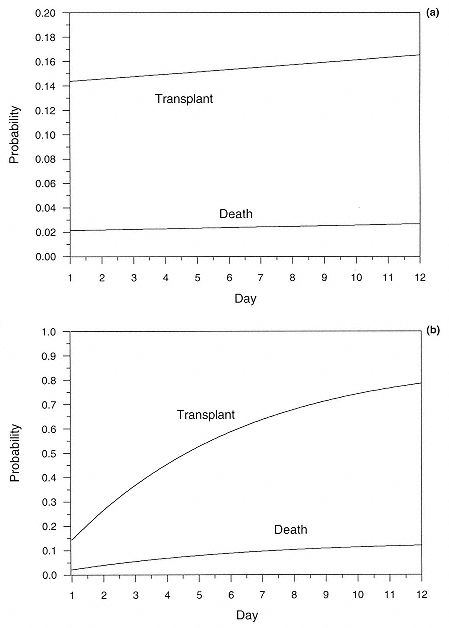
Figure 5-2
Estimated daily hazard rates (a) and cumulative time-event distribution (b) for status 1 patients awaiting liver transplantation. The hazard rate describes the likelihood of transplantation or mortality at a given point in time adjusted for the competing risks (i.e., transplantation or mortality) and the model covariates (e.g., gender, race, blood type). The cumulative time-to-event distribution describes the overall adjusted likelihood of transplantation or mortality up to a particular point in time.
The intraclass correlation for OPO-specific effects on transplantation rates was statistically significant and three times that of status 1 patients (i.e., r = 0.126 versus r = 0.045). This statistic indicates that 13 percent of the variability in transplantation rates for status 2B patients is due to OPO-specific influences even after OPO volume and the other covariates are accounted for. By contrast, the intraclass correlation for mortality rates was r = 0.004, which, although significantly different from zero in this large sample, accounts for less than 0.5 percent of the total variability in mortality rates. This finding indicates that differences in transplantation rates across the OPOs (once the covariates, including OPO size, are accounted for) are not leading to differential pretransplantation mortality rates (i.e., once the effects of competing risks and model covariates including OPO volume are accounted for).
To help illustrate these effects, Figure 5-3a displays the estimated hazard functions for transplantation and death rates over the first 12 months in status 2B, and Figure 5-3b displays the cumulative time-to-event distributions. These estimated rates hold the effects of the covariates constant at adult, female, white, A or AB blood type, and large-volume OPO. Figure 5-3a reveals that the probability of transplantation decreases from 12 to 5 percent per month over the 12-month period and death rates decrease from 3 to 0.3 percent per month over the 12-month period. Figure 5-3b reveals that after 12 months as a status 2B patient, approximately 60 percent of patients would have received transplants and approximately 10 percent would have died.
Statuses 3 and 4
For statuses 3 and 4 patients for 1995-19992 (see Table 5-1 and Tables B-6 and B-8 in Appendix B), average waiting times on the order of 100 to 400 days are much greater in variability across OPOs relative to statuses 1 and 2B patients. The tendency for smaller-volume OPOs to have somewhat higher transplantation rates, which was observed for status 2B patients, is even stronger for statuses 3 or 4 patients. Again, the OPOs with a smaller volume of transplants appear to be transplanting a greater percentage of status 3 patients relative to the larger-volume OPOs. Both pre- and posttransplantation mortality rates are homogeneous over OPOs and, in general, lower than the mortality rates for either status 1 or 2B patients.
As noted at the beginning of the chapter, concern about differential regional waiting time distributions, which led in large part to this committee's assignment, is driven by status 3 or 4 patients. (It is clear from Table B-9 in Appendix B that the status 3 or 4 patients constitute more than 50 percent of all patients waiting to receive a transplant.) Thus, the previously described large differences in waiting times among OPOs (e.g., DHHS's Final Rule) are primarily a function of status 3 patient listings and not of access to or allocation of organs among OPOs for patients in status 1 or 2.
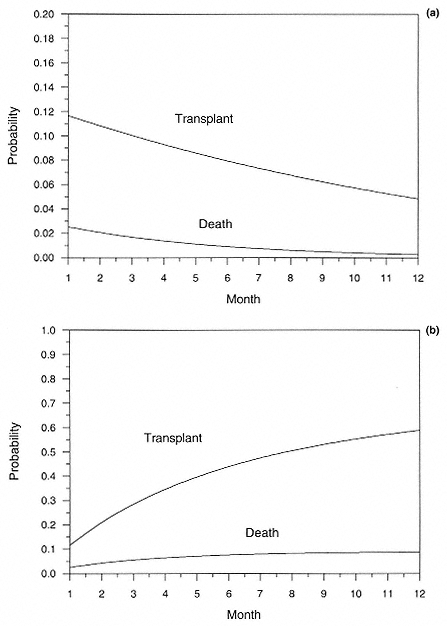
Figure 5-3
Estimated monthly hazard rates (a) and cumulative time-event distribution (b) for status 2B patients awaiting liver transplantation. The hazard rate describes the likelihood of transplantation or mortality at a given point in time adjusted for the competing risks (i.e., transplantation or mortality) and the model covariates (e.g, gender, race, blood type). The cumulative time-to-event distribution describes the overall adjusted likelihood of transplantation or mortality up to a particular point in time.
The statistical analysis of the status 3 patient data for 1998-1999 reveals that younger status 3 patients have an increased likelihood over older patients of receiving a transplant (see Table 5-2 and Table B-7 in Appendix B), but age does not affect the pretransplant mortality rate for status 3 patients (see Table 5-3 and Table B-7 in Appendix B). Having a blood type that limits matches with donated organs (i.e., type B or O) decreases the chance of a status 3 transplant, but is not associated with increases in pretransplant mortality.
The analysis also confirms that status 3 patients in small- to medium-volume OPOs have an even greater increased likelihood of receiving transplants relative to patients treated by the larger OPOs. Similar to patients in status 2B, status 3 patients have a decreased likelihood of receiving a transplant the longer they are on the list as status 3 (i.e., as shown in Table 5-2, the effect of waiting time [the variable "month"] was negative). This finding suggests that there is heterogeneity among the listing conditions for less severely ill statuses 2B and 3 patients and that, shortly after listing, a subset of statuses 2B and 3 patients receive transplants more rapidly than the others. Note that the same effect of time on mortality rates is observed with decreased pretransplantation mortality for statuses 2B and 3 patients who remain on the list for longer periods, indicating that the subset of statuses 2B and 3 patients who do not receive transplants are less at risk of death.
The intraclass correlation for OPO-specific effects on transplantation rates was statistically significant and eight times greater than that for status 1 patients (i.e., r = 0.351 versus r = 0.045) and almost three times greater than that for status 2B patients (i.e., r = 0.351 versus r = 0.126). This statistic indicates that 35 percent of the variability in status 3 transplantation rates is due to OPO-specific influences even after OPO volume and the other covariates are accounted for. By contrast, the intraclass correlation for pretransplantation mortality rates was not significant, once again indicating that the differences in transplantation rates across OPOs are not leading to differential mortality rates.
To help illustrate these effects, Figure 5-4a displays the estimated hazard functions, and Figure 5-4b displays the estimated cumulative time-to-event distributions for transplantation and mortality rates over the first 12 months of status 3 listings. These estimated rates hold the effects of the covariates constant at adult, female, white, A or AB blood type, and large-volume OPO. Inspection of Figure 5-4a reveals that the hazard rates for both transplantation and death decrease over the first 12 months from 4.3 to 0.05 percent per month for transplantation, and 2.0 to 0.2 percent per month for mortality. Figure 5-4b reveals that after 12 months as a status 3 patient, approximately 20 percent of the patients would have received a transplant and approximately 8 percent would have died.
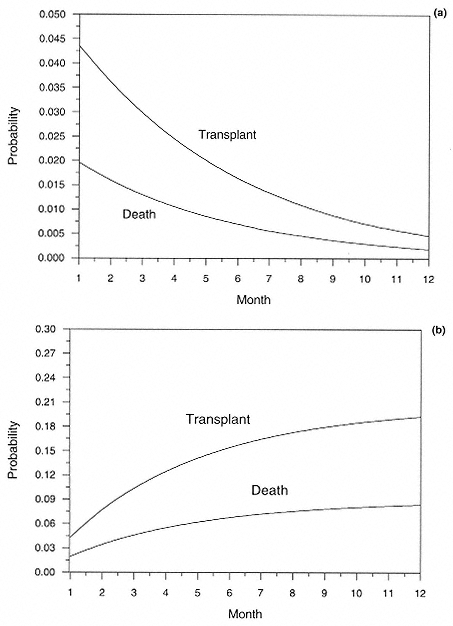
Figure 5-4
Estimated monthly hazard rates (a) and cumulative time-event distribution (b) for status 3 patients awaiting liver transplantation. The hazard rate describes the likelihood of transplantation or mortality at a given point in time adjusted for the competing risks (i.e., transplantation or mortality) and the model covariates (e.g., gender, race, blood type). The cumulative time-to-event distribution describes the overall adjusted likelihood of transplantation or mortality up to a particular point in time.
Status Levels of Transplanted Patients
In an attempt to reassemble the information presented to this point on the likelihood of transplantation for each status level across OPOs, Table B-8 in Appendix B shows, for each OPO, the percentage distribution by status (1, 2, 3, 4, 7, or 9) of patients who received transplants during 1995-1999. (Status 7 refers to patients who are too sick to survive a transplant and were therefore temporarily delisted. Status 9 refers to patients who were delisted from the OPO for any other reason [e.g., moved to a different OPO or no longer needed a transplant].)
Table B-8 in Appendix B shows that, in general, a higher percentage of transplants performed in larger-volume OPOs were for status 1 patients and a lower percentage were for status 3 patients, compared to the smaller-volume OPOs. This difference does not appear to be associated with differences across OPOs in the distribution of patients by initial listing status (see Table B-9 in Appendix B), which appear similar regardless of OPO transplant volume.
As discussed previously, under the current system, status 1 patients receive transplants at similar rates among OPOs and have similar mortality and outcomes. However, the equity of the current system, and its effectiveness in getting organs to the neediest patients, might be improved if it were possible to identify a minimum OPO population size or transplant volume that would promote both greater consistency in transplantation rates across OPOs and a higher rate of transplantation for patients with the greatest medical need.
OPO Size
To better understand the relationship between the size of the population served by an allocation system and the probability of transplantation or death, a mixed-effects competing risk survival model was fit to the data using day (status 1) or month (statuses 2B and 3), and the linear and quadratic effects of OPO size measured in millions of people served. The results of the analysis are summarized in Tables 5-4 (transplantation) and 5-5 (mortality). Of the 52 OPOs in the committee's analysis, 11 served populations of 2 million or fewer, 11 served approximately 3 million people, 11 served approximately 4 million people, 4 served approximately 5 million people, 3 served approximately 6 million people, 5 served approximately 7 million people, and 7 served approximately 9 million or more people.
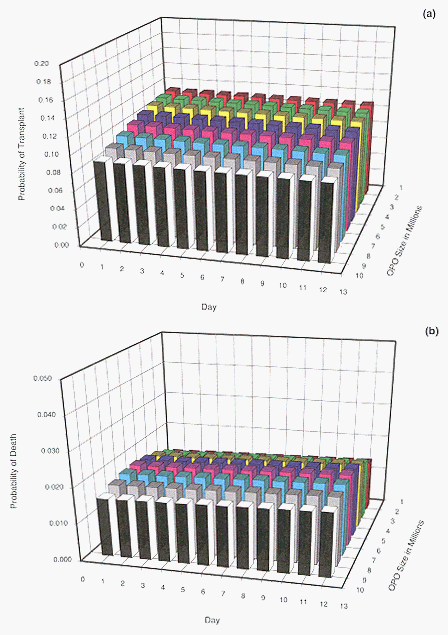
Results of the analysis for status 1 patients (also see Table B-10 in Appendix B) show that OPO size plays no significant role in the transplantation or pretransplantation mortality rates of status 1 patients. As an aid in interpreting these results, Figures 5-5a and 5-5b display a three-dimensional view of the relationships among waiting-list time (measured in days), OPO size, and estimated rates for transplantation and pretransplantation mortality, respectively. Figures 5-5a and 5-5b reveal that both transplantation and mortality rates are essentially constant over waiting time (days 1-12) and OPO size.
TABLE 5-4 Parameter Estimates (standard errors) for Likelihood of Liver Transplantation as a Function of Time, and Linear and Nonlinear Effects of OPO Size (in millions): Individual Models for Statuses 1, 2B, and 3 for All Available Data in 1998-1999
|
|
Status 1 |
Status 2B |
Status 3 |
|
Intercept |
-2.071* (0.561) |
-2.527* (0.432) |
-4.837* (0.604) |
|
Waiting time |
-0.003a (0.012) |
||
|
Size (linear) |
0.018 (0.243) |
0.505* (0.154) |
0.841* (0.243) |
|
Size (quadratic) |
-0.005 (0.023) |
-0.063* (0.013) |
-0.079* (0.021) |
|
Random OPO effect |
0.404* (0.142) |
0.596* (0.050) |
1.196* (0.105) |
|
a Time in days. b Time in months. * p < 0.05. |
|||
TABLE 5-5 Parameter Estimates (standard errors) for Likelihood of Pretransplantation Mortality as a Function of Time, and Linear and Nonlinear Effects of OPO Size (in millions): Individual Models for Statuses 1, 2B, and 3 for All Available Data in 1998-1999
|
|
Status 1 |
Status 2B |
Status 3 |
|
Intercept |
-4.539* (1.349) |
-3.886* (0.361) |
-4.904* (0.694) |
|
Waiting time |
0.008a (0.027) |
||
|
Size (linear) |
0.234 (0.473) |
0.328* (0.127) |
0.280 (0.226) |
|
Size (quadratic) |
-0.019 (0.039) |
-0.033* (0.011) |
-0.018 (0.017) |
|
Random OPO effect |
0.052 (0.183) |
0.076 (0.047) |
0.067 (0.150) |
|
a Time in days. b Time in months. * p < 0.05. |
|||
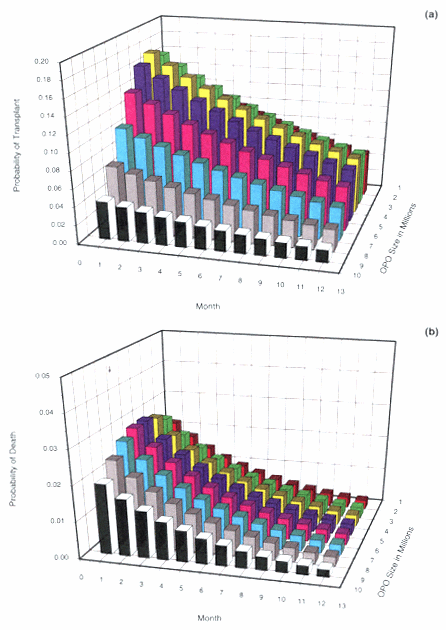
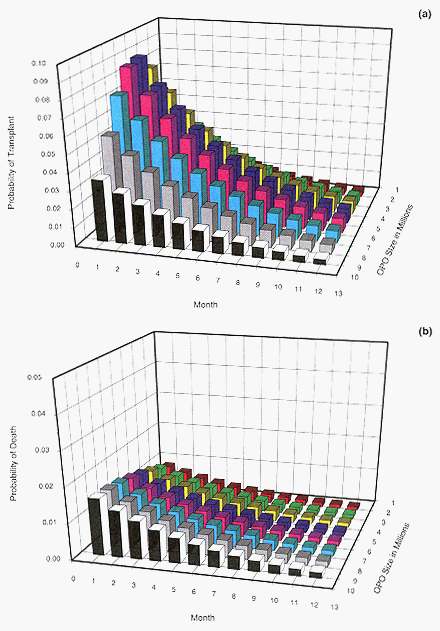
The analysis for status 2B patients (also see Table B-11 in Appendix B) shows that the linear and quadratic size coefficients are significant for both transplantation and pretransplantation mortality and that when OPO size is accounted for, both mortality and transplantation rates decrease over time. At 1 month, transplantation rates range from less than 5 percent for OPOs serving a population 9 million or more to 17 percent for those serving a population of approximately 4 million. OPOs serving populations of 7 million or more have relatively homogeneous estimated transplantation rates, from 5 to 10 percent in month 1 and from 3 to 8 percent in month 4. For patients on the list for 12 months in status 2B, the rate of transplantation is approximately 2 to 5 percent per month regardless of OPO size (see Figure 5-6a). Figure 5-6b displays results for estimated pretransplantation mortality rates. Here OPO size has a smaller effect. At 1 month, the mortality rate is 2 to 3 percent, and at 4 months the rate is approximately 1 percent, regardless of OPO size. At 12 months, the mortality rate is approximately 0.3 percent for all OPOs.
The pattern of results for status 3 is similar to that for status 2B, although the transplantation and mortality rates are somewhat lower (also see Table B-12 in Appendix B). Significant OPO size-related effects are seen for transplantation but not for mortality. Both transplantation and mortality rates show a statistically significant decrease over time. Figure 5-7a reveals that, again, after 4 months of waiting in status 3, the effect of OPO size on transplantation is diminished, but at 1 month, rates vary by size of OPO from a low of 3 percent (>9 million) to a high of 9 percent (5 million). Using an OPO size cutoff of approximately 9 million substantially reduces transplant rates across the entire 12-month period. Figure 5-7b displays a similar graphic for pretransplantation mortality rates and, again, there is a much smaller effect of OPO size. At 1 month the mortality rate is approximately 1 to 1.5 percent, at 4 months the rate is approximately 0.5 to 1 percent, and at 12 months the mortality rate is approximately 0.1 percent, regardless of OPO size.
In sum, as OPO size increases to 9 million people, the probability of transplantation falls for both status 2B and status 3 patients, and the pretransplant mortality also declines for status 2B patients. Thus, the number of status 2B and 3 patients receiving transplant could be reduced to allow more status 1 and 2A patients to receive transplants, without an increase in pretransplant mortality for the status 2B and 3 patients.
A question arises as to why the smaller OPOs have more statuses 2B and 3 patients receiving transplants relative to the larger OPOs. Tables B-13 and B-14 (see Appendix B) shed some light on this issue. Table B-13 reveals that the ratio of transplantations to listings for status 1 patients is generally higher in the larger volume and larger population size OPOs relative to the OPOs serving smaller populations and having a lower transplant volume. Conversely, for statuses 3 to 4 patients, the ratio of transplants to listings is generally larger for the small-volume and small-population OPOs. Based on this result, it could be argued that the reason more status 3 patients are receiving transplants in small OPOs is that these OPOs are more efficient in organ procurement and can there-
fore provide transplants to patients farther down the waiting list. To test this hypothesis, Table B-14 displays transplantation and listing rates expressed as the number of patients listed or receiving transplants per million people served in the OPO. Table B-14 shows that the smaller OPOs in fact have a smaller number of transplants and listings for their population size than the larger OPOs. The OPO with the greatest number of patients receiving transplants has rates of 107 transplants and 270 listings per million people served, whereas smaller OPOs have transplantation and listing rates on the order of 10-50 transplants and 30-100 listings per million people served, respectively. These results suggest that, although smaller OPOs have lower transplantation rates than larger OPOs, their listing rates are even further reduced relative to larger OPOs. This means that smaller OPOs are able to allocate organs to patients farther down their shorter waiting lists than are larger OPOs. Whether this phenomenon is due to patients listing with OPOs in other states or to decreased access or awareness of transplantation as an option in the smaller OPOs remains unclear. In either case, some degree of regional sharing would be expected to help equalize these rates across the country. By increasing regional sharing, both listings and availability of organs should increase to levels comparable to the larger OPOs. A demonstration of this anticipated result is provided in the following section.
THE EFFECT OF SHARING
Although not rigorously implemented, a number of statewide and regional sharing arrangements have been active in 1998 and 1999. Analysis of the preliminary data points to sharing having the effect of increasing transplantation rates for status 1 patients, decreasing pretransplantation mortality for status 2B patients, and decreasing transplantation rates for status 3 patients without increasing mortality.
To shed light on the anticipated benefits of regional and statewide sharing, the previously described models were expanded to include the effects of a new sharing variable coded 0 (no sharing) or 1 (regional or statewide sharing of any kind). In this way, the unique effect of sharing adjusted for age, gender, race, blood type, transplant volume, and OPO-specific effects can be assessed.
For status 1 patients, the effect of sharing on transplantation rates was positive (Maximum Marginal Likelihood Estimates [MMLE] = 0.51, standard error [SE] = 0.28, p = .07) and approached statistical significance, indicating increased likelihood of transplantation of status 1 patients in OPOs that had sharing. The marginal frequency of transplantation increased from 42 percent without sharing to 52 percent with sharing, with average waiting times of 4 and 3 days, respectively. Although the change was not statistically significant, pretransplantation mortality rates decreased from 9 percent without sharing to 7 percent with sharing. The lack of statistical significance for the effect of sharing on mortality may be due to the small number of status 1 patients.
For status 2B patients, the effect of sharing on transplantation rates was not significant, but the effect of sharing on pretransplantation mortality was (MMLE = -0.30, SE = 0.15, p = 0.05). The negative coefficient implies that sharing decreases mortality for status 2B patients, presumably due to the ability to transplant more of the neediest status 2B patients (although there was no overall increase in the total number of status 2B patient transplants). The observed overall mortality rate decreased from 6 percent without sharing to 5 percent with sharing. Even though the overall difference in mortality is small, the number of patients is large and the statistical model is adjusting for a large number of factors including OPO transplant volume. This is important because small-volume OPOs had a significantly increased pretransplantation mortality rate for status 2B patients relative to the large-volume OPOs (see Table B-5 in Appendix B) and the OPOs participating in regional sharing had lower transplant volume and served a smaller population size than the OPOs that did not share (average population size of 5 million versus 7 million). Therefore, if sharing had no effect, the OPOs that were participating in sharing arrangements should have had higher mortality rates than those that did not. In fact, the OPOs with sharing had lower mortality rates, which accounts for the significant difference.
For status 3 patients, sharing had a large effect on transplantation rates (MMLE = -1.89, SE = 0.37, p = 0.001), but no significant effect on pretransplantation mortality. The large negative coefficient indicates that sharing significantly decreases the probability of transplantation for status 3 patients. In the previous analyses (see Table 5-2; also Table B-7 in Appendix B), the rate of transplantation for status 3 patients was significantly higher for smaller-volume OPOs than for the larger-volume OPOs, leading to the expectation that in the absence of a sharing effect, the OPOs with sharing arrangements would have increased transplantation rates for status 3 patients because they are smaller. In fact, sharing equalizes this effect, because the observed marginal transplantation rates are the same for sharing and nonsharing OPOs (i.e., 5 percent). Average time to transplantation is also the same (138 and 136 days, respectively). As a further illustration, the status 3 transplantation rate among the OPOs serving the smallest population (i.e., 2 million or less) is 31 percent for OPOs that do not share and 6 percent for those that do.
In summary, the preliminary naturalistic data on regional and statewide sharing reveal that (1) sharing increases status 1 transplantation rates, (2) sharing decreases status 2B pretransplantation mortality rates, and (3) sharing decreases the rate of transplantation of status 3 patients, therefore providing more available organs for more seriously ill patients. The effect of sharing, which decreased status 3 transplantation rates for these smaller OPOs, did not, however, produce a concomitant increase in mortality of status 3 patients.
SUMMARY
The results of these analyses reveal that systematic OPO variability in transplantation rates increases from 5 percent for status 1 patients to 13 percent for status 2B patients to 35 percent for status 3 patients when expressed as a percentage of total variability in transplantation rates (i.e., an intraclass correlation). In no case was systematic OPO variability in pretransplantation mortality rates larger than 1 percent of the total variability. These results indicate that the large differences in median waiting times that are the basis for claims of inequity are driven by differences in waiting times for status 3 patients across the OPOs and most likely due to differences in listing practices for status 3 patients across the OPOs. Average mean waiting times for status 1 patients across all OPOs were about 4 days, plus or minus 2 days. Thus, the current system appears to be reasonably equitable within the category of status 1 patients. By contrast, average waiting times for status 3 patients were on the order of 100 to 400 days, with considerable variability across OPOs. However, the overall differences among OPOs are somewhat underestimated by the intraclass correlations, which reflect OPO variability controlling for the effects of OPO size.
Race and gender appear to play no significant role as predictors of transplantation rates and pretransplantation mortality rates. By contrast, young children have a lower likelihood than adults of transplantation in status 1, but a higher likelihood when listed as status 2B or 3. Despite the decreased likelihood of transplantation for status 1 children, they have lower pretransplantation mortality than adult patients. This is most likely related to issues of organ size and of childhood illnesses that are severe but less life-threatening than in adults.
Blood type (B and O versus A and AB) has no effect on transplantation or mortality rates in status 1 patients, but in statuses 2B and 3 patients it is associated with a reduced likelihood of transplantation, but not pretransplant death. This effect is presumed to reflect supply and demand considerations that lead less severely ill patients to wait for a donor with a matching blood type and lead status 1 patients, who are likely to die without transplantation, to accept an organ that is not matched for blood type. Finally, OPO transplant volume and population size have no effect on status 1 transplantation rates or pretransplantation mortality rates, but smaller OPOs (defined both in terms of transplant volume and population served) have higher transplantation rates for statuses 2B and 3 patients relative to larger OPOs.
Thus, smaller OPOs, by generally transplanting more statuses 2B and 3 patients than larger OPOs, may contribute to a situation in which more severely ill patients are required to wait longer for organs at increased risk of death.
The duration of waiting time had no effect on either rate for status 1 patients. By contrast, the longer statuses 2B and 3 patients remain on the list, the less is the likelihood that they will die or receive a transplant. This finding suggests that there may be a subgroup of status 2B and 3 patients that are more severely ill and have increased likelihood of either being transplanted or dying earlier in the course of their illness.
A detailed evaluation of the effects of OPO size (defined by millions of people served) confirmed that transplantation rates for statuses 2B and 3 patients are higher for those OPOs serving fewer people, but pretransplantation mortality rates are constant across OPOs of varying size for status 3 patients. For status 2B patients, there appears to be increased pretransplant mortality in the smaller OPOs. Statuses 2B and 3 transplantation rates were lower in OPOs that serve populations of approximately 9 million, relative to the smaller OPOs. Smaller OPOs have lower transplantation rates per million people served, but even lower listing rates per million people served, relative to larger OPOs. The lower listing rates at small OPOs appear to permit these small OPOs to perform transplants on patients who are farther down the waiting list than do the larger OPOs, rather than reflecting greater efficiency.
Finally, analysis of the preliminary data on regional and statewide sharing showed that sharing (1) increases status 1 transplantation rates, (2) decreases status 2B pretransplantation mortality rates, and (3) decreases the rate of transplantation of status 3 patients, therefore providing more available organs for more seriously ill patients with no concomitant increase in mortality of status 3 patients.
CONCLUSIONS AND RECOMMENDATIONS
The results of the analyses of data on OPO size (defined as either population served or number of transplants per year) provide several insights concerning (1) the determinants and utility of waiting time as a listing criterion and (2) the impact of the size of the organ allocation area on the ability to satisfy the needs of the medically urgent.
Assuming it is more important from a medical urgency standpoint for a status 1 or 2A patient to receive a transplant than it is for a status 2B or 3 patient (a position implicitly endorsed by the internal allocation policies adopted by the OPTN), utilizing the geographical areas served by smaller OPOs as allocation areas for livers results in the allocation of organs to patients for whom transplantation is less medically urgent. Current procedures and policies result, in general, in more statuses 2B and 3 patients receiving transplants in areas served by smaller OPOs than in areas served by larger OPOs. Consequently, more severely ill patients may be required to wait longer for organs, at increased risk of mortality.
A reasonable improvement in the current allocation scheme could be achieved by creating allocation areas of sufficient size to shift some of the transplants from status 3 to statuses 1 and 2. Smaller OPOs could be grouped into regional sharing arrangements such that the minimum population level served would be above the critical level for equitable allocation. The statistical analysis of the data summarized in Table B-8 revealed that OPOs that had fewer than 300 transplants performed in their service area over the four year period were significantly more likely to provide organs for status 2B and status 3 patients than
OPOs that exceed that total volume. In addition, status 2B patients served by OPOs with a volume of less than 160 transplants within their service area had a significantly increased risk of pretransplant mortality while on the waiting list. This suggests that the appropriate scale for organ allocation would be an area in which at least 75 liver transplants are performed per year (i.e., approximately 300 transplants over the 4-year period 1995-1999).
An analysis done with respect to the size of the OPOs (in millions of population) revealed a nonlinear relationship between size and the probability that a status 2B or status 3 patient would receive a transplant. These results are displayed in Figures 5-6a and 5-7a. The estimated marginal probabilities from the committee's statistical model indicate that a minimum population size of about 9 million provides an allocation area with the lowest estimated probability of transplantation of status 2B and status 3 patients, without a statistically significant increase in pretransplant mortality. The OPOs serving a minimum population of 9 million people in all cases also had 75 or more transplants within their service areas (see Table B-14). Based on this analysis, the committee reached the following conclusion:
Creation of organ allocation areas based on a minimum population of approximately 9 million persons would substantially increase the allocation of organs to patients with more urgent need of organs.
Although the policy discussion about variations in waiting time across regions has focused on overall median waiting times, the committee's analyses demonstrate that overall median waiting times are a poor measure of the fairness or effectiveness of organ allocations. This is because the median waiting times, as previously calculated by others, are determined primarily by the waiting times of status 3 patients, who have the least urgent need for transplantation.
Overall median waiting time, which has dominated the policy debate, is a poor measure of differences in access to transplantation. Status-specific rates of pretransplantation mortality and transplantation are more meaningful indicators of equitable access.
Examination of status-specific average waiting times across OPO areas demonstrates that they are typically only about 3-4 days for status 1 patients and 40-70 days for status 2 patients, compared to 100-400 days for status 3 patients. Moreover, there is far less variability in waiting times across OPO areas for status 1 patients than for statuses 2B and 3 patients. Similarly, pretransplant mortality did not vary substantially across OPO areas for all three status levels.
The current system appears to generate reasonably little variation in waiting times across OPOs for statuses 1 and 2A patients, indicating that waiting time is an appropriate criterion for organ allocation,
along with necessary medical criteria, within these categories. Greater amounts of variation occur for statuses 2B and 3 patients across OPOs.
The committee's analysis demonstrates that statuses 2B and 3 patients have a decreased likelihood of either transplantation or mortality the longer they are on the list, suggesting that a subgroup of statuses 2B and 3 patients, despite meeting criteria for listing for transplantation, have little likelihood of receiving a transplant and are also at little risk of dying. It may be that some patients are listed early in some centers to earn ''seniority points."
The committee's analysis suggests that one consequence of this practice has been to contribute to the appearance of an inequitable allocation system. Eliminating the use of waiting time in statuses 2b and 3 as a component of the priority score would be one means of reducing the incentive to list patients in status 2B or 3 who are unlikely to require a transplant within a reasonable period of time.
Among the statuses 2B and 3 patients there appears to be a subgroup of patients who are more likely to require a transplant within a shorter period of time than the remainder of patients in that status. The remaining patients in that status will live a relatively long time with chronic liver disease, not become medically urgent, and not receive a transplant. Thus, the length of waiting time in statuses 2B and 3 is not a good indicator of medical urgency or priority.
The committee believes that all parties involved in organ procurement, allocation, and transplantation are carrying out these responsibilities conscientiously and trying to be as effective as possible within the constraints of the current structures and procedures. Moreover, there is broad agreement that the ultimate objective of the organ procurement and allocation system is the extended life and improved health of the patients. On the basis of the analyses in this report, it seems apparent that patients on liver transplant waiting lists will be better served by an allocation system that facilitates broader sharing within larger populations.
RECOMMENDATION 5.1: Establish Organ Allocation Areas for Livers
The committee recommends that the DHHS Final Rule be implemented by the establishment of Organ Allocation Areas (OAAs) for livers—each serving a population base of at least 9 million people (unless such area exceeds the limits of acceptable cold ischemic time). OAAs should generally be established through sharing arrangements among organ procurement organizations to avoid disrupting effective current procurement activities.
If broader sharing is implemented, as recommended, patients who are status 2B or 3 should be told that they are less likely to receive a transplant. This information should be accompanied by a clear statement describing their condition, the risks and benefits of transplantation, and their likely quality of life without it.
They should also be told that if their status changes to 2A or 1 they will have a greater chance of transplantation given broader sharing. Telling patients that transplantation is highly unlikely may help them adjust to life with chronic liver disease.
Physicians must develop an informed consent process to address this range of issues with their patients.
RECOMMENDATION 5.2: Discontinue Use of Waiting Time as an Allocation Criterion for Patients in Statuses 2B and 3
The heterogeneity and wide range of severity of illness in statuses 2B and 3 make waiting time relatively misleading within these categories. For this reason, waiting time should be discontinued as an allocation criterion for status 2B and 3 patients. An appropriate medical triage system should be developed to ensure equitable allocation of organs to patients in these categories. Such a system may, for example, be based on a point system arising out of medical characteristics and disease prognoses rather than waiting times.


