
PANEL 2
Is there a relationship between minimum cell size and environment?
Is there a continuum of size and complexity that links conventional bacteria to viruses?
What is the phylogenetic distribution of very small bacteria?
Discussion
Summarized by Kenneth Nealson, Panel Moderator
Goals of the Session
Panel 2 focused in general discussions on the issue of whether any given kind of environment appeared to favor very small microbes. Experts with experience in a wide variety of intracellular and extracellular niches, including host cells (Van Etten and Kajander), aquatic environments (Button and DeLong), hydrothermal environments (Stetter and Adams), and soils and sediments (Staley) presented their views (Table 1). Insofar as it was possible, the discussion was focused on questions relating to the size ranges of organisms found in each environment, and the question of whether some properties of the environment (nutritional, physical, or chemical) might lead to the favoring of very small, nanometer-sized cells. In essence, this discussion sought to use the natural experiences of field and laboratory microbiologists to reach consensus on questions such as the following:
1. What are the smallest sizes of viable organisms actually seen in the environment?
2. What are the environmental issues that impose or relieve restrictions on cell size?
3. What strategies are used to attain and maintain small size in nature?
Organisms Encountered in Natural Environments
What are the smallest viable organisms actually encountered in the various environments? In pursuit of the answer to this question, the speakers focused on their environments of interest (see Table 1) and the sizes of organisms encountered there. Included were organisms such as obligate parasites and symbionts, as well as free-living organisms, both rapidly growing and in various types of resting stages. For the sake of completeness, mitochondria and chloroplasts were included, although no
Table 1 Organisms, Environments, and Presenters
|
Organism |
Environment |
Speaker |
|
Viruses |
Animal or plant cells |
Van Etten |
|
Nanobacteria |
Animal serum |
Kajander |
|
Attached bacteria |
Soils, sediments, rocks |
Staley |
|
Hyperthermophiles |
Hot springs and vents |
Stetter |
|
Hyperthermophiles |
Hot springs and vents |
Adams |
|
Aquatic bacteria |
Lakes and oceans |
Button; DeLong |
Table 2 Size Ranges of Organisms or Organelles, and Niches Where They Are Found
|
Organism |
Diameter Range (nm) |
Life Style |
|
Virus |
30 to 200 |
Host-dependent |
|
Nanobacteria |
100 to 200 |
Host-dependent |
|
Marine bacteria |
100 and larger |
Free-living |
|
Attached forms |
100 and larger |
Free-living |
|
Hyperthermophiles |
200 and larger |
Free-living |
|
Mitochondria |
200 and larger |
Host-dependent |
|
Chloroplasts |
200 and larger |
Host-dependent |
presentations were specifically made in these areas. The size ranges shown in Table 2 represent the consensus values reached in the presentations and in ensuing discussions by the assembled group. In many cases it was hard to reach consensus on firm estimates for the smallest organisms or organelles encountered, and the reader is referred to specific arguments in the individual papers. For example, there was considerable debate with regard to the nanobacteria, as summarized by Dr. Kajander. While such nanobacteria have been reported to be smaller than 100 nm in diameter, Dr. Kajander was of the opinion that the only organisms for which growth could be established with certainty were those of 100-nm diameter or larger. This represents an area of considerable importance in terms of being able to search for and recognize very small organisms (e.g., Are there organismal fragments that appear to have similar morphologies, but are not actually viable, growing entities?).
A point of interest with regard to this area is that virtually all of the microbiologists present had encountered structures resembling cells in the size range of 100 to 200 nm, but whether or not these could be demonstrated to be viable or cultivable microbes had usually not been established. The timeworn method of filtration through a 200-nm (0.2 micrometer) pore-size filter was still very dependable in terms of delineating cultivable bacteria.
Environmental Parameters and Size
What are the environmental issues that may impose or relieve restrictions on the smallest sizes that can be achieved by organisms? In pursuit of this question, the speakers considered a variety of different environmental factors that might lead to organisms adopting a smaller size. These included:
|
1. |
Nutrient-rich environments, which allow evolution to small cells with less biosynthetic capacity, such as obligate parasites or symbionts; |
|
2. |
Nutrient-poor environments, which lead to adaptation of small, starved cells; |
|
3. |
High or low temperature; and |
|
4. |
Attachment to surfaces. |
Of the issues discussed, that of nutrient availability was repeatedly noted as one of potential importance. Two major issues were emphasized: (1) the effect of nutrient limitation and starvation, which leads to adaptation of normally large cells to resting stages that are considerably smaller; and (2) the effect of nutrient richness, which leads to evolution of cells that are host dependent, and often considerably smaller.
In nutrient-poor environments, organisms were deemed to be small in the starved state, although the lower size limit of this starvation state appears to be on the order of 200 rim. The mechanisms for achieving such small size (or for returning to a state of larger, rapidly growing cells) are not well understood. However, such organisms are not regarded as true nanobacteria, because under nominal growth conditions, they are considerably larger than the diminutive forms discussed here. These larger forms are thought to represent a true evolutionary lower size limit for DNA-based life.
In the case of intracellular symbiosis or parasitism in nutrient-rich environments, considerable discussion occurred as to whether or not such organisms could eliminate enough functions to evolve to a very small size. Dr. Adams presented a general discussion of the theoretical limits of life, based on organisms with the same basic biochemistry as those we are familiar with. At the theoretical extreme are the viruses, which are obligate intracellular parasites and which have no need for their own transport systems, translation machinery, or transcription apparatus. These organisms can be quite small, as they consist of a protein coat surrounding the genetic material. The lower size limits are seen in some RNA viruses like the Qβ virus (which contains only three genes), and in certain animal viruses (e.g., poliovirus) that are in the range of 25 to 50 nm in diameter, while most others are in the range of 100 to 200 nm or even larger. Symbiotic organelles or bacteria are also commonly found in the 200-nm range and are sometimes smaller. These include non-cultivable bacteria from a wide variety of organisms, intra-cellular organelles (e.g., mitochondria or chloroplasts), and the enigmatic nanobacteria discussed by Dr. Kajander.
It should be clear, however, that the strategies used for attaining and maintaining small size will be very different for the oligotrophic organisms, which become small as a matter of optimizing their surface-to-volume ratio under diffusion-limited growth conditions, and the eutrophic organisms, which are allowed to become small because of the richness of their environment. In the latter case, these organisms are not faced with the maintenance of the genetic or physiological capacity for either extensive biosynthesis or diverse catabolism. While it is often possible to maintain such "obligate" symbionts or parasites in a host-free growth phase using a very rich medium, discussion of their role(s) as very small bacteria may be relevant only in the context of their existence as parasites or symbionts.
Perhaps the liveliest discussion in Panel 2 centered on the specification of the smallest sizes actually seen in the environment and the criteria that one accepts for a living cell. To this end, Dr. Kajander proposed that nanobacteria may fragment into non-growing entities that appear considerably smaller than the true, viable organisms, and that these fragments may come together at a later time to form a viable organism. In terms of this possibility, Dr. Van Etten pointed out that some plant viruses exhibit just such a pattern. Each particle packages separate RNA, and sometimes three separate particles are needed to establish an infection. It was also noted that many estimates of the smallest sizes for viable
organisms come from filtration studies, and that bacteria with non-rigid cell walls may pass through filters of pore size smaller than their actual diameter.
As a final point, one would like to have an indication of the minimum cell volume needed to sustain life. Dr. de Duve emphasized that diameter alone is not a sufficient parameter, pointing out the practical difficulty of estimating true diameter from random thin sections To this end, the discussion by Dr. Adams focused almost entirely on the intracellular volumes of variously sized and shaped organisms, and the possibility that such volumes could accommodate the machinery of life.
Strategies for Attaining and Maintaining Small Cell Size
Are there strategies that can allow the minimum size of an organism to be smaller than might be anticipated through studies of extant organisms? With regard to this question, several strategies were considered by Panel 2 speakers. The first, discussed briefly above, was that of Kajander and Van Etten, in which organisms actually fragment so that each very small organism is incapable of growth, but the population is capable of achieving success. While this strategy is known for some RNA viruses, there are as yet no examples among the prokaryotes.
A second strategy considered was that employed by parasites and symbionts, which simply discard a sizable fraction of their genetic information and adopt a host-dependent life style. Such organisms, while achieving a very small size, sacrifice the freedom of being host-free.
Other approaches that might allow attainment and maintenance of a smaller cell size are (1) reduction of the average size of proteins; (2) an RNA-world approach in which a single type of molecule accomplishes both catalytic and genetic functions; and (3) the use of overlapping genes and genes on complementary strands. In no case has a systematic analysis of any of these approaches been done.
Consensus?
In terms of reaching a consensus, Panel 2 members, with the exception of Dr. Kajander, who described nanobacteria in the size range of 100 nm, considered that the lower size limit of bacteria-like particles believed to be cultivable corresponded to spherical organisms with a diameter in the size range of 200 to 250 nm. The nanobacteria of Kajander are “obligate” parasites (e.g., they require very rich media to achieve host-free growth) and so may fall into the category of organisms adopting a host-dependent life style. Thus, despite a very large amount of discussion, a general consensus was reached that was in agreement with the theoretical arguments put forward during the workshop, that the lower limit of size for a free-living, DNA-based organism corresponds to a spherical organism with a diameter in the size range of 200 to 250 nm. For host-dependent organisms the size may be smaller, and the extent of the smallness will certainly depend on the extent to which genetic and physiological functions have been discarded.
For an organism that used one type of molecule for both catalysis and replication, the size could be considerably smaller, as discussed by Dr. Benner and others.
Can Large dsDNA-Containing Viruses Provide Information About the Minimal Genome Size Required to Support Life?
James L. Van Etten
Department of Plant Pathology University of Nebraska at Lincoln
Abstract
The genomes of a few viruses, such as Bacillus megaterium phage G (670 kb) and the chlorella viruses (330 to 380 kb), are larger than the predicted minimal genome size required to support life (ca. 320 kb). A comparison of the 256 proteins predicted to be required for life with the putative 376 proteins encoded by chlorella virus PBCV-1, as well as those encoded by other large viruses, indicates that viruses lack many of these "essential" genes. Consequently, it is unlikely that viruses will aid in determining the minimal number and types of genes required for life. However, viruses may provide information on the minimal genome size required for life because the average size of genes from some viruses is smaller than those from free-living organisms. This smaller gene size is the result of three characteristics of virus genes: (1) virus genes usually have little intragenic space between them or, in some cases, genes overlap; (2) some virus-encoded enzymes are smaller than their counterparts from free-living organisms; and (3) introns occur rarely, if at all, in some viruses.
Introduction
Two recent estimates of the minimum genome size required to support life arrived at similar values. (1) The effect of 79 random mutations on the colony-forming ability of Bacillus subtilis resulted in the conclusion that a genome of 318 kb could support life (Itaya, 1995). Assuming 1.25 kb of DNA per gene (Fraser et al., 1995), this amount of DNA would encode 254 proteins. (2) A comparison of the genes encoded by Mycoplasma genitalium and Haemophilus influenzae led Mushegian and Koonin (1996) to suggest that as few as 256 genes are necessary for life. Using the same 1.25 kb gene size, the minimum self-sufficient life-form would have a 320 kb genome. Interestingly, these estimates are smaller than the genomes of some viruses (Table 1). Bacteriophage G, which infects Bacillus megaterium, has a genome of about 670 kb (Hutson et al., 1995); phycodnaviruses that infect chlorella-like green algae have 330 to 380 kb genomes (Rohozinski et al., 1989; Yamada et al., 1991); and some insect poxviruses have genomes as large as 365 kb (Langridge and Roberts, 1977). Other large, dsDNA-containing viruses, such as herpesviruses, African swine fever virus (ASFV), coliophage T4, baculoviruses, and iridoviruses, have genomes ranging from 100 to 235 kb (see Table 1). However, except for the common property of having large dsDNA genomes, these viruses differ significantly from one another in such characteristics as particle morphology, genome structure, and the intracellular site of replication. For example, poxviruses, herpesviruses, and baculoviruses have an external lipid envelope, whereas iridoviruses and phycodnaviruses have an internal lipid component. Baculovirus genomes are circular, iridoviruses and phage T4 have linear circular permuted genomes with terminal reduncancy, and the linear genomes of herpesviruses have sequences from both termini that are repeated internally in an inverted form. The phycodnaviruses, poxviruses, and ASFV have linear genomes with covalently closed hairpin ends. Finally, herpesviruses and baculoviruses primarily replicate in the nucleus, whereas
Table 1 Representative Large dsDNA Viruses
|
Virusa |
Virus Family |
Host |
Genome Size (bp) |
Minimum No. of Codonsb |
No of Genes |
Average Length of Gene (Bases) |
Reference |
|
Phage G |
Myoviridae |
Bacillus megaterium |
˜670,000 |
— |
— |
— |
Hutson et al., 1995 |
|
PBCV-1 |
Phycodnaviridae |
Chlorella NC64A |
330,742 |
65 |
376c |
880 |
Li et al., 1997 |
|
MsEPV |
Poxviridae |
Grasshopper |
236,120 (222,120)d |
60 |
267 (257)d |
884 (864)d |
Afonso et al., 1998 |
|
MCV |
Poxviridae |
Human |
190,289 (180,889)e |
60 |
182 (180)e |
1,046 (1,005)e |
Senkevich et al., 1996 |
|
ASFV |
Unclassified |
Swine |
170,101 (166,613)f |
60 |
151 |
1,127 (1,103)f |
Yanez et al., 1995 |
|
Coliphage T4 |
Myoviridae |
E. coli |
168,800 |
29 |
288g |
586 |
Kutter et al., 1994 |
|
HSV-2 |
Herpesviridae |
Human |
154,746 |
— |
74h |
2,091 |
Dolan et al., 1998 |
|
AcNPV |
Baculoviridae |
Insects |
133,894 |
50 |
154 |
890 |
Ayres et al., 1994 |
|
LCDV |
Iridoviridae |
Flounder |
102,653 |
40 |
110 |
933 |
Tidona and Darai, 1997 |
|
a G, Giant; PBCV-1, Paramecium bursaria chlorella virus 1; MsEPV, Melanoplus sanguinipes entomopoxvirus; MCV, Molluscum contagiosum virus; ASFV, African swine fever virus; HSV-2, Herpes simplex virus type 2; AcNPV, Autographa californica multinucleocapsid nuclear polyhedroses virus; LCDV, lymphocystis disease virus. b Minimum number of codons used by the authors to calculate an open reading frame (ORF). c Four of the genes are diploid. d MsEPV has a 7 kb inverted repeat at each terminus. This 14 kb encodes 10 small ORFs (60 to 155 codons). Removal of 14 kb and 10 ORFs from the calculations produces the smaller genome size (in parentheses). e MCV has a 4.7 kb inverted repeat at each terminus. This 9.4 kb encodes two 488 codon ORFs. Removal of 9.4 kb and 2 ORFs from the calculations produces the smaller genome size (in parentheses). f ASFV has a 2134 bp inverted repeat at each terminus. The most terminal 1744 bp at each end do not encode an ORF and thus 3488 bp were removed from the calculations, which leads to the smaller genome size (in parentheses). g This includes 161 genes known to encode proteins and 127 suspected of encoding proteins (Gisela Mosig, personal communication). h HSV-2 has 473 met-initiated ORFs of 50 codons or longer of which 74 are known to be functional genes. If some of the additional 399 ORFs prove to be protein encoding, the average length of a herpesvirus gene would decrease substantially. |
|||||||
the entire life cycle of the poxviruses occurs in the cytoplasm. Iridoviruses and phycodnaviruses initiate replication in the nucleus, but capsids are assembled and DNA is packaged in the cytoplasm.
With the exception of bacteriophage G, the genome of at least one representative of each of these dsDNA-containing viruses has been sequenced, and the number of putative genes encoded by the viruses are listed in Table 1. Because the 330,742 bp genome of the phycodnavirus PBCV-1 is the largest virus genome sequenced to date (Lu et al., 1995, 1996; Li et al., 1995, 1997; Kutish et al., 1996), it will be used to illustrate the organization and diversity of genes that can be encoded by a large dsDNA-containing virus. The PBCV-1 genome encodes 701 open reading frames (ORFs), defined as continuous stretches of DNA that translate into a polypeptide initiated by an ATG translation start
codon, and extending 65 or more codons. The 701 ORFs have been divided into 376, mostly non-overlapping, ORFs (major ORFs), which are predicted to encode proteins, and 325 short ORFs, which are probably non-protein encoding. Four PBCV-1 ORFs reside in the 2.2 kb inverted terminal repeat region of the PBCV-1 genome and consequently are present twice in the PBCV-1 genome (Strasser et al., 1991; Lu et al., 1995). The 376 PBCV-1 ORFs are evenly distributed along the genome and, with one exception, there is little intergenic space between them. The exception is a 1788-bp non-protein coding sequence near the center of the genome. This region, which has numerous stop codons in all reading frames, does code for ten tRNA genes. The middle 900 bp of this intergenic region also has some characteristics of a "CpG island" (Antequera and Bird, 1993). To put the coding capacity of the PBCV-I genome in perspective, the 580-kb genome of the smallest self-replicating organism, Mycoplasma genitalium encodes about 470 genes (Fraser et al., 1995).
Computer analyses of the predicted products of the 376 PBCV-1 major ORFs indicate that about 40% of the ORFs resemble proteins in the databases, including many interesting and unexpected proteins. Some PBCV-1 encoded proteins resemble those of bacteria and phages, such as DNA restriction endonucleases and methyltransferases. However, other PBCV-1 encoded proteins resemble those of eukaryotic organisms and their viruses, such as translocation elongation factor-3, RNA guanyltransferase, and two proliferating cell nuclear antigens. The PBCV-1 genome is thus a mosaic of prokaryotic- and eukaryotic-like genes, suggesting considerable gene exchange in nature during the evolution of these viruses.
This gene diversity undoubtedly reflects the natural history of the chlorella viruses. The viruses are ubiquitous in freshwater collected worldwide, and titers as high as 4 × 10⁴ infectious viruses per ml of native water have been obtained (Van Etten et al., 1985; Yamada et al., 1991). The only known hosts for these viruses are chlorella-like green algae, which normally live as hereditary endosymbionts in some isolates of the ciliate, Paramecium bursaria. In the symbiotic unit, algae are enclosed individually in perialgal vacuoles and are surrounded by a host-derived membrane (Reisser, 1992). The endosymbiotic chlorella are resistant to virus infection and are only infected when they are outside the paramecium (Van Etten et al., 1991).
Because of the large size of the PBCV-1 genome, it is not surprising that many of the predicted 376 PBCV-1 genes have not been found in other viral genomes. Box 1 lists some of the PBCV-1 encoded ORFs that match proteins in the databases and, in a few cases, indicate if a gene is transcribed early (E) or late (L) during virus replication. The functionality of some PBCV-1 encoded proteins has been established by either complementation of mutants and/or assaying recombinant protein for enzyme activity. (These proteins are indicated with an asterisk in Box 1.) Twenty-nine of the PBCV-1 ORFs resemble one or more other PBCV-1 ORFs suggesting that they might be either gene families or gene duplications. Sixteen families have 2 members, 8 families have 3 members, 3 families have 6 members, and 2 families have 8 members.
Even if some of the suspected 376 PBCV-1 protein-encoding genes turn out to be non-coding, it is clear that PBCV-1 encodes more genes than the minimum number predicted to be necessary to support life. Comparing the genes that Mushegian and Koonin (1996) proposed were essential to support life with the PBCV-1 encoded genes indicates that the virus lacks many of these genes, including a RNA polymerase, a complete protein synthesizing system, and an energy-generating system. Consequently, PBCV-1 depends on the algal host to fulfill these essential functions.
A comparison of the genes encoded by the other large dsDNA-containing viruses listed in Table 1 with those encoded by PBCV-1 indicates that a few genes are present in all of the viruses, e.g., each of the viruses encodes a DNA polymerase gene. However, there are more differences in the genes encoded by these viruses than similarities, which reflects the different life-styles of the viruses. Like PBCV-1,
|
Box 1 Putative ORFs Encoded by Chlorella Virus PBCV-1a |
each of these viruses rely on their host cells for such basic functions as energy generation, protein synthesis, and amino acid biosynthesis. The net result is that it seems unlikely that examining virus genes will aid in determining the minimal number and types of genes required to support life.
On the other hand, viruses may provide useful information about the minimum genome size required for the genes to support life. In Table 1, we have calculated the average length of a virus gene by dividing the genome size by the number of putative genes. Except for herpesvirus HSV 2, the size of the average virus gene varied from 586 nucleotides for coliphage T4 to 1,127 nucleotides for ASFV, with the average gene size for five of the viruses being less than 1 kb. The sizes are even smaller if one removes the non- or sparsely-coding regions in the virus genomes before making the calculations. For example, the two poxviruses MsEPV and MCV, as well as ASFV, have inverted terminal repeat regions that either are non-coding or only encode a few genes. Eliminating these non-coding regions from the calculations reduces the size of the average MsEPV gene from 884 nucleotides to 864 nucleotides, the MCV gene from 1,046 nucleotides to 1,005 nucleotides and ASFV from 1,127 nucleotides to 1,103 nucleotides (Table 1).
Similar calculations made on nine Eubacteria and three Archaea indicate that the average length of Eubacteria protein-encoding genes ranges from 1,023 nucleotides for Aquifex aeolicus to 1,234 nucleotides for Mycoplasma genitalium (Doolittle, 1998). The predicted average length of the three archaea is slightly smaller—895, 943, and 961 nucleotides for Archaeoglobus fulgidus, Methanococcus thermo-autotrophicurn , and M. jannaschii, respectively. Thus, depending on the virus and bacterium being compared, the average functional virus gene is 10 to 50% smaller than the average bacterial gene. This conclusion depends on the assumption that at least the majority of the predicted virus genes, in fact, encode proteins.
The apparent smaller size of genes from large dsDNA viruses can be attributed to three factors. (1) Typically, virus genomes have little intergenic space and, in some cases, genes overlap. This tight packaging of genes does not prevent gene regulation, however, as virus genes are typically expressed early or late in the replication cycle. The 376 major ORFs in chlorella virus PBCV-1 are evenly distributed along the genome, and 85% are separated by less than 200 nucleotides. Likewise, 85% of the 151 putative genes in ASFV are also separated by less than 200 nucleotides (Yanez et al., 1995). The genes in phage T4 are even more tightly packed (Kutter et al., 1994). Consequently, transcription start and stop signals plus the regulatory regions for at least some virus genes are extremely short, or they are located in the coding region of adjacent genes.
(2) Some virus-encoded proteins are smaller than those from free-living organisms and may approach the minimum size required for enzyme activity. Examples include the PBCV-1 encoded 298 amino acid residue ATP-dependent DNA ligase, the 1,061 amino acid residue type II DNA topoisomerase, and the 372 amino acid residue ornithine decarboxylase. Each of these virus-encoded proteins has the expected enzyme activity. ATP-dependent DNA ligases range in size from the 268 amino acid residue enzyme from Haemophilus influenzae (Cheng and Shuman, 1997) to the 1,070 amino acid residue enzyme from Xenopus laevis (Lepetit et al., 1996). The PBCV-1 enzyme is the second smallest ATP-dependent ligase in the databases. The PBCV-1 encoded type II DNA topoisomerase is about 130 amino acids smaller than the next smallest type H topoisomerase in the databases, which is encoded by virus ASFV (Garcia-Beato et al., 1992). The PBCV-1 encoded ornithine decarboxylase is about. 90 amino acids smaller than the next smallest ornithine decarboxylase in the databases. Likewise, the large subunit of ribonucleotide reductase from the baculovirus Orgyia pseudotsugata multinucleocapsid nuclear polyhedrosis virus (OpMNpV) is 150 to 200 amino acids smaller than its counterpart from most organisms (Ahrens et al., 1997).
(3) Even though introns were first discovered in adenoviruses (Berget et al., 1977; Chow et al.,
1977), the genes of many large DNA-containing viruses either lack introns, e.g., poxviruses, baculoviruses, iridoviruses, and ASFV, or only have a few short introns, e.g., phycodnaviruses. An absence of introns obviously contributes to the smaller size of virus genes.
To summarize, it is unlikely that studying viruses will reveal useful information about the minimum number and types of genes required to support life. However, the finding that, on average, virus genes can be 10 to 50% smaller than those from bacteria indicate that the minimum genome size required to support life may be smaller than previously thought.
Acknowledgments
I thank Les Lane, Mike Nelson, Myron Brakke, and Mike Graves for their comments on this manuscript and Dan Rock and Gisela Mosig for the information on MsEPV virus and coliphage T4, respectively.
References
Afonso, C.L., E.R. Tulman, Z. Lu, E. Oma, G.F. Kutish, and D.L. Rock. 1998. The genome of Melanoplus sanguinipes entomopoxvirus. J. Virol. (in press).
Ahrens, C.H., R.L.Q. Russell, CJ. Funk, J.T. Evans, S.H. Harwood, and G.F. Rohrmann. 1997; The sequence of the Orgyia pseudotsugata multinucleocapsid nuclear polyhedrosis virus genome. Virology 229:381-399.
Antequera, F., and A. Bird. 1993. CpG Islands. Pp. 169-185 in DNA Methylation: Molecular Biology and Biological Significance, P.J. Jost and P.H. Saluz (eds.), Basel, Switzerland: Birkhauser Verlag.
Ayres, M.D., S.C. Howard, J. Kuzio, M. Lopez-Ferber, and R.D. Possee. 1994. The complete DNA sequence of Autographa californica nuclear polyhedrosis virus. Virology 202:586-605.
Berget, S.M., C. Moore, and P.A. Sharp. 1977. Spliced segments at the 5'terminus of adenovirus 2 late mRNA. Proc. Natl. Acad. Sci. USA 74:3171-3175.
Cheng, C., and S. Shuman. 1997. Characterization of an ATP-dependent DNA ligase encoded by Haemophilus influenzae. Nucleic Acids Res. 25:1369-1374.
Chow, L., R. Gilinas, T. Broker, and R. Roberts. 1977. An amazing sequence arrangement at the 5'ends of adenovirus 2 messenger RNA. Cell 12:1-8.
Dolan, A., F.E. Jamieson, C. Cunningham, B.C. Barnett, and D.J. McGeoch. 1998. The genome sequence of herpes simplex virus type 2. J. Virol . 72:2010-2021.
Doolittle, R.F. 1998. Microbial genomes opened up. Nature 392:339-342.
Fraser, C.M., J.D. Gocayne, O. White, M.D. Adams, R.A. Clayton, R.D. Fleischmann, C.J. Bult, A.R. Kerlavage, G. Sutton, J.M. Kelley, J.L. Fritchman, J.F. Weidman, K.V. Small, M. Sandusky, J. Fuhrmann, D. Nguyen, T.R. Utterback, D.M. Saudek, C.A. Phillips, J.M. Merrick, J.F. Tomb, B.A. Dougherty, K.F. Bott, P.C. Hu, T.S. Lucier, S.N. Peterson, H.O. Smith, C.A. Hutchison, and J.C. Venter. 1995. The minimal gene-complement of Mycoplasma genitalium. Science 270:397-403.
Garcia-Beato, R., J.M.P. Freije, C. Lopez-Otin, R. Blasco, E. Vinuela, and M.L. Salas. 1992. A gene homologous to topoisomerase II in African swine fever virus. Virology 188:938-947.
Hutson, M.S., G. Holzwarth, T. Duke, and J.L. Viovy. 1995. Two-dimensional motion of DNA bands during 120° pulsed-field gel electrophoresis. I. Effect of molecular weight. Biopolymers 35:297-306.
Itaya, M. 1995. An estimation of minimal genome size required for life. FEBS Lett. 362:257-260.
Kutish, G.F., Y. Li, Z. Lu, M. Furuta, D.L. Rock, and J.L. Van Etten. 1996. Analysis of 76 kb of the chlorella virus PBCV-1 330-kb genome: Map positions 182 to 258. Virology 223:303-317.
Kutter, E., T. Stidham, B. Guttman, E. Kutter, D. Batts, S. Peterson, T. Djavakhishvili, F. Arisaka, V. Mesyanzhinov, W. Ruger, and G. Mosig. 1994. Genomic map of bacteriophage T4. Pp. 491-519 in Molecular Biology of Bacteriophage T4, J.D. Karam (ed). Washington DC: American Society for Microbiology.
Langridge, W.H.R., and D.W. Roberts. 1977. Molecular weight of DNA from four entompoxviruses determined by electron microscopy. J. Virol . 21:301-308.
Lepetit, D., P. Thiebaud, S. Aoufouchi, C. Prigent, R. Guesne, and N. Theze. 1996. The cloning and characterization of a cDNA encoding Xenopusa levis DNA ligase I. Gene 172:273-277.
Li, Y., Z. Lu, D.E. Burbank, G.F. Kutish, D.L. Rock, and J.L. Van Etten. 1995. Analysis of 43 kb of the chlorella virus PBCV-1 330-kb genome: Map position 45 to 88. Virology 212:134-150.
Li, Y., Z. Lu, L. Sun, S. Ropp, G.F. Kutish, D.L. Rock, and J.L. Van Etten. 1997. Analysis of 74 kb of DNA located at the right end of the chlorella virus PBCV-1 330-kb genome. Virology 237:360-377.
Lu, Z., Y. Li, Q. Que, G.F. Kutish, D.L. Rock, and J.L. Van Etten. 1996. Analysis of 94 kb of the chlorella virus PBCV-1 330-kb genome: Map positions 88 to 182. Virology 216:102-123.
Lu, Z., Y. Li, Y. Zhang, G.F. Kutish, D.L. Rock, and J.L. Van Etten. 1995. Analysis of 45 kb of DNA located at the left end of the chlorella virus PBCV-1 genome. Virology 206:339-352.
Mushegian, A.R., and E.V. Koonin. 1996. A minimal gene set for cellular life derived by comparison of complete bacterial genomes. Proc. Natl. Acad. Sci. USA 93:10268-10273.
Reisser, W. (ed). 1992. Algae and Symbioses. Bristol, UK: Biopress.
Rohozinski, J, L. Girton, and J.L. Van Etten. 1989. Chlorella viruses contain linear nonpermuted double-stranded DNA genomes with covalently closed hairpin ends. Virology 168:363-369.
Senkevich, T.G., J.J. Bugert, J.R. Sisler, E.V. Koonin, G. Darai, and B. Moss. 1996. Genome sequence of a human tumorigenic poxvirus: Prediction of specific host response evasion genes. Science 273:813-816.
Strasser, P., Y. Zhang, J. Rohozinski, and J.L. Van Etten. 1991. The termini of the chlorella virus PBCV-1 genome are identical 2.2-kbp inverted repeats. Virology 180:763-769.
Tidona, C.A., and G. Darai. 1997. The complete DNA sequence of lymphocystis disease virus. Virology 230:207-216.
Van Etten, J.L., D.E. Burbank, A.M. Schuster, and R.H. Meints. 1985. Lyric viruses infecting a chlorella-like alga. Virology 140:135-143.
Van Etten, J.L., L.C. Lane, and R.H. Meints. 1991. Viruses and viruslike particles of eukaryotic algae. Microbiol. Rev. 55:586-620.
Yamada, T., T. Higashiyama, and T. Fukuda. 1991. Screening of natural waters for viruses which infect chlorella cells. Appl. Environ. Microbiol . 57:3433-3437.
Yanez, R.J., J.M. Rodriguez, M.L. Nogal, L. Yuste, C. Enriquez, J.F. Rodriguez, and E. Vinuela. 1995. Analysis of the complete nucleotide sequence of African swine fever virus . Virology 208:249-278.
Suggestions From Observations on Nanobacteria Isolated From Blood
E. Olavi Kajander, Mikael Björklund, and Neva Çiftçioglu
Department of Biochemistry and Biotechnology University of Kuopio
Abstract
Nanobacteria are the smallest cell-walled bacteria, only recently discovered in human and cow blood and in commercial cell culture serum. The environment causes drastic changes in their unit size: under unfavorable conditions they form very large multicellular units. Yet, they can release elementary particles, some of which are only 50 nm in size, smaller than many viruses. Although metabolic rates of nanobacteria are very slow, they can produce carbonate apatite on their cell envelope mineralizing rapidly most of the available calcium and phosphate. Nanobacteria belong to, or may be ancestors of, the alpha-2 subgroup of Proteobacteria. They may still partially rely on primordial life-strategies, in which minerals and metal atoms associated with membranes played catalytic and structural roles reducing the number of enzymes and structural proteins needed for life. Simple metabolic pathways and lack of energy-consuming pumps, apparently only compatible with life in very small cells, may support the 10,000-fold slower growth rate (absolute rate of mass gain) of nanobacteria, as compared to the usual bacteria. Simplistic life strategy may also explain the endurability of this life-form in extreme environmental conditions. Nanobacteria may have evolved in environmental sources, e.g., in primordial soups or later as scavengers in hot springs, to take advantage of the steady-state calcium-phosphate and nutrient supply of the mammalian blood. Their elementary particles or units do appear and may function much like viruses, but can support autonomous replication under suitable conditions, e.g., after union of several units, thus opening a new survival strategy for smallest life-forms.
Is There a Relationship Between Minimum Size and Environment?
Nanobacteria and Minimum Size of a Living Cell
Nanobacteria grow under mammalian cell culture conditions. They pass through sterile filters and endure g-irradiation like a virus (1 megarad not effective). Their size is between that of a virus and cell-walled bacteria. They are stained with DNA fluorochromes such as mitochondria. Nanobacteria produce a slimy biomatrix that forms carbonate apatite mineral around them in culture (Kajander et al., 1997; (Çiftçioglu et al., 1997, 1998). This bizarre new form of life seems to have adapted to living inside the mammalian body, an ecologically free but hostile niche. The suggested name Nanobacterium sanguineum refers to their small size and their habitat, which is blood. Nanobacteria are one of the most distinct organisms ever found in humans. Their poor culturability and long doubling time, and cytotoxicity (Çiftçioglu and Kajander, 1998), can be compared only to some Mycobacteria, such as M. leprae. The average diameter of nanobacteria measured with electron microscopic techniques, about 0.2 µm, is smaller than that of large viruses. The smallest units of nanobacteria capable for starting replication in culture, possibly as aggregates of several, have sizes approaching 0.05 µm, based upon filtration and electron microscopic results (Kajander et al., 1997; Çiftçioglu et al., 1997). The theoretical minimum diameter of a cell, based on the size of those macromolecules now considered to be necessary for a living cell, has been calculated to be about 0.14 µm (Himmelreich et al., 1996; Mushegian and Koonin, 1996). Some nanobacterial cells appear smaller than that. Do nanobacteria really exist?
Nanobacteria Do Exist
|
1. |
Nanobacteria can be cultured, have a doubling time of about 3 days, and can be passaged apparently forever. Now they have been passaged for over 6 years monthly. |
|
2. |
They produce biomass at a rate of about 0.0001 times that of E. coli. |
|
3. |
Their biomass contains novel proteins and "tough" polysaccharides. |
|
4. |
SDS-PAGE of nanobacterial samples shows over 30 protein bands. Amino terminal sequences are available from 6 different proteins One of them is a functional porin protein (unpublished work in collaboration with Dr. James Coulton, McGill University). Porins are a hallmark for gram-negative bacteria located in their outer membrane and make trafficking through it possible for relatively small molecules. Porins seem to be located in the mineral layers in nanobacteria. Muramic acid, a major component of peptidoglycan, has also been detected. So, nanobacterial cell walls do have typical gram-negative components, although their ultrastructure is unique and varies during their growth phases. |
|
5. |
Nanobacteria contain modified nucleic acids detectable specifically with stainings and spectroscopy, and their components can be detected with mass spectroscopy (Kajander et al, 1997). |
|
6. |
Nanobacterial growth can be prevented with small concentrations of tetracycline antibiotics, or with high concentrations of aminoglycoside antibiotics. Both stop bacterial protein synthesis at the ribosomal level. |
|
7. |
Nanobacterial growth can be prevented with small concentrations of cytosine arabinoside or fluoro-uracil, both of which are antimetabolites preventing nucleic acid synthesis in all types of cells. |
|
8. |
Nanobacteria can be detected with metabolic labeling using methionine or uridine. |
|
9. |
Nanobacteria have unique strategies for social behavior and for multiplication, including communities, budding, and fragmentation. |
Nanobacterial Mineral Is Biogenic
All carbonate apatite in the human body is biogenic. Nanobacterial mineral formation is a specific biogenic process, for these reasons:
|
1. |
Mineral grows directly on the nanobacteria, forming parts of the cell envelope. Without nanobacteria there is no mineralization in the medium. Mineral growth is dependent on a biomatrix made by the nanobacteria (Kajander and Çiftçioglu, 1998). |
|
2. |
Mineral layer is under active remodeling of its size and shape, and it is budding. |
|
3. |
No significant mineralization takes place if nanobacteria are killed with g-irradiation. |
|
4. |
Mineralization is an active process that does not imply supersaturation. It brings phosphate levels to zero in the culture medium (Kajander et al, 1998). |
|
5. |
Mineral grows as layers in a biomatrix, comparable to that in pearls. |
|
6. |
Mineral crystallization is under biocontrol with serum factors, much as bone is. |
Nanobacteria Are Distinct Bacteria and Not "Contaminants" of Biological Samples
We have found nanobacteria belonging to, or being an ancestor of, a group of bacteria, the alpha-2 subgroup of Proteobacteria, that contain both environmental bacteria and bacteria inhabiting mammalian blood and tissues. The nearest relatives are Phyllobacteria found in soil and causing tropical plant diseases. These bacteria do not produce apatite and differ much from nanobacteria (Table 1).
Table 1 Nanobacteria Compared to Phyllobacteria, Their Closest Relatives in 16S rRNA Gene Comparison
|
Nanobacteria |
Phyllobacteria |
|
Culturable only in cell culture medium |
Culturable in most bacterial media |
|
Thermophile, gamma-irradiation resistant |
Maximum growth temperature 32° C, gamma sensitive? |
|
Present in blood, very slow grower |
Present in soil and plants, fast grower |
|
Mineralizing, ultrastructure is unique |
No minerals, ultrastructure is gram negative |
|
No polyamines, but cadaverine-like compound |
Normal polyamines present |
|
Modified nucleic acid bases present |
Normal nucleic acid components |
|
Specific protein pattern, sequences, epitopes |
Specific protein pattern, sequences, epitopes |
|
Porin protein only weakly cross-reactive |
Porin protein only weakly cross-reactive |
|
Polymerase chain reaction (PCR) needs special protocol |
PCR works with standard protocols |
Nanobacteria and the Other Small Bacterial Forms
Bacteria do exist in sedimentary rocks. Much of this bacterial metabolism and function is unlike that of previously known organisms, and is related to the slow mineralization of inorganic and organic compounds available. From such biota, particles resembling our tiniest nanobacteria were discovered by Dr. Folk, who named them as “nannobacteria” (Folk, 1993). They may contribute to the formation of carbonate minerals and remain uncharacterized. Ultramicrobacteria, passing through sterile filters, have been found in soil and natural water sources. They are difficult to culture and their nature is largely unknown (Roszak and Colwell, 1987), as is their possible connection to nanobacteria. Normal bacteria may acquire a dormant state and do not even multiply on subsequent culture (Roszak and Colwell, 1987). The size of such starved cells can be only a fraction of the size obtained when multiplication is reached again. Nanobacteria are not in a dormant state.
Cell-wall-deficient bacteria, L-forms, show small and large forms. Conventional culture methods do not support the growth of L-form microbes. L-forms can pass through sterile filters but can be easily lysed and their nucleic acids and proteins extracted (Darwish et al., 1987). Mycoplasma, Chlamydia, and Rickettsia are the smallest "classically known" bacteria, and they can be cultured in cell culture conditions with mammalian cells. Only mycoplasma can grow autonomously. All cad pass through sterile filters: filtering through 0.2 µm pore-size results in over 100-fold reduction in their numbers, whereas with nanobacteria the reduction is typically less than 10-fold (Kajander et al., 1997), and bacterial L-forms are reduced by 106-fold (Darwish et al., 1987).
"Pseudoorganisms" forming "pseudocolonies" have been detected in mycoplasma culture media. These were regarded as non-living artifacts, e.g., calcified fatty acids, owing to resistance to disinfectants and unsuccessful attempts at DNA detection (Hijmans et al., 1969). Some of their properties were similar to those of nanobacteria: presence in serum, difficulties in fixation or in disruption, inability to stain with common dyes, resistance to antibiotics and disinfectants, and high calcium-phosphate content. Buchanan (1982) found similar "pseudocolonies" in several horse sera but considered them as atypical bacterial L-forms.
Size is considered to be typical for a certain bacterial species. The alternative is that size, shape, and morphology change according to the environmental and social status of the organism. Examples of such organisms are known. Myxococcus xanthus has a life cycle, carefully controlled by cell density and nutrient levels, and consisting of tiny forms, actively moving large forms, and huge social formations
producing mushroom-like fruiting bodies. Nanobacteria do show several growth forms, sizes, and social formations depending on culture conditions. Fastly growing mycoplasma "forget" cell division, forming very long multicellular forms. Thus, bacterial size is dependent on growth phase. Small size is not directly linked to the genomic size: Myxococcus xanthus genome size 9.4 Mb (Chen et al., 1990) is among the largest, whereas mycoplasmas have the smallest genome sizes, 0.58-1.6 Mb (Barlev and Borchsenius, 1991). Chlamydia and Rickettsia have genomes of 1 Mb. Nanobacterial genome size is unknown, but quantitative Hoechst staining suggests it may be smaller than that of mycoplasmas.
Is There a Continuum of Size and Complexity That Links Conventional Bacteria to Viruses?
Nanobacteria, Mycoplasma, Chlamydia, and Rickettsia are structurally only a little more complex than large viruses. They all use environmental supplies appropriately to minimize the need for their own synthetic pathways. Nanobacterial cultures do indicate virus-sized elementary particles and large nanobacteria acting like mother cells in a life cycle involving nonreplicative and replicative forms. This is analogous to modern gene technology: viruses, helper viruses, and competent bacteria are used to replicate new viral particles.
Simplistic Strategies by Nanobacteria
Nanobacterial function is simple: be ready for nutrients when they come, replicate, make protective mineral to "hibernate," and wait for a new cycle of nutrients. The main features are these:
|
1. |
Nanobacteria use ready amino acids from medium/environment. |
|
2. |
They use large amounts of Gln, Asn, and Arg from medium for structural components, or energy production or mineralization process (amino groups could bind phosphate). |
|
3. |
They use ready fatty acids from their medium. When fatty acids are scarce, they are "saved" by replacing membrane lipids partly with apatite. |
|
4. |
They react to stress by becoming social and forming communities. Communities may help to overcome mutations, etc. They can "hibernate" for extensive periods waiting for suitable conditions permitting growth. |
|
5. |
Because of their small size, nutrients can be obtained by diffusion and brownian movements. |
|
6. |
Nanobacteria may have low internal pressure. Normal bacteria concentrate metabolites inside them so that their internal pressures can be 3-5 bars. Such a system provides fast metabolism, but consumes energy and requires complex pumps and their controls. In unfavorable conditions cell death can result from inability to keep up the ion gradients. Nanobacteria may lack these systems. That might explain partially their high resistance to near-boiling temperatures (Björklund et al., 1998) known to explode bacteria mainly owing to an imbalance in intracellular ions. Their endurance is similar to that of some viruses. |
|
7. |
Nanobacteria may form and shed units resembling viruses that could spread even via tiny pores or cracks, e.g., in rocks. |
The survival strategy of nanobacteria indicates that small is efficient in these ways: minimize synthetic systems, energy consumption, pumps; scavenge nutrients when they are available; endure deadly attacks but eat up nutrients from dead bystanders; and have a strategy for surviving in very hostile places that kill normal bacteria (hot springs) or places providing all nutrients (primordial soup, blood).
What Is the Phylogenetic Distribution of Very Small Bacteria?
The most powerful comparison can now be based upon genomic sequences of organisms. Mycoplasmas are among the smallest bacteria, with a diameter of about 0.2-0.5 μm, and their genomic size is the smallest so far known. The M. genitalium genome is 0.58 Mb compared to 4.6 Mb for E. coli. The small genome seems to be an indicator of life strategy, the parasitic life style. Such organisms do not need to manufacture all their building blocks themselves. Could this apply for environmental simplistics? What type of metabolic simplifications could be possible?
Polyamines and Life Strategy
Polyamines are now considered essential for cell proliferation. Bacteria contain putrescine and spermidine, but may contain some 30 other di- and polyamines. Their patterns have been used as a phylogenetic tool (Hamana and Matsuzaki, 1992). What can be learned on the enzymes of polyamine synthesis from the genomic sequences? Genes for enzymes producing putrescine and spermidine are absent in M. genitalium, Borrelia burgdorferi, and Treponema pallidum. Haemophilus influenzae can produce putrescine, and Helicobacter pylori, Mycobacterium tuberculosis , and E. coli can produce both putrescine and spermidine. Some Archaea, Methannococcus (M. jannaschii) and Halococcus, lack synthesis of polyamines and lack them in direct analysis (Hamana and Matsuzaki, 1992). Nanobacteria do not have putrescine or spermidine, but contain a compound having similar mobility with cadaverine in high pressure liquid chromatography. Cadaverine, a special polyamine used by several eubacteria as a covalently linked component in peptidoglycan, absence of normal eubacterial polyamines, and lack of putrescine/spermidine transporter genes make nanobacteria unique. The parasitic bacteria acquire their polyamines from their hosts, and can thus afford losing the synthetic enzymes of importance to their freely living relatives. The environment provides compensation for the loss. What is the smallest genetic size for life? Obviously it depends on the generosity of the environment and the life strategy.
Smaller Is More Practical
Organisms must have been very small in primordial soups! And slow growers. Large cells would have to have complex systems including active transporters and moving apparatus. Small cells can rely on diffusion and Brownian movements for obtaining nutrients. Very slow metabolic rates would allow for use of minimal numbers of enzymes, since many of the reactions could be uncatalyzed, or catalyzed by metals and minerals or be contributed by nonspecificity of the existing enzymes. Such a system may well do the observed 10,000-fold slower biomass production than that of common bacteria. Nanobacteria have apparently small genomes. Hoescht 33258 staining indicated that nanobacteria should have DNA amounts between that of mycoplasmas and mitochondria. Can bacteria have novel nucleic acids contributing to smallness? One potential example could be use of single stranded nucleic acid genome, maybe resembling the multi-copy single stranded DNA found in bacteria.
Further simplification would be obtained by omitting the need for a closed compartment needed to keep homeostatic conditions intracellularly. We are suggesting an elementary system of tiny units performing special tasks. Only when united and surrounded by membrane, closing the compartment, would they resemble present forms of bacteria.
Mitochondria in Saccharomyces cereisiae have 35 genes, and about 290 more are in the nuclear genome (Hodges et al., 1998). So mitochondria are operating probably with a smaller number of genes—but with a full operational capability—than any modern bacteria. Mitochondria would fall into
the alpha-2 subgroup of Proteobacteria, if classified as bacteria, and thus be near-relatives of nanobacteria. They may have lost many genes in the process of domestication as a eukaryotic cell organelle. This also points out that metabolic collaboration between various bacteria, or bacteria and other organisms, can significantly reduce necessary genomic sizes. This is understood from the fact that none of the bacteria with genomic sizes 1.6 Mb or smaller can synthesize polyamines necessary for their growth. The suggested minimum number of genes, 256 genes (Mushegian and Koonin, 1996), may be still too high a number for the simplest genome for the reasons discussed above. Another conclusion is that it is possible to evolute into miniature life-forms from several bacteria groups, since the smallest organisms fall into several classes. The main factor for thriving is the environment and stability of its conditions: primordial soup may have provided nutrients for supporting organisms with many fewer genes than are necessary to survive in present-day environments. Why do we think that nanobacteria may serve as a model for primordial life? Because they may well be just that! The modern-day primordial soup is blood.
References
Barley N.A., and S.N. Borchsenius. 1991. Continuous distribution of Mycoplasma genome sizes. Biomed. Sci. 2:641-645.
Björklund M., N. Çftçioglu, and E.O. Kajander. 1998. Extraordinary survival of nanobacteria under extreme conditions. Proceedings of SPIE 3441:123-129.
Buchanan A.M. 1982. Atypical colony-like structures developing in control media and clinical L-form cultures containing serum. Vet. Microbiol. 7:1-18.
Chen H., I.M. Keseler, and L.J. Shimkets. 1990. Genome size of Myxococcus xanthus determined by pulsed-field gel electrophoresis. J. Bacteriol . 172:4206-4213.
Çiftçiogiu N., A. Pelttari, and E.O. Kajander. 1997. Extraordinary growth phases of nanobacteria isolated from mammalian blood. Proceedings of SPIE 3111:429-435.
Çiftçioglu N., and E.O. Kajander. 1998. Interaction of nanobacteria with cultured mammalian cells. Pathophysiology 4:259-270.
Çiftçiogiu N., M. Björklund, and E.O. Kajander. 1998. Stone formation and calcification by nanobacteria in human body. Proceedings of SPIE 3441:105-111.
Darwish R.Z., W.C. Watson, M.R. Belsheim, and P.M. Hill. 1987. Filterability of L-forms. J. Lab. Clin. Med. 109:211-216.
Folk R.L. 1993. SEM imaging of bacteria and nannobacteria in carbonate sediments and rocks. J. Sediment. Petrol. 63:990-999.
Hamana K., and S. Matsuzaki. 1992. Polyamines as a chemotaxonomic marker in bacterial systemtics. Crit. Rev. Microbiol. 18:261-283.
Hijmans W., C.P.A. van Boven, and H.A.L. Clasener. 1969. Fundamental biology of the L-phase of bacteria. Pp.118-121 in The Mycoplasmatales and L-phase of Bacteria, L. Hayflick (ed.). New York: Appleton-Century-Crofts.
Himmelreich R., H. Hilbert, H. Plagens, E. Pirkl, B.C. Li, and R. Herrmann. 1996. Complete sequence analysis of the genome of the bacterium Mycoplasma pneumoniae. Nucleic Acids Res. 24:4420-4449.
Hodges P.E., W.E. Payne, and J.I. Garrels. 1998. Yeast Protein Database (YPD): a database for the complete proteome of Saccharomyces cerevisiae. Nucleic Acids Res. 26:68-72.
Kajander E.O., and N. Çiftçioglu. 1998. Nanobacteria: An alternative mechanism for pathogenic intra- and extracellular calcification and stone formation. Proc. Natl. Acad. Sci. USA 95:8274-8279.
Kajander E.O., I. Kuronen, K. Åkerman, A. Pelttari, and N. Çiftçioglu. 1997. Nanobacteria from blood, the smallest culturable, autonomously replicating agent on Earth. Proceedings of SPIE 3111:4110-428.
Kajander E.O., M. Björklund, and N. Çiftçioglu. 1998. Mineralization by nanobacteria. Proceedings of SPIE 3441:86-94.
Mushegian A.R., and E.V. Koonin. 1996. A minimal gene set for cellular life derived by comparison of complete bacterial genomes. Proc. Natl. Acad. Sci. USA 93:10268-10273.
Roszak D.B., and R.R. Colwell. 1987. Survival strategies of bacteria in the natural environment. Microbiol. Rev. 51:365-379.
Properties of Small Free-Living Aquatic Bacteria
D.K. Button1,2 and Betsy Robertson1
1Institute of Marine Science and2 Department of Chemistry and Biochemistry University of Alaska at Fairbanks
Abstract
The smallest genome size for free-living cell-wall defined bacteria is ˜ 1 Mb (1.1 fg DNA)/cell. Lower limits of genome size appear to be affected by forces favoring nutritional complexity in dilute aquatic systems where small size gives a favorable surface to volume ratio for nutrient collection. Evolutionary forces, according to thermodynamic principles, tend away from extremely small genomes, and these are not known among the bacteria. Space for the DNA to undergo required conformational changes probably affects minimum organism size. The minimum cell mass for cultured bacteria appears to be 25 fg dry weight for cultured bacteria, and about 10 fg for those in aquatic systems. Additional space for DNA replication in some small cells is provided for by a dilute cytoplasm.
Introduction
Heterotrophic bacteria number from 104 to 106 ml throughout most aquatic systems. As a consequence of persistence throughout evolutionary history, and with rapid rates of reproduction and without gene duplication to minimize mutation, bacterial sizes have undergone unprecedented periods of adaptation with presumably little change in morphology. Sizes of the smaller aquatic bacteria have been based on dimensions of stained cells according to epifluorescence microscopy, electron microscopy of prepared specimens (Loferer-Krössbacher et al., 1998), and most recently from the intensity of scattered light (Robertson and Button, in progress) by flow cytometry. These transthreptic (across-surface feeding) chemoheterotrophic aquatic bacteria are small and generally difficult to grow. Recent attempts to culture typical aquatic bacteria from single cells in unamended seawater (Button et al., 1993), together with kinetic (Button, 1998) and flow cytometric analysis (Button and Robertson, 1993) of the resulting populations have improved understanding of these small organisms. Here we discuss those results from the perspective of minimal attainable size.
Methods
The light scatter attending single cells can be analyzed by flow cytometry, separating the bacteria from one another hydrodynamically and from debris according to the intensity of DNA-specific stains. Because the DNA content is large, from 1.5 to 8 fg/cell for most aquatic bacteria, there is little interference from debris and other organisms, and observed signals are thought to emanate almost entirely from the bacteria. The scatter signal depends on the dipole content of the particle and therefore is a reflection of dry mass (Robertson et al., 1998). There is a shape dependency, but this becomes negligible for the smaller organisms. Samples require formaldehyde treatment for stain penetration and preservation which adds to the dry mass. Some variation occurs in the amount of formaldehyde absorbed among species, but by using aquatic bacteria thought to be typical as standards, this error is minimized. The increase was 15% for Escherichia coli and 35% for the more dilute extinction culture isolate Cycloclasticus oligotrophus, which has a smaller bouyant density as well. Dry weights of the latter can
be calculated from the radoactivity acquired from labeled substrates and used to calibrate the light scatter curve from flow cytometry. The anticipated curve is obtained from light scatter theory, and the cell volumes of E. coil are large enough for accurate measurement by electronic impedance. Values for the two methods agree. Experimental data agree with the curve calculated from light scatter theory and instrument geometry, and since the theory can be extended to include the smallest of bacteria, flow cytometry can be used to measure their dry mass. They also confirm significant shrinkage in cells measured by electron microscopy.
To obtain representative marine bacteria and estimate their viability, seawater was diluted to a single reproducing cell and the resulting culture statistically (Quang et al., 1998) and physiologically (Schut et al., 1993; Button et al., 1998) characterized in a procedure called dilution culture.
The Smallest Bacteria
Signatures according to flow cytometric profiles vary according to depth and location, but the differences are not great. Taking a typical example, such as at 500 m from the Gulf of Alaska, values for the mean, median, and mode for dry mass are 0.0171, 0.0113, and 0.0123 pg/cell. For volume they are 0.100, 0.0667, and 0.0722 µ m3/cell; 95% of the population is >0.028 µm3/cell in volume assuming 20% dry weight. The distinction between very small bacteria and instrument noise is uncertain, but filtered controls show little signal. Assuming this smallest component is either non-bacterial or at the most 2% of the biovolume, the smallest known bacteria are of the order of 0.4 µm in diameter with the possible exception of Nanobacterium sanguineum discussed in the proceedings from this workshop.
Bacterial Size and Genome Size
According to flow cytometry data, genome sizes Of cultivated aquatic bacteria range upward from the lowest known for a conventional isolate, 1.6 Mb for Pseudomonas [Brevundimonas] diminuta. Extinction culture isolates are intermediate at 1.6 for Sphingomonas sp. RB 2256 (Schut et al., 1993) and 2.2 Mb for Cycloclasticus arcticus. All values are smaller than for Escherichia coli with a genome size of 4.6 Mb. Mycoplasma have the smallest genomes of the reproducing organisms at 0.6 Mb and are cell-wall free (Krawiec and Riley, 1990). Such organisms would appear near the low fluorescence or "dim" fraction of marine organisms.
Most marine bacteria are 10 to 50 fg/cell dry mass with DNA ranging from 1.2 to 6 fg/cell in rough proportion to size. The DNA level in cultivatable marine bacteria is high: 11% of the dry mass for C. oligotrophus compared with 1.6% for E. coli The smaller half of the marine population has a dry mass of 10 to 20 fg/cell while DNA ranges from 1.5 to 2 fg/cell. The DNA content of the cells in this group ranges from 5% of the dry mass at the large end of the size distribution to 15% for those at the small end.
A distinguishing characteristic of the small-genome Brevundimonas diminuta is its ability to grow on only a few sugars and amino acids (Segers et al., 1994). Alternatively, E. coli can use many substrates, and it has 285 (Joel et al., 1994) or more (considering unknown sequences) different transport systems to accumulate them. C. oligotrophus uses primarily hydrocarbons that number many in type and the complexities of their metabolism are unknown. We therefore conclude that genome size is related to nutritional complexity, that the minimum genome size in aquatic systems is about 1 fg/cell, and that cell size is limited by genome size when the latter is of the order of 15% of the organism's dry weight.
Size Distributions with Predation
Bacterivores are thought to prefer larger bacteria (Sherr et al., 1992); however, grazing is reported to invigorate populations, leading to faster rates of growth and concomitant increases in bacterial size (Han and Höfle, 1998). Experiments that compared bacterial sizes in seawater passed through 0.45 mm filters to remove the bacterivores, followed by incubation in dialysis bags, resulted in populations having the same size distribution by flow cytometry and failed to show the anticipated grazing effect (Button and Robertson, unpublished). Moreover, while significant changes in bacterial size are often reported with depth, cell sizes by flow cytometry are relatively constant from the surface to several thousand meters where minimal grazing is expected.
Cytoarchitectural Reflections in Kinetic Constants
Specific affinity theory relates nutrient sequestering ability to cytoarchitecture. The rate constant for nutrient collection by a cell, the specific affinity, as, depends on the number of permease molecules N on the cell surface,

the concentration of substrate S, and the residence time τ. Tau is the mean time the substrate spends with the pathway enzymes between uptake and utilization including steps that can retard movement of molecules through the pathway following successful substrate collision with the permease, and c is constant dependent on substrate and organism properties (Button, 1998). Nutrient sequestering power depends on N and indirectly on surface to volume ratio, and it increases with reciprocal cell size. The affinity constant KA where S c τ is unity and the specific affinity is half its base value a°s. decreases with τ. The result is a reciprocal relationship between KA and a°s. Organisms adapted to dilute environments have small affinity constants and large specific affinities. This is thought to reflect large numbers of permease molecules compared with cytoplasmic enzymes, because small numbers of cytoplasmic enzymes increase τ. The small amounts of cytoplasmic enzymes required conserve space, resulting in a dilute cytoplasm that minimizes endogenous requirements and favors small cell size.
Permease Diversity
The collisional-limit theory has the rate of nutrient molecule collection independent of the permease content of the cells for molecules that diffuse to within a short distance from the cell surface (Berg and Purcell, 1977; Abbott and Nelsestuen, 1988) unless permease molecules are few. If a nutrient molecule is likely to be collected by a permease distributed across the cell surface at only moderate concentrations, the cell may better devote the space, material, and energy to collection of a different nutrient (Button, 1994), so long as the requirement for increased numbers of catabolic pathways does not outweigh the advantage of multiple substrate use. The competitive advantage of multiple substrate use can be seen in Equation 2. In the cases examined (Marinobacter arcticus and Sphingomonas sp.), specific affinities a°s for amino acids as a group are much larger than those for single amino acids alone. Since growth rate m is given by

where Yi is the cell yield for each substrate Si used, multiple simultaneous use is of clear advantage. However, there is the cost of maintaining and enclosing additional genes. The cost of additional permeases in cytoplasmic enzymes is less certain since less degradative enzymes may be required, and the excess requirement could be offset by the need for fewer anabolic enzymes. The trend toward smaller dry mass with more limited substrate can be seen from a few examples. Escherichia coli uses very many substrates, accumulates them with hundreds of permeases as mentioned (Joel et al., 1994), and has a cell volume of 2.3 µm3. Marinobacter arcticus has a cell size of 0.19 µm3 and uses a large number of substrates. Cycloclasticus oligotrophus uses several substrates and has a cell size of 0.17 µm3. And Brevundimonas diminuta also has a cell size of about 0.17 µm3 and uses only very few substrates (Segers et al, 1994). So, existence in a dilute, multiple substrate environment favors cells that are not as small as they otherwise might be, both because additional space is required for the large genome associated with the additional permeases, and so that a maximum surface to volume ratio can be achieved.
Thermodynamic Driving Forces
In aquatic systems there is a steady input of dissolved organics from phytoplankton that is steadily removed by bacteria. Decomposition of the organics provides minerals to the phytoplankton resulting in a cycle. Concentrations of the organics approach a minimum value set by thermal and apoptostic decomposition processes in the organisms that set maximum lifetimes of the bacteria. One of the forces governing the way in which organisms evolve to meet a complex nutritional system is by generating complexity (Wicken, 1980; Prigogine and Stengers, 1984). It is the result of a tendency of evolving self-perpetuating systems toward minimum rates of entropy production. One might therefore not be surprised to find some very small organisms with the required small genomes in mature aquatic systems. In fact the nutrient-collection ability of a microorganism with the largest specific affinity known is only a few percent of the maximal theoretical value (Button et al., 1998), so extremely small forms are selected against. Sheltered systems could contain smaller organisms provided they are bathed in a mixture of suitably rich diversity.
Diluteness
Measurements exist, using the current technology, for determining the dry-matter content of two marine bacterial species (Robertson et al., 1998), and both values were small. At about 20% dry weight, these organisms contained about a third less dry material than E. coli. A dilute cytoplasm is advantageous in that less material is provided to bacterivores in pelagic environments that must seek their prey one organism at a time. Over long periods one might expect predators of free-living bacteria to prefer larger cells with a high percentage of dry material, and perhaps attached into short chains, because well-dispersed meals of 10-14 g are not very energizing and equilibrium concentrations of nutrients are reduced. Conversely, the swimming distance between prey is increased. Whatever the effect of selective predation, a larger cytoplasmic cavity becomes available for genome arrangements with increasing water content of the organisms, a critical factor when DNA content approaches 15% dry weight. Costs include a requirement for material and energy to construct the additional cell wall material required to enclose the organisms.
Regulation
One might presume, given the dilute and rather constant chemical composition of seawater, that the metabolic pathways of marine bacteria would not overload and the organisms could rely on kinetic control through the various permease types to supply nutrients at the required level and ratio. For known isolates this is not the case, and induction of numerous membrane and cytoplasmic proteins occurs (Button et al., 1998; Button et al., in preparation). Therefore it appears that space and material are devoted to regulation for many oligobacteria. However, detailed properties of the smallest bacterial fraction of aquatic systems are unknown.
Viability
It can be questioned whether the smallest bacteria measured by flow cytometry are reproducing cells. Dim organisms of low DAPI-DNA fluorescence appear and can be formed from active cultures by starvation (Robertson et al., 1998). Viabilities obtained by dilution to extinction are about 3% in summer (Button et al., 1993), and are possibly higher in the fall. Even with new diffusion culture techniques whose chemical changes are minimized, viabilities are only about 1% in productive Gulf of Alaska waters in the spring (Button et al., unpublished). On the other hand, about half are autoradiography-positive for single amino acids, and small cells sorted by flow cytometry, following incubation with radiolabeled amino acids alone, were as radioactive as the larger fraction, indicating that the small cells are not slowly losing biomass and activity. The lowest-DNA (dim) cells persist in surface waters where grazing would be expected to remove nonreproducing forms. Furthermore, enclosure in sample bottles or increasing the temperature can be vastly stimulatory. Evidence suggests that a large portion of the particles that appear as bacteria, excluding all those above virus in size, are alive.
References
Abbott A.J., Nelsestuen G.L. (1988), The collisional limit: an important consideration for membrane-associated enzymes. FASEB Monogr 2:2858-2866.
Berg H.C., Purcell E.M. (1977), Physics of chemoreception. Biophys J 20:193-219.
Button D.K. (1994), The physical base of marine bacterial ecology. Microb Ecol 28:273-285.
Button D.K. (1998), Nutrient uptake by microorganisms according to kinetic parameters from theory as related to cytoarchitecture. Microbiol Mol Biol Rev 62(3):636-645.
Button D.K., Robertson B.R. (1993), Use of high-resolution flow cytometry to determine the activity and distribution of aquatic bacteria. Handbook of Methods in Aquatic Microbial Ecology, Kemp P.F., Sherr B.F., Sherr E.B., Cole J.J. (eds). Ann Arbor, Michigan: Lewis.
Button D.K., Robertson B.P., Schmidt T., Lepp P. (1998), A small, dilute-cytoplasm, high-affinity, novel bacterium isolated by extinction culture that has kinetic constants compatible with growth at measured concentrations of dissolved nutrients in seawater. Appl Environ Microbiol 64:3900-3909.
Button D.K., Schut F., Quang P., Martin R.M., Robertson B. (1993), Viability and isolation of typical marine oligobacteria by dilution culture: Theory, procedures and initial results. Appl Environ Microbiol 59:881-891.
Han M., Höfle M.G. (1998), Grazing pressure by a bacterivorous flagellate reverses the relative abundance of Comamonas acidovorans PX54 and Vibrio strain CB5 in chemostat cocultures . Appl Environ Microbiol 64:1910-1918.
Joel J.J.Y., Cui X., Reizer J., Saier M.H.J. (1994), Regulation of the glucose:H+ symporter by metabolite-activated ATP-dependent phosphorylation of HPr in Lactobacillus brevis. J Bacteriol 176:3484-3492.
Krawiec S., Riley M. (1990), Organization of the bacterial chromosome. Microbiol Rev 54:502-539.
Loferer-Krössbacher M., Klima J., Psenner R. (1998), Determination of bacterial cell dry mass by transmission electron microscopy and densitometric image analysis. Appl Environ Microbiol 64:688-694.
Prigogine I., Stengers I. (1984), Order Out of Chaos. Toronto: Bantam.
Quang P., Button D.K., Robertson B.R. (1998), Use of species distribution data in the determination of bacterial viability by extinction culture of aquatic bacteria. J Microbiol Methods 33:203-210.
Robertson B.R., Button D.K. (in progress), Bacterial biomass from measurements of forward light scatter intensity by flow cytometry. Current Protocols in Cytometry, Robinson P. (ed.). New York: John Wiley & Sons.
Robertson B.R., Button D.K., Koch A.L. (1998), Determination of the biomasses of small bacteria at low concentration in a mixture of species with forward light scatter measurements by flow cytometry. Appl Environ Microbiol 64:3900-3909.
Schut F., DeVries E., Gottschal J.C., Robertson B.R., Harder W., Prins R.A., Button D.K. (1993), Isolation of typical marine bacteria by dilution culture: Growth, maintenance, and characteristics of isolates under laboratory conditions. Appl Environ Microbiol 59:2150-2160.
Segers P., Vancanneyt M., Pot B., Toruck U., Hoste B., Dewettinck D., Falsen E., Kersters K., DeVos P. (1994), Classification of Pseudomonas diminuta Leifson and Hugh 1954 and Pseudomonas vesicularis Büsing, Döll, and Freytag 1953 in Brevundimonas gen. nov. as Brevundimonas diminuta comb. nov. and Brevundimonas vesicularis comb. nov., respectively. Int J Syst Bacteriol 44:499-510.
Sherr B.F., Sherr E.B., McDaniel J. (1992), Effect of protistan grazing on the frequency of dividing cells in bacterioplankton assemblages. Appl Environ Microbiol 58:2381-2385.
Wicken J.F. (1980), A thermodynamic theory of evolution. J Theor Biol 87:9-23.
Bacteria, Their Smallest Representatives and Subcellular Structures, and the Purported Precambrian Fossil “Metallogenium”
James T. Staley
Department of Microbiology University of Washington at Seattle
Abstract
The smallest members of the domain Bacteria known to date are found in the following phylogenetic groups: Proteobacteria, Chlamydia, Gram-positive bacteria, Spirochetes, and Verrucomicrobia. The Spirochetes contain very thin bacteria with some species having cell diameters of about 0.1 to 0.15 µm that are at least 5 to 6 µm in length. Apart from this group, the author is not aware that any of other phylogenetic groups produce cells or buds that are less than 0.2 to 0.25 µm in diameter. Likewise, buds, baeocytes, resting, and dispersal stages such as spores and cysts are not known to be less than 0.25 µm in diameter.
Subcellular bacterial structures, such as fimbriae, gas vesicles, prosthecae, and stalks may be as small as 5 to 10 nm in diameter. Some of these are released from cells into environments and may become fossilized. However, the author is not aware that any such structures have ever been reported as fossils even though the remnants of some structures, such as the heavily encrusted stalk of Gallionella, would appear to be excellent candidates for this. The search for and verification of fossils of small, single-celled microorganisms and subcellular microbial structures is warranted.
"Metallogenium" is the name given to a structure of microbial size found in the hypolimnion of lakes. This heavily salified rosette structure has been regarded as a bacterium by some, but current evidence suggests that it is non-cellular.
Introduction
Prokaryotic cells show a tremendous range in size. The largest known bacterium is Thiomargarita, the denitrifying sulfur-oxidizer found off the west coast of southern Africa; its cells are over 500 µm in diameter. However, such large cell sizes are a rarity in the prokaryotic world.
Certain physical constraints dictate the minimum size of an organism. All cells have a cell membrane, cytoplasm, ribosomes, and nuclear material. Cell membranes are about 8 to 10 nm thick, and sufficient DNA, ribosomes, and enzymes are needed for cells to metabolize and reproduce.
The cell size of many bacterial species is variable, being influenced by growth conditions. Actively growing cells of bacteria are typically larger than senescent cells, and starving cells may be very small indeed. In fact, it is possible that starving cells may turn over so much of their cell matter that they are no longer able to reproduce, and therefore persist in the environment as nanocarcasses less than 0.2 µm in size. From a macromolecular perspective, these organisms would be expected to be depleted in RNA and protein, but rich in DNA. The finding of high concentrations of DNA in particulate materials from natural oligotrophic environments (e.g., Holm-Hansen et al., 1968) is a likely indication that many of the bacteria in such environments are either growing at very low rates or not growing at all.
Also, the effects of physical parameters may be very important in determining cell sizes. Factors such as gravity, pressure, pH, and temperature may influence cell sizes during evolution and selection.
Of course, if the question is, what is the smallest size of a living entity, then bacteria may not be our
best example. It is possible that the smallest living entities are precellular. Thus, if life-forms on other planets are different from those on Earth, bacteria may not be the ideal model for comparison.
Selective Advantages of Small Size
Fossil and geochemical records indicate that microorganisms have existed successfully on Earth for more than 3.5 Ga. Indeed, they have persisted despite the evolution of morphologically complex macroorganisms. This observation suggests that there are certain selective evolutionary advantages of small size. Conceivably, small organism sizes could be selected because of (a) the exploitation of niches found in microenvironments, (b) parasitism, (c) oligotrophy, and (d) production of small reproductive cells and spores. Each of these potential selective advantages is discussed briefly below.
Exploitation of Niches Found in Microenvironments
Abundant evidence indicates that microorganisms flourish in microenvironments that are too small to be exploited by macroorganisms. For example, narrow vertical gradients of sulfide and light found in intertidal marine sediments have selected for microbial mat communities structured in millimeter-thick strata. Likewise, anaerobic sediment gradients in which alternate electron acceptors exist are dominated by various bacterial groups involved in fermentations and anaerobic respirations. The microbial loop, which consists of various microbial groups that ingest and degrade microorganisms and small detritus particles, is another example of a microenvironment. However, although these microenvironments are small, they are not of nanometer size, and there are no specific examples of microorganisms less than 0.1 to 0.25 µm in diameter that are known to occupy such a habitat.
Parasitism
Parasites rely on host organisms for materials and in some cases even energy generation. Thus, parasites do not need genes that code for materials and functions provided by the host. Examples of such host-dependent, degenerate bacteria include the obligately intracellular parasites Rickettsia and Chlamydia. Chlamydia species produce special elementary reproductive bodies in cells that can be as small as 0.2 µm in diameter, somewhat smaller than cells of Rickettsia spp.
Another small parasitic bacterium is Bdellovibrio, which has a typical Gram-negative cell wall. This Proteobacterium is about 0.25 µm in diameter and about 0.5 µm in length. It is a parasite of other Gram-negative bacteria.
The mycoplasmas comprise yet another group of small parasitic bacteria. These organisms lack cell walls and may be as small as about 0.2 to 0.3 µm in diameter. It is noteworthy that the mycoplasmas are all host-dependent parasites and pathogens, so they would typically be found associated with larger host organisms. It is much more likely that the host would leave a fossil record than these cell wall-less bacteria.
Oligotrophy
Many natural aquatic and soil environments, such as the pelagic marine water column, have very low concentrations of nutrients. Living in these environments are oligotrophic bacteria that select for organisms with high surface area to volume ratios (SA/V) to enhance nutrient uptake. Because the environment is nutrient limited, oligotrophic bacteria do not need to grow rapidly and therefore do not
need to produce large numbers of ribosomes and enzymes. Thus, small organisms that have a high SA/V and few ribosomes and enzymes have a selective advantage in such environments.
Production of Small Reproductive Cells and Spores
Most bacteria divide by binary transverse fission. In this process two cells of comparable size and mirror-image symmetry are produced. The daughter cells receive about half of the material and energy of the parent cell, and the cell diameter remains unchanged throughout the division cycle. One possible strategy for reproduction would be to produce a small reproductive cell that would have the minimal requirements for independent growth. The mother cell in this instance would not commit so much of its resources to reproduction as would be required if the daughter cell were the same size as the parent cell. Two examples of cell division processes, budding and baeocyte production, are known in bacteria that result in the production of cells that are smaller than the parent. In addition, some bacteria produce special hardy cells referred to as endospores, cysts, or exospores that may be smaller than the parent cell.
Buds and Baeocytes. Many bacteria produce buds. Examples of budding bacteria are reported in the phylogenetic groups Proteobacteria (e.g., Hyphomicrobium, Prosthecomicrobium, Ancalomicrobium, Gemmiger, etc.) and Planctomycetes (Pirellula, Planctomyces, Gemmata, and Isosphaera ). However, in all groups reported above, the cell size of the mother cells is quite large, so although the bud diameters are smaller, they are still greater than 0.2 µm in diameter when they separate from their mother cells (Bergey's Manual, 1989).
Some Pleurocapsaen cyanobacteria undergo multiple fission to produce small cells referred to as baeocytes. However, those that have been reported are more than 1.0 µm in diameter (Waterbury and Stanier, 1978).
Endospores, Cysts, and Exospores. Endospores are special survival cells produced by some Gram-positive bacteria, particularly those that live in sediments, soil, and rock environments. The classical genera Bacillus and Clostridium are best known for endospore production, but others such as Sporobacillus also are known. The endospore contains DNA, ribosomes, and several layers of wall material referred to as a coat. The mature endospore is dehydrated and contains high concentrations of calcium and dipicolinic acid. Usually the endospore is somewhat smaller in diameter than its vegetative mother cell, but in some cases, such as Clostridium tetani (which causes tetanus), it is actually larger. However, none of the endospores reported is less than 0.25 µm in diameter (Bergey's Manual, 1986).
Cysts are produced as resting stages by some Gram-negative bacteria found in soils. Azotobacter species are one example. The myxobacteria also produce cysts termed microcysts or microspores. Cysts of both of these Proteobacterial groups are relatively large, ultimately larger than 0.25 µm, because they are formed from a vegetative cell by the addition of extra layers outside the cell wall.
Exospores or conidiospores are produced by many of high mol% G + C Gram-positive bacteria such as Streptomyces spp. These specialized cells are produced in the aerial mycelium as a resistant dispersal reproductive cell. They are about the same diameter as the filament diameter, greater than 0.5 µm (Bergey's Manual, 1989).
Other Small Free-living Organisms
A recently discovered small bacterium is a member of the division Verrucomicrobia, one of the major, more recently described phylogenetic groups of the Bacteria (Hedlund et al., 1996). This
anaerobic free-living bacterium is about 0.35 µm in diameter and 0.5 µm in length (Janssen et al., 1997). Thermoplasma is an example of a small (0.2 µm diameter), free-living, cell-wall-less archaeon that is found in natural environments.
Many bacteria form very thin filaments. The spirochetes are one group that contains species whose cell diameters may be 0.1 µm. However, the cells are much longer, in excess of 5 µm (Bergey's Manual, 1984), so the minimum cell volume is comparable to that of cocci and rods.
Small Subcellular Structures
Small structures have the potential of producing small fossils, although this author is not aware that any of them have been reported as fossils. Candidate structures from contemporary bacteria include prosthecae and stalks that are extensions of the cell and that are smaller than the diameter of the cell. In addition, gas vesicles are very small proteinaceous structures formed by some Bacteria and Archaea. These structures are normally associated with the much larger organism that produces them. However, it is possible that, under some environmental conditions, they could be released from the parent cell and therefore become fossilized in its absence.
Prosthecae
Certain bacteria produce cellular appendages. Those of Caulobacter and Asticcacaulis may be quite narrow, approximately 0.1 µm in diameter. Furthermore, under some conditions, these structures can be separated from the cells giving rise to very thin membrane-bound structures that might be mistaken for cells. However, these structures would not be viable and would be expected to occur only rarely in natural environments. The prosthecae of Hyphomicrobium, Pedomicrobium, Ancalomicrobium , and Rhodomicrobium are about 0.2 µm in diameter and are less likely to become detached from the cell (Perry and Staley, 1997).
Stalks
Stalks are non-cellular appendages found on some bacteria such as Gallionella and Planctomyces spp. These structures may become encrusted with iron and manganese oxides. Planctomyces stalks are fibrillar consisting of several pilus-sized fibers several µm in length that are held together in a fascicle. They are often so fine, less than 0.1 µm in diameter, that they cannot be observed by light microscopy. However, Gallionella stalks may be much larger and because of encrustation may produce readily observable fossils in excess of 1.0 µm in diameter and up to several microns in length.
Gas Vesicles
Gas vesicles are proteinaceous membranes that are produced by many Bacteria and some Archaea. These structures are elongated cylinders with conical tips. They range in diameter from 45 to 200 nm and in length from 100 to more than 800 nm (Walsby, 1994). They are most abundantly produced by cyanobacteria during summer blooms in lakes, but are also produced by some heterotrophic bacteria and halophilic and methanogenic Archaea. Cyanobacterial cells may lyse at the end of a bloom releasing vesicles into the environment where they could become fossilized.
"Metallogenium"
One of the major findings in microbiology in the 20th century was the discovery of microbial fossils. The research of micropaleontologists, Barghoorn and Tyler (1965), revolutionized our thinking. The filamentous fossilized microstructures they found were so compellingly reminiscent of modern day cyanobacteria that their discovery convinced a whole generation of skeptical microbiologists about the existence of microbial fossils.
One of the major difficulties in studying ancient microbial fossils on Earth is that their predicted simple structure makes them difficult to identify. Therefore, we would predict that the first microorganisms would have been unicellular and may have lacked the typical cell wall structure of modern-day Bacteria and Archaea. Fossils of single unicellular bacteria might be very difficult to identify as biological structures. However, fossilized pairs (as cells formed during binary transverse fission) might be more readily recognized as being biological. In any event, fossil hunting in early sedimentary rocks on Earth poses special problems owing not only to the great age of the material, but also to the expected simplicity of the earliest organisms.
Most of the readily recognizable microbial fossils date from 1.0 to about 2.5 Ga bp. Convincing fossils of more ancient microorganisms are not so readily found. One of the more common precambrian fossils closely resembles modern microbial structures that have been named "Metallogenium" (Crerar et al, 1980). However, critical studies that have analyzed the modern-day counterpart that is found in the hypolimnion of lakes have cast doubt on its bacterial nature and/or viability (Klaveness, 1977; Gregory et a1., 1980). Nonetheless, the possibility exists that the structure may be formed by microbial activities even though it is not a microorganism itself (Maki et al, 1987). This is an important point to verify in continuing research because, if this is true, its presence in fossilized material would be a signature of microbial life.
Acknowledgments
I appreciate the support of the National Science Foundation and the helpful comments of Brian Hedlund.
References
Barghoorn, E.S., and S.A. Tyler. 1965. Microorganisms from the gunflint chert . Science 147:563-577.
Bergey's Manual of Systematic Bacteriology. 1984-1989. Vol. I, II, III, and IV (J.G. Holt, N.R. Krieg, J.T. Staley, and S. Williams, eds.). Baltimore, MD: Williams and Wilkins.
Crerar, D.A., A.G. Fischer, and C.L. Plaza. 1980. Metallogenium and biogenic deposition of manganese from Precambrian to recent time. Pp. 285-303 in Geology and Geochemistry of Manganese (I.M. Varentsov and G. Grasselly, eds.), Vol. III. Stuttgart: Schweizerbart'sche Verlag.
Gregory, E., R.S. Perry, and J.T. Staley. 1980. Characterization, distribution and signficance of Metallogenium in Lake Washington. Microbiol. Ecol. 6:125-140.
Hedlund, B., J.J. Gosink, and J.T. Staley. 1996. Phylogeny of Prosthecobacter , the fusiform caulobacters: Members of a recently discovered division of the Bacteria. Int. J. System. Bacteriol. 46:960-966.
Holm-Hansen, O., W.H. Sutcliffe, and J. Sharp. 1968. Measurement of deoxyribonucleic acid in the ocean and its ecological significance . Limnol. Oceanogr. 13:507-514.
Janssen, P.H., A. Shuhmann, E. Mörschel, and F.A. Rainey. 1997. Novel anaerobic ultramicrobacteria belonging to the Verrucomicrobiales lineage of bacterial descent isolated by dilution culture from anoxic rice paddy soil. Appl. Environ. Microbiol. 63:1382-1388.
Klaveness, D. 1977. Morphology, distribution and significance of the manganese-accumulating microorganism Metallogenium in lakes. Hydrobiologia 56: 25-33.
Maki, J.S., B.M. Tebo, F.E. Palmer, K.H. Nealson, and J.T. Staley. 1987. The abundance and biological activity of manganese-oxidizing bacteria and Metallogenium-like morphotypes in Lake Washington, USA. Microbiol. Ecol. 45:21-29.
Perry, J.J., and J.T. Staley. 1997. Microbiology: Dynamics and Diversity . Fort Worth, TX: Saunders College Publishing.
Walsby, A.E. 1994. Gas vesicles. Microbiol. Rev. 58:94-144.
Waterbury, J.B., and R.Y. Stanier. 1978. Patterns of growth and development in Pleurocapsalean cyanobacteria. Microbiol. Rev. 42:2-44.
Smallest Cell Sizes Within Hyperthermophilic Archaea ("Archaebacteria")
Karl O. Stetter
Lehrstuhl für Mikrobiologie, Universität Regensburg
Abstract
Hyperthermophilic archaea with optimal growth temperatures above 80° C represent the upper temperature border of life on Earth, occurring in volcanic and deep subterranean hot environments. Most of them are anaerobes able to use inorganic energy and carbon sources. Individual cells from pure cultures of members of the genera Thermoproteus, Pyrobaculum, Thermofilum, Desulfurococcus, Staphylothermus, Thermodiscus, Pyrodictium, Thermococcus, and Pyrococcus exhibit an exceptional variation in size. The volume of cells in the same culture may vary by more than four orders of magnitude. The smallest cell sizes observed in hyperthermophilic archaea are rods 0.17 µm in diameter in Thermofilum , spheres 0.3 µm in diameter protruding from rod-shaped cells of Thermoproteus and Pyrobaculum, and disks 0.2 to 0.3 µm in diameter and 0.08 to 0.1 µm wide in Thermodiscus and Pyrodictium. Pyrodictium forms web-like colonies in the centimeter range, in which the periplasmic space of the cells is connected to each other by a unique matrix of hollow tubules ("cannulae"). As a working hypothesis, the webs for the first time could enable an organism to use thermal gradients as an additional energy source. By their 16S rRNA-phylogeny, size-variable hyperthermophiles represent the shortest lineages closest to the root of the archaeal tree. Therefore, they may still be rather similar to their primitive ancestry at the early, much hotter Earth. The inability to keep their cell volumes constant may be seen as a primitive feature. However, by forming extremely small cells these organisms could be able to pass even pores of rocks in order to colonize deep subterranean environments.
Introduction
The first traces of life on Earth date back to the early Archaean age (Schopf, 1993; Mojzsis et al., 1996). Possibly, life had already existed about 3.9 billion years ago. At that time, there should have been an overall reducing atmosphere and a much stronger volcanism than today (Ernst, 1983). In addition, Earth's oceans were continuously heated by heavy impacts of meteorites. Therefore, within that scenario, early life had to be heat resistant to survive.
During the last decades, hyperthermophilic archaea had been isolated, which grow optimally (fastest) above 80° C, some even above 100° C (Stetter et al., 1981; Zillig et al., 1981; Stetter, 1982; Stetter and Zillig, 1985; Stetter, 1986; Stetter, 1996). Depending on the isolates, their minimum growth temperature is between 45 and 90° C, while their upper temperature border of growth is between 85 and 113° C (Table 1). Cultures of Pyrolobus and Pyrodictium, for the first time are even able to survive one hour autoclaving at 121° C, a kind of simulated "cosmic impact" scenario (Blöchl et al., 1997). Biotopes of hyperthermophiles are water-containing volcanic areas like terrestrial solfataric fields and hot springs, submarilne hydrothermal systems, sea mounts, and abyssal hot vents ("Black Smokers"). The first evidence for the presence of communities of hyperthermophiles within geothermally heated subterranean rocks 3,500 meters below the surface of North Alaska was demonstrated recently (Stetter et al., 1993). Hyperthermophiles are well adapted to their biotopes, being able to grow at extremes of pH, redox potential, and salinity (see Table 1). Terrestrial hyperthermophiles usually require low salinity, while
Table 1 Growth Conditions of Some Hyperthermophilic Archaea
|
Species |
Min. Temp. (°C) |
Opt. Temp. (°C) |
Max. Temp. (°C) |
PH |
Nutrition Autotrophic (a) Heterotrophic (h) |
Biotope Submarine (s) Terrestrial (t) |
Aerobic (ae) or Anaerobic (an) |
|
Sulfolobus acidocaldarius |
60 |
75 |
85 |
1-5 |
a/h |
t |
ae |
|
Acidianus infernus |
60 |
88 |
95 |
1.5-5 |
a/h |
t/s |
ae/an |
|
Thermoproteus tenax |
70 |
88 |
97 |
2.5-6 |
a/h |
t |
an |
|
Pyrobaculum islandicum |
74 |
100 |
103 |
5-7 |
a/h |
t |
an |
|
Thermofilum pendens |
70 |
88 |
95 |
4-6.5 |
h |
t |
an |
|
Desulfurococcus mobilis |
70 |
85 |
95 |
4.5-7 |
h |
t |
an |
|
Staphylothermus marinus |
65 |
92 |
98 |
4.5-8.5 |
h |
s |
an |
|
Thermodiscus maritimus |
75 |
88 |
98 |
5-7 |
h |
s |
an |
|
Pyrodictium occultum |
82 |
105 |
110 |
5-7 |
a/h |
s |
an |
|
Pyrolobus fumarii |
90 |
106 |
113 |
4.0-6.5 |
a |
s |
ae/an |
|
Thermococcus celer |
75 |
87 |
93 |
4-7 |
h |
s |
an |
|
Pyrococcus furiosus |
70 |
100 |
105 |
5-9 |
h |
s |
an |
|
Archaeoglobus fulgidus |
60 |
83 |
95 |
5.5-7.5 |
a/h |
s |
an |
|
Ferroglobus placidus |
65 |
85 |
95 |
6-8.5 |
a |
s |
an |
|
Methanothermus sociabilis |
65 |
88 |
97 |
5.5-7.5 |
a |
t |
an |
|
Methanopyrus kandleri |
84 |
98 |
110 |
5.5-7 |
a |
s |
an |
|
Methanococcus igneus |
45 |
88 |
91 |
5-7.5 |
a |
s |
an |
those of marine biotopes are adapted to the high salinity of seawater. Most hyperthermophiles are strict anaerobes. A great many exhibit a chemolithoautotrophic mode of nutrition: inorganic redox reactions serve as energy sources, and CO2 is the only carbon source required to build up organic cell material (Table 2). Depending on the organisms, hyperthermophiles are able to use H2, ferrous iron, and reduced sulfur compounds as electron donors. On the other hand, oxidized sulfur compounds, nitrate, ferric iron, CO2, and O2 may serve as electron acceptors. Depending on the energy sources available, chemolitho-autotrophic hyperthermophiles show great versatility: members of the same genera and even the same strains may be able to use different electron donors and acceptors (see Table 2). In addition, several hyperthermophilic archaea are facultative or obligate heterotrophs able to use organic compounds as
Table 2
Energy-yielding Reactions in Hyperthermophilic Archaea (Chemolithoautotrophes)
|
Energy-yielding Reaction |
Genera |
|
 |
Acidianus, Sulfolobus |
|
 |
Sulfolobus, Acidianus |
|
 |
Sulfolobus, Acidianus, Pyrolobus, Pyrobaculum |
|
 |
Ferroglobus |
|
 |
Ferroglobus |
|
 |
Pyrolobus, Ferroglobus, Pyrobaculum |
|
 |
Acidianus, Pyrobaculum, Thermoproteus, Pyrodictium |
|
 |
Archaeoglobus |
|
 |
Pyrobaculum |
|
 |
Methanopyrus, Methanothermus, Methanococcus |
energy and carbon sources (see Table 1). Within the 16S rRNA-based phylogenetic tree, hyperthermophiles establish all the short and deep lineages (Figure 1; Woese et al., 1990). Short phylogenetic branches indicate a rather slow evolution. Therefore, by 16S rRNA phylogeny, hyperthermophiles represent the most primitive organisms known so far. The conclusion of thermophily as a primordial feature is in agreement with our picture of the early Earth. In this paper, I present results about variation and lowest limits of cell size within hyperthermophilic archaea
Morphology and Limits and Variation in Cell Size in Hyperthermophilic Archaea
In line with their great phylogenetic diversity, hyperthermophilic archaea display a variety of different cell morphologies (Table 3). Cells may be regular to irregular cocci, sometimes lobed or wedge-shaped, irregular disks with ultraflat areas, regular rods, or rods with spheres protruding at their ends ("golf clubs"). As usual for prokaryotes, cells in (pure) cultures of the euryarchaeotal Methanothermus, Methanococcus , and Archaeoglobus contain normal-sized rod-shaped or coccoid cells with not much variation in cell volume (see Table 3). The same is true for the coccoid-shaped Sulfolobus and Acidianus within the Crenarchaeota. A very special case is Thermoplasma, a thermoacidophilic heterotrophic cell-wall-less pleomorphic member of the Crenarchaeota. Cells are very flexible and propagate by budding. Cultures of Thermoplasma contain highly irregular cells with great variation in shape and size. The smallest cells observed are very tiny cocci, about 0.2 µm in diameter (see Table 3).
An unanticipated variation of cell sizes can be observed within pure cultures of members of the Thermococcales, Desulfurococcales, and Thermoproteales, which represent the deepest and shortest phylogenetic branches among the hyperthermophiles (Stetter, 1996): Cultures of Thermococcus and Pyrococcus usually show duplex-shaped irregular spheres, about 0.5 to 2 µm in diameter. However, during the early logarithmic growth phase, very tiny frog-egg-shaped cells about 0.2 µm in diameter arranged in clusters up to about 20 individuals may be observed. Sometimes, rather large cells show ribbon-like appendages that contain several very small cells in line (Stetter and Zillig, 1985). The function of these tiny cells is still unclear. However, after passing cultures of Pyrococcus through ultrafilters with 0.2 µm pore width, viable cultures could be obtained from the filtrates (Stetter, unpublished). Members of Thermoproteus and Thermofilum consist of stiff rectangular rods that show an extraordinary variation in length from about 1 to 100 µm. As a rule, during the exponential growth phase, tiny spheres about 0.3 to 0.5 µm in diameter are protruding at one end under an angle of 135°. Similar-sized spheres can be seen in cultures also in free state and may represent an unusual way of cell propagation. Alternatively, cells of Thermoproteus and Thermofilum are able to multiply by regular cell division. Strains of Thermofilum exhibit much thinner rod-shaped cells than Thermoproteus. Sometimes, cells of Thermofilum are only 0.15 to 0.17 µm in diameter, and therefore can hardly be recognized under the phase contrast light microscope, while cells of Thermoproteus consist of rather slim rods, about 0.4 µm in diameter (see Table 3).
Cultures of the heterotrophic Staphylothermus and Desulfurococcus reveal spherical cells with enormous variation in diameter between 0.5 and 15 µm. Therefore, their cell volume varies by more than four orders of magnitude. At low-nutrient concentrations morphology of cells of Staphylothermus is shifted mainly to giant cells, about 10 to 15 µm in diameter. The surface protein assembly of Staphylothermus (and possibly of the related Desulfurococcus) exhibits an unusual filamentous structure of extreme stability (Peters et al., 1995).
Cells of Thermodiscus consist of flat irregular disks, highly variable in diameter between 0.2 and 3 µm. They are about 0.1 to 0.2 µm wide. Sometimes pili-like structures of 0.01 µm in diameter and up to 15 µm in length connect the surfaces of two individuals. In the electron microscope, often extremely
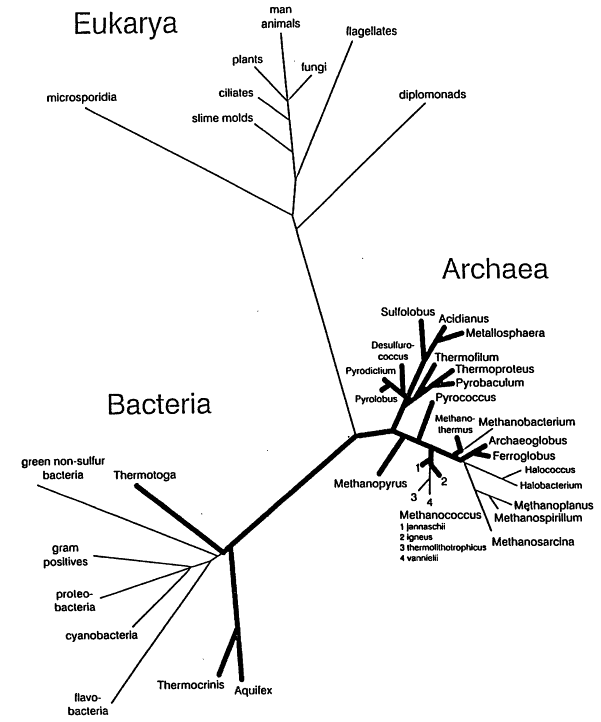
Table 3 Morphology and Size of Hyperthermophilic Archaea (Examples)
|
Genus |
Morphology |
Size (µm) |
|
EURYARCHAEOTA |
|
|
|
Archaeoglobus |
Coccoid; wedge-shaped |
0.4 - 1.0 dia. |
|
Methanothermus |
Rods |
1 - 4 long; 0.3 - 0.4 dia. |
|
Methanococcus |
Spheres |
1.3 - 2 dia. |
|
Thermoplasma* |
Pleomorphic; buds |
0.2 - 5 dia. |
|
Pyrococcus |
Spheres (+ “frog eggs”) |
0.5 - 2 dia.; ( |
|
CRENARCHAEOTA |
|
|
|
Sulfolobus |
Lobed cocci |
0.8 - 2 dia. |
|
Acidianus |
Lobed cocci |
0.5 - 2 dia. |
|
Thermoproteus |
Branched rods + spheres ("golf clubs") |
Rods: 0.4 dia.; 1 - 80 long; Spheres: 0.3 - 0.5 dia. |
|
Thermofilum |
Slender rods + spheres |
Rods: 0.17 - 0.35 dia.; 1 - 100 long; Spheres: 0.3 - 0.5 dia. |
|
Desulfurococcus |
Spheres |
0.5 - 15 dia. |
|
Staphylothermus |
Spheres in aggregates |
0.5 - 15 dia. |
|
Thermodiscus |
Irregular disks |
0.2 - 3 dia.; 0.1 - 0.2 wide |
|
Pyrodictium |
Irregular disks + matrix of cannulae |
0.3 - 2.5 dia.; 0.08 - 0.3 wide; Cannulae: 0.026 dia.; up to 40 µm long |
|
* Thermophilic, cell-wall-less archaeon. |
||
 dia.)
dia.)small disks, less than 0.2 µm in diameter, are seen (Stetter and Zillig, 1985). This observation could explain that the titer as determined by serial dilution is always at least 10 times higher than that determined by direct counting in the light microscope.
Cells of Pyrodictium consist of flat, irregular disks. They are 0.3 to 2.5 µm in diameter and may be up to 0.3 µm wide. As a role, cells of Pyrodictium exhibit large ultraflat areas, only about 0.08 µm in width (Rieger et al., 1997). Remarkably, Pyrodictium never grows in suspension but in mold-like flakes, several centimeters in diameter (Pley et al., 1991). The flakes are made up by a unique matrix of hollow tubules ("cannulae") in which the cells are integrated (Rieger et al., 1995). Single cannulae are up to 40 µm long and 0.026 µm in diameter and consist of glycoprotein subunits in helical array. The cannulae penetrate into the periplasmic space of the cells and connect those to each other, building up a huge network and greatly extending the range of a single cell. The flakes of Pyrodictium may be seen
even as very primitve multicellular prokaryotic organisms. Because the cannulae represent a great deal of the biomass of Pyrodictium cultures, they should be of great importance. Five different structural cannulae genes identified so far do not show significant homology to any genes in other organisms including hyperthermophiles (Mai, 1998).
The advantage of the huge Pyrodictium web is still not evident and only a working hypothesis can be presented. In considering the physical uniqueness of the natural hot vent biotope and the great extension of cell range by the cannulae, for the first time in the living world Pyrodictium could be able to use thermal energy. Pyrodictium grows within the porous walls of deep sea "Black Smoker" vents, several millimeters to centimeters wide. From inside, the walls are strongly heated by the 300 to 400° C vent fluids, while they are cooled from outside by the surrounding 3° C deep seawater. Therefore, these chimneys harbour very steep temperature gradients, in which the Pyrodictium webs are situated, having a cold and a hot end. Interestingly, although this organism is growing only up to 110° C, its cannulae are stable up to 140° C. Similar to a thermocouple, electrons could be shifted in between the cold and hot end of the Pyrodictium web. This could cause changes in the membrane potential and finally ATP formation within the cells. At present, we are designing experiments to try this working hypothesis.
The enormous variation in cell size and volume appears to be a rather primitive feature and is in line with the 16S rRNA phylogeny of the corresponding hyperthermophiles. The smallest cell sizes observed are in the 200 to 300 nanometer range and the ability of hyperthermophilic archaea to form those may be of great advantage to pass narrow pores of soils and rocks in order to colonize hot subterranean environments.
References
Blöchl, E., Rachel, R., Burggraf, S., Hafenbradl, D., Jannasch, H.W., and Stetter, K.O. (1997). Extremophiles 1, 14-21.
Ernst, W.G. (1983). The Early Earth and the Archaean rock record. Pp. 41-52 in Earth's Earliest Biosphere, Its Origin and Evolution, Schopf, J.W., ed. (Princeton University Press, Princeton, N.J.).
Mai, B. (1998). Thesis, University of Regensburg, Germany.
Mojzsis, S.J., Arrhenius, G., McKeegan, K.D., Harrison, T.M., Nutman, A.P., and Friends, C.R.L. (1996). Nature 384, 55-59.
Peters, J., Nitsch, M., Kühlmorgen, B., Golbik, R., Lupas, A., Kellermann, J., Engelhard, H., Pfander, J.-P., Müller, S., Goldie, K., Engel, A., Stetter, K.O., and Baumeister, W. (1995). J. Mol. Biol. 245, 385-401.
Pley, U., Schipka, J., Gambacorta, A., Jannasch, H.W., Fricke, H., Rachel, R., and Stetter, K.O. (1991). System. Appl. Microbiol. 14, 245-253.
Rieger, G., Rachel, R., Hermann, R., and Stetter, K.O. (1995). J. Struct. Biol. 115, 78-87.
Rieger, G., Müller, K., Hermann, R., Stetter, K.O., and Rachel, R. (1997). Arch. Microbiol. 168, 373-379.
Schopf, J.W. (1993). Science 260, 640-646.
Stetter, K.O. (1982). Nature 300, 258-260.
Stetter, K.O. (1986). Diversity of extremely thermophilic archaebacteria. Pp. 39-74 in Thermophiles: General, Molecular and Applied Microbiology , Brock, T.D., ed. (John Wiley & Sons, Inc., New York).
Stetter, K.O. (1996). FEMS Microbiol. Rev. 18, 149-158.
Stetter, K.O., and Zillig, W. (1985). Thermoplasma and the thermophilic sulfur-dependent archaebacteria. Pp. 85-170 in The Bacteria, Vol. III, Woese, C.R. and Wolfe, R.S., eds. (Academic Press Inc., Orlando).
Stetter, K.O., Huber, R., Blöchl, E., Kurr, M., Eden, R.D., Fielder, M., Cash, H., and Vance, I. (1993). Nature 365, 743-745.
Stetter, K.O., Thomm, M., Winter, J., Wildgruber, G., Huber, H., Zillig, W., Janecovic, D., König, H., Palm, P., and Wunderl, S. (1981). Zbl. Bakt. Hyg., I. Abt. Orig. C2, 166-178.
Woese, C.R., Kandler, O., and Wheelis, M.L. (1990). Proc. Natl. Acad. Sci. USA 87, 4576-4579.
Zillig, W., Stetter, K.O., Schäfer, W., Janekovic, D., Wunderl, S., Holz, I., and Palm, P. (1981). Zbl. Bakt. Hyg., I. Abt. Orig. C2, 205-227.
The Influence of Environment and Metabolic Capacity on The Size of a Microorganism
Michael W.W. Adams
Departments of Biochemistry and Molecular Biology University of Georgia
Abstract
Simple calculations show that there are two critical factors in considering minimum cell size: the amount of DNA that is required to support cell growth and the volume of the cell devoted to accommodate that DNA. The amount of DNA a cell contains is related to how much that cell depends upon its environment to supply nutrients. At one extreme, the environment provides only gases and minerals, and the life-forms that occupy such an environment have a high biosynthetic capacity and synthesize all cellular carbon from CO2. This requires at most 1,500 (an actual value) and perhaps as few as 750 genes. At the other extreme are nutrient-rich environments, such as those experienced by parasitic bacteria, and here life-forms have a minimum biosynthetic capacity requiring between 250 (a calculated value) and 500 genes (an actual value). For spherical cell with minimal biosynthetic capacity (250 genes), the minimum size is 172 nm diameter. This assumes that the cell consists Coy volume) of 10% DNA, 10% ribosomes, 20% protein, and 50% water. Such a cell could contain 65 ribosomes and an average of 65 proteins per gene. On the other hand, a cell that synthesizes all of its cellular components from CO2 must be at least 248 nm in diameter, assuming that its minimal DNA content (750 genes) is 10% of the cell volume. It is concluded that microorganisms cannot have diameters less than 172 nm if they have the same basic biochemical requirements for growth as all other extant life-forms. Even then, such a cell is biosynthetically challenged and would require a very specialized environment to supply it with a range of complex biological compounds. More likely, the absolute minimum size is closer to 250 nm where the cell has sufficient DNA to enable it to grow on simple compounds commonly found in various natural environments including, possibly, extraterrestrial ones.
Introduction
The question of minimum microbial size was recently brought to the fore by the report of McKay and coworkers (1) in which objects with upper dimensions of 20 by 100 nm were postulated to be of cellular origin. Subsequently, so-called ultramicrobacteria were isolated from marine environments that can pass through a 200 nm filter and have cell volumes of 0.03 to 0.08 µm3 (2). In addition, entities known as "nanobacteria" that have been cultured from blood apparently have diameters as low as 80 nm (3). In light of these studies, it is important to estimate the theoretical limit for minimum cell size. Can cells with a diameter of less than, say, 50 nm contain sufficient biological material to remain free-living? This begs the question of what is meant by "sufficient biological material"? One measure is genome size or more specifically the number of different types of proteins (enzymes) that an organism has at its disposal to support growth. Before considering just how many genes this may be, we must also define what is meant by “free-living." How dependent is this minimally sized cell upon its environment? In the following it is assumed that such cells have the same basic biochemical requirements as any other life-form that we know of, and must satisfy them with the same enzymatic reactions.
The Influence of Environment on the Complexity of Life-forms
Obviously, no life-form survives in isolation from its surroundings, but organisms vary considerably in their dependence upon their environment. Thus, humans require at a minimum ten or so amino acids, various minerals, an array of biological cofactors (vitamins), and a continual supply of O2 gas. Perhaps surprisingly, these same materials are also required by many microorganisms, although they typically differ from us in their ability to synthesize most, if not all, of the twenty amino acids as well as many, if not all, of what we term "vitamins." Like us, the vast majority of microorganisms require a fixed carbon source, which is usually a carbohydrate of some sort, although in some cases, lipids, nucleotides, or various simple organic compounds are utilized. In contrast, some microorganisms are intensely dependent upon their environments. For example, some microbial parasites do not synthesize any amino acid or lipid, and only a few enzyme cofactors and nucleotides; rather, they obtain all of these compounds from their host. Indeed, at one level, such a parasitic life-form is not too far removed from the simplest virus. This consists of a protein coat that surrounds a defined amount of nucleic acid (DNA or RNA). The latter encodes proteins that inside the host cell are synthesized and that direct vital replication. Hence a virus can be thought of as a life-form that has an extreme dependence upon its host. Not only does the host donate all of the necessary biological compounds, but it also provides transcriptional and translational machinery. What then is a plasmid? Can this be considered an extremely parasitic life-form? A plasmid obviously encodes the information to reproduce itself, i.e., to make a copy, but it is totally dependent upon the host to carry this out.
Hence, we can consider plasmids, viruses, and parasitic bacteria as life-forms that vary in their dependence upon their environments. So what forms of life are at the other extreme? What life-form requires the least from its environment? Obviously, these are organisms that require nothing more than the simplest of chemicals, such as CO2, O2, H2, and NH3. These so-called autotrophic organisms can synthesize all amino acids, cofactors, nucleotides, etc., with CO2 as the sole carbon source, using the oxidation of H2 as an energy source, and with ammonia (or even N2 gas) as the nitrogen source. Interestingly, this definition also includes green plants—with the exception that they obtain energy from visible light rather than from H2 oxidation. Of course, many autotrophic microorganisms gain energy from the oxidation with O2 of simple substances other than H2, such as CO, CH4, NH3, or H2S. Similarly, anaerobic autotrophs growing on H2 and CO2 also conserve energy during the reduction of CO2, either by the production of methane or acetate as accomplished by methanogens and acetogens, respectively.
Clearly then, the variety of known life-forms can be classified by the extent to which they depend upon their environment for growth. Simple gases and salts are sufficient for many types of microorganism, both under aerobic and anaerobic conditions, whereas other microbes are intensely dependent upon their environment for a range of complex biological molecules. So how do we define "free-living" life? In simple terms, life can be thought of as an entity that has the ability to undergo self-directed reproduction when supplied with the appropriate environment and the necessary free energy. The question is, can this environment be another life-form? If this is the case, then the argument becomes how small can a virus be, and a possible answer is a plasmid. However, an important difference between viruses (plasmids) and parasitic bacteria is that the former, but not the latter, replicate by the transfer of nucleic acid into their environment (host). With the bacteria, the host environment provides "only" an array of nutrients, and the bacterium's genetic material does not contact the host (the environment). Theoretically and often practically, the parasite can thrive if such nutrients are provided to it directly in a liquid medium. Hence, a major distinction can be made between the mechanisms by which parasitic life-forms and viruses interact with their "living” environments. Moreover, we can use this logic to define the
environment that will support our smallest possible life-form. That is, we will assume that if its environment is another life-form, then nutrients (or non-life-forms) can replace that life-form. In other words, we will not consider viruses or analogous life-forms in trying to define minimum size.
Life-forms therefore occupy environments that fall between two extremes. One provides only gases and minerals, and the life-forms that occupy it must have a high biosynthetic capacity. At the other extreme are nutrient-rich environments, such as those experienced by parasitic bacteria, and here life-forms can have a minimum biosynthetic capacity. So, how many types of proteins (enzymes) are required to support cellular growth within these two types of environment? The recent availability of genome sequences for a variety of microorganisms (4) enables quantitative estimations to be made.
Organisms with Low Biosynthetic Capacity
Those organisms that are most dependent upon their environment are the parasitic bacteria, the prototypical example of which are the mycoplasma. Interestingly, the complete genome of one species, Mycoplasma genitalium, was one of the first genomes to be sequenced (5). At 0.58 Mb, this represents the smallest known genome of any free-living organism. The genome contains 470 predicted protein coding regions, and these include those required for DNA replication, transcription and translation, DNA repair, cellular transport, and energy metabolism. However, comparisons with the genome (1.83 Mb, encoding 1,703 putative proteins) of another parasite, Haemophilus influenzae (6), led to the conclusion that the "minimal gene set that is necessary and sufficient to sustain the existence of a modern-type cell" is (only) 256 genes, or about half of the genome of M. genitalium (7). It should be noted, however, that while both of these parasitic organisms grow in the absence of their hosts, to do so they require an extremely "rich medium" containing a range of nutrients. These organisms maintain a minimal biosynthetic capacity, a capacity that is apparently satisfied by approximately 250 different proteins.
The Most Slowly Evolving Microorganisms
In determining the "minimum" set of genes that a minimal-size microbe might contain, we must also consider what is meant by the term "modern-type cell" quoted above (7). Are present-day organisms highly sophisticated cells with a range of metabolic capabilities, only some of which are utilized and then under very specialized conditions? For example, E. coli could be regarded as highly evolved because it exhibits a range of metabolic modes, including growth under aerobic and anaerobic conditions, the utilization of a wide variety of different carbon sources, etc. Indeed, such a large metabolic capacity might be reflected in its genetic content of 4.64 Mb encoding 4,288 genes (8). Similarly, metabolically diverse species such as Bacillus subtilus and Pseudomonas putida have genomes of comparable size ( Mb). Indeed, a recent survey of gram-negative bacteria gave a mean genome size of 3.8 Mb (9). In other words, it is not unusual for microorganisms, or at least those that have been well characterized, to contain 4,000 or more genes. Hence, are there more-slowly-evolving organisms, and do they contain less genetic material and have fewer metabolic choices?
By phylogenetic analyses based on 16S rRNA sequence comparisons, the most-slowly-evolving microorganisms are the deepest branches, the first to have diverged within the two major lineages corresponding to the Bacteria and the Archaea (10). Remarkably, in both domains these are the hyperthermophiles, organisms that grow optimally at temperatures of 80°C and above. Within the bacteria domain this includes two genera, Thermotoga and Aquifex, while there are almost twenty genera of hyperthermophilic archaea (11). In fact, one of the two major branches within the archaeal
domain consists almost entirely of hyperthermophiles, while in the other branch the hyperthermophiles are the most slowly evolving of the known genera. A great deal is known about the genome contents of these hyperthermophilic organisms as several have been or are being sequenced. These include the genomes of the archaea, Methanococcus jannaschii, Pyrobaculum aerophilum, Pyrococcus horikoshii, P. furiosus, P. abyssi, and Archaeoglobus fulgidus, and of the bacterium Thermotoga maritima (4). Interestingly, all of these organisms have genomes only about half the size of that found in E. coli, with those of Archaeoglobus fulgidus and Aquifex aeolicus being the largest (2.18 Mb) and smallest (1.55 Mb) of this group, respectively. Thus, the most slowly evolving organisms known (at least as determined by 16S rRNA analyses) do indeed have relatively small genomes, although they are still highly complex life-forms.
Organisms with High Biosynthetic Capacity
So, how many different proteins are required to support growth of organisms on nothing more than gases and a few minerals, and is there a hyperthermophilic example of such an organism? To date, the genomes of two hyperthermophilic autotrophs have been sequenced. One is the archaeon, Methanococcus jannaschii (12), which is a methanogen that grows up to 90°C using H2 and CO2 as energy and carbon sources and generates methane as an end product. The other is a bacterium, Aquifex aeolicus (13), which grows up to 95°C on H2 and CO2, but it is not an anaerobe like the methanogen, as it requires low concentrations of O2. The genome sizes and number of proposed protein-encoding genes in these two organisms are 1.67 and 1.55 Mb, and 1,738 and 1,512, respectively. It should be noted that the pathway of CO2 assimilation and the biochemistry of energy conservation in the methanogen are very different from those in A. aeolicus, yet approximately the same number of genes are required. On the other hand, these genomes are much larger than the genomes of the two parasites discussed above. Presumably, A. aeolicus and M. jannaschii require many more genes because they must synthesize all of their cellular components from CO2. Hence they contain about three times the genetic information of M. genitalium This seems appropriate considering that the latter organism is supplied with all of its amino acids, nucleotides, fatty acids, "vitamins," and with an energy source (glucose). From this direct comparison we might conclude that about two-thirds of the DNA in A. aeolicus and M. jannaschii, or approximately 1,000 genes, encodes proteins that function to carry out these biosynthetic tasks and produce all of these compounds from CO2.
The Smallest Cell
From the above discussion it can be concluded that a cell with minimal biosynthetic capacity that is growing in a nutrient-rich medium requires between 250 (a calculated value) and 500 genes (the approximate number in M. genitalium) to grow. At the other extreme is a cell that synthesizes all of its cellular material from CO2, and this requires at most 1,500 genes (the approximate number in A. aeolicus) and probably closer to 750 genes (half of the actual value). With these values in mind, let us consider how much biological material can be contained within a cell of, say, 50 nm diameter. For example, if one allows 5 nm in thickness for a lipid bilayer, a spherical cell of 50 nm diameter would have an internal volume of 33,500 nm3. For comparison, an E. coli cell, with dimensions of about 1.3 by 4.0 µm, has an internal volume of about 5 ×10⁹ nm3, or almost 2 million times the volume of the 50 nm diameter cell. The question is, What quantifies of the various biochemical structures found in a typical prokaryotic cell can be accommodated within a volume of 33,500 nm3? A ribosome has a diameter of about 20 nm, and ribosomes are typically 25% of the mass (dry weight) of a bacterial cell
(although this varies considerably depending on the growth rate). Assuming a similar percentage of the volume of a 50 nm diameter cell is devoted to them, such a cell could contain only two ribosomes (4,200 nm3 each). Whether only two would limit cell growth to any extent is unknown; nevertheless, the cell is certainly large enough to contain ribosomes, albeit only two. On the other hand, proteins usually constitute about half of the dry weight of bacterial cells. Let us assume that they also occupy approximately 50% of the volume of the 50 nm diameter cell, and that, in general, proteins have an average molecular weight of 30 kDa, which corresponds to a diameter of about 4 nm per protein. If a cell of 50 nm diameter were 50% protein by volume, then this would correspond to about 520 such molecules (average 30 kDa) per cell.
Are two ribosomes and 520 "average-sized" protein molecules sufficient to support the growth of a cell? Note this would correspond to, on average, two copies of each protein for a cell with minimal biosynthetic capacity (calculated to contain 250 genes). But can we neglect DNA? As this is typically only about 3% of the total mass (dry weight) of a bacterial cell, at first glance it would seem unlikely that the volume of genetic material, especially in an organism with a minimum gene content, would affect cell size. For example, with a diameter of 2 nm and length of 0.34 nm/bp, the 4.64 Mb of E. coli has a volume of 4.9 × 10⁶ nm3, which is less than 1% of the cell volume. Surprisingly, however, simple calculations show that DNA is a determining factor in much smaller cells. Thus, the hypothetical 50 nm diameter cell, 75% of which Coy volume) is occupied by proteins and ribosomes, could contain, even if the remaining 25% of the cell were devoted to DNA, only 8 genes (of 1000 bp each)!
DNA Content Determines Cell Size
If a 50 nm cell can only reasonably accommodate 8 genes, the question is, What is the minimum cell size that could reasonably accommodate 250 genes (or 250 kb of DNA)? Remarkably, even if the cell were 50% DNA, such a cell would have a diameter of at least 110 nm. Assuming that half of the remaining volume (25%) is protein and half of that (12.5%) is occupied by ribosomes, the 110 nm cell could contain up to 4,000 protein molecules (average 30 kDa) or an average of 8 proteins per gene, together with 15 ribosomes. Of course, such a cell would have minimal biosynthetic capacity. A cell growing on CO2 as its carbon source would need at least 750 genes which, if they occupied 50% of the total volume, would require a cell of 156 nm in diameter. Such a cell could also contain 12,400 protein molecules (25% by volume, or 16 copies for each gene) and 48 ribosomes. Although such calculations still leave 12.5% of the cell volume for other cellular components, such as lipids, cofactors, metabolites, and inorganic compounds, the most abundant component of a typical cell, namely water, is not included. Water typically occupies about 70% of a microbial cell, so let us assume 50% for the hypothetical cell. The volume of a cell containing 250 genes then increases to 136 nm, while that with 750 genes is now 194 nm.
From these calculations it is obvious that DNA content is the main factor in determining cell size. A critical parameter is, therefore, the maximum amount of a cell that can be devoted to DNA. It seems extremely unlikely that DNA could represent 25% of the cellular volume (where water is 50%) if one considers just the volume occupied by the DNA molecule, with no allowance for neutralization of the negative charges, the bending of the DNA molecule, the unwinding of the double helix during replication and transcription, etc. It is hard to imagine that DNA could occupy more than 10% of the volume of a cell and still function. Thus, a cell that contains 250 genes that occupy 10% of its volume would be 172 run in diameter, while one containing 750 genes occupying the same relative volume would be 248 nm in diameter. Assuming such cells contain 20% by volume protein and 10% by volume ribosomes,
the 172 nm cell could accommodate 64 ribosomes and over 16,000 proteins, or 65 per gene, and the 248 nm cell could contain three times as much.
It may be concluded that the minimum theoretical size for a cell is 172 nm diameter. To grow, such a cell must be supplied with (and must assimilate) all amino acids, fatty acids, nucleotides, cofactors, etc., because it would contain the minimum number of genes (250) and have a minimal biosynthetic capacity. The cell would have a 5 nm membrane but no cell wall. It would consist, by volume, of 10% DNA, 10% ribosomes, 20% protein, and 50% water, and would contain approximately 65 proteins per gene as well as 65 ribosomes. In comparison, a cell with a much higher biosynthetic capacity, such that it could synthesize all cellular components from CO2, would be 248 nm in diameter, assuming that its DNA is also 10% of the cell volume. Note that these calculations assume a theoretical minimum gene content, which is about half of that present in known life-forms. The amount of DNA in a known autotrophic organism (approximately 1,500 genes in A. aeolicus) would require a cell of at least 314 nm diameter, assuming that it occupied 10% of the cell by volume. Hence, depending on the biosynthetic capacity of a cell, and the extent to which the calculated minimum gene content (7) is realistic, its minimum diameter is between 172 and 314 nm. Overall, one can conclude that microorganisms cannot have diameters significantly less than 200 nm if they have the same basic biochemical requirements for growth as all other extant life-forms, but even then they would require very specialized environments. More likely, the absolute minimum size is closer to 250 nm where the cell is able to grow on simple compounds commonly found in various natural environments.
Acknowledgments
I thank Juergen Wiegel, Kesen Ma, and Jim Holden for helpful discussions.
References
1. McKay D.S., Gibson E.K., Thomas-Keprta K.L., Vali H., Romanek C.S., Clemett S.J., Chillier X.D.F., Maechling C.R., Zare R.N. (1996) Search for past life on Mars—possible relic biogenic activity in Martian meteroite ALH84001. Science 273, 924-930.
2. Eguchi M., Nishikawa T., Macdonald K., Cavicchioli R., Gottscha J.C., Kjelleberg S. (1996) Responses to stress and nutrient availability by the marine ultramicrobacterium Sphingomonas sp. strain RB2256. Appl. Environ. Microbiol. 62, 1287-1294.
3. Kajander E.O., Kuronen I., Akerman* K., Pelttaari A., and (Çiftçioglu N. (1997) Nanobacteria from blood, the smallest culturable autonomously replicating agent on Earth. SPIE 3111, 420-428.
4. Doolittle R.F. (1998) Microbial genomes opened up. Nature 392, 339-342.
5. Fraser C.M., Gocayne J.D., White O., Adams M.D., Clayton R.A., Fleischmann R.D., Bult C.J., Kerlavage A.R., Sutton G., Kelley J.M., Fritchman J.L., Weiman J.F., Small K.V., Sandusky M., Fuhrmann J., Nguyen D., Utterback T.R., Saudek D.M., Phillips C.A., Merrick J.M., Tomb J.F., Dougherty B.A., Bott K.F., Hu P.C., Lucier T.S., Peterson S.N., Smith H.O., Hutchison C.A., Venter J.C. (1995) The minimal gene complement of Mycoplasma genitalium. Science 270, 397-403.
6. Fleischmann R.D., Adams M.D., White O., Clayton R.A., Kirkness E.F., Kerlavage A.R., Bult C.J., Tomb J.F., Dougherty B.A., Merrick J.M., McKenney K., Sutton G., Fitzhugh W., Fields C., Gocayne J.D., Scott J., Shirley R., Liu L.I., Glodek A., Kelley J.M., Weidman J.F., Phillips C.A., Spriggs T., Hedblom E., Cotton M.D., Utterback T.R., Hanna M.C., Nguyen D.T., Saudek D.M., Brandon R.C., Fine L.D., Fritchman J.L., Fuhrmann J.L., Geoghagen N.S.M., Gnehm C.L., McDonald L.A., Small K.V., Fraser C.M., Smith H.O., Venter J.C. (1995) Whole genome random sequencing and assembly of Haemophilus influenzae RD . Science 269, 496-512.
7. Mushegian A.R., Koonin E.V. (1996) A minimal gene set for cellular life derived by comparision of complete bacterial genomes. Proc. Natl. Acad. Sci. USA 93, 10268-10273.
8. Blattner F.R., Plunkett G., Bloch C.A., Perna N.T., Burland V., Riley M., ColladoVides J., Glasner J.D., Rode C.K., Mayhew G.F., Gregor J., Davis N.W., Kirkpatrick H.A., Goeden M.A., Rose D.J., Mau B., Shao Y. (1997) The complete genome sequence of Escherichia coli K-12. Science 277, 1453-1462.
9. Trevors J.T. (1996) Genome size in bacteria. Antonie van Leeuwenhoek 69, 293-303.
10. Woese C.R., Kandler O., and Wheelis M.L. (1990) Towards a natural system of organisms: proposal for the domains of Archaea, Bacteria and Eucarya. Proc. Natl. Acad. Sci. USA 87, 4576-4579.
11. Stetter, K.O. (1996) Hyperthermophilic prokaryotes. FEMS Microbiol. Rev. 18, 149-158.
12. Bult C.J., White O., Olsen G.J., Zhou L.X., Fleischmann R.D., Sutton G.G., Blake J.A., Fitzgerald L.M., Clayton R.A., Gocayne J.D., Kerlavage A.R., Dougherty B.A., Tomb J.F., Adams M.D., Reich C.I., Overbeek R., Kirkness E.F., Weinstock K.G., Merrick J.M., Glodek A., Scott J.L., Geoghagen N.S.M., Weidman J.F., Fuhrmann J.L., Nguyen D., Utterback T.R., Kelley J.M., Peterson J.D., Sadow P.W., Hanna M.C., Cotton M.D., Roberts K.M., Hurst M.A., Kaine B.P., Borodovsky M. , Klenk H.P., Fraser C.M., Smith H.O., Woese C.R., Venter J.C. (1996) Complete genome sequence of the methanogenic archaeon Mechanococcus jannaschii. Science 273, 1058-1073.
13. Deckert G., Warren P.V., Gaasterland T., Young W.G., Lenox A.L., Graham D.E., Overbeek R., Snead M.A., Keller M., Aujay M., Huber R., Feldma R.A., Short J.M., Olsen G.J., Swanson R.V. (1998) The complete genome of the hyper-thermophilic bacterium Aquifex aeolicus. Nature 392, 353-358.
Diminutive Cells in the Oceans—Unanswered Questions
Edward F. DeLong
Monterey Bay Aquarium Research Institute
Abstract
The marine environment harbors enormous numbers of viruses and prokaryotes, existing in complex communities that span a wide spectrum of biotopes, lifestyles, and size ranges. Many naturally occurring marine bacterioplankton are extremely small, some measuring < 0.3 µm in their largest dimension, having estimated biovolumes as low as 0.027 µm3. Available data suggest that the majority of naturally occurring bacterioplankton resist cultivation, and have not been phylogenetically identified at the single cell level. Phylogenetic evidence for the evolution of major lineages that are characteristically small have not been reported (but they may exist). Because a large fraction of naturally occurring microorganisms have not been cultivated, their specific physiological traits are largely unknown. Consequently, the fraction of very small marine microbes that transiently and reversibly exist as "dwarf cells" is also unknown. Finally, although extremely small (< 0.1 µm) DNA-containing particles are very abundant in seawater and are thought to be viruses, the fraction of these particles that may actually represent cellular organisms is uncertain.
Introduction
Small microorganisms are ubiquitous in ocean waters, averaging about 5 × 10⁵ cells/ml in the upper 200 m, and 5 × 10⁴ cells/ml below 200 m depth. The total number of prokaryotic cells in ocean waters is about 1 × 1029(1). Assuming a biomass of approximately 20 fg carbon per cell, this represents 2.2 × 10¹⁵ g of prokaryotic carbon in the world's oceans. This biomass represents an enormous pool of genetic variability, a large fraction of which is represented by very small cells (2,3). Extremely small cells (< 0.5 µm) may result from a genetically fixed phenotype maintained throughout the cell cycle. Alternatively, very small cells may reflect physiological changes associated with starvation, or other aspects of the cell cycle. Both explanations likely hold for different members of complex mixed populations of small cells found in the ocean. Extremely small (<0.1 µm) DNA-containing particles are also very abundant in seawater, reaching concentrations of about 1 × 10⁷ particles/ml in surface waters (4-6). These small particles are thought to consist largely, although not necessarily entirely, of viruses.
Cell dimensions of cultured or naturally occurring bacteria can be derived from several sorts of data, each with inherent limitations. A number of uncertainties can be associated with cell size estimates. Historically, the existence of very small bacteria and viruses was first documented by observations of infectious filterable agents. Indirect cell size estimates have more recently been derived from filter fractionation experiments using membrane filters of uniform pore size. These sorts of size estimates can be compromised by filter trapping effects, as well as differential retention of cells with varying shapes or cell wall compositions. Cell dimensions and biovolumes are now more frequently estimated via fluorescent nucleic acid staining and epifluorescence microscopy, or flow cytometry. Fluorescent DNA stains can also sometimes be misleading, because the visualized nuclear material may not accurately reflect the actual cytoplasmic volume (7). Most estimates by light microscopy, electron microscopy, and flow cytometry also involve the use of fixatives that may cause cell shrinkage or other artifacts (3). Nevertheless, it is apparent that the majority of naturally occurring prokaryotes in marine plankton are
about 1.0 µm or less in their largest dimension, and a good number of these are 0.5 mm or less in diameter (2,3).
Critical Assessment of the Issue
1. What is the phylogenetic distribution of small bacteria?
This question can be broken down into several components:
A. What is the phylogenetic distribution of cultivated prokaryotes with a stable, very small cell size?
The ongoing efforts of microbiologists to cultivate new microbial groups are currently providing new perspectives and answers to this question. It is still an open-ended question, because new microbial groups continue to yield to cultivation efforts. Recently isolated bacteria having stable, maximal dimensions of around 0.5 µm, fall into the alpha Proteobacterial lineage, as well as the Bacterial order Verrucomicrobiales.
Very small bacteria in the order Verrucomicrobiales have been recently isolated. New strains isolated from an anoxic rice paddy displayed a stable cell size of about 0.5 µm in length and 0.35 µm in diameter yielding a cell volume of about 0.03 µm3 (8). These bacteria were oxygen-tolerant heterotrophs, exhibiting strictly fermentative growth on sugars. Other cultivated relatives, including Verrucomicrobium spinosum, are generally larger than 1 µm and possess prosthecae (9). Small cell size is therefore not an inherent property of members of this order.
A very small marine isolate with cell volume ranging from 0.03 to 0.07 µm3 was isolated using the dilution culture technique of Button and Schut (10). This isolate was found to be associated with the alpha Proteobacterial genus Sphingomonas (11). Sphingomonas sp. strain RB2256 is heterotrophic, contains about 1.5 fg DNA/cell, and grows at a maximal rate of about 0.16 hr-1. This marine Sphingomonas isolate showed very little variation in growth rate or cell size in response to 1,000-fold variation in nutrient supply, indicating the stability of the small cell phenotype (12). Other Sphingomonas species have larger, more typical cell sizes, so diminutive size is not a specific characteristic of the genus.
Nanobacteria species have been reportedly found in association with human and cow blood (13). They have been cultured in serum-free media, and have cell diameters, estimated from electron microscopy, of 0.2 to 0.5 µm (13). They have been reported to pass through 0.1 mm falters, apparently due to pleomorphic forms even smaller, about 0.05-0.2 µm (13). Ribosomal RNA sequences originating from these microorganisms are associated with the alpha subdivision of the Proteobacteria, and are most closely related to Phyllobacterium rubiacearum.
B. What is the phylogenetic distribution of cultured prokaryotes that undergo an induced cell cycle transition from a "typical" to very small cell size?
A significant number of bacteria have been observed to undergo a transition from a large, actively growing state, to a dormant state of much smaller cell size (14-16). Some of these physiologically induced small cells reduce to cell volumes as low as 0.03 µm3. Different bacterial genera have been reported to undergo a starvation-induced response resulting in cell miniaturization, including the gamma Proteobacteria genera Vibrio, Pseudomonas, Alcaligenes, Aeromonas, and Listonella (14). This reduction in cell size may be a common phenomenon for heterotrophic microorganisms adapted for growth at relatively high nutrient concentrations. In many of these microorganisms, the transition from large to
dwarf cells is fully reversible upon nutrient upshift. This physiological strategy appears to be common, but its actual distribution among diverse bacterial phyla is poorly characterized. It is unknown what fraction of naturally occurring "ultramicrobacteria" represent typically larger cells that have experienced nutrient downshift and undergone cellular miniaturization. It is also not clear what fraction of these readily reverse to a large actively growing state (15), or alternatively have entered a hypothetical "viable but nonculturable" state (16).
C. What are the phylogenetic identities of (uncultivated) very small cells frequently observed in natural environmental samples?
This remains an open question. It has been estimated that only about 0.1-1% of naturally occurring prokaryotes have been cultivated from many specific habitats (17,18). Culture independent surveys have indicated the presence of many new, yet uncultivated, and previously unrecognized prokaryotic groups (19). Most of these have not yet been specifically identified at the single cell level. It will be interesting to determine whether a significant fraction of recently discovered, uncultivated prokaryotic groups represent some of the more diminutive cell forms. Are there inherent properties of very small cell lineage that render them recalcitrant to cultivation?
2. Is there a relationship between minimum size and environment?
In low-nutrient habitats in marine plankton, cells typically appear smaller in size than those of comparable higher nutrient habitats. To the extent that some cells undergo a starvation response that involves reduction in cell size, there may be a loose relationship between cell size and ambient nutrient concentration. However, it is still unknown what fraction of naturally occurring small cells represent physiologically induced forms, versus stable, diminutive phenotypes. Smaller cells have a greater surface area to volume ratio, postulated to be adaptive for low-nutrient environments (11). However, small cell size does not necessarily imply adaptation to an oligotrophic (low-nutrient) lifestyle. For instance, new Verrucomicorbiales isolates (8) grow well and maintain small cell size under relatively high nutrient growth conditions (e.g., 4 mM glucose, or 0.1% starch). Nanobacteria dwell (and are cultivated) in a relatively nutrient-rich environment, yet maintain their small cell dimensions (13). Symbiotic and parasitic bacteria are known that have reduced physiological capacities and genome sizes (20). It is possible that symbionts in environments rich with host-supplied growth factors may actually have reduced genetic and physiological demands, thereby facilitating cell size reduction. It is possible that small cell size is adaptive for free-living cells in low nutrient environments, but symbiotic species may tend toward small cell size in a nutrient-replete environment provided by the host.
3. Is there a continuum (or quanta?) of size and complexity that links conventional bacteria and viruses?
Direct examination of concentrated seawater samples by electron microscopy have revealed the presence of large numbers of vital-like particles (VLPs) in the world's oceans (4,5). Ranging in numbers from about 2 × 10⁵ to 5 × 10⁸ particles/ml, VLP numbers typically exceed bacterial cell numbers in aquatic samples by 10-fold. Most quantitative studies to date have employed ultracentrifugation or ultrafiltration coupled with electron microscopy, or filtration, fluorescent DNA staining, and epifluorescence microscopy. A few studies have succeeded in enumerating naturally occurring viable
infectious particles (especially in marine Synechococcus sp.) to determine the host range, in situ titers, and ecological variability of naturally occurring cyanophages (21).
In the marine environment there is certainly a continuum of size in both bacterioplankton and virioplankton. Bacterioplankton can range from large filaments > 10 µm, to small coccoid cells with diameters approaching 0.3 µm (2). Marine virus isolates range in length from about 40 nm to as large as 120 nm (5). Electron micrographs of naturally occurring infected cells suggest that some bacterial hosts are considerably less than 10-fold larger than their vital parasites, having a burst size of about 7 (6)! The very smallest bacterial cells and the very largest viral particles fall into about the same size category, raising some questions about the accuracy of currently used methods for quantifying naturally occurring virus and prokaryotes. Commonly used epifluorescence techniques are convenient and reproducible, but the identity of the fluorescently stained particles is certainly subject to some uncertainty. What fraction of VLPs are actually viruses? What fraction of VLPs are viable viruses? What fraction of DNA-containing particles < 0.1 µm are actually cells, and not viruses? If some of the < 0.1 µm DNA-containing particles are cells, are they viable? These remain open-ended questions.
With regard to the complexity of these populations, the issue of cultivability is a serious one. It still appears from available data that a large fraction of naturally occurring microbes have resisted cultivation attempts. The specific physiological traits and life histories of these microorganisms remain unknown, as does that of their vital parasites. A major challenge to contemporary microbiology is to devise and implement approaches to better characterize this large and uncharacterized biota.
References
1. Whitman, W.B., Coleman, D.C., Wiebe, W.J. (1998), Proc. Natl. Acad. Sci. USA 95:6578-6583.
2. Watson, S.W., Novitsky, T.J., Quiaby, H.L., Valois, F.W. (1977), Appl. Environ. Microbiol. 33:940-946.
3. Fuhrman, J.A. (1981), Mar. Ecol. Prog. Ser. 5:103-106.
4. Bergh, O., Borsheim, K.Y., Bratbak, G., Heidal, M. (1989), Nature (London) 340:467-468.
5. Borsheim, K.Y. (1993), FEMS Microb. Ecol. 102:141-159.
6. Steward, G.F., Smith, D.C., Azam, F. (1996), Mar. Ecol. Prog. Ser. 131:287-300.
7. Suzuki, M.T., Sherr, E.B., Sherr, B.F. (1993), Limnol. Oceanogr . 38:1566-1570.
8. Janssen, P.H., Schuhmann, A., Morschel, E., Rainey, F.A. (1997), Appl. Environ. Microbiol. 63:1382-1388.
9. Hedlund, B.P., Gosnik: J.J., Staley, J.T. (1996), Appl. Environ. Microbiol. 46:960-966.
10. Schut, F., DeVries, E.J., Gottschal, J.C., Robertson, B.R., Harder, W., Prins, R.A., Button, D.K. (1993), Appl. Environ. Microbiol. 59 :2150-2160.
11. Schut, F., Prins, R.A., Gottschal, J.C. (1997), Aquat. Microb. Ecol. 12:177-202.
12. Eguchi, M., Nishikawa, T., MacDonald, K., Cavicchioli, R., Gottschal, J., Kjelleberg, S. (1996), Appl. Environ. Microbiol. 62:1287-1294.
13. Kajander, E.O., Çiftçioglu, N. (1998), Proc. Natl. Acad. Sci. USA 95:8274-8279.
14. MacDonnell, M.T., Hood, M.A. (1982), Appl. Environ. Microbiol. 43:566-571.
15. Kjelleberg, S., Hermansson, M., Marden, P. (1987), Ann Rev. Microbiol . 41:25-49.
16. Rozak, D.B., Colwell, R.R. (1987), Microbiol. Rev. 51:365-379.
17. Staley, J.T., Konopka, A. (1985), Ann. Rev. Microbiol. 39:321-346.
18. Amann, R.I., Ludwig, W., Schleifer, K.H. (1995), Microbiol. Rev . 59:143-169.
19. Pace, N.R. (1997), Science 276:734-740.
20. Fraser et al. (1995), Science 270:397-403.
21. Waterbury, J.B., Valois, F.W. (1993), Appl. Environ. Microbiol . 59:3393-3399.


