
Page 133
3
Exploring the Future
The previous chapter examined past trends and ongoing transitions that will need to be confronted in efforts to navigate a transition toward sustainability. This chapter looks to the future. We recognize that much of the continuing interaction between human development and the environment will be a process of ''muddling through." The inevitable trial-and-error of selecting a course, learning, and correction will be carried out less by efforts to think through our futures than by the necessity of acting them out. The decisive factor in determining how effective, fair, and efficient this muddling will be is in our choices not of analytic tools, but rather of the social institutions that help to provide the incentives and feedbacks necessary for social learning. We nonetheless believe that the inevitable trials may be made more productive, and the likelihood of costly and irreversible errors may be reduced through organized efforts to assess the possible future implications of present trends, relying on growing understanding of earth system processes and social goals. The international efforts in recent years to address threats to the stratospheric ozone layer is a case in point. Understanding as much as possible about what the future may hold is important. It can identify things societies should try to avoid. It can give useful insights about what societies should do now to prepare for plausible contingencies. It can even help societies to learn what they ought to want for the future, by helping to illuminate the alternatives before them, and some of the implications of trying to achieve alternative futures.
In some respects, the future is known. Using the laws of physics, the
Page 134
orbital location of the planets 100 years from now can be predicted with considerable precision. While prediction is often possible, however, in many cases it is difficult, impossible, or irrelevant. This may be true because of incomplete causal knowledge, system complexity, insufficient data about current conditions, the engagement of reflective humans in the system, or combinations of all of these factors. Some physical systems are inherently chaotic. At least within broad boundaries, their future performance can not be known. Social systems add another level of complication. People react to their environments. Their preferences and values change, in part because of what they experience, in part because of what their imperfect efforts to look into the future have revealed to them. People and their organizations act strategically, based on what they think others may do in response to different interpretations of the future. Since many of these reactions cannot be predicted, over time they impose progressively more serious limits on our ability to see the shape of possible futures.
Even when the future performance of a system can only be described in the most general terms, however, "what if" analysis can be useful. Such analysis can help societies to explore what contingencies they may face, determine how well they are prepared to deal with those contingencies, and identify indicators for which they should be watchful. If we can find ways to generate a range of plausible alternative futures, we can use them to evaluate different behavioral strategies for their likely efficacy and robustness in the face of a range of alternatives, and for how easily these strategies can be adapted to deal with unanticipated developments.
Efforts to structure and discipline our thinking about future possibilities in the light of present knowledge and intentions may therefore have an important role to play in shaping strategies for a sustainability transition. This chapter explores various approaches that have been used to explore the future toward addressing sustainability concerns. It seeks to evaluate their respective strengths and weaknesses as tools to aid in navigating a sustainability transition, to illustrate the sorts of insights that can emerge from their use, and to identify priorities for improving their performance and practical utility.
Strategies for Exploring the Future
Strategies for using science to explore possible futures in policy contexts may be evaluated on at least four criteria: scientific credibility, political legitimacy, practical utility, and effectiveness.1
Scientific credibility: Such analytic strategies can make systematic but skeptical use of available scientific knowledge in laying out not only the likely conditions that might be encountered ahead, but also the pos-
Page 135
sible and the impossible ones. Especially important would be these strategies' treatment of uncertainty. Debates over what is known "for sure" are unscientific and not particularly productive. An overemphasis on "consensus" assessments can clearly suppress the discussion of unlikely but not impossible outcomes. Needed as well are tools that can help to structure the inevitable uncertainties—including the possible low-probability, high-consequence events and ''surprises"—such that their implications can be critically evaluated and addressed. Also important will be the ways in which known and hypothesized long chains of causal links are concatenated across multiple disciplines and multiple scales of analysis. These issues pose substantial technical challenges. They also raise fundamental questions about who should count as an expert, what should be the meaning and nature of peer review, and how critical evaluations of exploratory tools and the possible futures they illuminate can be most helpfully conducted.
Political legitimacy: Efforts to navigate a transition toward sustainability are inherently social enterprises. Individuals are, of course, free to shape their own private images of the future and may use the results in crafting their own policies. But to the extent that societies seek scientifically based explorations of possible futures to provide a common foundation for collective action, it is crucial that the explorations be viewed as fair and legitimate by those whose futures they might affect. The credibility of future assessments to users is therefore also critical. This type of credibility may be related to, but is almost never identical to, scientific credibility. Issues about participation in the design and use of exploratory tools, about transparency and openness in embodied values and assumptions, and about the embedding of assessments in appropriate institutional settings all come to the fore in efforts to satisfy this criterion of political legitimacy.
Practical utility: Tools for exploring the future should also be usable, and used. Above all, this means that they must be relevant to real choices faced by real individuals and institutions. They need to be available to potential users in a timely manner and sufficiently flexible that they encourage exploration of a wide range of possible goals and choices. Often, they will need to enable users to perform "what if" analyses of the possible future consequences of present actions. Since the realm of possible actions is often large, and the range of possible futures so wide, practical utility may also require means for sorting through alternative actions in light of users' values and preferences. Finally, useful assessments must be sparing in their demands for time and other resources that choice makers may find in short supply.
Effectiveness: Finally, tools needed for exploring the sustainability transition should be effective in actually illuminating pitfalls and oppor-
Page 136
tunities in the roads ahead. This is admittedly a post hoc evaluation criterion. But individuals, institutions, and societies have been facing the challenges of grappling with uncertain futures for a long time indeed. It should not be too much to ask of tools for exploring sustainable futures that they be designed, and chosen, at least partially on the basis of their past performances in analogous circumstances.
Various approaches to satisfy these criteria in exploring the future have been adopted in forms that could be applied to sustainability issues. These include (1) qualitative consultation among "knowledgeable" people as in study panels; (2) formal elicitation of expert judgment in forms such as subjective probability distributions; (3) creation of structured and internally consistent narratives or scenarios; (4) various forms of strategic gaming; (5) formal extrapolation of past trends using statistical methods; and (6) a wide variety of different kinds of causal modeling. Often, several of these methods are used together. None of them provide more than partial illuminations of the futures before us. Each is limited in particular ways. Each, however—when used critically, skeptically, and carefully—can make a useful contribution.
Study panels such as those organized under the auspices of the Brundtland Commission, the Intergovernmental Panel on Climate Change (IPCC), the International Council for Science (ICSU) (e.g., the Scientific Committee on Problems of the Environment), the U.S. National Research Council (NRC), and the German Enquette Commissions are common strategies for exploring possible future implications of our current understanding. Such panels often make use of the other strategies outlined below in various combinations. The great strengths of these panels include the ability to draw on a wide range of expertise and stakeholders; to build from data but to tap understanding as well; and to provide environments in which experts can challenge and learn from one another. Common weaknesses include difficulties in quality control; a tendency to exclude disenfranchised stakeholder groups; a vulnerability to group-think; and the tyranny of consensus-seeking—a special problem in areas as uncertainty-laden as those encountered in efforts to navigate a transition to sustainability.
Of the tools used by study panels and other methods in exploring the future, one extreme consists of causal process models, such as those used to simulate fishery yields and the general circulation of the atmosphere.2 The strength of approaches to modern modeling lies in their explicit incorporation of scientifically verifiable relationships, and in their ability to make quantitative, if still conditional, forecasts of the implications of those relationships. Among their weaknesses remain their insatiable demands for data, difficulties in incorporating the different types and levels of
Page 137
knowledge and understanding that characterize different disciplines, and a host of computational problems. We turn to recent developments in modeling and integrated assessment that have begun to confront some of these shortcomings in the following section.
At another extreme are strategies built around the use of narratives or scenarios that tell a plausible and coherent story while relying on particular examples to provide context and details.3 A seminal example is Rachel Carson's account of widespread and enduring ecological damage from some pesticides and other common substances, in her 1962 Silent Spring. At their best, these approaches can do a relatively good job at addressing complexity, context, and contingency. A special form of narrative is future history. Future histories have been used effectively to explore surprising futures beyond the normal range of extrapolation or projection.4 They are also receptive to the explicit incorporation of norms and values. But they tend to be idiosyncratic, only partially constrained by scientific knowledge, and lacking in the precision that many would like to have in a navigational tool. In this chapter, we turn to recent developments that avoid some of these shortcomings under the discussion of scenario-based approaches to exploring sustainability futures.
An intermediate strategy that has proven helpful for exploring the future has been the use of extrapolation, drawing both on past trends and on analogous circumstances elsewhere. Relatively sophisticated examples include work on trends such as decarbonization—the long-term reduction in the amount of carbon produced per unit of energy—and the demographic transition discussed in Chapter 2, the cataloging of environmental degradation syndromes advocated by the German Advisory Council on Global Change, and econometric forecasts of energy use.5 These approaches work well to the extent that they capture deep underlying forces not readily subject to deflection. Their great weakness is that, in the absence of accompanying causal understanding, the limits to their applicability are unknowable and their visions of the future are thus particularly vulnerable to surprise.
When uncertainty precludes conventional scientific analysis, yet quantitative estimates are needed for use in analysis, it is sometimes possible to obtain the judgments of experts in the form of subjective probability distributions. Such judgments are no substitute for solid understanding of the relevant science. But when decision makers cannot wait for better science, expert judgments can be used on an interim basis to provide some grounds for more informed policy choices. The decision analysis community has developed these methods and employed them in a variety of applications.6 Formulating interview procedures and obtaining expert judgments relating to large, complex natural and social systems pose significant challenges. However, there are a number of examples of
Page 138
successful applications in such contexts as depletion of stratospheric ozone, long-range transport of sulfur air pollution, the assessment of earthquake structural risks, possible climate change in the face of increased atmospheric carbon dioxide, and energy modeling.7 Expert elicitation often reveals a richer and more diverse array of expert opinion than is typically captured in the reports of traditional consensus expert panels.8 But subjective probability distributions can be wrong as often as expert opinion. For example, an elicitation of estimated probabilities of weather modification success from 113 atmospheric scientists in 1968 found universal optimism about the expected success of modifications that 30 years later have either been abandoned or never scientifically validated.9 Similarly, there is strong evidence that scientists have been overconfident in the past about the accuracy with which they know the value of basic physical constants.10 Additionally, there is strong evidence of consistent overconfidence in the literature on behavioral decision theory.11
A strategy complementary to several of those described above is based on the creation of comprehensive accounts for resource use and pollutant emissions associated with particular futures. Such accounts are important because the multisectoral character of environment-development interactions makes it difficult to avoid analytic blunders such as double-counting the same water in independent agricultural and industrial analyses, or the same land in separate studies of energy and food production. Similarly, in the absence of comprehensive accounting frameworks, emissions of large-scale pollutants such as carbon dioxide can be underestimated when only some sectoral sources are considered. Starting with pioneering work by Resources for the Future in regional environmental management, reflecting integrated studies of the basins of the Potomac, Delaware, and Ruhr rivers, comprehensive accounting frameworks have helped to minimize such errors in careful efforts to explore alternative futures.12 Such contributions notwithstanding, it is important to realize that accounting strategies provide a tool for exploring the future only when used in conjunction with other approaches.
Finally, a number of assessment methods have begun to emerge that combine elements of representation and deliberation.13 The most developed of these methods, strategic gaming, is a special form of study panel that developed in military contexts seeking to address major uncertainties in future environments.14 Military approaches have been adapted for use in civilian contexts, in both corporate planning and a broad range of public policy analyses germane to sustainable development.15 Strategic gaming has proven an excellent way to integrate scientific models and human ingenuity into evaluations of possible future implications of present decisions. The weakness of this approach is that it is very good at teaching lessons that have little to do with the real world, and that it
Page 139
makes extraordinary demands on the time and resources of the analytic community.
In practice, some of the most interesting and potentially helpful efforts to explore possible futures relevant to a transition toward sustainability have entailed mixed strategies drawing on a combination of those outlined above. The following sections therefore discuss in more detail the present and potential contributions of three mixed strategies that seem particularly promising for exploring such possible futures: integrated assessment models, scenarios building, and institutionally oriented efforts to incorporate such tools into regional systems of policy development and adaptive management.
Integrated Assessment Models
Integrated assessment models seek to link in a consistent fashion formal models of the environment and society.16 Examples—some discussed in more detail below—include the Club of Rome's Limits to Growth, the International Institute for Applied Systems Analysis' RAINS (Regional Air Pollution Information and Simulation) model of acidification in Europe, the Latin American World Model, and the TARGETS (Tools to Assess Regional and Global Environmental and Health Targets for Sustainability) model of regional and global environment and health for sustainability in the Netherlands.17
Early Efforts
Early efforts in developing integrated assessment models included systems dynamics studies and, at the global scale, the Club of Rome's Limits to Growth.18 This work helped to draw attention to sustainability issues, but largely failed to satisfy criteria of scientific credibility. A second round of integrated modeling took place in the context of the energy crises of the 1970s.19 Again, while detailed predictions were not the strong points of these models, they did manage to provide insight into the structure of problems at the interface of society and environment. Lessons learned from these early efforts included the importance of building models to explore a specific set of futures rather than general ones, the need to specify realistic model structures and parameter values, the critical role of feedback loops in stabilizing complex systems, and the place of sensitivity analysis in evaluating model results.20
More generally, experienced assessors began to question the preeminent focus of the early enterprise on outputs consisting of relatively unconditional predictions. Consistent with trends in the modeling of large-scale economic systems,21 the most used and useful work began to
Page 140
emphasize instead the role of integrated assessments in providing conditional answers to "what if" policy questions. At the same time, integrated assessment practitioners began to emphasize less the predictions of their models and more the basic insights and understanding that those models could offer about the complex interplay of social and natural processes in shaping possible futures.22 The reorientation of integrated assessors away from prediction as an end in itself and toward prediction as a means of enhancing and calibrating understanding sometimes seems to be the field's own coming-of-age passage, recapitulated by each generation of modelers on their way to mastery of an important and difficult craft.23
Contemporary Efforts
Contemporary integrated assessment modeling has been strongly shaped by the need to address problems of large-scale interactions between economic development and the atmospheric environment. One of the most successful and widely known efforts has been the RAINS model of acidification in Europe developed by the International Institute for Applied Systems Analysis (IIASA) beginning in the mid 1980s.24 As developed and applied over a decade and more, RAINS now provides a spatially distributed modeling framework linking emissions and deposition patterns, and estimating local ecological impacts at deposition sites. In "what-if" mode, it allows exploring the ecological consequences of alternative policies for emission reductions. In optimization mode, it allows computation of minimal cost emission reduction schedules for satisfying specified impact constraints. The model, along with the processes of consultation in the science and policy communities in which it is embedded, has been widely credited with influencing policies for the most recent protocols for sulfur dioxide emissions in Europe as negotiated under the Convention on Long-Range Transboundary Air Pollution (LRTAP).25
Integrated assessment modeling is now being extensively applied in national and international efforts to address the risk of global climate change. The phenomena of climate change are manifestly complex, involving large-scale socioeconomic forces and the coupled ocean-atmosphere-biosphere system. Seeking to engage with this complicated array of interacting and intersecting phenomena, modelers have created a large variety of integrated assessments linking energy use and other human activities to changes in climate and, more recently, to impacts of climate change on ecosystems and society. In its 1995 report, the IPCC reviewed the 22 such models listed in Table 3.1 and classified them according to the scheme shown in Table 3.2.26
Some such classification is necessary to sort through the increasing variety of integrated assessment models being applied in explorations of
Page 141
| ||||||||||||||||||||||||||||||
(table continued on next page)
Page 142
(table continued from previous page)
| ||||||||||||||||||||||||
Page 143
| ||||||||||||||||||||||||||||||||||||||||||||||||||||||||||||||||||||||||||||||||||||||||||||||||||||||||||||||||||||||||||||||||||||||||||||||||||||||||||||||||||||||||||||||||||||||||||||||||||||||||
Page 144
the possible futures of climate change. Nonetheless, any classification sufficiently simple to be helpful fails to do justice to the multifaceted character of many of the models classified.27 For our purposes, it may be sufficient to note that the models fall into two broad classes.28 Some, such as DICE, RICE, CETA, PAGE, and MERGE, aim at balancing the economic effects of climate change and the policies undertaken to mitigate climate change. These "policy optimizing" models contain relatively simple characterizations of the geophysical systems and the social and physical details of behavior and impacts. Others, such as the Massachusetts Institute of Technology (MIT) Global Systems Model, TARGETS, IMAGE, and ICAM, contain more elaborate or explicit treatments of geophysical, ecological, and socioeconomic systems and have been called "policy evaluation" models.
Methodological development of integrated assessment models is proceeding rapidly, and on a number of fronts. Three are particularly germane to explorations of a future transition towards sustainability.
Uncertainty: While many contemporary integrated assessment models remain deterministic, a number have begun to focus attention on the characterization and treatment of uncertainties, both in the values assumed by specific model coefficients and in the functional form of the models. Those that are most successful tend to have considered uncertainty as a key consideration from the outset. It is often difficult or impossible to do uncertainty analysis in models whose structure has not been chosen with a careful consideration of the needs of uncertainty analysis, although some analytical methods are available.29 On the other hand, careful uncertainty analysis can sometimes be used to significantly simplify a model, when the second-order consequence of specific details can be shown to be swamped by first-order uncertainties.
When model and coefficient uncertainties are fully explored, the level of uncertainty in model forecasts can easily become too large to provide useful guidance. However, in such models it may still be able to explore the extent to which different behavioral patterns and decision rules are "robust" or "brittle." Robust behaviors may degrade gracefully or lend themselves to easy adaptation across a wide range of possible futures. Brittle ones may tend to lead the decision makers blindly off "cliffs'' or into "brick walls." Thus, while the uncertainty may not allow the analyst to say much about what the future will be, such analysis may allow the analyst to conclude that "this behavior is fairly robust" or "this behavior has a high probability of leading to problems."
Human behavior: Many early modeling efforts contained a relatively primitive treatment of human systems and their interactions with natural systems. In the energy field, which was the locus of much modeling work starting in the 1970s, human behavior tended to be described in terms of
Page 145
economic variables such as price or income, or technological variables such as appliance penetration or car usage. More recently, various attempts have been made to model relevant behaviors more directly. A few studies have even begun to combine the two approaches. However, significant challenges remain. Chief among these are the following needs:
• Better representations of the complex dynamics of human behavior, particularly with respect to the twin problems of choice and uncertainty, which interact in complex ways in social systems. Addressing this need will mean making better use of the extensive literature on human behavior in the more qualitative social sciences (sociology, social anthropology, social psychology) on topics related to behavior and attitude change.
• Representations of multiple human causes of global change (driving forces) and human consequences or responses (mitigation, adaptation) in a more integrated way. Of particular importance is the integrated treatment of the relationships among adaptive responses to changes in social, economic, and environmental conditions.
• Involving "users" and stakeholders more directly in the research design and the process of analysis. The resulting knowledge (e.g., traditional environmental knowledge; experience of politics will be more accessible for the policy process as well as for stakeholders), thereby providing an opening for stakeholders' inputs to be fed into the analysis.
• Moving beyond "baseline" or "business as usual" representation of future conditions to a recognition of the wide potential range of future social, economic and environmental conditions; bifurcations and turning points; and different coherent packages of driving forces and responses.
• Addressing the local and regional implications of global change and sustainable development.30
Simplification: The deliberate simplification of complex integrated assessment models has been used since the early 1970s to investigate the important interconnections of long-term, large-scale phenomena.31 The emergence of integrated assessment illustrates how studying these interconnections has become increasingly plausible in the climate change research arena, even though the underlying science is incomplete and variable in its predictive power across disciplines. But analysis intended to assist near-term decision making—including decisions that may well affect the possibility of a transition to sustainability—must accommodate the limits of current knowledge and the scarcity of time and resources. In attempting to evaluate and model all the key interactions, the process could become so overwhelmed in details that it might never manage to produce usable results. Thus, the analysis requires isolating key portions of the social and natural systems of interest, provisionally ignoring some causal links, and—within clearly articulated sets of assumptions—performing parametric or sensitivity analysis.
Page 146
For example, many local and regional climate impact studies have started with climate outputs from global circulation models, even though at the subgrid level such models are unable to make confident predictions about such variables as precipitation. That is, the complex global models are too crude to be helpful at the local or regional scale. In such cases, it may make more sense in certain contexts to forego temporarily any effort to model causal connections between global and local phenomena and instead to simply ask "what if?": what would happen if rainfall goes up or down by 10 percent, shifts to other seasons, or changes in some other fashion? These alternatives frame a parametric study of the regional implications of climate change, without awaiting global-scale models accurate enough to support a regional analysis. This approach is being used by the National Synthesis Group of the National Climate Impact Assessment, now in progress in the United States.32
Lessons Learned
The accumulating experience from these and other integrated assessment models suggests several important lessons for efforts to apply similar approaches in exploring possible futures of a sustainability transition. Above all, the experience suggests that integrated assessment models can make a difference in society's ability to address complex interactions between environment and development. Those contributions can be made in two different dimensions: by providing analytic insight and by directly informing policy making.33
On the insight dimension, we know that formal integrated assessment models can stimulate problem redefinition. This is often the most significant influence of integrated assessment. (It is also a path to effectiveness that is independent of whether the models are analytically able to make credible predictions.) Formal modeling demands specificity and clear thinking, and this discipline has often improved our understanding of the nature of complex problems. For example, several integrated assessment models have shown the dilemma that, in the short run, cleaning up local sulfur and particulate air pollution can accelerate climate warming.
On the policy dimension, the RAINS example discussed above illustrates the potential role of integrated assessment models in supporting international environmental negotiations. This type of influence, which has also been seen for problems such as whaling and stratospheric ozone depletion,34 nonetheless remains rare and hard to obtain. In a recent review of hundreds of modeling studies estimating the costs of mitigating greenhouse gas effects over the next several decades, and sometimes longer, Working Group III of the IPCC concluded that such studies had value primarily under assumptions that historical development patterns
Page 147
and relationships among key underlying variables will hold constant in the projections.35 The fact that such assumptions rarely hold in practice means that substantial basic research still needs to be done on what makes assessments useful in international environmental policy making.36
Validation of integrated assessment models requires scrutiny of both the structure and the assumed parameters, as well as the initial conditions of the component models. This need is a logical result of the fact that integrated assessment puts together models developed for other purposes. As a consequence, each integrated assessment study has vulnerabilities unique to the particular set of models it links together and the particular data sets drawn upon by those models. Obtaining reasonable quantitative agreement across integrated assessments is accordingly an exercise in which model structure and input assumptions—not just model outputs—need to be sorted out.37
Sensitivity testing is essential. Sensitivity testing is the name given to studies of models' behavior when input parameters are varied in a systematic fashion. Coupling models together can produce unexpected instabilities and other behaviors that reflect the models' technical structure rather than those aspects of reality that one seeks to study. Sensitivity testing is a way of locating these problems. Integrated assessment models are most often used for parametric studies—asking "what if" questions; these are in essence sensitivity tests of the models.
Integrated assessment models can be useful probes of the nature of uncertainties and their significance in exploring the possible future implications of current decisions. However, although this lesson is generally accepted, systematic explorations of uncertainties and their implications through integrated assessment models present enormous technical challenges, and have rarely been carried out in practice.
Deliberate simplification of complex integrated assessment models can be an important part of strategies for exploring the future. Again, the value of this approach has long been recognized by experienced modelers of complex nature-society interactions.38 But the temptation remains to let the search for complex "realism" become an end in itself in integrated assessment modeling. The art of providing useful simplifications remains demanding and underdeveloped.
Scenarios
If the world is a play, the future is compatible with many alternative scripts. In the theater, a scenario summarizes a play. Long-range development scenarios are summary stories of how the world might unfold in the 21st century. They are useful for organizing scientific insight, gauging emerging risks, and challenging the imagination. Scenarios do not pre-
Page 148
dict the future, but they bring the future to bear on today's choices by providing a narrative framework in which drivers of change, current trends, and options for action are brought together in an orderly and systematic fashion.39
Why Scenarios?
Efforts to explore possible futures for a sustainability transition must consider the interplay and dynamic evolution of social, economic, and natural systems, thus requiring an interdisciplinary and integrated perspective. They must go beyond specific themes and sectors—population, economy, water, food, energy, climate—to analyze interconnections, common drivers, and systemwide changes. They must understand the process of securing sustainability as tentative, open and iterative, and involving scientific, policy, and public participation.
A recognition of the importance of possible alternative development paths necessarily raises the question of the basis for choosing among these alternatives. In other words, once the focus extends beyond predicting most likely outcomes, and into the evaluation of the feasibility and consequences of quite different futures, then the analysis necessarily has overtly normative dimensions. Not only must the choice of which preferred futures to analyze (out of a potentially infinite set) be confronted, but also different assumptions about the basis for such choices will be part of the analysis itself. In addressing a topic such as the transition to sustain-ability, it is necessary to incorporate normative social visions into the analysis. Scenario methods do not resolve the ultimately political choices of which normative visions should be pursued and by whom. But they do provide a transparent framework for exploring the implications of such choices, and even for prodding them toward openness and fairness.
In principle, integrated assessment modeling acknowledges these features of analyzing sustainability and can be organized to deal with them. In practice, addressing all concerns in single integrated causal models of large-scale, long-term dynamics has proven immensely difficult. This situation has led to the growing use of approaches for analyzing socioeconomic futures based on the generation of alternative scenarios, which represent different packages of internally consistent assumptions about human behavior and decision making. In common with the best integrated modeling approaches, the point of scenario analysis is not to predict what long-term outcomes are most likely, but to explore the economic and technical feasibility and costs associated with quite different development paths. Scenario approaches, however, place less stringent demands on comprehensive causal understanding and data about the current state of the world than do looks at the future based exclusively on
Page 149
causal models. This feature of scenario approaches limits them in some ways, but also gives them the ability to explore certain important issues of norms and connections presently beyond the reach of integrated causal models.
Contemporary Efforts
Contemporary scenarios used in the context of sustainability concerns are generally stories interpreting and framing the results of models. Although the models need not be formal causal representations of the kind we described in the section above on "Integrated Assessment Models," many of the examples in contemporary use are built on formal computer models that draw on databases containing information and assumptions about the world as it has been and is expected to be.
Perhaps the best-known example of ongoing (since the early 1970s) scenario analysis has been the work at the Shell International Petroleum Company in London. In two seminal articles, the analysis team argued for the need to use scenario analysis to look beyond conventional projections in order to change the "mental models" of company managers.40 The Shell team continues to engage in far-reaching analysis of global futures, and the work has been a major contribution to scenario efforts of the World Business Council on Sustainable Development.41
Another contemporary effort revisits the earlier Limits to Growth systems dynamics model, World 3.42 The authors present a set of 13 scenarios ranging from collapse to a transition to sustainability, arguing that in the past 20 years some options for sustainability have narrowed, others have opened up, and that achieving a sustainable future is both technically and economically possible.
Finally, another example of scenario analysis presents three global scenarios, with special focus on the United Kingdom, for the future through the year 2020.43 A retrenchment scenario projects that, eventually, a recession of such severity will occur that, within a few years, there will be a dramatic collapse in the economic systems of both developed and developing countries. An assertive materialism scenario projects that economic crises will be resolved and there will be a prolonged period of rapid economic growth and technological advances. A caring autonomy scenario projects that the global economy will go though a transition to sustainability, including a shift to decentralized governments.
Most of the global scenarios have the same point of departure defined by the current state of the socio-ecological system and the forces propelling the system forward. The initial conditions of identified trends and patterns of change define the near-term trajectory. Most contemporary scenario efforts adopt points of departure consistent with the trends and
Page 150
conditions we outlined in Chapter 2. Scenario variation arises from alternative assumptions about how development trajectories bifurcate and fracture as critical uncertainties and tensions within the unfolding system are resolved.
Further variation is introduced by assumptions about future conditions that define end-point conditions in backcasting exercises. In this sense, visions of future states act as attractors in scenario analysis. Positive future visions are attractors in the world as well, insofar as they galvanize actions for bending the arc of development toward these positive end points; and, of course, dystopian visions are repellors. Finally, surprising events and phenomena can be imposed on the scenario trajectory—an unexpected technological breakthrough, rise of fundamentalism as a globally dominant ethos, wars, major economic destabilizations, catastrophic natural disasters, and so on.
An indefinite variety of scenarios can be generated depending on how each of the trends, conditions, and visions assumed are specified. The scenarios most relevant for exploring possible futures for a sustainability transition share the characteristics of comprehensive thematic coverage, long-range time horizon, global spatial domain, and openness to a full range of socio-ecological visions and pathways. To give some order to the possibilities, a framework of stylized scenarios44 was prepared for the Global Scenario Group (GSG)45 that, in slightly altered form, is presented in Figure 3.1. The framework provides a useful point of departure to structure strategic thinking about the alternative futures that may confront efforts to navigate a transition toward sustainability.
To appreciate the implications of the figure, consider first its three archetypal scenario classes, distinguished by different assumptions about how emergent environmental and social stresses are resolved. The Conventional Worlds class assumes that current trends play out without major discontinuity or surprise in the evolution of institutions, environmental systems, and human values. In the Barbarization class of scenarios, fundamental social change occurs in a manner that many would feel to be an unwelcome sort, bringing great human misery and collapse of civilized norms. Finally, the Great Transitions class of scenarios also represents fundamental social transformation. In this case, however, the changes are in directions that many advocates of sustainable development would view as greatly for the better. Our use of the GSG framework reflects a judgment on neither the desirability nor the likelihood of the strategic alternatives it presents. Rather, we have used it as a reminder of how much is carelessly taken for granted, especially about different possible configurations of underlying socioeconomic conditions, in many explorations of futures relevant to a sustainability transition.
Page 151
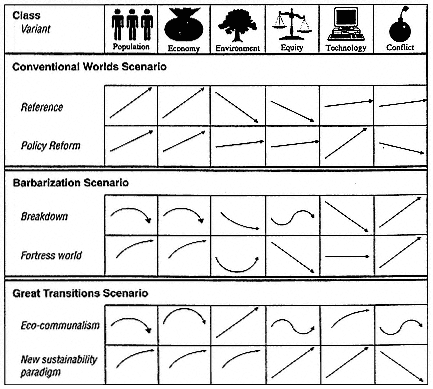
Figure 3.1
Archetypal scenarios with illustrative patterns of change. The scenario structure
shows sketches of behavior over time for six descriptive variables: population growth,
economic scale, environmental quality, socioeconomic equity, technological change,
and degree of social and geopolitical conflict. The curves are intended as rough
illustrations of the possible patterns of change only.
Source: Gallopin et al. (1997). Courtesy of the Stockholm Environment Institute.
The utility of the GSG framework can be further appreciated by pursuing it to the next level of detail—one for which six stylized scenarios appear in Figure 3.1. Within the Conventional Worlds class, a Policy Reform scenario variant complements the business-as-usual of the Reference case variant by assuming that strong, comprehensive, and coordinated government action is taken in an effort to foster sustainability. A critical assumption of this scenario is the emergence of the necessary political will for imposing sustainability limits on something not unlike today's
Page 152
growth-driven global economy and consumerist culture. The scenario framework nonetheless lets us identify policy reforms as one (albeit conventional) point of departure for exploring a transition toward sustain-ability, even as it emphasizes that more basic changes in human institutions and values might ultimately have to play a role in making such reforms possible.
Such changes might draw on elements of the Great Transitions scenarios, which in their pure form as described by the GSG are visionary responses to the sustainability challenge—visions that include much strengthened emphasis on the quality of life in matters of human welfare, the valuation of nature, equitable wealth distribution, and social solidarity. The Eco-communalism variant embraces the principles of strong decentralization, small technology, and economic autarky. The New Sustainability Paradigm variant is a more cosmopolitan vision that would transcend and transform urban and industrial civilization, and maintain global links and solidarity, rather than retreat into localism.
By contrast, if Conventional World market and policy adaptations are overwhelmed by increasing environmental and social crises, the GSG framework encourages us to consider whether a transition to Barbarization scenarios might take place. In an extreme variant, the GSG Breakdown scenarios envision cultural disintegration and economic collapse, a devolution of civilization to a primitive world of all-against-all. The Fortress World variant features an authoritarian response to the threat of breakdown. Ensconced in protected enclaves, elites safeguard their privilege by controlling an impoverished majority and managing critical natural resources. Outside the fortress there is repression, environmental destruction, and misery. Again, the question is not whether to "believe" the social vision of this type of scenario, but rather whether treating it in "what if" mode helps to illuminate the challenges and opportunities of the transition toward sustainability. We believe it does.
This framework of scenario classes and variants can be readily made more complex. With a little thought, many variants and subvariants can be devised with differing assumptions, in combinations that vary across global regions and states and include temporal transitions between different scenario trajectories. The proliferation of scenarios—as of model runs—for their own sake is, however, counterproductive. A more compelling goal is the careful explication and analysis of a few archetypal possibilities that can illuminate the contours of alternative futures and aid in preparing for them. To better understand the potential of such approaches, this Board asked a member of our Board and a leader of the GSG46 to carry out a preliminary scenario analysis of some of the possible futures that would attain the normative goals we set forth in Chapter 1.
Page 153
The results are presented in further detail in the appendix to this chapter, and described in full in a separate report.47
Lessons Learned
The experience summarized above suggests that scenarios to support the study of global futures and the requirements for a transition to sustainability should be rigorous, reflecting the insights of science and modeling. But scenario building must also recognize that the story of the future is not a mere projection of current trends and understanding. Moreover, scenarios are told in the language of words as well as numbers, because some critical dimensions—assumptions about culture, values, lifestyles, and social institutions—require qualitative description.
The spectrum of scenarios to consider should encompass a wide range of possibilities. Contrasting long-range visions should reflect the uncertainty about how the global system might unfold, the possibility of surprise, and a range of worldviews on pathways to a sustainable future. Beyond conventional sensitivity tests (e.g., to assess changes in greenhouse gas emissions associated with a change in population or economic scale), this means exploring fundamentally different assumptions concerning institutions, technology, and values.
To guide the formulation of strategies and policies for sustainability, scenarios need to be sufficiently rich and textured, describing demographic, social, economic, resource, and environmental subsystems in enough detail and disaggregation to evaluate whether a development trajectory is compatible with sustainability goals. These goals can be expressed as criteria by means of various indicators, that gauge the compatibility of a scenario with sustainability (see Chapter 5).
The difference between the indicator values that emerge in the hypothetical world of the scenario and the sustainability goals is a measure of the unsustainability of the assumed development trajectory. By describing the timing, character, and degree of the mismatch, scenario analysis becomes "policy relevant," a laboratory for identifying emerging problems and unsustainable patterns of development, and for setting priorities for action. Contributing to both informed action and theoretical insight are the twin goals of the scenario enterprise.
Though our perspective here is global, it should be stressed that a full research program for sustainability would need to be conducted consistently across multiple levels of spatial resolution. For example, global scenarios, generally disaggregated for major regions, clarify planetary level phenomena—climate change, globalization and trade, geopolitics, migration pressure—but are too grainy to pick up sustainability issues at, say, the river basin or ecosystem level. At the other extreme, community-
Page 154
level sustainability studies are able to provide detail on land use patterns and air quality, for example, but reveal little about global change. We turn to a brief survey of the progress made with such regional scale efforts to explore futures relevant to a sustainability transition in the next section of the chapter. Ultimately, a fully developed strategy for exploring sustainability futures would have the capacity to ''zoom" across spatial levels, with each nested level providing appropriate insights. Such flexible treatment of scale is a challenge at the forefront of current work in both integrated assessment modeling and scenario analysis.48
Regional Information Systems
Good integrated assessment models constitute an explicit system of hypothesized causal hypotheses. They can be reproducibly analyzed to illuminate the conditions under which, or the likelihood with which, particular types of global-scale futures would develop if the models represent a reasonable approximation of the real world. Good scenarios also have an explicit structure to assure internal consistency. By relaxing the demand for a complete system of causal links, however, they allow for exploration of a wider range of potential driving forces, intentions, and contingencies, weaving interesting narratives about how those forces might develop and interact over several decades. A third and complementary way that has been used to explore plausible paths toward sustainability is through regional information systems that harness scientific knowledge to support policy and decision making affecting the long-term interactions of development and environment. All such information systems often contain elements of scenario development and integrated modeling, as well as the other forward-looking strategies noted in the introduction to this chapter. The distinguishing feature we wish to pursue here is not the technical aspects of analysis and presentation that lend such efforts scientific credibility, but rather the social processes and institutions that give them political legitimacy and practical utility as strategies for exploring possible transitions toward sustainability in often contentious regional contexts.
Why Regional Information Systems?
Why pursue regional examples of strategies for exploring the future in a report seeking primarily to sketch a global-scale overview of science and the transition to sustainability? One reason is that relative to the global issues on which we have focused in the preceding sections of this review, the quest for sustainability at the regional scale is rich in the variety of institutions, values, and kinds of environmental and social systems it engages. This rich experience seems likely to have a good deal to
Page 155
teach us about providing effective looks into the global futures of the sustainability transition and our attempts to shape them. Moreover, as suggested in previous chapters and argued in detail in Chapter 4, many of the greatest challenges facing a sustainability transition occur at the regional scale. And a substantial number of the historical successes in providing science-based "look ahead" knowledge for managing environment-development interactions have occurred at regional scales. Understanding how scientific information has been used to provide looks at possible regional futures is therefore valuable in its own right as a component of strategies for navigating the path toward sustainability.
By "regional" systems we mean diverse and eclectic sets of circumstances which have in common a spatial template smaller than the world and at that more immediate and easily identified interactions occur between environment and society. In practice, this can mean systems as small as the watersheds on which much of the original work on modeling-based decision support systems was carried out, or as large as the continental-scale airsheds involved in the European acidification models and scenarios discussed above.49 In the studies we survey below, competing human claims on the environmental and resource components of the region are central. These claims are in turn shaped by institutional arrangements, including jurisdictional borders that do not follow ecosystem boundaries.
Competing claims of stakeholders, expressed through politics, provide one source of information on what is feasible and desirable in a region. A different perspective is provided by scientific analyses, which organize information around natural and social processes and systems. Processes and institutions sometimes can be designed that allow scientific information to be used to complement information derived from politics in ways that facilitate the resolution of competing claims. At least as often, however, political and scientific information clash, with science divorced from or even intensifying conflict. The question is how to design science-based regional information systems for use in exploring contentious futures that are more likely to help than hinder efforts to assess and pursue sustainability. As in the preceding discussions of integrated assessment models and scenarios, the Board's purpose here is to provide a critical appraisal of the utility and limitations of regional information systems for exploring possible futures for a successful transition.
The Range of Experience
Efforts to integrate science-based "what if" analyses in regional resource and environmental management regimes date back to at least the 1950s.50 By the 1960s, with the impetus of studies at the Harvard Water
Page 156
Program, Resources for the Future, and elsewhere, such work had become significantly multidisciplinary. Decision analysis, simulation models, and normative scenarios all had significant roles in the emerging "systems analysis" movement.51 Throughout the 1970s, researchers from the United States' University of Georgia and Canada's University of British Columbia pioneered the development of interactive workshops involving scientists and policy makers in what today would be called the coproduction of simulation models for scenarios exploring the implications of alternative environmental management strategies at the regional scale.52 Struck by the inevitable incompleteness of the science called upon for such analyses, and by the variety and mutability of the management goals involved, this group also crystallized the importance of viewing the management process adaptively.53 Models came to be viewed less as technologies of prediction and more as sites for a continuing dialog between scientists and policy makers. The "product" of their "what if'' views of the future increasingly came to be seen especially as a process of confidence building—an investment in social capacity to continually learn from past management actions to shape future actions better.
Throughout the 1980s, a number of groups experimented with the use of integrated modeling, scenario analysis, and strategic gaming to support the adaptive management of environment-development interactions at the regional scale.54 A typical but particularly relevant example for our purposes is provided by a striking analysis of Balinese rice culture.55 Through classic anthropological field methods, a researcher uncovered ways in which local knowledge embedded in religious rituals provided social coordination for complex planting, pest management, and water allocation decisions involved in Balinese rice production. This production system was efficient and had been sustained over periods of hundreds of years. It had also remained invisible to several generations of foreign and domestic resource management experts. When high-yield rice varieties and related cultivation practices were introduced in the 1980s, they interfered with this highly evolved management system, with a resulting severe disruption to both rice production and the local social system.
Experts, local and foreign, almost understood what had gone wrong, but the complex ecology and politics of the situation meant that their diagnosis was difficult to articulate, and almost impossible to communicate persuasively to those who controlled agricultural policy on the island. While others complained about the politics and development advice on the situation, one research group56 teamed with local experts to build a formal model of the Balinese rice system. The model ended up showing how the traditional system had worked, and how the practices associated with initial high-yield experiments had failed. Because the model had
Page 157
been developed with the input of local experts, and with careful regard for the realities of local politics, it succeeded in providing a "what if" tool that was effectively used in exploring alternative management approaches. Most important, it provided a neutral ground and common language for priests, farmers, and Indonesian agriculture ministry officials to discuss how to integrate the knowledge embodied in high-yielding rice varieties with the knowledge embodied in local temple religious practices to create a higher yield but still maintain a sustainable agricultural system.
A second contemporary example concerning North America's Columbia River Basin stresses how important the integrated design of information systems and management institutions is for the sustainable development of conflicted resource systems.57 The Columbia River, the fourth largest in North America, was developed by an ambitious federal program of dams, irrigation works, and navigation facilities beginning in 1933. By the time the last dam was completed in 1975, the region—which in several respects included Canada, where the Columbia rises—had achieved an economically successful integration around hydroelectric power. But the building of the dams imposed losses as well as gains: Native American tribes, whose economy was founded on the river's abundant salmon fishery, suffered as the anadromous salmon's migration route to the ocean was progressively blocked and its habitat modified by reservoirs, logging, agriculture, and urbanization.
Rising controversy and the prominent role played by federal hydro-power had already prompted Congress to create a new institutional structure in 1980, centered on the Northwest Power Planning Council (NPPC), an interstate agency with a mandate to resolve energy and fisheries conflicts in the Columbia basin. The NPPC's mode of operation was planning: the orderly assembly of information, much of it compiled in an energy-economic model and a separate model of river-basin fish habitat and migration. Together, these models framed an integrated assessment of possible futures for the region and its key interacting components.58
The NPPC models, developed through a careful consultative process involving scientists and stakeholders, captured the conflicts between the biological needs of the fish and the economics of power with scientific credibility and political legitimacy. The models were used extensively by parties on all sides of the conflict. In contrast to the European acidification models described earlier, however, these models and the deliberations associated with them did not identify solutions that would avoid head-on tradeoffs. The NPPC assessment and policy evaluation models raised the real possibility that under the current state and trends of knowledge and development, coexistence of native salmon and the present day economy of the Columbia Basin may not be sustainable over the scale of
Page 158
the river basin. Whether a transition might be achieved under more radical scenarios that encompass substantial changes in institutions59 and values is a question that is only now beginning to be explored.
Lessons Learned
Experience in developing information support systems for regional-scale environmental management has led to several significant findings. A regional scale approach grounded in ecosystem knowledge and cooperative and adaptive management constitutes an infrastructure for social learning—a way to lay out scientific knowledge in a form that can be accessible to nonspecialists, a mode of communication and negotiation that can draw opponents together for learning as well as conflict resolution, and a means to continue learning as action proceeds.
Formal models, a common element of the three exploratory approaches discussed in this chapter, play an important role at the regional level in several related ways. First, a formal model is usually necessary for managing the large amounts of information found in coupled natural and social systems. Second, the assembly of that diverse information is a social process that builds links to different communities—resource users, government, citizen groups, and scientists, among others. When this process works well, those stakeholders use model building as a forum in which their views of how knowledge should be integrated can contribute to the model's structure and to the understanding that emerges. Third, the formal modeling provides an impetus for further social and scientific learning; its assumptions and databases are assertions about reality. As experience accumulates, these assertions should be tested and modified to yield an understanding that is not only more accurate but also widely shared within the region.
The regional studies also illuminate hurdles that have not been overcome. Long-term monitoring has been difficult, even in developed nations. Institutional inertia and turbulence has been high, making it difficult to admit failure or surprise—or even to set out to learn in an unbiased fashion. Yet, over times as short as a decade, it is possible to see some institutional changes, such as the formal adoption of a Mediterranean management regime. Similarly, social expectations of the kind that have accompanied the abandonment of nuclear energy in the United States can shift. Such shifts alter the balance of institutions, for example, fostering a widespread acceptance that energy-efficiency is a good business practice.
Work at the regional scale shows that the way human and natural systems interact can be studied and acted upon within an integrated framework. There is real, if often incremental, social learning. Experience over the regional scale and decadal time span—the "large and the
Page 159
long"—can influence choices, although there is as yet little experience in thinking explicitly about how regions are affected by global-scale changes.60 Despite the hopeful examples, societies are far from having a recipe to achieve sustainable results: to succeed in the context of each region's history and alignments of institutions, power, and economic possibilities requires innovation, resources, staying power, leadership, and no doubt some good luck.
Conclusions
This chapter has reviewed various approaches that explore possible futures of long-term, large-scale, and also regional interactions between environment and society. These futures are shaped by a variety of factors, including chance, human aspirations, and processes normally studied individually by the natural and social sciences. To be sure, many important factors cannot be summarized in analytical models or computer simulations. Yet, just the knowledge and data that are commonly available challenge individuals' ability to integrate this information on the basis of informed judgment alone.61 Over the past generation, analysts have sought ways of combining human judgment with the power of information management through processes that are simultaneously scientifically credible and politically legitimate.
The results of our review are promising but mixed. Integrated assessment models have been accepted at the highest levels of international negotiation. But they have not stilled lively controversies about interpreting or responding to emerging evidence that human activity is modifying the global environment. Scenario studies like the one performed by the Global Scenario Group have added considerable breadth and depth to our normative conception of a transition to sustainability. However, they remain controversial, uneasily poised between the domains of facts and values. Regional information systems have combined elements of modeling and scenario analysis to support policy deliberations in relatively circumscribed instances where sustainability issues are highly contested. However, these systems have often merely shifted the domain of controversy from the overtly political realm to an apparently technical context in which political disagreements are merely pushed beneath a surface of numbers and graphs. It is not clear that such shifts help the cause of sustainable resource development.
Often, it must be said, the sorts of methods we have reviewed here have been able to do little more than chart the many ways in which a transition toward sustainability is not likely to be achieved over the foreseeable future. At their best, however, these methods have helped determined efforts to probe the future implications of present trends, to iden-
Page 160
tify the likely obstacles to sustainability, and to illuminate alternative options for moving forward toward specific sustainability goals. In doing so, they have helped us to learn a bit about what a transition to sustainability might actually entail. This learning is a process through which notable progress has been made using the methods discussed in this chapter; that is a surprising and optimistic finding in itself.
Our analysis of trends and plausible futures and our commissioned scenarios (in the following appendix to this chapter) further undergird an important conclusion of this study. Based on our analysis of persistent trends and plausible futures, the Board believes that a successful transition toward sustainability is possible over the next two generations. This transition could be achieved without miraculous technologies or drastic transformations of human societies. This judgment is illuminated by the analysis in the appendix of a "Hunger and Carbon Reduction Scenario." What will be required, however, are significant advances in basic knowledge, in the social capacity and technological capabilities to utilize it, and in the political will to turn this knowledge and know-how into action. There is ample evidence from attitudinal surveys and grassroots activities that the public supports and demands such progress. The remainder of this report seeks to highlight some of the particular capabilities most in need of active development, and some of the institutional and procedural reforms that might help build a more broadly based social commitment to a sustainability transition.
Page 161
Appendix Scenarios for a Transition Toward Sustainability
The detailed articulation of integrated global scenarios is a major undertaking beyond the scope of this inquiry. Nevertheless, we have endeavored to evaluate the use that scenario approaches might have in exploring possible futures for a sustainability transition by adapting and examining a truncated version of the full scenario analysis developed by the Global Scenario Group using the Polestar analytic framework (see Figure 3.1).62 First, we considered only a subset of the full range of possible social visions, namely, scenarios of the Conventional Worlds variety described earlier (and excluding the more extreme scenarios of the Barbariza tion and Great Transition worlds). In particular, we developed for reference purposes a Current Forces and Trends scenario, in which no major policy initiatives are undertaken to promote sustainability, and compared this scenario to a Hunger and Carbon Reduction scenario, in which explicit efforts are made to reach the sustainability goals outlined in Chapter 1. Second, we concentrated on selected issues, rather than a comprehensive appraisal of the many social and environmental dimensions of the sustainability problem. We took the level of global hunger as a proxy for the poverty problem, and greenhouse gas emissions as representative of environmental stress. While these measures are significant indicators of the social and environmental dimensions of a transition to sustainability, there are many others that a full scenario approach would need to include: indicators on food production and land use, toxification, water, social and international equity, geopolitics, and the possibilities of discontinuous institutional adjustments outside the Conventional Worlds assumptions. There are many dimensions of the problem.63
A Current Forces and Trends Scenario64
The Current Forces and Trends scenario, based on the Reference class scenario of the Global Scenarios Group, is the story of a market-driven world in which the global system gradually unfolds subject to the initial driving forces and trends described in Chapter 2. In this vision, there is institutional continuity, economic globalization, and the slow convergence of developing countries toward the socioeconomic norms of developed regions. In contrast to the Hunger and Carbon Reduction scenario discussed below, strong policy actions for a transition toward sustainability are
Page 162
absent. Demographic, economic, and technological assumptions are consistent with those used in other international assessments.
Values for selected projected global variables in the GSG Current Forces and Trends scenario for the years 2025 and 2050 are shown in Figure 3.2 relative to 1995 values. (The data for Figure 3.2 are found in attached Sheets 1–8.) By 2050, population increases by more than 50 percent and average income65 increases by a factor of more than 2.5, as world economic output more than quadruples. Food requirements almost double, driven by population growth and assumed income increases,
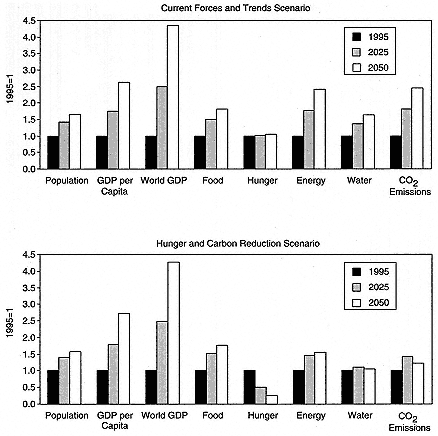
Figure 3.2
Overview of Current Forces and Trends and Hunger and Carbon Reduction scenarios.
Source: Raskin et al. (1998). Courtesy of the Stockholm Environment Institute.
Page 163
although world hunger remains almost constant, a result of population growth and unequal access to food. Requirements for energy and water increase more slowly than the economy—by factors of 2.4 and 1.6, respectively—due to improving efficiency of use and a shift toward less resource-intensive economic activities such as services versus manufacturing. Global carbon dioxide emissions from energy use increase by a factor of 2.4 over the scenario period.
World population approaches 10 billion by 2050, the UN mid-range projection,66 with nearly all the additional 3.7 billion people residing in developing regions. Urbanization continues, with almost 7 billion people living in cities in 2050 compared to 2.5 billion in 1995. The OECD regional share of world output decreases from about 78 percent in terms of market exchange rates (MER) or 55 percent in terms of purchasing power parity (PPP) in 1995 to about 60 percent MER or 40 percent PPP in 2050, with population and income growth rates most rapid in developing regions. Absolute national income differences between developing and OECD regions nonetheless increase.
Hunger
The incidence of extreme poverty and hunger are not normally portrayed in integrated global scenarios. Whether, and how, they can be incorporated in scenario efforts are crucial questions in evaluating the suitability of such scenario approaches for exploring possible futures of a sustainability transition.
For the work reported here, the incidence of extreme poverty and hunger was treated as depending on population, economic development, and income distribution. The analysis was carried out at the national level. All else being equal, growth in population adds to the number of people in poverty, while growth in average income decreases it. All else being equal, if income distribution becomes more skewed in the course of development, poverty increases. The degree of income inequality found in the world today varies widely between countries. Future patterns in the scenario assumed are based on trends in developed regions and the assumption of global convergence toward these patterns elsewhere in a context of weak policies for poverty eradication. In particular, the GSG scenario assumes that income inequality continues to increase in the United States, but at half the historical rate. Other countries converge toward the U.S. pattern.
Hunger levels are related to income patterns in the scenario by defining a "hunger line," the income at which dietary requirements for a normally active life are minimally met. National levels of hunger can be computed directly from the income distribution once we know the hunger
Page 164
line. Contemporary data on hunger levels and income distribution define the initial hunger lines used in the scenario. Future hunger lines are assumed to increase as national incomes grow, a pattern that is supported by current data.67 In the process of urbanization and modernization, it appears that a larger income is required to barely survive, perhaps due to decreased access to informal sources of food (the income-equivalent of informal food gathering is poorly captured in income surveys).
In the scenario, the number of hungry, as defined above, increases gradually over time. Africa shows the sharpest decrease in hunger on a percentage basis, but the largest increase in absolute numbers, while in China and South and Southeast Asia hunger decreases. The hunger reduction goals for the transition toward sustainability set forth in Chapter 1—to reduce by half the number of undernourished people in the world by the year 2015—are not met.
Climate Change
Turning to the implications of the Current Forces and Trends scenario for climate change, we focus on carbon dioxide emissions from energy use, the major source of greenhouse gases. The changing regional patterns of energy requirements in the scenario are broadly compatible with the mid-range IPCC IS92a scenario.68 While global energy needs grow by a factor of 2.4 over the scenario period, developing regions requirements grow by a factor of 3.9. Built into this estimate is an assumed continuing improvement in energy-efficiency. Fossil fuels continue to be the dominant source of energy, though the contributions of modern renewable energy technologies (excluding traditional biomass and hydropower) increase by a factor of 5.2 and nuclear energy increases by a factor of 2.2.
In the GSG Current Forces and Trends scenario, carbon dioxide emissions associated with fossil energy use more than double over the 1995-2050 period. The regional composition of emissions changes dramatically as the OECD share of global emissions drops from about 50 to 30 percent over this period. Nevertheless, emissions per capita remain much higher in the developed regions despite the faster growth in poorer regions. For example, emissions per capita in North America are 25 times those in Africa in 1995 but fall to 9 times those in Africa by 2050.
Given the ambiguous goals for managing greenhouse gas concentrations set forth by the international community at Rio and summarized in Chapter 1 (i.e., stabilization "at a level that would prevent dangerous anthropogenic interference with the climate system"), it is impossible to say whether this scenario meets these goals or not. Clearly, however, even the weak interim targets for emission reductions set forth by the Kyoto protocol are not met in this scenario.
Page 165
A Hunger and Carbon Reduction Scenario
The Current Forces and Trends scenario envisions increasing environmental pressures and tenacious poverty, not a vision of a smooth transition to a sustainable world society. Indeed, the surprise-free continuity assumptions of the scenario could well be undermined by the stresses it places on ecological and social systems. By contrast, the Hunger and Carbon Reduction scenario assumes that a proactive set of initiatives are instituted to reach sustainability goals. In this case, the international targets for reduction of hunger and greenhouse gas emissions summarized in Chapter 1 are taken as normative goals. The scenario framework is then used to explore what types of initiatives might be effective in moving towards those goals.
Several factors could be altered to move the Current Forces and Trends scenario toward patterns that meet the social goals: population levels, the scale of the world economy, the degree of convergence between poor and rich countries (international equity), and the level of income equality within a country (national equity). Our illustrative Hunger and Carbon Reduction scenario, which is based on the GSG's Policy Reform scenario, assumes slightly lower population growth than the Current Forces and Trends scenario due to poverty reduction and more active family planning policies. In the illustrative scenario, non-OECD population in 2050 is assumed to be 95 percent of the UN mid-range forecast value, a reasonable, though modest, assumption given the great uncertainties on the drivers of population growth.
Hunger
In the Hunger and Carbon Reduction scenario, hunger goals are met by increasing incomes above minimum threshold levels. In principle, these targets could be met without income shifts, through direct food aid and other targeted welfare programs. Such programs can contribute to a self-sustaining process of raising the incomes of the poor.69 However, a resilient response to the whole poverty problem will ultimately need to be reflected structurally in income distribution patterns captured by the scenarios.
Not all scenarios of increasing income will meet the target of reducing hunger by one-half by 2025, and half again by 2050. For given levels of total national economic scale, this requires sufficiently high levels of national equity.70 In the extreme case of no economic growth, very high national equity would be required.71 Meeting the hunger goals with the equity assumptions of the Current Forces and Trends scenario would require, under the assumptions incorporated in the scenario, that average annual
Page 166
growth rates in GDP per capita for non-OECD regions be sustained at levels of more than 5 percent. This ''high growth" alternative lies outside what many would consider the realm of plausibility. Moreover, in this variant, the size of the world economy would increase by a factor of 15 by 2025, implying substantially increased environmental pressure.
The Hunger and Carbon Reduction scenario developed for this study lies between these extremes. The assumed scale of the world economy in this scenario is very near that of the Current Forces and Trends case, with world populations slightly lower and average global income slightly higher comparatively. The distribution of income in the Hunger and Carbon Reduction scenario, on the other hand, is very different from that in the Current Forces and Trends scenario. The former scenario meets the hunger reduction targets through a more egalitarian distribution of wealth than the latter scenario. In the Current Forces and Trends scenario, the ratio of non-OECD to OECD average income (international equity) stays almost constant over the scenario time frame, while in the Hunger and Carbon Reduction scenario, the ratio more than doubles, increasing from 0.15 in 1995 to 0.36 in 2050.
National equity decreases from 0.15 to 0.08 in the Current Forces and Trends scenario, but remains almost constant in the Hunger and Carbon Reduction scenario.72 While these distribution assumptions imply significantly greater social equity than in the Current Forces and Trends scenario, they are not implausible, being near today's values in Europe and those of the 1960s in the United States.
Climate Change
Meeting the climate change goals of Chapter 1 in a Hunger and Carbon Reduction scenario also has strong implications for the energy sector and land change. For the purposes of the scenario analysis, we assumed that the Climate Convention goal of "preventing dangerous interference" with the climate system might be met with a cumulative carbon emissions allowance of between 640 and 800 billions of metric tons of carbon (Gt C) between 1990 and 2100.73 At these levels, an equilibrium carbon dioxide concentration of about 450 ppmv would be reached by the year 2100; this value corresponds to the proposed ecologically based target of limiting human-induced temperature change to no more than 0.1C° per decade.74 A politically acceptable allocation of these emissions among regions is assumed to involve burden-sharing, with feasible goals for the industrialized countries and some emission increases in developing countries.
In the illustrative Hunger and Carbon Reduction scenario, the cumulative carbon budget of 640 to 800 Gt C is met by (1) setting emission abatement targets for OECD countries and regions with transitional economies, (2) allowing developing country regions to increase emissions
Page 167
initially, and (3) gradually converging all regions toward a common per capita emission allowance. This approach balances the various interests while incorporating a long-term equity-based notion of burden-sharing in pursuit of long-term climate stabilization.75
Specifically, OECD regions reduce annual energy emissions in the scenario to 10 percent below 1990 levels by 2010 and to 35 percent below 1990 levels by 2025. In the transitional regions, where emissions have dropped precipitously since 1995, scenario emissions increase as their economies recover, and then reduce from 2010 onward. Annual emissions converge everywhere to 0.6 Gt C per capita in 2075, with equal per capita emissions thereafter. In 2100, global emissions are constrained at 3 Gt C per year in order to stabilize carbon dioxide concentrations at 450 ppmv. Finally, developing country emissions increase substantially over the next decades, constrained by the global cap on cumulative emissions of 640 to 800 Gt C and the convergence target. In terms of emissions per capita, the developing regions grow steadily until 2025, but remain substantially below OECD or transitional region levels, before dropping toward the convergence target (Sheet 8). Globally, emissions per capita remain almost constant between 1990 and 2025, and decrease from 2025 to 2100.
To meet these emission constraints, the Hunger and Carbon Reduction scenario assumes strong actions for energy-efficiency, renewable energy resource development, and fuel switching.76 Global energy requirements increase by 56 percent by 2050, which is 36 percent lower than the level foreseen in 2050 in the Current Forces and Trends scenario (Sheet 6). Energy requirements in OECD regions decline by over 40 percent by 2050, despite a doubling of GDP (the combined effects of deep energy-efficiency improvements and structural shifts in the economy toward less energy-intensive sectors. On the other hand, energy requirements in developing regions increase by a factor of 3 by 2050, as decreases in energy-intensity per unit of activity are negated by the assumed rapid growth in economic scale (GDPPPP increases by more than a factor of 7 by 2050 for these countries). Analysis of options for implementing these changes suggests that the energy initiatives in the scenario need not require heroic technological assumptions or economic disruption. They will, however, require concerted and sustained efforts at education, capacity building, and the focusing of social attention.77
Conclusion
The Current Forces and Trends scenario clearly implies that the major elements of a transition toward sustainability cannot be achieved if the forces and trends described in Chapter 2 persist. Human needs will not
Page 168
be met, hunger will not be reduced, and important life support systems will be endangered. There is, however, a suggestion of good news in the Hunger and Carbon Reduction scenario.
This brief and limited review of scenarios brings at least an offer of hope. From what we have seen, a transition to sustainability appears to be technically feasible—the hungry can be fed and the human environmental footprint can be kept within reasonable bounds. A much richer, fairer, and environmentally gentler world is conceivable in the 21st century without positing a tumultuous or implausible social transition or revolutionary new technology. Evolutionary adjustments to economic distribution patterns and technological practices would suffice—in principle.
But the scenario is based on another kind of heroic premise—and here is the troubling news. It assumes the emergence of sufficient political will for establishing a comprehensive set of policy reforms for a sustainability transition. It is by no means clear how the required public mobilization and political vision could arise in the context of conventional values, lifestyles, and institutions. Alternative scenarios that transcend conventional visions also require detailed attention in the scientific and social quest for a sustainable future.
Page 169
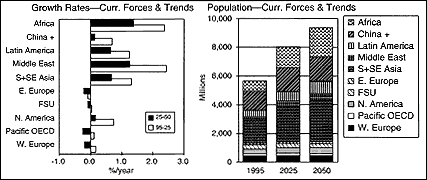
Sheet 1: Population
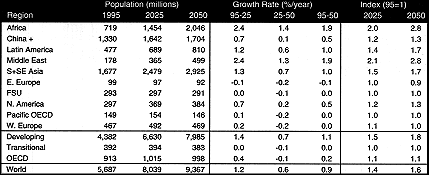
Current Forces and Trends
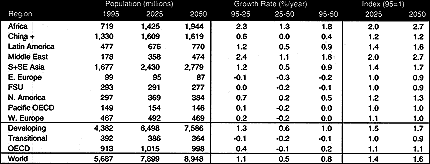
Hunger and Carbon Reduction
Page 170
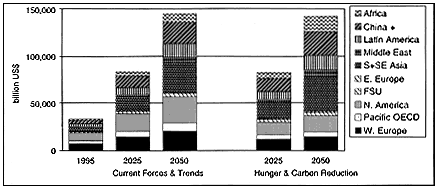
Sheet 2: GDP
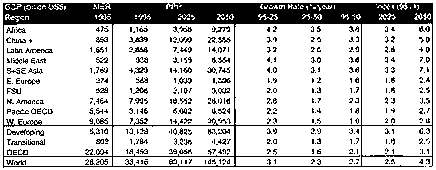
Current Forces and Trends
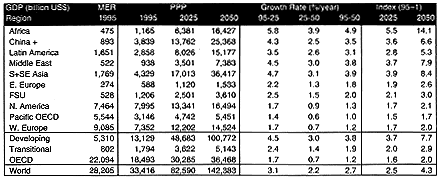
Hunger and Carbon Reduction
Page 171
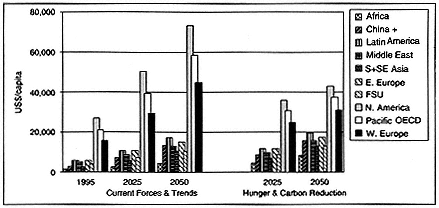
Sheet 3: Income (GDP per Capita)
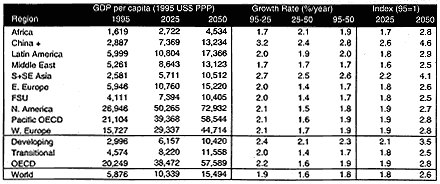
Current Forces and Trends
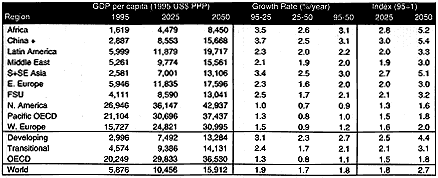
Hunger and Carbon Reduction
Page 172
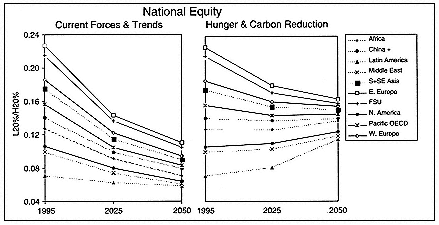
Sheet 4: Income Distribution
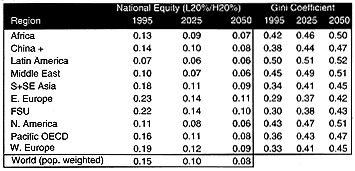
Current Forces and Trends
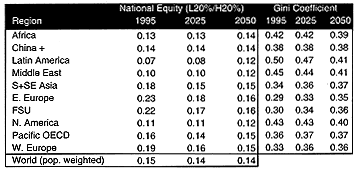
Hunger and Carbon Reduction
Page 173
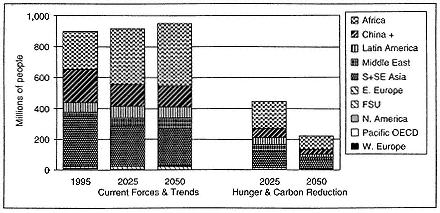
Sheet 5: Hunger
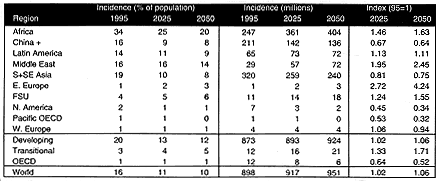
Current Forces and Trends
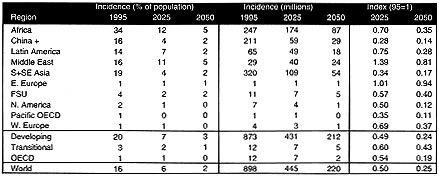
Hunger and Carbon Reduction
Page 174
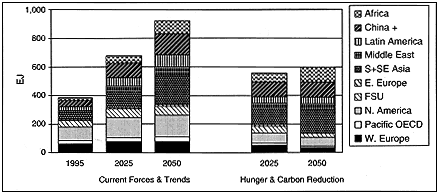
Sheet 6: Primary Energy Requirements by Region
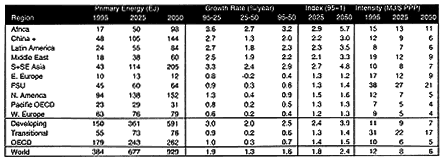
Current Forces and Trends
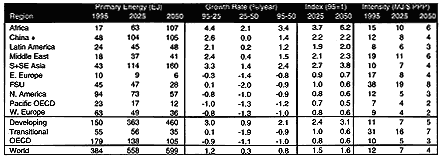
Hunger and Carbon Reduction
Page 175
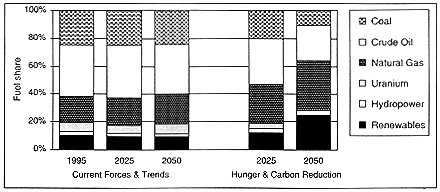
Sheet 7: Primary Energy Requirements by Source
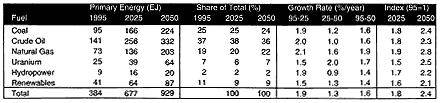
Current Forces and Trends
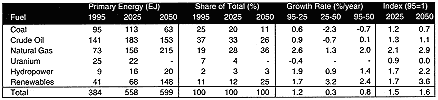
Hunger and Carbon Reduction
Page 176
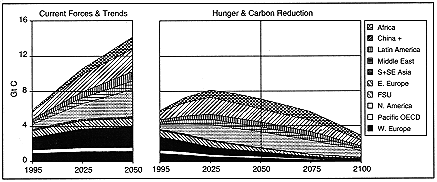
Sheet 8: Carbon Emissions
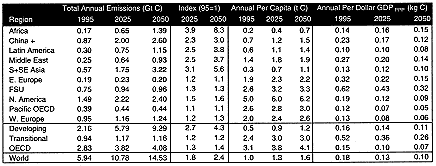
Current Forces and Trends
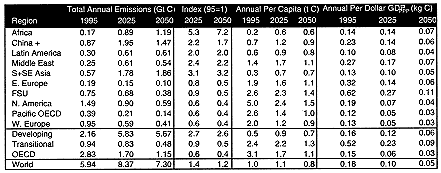
Hunger and Carbon Reduction
Page 177
References and Bibliography
Achebe, Chinua, Goran Hyden, Achola Pala Okeyo, and Christopher Magadza, eds. 1990. Beyond hunger in Africa: Conventional wisdom and a vision of Africa in 2057. Nairobi: Henemann Kenya.
Ackerman, B.A., S. Rose-Ackerman, J.W. Sawyer, Jr., and D.W. Henderson. 1974. The uncertain search for environmental quality. New York: The Free Press.
Alcamo, J., R. Shaw, and L. Hordijk, eds. 1990. The RAINS model of acidification: Science and strategies in Europe. Dordrecht: Kluwer Publishers.
Benedick, Richard Elliott. 1988. Ozone diplomacy: New directions in safeguarding the planet. Cambridge, MA: Harvard University Press. Especially Chapter 2.
Blinder, Alan. 1988. Economic policy and economic science: The case of macroeconomics. In Perspective 2000: Proceedings of a conference sponsored by the Economic Council of Canada, December 1998, eds. K. Newton, T. Schweitzer, and J-P. Voyer. Ottawa: Canadian Government Publishing Centre.
Bossel, Harmut. 1998. Earth at a crossroads: Paths to a sustainable future. Cambridge: Cambridge University Press.
Brewer, G.D. 1986. Methods for synthesis: Policy exercises. Chap. 17 of Sustainable development of the biosphere, eds. W. C. Clark and R. E. Munn. Cambridge, UK: Cambridge University Press.
Brewer, G.D., and M. Shubik. 1979. The War game: A critique of military problem solving. Cambridge, MA: Harvard University Press.
Budnitz, R.J., P.R. Davis, M.K. Ravindra, and W.H. Tong. 1995. Seismic risk of nuclear power plants under shutdown conditions. In International conference on structural mechanics in reactor technology 4. Conference organized by the International Association for Structural Mechanics in Reactor Technology and Universidade Federal do Rio Grande do Sul. Porto Alegre, Brazil: Editora da Universidade Federal do Rio Grande do Sul.
Carson, Rachel. 1962. Silent spring. New York: Fawcett Crest.
Cebon, P., U. Dahinden, H.C. Davies, D. Imboden, and C.C. Jaeger. 1998. Views from the Alps: Regional perspectives on climate change. Cambridge, MA: MIT Press.
Clark, William C., and Giandomenico Majone. 1985. The critical appraisal of scientific inquiries with policy implications. Science Technology and Human Values 10 (Summer 1985): 6–19.
Clark, William C. 1988. Visions of the 21st century: Conventional wisdom and other surprises in the global interactions of population, technology and environment. In Perspective 2000: Proceedings of a conference sponsored by the Economic Council of Canada, December 1998, eds. K. Newton, T. Schweitzer, and J-P. Voyer, 7–32. Ottawa: Economic Council of Canada.
Commission on Risk. See Presidential/ Congressional Commission on Risk Assessment and Risk Management.
Cronon, William. 1992. A place for stories: Nature, history, and narrative. Journal of American History 78: 1347–1376.
Cukier, R.I., H.B. Levine, and K.E. Schuler. 1978. Nonlinear sensitivity analysis of multi-parameter model systems. Journal of Computational Physics 26: 1–42.
Dowlatabadi, Hadi, and M. Granger Morgan. 1993. Integrated assessment of climate change. Science 259, no. 5013: 1813, 1932.
Epple, Dennis, and Lester Lave. 1985. Scenario analysis. In Climate Impact Analysis, eds. R. Kates, J. Ausubel, and M. Berberian. London: Wiley.
Fishbone, L.G., and H. Abilock. 1981. MARKAL, a linear-programming model for energy systems analysis: Technical description of the BNL version. Energy Research 5: 353–375.
Forrester, J.W. 1968. Principles of systems. Cambridge, MA: Wright-Allen Press.
Page 178
GEA (Global Environment Assessment Project). 1997. A critical evaluation of global environmental assessments: The climate experience. Calverton, MD: Center for the Application of Research on the Environment. [http://environment.harvard.edu/gea].
Gallopin, Gilberto, Al Hammond, Paul Raskin, and Rob Swart. 1997. Branch points: Global scenarios and human choice. Stockholm: Stockholm Environment Institute.
Greenburger, M. 1983. Caught unawares: The energy decade in retrospect. Cambridge, MA: Ballinger.
Gunderson, Lance H., C.S. Holling, and Stephen S. Light, eds. 1995. Barriers and bridges to the renewal of ecosystems and institutions. New York: Columbia University Press.
Guston, D. 1997. Critical appraisal in science and technology policy analysis: The example of ''Science, the endless frontier." Policy Sciences 30: 233–255.
Haas, Peter M. 1990. Saving the Mediterranean: The politics of international environmental cooperation. New York: Columbia University Press.
Haefele, W, project leader. 1981. Energy in a finite world: A global systems analysis. Cambridge, MA: Ballinger.
Hammond, A. 1998. Which world: Scenarios for the 21st century. Washington: Island Press.
Henrion, Max, and Baruch Fischhoff. 1986. Assessing uncertainty in physical constants. American Journal of Physics 54, no. 9: 791–798.
Herrera, A.O., et al. 1976. Catastrophe or new society?: A Latin American world model. Fundación Bariloche. Ottawa: International Development Research Centre.
Holling, C.S., ed. 1978. Adaptive environmental assessment and management. Chichester, UK: John Wiley.
Hordijk, L. 1988. Linking policy and science: A model approach to acid rain. Environment 30, no. 2: 16–20.
Hordijk, L., and C. Kroeze. 1997. Integrated assessment models for acid rain. European Journal of Operational Research 102, no. 3: 405–417.
Houghton, J.T., B.A. Callander, and S.K. Varney, eds. 1992. Climate change 1992: The supplementary report to the IPCC Scientific Assessment. Cambridge, UK: Cambridge University Press. Published for the Intergovernmental Panel on Climate Change.
Houghton, J.T., L.G. Meira Filho, B.A. Callander, N. Harris, A. Kattenberg, and K. Maskell, eds. 1996. Climate change 1995: The science of climate change. Cambridge, UK: Cambridge University Press. Published for the Intergovernmental Panel on Climate Change.
Hourcade, J-C. and B. Lapillonne. 1985. Futurology of energy demand in developing countries: modeling problems. Association d'econometrie appliquee, colloque international 2. Aix-en-Provence, France: Economica Paris.
Hourcade, J-C., R. Richels, and J. Robinson. 1996. Estimating the costs of mitigating greenhouse gases. In Climate change 1995: Economic and social dimensions of climate change. Contribution of working group III to the second assessment report of the Intergovernmental Panel on Climate Change, eds. J. Bruce, H. Lee, and E. Haites. Cambridge, UK: Cambridge University Press.
Hourcade, J-C., and J. Robinson. 1996. Mitigating factors: Assessing the costs of reducing GHG emission. Energy Policy 24, no. 10/11: 863–873.
IPCC (Intergovernmental Panel on Climate Change). 1992. See Houghton et al. 1992.
———. 1996. See Houghton et al. 1996.
Jaeger, J., N. Sonntag, D. Bernard, and W. Kurz. 1991. The challenge of sustainable development in a greenhouse world: Some visions of the future. Report of a Policy Exercise at Bad Bleiberg, Austria, September 2–7, 1990. Stockholm: Stockholm Environment Institute.
Jorgenson, D.W., and P. Wilcoxen. 1993. Energy, the environment, and economic growth. Handbook of Natural Resource and Energy Economics 3: 1267–1390.
Julian, Paul R., Robert W. Kates, and W.R.D. Sewell. 1969. Estimating probabilities of research success in atmospheric sciences: Results of a pilot investigation. Water Resources Research 5, no. 1 (February 1969): 215–227.
Page 179
Kaplan, Robert D. 1994. The coming anarchy: How scarcity, crime, overpopulation, tribalism, and disease are rapidly destroying the social fabric of our planet. The Atlantic Monthly 273, no. 2: 44–64.
Keepin, B. and B. Wynne. 1987. The role of models: What can we expect from science? A study of the IIASA world energy model. In The politics of energy forecasting, eds. Thomas Baumgartner and Atle Midttun. London: Oxford University Press.
Kennedy, Paul. 1993. Preparing for the twenty-first century. New York: Random House.
Kinsman, Francis. 1990. Millenium: Towards tomorrow's society. London: W.H. Allen.
Kneese, Allen V., and Blair T. Bower. 1968. Managing water quality: Economics, technology, institutions. Baltimore: Johns Hopkins University Press. Published for Resources for the Future.
Lansing, J. Stephen. 1991. Priests and programmers: Technologies of power in the engineered landscape of Bali. Princeton: Princeton University Press.
Lee, Kai N. 1993. Compass and gyroscope. Integrating science and politics for the environment. Washington, D.C.: Island Press.
Levy, M.A. 1993. European acid rain: The power of tote-board diplomacy. In Institutions for the earth: sources of effective international environmental protection, eds. P.M. Haas, R.O. Keohane, and M. Levy. Cambridge, MA: MIT Press.
Maass, A. 1962. Design of water-resource systems; new techniques for relating economic objectives, engineering analysis, and governmental planning. Cambridge, MA: Harvard University Press.
Mar, B.W. 1974. Problems encountered in multi-disciplinary resources and environmental simulation models development. J. Environ. Manage. 2: 83–100.
McCay, Bonnie J. 1998. Oyster wars and the public trust: Property, law, and ecology in New Jersey history. Tucson: University of Arizona Press.
Meadows, D.H., D.L. Meadows, and J. Randers. 1992. Beyond the limits: Confronting global collapse, envisioning a sustainable future. Post Mills, VT: Chelsea Green.
Meadows, D.H., D.L. Meadows, J. Randers, and W. W. Behrens. 1972. The limits to growth. New York: Universe Books.
Meadows, D.H., J. Richardson, and G. Bruckmann. 1982. Groping in the dark: The first decade of global modeling. Chichester, UK: Wiley.
Meadows, Donella H., and J.M. Robinson. 1985. The electronic oracle computer models and social decisions. New York: John Wiley & Sons.
Miles, Edward L. 1998. Personal reflections on an unfinished journey through global environmental problems of long timescale. Policy Sciences 31, no. 1: 1–33.
Morgan, M. Granger. 1998. Uncertainty analysis in risk assessment. Human and ecological risk assessment 4, no. 1: 25–39.
Morgan, M. Granger, and Hadi Dowlatabadi. 1996. Learning from integrated assessment of climate change. Climatic Change 34: 337–68.
Morgan, M. Granger, M. Henrion, and M. Small. 1990. Uncertainty: A guide to dealing with uncertainty in quantitative risk and policy analysis. New York: Cambridge University Press.
Morgan, M. Granger, and David Keith. 1995. Subjective judgments by climate experts. Environmental Science and Technology 29, no. 10: 468–476.
Morgan, M. Granger, S.C. Morris, M. Henrion, D.A.L. Amaral, W.R. Rish, C. De Wispelaere, F.A. Schiermeier, and N.V. Gillani, eds. 1986. Technical uncertainty in quantitative policy analysis: A sulfur air pollution example. New York: Plenum Press.
Morris, R.F. 1963. The dynamics of epidemic spruce budworm populations. Mem. Entomol. Soc. Can. No. 31.
Nakicenovic, Nebojsa, Arnulf Grübler, and Alan McDonald, eds. 1998. Global Energy Perspectives. Cambridge, UK: Cambridge University Press.
Page 180
National Assessment Synthesis Team. 1998. A framework for socio-economic and ecological assumptions in climate impact assessment. Washington, D.C.: US Global Change Research Program.
NPPC (Northwest Power Planning Council). 1994. Columbia Basin fish and wildlife program. Portland, OR: Northwest Power Planning Council.
NRC (National Research Council). 1979. Protection against depletion of stratospheric ozone by chlorofluorocarbons. Assembly of Mathematical and Physical Sciences (US), Committee on Impacts of Stratospheric Change. Washington, D.C.: National Academy Press.
———. 1983. Changing climate. Carbon Dioxide Assessment Committee. Washington, D.C.: National Academy Press.
———. 1992. Policy implications of greenhouse warming: Mitigation, adaptation and the science base. Washington, D.C.: National Academy Press.
———. 1994. Improving the management of US marine fisheries. Washington, D.C.: National Academy Press.
———. 1996a. Understanding risk: Informing decisions in a democratic society. Committee on Risk Characterization, eds. Paul C. Stern and Harvey V. Fineberg. Washington, D.C.: National Academy Press.
———. 1996b. Upstream: Salmon and society in the Pacific Northwest. Committee on Protection and Management of Pacific Northwest Anadromous Salmonids. Washington, D.C.: National Academy Press.
———. 1998. Improving fish stock assessments. Committee on Fish Stock Assessment Methods. Washington, D.C.: National Academy Press.
Olson, David M. and Eric Dinerstein 1998. The Global 200: A representation approach to conserving the earth's most biologically valuable ecoregions. Conservation Biology 12: 502–515.
Parson, Edward R. 1995. Integrated assessment and environmental policy making. Energy Policy 23, no. 4/5: 463–475.
Parson, Edward R. 1997. Informing global environmental policy-making: A plea for new methods of assessment and synthesis. Environmental Modeling and Assessment 2: 267–279.
Parson, Edward R., and Karen Fisher-Vanden. 1997. Integrated assessment models of global climate change. Annual Review of Energy and Environment 22: 589–628.
Pinkerton, Evelyn W. 1992. Translating legal rights into management practice: Overcoming barriers to the exercise of co-management. Human Organization 51: 330–341.
Presidential/Congressional Commission on Risk Assessment and Risk Management. 1997. Framework for environmental health risk management. Washington, D.C.: U.S. Government Printing Office. Available at www.riskword.com.
Raskin, P., G. Gallopin, P. Gutman, A. Hammond, and R. Swart. 1998. Bending the curve: Toward global sustainability. A report of the Global Scenario Group. PoleStar Series Report no. 8. Boston: Stockholm Environment Institute.
Ravallion, Martin. 1992. Poverty comparisons: A guide to concepts and methods. Washington, D.C.: The World Bank.
Reisner, Marc P. 1986. Cadillac desert: The American West and its disappearing water. New York: Viking.
Ricker, W.E. 1954. Stock and recruitment. J. Fish. Res. Board. Can. 11: 559–623.
Rijsberman, F.R., and R.J. Swart. 1990. Targets and indicators of climate change. Proceedings of a conference, Rotterdam, Netherlands, April 25–27, 1990. Stockholm: Stockholm Environment Institute.
Robinson, J.B., and D.S. Rothman. 1997. Growing pains: A conceptual framework for considering integrated assessments. Environmental Monitoring and Assessment 46, no. 1–2: 23–43.
Page 181
Rotmans, J. Forthcoming. TARGETS (Tool to Assess Regional and Global Environmental and Health Targets for Sustainability). In Electronic series in integrated assessment modelling, eds. J. Rotmans and H. Dowlatabadi. Bussum, The Netherlands: Baltzer Scientific Publishers.
Rotmans, J., and B. de Vries. 1997. Perspectives on global change: The TARGETS approach. London: Cambridge University Press.
SCOPE (Scientific Committee on Problems of the Environment, International Council of Scientific Unions). 1978. Simulation modeling of environmental problems. SCOPE 9. Chichester, UK: John Wiley.
Spetzler, Carl S., and Staèl von Holstein. 1975. Probability encoding in decision analysis. Management Science 22, no. 3: 340–358.
Standard and Poors DRI. 1998. The impact of meeting the Kyoto Protocol on energy markets and the economy. Lexington, MA: DRI.
Stegner, Wallace. 1954. Beyond the hundredth meridian: John Wesley Powell and the second opening of the West. 1982 edition. Lincoln: University of Nebraska Press.
Svedin, U., and B. Aniansson. 1987. Surprising futures: notes from an international workshop on long-term world development. Stockholm: Swedish Council for Planning and Coordination of Research.
Tatang, Menner A., Wenwei Pan, Ronald G. Prinn, and Gregory J. McRae. 1997. An efficient method for parameter uncertainty analysis of numerical geophysical models. Journal of Geophysical Research 102, no. D18: 21925–21932.
Toth, Ferenc L. 1988a. Policy exercises: Objectives and design elements. Simulation and Games 19 (September): 235–255.
Toth, Ferenc L. 1988b. Policy exercises: Procedures and implementation. Simulation and Games 19 (September): 256–276.
UN (United Nations). 1998. World population prospects: The 1996 revision. New York: United Nations.
UNDP (United Nations Development Programme). 1997. Human development report 1997. New York: Oxford University Press.
U.S. Congress, Office of Technology Assessment. 1991. Changing by degrees: Steps to reduce greenhouse gases. OTA-O-482. Washington, D.C.: US Government Printing Office.
U.S. Congress, Office of Technology Assessment. 1993. Preparing for an uncertain climate, Volume II. OTA-O-568. Washington, D.C.: US Government Printing Office.
WBCSD (World Business Council on Sustainable Development). 1997. Exploring sustainable development. WBCSD Global Scenarios 2000–2050 summary brochure. Geneva: WBCSD.
WEC/IIASA (World Energy Council, International Institute for Applied Systems Analysis). 1995. Global Energy Perspectives to 2050 and Beyond. London: World Energy Council.
WEFA, Inc. 1998. Global warming: The high cost of the Kyoto Protocol, nation and state impacts. Eddystone, PA: WEFA.
WGBU (German Advisory Council on Global Change). 1997. World in transition: The research challenge. Annual Report 1996. Berlin: Springer-Verlag. [also available through the Council's home page at http://www.awi-bremmerhaven.de/WBGU].
Wack, P. 1985a. Scenarios: Uncharted waters ahead. Harvard Business Review 63, no. 5: 72–89.
Wack, P. 1985b. Scenarios: Shooting the rapids (Part 2). Harvard Business Review 63, no. 6: 139–150.
Walsh, S.J., T.P. Evans, W.F. Welsh, B. Entwisle, and R.R. Rindfuss. 1999. Scale-dependent relationships between population and environment in Northeastern Thailand. Photogrammetric Engineering and Remote Sensing 65, no. 1: 97–105.
Walters, C.J. 1986. Adaptive management of renewable resources. London: MacMillan.
Washington, Warren M., and Claire L. Parkinson. 1986. An introduction to three-dimensional climate modeling. Mill Valley, CA: University Science Books.
Page 182
Watt, K.E.F. 1966. Systems analysis in ecology. New York: Academic Press.
Weyant, J., O. Davidson, H. Dowlatabadi, J. Edmonds, M. Grubb, E.A. Parson, R. Richels, J. Rotmans, P.R. Shukla, R.S.J. Tol, W. Cline, S. Fankhauser. 1996. Integrated assessment of climate change: An overview and comparison of approaches and results. Chap. 10 of Climate change 1995, ed. James P. Bruce, Hoesung Lee, and Erik F. Haites. Contribution of Working Group III to the Second Assessment Report of the Intergovernmental Panel on Climate Change (IPCC). Cambridge, UK: Cambridge University Press. Published for the IPCC.
World Bank. 1990. World development report 1990. New York: Oxford University Press. Published for the World Bank.
Worster, Donald. 1985. Rivers of empire: Water, aridity, and the growth of the American West. New York: Pantheon.
Endnotes
1 See, e.g., Guston (1997); Brewer (1986); Clark and Majone (1985).
2 E.g., Washington and Parkinson 1986; NRC 1994, NRC (1998).
3 See Cronon (1992).
4 Svedin and Aniansson (1987); Clark (1988); Achebe et al. (1990); Hammond (1998).
5 Environmental degradation syndromes, WBGU (1997), see Box 6.2 in Chapter 6; eonometric forecasts of energy use, WEFA (1998), Standard and Poors (1998), Jorgenson and Wilcoxen (1993), Nakicenovic et al. (1998).
6 Spetzler and von Holstein (1975); Morgan et al. (1990).
7 Depletion of stratospheric ozone, NRC (1979), Morgan et al. (1990); long-range transport of sulfur air pollution, Morgan et al. (1986); the assessment of earthquake structural risks, Budnitz et al. (1995); possible climate change in the face of increased atmospheric carbon dioxide, Morgan and Dowlatabadi (1996); energy modeling, e.g., NRC (1983).
8 Morgan and Keith (1995); Morgan (1998).
9 Julian et al. (1969).
10 Henrion and Fischhoff (1986).
11 Morgan et al. (1990).
12 Integrated studies of river basins, Kneese and Bower (1968); comprehensive accounting frameworks, e.g., Toth (1988a, 1998b).
13 Parson (1997); NRC (1996a); Commission on Risk (1997).
14 e.g., Brewer and Shubik, (1979).
15 Brewer (1986); Jaeger et al. (1991); Toth (1988a,b).
16 We distinguish here between integrated assessment models and integrated assessment processes such as some might call the IPCC or the production of an NRC report on policy responses to climate change. As will become clear later in the chapter, our emphasis on models here is not because we underestimate the importance of the process component of successful strategies for exploring the future. Rather, it is because "integrated assessment" as a process has, in the arena of global environmental change policy, come to be used synonymously with virtually any form of science-based assessment or evaluation. This is not necessarily a bad thing. But it does not make for a useful analytic category. Integrated assessment models, in contrast, constitute an evolving methodology conducive to critical appraisal, application, and improvement.
17 Club of Rome, Meadows et al. (1972); RAINS, Alcamo et al. (1990), Hordijk and Kroeze (1997); Latin American World Model, Herrera et al. (1976); TARGETS, Rotmans, and de Vries (1997).
18 Systems studies, Forrester (1968); Club of Rome, Meadows et al. (1972).
Page 183
19 E.g., Haefele (1981), Fishbone and Abilock (1981).
20 See for example, Meadows et al. (1982); Greenburger (1983); Brewer (1986); Meadows and Robinson (1985); Keepin and Wynne (1987).
21 See Blinder (1988).
22 E.g., Holling (1978).
23 Hourcade and Robinson (1996).
24 Alcamo et al. (1990); Hordijk and Kroeze (1997).
25 Levy (1993).
26 Weyant et al. (1996).
27 Dowlatabadi and Morgan (1993); Parson and Fisher-Vanden (1997).
28 Weyant et al. (1996).
29 Cukier et al. (1978); Tatang et al. (1997).
30 See Robinson and Rothman (1997); Hourcade and Robinson (1996).
31 Holling et al. (1978).
32 See http://www.nacc.usgcrp.gov.
33 Weyant et al. (1996); Parson (1995); Dowlatabadi and Morgan (1993).
34 Benedick (1988).
35 Hourcade et al. (1996).
36 See GEA (1997).
37 Hourcade et al. (1996); Hourcade and Robinson (1996).
38 E.g., Holling (1978).
39 Epple and Lave (1985).
40 Wack (1985ab).
41 WBCSD (1997).
42 Meadows et al. (1992).
43 Kinsman (1990).
44 Gallopin et al. (1997).
45 The Global Scenario Group (GSG), part of the Stockholm Environment Institute's Polestar Project, was established to engage a diverse group of development professionals in a long-term commitment to examining the requirements for sustainability. GSG is an independent, international, and interdisciplinary body that represents a variety of geographic and professional experiences and engages in an ongoing process of global and regional scenario development, policy analysis, and public education. Individuals particularly active in the Group's publications have included Gilberto Gallopin, Pablo Gutman, Al Hammond, Paul Raskin, and Rob Swart. Raskin is a member of the Board responsible for this report. Hammond (1998) has published a scenario study of his own, drawing on the GSG work. The GSG is supported by the Nippon Foundation, the Rockefeller Foundation, the UN Environment Program, and the Stockholm Environment Institute. See http:// www.gsg.org for more details.
46 Paul Raskin
47 Raskin et al. (1998).
48 National Assessment Synthesis Team (1998); Gallopin et al. (1997); Walsh et al. (1999).
49 Watersheds, e.g., Maass (1962); airsheds, i.e., Hordijk (1988).
50 E.g., Ricker (1954); Morris (1963).
51 E.g., Maass (1962); Watt (1966); Mar (1974); Ackerman et al. (1974); SCOPE (1978).
52 Holling (1978).
53 See Walters (1986).
54 E.g., Gunderson et al. (1995); Cebon et al. (1998).
55 Lansing (1991).
56 Stephen Lansing and James Kremer, a systems ecologist.
57 NRC (1996b); Lee (1993).
58 NPPC (1994).
Page 184
59 In a wide-ranging examination, an NRC panel concluded, "We found no easy answers for institutional change, but many constructive possibilities can be identified." (NRC 1996b), p.325.
60 Miles (1998).
61 cf. Kennedy (1993).
62 As reported in Raskin et al. (1998).
63 See Raskin et al. (1998) for a discussion.
64 This scenario assumes that trends such as those toward more efficient technologies continue. The scenario is therefore not simple extrapolations of current data.
65 Expressed as GDPPPP per capita. In this report, GDP adjusted for purchasing power parity is denoted by GDPPPP, to distinguish it from the more common GDP conversion in market exchange rates (GDPMER).
66 UN (1998).
67 Specifically, hunger lines increase to $3,670, the current inferred value for North America, as mean income approaches $21,880 (the value where the linear fit to the national data intersects the constant line at $3,670). This is analogous to the observation that absolute poverty lines tend to rise as average incomes do (Ravallion et al. 1991; World Bank 1990).
68 IPCC (1992).
69 UNDP (1997).
70 Alternative scenarios can be represented as trajectories in a space defined by three coordinates: the size of the world economy, international equity (ratio of non-OECD to OECD average incomes), and national equity average (ratio of incomes of the poorest 20 percent to the richest 20 percent). The sector of the space over which the scenarios can move plausibly is limited. For example, let us require that both the OECD and non-OECD regions exhibit positive economic growth. Let us also assume that, consistent with convergence assumptions of the scenario, incomes grow faster in non-OECD regions than in OECD regions (implying international equity of income should increase throughout the scenario time frame). Finally, based on historical patterns, let us assume a maximum plausible growth rate of GDPPPP per capita of about 4 percent over the large regions and long time periods we are considering. These plausibility constraints define a possible scenario space. Both the Current Forces and Trends scenario and the Hunger and Carbon Reduction scenario lie within this scenario space.
71 This national equity value would correspond to an average Gini coefficient of only 0.21 in 2025, about two-thirds the current average value in Western Europe. Gini coefficient is a measure of the degree of inequality in a given society. The coefficient is defined with reference to the Lorenz curve, a plot of the fraction of total income held by a given fraction of the population, beginning with the lowest income populations. The coefficent can take values from zero (complete equality) to one (extreme inequality). See Raskin et al. (1998).
72 This corresponds to an average regional Gini coefficient between 0.35 and 0.41 in 2050.
73 IPCC (1996).
74 Rijsberman and Swart (1990).
75 In addition to these energy-related carbon emissions, about 30 Gt C is emitted in the scenario from land changes over this period, mostly due to deforestation. It is assumed that policies for forest sustainability succeed in decreasing net emissions to zero by the year 2050.
76 The patterns of energy-efficiency improvement and energy mix change in Hunger and Carbon Reduction scenario are comparable to the "ecologically driven" scenario of a recent energy scenario exercise of the World Energy Council and the International Institute for Applied Systems Analysis (WEC/IIASA 1995). However, an important difference is that the WEC/IIASA scenario assumes much lower economic growth rates in developing regions (OECD and transitional region assumptions are comparable) so that developing country GDPPPP in 2050 is only half that of the Hunger and Carbon Reduction scenario.
77 See Raskin et al. (1998) for details.


