
Page 185
4
Environmental Threats and Opportunities
The goals for a transition toward sustainability, as we set them out in Chapter 1, are to meet human needs over the next two generations while reducing hunger and poverty and preserving our environmental life support systems. The activities to approach this goal can only move ahead within the constraints set by resources and the environment. Many people have argued that, unless we make dramatic changes in our human enterprises, the development needed to meet future human needs risks damaging the life-support capabilities of the earth—which in turn would of course prevent society from meeting its goals. In this chapter, we therefore ask two related questions:
• What are the greatest threats that humanity will encounter as it attempts to navigate the transition to sustainability?
• What are the most promising opportunities for avoiding or circumventing these threats on the path to sustainability?
Our object is not to predict what environmental damages might be caused by development at particular times and places—a largely futile activity for all but the most specific and immediate development plans. Rather, it is to highlight some of the most serious environmental obstacles that might be met in plausible efforts to reach the goals outlined in Chapter 1 and along development paths such as those explored in Chapters 2 and 3, to take timely steps to avoid or circumvent these obstacles.1
This chapter begins with a brief discussion of the approaches and issues we considered in scouting the environmental hazards that societies may confront. We then turn to efforts to assess the relative severity of
Page 186
these hazards for particular times and places. Following the lead of the Brundtland Commission, we next analyze how human activities in a number of crucial developmental sectors might pose important challenges and opportunities for navigating the transition toward sustainability. Finally, we turn to the question of interactions—how multiple developmental activities may interact with complex environmental systems to transform the very nature of the journey before us.
Throughout our discussion, we not only seek to identify potential obstacles to a successful transition, but also to highlight the skills, knowledge, and materials that might be most useful in detecting and understanding the hazards, and in devising solutions or mid-course corrections to address them. We conclude that in any given place there are significant if often place-specific opportunities for societies to pursue goals of meeting human needs while sustaining earth's life support systems. Some of these opportunities are likely to be realized by individual actors—firms, organizations, and states—in the normal course of their self-interested activities. Others, however, will require integrative planning and management approaches.
Conceptual Issues
One of the most difficult challenges of the Board's exercise—and one that has bedeviled other attempts to evaluate the pitfalls to sustainable development—has been to determine which of the many potential problems are truly those that cannot be ignored. Perhaps the easiest approach might be to list as potential concerns for sustainable development every resource limitation or environmental response that can be imagined. Equally clear, however, is that a canoe-steering society that tries to focus public resources on avoiding every possible danger in a river at once will likely be looking the wrong way as it collides with the biggest rock. How can we distinguish those threats that, while not insignificant, are likely to be avoided or adapted to from those with a real potential for sinking the vessel? And how can we devise a system that encourages society to update its priorities among all hazards in light of new information and expertise?
A further difficulty in the analysis arises because hazards have spatial and temporal dimensions and important interactions. However connected the world may be, and however global the transformations humans impose on it, the sustainability transition will be played out differently on a vast number of local stages. Neither population growth, nor climate change, nor water limitations will be the same in Japan as in the Sudan. The environmental hazards that nations and communities find most threatening and the response strategies they look to will continue to be
Page 187
significantly different in different places in the world and at different times. Moreover, some components of the environmental system have impressive resiliency and ability to recover from human-caused or natural stress. Temporal dynamics and variations in the resiliency of systems confound clear illumination of critical hazards. Identification of hazards must also confront the difficulty of identifying, measuring, and predicting cumulative and interactive effects and discontinuous changes. Many of the activities that humans engage in occur at local scales, but as these activities are repeated around the world, their effects accumulate; collectively, local changes can lead to regional and global changes. Many of the worst and of the best-known environmental problems (e.g., stratospheric ozone depletion, anoxia in the Gulf of Mexico) resulted from the slow, day-by-day accumulation of small changes and dispersed activities. Such cumulative effects are only noticed after they have intensified over time, or when nonlinearities in the response of global or regional systems lead to dramatic and unforeseen events. Interactions of multiple changes also lead to surprise. Consequences that are deemed unlikely are often overlooked, yet rare events with extreme or large-scale consequences may influence the sustainability of the global system even more than cumulative effects.
Clearly, uncertainty is rampant and surprise is inevitable. Recent environmental surprises have ranged from the emergence of "new" communicable diseases such as Legionnaires' disease, in a part of the developed world where such things were assumed to be hazards of the past; through the devastation of the developing-world town of Bhopal, India, in a very modern industrial accident; to the belated discovery that the nontoxic, noncorrosive CFCs that had displaced hazardous refrigerants and propellants turned out to have their own serious risks.2 More such surprises are likely as the earth system comes under increasing pressure from human activities. One difficulty lies in achieving a balance between falsely declaring certainty to engender action and the fatalistic resignation that societies can never know enough to know when or how to act.
In dealing with these difficulties, the Board has attempted to develop a process for setting priorities and for identifying issues that require top concern. While our analysis builds on numerous national and international "stock-taking" efforts, we ultimately focus our attention on those issues that cut across sectors and that interact to simultaneously threaten human and ecosystem health, urban development, industrial advances, and sustained agricultural production. We conclude that integrative solutions-those aimed at interacting challenges across many sectors—will be key to successfully navigating the transition to sustainability.
Perceptions of risk change with circumstances, as pressures increase, information is collected, technology advances, and surprises occur. The
Page 188
environmental challenges that local places face as they navigate the transition to sustainability will also differ, because of inherent variations in resource bases and biophysical, social, and political environments. These variations include differences in geochemical and ecological vulnerability to pollution, social capital formation, and countless other details. Together, they make unsatisfactory any global-scale exercise to rank potential hazards. How do we then focus on challenges and opportunities that are relevant at the global scale yet meaningful locally?
We conclude that the most serious threats are those that (1) affect the ability of multiple sectors of almost any society to move ahead toward our normative goals for sustainability; (2) have cumulative or delayed consequences, with effects felt over a long time; (3) are irreversible or difficult to change; and/or (4) have a notable potential to interact with each other to damage earth's support systems. To identify the problems that fit these criteria, we draw on several approaches. First, we use an environment-oriented analysis,3 in which hazards are ranked on the basis of the breadth of their consequences (e.g., having human health consequences, ecosystem consequences, and consequences for materials and productivity). Secondly, we use the framework of ''common challenges" to development in various sectors proposed by the 1987 Brundtland Commission as the basis for expert group analyses of threats and opportunities for the transition to sustainability. Finally, we identify the threats stemming from the interaction of sectoral activities.
Environmental Perspectives
Researchers4 drew on the UN Environment Program's The World Environment: 1972–1982, the U.S. Environmental Protection Agency's Unfinished Business and a range of other national and international environmental assessments that had been carried out worldwide, to develop a list of 28 potential environmental hazards that included most issues judged important in one or more of these studies. The hazards fell into five broad categories: land and water pollution, air pollution, contaminants of the human environment (e.g., indoor air pollution), resource losses, and natural disasters. Environmental data and explicit value judgments about the relative importance of present versus future impacts and of human health versus ecological impacts were then combined to generate comparative national rankings of the overall hazards list. From their analysis, it is apparent that the availability of high-quality freshwater is a priority concern in the United States, whether the most weight is given to human health, ecosystem, or materials concerns. Also, the more regional to global problems of stratospheric ozone depletion, climate change, acidification, and tropospheric ozone production and air pollution are common
Page 189
and highly ranked issues of concern across the three areas. Such an approach provides the basis for assigning priorities to environmental threats.
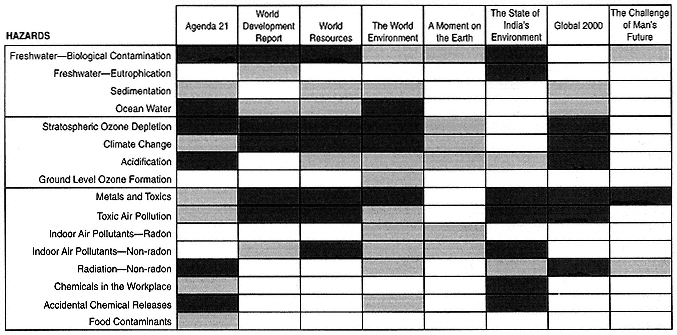
In support of this Board's activities, the list was modified5 and compared with eight other major efforts to assess environmental hazards, scoring each hazard on the basis of how important the various efforts found them to be (Table 4.1). Looking at Table 4.1 as a whole, some problems such as groundwater contamination and forest degradation stand out as being of nearly universal concern. Others, such as indoor air pollution and contamination, show up less frequently. Over time, there has been a shift from a focus on the depletion of natural resources and contamination of the environment to the loss of particular ecosystems (e.g., forests). In the individual assessments, the environmental threats identified as the most serious are often those most salient to a particular population. For example, the report on India devoted considerable attention to the health hazards of chemicals, both in the workplace and in accidental leakages, largely because at the time of the report the Bhopal disaster was still a major environmental event.
Overall, these analyses suggest that, for most nations of the world, water and air pollution are the top priority issues; for most of the more industrialized nations, ozone depletion and climate change are also ranked highly; while for many of the less-industrialized countries, droughts or floods, disease epidemics, and the availability of local living resources are crucial. The scored hazards approach6 shows that sufficient data exist to make some relative hazard identifications for both today and the future. It also makes clear that relative hazard rankings—even of global environmental problems— are strongly dependent on the circumstances of the region assessed.
One of the limitations of this approach is its failure to address interactions—for example, the fact that such issues as water quality, acidification, and climate change are intimately linked, and that change in one will have consequences for change in others. In addition, because the approach focuses on the problem rather than the cause, it is not a good pragmatic tool on its own. Solutions are difficult to develop without knowing causes.
Development Perspectives
For another type of perspective, we built on the work of the Brundtland Commission's report Our Common Future.7 In the interests of policy relevance, this effort broke with the tradition of analysis focused on environmental issues. Instead, analysis is directed to the "common challenges" to the environment arising from development activities within particular sectors: population and human resource development, cities,
Page 190
Table 4.1 Assessments of the Importance of Environmental Hazards
Page 191
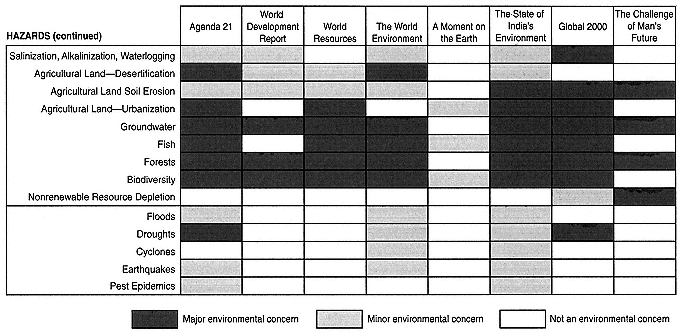
Sources: UNCED (1992); World Bank (1992); WRI (1996); UNEP (1982) ; Easterbrook (1995); Centre for Science and Environment (1995); Council on Environmental Quality and Department of State (1982); Brown (1956).
Page 192
agricultural production, industry, energy, and living resources. Using the Brundtland "common challenges" concept, we evaluated potential sector-specific resource and environmental impediments to reaching sustainability goals, along with the opportunities each sector offers to reduce, prevent, or mitigate the most serious threats. In addition, we evaluated progress over the last decade in achieving the measures identified by the Brundtland "challenges."
Human Population and Well-Being
In 1987, the Brundtland Commission framed the issue of human population growth in terms of both the balance between population and resources and the need for increased health, well-being, and human rights to self-determination. Today, these issues are strongly linked, and we recognize that the reduction in poverty, poor health, mortality, and the increase in educational and employment opportunities for all are the keys to slowing population growth and to the wise and sustainable use of resources. Thus, one of the most critical challenges for efforts to navigate a transition to sustainability will be to reduce population growth while simultaneously improving the health, education, and opportunities of the world's people.
Population growth is an underlying threat to sustainability due to the increased consumption of energy and materials needed to provide for many more people, to crowding and competition for resources, to environmental degradation, and to the difficulties that added numbers pose in efforts to advance human development. Today, population growth has ended in most industrialized countries and rates of population growth are in decline everywhere except in parts of Africa (see Chapter 2); yet the population of 2050 is nonetheless predicted to reach about 9 billion. In a classic decomposition of future population growth in developing countries, a researcher examined the major sources of this continued growth: unwanted childbearing due to low availability of contraception, a still-large desired family size, and the large number of young people of reproductive age.8 Currently, 120 million married women (and many more unmarried women) report in surveys that they are not practicing contraception despite a desire for smaller families or for more time between births. Meeting their needs for contraception would reduce future population growth by nearly 2 billion. At the same time, such surveys also show that the desired family size in most developing countries is still above two children. An immediate reduction to the level of replacement (2.1) would reduce future growth by about 1 billion. The remainder of future population growth can be accounted for by so-called population momentum, which is due to the extraordinarily large number of young
Page 193
people. This momentum ensures that population growth will persist for decades even if fertility were to drop to replacement level.
Addressing each of these sources of future growth could reduce fertility and future population numbers further and faster than current trends would project. Opportunities include making contraception more readily available to those who desire it (Table 4.2), accelerating trends that lead to lower desired family size, and slowing the momentum of population growth arising from the large number of prospective parents that are alive today.9 Linking voluntary family planning with other reproductive and child health services can increase access to contraception for the many who want it. Improving the survival of children, their education, and the status of girls and women has been correlated with and may lead to a desire for smaller families. Increasing the age of childbearing, primarily by improving the secondary education and income-generating opportunities for adolescent girls, can slow the momentum of population growth. All of these opportunities, if exploited, could contribute directly to our societal goals for a transition to sustainability; at the same time, through these factors' influence on reducing the ultimate size of the population, they would increase the probability of meeting environmental goals.
Threats to human-well being stem from many environmental sources. Environmental factors can affect human health directly—through exposure to air pollution, heavy metals, and synthetic chemicals—and indirectly through loss of natural biological controls over opportunistic agents and vectors of infectious disease. Because of human introductions nearly
| ||||||||||||||||||||||||
Page 194
50 years ago, the global environment now carries a number of synthetic chemicals that can interfere with human physiology, including the endocrine system, the immune system, and neurological function.10 Additionally, heavy metal deposition in the environment is rising and will continue to increase under development scenarios implicit in meeting our normative goals. Health effects of exposure to heavy metals may be substantial, and include long-term neurological effects on intelligence and behavior. Air pollution is a critical problem of urban systems in many regions of the world, and the increase in air pollution with a rapidly urbanizing world raises serious concerns for human health and the health of crops and natural ecosystems. As described in Chapter 2, over the past several decades, there has been an emergence, resurgence, and redistribution of infectious diseases. The potential eruption of diseases in an increasingly populated world is a serious threat to sustainability goals. These diseases threaten human health, water safety, food security, and ecosystem health.
Fortunately, because of biological and other scientific revolutions and policy reform over the past decades, there are opportunities for addressing the health risks from exposure to environmental threats. Biotechnology holds great promise (for example, in the creation of new medicines and diagnostics, pest-resistant crop species, plants with low-water requirements, and biodegradable pesticides and herbicides). Policies that control the point sources of air pollution, deposition of heavy metals, and disposal of synthetic chemicals help resolve health-related problems for local and regional human populations and can have very significant and long-term payoffs for future generations. Also, the establishment of early warning systems and other predictive capabilities to identify conditions conducive to outbreaks and clusters of infectious disease could be useful for health institutions at all spatial scales.
In addition, a number of opportunities arise via interactions of this human well-being sector with others. For example, reduction in industrial wastes through approaches using industrial ecology would have large advantages for human health, and also for the environment as it is affected by energy and water sectors, through the increased efficiency of these resources' use. Finally, the maintenance of natural ecosystems and the protection of their services can influence human health in many ways, including by providing natural enemies for disease vectors and natural water and air purification and supply systems.
Cities
Over the next half century, urban populations are likely to grow from the present 3 billion to perhaps 7 billion people, with most of the growth
Page 195
occurring in non-OECD (see Chapter 2 and 3).11 Cities are engines of economic growth and wealth creation, of innovation and creativity, but they are also the sites of extremes of wealth and poverty, unequal access to drinking water and sanitation, pollution, and public health problems. As the Brundtland Commission noted, the growth of urban populations has often preceded development of the housing, infrastructure, and employment needed to sustain that population. In the 10 years from 1985 to 1995, a period during which the Brundtland report was published, the world saw the addition of the equivalent of 81 cities with populations of over a million people.12 There have been dramatic and successful efforts to improve water, air, and sanitation services in developing world urban centers during this period. But the number of city dwellers without adequate water and exposed to poor sanitation and air pollution has grown as urban population growth has outpaced investments.13 The health consequences of inadequate drinking water and poor sanitation services are felt most strongly by the poor.
Among the major challenges of urban development is air pollution, produced largely by the interactions of hydrocarbons and nitrogen oxides produced in industrial and transportation processes as well as by heating and cooking.14 While investments in pollution control in industrialized countries have led to air pollutant reductions in many cities, air pollution is still a major problem in the developed world. In the United States, some 80 million people live in areas that do not meet air quality standards, and in many European cities air pollutant concentrations are also higher than the established standards.15 At the same time, air quality in the cities of the industrializing world has worsened. Worldwide, the World Health Organization estimates that 1.4 billion urban residents breathe air that fails to meet WHO air quality standards.16
Access to water and sanitation services also present enormous challenges to rapidly growing cities. Despite concerted efforts during the 1980s, designated the "International Drinking Water Supply and Sanitation Decade" by the World Health Organization, in 1990 about 200 million urban dwellers were without a safe water supply, and around 400 million were without adequate sanitation.17 In the largest cities of the industrializing world, the poorest populations in the slums and at the city margins tend to have the least access to safe water. For example, in Sao Paulo, nearly 20 percent of the city's population lived in slums (called favelas) in 1993; around 85 percent of the favelas had no sewerage service.18 Innovative technological opportunities—such as condominial sewers,19 improved ventilated pit latrines, various lower cost sewage treatments, and approaches to reuse of municipal wastewater—are available to provide flexible and cost-effective services and are being used with success in some regions, but have yet to be widely applied. Also, in some areas, such
Page 196
|
as Mexico City (see Box 4.1), high-priority attention can be given to treatment of municipal wastewater as part of a comprehensive plan for improving the balance of water supply, water demand, and water conservation.
In 1900, there were only 16 cities with populations of 1 million or more; by 1994 there were 305 such cities—and of these, 13 had populations of greater than 10 million.21 Most of this growth has taken place over the last 50 years. As described in Chapter 2, projections of population growth indicate that there will be nearly 7 billion urban dwellers by 2050. The most rapid expansion of high-density cities will be during the next several decades. This trend presents an opportunity to build modern, state-of-the-art facilities and to provide efficient infrastructure systems for the delivery of services. Maintenance and improvement of the quality, adaptability, reliability, cost-effectiveness, and efficiency of these systems are critical to established and aging cities as well. Realizing these opportunities, of course, depends on the foresight, will, capital, and incentives to take advantage of them. Seizing these chances would help to meet the future needs for housing, while reducing the footprint on the land, and, with increases in efficiency, the needs for energy and materials.
Agriculture and Food Security
The task of feeding an additional several billion people in the next 50 years is an unprecedented challenge, one fraught with biophysical,
Page 197
environmental, and institutional hazards and roadblocks. Food demand will rise in response to population growth, growth of per capita income, and attempts to reduce the undernutrition of the very poor. By 2050 food demand could almost double to accommodate the projected population depending on the growth of income and the nature of diet.22 But the paths to meeting these demands are far from clear. The challenge of feeding this population and reducing hunger requires dramatic advances both in food production, which we focus on here, and in food distribution and access. Production of the globally traded staples (maize, wheat, rice, soybeans, poultry, and swine) will be driven by new technologies already in or rapidly moving toward the private sector.23 The emergence of genetic biotechnologies, protected by intellectual property rights and patenting, is attracting enormous private investment. Global markets and the movement of private capital into processing and marketing have increased handling efficiencies. Market balance among rich and poor countries, monopoly control, and environmental impacts due to the scale of operations all remain major issues. Industrial technologies are major engines for continued growth. Prospects for growth in production of the numerous "minor" or regional staples, such as cassava, yams, potatoes, grain legumes, millet, white maize, sorghum, and other crops critical to food security for a large segment of the world's poor, are not nearly as optimistic. Such growth is not now in progress nor is it projected for the foreseeable future. The Brundtland Commission recognized that a great strategic effort would be required to meet the challenge of feeding a growing population, yet the past 10 years have seen a reduction in resources for the international agricultural research community along with indicator values that increasingly show world capabilities for increasing food production are stagnating.24
During the last half century, the dramatic gains in crop production that have occurred almost worldwide (except, in particular, Sub-Saharan Africa) have come from four interrelated sources: expansion of cultivated land, increased use of fertilizer and pest control chemicals, expansion of irrigated area, and the introduction of high-yielding crop varieties. The continued gains in agricultural production required in the 21st century will be considerably more difficult to accomplish than in the immediate past.25 There are currently difficulties in raising yield ceilings for the cereal crops, despite a history of rapid yield gains in the past. Incremental response to increases in fertilizer use has declined in many areas. Expansion of irrigated land has become more costly and has slowed dramatically in the past two decades. Because of rising demand for water with growing urbanization, water supplies are increasingly less available to agriculture.26 The loss of soil fertility and degradation of agricultural lands due to inappropriate management, climate change, and other factors
Page 198
has been reversed in some agricultural areas but at the same time has become an important issue in many other areas.27 For example, the expansion of irrigated area, combined with the failure to design and implement incentive-compatible irrigation management, has contributed to waterlogging and soil salinity. Reductions in agricultural productivity due to air and water quality changes, some of which emanate from agriculture itself, have also raised concerns.28 Increasing pest problems because of increasing pesticide resistance stemming from misuse of chemical pesticides, the decimation of natural enemies, and the invasion of new pests are also topics of concern.29 Any one of these problems alone could impede efforts toward increasing production and yield. Together, these biophysical factors threaten achieving a successful transition toward sustainability.
Perhaps more important still are the threats associated with inadequate investment in the agricultural sector now—for research, education, technological developments, and transfer of knowledge and information to the developing world.30 Local agricultural research capacity, local public and private capacity to make knowledge, technology, and materials available to producers, and the schooling or informal education of farmers and farm workers are all required for sustained growth in agricultural production. The international agricultural research system and the private sector research community are important sources of new knowledge and new technology,31 but these systems are effective only in the presence of viable national and regional research systems capable of adapting new technologies to local agroclimatic conditions. Finally, productivity and sustainability depend on the knowledge that farm people bring to the management of their resources and production; education is critical. Institutions must make advances in the technology and management approaches available to farmers, and local financial credit and labor markets must function effectively.
Limitations of institutional capacity may be one of the reasons why Sub-Saharan African countries have failed to realize the gains in productivity that have been achieved by green revolution technology in South and Southeast Asia and Latin America. Institutional limitations, along with political instability, complex land tenure systems, and unique agroclimatic environments may all contribute to the apparent lag in productivity gains there. Understanding the dimensions and factors controlling this failure is critically important because Sub-Saharan Africa is the major region where growth in agricultural production is running behind population growth. One of the major challenges of the sustainability transition will be to develop new and appropriate approaches to improve food production in this region.
If the development of international and national agricultural research
Page 199
systems is maintained, there are many opportunities to enhance our ability to respond to growing world food demand at the same time that we sustain resources and the broader environment. Improved varieties and better management could lead to increases in yield, at least up to fundamental limits set by plant physiology. Scientific and technological breakthroughs, particularly in the area of biotechnology, could over the long term lead to a lifting of the yield ceilings that have been set by the green revolution technologies.32 Biotechnology is still in its infancy, and its application is controversial. Nevertheless, both the science and the technology are advancing rapidly, and the development and diffusion of biotechnologies may play an important role in increasing and sustaining agricultural production in many areas of the world.
While biotechnology holds substantial hope for improving crop production and efficiency of resource use, many other opportunities exist to increase and sustain food production while decreasing environmental consequences. Protection and careful utilization of soil, water, and biological resources underlie many of these opportunities, and promising management approaches have already been developed and successfully used in some places. For example, integrated nutrient management, like integrated pest management, takes advantage of the ecological processes operating in soils and crop ecosystems and uses them in combination with industrial inputs to optimize productivity and reduce pesticide and nutrient spread.33 Ecologically based pest management takes advantage of biological diversity to reduce the need for pesticide use. Increased use of efficient irrigation systems will conserve and maintain water supplies and lessen competition with urban and other uses.34 In breeding programs, increasing attention to flexibility and genetic diversity of crop plants can increase the ability of the agricultural sector to respond to climate and other environmental ''surprises."35 The development of management systems and breeding programs for regional staple crops could also enlarge the food security basket for the poor in many regions. For these opportunities to be useful, new knowledge is needed about both the biophysical crop system and the sociological barriers to implementation. Taking advantage of these opportunities will help to provide the food needs for future human populations, while preserving water in areas of scarcity and reducing pressure on the land.
Industry
Over the next two generations, the global market for goods and services is likely to increase two- to four-fold (Chapter 2 and Chapter 3 appendix). With that increase will come an enormous demand for materials. Avoiding the waste, pollution, and environmental disruption now
Page 200
associated with the extraction, processing, and consumption of materials, and reducing energy and water inputs into industrial production, are the foremost issues during the transition to sustainability. In the 10 years since the Brundtland Commission's challenge to industry to produce more with less, there have been substantial improvements in reducing and reusing materials by both industry and consumers. But the trend toward increasing material use efficiency and dematerialization, discussed in Chapter 2, must be accomplished universally and at much faster rates if it is to offset the rapid increases in production forecasts for the next decades.
The demand for materials to meet expanding markets may in some cases be limited by resource shortages. However, given a supply of energy at competitive prices, the increased demand most likely will result in substantial materials substitutions. Absolute materials shortages are unlikely, at least in the next several decades.36 The materials challenge, instead, is likely to be associated with pollution due to the "leakage" of materials from the manufacturing, processing, and consumption systems.37 Such leakages include not only those of nontoxic but valuable materials wasted in the production and consumption streams, and also those of a variety of toxic and hazardous substances used in industrial production. More than 12 billion tons of industrial waste are generated in the United States each year; and municipal solid wastes, which include consumer wastes, are generated at the rate of 0.2 billion tons per year.38 Clearly, such residual production must be brought under control, or better yet, prevented.
Again, some of these leakages represent not just loss of valuable materials but of substances presenting specific toxicological and ecological threats. More than 100,000 industrial chemicals are in use today, and the number is increasing rapidly in the expanding agriculture, metals, electronics, textiles, and food industries.39 Some of the effects of these chemicals are well known, but there are insufficient data for health assessment for the majority of these chemicals. Some, like the persistent organic pollutants, are widely distributed beyond their points of origin and concentrate as they move up the food chain. Human exposure to these pollutants can cause immune dysfunction, reproductive and behavioral abnormalities, and cancer. Also, heavy metals such as lead, copper, and zinc can reside in the environment for hundreds of years; human exposure to them can lead to kidney damage, developmental retardation, cancer, and autoimmune responses. Nevertheless, global production, consumption, and circulation of many toxic metals and organics have increased dramatically in the last half century because of their utility in many industrial activities, though production began to level off in the early 1970s and emissions began to decline (Figure 4.1). But numerous opportunities exist to reduce material usage as well as
Page 201
environmentally harmful leakages. Refurbishing or remanufacturing used products or their parts, changing the nature of the product used to a new condition for accomplishing the same purpose (usually provision of a service instead of the product),40 and recycling and reuse of used subsystems, parts, and materials in products all generally require much less energy, capital, and labor than the original creation of the materials and products. In addition, such processes minimize environmental damage. There is a clear and obvious case for us to examine what we know about the role of industry in the flow of materials, energy, and products, the effects of market forces (e.g., on recycling), and the possibilities for modifying these flows through the system, for more efficient energy use, decreasing environmental damage, and improving the efficiency of providing goods and services.
In recent years, many industries have moved to increase the efficiency of using materials in processing and to control the loss of scrap and other wastes from the production cycle. For example, one corporate plan for introducing customer return programs (copier machines as well as disposable parts like toner cartridges for copiers) led to remanufactured equipment from 30,000 tons of copying machines, thereby reducing both the load on landfills and the consumption of raw materials and energy.41 Control of leakage is also a means of cost control for industrial production, and there are precedents for the creation of profitable industrial operations based on recapture of consumer materials. Approaches that control the production of garbage and reduce leakage of materials at the consumer end have also been used in some parts of the world. Product recycling has dramatically increased and design of products to facilitate recycling has become a tenet of "industrial ecology."42 Despite these successes, there is a worldwide loss of valuable materials because of leakage. Thus, one significant set of challenges rests in the development of incentives for higher efficiency and lower leakage from producer and consumer systems. Among such actions would be (1) the provision of incentives to identify heretofore unrecognized economic value of materials; (2) the elimination of historical market distortions (e.g., subsidies) that may interfere with choices that would be more sustainable in the absence of the distortions; and (3) the provision of incentives to move to competitively priced energy whose production does not result in the release of carbon dioxide (i.e., through the use of noncarbon sources or carbon sequestration).
Beyond the challenges related to the reduction and elimination of industrial wastes, the rapidly changing industrial trajectory carries with it the general problem of anticipating problems in new industries and of projecting the dynamics of employment into a future with many more people. The past decade has seen a shift to increasing employment and
Page 202
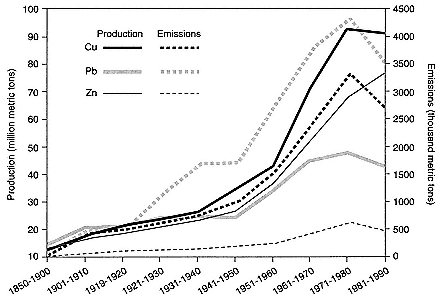
Figure 4.1
Global production and consumption of selected toxic metals, 1850-1990. The
figure indicates that within the last 20 years, emissions of lead, copper and zinc
have begun to decline.
Source: Nriagu (1979). Updated in Nriagu (1996). Courtesy of the Macmillan
Magazines, Ltd. and the American Association for the Advancement of Science.
productivity within industry. Nonetheless, the current trends toward production of more by fewer people could lead to persistent unemployment of an expanded population, a spectre not foreseen by the Brundtland Commission.43
As the preceding paragraphs make clear, industry is faced with many enormous challenges and much responsibility for reducing and preventing environmental problems related to industrial wastes and leakages. At the same time, however, it also faces a tremendous opportunity for massive market expansion, the development of new technologies (and, therefore new product possibilities, even beyond the products for which the technologies were developed), and the creation of totally new markets based on the requirements of new customers in industrializing countries. There is also great potential for the industrializing world to skip over transitional technologies to new, cleaner technologies without experiencing the same environmental degradation as the industrialized world due to the use of more traditional technologies. The capital, barriers, and
Page 203
incentives to diffusion must be understood and addressed to meet this potential. Meeting the coupled objectives of designing and producing for product competitiveness and for environmental protection and resource conservation is the critical challenge to industry in the next century, and the resulting effects will be felt in all other sectors. Involving industry directly in these challenges and in finding the means to meet them is an opportunity to bring creative actors into the process voluntarily, as well as under incentive and regulatory forces.
Energy
Energy is a critical ingredient in most activities of industrialized and industrializing economies. It is required to extract, process, fabricate and recycle materials, to heat and cool homes and places of business, to produce foods, to move people and goods, and to power communications. For a successful transition to sustainability, energy sources must grow at sufficient rates to maintain other energy-dependent activities, yet at the same time must impose few if any environmental costs in the form of local air pollution, carbon dioxide, toxic residuals, and despoiled land. The world will need to find a way that allows 9 billion people or more to enjoy a lifestyle that requires energy while at the same time protects and sustains human health and the health of the biosphere from local to global scales.
Numerous environmental hazards, including climate change, acidification of water and soil, and air pollution, stem from our dependence on fossil fuel energy. Alone or together, these significant and accumulating hazards can influence a transition toward sustainability. These environmental risks, rather than any limitations of fossil fuel energy resources, are the most significant factors facing the energy sector today. In most industrialized nations, emissions controls are beginning to bring local and regional pollution under control. In contrast, in much of the developing world, local and regional pollution poses serious and growing problems. Regarding global atmospheric changes, in the 10 years since the Brundtland report, much of the world has come to acknowledge the threat from greenhouse gas emissions via international conventions and agreements, but with few exceptions serious constraints on emissions have not been implemented (see Chapters 1 and 2).
For years there have been concerns about limited reserves of fossil fuel. Modern estimates, however, suggest that despite extensive past extraction, the world has very large reserves. In the absence of "externality" taxes (taxes imposed on these fuels to cover their environmental costs) or other policy changes, fossil fuels are likely to remain abundant and cheap for decades to come. A number of direct and indirect subsidies
Page 204
to energy suppliers and technologies have shaped and continue to shape the evolution of the current fossil energy system. Today, most energy is derived from fossil fuels: coal, oil, and natural gas. Oil is primarily used to power transportation. Recent trends in electric power production, especially in the industrialized world, show a move away from coal toward natural gas (see Chapter 2).
Fossil fuel combustion is the source of critical air pollution problems throughout the world.44 In the leading industrialized countries, emissions of primary particulates and oxides of sulfur and nitrogen are now being aggressively controlled such that local and regional air quality has improved considerably in recent decades, although standards are frequently not met and the adequacy of some standards is still uncertain.45 At the same time, these problems are increasing in many developing regions. Problems with secondary pollutants formed though photochemical reactions and with long-range transport continue to be significant. For example, while sulfuric acid deposition in the United States has been reduced primarily through the reduction of sulfur emissions from combustion, nitric acid deposition has not declined (Figure 4.2). Globally, CO2 emissions from fossil fuel combustion continue to grow and threaten to produce notable climate change by modifying the planetary heat balance (see Chapters 2 and 3). While a shift from coal to natural gas may reduce carbon dioxide emissions, emissions of a still more potent greenhouse gas, methane, could result if natural gas energy systems are not leak-free.
Nonfossil energy sources circumvent the serious local, regional, and global air pollution problems of fossil fuels, but each holds its own set of limitations and challenges.46 Most available sources of hydroelectric power have already been developed in industrialized countries. A number of developing economies such as China, Nepal, and Brazil have large-scale hydroelectric development programs in progress, but concerns about environmental effects on river systems have slowed these programs' growth. The growth of nuclear power has slowed in many parts of the industrialized world due to high costs, public concerns about nuclear wastes, regulatory complications prompted by environmental and safety debates, security issues, and philosophical concerns. However, developing countries such as China and Korea continue to have active programs of nuclear power. Various renewable energy systems have been developed to drawn on such sources as wind, sunlight, and biomass fuels. While these systems show promise, they have had difficulty making headway, even with significant subsidies, in the face of abundant and low-cost fossil fuel.
Opportunities can be seized to increase efficiency and develop or utilize new technologies to reduce the threats associated with meeting the energy needs of the world's population. The efficiency of industrialized
Page 205
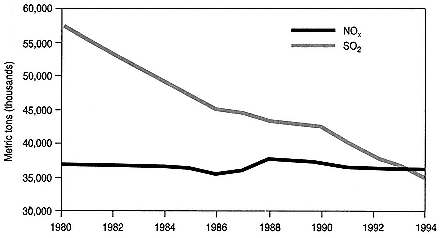
Figure 4.2
Trends in SO2 and NOx emissions in North America and Europe (OECD countries
only), 1980–1994 (excludes Australia, Greece, Japan, Mexico, New Zealand, and Turkey
due to incomplete data).
Source: OECD (1997), Swedish Secretariat on Acid Rain (1996). Courtesy of WRI
(World Resources Institute).
economies' energy use to produce goods has been gradually improving (Chapter 2), but energy-efficiency opportunities have only partly been exploited. There are also many new technologies (e.g., photovoltaics, electric cars) that may help provide the energy the world needs with far fewer adverse local, regional, and global environmental impacts. As environmental regulations, including emissions fees and emission trading regimes, come into play, market incentives will induce the adoption of cleaner technologies. This is already apparent in the switch of many electric power systems from coal to gas. If this process is to continue and accelerate, ways must be found to reflect directly or indirectly the full environmental costs of fossil fuel in the market place. This can be done directly with fossil fuel taxes or indirectly through mechanisms such as fuel-efficiency standards for motor vehicle fleets and green energy requirements on electric power systems.
While there are many cleaner energy technologies and more efficient end-use technologies now available, the current stock of technology is not sufficient to support the transition to a sustainable energy system. The market is most likely to commercialize technologies that have already been developed to the point where they show short- to medium-term promise for commercialization. If the energy system is to undergo the
Page 206
major transition that will be required to meet the needs of the world without serious environmental consequences, a much larger investment will be needed in energy-related basic technology research.47 Traditional government R&D will be unlikely to meet all of this need, so new mechanisms must be found to support such research. Some of these mechanisms are discussed in Chapter 6. In designing and evaluating institutions and incentives to encourage sustainable energy technologies, it is important to carefully examine their objectives and implications at the system level, using such strategies as material balance modeling and economic input-output analysis coupled with considerations of environmental loadings. Without such a systematic assessment, polices that appear to promote better solutions may in the long run have serious undesirable consequences, such as problems in recycling and disposing new materials.
Living Resources
The human population rests its requirements for food, shelter, and other essential goods on the shoulders of earth's living and other resources. The grassland, forest, freshwater and marine ecosystems of the world provide such goods as food, timber, forage, fuels pharmaceuticals, and precursors to industrial products. The harvest and management of these resources form the base of enormous economic and social enterprises as well. In addition, ecosystems and the species within them provide vastly underrecognized services such as recycling of water and chemicals, mitigation of floods, pollination of crops, and cleansing of the atmosphere.48 Humans have enjoyed these goods and services for millennia, and in many regions it has been possible to make use of them without degrading their long-term viability or the life support systems they influence. However, our ever-intensifying use and misuse of ecosystem services is now doing much to imperil them, and, consequently, our own long-term welfare. Moreover, the indirect consequences of the other human endeavors discussed in this chapter also exert enormous pressure on these services. In 1987, the Brundtland Commission described the challenge of managing living natural resources for sustainable development as one of implementing conservation measures in the national interest. Among the most critical challenges of the transition to sustainability over the coming decades will be to develop approaches that sustainably manage both the resources societies use directly and the benefits that we accrue indirectly from the world's living capital.49
Human use of land to obtain goods and services is one of the most significant alterations of the global system. Land transformations and use in forestry, grazing, and agriculture have modified nearly 50 percent of the earth's land surface.50 Agriculture and urban areas cover 10 to 15 per-
Page 207
cent, pastures cover 6 to 8 percent, and substantially more land is dedicated to forestry and grazing systems. Harvesting of wood for fuel and fiber and the clearing of land for agriculture removed on the order of 13 million hectares of forest per year between 1980 and 1995.51 Human alterations of freshwater and marine systems (especially coastal zones and fisheries) have also been great in scale and effect. For example, approximately 50 percent of mangrove ecosystems globally have been transformed or destroyed by human activities, and humans use about 8 percent of the primary production of the oceans.52 Beyond direct use, human activities affect all lands and waters through their effects on the atmosphere and water systems, biogeochemical cycles, and biotic systems.53 Elevated CO2 affects all ecosystems; air pollution and acid deposition affect even those we think we are protecting.
The nonsustainable use of living resources carries a number of critical consequences for humans and the other species of earth. Most obviously, overuse and misuse lead to a reduction or loss of resources and thus directly affect human well-being. For example, a number of recent analyses have raised alarms over the nonsustainable management of ocean fisheries (see Chapter 2). Recent assessments54 suggest that half of the world's fish stocks are now fully exploited, nearly a quarter are overexploited, and many fisheries have collapsed. Fisheries provide direct employment to about 200 million people, and account for 19 percent of the total human consumption of animal protein.55 Their degradation has grave implications for economic and food security.
Equally important, however, is the fact that the misuse of resources like fisheries, forests, grasslands, and agricultural systems has tremendous unintended effects on the functioning of ecosystems more generally and on the services these ecosystems provide. For example, land transformation is the primary driving force in the loss of biological diversity worldwide. Biotic extinction rates have increased 100 to 1,000 times preindustrial rates and species are being driven to extinction thousands of times faster than new ones can evolve.56 With loss of biological diversity and alteration or loss of the ecosystems that support them, many social and economic consequences follow. For example, land use changes in watersheds can seriously degrade the water purification processes of soil/plant systems at enormous cost to urban communities.57 Degradation and loss of wetlands can expose communities to increased flood and storm surge damage. Decimation of pollinating insects has had important negative consequences on yields of particular crops.58 Introductions and invasions of nonnative species such as killer bees, fire ants, and zebra mussels through human activities cause enormous damage to living resources and threaten human health.
Clearly, at the heart of the sustainability transition is the challenge to
Page 208
manage all of the earth's ecosystems to maintain populations, species, and ecosystems in the face of human domination, and thereby to sustain the goods and services the ecosystems provide to humans. Reducing population growth and levels of consumption and waste are central to meeting this objective because by doing so societies relieve some of the pressures now experienced by ecosystems. Beyond this is the need to develop holistic management approaches that take into consideration the interacting components of ecosystems and landscapes rather than simply focusing on a single species or product. Experiments in ecosystem management are in progress in fisheries and forests around the world, and we can draw knowledge from these experiments for social learning. Finally, the management of living resources must acknowledge and plan for the links among human and natural systems at the landscape and regional scales; and research, management, and development plans must integrate intensive land and water uses (e.g., for agriculture and cities) in the context of areas managed for conservation, water catchments, and purification, air quality services, and recreation purposes.59
Interaction Perspectives
Over the past several decades, most decision making and much research has chosen to treat environmental problems and the human activities associated with them in relatively narrow, discrete categories such as "soil erosion," "fisheries depletion," and "acid rain." This narrow framing of environmental problems is evident in our reviews of "Environmental'' and "Development" perspectives presented earlier in this chapter, and in the organization of environmental ministries, regulation, and research administration around the world. Both understanding and management have benefited substantially from these narrowly focused traditional approaches. Much has also been missed, however. It has become increasingly clear that much of the workings of the world, and the challenges and opportunities those workings entail for a transition to sustainability, lie in the interactions among environmental issues and human activities that have previously been treated as largely separate and distinct. Recognition of the importance of such interactions has been central to emerging international research programs such as those of the International Geosphere-Biosphere Program (IGBP), the International Human Dimensions Program (IHDP), and DIVERSITAS.60 Such recognition has even begun to emerge in international policy discussions, as exemplified by recent efforts of the UN Environment Program (UNEP), World Bank, and others to draw attention to the connections among global environmental issues and human needs.61 Despite some progress in implementing these grand designs, however, research support and political action
Page 209
remain largely confined within the narrow categories of traditional thinking.
Today and in future decades, emphasis will have to be given to the interactions among environmental problems. For example, no longer can we ask about the consequences of climate change on agricultural ecosystems; instead, we must ask about the combined effects of climate change, increased climate variability, elevated carbon dioxide, soil quality changes, crop management changes, and tropospheric and stratospheric ozone changes on crop productivity. Also, it makes little sense to ask how climate change affects one system (e.g., coral reefs), when other changes related to human activities (e.g., land use and urban, industrial, and agricultural effluents) act in concert with global changes to alter these systems.62 Nor does it make sense to ask about the effects of elevated CO2 on forest uptake and the storage of carbon when these can only be predicted by accounting for such changes as nitrogen deposition, land use change, air pollution, acidification, and climate change.63 In the next decade we will see research and problem-solving shift in focus from single issues to multiple interacting stresses.64
Threats from human activities will result in profound changes in future climate, earth chemistry, and terrestrial biological systems. Environmental transitions expected over the next 50 years and estimations of uncertainty are summarized by the Board in Table 4.3. These estimates reflect the consensus of a large group of international scientific experts based on evidence in the 1995 report by the Intergovernmental Panel on Climate Change (IPCC). The experts conclude with a high degree of confidence that the next 50 years will bring a warmer world, mainly at night; a cooler stratosphere; increased atmospheric water vapor; higher sea level and smaller glaciers. The atmosphere will contain higher concentrations of CO2, nitrogen compounds, hydrofluorocarbons (HFCs), and smog. Due to human activities, natural habitat will continue to degrade and to be invaded by exotics, while some plants will flourish as a result of increased CO2 in the atmosphere.
Just as environmental threats and challenges operate interactively, they are caused by the activities of several sectors and have the potential to influence the transition toward sustainability in many sectors. In the following paragraphs, we discuss three integrative, interactive challenges. The changes underlying these challenges are cumulative and are likely to result in surprise.
Water
The earth's water resources are influenced by almost all human activities, and water supports and links the sustainability of industry, en-
Page 210
| ||||||||||||
(table continued on next page)
Page 211
(table continued from previous page)
| ||||||||||||||||
Page 212
ergy, human health, urban development, agriculture, and the diversity and functioning of biological systems. Like energy, the availability of water is a critical resource for nearly all human activities. At the global level, the supply of fresh water has been dramatically altered by these activities. Water was not identified by the Brundtland Commission among its "Common Challenges," but, clearly, significant challenges related to water confront future populations. As noted in Chapter 2, although there have been slowing water withdrawals, water quality continues to be a concern, particularly in developing countries, and water supply can be regionally or locally scarce.
Global numbers suggest adequate per capita water worldwide. But global numbers are deceiving—variable distributions of fresh water lead to great disparities in access to water, with scarcities in some areas and excess supply in others. Thus, in a number of regions, water is in short supply relative to needs, in some cases because of insufficient amounts and in others because of poor water quality. As regional populations grow and urban systems develop, these stresses are accelerating with conflicting and increasing demands for water supply. Some estimates suggest that a dozen or more nations in semi-arid climates cannot currently provide minimum per capita water requirements for their citizens and that many more will fail to do so in the future as a result of climate change65 (see Table 4.4). It should be noted that comparing water availability by nations is suggestive but neglects options for management and sharing among nations as explained below. In many parts of the world, conflicts over water rights are sources of continuing social and economic stress. Also, as noted in the "Cities" section, many people in urban and rural areas do not have access to clean drinking water or sanitation services, and some 250 million new cases of waterborne disease are reported each year, resulting in 5 to 10 million deaths.66 Thus, water scarcity and water degradation are growing threats to a transition to sustainability, and a major challenge is the need to supply both more water and cleaner water to the growing population.
The demands for and status of water resources reflect interactions across all sectors. For example, the price of energy influences water options; increases in the cost of energy increase the cost of groundwater extraction, pumping, and irrigation operation. In turn, demands on water influence energy options. Increasing agricultural production, either by increasing yield or land under production, will carry with it increased demand for irrigation; and, at the same time, rapidly urbanizing populations will demand greater water for consumptive purposes, increasing the potential for conflicts about the balance between consumptive and nonconsumptive water uses. As more marginal water supplies are used
Page 213
| |||||||||||||||||||||||||||||||||||||||||||||||||||||||||||||||||||||||||||||||||||||||||||||||||||||||||||||||||||||||||||
Page 214
for irrigation, the need to manage for salinity and drainage will intensify to avoid negative impacts on agricultural productivity.
Increased removal of water from surface water systems, whether for agriculture, urban use, or industry, will potentially damage the functioning of the aquatic ecosystems and the marine systems from which they are taken and into which they empty. Damages to aquatic systems may, in turn, affect the quality and quantity of water available for human use, ultimately influencing the spread of disease and toxic water. Competing human demands will lead to a decrease in the amounts of water available for natural ecosystems, including highly valued lakes, riparian zones, and watersheds. Deforestation and urban developments alter runoff and groundwater recharge patterns. Moreover, pollutants including nitrates from agricultural fertilization and acidic deposition; metals such as copper, cadmium, zinc, and lead from mining; industrial and agricultural activities; and organic pollutants from industrial and agricultural activities have increased in many of the freshwater and coastal marine ecosystems of the developed world.67 Although reduction of a number of these pollutants has been observed in a number of lakes and rivers,68 the negative consequences of these changes for aquatic ecosystems and the diversity of biota they hold are enormous. The feedback effects to human welfare argue for the necessity of management approaches that explicitly protect aquatic ecosystems for the services they provide to humans (Table 4.5).
The likely effects of climate change on regional water balances are uncertain. Water supply could be decreased through increased evapotranspiration (caused by warmer air temperatures), especially in areas that already experience arid and semi-arid climates. In other regions, precipitation is likely to increase; depending on the timing and amount of change, water storage and control systems may come under considerable strain. Elsewhere, water resources could prove more plentiful. Rising sea level can produce saltwater intrusion into freshwater reservoirs. In some regions, current reservoir and water-retaining systems may be unable to maintain water supply during drought periods. Finally, dramatic shifts in ocean circulation patterns, should they occur through global climate change, could have major impacts on regional rainfall patterns and climate.
Integrated Strategies for Water Management
Many current technologies can be employed to increase the efficiency and effectiveness of water use, but for those technologies to be applied and new ones to be developed, a new vision of water management will be required. For example, one new paradigm accounting for trends in water
Page 215
| ||||||||||||||||||||||||||||||||||||||||||
Page 216
withdrawals has the objective of increasing the productive use of water by increasing the efficiency of meeting needs and allocating water wisely among different uses.69 Several other strategies that hold promise for better integrated water use and planning recognize the interconnected nature of sectors and activities of humans and life support systems. Strategies for watershed management go beyond the typical framework of hydrology and engineering to consider water resources in the context of interacting physical, biological, and chemical systems that control water cycling and use at a landscape scale. These strategies take into account land use, water quality, and ecosystem processes and protection, as well as urban and economic requirements. Local examples of watershed management abound. On larger scales, work on the Chesapeake Bay and the Columbia Basin70 provides particularly insightful treatments of the challenges and opportunities for sustainability and adaptive management.
Regional water planning also takes a watershed perspective and seeks an explicit allocation of watershed resources to a mix of water applications, including withdrawals for agriculture, industry, and urban use, and in-stream activities such as waste assimilation, ecosystem and species maintenance and preservation, and recreation. For regional water planning to work, major changes in the way water is valued, allocated, and managed will be required. Regional planning must look seriously at such issues as restructuring agriculture for more efficient use of water, dramatically reducing outdoor urban water use, particularly in arid and semi-arid areas, increasing recycling, and determining and providing environmental water requirements (e.g., for protection of wetlands, fisheries, and endangered species). A number of studies have shown that water is chronically overused because it is underpriced.71 Pricing policies that reflect the cost of water for particular uses at particular times and that encourage more efficient use and adaptation of conservation, reuse, and recycling approaches will be crucial. Meeting some of these objectives may be exceedingly difficult in poor regions. Changes in approaches to water-related regulation, education, laws, markets, and information dissemination also will be necessary. In addition, heightened efforts to diffuse available technology to all regions without access to appropriate technology are necessary, as are training and institutional arrangements that make their use possible.
Atmosphere and Climate
Changes in atmospheric chemical composition and chemistry also reflect the activities of multiple human endeavors, as well as natural processes. The cumulative and interactive consequences of gas emissions associated with industry, fossil fuel consumption, and agriculture are
Page 217
linked via atmospheric circulation and chemistry, and the influence of those chemical and physical interactions is felt from regional to global scales. Lessons from the past tell us that we cannot solve urban air pollution problems without evaluating the multiple gases from multiple sources that together regulate air chemistry and pollution. In the case of urban smog in the United States, for example, a decade or more of regulation of hydrocarbons emissions from industrial processes failed to improve air quality; recognition and regulation of the nitrogen oxides emitted from automobiles is now seen as an additional critical factor in controlling pollution.72 Moreover, while we once thought of smog and tropospheric ozone production as an urban-scale phenomenon, it is now clear that it can be regional in scale. For example, studies in the southeastern United States have indicated that urban emissions of hydrocarbons (volatile organic compounds, VOCs) and nitrogen oxides (NOx), in conjunction with nitrogen oxide emissions from the agricultural sector and hydrocarbon emissions from natural forests, combine to affect regional-scale pollution events (Figure 4.3).73 Such broad-scale pollutant levels may feed back to reduce agricultural productivity74 as well as combine to impair human health and the health of natural ecosystems.
Atmospheric changes that were once characterized as local to regional in scale have now been recognized for their role in global atmospheric and climatic change. Sulfur aerosols emitted from a variety of combustion processes are a source of acid deposition and have been under regulation for the last 30 years. Only recently has it been shown that those aerosols that form regionally may have resulted in an increase in earth's reflectance sufficient to offset some of the effects of greenhouse gas increases.75 Similarly, burning associated with land use changes such as deforestation or agriculture, alone or in combination with industrial air pollution, can have tremendous impacts on the health of people and ecosystems. Fires associated with tropical deforestation and burning for agricultural purposes emit carbon, nitrogen, and sulfur gases into the atmosphere, where they undergo chemical reactions and lead to the production of tropospheric ozone and acidic precipitation. Consequently, high-ozone episodes and acid rain are experienced by people and ecosystems in areas far removed from urban activity.76
The interaction of multiple atmospheric changes also holds surprises for the regional and global system. For example, the deposition of compounds of nitrogen, a regional change produced by intensive agricultural and combustion processes,77 may interact with elevated atmospheric CO2 concentrations, a global-scale change, to affect the ecological and biological responses of terrestrial and marine ecosystems. Models suggest that increased nitrogen deposition in North America and Europe may increase the ability of forests to absorb carbon dioxide,78 although a measurement
Page 218
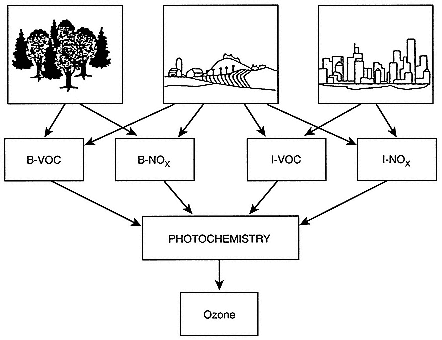
Figure 4.3
The evaluation of the effectiveness of VOC-based and NOx-based strategies for ozone
pollution abatement is confounded by the potential significant contribution of VOC and
NOx emissions from biogenic and other natural sources. In the figure, I-VOC and I-NOx
is used to denote industrial VOC and NOx, respectively, and B-VOC and B-NOx is used
to denote biogenic VOC and NOx, respectively.
Source: Chamedies and Cowling (1995). Courtesy of North Carolina State University.
has not confirmed this. There is reason to doubt that this effect, if it occurs, would continue indefinitely. Long-term nitrogen deposition resulting from human activities is likely to damage vegetation, thereby decreasing its carbon uptake. Moreover, nitrogen deposition may also increase the emissions of other greenhouse gases.79
Integrated Strategies for the Atmospheric Environment
As for water resources, managing for air quality and for the atmospheric environment requires a different strategy than societies have seen in the past decades. An approach is needed that accounts for the multiple
Page 219
sources of materials released to the atmosphere, the natural and human-influenced processing of those materials, and the multiple and interacting effects on exposed systems. In the case of the atmosphere, the scale at which this integrated management must take place ranges from the urban airshed to the globe. New strategies must be developed to evaluate the understanding of factors driving air pollution and integrated solutions to air pollution, such as tropospheric ozone, at regional to continental scales. Consortia of local, state, and national and international agencies, industries, and scientists will have to come together to develop research and management programs with longer time horizons and greater spatial domains.
Efforts to improve regional air quality are now under way in the United States and Europe. Scientifically based implementation strategies that control emissions across large regions are being developed for areas of the United States.80 Similarly, the European Community, in its Convention on Long-Range Transboundary Air Pollution, has developed integrated approaches to controlling sulfur and nitrogen emissions on the basis of both the location of sources and the sensitivity of deposition sites.81
Global-scale atmospheric changes also require integrated solutions. Many activities (e.g., energy use, agriculture) cause concomitant changes in the atmosphere at local, regional, and global scales, and the tradeoffs and conflicts among alternative strategies must be evaluated across all scales. For example, the burning of natural gas (about 90 percent of which is methane), as opposed to other fossil fuels, has been encouraged because of its higher energy yield per molecule of CO2 released in combustion and its lesser impact on regional air quality. On the other hand, methane is a very effective greenhouse gas (about 20 times as potent as CO2 per molecule), so inadvertent emissions of methane used in energy production could offset benefits from reducing CO2 emissions. Thus, as gas usage increases worldwide, loss rates from gas field drilling and from wellheads must be decreased along with losses from gas distribution lines. Another global methane source, rice paddies, are strongest emitters when fresh organic matter such as post-harvest stubble is plowed into the paddy soil.82 Burning the rice stubble is an historical alternative to placing the rice stubble in the soil. Yet some areas such as Sacramento, California, in efforts to prevent regional air pollution, are requiring the stubble to be plowed back into the soil, thereby potentially increasing methane emissions in the following growing season. Thus, a balance is needed between decreasing pollution sources and increasing other environmental effects through responsive technological fixes—for example, balancing the risks of local air pollution against greenhouse forcing of global climate change.
Page 220
Species and Ecosystems
A third area in which interactions and cumulative effects are exceedingly important is the biological component of the earth system. The welfare of species and ecosystems in a rapidly developing world is of critical importance in meeting the normative goals of a sustainability transition. These resources provide many of the goods and services needed to sustain human life—goods such as timber, forage, fuels, pharmaceuticals, precursors to industrial products, and services such as recycling of water and chemicals, mitigation of floods, pollination of crops, and cleansing of the atmosphere. Beyond the importance of these goods and services, the diversity of genes, species, and ecosystems is valued intrinsically, and loss of biological diversity is of major concern because it is irreversible.83
The major forces or stresses on biological diversity and ecosystem functioning under our scenarios for the transition are likely to be simply an intensification of trends already seen today (see Chapters 2 and 3), with significant and mostly negative effects on the functioning of ecosystems.84 Some appraisals of possible increases in agricultural productivity suggest that significant land areas could be returned to natural or more varied ecosystems.85 Nevertheless, as the human population grows, land conversion for agriculture, extractive uses, and urban settlements exert tremendous influence on biological diversity and on the ability of ecosystems to act as biogeochemical buffers and water suppliers (as noted in Chapter 2). Increased use of biofuels could place even more pressure on land use. Atmospheric and water pollution due to industrial and agricultural activities can have effects on species and ecosystems as significant as they have on human health, and the resulting alterations in the functioning of ecosystems can also feed back to affect human well-being. For example, industrial, agricultural, and urban pollution that leads to eutrophication of estuaries can lead to the production of toxic algal blooms and fish kills, thus affecting industry and human health. Climate and atmospheric changes that result from industrial and agricultural activities will affect ecosystems in multiple and interacting ways. Some changes may have seemingly positive effects on ecosystems; for example, plant ''fertilization" due to elevated carbon dioxide concentrations in the atmosphere may lead to enhanced growth and carbon storage in some ecosystems and thus serve as a negative feedback to atmospheric and climate change, at least in the short term. Ultimately, however, climate and atmospheric changes will alter the structure and composition of ecosystems and the services they provide in unpredictable ways.86
To the degree that our actual development paths involve ever-increasing pressures on natural ecosystems, the goals of a transition to sustainability cannot be met. One of the major threats to ecosystem
Page 221
goods and services is the lack of understanding about how specific ecosystem functions and services may change with ecosystem transformations and about the options for reducing those functional changes. A second threat is a lack of knowledge about, or incorrect valuation of, ecosystems' worth to society. Effective strategies for sustaining species and ecosystems will have to address both of these issues.
Integrated Strategies for Sustaining Species and Ecosystems
Many of the opportunities discussed above in the areas of energy, water, agriculture, industry, urban systems, and human health are ultimately opportunities for sustaining biological resources and the services they provide. For example, numerous opportunities exist for combining management for sustainable forestry and sustainable agriculture with management for biodiversity and ecosystem integrity.87 Management of agricultural landscapes to optimize for natural pollinators and natural predators of agricultural pests will at the same time conserve species and ecosystems, because in doing so patches of diverse natural vegetation adjacent to agricultural systems are maintained.88 Management of regions to maximize water supply and water quality for urban systems can at the same time conserve and sustain the natural systems that provide watershed services. Improvements in efficiency of water and chemical use in agricultural systems (thereby reducing the demands on and losses from these systems) will sustain the quality of down-wind and downstream ecosystems at the same time they protect human health.89 Opportunities to restore degraded lands have direct relevance to sustainable agriculture and forestry as well as to natural ecosystems.
The focus of preservation efforts is shifting from management of single species to that of multiple species and their interactions with each other and their physical environments. This expansion of the scope of preservation also greatly increases the complexity of the choices to be made both scientifically and in the way that human activities are considered and reshaped. Integrated conservation plans that can simultaneously preserve ecosystems and their species while fostering carefully planned regional economic development illustrate integrated management in which human societies and "nature" are both winners. To take advantage of these and other opportunities, institutions and policies that allow designating regional or landscape-level prescriptions for land use and that enable evaluating and maintaining them over long time scales are likely to be necessary. Development decisions that protect and take advantage of the services natural ecosystems provide will help strengthen prospects for achieving a sustainability transition and therefore should be encouraged.
Page 222
Integrated Approaches in a Place-Based Context
This chapter has illustrated the strong linkages and interactions that exist between resources and human activities across many different issues, sectors, and scales. Efforts to reach the goals we have sketched for a transition to sustainability cannot be expected to succeed if they are pursued within narrow disciplinary or sectoral frameworks that ignore these interactions. Rather, many of the greatest opportunities identified here for navigating that transition are integrative in defining the problems and seeking the solutions.
As a result of this review of the environmental challenges and opportunities facing a sustainability transition, the Board believes that the most significant threats to it are likely to be the cumulative, interactive consequences of activities across a number of sectors. Society and its decision makers must recognize that agricultural, urban, industrial, and ecosystem processes interact with each other and must be evaluated as an integrated system. This conclusion is shared by other groups that have addressed analogous questions over a period extending back several years, but has been achieving renewed emphasis in recent years.90
Recognizing the importance of interactions among environmental problems, and of the need for integrated approaches to understand and manage these interactions, still leaves open some questions of appropriate spatial scale. In one sense, the answer is simple: because interactions occur at all scales, integrative research and management are needed at all scales. This is certainly correct as far as it goes. But it is not a particularly helpful observation in improving existing research and management systems. As a step toward developing such guidance, the Board drew on the history of efforts to develop and sustain improvements in agricultural productivity around the world. A major lesson of that experience has been the "location specific" character of useful knowledge and know-how that involves biological and social systems. In the agricultural realm, efforts simply to transfer understanding or technologies created in one part of the world across scales or places have generally not succeeded. Instead, as summarized by a major restrospective sponsored by the Rockefeller Foundation—
The location-specific nature of biological technology meant that the prototype technologies developed at the international centers could become available to producers in the wide range of agroclimate regions and social and economic environments in which the commodities were being produced only if the capacity to modify, adapt, and reinvent the technology was available. It became clear that the challenge of constructing a global agricultural research system capable of sustaining growth in agricultural production required the development of research
Page 223
capacity for each commodity of economic significance in each agroclimatic region.91
This Board's work suggests that the insights from experience with agricultural production systems have general applicability to the challenges of navigating a transition to sustainability. As the examples covered in the preceding section of this chapter suggest, many of the most successful integrated analyses of challenges to sustainability have focused on specific places. Like the earlier agricultural efforts, they have prospered to the extent that they have been able to integrate general principles and knowledge of global relationships with specific understanding of local environmental circumstances and social institutions. There is no magic scale for such effective integrations—they have ranged from the planetary work on ozone depletion, through continental assessments of acid rain and regional efforts to restore the Columbia Basin, to highly localized efforts to design sustainability strategies for particular communities. What effective integrative analyses do seem to have in common is the ability to take seriously questions of scale and linkages, and to shape research, development, and management strategies to discover the conceptualizations of "place" most relevant to the problem at hand. To emphasize our beliefs that attention to scale matters in efforts to promote a sustainability transition, but that no particular scale has a "natural" rightness for all the challenges likely to be faced, we have chosen to highlight here the need for "place-based" integrative analysis. As suggested in the Chapter 1 review of the progress towards sustainability reported at the 1997 Special Session of the UN General Assembly, selected leaders in government, industry, and advocacy groups have begun to recognize the need for such integrated, place-based assessments of the challenges and opportunities for a transition to sustainability. In Chapters 5 and 6, we turn to a consideration of the indicators, research, and institutions needed to realize the potential of these analyses.
Conclusion
This analysis shows that progress has been made toward identifying environmental hazards and toward a greater understanding of the challenges in each of the sectors identified 10 years ago by the Brundtland Commission. It has also identified some of the difficulties in overcoming these hazards, and the opportunities to address them. What has become evident in the past decade is the overwhelming degree to which there is increasing interaction among the sectors, and the degree to which the consequences of these interactions are cumulative, sometimes nonlinear, and subject to critical thresholds. Therefore, we conclude that most of
Page 224
the individual environmental problems that have occupied most of the world's attention to date are unlikely in themselves to prevent substantial progress in a transition toward sustainability over the next two generations. Over longer time periods, unmitigated expansion of even these individual problems could certainly pose serious threats to people and the planet's life support systems. Even more troubling in the medium term, however, are the environmental threats arising from multiple, cumulative, and interactive stresses, driven by a variety of human activities. These stresses or syndromes, which result in severe environmental degradation, can be difficult to untangle from one another, and complex to manage. Though often aggravated by global changes, they are shaped by the physical, ecological, and social interactions at particular places, that is locales or regions. Developing an integrated and place-based understanding of such threats and the options for dealing with them is a central challenge for promoting a transition toward sustainability.
References and Bibliography
Aber, J.D., A. Magill, S.G. McNulty, R.D. Boone, K.J. Nadelhoffer, M. Downs, and R. Hallett. 1995. Forest biogeochemistry and primary production altered by nitrogen saturation. Water, Air and Soil Pollution 85, no. 3: 1665–1670.
Aber, J.D., K.J. Nadelhoffer, P. Steudler, and J.M. Melillo. 1989. Nitrogen saturation in northern forest ecosystems. BioScience 39: 378–386.
Allen, D.T., and N. Behmanesh. 1994. Wastes as raw materials. In The Greening of Industrial Ecosystems. National Academy of Engineering, B.R. Allenby, D.J. Richards, eds. Washington, D.C.: National Academy Press.
Allen, D.T., and R. Jain. 1992. Special issue on industrial waste generation and management. Hazardous Waste and Hazardous Materials 9, no. 1: 1–111.
Andreae, M.O. 1993. The influence of tropical biomass burning on climate and the atmospheric environment. In Biogeochemistry of global change: Radiatively active trace gases, ed. R.S. Oremland, 113-150. New York: Chapman and Hall.
Ausubel, J.H. 1996. Can technology spare the earth? American Scientist 84: 166–178.
Bell, David E., William C. Clark, and Vernon W. Ruttan. 1994. Global research systems for sustainable development: agriculture, health and environment. In Agriculture, environment and health: Sustainable development in the 21st Century, ed. Vernon W. Ruttan, 358–379. Minneapolis: University of Minnesota Press.
Bender, William H. 1997. How much food will we need in the 21st Century? Environment 39, no. 2: 6–14.
Berry, Brian J.L. 1990. Urbanization. In The earth as transformed by human action, ed. B.L. Turner II. W.C. Clark, R.W. Kates, J.F. Richards, J.T. Matthews, and W.B. Meyer. New York: Cambridge University Press.
Bongaarts, J. 1994. Population policy options in the developing world. Science 263: 771–776.
Bos, E., M.T. Vu, A. Levin, and R. Bulatao. World population projections 1992-93 Edition. Baltimore: Johns Hopkins University Press. Published for the World Bank.
Botsford, L.W., J.C. Castilla, and C.H. Peterson. 1997. The management of fisheries and marine ecosystems. Science 277: 509–515.
Brundtland Commission. See WCED, 1987.
Page 225
Cassman, K.G., D.C. Olk, and A. Dobermann. 1997. Scientific evidence of yield and productivity declines in irrigated rice systems of tropical Asia. International Rice Commission Newsletter 46: 7–18.
Chameides, W.L., and E.B. Cowling. 1995. The state of southern oxidants study: Policy-relevant findings in ozone pollution research 1988–1994. Raleigh: North Carolina State University.
Chameides, W.L., P.S. Kasighatla, J. Yienger, and H. Levy II. 1994. Growth of continental scale metro-agro-plexes, regional ozone pollution, and world food production. Science 264, no. 5155: 74-77.
Chapin, F.S., B.H. Walker, R.J. Hobbs, et al. 1997. Biotic controls over the functioning of ecosystems. Science 277, no. 5325: 500–504.
Chichilnisky, G., and J. Heal. 1998. Economic returns from the biosphere. Nature 391, no. 6668: 629.
Clark, William C. 1985. Scales of climate impacts. Climate Change 7: 5–27.
Clark and Patt. 1997. Working paper for the NRC Board on Sustainable Development
Conway, Gordon. 1997. The doubly green revolution: Food for all in the twenty-first century. London: Penguin Books.
Costanza, R., and J. Greer. 1998. The Chesapeake Bay and its watershed: A model for sustainable ecosystem management? Chap. 18 in Ecosystem Health, eds. D. Rapport et al., 261-302. Oxford: Blackwell Science, Ltd.
Covich, A.P. 1993. Water and ecosystems. In Water in crisis: A guide to the world's fresh water resources, ed. P.H. Gleick. New York: Oxford University Press.
Crosson, P. 1995. Soil-erosion estimates and costs. Science 269, no. 5223: 461–464.
DIVERSITAS. 1998. About DIVERSITAS. http://www.Imcp.jussieu.fr/icsu/DIVERSITAS/index.html.
Daily, G.C., ed. 1997. Nature's services: Societal dependence on natural ecosystems. Washington, D.C.: Island Press.
Daily, G.C., P. Dasgupta, B. Bolin, P. Crosson, J. du Guerny, P. Ehrlich, C. Folke, A.M. Jansson, B.O. Jansson, N. Kautsky, A. Kinzig, S. Levin, K.G. Mäler, P. Pinstrup-Andersen, D. Siniscalco, and B. Walker. 1998. Food production, population growth, and the environment. Science 281: 1291–1292.
EPA (U.S. Environmental Protection Agency). 1987. Unfinished business: A comparative assessment of environmental problems. Washington, D.C.: EPA.
———. 1990. Characterization of municipal solid waste in the United States, 1970–2000. EPA/530-SW-89-015A. Washington, D.C.: EPA.
Earth System Sciences Committee, NASA Advisory Council. 1988. Earth system science: A closer view. Washington, D.C.: NASA.
Edwards, C.A., R. Lal, P. Madden, R.H. Miller, G. House. 1990. Sustainable agricultural systems. Delray Beach, Florida: St. Lucie Press.
FAO (Food and Agriculture Organization of the United Nations). 1994. Review of the state of world marine fishery resources. FAO Technical Paper 335. Rome: United Nations.
———. 1997. Review of the state of world's forests. Rome: United Nations.
Fredricksen, H. D. 1996. Water crisis in developing world: Misconceptions about solutions. Journal of Water Resources Planning and Management 122, no. 2: 79–87.
Galloway, J.N., W.H. Schlesinger, H. Levy, A. Michaels, and J.L. Schnoor. 1995. Nitrogen fixation: Anthropogenic enhancement-environmental response. Global Biogeochemical Cycles 9, no. 2: 235–252.
Gleick, P.H. 1992. Effects of climate change on shared fresh water resources. In Confronting climate change: Risks, implications and responses, ed. Irving M. Mintzer. Cambridge, UK: Cambridge University Press.
———. 1993. Water in the 21st Century. In Water in crisis: A guide to the world's fresh water resources, ed. P.H. Gleick. New York: Oxford University Press.
Page 226
———. 1998. The world's water 1998–1999: Biennial report on freshwater resources. Washington, D.C.: Island Press.
Goulder, Lawrence H., and Donald Kennedy. 1997. Valuing ecosystem services: Philosophical bases and empirical methods. In Nature's Services: Societal dependence on natural ecosystems, ed. Gretchen C. Daily. Washington, D.C.: Island Press.
Graedel, T.E. and P.J. Crutzen. 1993. Atmospheric change: An earth system perspective. New York: W.H. Freeman and Co.
Heal, G.M. 1998. Valuing the future: Economic theory and sustainability. New York: Columbia University Press.
Holdgate, Martin W., Mohammed Kassas, and Gilbert F. White, eds. 1982. The world environment 1972–1982: A report by the United Nations Environment Programme. Dublin: Tycooly International Publishers.
Holling, C.S., ed. 1978. Adaptive environmental assessment and management. Chichester, UK: John Wiley.
Hornung, M., and R.A. Skeffington, eds. 1993. Critical loads: Concept and applications: Proceedings of a conference held on 12–14 February 1992 in Grange-over-Sands under the auspices of the British Ecological Society Industrial Ecology Group and the Natural Environment Research Council, and partly sponsored by the National Power/PowerGen Joint Environmental Programme. Institute of Terrestrial Ecology Symposium no. 28. London: HMSO Publications Centre.
Houghton, J.T., L.G. Meira Filho, J. Bruce, H. Lee, B.A. Callander, E. Haites, N. Harris, and K. Maskell. 1994. Climate change 1994: Radiative forcing of climate change. Cambridge, UK: Cambridge University Press. Published for the Intergovernmental Panel on Climate Change (IPCC).
Houghton, J.T., L.G. Meira Filho, B.A. Callander, N. Harris, A. Kattenberg, and K. Maskell. 1996. Climate change 1995: The science of climate change. Cambridge, UK: Cambridge University Press. Published for the Intergovernmental Panel on Climate Change (IPCC).
IGBP (International Geosphere-Biosphere Programme). 1994. The IGBP in action: The work plan 1994–1998. Stockholm: IGBP.
IHDP (International Human Dimensions Program). 1998. About IHDP. http://ibm.rhrz.uni-bonn.de/IHDP/about.html.
———. 1995. Climate change 1994: Radiative forcing of climate change and an evaluation of the IPCC IS92 emission scenarios. Cambridge, UK: Cambridge University Press.
IPCC (Intergovernmental Panel on Climate Change). 1996. See Houghton et al. 1996.
Kates, R.W., and W.C. Clark. 1996. Environmental surprise: Expecting the unexpected? Environment 58, no. 2: 6–11, 28–34.
Kates, R.W., B.L. Turner II, and W.C. Clark. 1990. The great transformation. In The earth as transformed by human action, eds. B.L. Turner, W.C. Clark, R.W. Kates, J.F. Richards, J.T. Matthews, and W.B. Meyer. Cambridge, UK: Cambridge University Press.
Kendall, H.W., R. Beachy, T. Eisner, F. Gould, R. Herdt, P.H. Raven, J.S. Schell, and M.S. Swaminathan. 1997. Bioengineering of crops: Report of the World Bank Panel on Transgenic Crops. Washington, D.C.: The World Bank.
Lawton, J.H., and R.M. May. 1995. Extinction rates. Oxford: Oxford University Press.
Lee, K.N. 1993. Compass and gyroscope: Integrating science and politics for the environment. Washington, D.C.: Island Press.
Matson, P.A., W.H. McDowell, A.R. Townsend, and P.M. Vitousek. 1999. The globalization of nitrogen deposition: ecosystem consequences in tropical environments. Biogeochemistry 46: 67–83.
Matson, P.A., W.J. Parton, A.G. Power, and M.J. Swift. 1997. Agricultural intensification and ecosystem properties. Science 277: 504–509.
Page 227
Mitchell, David L., and W. Michael Hanemann. 1994. Setting urban water rates for efficiency and conservation: A discussion of issues: A report for the California Urban Water Conservation Council. Sacramento, CA: The Council.
NAE (National Academy of Engineering). 1990. Energy production, consumption, and consequences. J.L. Helm, ed. Washington, D.C.: National Academy Press.
———. 1994a. The greening of industrial ecosystems. B.R. Allenby and D.J. Richards, eds. Washington, D.C.: National Academy Press.
———. 1994b. Technological trajectories and the human environment. J.H. Ausubel and H.D. Langford, eds. Washington, D.C.: National Academy Press.
———. 1997. Environmentally significant consumption: Research directions. Committee on the Human Dimensions of Global Change. Eds. Paul Stern, Thomas Dietz, Venon Ruttan, Robert Socolow, and James Sweeney. Washington, D.C.: National Academy Press.
NRC (National Research Council). 1988. Air quality, environment, and energy. Transportation Research Board. Washington, D.C.: National Academy Press.
———. 1990. Fuels to drive our future. Committee on Production Technologies for Liquid Transportation Fuels. Washington, D.C.: National Academy Press.
———. 1991a. Rethinking the ozone problem in urban and regional air pollution. Committee on Tropospheric Ozone Formation and Measurement. Washington, D.C.: National Academy Press.
———.1991b. Toward sustainability: A plan for collaborative research on agriculture and natural resources management. Panel for Collaborative Research Support for AID's Sustainable Agriculture and Natural Resource Management. Washington, D.C.: National Academy Press.
———. 1992a. Plant biology research and training in the 21st century. Committee on Examination of Plant Science Research Programs in the United States. Washington, D.C.: National Academy Press.
———.1992b. Toward sustainability: An addendum on integrated pest management as a component of sustainability research. Subpanel on Integrated Pest Management for the Sustainable Agriculture and Natural Resource Management Program of the US Agency for International Development. Washington, D.C.: National Academy Press.
———. 1994. The role of terrestrial ecosystems in global change: A plan for action. Board on Global Change. Washington, D.C.: National Academy Press.
———. 1995. Mexico City's water supply: Improving the outlook for sustainability. The Joint Academies Committee on the Mexico City Water Supply. Washington, D.C.: National Academy Press.
———. 1996. Upstream: Salmon and society in the Pacific Northwest. Committee on Protection and Management of Pacific Northwest Anadromous Salmonids. Washington, D.C.: National Academy Press.
———. 1997a. Environmentally significant consumption: Research directions. Committee on the Human Dimensions of Global Change. P.C. Stern, T. Dietz, V.W. Ruttan, R.H. Socolow, and J.L. Sweeney, eds. Washington, D.C.: National Academy Press.
———. 1997b. Toward a sustainable future: Addressing the long-term effects of motor vehicle transportation on climate and ecology. Committee for a Study of Transportation and a Sustainable Environment. Washington, D.C.: National Academy Press.
———. 1998a. Global environmental change: Research pathways for the next decade. Committee on Global Change Research. Washington, D.C.: National Academy Press.
———. 1998b. Research priorities for airborne particulate matter: I. Immediate priorities and a long range research portfolio. Committee on Research Priorities for Airborne Particulate Matter. Washington, D.C.: National Academy Press.
———. 1999a. Sustaining marine fisheries. Committee on Ecosystem Management for Sustainable Marine Fisheries. Washington, D.C.: National Academy Press.
Page 228
———. 1999b. Hormonally Active Agents in the Environment. Committee on Hormonally Active Agents in the Environment. Washington, D.C.: National Academy Press.
Nabhan, G., and S. L. Buchmann. 1997. Services provided by pollinators. Chap. 8 in Nature's services: Societal dependence on natural ecosystems, ed. G.C. Daily. Washington, D.C.: Island Press.
Nash, L. 1993. Water quality and health. In Water in crisis: A guide to the world's fresh water resources, ed. P.H. Gleick. New York: Oxford University Press.
Naylor, R.L., and P.R. Ehrlich. 1997. Natural pest control services and agriculture. In Nature's services: Societal dependence on natural ecosystems, ed. G.C. Daily. Washington, D.C.: Island Press.
Noble, I.R., and R. Dirzo. 1997. Forests as human-dominated ecosystems. Science 277: 522–525.
Norberg-Bohm, V., W.C. Clark, B. Bakshi, J. Berkenkamp, S.A. Bishko, M.D. Koehler, J.A. Marrs, C.P. Nielsen, and A. Sagar. 1992. International comparisons of environmental hazards: development and evaluation of a method for linking environmental data with the strategic debate management priorities for risk management. Cambridge, MA: Center for Science and International Affairs, John F. Kennedy School of Government, Harvard University.
Nriagu, J.O. 1979. Global inventory of natural and anthropogenic emissions of trade metals into the atmosphere. Nature 279: 409–411.
Nriagu, J.O. 1996. History of global metal pollution. Science 272, no. 5259: 223–224.
OECD (Organisation for Economic Co-Operation and Development). 1997. OECD environmental data compedium 1997. Paris: OECD.
Odum, Howard T. 1994. Ecological and general systems: An introduction to systems ecology. Niwot, CO: University Press of Colorado.
PCAST (President's Committee of Advisers on Science and Technology). 1999. Powerful partnerships: The federal role in international cooperation on energy innovation. Washington, D.C.: PCAST.
———. 1997. Federal energy research and development for the challenges of the twenty-first century. Washington, D.C.: PCAST.
———. 1998. Teaming with life: Investing in science to understand and use America's living capital. Washington, D.C.: PCAST.
Pauly, D., and V. Christensen. 1995. Primary production required to sustain global fisheries. Nature 374, no. 6519: 255–257.
Pimentel, D., and C.A. Edwards. 1982. Pesticides and Ecosystems. Bioscience 32, no. 7: 595.
Pinstrup-Andersen, P., and R. Pandya-Lorch. 1996. Food for all in 2020; Can the world be fed without damaging the environment? Environmental Conservation 23, no. 3: 226–234.
Pinstrup-Anderson, P., R. Pandya-Lorch, and M.W. Rosegrant. 1997. The world food situation: Recent developments, emerging issues, and long-term prospects. Washington: International Food Policy Research Institute.
Postel, S. 1992. Last oasis: Facing water scarcity. New York: W.W. Norton and Co.
———. 1993. Water and agriculture. In Water in crisis: A guide to the world's fresh water resources, ed. P.H. Gleick. New York: Oxford University Press.
Postel, S.L., G.C. Daily, and P. Ehrlich. 1996. Human appropriation of renewable freshwater. Science 271: 785–788.
Postel, S.L., and S. Carpenter. 1997. Freshwater ecosystem services. In Nature's services, ed. G.C. Daily. Washington, D.C.: Island Press.
Raskin, P., M. Chadwick, T. Jackson, and G. Leach. 1996. The transition toward sustainability: Beyond conventional development. Stockholm: Stockholm Environmental Institute.
Page 229
Richards, D.J., B.R. Allenby, and R.A. Frosch. 1994. The greening of industrial ecosystems: Overview and perspective. In The greening of industrial ecosystems, NAE, eds. B.R. Allenby and D.J. Richards. Washington, D.C.: National Academy Press.
Risch, S.J., D. Pimentel, and H. Grover. 1986. Corn monoculture versus old field: Effects of low levels of insecticides. Ecology 67, no. 2: 505.
Rodhe, H., and R. Herrera. 1988. Acidification in tropical countries. Scientific Committee on Problems of the Environment (SCOPE) Series, 36. New York: John Wiley and Sons.
Ruttan, Vernon W. 1994. Challenges to agricultural research in the 21st century. In Agriculture, environment, and health: sustainable development in the 21st century, ed. Vernon W. Ruttan. Minneapolis: University of Minnesota Press.
———. 1996. Population growth, environmental change and technical innovation: Implications for sustainable growth in agricultural production. In The impact of population growth on well-being in developing countries, eds. Dennis A. Ahlburg, Allen C. Kelly, and Karen Oppenheim Mason. Berlin: Springer.
Schimel, D.S. 1994. Terrestrial ecosystems and the carbon cycle. Global Change Biology 1:77–91.
Schultz, Theodore W. 1964. Transforming traditional agriculture. New Haven, CT: Yale University Press.
Socolow, R., C. Andrews, F. Berkhout, and V. Thomas, eds. 1994. Industrial ecology and global change. Cambridge, UK: Cambridge University Press.
Smith, R.A., R.B. Alexander, and K.J. Lanfear. 1992. National water summary 1990–91. Stream water quality in the conterminous United States—Status and trends of selected indicators during the 1980s. USGS Water Supply Paper 2400. Reston, VA: U.S. Geological Survey.
Strong, Maurice, Chair, System Review Panel. 1998. The third system review of the Consultative Group on International Agricultural Research (CGIAR). Washington, D.C.: The World Bank.
Swedish Secretariat on Acid Rain. 1996. Acid News 5. Göteborg, Sweden: Int. Försurningssekretariatet.
Thies and T. Tscharntke. 1999. Landscape structure and biological control in agroecosystems. Science 285:893–895.
Townsend, A.R., B.H. Braswell, E.A. Holland, and J.E. Penner. 1996. Spatial and temporal patterns in terrestrial carbon storage due to deposition of fossil fuel nitrogen. Ecological Applications 6, no. 3: 806–814.
Turner, B.L., W.C. Clark, R.W. Kates, J.F. Richards, J.T. Matthews, and W.B. Meyer, eds. 1990. The Earth as transformed by human action: Global and regional changes in the biosphere over the past 300 years. New York: Cambridge University Press.
UN (United Nations). 1995. World urbanization prospects: The 1994 revision. New York: United Nations.
UNEP (UN Environment Programme), NASA (US National Aeronautics and Space Administration), and The World Bank. 1998. Protecting our planet, securing our future. Nairobi: UNEP.
Vitousek, P.M. 1994. Beyond global warming: Ecology and global change. Ecology 75:1861–1876.
Vitousek, P.M., H.A. Mooney, J. Lubchenco, and J.M. Melillo. 1997. Human domination of earth's ecosystems. Science 277: 494–499.
WBGU (German Advisory Council on Global Change). 1993-1997. World in transition: The research challenge. Annual report. Berlin: Springer-Verlag. (Also available through the Council's home page at http://www.awi-bremmerhaven.de/WBGU.)
WCED (World Commission on Environment and Development). 1987. Our common future. New York: Oxford University Press.
Page 230
WHO (World Health Organization). 1997. Health and environment in sustainable development: Five years after the Earth Summit. Geneva: WHO.
WHO (World Health Organization) and UNEP (United Nations Environment Program). 1992. Urban air pollution in megacities of the world. Oxford, UK: Blackwell Publications.
WRI (World Resources Institute). 1996. World resources 1996–1997: A guide to the global environment: The urban environment. A joint publication by the World Resources Institute, the United Nations Environment Programme, the United Nations Development Programme, and the World Bank. New York: Oxford University Press.
———. 1998. World resources 1998–1999: A guide to the global environment: Environmental change and human health. A joint publication by the World Resources Institute, the United Nations Environment Programme, the United Nations Development Programme, and the World Bank. New York: Oxford University Press.
Waggoner, P.E. 1994. How much land can ten billion people spare for nature? Ames, Iowa: Council for Agricultural Science and Technology.
Watt, K.E.F. 1966. Systems analysis in ecology. New York: Academic Press.
Weyant, J., O. Davidson, H. Dowlatabadi, J. Edmonds, M. Grubb, E.A. Parson, R. Richels, J. Rotmans, P.R. Shukla, R.S.J. Tol, W. Cline, and S. Fankhauser. 1996. Integrated assessment of climate change: An overview and comparison of approaches and results. Chap. 10 of Climate change 1995, ed. James P. Bruce, Hoesung Lee, and Erik F. Haites. Contribution of Working Group III to the Second Assessment Report of the Intergovernmental Panel on Climate Change (IPCC). Cambridge, U.K.: Cambridge University Press. Published for the IPCC.
Woomer, P.L., and M.J. Swift. 1994. The biological management of tropical soil fertility. Chichester, UK: Wiley.
World Bank. 1992. World development report 1992: Development and the environment. New York: Oxford University Press. World Bank. 1998. Environmental Matters. Annual review, Fall 1998. The World Bank Group.
XEROX Corporation. 1997. Environment, Health and Safety Program Report. Xerox corporation company document. Stamford, CT: Xerox Corporation.
Yagi, K., and K. Minami. 1990. Effect of organic matter application on methane emissions from paddy fields. Soil Science and Plant Nutrition 36: 599–610.
Endnotes
1 Possible large social, economic, or political threats such as war, terrorism, crime, financial collapse, or substance abuse are not part of this analysis. In part, this is because of the configuration and expertise of the board, but more so because of the absence of the kind of thinking and studies of such social threats that makes possible the comparative ranking and analysis of environmental threats that we undertake in this chapter.
2 Kates and Clark (1996).
3 Norberg-Bohm et al. (1992).
4 Researchers developing the list, Norberg-Bohm et al. (1992); UNEP program on The World's Environment, Holdgate et al. (1982); EPA program on Unfinished Business, EPA (1987).
5 Norberg-Bohm et al. (1992) list modified by Clark and Patt (1997).
6 Scored hazards approach by Clark and Patt (1997).
7 WCED (1987).
8 Bongaarts (1984).
9 Ibid.
10 NRC (1999b).
11 WRI (1996).
12 Personal communication with Thomas Buettner, United Nations.
Page 231
13 World Bank (1992); WRI (1996).
14 NRC (1991a, 1997b).
15 WRI (1998).
16 WHO and UNEP (1992).
17 World Bank (1992).
18 Ibid.
19 The condominial sewerage system, which is used in northeast Brazil, has a shorter grid and shallower feeder sewers running through backyards, resulting in shallower connections to the main pipes, lower construction costs (20 to 30 percent lower than for conventional systems), and less pipe.
20 NRC (1995).
21 Berry (1990); UN (1996).
22 Bender (1997); Ruttan (1996); Daily et al. (1998); see Chapter 3.
23 Pinstrup-Anderson et al. (1997).
24 NRC (1991b); Pinstrup-Anderson and Pandya-Lorch (1996); Ruttan (1996); Strong (1998).
25 NRC (1991b); Ruttan (1996); Cassman et al. (1997).
26 Postal et al. (1996).
27 Matson et al. (1997); NRC (1991b).
28 Chameides et al. (1994).
29 Naylor and Ehrlich (1997); NRC (1991b).
30 NRC (1991b), (1992b); Ruttan (1996).
31 See Strong (1998).
32 Kendall et al. (1997); Conway (1997).
33 Matson et al. (1997); NRC (1991b, 1992b); Woomer and Swift (1994).
34 Postel (1992, 1993).
35 NRC (1992a).
36 NAE (1997).
37 NAE (1994a); NRC (1997a).
38 Industrial waste, Allen and Jain (1992); municipal solid wastes, EPA (1990).
39 Raskin et al. (1996).
40 E.g., selling the cleaning of the factory or office (''selling the factory") as opposed to selling cleaning products and tools.
41 Xerox (1997).
42 Product recycling, NAE (1994b); industrial ecology, NAE (1994a,b), and Socolow et al. (1994).
43 NAE (1994b).
44 NRC (1990,1991a).
45 NRC (1990,1998b).
46 PCAST (1997).
47 PCAST (1997,1999).
48 Daily (1997).
49 PCAST (1998).
50 Vitousek et al. (1997).
51 FAO (1997); Noble and Dirzo (1997).
52 Mangrove ecosystems, WRI (1996); oceans, Pauly and Christensen (1995).
53 Vitousek et al. (1997).
54 FAO (1994); NRC (1999a).
55 Botsford et al. (1997).
56 Lawton and May (1995); PCAST (1998).
57 E.g., Chichilnisky and Heal (1998).
Page 232
58 Nabhan and Buchmann (1997).
59 Noble and Dirzo (1997); Vitousek et al. (1997); Matson et al. (1997).
60 See, e.g., IGBP (1994); IHDP (1998); DIVERSITAS (1998); and the NRC's "Pathways" report [NRC (1998a)].
61 UNEP et al. (1998); World Bank (1998).
62 Vitousek et al. (1997).
63 Schimel (1994); IPCC (1996); NRC (1994).
64 NRC (1998a).
65 Gleick (1992).
66 Gleick (1998).
67 Nash (1993).
68 Smith et al. (1992).
69 Gleick (1998).
70 Chesapeake Bay, e.g., Costanza and Greer (1998); Columbia Basin, e.g., Lee (1993), and NRC (1996).
71 E.g., Mitchell and Hanemann (1994).
72 NRC (1991a).
73 Chameides and Cowling (1995).
74 Chameides et al. (1994).
75 IPCC (1995).
76 Graedel and Crutzen (1993); Andreae (1993); Rodhe and Herrera (1988).
77 Galloway et al. (1995); Vitousek et al. (1997).
78 Schimel (1994); Townsend et al. (1996).
79 Aber et al. (1989); Aber et al. (1995); Matson et al. (1999).
80 Chameides and Cowling (1995).
81 Hornung and Skeffington (1993).
82 Yagi and Minami (1990).
83 NRC (1992a).
84 Vitousek et al. (1997); Chapin et al. (1997).
85 Ausubel (1996); Waggoner (1994).
86 See chapter 2 NRC (1998a).
87 Daily (1997).
88 Risch et al. (1986); Pimental and Edwards (1982); Matson et al. (1997); Thies and Tscharntke (1999).
89 Matson et al. (1997); Crosson (1995).
90 Several decades, e.g., Odum (1994), Watt (1966), and Holling (1978); recent years, e.g., the World in Transition reports of the German Advisory Council on Global Change (WBGU 1993–1997); see also Chapter 6, Box 6.1.
91 Bell et al. (1994), p. 362; see also Schultz (1964).


