
3
Transitional Fertility
The transition from high to low fertility is a seemingly irreversible process that occurred in Europe and Northern America largely between 1880 and 1930 and then started in developing regions shortly after the mid-20th century. How this transition will play out in developing countries is a major issue for world population projections. This chapter is concerned with two aspects of the transition: the onset of fertility decline, in countries in which fertility remains high and constant, and the pace of decline, for the majority of low-income countries in the middle of the process. Whether, toward the end of this process, developing countries will follow the path of the industrial world to very low levels of reproduction is addressed in Chapter 4.
We begin with a résumé of fertility trends in developing regions since 1950 and of attempts to understand the underlying forces. We next discuss current methods of projecting fertility and their record of success. We then outline what can be anticipated in the coming decades and attempt to specify the considerations that should inform future projections.
FERTILITY CHANGE IN DEVELOPING REGIONS
In 1950, the average woman in the developing regions of Africa, Asia, and Latin America gave birth to six children. Prior to that date, reliable demographic data are sparse. The historical record can be interpreted to indicate that traditional societies typically experienced fertility levels that were closer to five births per woman, on average, than to the six births recorded around 1950 (Wilson and Airey, 1999). Birth rates appear to
have risen in the first half of the 20th century in many parts of the developing world and indeed continued to rise in some instances throughout the 1950s and 1960s (Dyson and Murphy, 1985). Only in rare cases did childbearing decline in developing countries in the 1950s, and all these cases were atypical countries (e.g., Singapore, Puerto Rico) with close ties to the industrial West.
The beginnings of dramatic change in human reproduction in developing countries can be traced back to the 1960s. By the end of the decade, fertility had started to drop in 47 of 141 developing countries, although in many instances these changes were modest and unconfirmed for years. In the 1970s, another 32 countries and in the 1980s another 25 countries began to experience declines in childbearing, leaving a residue of 23 countries with no evidence of change prior to 1995 (Figure 3-1).
With these declines, total fertility in 1990-1995 stood at 3.3 children in all developing countries combined, a fall of nearly 50 percent from midcentury levels. Across regions, the variation is large, from 1.9 in East
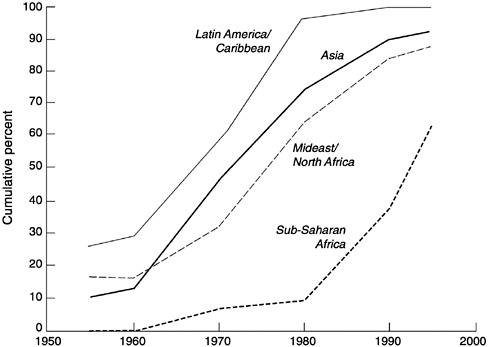
FIGURE 3-1 Percentage of countries that have started fertility decline by a given date, by region.
SOURCE: Data from Casterline (2000), who dates transition from the point of peak fertility, after which total fertility must have declined at least 10 percent.
Asia, and 2.9 in Asia as a whole (excluding the Middle East), to 3.0 in Latin America, 3.9 in the Middle East and North Africa, and 5.9 in Sub-Saharan Africa (United Nations, 1999). Variation across countries is also notable. In China, fertility is already below the level required for long-term stabilization of population size. In Brazil, this point is nearly achieved. In some other populous countries, fertility is closer to three births than to two (e.g., India, Mexico), while in others (e.g., Pakistan, Nigeria, Ethiopia) it is still over five.
Figure 3-1 shows that regional variation is related to the timing of the onset of fertility change. In Latin America and the Caribbean, decline often started early. In Sub-Saharan Africa, by contrast, falls in fertility had still not been recorded in over one-third of the constituent countries by 1995. This region has attracted intense scrutiny by demographers over the past 15 years (e.g., Cohen, 1998; Kirk and Pillet, 1998). An intraregional divide is apparent. In East and Southern Africa, couples are choosing to reduce their numbers of children, and serious HIV epidemics are acting as an additional fertility depressant (Zaba and Gregson, 1998). In West and Middle Africa, constant high fertility still predominates, although changes are under way in C ôte d'Ivoire, Senegal, Ghana, and parts of Nigeria.
An emphasis on the onset of transition is justified by the observation that, once fertility decline has started (the usual criterion being a 10-percent fall), it continues until moderate or low levels of childbearing are reached. Occasional plateaus and even slight reversals have proven to be temporary deviations from the overall trend toward smaller numbers of children. This feature has greatly simplified the task of fertility projections.
The direction of change, once decline has started, has not been in doubt. The pace of decline, in addition, has been rapid in all regions, although somewhat more rapid in Asia than elsewhere (Figure 3-2).1 However, the diversity in pace within regions is striking. In China, it took less than 5 years for fertility to drop by one birth per woman; in India, it took over 15 years. In Brazil, fertility fell by 8 percent in the decade following the onset of transition, while in Mexico and Costa Rica fertility fell by over 36 percent in the corresponding decade.
|
1 |
The figure also shows projected rates, which are discussed below. |
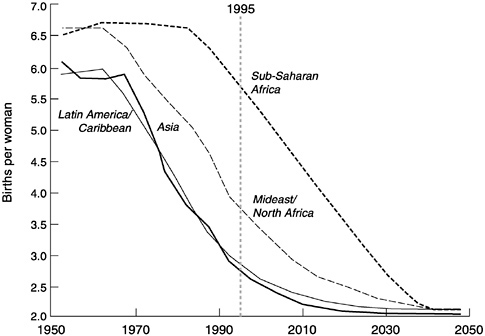
FIGURE 3-2 Estimated and projected total fertility rates by region: 1950-2050.
SOURCE: Data from United Nations (1999).
REASONS FOR FERTILITY DECLINE
Behavioral Mechanisms
Despite these variations in the timing and pace of fertility transitions over the past 50 years, country transitions have been remarkably similar in their underlying behavioral mechanisms. The dominant proximal force has been a change in reproductive habits: the use by married couples of recently developed and highly effective methods of contraception to limit family size.2 Typically, these methods have been adopted by couples in their late 20s or 30s who have several children and wish to cease further childbearing. Family-size limitation has been the dominant motive, although in Sub-Saharan Africa the use of contraception for child spacing has been relatively more common. The rise in contraceptive use has been facilitated by a massive international effort to implement family planning
|
2 |
In this regard, the experience of developing countries is quite different from the earlier European and North American transitions, which occurred without the benefit of highly effective modern methods and often in a context of religious, medical, and political opposition to contraception. |
programs. These programs, many of them government run or subsidized, but others also directed by private organizations, have reached millions of couples with informational materials and contraceptive supplies.
Although overshadowed by the impact of contraception, induced abortion has also played an appreciable role in fertility reduction. A recent estimate is that 35.5 million abortions took place in 1995 in developing regions (Alan Guttmacher Institute, 1999) and that between 10 and 30 percent of overall falls in fertility are attributable to induced abortion (Frejka, 1993).
A third factor in reproductive change has been postponement of marriage and motherhood. While marriage ages have remained relatively stable in Latin America in recent decades, other developing regions have experienced appreciable rises in the ages at which women marry. Fifty years ago, the majority of Asian women married before age 20. By the 1980s, their average age at first marriage was in the range of 20 to 25 (United Nations, 1990).
The facts of fertility change over the past 50 years, and role of the behavioral changes that have produced it, are well established. However, less agreement exists about the underlying reasons why use of contraception and abortion has risen and marriage and motherhood have been increasingly postponed. A better understanding of the determinants of these behaviors is the key to more accurate projections.
Mortality Decline and Improved Survival
The broad context in which fertility decisions are made has clearly changed worldwide. One of the profound changes has been broad and extensive mortality decline (National Research Council, 1998a). By midcentury, life expectancy at birth had risen from historical levels of 25-30 years to over 40 years. The proportion of children dying in infancy had fallen from 25-30 percent to an estimated 18 percent. Of the six births for an average couple in the 1950s, nearly four would survive to adulthood, nearly double the number required for long-term stability of population size.
For some early theorists (e.g., Notestein, 1953), this improved survival was one among a multiplicity of factors that eroded high-fertility motives. For others, however (Davis, 1963), these steep declines in mortality constituted a sufficiently powerful stimulus by themselves, regardless of other socioeconomic transformations, to force some fertility decline (if not alternative demographic adjustments such as outmigration), both in low-income agrarian settings and in urban, industrialized societies.
The effects of improving child survival could show up as couples adjust their childbearing, without necessarily reducing the number of
children they want. Such a pattern has been observed in Taiwan, Thailand, South Korea, and Costa Rica (Freedman et al., 1994; Knodel et al., 1987; Cho et al., 1982; Rosero-Bixby and Casterline, 1994), where, in the early stages of transition, fertility fell for 10 or 15 years with no change in desired number of children.3 For populations with such a pattern of initial change in fertility behavior followed by delayed reductions in fertility desires, the subsequent substantial fertility declines may be largely a delayed response to the large mortality declines that preceded them (Cleland, 2000).
Changing Demand for Children
Fertility desires do fall eventually, contributing to fertility decline. The dominant explanation for falling desires, sometimes called demand theory, runs as follows.4 In traditional societies, children represent a substantial economic asset. They are useful as sources of child labor and, later on, as insurance for old age and ill health. At the same time, they are inexpensive to rear. Eventually, households' demand for large numbers of children is driven down by the modernization of economies and improvements in living standards. The advent of mass schooling raises the cost of childrearing and removes children from productive activities. Parents can and have to invest in their offspring, substituting quality for quantity. New openings for the employment of women outside the home and new options for leisure and consumption arise, increasing the opportunity costs of childrearing. Alternative forms of security erode dependence on children. Thus in a myriad of ways, children are transformed
|
3 |
While this pattern of relative stable family-size desires in the early phases of fertility transition appears to characterize most Asian and Latin American countries for which relevant data are available, it does not apply in Sub-Saharan Africa. In this region, desired family sizes are much higher than elsewhere, and they fall prior to, or at the same time as, declines in childbearing. |
|
4 |
Many of the ideas that follow are captured in Caldwell's (1982) wealth flows theory. Other formulations are not necessarily entirely consistent. An influential early formulation of demand theory in economic terms was produced by Becker (1960). That households choose numbers of children to maximize utility is central in this formulation, as it is generally in economic models. Among many later formulations, that of Easterlin (1978) was important in attempting to incorporate, with the costs and benefits of children, the costs and benefits of fertility regulation, which are touched on below. The discussion here is not meant to provide an adequate account of these theories but focuses instead on how the general approach—rather than the specific formulations—accounts, or fails to account, for broad historical trends. In the same spirit, the references provided here are not meant as a complete list of the evidence but provide signposts to the literature. |
from economic assets to liabilities—a fundamental shift that is the root cause of fertility decline.
In the light of evidence assembled over recent years, components of classical demand theory are now subject to debate. Perhaps the biggest surprise has been the evidence that structural modernization of national economies, while conducive to fertility decline, is not a necessary precondition. Reproductive change has taken root and flourished in very poor countries: Indonesia and Thailand in the 1970s and Bangladesh and Nepal in the 1980s, for instance. In addition, reduced childbearing has been shown generally to precede rather than follow increased participation of women in paid employment or other forms of public life. Furthermore, fertility has declined in societies without formal systems of old age security, such as pension schemes and sickness and disability allowances. Although fertility has declined in the majority of developing countries, individuals are often still dependent on family and kin for help in adversity or old age.5
Perhaps the most striking feature of fertility transition in developing countries is the huge variety of circumstances under which it has occurred. In some countries, the trend toward smaller families has flourished in times of rapid improvement in living standards and access to education (e.g., South Korea and Taiwan). In some East African countries, by contrast, fertility transition has persisted in an era of deteriorating standards of living and falling school enrollments. Family sizes have dropped in countries with strong links to the international community as well as in those apparently sheltered from global capitalism and consumerism (e.g., Vietnam and North Korea).
Nevertheless, some positive evidence does exist for aspects of demand theory. Of all the conventional indicators of modernization, levels of literacy and education (together with life expectancy) are the most persistent and powerful discriminators between high- and low-fertility societies. Yet even this relationship is clearly not mechanical or straightforward. In some highly literate societies, childbearing has fallen rather slowly (e.g., the Philippines), and in others, levels of fertility still remain high (e.g., Jordan). The education-fertility link also has many possible interpretations. The advent of schooling may decrease demand for children in the ways suggested above. In the longer term, it may also make individuals more open to new and initially alien models of family life and new ways of regulating childbearing.
|
5 |
An even more serious challenge to some aspects of demand theory, in Caldwell's (1982) wealth flows version, is recent evidence that children are a net drain on household assets in traditional societies (e.g., Stecklov, 1999; Lee, 2000). |
Levels of national development have been shown to affect fertility decline. More advanced countries on the human development index of the United Nations Development Programme (1992) tend to experience an earlier onset of decline, and the pace of decline, once under way, is strongly related to the level of development at the start of transition (Bongaarts and Watkins, 1996). Yet much variation remains unexplained.6 Among the Arab states, for instance, fertility decline started earlier and has progressed further in some of the poorer countries, such as Egypt and Tunisia, than in most of the rich and increasingly well-educated oil-producing states.
Diffusion of New Ideas
Once initiated, the transition toward lower fertility tends to spread rather rapidly among countries linked by geography, culture, and trade. This may reflect the processes of economic restructuring and modernization. Typically running in parallel, however, is the spread of new knowledge, ideas, and aspirations, which could be a more important catalyst of reproductive change. To the extent that these new ideas are about the advantages, for parents and children, of smaller families, this diffusionist or ideational explanation for fertility decline might be regarded as a cognitive version of demand theory.
Some diffusionist authors, however, have stressed instead the importance of the means to deliberately regulate births (Cleland and Wilson, 1987), arguing that, as a radically new type of behavior, fertility regulation often encounters considerable resistance. It is unfamiliar, incites moral and social disapproval, and evokes related disquiet about health effects. The spread of information about and messages to counter such concerns, and the degree of resistance they encounter, may explain much variation in the timing and speed of fertility transition.
Several strands in the aggregate evidence support this interpretation: the prevalence of unwanted childbearing, which suggests that the means rather than the motives are critical; the fact that cultural factors, such as religion or language, appear to be strongly linked to reproductive change (e.g., Leete, 1988); the speed with which birth limitation can spread within societies from urban, educated strata to rural, less-privileged sectors (Rodriguez and Aravena, 1991); and the evidence that governments, and other elites, can influence the timing and speed of change by their at
|
6 |
The inadequacy of narrowly economic theories to provide a totally convincing explanation of fertility trends no doubt partly reflects the difficulty of taking into account preferences and tastes. |
tempts to legitimize (or oppose) the concept of smaller families and modern birth control. A considerable body of evidence from interviews and observation confirms that modern birth control does evoke initial anxiety and disquiet, often expressed in terms of health concerns (Bogue, 1983; Simmons et al., 1988) and generating considerable discussion among networks of kin and friends. The example of others exerts a major influence on the willingness of individuals to adopt modern contraceptive methods (Rosero-Bixby and Casterline, 1993; Montgomery and Chung, 1999).
The diffusionist framework emphasizes that reproductive behavior can be heavily influenced by state-sponsored programs to spread information about birth control, to legitimize the idea of small families and the use of methods of fertility regulation, and to provide accessible and affordable services. The impact of such programs has attracted intense empirical scrutiny over the past 30 years, but no clear-cut consensus has emerged. Positive evidence is derived from localized experiments, most notably in the Matlab district in Bangladesh (Phillips et al., 1988); from case studies of specific countries or pairs of countries (e.g., Knodel et al., 1987; Cleland, 1994); and from multicountry comparisons (Mauldin and Ross, 1991). Inconsistencies exist in the contrary evidence of the weak links between physical access to family planning services and contraceptive uptake (Tsui and Ochoa, 1992). Programs also appear to have little direct effect on desired numbers of children (Pritchett, 1994; Freedman, 1997), although they clearly help reduce unwanted childbearing (Bongaarts, 1997). More problematic and possibly unresolvable is the argument about whether successful family planning programs are instituted—and can only become effective —when fertility decline is already imminent (Demeny, 1992; Rosenzweig and Wolpin, 1986; see also Gertler and Molyneaux, 1994).
The role of government policies and programs in fertility transition has indeed been highly context-specific. In some low-income countries, fertility has declined in the context of government indifference or hostility to family planing (e.g., Mongolia, North Korea, Myanmar). In others, fertility decline was well established before the advent of favorable policies or programs, as in many Latin American and Arab countries. In yet others, the specific circumstances and the timing of events suggests that programs probably had a major influence not only on the speed of fertility decline but on the timing of its onset (e.g., Indonesia, rural China, Bangladesh). In the light of this historical diversity, sweeping generalizations about program impact are unwarranted. However, most population scientists would agree that well-designed programs can accelerate the speed of change by providing information and services to less-privileged populations (particularly the rural poor), significantly advancing the onset of widespread reproductive change.
A comprehensive interpretation of recent fertility decline in developing countries probably requires, at a minimum, some blending of explanations based on improved survival, declining demand for children, and wider diffusion, both spontaneous and deliberate, of ideas and contraceptive methods. The relative importance of each type of explanation is probably indeterminate. The contribution of mortality decline, for instance —in contrast to the contributions of such other demand factors as universal schooling and to the diffusion of new ideas about fertility control—may never be established with scientific rigor, but this is true, of course, of many fundamental social changes.
Efforts at blending perspectives without attempting to weigh the contribution of each type of factor have been made, as in the work of Easterlin (1978) and that of an earlier National Research Council panel (Bulatao and Lee, 1983). One might, for instance, assign the driving force in fertility decline to falling demand for births (partly due to better survival), and responsibility for the timing and speed of decline to cognitive and attitudinal factors (Retherford, 1985). The empirical possibilities for blending perspectives are illustrated in Bongaarts and Watkins's (1996) analysis of 69 developing countries, which shows that, between 1960 and 1990, the development threshold at which fertility started to decline was falling. This trend is illustrated in Figure 3-3 for the threshold level of literacy. They attribute this trend to the influence of global diffusion of new information and ideas in a world that is increasingly interconnected. The pace of fertility decline, once it has started, is however clearly dependent on socioeconomic level. A comprehensive, predictive theory that incorporates such findings still eludes researchers.
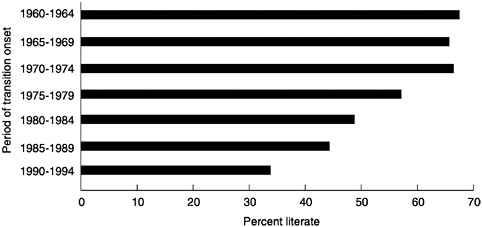
FIGURE 3-3 Percentage of population literate in countries starting fertility transition, by period of transition onset.
SOURCE: Data from Bongaarts and Watkins (1996).
CURRENT METHODS OF PROJECTING FERTILITY
Our review of trends indicates that the decline in fertility toward moderate and low levels is spreading rapidly and appears both inevitable and irreversible. Projections of future fertility rely on this observation, but still have the further problems of specifying how fast fertility will decline and, for those countries in which fertility has not started to decline, when it will start.
To determine the pace of future declines, projections generally seek to take into account the variety of behavioral mechanisms and determinants already discussed, including contraception and family planning, abortion, marriage delay, socioeconomic levels and changes, cultural, ethnic, and religious tendencies, and trends in mortality. The U.N. and the World Bank projections do this in ways that, while not entirely explicit, contrast superficially but lead to fairly similar results. We now describe these two approaches and alternatives and consider the accuracy of past fertility projections. The approaches to projecting fertility around and below replacement are explained in Chapter 4.
U.N. Projections
The U.N. Population Division decides on a pace for fertility decline in a given country essentially subjectively, after close scrutiny of previous judgments from earlier forecasts and recent country developments that may imply a need for reassessment. U.N. analysts write that they take into account “a range of socio-economic factors, such as population policies and programs, adult literacy, school enrollment levels, economic conditions (gross domestic product or gross national product per capita), infant mortality and nuptiality, as well as historical, cultural and political factors” (United Nations, 1998:96). As implied by this long list of considerations, no statistical relationships are assumed. Rather, from an appreciation of such factors, analysts working on separate groups of countries select a target date for each country at which total fertility is expected to stabilize—remaining unchanged from that point on—and then may adjust the dates to impose consistency and coherence. These dates essentially dictate how fast projected fertility is allowed to decline.
For countries that have not started fertility transition, analysts assign a date for transition onset, again subjectively, presumably with the same universe of behavioral and developmental factors in mind. Between onset and the stable level, or between current fertility and the stable level, fertility decline is usually assumed to be linear, but some analysts may impose a curvilinear trend.
Using this approach, the 1998 U.N. forecast assumes that, in more
than 8 out of 10 developing countries with fertility still above replacement, fertility will have fallen to replacement by 2035—in every developing region except Sub-Saharan Africa. In that region, only a quarter of the countries will have reached replacement by that date, with the remainder reaching replacement in the following decade (Zlotnik, 1999). The resulting fertility projections, for developing countries aggregated into regions, are shown in Figure 3-2.
World Bank Projections
The World Bank fertility projections have differed from the U.N. projections since around 1990 by adopting a more schematic approach, developed from cross-national analysis (Bos and Bulatao, 1990). The World Bank essentially assumes that such determinants as those reviewed above have influenced fertility trends until the present, and that modeling future trends on past trends therefore in effect incorporates their influence. For a country in midtransition, the pace of fertility decline is taken to be a function of the pace of previous decline. This relationship is allowed to attenuate over time, however, so that, in longer projections, countries gradually revert to an average pace of decline.
The onset of transition, in contrast, is determined with explicit reference to mortality. Countries that have not started transition are assumed to do so when estimated life expectancy reaches 50 years, or by the year 2005 if that comes first. Whatever the pace of decline during transition, it is allowed to slow gradually as replacement level is reached, beyond which fertility is kept indefinitely at replacement level.
Despite the differences in approach, the differences between projected fertility for developing regions in World Bank and U.N. projections are small, at least until replacement level is approached. If World Bank projections were used instead to illustrate future fertility trends in Figure 3-2, the figure would look essentially the same except toward the end, when differences in assumed stable levels come into play.
Alternative Projection Methods
The World Bank approach, therefore, uses a delimited statistical model that takes current levels and some portion of recent experience into account, in contrast to the U.N. approach of relying on judgment, allowing a wider range of factors to be considered but with possibly varying attention to each factor across countries. The U.S. Census Bureau (n.d.) follows the World Bank in regard to using a statistical approach, fitting a logistic function to past trends in total fertility. However, the bureau follows the U.N. in using this statistical procedure to define a future “stable”
level of fertility, which may be further adjusted taking trends in fertility determinants into account. The International Institute for Applied Systems Analysis (Lutz, 1996) follows the U.N. in relying on expert judgment, although its experts consider future fertility levels only for world regions, not for individual countries.
More statistically sophisticated models have sometimes been used to predict fertility but are not in wide use for projections, for understandable reasons. Of the many causal models for fertility, most are cross-sectional and do not attempt to predict trends. As Appendix C shows, many of the causal factors in fertility levels in fact add little predictive value when past fertility trends are taken into account.
Some complex simultaneous equation models do incorporate trends (see, e.g., McDonald, 1981; Sanderson, 1999) but pose other problems for forecasts. Such models require considerable work to construct and can be discredited should they happen to include poorly specified equations with little direct bearing on fertility trends. Using the fertility projections such a model generates in projecting other socioeconomic variables involves conceptual and practical problems, since the model may in turn be dependent on such variables. The structural equations approach makes explicit this problem, which to some degree is implicit in most methods.
Projection Accuracy
No current projection of fertility can be assessed, because we have no data on future fertility. We can, however, look at the accuracy of earlier forecasts of fertility, although the results should not be taken as direct evaluation of the methodologies just described.
Table 3-1 compares projected total fertility rates from U.N. and World Bank forecasts of the 1970s and 1980s with 1998 U.N. estimates of past trends. The comparison is restricted to countries with initial total fertility of 2.5 children or higher. The figures in the table show raw differences between projected total fertility and currently estimated total fertility for the same period, averaged across all countries included in the forecasts (see Appendix B for details).
The most important lesson from these comparisons is that forecasts of these periods tended to overestimate future fertility after it had dropped below 6.5 births. Mean differences are all positive below this level, meaning that projected figures are higher than current empirical estimates. The bias in fertility projections rises with the length of the projection. For instance, for all forecasts combined, raw error increases steadily, from 0.13 births for projections of 5 years to 0.27 births for projections of 20 years.
The pervasive positive bias at the global level can be traced to fore-
TABLE 3-1 Difference between projected total fertility and 1998 estimate: Means for high-fertility cases in eight forecasts, by projection length and initial fertility level
|
Projection length (years) |
|||||||
|
Initial total fertility |
0 |
5 |
10 |
15 |
20 |
25 |
No. of cases |
|
6.5 and up |
−0.335 |
−0.177 |
−0.097 |
0.053 |
−0.043 |
−0.175 |
297 |
|
4.5-6.49 |
0.214 |
0.362 |
0.484 |
0.485 |
0.611 |
0.385 |
329 |
|
2.5-4.49 |
0.127 |
0.163 |
0.192 |
0.201 |
0.377 |
0.405 |
272 |
|
Mean difference |
0.006 |
0.130 |
0.194 |
0.246 |
0.275 |
0.156 |
898 |
|
Mean absolute difference |
0.408 |
0.500 |
0.646 |
0.698 |
0.882 |
0.842 |
898 |
|
Note: Cases included are all those in which total fertility in the base year for the projection was at least 2.5. The number of cases given is for the evaluation of zero-length projections; cases drop off as projections lengthen. See Appendix B for sources and details. |
|||||||
casters missing two historical turning points (Figure 3-4). First, the forecasts of the 1970s assumed too slow a pace of fertility decline essentially from their inception. These forecasts apparently missed the sharp turnaround in fertility trends in China between the late 1960s and the early 1970s, which accounted for at least 80 percent of fertility decline in developing regions in this period. Second, fertility trends again surprised forecasters between the late 1980s and the early 1990s. After moderating over the preceding two decades, fertility took a fairly sudden dip that left previous forecasts behind. From the late 1980s to the early 1990s, fertility decline accelerated unexpectedly in China and India and continued at a torrid pace in Bangladesh (United Nations, 1999). Among industrial countries in the same period, fertility decline also resumed in Russia after a decade of rising fertility. Together, these four countries accounted for almost two-thirds of the relatively large world fertility decline in this period.
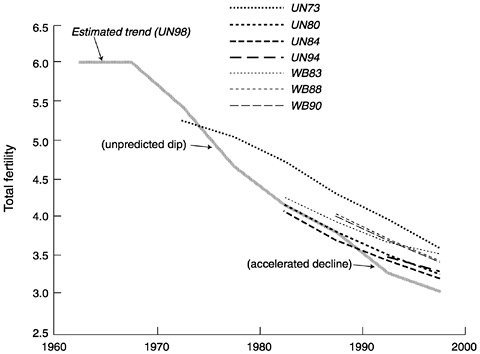
FIGURE 3-4 Trend in total fertility for developing regions and earlier projected trends from U.N. and World Bank projections, 1960-2000.
NOTE: See Appendix B for sources. UN stands for the U.N. Population Division and WB for the World Bank. The digits after this designation indicate the year of the forecast, so that UN98 is the U.N. Population Division's 1998 forecast.
Does this argue that the past record of projecting fertility is not good? The answer is not straightforward because there is no yardstick for judgment. Even with the unpredicted turning points, Table 3-1 can be interpreted to show that projections have been sufficiently accurate for most practical purposes. The mean error in 20-year projections of 0.27 births seems tolerable.
However, these raw errors allow positive errors to be offset by negative ones. The precision of fertility projections for individual countries is better represented by absolute errors. The absolute level of error, averaged for all forecasts, is shown in the bottom row of Table 3-1. By this criterion, the record of past projections appears less impressive. Assumptions about fertility levels at the start of the projection period are inaccurate, reflected in a mean absolute error of 0.41 births. Mean error doubles to 0.88 births in 20-year projections. Considerable potential to improve fertility projections, to a large degree by improving current fertility estimates, clearly exists.
The variability in past error could be used to define a prediction interval for projected fertility rates, if one assumes that the error in current projections will resemble error in past projections. How this can be done is illustrated in Chapter 7.
FERTILITY TRANSITION IN THE 21ST CENTURY
The Onset of Fertility Transition
One of the more difficult tasks for past country forecasts has been anticipating the onset of fertility decline. The fact that the overwhelming majority of countries have now passed this stage should make future projections more accurate. But the problem has not entirely disappeared, particularly in Sub-Saharan Africa, and the future pace of decline also presents problems.
In each subregion of Sub-Saharan Africa, the onset of fertility transition remains a key issue. In East and Southern Africa, fertility decline is increasingly well entrenched, but, according to the U.N., significant outposts remain with no sound evidence of a fall in national birth rates, including Malawi, Mozambique, Somalia, and Uganda. In Middle Africa, the majority of countries are still thought to have constant high fertility, including the giant of the subregion, the Democratic Republic of the Congo, with a population of over 45 million. In West Africa, fertility has started to fall in the more populous countries (Nigeria, Ghana, Côte d'Ivoire, Senegal) but probably not in many of the smaller ones (e.g., Guinea-Bissau, Liberia, Mali, Niger, Sierra Leone).
The pretransitional countries in Africa are characterized by abject and
often deepening poverty, exacerbated by civil unrest and conflict in some instances, complicated by cultural and linguistic diversity, with all these problems being poorly handled by fragile governments. Despite these inauspicious circumstances, both the U.N. and the World Bank anticipate that fertility is now starting to decline in most of these countries.
For East and Southern Africa, this verdict is sound. Combining the evidence from other regions of geographic synchronicity in fertility decline with the number of countries in this subregion where fertility transition is clearly under way, one can expect the remaining countries to start transition soon, if it has not already begun. New knowledge about contraception and attitudes toward fertility should spread across national boundaries. Most governments in the region are giving increasing support to family planning programs, but perhaps even more significant is the pressure on household budgets due to slow or even negative economic growth. Educational aspirations tend to be high in this subregion, and hopes for a better material life are presumably correspondingly high; at the same time, standards of living are falling in many countries. The combination of high aspirations and increasing hardship acts as a particularly strong catalyst for severe downward adjustments in desired number of children. The immediate prospect may be for further rapid spread of fertility transition within the subregion and an accelerated pace of decline.
In the medium term, however, the HIV epidemic introduces an element of deep uncertainty into fertility projections for certain countries. Where death rates due to HIV/AIDS are rising rapidly, as in many countries in the region, life expectancies are poised to fall by 10 or 15 years, thus wiping out half a century of improvement. This juxtaposition of falling fertility and steep mortality increase is unprecedented, and its consequences are unknown. If current trends continue, population growth will slow abruptly. There is little sign that rising mortality associated with HIV epidemics will force a reassessment of government population policies or encourage households to raise fertility to replace family members who have died. Nevertheless, given the epidemic, the future course of fertility in this part of the world over the next 30 years is extremely difficult to anticipate.
The countries of West and Middle Africa, thus far, are less affected by the HIV epidemic than those in the east and southern parts of the continent. Some countries have been affected by relatively high levels of sterility, which complicate assessment of and may reduce motivation for fertility reduction. For the majority of countries in the region, assumptions about the timing of the onset of fertility decline remain critical for the accuracy of projections. The expectation of U.N. and World Bank analysts that reproductive change will become ubiquitous in the next decade is
buttressed by a correct appreciation of what has happened in other regions of the world. Yet there are grounds for skepticism that these countries will follow global trends so soon.
These late-starting countries may be selected for relative imperviousness to radical reproductive change. This may be illustrated with two countries that are actually more advanced than most others in the region, having just started or being on the verge of starting fertility transition. Ghana was expected to be in the vanguard of African fertility transition on the grounds of its relatively high educational standards and degree of urbanization. But fertility decline in this country has been both late and slow, compared with East and Southern African countries. Its neighbor, Nigeria, experienced an infusion of great wealth during the era of high oil prices, followed by economic collapse —a sequence thought to be particularly conducive to fertility reduction. Yet, until recently, evidence of fertility change in this country has been confined to the southwest (Cohen, 1993:47-48), which includes the commercial capital of Lagos, and even in this area the pace is slow.
Two reasons may be advanced for persistent high fertility in countries in this region. First, reproductive attitudes in West and Middle Africa, particularly among men, remain uniquely pronatalist, for reasons that are still not well understood but may be related to the continued dominance of polygynist marriage systems, widespread child fostering, and the strength of traditional religious beliefs. Second, civil war or extreme instability, as in Angola, Liberia, and the Democratic Republic of the Congo, may depress fertility temporarily but is not conducive to a sustained decline, not least for the reason that the provision of family planning advice and supplies is either logistically impossible, or possible but of very low priority.
The countries outside Sub-Saharan Africa that have not started fertility transition may also be self-selected. For projection purposes, the issue is whether delayed onset is explained by low levels of literacy, high mortality, and other socioeconomic factors or whether cultural or political impediments to reproductive change have been more important. If low development is more important, then future fertility decline need not be postponed and, once it starts, need not be particularly slow. The onset of transition has taken place at progressively lower thresholds of development (Bongaarts and Watkins, 1996), and decline, once under way, can be rapid even in societies (such as Bangladesh) characterized by extreme poverty and illiteracy. However, fertility decline in these countries could have been held back by more subtle but enduring forms of resistance. This seems likely, for instance, in many Arab states, where reproduction appears to be part of a political culture in which territorial aspirations are linked to population numbers. In such cases, postponed and slow fertility
transition becomes more likely. Cultural and political resistance to reproductive change may itself be susceptible to rapid transformation, but its existence casts some doubt on the assumption that future fertility declines will take root and progress at the same brisk pace as in early-transition countries.
The Pace of Decline
Outside Sub-Saharan Africa, most low-income countries are already past the stage of constant high fertility. The projection issue for these countries concerns the pace of decline. Much is at stake. Fully 80 countries, comprising 44 percent of the world's population, have total fertility rates in the range of 2.5 to 4.5 births (Casterline, 2000). According to 1994 World Bank forecasts, global population will be 10 percent higher in 2050 if fertility declines “slowly” rather than at the expected or “standard” pace, and 18 percent higher compared with a “rapid” pace.
What pace of decline can be anticipated in the early decades of the 21st century? One possibility is that the pace of change will accelerate, in countries still early in transition, because of the diffusion of new knowledge, ideas, and attitudes. In a world increasingly interconnected by electronic media, global consumerism, and the movement of peoples, the forces of diffusion will automatically grow in strength.
The contrary argument is that the pace of reproductive change will slow because of the process of self-selection. Those societies that were most amenable to fertility decline for cultural, economic, and policy-related reasons are presumably in the group that experienced an early onset of transition and have reached moderate or low levels of childbearing, where further rapid decline is unlikely. Some obvious examples of these countries are China, Indonesia, South Korea, and Thailand. These Asian countries are relatively homogeneous and have had strong population policies, both factors associated with a rapid pace of decline. The two most populous countries of Latin America, Brazil and Mexico, have achieved similarly advanced stages of transition, although the role of the state has been less marked.
Conversely, countries that started transition late and still have relatively high fertility may be self-selected for their resistance to change (as Pakistan appears to be). These populations tend to be more diverse in terms of ethnicity, language, or religion than the former group, and population policies have been relatively vacillating, weak, or very recent in origin. If these and other smaller countries at a similar early stage of transition are indeed self-selected, then it can be anticipated that future declines in fertility will be slow.
Determinants of the Pace of Decline
Such issues about the future pace of fertility decline would require detailed case studies to resolve. Nevertheless, some insights may be gained by statistical analysis of past experience, to determine what has influenced the pace of fertility decline in the past and what might therefore determine pace in the future.
Population analysts have neglected the determinants of pace. An exception is the work by Bos and Bulatao (1990) and, for this report, their approach has been updated and expanded (see Appendix C at http://www.nap.edu). Using U.N. (1999) estimates, the amount of change in total fertility between successive 5-year periods was estimated for each country, covering all 5-year periods from 1950-1955 to 1990-1995. Fertility change was then regressed on a range of predictors, including change in the previous period, the initial fertility level, the calendar date, and several socioeconomic variables measured at the start of each period—level of infant mortality, gross female secondary school enrollment, and percentage of the population urban.
The pace of change in the previous 5-year period is strongly related to pace in the following period. This result implies a consistency among national populations in the tempo of transition. Countries that have experienced rapid decline in the recent past will tend to have rapid decline in the immediate future on average, and vice versa. However, fertility decline does not simply proceed linearly, because the pace changes across fertility levels. Decline decelerates as fertility falls toward replacement.
Once the effects of the previous pace of decline and the level of fertility are allowed for, the date that transition starts and socioeconomic factors both play a limited role in affecting further decline. The only socioeconomic factor to have a significant effect was initial infant mortality, and its effect was limited to the early stage of transition, with fertility above five births. This statistical link accords well with the preceding interpretation of early fertility decline as reflecting a reaction to still earlier improvements in child survival.
The Role of Marriage Timing
A factor in the onset and pace of fertility decline, but not explicitly treated so far, is the timing of marriage and first births. Postponement of marriage and first births plays an appreciable role in reducing fertility. In Taiwan, it produced a 10-percent reduction in fertility in the late 1970s and a nearly 20-percent reduction in the late 1980s (Bongaarts, 1999). In Colombia, an effect of similar magnitude was estimated for the 1980s.
Marriage and maternity ages will not continue to rise indefinitely.
While they may pave the way for a rise in proportions of women remaining single throughout the reproductive span (as in Japan), the more likely scenario in many developing countries is for marriage ages eventually to stabilize. When this happens, there will be upward pressure on total fertility, and fertility may plateau or rise temporarily. The potential importance of the marriage factor for fertility projections is obvious. Exactly how it could and should be incorporated in future projections remains unclear. International trends in marriage ages have received little systematic attention recently from demographers, and little guidance can be offered to anticipate points of stabilization and the prospects for a rise in spinsterhood. The weakening of the link between marriage and motherhood in some parts of the world further complicates the issue. This is an area in which further research may pay high dividends.
Policy and Future Decline
One potentially important dimension in assessing the prospects for fertility decline in the coming decades concerns population policy and its expression in terms of family planning information and services. Experts remain deeply divided about the ability of governments to engineer reproductive change, but few would deny that appropriate publicity and the ready availability of contraceptive methods can hasten the speed of decline. While the reproductive behavior of the urban middle-class in low-income countries is perhaps little affected by interventions of government, the speed with which the idea of small families and the acceptability of modern contraception spread to rural, less-privileged sectors probably can be influenced by government action or inaction (National Research Council, 1998b).
The last 40 years have witnessed a rise in the ascendancy of the idea that policies to check rapid population growth are legitimate and justified. Opposition from elites in low-income countries, based on religion, political ideology, or economic considerations, has waned. Population policies are now the norm in Africa rather the exception, and many Arab regimes have become more sympathetic over time to the provision of family planning services. Some impetus has come from international donors, but, more important, national attitudes toward rapid population growth and to mass provision of family planning services have genuinely changed. Except perhaps in countries with particularly severe HIV epidemics, it is likely that developing-country policies will remain broadly sympathetic to further fertility decline.
For effective expression in terms of services and associated education and information, however, policies need to be backed by funding and to receive priority in competition with alternative spending programs. Par-
ticularly in Asia and Africa, contraceptive users have been heavily dependent on free or subsidized supplies, whether provided by the public sector, via social marketing, or by nongovernmental organizations with access to international funds. The global cost of family planning programs is set to rise radically both because the number of couples of reproductive age is increasing and because further fertility decline requires rising levels of contraceptive practice. Population Action International estimates that expenditure on family planning in 1996 in developing regions was $9.9 billion, of which $2.0 billion was contributed by donors and the bulk by developing-country governments. It estimates funding requirements to meet rising contraceptive needs and associated reproductive health activities outlined by the 1994 International Conference on Population and Development (ICPD) will rise to $21.7 billion by the year 2015. The total cost of contraceptives alone is expected to rise 4.1 percent a year until 2015, as the number of eligible couples increases (Bulatao, 1999).
The willingness of bilateral and multilateral donors to increase their financial support for developing-country family planning programs is in considerable doubt. There is a sense in the international aid community that the “problem of rapid population growth” is no longer an urgent priority. Since the ICPD in 1994, international funding has not grown as expected and hoped. Annual global spending on family planning in the mid-1990s was less than half what the ICPD estimated would be required by the year 2000 (Potts et al., 1999). International support for family planning seems likely to recede over the next few decades, thus throwing more of the financial burden on developing countries themselves. Services may shrink (as in Bangladesh) and cost-recovery measures may be introduced (as in Indonesia). The effect of declining public support may be partly offset by rising household incomes, although such increases may be limited among the poor.
Would the attrition of publicly supported services influence the future speed of fertility decline? Although the evidence is fragmentary, demand for contraceptives does not appear to be highly sensitive to price, although major cost-recovery measures would certainly impinge on the poorest strata (Lewis, 1996). Nevertheless, retrenchment of certain types of service, such as rural outreach programs, might make a significant difference to the pace of decline by restricting availability of contraceptives where there are few alternative sources. While there is no way in which these considerations can enter fertility projections in any systematic manner, they do raise the possibility that the era of buoyant funding and intense international commitment to reducing rapid population growth may be coming to an end. The net effect, although impossible to quantify, could be a lessening of the pace of reproductive change.
CONCLUSIONS
Forecasts over the last two decades have underestimated the scale and speed of fertility decline in developing countries. This failure has reflected a wider failure among population scientists. Barriers to radical reproductive change—economic, social, cultural—that once seemed almost insurmountable have proven temporary impediments. Fertility decline has taken root in poor, largely illiterate, agrarian populations to a degree that, 30 years ago, most experts would have thought almost impossible. In the light of the past record, it is extremely tempting to project a continuing fast, or even accelerating pace of decline among transitional countries. The increasing interconnectedness of poor and rich countries through the growth of electronic media, mass tourism, and so on, lends support to this view of the future.
The Pace of Future Decline
Fertility will certainly continue to fall in the early decades of the 21st century, and some indications exist of faster decline than previously projected. In the 1990s, fertility decline appeared to accelerate, quite possibly due to the increasing diffusion of ideas about family, fertility, and fertility limitation among peoples and within societies. Despite this, there are grounds to suspect that fertility decline will instead slow.
On average, the pace of decline slows after midtransition is reached, at about 4.5 births. This deceleration progresses as fertility falls further. A large and increasing number of developing countries have now entered this later phase of transition. This factor alone leads to an anticipation of more modest future changes in fertility than assumed in the U.N. medium-variant projections. In this variant, the pace of decline is usually taken to be linear until replacement level is reached. For instance, the fertility projection for the 48 least-developed countries assumes a constant decline for the next 50 years of about 0.36 births per 5-year period. Evidence from the past strongly suggests that future projections should incorporate an assumption that the pace of decline decelerates after midtransition, although further research is needed to establish whether such a change will make a significant difference to projections.
A second consideration stems from the empirical observation that countries exhibit a considerable consistency over time in their speed of change. Countries with fast rates of decline in the past are likely to record similarly fast rates in the future, and vice versa. Many of today's high-fertility countries are in this category precisely because the speed of past reproductive change has been slow. Pakistan is a good example, as is the Philippines. While it is entirely possible that these and other early to
midtransitional populations will now enter an era of more rapid demographic change, the empirical record suggests that a continuation of modest change is more likely. When taken together with the fact that most countries that are characterized by a fast pace of change have now entered the late-transitional phase (with decelerating rates of fertility decline), this consideration also suggests that fertility decline in low-income settings may be slower in the future than in the past.
In the highest-fertility region of the world, West and Middle Africa, the beginnings of fertility decline are evident in some countries. The U.N. and the World Bank may be correct in their assumption that changes in reproductive behavior will spread and deepen in these regions. It is equally likely, however, that change will be retarded. Fertility aspirations remain exceptionally high and governance tends to be weak, thus limiting the role of the state in encouraging reproductive change. Civil strife, and in some cases armed conflict, may further postpone a sustained movement to lower fertility.
Other factors that may perhaps act to slow the pace of future reproductive change include an end to long-standing trends toward marriage postponement and a decline in funds available to support family planning programs.
Projecting Transition Stages
For projections to accurately assess and incorporate such prospects for slower fertility decline, without continuing to underestimate the speed of decline, will require careful balancing of the different possibilities. Not every case will involve slower decline. One might usefully consider the fertility prospects at different stages of transition.
For countries that have not started transition, it should come in general somewhat faster than previously, as the socioeconomic threshold for starting transition appears to be falling. Among socioeconomic changes, we have argued that mortality decline in particular plays a crucial role, clearly demonstrable in the early stages of transition. This implies that future transitions will start at lower levels of development. Not only is infant mortality declining worldwide, but transition onset also appears to come at increasingly higher levels of infant mortality. For the countries in this group in West and Middle Africa, however, transition may be further delayed for the variety of cultural reasons outlined above.
The future pace of transition in these late-starting countries is unknown. It is likely to be in the range of fertility declines in countries that are further along and would probably be toward the slower end of that range, particularly if transitions start at low socioeconomic levels. How
ever, since these countries lack experience with fertility decline, future trends are difficult to predict.
For countries in which fertility decline is under way, it should continue at the distinctive pace each country has experienced. Some continuing declines should be rapid, many others fairly slow because, as argued above, the fastest declines are likely to have been already completed. In general, the pace of decline will be slower after total fertility has fallen below 4.5 births.
We have not considered developing-country fertility trends toward the end of transition. On one hand, decline could slow and largely stop somewhere around replacement level. On the other hand, decline could continue to below-replacement levels. These possibilities are considered in the next chapter. Over the next few decades, a growing number of countries will reach low levels of fertility, and the pace of global fertility decline will increasingly depend on fertility changes close to replacement.
Paths to replacement are generally projected as smooth, but such a description is unlikely to be accurate. Unexpected departures from trend must be expected but cannot be predicted. Two such unexpected changes in recent decades were noted above. The acceleration of decline in China around 1970 and the similar acceleration around 1990 in several large countries were unpredicted and had major impact on world fertility trends. Other such events cannot be excluded in the future. Possible changes in the factors affecting the course of fertility, such as the apparent diminution of support for family planning services, are of problematic and similarly unpredictable import, and might produce merely hiccups in continued decline or could have more lasting, and essentially incalculable, effects.
Research Priorities
Focused research could clarify many of these issues. At the descriptive level, the need for more accurate data on current fertility and past trends remains. Huge improvements have been made in the past 30 years, but significant gaps in knowledge still exist, particularly in Africa. Moreover contemporaneous trends need to be reassessed at regular intervals, and, in the absence of vital-registration systems, censuses and specialized demographic surveys are still required.
Better understanding of the determinants of reproductive change would clearly be useful for forecasters. Past analysis of determinants has relied heavily on repeated cross-sectional surveys, which have been critical for documenting trends. But this dominant form of enquiry needs rejuvenation. Future advances in understanding will come from more
complex study designs, involving longitudinal follow-up of families and individuals, the blending of numerical and ethnographic techniques of data collection, and the application of multilevel analysis that can capture community and national influences on individual behavior.
Among the proximate determinants of fertility, a key priority is more intensive study of marriage. Future fertility prospects in low-income countries depend to an appreciable degree on whether the trend toward marriage postponement will abate and on whether marriage will remain nearly universal. Despite its obvious importance, marriage has been badly neglected by population researchers, an imbalance that should be redressed. The timing of births within marriage also requires further attention. Better insight into such marital decisions might enable one to predict whether and how birth delay will occur in countries now in transition.
Future fertility change in a number of countries is likely to be substantially faster or slower than now projected and is unlikely to be smooth. Research that would help predict unexpected deviations from trends would be valuable but is difficult. One possible focus for attention is the effect of the HIV/AIDS epidemic on fertility.
Important unresolved questions remain in the policy and program arena. In much of Asia and Latin America, the central priority is applied research to identify more cost-effective ways of providing family planning and related services without jeopardizing the needs of the poorest strata. In other countries, particularly those in Sub-Saharan Africa, the potential fertility impact of family planning programs needs to be assessed, ideally by means of carefully designed experiments.
REFERENCES
Alan Guttmacher Institute 1999 Sharing Responsibility: Women, Society and Abortion Worldwide. New York: Alan Guttmacher Institute.
Becker, G.S. 1960 An economic analysis of fertility. In Demographic and Economic Change in Developed Countries. Universities-National Bureau Conference Series, No. 11. Princeton, N.J.: Princeton University Press.
Bogue, D. 1983 Normative and psychic costs of contraception. Pp. 151-192 in R.A. Bulatao and R.D. Lee, eds., Determinants of Fertility in Developing Countries, Vol. 2. New York: Academic Press.
Bongaarts, J. 1997 The role of family planning programmes in contemporary fertility transitions. In G.W. Jones, J.C. Caldwell, R.M. Douglas, and R.M. D'Souza, eds., The Continuing Demographic Transition. Oxford, Eng.: Oxford University Press.
1999 The fertility impact of changes in the timing of childbearing in the developing world. Population Studies 53(3):277-289.
Bongaarts, J., and S.C. Watkins 1996 Social interactions and contemporary fertility transitions. Population and Development Review 22(4):639-682.
Bos, E., and R.A. Bulatao 1990 Projecting Fertility for All Countries. Policy, Research, and External Affairs Working Paper 500. World Bank, Washington, D.C.
Bulatao, R.A. 1999 Reproductive Health Commodity Requirements and Costs in Developing Regions, 1999-2005. United Nations Population Fund (UNFPA), New York.
Bulatao, R.A., and R.D. Lee, eds. 1983 Determinants of Fertility in Developing Countries, Vols. 1 and 2. Panel on Fertility Determinants, Committee on Population and Demography, Commission on Behavioral and Social Sciences and Education, National Research Council. New York: Academic Press.
Caldwell, J.C. 1982 Theory of Fertility Decline. New York. Academic Press.
Casterline, J. 2000 The onset and pace of fertility transition: National patterns in the second half of the twentieth century. Population and Development Review, forthcoming.
Cho, L.-J., F. Arnold, and T.H. Kwon 1982 The Determinants of Fertility in the Republic of Korea. Committee on Population and Demography Report No. 14. Washington, D.C.: National Academy Press.
Cleland, J. 1994 Different pathways to demographic transition. In F.G. Smith, ed., Population: The Complex Reality. Golden, Co.: North American Press.
2000 Restating the obvious: The effects of improved survival on fertility . Population and Development Review, forthcoming.
Cleland, J., and C. Wilson 1987 Demand theories of the fertility transition: An iconoclastic view . Population Studies 41(1):5-30.
Cohen, B. 1993 Fertility levels, differentials, and trends. Pp. 8-67 in National Research Council, Demographic Change in Sub-Saharan Africa. Panel on the Population Dynamics of Sub-Saharan Africa, Committee on Population, Commission on Behavioral and Social Sciences and Education . K.A. Foote, K.H. Hill, and L.G. Martin, eds. Washington, D.C.: National Academy Press.
1998 The emerging fertility transition in Sub-Saharan Africa. World Development 26(8):1431-1461.
Davis, K. 1963 The theory of change and response in modern demographic history. Population Index 29:345-366.
Demeny, P. 1992 Policies seeking a reduction of high fertility: A case for the demand side. Population and Development Review 18(2):321-332.
Dyson, T., and M. Murphy 1985 The onset of fertility transition, Population and Development Review 11:399-440.
Easterlin, R.A. 1978 The economics and sociology of fertility: A synthesis. Pp. 57-113 in C. Tilly, ed., Historical Studies of Changing Fertility. Princeton, N.J.: Princeton University Press.
Freedman, R. 1997 Do family planning programs affect fertility preferences? A literature review. Studies in Family Planning 28(1):1-13.
Freedman, R., M.-C. Chang, and T.-H. Sun 1994 Taiwan's transition from high fertility to below-replacement levels. Studies in Family Planning 25(6):317-331.
Frejka, T. 1993 The role of induced abortion in contemporary fertility regulation . Pp. 209-213 in International Population Conference/Congrès International de la Population: Montreal, 1993, Vol. 1. Liège, Belgium : International Union for the Scientific Study of Population.
Gertler, P.J., and J.W. Molyneaux 1994 How economic development and family planning programs combined to reduce Indonesian fertility. Demography 31(1):33-63.
Kirk, D., and B. Pillet 1998 Fertility levels, trends and differentials in Sub-Saharan Africa in the 1980s and 1990s. Studies in Family Planning 29(1):1-22.
Knodel, J., A. Chamratrithirong, and N. Debavalya 1987 Thailand's Reproductive Revolution: Rapid Decline in a Third-World Setting . Madison: University of Wisconsin Press.
Lee, R. 2000 A cross-cultural perspective in intergenerational transfers and the economic life cycle. In A. Mason and G. Tapinos, eds., Sharing the Wealth: Demographic Change and Economic Transfers Between Generations. Oxford, Eng.: Oxford University Press, forthcoming.
Leete, R. 1988 Dual fertility trends in Malaysia's multi-ethnic society. International Family Planning Perspectives 15:58-65.
Lewis, M.A. 1996 Cost of contraceptive supplies and services and cost-sharing. Pp. 256-272 in United Nations, Family Planning, Health, and Family Well-Being. New York: Population Division, United Nations.
Lutz, W., ed. 1996 The Future Population of the World: What Can We Assume Today? Revised 1996 ed. London: Earthscan Publications Ltd.
Mauldin, W.P., and J. Ross 1991 Family planning programs: Efforts and results, 1982-89. Studies in Family Planning 26(6):350-367.
McDonald, J. 1981 Modeling demographic relationships: An analysis of forecast functions for Australian births. Journal of the American Statistical Association 76:782-792.
Montgomery, M.R., and W. Chung 1999 Social networks and the diffusion of fertility control: The Republic of Korea. Pp.179-209 in R. Leete, ed., Dynamics of Values in Fertility Change. Oxford, Eng.: Oxford University Press.
National Research Council 1998a From Death to Birth: Mortality Decline and Reproductive Change. Committee on Population. M.R. Montgomery and B. Cohen, eds. Commission on Behavioral and Social Sciences and Education. Washington, D.C.: National Academy Press.
1998b Papers/Communications from the Workshop on Social Processes Underlying Fertility Change in Developing Countries, Washington, D.C., January 29-30, 1998. Committee on Population, Commission on Behavioral and Social Sciences and Education, Washington, D.C.
Notestein, F.W. 1953 The economics of population and food supplies. Pp. 13-31 in Proceedings of the Eighth International Conference of Agricultural Economics. London: Oxford University Press.
Phillips, J.F., R. Simmons, M.A. Koenig, and J. Chakraborty 1988 The determinants of reproductive change in a traditional society: Evidence from Matlab, Bangladesh. Studies in Family Planning 19(6):313-334.
Potts, M., J. Walsh, J. McAniuch, N. Mizoguchi, and T.J. Wade 1999 Paying for reproductive health care: What is needed and what is available . International Family Planning Perspectives 25(Supplement):S10-S16.
Pritchett, L.H. 1994 Desired fertility and the impact of population policies. Population and Development Review 20(1):1-55.
Retherford, R.D. 1985 A theory of marital fertility transition. Population Studies 39:249-268.
Rodriguez, G., and R. Aravena 1991 Socio-economic factors and the transition to low fertility in less developed countries: A comparative analysis. Pp. 39-72 in IRD/Macro International, Proceedings of the Demographic and Health Surveys World Conference, Vol. 1. Columbia, Md.: IRD/Macro International.
Rosenzweig, M.R., and K.I. Wolpin 1986 Evaluating the effects of optimally distributed public programs: Child health and family planning interventions. American Economic Review 76(3):470-482.
Rosero-Bixby, L., and J.B. Casterline 1993 Modelling diffusion effects in fertility transition. Population Studies 47:147-167.
1994 Interaction diffusion and fertility transition in Costa Rica. Social Forces 73(2):435-462.
Sanderson, W.C. 1999 Knowledge can improve forecasts: A review of selected socioeconomic population projection models. Population and Development Review 24(Supplement):88-117.
Simmons, R., L. Baqee, M.A. Koenig, and J.F. Phillips 1988 Beyond supply: The importance of female family planning workers in rural Bangladesh. Studies in Family Planning 19(1):29-38.
Stecklov, G. 1999 Evaluating the economic returns to childbearing in Côte d'Ivoire. Population Studies 53 (1):1-18.
Tsui, A.O., and L.H. Ochoa 1992 Service proximity as a determinant of contraceptive behavior: Evidence from cross-national studies of survey data. Pp. 222-258 in J.F. Phillips and J.A. Ross, eds., Family Planning Programmes and Fertility. Oxford, Eng.: Clarendon Press.
United Nations (U.N.) 1990 Patterns of First Marriage: Timing and Prevalence. New York: Department of International Economic and Social Affairs, United Nations .
1998 World Population Prospects: The 1996 Revision. New York: United Nations.
1999 World Population Prospects: The 1998 Revision, Vol. 1, Comprehensive Tables. New York: United Nations.
United Nations Development Programme (UNDP) 1992 Human Development Report 1992. New York: Oxford University Press.
U.S. Census Bureau n.d. Making Population Projections. U.S. Census Bureau, Washington, D.C.
Wilson, C., and P. Airey 1999 How can a homeostatic perspective enhance demographic transition theory? Population Studies 53(2):117-128.
Zaba, B., and S. Gregson 1998 Measuring the impact of HIV on fertility in Africa. AIDS 12(Supplement 1):S41-S50.
Zlotnik, H. 1999 World Population Prospects: The 1998 Revision. Paper prepared for the Joint ECE-Eurostat Work Session on Demographic Projections, Perugia, Italy, May 3-7.


