
2
Occupational Safety and Health Professionals
ABSTRACT. Without a massive survey of U.S. employers, it is impossible to estimate or describe the full spectrum of those who provide occupational safety and health (OSH) services to the U.S. workforce. However, it was possible to assemble a description of the four traditional or core OSH professions (occupational safety, industrial hygiene, occupational medicine, and occupational health nursing) as well as three other disciplines likely to play a substantial role in the workplace of the future: employee assistance professionals, ergonomists, and occupational health psychologists.
Although each of the four traditional OSH professions emphasizes different aspects of OSH, members of all four professions share the common goal of identifying hazardous conditions, materials, and practices in the workplace and assisting employers and workers in eliminating or reducing the attendant risks. Occupational safety professionals, although concerned about all workplace hazards, have traditionally emphasized the prevention of traumatic injuries and workplace fatalities. Similarly, industrial hygienists, although they do not ignore injuries, have been a source of special expertise on the identification and control of hazards associated with acute or chronic exposure to chemical, biological, and physical agents. Occupational health nurses and occupational medicine physicians are distinguished by providing clinical care and programs aimed at health promotion and protection and disease prevention. These services include not only diagnosis and treatment of work related illness and injury, but also pre-placement, periodic, and return-to-work examinations, impairment evaluations, independent medical examinations, drug testing, disability and case management, counseling
for behavioral and emotional problems that affect job performance, and health screening and surveillance programs.
Approximately 76,000 Americans are active members of professional societies that represent the core OSH disciplines. The literature suggests that as many as 50,000 more are eligible for membership by virtue of their current employment. The committee therefore estimates the current supply of OSH professionals at 75,000 to 125,000. The committee could not locate good, independent data to support an estimate of demand (i.e., the number of available positions), but overall supply seems to be roughly consonant with employer demand. However, the committee notes that considerable need exists beyond the current demand for OSH professionals by employers. Doctoral-level safety educators are needed to maintain the supply of practicing safety professionals, and both occupational medicine and occupational health nursing need more specialists with formal training. Most importantly, a large fraction of the U.S. workforce is outside the sphere of influence of OSH professionals, particularly those whose focus is primarily prevention, principally because few are employed by small firms and establishments, and, in some sectors of the economy such as agriculture and construction, both the workplace and the workforce are transient.
Those who provide OSH services to the U.S. workforce are an extraordinarily diverse group (see Box 2-1). Every business has some safety or health hazards and should logically have someone responsible for the safety and health of its workers. Those vested with some degree of OSH responsibility range from medical specialists with residency training, who bring 22 years of education to bear on the task, to the workers themselves, who may have only a high school diploma and a few words of caution upon starting the job. Many individuals with significant responsibility have no formal training at all. Some come from fields like engineering, psychology, business, or one of the sciences and have highly relevant technical or professional education. Many others developed the relevant skills on the job, as full-time OSH specialists or as human resource managers or line supervisors with an additional duty as health and safety officer. Allied professionals include highly trained individuals who provide important health or safety services to the general population, which of course includes numerous workers (occupational therapists, audiologists, and orthopedic surgeons for example) or who provide such services in highly circumscribed settings (for example, infection control practitioners in hospitals or health physicists in industries where radiation is a hazard). Short of an exhaustive survey of U.S. businesses, it is impossible to estimate or describe the full spectrum of OSH personnel, but it is possible to construct a snapshot of those with formal education
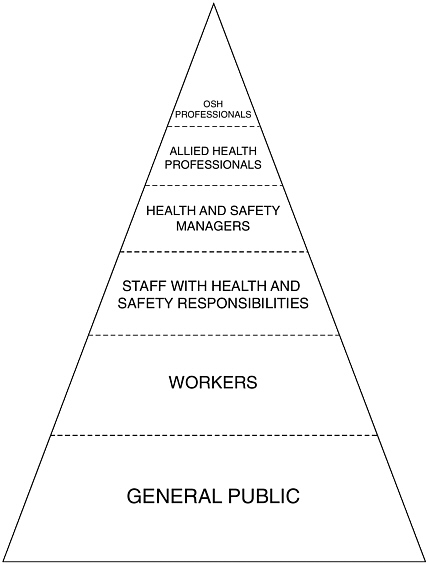
and training. The traditional or core OSH professions are generally recognized as occupational safety, industrial hygiene, occupational medicine (OM), and occupational health nursing. In fact, the National Institute for Occupational Safety and Health (NIOSH) education and training programs have focused almost exclusively on these professions since their inception in the late 1970s. The existence and interest of very active professional societies associated with these disciplines enabled the committee to assemble comprehensive views of each of these OSH fields, which are summarized in this chapter. The chapter also includes a short section that describes three other groups of professionals likely to play a substantial role in the workplace of the future: employee assistance professionals, ergonomists, and occupational health psychologists.
THE NATURE AND SCOPE OF OSH SERVICES
Although each of the four traditional OSH professions emphasizes different aspects of OSH and educates and trains its members accordingly, in practice, members of all four professions share the common goal of identifying hazardous conditions, materials, and practices in the workplace and assisting employers and workers in eliminating or reducing the attendant risks. Hazard identification requires knowledge of relevant laws and regulations; the physiological capabilities of workers; the materials, equipment, and processes in use at the work site; and historical data on the work site, the industry or business as a whole, and the individual workers at the work site. It may require interviews, surveys, environmental sampling, and laboratory analysis or the assistance of other professionals. Hazard control may involve engineering or design changes, procedural or administrative changes, provision of personal protective equipment, or changes in worker behavior. It almost always involves education and training of both management and workers about the hazard and its control.
Occupational safety professionals, although they are concerned about all workplace hazards, have traditionally emphasized the prevention of traumatic injuries and workplace fatalities. Similarly, industrial hygienists, although they do not ignore injuries, have been a source of special expertise on the acute and chronic effects of chemical, biological, and physical health hazards. Occupational health nurses and OM physicians, although they are concerned with hazard identification and control, are distinguished by providing clinical and preventive health care. These cover prevention, diagnosis, treatment, and referral, including preplacement, periodic, and return-to-work physicals, drug testing, disability management, counseling for behavioral and emotional problems that affect job performance, and health promotion and disease prevention programs.
In the biggest and best OSH programs, the special expertise of each is used in seamless coordination.
OSH Practice Settings
The settings in which OSH professionals practice are varied, but most can be classified into five major categories:
-
industry and industry-like settings, including those associated with the military and government agencies,
-
consulting firms including the insurance industry and some specialized government units,
-
government regulatory agencies,
-
educational and research institutions, and
-
hospitals and outpatient clinics (nurses and physicians).
The traditional setting for much of OSH practice is in medium-sized or large industries where the OSH professional serves in a line function and addresses occupational health issues for a well-defined set of workers. The role is rather similar whether the industry is petroleum refining, a large bank, or an aircraft carrier. In all cases, the OSH professional focuses on the particular hazards of the industry and methods of their evaluation, control, and management. In some cases the OSH professional is assigned to a particular facility, and in others he or she operates from a corporate center.
An increasing number of OSH professionals work for consulting firms that provide OSH services to various segments of industry and government on a contractual basis. This includes those who work for insurance carriers that provide consulting services to the company’s various clients. In some cases these relationships are stable and allow the development of industry-specific expertise, and in other cases the OSH practice is very broadly based and varied. Consulting practice presents considerable challenges in influencing internal corporate culture and mounting stable prevention activities from outside the company. Nevertheless, many companies are outsourcing OSH functions, particularly OM and industrial hygiene functions. The current mode of practice for OM physicians, for example, has changed from one that is dominated by physicians who are hired by large corporations to one in which the majority of OM physicians practice in the private sector as clinicians. As the size of the U.S. manufacturing sector has been reduced, the number of local work site-based physicians has also decreased. Instead, increasing numbers of OM physicians have established practices in hospital- and clinic-based health maintenance organizations and group practices or in private solo practice. Sev-
eral companies have purchased individual clinics and have formed extensive networks of clinics that specialize in OM. An additional base from which OSH consulting activities are mounted are specialized government units, often linked to regulatory agencies, that assist small employers in addressing occupational and environmental health hazards.
The principal federal regulatory agency that makes extensive use of OSH expertise is the Occupational Safety and Health Administration (OSHA) of the U.S. Department of Labor. In addition, various states enforce the Occupational Safety and Health Administration Act of 1970 (OSHAct) under agreements with OSHA, and various local jurisdictions undertake regulatory activities. Other industry-specific regulatory programs that call on OSH skills and training, notably, in the Mine Safety and Health Administration (MSHA) of the U.S. Department of Labor and the Nuclear Regulatory Agency. The U.S. Department of Defense and the U.S. Department of Energy, which are self-regulating, also employ substantial numbers of OSH professionals, both in-house and as consultants and contractors. The goal of workplace inspections in all of these settings is to verify that the employer has accurately assessed and effectively controlled the hazards faced by its employees and to ensure that the workplace is in compliance with the appropriate regulations. The educational efforts of compliance officers are limited to informal on-site discussions to help employers understand the hazards and regulations that affect their workplaces and to inform workers and union representatives of employees’ rights under the law.
Research in or directly relevant to the OSH field is carried out in government laboratories, notably, those of NIOSH, universities, and the private sector and in institutions affiliated with organized labor. Researchers are often affiliated with departments or units with “occupational safety and health” in their name, but many are not, which makes it difficult to estimate the size and extent of the research enterprise in the field. For example, aerosol science research, which is of great relevance to industrial hygiene practice, is often found in engineering departments in universities, as are many aspects of the control technology that underlie the control of workplace hazards. In contrast to the professional practice of occupational safety, industrial hygiene, OM, and occupational health nursing, many researchers who make important contributions to the field have had no OSH training. Scientists investigating the pathophysiology of cancer, or of asthma, for example, may know little about OSH but nevertheless provide information highly relevant for occupational risk assessments. This separation carries over into graduate degree programs in the field, as will be discussed below, in which the curriculum has both a highly structured technical component and a component that relates to the professional aspects of the field, including, for example, the federal
regulatory system or the workers’ compensation insurance system. University faculty members who contribute to OSH teaching programs also reflect this separation. Some have training and experience in the field, and others have technical knowledge of great relevance to the field but little professional OSH experience. The latter individuals often come from backgrounds in chemistry or engineering or they are physicians or nurses specializing in fields such as epidemiology, toxicology, respiratory disease, and dermatology. It is very important to foster the application of a wide variety of specialties and fields of knowledge to OSH problems. NIOSH’s National Occupational Research Agenda illustrates the breadth and depth of the interdisciplinary research needs that must be addressed (National Institute for Occupational Safety and Health, 1998).
In addition to teaching at the college or university level, a number of OSH professionals hold other positions with a significant teaching component, either in continuing education for working professionals or in programs aimed at orienting management personnel or workers themselves to the field. Maintenance of certification in any of the four traditional OSH professions requires participation in continuing education courses, which provides incentives for developing courses and recruiting qualified instructors to meet this demand.
Environmental Health and Safety
It should be noted that although the focus of this report is on workplace health and safety, the knowledge and skills of OSH professionals are applicable outside the workplace as well. OSH professionals are equipped to deal with safety issues and physical, chemical, and biological hazards, wherever they occur, and the injuries and illnesses that they cause, whether in workers, consumers, or the general public. As a result, OSH personnel are increasingly required to address environmental health and safety issues. Manufacturers may ask their industrial hygienists to monitor not only the indoor air being breathed by employees but the level of hazardous emissions being released into the air and water of the surrounding community. Public health agencies or environmental groups may hire or otherwise call upon OSH professionals to monitor pollutants in community air and water as well. Occupational health clinics are prepared to diagnose and treat lead poisoning whether its patients are refinery workers or children eating lead-based paint in old houses. Environmental issues have become sufficiently important for physicians that the American College of Occupational Medicine changed its name to the American College of Occupational and Environmental Medicine and the specialty area is sometimes referred to as occupational medicine and sometimes as occupational/environmental medicine. The education and
training of each of the four core OSH professions includes instruction on environmental health (see Chapter 7), and the occupational focus of this report should not be taken as ignorance of or a lack of appreciation for the importance of the contributions of OSH professionals to environmental health research and practice.
SAFETY PROFESSIONALS
The prevention of injuries, illness, and unexpected death for workers is the basic definition of occupational safety. Although occupational safety has historically focused on the prevention of acute traumatic injury, a broader definition generally includes the control of hazards and the prevention of accidents not only to protect the U.S. workforce but also to protect the general public and the environment. Therefore, the broad discipline of safety deals with the interaction between people and the physical, chemical, biological, and psychological effects, acute or chronic, that can adversely affect their well-being. The discipline of safety is the systematic application of principles drawn from engineering, physics, education, psychology, health and hygiene, enforcement, and management to prevent harm to people, property, and the environment.
The safety professional (SP) normally deals with the physical aspects of the workplace and their interaction with the worker and is directly concerned with injuries caused by slips and falls or by being struck by or crushed under an object, cuts, crushes, burns, electric shock, or improper lifting, bending, or stretching. The SP must be knowledgeable about the effects of all types of uncontrolled energy, such as electricity, pressures, weights, fluids, temperatures, motion or moving parts, radiation (ionizing and nonionizing), fires, and explosions. The SP must see that workers are issued and wear well-maintained personal protective equipment such as hard hats and helmets, goggles, safety shoes, respirators, clothing that protects individuals from hazardous chemicals, and the like.
The SP must understand and apply the OSHA General Industry, Construction, and Maritime standards, the American National Standards Institute and American Society for Testing and Materials standards, and, occasionally, international standards, as well as the specific standards of the mining, agriculture, and transportation sectors and those of product safety.
Safety Professional History
From the use and control of fire to early hunters protecting themselves from the hazards of wild beasts and reptiles, humans have recognized the need for occupational safety. Through the centuries, humans
have recognized the myriad hazards that arise out of an increasingly industrializing world economy, such as the unexpected dangers of using power to fuel rapidly developing industries (see Appendix C for a more detailed list of the key events and individuals in the last two centuries). In the United States, before the mid-18th century, a high percentage of work was done on family farms, which consequently became the location for most worker injuries and fatalities. Later, with the onset of the Industrial Revolution in the 1800s, factories began to replace smaller shops and the changing work environment created a challenge for the prevention of job-related injuries, illness, and death.
In response to growing worker resentment toward the hazardous work conditions in factories, Massachusetts began using factory inspectors in 1867. Ten years later, additional legislation from Boston required the safeguarding of dangerous machinery. In the early 1900s, New Jersey, Wisconsin, and a number of other states enacted workers’ compensation laws that made the employer financially liable for workplace accidents. With this incentive, organized safety programs were initiated and the SP came into existence. Initially, the SP was a person who assumed the responsibilities of carrying out the goals and objectives of a safety program. Only the larger and more progressive sectors, in particular, the steel and insurance industries, had a dedicated SP on staff. Other businesses assigned the task of preventing injuries to an experienced employee who knew the plant layout, equipment, and functions. These early SPs were also known as safety practitioners.
Safety Professional Services
The American Society of Safety Engineers (ASSE) identifies four primary functions of a safety professional (American Society of Safety Engineers, 1996):
-
Anticipate, identify, and evaluate hazardous conditions and practices. This function involves such activities as
-
developing and applying methods for using experience, historical data, and other information sources to identify and predict hazards in existing or future systems, equipment, products, software, facilities, processes, operations, and procedures during their expected lifetimes;
-
evaluating and assessing the probability and severity of losses and accidents that may result from actual or potential hazards;
-
compiling and analyzing data from accident and loss reports and other sources to identify causes, trends, and relationships, ensure the completeness, accuracy, and validity of required in-
-
-
formation, evaluate the effectiveness of classification schemes and data collection methods, and initiate investigations;
-
providing advice and counsel about compliance with safety, health, and environmental laws, codes, regulations, and standards;
-
conducting research studies of existing or potential safety and health problems and issues; and
-
conducting surveys and appraisals to identify conditions or practices that require the services of specialists such as physicians, health physicists, industrial hygienists, fire protection engineers, design and process engineers, ergonomists, risk managers, environmental professionals, psychologists, and others.
-
Develop hazard control designs, methods, procedures, and programs. This function involves such activities as
-
formulating and prescribing engineering or administrative controls to eliminate hazards, exposures, accidents, and losses and to reduce the probability or severity of injuries, illnesses, and losses when hazards cannot be eliminated;
-
devising methods to integrate safety performance into the goals and operations of organizations and their management systems; and
-
developing safety, health, and environmental policies, procedures, codes, and standards for integration into operational policies of organizations, unit operations, purchasing, and contracting.
-
-
Implement, administer, and advise others on hazard controls and hazard control programs. This often entails
-
preparing valid and comprehensive recommendations for hazard controls and hazard control policies, procedures, and programs that are based on analysis and interpretation of accident, exposure, loss event, and other data;
-
directing or assisting in developing educational and training materials or courses;
-
conducting or assisting with courses related to hazard recognition and control;
-
advising others about communicating with the media, community, and public about hazards, hazard controls, relative risk, and related safety matters; and
-
managing and implementing hazard controls and hazard control programs.
-
-
Measure, audit, and evaluate the effectiveness of hazard controls and hazard control programs. This function involves
-
establishing techniques for risk analysis, cost-benefit analysis, work sampling, loss rate, and similar methodologies;
-
developing methods to evaluate the costs and effectiveness of hazard controls and programs; and
-
directing, developing, or helping to develop management accountability and audit programs.
-
Specific roles and responsibilities vary widely, depending on the education and experience of the individual and the nature of the organization that employs him or her. SPs with a doctoral degree can be found teaching and doing research at colleges and universities, performing public service, and consulting. Most SPs have bachelor’s or master’s degrees, however, and work for insurance companies, a wide variety of industries, state and federal agencies such as OSHA, hospitals, schools, and nonprofit organizations.
Safety Professional Education
A number of community and junior colleges offer 2-year programs that lead to an associate degree or a certificate in safety or a related field. Some of these programs are designed to prepare students to enter the workforce as safety technologists, and others prepare students for transfer to a 4-year safety degree program. Over the last decade about 50 percent of those in the safety field have held a bachelor’s degree as their highest degree. About 30 percent of those who enter the field have a bachelor’s degree in safety, but many move into safety from other disciplines (e.g., engineering, business, and physical sciences) and later pursue safety studies.
More than 30 colleges and universities offer a bachelor of science in safety. However, only six institutions, none of which receive support from NIOSH, offer safety degree programs accredited by the Accreditation Board for Engineering and Technology (ABET). Requirements for a major in safety typically include courses on safety and health program management, design of engineering hazard controls, system safety, industrial hygiene and toxicology, accident investigation, product safety, construction safety, fire protection, ergonomics, educational and training methods, and behavioral aspects of safety. To prepare for these courses, students are generally required to take courses in mathematics, chemistry, physics, biology, statistics, business, engineering, and psychology. Good computer skills are a necessity as well. Many safety degree programs
provide opportunities for students to work with SPs at local companies as interns.
A 1997 survey of ASSE members found that 28 percent reported a master’s degree as their highest degree and 3 percent reported a doctoral degree as their highest degree (American Society of Safety Engineers, 1997). Only 17 percent reported less than a bachelor’s degree. Twenty-nine universities offer master’s degree graduate programs in safety, most of which may involve specialization in fields such as management, engineering, ergonomics, loss control, risk management, and fire protection or in industries like agriculture, mining, construction, and chemical processes. Only five of these programs are currently accredited by ABET. Doctoral programs in safety are offered by nine universities (ABET does not accredit doctoral programs), but analysis of limited data provided to the committee by NIOSH grantees showed that in the previous 5 years only one dissertation focused on acute injury prevention generally instead of one of the subspecialties listed above.
Safety Professional Certification
To date no state has required safety professionals to be licensed, but the safety profession has established its own program to provide actual and potential employers some means of assessing professional competency. The Board of Certified Safety Professionals (BCSP) was established in 1969 to evaluate candidates and offer the Certified Safety Professional (CSP) and Associate Safety Professional (ASP) designations to those who meet its standards. Under the sponsorship of ASSE, the American Industrial Hygiene Association (AIHA), the System Safety Society, the Society of Fire Protection Engineers, the National Safety Council, and the Institute of Industrial Engineers, BCSP evaluates the academic and professional experience qualifications of safety professionals, administers examinations, and issues certificates of qualification to those professionals who meet the Board’s criteria and successfully pass its examinations.
The preferred qualifications for certification are a bachelor’s degree in safety from a program accredited by ABET, 4 years of professional safety practice, and passing of two examinations given by BCSP. Because many people enter the safety profession from other educational backgrounds, candidates for certification may substitute other degrees plus professional safety experience for an accredited bachelor’s degree in safety. BCSP uses a point system to determine examination eligibility, but minimum educational qualifications are an associate degree in safety and health or a bachelor’s degree in any field. Continuing education courses, seminars, and certificate programs do not receive credit for the academic requirement, but each month of acceptable professional safety experience earns
one point. The total points are the sum of academic points and experience points.
In addition to the academic requirement, CSP candidates must have 4 years of professional safety experience. The 4 years are in addition to any experience used to meet the academic requirement. Professional safety experience must meet all of the following criteria to be considered acceptable:
-
The professional safety function must be the primary function (50 percent) of the position.
-
The position’s primary responsibility must be the prevention of harm rather than responsibility for responding to harmful events.
-
The position must be full time (at least 35 hours per week).
-
The position must be at the professional level.
-
The position must have a breadth of duties.
The process used to achieve the CSP designation typically involves the passing of two examinations: one on safety fundamentals and a second on comprehensive practice. The Safety Fundamentals Examination, which covers basic knowledge, is taken first. Upon passing of that examination, candidates receive the ASP title to denote their progress toward the CSP. Some candidates who have been examined through other acceptable certification and licensing programs and who currently hold such certifications or licenses may waive the Safety Fundamentals Examination. The acceptable certifications or licenses most relevant to this report are the Certified Industrial Hygienist (CIH) from the American Board of Industrial Hygiene, the Registered Professional Engineer (RPE) from the engineering registration board for any U.S. state or territory, and the Certified Hazard Control Manager (CHCM) from the Institute of Hazardous Material Management.
To take the Comprehensive Practice Examination, a candidate must meet more demanding academic and experience requirements and must have passed or been waived from the Safety Fundamentals Examination. After passing the Comprehensive Practice Examination, a candidate receives the CSP title. At 5-year intervals thereafter, the individual is recertified, contingent upon accumulation of 25 “continuation of certification points” through approved continuing education courses. ASSE salary surveys indicate that individuals with the CSP designation typically earn 15 to 20 percent more than their uncertified counterparts. As of 1998, approximately 10,000 individuals held the CSP designation, and about 2,000 held the ASP designation.
Current Status of the Safety Professional Workforce
As is the case with the other core OSH disciplines, the committee focused on membership in the leading professional societies as a method of estimating the size and composition of the safety workforce, although it recognized that this surrogate measure is unlikely to capture all those currently functioning as safety practitioners and may well lead to double counting of a substantial number of OSH professionals. This section presents the basic data on SP society members, followed by similar data on those SPs who have earned the CSP designation.
In the case of SPs, the leading professional society is ASSE, which currently has a membership of approximately 33,000. Membership requires current employment in safety or one of its relevant specialties. About 10,000 members are designated “professional members” by virtue of certification and 5 years of safety experience or by virtue of a bachelor’s degree from an accredited college or university and 10 years of safety experience. A 1997 survey of the membership (American Society of Safety Engineers, 1997) revealed that the professional members who responded had worked in the safety field for an average of 19 years. Seventy-one percent had worked in the field for more than 15 years.
Almost 80 percent of the professional members of ASSE are certified: 66 percent hold the CSP designation, and another 13 percent are certified by another safety-related or engineering organization. Comparison with previous surveys in 1981 and 1990 shows that the proportion of profes-
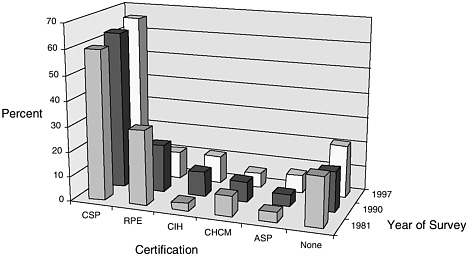
FIGURE 2-1 Percentage of professional members reporting safety-related certifications in three surveys. SOURCE: American Society of Safety Engineers (1997).
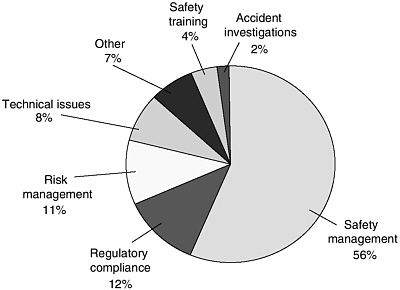
FIGURE 2–2 Primary job focus of ASSE members. SOURCE: American Society of Safety Engineers (1997).
sional members with the CSP designation has slowly increased and that the proportion of members who report themselves as Registered Professional Engineers decreased from 30 percent in 1981 to 19 percent in 1990 to 11 percent in 1997 (see Figure 2-1).
The ASSE survey also asked members how they actually spend their time at work. Not surprisingly, three-fourths of the respondents indicated that they spent at least 50 percent of their time on safety and health-oriented issues. On average, respondents reported that they spent 59 percent of their time on safety, 10 percent on health issues, 10 percent on industrial hygiene, 9 percent on environmental issues, and 12 percent on other activities. Figure 2-2 shows the answers when respondents were asked to choose their “primary job focus” from more a specific listing.
According to this 1997 ASSE survey, an SP spends more than half of his or her time (56 percent) carrying out responsibilities identified as safety management. This includes establishing the safety policy for the enterprise, large or small. The SP generally has the responsibility for establishing a hazard control system with goals, objectives, evaluations, and feedback. In larger businesses a staff of safety practitioners could be supervised. The SP can be an ex-officio member of various safety and health committees that focus on prevention activities. Other activities under the rubric of safety management are safety office finances, public
awareness, off-the-job safety, recognition and rewards for safe practices, workplace task analyses, direction of accident investigations, hiring of safety and health consultants, documentation of near misses, injuries, illnesses, and fatalities, and application of intervention techniques.
The SP devotes a considerable amount of time, approximately 12 percent, ensuring that the place of work is in compliance with all of the applicable OSHA (federal and state), MSHA, and U.S. Department of Transportation standards. Another significant percentage of the SP’s time (11 percent) is spent in the realm of risk management. This is best defined as the professional assessment of all potential sources of loss in an organization’s structure and operations, and the selection of actions that will reduce losses to an acceptable minimum at the lowest possible cost. Such actions encompass the selection of insurance and the limits of self-insurance and assumed risk.
The survey respondents report that SPs devote about 8 percent of their time to dealing with technical issues. These are site specific, but they include such actions as proper guarding of machinery and equipment, safe storage of flammable and explosive materials, implementation of proper lifting techniques, and coping with workplace violence.
Even though the training of management and employees is of the utmost importance, the survey data show that SPs spend less than 5 percent of their time carrying out this responsibility, which involves determining what training is needed, setting the goals and objectives of the training, determining what it will take to carry out the training, conducting or seeing to it that the training takes place, evaluating the effectiveness of the training, and gathering the necessary feedback to improve future training. Ideally, each supervisor would be responsible for the instruction of the workers under his or her direction, but the SP must usually take the initiative to ensure that work is performed without undue risk and that it complies with more than 200 OSHA standards that specifically require employees to be trained in some aspect of occupational safety and health.
Figure 2-2 also indicates that a SP devotes 2 percent of her or his time to investigating the facts and background information surrounding workplace accidents to determine what caused the incident and how to prevent future occurrences. The range of severity of accidents can be from a slight cut or bruise to one in which there are multiple fatalities and a situation of multiple and complex causes, such as a crane collapse or a grain elevator explosion.
An important activity presumably subsumed by the very general categories of the survey is keeping required records. These would include logs for OSHA and the Bureau of Labor Statistics; workers’ compensation records; records on costs, training, equipment inspection, personal pro-
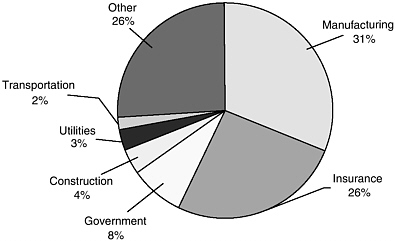
FIGURE 2-3 Employers reported by certified safety professionals (n = 9,848) in a 1997 survey. SOURCE: American Society of Safety Engineers and Board of Certified Safety Professionals (1997).
tective equipment, exposure to chemicals and radiation, and hazardous materials inventory; and on occasion, medical records. Others activities not explicitly listed above are providing first aid, holding fire and evacuation drills, and providing vehicular safety and legislative awareness activities. Frequently, an SP in a small or midsize business must assume responsibilities in such areas as industrial hygiene, ergonomics, radiological health, hazardous waste, and the environment.
A survey of more than 9,000 CSPs by BCSP provides detailed information about employers (American Society of Safety Engineers and Board of Certified Safety Professionals, 1997). Figure 2-3 shows that 31 percent of these respondents indicated that they worked in manufacturing or production industries. “Chemicals and allied products” accounted for a quarter of these, and “crude petroleum and natural gas” and “petroleum refining and related industries” together accounted for an additional 20 percent. None of the other 20 industries was named by more than 10 percent of respondents.
Of the 8.2 percent of CSPs employed by government, nearly two-thirds (65 percent) were employed by the federal government. State governments accounted for 21 percent, and local governments accounted for 13 percent. Consulting was by far the most common response in the large (26 percent) “Other” category, accounting for 53.7 percent of the respondents in that group. Education (colleges, universities, libraries) was a distant second with 12.2 percent.
INDUSTRIAL HYGIENE
Industrial hygiene is a field of applied science that concerns the anticipation, recognition, evaluation, and control of environmental factors in the workplace whose effects on workers can range from discomfort to chronic disease. Although the recognition and evaluation functions draw significantly from the biological sciences, other aspects of evaluation and the control function draw principally from the physical sciences and engineering. As a consequence, most industrial hygienists come from an educational background in the natural sciences or engineering and have substantial postgraduate training, either in formal degree programs or in continuing education courses.
Industrial Hygiene History
Appendix C provides a list of events and people who were important in the development of the OSH field as a whole, so this section focuses on some events and people of particular significance for industrial hygiene. The establishment of the Division of Industrial Hygiene in the Labor Department of the State of New York and the Office of Industrial Hygiene and Sanitation of the U.S. Public Health Service in 1913 (Corn and Corn, 1988) and the Industrial Hygiene Section of the American Public Health Association in 1914 signaled the beginnings of industrial hygiene as a distinct professional field (Smyth, 1966). By 1917, research on methods of measuring hazardous concentrations of carbon monoxide in air was under way at Harvard University (Corn and Corn, 1988), and the academic connection of industrial hygiene in both training and research has been maintained since that time.
Activities in industrial hygiene expanded throughout the 1920s and 1930s, a period that saw the development of professional guidelines for limiting occupational exposures to hazardous airborne agents. At that time they were called maximum allowable concentrations (MACs). In 1938 the American Conference of Governmental Industrial Hygienists (ACGIH) was founded with a membership of 76. ACGIH assumed responsibility for MACs during the 1940s and has had a major worldwide impact through the MACs and their successor guidelines, the threshold limit values (Corn and Corn, 1988). In 1939 AIHA was established to serve the professional interests of the estimated 300 industrial hygienists active in the United States at that time (American Industrial Hygiene Association, 1994). Today AIHA has 68 local sections and a membership of approximately 13,000, including 1,000 foreign members (Donald Ethier, AIHA, personal communication, August 9, 1999). ACGIH, with its more restricted membership, had 5,012 members in 1998, of which about 800
were foreign members (American Conference of Governmental Industrial Hygienists, 1999).
By the mid-1950s there was a recognized need for formalization of the professional practice of industrial hygiene, which culminated in the formation of the American Board of Industrial Hygiene (ABIH) in 1960 (Smyth, 1966). The purpose of the board was to develop and administer certification procedures that recognize “special education in and knowledge of the basic principles of industrial hygiene” (American Board of Industrial Hygiene, 1998).
Industrial Hygienist Services
The typical activities carried out by industrial hygienists are summarized by the ABIH (1998) as follows:
-
review projects, designs, and purchases to anticipate health hazards;
-
critically evaluate work environments, processes, materials inventories, and worker demographics to recognize potential health risks to persons or communities;
-
assess human exposures to hazards through a combination of qualitative and quantitative methods to determine health risks, regulatory compliance, and legal liabilities;
-
recommend effective control measures to mitigate risks via engineering, administrative, or personal protective methods;
-
communicate risks and control measures to workers, management, clients, customers, and communities;
-
provide specific training to workers about risks and control measures;
-
perform laboratory analysis of samples taken to assess worker exposure;
-
conduct research and development on industrial hygiene methods and tools;
-
interface industrial hygiene programs with related health risk management efforts, including safety, environmental protection, and medicine;
-
interface with regulatory, community, and professional organizations;
-
manage, supervise, or advise other industrial hygiene staff;
-
manage and advocate industrial hygiene programs;
-
audit industrial hygiene programs;
-
provide technical support to legal proceedings in matters related to industrial hygiene; and
-
provide academic training in industrial hygiene at the college or university level.
Industrial Hygienist Education
A master’s degree is the most common entry-level degree for those entering the field of industrial hygiene without prior work experience. Generally, a bachelor of science degree in one of the natural sciences or engineering is the preferred curricular prerequisite. For the most part, a master’s degree with a specialization in industrial hygiene is offered in schools of public health. Those programs based in schools of public health sometimes offer curricula that lead to a Master of Public Health degree or a Master of Science degree, with the former demanding broader curricular content in public health. Common elements of all of these curricula for a master’s degree are course work in the evaluation and control of chemical, biological, and physical hazards in the workplace, control technology including industrial ventilation, and ergonomics and an introduction to the professional and regulatory aspects of industrial hygiene practice. These are generally 2-year programs, with the intervening summer devoted to either a research project or an internship in an industrial or governmental setting.
In the early 1990s, an accreditation program was established for both bachelor’s and master’s degree programs in industrial hygiene under the auspices of ABET. Because graduation from an ABET-accredited program presents some advantage for individuals who intend to pursue industrial hygiene certification, this has been an inducement for college and university degree programs to become accredited. In 1999 there were 5 ABET-accredited bachelor’s degree programs and 26 ABET-accredited master’s degree programs (Accreditation Board for Engineering and Technology, 1999). An additional 30 to 35 master’s degree programs have not yet been accredited by ABET. Collectively, these programs award approximately 400 master’s degrees annually.
Most of the research universities that offer master’s degree programs in industrial hygiene also offer doctoral degree programs with further training and research opportunities in the field. However, dissertation research directly related to industrial hygiene is also carried out, for example, in engineering departments, chemistry departments, and public health programs that are not identified in their name as supporting advanced education in the field of industrial hygiene. As a result, it is common for the industrial hygiene faculty at the research universities to be a mixture of those trained in industrial hygiene explicitly and others with doctoral training in engineering, chemistry, or other natural sciences.
NIOSH has been actively supporting postgraduate programs in in-
dustrial hygiene since its inception. In 1999 NIOSH provided training grant assistance to 29 industrial hygiene programs throughout the United States, 15 of which were at NIOSH-sponsored Education and Research Centers (ERCs). All but 1 of the 29 programs are at the postgraduate level, and collectively they produce approximately 200 master’s-level industrial hygienists annually.
Continuing Education in Industrial Hygiene
Continuing education courses are a major feature of professional training in industrial hygiene. This is due in part to the requirement for annual participation in continuing education to maintain ABIH certification in industrial hygiene. Continuing education courses also provide a means of entry into the field for those unable to devote several years to graduate education as well as provide an orientation to the field for those with closely related responsibilities in medium-sized to large organizations. As will be reported in more detail in Chapter 7, continuing education is a second major component of NIOSH training programs. In addition to the NIOSH-supported institutions, continuing education courses in industrial hygiene are provided by the extension branches of various universities under the auspices of AIHA and by private firms.
Certification of Industrial Hygienists
As noted above, ABIH was founded in 1960 to develop and administer certification procedures. Certification involves two written examinations. The first is a 1-day core examination in basic industrial hygiene practice. The second is either the comprehensive practice or chemical practice examination, depending on the candidate’s qualifications.
The core examination covers areas of industrial hygiene in which all industrial hygienists should be knowledgeable. All candidates for certification must take and pass this examination. Successful completion of the core examination entitles the applicant to a certificate as an industrial hygienist in training (IHIT). Persons who have recognized skills and expertise in industrial hygiene chemistry and the required experience may be approved for certification in chemical practice. Persons engaged in the general practice of industrial hygiene usually choose to take the comprehensive practice examination, an examination that covers all aspects of practice in greater depth than the core examination. ABIH examinations are conducted in the spring of each year at the American Industrial Hygiene Conference and Exposition. Examinations are also held each October, generally in about 10 cities throughout the United States and Canada, and at the Professional Conference on Industrial Hygiene.
Certain prerequisites must be met to take each of these examinations. An acceptable baccalaureate degree in engineering or a science from a college or university acceptable to ABIH and 1 year of professional industrial hygiene practice are required for admission to the core examination. The baccalaureate degree and a minimum of 5 years of professional practice are required for admission to the examination in comprehensive practice or chemical practice of industrial hygiene. ABIH may allow up to a maximum of 2 years of total credit for a completed graduate degree in lieu of part of the required experience. The allowable credit is 1 year of experience for an acceptable master’s degree or 2 years for an acceptable doctoral degree.
Upon successful completion of the core and chemical practice or comprehensive practice examinations, candidates become diplomates of ABIH and members of the American Academy of Industrial Hygiene, a professional society whose membership is exclusively composed of certified industrial hygienists. They also receive an official certificate and individual certification number. They are authorized to use the title Certified Industrial Hygienist and the designation CIH. They are then responsible for the continued maintenance of their certification.
Exactly half of the 502 individuals who took the core examination in 1998 passed, and a little over one-third of those sitting for the comprehensive practice test passed that exam. Only nine people took the chemical practice examination (four passed). As of May 1999, ABIH listed 6,356 CIHs in active status and 643 IHITs. Among the CIHs, 6,005 had passed the comprehensive practice examination and 284 had passed the chemical practice examination.
As in a number of other professions, industrial hygienists must show continued professional qualifications. Beginning in 1979, CIHs have been required to demonstrate their continued professional development on a 6-year cycle. Various activities have been accepted by ABIH as evidence of continued professional qualification for certification maintenance. These include continuing professional industrial hygiene practice; membership in approved professional societies; teaching; publication in peerreviewed journals; participation on technical committees; attendance at approved meetings, seminars, and short courses; approved extracurricular professional activities; or reexamination. Points are determined and awarded by ABIH for each approved activity.
Current Status of the Industrial Hygiene Workforce
As is generally the case with a diverse and geographically dispersed workforce, it is difficult to acquire a comprehensive view of the demographics of the current industrial hygiene workforce, its deployment in
the U.S. economy, or those changes that it is experiencing in response to the changes in the organization and structure of work itself. The principal source of information available on these issues relating to the field of industrial hygiene comes from AIHA, especially a sample survey of its members conducted in 1997 (see below). In August 1999 AIHA listed 8,800 full members, that is, graduates of an accredited college with a baccalaureate or graduate degree in industrial hygiene, chemistry, physics, engineering, biology, or related discipline who have been engaged a majority of the time for at least 3 years in industrial hygiene-related activities. Its 1,400 associate members are individuals who are otherwise qualified but who have less than 3 years of experience in the industrial hygiene field. Student, retiree, affiliate, and organizational members bring the total to a little more than 12,000.
The 1997 Definition of the Profession Survey (Association Research Inc., 1997) randomly selected 2,000 members who were sent comprehensive questionnaires concerning their education and professional practice. Keeping in mind the potential biases that might be introduced by unknown differences between the 915 members who responded and those who did not, as well as the representativeness of AIHA members among all industrial hygienists, the following paragraphs summarize some of the results of that survey.
The respondents to the survey were employed in private industry (47 percent), consulting firms (17 percent), government (11 percent), and academia (6 percent). Another 6 percent were self-employed, with the remainder falling into the “other” category. Almost 75 percent had been with their current employer for 5 years or more. The respondents were rather uniformly distributed across the categories of years in the profession, which were less than 15 years, 15 to 19 years, 20 to 24 years, and 25 years or more. Eighty percent of the respondents were male, and female respondents were generally much younger. It is interesting that 57 percent of the respondents did not begin their careers in the field of industrial hygiene, but younger respondents were more likely to have done so. Eighty-three percent of respondents had been members of AIHA for 10 years or more, and 80 percent were CIHs. The highest degrees held were bachelor’s (25 percent), master’s (61 percent), and doctoral (11 percent) degrees. Hence, the respondents are highly educated and experienced, long-term professionals.
The experience of the respondents was reflected by the fact that more than one-third stated that their primary responsibility was for program management or administration. Another 25 percent operated principally as consultants, and only 6 percent were in education or research. Only a small fraction of the respondents had primary responsibility for safety (6 percent) or environmental concerns (2 percent). The degree to which hy-
gienists were responsible for safety and environmental concerns was, however, an issue of some interest, and members were asked various questions about this issue. The overall picture that emerges is that hygienists currently spend modest amounts of time on safety (19 percent) and environmental issues (12 percent) but that there is a widely shared expectation (82 percent) that these areas will become more integrated with industrial hygiene in institutional planning and management in the future. The implications for industrial hygiene practice are that there will be less technical specialization and more involvement in a broader range of issues, for example, international matters and employee education. A more detailed picture of what respondents do on the job is presented in Table 2-1, which indicates the activities most commonly chosen as one of the “top three most important activities worked on during the year.” Responses to another question indicated that, on average, 43.7 percent of respondents’ time was spent on the most important activity, 20.6 percent was spent on the second most important activity, and 14.7 percent was spent on the third most important activity.
Another view of the nature of their jobs is shown in the next two tables, which indicate the activities in which respondents have hands-on involvement (Table 2-2) and the activities most likely to be managed by respondents (Table 2-3).
For the most part, Tables 2-1 to 2-3 show that respondents are engaged in quite traditional industrial hygiene activities, with a few newer areas being added, for example, indoor air quality and risk communica-
TABLE 2-1 Percentage of Respondents Reporting the Indicated Activities as Among the Three Most Important Worked on During the Preceding Year
|
Activity |
Percentage |
|
Administration or management |
37.8 |
|
Chemical sampling |
35.1 |
|
Industrial hygiene program documentation |
19.2 |
|
Managing safety programs |
17.2 |
|
Risk assessment |
16.3 |
|
Employee safety training |
14.0 |
|
Indoor air quality assessment |
14.0 |
|
Occupational health |
13.5 |
|
Physical agent monitoring |
13.3 |
|
Environmental activities |
12.7 |
|
SOURCE: Association Research, Inc. (1997). |
|
TABLE 2-2 Percentage of Respondents Reporting Hands-on Involvement in the Indicated Activities
|
Activity |
Percentage |
|
Indoor air quality evaluation |
45.6 |
|
Risk communication |
45.5 |
|
Personal protective equipment evaluation |
45.5 |
|
Risk assessment |
44.5 |
|
Hazard analysis |
44.4 |
|
Chemical sampling |
44.3 |
|
Physical agent monitoring |
44.1 |
|
Industrial hygiene program evaluation |
41.3 |
|
SOURCE: Association Research, Inc. (1997). |
|
TABLE 2-3 Percentage of Respondents Reporting That They Manage the Indicated Activities
|
Activity |
Percentage |
|
Chemical sampling |
53.7 |
|
Industrial hygiene program documentation |
51.1 |
|
Asbestos |
50.8 |
|
Physical agent monitoring |
49.2 |
|
Personal protective equipment evaluation |
46.9 |
|
Lead |
46.5 |
|
Confined spaces |
46.4 |
|
Occupational health |
45.1 |
|
SOURCE: Association Research, Inc. (1997). |
|
tion. Notable for its absence in all of these lists is the burgeoning area of ergonomics, which is now a common element of industrial hygiene curricula as well as of industrial hygiene practice.
A particularly interesting finding arose from questions that asked with whom the respondents interacted as a part of their daily routine. The responses are shown in Figure 2-4, which indicates a high level of interaction with the management structure as well as with workers. It is these interactions that are significantly diminished by outsourcing the industrial hygiene function in medium-sized to large corporations and why there is concern about this trend in the profession.
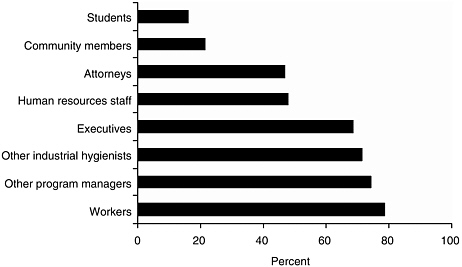
FIGURE 2-4 Percentage of respondents reporting daily direct interaction with the indicated groups. SOURCE: Association Research, Inc. (1997).
It is also interesting that almost half of the respondents interact routinely with attorneys but that only one in five interact with either community members or students. One explanation for this pattern of interactions is that the respondents were mostly relatively senior and experienced individuals and therefore tended to function principally in an administrative role. However, worker interaction was still the most common daily interaction, and substantial involvement in hands-on activities was reported.
OCCUPATIONAL MEDICINE
OM is the area of preventive medicine that focuses on the relationships among the health of workers, the ability to perform work, the arrangements of work, and the physical, chemical, and social environments of the workplace. Practitioners in this field recognize that work and the environment in which work is performed can have favorable or adverse effects on the health of workers as well as on that of other populations, that the nature or circumstances of work can be arranged to protect worker health, and that health and well-being in the workplace are promoted when workers’ physical attributes or limitations are accommodated in job placement (Accreditation Council for Graduate Medical Education, 1999). OM specialists, who are often involved in direct patient care, identify and
control work-related disease and injury and seek ways to eliminate and reduce hazards in factories, mines, offices, and other work settings.
Occupational Medicine History
The reader is again referred to Appendix C for a fuller list of important events in OSH. The following few paragraphs provide some additional context specific to OM.
Bernardino Ramazzini (1633–1714) is considered the father of OM in the western world. In his book De Morbis Artificum Diatriba, Ramazzini described diseases of the trades. Ramazzini instructed his students to ask one additional question to patients: “What is your occupation?” (Levenstein, 1988).
Alice Hamilton (1869–1970) is considered the matriarch of OM in the United States. She was the first U.S. physician to devote her professional life to the practice of OM (Bendiner, 1995). While living at Hull House in Chicago in 1908, Hamilton exposed an epidemic of “phossy jaw” caused by exposures to white phosphorus among matchmaking workers. Through her efforts, U.S. manufacturers changed to a safer type of organic phosphorus to make matches (Levenstein, 1988; Hamilton, 1990). The passage of workers’ compensation acts by the states and the federal government from 1909 to 1911 changed how industry had to view work-related injuries and illnesses. This was the beginning of the acceptance by industry that it had to both control workplace hazards and provide medical care to injured workers (Rom, 1992).
The American Association of Industrial Physicians was founded in 1916. The organization was renamed the Industrial Medical Association and finally the American Occupational Medicine Association (AOMA). This was primarily the professional organization for physicians employed by industry. In 1946 the American Academy of Occupational Medicine (AAOM) was founded. AAOM was more of an academic organization than AOMA was. In 1988, AOMA and AAOM merged and, in acknowledgment of the increasing importance of environmental medicine, formed the American College of Occupational and Environmental Medicine (ACOEM) (Rom, 1992).
Various diseases caused by exposures to agents such as white phosphorus, silica, asbestos, vinyl chloride, and coal dust have caused the most public attention (many of the OM physicians during the first half of this century were also industrial hygienists or health physicists and played important roles in the establishment of those professions). However, the primary focus of OM practice in the latter half of the 20th century was trauma or industrial injuries, which have historically generated the lion’s share of workers’ compensation claims and payments.
Starting with the passage of the state-based workers’ compensation acts, companies began hiring physicians to be plant physicians. One of the issues that confronted the American Association of Industrial Physicians was the role and scope of these activities. Community physicians were concerned that the industrial physicians might “steal” their patients. In some other countries health care has in fact been organized around the workplace—the same physicians take care of both the workers and their families for all conditions, both work-related and non-work-related conditions. This concern of U.S. community physicians led to an understanding regarding the role and scope of industrial physician activities: they would treat industry-caused illnesses and injuries but would not treat non-industry-caused conditions. This understanding has allowed a generally harmonious relationship between the industrial physicians and their community counterparts.
In 1955, the American Board of Preventive Medicine recognized OM as one of the three disciplines of preventive medicine. Since then some 2,200 physicians have been acknowledged as board certified in OM (American Board of Preventive Medicine, 1999), but relatively few physicians were formally trained in OM before the passage of the OSHAct of 1970. Because the training programs, like all preventive medicine programs, do not generate much revenue from patient treatment, money to support residents was (and still is) in short supply (Anstadt, 1999). Because the field was considered a subspecialty of preventive medicine, most of the 40 training programs are associated with universities with public health schools or specific departments within a medical school.
Occupational Medicine Services
ACOEM has developed an extensive list of “competencies” describing specific behaviors characteristic of good OM practice (Upfal et al., 1998). Upfal and colleagues recognize that practices vary widely, that few if any practitioners will be expert in all of the listed competencies, and that each practitioner will have a unique spectrum of competencies. All OM physicians will have a strong clinical emphasis and will be familiar with issues of worker placement and accommodation. In addition to this grounding in clinical practice, subspecialists will have competencies in public health, prevention, population medicine, epidemiology, toxicology, and research methods, as well as other competencies on the list. The list is too extensive to print here in its entirety, but the following introductory excerpts provide a general summary (Upfal et al., 1998):
-
Clinical—General. Physicians with competency in this area have the clinical knowledge and skills required to provide high-quality, cost-
-
effective medical care in diagnosing and treating occupational and environmental injuries and illnesses. The physician provides care with an understanding of the workplace, work exposures, and relevant statutes, such as workers’ compensation laws. Throughout the course of care, the physician seeks to maximize the patient’s functional recovery. The physician also seeks to identify and reduce workplace and environmental hazards to reduce the risk of future injury or illness to the patient.
-
Clinical—Preventive. Physicians with competency in this area have the knowledge and skills required to define, develop, and administer programs to improve the health of employee and dependent populations, as well as counsel employees about their lifestyle risk factors and clinical preventive needs. The physician is able to apply a full range of primary, secondary, and tertiary preventive methods to this end.
-
Public Health and Surveillance. Physicians with competency in this area have the knowledge and skills required to recognize and address conditions of public health importance, with an emphasis on prevention, as well as to monitor populations for indicators of occupational or environmental health effects.
-
Disability Management and Work Fitness. Physicians with competency in this area have the clinical and administrative knowledge and skills required to assist employees and employers to ensure that recovery from illness or injury is as rapid and as complete as possible. With broad knowledge of the workplace, administrative requirements governing job placement, and the legal, rehabilitative, and financial aspects of disability, the occupational and environmental physician facilitates the restoration of productivity for the injured or ill employee and assesses safe work capacities to permit work placements that safeguard employees and others.
-
Hazard Recognition, Evaluation, and Control. Physicians with competency in this area have the knowledge and skills required to (1) recognize and evaluate or assist in evaluating potentially hazardous workplace and environmental conditions, (2) recommend or implement controls or programs to reduce such exposures, and (3) evaluate the impacts of such exposures on the health of individual workers, patients, and the public. The physician collaborates with other professionals, such as industrial hygienists, safety engineers, ergonomists, and occupational health nurses, on such efforts.
-
Regulations and Government Agencies. Physicians with competency in this area have the knowledge and skills required to help bring organizations into compliance with state and federal regulations relating to OEM as well as general public health laws.
-
Management and Administration. Physicians with competency in this have the administrative and management knowledge and skills
-
required to plan, design, implement, manage, and evaluate comprehensive occupational and environmental health programs, projects, and protocols that enhance the health, safety, and productivity of workers, their families, and members of the community. The spectrum of activities may vary substantially depending upon the physician’s practice setting and the characteristics of the organization(s) served.
Occupational Medicine Education and Training
By definition, OM physicians must possess a medical degree (M.D. or D.O.) from an accredited school. Obtaining a license to practice within the United States and its possessions requires successful completion of at least 1 year of clinical training beyond the 4 years of medical school instruction. This is generally the year immediately after graduation from medical school. Training must include at least 6 months of direct patient care, both ambulatory and inpatient. Some physicians who provide care to workers and advice to employers have no specialized training beyond this, but many have undertaken additional training (residencies) in OM or another medical specialty (e.g., family practice, internal medicine, emergency medicine, or physical medicine and rehabilitation) (American College of Occupational and Environmental Medicine, 1999a).
OM is one of the four specialized areas of the American Board of Preventive Medicine (ABPM). Preventive medicine is that specialty of medical practice that focuses on the health of individuals and defined populations to protect, promote, and maintain health and well-being and prevent disease, disability, and premature death (American Board of Preventive Medicine, 1999).
In addition to knowledge common to all physicians, the following are distinct knowledge areas within preventive medicine:
-
biostatistics,
-
epidemiology,
-
health services management and administration,
-
environmental factors,
-
occupational factors,
-
clinical preventive medicine activities, and
-
social, cultural, and behavioral influences on health.
Training in the field involves successful completion of a 2-year residency, which generally leads to board certification and which therefore closely follows the educational requirements specified by ABPM, which are as follows:
Academic year: The academic year requires the successful completion of a course of graduate academic study and the award of a Master of Public Health degree or an equivalent master’s degree. The course content must include biostatistics, epidemiology, health management and administration, and environmental health.
Practicum year: The practicum year involves the planned and supervised application of the knowledge and skills acquired in the first 2 years of residency training.
-
For at least 4 months the resident must engage in supervised practice within the real world of work.
-
Residents must engage in collaborative work with industrial hygienists, nurses, safety professionals, and others concerned with psychosocial issues.
-
Residents are encouraged to engage in research.
-
Residents should not have extensive time commitments to the care of employees with minor complaints or to service functions characterized by highly repetitive or standardized procedures that do not contribute to professional growth.
Occupational Medicine Certification
Preventive medicine certification examinations are administered each year by the ABPM. The Board offers a combined examination in general preventive medicine-public health, an OM examination, and an aerospace medicine examination. To be eligible for the examinations, the physician must have been engaged in training for or practice of OM for at least 2 of the 5 years preceding the application for board certification. In addition, the candidate must meet general educational requirements for OM including 3 years of specific postgraduate medical education, that is, internship, academic year, and practicum year.
For OM, there has been an alternative pathway to certification. This alternative pathway has been limited to physicians who have graduated from a school of medicine or osteopathic medicine before January 1, 1984, but who have not formally completed all of the components described above. The following are factors considered by the board as satisfying training requirements:
Academic experience: teaching or completion of three-credit-hour, postgraduate-level academic course work in each of the four core areas of epidemiology, biostatistics, health services management and administration, and environmental health.
Practical experience: periods of full-time practice, research, or teaching in occupational health:
-
Eight years is required if no other specialty certification is held.
-
Six years is required if another specialty certification is held.
-
Four years is required for those with a Master’s of Public Health degree but without a practicum year.
-
Three years is required for those with a Master’s of Public Health degree and another specialty certification but without a practicum year.
All candidates judged to be acceptable by virtue of either OM residencies or equivalent training and experience must pass a 1-day written, multiple-choice test given by the Board. If the physician successfully passes the test, the Board provides a certification. Before 1998, certificates had no time limit. Effective in 1998, the certificates are valid for 10 years. Physicians who received certification in or after 1998 must take recertification tests every 10 years.
Current Status of the OM Physician Workforce
ACOEM is the professional organization for physicians interested in occupational medicine. An evaluation of the ACOEM membership shows physicians with a broad range of professional training and experience. About 40 percent of the 7,000 ACOEM members report that their primary medical specialty is OM. Family practice (8.3 percent) and internal medicine (6.8 percent) are the only other specialties designated by more than 5 percent of the members. Twenty-seven percent did not designate a specialty (Eugene Handley, ACOEM, personal communication, April 16, 1999). The primary board certifications of ACOEM members are presented in Table 2-4 (only specialties with more than 100 individuals are listed).
The percentage of ACOEM membership with board certification in OM is very low (approximately 20 percent). This may represent the lowest board certification rate of any specialty (Anstadt, 1999). Data from ABPM (C. Hyland, ABPM, personal communication, August 1999) reveals an interesting characteristic of those who are board certified. There have been 790 physicians who have obtained board certification in OM from 1992 through 1996. Approximately 55 percent obtained eligibility for board certification by the equivalency pathway. The numbers by year and by pathway are shown below:
|
Pathway |
1992 |
1993 |
1994 |
1995 |
1996 |
Total |
Percentage |
|
Residency |
52 |
68 |
56 |
79 |
103 |
358 |
45.3 |
|
Equivalency |
60 |
82 |
88 |
94 |
108 |
432 |
54.7 |
These data indicate both that the specialty is growing steadily (these 790 individuals represent a significant portion of the 2,200 physicians ever certified in OM) and that the majority of today’s physicians board certified in OM have joined the field without formal residency training.
A survey of a random sample of ACOEM members (The Gary Siegal Organization, Inc., 1996) provides some additional insight into the OM workforce. Despite the low percentage of ACOEM members board certified in OM, two-thirds of the survey respondents reported spending more than 90 percent of their time in OM. Although only 25 percent reported an OM clinic as their primary practice setting, three-fourths identified clinical practice as their primary activity. According to a former president of ACOEM, George Anstadt, this is a striking change from 10 years earlier. He reports that there was a dramatic decrease in the proportion of physicians working for corporations over those years, from roughly 80 percent to approximately 20 percent. The absolute number of corporate jobs has also declined, from approximately 2,400 to 1,400 (Anstadt, 1999). Preliminary data from ACOEM’s 1999 Demographic Profile Survey (American College of Occupational and Environmental Medicine, 1999c) appears to confirm the trend: only 26 percent work in corporate settings, and 58
TABLE 2-4 Primary Board Certifications of ACOEM Members, April 1999
|
Specialty |
No. |
Percentage |
|
None |
1,643 |
30.2 |
|
Occupational medicine |
1,131 |
20.7 |
|
Family/general practice |
800 |
14.7 |
|
Internal medicine |
779 |
14.3 |
|
Surgery (all subspecialties) |
258 |
4.7 |
|
Aerospace/general preventive medicine |
205 |
3.8 |
|
Physical medicine and rehabilitation |
159 |
2.9 |
|
All others |
469 |
8.6 |
|
SOURCE: Eugene Handley, American College of Occupational and Environmental Medicine, personal communication, April 1999. |
||
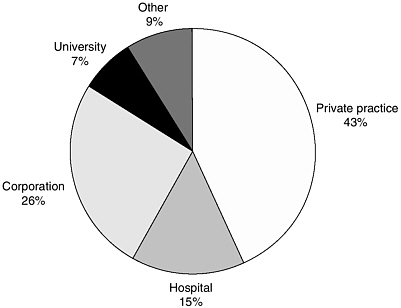
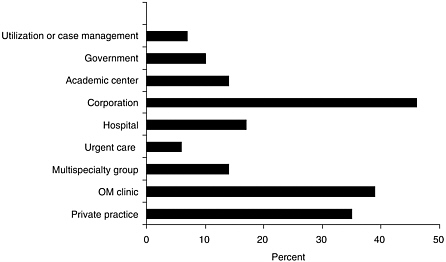
TABLE 2-5 Percentage of ACOEM Members Providing the Listed OM Service
|
OM Service |
Percentage Providing Service |
|
Acute ambulatory care |
82 |
|
Medical surveillance examinations |
82 |
|
Preplacement or postoffer examinations |
81 |
|
Consultation for occupational or environmental problems |
79 |
|
Urine collection for drug testing |
78 |
|
Wellness screening |
75 |
|
U.S. Department of Transportation examinations |
72 |
|
Medical review officer laboratory review |
70 |
|
Scheduled on-site medical |
65 |
|
Disability management |
61 |
|
Radiographic studies |
60 |
|
Alcohol breath testing |
58 |
|
Independent medical evaluations |
57 |
|
Administrative oversight of occupational and environmental programs |
56 |
|
Minor surgery |
51 |
|
General primary care |
47 |
|
Safety surveys |
45 |
|
In-clinic laboratory testing |
40 |
|
Industrial hygiene surveys |
34 |
|
Inpatient capabilities |
23 |
|
Computed tomography scanning |
13 |
|
Magnetic resonance imaging |
12 |
|
SOURCE: The Gary Siegal Organization, Inc. (1996). |
|
percent now report either private practice or a hospital as their primary work setting (see Figure 2-5).
A more detailed look at where members actually spend their time is provided by asking respondents to check the settings in which they practice OM. Figure 2-6 shows the percentage of respondents indicating that they spend at least some time in the practice settings listed in the figure.
A possible explanation for the wide variety of settings indicated is provided by the answers to a question about whether the respondent’s practice or group was involved in a 24-hour integrated benefits managed care plan (combined group health plan plus workers’ compensation). Thirty percent answered yes to this question. Survey participants were also asked to indicate which OM services they provided (see Table 2-5).
ACOEM has several levels of membership: member, student, master,
and fellow. Any physician who is engaged in occupational or environmental medicine on a full- or part-time basis or who is simply interested in providing the best possible care to working patients qualifies for ACOEM membership. Medical students, interns, and residents may apply for student membership (the number of student memberships varies at about 150).
Masters are elected from among physicians who have been ACOEM members for 3 years and meet the following qualifications:
-
The applicant must have been engaged in the practice of occupational or environmental medicine on a full-time basis for 3 years.
-
The applicant must meet all other requirements of the college as determined by the Board of Examiners for Fellows and Masters under the rules and procedures of the college.
-
The applicant must have letters of recommendation from two fellows or masters.
Fellows are elected from among physicians who have been ACOEM members for 3 years. In addition to meeting the requirements for masters, fellows must have the following qualifications:
-
The applicant must be certified in OM by ABPM or in a related specialty by another medical specialty board or must provide other documented evidence of expertise in OM acceptable to the Board of Examiners for fellow and master candidates.
-
The applicant must have accumulated a total of 150 points according to a point system based on the following activities (American College of Occupational and Environmental Medicine, 1999a):
-
ACOEM activities at the national level,
-
component (local) society activities,
-
other professional society activities,
-
contributions to scientific meetings and professional literature,
-
continuing education,
-
faculty appointment,
-
board certification.
-
As of July 1999, ACOEM reported a total membership of approximately 7,000. About 1,000 of these are retirees and about 150 are students, leaving about 675 active fellows, 77 active masters, and approximately 5,000 active rank-and-file members (Lanny Hardy, ACOEM, personal communication, August 5, 1999).
OCCUPATIONAL HEALTH NURSING
Occupational health nursing is the specialty practice that focuses on the promotion, prevention, and restoration of health within the context of a safe and healthy work environment. It includes the prevention of adverse health effects from occupational and environmental hazards. It provides for and implements occupational and environmental health and safety programs for workers, worker populations, and community groups. Occupational health nursing is a research-based autonomous specialty emphasizing reduction of health hazards, prevention of injury and illness, and promoting optimal health. Occupational health nurses make independent nursing judgments in providing health care and other occupational health services (Rogers, 1994).
Occupational Health Nursing History
The occurrence of disease related to occupations has been studied for centuries, with early accounts reporting the ills of exposure to the hazards of mining (see Appendix C). The emergence of occupational health nursing occurred gradually, but much of what is known about this specialty seems to have started in the late 19th century. The earliest recorded evidence of what was then called “industrial nursing” was the employment of Phillipa Flowerday by the J. & J. Coleman Company in Norwich, England, a mustard factory where she was engaged to assist the doctor in the dispensary and visit sick employees and their families in their homes (Godfrey, 1978).
In the United States, it is reported that in 1888 a group of coal mining companies hired Betty Moulder, a graduate of Philadelphia’s Blockley Hospital School of Nursing, to care for ailing miners and their families (American Association of Industrial Nurses, 1976). In 1895, the Vermont Marble Company, often credited with being the first company to employ an industrial nurse, hired Ada Mayo Stuart, who provided emergency care, visited sick employees at home, taught healthy habits for living, taught child care to workers’ wives, and served as the first matron of the company hospital.
The first organized industrial nursing effort began with the establishment of the industrial nurse registry in 1913, which was followed 2 years later by the establishment if the Boston Industrial Nurses Club. By 1918 more than 1,200 nurses were employed by 871 businesses. Industrial nursing continued to grow, and during the 1920s several colleges and universities offered short courses in industrial hygiene in which nurses participated. By 1930 nearly 3,200 nurses were employed in industry to provide emergency care for ill and injured workers, follow-up, and home visits.
In 1942, the American Association of Industrial Nurses (AAIN) was created for the purpose of improving industrial nursing practice and education, increasing interdisciplinary collaboration, and acting as the professional voice for industrial health nurses. At the same time, at least 15 colleges and universities offered industrial nursing courses at the baccalaureate level and an estimated 11,000 nurses were working in industry. In the 1960s, OSH became a public issue via the media and the environmental and civil rights movements. Of particular concern were mining accidents, cave-ins, and black lung disease. The importance of adequate education and training for professional disciplines was gaining increasing congressional support.
By the beginning of the 1970s, nursing education and practice were in a transitional state and more emphasis was placed on the expanded clinical role for nurses. The landmark OSHAct of 1970 provided a new stimulus and interest among both the practice and academic communities to prepare occupational health nurses and nurse practitioners at the graduate level to work in occupational health settings.
In 1977, AAIN changed its name to the American Association of Occupational Health Nurses (AAOHN), and the term “occupational health nurse” replaced the term “industrial nurse” to reflect the broad scope of practice of the occupational health nurse. In 1999, AAOHN membership exceeded 12,000, representing more than 50 percent of the occupational health nurses estimated to be practicing in that area in 1997 (Bureau of Health Professions, 1997).
The 1980s witnessed an expansion of the role of the occupational health nurse, with more involvement in health promotion, management and policy development, cost containment, research, and regulatory issues affecting practice (Babbitz, 1983; Rogers, 1988). This role continues to expand today with increased emphases on cost-effective policies and disability management.
Occupational Health Nursing Services
The occupational health nurse practices with a large degree of autonomy, but this is complemented by an interdependent role with professionals in other disciplines. Knowledge and understanding about complex work processes and related hazards, mechanisms of exposure, and control strategies that minimize or abate risks are essential to occupational health nursing practice. This requires a multidisciplinary knowledge framework guided by nursing (Rogers, 1998). Armed with interdisciplinary knowledge integrated with nursing science, occupational health nurses engage in a broad and dynamic scope of practice (Rogers, 1994):
-
Occupational Health Care and Primary Care. In many occupational health settings, the occupational health nurse is the primary provider of service to the worker population; however, a collaborative multidisciplinary approach may be needed, depending on the problem. Primary care activities incorporate direct health care for ill and injured workers and include diagnosis, treatment, referral for medical care and follow-up, and emergency care. Nonoccupational health care may also be provided for minor health problems and chronic disease monitoring for employees with stable conditions.
-
Management and Administration. Increasingly, the occupational health nurse is assuming a major role in the management and administration of the occupational health unit and in policy-making decisions to ensure that the OSH programs and services for workers are effective. The occupational health nurse is often the health care manager at the work site with responsibilities for program planning and goal development; budget planning and management; organizing, staffing, and coordinating the activities of the unit, including development of policy, procedures, and protocol manuals; and evaluating unit performance on the basis of achievement of goals and objectives.
-
Case Management. The occupational health nurse acts to coordinate and manage quality health care and health care resources from the onset of an illness or injury to help return the worker to work or to an optimal alternative. Case management is often focused on high-cost, catastrophic cases; however, it is also beneficial to apply case management practices to monitoring the outcomes for every worker with an illness or injury. Early intervention is a key component of case management, as it provides for immediate problem identification and engages the worker in planning for care from the beginning of the illness or injury to recovery.
-
Health Promotion and Health Protection. Health promotion and health protection activities are designed to improve employees’ general health and well-being and to increase employees’ awareness of and knowledge about toxic exposures in the workplace, lifestyle risk factors related to health and illness, and strategies that alter behaviors that are hazards to health. In addition, organizational strategies that enhance workplace health must be emphasized. Occupational health nurses practice prevention at all levels (primary, secondary, and tertiary) with an emphasis on cost containment while preserving and improving the quality of health care.
-
Counseling. Health counseling is an integral component of occupational health nursing practice. The occupational health nurse is in the best position to provide counseling to workers, since the occupational health nurse is generally the health care provider most available to the employee. Counseling activities are intended to help employees clarify
-
health problems and to provide for strategic interventions to deal with crisis situations and appropriate referrals. Counseling activities can relate to such areas as stress and behavioral, social, and interpersonal situations.
-
Worker and Workplace Assessment and Surveillance. Worker health and hazard assessment and surveillance activities are designed to identify worker and workplace health problems and the state of workers’ health to match the job with the employee and to protect workers from work-related health hazards. Knowledge of job demands and analysis of job tasks are essential for an accurate assessment. The occupational health nurse conducts various assessments and examinations such as an occupational history taking and preplacement, periodic, and return-to-work assessments and examinations. Preplacement examinations also help to establish baseline data for comparison with future health monitoring results. Working with other health care professionals and physicians, the occupational health nurse will want to design programs that identify vulnerable workers who are symptomatic, remove them from the exposure to prevent further insult, observe and sample the work environment to determine the exposure source(s), and reduce or eliminate the exposure agent. Use of a multidisciplinary approach can increase alternatives for problem solving, thus adding to both the effectiveness and the efficiency of programmatic interventions.
-
Community Orientation. Community orientation activities involve the development of a network of resources that are efficiently and effectively provided to workers and employers. Collaboration and partnerships with other companies can be a vital and mutually satisfying experience that enables the occupational health nurse to develop a support system that meets the health and safety needs of employees.
-
Research and Trend Analysis. Research activities are directed toward the identification of practice-related health problems and participation in research activities to identify factors contributing to workplace injuries and illness and ultimately to recommend corrective actions. The knowledge that is gained can then be built on to advance the profession and the practice. As part of a research team, the occupational health nurse can participate in the design, data collection, analysis, and reporting phases of research studies and can ultimately contribute to problem resolution.
-
Legal-Ethical Monitoring Activities. Legal and ethical monitoring activities involve knowledge and integration of the laws and regulations that govern nursing practice and occupational health and recognition and resolution of ethical problems that affect workers with regard to OSH. The occupational health nurse is guided by a code of ethics that is founded on ethical theories and principles and that provides a framework regarding acts of care. The nurse needs to recognize and understand both
|
BOX 2-2
SOURCE: American Association of Occupational Health Nurses (1999c). |
-
the personal and corporate values related to OSH and must recognize that these values may sometimes compete. The nurse is obligated to act in the best interest of the worker and provide effective leadership skills in ethical health care.
To enhance and link with the scope of practice and standards for practice, AAOHN (1999c) has recently developed competencies in occupational and environmental health nursing describing competent, proficient, and expert performances in nine categories very similar to those described in the preceding paragraphs. Competency categories are shown in Box 2-2.
Occupational Health Nursing Education
Basic nursing education is offered at the associate degree, diploma, and baccalaureate in nursing science levels. The proportion of occupational health nurses with 2-year associate degrees and diplomas (awarded by hospital-based programs of 2 or 3 years in duration that are often affiliated with a junior or senior college for the general education component of the curriculum) has decreased substantially in recent years. Figure 2-7 shows that only 44 percent of AAOHN members who responded to a recent survey reported an associate degree or diploma as their highest level of formal education (American Association of Occupational Health Nurses, 1999b). The remaining 56 percent reported attainment of a baccalaureate, master’s, or doctoral degree (1 percent) as the highest level of preparation.
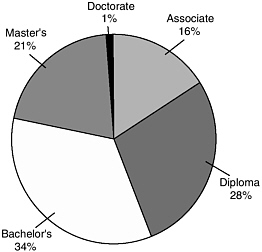
FIGURE 2-7 Highest level of formal education reported by occupational health nurses in 1999 compensation and benefits survey. SOURCE: American Association of Occupational Health Nurses (1999b).
Specialty education in occupational health nursing is generally provided at the graduate level, with both master’s and doctoral degrees being offered. These programs are primarily offered through NIOSH-funded ERCs and training program grants (see Chapter 7). Master’s degrees may be offered in nursing or public health. The general course content includes the following:
-
nursing science, which provides the context for health care delivery, recognizing the needs of individuals, groups, and populations within the framework of prevention, health promotion, and management of care for illness or injury;
-
medical science specific to treatment and management of occupational health illness and injury integrated with nursing health surveillance activities;
-
occupational health sciences including
-
toxicology, to recognize routes of exposure, examine relationships between chemical exposures in the workplace and acute and latent health effects, such as a burn or cancer, and to understand dose-response relationships;
-
industrial hygiene, to identify and evaluate workplace hazards
-
-
so that control mechanisms can be implemented for exposure reduction;
-
safety, to identify and control workplace injuries through the use of active safeguards and worker training and education programs about job safety; and
-
ergonomics, to match the job to the worker with an emphasis on the worker’s capabilities and minimization of the worker’s limitations;
-
epidemiology for study of health and illness trends and the characteristics of the worker population, investigation of work-related illness and injury episodes, and application of epidemiological methods to the analysis and interpretation of risk data to determine causal relationships;
-
business and economic theories, concepts, and principles for strategic and operational planning, for awareness of the value of quality and cost-effective care, and for management of OSH programs;
-
social and behavioral sciences for exploration of the influences of various environments (e.g., work, home), relationships, and lifestyle factors on worker health and determination of the interactions that affect worker health;
-
environmental health for the systematic examination of interrelationships between the worker and the extended environment as a basis for the development of prevention and control strategies; and
-
legal and ethical issues for ensuring compliance with regulatory mandates and contending with ethical concerns that may arise in competitive environments (Rogers, 1998).
Occupational health nurses are also prepared as occupational health nurse practitioners. That course of study provides expanded clinical training in the areas of health and disease assessment, management and treatment of illness or injury including pharmacodynamics, and occupational problem solving.
At the doctoral level, the emphasis is to prepare occupational health nursing researchers whose work may be specific to such fields of study as nursing, occupational epidemiology, environmental health, and administration of occupational health programs. As of 1998, 722 master’s-level and 32 doctoral-level occupational health nurses have been added to the workplace via NIOSH training programs since their initiation in 1977 (Ann Cronin, NIOSH, personal communication, April 23, 1999).
Certification of Occupational Health Nurses
Certification in occupational health nursing is offered by the Ameri-
can Board for Occupational Health Nurses (ABOHN), which was established in 1972. Currently, ABOHN certifies occupational health nurses in two categories: the Certified Occupational Health Nurse (COHN) and the Certified Occupational Health Nurse Specialist (COHN-S).
ABOHN evaluates potential candidates through academic, experiential, and continuing education parameters, administers examinations, and issues certificates of qualification to those professionals who meet eligibility criteria and who pass the examination. Eligibility for the COHN examination requires licensure as a registered nurse, current employment in occupational health nursing, 75 continuing education hours over a 5-year period, and 5,000 occupational health work-related experience hours in a 5-year period. The COHN examination emphasizes the clinician, coordinator, and adviser roles. COHN-S examination eligibility has the same licensure, continuing education, and work experience requirements as those for the COHN examination, but requires an individual to have a baccalaureate degree, which must be in nursing after the year 2000, to sit for the examination. The COHN-S examination emphasizes the occupational health nurse as clinician, manager, consultant, and educator. As of April 1999, approximately 6,400 U.S. nurses hold active certification, 5,900 with the COHN-S designation and 500 with the COHN designation (Sharon Kemerer, ABOHN, personal communication, April 19, 1999).
Current Status of Occupational Health Nursing Workforce
AAOHN is the professional society for occupational health nurses. The current AAOHN membership is approximately 12,500. This represents about 50 percent of the estimated number of occupational health nurses (Bureau of Health Professions, 1997). Twenty-seven percent of the AAOHN membership indicated that they were certified in occupational health nursing, 23 percent with the COHN-S certification and 4 percent with the COHN certification (Cox, 1999).
Data from AAOHN’s 1999 Compensation and Benefits Study (American Association of Occupational Health Nurses, 1999b) reveal that occupational health nurses have a mean of 13 years of experience in the field, with 48 percent reporting between 2 and 15 years of experience and only 7 percent reporting less than 3 years of experience. Considerations that will have an effect on the need for occupational health nurses in the future are the fact that the survey’s estimate of the median age of members is 50 and the finding that 47 percent of AAOHN members are between 45 and 54 years of age.
Approximately 43 percent of AAOHN members reported being employed by various types of manufacturing industries, with “miscellaneous” industries employing the most (15 percent), followed by chemical
TABLE 2-6 Most Important Work Activities Reported by Occupational Health Nurses
|
Activity |
Percentage Ranking Activity as Most Important |
Percentage Ranking Activity Among Top Four in Importance |
|
Primary care |
44 |
69 |
|
Management and administration |
32 |
58 |
|
Case management |
18 |
65 |
|
Health promotion strategies |
10 |
54 |
|
Health hazard assessment |
8 |
41 |
|
Investigating injuries and illness |
4 |
36 |
|
SOURCE: American Association of Occupational Health Nurses (1999b). |
||
products industries (6 percent). Hospitals or medical centers employed 16 percent of members, and governments employed 8 percent. The insurance industry (5 percent) filled out the top five employers. As might be expected given these types of employers, the typical AAOHN member is employed by a relatively large company. Only 4 percent of AAOHN members are employed by companies with less than 250 employees nationwide; only 8 percent are employed by companies with less than 100 employees at their location. The member at the 50th percentile works at a company with 10,000 employees nationwide and 1,000 employees at his or her location.
Table 2-6 indicates how those who responded to the AAOHN survey reported that they spend their time at work. At the top of the list is provision of direct care (clinical diagnosis and treatment) of occupational and non-occupational illnesses or injuries, followed by case management for worker injuries and illnesses, management and administration of occupational health programs (program planning, policy development, oversight of compliance with laws and regulations), and health promotion strategies. Fewer than half of the respondents rated health assessment and surveillance of the worker or workplace or investigation, monitoring, and analysis of illnesses and injuries among their top four job functions.
The Compensation and Benefits Survey does not provide a comparison of data for certified and noncertified occupational health nurses, but one of the survey questions asks the respondent to select the nearest equivalent to his or her job title from a list. ABOHN asks the same question, with the same list of job titles, of all nurses taking the COHN and COHN-S examinations and provided the committee with the data for all those who
TABLE 2-7 Job Titles Reported by Two Samples of Occupational Health Nurses
|
Job Title |
Percentage of Random Sample of AAOHN Members |
Percentage of All Certified OHN Nurses |
|
OHN clinician |
23 |
42 |
|
Case manager |
16 |
4 |
|
Occupational health services coordinator |
20 |
9 |
|
Health promotion specialist |
2 |
1 |
|
Manager/administrator |
17 |
20 |
|
Nurse practitioner |
8 |
8 |
|
Corporate director |
3 |
2 |
|
Consultant |
2 |
6 |
|
Educator |
<1 |
1 |
|
Researcher |
<1 |
<1 |
|
Other |
8 |
7 |
|
SOURCES: American Association of Occupational Health Nurses (1999b); Sharon Kemerer, ABOHN, personal communication, May 14, 1999. |
||
are currently certified. Table 2-7 compares the AAOHN survey data for a random sample of certified and noncertified occupational health nurses with the ABOHN job title data for all certified occupational health nurses.
OTHER OSH PROFESSIONALS
In addition to the four “traditional” professions described above, thousands of other professionals contribute to OSH in U.S. workplaces. This section provides information on a few prominent disciplines whose members provide health and safety services to workers and businesses at their work sites. Many of these practitioners work on a contractual basis, or as consultants. Not included are the many health professionals (e.g., emergency medicine physicians, audiologists, and respiratory, occupational, and physical therapists) whose primary contact with OSH is provision of evaluation or treatment services to a population that includes workers.
Ergonomists
Ergonomics as a field was first defined in the 1950s by scientists in Britain who described efforts to design equipment and work tasks to fit
the individual. Later, in 1957, Americans doing similar work founded the Human Factors Society, which was renamed the Human Factors and Ergonomics Society in 1992. Although the term ergonomics was not coined until the 1950s, scientists, mostly engineers, had been doing work in ergonomics many years earlier. The field had its origins in the military, where engineers had to design cockpits of airplanes to minimize the risk of accidents under very stressful conditions. Human factors engineers were also employed in the 1950s to design control rooms to minimize errors in nuclear power facilities. The field traditionally included design engineers, anthropometrists (who measured reach capabilities, etc.), and behavioral scientists. The main purpose was to design equipment to minimize errors and consequently, injuries. One example is the design of stairs (e.g., the heights and widths of the risers and the height of the handrail) to prevent falls on stairs. The OSH segment of the field has, in recent years, focused almost exclusively on prevention of musculoskeletal disorders such as back injuries, hand and wrist disorders (such as carpal tunnel syndrome), and shoulder and knee disorders, which often arise from a mismatch between the worker and the job that he or she must perform. The focus has also been primarily on the prevention of cumulative disorders and not injuries from trips and falls, collisions with moving objects, and other single events. This is probably due to the increasing recognition that these cumulative disorders account for a large portion of the injuries (about a third) that result in missed time from work and are the cause of even a larger portion of the workers’ compensation payments. For these reasons, the primary focus of ergonomics in the past several years has been on the prevention of these cumulative trauma or work-related musculoskeletal disorders.
Ergonomist Services
An ergonomist typically is asked to evaluate a job or work task to assess the risk of musculoskeletal disorders. He or she will look at the force required (often measuring it using force gauges), how repetitious the work is (number of cycles per minute), the posture required, and other factors, such as exposure to vibration, heat, and cold and the amount of rest allowed. He or she will also help employers analyze their injury records to look for patterns that may indicate which jobs present a risk for various disorders and will then recommend modifications to the tasks or work procedures that will reduce the risk of injury from those high-risk jobs. Ergonomists are increasingly performing their work with teams of workers to obtain help from workers in identifying risky jobs and potential solutions. They are also doing extensive training of workers and man-
agers on the principles of ergonomics and how to apply them to their work sites.
Ergonomists are often hired by industry, but only a few companies (typically, only very large companies) have in-house ergonomists. A small but growing number of ergonomists work for the government (above and beyond the human factors professionals who design equipment for the armed forces). Many teach and conduct research at universities. Most academic ergonomists also act as consultants to industry, as does the majority of ergonomists. Some consultants also supplement their practices by testifying as expert witnesses for OSHA, for injured workers in enforcement cases, in workers’ compensation cases, or in third-party liability cases brought by injured individuals against manufacturers for not designing their equipment or products properly. There is also another group of professionals, like physical and occupational therapists, who are most often brought in after a worker has been injured to help redesign the worker’s job so that the worker can get back to work sooner. Although they do not identify themselves as ergonomists, these professionals are also doing more and more preventive work of the sort that ergonomists do. The field has also attracted the attention of industrial engineers (the original designers of equipment and workplaces), industrial hygienists (who specialize in identifying and controlling hazards on the job), safety professionals (who have an engineering background), and OM physicians and occupational health nurses (who get involved through workers’ compensation cases and who must decide on work restrictions or return-to-work orders), all of whom are now exposed to ergonomics in their professional education and training.
Education of Ergonomists
There are more than 70 graduate programs in human factors and ergonomics (a directory is available from the Human Factors and Ergonomics Society, P.O. Box 1369, Santa Monica, CA 90406). Most are in engineering schools and result in a master’s or Ph.D. in industrial engineering. Only a few graduate programs (less than 30) specifically award a degree in ergonomics. The committee could not identify any undergraduate programs in ergonomics, although many programs, such as graduate and undergraduate programs in industrial hygiene, offer courses in ergonomics as part of a degree program. Ergonomists who are doing research generally have a Ph.D. in industrial engineering or, less frequently, in occupational or physical therapy or industrial hygiene. Practitioners often have had only limited course work in ergonomics and may have taken only a few short courses or continuing education courses of anywhere from 1 day to a few weeks in duration. These courses have become very
popular and are an important revenue source for ergonomists. Most practicing ergonomists have acquired much of their expertise from on-the-job training.
Certification of Ergonomists
The main accreditation body in ergonomics is the Board of Certification in Professional Ergonomics (BCPE), which only began in 1990. Qualified individuals are certified by this board as Certified Professional Ergonomists or Certified Human Factors Professionals. BCPE also has lower-level certifications for entry-level professionals, the Associate Ergonomics Professional and the Certified Ergonomics Associate. At present, there are 743 Certified Professional Ergonomists/Certified Human Factors Professionals, 72 Associate Ergonomics Professionals, and 13 Certified Ergonomics Associates.
There are also competing certifications from the Oxford Research Institute: Certified Industrial Ergonomists (CIEs), Certified Associate Ergonomists (CAEs), and Certified Human Factors Engineering Professionals (CHFEPs). The Oxford Research Institute has certified about 400 people in the United States: about 180 CHFEPs, 220 CIEs, and about 30 CAEs. About equal numbers are certified outside the United States. Eighteen universities in the U.S. have been authorized to confer the Oxford Research Institute certification. The Oxford Research Institute does not require an examination like BCPE does, but the Oxford Research Institute does require that ergonomists take continuing education courses, which the BCPE does not.
The Board of Certified Safety Professionals introduced an ergonomics specialty examination for certified safety professionals in 1999.
Current Status of the Ergonomist Workforce
The Human Factors and Ergonomics Society has about 5,000 members, of which approximately 700 are students and of which about 600 are from foreign countries. However, many of these members are not “ergonomists” as they have been defined here (focusing primarily on OSH issues), but are primarily designers who deal with consumer applications. About 750 ergonomists are certified by BCPE, and another 400 are certified by the Oxford Research Institute. There are many more ergonomists in other professions, like occupational and physical therapists. For example, the American Occupational Therapy Association has a special interest group of about 1,100 members who are interested in work programs, and many of them are doing ergonomic interventions. Physical therapists are even more involved in workplace ergonomics than occupa-
tional therapy. Many got involved in ergonomics through sports rehabilitation medicine. Interest in ergonomics is also very high among industrial hygienists, although only about 250 of AIHA’s 13,000-plus members claimed on their membership form that their primary responsibility was doing work in ergonomics.
A reasonable estimate of the number of people in the United States who call themselves “ergonomists” or whose primary function is to do workplace ergonomics would be about 5,000. The number is growing as ergonomics has become an important topic in the workplace and because work-related musculoskeletal disorders are such an important part of the injury picture. OSHA has already published a proposed standard for ergonomics programs, and although it has stimulated intense debate, a final rule is anticipated in 2000 or 2001. This standard is expected to spur the demand for ergonomists tremendously. However, more and more workers are being trained to combine their shop floor knowledge with limited ergonomics training to help identify and correct hazards. This trend may reduce the demand for professional ergonomists somewhat, but many companies will still be hiring ergonomists or consultants to help set up and manage their programs, at least initially. In the long run, the committee envisions an increased demand for ergonomic advice and consultation that will be met partly by full-time professional ergonomists and partly by increased training in ergonomics in the curricula of all the traditional OSH professions.
Employee Assistance Professionals
An employee assistance program (EAP) is a work-site-based program designed to assist in the identification and resolution of productivity problems associated with employees impaired by personal concerns, including, but not limited to, health, marital, family, financial, alcohol abuse, drug abuse, legal, emotional, stress, or other personal concerns that may adversely affect employee job performance. It is most often an employment benefit independent of both workers’ compensation and any group health plan offered by the employer.
Employee Assistance Professional Services
The 7,000 member Employee Assistance Professional Association (EAPA) restricts full membership to persons who provide “core” employee assistance services 20 or more hours per week. These are:
-
consultation with, training of, and provision of assistance to work organization leaders (managers, supervisors, and union stewards) seek-
-
ing to manage the troubled employee, enhance the work environment, and improve employee job performance and provide outreach education for employees and their dependents about the availability of employee assistance sevices;
-
confidential and timely problem identification and assessment for employee clients with personal concerns that may affect job performance;
-
use of constructive confrontation, motivational techniques, and short-term interventions with employee clients to address problems that affect job performance;
-
referral of employee clients for diagnosis, treatment, and assistance, plus case monitoring and follow-up with organizations, insurers, and other-third party payers;
-
provision of assistance to work organizations in managing provider contracts, in forming and auditing relations with service providers, managed care organizations, and insurers, and in providing employee health benefits that cover medical and behavioral problems; and
-
identification of the effects of employee assistance on the work organization and individual job performance.
Education of Employee Assistance Professionals
As might be expected, the individuals who provide employee assistance are typically mental health professionals. A 1998 EAPA member survey reported that 46 percent of respondents were social workers, 27 percent were alcohol or drug abuse counselors, and 12 percent were psychologists (Employee Assistance Professionals Association, 1999). None of these disciplines provide formal training in employee assistance, but all provide training in at least some of the core services listed in the previous paragraph. The working degree for EAP social workers is a master’s in social work. A doctorate is the standard for psychologists. The educational requirements for alcohol and drug abuse counselors vary by state, and although states vary in their expectations, all require some combination of education, specific training in addiction, an internship, and paid counseling experience.
Certification of Employee Assistance Professionals
EAPA’s certification department administers a program that provides the certified employee assistance professional designation. Necessary qualifications for sitting for the 1999 examination are
-
a graduate degree in an EAP-related discipline,
-
2,000 hours of work experience in an EAP setting (over a minimum of 2 years and within 7 years of sitting for the examination),
-
15 “professional development hours” (continuing education), and
-
24 hours of advisement (supervision) by a certified employee assistance professional spread out over at least 6 months.
or
-
3,000 hours of work experience in an EAP setting (over a minimum of 2 years and within 7 years of sitting for the examination),
-
60 “professional development hours” (continuing education), and
-
24 hours of advisement (supervision) by a certified employee assistance professional spread out over at least 6 months.
Current Status of the Employee Assistance Professional Workforce
The 7,000 members of EAPA include Canadian and international members, associate members (who provide employee assistance services less than half-time), student and retiree members, and organizational members (corporations, unions, government agencies, associations, and other groups with an interest in EAP). The number of individual U.S. members is approximately 4,500. The number of certified employee assistance professionals is about 4,400.
According to the 1998 EAPA Needs Assessment Survey (Employee Assistance Professional Association, 1999), about half of the members are employed internally: 30 percent by a joint union-management arrangement, 25 percent by management alone, 8 percent by the union alone, 25 percent in an integrated model (their employer provides employee assistance both internally and to other organizations), and 10 percent in some other arrangement. The other half of the membership provides services from outside the organization: 67 percent as consultants and 33 percent as an employee of a contract EAP service provider. The committee was unable to locate any useful data on current demand for employee assistance professionals.
Occupational Health Psychologists
Occupational health psychology is an emerging specialty within psychology. In the broadest terms, occupational health psychology concerns the application of psychology to improving the quality of work life and to protecting and promoting the safety, health, and well-being of workers. The primary focus of occupational health psychology is on organizational and job-design factors that contribute to injury and illness at work, in-
cluding stress-related disorders. Family and societal factors are also of interest to the extent that they influence the safety and well-being of working populations. Individual characteristics, such as skills, abilities, and temperament, and their contribution to occupational illness and injury are also subsumed under the rubric of occupational health psychology.
There are as yet no established curricula or credentials beyond a doctorate in psychology for occupational health psychology, which Quick (1999) describes as a convergence of preventive medicine and clinical and health psychology in an industrial-organizational context. The American Psychological Association and NIOSH are partners in a 5-year cooperative agreement to fund the development of graduate-level training in occupational health psychology. The purpose of this program is to develop and implement specialized graduate-level training through a course or series of courses in the area of occupational health psychology. Given that the ultimate goal is to promote occupational health psychology as a discipline within psychology, it is expected that the proposed new course(s) that is developed will be housed in the psychology department or, at a minimum, cross listed as a psychology course(s). Courses developed under this program must contain the expression “occupational health psychology” within their titles. It is anticipated that courses planned under this program will be fully developed, accredited by the university, and formally scheduled within a year of the funding date.
Examples of appropriate training activities suggested by the program announcement include (1) expansion of curricula in organizational psychology with new courses on organizational risk factors for stress, illness, and injury at work and on intervention strategies; (2) expansion of curricula and practica in clinical psychology to improve the recognition of job stress and its organizational sources; (3) expansion of curricula in human factors engineering to provide courses with more of an exclusive focus on OSH; and (4) increased exposure of behavioral scientists to research methods and practice in public and occupational health and epidemiology.
Programs at six universities were funded in 1998 and 1999, and additional applications are expected by May 2000. The six programs are at various stages of development, but descriptions of their proposed efforts and academic partners suggest that the field is likely to develop along the lines of industrial-organizational psychology, whose practitioners in the Society for Industrial and Organizational Psychology define themselves as
-
scientists who derive principles of individual, group, and organizational behavior through research;
-
consultants and staff psychologists who develop scientific knowledge and apply it to the solution of problems at work; and
-
teachers who train students in the research and application of industrial-organizational psychology.
A recent membership survey by the Society for Industrial and Organizational Psychology (Burnfield and Medsker, 1999) found that 34 percent of its members are employed in academia, 31 percent are consultants or self-employed individuals, 16 percent work for organizations in the private sector, and 7 percent are employed in the public sector.
SUPPLY, DEMAND, AND NEED
Supply
This chapter began by noting that without an extensive survey it would be impossible to describe the full spectrum of individuals who contribute to OSH programs in U.S. workplaces. In the absence of such a survey the committee relied on membership in the major OSH professional organizations and certification by appropriate professional boards as estimates of the current supply of OSH professionals. Table 2-8 summarizes the current OSH professional workforce described in this chapter, that is, safety professionals, industrial hygienists, OM physicians, occupational health nurses, ergonomists, and employee assistance professionals. None of those professional organizations claim to have as members 100 percent of those who are eligible, and it is doubtful that any of
TABLE 2-8 Estimated Number of Active OSH Professionals in the United States, 1999
|
Type of Professional |
No. of Professional Association Members |
No. of Certified Individuals |
|
Safety professionals |
33,000 |
10,000 |
|
Industrial hygienists |
14,000a |
6,400 |
|
Occupational medicine physicians |
7,000 |
1,150 |
|
Occupational health nurses |
12,500 |
6,400 |
|
Ergonomists |
5,000b |
1,000b |
|
Employee assistance professionals |
4,500 |
4,400 |
|
Total |
76,000a |
28,950 |
|
aTotal includes AIHA membership plus ACGIH membership minus duplicates. bTotal includes an unknown number of industrial hygienists and safety professionals. |
||
the organizations even have as members 100 percent of those certified in their field. The numbers in Table 2-8 are therefore a very conservative estimate of the OSH professional workforce and are very likely a gross underestimate. Some measure of the extent of the underestimate may be taken from the findings of a 1996 national survey (Bureau of Health Professions, 1997) of registered nurses. This survey of more than 25,000 nurses found that 1.0 percent of respondents reported occupational health as their primary employment setting, leading to an estimate of 21,575 nurses working in the field nationwide, about 73 percent higher than the AAOHN membership total. The committee had no way of estimating the undercount for the other OSH professions, but if the proportion is similar to that for occupational health nurses, the total of 76,000 in Table 2-8 might well be as much as 50,000 short as an estimate of the size of the current OSH professional workforce.
Demand
Demand for OSH personnel, that is, employment opportunities, is equally difficult to estimate without an extensive survey of current and potential employers. The committee had neither the resources nor the license for such a survey and could find no evidence for a recent survey of this sort in the published literature. Anecdotal evidence, average salaries reported by the professional societies, computer modeling of industrial hygiene positions, and an informal survey of NIOSH-supported training programs by the committee suggest that overall supply appears to be roughly consonant with market demand. It seems possible, if not likely, that this is due in large measure to the elasticity of employer demand, that is, a willingness to accept less educated or less experienced professionals rather than pay a premium for the most highly qualified individuals. Such elasticity may also partially explain the relatively low percentage of OSH professionals who are board-certified in their field (Table 2-8). Certification is certainly not synonymous with expertise, but it does serve as a notice to prospective employers that the holder has been judged competent by his or her peers. Employers are apparently not willing to pay a sufficient premium for this guarantee to induce the majority of OSH professionals to gain certification. Conversely, the fact that certification in any of the professions does command some additional pay and benefits might suggest that the market is indeed calling for more certified personnel. It is quite possible, however, that additional certified professionals would simply displace noncertified OSH personnel. That is, the number of positions for OSH professionals (demand) might well remain unchanged.
Need
None of the earlier discussion should be taken to suggest that there are no unmet needs in the field. By this the committee means shortfalls or other deficiencies in the current OSH workforce that the committee believes ought to be corrected or ameliorated for workers to be protected to the extent that current knowledge allows. The continuing annual reports of 6,000 fatal workplace injuries and 6 million nonfatal workplace injuries and the estimated 60,000 annual deaths from occupational illness (Leigh et al., 1997) are ample evidence that the workforce needs more protection than its employers are providing.
An earlier section of this chapter reports that although 3 percent of safety professionals in the American Society for Safety Engineers have doctorates, only nine U.S. universities offer a doctoral degree in safety, and the committee was able to identify only one dissertation since 1995 that focused on the traditional domain of safety professionals: prevention of sudden traumatic injury. This is discussed further in Chapter 7, along with a suggestion for action, but it should be clear that the current low level of doctoral graduates is not sufficient to maintain the faculty presently training the bachelor’s- and master’s-level safety workforce.
A similar situation exists in OM, in which the small number of boardcertified OM specialists means that injured or ill workers must often obtain care from physicians who are not specialists in the area. A 1988 Institute of Medicine report that explored the barriers that are keeping primary care physicians from competently meeting the needs of patients with environmental and occupational problems pointed to a lack of specialty-trained physicians, that is, board-certified OM physicians, to serve as educators and consultants. Subsequent publications (Castorina and Rosenstock, 1990; Institute of Medicine, 1991) estimated this shortfall to be 3,100 to 5,500 positions. Although the authors suggested that 1,500 to 2,000 of those positions might require only primary care practitioners with “special competence” in occupational and environmental medicine (i.e., additional training but not a residency), they pointed out that closing that gap would require increases in the number of individuals undergoing graduate specialty training by a factor of three to five for a period of 10 years (as well as significant changes in the structure and funding of universities and public health departments). Ten years later, the number of board-certified OM specialists remains unchanged. Chapter 7 explores some non-monetary reasons for the persisting gap and provides a suggestion for a means of reducing it.
The major shortfall in the field of occupational health nursing is similar to that in OM: not so much a shortage of practitioners as a shortage of practitioners with formal training in the field. In the case of occupational
health nurses this is a master’s degree. Because no residency is involved, a doubling of the annual number of master’s-level occupational health nursing graduates is not an unrealistic goal if established professionals are not required to abandon an ongoing career for a year or more. Chapter 8 explores some emerging means of accomplishing this.
The distinction between demand and need is nowhere more aptly illustrated than by examination of the makeup of the U.S. workforce as a whole. Some 56 percent of U.S. workers are employed by firms with less than 100 employees (National Institute for Occupational Safety and Health, 1999). The majority of the traditional OSH professionals, however, are employed by midsize to large businesses and government agencies. Small businesses as a group apparently believe that they do not need OSH professionals or cannot afford them. Most workers will thus seldom, if ever, encounter one of these OSH professionals. Even when injured, they may receive treatment in emergency rooms or ambulatory clinics where the treating physicians and nurses have neither the time nor the training to deal with issues of causation and prevention of the injury-producing event.
The training of traditional OSH professionals is considerably simplified by the nature of their practice in midsize and large industries and government agencies. To a large degree the framework is constructed around the regulatory system and the workers’ compensation insurance system. It is a top-down system that, for those segments of the economy, reaches all the way to the worker at risk. This part of the system includes professionals who operate from consulting practices and who play an increasing role in midsized industries. It is another matter entirely to address the development and the training of OSH personnel to deal with that large majority of the workforce who have no routine access to the OSH system. The few OSH professionals who do focus on small businesses and workplaces are likely to work for government or public interest groups. For these professionals, media and communication skills are likely to be the most important requirement. For example, the “right-to-know” concept was popular in the 1980s occupational and environmental health community as a means of stimulating a bottom-up demand (i.e., turning a need into a demand) for a safer and healthier environment among those directly affected. Putting that approach to work in the workplace, however, continues to be a challenge and, on the prevention side at least, the OSH system in the United States principally affects that portion of the workforce that is employed in large industry or by government or that is represented by organized labor. As subsequent chapters will elaborate, the workplace of the future will increasingly be dominated by small service-producing businesses that are widely distributed and that utilize an increasingly diverse and transient workforce. What is most needed
now and will be needed even more in the coming decades, in addition to the traditional OSH professionals, is a new and different model of practice, perhaps one that even uses new categories of OSH personnel created by training managers, supervisors, and workers already employed in these small workplaces.


