
3
Enabling Technologies
The committee reviewed five enabling technologies of the Vision 21 Program Plan: fuel-flexible gasification, advanced combustion systems, advanced fuels and chemical development, fuel cells, and fuel-flexible turbines. The first two are fuel-conversion technologies for converting coal into a combination of heat and chemical energy. The other three produce final products, either electricity or products of chemical synthesis. The discussion in this chapter refers to the activities and milestones of the Vision 21 Program Plan (reproduced in Appendix C). The committee decided to consider gas-stream purification, high-temperature heat exchangers, and gas separation as supporting technologies rather than as enabling technologies.
For several reasons, the bulk of funding for enabling technologies should be focused on coal-gasification technologies, the major element of the fuel-flexible gasification program. First, coal, coke, and heavy-oil gasification processes produce a fuel gas that can be cleaned and converted to electricity in fuel-flexible gas turbines and fuel cells at high efficiency. At this time, the only plausible approach to meeting the 60-percent efficiency goal of the Vision 21 Program would require converting that gas to electricity in gas-turbine combined-cycle, fuel cell, or fuel cell/gas turbine systems.
Second, four 250–300 MW coal-fueled integrated gasification combined-cycle (IGCC) demonstration plants for electricity production are now in operation, one of which is in the start-up phase. Two of the operating plants (Keeler, 1999; McDaniel and Shelnut, 1999) and the one in the start-up phase (Leighton, 1999) are in the United States; one is in the Netherlands (Eulings and Ploeg, 1999); and the fourth is in Spain (Mendez-Vigo et al., 1999). The construction of these plants was subsidized by governmental funding. These plants have efficiencies of about
40 percent (higher heating value [HHV]), and cost in excess of $2,000/kW (1999 dollars), which is less than the cost of analogous coal-fueled plants (Brkic and Cooperberg, 1999; Collodi, 1999; de Graaf et al., 1999; Farina and Collodi, 1999). Four heavy-oil and coke-fueled gasification plants have been started up or will be started up by the end of 2000; several additional plants are scheduled for start-up in the next few years. These plants range in cost from $1,400 to $2,000/kW (1999 dollars) (Brkic and Cooperberg, 1999; Collodi, 1999; de Graaf et al., 1999; Farina and Collodi, 1999), which is less than the $2,000/kW (1999 dollars) cost for analogous coal-fueled gasification demonstration plants. All of these plants have required (or will require) investments that far exceed the Vision 21 Program goal of about $800/kW. These non-coal plants are important to the Vision 21 Program because several subsystems, including syngas purification, solids feeding, and syngas combustion, are being demonstrated at full commercial scale. Real-time demonstrations of new technologies are vital to private sector acceptance and will be necessary for the realization of commercially operable Vision 21 plants. Virtual demonstration alone will not provide a transition of Vision 21 plants and technologies to commercialization.
Third, because of the likelihood of future regulations limiting carbon dioxide emissions from power production plants, the production of a concentrated carbon dioxide stream will be an advantage for competitive power production. Gasification technologies produce a very concentrated stream of carbon dioxide (typically 42 percent concentration), which can be separated from plant exhaust gases at lower cost and with less reduction in overall efficiency than the less concentrated carbon dioxide stream (typically 12 percent) produced by combustion processes.
Finally, meeting the Vision 21 goal of competitive power generation by reducing the investment cost of the direct syngas production section of the plant from $850/kW to less than $550/kW (in 1999 dollars) to compete with plants that use natural gas in the same types of fuel-flexible gas turbines, will require innovative, high-risk R&D. The committee encourages DOE to investigate new ideas relating to novel, as well as existing, gasification processes. Existing gasification plants in the United States could be studied to determine what improvements might be achieved. Based on current DOE programs and suggestions in the literature, a very aggressive R&D program could conceivably meet the Vision 21 goal. Promising approaches involve improvements in coal feeding, heat recovery, and cycle integration (van der Burgt, 1998).
Coal-gasification systems produce syngas (a mixture of carbon monoxide and hydrogen) that can be converted into electricity by IGCCs, fuel cells, or gas-turbine/fuel-cell hybrid systems at high electrical conversion efficiencies. These are the only combinations of coal-conversion technology and energy-conversion technology with the potential to achieve the 60-percent efficiency target of the Vision 21 Program. Coal-gasification systems can also be configured to produce a concentrated carbon dioxide stream that minimizes the costs of carbon dioxide capture, converts essentially all of the sulfur in the coal to elemental sulfur,
reduces emissions of NOx, hazardous air pollutants (HAPs) and particulates to de minimis levels, and combines all solid waste products into a nonleachable slag that meets current water quality standards.
The goals of the Vision 21 Program are to develop technologies that efficiently produce competitive products with minimal or no environmental impact. The major specific goals are listed below:
-
generating efficiencies of greater than 60 percent using coal
-
near-zero emissions of traditional pollutants, including smog and acid rain forming pollutants
-
no solid or liquid discharges (conventional pollutants would be captured and either disposed of or converted to marketable coproducts)
-
reduction in emissions of carbon dioxide of 40-50 percent by improvements in efficiency, and reduced to zero (net) if coupled with carbon sequestration
-
carbon emissions captured at the plant or offset by carbon removal processes elsewhere
-
plant options for zero emissions of carbon dioxide available by 2015
-
captured carbon sequestered or recycled into useful products
-
Future external constraints will determine which enabling technologies will be commercially successful. For example, regulations will probably define targets for the maximum concentration of carbon dioxide in the atmosphere. One approach to limiting the rate of carbon dioxide buildup is separating and subsequently sequestering the carbon dioxide from the production of electricity or petrochemicals from fossil fuels in underground reservoirs or in the deep ocean. An alternative would be to remove carbon dioxide from the atmosphere through the growth of trees and certain crops or to transfer the carbon dioxide from the atmosphere to the ocean by increasing the carbon dioxide uptake of phytoplankton. Carbon in the ocean would ultimately be transferred to the floor of the ocean through biological processes. Both of these approaches are now being investigated but are beyond the scope of this report.
The relative economics and environmental acceptability of the alternatives described above will affect the commercial attractiveness of combustion and gasification technologies for power production. If direct, on-site separation of carbon dioxide is favored economically, then gasification technologies will be favored because they produce a concentrated carbon dioxide stream at the production plant site. If indirect removal from the atmosphere becomes the route of economic choice, then either combustion or gasification technology could be the technology of choice depending on their relative economics.
FUEL-FLEXIBLE GASIFICATION
Fuel-flexible gasification, a key enabling technology in the Vision 21 Program Plan, has a number of promising characteristics. First, it can be used with a variety of solid carbonaceous fuels and wastes. Second, the sulfur compounds in the feed can be removed effectively and efficiently as hydrogen sulfide. Third, a "carbonless fule" (hydrogen) can be produced; the solid fuels are converted to a mixture of carbon monoxide and hydrogen (syngas) via partial combustion (because only enough oxygen is supplied to oxidize part of the carbon in the fuel). The key to gasification is the reaction of steam with the feedstock, and because this reaction is endothermic, continuous gasification requires enough oxidation of the fuel so that the exothermic heat release compensates for the endothermicity of the steam-carbon reaction. The carbon monoxide is then converted into hydrogen and carbon dioxide via the water-gas shift reaction. Carbon dioxide can be captured from a concentrated stream prior to the power-generation step.
In the Vision 21 energy plant based on fuel-flexible gasification technology, gasification and fuel-gas purification (cleaning) are the first and most expensive steps in the generation of very clean power from coal. Fuel-flexible gasification converts coal into syngas that can be used as a feedstock for producing chemicals and liquid fuels as well as for generating electric power. The capital cost of the syngas generation plant, the "gasification island," is projected to be about 65 percent of the total installed cost of the Vision 21 energy plant. Table 3-1 shows the distribution of costs among the five individual process units and off-site facilities of the plant for a typical, current, state-of-the-art, oxygen-blown, coal-water slurry-fed gasifier equipped with a high-temperature radiant/convective heat recovery system. Improvements in all five sections of the plant will be necessary to significantly improve the overall performance and reduce the cost of the plant. Therefore, the Vision 21 Program for the gasification technology will have to adopt an integrated approach that includes gas cleaning and heat recovery.
TABLE 3-1 Typical Costs for a Current Gasification Plant
|
Process Unit |
Percentage of Total Costs |
|
Solids handling and slurry-feed preparation |
6 |
|
Gasifier, high-temperature heat recovery, and slag removal |
24 |
|
Gas cleanup and low-temperature heat recovery |
10 |
|
Air separation |
12 |
|
Combined-cycle power block |
25 |
|
Off-site facilities |
23 |
|
Total |
100 |
Current Status
Gasification technology has been commercially available for converting a variety of fossil feedstocks to syngas, which is the feedstock for the production of chemicals, power, Fischer-Tropsch liquids, and gaseous fuels. A database on gasification developed by SFA Pacific, Incorporated (Simbeck and Johnson, 1999) for DOE included the following information:
-
There are 161 plants with 414 gasifiers worldwide.
-
About 15 to 20 percent of these plants are in North America (Figure 3-1).
-
Most gasification plants are not dedicated solely to power generation (Figure 3-2), although the number of power generation plants is increasing.
-
The Texaco Gasification Process is the technology with the largest market share (Figure 3-3).
Four large coal-fed gasification plants are currently operating in the United States: Dakota Gasification Company in North Dakota; Tennessee Eastman plant in Tennessee; Dynegy Destec in Indiana; and Tampa Electric in Florida. The Pinon Pine coal-gasification, combined-cycle power plant is in start-up at Sierra Pacific in Nevada. The Dakota plant, which is operating without any financial assistance, is fully depreciated, and the plant's profitability relies on significant by-product credits. The Dynegy, Tampa, and Pinon Pine plants are part of DOE's Clean Coal Technology Demonstration Programs; all of the companies associated with this program receive government subsidies. Only three commercial gasification technologies have been well proven: Texaco, Shell, and Dry-Ash Lurgi. Texaco is the most active licenser accounting for 40 percent of capacity.

FIGURE 3-1 Gasification plants by geographic region. Source: Simbeck and Johnson, 1999.
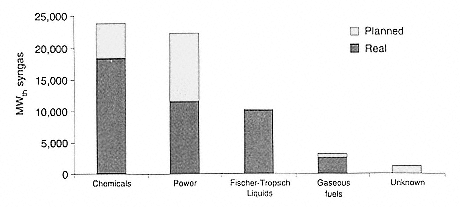
FIGURE 3-2 Gasification plants by application. Source: Simbeck and Johnson, 1999.
Coal-based technology, whether conventional combustion technology or costlier new gasification technology, will not be the preferred power generation technology in the United States for the foreseeable future because of competition from natural gas. The capital costs and nonfuel operating costs of a natural gas-fired combined-cycle plant is lower than those of a coal-fed IGCC plant. In addition, pending environmental legislation may increase the capital costs and operating costs of coal-fired power plants, regardless of the technology. With more stringent environmental regulations, however, gasification technology, with its higher efficiencies and highly concentrated carbon dioxide effluent stream, could be more cost-competitive with traditional coal-based power-generating
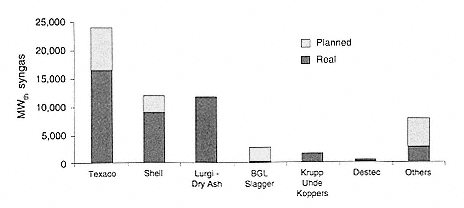
FIGURE 3-3 Gasification plants by technology. Source: Simbeck and Johnson, 1999.
options. If the syngas is treated in a water-gas shift unit, each unit of carbon monoxide is converted by reaction with water into one unit each of carbon dioxide and hydrogen. If a coal-water slurry-fed gasifier is used (similar to a Texaco gasifier), the effluent stream from the water-gas shift unit contains about 49 mole percent of hydrogen and 42 mole percent of carbon dioxide, allowing for a more efficient separation of carbon dioxide than with combustion processes.
Coal-fed gasification plants are not expected to compete any better in overseas markets. The fastest growing power market is in developing countries, which generally have fewer environmental regulations than developed countries and cannot afford to pay the premium associated with clean power from an IGCC plant. These countries prefer pulverized coal and natural gas combined-cycle plants to coal-gasification plants because they are less expensive.
Recently, the U.S. power market has changed in ways that are favorable to the use of IGCC plants for power generation. With deregulation of the utility industry, new power plant owners have emerged who are often more open to alliances with nonutility plant owners to develop cogeneration projects. The new owners are more comfortable with the complexity of IGCC plants, the use of low-value feedstocks, and the synergistic effects of coproducing chemicals and exporting steam to increase the profitability of IGCC projects. As more multiproduct plants are built and operated, the capital and operating costs of IGCC plants will decrease. Financing will also be more readily available as confidence in the overall plant performance increases.
Proposed Program Plan
The current Vision 21 Program Plan for fuel-flexible gasification employs a portfolio approach with R&D programs in two categories:
-
technologies to improve the performance of the gasifier, such as improved burner design, improved carbon conversion, more reliable solid-feed systems, better refractory materials, more efficient dry particulate removal systems, and better hot-gas handling
-
technologies to improve the overall gasification plant performance, such as increased oxygen production, gas turbines that can use syngas and hydrogen fuel, more efficient waste-heat recovery, better hot-gas cleanup, and improved coproduction processes, such as Fischer-Tropsch liquid and production of di-methyl ether
The committee agrees that these technologies should be part of the gasification portfolio, although it is not clear that DOE has developed a mechanism to ensure that the second group of technologies is focused on gasification-related issues. In the current version of the Vision 21 Program Plan, no preference or priority is expressed for the technologies in either category.
TABLE 3-2 IGCC Plant Components and Effects of Technology Improvements
|
Plant Components |
Improvements and Impacts |
|
Gasifier burner |
A decrease in oxygen demand by 1% increases syngas yield by 0.5%. |
|
Gasifier design |
Improving carbon conversion from 85 to 90% for petroleum coke increases syngas yield by 4.3%. |
|
Syngas cooling |
Improving heat recovery boiler efficiency improves steam quality. |
The Vision 21 Program takes a new approach by integrating advanced technologies being developed in other R&D programs. For this program to succeed, DOE will have to set practical performance targets, determine the priority of these programs through cost/benefit analyses, and allocate appropriate funding for each program. Achieving the overall Vision 21 energy plant performance targets within research constraints will be a delicate balancing act. Table 3-2 gives an example of how three relatively small improvements in the gasification plant could collectively increase overall plant efficiency from 57 to 60 percent.
The committee recognizes that coproduction is merely an entrance strategy for gasification technology and that additional deployment strategies will be necessary for the successful commercialization of coal-fed gasification technology. Opportunities for deployment in fast-growing developing countries can encourage industry to demonstrate new components and technologies (see Chapter 5).
Schedules and Milestones
Gasification technology is now commercially viable in the United States for feedstocks, such as coke or residual oil in a refinery, that have near-zero or negative value. However, if the coal and natural gas prices projected by EIA for the United States for 2000 to 2015 are correct, coal-gasification technology will only be economically competitive in the United States in a carbon-constrained environment in which all plants must use carbon capture and sequestration technology. In China, India, and other industrializing countries with less developed gas markets, coal is far more competitive. In any case, a large portfolio of technology development programs will be necessary to improve the performance of fuel-flexible gasification technology and its peripheral process units for an energy plant to meet the Vision 21 goals. Thus, even if one proposed technology does not meet its target, fuel-flexible gasification might still meet the goals of Vision 21.
In any case, the committee believes that the schedule of the fuel-flexible gasification program is too ambitious for the current allocation of R&D funding. With the current diversified approach and budget, Vision 21 goals will not be met by 2015.
Discussion
Currently, the cost of coal-gasification plants is in the range of $1,400–$2,000/kW. Improvements based on the experience gained from the operation of a number of demonstration plants could reduce the investment requirement to $1,200–$1,500/kW. These estimates are based partly part on experience with oil and coke-gasification plants that have identified potential cost reductions in the areas engineering and procurement of major equipment, including air separation units and combined-cycle plants. To be competitive with natural-gas fueled combined-cycle units after 2015, the investment will have to be reduced to less than $800/kW in an IGCC configuration that can achieve 45-percent efficiency (DeLallo et al., 1998; EPRI, 1999) and less than $1,000–$1,100/kW in an integrated gasification combined-cycle/fuel cell (IGCCFC) configuration than can achieve 60-percent efficiency (neither efficiency includes the losses associated with carbon dioxide capture).
Findings and Recommendations
Finding. The successful deployment of advanced coal-based power system technologies in the Vision 21 Program will require a technology development phase before commercialization and technology transfer to the marketplace. Virtual demonstrations alone will not be a strong enough basis for the transition of Vision 21 plants and technologies to commercialization.
Recommendation. The Vision 21 Program should encourage industry-led demonstrations of new technologies. The Vision 21 commercial designs and cost estimates will be of great value if they can be validated against existing databases and component demonstrations, which would encourage deployment by industry.
Finding. Coal-gasification systems produce syngas (a mixture of carbon dioxide and hydrogen) that can be converted into electricity by IGCC, fuel cells, or gas turbine/fuel cell hybrid systems at high electrical conversion efficiencies. These are the only combinations of coal-conversion technology and energy-conversion technology with the potential to achieve the 60-percent efficiency target of the Vision 21 program.
Recommendation. The U.S. Department of Energy should pursue both revolutionary and evolutionary approaches to the development of gasification systems to achieve its performance and cost targets. Because the gasification sections of integrated gasification combined-cycle and integrated gasification combined-cycle/fuel cell plants contain many highly integrated gasification components (coal handling, oxygen production, gasification, gas cleaning, heat exchange),
significant cost reductions will be necessary in all sections to meet the overall Vision 21 goal. The key areas in other sections of the plant targeted for R&D are oxygen production, hydrogen separation, carbon dioxide capture, and high-temperature fuel cells.
ADVANCED COMBUSTION
Advanced, high-performance combustion systems are one possible configuration for future Vision 21 plants. DOE has singled out two major lines of technology development in advanced combustion for future R&D (DOE, 1999a):
-
pressurized fluidized-bed combustion (PFBC)
-
IFCs, indirectly fired cycles
The PFBC program includes improvements in the current, first-generation technology, as well as the development of second-generation technology, which involves a carbonizer to generate char and fuel gas and a combustor to burn the char. The program plan has many options in common with the gasification R&D plan for both power generation (e.g., using oxygen in place of air) and fuel gas (e.g., using fuel gas in high-performance gas turbines and fuel cells).
The IFC program continues and extends DOE's High Performance Power Systems (HIPPS) Program. The focus of the IFC program will be on the development of very high-temperature metallic and ceramic heat exchangers. In future markets for electricity plants, these two distinct combustion technologies will have to compete with both subcritical and supercritical advanced pulverized coal plants, as well as with IGCC and IGCCFC plants.
The Vision 21 plan calls for virtual demonstrations of the modules that would comprise an advanced combustion plant by 2015. Systems studies on PFBC and IFC predicting how well these plants will compete in the future market for coal-fired plants will also be important. Europe and Japan, where fuel costs are higher than in the United States, are accumulating commercial experience with high efficiency (compared to average current plants) supercritical and ultra-supercritical coal-fired plants. European and Japanese technologies will be the competitors for PFBCs and IFCs in the next decade (2000–2010). In 2010–2020, partly as a result of cost reductions from the experience gained in heavy-oil and coke IGCC plants, IGCC plants could compete with other types of coal plants. DOE should assess the potential for these near-term embodiments of improved PFBC and IFC technologies to determine how they will fare in the commercial market. The assessment could be based on system studies to determine the contribution of successful R&D to cost reduction and improved performance. The committee found no evidence that DOE has performed or is contemplating this kind of assessment, which would be a logical basis for setting priorities.
Current Status
PFBC technology has been demonstrated at an 80-MW scale in four plants and has been scaled up in one plant to a capacity of 300 MW. IFC technology is still in the R&D phase. In the committee's opinion, the Vision 21 goal of 60-percent efficiency is not likely to be achieved with combustion technology at a commercially viable plant investment level, nominally $800/kW (EPRI, 1999), which would provide competitive power generation. The efficiency level is more likely to be about 50 percent, which may, in fact, be competitive in the future because combustion technologies generally require somewhat smaller capital investments than gasification technologies, but there is no indication, however, that a first- or second-generation PFBC power plant will have a lower cost than an IGCC plant. Meeting the program goal of 60-percent efficiency will probably require that these combustion cycles be integrated with high-efficiency gas turbines and fuel cells. Even lower efficiency goals will be difficult to achieve at the $800/kW plant cost level. Many of the complex configurations suggested for advanced combustion plants in the Vision 21 Program are likely to cost more, rather than less, than the systems in commercial operation today.
Schedules and Milestones
At this point, DOE has only developed preliminary schedules and milestones, although detailed program planning is under way. The milestones that have been developed however, are activity-based. Because the performance goals for this program are very aggressive, performance milestones for each component of the enabling and supporting technologies must be carefully set so that promising activities can be selected for continued development, and activities that cannot achieve their performance goals can be abandoned. The committee believes that DOE should consider adopting performance-based milestones in place of activity-based milestones.
According to the plan for the overall program, complete assessment reports of the capital and operating costs for the Vision 21 candidate technologies will be performed in FY05, FY10, and FY14; two reviews of Vision 21 systems and subsystem/component performance requirements are scheduled for FY05 and FY10 (DOE, 1999a).
The cost estimates include testing of integrated components for ultra-high-efficiency plants based on combinations of advanced pulverized coal and PFBC technologies combined with high-temperature heat exchangers, sorbents, and particulate removal (FY02–FY08).
Discussion
Will there be a market for a competitor to supercritical coal-fired plants in the next two decades? The answer to that question is perhaps. Because significant
work will certainly be undertaken by the private sector to improve existing plants, Vision 21 R&D should be focused on high-risk areas that have ''leapfrog" potential and not on evolutionary improvements. Private industry probably will not fund R&D in these areas without significant cost-sharing by government.
The IFC cycles will require very high-temperature ceramic heat exchangers to meet Vision 21's technical performance objectives. Development in this area has progressed very slowly, however, and high-temperature ceramic heat exchangers are likely to require a very long and difficult development program. At this point, however, there is no foreseeable market demand for IFC cycles that would employ that technology (Bonk, 1999).
Therefore, component-level demonstrations to validate virtual demonstrations should be an important part of the program. Virtual simulation of components and systems, a technology that is currently under development, could be of vital importance in leading the R&D program onto cost-effective paths. The first step in the simulation process is to create models of components that can be validated by the results of field experience. If the models can then predict the performance of newly designed improved components, then the simulated integration of these components into systems can be done with greater confidence and will contribute to market acceptance.
The committee concluded that ultra-supercritical pulverized coal-fired power plants and PFBC will be the technologies of choice for economically justified coal plants between now and 2015. In fact, these types of plants are already being built in Europe and Japan, and the experience gained from the operation of these plants will support their adoption in the commercial marketplace. However, the market share that can be captured by PFBC and IFC technologies may be small for several reasons. First, power plants that use PFBC and IFC advanced combustion technologies cannot meet the 60-percent efficiency goals. In addition, because of lower carbon dioxide concentrations in the gaseous effluent from combustion power plants, carbon dioxide separation will be more expensive than for gasification plants.
Coal-fired plants will be built in many markets throughout the world between now and 2015. Based on current market trends, the majority of these plants will be pulverized coal systems operating as either subcritical or supercritical units. However, four 80-MW plants and one 300-MW PFBC plant are in operation at this time. The experience gained by those plants could conceivably lead to improvements in the projected economics and to a potential share of the market.
The committee also believes that there is a strong possibility that these technologies can deliver cost-competitive options for retrofitting or repowering existing generating units in the interim between now and when Vision 21 plants may be commercially deployed. Although PFBC and IFC probably won't achieve the Vision 21 levels of performance, they may become viable options to enable existing coal-fired plants to meet environmental and cost challenges in the near term. PFBC appears to be especially attractive for repowering applications.
For these reasons, the committee believes that work on all advanced combustion technologies should remain part of DOE's coal-fired power-plant research program and should not be included in the Vision 21 Program. If new approaches are conceived in the future that can support the 60-percent efficiency goal, an advanced combustion element should then be added to the Vision 21 Program.
Findings and Recommendations
Finding. The cost/efficiency drivers for the development of advanced combustion technologies are not clear.
Recommendation. The U.S. Department of Energy should review the potential value of indirectly fired cycle technology as compared to the other enabling technologies. Based on accomplishments to date, the likelihood of success for pressurized, fluidized bed combustion is much higher than for indirectly fired cycle (IFC) technology, and work on IFC should be minimized in the Vision 21 Program.
Finding. All advanced combustion technologies that are currently included in the DOE core power generation R&D program are limited by practical engineering considerations to efficiencies in the range of 45 to 50 percent, which is substantially below the Vision 21 Program goal of 60 percent. In addition, the dilute carbon dioxide stream resulting from combustion is more expensive to separate from the plant effluent than the more concentrated carbon dioxide stream from a gasification plant.
Recommendation. Advanced combustion should not be included in the Vision 21 Program. Work on advanced combustion technologies should be continued as part of the main U.S. Department of Energy program to improve power-generating technologies. If new approaches are conceived that support the 60-percent efficiency goal by 2015, an advanced combustion element should then be added to the Vision 21 Program.
ADVANCED FUELS AND CHEMICALS
The committee's assessment of the proposed R&D on advanced fuels and chemicals is based on two fundamental factors:
-
Fuels and chemical plants (particularly those using syngas as feed) cannot operate safely and efficiently under frequent start-ups and shutdowns. They operate best under steady-state conditions, 24 hours per day, for intervals of a year or longer.
-
Economies of scale favor plants with capacities of 20,000–50,000 barrels a day. This applies even to plants at the lower end of the capacity range, such as plants producing methanol and light olefins. Plants that produce transportation fuels (e.g., gasoline and diesel) are at the upper end of the capacity range.
Therefore, coproduction complexes will have to be designed for baseload operation. Moreover, such facilities will have to be very large, using more than 10,000 tons of coal a day, producing more than 1,000 MW of electric power, and producing more than 10,000 barrels of liquid products a day. The capital and infrastructure requirements of these complexes will probably be a major barrier to their commercialization.
The fuels and chemicals produced in coal-based coproduction complexes will be competing with similar products made from more attractive feeds. Oxygenates will be competing with those made from remote or cheap natural gas. Hydrocarbon fuels will be competing with petroleum-derived, low-margin fuels made by refineries throughout the world. Therefore, major breakthroughs in coal technology will be necessary for production of coal-based fuels and chemicals to be both competitive and meet the Vision 21 Program's near-zero impact environmental goals. Although situations could arise, in which coal-based fuels and chemicals complexes make economic or sociopolitical sense if the trend towards a global economy continues, these situations will probably be few.
The committee has relied on forecast prices of crude, natural gas, and coal for the next 20 years, by the DOE (EIA, 1999) and the International Energy Agency (IEA, 1998). All of these forecasts predict that coal prices will be essentially flat and that natural gas and oil prices will increase by 50 to 100 percent by 2020. Even if the price of natural gas and crude oil doubles, fuels from coal would not be economical, absent a major technological breakthrough. Therefore, the committee believes that research should be focused on making fuels from coal and other hydrogen-poor carbon sources.
Combining electric power generation with the production of fuels and chemicals in a single coal-based facility may offer cost advantages in some cases due to economies of scale, better heat integration, and other factors. For baseload operations, the benefits of economies of scale are likely to be small. For example, multiple units will be required even in a small complex (e.g., 400 MW and 6,000 barrels/day). A complex that produces fuels during part of the day would not be consistent with current practices of the industry, which require that plants be "on stream" for a year or more and where "start-ups" and shutdowns take more than a day. In fact, even the simplest chemical and fuel plants take more than a day to start up. The committee strongly supports funding of innovative work on syngas conversion that might change this situation. Multiple coal gasifiers and multiple syngas converters will be necessary because the volumetric productivity of these
units is low. And even though the capacity of air separation units has been increased dramatically in the last 15 years, multiple units will be required.
A coal-based power/fuel complex would be more synergistic for immediate load profiles or if the fuel produced could be stored and used for peaking operations. This combination might be attractive in locations where more conventional peaking fuels are expensive.
A very important objective of the Vision 21 Program is preserving the multiple fuel options the United States presently enjoys. Because coal is used to generate more than half of the nation's electric power, R&D to improve the economic attractiveness of coal as a power-generation fuel is certainly warranted. The options for fuels and chemicals production are more limited. Most U.S. transportation fuels and most of our basic petrochemicals are derived from petroleum (more than half of which is imported); methanol and methanol derivatives are made from remote natural gas. Therefore, from the standpoint of diversity, R&D on technology for using coal to produce cost-competitive fuels and chemicals is also warranted. Meeting this goal, however, will require major technological breakthroughs. Similarly, solid carbon materials produced from a Vision 21 complex might improve plant economics in some cases. In general, however, significant domestic markets for these niche applications have not been identified (NRC, 1995).
The program proposed for Vision 21 is focused mostly on evolutionary technology and on the design of coproduction modules based on technologies that are not currently competitive. It is important to keep in mind that the capital cost of plants that produce fuels and chemicals from coal will be approximately $40,000 per barrel per day of capacity. At the same time, the capital cost of producing fuels and chemicals from natural gas will be about $20,000 per barrel per day, and from conventional petroleum less than $13,000 per barrel per day.
Goals of the Program
The goals of the program as presented in the Vision 21 Program Plan are given below:
-
development of information for the design of an early entry, commercial plant for coproduction of fuels, chemicals, and power (FY06)
-
design of a full-scale Vision 21 coproduction module (FY13)
-
development of nonpetroleum-based transportation fuel technologies for deployment as part of Vision 21 (FY08)
-
evaluation of fuels from nonpetroleum-based technologies in fuel cell-powered vehicles (FY13)
-
design of reactors and reactor systems (three-phase) for production of fuels and fuel additives (FY12)
In light of the potential of present and future technologies for producing fuels and chemicals from sources other than coal or other high carbon-content solid fuels, the proposed program raises a number of concerns. First, all fuels and chemicals produced by Vision 21 plants will use synthesis gas (or syngas), a mixture of hydrogen and carbon monoxide, as the starting raw material. The cost of making syngas from coal will be significantly higher than the cost of making the same syngas from natural gas, particularly cheap remote gas (i.e., natural gas produced in remote areas that cannot be economically transported by pipeline to conventional markets and, therefore, has low value) at less than $1 per million (MM) BTU. Syngas made from low-value or zero-value refinery by-products will also be significantly less expensive. Therefore, fuels and chemicals made from coal-based synthesis gas will suffer a price penalty.
Second, liquid transportation fuels made from petroleum have a cost advantage over similar fuels made from remote, low-cost natural gas. In spite of significant investments by energy companies in gas-to-liquids technology, independent studies have shown that the price of crude oil must be higher than $20/barrel for gas-to-liquids technology to be even marginally competitive (NRC, 1990; 1995). Third, producing methanol or methanol derivatives (e.g., di-methyl ether [DME], di-methoxyl methane [DMM], etc.) from coal-based syngas will be significantly more expensive than producing similar products from remote, low-cost natural gas in places such as Chile, Trinidad, or the Middle East.
In this enabling technology area, Vision 21 proposes to focus on the design of coproduction modules, improving existing iron-based Fischer-Tropsch technology, and improving the performance of fuels produced for advanced internal combustion and fuel cell-powered engines. However, because the major limitation of coal-based fuel technologies is the very high cost of producing syngas, the committee believes the Vision 21 Program should focus on the production of low-cost syngas from coal rather than on the use of syngas. The production of low-cost syngas will be a very challenging task because the intrinsic properties of coal (e.g., low hydrogen-to-carbon ratio, low reactivity, and a high level of impurities) make coal a rather undesirable source of synthesis gas.
Major energy companies throughout the world are devoting significant R&D resources (more than $50 million/year) to reducing the cost of converting synthesis gas to transportation fuels, methanol and methanol derivatives, and basic petrochemicals (BP, 1997). Therefore, the Vision 21 focus on iron-based Fischer-Tropsch technology is questionable on two counts. First, the large effort being made by industry raises questions about the need for a government-funded effort. Second, industry activity has shifted in the last decade to cobalt-based catalysts instead of iron-based technology.
Other DOE offices, in conjunction with automotive and energy companies, are already devoting significant R&D and engineering resources to testing a variety of fuels in advanced internal combustion and fuel cell-powered engines. Fuels include methanol and methanol derivatives, as well as Fischer-Tropsch
fuels. The Vision 21 Program activities seem unnecessary in light of the very large and sophisticated program presently under way under the Partnership for a New Generation of Vehicles Program (NRC, 1999).
Current Status
Coal-based plants produce fuels and chemicals throughout the world where alternative sources of energy are either not available or are very costly. The coal complexes in South Africa, Europe, Asia, and the United States were built to meet site-specific circumstances and do not demonstrate that the conversion of coal, by current technologies, to fuels and chemicals is competitive worldwide.
In the United States, R&D to improve the economics of generating coal-based synthesis gas is mainly supported by the DOE's OFE. This subject is discussed in more detail later in this section, but it is worth noting that major step-out improvements in technology will be necessary for coal-based synthesis gas to be competitive. Because more than two-thirds of the cost of producing fuels and chemicals from coal is associated with the production of synthesis gas, the focus in R&D should be on breakthroughs in synthesis gas technology.
As a result of major R&D investments by energy companies worldwide, the cost of converting synthesis gas from sources other than coal to fuels and chemicals has been reduced significantly. Improved catalysts and more productive reactor systems have reduced the capital cost of process modules. For Fischer-Tropsch reaction systems, the focus has been on cobalt-based catalysts, which produce a more saturated hydrocarbon mixture that yields a naphtha suitable for producing ethylene and propylene; high-quality, low-emissions diesel and jet fuels; excellent lubrication base-stocks; and waxes. Current iron-based catalysts produce a more olefinic (unsaturated) fuel product mix that commands less value in the market. Cobalt-based catalysts also have higher intrinsic catalytic activity and greater physical strength than iron-based catalysts.
Major efforts are presently under way to evaluate the performance of fuels and chemicals made from synthesis gas. Fuels include methanol and methanol derivatives and Fischer-Tropsch hydrocarbons. For fuel cell-powered vehicles, the preferred choices are methanol and highly saturated, clean naphtha (which could be made with cobalt-based catalysts) because they are the easiest liquid fuels to convert into hydrogen, the fuel-cell reactant. Fuel cells that use methanol directly as fuel are being developed, but the technology will require major improvements. For advanced diesel engines, fuels with very low levels of aromatics and sulfur are preferred. Fischer-Tropsch diesel cuts, as well as highly hydrogenated refinery diesel cuts, have shown very significant reductions (more than 30 percent) in particulate emissions compared to conventional diesel fuels on the market today. Even greater reductions (50 percent) have been measured with aromatic/sulfur diesel that contains up to 15 percent DMM. Advanced diesel engines with DME (another methanol derivative) have shown engine emissions
comparable to the emissions of advanced gasoline engines. These emissions would meet anticipated future particulate emissions standards.
Proposed Program Plan
The Vision 21 Program focuses on (1) developing information and designing coproduction modules; (2) improving technologies to produce fuels and chemicals using iron-based Fischer-Tropsch chemistry; and (3) testing the resulting fuels in advanced internal combustion and fuel cell-powered engines. The program does not address other key issues relevant to the development of fuels and chemicals from coal or other high-carbon content solid fuels.
For coal-based synthesis gas to be competitive with synthesis gas from natural gas or very low-cost petroleum by-products, a major effort will have to be devoted to improving coal-to-synthesis gas technology. The reactivity of coal gasification (via partial oxidation or steam reforming) will have to be increased to reduce reactor size and cost. Step-out technology for the cleanup of gasifier gas will have to be developed. The Vision 21 Program on fuel-flexible gasification focuses more on making gasifiers fuel-flexible than on making gasifiers with higher productivity and minimum impurities in the synthesis gas stream. Coal (or any high-carbon content fuel) gasification is inherently less carbon and less thermally efficient than natural gas-to-synthesis gas conversion because the latter contains four atoms of hydrogen per carbon atom whereas coal contains only one hydrogen atom per carbon atom. This fundamental limitation cannot be avoided, although the reactivity of coal could be improved and impurities in the synthesis gas could be reduced.
Vision 21's focus on iron-based Fischer-Tropsch catalysts raises concerns. The appeal of this chemistry is that a synthesis gas mixture typical of coal gasifiers can be used to make fuel products such as (CHn) species:

However, half of the carbon gasified is converted to carbon dioxide, an undesirable product in this instance. In the case of natural gas, the hydrocarbon stream contains a large fraction of unsaturated hydrocarbons (also an undesirable product). Therefore, most energy companies have opted to use remote natural gas as the feedstock for producing liquid fuels (via reaction with steam to produce synthesis gas).
The committee's third area of concern is Vision 21's plan to evaluate the fuels generated from coal-based processes in advanced transportation engines, which would add very little to the efforts already under way by DOE, automotive companies, and energy companies on the performance of advanced engines (internal combustion or fuel cell-powered) and fuels. Because industry is capable of supplying both oxygenated fuels (e.g., methanol, DME, DMM) and Fischer-Tropsch
diesel fuel, Vision 21's contribution would be iron-based Fischer-Tropsch fuels. Because the quality of gasoline derived from the Fischer-Tropsch synthesis is very low octane and expensive, testing its performance would be only marginally useful.
Program Schedules and Milestones
The timelines for the Vision 21 Program on advanced fuels and chemicals are not easy to justify. The plan includes a 12-year effort on new reactor systems for synthesis gas-to-fuels (three-phase reactors in particular), which have been investigated by industry/academia/government for the last four decades; commercial units, as well as large pilot units, are already in operation. Therefore, the proposed pace of the Vision 21 effort seems excessively slow. Fuel evaluation is not scheduled to begin until the early part of the next decade, which is not in line with the current activities of other DOE programs or the automotive/energy industries. Vision 21 includes the development of two designs, one for an early-entry coproduction plant (FY00 to FY06) and one for an early commercial coproduction facility (FY06 to FY13). In the committee's opinion, either the second design will be a duplicative effort or the first design will be of little value because it will be based on technology that is not competitive.
Discussion
The conversion of syngas to fuels and chemicals has been an area of intense investigation by energy and chemical companies for decades. Commercial facilities are now operating on syngas produced from natural gas, petroleum streams, coke, and coal. When fuels and chemicals are produced by coal-based plants using conventional Fischer-Tropsch technology, three tons of carbon dioxide are produced per ton of hydrocarbon product. If natural gas is used as the feedstock instead of coal, less than one ton of carbon dioxide is produced per ton of hydrocarbon product. In a carbon-constrained environment, this will be a major drawback for coal-based technology. The committee, therefore, believes that Vision 21 activities should be directed away from Fischer-Tropsch synthesis and toward catalysts and reactor systems that have the potential to lead to breakthroughs in the conversion of syngas to products that retain more of the carbon and oxygen. Advanced fuels is another area in which R&D is being conducted by other DOE offices and the transportation and energy industries for advanced fuels and engine systems (NRC, 1995).
Findings and Recommendations
Finding. The Vision 21 Program Plan recognizes that a coal-gasification complex can produce not only electric power but also fuels, including hydrogen, and
chemicals. The program does not place enough emphasis on breakthrough technologies to reduce the cost of producing synthesis gas from coal and other high-carbon content solid fuels. Reducing the cost will be critical to the production of fuels and chemicals from coal that are competitive with similar products produced from natural gas or petroleum. In a carbon-constrained environment, the lower hydrogen-to-carbon ratio of coal will create more challenges than for petroleum and natural gas.
Finding. The Vision 21 Program on technology to convert synthesis gas to fuels is too narrowly focused on catalysts and reactor systems that have been studied and commercialized already (i.e., iron-based Fischer-Tropsch catalysts and three-phase reactors). Industry efforts, moreover, are focusing on cobalt-based catalysts in three-phase reactor systems.
Finding. The Vision 21 R&D program calls for evaluating the performance of synthesis gas-derived fuels in advanced internal combustion and fuel cell-powered transportation engines. However, a major effort is under way by the DOE and industry to evaluate the performance of similar fuels and chemicals.
Finding. The portion of the Vision 21 Program focused on the design of coproduction modules seems premature because major technological breakthroughs will be necessary for these modules to be economically competitive.
Finding. Iron-based Fischer-Tropsch chemistry and three-phase slurry reactors to make syngas is neither a novel concept nor a concept with great economic potential.
Finding. The present program focuses too much on incremental technological improvements.
Recommendation. The Vision 21 Program should focus much more on step-out technologies for reducing the cost of producing synthesis gas from coal and other high-carbon content solid fuels; breakthroughs may reduce the cost of producing fuels and chemicals from coal to a more competitive level with the cost of similar products made from petroleum and natural gas. Significant improvements in coal reactivity and novel concepts for minimizing impurities in the synthesis gas would be worth pursuing.
Recommendation. The Vision 21 Program should refocus its activities on the conversion of synthesis gas to fuels and chemicals on step-out and novel catalysts, reactor systems, and products, rather than conventional Fischer-Tropsch catalysts and three-phase reactors.
Recommendation. The U.S. Department of Energy should seek novel coproduction schemes for using synthesis gas in unique ways in electric power-generation facilities.
Recommendation. The Vision 21 Program should monitor the activities of other U.S. Department of Energy (DOE) offices and the transportation and energy industries on advanced fuels and engine systems. DOE should make the results of these surveys available to the user community either in writing or on the Internet.
Recommendation. The Vision 21 Program should continue to support research and development on the production of fuels, chemicals, and syngas derived from coal and other solid fuels with low hydrogen-to-carbon ratios. Activities should be focused on novel catalysts, reactors, and fuel and chemical products that could potentially narrow the economic and environmental gap between coal-based and petroleum and natural gas-based fuels and chemicals.
FUEL CELLS
Fuel cells convert the chemical energy in a fuel directly to electrical energy at high efficiency. High-temperature fuel cells, including molten-carbonate and solid-oxide systems, are capable of using mixtures of hydrogen, carbon monoxide, and methane as fuel. Because of their high conversion efficiency, fuel cells can be used in conjunction with coal-gasification and gas-turbine systems to produce power at overall efficiency levels that can meet, and perhaps significantly exceed, the Vision 21 Program goal of 60 percent (HHV) for coal and 75 percent (LHV) for natural gas.
However, current high-temperature fuel cell systems have modest capacities; the largest system ever built, which was used for natural gas, had a capacity of only about 2 MW. Recent development programs have been focused on small, natural gas-fueled units that could meet the needs of a potential distributed power-generation market. Experimental work to date on coal-derived gas has been in laboratory or slipstream units with the largest experiments at a scale of 20 kW. The costs of current units, which are still manufactured in small development facilities, are far higher than the cost requirements of the distributed power-generation market, which in turn are far higher than the even more stringent cost requirements of the central station market. Cost reduction is the greatest challenge to the development of fuel cells for central station coal gasification-fueled units. Other unresolved issues are associated with operation in conjunction with gasification and gas-turbine systems, which must ultimately be demonstrated in large-scale units.
Goals of the Program
Two of the stated goals of the Vision 21 Program are to achieve 60-percent efficiency (HHV) for coal-fired power-generating systems and 75-percent efficiency (LHV) for natural gas-fired generating systems. Meeting both goals will require that high-temperature fuel cells be combined with gas turbines in hybrid systems. To meet these two overarching Vision 21 goals, the fuel cell program has divided its activities into two focus areas.
The first focus area, to develop fuel cell/turbine hybrids, covers the natural gas fuel cell program for twenty-first century fuel cell/gas turbine hybrids (DOE, 1999a, 1999b, 1999c) and is focused on reducing emissions of carbon dioxide, oxides of sulfur (SOx), and oxides of nitrogen (NOx). The expressed goals are:
-
near-term efficiency of 60 percent (LHV) (FY03)
-
midterm efficiency of 70 percent (LHV) (FY10)
-
long-term efficiency of 75 percent (LHV) (FY10)
-
capacities of 1–10 MW
-
projected commercial cost of less than $1,700/kW
The program calls for work to be carried out by established developers of high-temperature fuel cells. Energy Research Corporation and M-C Power Corporation are working on molten-carbonate fuel cell systems. Siemens Westinghouse Power Corporation is working on a solid-oxide/zirconia-based fuel cell system. Both developers are focusing on systems with capacities of 250 kW to 5 MW for distributed power generation or cogeneration. Both the Energy Research Corporation (now Fuel Cell Energy) and Siemens Westinghouse are working on hybrid systems, using gas turbines for heat recovery, thereby increasing generating capacity and efficiency (DOE, 1997). Two other developers have expressed an interest in pressurizing fuel cells and integrating gas turbines for heat recovery to enhance efficiency (DOE, 1997).
The second focus area is the development of twenty-first-century high-temperature fuel cells. Participants include the NETL, other national laboratories, universities, and industry, both as developers and users of fuel cell systems (DOE, 1999b). The stated goals of this focus area are longer range, the development of high-temperature fuel cells and fuel cell systems capable of operating with natural gas or coal-derived fuel plants. The less stringent natural gas systems must meet the following requirements (DOE, 1999a):
-
projected efficiencies of 70 percent and emissions that meet projected environmental standards (FY10)
-
projected efficiencies of 80 percent with a stack life of five years and a very aggressive system cost goal of $500/kW (FY15)
Current Status
Work on using coal-derived gases in high-temperature fuel cells has so far been done in the laboratory and/or as a slipstream on existing units. In laboratory units, synthetic mixtures of gases are used to simulate the typical synthesis gases from coal-gasification plants. A 20-kW molten-carbonate slipstream unit (containing a stack built by Fuel Cell Energy) equipped with fixed-bed absorbent systems to remove potential fuel cell poisons from the coal-derived gas was successfully tested at the 250-MW Destec IGCC plant in Plaquemine, Louisiana.
DOE/NETL has already selected a fuel cell and system type for the long-term, Vision 21 goal based on fossil fuel:
-
high-temperature, solid-state fuel cell
-
hybrid fuel cell/gas turbine power-generating system
DOE/NETL has also designated an intermediate goal of a natural gas-fired distributed power-generation or cogeneration system based on high-temperature solid-oxide or molten-carbonate fuel cells. Meeting this goal will require the development of economical, effective, reliable fuel cell modules and certain critical system components (e.g., small gas turbines, heat exchangers, power conversion equipment, instrumentation, control systems).
Major Integration Issues
Several of the enabling and supporting technology programs of Vision 21 are focused on components of the fuel cell development program. These component programs are listed below:
-
gasification and fuel-gas cleaning
-
gas turbines
-
heat exchangers
-
materials
-
computer simulation
-
power conditioning
Gasification and Fuel-Gas Cleaning
Coal gasification and fuel-gas cleaning will be required for central station power systems. The gasification technology will have to be adapted and integrated into the overall fuel cell power system. Attaining high overall efficiencies in power generation will require that the heat rejected from the fuel cell operation provide enough heat for fuel reforming or gasification. Fuel gas will also have to be cleaned up to protect fuel cells from the sulfur compounds, heavy metals, and particulates in the products of coal gasification.
Gas Turbines
Gas turbines are essential components of ultra-high-efficiency, fuel cell-based distributed power-generating systems. In general, the characteristics of gas turbines that are important for fuel cell-based systems are not those being developed in DOE's Advanced Turbine Systems Program (outside of the Vision 21 Program). Distributed power-generating systems will require turbines with capacities of 100 kW to 1 MW with low pressure ratios of between 2 and 4 atmospheres and modest nozzle inlet temperatures of 1,400°F to 1,900°F (Archer et al., 1996).
Heat Exchangers
High-temperature heat exchangers will be required for high-efficiency fuel cell power systems for preheating fuel and air reactant streams to the fuel processing and/or the fuel cell systems making use of the hot exhaust stream from combustion turbines. Heat exchangers will be required to tolerate top temperatures of 1,400°F to 1,600°F in either oxidizing or reducing conditions and pressure differences of 2 to 4 atmospheres over the surface. Low-cost, compact designs will also be necessary for practical fuel cell power systems.
Materials
Special materials will be required for the production of fuel cell components, such as the electrolyte, electrodes, cell supports, current collectors and interconnects, cell stacks and/or arrays, ducts, and manifolds. Low-cost manufacturing techniques will also be required for the production of fuel cell stacks, bundles, and arrays. The development of these fuel cell materials and the associated production techniques should logically be included in the fuel cell Vision 21 Program. Materials for piping, vessels, and heat exchangers can be integrated with a more general materials development program outside the Vision 21 Program.
Computerized Simulations
DOE has selected computerized simulation as a possible means for facilitating the development of Vision 21 technologies (i.e., assessing alternatives, determining optimal configurations, reducing the costs of demonstrations). DOE has used the ASPEN computerized material and energy balance program to model the performance, primarily capacity, and efficiency of various fuel cell systems based on their configurations and operating conditions as represented by a flow diagram. But additional simulations that can perform the following functions, will also be necessary:
-
relate system performance, cost, and reliability to the design of the fuel
-
cell stack and auxiliary equipment, as well as to the overall flow diagram for the plant
-
explore the operability and controllability of the plant and evaluate diagnostic systems for the automatic, unattended operation of distributed cogeneration systems
-
study and evaluate various manufacturing techniques for the production of fuel cell stacks
-
represent the overall fuel cell plant layout and design in three dimensional space in enough detail to estimate overall plant costs
Power Conditioning
Another technology important to a fuel cell power system is power conditioning, converting the direct current output of fuel cells to alternating current, maintaining the desired output voltage, and matching the power generated by the fuel cells with the load. Reducing the cost of fuel cell power systems will require the development of affordable power conditioning systems, perhaps integrated with the computerized instrumentation and control system.
Proposed Program Plan
Because of the lack of detail in the program description and schedule, as well as the lack of financial data, the committee found it difficult to evaluate the effectiveness of planning in the fuel cell component of the Vision 21 Program. Recently, the management of the fuel-cell program conducted several studies (FETC, 1998a, 1998b, 1998c, 1998d) and sponsored a workshop (DOE, 1999a) to collect information from the national laboratories, universities, and industry that would be useful in developing program goals and program elements and tasks to reach these goals. DOE is now working on incorporating this information into more detailed program plans (Williams, 1999).
Schedules and Milestones
The fuel cell program extends from 2000 to 2015. Its schedule has been summarized in the milestone activity chart of the Vision 21 Program Plan indicating the overall time of activities in one of the two goal categories and four to five tasks in each category (DOE, 1999b). Three of the milestones are related to the initiation of activities related to gas turbines, materials, and fabrication research; six milestones are related to the testing of fuel cell systems, mostly with stated target efficiencies of 60 to 80 percent. None of the plans specifies requested funding for the program.
The committee suggests that these plans be presented in detailed diagrams that should indicate the interrelationships among various fuel cell tasks in the
fuel-cell area and those in other Vision 21 program areas (e.g., gasification and gas cleaning; gas turbines and heat exchangers; manufacturing development; and system simulation), as well as the resources necessary to reach program goals. These charts could then be used by DOE to coordinate the efforts in the fuel cell program. As the Vision 21 fuel cell program progresses from a project that primarily involves the suppliers of overall fuel cell systems to a project that involves a broader range of organizations, including national laboratories, universities, and industry, more coordination will be necessary (FETC, 1998a, 1998b, 1998c, 1998d).
Discussion
The developers of the current distributed power-generation fuel cell system technologies are most likely to be interested in the ''early" commercialization of their technologies. Short-term return on current investments would encourage their continued participation in the fuel cell program to deal with central station issues, attract the high-level funding required to demonstrate large-scale systems lowering the fuel cell and system production costs, and enhance the effectiveness of system designs and production processes.
The goals of the second focus area (development of twenty-first century high-temperature fuel cells) appear to be lacking in the following critical areas:
-
Fuel cells should be performance-tested with coal-derived gases.
-
Systems design and performance evaluations are necessary for large, central station, coal gasification-fueled fuel cell systems.
-
Market studies are necessary to identify and characterize applications for small-scale power generation or cogeneration systems (i.e., appropriate cost levels need to be identified for selected performance characteristics).
In detailing the fuel-cell part of the Vision 21 Program, DOE should carefully consider the following issues:
-
how activities in the enabling and supporting technologies that pertain to fuel cell systems (i.e., gasification/reforming, gas turbines, heat exchangers, materials, manufacturing, systems, instrumentation/control, simulation) will be integrated and coordinated with the fuel cell program
-
how an overall coordinated, effective fuel cell system program, including R&D, demonstration, and commercialization (including manufacturing), will be established, maintained, and funded from a variety of sources (governmental and private organizations; national laboratories, commercial organizations, and universities; suppliers and users)
-
how the activities of external organizations implementing the program can be coordinated (e.g., unsolicited proposals, competitive procurements
-
based either on very general or on very specific contract objectives, sole source procurements)
-
which in-house technical efforts will support the fuel cell program
-
how unproductive, dead-end, and/or duplicative efforts will be identified and eliminated from the fuel cell program
Because detailed information on current and future tasks and funding were not available, the committee was unable to determine how well the rest of the program is balanced. The problem was complicated because the fuel cell program may require technical input from other Vision 21 component programs (e.g., gasification, gas turbines, heat exchangers, materials and manufacturing, and computer simulation) for the IGCCFC facilities that will be necessary to meet the efficiency targets. It is not clear how the management and funding problems posed by these interdependencies will be resolved to ensure the balance of the desired fuel cell program and the overall Vision 21 Program.
The solid-state oxide fuel cells envisioned in the Vision 21 Program will operate at very high temperatures (800°C to 1,000°C) and perhaps also at high pressure (2 to 4 atmospheres). The program goal for the fuel cell unit in a coal-fired power plant is 70-percent efficiency at a capital cost of $900/kW. These objectives will be difficult to achieve in light of stringent performance goals and difficult operating conditions. Meeting the cost goal of $500/kW will require significant cost reductions in materials, fabrication techniques, and system integration.
The following performance factors are as important as efficiency, cost, and clean operation to the effective performance of fuel cell power systems:
-
Reliability and maintainability. If power systems are not reliable, costly arrangements (e.g., redundant equipment or backup systems) may be required to ensure a continuous source of power. Distributed power-generation systems are expected to operate without supervision. Therefore, systems must be designed to anticipate and diagnose faults and provide for maintenance with minimum interruptions of power.
-
Flexibility. An effective distributed power-generation or cogeneration system is customarily required to follow the load (i.e., power and heat demands) placed on the system, which may also be required to start up and shut down automatically. Flexibility should be achieved through the design, instrumentation, and control of the system.
Work on fuel cells should focus on first reducing the production cost of high-temperature fuel cell systems, which would preclude their use in Vision 21 plants for economic reasons. Another area of focus is system studies to identify
promising options for integrating the fuel cell, gasification, and gas turbine sections of the plant. Another important unresolved issue is the level of contaminant cleanup necessary for product gases from coal-gasification systems to perform effectively in fuel cell systems.
Significant development will be required for a hybrid fuel cell/gas turbine power-generation system, which could markedly lower overall system costs. In addition to significant integration issues, the gas turbines used in these hybrid units will be substantially different from those in combined cycle units.
Findings and Recommendations
Finding. The natural gas-fired distributed power-generation fuel cell program, which is currently part of the Vision 21 Program, is focused on reducing the costs of small-scale units (less than 5 MW) to competitive levels in many market niches where power is supplied from the electricity grid. These cost reductions will, to a large extent, benefit the large-scale central station power-generation focus of Vision 21, and system design will be focused on natural gas as a fuel rather than on hydrogen or syngas. Integration for small-scale natural gas-fueled systems is very different than for large-scale natural gas or coal-fired systems. Technologies will differ in syngas purification, heat recovery and heat integration with other power plant sections, and power conditioning.
Recommendation. The distributed power-generation fuel cell program should be continued as part of the U.S. Department of Energy's base program and should not be part of the Vision 21 Program. This important program should be coordinated with the Vision 21 fuel cell program, but the Vision 21 fuel cell program should focus on reducing the capital costs and enhancing the performance of fuel cell systems in large-scale, coal-gasification, central station power plants. Funding for the Vision 21 fuel cell program should also be independent.
Finding. It will be very difficult to achieve the very high efficiency goals of the Vision 21 Program (i.e., 60 percent [HHV] for coal-fired systems and 75 percent [LHV] for natural gas-fired systems) at competitive costs. Success will require very significant reductions in the costs of the fuel cell system components and very careful integration of the fuel cell system design with other components of the power plant. Therefore, system design studies must be an integral part of the development process.
Recommendation. The U.S. Department of Energy should focus more of the available resources on the analysis of central station fuel cell systems to determine the areas of major potential cost reduction, as well as to define integration issues and barriers. Sufficient funding should be provided for the development of optimum designs.
FUEL-FLEXIBLE TURBINES
Combustion turbines are available today from suppliers that serve markets worldwide. Each of these companies has a large budget for short-term to medium-term R&D focused on sustaining and expanding their product lines. Longer term R&D is often performed with the help of government funding to accelerate the commercial availability of advanced machines. For example, the General Electric Company (GE) and Siemens Westinghouse are participants in DOE's Advanced Turbine System (ATS) Program to develop 60-percent (LHV) efficient, 60-Hz combined-cycle machines that will be available commercially in 2002.
Combustion turbines are Brayton-cycle machines with thermodynamic efficiencies determined approximately by the firing temperature of the machine and the exit temperature of the exhaust gases. Firing temperatures in modern gas turbines are approximately 2,500°F, and temperatures of 2,700°F are anticipated soon. The development of high-temperature materials, intricate blade-cooling systems, and thermal barrier coatings have all contributed to current high efficiencies.
Goals of the Program
The goals of the Vision 21 Program are focused on integration and testing of systems and components and full-scale machines developed under the ATS program and integrated into the Vision 21 Program. This aspect of the Vision 21 is divided into the following three activities:
-
development of advanced combustion technology
-
integration of improvements into existing designs
-
testing/integration of full-scale systems
Thus, the Vision 21 Program includes integration studies and technology developments to integrate ATS technology into Vision 21 systems, as well as full-scale tests of ATS fuel-flexible turbines suitable for Vision 21 applications. The committee believes the Vision 21 advanced gas turbine program should be limited to areas related to syngas and hydrogen fuels. Other gas turbine issues should be addressed in other R&D programs.
Current Status
Fuel efficiency is a major market driver. In combined-cycle mode, all manufacturers have or soon will have combustion turbine systems with 60-percent efficiency. Guaranteed efficiencies of 56–58 percent (LHV) have been contractually available for several years. In a cogeneration mode, where the residual thermal energy can be used for process heating, overall thermal efficiencies of
90 percent are possible, which means decreased fuel consumption per megawatt hour and decreased emissions per megawatt hour. As combustion turbine efficiencies increase, combined-cycle efficiencies for systems fired with natural gas are expected to reach 65 percent within a decade. System reliability and availability are also expected to continue to improve.
Emissions from combustion turbines, especially from gas-fired turbines, have dropped by roughly one order of magnitude in the past decade or so. The most important emission standard (i.e., for NOx) in the United States and most of Europe is 25 parts per million (ppm) for natural gas (dry) and 42 ppm for oil (wet). Most manufacturers outperform this standard (typical NOx emissions are at or below 10 ppm). Further reductions in emissions capabilities can be designed to meet future regulatory requirements.
Reliability is another key market factor. A great deal of effort has been put into the development of the commercial aircraft turbine over the years to improve its reliability, reduce down time, and increase the time between overhauls. The technologies, systems, and processes developed for this market have also been applied to heavy industrial combustion turbines, which is not surprising, especially because some manufacturers (e.g., GE) serve both markets. Increasingly, customers for power generation machines are demanding and obtaining guaranteed levels of reliability and availability.
Proposed Program Plan
The focus of planned Vision 21 activities is the development of advanced combustion turbine technology for systems that can operate under high temperatures (3,000°F) and corrosive environments. The ultimate goal is to integrate the resulting improvements into existing designs and then test and integrate those designs into full-scale systems. The following activities are planned:
-
R&D in advanced heat transfer and aerodynamics
-
R&D on advanced materials
The following technologies will be included in assessments:
-
advanced concepts, systems, and components (e.g., the carbon-dioxide cooperate cycle)
-
hydrogen turbine systems
-
supercritical steam turbines
-
ultra-high efficiency, simple, and combined cycle systems with reheat, intercooling, and optimal integration with gasification
-
direct combustion and indirect fired power systems
-
optimum efficiency thermodynamic concepts
Discussion
The committee concurs with the plan to use vendor-developed products as the basis for Vision 21 plants. However, a number of issues related to coal-derived syngas, including the acceptable level of contaminants and NOx control strategies, must still be resolved. In addition, test experience with hydrogen combustion in fuel-flexible turbines has been limited. Full-scale tests will be necessary. Opportunities for cycle improvements involve air and fuel-gas humidification, as well as the delivery of high-temperature fuel gas and high-temperature air to the turbine combustors.
Common practice in the power-generation industry has been to introduce new gas turbine models characterized by significant increases in firing temperatures about every ten years. In the past four decades, gas turbine firing temperatures have increased by an average of about 25°F per year. When a new model is introduced, traditionally conservative engineering design methods give the new model an inherent capability of operating at higher firing temperatures than the introductory specification. Over the commercial life of that model, improvements in materials, cooling, and thermal barrier coatings are periodically introduced to allow operation at increased firing temperatures. Therefore, the ATS model gas turbines, which are proposed as the core engine for Vision 21 plants, should be able to incorporate proposed technology developments for the Vision 21 Program and may enable operation at increased firing temperature (up to 3,000°F) in corrosive environments. The question that the Vision 21 Program must address is whether the value of the increased efficiency will offset the increase in component costs.
Another point that is not explicitly addressed in the program plan is the strong likelihood that by 2015, which is the currently scheduled completion date of the Vision 21 Program, vendors will be offering new models for natural gas-fired systems with firing temperatures substantially higher than the 2,600 to 2,700°F temperatures of the ATS machines, perhaps in the range of 3,000°F. Because commercialization of Vision 21 technologies is not likely until after 2020, the Vision 21 plan should include cycle analyses to reflect the potential performance of these higher temperature machines to determine the value of integrating them into Vision 21 plant configurations. The results of these studies could affect the direction of the technology development program.
In the absence of constraints on carbon dioxide emissions, Vision 21 plants will most likely fire syngas in their gas turbines. Some experience with syngas firing is being accumulated in coal-fueled demonstration IGCC plants and in heavy-oil and coke-fueled IGCC commercial plants. However, only a small number of gas turbines fire syngas from the gasification of coke and heavy oil. Even fewer gas turbines fire syngas from coal gasification. Under these market conditions, government funding will continue to be necessary to support science and technology to address unique issues related to the firing of coal-derived syngas at
increasingly more severe firing temperatures. For example, very small amounts of potentially hazardous trace elements are likely to be present. The interaction of trace elements with the exotic metallurgy of the turbine blades and their protective thermal barrier coatings are not completely understood at this time.
If regulatory constraints on carbon emissions become a reality, as is envisioned in the Vision 21 Program Plan, then fuel-flexible turbines may fire hydrogen rather than syngas, which will require laboratory and field demonstrations to validate the procedures for hydrogen firing. Modified components may be required to enable conventional natural gas-fired machines to use hydrogen-rich fuel gases. If syngas is converted to hydrogen for use in gas turbines, the "cradle-to-grave" costs and environmental effects of this conversion must be considered from a fuel life-cycle and systems perspective to determine potential trade-offs vis-a-vis carbon emissions, efficiencies, and costs, and whether lost energy (and therefore more carbon emissions) compensates for the elimination of the dilutant in the gas turbine. Another unresolved issue is whether the lack of a "working fluid" in the turbine (i.e., carbon dioxide) will affect turbine performance.
Overall cycle efficiency can be improved by improving the use of waste heat in the cycle. Conventional natural gas-fired combined cycle systems generate steam with waste heat and then convert the energy in the steam to electricity in a steam turbine. As part of the Vision 21 Program Plan, DOE proposes to evaluate many other cycles that involve intercooling, regeneration, humidification, and reheating to yield the desired improvements in performance and investment. Some of these cycles produce sufficient improvements in additional power and efficiency per unit of incremental investment to lower cost of electricity per megawatt-hour. The benefit of the improvement, therefore, outweighs the capital cost. The committee agrees that cycle studies are an important element of the Vision 21 Program.
Air-blown gasification, combined-cycle power generation is another option. If an oxygen-blown gasifier were used to produce a concentrated syngas from which liquid fuels could be made, a less expensive and potentially more efficient air-blown gasifier for power generation might be a viable option. A plant-by-plant analysis would be necessary to optimize power and fuel production because each plant would probably require a different combination of air- and oxygen-blown gasifiers. However, because syngas is diluted with nitrogen, air-blown gasification would result in lower yields because the partial pressure of the reactants would be lower and the quantity of gas produced would be greater by a factor of five. The liquids reactor would, therefore, have to be five times as big, which would raise an environmental issue with regard to reactive nitrogen species that could form ammonia and other compounds (ammonia currently produced in air-blown gasification is not a problem).
A number of key technologies are required to maintain progress in the development of improved combustion turbines. These technologies include combustion science, metallurgy (especially casting science), ceramics, heat transfer, fluid
mechanics, flow modeling, and system modeling. Underlying all of these is the enormous improvements in the capabilities of computer models and simulations. Today, new alloys for combustion turbines can be effectively created using sophisticated computer programs that can model the complex phase chemistry of multicomponent systems. Models of fluid flows in turbines using computerized analytical models has identified areas of flow instabilities and losses and corresponding improvements in efficiency. Analytical models for fuel combustion have greatly simplified the experimental requirements for understanding how combustion takes place and, among other advances, has led to the so-called "lean premix" systems, which have reduced emissions, especially of NOx. Finally, analytical models of the entire turbine system have led to major improvements in operation and controls.
Much, if not most, of these advances have been driven, in a general sense, by computer technologies. Three-dimensional modeling of complex flow systems is now a standard tool in the engineer's kit bag. As recently as a decade ago, the computing resources required for such modeling in practical times were not available to most engineers. Today they are standard.
Findings and Recommendations
Finding. The committee concurs with the goals of the fuel-flexible gas turbine enabling technology program. In the committee's opinion, the milestones can be achieved as scheduled. The program is properly focused on the following areas:
-
supporting technology development to allow for significantly higher firing temperatures of current Advanced Turbine System (ATS) machines
-
cycle evaluations to identify promising approaches to improving efficiency and reducing investment
-
field testing of ATS machines on syngas and hydrogen to the extent that commercial considerations allow
Finding. The committee concurs with the strategy of using vendor-developed products as the core engines for Vision 21 plants. Because Advanced Turbine System (ATS)-based machines will be approaching the end of the current gas turbine model life cycle in 2015, improved system performance is likely in the next generation of commercial machines, when commercialization of Vision 21 technologies are most likely. Next-generation machines are usually characterized by improvements in efficiency and lower cost compared with the models they displace.
Recommendation. The U.S. Department of Energy (DOE) should look further ahead into the twenty-first century in formulating its Vision 21 plans. The
Advanced Turbine System (ATS) machines that are now proposed as the core of the Vision 21 Program will be approaching the end of their model life cycle in 2015 and are likely to be supplanted in the marketplace by machines with higher efficiencies (either through higher firing temperatures or more sophisticated thermal integration cycles). To optimize its research, development, and demonstration program, DOE must understand how these products will affect the efficiency and economic performance of Vision 21 technologies. Finally, from a research standpoint, Vision 21 should focus more on cycles that result in hydrogen rather than syngas as the gas turbine fuel to determine if any unique components will have to be developed.
REFERENCES
Archer, D.H., J.G. Wimer, and M.C. Williams. 1996. Power Generation by Combined Fuel Cell and Gas Turbine Systems. Presentation to the Intersociety Energy Conversion Conference, Washington, D.C., August 11, 1996.
Bonk, D. 1999. Combustion System R&D Opportunities. Presentation by D. Bonk, Federal Energy Technology Center, to the Committee on R&D Opportunities for Advanced Fossil-fueled Energy Complexes, National Research Council, Washington, D.C., March 30, 1999.
BP (British Petroleum). 1997. Statistical Review of World Energy 1997. British Petroleum Corporation. Available on line at: http:www.bp.com/bpstats
Brkic, D., and D.C. Cooperberg. 1999. Recent Cost Reductions Increase IGCC Competitiveness. Presented at EPRI/Gasification Technologies Council Technology Conference, Westin St. Francis Hotel, San Francisco, California, October 17-20, 1999.
Collodi, G. 1999. The Sarlux IGCC Project: An Outline of the Construction and Commissioning Activities. EPRI/Gasification Technologies Council Technology Conference. The Westin St. Francis Hotel. San Francisco, California. October 17-20, 1999.
deGraaf, J.D., E.W., Koopmann, P.L., Zuideveld, F.G. van Dongen, and H.H. Holster. 1999. Shell Pernis Netherlands Refinery Residue Gasification Project. Presented at the EPRI/Gasification Technologies Council Technology Conference, Westin St. Francis Hotel, San Francisco, California, October 17-20, 1999.
DeLallo, M.R., J.S. White, N.A. Holt, and R.H. Wolk. 1998. Preliminary Evaluation of Innovative Cycles Incorporating Carbon Dioxide Removal. Presented at the EPRI/Gasification Technologies Council Technology Conference, Grand Hyatt Hotel, San Francisco, California, October 4-7, 1998.
DOE (U.S. Department of Energy). 1997. Fuel Cell Contractors Symposium. Morgantown, W.V.: Federal Energy Technology Center.
DOE. 1999a. Vision 21 Program Plan: Clean Energy Plants for the 21st Century. Morgantown, W.V.: Federal Energy Technology Center.
DOE. 1999b. 21st Century Fuel Cells: Collaboration for a Leap in Efficiency and Cost Reduction. Morgantown, W.V.: Federal Energy Technology Center.
DOE. 1999c. Coal and Power Systems: Strategic Plan and Multiyear Program Plans. Morgantown, W.V.: Federal Energy Technology Center.
EIA (Energy Information Administration). 1999. Annual Energy Outlook 2000 with Projections to 2020. DOE/EIA-0383(2000). Washington, D.C.: Energy Information Administration.
EPRI (Electric Power Research Institute). 1999. Electricity Technology Roadamp. Vol. 2. Electricity Supply. Palo Alto, Calif.: Electric Power Research Institute.
Eulings, J.Th.G.M., and J.E.G. Ploeg. 1999. Process Performance of the SCGP at Buggenum IGCC. Presented at the EPRI/Gasification Technologies Council Technology Conference. Westin St. Francis Hotel. San Francisco, California, October 17-20, 1999.
Farina, G. L., and G. Collodi. 1999. Report on the Operation of the ISAB IGCC. Presented at the EPRI/Gasification Technologies Council Technology Conference Westin St. Francis Hotel, San Francisco, California, October 17-20, 1999.
FETC (Federal Energy Technology Center). 1998a. Ultra Fuel Cell Product Planning Considerations: Using Multistaged Solid State Fuel Cell Processes. Report No. 98.02. Morgantown, W.V.: Federal Energy Technology Center.
FETC. 1998b. Multistaged Solid-State Fuel Cell Power Plan Concept: Targeting 80 Percent Lower Heating Value Efficiencies . Report No. 98.03. Morgantown, W.V.: Federal Energy Technology Center.
FETC. 1998c. Economies of Scale Report: Multistaged Solid-State Fuel Cell Plant with Gas Turbine. Report No. 98.04. Morgantown, W.V.: Federal Energy Technology Center.
FETC. 1998d. Economies of Scale Report: Multistaged Solid-State Fuel Cell Plant Simple Cycle. Report No. 98.05. Morgantown, W.V.: Federal Energy Technology Center.
IEA (International Energy Agency). 1998. World Energy Outlook. Paris, France: International Energy Agency.
Keeler, C.G. 1999. Wabash River in its Fourth Year of Commercial Operation. Presented at the EPRI/Gasification Technologies Council Technology Conference, Westin St. Francis Hotel, San Francisco, California, October 17-20, 1999.
Leighton, L. 1999. Pinon Pine IGCC Startup Experience. Presented at the EPRI/Gasification Technologies Council Technology Conference, Westin St. Francis Hotel, San Francisco, California, October 17-20, 1999.
McDaniel, J., and C. Shelnut. 1999. Tampa Electric Company Polk Power Station IGCC Project: Project Status. Presented at the EPRI/Gasification Technologies Council Technology Conference, Westin St. Francis Hotel, San Francisco, California, October 17-20, 1999.
Mendez-Vigo, I., F. Garcia-Pena, and J. Pisa. 1999. Status Update of the Puertollano IGCC Plant Operations. Presented at the EPRI/Gasification Technologies Council Technology Conference, Westin St. Francis Hotel, San Francisco, California, October 17-20, 1999.
NRC (National Research Council). 1990. Fuels to Drive Our Future. Washington, D.C.: National Academy Press.
NRC. 1995. Coal: Energy for the Future. Washington, D.C.: National Academy Press.
NRC. 1999. Review of the Research Program of the Partnership for a New Generation of Vehicles, Fifth Report. Washington, D.C.: National Academy Press.
Simbeck, D., and H. Johnston. 1999. Report on SFA Pacific Gasification Database and World Market. Presented at the 1999 Gasification Technologies Conference, Westin St. Francis Hotel, San Francisco, California, October 17-20, 1999.
van der Burgt, M. 1998. IGCC Capital Cost Reduction Potential. Presented at the EPRI/Gasification Technology Council, Gasification Technologies Conference, Grand Hyatt Hotel, San Francisco, California, October 4-7, 1998.
Williams, M.C. 1999. Personal communication from Dr. Mark Williams, U.S. Department of Energy, to David Archer, member of the Committee on Research and Development for Advanced Fossil-Fueled Energy Complexes, September 15, 1999.


