
2
Network-Centric Operations—Promise and Challenges
2.1 INTRODUCTION
2.1.1 Potential for Enhancing Mission Effectiveness
The promise of network-centric operations (NCO) for carrying out naval force combat and peacetime missions includes increased reaction speed and improved quality of decision making made possible by greatly improved situational awareness and access to widely dispersed forces and weapons. NCO are characterized by the rapid acquisition, processing, and exchange of mission-essential information among decision makers at all command levels, enabling them to operate from the same, verified, situational and targeting knowledge bases at the resolution and the decision cycle time required at each level. When coupled with a clear understanding of the higher commander’s intent, this shared awareness will enable naval forces to reach joint action decisions more rapidly than would otherwise be possible and to focus the maneuvers and fire of widely dispersed forces to the greatest effect possible.
In NCO, all naval force elements will operate as a coherent whole in ways that were not possible with previous capabilities, with their actions synchronized in support of the commander’s intent. The committee emphasizes, however, that network-centric operations must be conceived, designed, and implemented as systems consisting of sensors, human decision makers, forces and weapons, information repositories, and logistics. Every element of these systems must receive attention if the promised benefits of NCO—overwhelming naval warfighting superiority—are to be realized. It is envisioned that all levels of command, from the Chief of Naval Operations (CNO) and the Commandant of
the Marine Corps (CMC) to individual sailors and marines, will engage in NCO over the complete spectrum of naval missions from humanitarian peacekeeping to full-scale war.
The Navy and Marines of the future have four fundamental missions: maritime dominance, power projection, deterrence, and air dominance. Increased effectiveness in these missions is the goal of network-centric operations. Because of changes in the geopolitical environment and a shift to continental U.S. (CONUS)-based forces, a premium is placed on forward presence and sea-based forces.
A major goal of NCO should be to have decision superiority, i.e., the ability to operate well inside an adversary’s decision cycle so as to significantly reduce or lock out his options. When rapid decision making is coupled with access to a wider range of high-precision guided weapons delivered from more distributed locations on the network, the probability of achieving first-round-for-effect targeting with an accompanying reduction of collateral damage and logistic tail will be greatly increased.
2.1.2 Measuring Output
In NCO, combining sensors should enable naval forces to achieve results that surpass the sum of the results from individual sensor capabilities. For example, a single radar sensor can locate a target with great precision in range but with an angular uncertainty that can be orders of magnitude larger due to the width of the transmitted beam. (The resulting target location resembles a long, narrow ellipse, transverse to the target line of sight.) However, if a second radar sensor located at a different spatial position observes the same target at about the same time from a very different angle, the two regions of uncertainty intersect in a rather small overlap region. If both observations are combined to define the target position, uncertainty about its location is immediately refined in all directions to dimensions on the order of the range resolution (see Figure 1.4 in Chapter 1). Neither radar alone could provide the same overall location accuracy. Multiple-sensor cooperation in defining target location for precision-guided munitions will be a routine activity in NCO.
In a more revolutionary sense, NCO can enable the naval forces, as the first forces on the scene in many cases, to establish the command and control for an entire joint task force with responsibility for air and missile defense, initial land operations, and other support functions.
Benefits that derive from NCO include the greater flexibility of forces and support structure to conduct diverse operations faster than is possible today; the increased speed with which a commander in action can maneuver both forces and fire; the greater adaptiveness of pilots and controllers to shift en route aircraft to moving targets of opportunity; and the enhanced robustness of operations to the effects of uncontrollable events such as real-time enemy threats, tactics, and behavior, or the random events of nature and problems with technical systems.
Possibly the most important benefits for improved mission effectiveness are yet to be derived and will result from the development of new concepts of operations (CONOPS) made possible by a common information infrastructure (the Naval Command and Information Infrastructure (NCII)) and the development of highly integrated systems of human decision makers, sensors, forces, and weapons.
The potential for a substantial increase in mission effectiveness is the value proposition afforded by NCO. Realizing that potential will require that CONOPS be developed and doctrine changed with this top-level output metric in mind. Operations analyses, systems analysis, simulations, operations gaming, field experiments, and prototype forces must all be used to derive quantitative measures of improved, if not revolutionary, mission effectiveness as the output metric. Such measures might include target(s) destroyed, opposing forces turned back or defeated, success in completing a combined exercise plan, or other measures of mission accomplishment. Understanding this simple concept of output metrics is crucial before delving into the technical issues associated with networks, links, architectures, and other details of infrastructure. If, for example, NCO can make bomb damage assessment (BDA) more timely and accurate, then restrikes against destroyed targets can be avoided, thereby reducing risk to pilots and permitting a greater number of engaged targets. One study suggests that improving BDA may reduce the number of strikes by as much as 25 percent.1
Finding: While the Department of the Navy has a long tradition and in many cases leads the way in network-centric-like operations in such missions as air defense and antisubmarine warfare, it does not currently possess the metrics and measuring systems needed for the broad range of NCO mission areas envisioned. Department of the Navy efforts to implement NCO could be greatly improved by identifying output measures directly tied to mission effectiveness.
2.1.3 Evolving in a Changing Context
The naval forces—i.e., the Navy-Marine team—will continue to be a major forward-deployed arm of the United States around the world well into the foreseeable future. They are likely to be engaged in a wide range of operations from humanitarian relief to full-scale war. Engagements will occur at sea, sometimes far from friendly territories, and at times on land without the benefit of in-country support systems. The Navy-Marine team will sometimes have power projection ashore as a major mission, entailing many new challenges for which solutions do not currently exist. The Navy and Marines must develop an operational process
for accomplishing this mission and must put in place the organization and structure to implement the process. This process includes preparing the battlefield through strikes, landing the Marines while dealing with mine warfare, and supporting the Marines once ashore with long-range fire, logistics from the sea, and control of the seas. Because of the dispersed nature of the likely engagement scenarios and the need for speed of action, and in some cases for new CONOPS, naval forces stand to benefit significantly if the move to global network-centric operations currently under way within the Department of the Navy can be planned, led, and executed cohesively.
2.1.3.1 Planning for Collaboration and Interoperability
Future naval force operations will require joint-Service collaboration and in most cases coalition involvement. Naval forces have a core set of equipment, doctrine, training, and responsibilities, but the other Services and agencies of the United States provide critically needed additional capabilities in almost all engagements. The Air Force provides bombers, in-flight aircraft refueling, specialized stealth bombers, long-duration manned and unmanned reconnaissance air vehicles, and other resources. The National Reconnaissance Office provides vitally needed overhead sensors of the battlespace. The Army provides large numbers of ground troops in any major land engagement and is much more richly endowed than the Marines in long-range weapons and support structure for sustained operations. The Navy and Marines cannot do the whole job by themselves. The naval forces alone do not have a complete system involving sufficient situational sensors, and forces and weapons, to successfully conduct many of the missions assigned to them. Moreover, the Department of Defense’s (DOD’s) vision of future operations is exceedingly joint and demands unprecedented integration, not mere defusing of conflict across the Services. In designing the NCII and planning for future network-centric operations, the Department of the Navy must accept the responsibility to provide the necessary interfaces to ensure effective interoperability with the sensors and assets from other Services and agencies because the Department of the Navy is the beneficiary of these resources. Joint force commanders of the future must be able to seamlessly integrate across the various Services. The design and implementation of the NCII and NCO planning must be fully compliant with the vision and intent of Joint Vision 2010.2
National interests will often dictate that the United States be part of a bilateral or multinational coalition force. Indeed, coalition operations will probably be—as they are today—the norm rather than the exception. The Department of the Navy and the DOD will need to develop and ensure effective methods of information interoperability with these coalition forces as new network-centric
systems are developed and deployed. Coalition members can change from engagement to engagement and sometimes will not have procured the appropriate equipment or developed the appropriate doctrine. This presents many challenges—including the need to establish links and liaisons quickly in a crisis. Doing so can greatly leverage the capabilities of allied forces, which are often numerous and in place.
2.1.3.2 Providing Comprehensive Support for Decision Making and Action
To ensure smooth functioning across joint force operations, the NCII, the hardware and software that integrate seamlessly all the elements of NCO—namely, sensors, information and knowledge bases, logistics and support, commanders, and the forces and weapons and their subsystems (see Figure 1.1 in Chapter 1)—must be entirely consistent with DOD standards. However, investment in a common information structure alone is not sufficient to realize the significant potential benefits of NCO. In addition, investments must be made in sensors because the Department of the Navy lacks many of the sensor systems necessary to accomplish future missions. For example, naval aircraft are not equipped with appropriate sensors to track and destroy mobile and maneuvering land-based targets. The Marines need some form of a hovering observation and communications-relay platform over the battlespace to implement their land-attack plans. In the future, determining whether the desired effects of a military action have been achieved (the output metric) may require a collection of sensors that is not in place today from any U.S. resource.
Investments must also be made in supporting human decision makers so that they can reach more accurate decisions more quickly. Research in the cognitive sciences, in such areas as naturalistic decision making,3 may provide answers regarding how humans make better decisions under stress and time pressures. The science of naturalistic decision making shows that, given time pressure, high stakes, and uncertainty, human intuition rather than analytic reasoning takes over. In stressful situations, experts recognize patterns and react immediately without building and evaluating multiple options. The Department of the Navy may need to train commanders in recognizing patterns in typical cases and anomalies encountered in operations to improve their mental simulation skills and enable quicker and better decisions.
Figure 2.1 illustrates the observe, orient, decide, and act (OODA) process in simple terms. At any point in time, Navy and Marine commanders at all levels are working in a context with specified objectives and constraints. This context
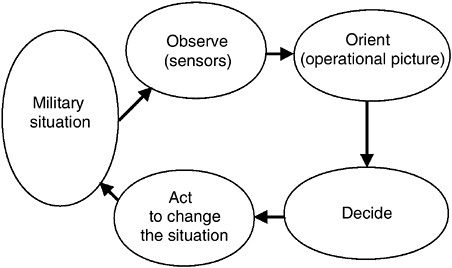
FIGURE 2.1 Steps in the observe, orient, decide, and act (OODA) loop.
is their military situation, which includes the strength, status, and location of friendly, coalition, neutral, and enemy forces; the political situation; environmental constraints; and any other factors, such as enemy tactics and morale, that can influence future actions and outcomes. The military situation is observed imperfectly by sensors of all types, ranging from satellite sensors to Aegis ships and E-2 aircraft, to Marine forward observers and even human spies. The information from all these sensors, some of which is erroneous and sometimes deliberately misleading or contradictory, must be collected and converted into a higher level of knowledge by staff personnel, or better yet by computers and software agents whenever possible, because of their speed. Validated information is presented to commanders so that they can make assessments, estimates, and judgments, i.e., orient themselves to the operational picture. Based on this situational awareness, the constraints presented by the military situation, and the time and resources available, commanders must decide what to do. Commanders can use a variety of instruments, the most potent of which are forces and weapons, to effect change in the military situation.
A commander who is planning what to do when tensions are rising may have enough time to seek additional input from sensors. A commander who observes that his ship is under missile attack may have only seconds to deploy defensive weapons. Time is a very important dynamic that overlays every OODA loop. Therefore, the NCII must be designed to reflect the time dynamic of most critical network-centric operations and to ensure that the OODA loop can be executed in the required time. Early in the NCII development process, requirements must be
derived for response time and quality of information, based on analysis of likely future operations. When validated, these requirements must inform the overall NCII systems design. In some operations, the required time to complete the OODA loop may be so fast that it cannot be met by the response time of the NCII. In these cases, specialized closed-loop automated systems may have to be used.
The Navy and Marine decision makers who will affect military situations and outcomes range from the CNO and CMC to a ship commander, an aircraft commander, or a Marine platoon leader, and potentially to individual squadron leaders. This entire range of individuals could conceivably be operating simultaneously on the network, and the total number engaged at any time could be quite large. The average and peak numbers of users and their response-time requirements must be determined and analyzed as part of NCII system design. Each decision maker has a level of required information, with its associated level of granularity and specificity, as a basis for acting decisively in his or her own OODA loop time dimension. Special priority must be given to high-temporal-response OODA loops, such as in missile defense, for which traffic bottlenecks in the system could mean disaster and loss of a platform. The NCII must be designed to accommodate all these different requirements.
In addition, the type of operations being conducted by decision makers in their OODA loops at any given time will determine further requirements for the NCII. In operations ranging from operations other than war through major theater war, the tempo in each OODA loop and hence the demands on the NCII will increase significantly as tensions escalate. The NCII must be designed to respond dynamically to these changing requirements and to give each user confidence that the system will provide the necessary sensor information to permit deliberation, decision making, and execution that preclude the adversary’s ability to respond.
2.1.4 Examples of Network-Centric Operations and Requirements for Success in Mission Objectives
As designers undertake the difficult job of designing the NCII to enable future NCO, it is useful to present brief examples or vignettes of missions or operations that occur in different parts of the four-dimensional space described above in terms of the OODA loop. In addition to indicating the range and characteristics of the information needed by the decision makers involved at various levels in resolving military situations, the scenarios also highlight technical requirements to be met by sensor systems and other sources of information in achieving mission success.
The committee points out here that its definition of NCO is quite general and does not prejudge important issues such as the form of command relationships, extent of delegation, dependence on automated systems, or globality of the networking. NCO encompass a broad range of activities over diverse circumstances. For example, the commander of a particular peacemaking operation might de-
mand rigid control over even low-level actions, such as whether to engage a single enemy aircraft, because such actions could have strategic consequences. In another peacemaking operation, authority for on-the-spot decisions might be delegated down to a marine platoon. In large, intense wars against a highly competent enemy, operations might be driven by mission orders with extensive delegation and relatively little middle management; further, they might include—for certain periods of time—automated actions by air and missile defenses. In some instances, NCO might involve a fleet commander depending heavily on information provided from sensors and analysts many thousands of miles away (in an Internet-like fashion). In other instances, NCO might pertain only to the real-time sharing, within a much smaller region, of fire-control-quality information (in a cooperative engagement capability (CEC)-like fashion).
One of the distinguishing features of NCO is that mission objectives are achieved by coordinating functions across platform boundaries. NCO are thus a natural next step in warfighting that already includes multisensor cueing and networked defense systems. But network centricity is revolutionary, perhaps, in the sense that many critical mission components, including self-defense, targeting, and firing of weapons, will rely to an unprecedented extent on close multiplatform cooperation. In fact, the shift to NCO is driven in part by the inability of sensors on any single platform to provide the information necessary for force protection and power projection in the modern threat environment.
While traditional requirements are tied to platforms and platform subsystems, the technical requirements for NCO begin with the need to accomplish missions. Of the missions mentioned above in Section 2.1.1, the Navy has built considerable networking capability in deterrence, air power, and sea dominance, surface and undersea. The committee’s judgment was, however, that the Navy’s capability for the power projection mission, particularly the land-attack aspect, lags behind those of other mission areas. Hence in the examples below and in the remainder of the report, major emphasis is given to the land-attack aspect of the network-centric power projection mission.
2.1.4.1 Preparation for Major Theater War
When naval forces conduct strike planning for a major theater war during rising tensions and with a time frame of days or months, Navy and Marine commanders and staff are working with information at an intermediate level of detail on the numbers, location, and characteristics of targets. Because commanders in this situation must directly order and oversee execution of sensor and weapon missions, it is their responsibility to obtain the information needed to develop plans and a prioritized and synchronized target queue, including the type and number of forces and weapons to be used.
As tensions escalate, the effort and focus turn to indication and warning and a faster update of order-of-battle information through surveillance and reconnais-
sance, thus increasing the sensor tasking rate and the associated flow of information through the network. Given that many of the sensors to be tasked will not be organic to the Navy or Marines, the NCII must provide seamless connectivity to these joint assets so that the target queue can be updated continuously as targets are destroyed, as friendly weapons are no longer available, or as environmental conditions change. The position and mobility of the aim points must be understood at spatial and temporal resolution sufficient to ensure that any weapon or sensor will execute effectively. The full suite of sensors available on surface and air platforms within the sphere of influence must be accessible to commanders on the network so that they have the information required for flexibility and speed in adapting to changing requirements. The results of any attacks must be quickly ascertainable based on rapid input from appropriate sensors. For complex targets, such as military positions in urban environments, several different sources of data may have to be tasked, fused, and analyzed quickly. Upon firing, the weapons inventory will be decremented automatically and the information automatically presented to the commanders.
2.1.4.2 Long-range Targeting
The following scenario, focused on long-range targeting, illustrates the need for joint networked operations in many military situations and highlights the complexity of the technical requirements for success in this mission component.
Satellite imagery shows enhanced activity at a terrorist base located 40 miles from friendly territory. The satellite imagery is presented through the NCII to the Navy battle group commander, who decides to monitor and attack if terrorist vehicles are directed toward the friendly territory. A Joint Surveillance and Target Attack Radar System (JSTARS) is deployed, and the synthetic aperture radar (SAR) imagery gathered in early flights is added via the NCII to the National Imagery and Mapping Agency’s (NIMA’s) point positional database (PPDB) (aboard JSTARS or located in CONUS) to determine the precise latitude, longitude, and elevation of fixed targets in the base. The data are entered into the automated planning system used by the battle group commander and his staff to preplan an F18 mission strike with joint standoff weapon-Global Positioning System (JSOW-GPS) missiles.
On the fifth day of flight operations, the moving-target indicator (MTI) radar on JSTARS indicates significant movement in the angular sector that contains the base. Imagery from a Global Hawk unmanned aerial vehicle (UAV) confirms that the movement is due to terrorist vehicles leaving the base, and not to commercial traffic. The JSTARS data and the Global Hawk information are instantly provided to the
battle group commander, who decides to act by ordering an attack on the terrorist base and vehicles.
While on the carrier, the JSOW missiles on F18s are loaded with GPS coordinates for approved targets in the terrorist base. The F18s take off and head toward their target. Intelligence indicates that GPS jamming might be a problem, so the F18s ensure that GPS coordinates are accurate and release the JSOWs. As the JSOW missiles fly toward the base, each detects that its Inertial Navigation System (INS) and GPS coordinates differ by more than an acceptable margin, suggesting the effects of jamming. The INS in each missile now guides it to the selected target. The targets in the terrorist base are destroyed.
Because the terrorist vehicles are moving, they cannot be targeted with a GPS weapon. Based on the earlier alert status, special forces were landed and positioned to laser-designate any vehicular movement out of the terrorist base. The battle group commander decides to attack any moving targets with Maverick missiles fired from an F18. The F18 flies into enemy territory and releases its AGM-65C missiles. The missiles fly to the laser-designated targets and destroy them.
The technical keys to success in this mission scenario are as follows:
-
Satellite intelligence;
-
Precise localization of fixed targets by adding SAR data against NIMA’s PPDB;
-
Precise GPS localization of the aircraft before launch, and download of the data to the missile;
-
Self-localization of the JSOW missile using inertial navigation when GPS is denied;
-
MTI radar indications of movement;
-
Imagery validation of potential moving targets using a UAV;
-
Ground designation of moving targets; and
-
Instant information on the situation provided by the NCII to the battle group commander.
The scenario illustrates the complex interplay between intelligence and tactical data that must be designed into the NCII. Satellite data are extremely valuable for identifying a potential target but often do not provide tactical targeting data. To provide the precision needed to target smart weapons, SAR and MTI data must be processed extensively, which works for fixed targets but not mobile targets. With the support of a network of sensors and platforms, GPS smart weapons are well suited for fixed targets. Currently, mobile targets can be detected by MTI but still require visual identification, which can be provided by imagery obtained from UAVs, and designation when targeted from the air, which
involves the potential for significant risk to friendly assets. The critical capabilities are accurate identification to prevent kills of the wrong target and very timely localization to keep the target within range of the weapon. Reliance on National and joint assets for satellite imagery, the JSTARS SAR, and the Global Hawk information illustrates the importance of designing an NCII that has seamless interfaces to the valuable sensor assets enabling this kind of complex operation.
2.1.4.3 Individual Combat Missions
In a major theater war, individual sailors, marines, and aviators conduct combat in a time frame of seconds, minutes, or hours and are told the “what” of their commander’s intent. With few exceptions, the “how” is left to these frontline operators, who work within the OODA operational model to plan and execute against the assigned target in a very stressful space-time dimension. They must have information about enemy defenses to outmaneuver them and must know or negate the target location (in four dimensions, including time) in the reference frame of the weapon or sensor to be used. Given that modern, high-speed, stealthy, and precision weapons are deployed by all combatants, decision times are short, and the effects of attacks must be determined dynamically with great precision and speed.
Because all the information for planning and execution must be timely and specific enough for mission completion, this situation represents the highest level of detail required and the most exacting time dimension. Combat in these circumstances will often place the greatest demands on the responsiveness of the NCII and movement of information through it and on the speed with which decisions can be made and acted on.
2.1.4.4 Network-Centric Expeditionary Operations
Expeditionary power projection operations include amphibious landing, fire and logistics support of forces ashore, and establishment of air superiority. At the same time, the task force commander must provide force protection, including theater, air, ballistic, and cruise missile defense, antisubmarine warfare (ASW), and mine countermeasures (MCM). Networking for each of these functions and/ or missions will carry its own particular requirements for the NCII. Fully networking the overall expeditionary operations to provide and enable sharing of a comprehensive joint operational picture offers the potential of a very great improvement of efficiency and effectiveness in a joint system-like operation.
While the land-attack aspect of the power projection mission is emphasized in the ashore examples and throughout much of this report, it should be emphasized also that expeditionary power projection by the joint task force (JTF) will include littoral battlespace preparation involving ASW and MCM, as well as
strike, amphibious landing, and fire and logistics support of the forces ashore. At the same time, to protect the forces afloat and ashore, local air dominance, and cruise and ballistic missile defense, and sea lane dominance including ASW and MCM, must be provided by the command JTF. Enabling these functional and mission areas brings its own requirements for networking in the NCII. Fully networked, the overall operation via the NCII will be very complex, as necessary to provide and enable sharing of a comprehensive common operational picture (COP), offering the potential for greatly improved efficiency and effectiveness of operations by the JTF.
2.2 BASIC CAPABILITIES REQUIRED IN A COMMON COMMAND AND INFORMATION INFRASTRUCTURE
As the critical core element that integrates the elements of commanders, sensors, information and knowledge bases, forces and weapons, and logistics enabling NCO, the NCII must be designed to meet the following basic requirements:
-
Provide sufficient capacity, quality of service, and speed to meet operational needs as the level and tempo of conflict vary;
-
Incorporate control mechanisms necessary to meet leaders’ needs, e.g., for security, efficiency, and economy;
-
Have costs of implementation and operation that are sufficiently low to ensure that all naval nodes needed to maintain operational effectiveness can be included in the network and that training needs can be satisfied; and
-
Provide assurance regarding the overall security and reliability of the network and of the information it transports.
A revolution in commercial networking is now occurring that can be embraced to ensure that the NCII can be developed to meet these military needs. This revolution is increasingly converging on the Internet model of a single infrastructure that can accommodate all applications, with the characteristics of the network being determined by the requirements of the most demanding applications using it.
At the physical level, the NCII network will be made up of devices and media that physically connect nodes at which
-
Data gathered by sensors can be injected or retrieved,
-
Knowledge bases reside that were derived from previously collected data,
-
Applications involving processing and fusion of data can be executed,
-
Command can be exercised, and
-
Actions can be implemented.
In addition, to enhance mission effectiveness, the elements of commanders, sensors, knowledge bases, forces and weapons, and logistics must all be integrated within the NCII (see Figure 1.1) to provide the following capabilities necessary for successful NCO in the 21st century:
-
Integrate. Combine and present multiple elements of information.
-
Evaluate. Analyze different courses of action, campaign plans, battle attack plans, and individual sorties and project the potential outcomes.
-
Predict. Assess an enemy’s view of the situation and forecast probable enemy behavior at all levels.
-
Cross-reference. Express all relevant objects in a common space-time frame.
-
State. Express and understand and/or estimate the time-referenced geolocation and movement vector of a relevant military object.
-
Catalog. Know and keep current the details of all relevant military objects.
-
Associate. Assign accurately and quickly the necessary information to relevant military objects so that they can be clearly understood. Automatic target detection, recognition, classification, identification, and fingerprinting are among the technologies that enable this capability.
-
Remain aware. Maintain situational understanding in a relevant time frame. Enemy countermeasures, wartime reserve mode employment, and changes in enemy tactics are examples of activities that must be detected and monitored.
-
Provide assurance. Maintain secure, uncorrupted, and timely delivery of information and knowledge.
-
Visualize. Display an appropriate representation of the battlespace at all levels in all dimensions. This visual capability is appropriate when it is the best way to exploit the part of human cognizance associated with seeing.
-
Be dynamic. Enable timely and decisive action that exceeds the enemy’s capability by a large magnitude.
-
Assess. Rapidly assess the effects of applying forces and weapons, including bomb damage as well as the effects of all military services’ full range of weapons, from information operations to explosive devices.
-
Control. Influence outcomes with the minimum expenditure of physical and human resources.
Chapter 4 discusses NCII concepts and architecture in some detail. The important issue of information assurance is addressed in Chapter 5, and Chapter 6 examines current capabilities and progress toward achieving the capabilities needed for effective network-centric operations.
2.3 THE NEED FOR SYSTEM ENGINEERING
The common command and information infrastructure required to support networked naval forces will be large and complex, with many different types of interfaces to external sensors, platforms, weapons, forces, knowledge bases, and human decision makers. Integrating all these resources in an efficient and effective way requires a disciplined approach—system engineering. The committee believes that the application of system engineering to the development of a successful NCII is mandatory. With few exceptions (Naval Sea Systems Command (NAVSEA) 05 was one4), it has not observed this methodology being applied in the network-centric effort under way now within the Department of the Navy.
Because system engineering is so important to success in developing a capable NCII, the six axioms of the methodology are outlined here, all to be applied with sound and creative engineering judgments as to where and how to allocate emphasis and resources:
-
Set the requirements. Develop a complete, consistent set of requirements. These requirements will relate partially to the NCII itself but also to the network-centric operations that the Department of the Navy wants to conduct. The importance of establishing the requirements for NCO early in concert with the developing new CONOPS cannot be overemphasized.
-
Perform studies of the trade-offs. Objectively and systematically select the best design concepts from among alternative solutions to satisfy the requirements within the available resources and schedule. Avoid point solutions; they are rarely optimum.
-
Document the baseline. Put the baseline design into a document for all to use.
-
Manage the design. Proceed from preliminary to final detailed design of the selected concept using accepted practices, components, and materials, and conduct major reviews with all the stakeholders present at the conceptual, preliminary, and final stages.
-
Verify the design. Continually verify that the design meets all the requirements under all expected environments and conditions.
-
Document everything. If it is not written down, it never happened!
Joint Vision 2010 presents an excellent conceptualization of future operations, but detailed plans are needed now for accomplishing the vision. Such plans need to be developed and prosecuted by those with large-system analysis and
engineering expertise. Only through the application of this disciplined approach, which has been used to design and develop many highly successful large systems (such as the fleet ballistic missile family, the Space Transportation System, and numerous military aircraft), can the naval forces have any confidence in the resulting design and implementation. Future critical missions must be defined, and operational analysts must determine the requirements to accomplish these operations. Designs must be developed to meet the firm requirements, and trade-offs should be studied to select the optimum design, given the various constraints. Only after critical design reviews should the hardware and software implementation begin.
The system engineering approach contrasts sharply with the approach currently under way in which viewgraphs paraphrase Joint Vision 2010 and the Defense Planning Guidance, and road-map charts merely identify the chronology of big events. Lists of miscellaneous desired operational capabilities that in many cases are ill-defined, open-ended, and more functional than operational will not result in an operational network. With few exceptions, the committee observed almost a total lack of system engineering rigor in the numerous presentations given to it for this study.
Finding: With few exceptions, a disciplined system engineering methodology is not currently being applied to the development of the NCII.
The hardest part of converting from platform centricity to network centricity will be changing the minds of those involved. Once begun, the momentum must not be seen to wane. This will require dedicated leadership, a constant and continuing reinforcement of the goals, and continuity of effort. This, in turn, calls for gathering a critical mass of formal and informal leaders throughout the Navy, carefully laying out a strategic plan and a campaign (operational/business) plan, anticipating where the weak points and/or potential failures lie, and developing contingency plans. One cannot tell people to believe in the concept of NCO and expect immediate acceptance. One can depict the desired outcome, define the desired behavior patterns associated with NCO, and reward the individuals who perform most effectively.
2.4 THE CRITICAL ROLE OF LEADERSHIP IN NETWORK-CENTRIC OPERATIONS
2.4.1 Technology and Doctrine for Supporting Decision Makers
A critical element in network-centric operations is the human commander. The human brain, although it remains limited in its ability to process the increasing amounts of information that networks and computers are capable of delivering, is still superb in making associations and recognizing patterns. Only human
leaders can assimilate the information provided in NCO and convert it into the knowledge and understanding that lead to decisions and actions. Strong and effective decision makers therefore can be argued to be the most important element in network-centric operations. Better and more timely decision making—one of the significant challenges for improved mission effectiveness—requires high-quality information in a form that humans can rapidly recognize and understand. One example is graphical representations in which humans can easily recognize patterns and changes in patterns, as opposed to the textual representations used extensively today. Another challenge is to enable autonomous decision making for effective operations in local situations.
NCO must feature a mission style of command in which the commander’s intent or the purpose of a task is explained and subordinates are given the freedom to accomplish that task in their own way within doctrinal guidelines. Senior commanders will need to hold a very loose rein, allowing for ingenuity and spontaneity in subordinates. Improvisation will often be the order of the day, and freedom of action the byword. Implicit understanding will reduce the need for detailed and lengthy instructions. In short, for NCO, restrictions on leaders must be minimized and their initiative and responsiveness maximized.
While the Navy command and operational decision structure has been evolving in this direction for some years, the succeeding steps needed to fully accommodate the needs and techniques of NCO could be wrenching for the Service. NCO could induce changes in the very meanings of the terms “command” and “leadership” and will also affect how coordination, cooperation, and teamwork are carried out. This goes beyond technological innovation to social revolution within the Service. The Navy’s leadership will have to enter this new command and information world fully aware of its implications if the greatest advantage is going to be gained from the shift from platform- to network-centric operations.
Good leaders in the NCO mode want to have available the most up-to-date technology and will be well prepared to take full advantage of its sophisticated capabilities. However, experienced leaders are more restrained in what they expect technology to provide under the stress of combat than are many of the advocates of high-technology equipment, especially in the area of command and control. Mature leaders are realistic about the demands of battle, and they always anticipate the unanticipated. They realize that the “friction of war” will continue to haunt every corner of the battlespace.
Basic to NCO are the integration and interpretation of the reams of information streaming in from the many intelligence systems, sensors, and reconnaissance assets in order to present combat leaders a coherent “picture” that will provide situational awareness. Leaders must be able to discern meaningful patterns of enemy activity in conditions that appear, and in most cases are, disordered and confused. This knowledge, coupled with the experience, judgment, and intuition of well-trained leaders, will allow them to adapt to the situation at hand, identifying and exploiting enemy vulnerabilities while protecting their own.
Integral to NCO will be decision-centered command and control facilities designed by human-factors engineers and cognitive psychologists. The contributions from these experts will also be needed in the development of decision-centered staff organizations and decision-centered training programs. The strengths of computers will have to be balanced with the strengths of human minds—the application of intuition, improvisation, and creativity, especially in the face of new or unique problems. Disciplined application of ergonomics will be required to improve the interfaces between machines and humans, and across entire systems. Decision aids, including software agents and personal digital assistants, will have to become ubiquitous as they “mine” data, make comparisons, and otherwise draw on experience captured as lessons learned. Information that has been transformed to the knowledge level will be available in context and whenever possible in an image format. Anchor desks, common databases, and shared pictures will enable collaborative thinking, a more powerful and fundamental capability than collaborative planning.
Finding: The Department of the Navy needs to focus research and development (R&D) on methods to achieve improvement in human decision making because human decision makers are a key element in NCO, and their ability to make faster and better decisions is essential to mission effectiveness.
2.4.2 Leading the Transformation to Network-Centric Operations
To succeed, the planned transformation from a platform-centric to a network-centric naval force will require strong support from the top. This support must include a shared vision for NCO among the senior leaders of the Navy and Marine Corps, a set of strategic objectives, and a tactical plan for achieving the objectives. The plans must be supported by priorities, allocation of resources, appointments, recognition and reward of individuals and groups, and enthusiasm. Further, the top leaders are responsible for ensuring that those involved in change are meeting defined goals and objectives and persist in making progress over the long haul.
An important related aspect in transforming the naval forces is to develop concrete measures of output. The committee strongly recommends that the Navy and Marine Corps leadership use as a criterion whether proposed changes in operations will substantially enhance the capability of the joint and naval forces to accomplish critical military missions. This is in contrast, for example, to pursuing ill-defined and open-ended objectives such as “information superiority” without having any detailed measures for assessing achievement of the objective. Only by looking at operational objectives (missions) in a variety of circumstances can the naval forces develop the requirements to drive decisions about what is needed and how much is enough to support accomplishing the military objectives of the 21st century.
It is the responsibility of the top leadership to clarify the goals and the associated measures of success. This responsibility cannot be delegated to fleet commanders, ship captains, or systems commands. A consensus-building process that brings all the key stakeholders together to define the goals and requirements of network-centric operations is badly needed.
Finding: The naval force leadership needs to develop a shared vision of what network-centric operations can accomplish that includes concrete measures of improvements expected in mission effectiveness.
2.4.3 Creating the Environment for Transformation
Enlightened top-down planning to create an environment for the transition to network-centric operations should accomplish the following objectives:
-
Set high-level operational (not functional) challenges to motivate and focus innovation.
-
Identify crucial building-block capabilities in terms of forces, operations, and systems.
-
Ensure development of integrative capabilities, i.e., command and control to operate adaptively by drawing on the building-block capabilities and providing the necessary tailoring, and doing so extremely quickly when necessary (inside the opponent’s OODA loop and within the time scales of other critical events). These capabilities should be fully joint because, in many circumstances, the commander-in-chief (CINC) or JTF commander will be operating from a Navy ship and will be depending on naval forces for early critical operations.
-
Establish a vigorous “marketplace” where innovations can be competed and rewarded.
-
Support development of cross-cutting infrastructure (e.g., the information grid and standards driven by bottom-up considerations and commercial trends) with Department of the Navy funds.
-
Encourage military science such that new operational concepts and operational phenomena are widely discussed, debated, and ultimately understood—not just in viewgraph terms or at the level of intuition, but in terms of system concepts and related methodologies.
-
Establish mechanisms for ensuring that innovations move beyond a permanent test status and are implemented in the fighting force.
These objectives may seem straightforward, but it is revealing to contrast them with current practices. In the course of this study, few of the briefings received by the committee reflected an output-oriented approach. Instead, all too many repeated or rephrased general notions from Joint Vision 2010 or the Defense Planning Guidance rather than describing capabilities harnessed to accom-
plish missions. Discussion was typically quite abstract, whereas much of the real work in developing NCO will be at the level of defining and refining building-block forces, operations, and systems. The traditional U.S. approach to military planning, with its emphasis in peacetime on ponderous “deliberate planning” around a single operational concept and a myriad of assumptions, is almost the opposite of preparing for at-the-time adaptive plan development. To be sure, those engaged in deliberate planning develop many building-block operations and gain the detailed domain knowledge essential in crisis or conflict. To exploit NCO fully, however, the emphasis should be changed. Participants should practice developing plans rapidly from the building blocks rather than optimizing plans with ever-increasing levels of detail and refinement for postulated circumstances that probably will not apply—much as championship football teams play adaptively throughout a game rather than executing “the” operations plan. Such an approach would also make it easier to consider alternative concepts of operation. In the committee’s view, this change in doctrine, which has great ramifications at the joint level, is critical to achieving the aims of NCO.
Similarly critical is the need to shift toward “system thinking” and to ensure that good ideas enter the operational force. Related is that it is essential for the Department of the Navy to ensure that senior leaders who are responsible for implementation of network-centric operations have appropriate technical education and experience; good system work is not a casually acquired capability.
With respect to moving ideas into the operational force, it is interesting to note that the Army’s strategy in creating a strike force explicitly recognizes that real change requires translating ideas into provisional units operating in the fighting force (in the case of NCO, this could mean trying out a flexible command). Similarly, the influential Marine Corps Combat Development Command is working closely with the Commandant of the Marine Corps, who sees himself as the principal engine for change. The Navy, however, must use a different approach because of its very different organizational culture and balance of power. It is essential that the Navy’s powerful fleet commanders play a key role in the Navy’s transformation to network-centric operations—not just technically but also in terms of organization and doctrine. This effort will be challenging because of the fleets’ continuing high operational tempo, but there are many examples of past innovation introduced in the fleets. Fortunately, NCO do not require setting aside scarce platforms and commands. Indeed, some of the important NCO concepts are potentially crucial to near-term challenges such as sea-based missile response to enemy artillery attacks on land (Korea), very fast strike and logistics resupply reaction against moving armies (e.g., the next Iraqi crisis), and sea-based defense against ballistic missile attack (e.g., the next Taiwan crisis).
Finding: The naval force leadership is not developing the type of rapid, adaptive, and innovative top-down planning required to realize the full benefits of NCO.
2.5 A PROPOSED PROCESS FOR DEVELOPING CONOPS FOR NETWORK-CENTRIC OPERATIONS
2.5.1 Overview and Recommendations
A new paradigm is needed to develop CONOPS that will enhance mission effectiveness in the network-centric world of the future. Because both Navy and Marine forces will be involved in future NCO, development of CONOPS should be implemented cooperatively by the Chief of Naval Operations (CNO) and the Commandant of the Marine Corps (CMC). A key challenge today for the Navy and the Marine Corps is learning how to migrate from their current information infrastructure architecture to the developing NCII. Each Service has designated responsible organizations to facilitate the transition.
The Navy established the Navy Warfare Development Command (NWDC) in 1998, to “focus and champion warfare concept development, design and lead the fleet battle experiment program and synchronize and standardize the Navy’s doctrine.”5 The NWDC has three organizational components: a division for concept development, a doctrine division, and the maritime battle center, which is managing the fleet battle experiments. This new command is intended to produce new or alternative doctrine, insight into technologies in an operational context, identification of newly required operational capabilities, ideas for new warfare, and future experiments.
The U.S. Marine Corps established the Marine Corps Battle Laboratory (MCBL), an element of the Marine Corps Combat Development Command (MCCDC), as a focal point to expedite the evaluation and evolution of critical concepts through experimentation. The Sea Dragon process is being used to investigate future warfighting concepts, doctrine, tactics, techniques, and procedures (TTPs), organization, and advanced technologies. The Special Purpose Marine Air-Ground Task Force-Experimental was structured to function as a test organization.
The committee believes that the lead organization for the Navy portion of the CONOPS planning and development should be the NWDC and that the lead organization for the Marine portion should be the long-established MCBL. These two commands should work together closely, especially on operational missions such as power projection from the sea.
The recently established NWDC, however, has inadequate staffing in both number and qualifications to accomplish the envisioned NCO tasks. The NWDC should be supplemented with planning experts from the MCCDC and the other Services, operational analysis experts, systems engineering experts, and Navy
and Marine officers with broad operational experience, a system orientation, and an innovative spirit. Close cooperation with the proposed functional type commander for the recommended Information Operations and Space Command, described in Chapter 7, is mandatory. Indeed, the commander of the Information Operations and Space Command, who would become the single point for providing network-centric operations to the fleet, would have a major responsibility in providing the appropriate fleet-experienced officers to the NWDC for CONOPS development. These officers would then become the ambassadors for implementing new CONOPS into the fleet.
As emphasized above, the Navy and Marines (and the Department of Defense) need to develop and focus on output measures of effectiveness appropriate to the information era. These must include, among others, reduced decision cycle times, reduced engagement times for missile interception, improvements in BDA leading to reduced restrike missions, accuracy in predicting adversary actions, effectiveness of weapons in reaching targets based on improved location accuracy, and so on. Although traditional input measures of capability, such as numbers of divisions, battle groups, or wings, will still be of value, they fail utterly to capture the very capability-enhancing and outcome-improving features that NCO seek to strengthen.
Some of the measures required will deal with human capabilities (amidst suitable support systems) more than with raw measures of force. For example, the qualitative capability of officers to rapidly assemble and execute good plans involves more than merely shortening the cycle time for building them. Similarly, concepts of operations involving highly distributed operations (e.g., those of Marines operating in the rear area of enemy-occupied territory) must take into account the experience, morale, and comfort level of those involved. The feasibility of delegating authority to call in long-range fire will depend on the quality, training, and judgment of those young officers who have the authority.
Yet another class of measures relates to exploiting the potential of network-centric operations to affect the perceptions and resolve of both enemies and third-world countries. The ability to have major effects from long distances, without warning and with a high degree of precision and concentration, creates opportunities that are not yet well understood.
The committee recommends that the CONOPS planning group begin by selecting an initial set of operational concepts that meet the following criteria:
-
Involve high-priority naval force missions that are difficult enough to demand new concepts of operations and/or capabilities (i.e., stressful operational challenges)6 and can exploit the inherent advantages of a networked force engaged in NCO;
-
Have specific outcomes that can be measured for success; and
-
Involve joint forces and perhaps coalition forces.
Some candidate near-term operational challenges that the committee believes meet these criteria are as follows:
-
Rapid forced entry into land positions by the Marines supported by Navy fire to secure critical installations and defeat enemy forces early,7
-
Attack operations against time-critical mobile targets,8 and
-
Rapid establishment of adaptive command and control centers at sea or on the land.
It is not enough to have broad challenges. Organizations also need more specific, even quantitative, goals if they are to get on with systematic problem solving and change. For example, quantitative methods are needed to characterize the ability to seize and secure some number of fixed facilities or positions against some specified level of opposition within some specified period of time in a range of operational circumstances. The Department of the Navy might wish to require the ability, assuming the presence in the region of a carrier battle group and an amphibious ready group, to seize and secure on the order of three lightly defended airbase or port-sized facilities or positions within 24 hours of an order to execute. More generally, the Department of the Navy should have a sense of what the emerging capabilities could accomplish in this regard. This understanding should reflect consideration of details such as warning time, threat level, terrain, whether the United States has information dominance (having the information it needs while denying the enemy the information it needs), and so on. Results should be characterized as “envelopes of capability in scenario space,”
|
|
experiment campaigns (U.S. Atlantic Command, 1998). These are quite distinct from such “functional challenges” as, for example, improving communications or improving collaborative en route planning. See also Davis, Gompert, Hillestad, and Johnson, 1998, Transforming the Force: Suggestions for DoD Strategy, RAND, Santa Monica, Calif. |
not as ability to accomplish some point scenario. There are too many variables for any one scenario to be a good basis for planning.
The CONOPS group would proceed by conducting a detailed operational analysis of the selected mission, to include the following:
-
A systems approach in which all elements of the system are considered and traded off to lead to a balanced solution to the problem;
-
Identification of those elements of the operation necessary for its successful execution, to include numbers and types of sensors, information needs, forces, weapons, logistics, and decision aids;
-
Specification of the capabilities of and the detailed requirements levied on sensors, information, weapons, logistics, and other assets and elements of the military operational model described above;
-
Development of an initial operational, systems, and technical design to meet the mission objectives;
-
Studies of trade-offs intended to optimize the operational design and to avoid point solutions while managing risks (including security risks);
-
Introduction of new technologies when they can improve mission effectiveness;
-
Use of computer modeling and simulation and human gaming to develop insights into the operational design;
-
Testbed experiments conducted to verify critical design features, where appropriate;
-
Use of the proven “model-test-model” iterative or spiral development approach whereby incremental improvements are added to the design as a result of gaming, testing, simulation, new technology, and so on; and
-
Selection of the preferred operational approach as a result of the above effort.
The analytical approach that the committee suggests has a number of key features:
-
A decision perspective supported by a decision-argument-hypothesis-analysis process, focusing research and experiments on issues central to potential decisions regarding capabilities and concepts addressing critical challenges;
-
Hierarchical decomposition of the operational challenges into building-block challenges that can be studied more or less independently;
-
A system perspective highlighting the need for well-understood building blocks that can be combined on short notice in integrated operations under diverse circumstances;
-
For each building-block operation, an analytical architecture supported by a family of models that can be used for the following:
-
Exploratory analysis to understand issues associated with meeting the
-
-
challenges in a vast scenario space (including detailed circumstances) and to identify issues and context for in-depth study;
-
In-depth, high-resolution analysis to understand underlying phenomenology—even down to the level of sensor logic, weapon times of flight, and command and control interoperability—and to use that understanding to help shape the higher-level, lower-resolution exploratory models; and
-
Integrative analysis at the operational and strategic levels.
To implement this approach, the committee envisions a family of models ranging from analytic models that can be run and understood by a single analyst with a personal computer, to human games (which may be simulation-supported, as in synthetic theater-of-war work), to field experiments. The value of some models can be enhanced if human behaviors and decision making have been represented respectably (e.g., with so-called agent-based models). The point is that conducting research in a way that draws on the full range of analytical instruments is very different from what has traditionally occurred in Navy, Marine, or joint experimentation. Many opportunities have been lost.
The NWDC and the MCCDC next should subject the preferred operational plan to war games in which decision makers and adversaries will determine the plan’s strengths and weaknesses. After the war game results are analyzed, any necessary modifications to the operational design should be incorporated.
The NWDC and the MCCDC should aim for an 18-month turnaround for the above spiral development process. The result would be a well-documented CONOPS that was ready for prototype implementation. The information required for conducting the operation would be captured and put into the form of adaptive templates. The templates would provide the initial set of information in an engagement, but as conditions changed the users could modify the templates easily.
At this point the recommended functional type commander, Information Operations and Space Command (see Chapter 7 for the organizational details), would introduce the CONOPS and related capabilities to the operational force on a provisional or prototype basis. For example, a single carrier battle group/ amphibious ready group in the Third Fleet (USS Coronado) or other elements of the operational fleet would be equipped to support the CONOPS. Such action will require changes in the acquisition cycle to expedite the procurement of new telecommunications and information equipment and software. Without this expedited procurement, realizing benefits from the new NCO in the near- or mid-term will be impossible.
The committee recommends that large-scale fleet experiments involving the provisional force and other traditional forces be conducted. In this way fleet operators will develop experience with the new NCII and NCO, and the Navy and Marines can obtain a true comparative measure of the improvement in output effectiveness of the network-centric force. Depending on results, these CONOPS
or revised versions would be taken up over time by other parts of the force. This approach to experimentation—after careful analytic development of CONOPS—is in sharp contrast to the current fleet approach that sets aside a portion of the naval forces for experiments, resulting in only incremental improvements without a plan for wide-scale implementation.
Assuming success in identifying and testing the new concepts and capabilities, the Navy and Marine Corps then would have to make plans for appropriate force-wide changes over time, develop and promulgate widely the relevant changes in doctrine, and make associated changes in the personnel system (including recruitment, education, and training). Some of these changes would begin early (e.g., developing initial doctrinal concepts before fielding even a provisional capability). They would co-evolve along with technology and concepts. The overall process of change from a platform-centric force to a network-centric force will take many years, especially in cases involving major acquisitions. Further discussion and details related to these recommendations are provided in Chapter 7.
Finding: There is no effective Navy and Marine Corps process for selecting, developing, and implementing CONOPS in the network-centric paradigm.
2.5.2 Transitioning Through Experimentation
To make the transition to network-centric operations as quickly as possible, a recommended strategy is to place key information technologies into the hands of naval warfighters at all echelons in a way that allows them to easily try out new ideas for using those technologies. Then, ideas that produced substantial warfighting value should be introduced quickly into the NWDC and MCCDC CONOPS development process and deployed more widely in an accelerated manner.
Experimentation with new technologies and processes holds the key to transitioning: “The purpose of an experiment is to explore alternative doctrine, operational concepts, and tactics that are enabled by new technologies or required by new situations. That is, new technologies or situations may call for different ways of conducting operations. But without actual operational experience in using those technologies or in those new situations, experiments are the next best thing, because they provide more of a basis for making informed doctrinal choices than does reliance only on analytical studies and/or simulations.”9
Experimentation should occur at different scales, at different echelons, with
different mission types, and with different operational communities. Experiments should complement modeling and simulation activities and demonstrations such as the advanced concept technology demonstrations (ACTDs). They should be designed to provide insight into the ramifications of a new operational concept or innovative technologies. They should have hypotheses about and measures of effectiveness, and as such require rigorous analysis of results. They can fail in their ability to find the right solution but should always succeed in providing knowledge about the ramifications of new ideas and technologies.
Both the U.S. Army and the U.S. Air Force have incorporated experimentation in their own transition to network-centric architectures. Their programs have helped to refine not only system architectures but operational architectures as well. The spiral process they applied was essential to their transition strategy because it accelerated innovations into the field. Analogously, this core process is essential to the Navy’s migration path for NCO, and it warrants further discussion.
2.5.3 The Spiral Process
2.5.3.1 Characteristics of the Spiral Process
The spiral process is also called evolutionary development because it “… is an innovative method to field a system quickly using commercial and government off-the-shelf equipment, with maximum user involvement throughout the process.”10 The first spiral is usually regarded as the first development cycle of a system. Subsequent spirals allow technology insertion, addition of new mission capabilities and upgrades, and enhancement of interoperability and integration, all in an environment of continuous user feedback.
The process characteristically partitions the more traditional development cycle into shorter, incremental cycles, during which operators get hands-on access to the evolving system in each cycle and provide their feedback and requirements to a development team that is prepared to respond with modifications. In so doing, the operators may modify their own operational processes and concepts based on use of the emerging capability. The spiral process is more than an acquisition process; it also supports reengineering the operational concepts. Each spiral has its own defined activities, performance objectives, schedule, and cost; each spiral concludes with a user decision to field the system, continue with evolution, or stop.
The spiral process has several distinguishing characteristics:
|
10 |
Gilmartin, Kevin, Electronic Systems Command Public Affairs. 1998. Spiral Development Key to EFX 98. Department of the Air Force, Hanscom Air Force Base, Mass. Available online at <http://www.hanscom.af.mil/ESC-PA/news/1998/jul98/efx98.htm>. |
-
Continuous feedback is accepted from users throughout each spiral based on their actual use of the evolving capabilities. This is a preferred alternative to a paper-requirements process.
-
It is an acquisition process—the operators’ reactions are used to alter actual system capabilities during development.
-
The operational concepts supported by the system capabilities are evolved as well, through a reengineering of operational processes, doctrine, tactics, and organizations.
-
An experimentation program provides the framework for the spiral process to evolve new operational concepts and processes in addition to the new system capabilities.
2.5.3.2 Advantages of the Spiral Process
The spiral process is a powerful alternative to the traditional acquisition process. One of its advantages is that it offers a sound replacement in areas where technology is changing rapidly and cycle times in the commercial sector are short compared to the traditional DOD requirements and acquisition processes. It is difficult to specify requirements for revolutionary concepts in advance and equally difficult to anticipate how new and innovative capabilities will be used. Rather, such understanding matures over time. The spiral process as embedded in an experimentation framework enables a faster maturation of this understanding in incremental bursts and over discrete, short time periods.
The spiral process also accomplishes the following:
-
It enables new capabilities to be developed based on known requirements (from actual use) rather than on unknown requirements (postulated many years in advance of deliveries into the field).
-
It facilitates interoperability and integration of systems. Spiral development is effective at uncovering interoperability problems because the output of each cycle, though intermediate, is the result of a testing and integration process using operators with hands-on access. This is the best method for uncovering anomalies in interoperability.
-
It reduces risk. It is possible to focus on higher-risk and unknown aspects of programs in early cycles of the process, rather than delaying until the final stages of a long requirements, design, and development process to detect problems and identify their solutions.
-
It accelerates fielding of innovative operational processes and systems. The intermediate products of the spiral process can themselves be deliverables for operational use. Systems results can be fielded rapidly because there is a direct and immediate correlation between the product designed and developed and the operational process supported, which can be replicated in the field without another prolonged requirements-and-development phase.
2.5.4 Spiral Development in Army and Air Force Programs
2.5.4.1 Army Experimentation Program
The Army vision of battlefield digitization was articulated in the early 1990s. The goal is improved lethality and increased operational tempo through the application of information technology. Significantly enhanced situational awareness at all echelons is intrinsic. To evolve, the Army used a series of experiments to shape and equip its future force by evaluating networked forces equipped with information technologies. More specifically, the Army embarked on a series of experiments, simulations, and exercises, including several advanced warfighting experiments (AWEs), echelon by echelon. This process continues today with a view toward fielding an Army XXI over the next several years and evolving toward the Army After Next by FY 2020+.
Each experiment required changes to the then-current operational concepts and doctrine, supported by certain advanced information technology capabilities not fielded in the operational Army. The resulting systems architecture was a composite of experimental technologies integrated with legacy systems, designed and developed as an integrated product specifically for the experiment.
Because of continuing problems with interoperability, the Army evolved a technical architecture after soliciting responses from the commercial sector. At least two-thirds of this architecture was migrated into the first version of the Joint Technical Architecture (JTA). Today the Army’s unique extension of the JTA is synopsized as JTA-Army. Compliance is addressed through acquisition oversight and certification testing conducted on systems before fielding. The Director for Information Systems, Command, Control, Communications, and Computers is the responsible architect and reports directly to the Army’s top acquisition executive.
The Army’s use of the spiral process in the migration strategy resulted from its experience with the Task Force XXI, an AWE that culminated in a force-on-force engagement at the National Training Center in March 1997. The preparation began with an operational architecture that described how a digitized brigade would conduct operations if equipped with all the information technology the Army had at the time. A spiral evolutionary process was used to deliver the systems architecture. This is discussed in an article by General Steven Boutelle, USA, and Alfred Grasso, in the Army RD&A magazine.11 The Army has given much credit to the spiral process for the transformation. The process was used at the Central Technical Support Facility at Fort Hood, Texas, where operators
|
11 |
Boutelle, BG Steven, USA, and Alfred Grasso. 1998. “A Case Study: The Central Technical Support Facility,” Army RD&A, March-April, pp. 30-33. Available online at <ftp://204.151.48.250/docs/dacm/rda9802.pdf>. |
trained with a series of operations-like drills on the systems architecture that evolved in increasingly robust stages. The evolutionary acquisition process allowed developers to adapt and/or correct while operators trained. The net result was an integrated “system of systems” that was used in the AWE.
For Task Force XXI, the architectural process began when an operational architecture was postulated. Legacy systems and digitization initiatives were evolved for the experiment to support that postulation and to conform to the then-current Army technical architecture. The actual conduct of the AWE was affected by some immaturity in certain advanced technologies used, but this is to be expected with an experimental process. The Army gained substantial knowledge from the event. The subsequent assessment of what actually happened during the AWE was used to accelerate certain key system acquisitions for subsequent fielding by the Army. The net result was that the Army moved to accelerate into the field operational concepts and a system architecture that incorporated key information technologies. This constituted an intermediate step toward a longer-term goal, one that will be achieved at a considerably accelerated pace in years over that allowed by the traditional acquisition process.
Today the Army is pursuing a migration strategy that incorporates the spiral process and experimentation as key components. Joint experimentation is being expanded, and an international coalition program for digitization is in the early stages, with specific international partners.
2.5.4.2 Air Force Experimentation Program
The vision of the battlespace infosphere proposed to the Air Force by the Air Force Scientific Advisory Board (AFSAB) is organized around information.12 The architecture framework addresses not only the capabilities of network-connected command, control, communications, computing, and intelligence (C4I) components with database and communications services but also all forces and systems associated with conducting a military operation.
To move toward this vision, the AFSAB proposed jump-starting a prototype of the battlespace infosphere, starting with the colocation of elements of the Electronic Systems Command (ESC) and an aerospace command, control, intelligence, surveillance, and reconnaissance (C2ISR) center, and then moving rapidly to a major experiment applying many Defense Advanced Research Projects Agency initiatives, which, if successful, would result in “leave behinds” for operations. Locating this initiative near Norfolk, Virginia, was anticipated to improve “jointness.” Use of the spiral development model initially developed at
|
12 |
U.S. Air Force Scientific Advisory Board. 1998. Report on Information Management to Support the Warrior, SAB-TR-98-02. Department of the Air Force, Washington, D.C., December. Available online at <http://ecs.rams.com/afosr/download/sab98r1.pdf>. |
ESC was intrinsic to the migration and was articulated as a specific recommendation: “… [T]he evolution model starts with a set of mature technologies plus an initial concept. The initial experiments will result in a revised concept and possibly a revised list of technologies. The art in using this spiral approach to concept and system evolution is to find the collection of mature technology that will support a meaningful test of the concept. If this spiral development approach is done correctly, this will simultaneously change the way people think about and deal with information while accelerating the development and maturation of enabling technologies.”13
The migration process applied by the Air Force for its command and control (C2) architecture is illustrated by the expeditionary force experiments (EFXs) used to build the Expeditionary Aerospace Force. These are major and minor experiments conducted every year, alternating in scale every other year. EFX98 was a major experiment that used processes that align with the generic migration framework described above.
The EFX98 explored command and control using global networks for forces and information. The prototype operational organization was significantly reduced in footprint. A robust network linked shooters to C2 nodes to gain improved responsiveness. The objectives included reduced time lines and en route mission updates for changes in targeting based on an assessment of the situation more current than that available at the outset of the mission.
The operational architecture and systems architecture used in the actual experiment, conducted in September 1998, resulted from the “fourth spiral” of an evolutionary acquisition process begun at ESC many months earlier. The JTA-Air Force was applied as the standards and guidelines. Spirals occurred approximately every 3 months. Many operators exercised the evolving systems architecture that included many technology initiatives and continuously evolved until the time of the experiment. Their hands-on use stimulated many adaptations that eventually were stabilized in the architectures used for conducting EFX98. The result assessment is being used to establish an integrated C2 capability for the field.
The EFX98 was so successful14 that the Air Force determined that the spiral process for evolutionary acquisition should be adopted Air Force-wide. The process is currently being documented in an Air Force instruction with the intent to mandate its application.
|
13 |
United States Air Force Scientific Advisory Board. 1998. Report on Information Management to Support the Warrior, SAB-TR-98-02. Department of the Air Force, Washington, D.C., December, p. x. Available online at <http://ecs.rams.com/afosr/download/sab98r1.pdf>. |
|
14 |
As with Task Force XXI, “success” in an experiment does not imply that all innovations applied in the experiment are ready for operations. The knowledge derived from the experiment can be the most important product. |
2.5.5 Navy and Marine Corps Experimentation
The Navy and Marine Corps have embraced large-scale field experimentation. The Navy used a war game, Global ’97, to study ways that Joint Vision 2010 would be applied in the future for naval forces and also for joint task forces. A series of fleet battle experiments (FBEs) has been planned, and many experiments already have been executed to explore new concepts and systems. Among these are the maritime fire support demonstrator, the cooperative engagement capability, and new strategies for theater ballistic missile defense. ACTDs are also being used to explore emerging technologies with a view to earlier (than traditional) fielding.
FBEs Alpha, Bravo, Charlie, Delta, and Echo are completed. More are planned.15 Alpha was linked with a prior Marine AWE called Hunter Warrior, conducted in March 1997. This experiment explored increases in lethality against time-critical targets with a robustly networked force of sea- and air-based shooters employing automated pairing of weapons to targets and allowing deconfliction (collision avoidance) of all objects in the integrated airspace.16 Among the concepts tested were naval fire17 coordination, C4I, the arsenal ship, and joint precision fire.
FBE Delta in September 1998 combined Navy and Army sensors and shooters, real and simulated, to combat a simulated attack by North Korea. Submarines, surface combatants, and aircraft were linked with a joint fire coordination network. The common operational picture enabled by Navy sensors was exploited by Army helicopters to react on time lines not previously demonstrated.18 FBE Echo, in tandem with the Marine Corps’ Urban Warrior experiment in the San Francisco Bay area, dealt with maritime asymmetrical threats in a littoral urban environment, using new concepts for undersea warfare. It also continued to explore naval fire, networked sensors, and strike/land-attack weaponry with command and control and theater air defense. FBE Foxtrot is currently in the
|
15 |
FBE Foxtrot, Golf, and Hotel have been planned for December 1999, May 2000, and September 2000, respectively. |
|
16 |
Alberts, David S., John J. Garstka, and Frederick P. Stein. 1999. Network Centric Warfare: Developing and Leveraging Information Superiority. CCRP Publication Series, Department of Defense, Washington, D.C. Available online at <www.dodccrp.org>. |
|
17 |
Fire encompasses all ordnance deliveries and their required targeting, as well as integrating and coordinating mechanisms. See Soroka, Maj Thomas, USMC, 1997, A Concept for Seabased Warfighting in the 21st Century, Working Paper, Naval Doctrine Command, Norfolk, Va., October 31 (unpublished); and Maritime Battle Center, Navy Warfare Development Command, 1998, “The New Naval War College,” in Surface Warfare, Vol. 23, No. 5, September/October, pp. 2-5. |
|
18 |
Alberts, David S., John J. Garstka, and Frederick P. Stein. 1999. Network Centric Warfare: Developing and Leveraging Information Superiority. CCRP Publication Series, Department of Defense; Washington, D.C. Available online at <www.dodccrp.org>. |
planning stages to explore network-centric concepts for precision engagement, mine warfare, antisubmarine warfare, and counterweapons of mass destruction.
The FBEs alternate between U.S.-based and forward-deployed fleets. Each experiment is focused on a core mission, such as land attack. Results are assessed to establish how new technologies and tactics may enhance the capabilities of the fleet (and joint/allied forces).
As an example, a technology concept called Ring of Fire19 has been tested and modified four times. The objective is to allow surface ships to respond quickly to a call for fire ashore using both existing and future weapons (simulated). To date, this experimentation has been used to demonstrate a significant increase in the speed with which targets can be identified and attacked. The concept is being evolved to include ground forces: Marine or Army, whichever unit is best positioned to engage. Ultimately the maturity of the concept will result in fielding a land or sea capability.20
The ACTD Extending the Littoral Battlespace, which had an initial demonstration in April 1999, provided new capabilities for theater-wide situation awareness, integration of sensors, and over-the-horizon connectivity. The objectives were to leverage C4I for improved precision targeting and mass remote firepower through integration and collaboration for use by dispersed units. Experimental capabilities included a central tactical information infrastructure for enhanced situational awareness and broadband communications networks.
In the U.S. Marine Corps’ series of AWEs—Hunter Warrior, Urban Warrior, and Capable Warrior—each was preceded by its own series of limited-objective experiments; all are parts of a 5-year plan focused on an extended dispersed battlespace with varying terrain and including urban and near-urban littoral areas. Among the concepts being examined are unit enhancements that include long-range precision strike, urban operating capabilities for sea-based forces, and the effects of networking with weapons systems.
The Hunter Warrior experiment focused on tactical operations and equipped a Marine task force with a communications web over the theater of engagement, connecting all levels so that they could access the common digital picture of the battlefield. Enhancements were made to command and control, fire support, and targeting. Urban Warrior was conducted in conjunction with a CINCPAC-sponsored exercise, with FBE Echo, and with the first Littoral Battlespace ACTD. The objectives were to enhance the ability of naval forces to accomplish simulta-
neous noncontiguous operations throughout a littoral region. Capable Warrior will be used to integrate what was learned in the earlier series of experiments by using operational concepts, force structures, TTPs, and technologies that proved successful and modifying those that did not. It will be accomplished in conjunction with naval units operating at the level of a joint task force.
Broadly speaking, however, the committee believes that the Navy and Marine approach to experimentation has been inadequate. Among the problems have been the following:
-
A tendency to focus on a few critical “events” (e.g., major fleet experiments or short, intense Marine experiments) rather than a process of systematically studying a warfare mission and options for accomplishing it;
-
Extreme underutilization of analysis, modeling, and simulation (including virtual simulation with people in the loop); and
-
A failure to decompose the broad problems into components that can be studied in appropriate ways over time, whether with small-scale laboratory or operational experiments, analysis, systematic interviewing of experienced officers, or other methods.
In recent months the Department of Defense, the U.S. Joint Forces Command, and the Services have all received recommendations along the lines the committee urges here.21 Sometimes this approach has been described as a recommendation to embrace the model-test-model paradigm (although “model” must be understood to include man-in-the-loop gaming).
2.5.6 Uniqueness of the Spiral Process
The spiral approach to designing network-centric naval forces—especially, the integration of major platforms into the information-based fleet network—will present many challenges to the current way of doing business. Methods of budgeting, planning, and allocating resources, congressional authorization and appropriation, enforcing accountability, and achieving standardization are needed to guide a rapidly evolving naval force configuration. Only in this way will the naval forces be able to evolve into their new configuration and modes of operation under the anticipated conditions of rapidly changing technologies and environment. The alternative is to remain with today’s fragmented, stovepiped approaches that cannot keep up with changing technology and the demands of the
“information economy” within which the naval forces are becoming embedded and will have to operate. This alternative is unacceptable, so that the naval forces will have no choice but to make the difficult and necessary adaptations to achieve the spiral process, including the negotiation of mutually acceptable approaches with the Office of the Secretary of Defense and the Congress.
2.6 SUMMARY OF FINDINGS AND RECOMMENDATIONS
In reviewing the naval forces development of network-centric operations to date, the committee arrived at a number of findings presented and discussed throughout the chapter and makes the following recommendations for improvement.
Finding: While the Department of the Navy has a long tradition and in many cases leads the way in network-centric-like operations in such missions as air defense and antisubmarine warfare, it does not currently possess the metrics and measuring systems needed for the broad range of NCO mission areas envisioned. Department of the Navy efforts at implementing NCO could be greatly improved by identifying output measures directly tied to mission effectiveness.
Recommendation: The Department of the Navy leadership should develop a set of strategic goals and expectations for NCO with accompanying measures of output performance. The current capability must be baselined, targets of improvement established, and progress verified as NCO become a reality.
Finding: With few exceptions, a disciplined system engineering methodology is not currently being applied to the development of the NCII.
Recommendation: The Department of the Navy should ensure that the NCII and the interfaces to external sensors, knowledge bases, human decision makers, forces, weapons, and logistics are treated as a system and that system engineering methodology is applied to all development aspects. Failure to implement this disciplined approach will have dire consequences.
Finding: The Department of the Navy needs to focus R&D on methods to achieve improvement in human decision making because human decision makers are a key element in NCO, and their ability to make faster and better decisions is essential to mission effectiveness.
Recommendation: The Department of the Navy should develop technology, techniques, and training for presenting information to human commanders in a way that increases the quality and speed of their decisions.
Finding: The naval force leadership needs to develop a shared vision of what network-centric operations can accomplish that includes concrete measures of improvements expected in mission effectiveness.
Recommendation: The naval force leadership should implement a consensus-building process that brings all of the key stakeholders together to define NCO goals and objectives based on expectations for improvement in the output measures of mission effectiveness.
Finding: The naval force leadership is not developing the type of rapid, adaptive, and innovative top-down planning required to realize the full benefits of NCO.
Recommendation: The naval force leadership needs to encourage and reward innovative system thinking to solve high-level operational challenges and ensure that the best concepts are moved into prototype and operational forces.
Finding: There is no effective Navy and Marine Corps process for selecting, developing, and implementing CONOPS in the network-centric paradigm.
Recommendation: The Navy Warfare Development Command and the Marine Corps Combat Development Command should work together on a few high-priority and challenging naval force operations that can be implemented more effectively using NCO. The committee believes that power projection from the sea involving the landing and engagement of Marines deep inland against an aggressor with long-range supporting fire from the Navy is one such operation. The NWDC, supplemented with the proper staffing, should analyze these missions as part of a spiral development process in which modeling and simulation, gaming, testing, experimentation, and new technologies are introduced to select a candidate CONOPS. The selected CONOPS should be implemented in a prototype fleet or in elements of the operational fleet. Fleet experimentation should be conducted, and measures of output effectiveness should be determined and used to evaluate performance. When finalized the CONOPS should be introduced into the fleet over time and the accompanying doctrine, equipment, training, and organizational structure co-evolved.
2.7 BIBLIOGRAPHY
Alberts, David S., John J. Garstka, and Frederick P. Stein. 1999. Network Centric Warfare: Developing and Leveraging Information Superiority. CCRP Publication Series, Department of Defense, Washington, D.C. Available online at <www.dodccrp.org>.
Beinhocker, Eric D. 1999. “Robust Adaptive Strategies,” Sloan Management Review, Vol. 40, No. 3. Available online at <http://mitsloan.mit.edu/smr/past/1999/smr4039.html>.
Cohen, Secretary of Defense William S. 1999. Annual Report to the President and Congress. Department of Defense, Washington, D.C.
Computer Science and Telecommunications Board, National Research Council. 1999. Realizing the Potential of C4I: Fundamental Challenges. National Academy Press, Washington, D.C.
Davis, Paul K., David Gompert, and Richard Kugler. 1996. Adaptiveness in National Defense: The Basis of a New Framework, Issue Paper IP-155. RAND, Santa Monica, Calif.
Davis, Paul K., David Gompert, Richard Hillestad, and Stuart Johnson. 1998. Transforming the Force: Suggestions for DoD Strategy. RAND, Santa Monica, Calif.
Davis, Paul K., James Bigelow, and Jimmie McEver. 1999. Analytical Methods for Studies and Experiments on “Transforming the Force,” DB-278-OSD. RAND, Santa Monica, Calif.
Defense Science Board. 1996. Summer Study Task Force on Tactics and Technology for 21st Century Military Superiority, Vol. 1, Summary. Office of the Secretary of Defense, Washington, D.C.
Defense Science Board. 1996. Summer Study Task Force on Tactics and Technology for 21st Century Military Superiority, Vol. 2, Part 1, Supporting Materials. Office of the Secretary of Defense, Washington, D.C.
Defense Science Board. 1998. Joint Operations Superiority in the 21st Century: Integrating Capabilities Underwriting Joint Vision 2010 and Beyond, Vol. 1. Office of the Under Secretary of Defense for Acquisition and Technology, Department of Defense, Washington, D.C., October.
Defense Science Board. 1998. Joint Operations Superiority in the 21st Century: Integrating Capabilities Underwriting Joint Vision 2010 and Beyond, Vol. 2, Supporting Analyses. Office of the Under Secretary of Defense for Acquisition and Technology, Department of Defense, Washington, D.C., October.
Herman, Mark. 1999. Measuring the Effects of Network-Centric Warfare, Office of the Secretary of Defense (Net Assessment) and Booz-Allen Hamilton, draft, March.
Hundley, Richard. 1999. Past Revolutions, Future Transformations: What Can the History of Revolutions in Military Affairs Tell Us About Transforming the U.S. Military? RAND, Santa Monica, Calif.
Johnson, ADM Jay L., USN, Chief of Naval Operations. 1998. “The New Naval War College: Focusing on Forward Thinking,” Surface Warfare, September/October, p. 2.
Joint Chiefs of Staff. 1997. Concept for Future Joint Operations, Expanding Joint Vision 2010. The Pentagon, Washington, D.C., May.
Klein, Gary. 1997. Sources of Power: How People Make Decisions. MIT Press, Cambridge, Mass., November.
Naval Studies Board, National Research Council. 1997. Technology for the United States Navy and Marine Corps: 2000-2035: Becoming a 21st-Century Force, Volume 9, Modeling and Simulation. National Academy Press, Washington, D.C.
Naval Studies Board, National Research Council. 1997. Technology for the United States Navy and Marine Corps, 2000-2035: Becoming a 21st-Century Force, 9 volumes. National Academy Press, Washington, D.C.
Shalikashvili, GEN John M., USA. 1997. Joint Vision 2010. Joint Chiefs of Staff, The Pentagon, Washington, D.C.
U.S Atlantic Command. 1998. Joint Experimentation Plan 1999.56,57 Norfolk, Va., December. (This plan has now been superseded by: U.S. Joint Forces Command. 1999. Joint Experimentation Campaign Plan 2000. Norfolk, Va., September.)


