
CHAPTER 17
LESSONS FROM MEDITERRANEAN-CLIMATE REGIONS
HAROLD A.MOONEY
Professor of Biological Sciences, Department of Biological Sciences, Stanford University, Stanford, California
Discussions on the loss of biological diversity are correctly focused on tropical regions because of the massive, rather recent alterations in the structure of these extensive biotic communities. The consequences of these alterations are many. There are of course no landscapes on Earth that have not been modified to some extent by the human species. Many of these landscapes have been totally altered from their prehuman configuration and functioning, and others appear less affected; however, none are protected from the types of global changes that are resulting from human-induced alterations of the Earth’s atmosphere.
This section focuses on the nature and some of the consequences of alterations of nontropical biogeographic regions. The discussions are selective, concentrating on selected processes and organisms within a few systems. In Chapter 18, Franklin deals with temperate and boreal forests, which occupy 16% of Earth’s land surface—an area equivalent to that covered by tropical forests (Waring and Schlesinger, 1985)—and which have provided to a large degree the timber and in part the fuel to support the growing human population. In the next chapter, Risser discusses the impact of humans on biological diversity in grasslands, the biome that has largely provided, either directly or indirectly, the food for the world’s human population. Finally, in Chapter 20, Vitousek details the kinds of biotic changes that have resulted from human settlement on Hawaii and on oceanic islands in general—systems that have proven to be particularly susceptible to losses and additions of species.
Each chapter emphasizes somewhat different points. Franklin focuses on the consequences of structural diversity loss in forest ecosystems, drawing examples
from the magnificent coniferous forests of the Pacific Northwest. Risser notes the low loss of species in the high-impact North American grasslands and the potentially high loss of ecotypes. He also discusses the variable consequences of different land-use patterns on species diversity. Vitousek relates the apparent devastating effects of species invaders on the endemics of the Hawaiian Islands, noting that although species diversity has actually increased, ecosystem types have been lost.
As an introduction to these chapters on threats to diversity in nontropical systems, I first compare the community diversity of tropical systems with those of temperate regions, providing plants as examples. I then focus more specifically on Mediterranean-climate (cool wet winter, dry summer climate) regions to balance the presentations on forests and grasslands. Mediterranean-climate regions, of which there are five in the world, are of special interest for two reasons: they rival tropical regions for their biological richness, and because they have had very different histories of human settlement, they serve as interesting comparison areas in studies to determine the human impact on biotic diversity.
COMMUNITY DIVERSITY IN TROPICAL AND TEMPERATE REGIONS
The fact that tropical regions are biologically richer than temperate regions has been stated repeatedly: for example, Raven (1976) has noted that 65% of the world’s 250,000 flowering plants are found there. Until recently, the tropics, particularly the lowland wet tropics, have remained one of the last areas that has not been subjected to extensive human exploitation. In temperate regions of the world, many of the natural ecosystems have been massively altered by human settlement and activities. By looking at some of these disturbed regions, we can assess the consequences of human activities on biological diversity and, to some extent, learn what we should expect in the tropics in the future. If we were to pick only one biome type to serve as a model of comparison, it should be the Mediterranean-climate regions of the world. These regions are remarkably diverse by any measure.
Gentry (1979) reported that the number of plant species he encountered in 0.1-hectare plots increased as he moved from dry tropical to wet tropical forests (Table 17–1). In his most diverse sites in Panama he encountered more than 150 species of woody plants thicker than 1 inch in diameter at breast height. In contrast, only 21 woody species were found in a temperate forest in Missouri. Data on total species counts in tropical forests have not been available. However, Whitmore (1986) reported the results of a survey in which 236 species of vascular plants were counted in a 0.01-hectare plot in Costa Rica; he estimated that “one man decade would be required to enumerate one hectare” (Whitmore, 1986). Counts of all the vascular plants in sample plots in other climatic regions are available for comparison.
In the Mediterranean-climate region of Israel, Naveh and Whittaker (1979) found sites that included as many total species as woody species found by Gentry in Panama. The richest sites were those with some degree of current disturbance. Mediterranean-climate sites of the same size in other parts of the world also have relatively high species counts in comparison to counts of temperate-zone vegetation (Whittaker, 1977).
The bases for the high diversities among the different Mediterranean-type vegetations differ. In Israel, the diversity is accounted for mostly by herbaceous species, principally annuals, and is the result of human-driven “relatively rapid evolution under stress by drought, fire, grazing and cutting” (Naveh and Whittaker, 1979). In contrast, the high diversity of the South African fynbos (Mediterranean-climate scrubland) vegetation consists of woody species, of which there are few annuals. This type of vegetation has not been subject to a long history of human disturbance.
The data thus indicate that tropical systems are probably among the world’s richest in terms of local, or alpha, diversity, but that the vegetation of Mediter-
TABLE 17–1 Mean Numbers of Species per 0.1-Hectare Sample Area (Non-Mediterranean Sites Include Only Data for Woody Plants over 1 Inch in Diameter at Breast Height)
|
Sample Area |
Mean No. of Species |
|
Dry Tropical Foresta |
|
|
Costa Rica upland, Guanacaste |
41 |
|
Costa Rica riparian, Guanacaste |
64 |
|
Venezuelan Llanos, Calabozo |
41 |
|
Venezuelan coastal, Boca de Uchire |
67 |
|
Moist Tropical Foresta |
|
|
Panama Canal Zone, Curundu |
88 |
|
Brazil, Manaus |
91 |
|
Panama Canal Zone, Madden Forest |
125 |
|
Wet Tropical Foresta |
|
|
Panama Canal Zone, pipeline road |
151 |
|
Ecuador, Rio Palenque |
118 |
|
Costa Rica, near La Selvab |
236 |
|
Temperate Zonea |
|
|
Missouri, Babler State Park |
21 |
|
Temperate Zonec |
|
|
Australia, forests and woodlands |
48 |
|
Tennessee, Great Smoky Mountains |
25 |
|
Oregon, Siskiyou Mountains |
26 |
|
Arizona, Santa Catalina Mountains |
21 |
|
Colorado, Rocky Mountain National Park |
32 |
|
Mediterranean Zoned |
|
|
Israel, grazed woodlands |
136 |
|
Israel, open shrubland |
139 |
|
Israel, closed shrubland |
35 |
|
California, grazed woodlands |
64 |
|
California, closed shrubland |
24 |
|
Chile, open shrubland |
108 |
|
Australia, heath |
65 |
|
South Africa, fynbos |
75 |
|
aData from Gentry, 1979. bData from Whitmore, 1986, for a 0.01-hectare plot. cData from Whittaker, 1977. dData from Naveh and Whittaker, 1979. |
|
ranean-climate regions is also quite rich. In Mediterranean-climate regions the basis for the localized diversity can differ with the pattern of disturbance. In some systems with a long history of association with human activities, diversity has actually increased (Naveh and Whittaker, 1979).
Data on diversity at a given site indicate its structural dynamics as related to both evolutionary history and pattern of disturbance. We are just now beginning to appreciate the role of both natural disturbances and the impacts of humans in controlling community structure, including its diversity (Bazzaz, 1983). Such knowledge is essential for understanding and hence managing a given level of diversity.
MEDITERRANEAN-CLIMATE FLORISTIC DIVERSITY
Data on local diversity are an indication of disturbance pattern and evolutionary history leading to niche diversification. Another view of the biotic richness of an area is the degree of endemism of the biota. Data on species numbers and degree of endemism for Mediterranean-climate regions form the basis for identifying them as critical sites for conservation. An indication of the diversity and uniqueness of Mediterranean-climate plant life is given below for South Africa, California, and the Mediterranean basin—areas that share unusually high biotic diversities but have dissimilar histories of human impact. For example, South Africa has large tracts of land dominated by the original species-rich shrubland, and the Mediterranean basin contains predominantly herb or shrub degradation forms of the original vegetation. The diversity of South Africa is threatened by development and the invasion of alien species; the Mediterranean basin diversity, by changes in land-use patterns.
South Africa
The Mediterranean-climate region (fynbos biome) of South Africa covers 75,000 square kilometers. This area includes 8,550 vascular plants (Macdonald and Jarman, 1984), three-quarters of which are endemic (Jarman, 1986). According to estimates by Hall (1978), the flora indigenous to the South African Cape, which is found in an area of 46,000 square kilometers, contains at least 6,000 higher plant species—a species richness three times that found in tropical regions of similar areas. This subregion has been considered one of the world’s six distinctive floristic regions.
In the fynbos biome, 1,585 plant species are considered rare and threatened (Macdonald and Jarman, 1984), and 39 have recently become extinct (Jarman, 1986). Although the fynbos region occupies less than 1% of southern Africa, it contains 65% of the threatened plant species (Hall, 1979).
Much of the vegetation in this region has been destroyed by human activities, but not to the extent it has occurred in other Mediterranean-climate areas. In the lowland regions, only about 30% of the original vegetation remains, whereas in the mountains, approximately 80% of the vegetation remains intact. Overall, about 67% of the natural fynbos vegetation remains (Jarman, 1986). One threat to the native flora is the presence of alien, generally woody species, which have invaded
about one-fourth of the native vegetation (Jarman, 1986). Of 70 critically threatened or recently extinct taxa, 23% are threatened by invading acacias, 8% by pines, and 2% by hakeas (Hall, 1979).
In summary, the South African Mediterranean-climate vegetation is as rich as any found on Earth. This richness is being threatened by human development, as everywhere, but also by a rather remarkable invasion of woody plants that are altering the basic functioning of these systems (Macdonald and Jarman, 1984).
California
There is rather complete information describing the biotic richness of the State of California, most of which falls within a Mediterranean-type climate. Although not as rich as South Africa in plant species, it certainly is one of the world’s most biotically diverse areas. In an area of 411,000 square kilometers, there are more than 5,046 native vascular plant species, 30% of which are endemic. (In comparison, there are about 20,000 vascular plant species in the continental United States.) About one-tenth of the flora in these regions of California has recently become extinct or endangered. This represents 25% of all the extinct and endangered species of the United States as a whole (Raven and Axelrod, 1978).
California has suffered great losses of natural communities through human development of agriculture, industry, and housing, especially in coastal and valley regions. Entire ecosystems have evidently been irrevocably lost. One of the most spectacular examples of this is the native perennial grassland of the Central Valley and north coastal regions, which has been replaced by an annual grassland dominated by species mostly inadvertently introduced from the Mediterranean basin (Burcham, 1957). Raven and Axelrod (1978) estimate that more than 10% of the flora in these regions is now composed of naturalized aliens. Thus California, like other Mediterranean-climate regions, has an unusually diverse biota that is being threatened by human activities. But to a greater extent than in other regions, substantial areas of the state have been set aside as parks and preserves.
The Mediterranean Basin
The entire Mediterranean basin encompasses more than 2 million square kilometers and may include as many as 25,000 higher plant species, about half of which are endemic (Quezel, 1985). Of 2,879 species endemic to individual Mediterranean countries (excluding Syria, Lebanon, Turkey, and the Atlantic islands), 1,529 are rare (1,262) or threatened, and 300 are not categorized. If the Atlantic islands (Azores, Madeira, and the Canaries) are included, these figures increase to 3,583 endemics and 1,968 rare or threatened plant species (Leon et al., 1985)
In contrast to California and South Africa, where large areas of climax vegetation remain, much of the Mediterranean basin has been completely transformed from its native state. Naveh and Dan (1973, p. 387) reported that the region as a whole “is composed of innumerable variants of different degradation and regeneration stages.” Since the impact of humans in this region has been so extensive for a long time, it is believed that the Mediterranean endemic has evolved under conditions of frequent disturbance or in depauperate microsites, such as rock outcrops (Gomez-Campo, 1985). Greuter (1979, p. 90) observed that “the rare threatened taxa are
seldom members of the characteristic vegetation units as defined by the plant sociologists: they are marginal creatures living on the borderline of biota….” This general viewpoint has led to the following conclusion of Ruiz de la Torre (1985, p. 197): “Unlike the tropical rain forest, where most of the indigenous species can be conserved with climax formations under conditions of maximum stability, the Mediterranean region has been severely influenced by man and various other factors and is still very rich in species. Very few of these species are known to be part of Mediterranean climax vegetation. Most of them correspond to successional stages affected by either natural or artificial exploitation, and they should be conserved under the prevailing conditions of relative instability.”
INCREASING BIOTIC DIVERSITY—THE INVADERS
As indicated above, plant diversity in Mediterranean-climate regions is among the world’s richest in terms of numbers of species, but there have been losses of species and continuing threats of extinction to many others. However, there have also been additions of new species to these and other regions of the world. As shown in Table 17–2, the floras of certain islands, ranging from subarctic to tropical, have been enriched half again by species from other biographic regions. In mainland Mediterranean-climate regions such as California, and even to a greater extent in South Australia, there are also substantial numbers of invading species that have become naturalized, many maintaining large and dominating populations. In these regions, as elsewhere, these invading species are not distributed uniformly in the landscape but are generally associated with ecosystems that have experienced human impact. Organisms other than plants are also being enriched by the addition of species in these climates. In California, for example, 49 species have been added to the 132 indigenous inland fishes (Moyle, 1976).
Thus in some cases, human disturbance can actually enrich biotic diversity. However, species counts in a given area give us little understanding of ecosystem functioning and how the invasions affect it. Some invaders may become the dominant species in the host-region ecosystem. Examples of this include a species of oat (Avena fatua) in the grasslands of California (Burcham, 1957) and brome grass (Bromus tectorum) in the intermountain West (Mack, 1986). Many of the invaders are pest species of one sort or another and may cause economic havoc. These species of course receive considerable attention, and their biology and community role is generally well known. However, we generally know little about the effects of most invaders on the ecosystem or, for that matter, the effects of most species on natural communities.
Are these invaders enriching biotic diversity? They are when considered in absolute numbers of species. In many cases, however, they are impoverishing the biota by leading to species exclusions (Race, 1982) or even to extinctions. The invaders are generally symptoms of an abused landscape, one that has been disturbed and has generally lost some of its original productive capacity. The successful introduction of exotic mammals has often resulted in greatly perturbed ecosystem function and losses of indigenous species. In general, new community types are being added to the original ones that in turn are being reduced in extent. The
TABLE 17–2 The Plant Invaders
|
Region |
Area (thousands of square kilometers) |
Indigenous Species |
Endemic Species |
Naturalized Species |
Type of Planta |
Reference |
|
Non-Mediterranean-Climate Islands |
|
|||||
|
Seychelles |
0.3 |
153 |
69 |
165 |
F |
Proctor, 1984. Status of 130 species unknown |
|
Faeroe Islands |
1.4 |
370 |
0 |
30 |
F |
Hansen and Johansen, 1982 |
|
New Zealand |
268.0 |
1,996 |
1,618 |
500 |
V |
Godley, 1975 |
|
Hawaiian Islands |
16.7 |
ca. 1,250 |
ca. 1,180 |
600 |
F |
Wagner et al., 1985; Smith, 1985 |
|
Mediterranean-Climate Regions |
|
|||||
|
South Australia |
984.4 |
2,380 |
NRb |
654 |
F |
Specht, 1972 |
|
California |
411.0 |
5,046 |
1,517 |
674 |
V |
Raven and Axelrod, 1978 |
|
Canary Islands |
7.3 |
1,050 |
550 |
700 |
V |
Kunkel, 1976 |
|
aV, vascular plants; F, flowering plants. bNot reported. |
||||||
landscapes are becoming more complex. Yet, when viewed on a more global scale, the biota is becoming less interesting because of homogenization. For example, geographically separate and distinctive biological regions are often invaded by the very same weedy species. As a result, regions such as parts of California and Chile, which once had only a few plant species in common, now share hundreds.
The maintenance of a diverse landscape, rich in community types and species, requires knowledge of the dynamics of ecosystems as well as the ecology of individual species. Since this information is generally lacking, attempts to conserve individual species or populations are still filled with surprises, even in preserves.
REFERENCES
Bazzaz, F.A. 1983. Characteristics of populations in relation to disturbance in natural and man-modified ecosystems. Pp. 259–275 in H.A.Mooney and M.Godron, eds. Disturbance and Ecosystems. Springer-Verlag, New York.
Burcham, L.T. 1957. California Rangeland. California Division of Forestry, Sacramento, Calif. 261 pp.
Gentry, A. 1979. Extinction and conservation of plant species in Tropical America: A phytogeographical perspective. Pp. 110–126 in I.Hedberg, ed. Systematic Botany, Plant Utilization and Biosphere Conservation. Almqvist and Wiksell International, Stockholm.
Godley, E.J. 1975. Flora and vegetation. Pp. 177–229 in G.Kuschel, ed. Biogeography and Ecology in New Zealand. Monographiae Biologicae, Vol. 27. W.Junk, The Hague, the Netherlands.
Gomez-Campo, C. 1985. The conservation of Mediterranean plants: Principles and problems. Pp. 3–8 in C.Gomez-Campo, ed. Plant Conservation in the Mediterranean Area. W.Junk, Dordrecht, the Netherlands.
Greuter, W. 1979. Mediterranean conservation as viewed by a plant taxonomist. Webbia 34:87–99.
Hall, A.V. 1978. Endangered species in a rising tide of human population growth. Trans. R. Soc. S. Afr. 43:37–49.
Hall, A.V. 1979. Invasive weeds. Pp. 133–147 in Fynbos Ecology: A Preliminary Synthesis. South African National Scientific Programmes Report No. 40. Cooperative Scientific Programmes, Council for Scientific and Industrial Research, Pretoria, South Africa. 166 pp.
Hansen, K., and J.Johansen. 1982. Flora and vegetation of the Faeroe Islands. Pp. 35–52 in G.F. Rutherford, ed. The Physical Environment of the Faeroe Islands. Monographiae Biologicae, Vol. 46. W.Junk, The Hague, the Netherlands.
Jarman, M.L. 1986. Conservation Priorities in the Lowland Regions of the Fynbos Biome. South African National Scientific Programmes Report No. 87. Cooperative Scientific Programmes, Council for Scientific and Industrial Research, Pretoria, South Africa. 55 pp.
Kunkel, G. 1976. Notes on the introduced elements in the Canary Islands flora. Pp. 249–266 in G. Kunkel, ed. Biogeography and Ecology in the Canary Islands. Monographiae Biologicae, Vol. 30. W. Junk, The Hague, the Netherlands.
Leon, C., G.Lucas, and H.Synge. 1985. The value of information in saving threatened Mediterranean plants. Pp. 177–196 in C.Gomez-Campo, ed. Plant Conservation in the Mediterranean Area. W.Junk, Dordrecht, the Netherlands.
Macdonald, I.A.W., and M.L.Jarman. 1984. Invasive Alien Organisms in the Terrestrial Ecosystems of the Fynbos Biome, South Africa. South African National Scientific Programmes Report No. 85. CSIR Foundation for Research Development, Council for Scientific and Industrial Research, Pretoria, South Africa. 72 pp.
Mack, R. 1986. Alien plant invasion into the Intermountain West: A case history. Pp. 191–213 in H.A.Mooney and J.Drake, eds. The Ecology of Biological Invasions into North America and Hawaii. Springer-Verlag, New York.
Moyle, P.B. 1976. Inland Fishes of California. University of California Press, Berkeley. 405 pp.
Naveh, Z., and J.Dan. 1973. The human degradation of Mediterranean landscapes in Israel. Pp. 373–390 in F.de Castri and H.A.Mooney, eds. Mediterranean Type Ecosystems: Origin and Structure. Springer-Verlag, Berlin.
Naveh, Z., and R.H.Whittaker. 1979. Structural and floristic diversity of shrublands and woodlands in northern Israel and other Mediterranean areas. Vegetatio 41:171–190.
Procter, J. 1984. Floristics of the granitic islands of the Seychelles. Pp. 209–220 in D.R.Stoddart, ed. Biogeography and Ecology of the Seychelles Islands. Monographiae Biologicae, Vol. 55. W.Junk, The Hague, the Netherlands.
Quezel, P. 1985. Definition of the Mediterranean region and the origin of its flora. Pp. 9–24 in C. Gomez-Gampo, ed. Plant Conservation in the Mediterranean Area. W.Junk, Dordrecht, the Netherlands.
Race, M.S. 1982. Competitive displacement and predation between introduced and native mud snails. Oecologia 54:337–347.
Raven, P.H. 1976. Ethics and attitudes. Pp. 155–181 in J.B.Simmons, R.I.Beyer, P.E.Brandham, G.Lucas, and V.T.H.Parry, eds. Conservation of Threatened Plants. Plenum, New York.
Raven, P.H., and D.I.Axelrod. 1978. Origin and Relationships of the California Flora. Univ. Calif. Pub. Bot. 72:1–134.
Ruiz de la Torre, J. 1985. Conservation of plant species within their native ecosystems. Pp. 197–218 in C.Gomez-Gampo, ed. Plant Conservation in the Mediterranean Area. W.Junk, Dordrecht, the Netherlands.
Smith, C.W. 1985. Impact of alien plants on Hawai’i’s native biota. Pp. 180–250 in C.P.Stone and J.M.Scott, eds. Hawai’i’s Terrestrial Ecosystems: Preservation and Management. Cooperative National Park Resources Studies Unit, University of Hawaii, Honolulu, Hawaii.
Specht, R.L. 1972. The Vegetation of South Australia. A.B.James, Adelaide, Australia. 328 pp.
Wagner, W.L., D.R.Herbst, and R.S.N.Yee. 1985. Status of the native flowering plants of the Hawaiian Islands. Pp. 23–74 in C.P.Stone and J.M.Scott, eds. Hawai’i’s Terrestrial Ecosystems: Preservation and Management. Cooperative National Park Resources Studies Unit, University of Hawaii, Honolulu, Hawaii.
Waring, R., and W.H.Schlesinger. 1985. Forest Ecosystems: Concepts and Management. Academic Press, New York. 340 pp.
Whitmore, T.C. 1986. Total species count on a small area of lowland tropical rain forest in Costa Rica. Bull. Br. Ecol. Soc. 17:147–149.
Whittaker, R.H. 1977. Evolution of species diversity in land communities. Evol. Biol. 10:1–67.
CHAPTER 18
STRUCTURAL AND FUNCTIONAL DIVERSITY IN TEMPERATE FORESTS
JERRY F.FRANKLIN
Chief Plant Ecologist, USDA Forest Service, U.S. Department of Agriculture, and Bloedel Professor of Ecosystem Analysis, College of Forest Resources, University of Washington, Seattle, Washington
Temperate zones, including their Mediterranean subzones, are the regions of the world most uniformly and extensively altered by human activities. Settlement and development of these productive and hospitable regions have a long history and have had dramatic impacts on biological diversity. Many ecosystems and organisms have been entirely eliminated, and most remaining examples of natural ecosystems are fragmented and highly modified. Intensive human activities, including the relatively recent addition of environmental pollutants, provide continuing threats to biota.
Preserving biotic diversity in temperate zones therefore represents a major challenge. Restoring some of the lost biodiversity is an element of this challenge as is protecting what remains. Positive factors in preservation include the general resilience of temperate forests, the relatively high level of relevant knowledge, and the wealth and educational level of temperate-zone nations and inhabitants. A resurgence of temperate forests on abandoned agricultural and cutover forest lands, such as in the northeastern United States, also contributes to the potential for restoration of biodiversity.
This chapter contains my views on some major needs in preserving and enhancing biotic diversity in temperate forest regions. These needs are to maintain, or, where absent, to create a complete array of forest successional stages, including old-growth forest conditions; to maintain structural and functional diversity throughout the forest landscape, e.g., by retaining standing dead trees and fallen logs; to protect aquatic diversity in the streams, lakes, and rivers associated with temperate forests; and to develop effective stewardship programs that can maintain (and create, when
necessary) natural area preserves within intensively utilized landscapes. There is also a critical need to integrate biodiversity objectives into management of all our landscapes because preservation of selected tracts of land, even at the largest scale possible, will not by itself achieve the desired goal of maintaining Earth’s biodiversity.
MAINTAINING SUCCESSIONAL STATES
Preserving biodiversity in temperate regions requires the maintenance of all successional stages. Since early successional stages are typically well represented, a major concern is preserving or recreating old-growth forests. Such old-growth forests typically contrast sharply with early successional stages in composition, structure, and function.
Most forests in the temperate zone are secondary forests that developed after logging of primeval forests or abandonment of agricultural lands. In the United States, these forests are typically young, having originated during the last 100 to 150 years. The composition and structure of these forests are different—often drastically different—from those they have replaced. We see, for example, forests of birch (Betula spp.) and aspen (Populus spp.) in the Great Lakes states, where the forests were originally dominated by long-lived pioneer species, such as red and eastern white pine (Pinus resinosa and P. strobus), and late successional species of hardwood.
Old-growth temperate forests dominated by coniferous species still cover substantial acreages in the western United States; research in these forests is clarifying the contrasts between young- (e.g., <100 year) and old-growth (e.g., >200 year) forests (see, e.g., Franklin et al., 1981). For example, old-growth forests of Douglas fir and western hemlock (Pseudotsuga menziedii and Tsuga heterophylla) (Figure 18–1) provide essential habitats for a set of highly specialized vertebrate species, including the northern spotted owl (Strix occidentalis). Research presently under way will provide a definitive list of old-growth-dependent species within these temperate conifer forests. This list may include several other birds, several mammals (bat species may be notable), and several amphibians (particularly salamanders). Such forests are also very rich in mosses, lichens, and liverworts, of which at least one species—a lichen—is strongly related to old-growth forests. That species, Lobaria oregana, is an important nitrogen-fixing foliose lichen that grows in the crowns of old-growth Douglas-fir trees. Research will almost certainly show that some of the rich invertebrate community is also old-growth-dependent; more than 1,000 species have been identified within a single old-growth stand, the upper bole and crown providing particularly rich habitat. The old-growth forests obviously have a high genetic content and are far from the biological deserts that some game biologists and foresters once suggested.
Functional differences between old-growth and younger forests are often qualitative rather than quantitative. That is, forests at all stages fix and cycle energy or carbon, regulate hydrologic flows, and conserve nutrients. Some stages carry out these activities more efficiently than others, however. Old-growth forests in the Douglas-fir region are particularly effective at regulating water flows and re-
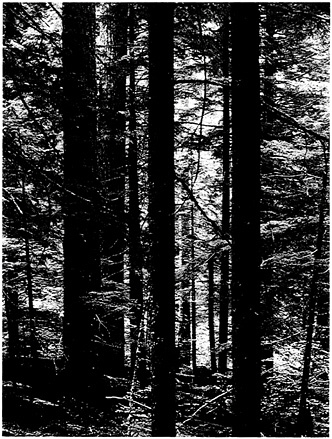
FIGURE 18–1 Old-growth forests are an important successional stage that needs to be protected in any overall scheme for protection of temperate zone biodiversity; 500-year-old Pseudotsuga menziesii-Tsuga heterophylla forest on the H.J.Andrews Experimental Forest in the central Oregon Cascade Range. Courtesy Glen Hawk.
ducing nutrient losses. Nutrient losses from old-growth watersheds in the Pacific Northwest are, for example, extremely low (Franklin et al., 1981), although this is not always true in other regions (see, e.g., Martin, 1979). Old-growth forests may contrast with younger forests in their influence on some important hydrologic processes. Old-growth coniferous forests present a very large crown surface and occupy an extensive volume of space, because dominant trees are commonly taller than 75 meters. Such forests are particularly effective at gleaning moisture from clouds and fog, which can substantially increase precipitation (Harr, 1982). These forests may also influence the amount and spatial distribution of snowfall thereby minimizing the potential for the damaging rain-on-snow floods that are characteristic of the Pacific Northwest. In addition, the old-growth Douglas-fir forests provide several important sites for nitrogen fixation (e.g., epiphytic lichens and rotting wood), which are more limited or absent in earlier stages of succession.
Old-growth coniferous forests contrast most visibly with earlier successional stages in their structure (Franklin et al., 1981). Old-growth stands obviously have a greater range of tree sizes and conditions than do younger stands and generally have a more heterogeneous forest understory. Large live trees, large standing dead trees (or snags), and large fallen logs are the most conspicuous structures that distinguish old-growth forests. Furthermore, these structures are often the key to the unique compositional and functional attributes of the forest, such as habitat for the northern spotted owl and its prey. Early successional forests developing after natural catastrophes, such as wildfires or hurricanes, often contain large standing dead trees and fallen logs because most catastrophes kill trees but do not consume the wood structures. Young forests developing after timber cutting or agricultural abandonment do not have snags and woody debris, however, because the boles are removed.
Although these examples are all drawn from the temperate coniferous forests of the Pacific Northwest, old-growth forests in other temperate regions probably exhibit similar distinctions of composition, structure, and function. Ecological investigations of old-growth forests in northeastern North America are just beginning, but differences between early and late successional stages in composition and structure are already apparent. Old-growth-dependent wildlife species have not yet been identified, but some of them may already have been eliminated; at present, no investigations of lower plants or invertebrates have been undertaken. Ongoing investigations of remnant primeval forests in northeastern North America, China, South America, New Zealand, and Europe should clarify the distinctive characteristics of old-growth forests throughout the temperate zones.
Old-growth forests and the organisms and processes that they represent are an essential aspect of the global biodiversity at risk. Thus, preserving or recreating old-growth temperate forests should be a key objective of any conservation program. Such efforts would be timely, since there are still opportunities to retain examples of old-growth ecosystems in northwestern North America and eastern Asia and to allow areas of maturing woodlands in northeastern North America to develop into old-growth forests. Additional research on the characteristics of old-growth hardwood and hardwood-conifer forests is critical as a basis for conservation efforts.
MAINTAINING STRUCTURAL AND FUNCTIONAL DIVERSITY
We tend to be intent on preserving genetic diversity as represented by species, but ecosystem simplification and loss of biodiversity is proceeding rapidly in other ways. Maintaining structural and functional diversity in temperate regions is an important need, particularly in intensively managed landscapes. Unfortunately, such efforts run contrary to our cultural tendencies to simplify ecosystems, even when such simplification is not essential to our objectives. Large snags and fallen logs are examples of structural diversity (Figure 18–2). Retaining nitrogen-fixing organisms exemplifies a functional aspect of biotic diversity within an ecosystem or landscape.
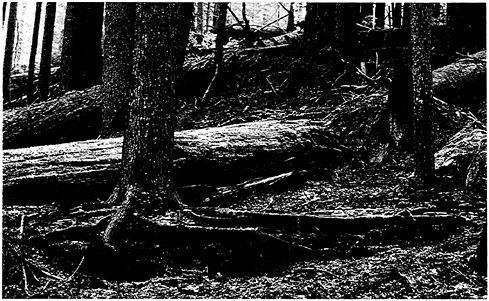
FIGURE 18–2 Coarse woody debris, including standing dead trees and downed boles, are an important structural component of forests. An important goal in preserving ecological diversity is to maintain such structures within managed forest ecosystems. This rotting log is serving as habitat for a large variety of heterotrophic and autotrophic organisms. (Goar Marsh Research Natural Area, Giffort Pinchot National Forest, Washington.) Courtesy U.S. Forest Service.
Standing dead trees and fallen logs are essential to many organisms and biological processes within forest ecosystems (Harmon et al., 1986); yet, such structures have rarely been retained within managed forests. For example, Thomas (1979), in his compilation of the wildlife of northeastern Oregon forests, found that 178 vertebrates—14 amphibians and reptiles, 115 birds, and 49 mammals—used fallen logs as habitats. Elton (1966, p. 279) recognized the broad importance of dead wood structures for biotic diversity: “When one walks through the rather dull and tidy woodlands [of England] that result from modern forestry practices, it is difficult to believe that dying and dead wood provides one of the two or three greatest resources for animal species in a natural forest, and that if fallen timber and slightly decayed trees are removed the whole system is gravely impoverished of perhaps more than a fifth of its total fauna.” In addition to its role as a habitat for land animals, woody debris also provides habitats, structure, energy, and nutrients for aquatic ecosystems (Harmon et al., 1986). Furthermore, it provides sites for nitrogen fixation, sources of soil organic matter, and sites for the establishment of other higher plants, including tree seedlings (Harmon et al., 1986). Maintaining dead-wood structures should be a regular objective of silvicultural activities within the forests of the temperate zone and other zones, quite apart from any program for maintaining old-growth-forest conditions.
Maintaining nitrogen-fixing organisms within our forest landscapes is an example of maintaining functional diversity. Many nitrogen-fixing species of plants, such
as ceanothus (Ceanothus spp.) and alder (Alnus spp.), are associated with early stages of succession. Others, such as the lichen mentioned earlier, are associated with old growth; still others (microbial) are associated with woody debris. Forest management activities have tended to eliminate these sources to minimize competition from noncrop species and speed development of a closed canopy of crop trees.
Efforts to conserve structural and functional diversity are often linked; for example, by maintaining woody debris, one of the sites for nitrogen fixation is retained within the ecosystem. Another example is maintaining large volume, complex crown structures that are especially effective at scavenging moisture and particulate materials from the atmosphere.
Obviously, maintaining structural and functional diversity is an objective that is broadly applicable to temperate landscapes and not just to forests. For example, continuous efforts are under way to convert complex shrub-steppes or savannas to grasslands or even monocultures of seeded grasses by eliminating woody plants such as sagebrush (Artemisia spp.) or junipers (Juniperus spp.). Such programs are capable of causing great damage to structural, functional, and genetic diversity over large areas.
PROTECTING AQUATIC DIVERSITY
Protecting aquatic diversity, including that of the riparian zones, is one of the most difficult tasks within the temperate zone. Streams and rivers have been dammed, diverted, and polluted. Organisms have been extirpated and many new organisms introduced, either purposely or accidently. Control of large land areas (watersheds) is required to provide complete protection for many bodies of water (Figure 18–3). Legal problems are often overwhelming in view of the large number of jurisdictions involved and, at least in the United States, the peculiarities of water rights and law.
The risk to aquatic biodiversity within temperate regions is great and has not received much effective attention, despite the attention given waterfowl and fisheries and the recognized importance of wetlands. Loss of diversity in river ecosystems may be particularly serious and certainly affects invertebrates (e.g., insects and molluscs) as well as vertebrates (e.g., fish). One need only be reminded of the loss of anadromous fish from many river systems after dams were built to realize that these changes involve loss of other important compositional, structural, and functional features from these ecosystems as well.
Developing effective programs to protect aquatic biodiversity is a priority of the highest order. Even the initial step—an adequate analysis of the problem—will require additional research as well as syntheses of existing information. Creative new approaches to conservation will be required, such as acquisition of water rights and licenses for dam construction. The Nature Conservancy has pioneered development of such creative approaches in their recent wetlands initiative.
Protecting aquatic biodiversity is a problem in all segments of the temperate zone—from forests to deserts. The most critical problems in protecting aquatic

FIGURE 18–3 Maintaining examples of natural river and stream ecosystems is one of the most challenging tasks facing society in temperate as well as other biotic zones. (San Juan Mountains, Colorado.) Courtesy U.S. Forest Service.
biodiversity are probably associated with bodies of water in arid regions where they are a critical and often overallocated resource.
DEVELOPING EFFECTIVE STEWARDSHIP PROGRAMS
Maintaining biodiversity is a continuing and multifaceted task. It cannot be permanently accomplished by a single action, such as establishing a national park or biological preserve. Indeed, we often forget that establishing a preserve is only the first step in the infinite responsibility that we have assumed for keeping many organisms and ecosystems afloat (Figure 18–4).
Fulfilling our stewardship responsibility will require a great deal more attention than it has been receiving. Maintaining a viable biological preserve in the densely settled and intensively used temperate zones requires sophistication and dedication. Large amounts of information about the ecology of the target ecosystems and organisms and about environmental conditions in and around these preserves will be required. This means intensive research and monitoring programs, often of long

FIGURE 18–4 Maintaining ecological reserves in the heavily settled temperate zone will require extensive knowledge and sophisticated technology. Prescribed burning is one of the methodologies already commonly utilized in both prairie and forest reserves in North America. (Konza Prairie Biosphere Reserve, Kansas.) Courtesy U.S. Forest Service.
duration. Trained personnel will have to develop and implement complicated management programs. To meet all these needs will require large and stable financial support and the development of professional cadres trained and experienced in stewardship.
The key to such a large and long-term commitment can ultimately come only from society at large. Resolving the risks to biodiversity in the temperate zones and developing the philosophy and technology of stewardship can provide an essential example for tropical regions.
INCORPORATING BIODIVERSITY OBJECTIVES INTO MANAGEMENT
We cannot accomplish our objectives simply by creating preserves; the objectives of maintaining biodiversity must be incorporated into intensively managed temperate landscapes. The bulk of the temperate landscape will be used for production of commodities and for human habitation. We must therefore develop management strategies for forestry, agriculture, water development, and fisheries that incorporate the broader diversity. Most intensive management strategies currently do not take biological diversity into consideration; rather, they emphasize simplifying and sub-
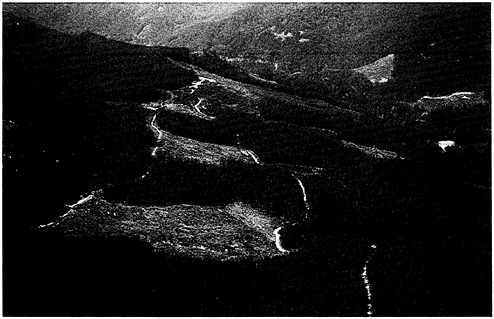
FIGURE 18–5 It is essential that the objective of preserving ecological diversity be incorporated into management programs on lands used for production of commodities; reserves or “set-asides” on the public lands will not adequately accomplish the essential goals. This will have to include considerations of landscape ecology, such as the effects of patch patterns on biota. (Dispersed patch clearcutting on the Gifford Pinchot National Forest, Washington.) Courtesy U.S. Forest Service.
sidizing ecosystems, i.e., organismal, structural, successional, and landscape homogenization (Franklin et al., 1986).
In forestry practices, we can see this emphasis on simplification from the level of the tree, where great efforts are being expended to create genetically uniform material, through the geometrically arranged stand to the landscape, where multiple age classes of conifer monocultures are sometimes cited as evidence of commitment to biological diversity. We must modify our treatments of forest stands and arrangements of forest landscapes to incorporate the objective of protecting biodiversity (Figure 18–5). This can be done with very little reduction in the production of commodities. Failure to do so will result in immense losses of genes and processes within the temperate zone.
Biodiversity is abundant in the temperate zone, and it, too, is worth saving.
REFERENCES
Elton, C.S. 1966. Dying and dead wood. Pp. 379–305 in The Pattern of Animal Communities. Wiley, New York.
Franklin, J.F., K.Cromack, Jr., W.Denison, A.McKee, C.Maser, J.Sedell, F.Swanson, and G.Juday. 1981. Ecological characteristics of old-growth Douglas-fir forests. USDA Forest Service General Technical Report PNW-118. Forest Service, Pacific Northwest Forest and Range Experiment Station, U.S. Department of Agriculture, Portland, Oreg. 48 pp.
Franklin, J.F., T.Spies, D.Perry, M.Harmon, and A.McKee. 1986. Modifying Douglas-fir management regimes for nontimber objectives. Pp. 373–379 in C.D.Oliver, D.P.Hanley, and J.A. Johnson, eds. Douglas-Fir Stand Management for the Future. College of Forest Resources, University of Washington, Seattle.
Harmon, M.E., J.F.Franklin, F.J.Swanson, P.Sollins, S.V.Gregory, J.D.Lattin, N.H. Anderson, S.P.Cline, N.G.Aumen, J.R.Sedell, G.W.Lienkaemper, K.Cromack, Jr., and K. W.Cummins. 1986. Ecology of coarse woody debris in temperate ecosystems. Pp. 133–302 in Advances in Ecological Research, Vol. 15. Academic Press, New York.
Harr, R.D. 1982. Fog drip in the Bull Run municipal watershed, Oreg. Water Res. Bull. 18(5):785–789.
Martin, C.W. 1979. Precipitation and streamwater chemistry in an undisturbed forested watershed in New Hampshire. Ecology 60(1):36–42.
Thomas, J.W. 1979. Wildlife habitats in managed forests: The Blue Mountains of Oregon and Washington. USDA Agricultural Handbook 553. U.S. Department of Agriculture, Washington, D.C. 512 pp.
CHAPTER 19
DIVERSITY IN AND AMONG GRASSLANDS
PAUL G.RISSER
Vice President for Research, University of New Mexico, Albuquerque, New Mexico
Grasslands cover broad areas of both temperate and tropical regions, but they occur primarily in climatic zones with a pronounced dry season (Axelrod, 1985). They are characteristically found in regions where there is insufficient soil water to support an arboreal canopy yet adequate moisture to permit the existence of a grass-dominated canopy rather than desert vegetation. Technically, grasslands can be described as types of vegetation that are subjected to periodic drought, that have a canopy dominated by grass and grasslike species, and that grow where there are fewer than 10 to 15 trees per hectare. The number of grass species in these areas, however, is frequently lower than the number of forbs, e.g., composites such as daisies and sunflowers (Curtis, 1959). Grasslands are found in such diverse locations as the steppes of the Soviet Union, the Serengeti of Africa, the dry grasslands of Australia, the pampas of Argentina, and the Central Plains of the United States. Given this wide range of variations, it is not surprising that the grasslands of the world contain a large amount of native biodiversity.
GRAZING AND AGRICULTURE CONVERSIONS
All grasslands support an array of native herbivores. In terms of energy consumption, the impact of herbivores is usually quite low but differs among the various grassland types. However, the greatest impacts on most grassland ecosystems are caused by domestic herbivores that have been introduced by human societies. Grasslands can withstand moderate grazing, especially when weather conditions are favorable, but overgrazing frequently causes important changes in the composition of the plant and animal population. A common response is that the
grassland becomes converted to a relatively sparse shrubland composed of less-palatable herbaceous or woody species. This type of conversion can be found, for example, along the India-Pakistan borders in the Sind-Kutch region, throughout much of the Sahelian area of Africa, and in parts of the southwestern United States (Brown, 1950; Buffington and Herbel, 1965; Howard-Clinton, 1984). An obvious consequence of this impact is a loss of the native biodiversity of grasslands throughout the world.
Many grasslands, especially those in relatively humid environments, produce large amounts of below-ground growth consisting primarily of roots and rhizomes. As these plant parts naturally die, the organic matter is incorporated into the soil. These enriched soils are prime agricultural soils, and as a result, the grasslands are quite vulnerable to conversion to croplands. An obvious example is the prairie peninsula (Transeau, 1935) in the east central part of the United States—an area that is now almost completely cropland rather than the original tall-grass prairie with its deep, organic-rich melanized soils.
Well over 100 species of native plants commonly grow in prairie remnants smaller than 2 hectares. Within the Central Plains and tall-grass prairie, between 250 and 300 species are usually found in remnants with areas of approximately 250 hectares (Steiger, 1930). Although the loss of grassland habitat has been calculated for selected states and specific grassland types (Risser, 1986), there are no general figures on the loss of grassland species.
MORE SUBTLE IMPACTS
Although overgrazing and conversion to croplands represent the most obvious impacts on the native biodiversity of grasslands, a true diagnosis requires a more refined analysis. For example, relatively recent widespread overgrazing and resultant major changes in species composition of grassland habitats has occurred in developing countries where there is and has been enormous pressure to produce food. Conversion of grassland to agricultural cropland has taken place primarily in humid grasslands. Thus, in the United States, most dry western grasslands, or steppes, can now be adequately managed to remain as perpetuating rangelands. And although there have been misguided efforts to plow the rangelands and some cases of grassland abuse by overstocking with grazing animals, most of these western grasslands now remain intact. In the eastern prairie region, most of the grasslands have been converted to cropland, but important preservation and restoration efforts are now under way (Risser, 1986).
Prairie fires have been a persistent characteristic of grasslands that produce enough fuel for them (Daubenmire, 1968). In fact, in the tall-grass prairie, periodic burning increases the species diversity above that found on an unburned prairie, especially one that is not grazed. Burning is routinely used intentionally in grassland management to reduce invasion by woody shrub species and to encourage native perennial species. However, these burning practices are frequently not beneficial to insects (Cancaledo and Yonke, 1970) or to the small mammals and birds. Thus, to attain optimum biological diversity, either the scheduling of prescribed burning
must be compromised or alternative treatments must be administered to patches within the grassland.
Light to moderate levels of grazing usually result in a richer diversity of plant species than do heavy levels of grazing or no grazing at all, especially in the more humid grasslands such as the tall-grass prairie in the United States (Risser et al., 1981). Presumably, this increased diversity is caused by opening the vegetation canopy and allowing more species to compete successfully. Thus, species diversity is maximized by light to moderate grazing intensities—no grazing by domestic herbivores reduces diversity because of the thick vegetation canopy and heavy litter layer, and heavy grazing reduces species diversity by selectively eliminating the more palatable species.
The southwestern grasslands of the United States are dominated by warm-season perennial species. Since these species mature later in the growing season, many ranching operations include pastures of cool-season species, such as crested wheatgrass (Agropyron cristatum) to serve as livestock forage early in the year. These crested wheatgrass fields contain very little species diversity.
In the eastern tall-grass prairie, where remaining grasslands are relegated primarily to small patches in an otherwise agricultural landscape, there are several threats to biodiversity. One is the intrusion of several aggressive alien plant species, which are invading and replacing native species. In Illinois, more than a dozen species have invaded prairies to such a degree that the prairies themselves are now threatened.
The small, isolated prairie remnants are unable to support the normal complement of either native flora or native fauna. In Missouri, only 0.5% of the original tall-grass prairie remains, mostly in isolated prairie islands within a matrix of improved pastures and croplands. Sampson (1980) compared prairie sizes with the presence and absence of the greater prairie chicken (Tympanucus cupido) and found that grasslands without prairie chickens averaged 172 hectares, but those without prairie chickens averaged only 33 hectares. Furthermore, those grassland remnants without prairie chickens were isolated from other grasslands by 81 kilometers, whereas those with prairie chickens were, on average, only 14 kilometers from other grasslands. Sampson concluded that Missouri grasslands capable of supporting the greater prairie chicken should be about 300 hectares larger and within 20 kilometers of other grasslands.
Sampson (1980) also computed the probability that a given habitat size will annually contain a breeding population of selected native grassland bird species. The minimum habitat sizes were calculated as follows: for the eastern meadowlark (Sturnella magna), less than 1 hectare; for the horned lark (Eremophila alpestris) and grasshopper sparrow (Ammodramus sarannarum), more than 1 hectare; for Henslow’s sparrow (A. henslowii), the upland sandpiper (Bartramia longicanda), and the greater prairie chicken, more than 10 hectares. In general, the size and not the habitat heterogeneity had a significant influence on the number of breeding prairie bird species. In Illinois, Graber and Graber (1976) also found that the size of the grassland had a major influence on the number of bird species and that in small patches over a 20-year period, the number of bird species decreased at a much faster rate than the simple reduction in the total area of grassland.
In their study of grassland invertebrates, Whitcomb et al. (1986) found that more than 100 dominant grass species, and perhaps an equal number of forbs, are important contributors to the diversity of sap-sucking insects in North American grasslands. They reported that perennial and dominant (but not annual or sub-dominant) grass and forb species tended to have specific assemblages of cicadellids (leafhoppers) in a given geographic region but that the species composition of these assemblages varied geographically. Patch size and structure of the host vegetation stands were of considerable importance, and the rarity of these leafhoppers was directly attributable to the rarity of the host plant species. Even in host patches of sufficient size to support reasonably large numbers of cicadellids, insect populations were reduced by such disturbances as fire, drought, floods, predators, and, especially, parasites.
The origin of North American grasslands is relatively recent—they formed approximately 12,000 years ago (Dort and Jones, 1970). There is a low rate of vertebrate and plant endemism in these areas, and the origins of their flora and fauna are diverse. Therefore, despite the massive loss of grasslands in the United States and elsewhere, there are fewer than 15 true grassland species listed or proposed as federally threatened or endangered. However, as has been recognized for decades, grassland plant species have undergone a significant amount of ecotypic variation (Olmsted, 1945), and the reduction in grasslands has resulted in a reduction of genetic diversity—diversity losses that are not apparent in simple measures of species diversity.
Thus biodiversity in and among grasslands is complicated because of the rather subtle nature of the grassland ecosystem. Major, obvious impacts such as widespread overgrazing and conversion to agricultural croplands have significantly reduced the native biodiversity (Weaver, 1954). Among the more subtle impacts are the effects of reduced habitat size, the lack of endemic species, which are so easily recognized, and the highly developed ecotypic differentiation in grasslands, which is not detected in conventional measures of biodiversity.
REFERENCES
Axelrod, D.I. 1985. Rise of the grassland biome, central North America. Bot. Rev. 51:163–201.
Brown, A.L. 1950. Shrub invasion of southern Arizona desert grassland. J. Range Manage. 3:172–177.
Buffington, L.C., and C.H.Herbel. 1965. Vegetational changes in a semidesert grassland range from 1858 to 1963. Ecol. Monogr. 35:139–164.
Cancaledo, C.S., and T.R.Yonke. 1970. Effect of prairie burning on insect populations. J. Kans. Entomol. Soc. 43:274–281.
Curtis, J.T. 1959. Vegetation of Wisconsin. University of Wisconsin Press, Madison. 657 pp.
Daubenmire, R.F. 1968. The ecology of fire in grasslands. Adv. Ecol. Res. 5:209–266.
Dort, S.W., Jr., and J.K.Jones, Jr., eds. 1970. Pleistocene and Recent Environments of the Central Great Plains. University Press of Kansas, Lawrence. 433 pp.
Graber, J.W., and R.R.Graber. 1976. Environmental evaluations using birds and their habitats. Biological Notes No. 297. Illinois Natural History Survey, Champaign. 39 pp.
Howard-Clinton, E.G. 1984. The emerging concepts of environmental issues in Africa. Environ. Manage. 8:187–190.
Olmsted, C.E. 1945. Growth and development of range grasses. V. Photoperiodic responses of clonal divisions of three latitudinal strains of side-oats grama. Bot. Gaz. 106:382–401.
Risser, P.G. 1986. Preservation status of true prairie grasslands and ecological concepts relevant to management of prairie preserves. Pp. 339–344 in D.L.Kulhavy and R.N.Connor, eds. Wilderness and Natural Areas in the Eastern United States: A Management Challenge. Papers presented at a symposium: Wilderness and Natural Areas in the East, held in Nacogdoches, Texas, on May 13–15, 1985. Center for Applied Studies, Stephen F.Austin State University, Nacogdoches, Tex. 416 pp.
Risser, P.G., E.C.Birney, H.D.Blocker, S.W.May, W.J.Parton, and J.A.Wiens. 1981. The True Prairie Ecosystem. Hutchinson Ross, Stroudsburg, Penn.
Steiger, T.L. 1930. Structure of prairie vegetation. Ecology 11:170–217.
Sampson, F.B. 1980. Island biogeography and the conservation of prairie birds. Pp. 293–299 in C. L.Kurera, ed. Seventh North American Prairie Conference, Proceedings. Southwest Missouri State University, Springfield, Mo.
Transeau, E.N. 1935. The prairie peninsula. Ecology 16:423–437.
Weaver, J.E. 1954. North American Prairie. Johnson Publishing Company, Lincoln, Nebr. 348 pp.
Whitcomb, R.F., J.Kramer, M.D.Coan, and A.L.Hicks. In press. Ecology and evolution of leafhopper-grass host relationships in North American prairies, savanna and ecotonal biomes. Curr. Top. Vector Res. 3.
CHAPTER 20
DIVERSITY AND BIOLOGICAL INVASIONS OF OCEANIC ISLANDS
PETER M.VITOUSEK
Associate Professor, Department of Biological Sciences, Stanford University, Stanford, California
To date, human-caused species extinctions are more an island-based than a continental phenomenon. Of the 94 species of birds known to have become extinct worldwide since contact with Europeans, only 9 were continental (Gorman, 1979). Currently, more endemic Hawaiian bird species are officially listed as endangered or threatened than are listed for the entire continental United States. Where information is available on other groups of animals, it indicates that human-caused extinctions are invariably more frequent on islands.
Heywood (1979) summarized the causes of extinction on islands as deforestation and fire, the introduction of grazing mammals, cultivation, and the introduction of weedy plants. All these factors can be important on continents as well, but species introductions (deliberate or accidental) are disproportionately important on islands (Elton, 1958). Isolated islands and archipelagos often lack major elements of the biota of continents, and their native species often lack defenses against grazing or predations.
Biological invasions are not the only factor leading to elevated extinction rates for island species. Extinction rates are also higher on islands because island species generally have small populations, restricted genetic diversity, and narrow ranges prior to human colonization, and because human alterations of land through use destroy an already-limited critical habitat. The plant and animal hitchhikers and fellow travelers who accompany humans to isolated islands interact with these other causes of extinction, however, and biological invaders endanger native species in reserves and other protected lands.
The fact that biological invasions decrease diversity on islands is paradoxical, because, as pointed out by Lugo in Chapter 6, the introduction of alien species generally increases the total number of species on an island, often spectacularly. However, most of the introduced species are cosmopolitans that are in no danger of global extinction, whereas most species on isolated islands are endemic. Biological invasions can therefore cause a net loss of species worldwide and a homogenization of the biota of Earth (Mooney and Drake, 1986).
SCOPE OF THE PROBLEM
The disproportionate effects of human colonization and attendant biological invasions on island ecosystems are well known (Carlquist, 1974; Darwin, 1859; Elton, 1958; Wallace, 1880); they can be demonstrated even on large islands such as Madagascar and Australia (Carlquist, 1974). The most severe consequences are experienced on old, isolated, mountainous, tropical, or subtropical islands or archipelagos. Islands located near continents receive organisms from those continents and rarely develop unique species. Truly oceanic islands have rates of evolution and speciation greater than those of immigration; hence, their biota contains many endemic species. Low islands (such as atolls) lack the range of environments that permits evolutionary radiation, while islands at high latitudes are subjected to strong climatic fluctuations (Bramwell, 1979), which prevent radiation.
Together these factors suggest that the Hawaiian Islands, the most isolated archipelago in the world, should have a large number of exotic species and a large potential for loss of endemic species as a consequence of biological invasions. The very large number of endemic species on these islands is well documented (Carlquist, 1974); the importance of biological invasions can also be demonstrated. For example, a survey of exotic plants on National Park Service lands (Loope, in press a) shows that island parks have a much larger proportion of alien species in their flora than do continental parks (Table 20–1). Moreover, in most continental parks alien species are largely confined to roadsides and areas occupied by humans before the park was established. In contrast, Channel Islands National Park in California, Everglades National Park (an island of tropical vegetation at the tip of the Florida peninsula), and the Hawaiian parks contain alien species that establish themselves in otherwise undisturbed native ecosystems and change the nature of the sites they occupy (Ewel, 1986; Stone and Scott, 1985; Stone et al., in press a).
The problems in the Hawaiian parks reflect in part the overall abundance of exotic species in Hawaii. As many as 1,765 native species of vascular plants (probably fewer as taxonomic revisions take hold) existed in the islands when the Polynesians arrived, and 94 to 98% of them were endemic (Kepler and Scott, 1985). Polynesians brought additional species, perhaps 30 of them (Nagata, 1985), when they colonized Hawaii and journeyed among the Pacific islands. The advent of more rapid transportation from distant areas and especially the occupation of Hawaii by people from diverse western and eastern cultures, each with its distinctive food, medicinal, and ornamental plants, greatly increased the number of species present. More than 4,600 species of introduced vascular plants are now known to
TABLE 20–1 Proportion of Alien Plants in the Vascular Flora of Selected U.S. National Parksa
grow in Hawaii, and at least 700 of these are reproducing successfully and maintaining populations in the field (Smith, 1985; Wester, in press). At the same time, more than 200 endemic species are believed to be extinct, and another 800 are endangered (Jacobi and Scott, in press). Most sites below 500 meters elevation, and many higher ones, are entirely dominated by alien species (Moulton and Pimm, 1986).
Similar patterns of introduction of alien insects, mammals, reptiles and amphibians, and birds have been described (Carson, in press; Moulton and Pimm, 1986). The birds are probably the best documented (Moulton and Pimm, 1986; Olson and James, 1982), although mammals are the most spectacular (from 1 native bat to at least 18 species of alien mammals). At least 86 species of land birds are known to have been present in Hawaii 2,000 years ago, and at least 68 of them were endemic passerines. Forty-five species, including 30 passerines, disappeared around the time of Polynesian colonization; another 11 have disappeared since Europeans arrived; and several more are on the verge of extinction (Moulton and Pimm, 1986; Stone, 1985). In contrast, at least 50 species of alien passerines have become established since 1780. Even casual observers of lower-elevation birds in Hawaii have noted a kaleidoscope of shifting dominance by different species of alien birds over the past 30 years; the one constant has been the near absence of natives.
This pattern of successful invasion by cosmopolitan species and the decline of certain native species is not unique to Hawaii. A similar conversion of native-dominated to alien-dominated ecosystems occurs on isolated islands in all the oceans—from the Galapagos to New Zealand to Diego Garcia to Tristan da Cunha and St. Helena (Bramwell, 1979; Carlquist, 1974; King, 1984; Wace and Oilier, 1982). In many cases, the successful invaders are identical—goats (Capra hircus) and guava (Psidium guajava and P. cattleianum) are problems in Hawaii, the Galapagos, and the Rodrigues Islands in the Indian Ocean.
WHY ARE ISLANDS SUSCEPTIBLE?
The reasons why biological invasions are disproportionately successful on islands, and why island species seem more likely to become extinct, have long been debated. Loope (in press b) summarized this discussion with seven possible explanations for the observed patterns:
-
Reduced competitive ability due to repeated “founder effects,” i.e., chance events during colonization by small initial populations
-
Disharmony of functional groups and relative lack of diversity
-
Small populations and genetic variability; restrictive specialization
-
Relative lack of adaptability to change; loss of resistance to consumers and disease
-
Loss of essential co-evolved organisma
-
Relative lack of natural disturbance, especially fire, in the evolutionary history of many island biotas
-
Intensive exploitation by humans
He also pointed out that the apparent lack of vigor of island species can be overstated, sometimes with negative consequences. For example, Lyon (1909) interpreted a decline of native óhiá (Metrosideros polymorpha) in Hawaii as reflecting that species’ inability to survive in the modern world, and spearheaded the introduction of many alien species to replace it. In fact, periodic diebacks of natural populations of Metrosideros are a natural feature of forest dynamics in Hawaii and elsewhere in the Pacific (Mueller-Dombois, 1983), and Metrosideros naturally recolonizes most of these areas. More generally, many native island species maintain themselves quite successfully in mixed native/exotic ecosystems (Mueller-Dombois et al., 1981).
At the other extreme, it has been argued that alien species are merely temporary components of island ecosystems, certain to be replaced by natives in the course of ecological succession (Allan, 1936; Egler, 1942). In fact, some aliens invade intact native ecosystems, whereas others alter the course of succession in already disturbed sites (Smith, 1985) and seem capable of persisting in those altered sites.
Although biological invasions clearly have contributed to the extinction of native species on islands, the importance of direct competition between native and exotic species in causing these extinctions is uncertain. Habitat destruction by humans and feral animals, alterations in basic ecosystem properties caused by newly introduced species, grazing and predation pressure from introduced consumers, and exotic animal diseases (such as avian pox and malaria) appear to be at least equally important.
The importance of grazing and predation by alien animals deserves special emphasis. Most isolated oceanic islands originally lacked whole groups of organisms; mammals were especially sparse. Even ants were nearly or entirely absent on some islands, including Hawaii (Medeiros et al., 1986).
The introduction of mammals has had enormous effects on island ecosystems throughout the world. Comparisons of islands with introduced ungulates and those without such animals in widely separated Pacific island groups (the Hawaiian
Islands, the Cook Islands, and the Kermadec Islands) demonstrate that native communities often hold their own in the absence of mammals but that invasions by plants are much more common and disruptive of native communities on heavily grazed islands (Merlin and Juvik, in press).
WHAT CAN BE DONE?
Biological invasions of oceanic islands appear to be an immense and largely unmanageable problem. Of the approximately 4,600 species of alien plants on Hawaii, more than 700 reproduce in the wild and 86 are considered serious threats to native ecosystems (Smith, 1985). At present, there are neither the resources nor the will to attack a problem of this magnitude. Moreover, while interception and quarantine systems can slow the further introduction of additional exotic species and stop a few indefinitely, the sheer volume and pace of transport by jet aircraft may overwhelm most controls. Finally, any inspection system detailed enough to be broadly effective would necessarily hinder and annoy tourists that are the major economic support of many oceanic islands. Moreover, many island residents have strong reasons for importing or protecting introduced species as agricultural, timber, or forage crops, medicinal or ornamental plants, watershed protection, domestic livestock, pets, agents of biological control, or targets of sport or commercial hunting or fishing. These economic or cultural attachments to alien species mean that there is little chance of developing broad-based, politically effective support for controlling alien species that are not regarded as weeds in the classical (economic) sense.
There are nevertheless several steps that can be taken to reduce the effects of biological invasions and protect some of the native biological diversity on isolated oceanic islands:
-
identification of the aliens most likely to threaten native ecosystems and concentration of control efforts on those species;
-
selection of critical habitat areas from which most or all species of aliens are excluded;
-
protection of areas from further habitat destruction; and
-
study of biological invasion and species extinction on islands to learn how these same processes may affect continents.
IDENTIFICATION OF PROBLEM SPECIES
Identification of the invading species most likely to disrupt native ecosystems requires some understanding of the biology of both the invader and the invaded community. Research designed to obtain that information is now being conducted, and its results are being used in management decisions on many islands. The most disruptive species (not necessarily in order of importance) include herbivorous mammals, vertebrate and invertebrate predators, species that can alter ecosystem-level characteristics of invaded areas, and species that can invade otherwise undisturbed native ecosystems.
Herbivorous Mammals
Grazing and browsing mammals effect islands in such pervasive ways that it is difficult to see how native ecosystems can be protected unless they are eliminated. Studies of whole islands and of exclosures have clearly demonstrated that ungulate populations affect erosion, soil fertility, and the success of invasions by alien plants (Loope and Scowcroft, 1985; Merlin and Juvik, in press; Mueller-Dombois and Spatz, 1975; Vitousek, 1986). Island plants often lack defenses, such as thorns and toxic chemicals, against herbivores, and herbivority reduces total plant cover and selects for better defended alien plants. Moreover, feral pigs (which are widespread on many oceanic islands) directly disrupt soil structure in the course of their feeding. Efforts to eliminate mammals are expensive and difficult, but they have been highly successful in a number of areas (Bramwell, 1979; Stone et al., in press b). In many cases, the removal of grazing animals has been followed by the recovery of native plants and even by the discovery of entirely new species of native plants (Bramwell, 1979; Mueller-Dombois and Spatz, 1975).
Predators
Alien vertebrate and invertebrate predators can have significant effects on island ecosystems both directly, by eliminating natives, and indirectly, by altering community structure. For example, rats and feral cats affect the breeding success of ground-nesting birds in many areas (Clark, 1981; King, 1984; Wace, 1986). Alien ants altered invertebrate communities in the Hawaiian lowlands years ago, and other ant species are now threatening to do so at high elevations (Medeiros et al., 1986). Invertebrate predators are particularly problematic in that they may eliminate important native pollinators from island faunas.
Ecosystem-Level Effects
Any alien species that alters ecosystem-level characteristics (such as primary productivity, nutrient availability, hydrological cycles, and erosion) of the area it invades alters the living conditions for all organisms in that area (Vitousek, 1986). It may also alter the kind or quality of the services that natural ecosystems provide to human societies (Ehrlich and Mooney, 1983). Alien animals clearly alter ecosystem properties in a number of ways (as described above), and it is becoming clear that alien plants can do so as well. In Hawaii, for example, the exotic nitrogen-fixing fire tree (Myrica faya) increases the availability of the soil nitrogen in nitrogen-limited volcanic ash deposits (Vitousek, in press). Similarly, the alien grasses Andropogon virginicus and A. glomeratus provide fuel for fires and also sprout rapidly following fires, thereby greatly increasing both their abundance and the overall frequency of fires to the detriment of native species not adapted to fire resistance (Smith, 1985).
Invasion of Intact Native Ecosystems
Alien animals are frequently (not invariably) able to invade intact native ecosystems, but plants species that can do so are not common. Most often, alien plants invade undisturbed native ecosystems in association with alien animals. In Hawaii,
alien birds and mammals consume and disseminate the fruit of the aggressive alien plants strawberry guava (Psidium cattleianum) and banana poka (Passiflora mollissima) throughout native forest areas. Interactions between feral pigs and these invading plants are particularly severe: pigs disseminate seeds of these fleshy-fruited aliens, mix them with organic fertilizer, and deposit them into seedbeds, which are cleared by the pigs’ rooting activity. The pigs’ descendants then use fruit of the daughter plants as a major food source (Smith, 1985; Stone, 1985). Similar interactions between cattle and common guava (Psidium guajava) occur in the Galapagos (Bramwell, 1979). These interactions between alien plants and animals further illustrate why control of alien animals is fundamental to protecting the native ecosystems of islands.
IDENTIFICATION OF CRITICAL HABITATS
A second strategy for limiting the effects of biological invaders is to control manageable alien species in selected critical habitats. This process is expensive and time-consuming, but it does lead to the maintenance of areas as close to their natural state as possible (although birds, flying insects, and microorganisms are of course difficult or impossible to control). Management in “Special Ecological Areas” of Hawaii Volcanoes National Park has been designed to protect areas that represent the major ecosystems in the park by minimizing the influence of alien species. These areas can then act as refugia for threatened native biota and as areas for ecological study and education (Stone et al., in press a; Tunison et al., 1986).
HABITAT DESTRUCTION
Control over habitat destruction is also essential to protecting biological diversity on oceanic islands. Land clearing or fire in native systems can both destroy individuals of threatened native species and lead to the establishment of alien-dominated successional ecosystems. Conflicts in achieving this objective are inevitable; most islands are neither museums nor biological preserves, and one person’s “habitat destruction” will certainly be another’s source of food or income. Destruction of critical habitat on islands is perhaps most severe on Madagascar, but it is not a problem confined to developing countries. Nearly half of Hawaii’s largest native-dominated lowland rain forest was cleared during 1984 and 1985 in a subsidized endeavor to generate electricity from wood chips.
ECOLOGICAL RESEARCH ON ISLANDS
Controlling the effects of biological invasions on islands is paramount, but there is also a great deal to be gained from studying their effects carefully. The relative simplicity of the biota of many islands perhaps enables invading species to have greater effects on native communities than they would in continental areas; it certainly facilitates a much more complete evaluation of those effects. Better understanding of biological invasions and their consequences for biological diversity on islands will contribute to the development and testing of basic ecological theory
on all levels of biological organization. Few of the effects of biological invasions described here are unique to islands; they are only more highly developed and occur most rapidly there, as demonstrated by the invasion of European wild boars into Great Smoky Mountains National Park (Singer et al., 1984). An understanding of the effects of invasions on biological diversity in rapidly responding island ecosystems may give us the time and the tools needed to deal with similar problems on continents; it may even contribute to the prediction and evaluation of the effects of environmental releases of genetically altered organisms.
REFERENCES
Allan, H.H. 1936. Indigene versus alien in the New Zealand plant world. Ecology 17:187–193.
Bramwell, D., ed. 1979. Plants and Islands. Academic Press, London. 459 pp.
Carlquist, S. 1974. Island Biology. Columbia University Press, New York. 660 pp.
Carson, H.L. In press. Colonization and speciation. In A.H.Gray, M.Crawley, and P.J.Edwards, eds. Colonization and Succession. Blackwell Scientific, Oxford.
Clark, D.A. 1981. Foraging patterns of black rats across a desert-montane forest gradient in the Galapagos Islands. Biotropica 13:182–194.
Darwin, C.R. 1859. On the Origin of Species by Means of Natural Selection, or the Preservation of Favored Races in the Struggle for Life. 1st edition. John Murray, London. 502 pp. (Facsimile of the first edition published by the Harvard University Press, Cambridge, 1964.)
Egler, F.E. 1942. Indigene vs. alien in the development of arid Hawaiian vegetation. Ecology 23:14–23 .
Ehrlich, P.R., and H.A.Mooney. 1983. Extinction, substitution, and ecosystem services. BioScience 33:248–253.
Elton, C.S. 1958. The Ecology of Invasions by Animals and Plants. Methuen Co., London. 181 pp.
Ewel, J.J. 1986. Invasability: Lessons from south Florida. Pp. 214–230 in H.A.Mooney and J. Drake, eds. The Ecology of Biological Invasions of North America and Hawaii. Springer-Verlag, New York.
Gorman, M. 1979. Island Ecology. Chapman and Hall, London. 79 pp.
Heywood, V.H. 1979. The future of island floras. Pp. 431–441 in D. Bramwell, ed. Plants and Islands. Academic Press, London.
Jacobi, J., and J.M.Scott. In press. An assessment of the current status of native upland habitats and associated endangered species on the Island of Hawai’i. Pp. 3–22 in C.P.Stone, C.W.Smith, and J.T.Tunison, eds. Alien Plant Invasions in Hawaii: Management and Research in Near-Native Ecosystems. Cooperative National Park Resources Studies Unit, University of Hawaii, Honolulu.
Kepler, C.B., and J.M.Scott. 1985. Conservation of island ecosystems. ICBP Tech. Pub. 3:255–271.
King, C.M. 1984. Immigrant Killers: Introduced Predators and the Conservation of Birds in New Zealand. Oxford University Press, Aukland. 224 pp.
Loope, L.L. In press a. An overview of problems with introduced plant species in national parks and reserves of the United States. In C.P.Stone, C.W.Smith, and J.T.Tunison, eds. Alien Plant Invasions in Hawaii: Management and Research in Near-Native Ecosystems. Cooperative National Park Resources Studies Unit, University of Hawaii, Honolulu.
Loope, L.L. In press b. Haleakala National Park and the “island syndrome.” In L.K.Thomas, ed. Proceedings of a Symposium on Ecology and Management of Exotic Species. Conference on Science in the National Parks, Ft. Collins, Colorado, July 1986. U.S. National Park Service and The George Wright Society, Washington, D.C.
Loope, L.L., and P.G.Scowcroft. 1985. Vegetation response within exclosures in Hawai’i: A review. Pp. 377–402 in C.P.Stone and J.M.Scott, eds. Hawai’i’s Terrestrial Ecosystem: Preservation and Management. Cooperative National Park Resources Study Unit, University of Hawaii, Honolulu.
Lyon, H.L. 1909. The forest disease on Maui, Hawaii. Plant. Rec. 1:151–159.
Medeiros, A.C., L.L.Loope, and F.R.Cole. 1986. Distribution of ants and their effects on endemic biota of Haleakala and Hawaii Volcanoes National Parks: A preliminary assessment. Pp. 39–
51 in Proceedings of the Sixth Conference in Natural Sciences, Hawaii Volcanoes National Park, June 1986. Cooperative National Park Resources Studies Unit, University of Hawaii, Honolulu.
Merlin, M.D., and J.O.Juvik. In press. Relationships between native and alien plants on oceanic islands with and without wild ungulates. In C.P.Stone, C.W.Smith, and J.T.Tunison, eds. Alien Plant Invasions in Hawaii: Management and Research in Near-Native Ecosystems. Cooperative National Park Resources Studies Unit, University of Hawaii, Honolulu.
Mooney, H.A., and J.Drake, eds. 1986. The Ecology of Biological Invasions of North America and Hawaii. Springer-Verlag, New York. 321 pp.
Moulton, M.P., and S.L.Pimm. 1986. Species introductions to Hawaii. Pp. 231–249 in H.A. Mooney and J.Drake, eds. The Ecology of Biological Invasions of North America and Hawaii. Springer-Verlag, New York.
Mueller-Dombois, D. 1983. Canopy dieback and successful processes in Pacific forests. Pac. Sci. 37:317–325.
Mueller-Dombois, D., and G.Spatz. 1975. The influence of feral goats on the lowland vegetation of Hawaii Volcanoes National Park. Phytocoenologia 3:1–29.
Mueller-Dombois, D., K.W.Bridges, and H.L.Carson, eds. 1981. Island Ecosystems: Biological Organization in Selected Hawaiian Communities. Hutchinson-Ross, Stroudsburg, Pa. 583 pp.
Nagata, K.M. 1985. Early plant introductions in Hawai’i. Hawaii. J. Hist. 19:35–61.
Olson, S.L., and H.F.James. 1982. Fossil birds from the Hawaiian Islands: Evidence for wholesale extinction by man before western contact. Science 217:633–635.
Singer, F.J., W.T.Swank, and E.E.C.Clebsch. 1984. Effects of wild pig rooting in a deciduous forest. J. Wildl. Manage. 48:464–473.
Smith, C.W. 1985. Impact of alien plants on Hawai’i’s native biota. Pp. 180–250 in C.P.Stone and J.M.Scott, eds. Hawai’i’s Terrestrial Ecosystems: Preservation and Management. Cooperative National Park Resources Studies Unit, University of Hawaii, Honolulu.
Stone, C.P., 1985. Alien animals in Hawai’i’s native ecosystems: Towards controlling the adverse effects of introduced vertebrates. Pp. 251–297 in C.P.Stone and J.M.Scott, eds. Hawai’i’s Terrestrial Ecosystems: Preservation and Management. Cooperative National Park Resources Studies Unit, University of Hawaii, Honolulu.
Stone, C.P., and J.M.Scott, eds. 1985. Hawai’i’s Terrestrial Ecosystems: Preservation and Management. Cooperative National Park Resources Studies Unit, University of Hawaii, Honolulu. 584 pp.
Stone, C.P., C.W.Smith, and J.T.Tunison, eds. In press a. Alien Plant Invasions in Hawaii: Management and Research in Near-Native Ecosystems. Cooperative National Park Resources Studies Unit, University of Hawaii, Honolulu.
Stone, C.P., P.K.Higashino, J.T.Tunison, L.W.Cuddihy, S.J.Anderson, J.D.Jacobi, T.J. Ohashi, and L.L.Loope. In press b. Success of alien plants after feral goat and pig removal. In C.P. Stone, C.W.Smith, and J.T.Tunison, eds. Alien Plant Invasions in Hawaii: Management and Research in Near-Native Ecosystems. Cooperative National Park Resources Studies Unit, University of Hawaii, Honolulu.
Tunison, J.T., C.P.Stone, and L.W.Cuddihy. 1986. SEAs provide ecosystem focus for management and research. Park Sci. 6(3):10–13.
Vitousek, P.M. 1986. Biological invasions and ecosystem properties: Can species make a difference? Pp. 163–176 in H.A.Mooney and J.Drake, eds. The Ecology of Biological Invasions of North America and Hawaii. Springer-Verlag, New York.
Vitousek, P.M. In press. Effects of alien plants on native ecosystems. In C.P.Stone, C.W.Smith, and J.T.Tunison, eds. Alien Plant Invasions in Hawaii: Management and Research in Near-Native Ecosystems. Cooperative National Park Resources Studies Unit, University of Hawaii, Honolulu.
Wace, N.M. 1986. Control of rats on islands—research is needed. Oryx 20:79–86.
Wace, N.M., and C.D.Oilier. 1982. Biogeography and geomorphology of South Atlantic Islands. Pp. 733–758 in National Geographic Society Research Reports. National Geographic Society, Washington, D.C.
Wallace, A.R. 1880. Island Life. Macmillan, London. 526 pp.
Wester, L.L. In press. Alien plants and their status in Hawaii. In C.P.Stone, C.W.Smith, and J.T.Tunison, eds. Alien Plant Invasions in Hawaii: Management and Research in Near-Native Ecosystems. Cooperative National Park Studies Unit, University of Hawaii, Honolulu.


