
PAPER CONTRIBUTION C
Preconception, Prenatal, Perinatal, and Postnatal Influences on Health
Carol C.Korenbrot and Nancy E.Moss
After more than a decade of impressive public health efforts to improve the health of infants at birth in the United States, health status indicators indicate that little progress has been made. The United States still ranks 25th in infant mortality among nations reporting to the World Health Organization (Petrini et al., 1997). While there have been reductions in infant mortality, the ranking remains as low as in 1985 when major policy and program reforms of prenatal care were initiated in the United States to reduce infant mortality and the ethnic disparities in the health outcome by focusing on reductions in low-birthweight (Institute of Medicine, 1985; U.S. Department of Health and Human Services, 1985). There have not been increases in low-birthweight rates, nor has there been any significant reduction in the ethnic disparities in infant mortality or low-birthweight rates (Figure 1) (Centers for Disease Control and Prevention, 1999). This remains true in spite of improvements in the early and continuous use of prenatal care (Figure 2) and a reduction in contributing health behaviors including smoking in pregnancy and teenage childbearing (Petrini et al., 1997; Ventura et al., 1999). The lack of measurable gains is not explained by increases in mul-
|
Carol C.Korenbrot, Ph.D., is adjunct professor, Institute for Health Policy Studies and the Department of Obstetrics, Gynecology and Reproductive Sciences, University of California, San Francisco, and Nancy E.Moss, Ph.D., is a consultant. This paper was prepared for the symposium, “Capitalizing on Social Science and Behavioral Research to Improve the Public's Health,” the Institute of Medicine, and the Commission on Behavioral and Social Sciences and Education of the National Research Council, Atlanta, Georgia, February 2–3, 2000. |
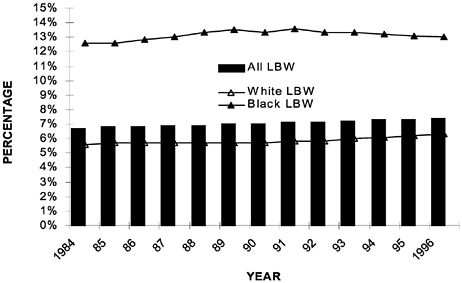
FIGURE 1. Percentage of low birthweight: United States, 1984–1996. SOURCE: National Center for Health Statistics, prepared by March of Dimes, Perinatal Data Center. 1997.
tiple births, births to older women, or changes in medical practice such as induction of labor or cesarean sections before full gestation (Kramer, 1998; Ventura et al., 1999). Birth outcomes in the United States have behaved less like indicators of poor health care and health behaviors, and more like indicators of deeper disparities among women of different social classes and ethnicities (Collins et al., 1997; O'Campo et al., 1997; Roberts, 1997; Johnson et al., 1999). The lack of improvement in indicators of the health of babies at birth is discouraging to public health professionals, but comes as no surprise to social and behavioral scientists.
Public health practice has not fully embraced the contributions that social science and behavioral research have to offer in the design of programs and policies for maternal and infant health (Mechanic, 1995; Grason et al., 1999; Hogue, 1999). The public health model for a healthy start in life is broader than the medical model and addresses disparities in health education, nutrition, and psychosocial conditions of families (Bennett and Kotelchuck, 1997). Public health professionals have long recognized the need to ameliorate effects of social policies that discriminate against economically and ethnically vulnerable populations (Aday, 1993). Public health programs for pregnant women have not had measurable effects on the country's poor pregnancy outcomes in recent years and have had limited effects on infant mortality (Willinger et al., 1998; U.S. Department of Health and Human Services, 1999). To have larger effects on maternal and infant health, innovative programs and policies need to address social, economic, cultural, political, and psychological antecedents of disparities.
Social structure, the positions people hold within it, and the nature of the social relations that result from these positions are important antecedent factors in determining resources that affect health (Link and Phelan, 1995; Kennedy et al., 1996; Kiwachi and Kennedy, 1997). Gender, socioeconomic position, and racial segregation contribute to the ideological and cultural context in which social relationships occur (Williams, 1990; Benderly, 1997). These, in turn, affect people 's everyday lives. Thus, it is not difficult to see health as “the product of social relationships between…groups, with these relationships expressed through people's everyday living and working conditions, including daily interactions with others” (Krieger, 1994). Social and economic relations are causal, explicitly shaping the production and distribution of individual and population health and disease at different points across the life span (Evans, 1995; Moss, 2000a).
The resources that are differentially associated with social and economic status include knowledge, income, wealth and assets, power, prestige, social networks, and psychological well-being. Availability and deprivation of these resources over time structure and differentiate the life course of individual men and women (Table 1) (Link and Phelan, 1995; Moss, 2000a). The cumulative effect of deprivation of social and material support over the life course is associated with stressful living and working conditions. Trajectories of stress and deprivation across a number of dimensions, including social class and ethnicity, may explain a higher prevalence of poor birth outcomes in groups such as African Americans (Geronimus, 1992). By contrast, resources are hypothesized to influence the ability of people to avoid health risks such as stress and to minimize their consequences if they occur (Rowley, 1998). In this framework, stress and health behaviors are mediating factors that occur in the context of an individual's social and economic position, the socioeconomic characteristics of a
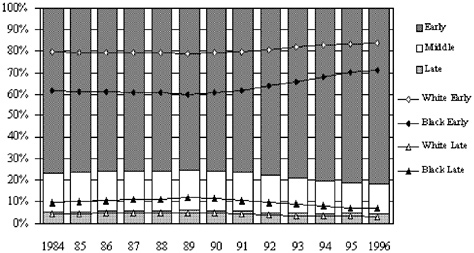
FIGURE 2. Onset of prenatal care use: United States, 1984–1996. SOURCE: National Center for Health Statistics, prepared by March of Dimes, Perinatal Data Center, 1997.
community, and the psychosocial environment that they create (Krieger, 1994). Addressing behaviors alone, without attention to the structural and psychosocial context in which they occur, will not reduce socioeconomic and racial or ethnic disparities in outcomes. While alternative frameworks such as social selection have been proposed as explanations for health disparities (Rutter and Quine, 1990; Syme, 1998), longitudinal research continues to provide stronger support for social position as a determinant rather than consequence of health. The latter approach offers rich new opportunities to develop and test social and health policies and programs that may ultimately promote health and reduce disparities among mothers and infants.
This chapter explores the opportunities offered by social and behavioral research to develop public health policies and programs that reduce or eliminate social class and ethnic disparities shaping health at birth. We use low-birthweight as the primary indicator of morbidity and mortality risk in infancy because of its links with maternal morbidity and infant morbidity, development, and mortality, as well as health conditions that can endure through childhood or appear later in life (Institute of Medicine, 1985; Hack et al., 1995; Paneth, 1995). The chapter begins with an overview of how social class, race or ethnicity, and gender roles and relations are hypothesized to affect maternal health before and during pregnancy and infant health at birth. We then examine how psychosocial factors could be a critical route for mediating the effects of social class and race or ethnicity on behaviors known to affect maternal and infant health. Following the overview of sociodemographic and psychosocial factors, we examine recent public health policy and program interventions designed to address social class and ethnic disparities in health at birth. The paper concludes with opportunities for social and behavioral research that can contribute to the design and evaluation of innovative policies and programs directed at reducing socioeconomic and racial or ethnic disparities to improve maternal and infant health. Our purpose is not to provide an exhaustive summary of the vast literature relating to these issues, but rather to provide a framework in which to take a fresh look at a persistent public health challenge.
SOCIODEMOGRAPHIC ANTECEDENTS AND OUTCOMES
The sociodemographic factors that best predict health at birth are social class and race or ethnicity. In the United States, poverty and wealth are closely related to ethnicity and “race” which have independent and interdependent effects on birth outcomes (Krieger, 1991; Lillie-Blanton and LaVeist, 1996). These social and demographic antecedents together shape gender, social, and economic roles and hierarchies that women experience throughout their lives (Table 1). In this section of the paper we first explore contextual effects of social class or “socioeconomic status” (SES in the public health literature) (Krieger et al., 1997), with an emphasis on gender-based, role-related, and life span issuesfor reproductive-age women that could help to explain disparities in health out-
TABLE 1. Examples of Social, Economic, Psychological, and Behavioral Concepts That Could Help Explain Socioeconomic Status and Ethnic DisDarities in Health at Birth
|
Sociodemographic Factors |
Psychosocial Factors |
||||
|
Antecedents |
Potential Mediators |
Environmental Resources and Stressors |
Psychological and Behavioral Resources and Stressors |
Biological System |
Health Outcomes |
|
Socioeconomic Status (SES) Education Income Occupation |
Gender-based roles or hierarchies Social and economic roles or hierarchies (and marital status) (and age) |
Stressors or life events: Mediator Modifier of mediator effect Confounder of mediator effect Social supports or deprivation Socioeconomic discrimination Access to health care |
Vulnerabilities: Distress Anxiety Depression Adaptation: Coping Self-esteem Mastery or control Behaviors: Health behaviors Use of health care |
Endocrine Cardiovascular Fetal growth Immune Neural |
Preconception: Maternal weight at birth Hypertension Diabetes Prenatal: Complications of pregnancy Perinatal: Preterm birth Small for gestational age Low birthweight Congenital anomalies Postnatal: Neonatal or infant mortality |
|
Race or Ethnicity Ethnic Origins Nativity |
Acculturation Residential segregation |
Racial discrimination Community characteristics |
|||
comes at birth (Grason et al., 1999; Minkovitz and Baldwin, 1999). We address race and ethnicity with an emphasis on the national origins and acculturation of different groups, highlighting similarities and differences across groups. Sociocultural factors associated with SES and ethnicity influence health and health choices (Link and Phelan, 1995). While we recognize the crucial influence of women's psychosocial characteristics and behaviors on infant health at birth, our emphasis in this section is on “upstream” sociodemographic antecedents.
Socioeconomic Disparities
Socioeconomic indicators such as education, income, and occupation have been consistently associated with low-birthweight, preterm birth, and infant mortality (Rutter and Quine, 1990; Savitz et al., 1996). SES captures “living conditions and life chances, skill levels and material resources, relative power and privilege” (Williams and Collins, 1995). This very capturing of so many aspects of life history and everyday experience makes SES a powerful and persistent antecedent of many pregnancy outcomes, though it has rarely been measured by more than education in most epidemiological studies (Williams, 1990; Feinstein, 1993; Moss, 2000a). Effects of SES on health at birth are not confined to the lowest-SES groups; as with many other health indicators, there is a gradient of effects across SES strata (Adler et al., 1994). The incidence of low-birthweight, for example, decreases as levels of maternal education increase, with progressively better outcomes for women who have completed high school, had some college, or graduated from college (Figure 3). The gradient implies
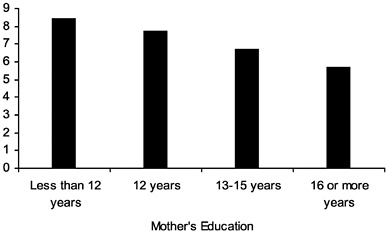
FIGURE 3. Percentage of low-birthweight live births among mothers 20 years of age and over by mother's education, United States, 1996. Less than 12 years includes persons with 12 years of schooling but no high school diploma. Twelve years includes persons with a high school diploma or GED. Thirteen to 15 years includes persons without a degree and persons with associate's degrees. Sixteen years or more includes all persons with a baccalaurate degree or higher.
that it is not only poverty, the severe deprivation of social and material resources, socioeconomic discrimination, and exposure to health risks that contribute to SES disparities. Rather, the relative deprivation and adverse exposures are mediating factors that affect women over a range of SES levels (Carstairs, 1995; Robert and House, 2000).
Gender, social, and economic roles and hierarchies may also contribute to gradients in pregnancy outcomes by determining the relative risks and resources to which women are differentially exposed prior to and during the reproductive period (Table 1) (Wilkinson, 1997; Weisman, 1998; Minkovitz and Baldwin, 1999). A clear understanding of the relative effects of these mediators is important in designing effective policies and programs. For example, if status in a social hierarchy is detrimental to health, then merely increasing cash assistance and food vouchers for those in poverty, without simultaneously reducing inequality, may afford little health benefit (Adler et al., 1994). On the other hand, deprivation of material assets such as car and home ownership that affect the everyday conditions of life may be as important a dimension of social class as education or income in predicting health outcomes, particularly for women (Arber, 1991). We will need to better understand why socioeconomic gradients in health at birth develop in order to reduce disparities.
The health of reproductive-age women is shaped beginning with their own health at birth and continuing through childhood and adolescence with conditions that develop prior to becoming pregnant (Power et al., 1997; 1998). Lower-SES women are at greater risk for the illnesses and conditions that complicate pregnancy (Pamuk et al., 1998). For example, hypertension exhibits a steep socioeconomic effect. Poor women are 1.6 times as likely as high-income women to be hypertensive (Pamuk et al., 1998). Diabetes is also more prevalent among women of low SES, and the death rate for diabetes among low-income women is three times that for high-income women (Pamuk et al., 1998). Even behavior change is socioeconomically structured. Cigarette smoking among adults 25 and over declined between 1974 and 1995, but rates were down 49% for college-educated women, compared with a drop of 13% among those who did not finish high school (Pamuk et al., 1998). In 1995 the least educated women were twice as likely to smoke as the most educated. Risks of nutritional deficiencies are higher in lower-SES groups and nutrition prior to and during pregnancy, including folic acid intake, is linked to higher rates of congenital anomalies (Centers for Disease Control and Prevention, 1998). Often, these socioeconomically-structured behaviors have their roots in women 's everyday experiences (Moss, 2000a).
The life span perspective suggests how social factors in maternal health over generations contribute to the SES gradient in health and disease of subsequent generations during infancy, childhood, and beyond (Elo and Preston, 1992; Barker, 1998). The dependence of offspring health on the health of the prior generation is clearly shown in birthweights. Women who were themselves low-birthweight, are more likely to give birth to low-birthweight babies (Sanderson et al., 1995).
Gender-Based Roles and Hierarchies
As women make the transition to pregnancy, many of the gender-based issues that they find problematic are magnified by SES and could contribute to SES gradients in outcomes (Benderly, 1997). Social constructs of masculinity and femininity are arguably nowhere more pronounced than around issues of sexuality and reproduction (Lane and Cibula, 2000). Assumptions about what is natural, biologically determined, or even divinely ordained, for men and women shape the views and experiences women have of sex, contraception, and pregnancy, as well as their health behaviors and interactions with the health care system (Ruzek et al., 1997; Weisman, 1997). They also affect the power and effectiveness women have in implementing their views, whether in bedrooms or the workplace. Unintended pregnancies, for example, occur at higher rates in low-SES women (Institute of Medicine, 1995) and lead to a complex array of situations that women must deal with before they decide whether or not to accept the pregnancy (U.S. Department of Health and Human Services, 1991; Institute of Medicine, 1995). An unintended pregnancy does not necessarily mean that the child is unwanted, but it does mean that many of the transitions required of women are not anticipated or planned. As a result, the pregnancy may be more stressful, particularly if there are limited resources to overcome competing demands.
Low SES may be associated with more traditional and conservative views of women's roles: that sex is man's business and child rearing is woman's work, as well as the socially and culturally sanctioned hierarchical dominance by men over women. Some men use traditional views of masculinity and femininity to exert power over women that may be harmful to the health and well-being of women in pregnancy. This can result in forced sex, lack of condom use, domestic violence, and little sharing in care giving for children (Amaro, 1995; Weisman, 1997). When women become pregnant, hierarchical views and behaviors may be responsible for the increase in exposure to domestic violence and emotional abuse (O'Campo et al., 1995; Crowell and Burgess, 1996). While domestic violence is found in all socioeconomic strata, the traditional view that it is a man's job to support his spouse and children economically can backfire on lower-SES women if their partners face more frustrations than men in upper-SES strata in succeeding in the role. Abuse of women has serious ramifications because of the greater risk for homicide, effects on children in the household, and the long-term emotional and physical consequences for women and their families.
Social and Economic Roles and Hierarchies
Failure to consider role demands in women's lives unnecessarily limits our understanding of maternal health in pregnancy and childbirth and the impact on pregnancy outcomes (Benderly, 1997; Zapata and Bennett, 1997). Becoming a mother increases the role demands for women, which in turn may strain material and social resources in ways that vary across socioeconomic strata. Each role,
including that of mother-to-be, is associated with normative expectations in women, partners, families, and communities, although there are cultural as well as socioeconomic variations. When expectations of a particular role are not fulfilled or demands are particularly heavy, stress or “strain” arises (Pritchard and Teo, 1994). Strain increases proportionally to the number of roles a woman must play as well as to the role transitions she makes during her childbearing years (Young, 1996; Weisman, 1997).
For women, the roles of education, work, and motherhood interact in complex ways. In the United States and other western industrialized nations, the actual period of childbearing in a woman's life is much shorter than the duration of her potential childbearing, although countries vary in the expectation that women will work outside the home and participate actively in community affairs. The trend in the United States in recent decades has been for women to obtain high school and post-high school college degrees, enter the workforce, delay or forgo marriage, and delay or forgo child rearing (Minkovitz and Baldwin, 1999). The proportion of women with high school and college degrees now exceeds that of men (Grason et al., 1999). There has been a substantial increase in the proportion of women 20 to 30 years of age in the labor market, the prime years for healthy childbearing (Grason et al., 1999). The decline in labor force participation that used to occur between ages 20 and 24 when women left the labor force for motherhood, has progressively disappeared with women born since 1945. Yet, despite concerns that rising participation in the labor force would expose pregnant women to more stress, employed women generally report better health status and birth outcomes than do women who are not employed (Moss and Carver, 1993; Pugliesi, 1995). This can be a reflection of selection of healthier women into the labor force (the “healthy worker effect”) or of the psychosocial and material benefits that accrue from employment. Still, long work weeks of physically demanding work have been found to lead to fetal growth reductions (Hatch et al., 1997). Women working in higher-status occupations during pregnancy may obtain psychosocial and material benefits that protect against any strain of work or multiple roles (Landsbergis and Hatch, 1996). The ability to control work pace, physical demands, generosity of sick and maternity leave, and other factors may all affect how healthy a woman is when she becomes pregnant and how much care a working woman can give her pregnancy (Brett et al., 1997; Wergeland and Strand, 1998). Effects on gestational hypertension have been associated with low-decision latitude and job complexity among women in lower-status jobs (Landsbergis and Hatch, 1996). In contrast to the United States, in some European countries (e.g., France) substantial research programs have led to equitable social policies that protect the mother and fetus from work that is detrimental to their health (DiRenzo et al., 1998).
In addition to role demands of school, work, and motherhood, women are likely to be primarily responsible for housework and caregivers for a child, partner, or family member. Because there has been little progress in gender equity in household responsibilities, women, especially low-SES women, continue to be responsible for most “second shift” household work and caregiving for children
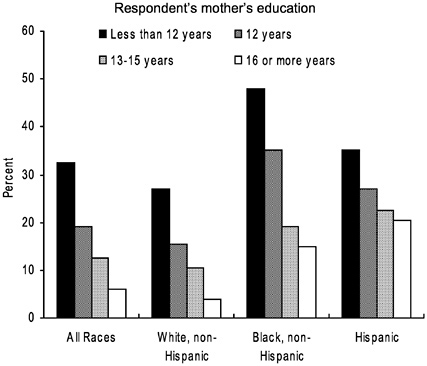
FIGURE 4 Percentage of women 20–29 years of age who had a teenage birth, by respondent's mother's education and respondent's race and Hispanic origin: United States, 1995. NOTE: Education level is for the infant's maternal grandmother. SOURCE: 1995 National Survey of Family Growth (Pamuk et al., 1998).
and adults in the household. Women's traditional role in caring for the home must be juggled along with other roles. Studies have shown that household work for women who have had a child can have its own measurable strains on subsequent birth outcomes (Pritchard and Teo, 1994). The issue of caregiving for children is of particular importance for low-SES women because they have fewer material resources to pay for child care, available child care is usually of poor quality (Fuller and Kagan, 2000), and they are more likely to depend on family and friends. The recent change in social policy that is moving mothers on welfare into paid employment while there is limited access to affordable, quality child care in many communities will be an important change for low-SES women and may potentially affect pregnancy outcomes (O'Campo and Rojas-Smith, 1998; Wise et al., 1999).
In every major ethnic group, there is an SES gradient in the percentage of women who have had teen births (Figure 4) (Pamuk et al., 1998). Birth rates to teens are particularly high in the United States, relative to other industrialized nations, and the extent to which poorer women give birth at younger ages be-
cause of lack of options in social and economic roles is of particular concern. At the same time, the demands of balancing schooling, work, and motherhood are likely to place greater strain on teenagers than on older women.
Socioeconomic variations in communities and neighborhoods, independent of individual socioeconomic characteristics, are associated with differences in pregnancy outcomes. For example, living in wealthier communities than expected after adjustment for parental education and marital status has been associated with lower odds of very low-birthweight babies for both black and white women in Chicago (Collins et al., 1997). Similarly, living in neighborhoods in Chicago with large proportions of unemployment and poverty has shown greater association with individual low-birthweight outcomes than individual education, even after adjustment for other community and individual factors (Roberts, 1997). Others have shown interactions of neighborhood-level per capita crime rates, unemployment, average wealth, and income with individual low-birthweight outcomes in Baltimore (O'Campo et al., 1997). A household class measure (based on working class and non-working class characteristics of employment) at the level of census block group in California served as a better predictor of individual birth outcomes than did the mother 's own social class (Krieger, 1991). The woman's socioeconomic context may provide additional information about SES gradients not captured by individual-level factors.
We have suggested that socioeconomically structured roles and material conditions, along with gender hierarchies, partially explain differential demands and resources of childbearing women. The fewer the resources —social and material—the more likely they are to be overwhelmed by demands, contributing to a socioeconomic gradient in health for mothers and their infants. Most public health policies and programs are predicated upon deficit models of the high-risk conditions and behaviors of women and families in poverty, without attention to antecedent socioeconomic structural factors and without strategies for building on the strengths and resilience of those low-SES women (Hogue and Hargraves, 1993; Edin and Lein, 1997; Stack, 1997). We turn now to ethnic disparities, which provides a further opportunity to examine the strengths of adaptation and maximization of resources as well as the negative effects of stress and deprivation.
“Racial” and Ethnic Disparities
Public health research has focused on the concept of race, largely believing that physical differences between groups of people are important in determining health and disease (Polednak, 1989; Osborne and Feit, 1992; Centers for Disease Control and Prevention with the National Institute of Child Health and Human Development, 1993; Bennett and Kotelchuck, 1997). The terms race and ethnicity are frequently used in public health without regard to social and cultural biases of researchers that obscure the social origins of disease and support the status quo, rather than stimulate change (Williams, 1994). In fact, race is an illdefined, socially agreed-upon mixed measure of ethnicity, skin color, and nationality, without regard to genetics and lacking in scientific rigor. There is
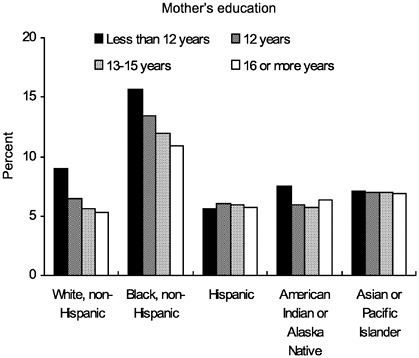
FIGURE 5. Low-birthweight live births among mothers 20 years of age and over by mother's education, race, and Hispanic origin: United States, 1996. SOURCE: Pamuk et al., 1998.
growing agreement that groups defined by race are social, not biological, in nature (LaVeist, 1994). There is no clearer example of this than the pregnancy outcome, low-birthweight. Low-birthweight, while a poor indicator of the impact of prenatal care, is still a robust indicator of sociodemographic characteristics of different populations. There is a marked socioeconomic gradient in low-birthweight for white and black ethnic groups, but there is no gradient for Latino and Asian American or Pacific Islanders (Figure 5). Subsumed under “race” in the United States are key sociodemographic characteristics that help to explain differences in pregnancy outcomes among ethnic groups: ethnic origins and history (their country and class of origin, whether they are indigenous or came as slaves, refugees, or voluntary immigrants), the length of time and social conditions since arriving in the United States (generations, years, or months), and their acculturation to dominant ethnic norms in the United States (food, language, behaviors, and other ethnic traditions).
African Americans
In the United States, African Americans occupy a unique position socially, culturally, and politically such that the most powerful sociodemographic factor
in determining birth outcomes is being black. There is a strong socioeconomic gradient for low-birthweight (as for other pregnancy outcomes) among black women, and the low-birthweight rate is twice as high as the rate for white women at every education level (Figure 5) (Kleinman and Kessel, 1987; McGrady et al., 1992; Schoendorf et al., 1992). While African Americans are disproportionately represented in lower socioeconomic groups, not all of the differential in birth outcomes for African Americans is explained by SES (Starfield et al., 1991; Williams and Collins, 1995; Roberts, 1997). One potential explanation for the disparity is that education does not have the same social or economic returns (salary, benefits, or occupational status) for blacks as it does for whites (Figure 6) (Krieger et al., 1993). But even this is not a sufficient explanation for observed black/white differences. For one, black/white differences persist even in the military with universal employment and health coverage,
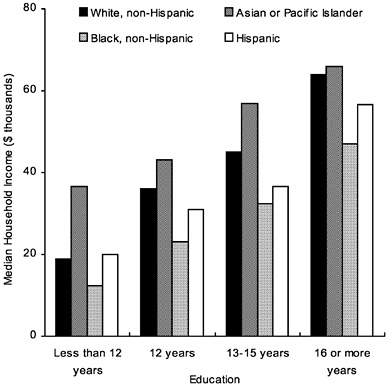
FIGURE 6. Median household income among women 25 years of age and over by education, sex, race, and Hispanic origin: United States, 1996. NOTES: Median income is based on total household income (earnings and other income) and is not adjusted for work status or number of hours worked by household members. Median is calculated using actual reported household income, not grouped data. Educational attainment is as of March 1997. SOURCE: U.S. Bureau of the Census (Pamuk et al., 1998).
FIGURE 6. Median household income among women 25 years of age and over by education, sex, race, and Hispanic origin: United States, 1996. NOTES: Median income is based on total household income (earnings and other income) and is not adjusted for work status or number of hours worked by household members. Median is calculated using actual reported household income, not grouped data. Educational attainment is as of March 1997. SOURCE: U.S. Bureau of the Census (Pamuk et al., 1998).
though disparities are reduced (Adams et al., 1993; Alexander et al., 1993; Barfield et al., 1996). Furthermore, differences persist across the socioeconomic spectrum; in fact, the black/white ratio of poor outcomes actually increases with income (Figure 7) (Schoendorf et al., 1992). Nor are these striking differences fully explained by health behaviors. For example, the smoking rates during pregnancy are almost twice as high for whites as blacks at every level of education (except college graduates) (Pamuk et al., 1998). The prevalence of chronic and intergenerational health disparities in women of reproductive age may explain part of the difference. For example, 30% percent of middle- and high-income black women 20 years and older are hypertensive, a rate comparable to that for poor white women, and hypertension is a major risk factor for adverse outcomes (Flack et al., 1995).
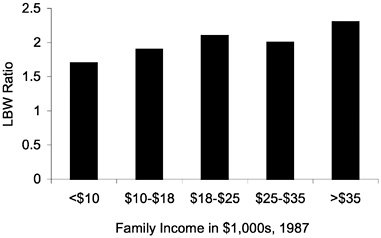
FIGURE 7. Ratios of low birthweight (black/white) by income (Schoendorf et al., 1992).
The weathering hypothesis has been advanced to explain life course differences in birth outcomes between black and white women (Geronimus, 1992). Using evidence from black/white neonatal mortality ratios that increase with age of the mother, the theory helps to explain ethnic disparities in health at birth by showing that black and white women “weather” at different rates (Geronimus, 1986, 1987). This occurs because different life circumstances undermine or promote health through a cascade of advantages and disadvantages throughout the life course. Changes over time occur in part because of age-dependent trajectories of risky behaviors such as smoking and using drugs, as well as community-level environmental exposures (e.g., to lead-based paint) and access to health services (Geronimus, 1992). The weathering framework also suggests how intergenerational effects on health occur, by connecting physical manifestations of weathering such as maternal hypertension, cigarette smoking, and blood-lead levels to infant health.
Another approach to explaining racial differences in birth outcomes looks at the effect of racial segregation and discrimination as expressed both in interpersonal behaviors and in community-level characteristics. Investigators have developed conceptual frameworks that include racial segregation and racism, as well as SES as contributing factors to disparities in health (Williams, 1996; Polednak, 1997). Data from the most segregated metropolitan areas show that a high black infant mortality rate persisted from 1980 to 1990, contributing substantially to the black/white disparity in overall mortality (Polednak, 1996). Besides residential segregation, other community features are associated with health disparities. In a hospital-based case-control study, African American mothers who rated their neighborhoods unfavorably in terms of police protection, protection of property, personal safety, friendliness, delivery of municipal services, cleanliness, quietness, and schools were 1.7 to 3.2 times as likely to deliver a very low-birthweight infant as those who rated the neighborhoods favorably (Collins et al., 1998). Geronimus and her collaborators examined the effects on excess mortality of residence in geographic areas that vary in population-level patterns of disadvantage and segregation, showing that environmental and psychosocial factors in different communities create sharp disparities in death rates among black and white men and women (Geronimus et al., 1996). They argue for looking beyond individual-level chronic burdens of everyday deprivation to population-level indicators of hardship.
Differences in health status of women of African descent born in the United States compared to those born outside the United States (a nativity effect) provide evidence consistent with the hypothesis that historically and socially constructed racism and segregation may have deleterious effects on health. Birth outcomes among Africans and other blacks who migrate to the United States are better than those of U.S.-born blacks (Table 2) (Cabral et al., 1990; Kleinman et al., 1991; Friedman et al., 1993; Morton-Mitchell et al., 1999). Caribbean- and African-born black women have better low-birthweight rates than U.S.-born black women (9, 10, and 14%, respectively) although they are not as low as those of whites (Morton-Mitchell et al., 1999). In a hospital-based study that controlled for income, the foreign-born group had higher prevalence of protective factors such as education and marriage and lower prevalence of risk factors such as teenage births, low pre-pregnancy weight for height, and number (but not early onset) of prenatal care visits (Cabral et al., 1990). Ethnic differences persisted even after adjustment for multiple sociodemographic, obstetric risk, and health behavior variables, with adjusted outcomes best for Haitians and worst for American blacks. The explanation in part may be a “healthy migrant effect.” People who put energy and resources into migrating at any SES level may have better health than those who stay behind. This effect may be more prominent at lower-SES levels and less prominent at higher SES levels. Universal birth information on low-birthweight and infant mortality from the countries of origin for the immigrant black women would help to shed light on this issue (Kleinman et al., 1991; Howell and Blondel, 1994; Guendelman et al., 1995; Abraido-Lanza et al., 1999). It also remains to be demonstrated whether black
women born outside the United States have stress and adaptation patterns before, during, and after pregnancy similar to those of U.S.-born blacks (Table 1) and whether, as they reside longer in this country, they develop stress patterns and birth outcomes that resemble those of U.S.-born blacks (see discussion of acculturation in the next section).
Racism is hypothesized to influence health disparities by increasing psychological stress and reducing adaptive resources of the individual (such as self-esteem, self-efficacy) and of the community and culture (such as social support) (Williams, 1996). Stress increases due to negative attitudes and beliefs about groups distinguishable from the predominant ethnic group (prejudice) and differential treatment of members of those groups (discrimination) (Williams, 1996). Fundamental to racism are assumptions that groups of people can be ranked by the superiority or inferiority of particular characteristics that “explain” their hierarchical position. The internalization of cultural stereotypes is hypothesized to lead to negative self-evaluations that adversely affect psychological well-being and healthy behaviors. The stress of life events that can be linked to ethnic minority status is one form of socially induced stress long recognized in mental health literature that is now being investigated for its contributions to physical health (Thoits, 1983; Lipton et al., 1993).
Latinos and Asian Americans or Pacific Islanders
As with African American women born outside the United States, foreign-born Latina and Asian American or Pacific Islander women have better birth outcomes than those of their U.S.-born peers (Table 2). One potential reason is because of the healthy migrant or nativity effect described above. An alternative—or complementary—explanation is that immigrants have sociocultural strengths that favor better birth outcomes. One test of the healthy migrant hypothesis is to compare birth outcomes in the countries of origin with those of foreign-born women in the United States. Evidence consistent with the hypothesized effect, for example, is that low-birthweight rates in Japan (7.5% in 1994 and 1995) are higher than those of Japanese American women giving birth in the United States (6.9% in 1994) (Alexander et al., 1996; Hirayama and Wallace, 1998). Unfortunately, many other key countries of origin for the non-native-born U.S. population do not have universal reporting of pregnancy outcomes comparable to that of the United States, so such comparisons are difficult (Howell and Blondel, 1994). Better cross-national, preferably longitudinal data on women's sociodemographic characteristics, migration trajectories, and birth outcomes are needed to help sort out these effects.
The lack of a socioeconomic gradient in birth outcomes for Latina and Asian American or Pacific Islander women is consistent with the healthy migrant hypothesis. Latina and Asian American women of low SES have better birth outcomes than low-SES white women, the so-called birth paradox (Figure 5) (Singh and Yu, 1996a). The advantage over white women, however, does not hold for women at higher SES levels. For women with college degrees, low-
birthweight rates are better for white women than either Hispanic or Asian American women. Among Asian Americans, the low-birthweight advantage is observed only for non-high school graduates. One of the problems with socioeconomic analyses that are not stratified by country of birth and ethnic subgroup, however, is that there is striking heterogeneity in outcomes among ethnic subgroups of Latina and Asian women (Table 2) (Singh and Yu, 1994, 1996b; Zane et al., 1994). For Latinas, lowest rates of low-weight births are generally observed in Mexican Americans and Cuban Americans and higher rates in Puerto Ricans, regardless of whether they are born in the United States (Table 2). Among Asians, the lowest rates of low-weight births are generally observed in Chinese and Japanese Americans and higher rates in Filipino women, regardless of their nativity (Singh and Yu, 1996b). The heterogeneity in outcomes between ethnic subgroups persists for both U.S.-born and foreign-born women in each group (Table 2). Nor are the differences explained by SES, as measured by education. For example, nearly 34% of the foreign-born Chinese Americans had 16 or more years of education (mean of 13.2 years) and a low-birthweight rate of 4.7%, while more than 40% of foreign-born Filipinos had high levels of education (mean 13.8 years) and a low-birthweight rate of 7.1%. Similarly, Mexican Americans had fewer years of education than Puerto Ricans or Cubans, but better birthweight outcomes. When adjusted for sociodemographic factors including education, there remain systematic ethnic differences in odds of low-birthweight and preterm birth, increasing from Chinese to Japanese and Filipino groups, and with the odds highest among the U.S.-born (Singh and Yu, 1996b).
Cultural explanations for both nativity and ethnic subgroup effects and in pregnancy outcomes need further exploration. Understanding acculturation, the process of adapting to the host country, is one promising direction. Acculturation includes the extent to which the beliefs and practices of immigrants adhere to their traditional culture, adhere to their host country culture, or combine both (Nagata, 1994; Landrine and Klonoff, 1996). As a general rule, acculturation increases with length of time in the host country. Among Hispanic ethnic subgroups, outcomes have been found to vary with acculturation to the United States; for example, the longer non-native-born women reside in the United States, the poorer their perinatal outcomes tend to be (Williams et al., 1986; Guendelman et al., 1990). Acculturation is associated with a direct effects on birth outcomes and indirect effects through effects on health behaviors, like smoking (Scribner and Dwyer, 1989; Cobas et al., 1996). Second-generation Hispanic women report a higher prevalence of health risk behaviors such as smoking and drinking than first-generation women (Guendelman et al., 1990). In a study with multiple measures of acculturation, acculturation was not associated with birthweight, gestational age, or smoking, though it was associated with alcohol and drug use (Zambrana et al., 1997). Instead, language and time in the United States affected gestational age and birthweight through a mediating variable, prenatal stress (see below).
TABLE 2. Low-Birthweight Outcomes and Selected Sociodemographic Characteristics by Maternal Nativity Status and Race or Ethnicity, 1985 Through 1987
|
Characteristics |
Non-Hispanic Whites |
Blacks |
Chinese |
Japanese |
Filipinos |
Other Asians |
Mexicans |
Puerto Ricans |
Cubans |
Central and South Americans |
|
U.S.-Born Mothers |
||||||||||
|
Low-birthweight, % per 1,000 births |
5.5 |
13.1 |
6.5 |
6.5 |
8.0 |
6.3 |
6.6 |
9.4 |
7.0 |
6.8 |
|
Maternal age <20 years, % |
9.6 |
24.4 |
2.3 |
3.8 |
15.9 |
9.8 |
22.7 |
26.4 |
19.1 |
25.3 |
|
Maternal education <12 years, % |
14.9 |
32.3 |
3.2 |
2.9 |
13.8 |
12.3 |
42.3 |
43.8 |
22.4 |
29.9 |
|
Maternal education >16 years, % |
19.2 |
6.5 |
54.3 |
41.4 |
8.5 |
37.1 |
3.8 |
4.5 |
14.3 |
13.6 |
|
Mean Education, years |
13.0 |
11.9 |
14.8 |
14.4 |
12.6 |
13.7 |
11.4 |
11.4 |
12.6 |
12.3 |
|
Unmarried, % |
14.0 |
64.0 |
8.9 |
10.2 |
29.0 |
18.9 |
29.6 |
54.2 |
23.2 |
65.1 |
|
Nonmetropolitan county, % |
40.0 |
33.3 |
10.4 |
19.3 |
21.7 |
20.4 |
29.8 |
6.0 |
9.1 |
9.5 |
|
Live birth order >4% |
8.1 |
13.9 |
3.9 |
3.7 |
9.4 |
7.2 |
15.0 |
8.0 |
3.5 |
5.1 |
|
Prenatal care in first trimester, % |
81.1 |
61.2 |
89.8 |
88.0 |
74.2 |
76.1 |
62.7 |
57.1 |
66.6 |
65.8 |
|
No prenatal care, % |
1.1 |
3.8 |
0.4 |
0.5 |
1.0 |
1.5 |
3.7 |
9.4 |
4.4 |
2.8 |
|
Number of live births |
2,013,179 |
1,657,672 |
6,281 |
13,011 |
8,849 |
9,805 |
333,073 |
58,066 |
3,968 |
3,454 |
|
Foreign- or Puerto Rican-Born Mothers |
||||||||||
|
Low-birthweight, % per 1,000 births |
5.2 |
8.8 |
4.7 |
5.9 |
7.1 |
6.4 |
5.0 |
8.7 |
5.6 |
5.7 |
|
Maternal age <20 years, % |
4.1 |
6.7 |
0.6 |
1.4 |
3.4 |
5.3 |
13.1 |
14.5 |
4.8 |
7.7 |
|
Maternal education <12 years, % |
11.2 |
28.1 |
15.2 |
5.5 |
12.7 |
23.7 |
74.6 |
46.7 |
19.5 |
35.8 |
|
Maternal education >16 years, % |
26.6 |
13.9 |
33.8 |
39.0 |
42.2 |
30.9 |
2.6 |
5.5 |
16.2 |
8.3 |
|
Mean education, years |
13.3 |
11.8 |
13.2 |
14.0 |
13.8 |
12.3 |
8.2 |
11.1 |
12.6 |
11.3 |
|
Unmarried, % |
9.2 |
40.4 |
2.8 |
5.2 |
9.2 |
8.6 |
25.9 |
50.0 |
14.9 |
36.8 |
|
Nonmetropolitan county, % |
21.4 |
6.6 |
9.1 |
16.7 |
14.8 |
20.1 |
15.7 |
6.5 |
3.5 |
3.0 |
|
Live birth order >4% |
8.7 |
13.7 |
4.3 |
4.3 |
7.1 |
16.5 |
20.9 |
16.1 |
5.9 |
11.5 |
|
Prenatal care in first trimester, % |
82.5 |
60.8 |
80.8 |
82.8 |
78.2 |
70.2 |
57.1 |
58.3 |
83.5 |
59.2 |
|
No prenatal care, % |
1.1 |
5.6 |
1.0 |
0.9 |
0.9 |
1.8 |
5.7 |
9.2 |
1.4 |
5.8 |
|
Number of live births |
94,428 |
124,335 |
44,291 |
10,908 |
54,211 |
164,674 |
407,309 |
51,808 |
25,967 |
132,913 |
|
SOURCE: Data were derived from the Linked Birth and Infant Deathdata sets, 1985, 1986, and 1987 cohorts (Singh and Yu, 1996a). |
||||||||||
Changes in pregnancy outcomes with acculturation can happen quickly in the host country. Controlling for sociodemographic factors, Mexican immigrants who had lived in the United States 5 years or more were found to have more pregnancy complications resulting in higher rates of preterm birth than more recent immigrants (Guendelman et al., 1995). Longer residents also had fewer planned pregnancies. The length of U.S. residence appears to be associated with an increase in low-birthweight through a decrease in length of gestation, rather than through slowing fetal growth (Guendelman et al., 1995; Zambrana et al., 1997).
Psychological stress is believed to be one of the key mechanisms through which acculturation contributes to health disparities among immigrant ethnic groups. Social, economic, and cultural stressors are thought to accumulate over time with experiences in the host country. Stressors include the adjustment of moving from a rural to an urban area, separation from family, language barriers, unrealized expectations, and changes in gender roles (Perez, 1983; Menville, 1987). If not moderated sufficiently by social, economic, or cultural resources, then some women cope with the stress by adopting host country behaviors such as smoking, or alcohol and drug use (Marin et al., 1989). Acculturation is a complex process, however, with complicated effects. Acculturation among Latinas is associated with increased self-esteem, independent of social support, marital status, religion, or education (Flaskerud and Uman, 1996). Young Vietnamese adults were more acculturated and bicultural, and reported themselves as healthier than older, foreign-born Vietnamese, but they experienced more family conflict and dissatisfaction with their current lives in the United States (Leong and Johnson, 1994). Nevertheless, they had lower than expected levels of distress compared to their elders because of their perceived positive well-being. Because stress and adaptation are hypothesized to play a role in mediating effects of racial or ethnic disparities on birth outcomes, we turn next to a detailed presentation of what is currently known about stress and adaptation in pregnancy.
PSYCHOSOCIAL ANTECEDENTS AND OUTCOMES
Psychosocial characteristics such as stress and adaptation, and associated behaviors, affect women's health before, during, and after pregnancy (Lederman, 1995a; Weisman, 1997). They are shaped in turn by social factors such as material and social resources or deprivation, residential segregation, and racism (Table 1) (Cohen et al., 1997). While studies have not yet documented SES gradients in stress and adaptation, and are only beginning to investigate ethnic differences in stress and adaptation, there is growing evidence that these factors are associated with reproductive health and pregnancy outcomes, and need to be better understood (Hogue, 1999). Better understanding of stress and adaptation may help to explain socioeconomic and ethnic disparities in health, and why some women do well in spite of their SES and ethnic health risks. Since the majority of pregnancies and births in every group are healthy, studying stress
and adaptation within as well as across groups is important. To explore further how stress and adaptation affect childbearing women, we summarize evidence from studies of ethnic disparities in outcomes as a function of measures of stress and adaptation, and describe trials of social support designed to prevent or reduce stress among pregnant women.
Stress and Adaptation
Psychological stress and how women adapt to stress have long been suspected of playing a role in adverse birth outcomes (Lazarus and Folkman, 1984; Lobel and Dunkel-Schetter, 1990; Lobel, 1994). Stress is a process in which social or physical environmental demands are placed on the adaptive capacity of an individual, resulting in psychological changes, which in turn can lead to biological changes (Cohen et al., 1997). The social or physical environment can, however, also supply resources (such as social supports) to help individuals adapt and improve their individual abilities to cope with stress. To complicate matters further, the pregnancy is itself an internal stress with its own biological stress response that develops to protect the unborn baby (Wadhwa et al., 1996; 1997). What appears to happen in pregnant women who have high levels of acute, chronic, or intergenerational stress in their environments is that either their prenatal stress effects are heightened or their protective stress response is inhibited from its full development, and fetal growth or the length of gestation becomes vulnerable to external stresses (Wadhwa et al., 1993). The result would be a low-birthweight or preterm birth.
Research on stress and adaptation effects on birth outcomes has focused largely on constructs of psychological stress that depend on measuring stressful life events (Cohen et al., 1997). In more recent research, it is the woman's perception of potentially stressful events that is measured (Lobel, 1994; Lederman, 1995a). Adaptation is generally captured in measures of coping skills or social support. Potentially confounding factors that are adjusted in thorough studies of such effects include psychological factors (such as trait anxiety) and obstetric risks. Defining and measuring stress and adaptation in diverse SES and ethnic groups is difficult because of differences in the definition, interpretation, and experience of stress and coping skills (Tracy and Mattar, 1999).
Recent studies of birth outcomes in African American women have found associations of stress and adaptation with birth outcomes. The odds of very low-birthweight were three times as high for African American mothers exposed to three or more stressful life events during pregnancy when compared to women with fewer events (Collins et al., 1998). Neighborhoods that could be characterized as stressful were also associated with higher odds of low-birthweight for infants of African American mothers. African American women who had more respect for themselves, believed they did things the same as most people, and had more people in their social networks all had higher-weight babies, and term delivery was associated with positive self-attitude (Edwards et al., 1994). Among African American women, social support, life events the year prior to
pregnancy, and mental health were associated with birthweight through their effects on smoking behavior (McCormick et al., 1990).
Acculturation effects on stress and outcomes have been explored in two recent studies comparing Mexican immigrants with Mexican Americans. Greater “integration” in the United States was associated with significantly more prenatal stress, which in turn was associated with preterm birth (Zambrana et al., 1997). Integration was measured by length of time in the country and use of English and was the only acculturation dimension with a significant relationship to stress or outcomes. Stress had direct effects on gestational age and indirect effects on birthweight (Rini et al., 1999). The effects of ethnicity on birthweight were entirely explained by personal resources (mastery, optimism, self-esteem) and interaction effects of ethnicity with income, education, marital status, and age on personal resources. Latina women had weaker personal resources than white non-Hispanics, and women with weaker resources had lower birthweights. There was no difference in prenatal stress between the two groups, however, and women with higher prenatal stress had shorter gestational ages. These studies with multiple measures of psychological SES and ethnicity are particularly promising for beginning to understand how ethnic effects on health at birth are produced.
Clinical depression may also affect pregnancy outcomes. Depression for women occurs at particularly high rates during the reproductive years, as well as in pregnancy and the postpartum period (Ruderman and O'Campo, 1999). In inner-city women with depression measured in the third trimester, higher odds of low-birthweight and preterm birth were found, even after adjustment for demographic, health behavior, and obstetric risks (Steer et al., 1992). Among African Americans, but not whites, women with high depression scores at their first prenatal visit were found to have higher rates of preterm births (Orr and Miller, 1995). A deeper understanding of the contributions of psychological stress and depression to birth outcomes could add considerably to our understanding of how SES gradients and ethnic disparities in outcomes arise (Hogue, 1999).
Social Support
The hypothesis that stress during pregnancy contributes to poor pregnancy outcomes and that social support could “buffer” against stress or enhance adaptation has led to numerous trials of social support services in clinical settings. Nearly all have been with poor women, several with Latinas, and one with African American women. Beneficial effects on birthweight have been documented for social support, but not as a buffer to high levels of stress. Intimate social support from a partner or family member appears to improve fetal growth, even for women with low levels of stress, (Lederman, 1995a; Hoffman and Hatch, 1996). Trials in which social support was provided through the health care systems, however, have produced highly variable results, indicating that there is no reliable model as yet for reducing disparities in low-birthweight.
Randomized trials of social support in pregnancy were conducted with women of varying levels of psychosocial risk (Spencer et al., 1989; Blondel et al., 1990; Oakley et al., 1990; Bryce et al., 1991; Villar et al., 1992; Langer et al., 1996) and women with high levels of measured stress and low social support (Rothberg and Lits, 1991; Norbeck et al., 1996). The amount and type of psychosocial support varied a great deal among the studies. In one study, nurses provided emotional support and health education, and helped women to cope with pregnancy-related problems. In other trials, nurses helped women to mobilize support from their network (Villar et al., 1992; Langer et al., 1996; Norbeck et al., 1996). One study had a lay home visitor provide household help and some advice when necessary (Spencer et al., 1989), while the others had midwives increase their emotional support (Oakley et al., 1990; Bryce et al., 1991). Intervention groups had lower rates of preterm birth in only four of the six trials reporting rates, and none showed significantly lower odds of preterm birth (Blondel, 1998). The pooled odds ratio was 1.4 (95% confidence interval [CI], 0.9–1.9). In two other trials for women at high risk of preterm birth, either women (Collaborative Group on Preterm Birth Prevention, 1993) or public clinic sites (Hobel et al., 1994) were randomized. Nurses provided preterm birth education and general emotional support. In the former study, there was no significant difference between groups. In the second study, although the rate of preterm births was lower in the intervention group (7.3% compared to 9.1%), the odds of preterm birth were not significantly lower. Among women in the trial who were randomized to social work support, there was no advantage to social work intervention. The results are consistent with at least three different interpretations: (1) it is difficult to provide sufficient social support during pregnancy in clinical encounters to overcome psychosocial contributions to poor birth outcomes, (2) it is difficult to demonstrate an effect unless the women with reducible psychosocial risks are identified and evaluated by themselves, or (3) there is no reliable effect of psychosocial support services during pregnancy in clinical encounters.
POLICY AND PROGRAM STRATEGIES
Since reducing infant mortality in the United States became a prime public health policy goal in the mid-1980s, the evidence that any of the policy or program changes have lead to measurable improvements in the health of infants at birth is modest at best. What is humbling is that public health efforts that attempted to deal with SES and ethnic disparities using public health professional expertise, have had little if any significant impact on the disparate birth outcomes. No single type of public health effort has led to reliable, reproducible impact on low-birthweight or preterm birth outcomes (Alexander and Korenbrot, 1995). The efforts have been associated with national improvements in the United States of prenatal care, teenage pregnancy, smoking in pregnancy, and reduction in infant deaths due to sudden infant death syndrome (SIDS) (Pamuk et al., 1998; Willinger et al., 1998; Ventura et al., 1999). Yet there has been no
conclusive impact on the birth outcomes. We review here briefly some of the major public health efforts that have been made, and their associated impacts. We do so not to demonstrate what has already worked but to document what has been tried. In looking for reasons why changes in birth outcomes are so difficult to achieve with traditional public health interventions, we present first national-level efforts that have attempted to reduce socioeconomic health disparities of infants, and then ethnic-specific efforts at the community level that have attempted to reduce racial or ethnic health disparities of infants. At the conclusion of this section, we point to lessons learned and ignorance revealed that point to new opportunities for future research and development of public health policy and program strategies.
Reducing Socioeconomic Health Disparities at Birth
The public policy and program strategies that have attempted to reduce the effects of differences in socioeconomic status on infants have emphasized improving access to and content of health care services that low-income pregnant women receive and improving material resources of low-income women (Hughes and Simpson, 1995). Innovations were implemented at the societal, community, family, and individual levels, but all focused almost exclusively on pregnant women. None have revealed models that reliably or reproducibly reduce population rates of low-birthweight or infant mortality, though there is evidence of limited success in some groups of participants.
Expanded Access to Perinatal Health Care for Low-Income Women
Beginning in 1984 a series of policy reforms of the federal Medicaid program in the Health Resources and Services Administration (HRSA) removed the requirement that pregnant women be eligible for welfare in order to obtain health care coverage for pregnancy-related medical care (Coughlin et al., 1994). Changes in Medicaid policies not only expanded income criteria for eligibility so that women with household incomes up to twice the poverty level eventually were eligible, but also provided the states incentives for establishing early and continuous coverage of care before eligibility applications were fully processed (presumptive eligibility) and uninterrupted coverage in pregnancy (continuous eligibility) (Sardell, 1990; Dubay et al., 1995). Access to prenatal care and use of prenatal care improved for low-income pregnant women for Medicaid in many states, but not all (Piper et al., 1990; Braveman et al., 1993; Epstein and Newhouse, 1998). Studies evaluating the impact of Medicaid improvements found variable effects on prenatal care use and little impact on pregnancy outcomes (Piper et al., 1990; 1994a; 1994b; California Department of Health Services, 1996; Haas et al., 1996; Epstein and Newhouse, 1998). Nationwide, vital statistics revealed that the early and continuous use of prenatal care improved, without associated impact on birth outcomes (Figures 1–3). States that increased
payments to physicians for obstetric care, thus expanding the capacity of the health system accessible to low-SES women, were among the more successful states in eventually improving early and continuous use of prenatal care (Dubay et al., 1995). California attained “ universal coverage” (more than 95% of pregnant women covered by private and public insurance) by 1994, but low-birthweight and preterm births in the state did not improve (California Department of Health Services, 1996). Evidence from a variety of sources indicates that Medicaid coverage of pregnant women is inadequate to compensate for socioeconomic deprivation (Haas et al., 1996; Moss and Carver, 1998). On the other hand, women who use food from the U.S. Department of Agriculture's Supplemental Nutrition Program for Women, Infants and Children (WIC) during pregnancy have better birthweight and infant mortality rates than women who do not, even after adjustment for a number of characteristics to reduce selection bias (Stockbauer, 1987; Moss and Carver, 1998).
Psychosocial Services for Low-Income Women
Enhanced prenatal care services that include nutrition, psychosocial, and health education services along with obstetric care have developed in the public health sector of the nation's health care system largely through the efforts of the Bureau of Maternal and Child Health in HRSA. Most states by 1990 offered enhanced prenatal services to low-income women through public health services and some through Medicaid. Two basic models have been used for the service delivery: public health sites provide the support services for all obstetric providers, or physician offices and public or private clinics provide their own enhanced services (McLaughlin et al., 1992; Simpson et al., 1997). Enhanced prenatal care services in statewide Medicaid programs have demonstrated effects on outcomes, though effects have been variable and largely limited to particular groups who are likely to be at higher psychosocial risk. The one randomized control trial of psychosocial, nutrition, and health education services found that the services were related to higher mean birthweights for women who had not given birth before, but not those who had (McLaughlin et al., 1992). In observational trials, the services have been associated with infant mortality or low-birthweight rates statewide (Buescher et al., 1991), for black women only (Reichman and Florio, 1996), for women with a minimal number of visits (Korenbrot et al., 1995), medically high-risk women (Baldwin et al., 1998), or with no impact on low-birthweight rates (Piper et al., 1996). Part of the variation in impact could be the result of variation in quality of content and delivery of the psychosocial services. In a stratified random sample of 27 ambulatory prenatal care sites of five practice setting types, the quality and extent of psychosocial services varied at the individual and site level and with provider credentials (Wilkinson et al., 1994; 1998). The differences in birth outcomes observed with differences in the measure of quality of care, however, varied at the individual level and did not depend on the credentials of the psychosocial service provider or the site of care (Homan and Korenbrot, 1998; Wilkinson et al., 1998). There is no conclusive
evidence that these services improve outcomes for low-income women in general, and they may at best have an impact on birth outcomes only in some women with elevated, but reducible, psychosocial risks.
National Healthy Start Program
As an alternative to Medicaid reform, which was a change in health care coverage for pregnant women across the country, the national Healthy Start program provided funding to a limited number of local areas in the country (Mason, 1991). The program was started in 1990 to assist communities with high infant mortality rates in developing innovative, multidimensional community approaches to reducing infant mortality. Community-level consortia at most sites developed collaborative partnerships of local and state agencies, the private sector, schools, and other community and social organizations, sharing people and resources in the efforts. The projects developed their own interventions, and over the course of the 5-year demonstration there were nine models of intervention that evolved (Healthy Start National Resource Center, 1999). Projects developed different combinations and versions of the models. For example, three projects developed Family Resource Centers with an array of services available at one community site. Services included high school graduate equivalency degree (GED) classes, food vouchers through the food stamps and WIC programs, cash assistance through the welfare program, on-site Medicaid links, health education, and life planning. Not all of the Family Resource Centers provided all these services, however. Other models of intervention used in the same community might include enhanced clinical services, risk prevention and reduction, facilitating services, training and education, or adolescent programs. The primary issues addressed by the projects regardless of intervention models were to include teenage pregnancy and schooling, inadequate prenatal care, poor nutrition, and absence of family and community support, as well as the use of tobacco, alcohol, and drugs.
Results of the national evaluation of the Healthy Start program are to be released in the Spring of 2000. Preliminary results released in 1998 indicated no consistent impacts on birth outcomes (Local Evaluations, 1998). The national evaluation results are anxiously awaited for final lessons to be drawn.
National Fetal-Infant Mortality Review
The National Fetal-Infant Mortality Review (NFIMR) program begun in 1992 established community-level FIMRs to examine health, behavior, and psychosocial factors, as well as health and social service factors, in families that experience fetal and infant deaths. Initiated by the American College of Obstetricians and Gynecologists (ACOG) in partnership with other major professional societies, the federal government, the March of Dimes, the Robert Wood Johnson Foundation, and private organizations, the reviews were devised and carried
out at the local community level. The communities selected to participate had high levels of infant mortality, with demonstrated local professional support, community consensus of need, and commitment of local resources for review activities. Major aspects of the FIMR programs included: examining social, economic, cultural, safety, and health systems factors associated with fetal and infant mortality through review of individual cases; planning a series of interventions and policies that addressed these factors to improve the services systems and community resources; participating in community-based interventions and policies; and assessing the progress of the interventions (NFIMR, 1997). The quantitative impact of the FIMRs has not been formally evaluated, but one study where infant mortality rates declined more than statewide rates occurred in Aiken County, South Carolina, which mounted an impressive sociopolitical and public health response to the findings of its FIMR task force.
In Aiken County, the coroner who started reviewing the cases and causes of infant death noticed a growing number of deaths that appeared to have socially linked causes as a growing differential between blacks and whites (Papouchado and Townsend, 1999). The coroner notified the newly elected mayor. The deaths proved to be “a red flag for a host of serious societal problems.” Together women began a cascade of community reforms that put rural police on bicycles to get to know their community, its children, and its parents (“MOMS and COPS ”), not to jail them for neglect or abuse or put their children in protective services but to find out what people needed to take care of their pregnancies and infants and to help them get it. A growing number of community participants (more than 70 members from institutions, agencies, civic groups, and religious groups) that had been the Infant Mortality Task Force (a medical model) turned into the Growing into Life: Healthy Community Collaborative (a social model). A virtual organization, the collaborative operated on the principle of a “ minimum of bureaucracy and territorialism,” and an expanded mission to address issues of domestic violence, poverty, lack of education, and other psychosocial issues. No small part of the efforts of the collaborative were to discover and take on a pocket of corruption in the state capital, and win, to get their local needs—and those of other communities in the state like themselves —addressed. During the mayor's first term, the running 3-year averages for infant mortality in Aiken declined steadily from 11.6 to 7.9 per 1,000 live births, while statewide the rates fell from 10.5 to 8.3 live births. The Aiken County experience, like that of some Healthy Start and other FIMR projects, is illustrative of case studies that lead to theories of community interventions that develop multilevel and multidimensional policies and strategies over time, involving community partnerships that potentially could begin to reverse disparities in health at birth.
Reducing Ethnic Health Disparities at Birth
National public health interventions addressing the reduction in ethnic disparities in maternal and infant health have been developed largely as research demonstration projects, rather than government policy or program initiatives.
Although in a few of the original Healthy Start sites described above there were ethnic-specific program strategies for African Americans, by and large the efforts to engage specific ethnic minority communities in culturally adapted programs have been funded by research rather than administrative government funds. The demonstration projects that have attempted to reduce the effects of differences in ethnic disparities on infants have emphasized having members of the ethnic communities themselves participate in the assessment of the communities, assets and needs and plan changes in public health services. Innovations were implemented at the community, family, and individual levels. We present descriptions of two such research demonstration projects, one that involved African American women in four communities across the continental United States and the other that involved three Asian American ethnic groups in one community in Hawaii. These projects focused on the role of stress and adaptation in mediating effects of ethnicity in birth outcomes: (1) starting with qualitative research methods to ascertain the needs of the women in the communities in their own terms, and (2) ending with quantitative epidemiological and psychological research methods to analyze effects of stress and adaptation during pregnancy.
Demonstration Projects with African American Women
In 1993 the Centers for Disease Control and Prevention (CDC), together with the National Institutes of Health (NIH), held a conference to announce research demonstration projects to determine what could be done to reduce the ethnic disparities in preterm birth rates for black and white women (Centers for Disease Control and Prevention with the National Institute of Child Health and Human Development, 1993). The result was the introduction of the concept of community empowerment to maternal and infant health research demonstration projects. The concept grew out of social action ideology of the 1960s and was popularized to describe both traditional and innovative social work practices and interventions to counteract the effects of social, economic, and racial hierarchies (Braithwaite, 1992). Empowerment is the psychological resource needed to reduce the effects of powerlessness, real or imagined, learned helplessness, alienation, and loss of sense of control over life (Rappaport, 1984). It takes on different forms in different people and contexts. The concept of political empowerment of African Americans, and especially African American women, is more complex than merely increasing social capital (LaVeist, 1992). The question of what will engage African American women to become more attuned to “wellness” is the primary question that these programs address. Birth outcomes and stress measurements in African American women participants in the projects will be released in the year 2000, so we present some of the findings of the qualitative research phase of the community-based projects.
Four coordinated demonstration projects in this program use qualitative ethnographic, community-partnered, and participatory research methods (Cornwall and Jewkes, 1995). The guiding principles of the research approach are (1) there is a high degree of community participation; (2) the community identifies
issues that it wants to address; (3) the research has as its purposes both collective learning and action to address the issue; (4) methods of research are flexible and appropriate to the community; and (5) the goal of the demonstration project is to benefit the community. The researchers collected data and synthesized their qualitative research findings to define two fundamental efforts to reduce disparities: (1) understanding disparities and defining prevention efforts are dependent on understanding context; and (2) all aspects of methodology from research to action should promote and support prevention. Presenters then documented experiences of black women. The analyses contrast the expectations of public health professionals with the life experiences of African American women with regards to pregnancy and prenatal care. The findings illustrate the gap in mutual understanding to be closed before there can be effective behavior change on the parts of both professionals and women participants. For example, public health professionals ask questions such as, Why do women practice unhealthy behaviors? And, What can we do to promote healthier life-styles? The implicit assumptions were that women have clear lifestyle choices (“good” versus “bad”), women choose unhealthy life-styles, and individual behavior is independent of social forces. African American women revealed that in their view, women are not passive victims, but their options are limited and constrained by social environment (housing, material resources, service availability, violence—both illegal activity and law enforcement, racism), and they are living “between a rock and a hard place.” Women with risky behaviors, they found, are often actually choosing the “lesser of the two evils” rather than the bad over the good. This contrast with views of those in the medical professions who provide prenatal care to improve maternal and infant health. For example, Diana, a worker in a fast-food restaurant, had been diligent about her prenatal appointments except for two: her doctor insisted on an amniocentesis, which she did not want to have. She states that she would love a baby with Down's syndrome anyway. Her doctor said she was crazy. In another case, “A non-black obstetrician told the ethnographer that she teaches residents that even if a patient states that she misses her appointments because of child care or work difficulties, she is still irresponsible.”
Policy recommendations of an interdisciplinary group of researchers, clergy, media, and community members reviewing the qualitative findings from the projects include (1) address women's health before pregnancy; (2) increase use of alternative providers who can address social issues; (3) improve provider cultural competence; (4) utilize “peer-to-peer ” education model in reproductive health; (5) expand communication and collaboration between public health and social sectors (e.g., criminal justice system); (6) integrate the empowerment of women and communities into public health interventions; (7) improve advocacy to make racial and ethnic disparities a national issue; and (8) adjust grantmaking strategies for the research and intervention to accommodate nontraditional collaboration (additional partners will improve ability to address social factors).
Demonstration Project with Asian American and Pacific Islander Women
In 1990 a research demonstration project funded by the National Center for Nursing Research at NIH was unique in its ethnic-specific approach to improving birth outcomes by improving the psychological adaptation of women to pregnancy and parenting (Affonso et al., 1992). The Malama Na Wahine Hapai (Caring for Pregnant Women) community perinatal program in the Hilo-Puna area of the island of Hawaii was developed for three ethnic subgroups of Asian American and Pacific Islanders (Japanese, Filipino, and Hawaiian) that had been found to have significantly higher rates of low-birthweight outcomes than the white majority ethnic group in the area (Korenbrot et al., 1994). Significantly lower rates of risk-adjusted preterm birth and low-birthweight outcomes were observed in program participants compared to a local comparison group (Affonso et al., 1999a). Findings also included significant stress reduction and improvement in cognitive adaptation (meaning mastery and self-esteem) as pregnancy progressed, compared to women in a comparison group (Affonso et al., 1999b).
The Malama project combined conceptually based theory from academic psychology, partnerships with both community leaders and traditional healers of the three ethnic groups, and focus groups with women from each ethnic group, to develop culturally sensitive program strategies (Affonso et al., 1993a; Affonso et al., 1993b, 1994, 1996). The primary Malama administrators and caregivers were public health nurses. A Neighborhood Women's Health Watch (NWHW) of local community women from the three ethnic groups, participated as partners in caregiving activities with the nurses and also provided transportation or child care or helped as “buddies” to those women who needed additional support in maintaining the visit structure. Other family members, particularly spouses, were encouraged to participate in program activities, including couples' group sessions that addressed the emotional and physical aspects of pregnancy. A van was available for transportation of women to both individual appointments and group sessions because the women indicated that in this rural area, transportation was a major barrier to their use of health care. While there are limitations to the generalizations that can be made from such a demonstration project and the birth outcome findings because of the quasi-experimental design limitations, the approach to reducing ethnic disparities in outcomes with multilevel, multidimensional program strategies deserves further investigation and replication (Lederman, 1995b).
NEW RESEARCH OPPORTUNITIES
The preceding overview indicates that while our knowledge base of factors associated with SES and ethnic disparities in health at birth is large, our understanding is very limited. We have much to learn about how stress, depression, and social support, which are shaped by social class, racism, and gender roles
and hierarchies, contribute to disparities in outcomes. From this understanding, we can develop better interventions at the community and policy levels. In order to proceed with a sound basis for intervention, research is needed on (1) the concepts that underlie not only SES and race or ethnicity, but the psychosocial factors that mediate the effects of these antecedents; (2) the pathways by which the mediating factors link to health outcomes at birth; and (3) how our understanding of these pathways can be translated into policies and programs that reduce disparities in health at birth. To achieve these goals, public health research will need to integrate theories, methods, and data from the social and behavioral sciences.
Reconceptualizing Antecedents and Mediating Factors
The sociodemographic and psychosocial factors that influence the health of childbearing women and of infants need to be reconceptualized for public health policies and programs in the context of women' s lives. The gender, social, economic, and culturally driven roles and hierarchies that evolve from SES and race or ethnicity, and the social context of stress and adaptation, can reinforce long-held prejudices and perpetuate stereotypes, or they can be used to rejuvenate health policy and programs (Williams, 1996). Interdisciplinary public health research that uses the theories and methods of anthropology, sociology, psychology, political science, and economics is needed. The reigning paradigms of different disciplines shape the research questions that are asked and identify research issues that are often neglected outside disciplinary boundaries. The concepts and data relevant to pregnancy outcomes and infant mortality require a scrutiny of values and expansion of meaning systems as they relate to class, gender, ethnicity, and other forms of social differentiation, as well as psychological stress and adaptation in different sociocultural and sociopolitical settings. Applying social science theories and methods to problems of women and pregnancy will encourage clarification of implicit assumptions, so that mutual understanding across disciplines can grow to address the improvement of health at birth (Mechanic, 1995). The lack of conceptual theory behind the casual use of sociodemographic variables has been a drawback to progress in public health research and practice (Krieger et al., 1997). Public health has a fresh opportunity to expand upon and refine social science and behavioral theories in the process of creating innovative interventions.
Incorporating social sciences and behavioral research methods can also bring to the development of policies and programs the integration of qualitative and quantitative techniques. Much has been written on the strengths and limitations of both approaches; it is not repeated here (Baum, 1995; Devers and Rundall, 1998). In the presentation of this paper, we have integrated qualitative evidence with quantitative evidence, particularly where uncertainty is high, as in generalizing about women's experiences in different SES and ethnic groups (see “Sociodemographic Antecedents” section) or describing characteristics of “successful” community demonstration projects (see “Program and Policy Strate-
gies” section). We emphasize the importance of obtaining qualitative information before we further quantify the sociodemographic and environmental stressors and resources that affect health outcomes for individual women and design programs to reduce disparities. We argue against a rush to reductionist approaches to the concepts until multiple dimensions have been devised, operationalized, and validated for a variety of socioeconomic and ethnic groups, accounting for the difficulties in translating and operationalizing concepts without the participation from beginning to end of people who have experienced these factors in their own lives.
Research is needed that conceptualizes the positive resources that women of reproductive age from varied socioeconomic and ethnic groups have in their families and communities. The vast majority of babies are healthy; the challenge to public health research is whether it can move from a focus on risk toward a better understanding of resources and resilience.
Documenting Causal Mechanisms
Additional work is needed on the concepts and measures that are used to track socioeconomic effects on pregnancy outcomes. We know very little about what factors produce socioeconomic gradients in preconception, prenatal, perinatal, and postnatal health. As an example, we need only consider what education captures in the context of maternal health. Education shows effects on health at birth (Figure 4), but we have done little to understand why (Kogan and Alexander, 1998). Is it maternal intelligence? Receptivity to information? Ability to interact with bureaucratic agents? A proxy for social support? A measure of social prestige? A combination of factors or all of the above? In public health research, we have used “education” as a variable of convenience for “socioeconomic status” in order not to ask people about their incomes or classify their occupations, while paying little attention to the dimensions of social class in this country that might better capture the concept of social class (Yen and Moss, 1999).
Once concepts are expanded and validated, there are new opportunities to improve the evidence of causality for antecedents and mediating factors. The time, money, and effort invested in public health efforts to reduce disparities in birth outcomes, to little or no effect, have created pressure to demonstrate causation prior to new social investments. Most of the quantitative relationships between antecedents and outcomes in this overview were measures of association, with varying degrees of inference dependent on study design characteristics. A systematic review is needed to sort the most and least likely mediating factors, while limiting the biases of reviewers (Cochrane Collaboration, 1997). Few studies include the multidimensional, multilevel path modeling that distinguishes mediating, modifying, and confounding effects. Improvements in analytic approaches and more sophisticated causal reasoning, are needed to draw conclusions about social causation (Mechanic, 1995; Smith and Torrey, 1996; Holzman et al., 1998). Prospective, longitudinal studies would isolate precon-
ception and life span effects of SES and ethnicity. Multilevel hierarchical models (to separate environmental from personal sources of effect) are needed to control for individual-level effects when social causation hypotheses are being tested.
Causal research calls for larger samples. Many of the studies reviewed did not have sufficient sample size to test birth outcome hypotheses for different socioeconomic or ethnic groups, nor could they distinguish the birthweight or gestational age outcomes that may be infrequent but contribute to ethnic health disparities. Larger studies would also reduce bias in variation of unmeasured modifying and confounding variables. There were unexpectedly low rates of low-birthweight, for example, in some samples of African American and Mexican American women that raise issues about participation bias among cautious respondents. To have more women participate will take greater efforts to build trust in research. Participatory research is one promising approach (Cornwall and Jewkes, 1995).
Translating Research into Policies and Programs
There are new opportunities to apply the findings of conceptually based, causally tested research to policy and program intervention. Although public health projects are sometimes built on social science knowledge, they have rarely been informed by social science theory (Mechanic, 1995). We have learned that there are no impressive or reliable “quick fixes” that reduce disparities. Policies and programs have generally addressed a narrow range of factors; they often operate for only a few years. The tide of generations of complex and multiple influences that have created disparities in this country will not be reversed in a 9-month period for individuals or a decade for populations. Project directors frequently look to see where they can concentrate their efforts and funds for the greatest impact, when what may be needed to make an impact is a broad array of changes addressing many of the consequences of social, economic, political, historical, and cultural realities. Public health professional expertise is necessary but not sufficient; we have already emphasized the importance of a multidisciplinary approach. New approaches should take into account experiences prior to and during the reproductive years, not just the 9 months of pregnancy. Many interventions focus exclusively on the prenatal period for an impact on outcomes. But the women at highest risk of having low infant weights at birth had low birthweights themselves (Sanderson et al., 1995). They are likely to have continued health complications (Haas and McCormick, 1997). It may take long periods of time to achieve and maintain enough change in the socioeconomic environment, families, and individuals to overcome deprivation or disadvantage.
Interventions should address community change. Promising program strategies indicate that communities may well be the proper units to address disparities in health at birth, but making social changes for health impacts is a relatively new endeavor for many community members who are involved. Each
community is unique, and a variety of models for community change that address socioeconomic status and ethnic disparities are needed for communities to draw on. Communities need better ways to define needs, measure activities, and monitor progress toward goals while maintaining community involvement. Intervention strategies involve identifying institutions that can serve as leverage points for stimulating change. Success depends upon motivating the involvement and resources of community members as the basis of planning and implementing change.
REFERENCES
Abraido-Lanza, A.F., Dohrenwend, B.P., Ng-Mak, D.S., and Turner, J.B. ( 1999). Latino mortality paradox: A test of the “Salmon bias” and healthy migrant hypotheses. American Journal of Public Health, 1543–1548.
Adams, M.M., Read, J.A., Rawlings, J.S., Harlass, F.B., Sarno, A.P., and Rhodes, P. H. ( 1993). Preterm delivery among black and white enlisted women in the United States Army. Obstetrics and Gynecology, 81, 65–71.
Aday, L.A. ( 1993). At Risk in America: Health Care Needs of Vulnerable Populations in the United States. San Francisco: Jossey-Bass.
Adler, N.E., Boyce, W.T., Chesney, M.A., Folkman, S., Kahn, R.L., and Syme, S.L. ( 1994). Socioeconomic status and health: The challenge of the gradient. American Psychologist, 49, 15–24.
Affonso, D.D., Mayberry, L.J., Graham, K., Shibuya, J., and Kunimoto, J. ( 1993a). Prenatal and postpartum care in Hawaii: A community-based approach . Journal of Obstetric and Gynecological Neonatal Nursing, 22, 320–325.
Affonso, D.D., Mayberry, L.J., Shibuya, J., Kunimoto, J., Graham, K., and Sheptak, S. ( 1993b). Themes of stressors for childbearing women in the island of Hawaii . Journal of Family and Community Health Care, 16, 9–19.
Affonso, D.D., DeLeon, P.H., Raymond, J.S., and Mayberry, L.J. ( 1994). Promoting community partnerships: Public policy initiatives related to prenatal care. Clinical Psychology Science and Practice, 1, 13–24.
Affonso, D.D., Korenbrot, C.C., De, A., and Mayberry, L.J. ( 1999a). Birth outcomes and costs of a culturally-based perinatal program in Hawaii. Asian Pacific Islander Journal Health, 7, 10–24.
Affonso, D.D., De, A., Korenbrot, C.C., and Mayberry, L.J. ( 1999b). Cognitive adaptation: Women's health perspective for reducing stress during child bearing. Journal of Women's Health and Gender-Based Medicine, 8, 1–10.
Alexander, G.R., Baruffi, G., Mor, J.M., Kieffer, E.C., and Hulsey, T.C. ( 1993). Multiethnic variations in the pregnancy outcomes of military dependents . American Journal of Public Health, 83, 1721–1725.
Alexander, G.R., and Korenbrot, C.C. ( 1995). The role of prenatal care in preventing low birth weight. Future of Children, 5, 103–120.
Alexander, G.R., Mor, J.M., Kogan, M.D., Leland, N.L., and Kieffer, E. ( 1996). Pregnancy outcomes of U.S.-born and foreign-born Japanese Americans . American Journal of Public Health, 86, 820–824.
Amaro, H. ( 1995). Love, sex, and power: Considering women's realities in HIV prevention. American Psychologist, 50, 437–447.
Arber, S. ( 1991). Class, paid employment and family roles: Making sense of structural disadvantage, gender, and health status. Social Science and Medicine, 32, 425–436.
Baldwin, L.M., Larson, E.H., Connell, F.A., Nordlund, D., Cain, K.C., Cawthon, M. L., Byrns, P., and Rosenblatt, R.A. ( 1998). Effect of expanding Medicaid prenatal services on birth outcomes. American Journal of Public Health, 88, 1623–1629.
Barfield, W.D., Wise, P.H., Rust, F.P., Rust, K.J., Gould, J.B., and Gortmaker, S.L. ( 1996). Racial disparities in outcomes of military and civilian births in California. Archives of Pediatric and Adolescent Medicine, 150, 1062–1067.
Barker, D.J.P. ( 1998). Mothers, Babies, and Health in Later Life. Edinborough: Churchill Livingstone.
Baum, F. ( 1995). Researching public health: Behind the qualitative-quantitative methodological debate. Social Science and Medicine, 40, 459–468.
Benderly, B.L. ( 1997). In Her Own Right: Institute of Medicine's Guide to Women's Health Issues. Washington, DC: National Academy Press.
Bennett, T. ( 1997). “Racial” and ethnic classification: Two steps forward and one step back? Public Health Reports, 112, 477–80.
Bennett, T., and Kotelchuck, M. ( 1997). Mothers and infants. In J.Kotch (Ed.), Maternal and Child Health: Programs, Problems and Policy in Public Health (pp. 85–114). Gaithersburg, MD: Aspen.
Blondel, B., Breart, G., Llado, J., and Chartier, M. ( 1990). Evaluation of the home visiting system for women with threatened preterm labor: Results of a randomized controlled trial. European Journal of Obstetrics, Gynecology and Reproductive Biology , 34, 47–58.
Blondel, B. ( 1998). Social and medical support during pregnancy: An overview of the randomized controlled trials. Prenatal and Neonatal Medicine, 3, 141–144.
Braithwaite, R.L. ( 1992). Coalition partnerships for health promotion and empowerment. In R.L.Braithwaite (Ed.), Health Issues in the Black Community (pp. 321–338). San Francisco: Jossey-Bass.
Braveman, P., Bennett, T., Lewis, C., Egerter, S., and Showstack, J. ( 1993). Access to prenatal care following major Medicaid eligibility expansions . Journal of the American Medical Association, 269, 1285–1289.
Brett, K.M., Strogatz, D.S., and Savitz, D.A. ( 1997). Employment, job strain, and preterm delivery among women in North Carolina. American Journal of Public Health, 87, 199–204.
Bryce, R.L., Stanley, F.J., and Garner, J.B. ( 1991). Randomized controlled trial of antenatal social support to prevent preterm birth. British Journal of Obstetrics and Gynecology, 98, 1001–1008.
Buescher, P.A., Roth, M.S., Williams, D., and Goforth, C.M. ( 1991). An evaluation of the impact of maternity care coordination on Medicaid birth outcomes in North Carolina. American Journal of Public Health, 81, 1625–1629.
Cabral, H., Fried, L.E., Levenson, S., Amaro, H., and Zuckerman, B. ( 1990). Foreign-born and U.S.-born black women: Differences in health behaviors and outcomes. American Journal of Public Health, 80, 70–71.
California Department of Health Services ( 1996). Adequacy of prenatal care utilization—California 1989–1994. Morbidity and Mortality Weekly Report, 45(30), 653–656.
Carstairs, V. ( 1995). Deprivation indices: Their interpretation and use in relation to health. Journal of Epidemiology and Community Health, 49, S39–S44.
Centers for Disease Control and Prevention. ( 1998). Use of folic acid-containing supplements among women of child bearing age—United States, 1997. Journal of the American Medical Association, 279, 1430.
Centers for Disease Control and Prevention. ( 1999). Achievements in public health, 1900–1999: Healthier mothers and babies. Morbidity and Mortality Weekly Report, 48(38), 849–858.
Centers for Disease Control and Prevention and the National Institutes of Health. ( 1993). Conference on Preterm Delivery and Other Pregnancy Outcomes Among Black Women. Atlanta: Reproductive Health Branch.
Cobas, J.A., Balcazar, H., Benin, M.B., Keith, V.M., and Chong, Y. ( 1996). Acculturation and low-birthweight infants among Latino women: A reanalysis of HHANES data with structural equation models. American Journal of Public Health, 86, 394–396.
The Cochrane Collaboration. ( 1997). The Cochrane Collaboration Handbook Version 3.0.2. London: British Medical Journal Publishing Group
Cohen, S., Kessler, R.C., and Gordon, L.U. ( 1997). Strategies for measuring stress in studies of psychiatric and physical disorders. In S.Cohen, R.C.Kessler, and L.U. Gordon (Eds.), Measuring Stress: A Guide for Health and Social Scientists (pp. 3–26). New York: Oxford University Press.
Collaborative Group on Preterm Birth Prevention ( 1993). Multicenter randomized controlled trial of preterm birth prevention . American Journal of Obstetrics and Gynecology, 169, 352–366.
Collins, J.W., Herman, A.A., and David, R.J. ( 1997). Very-low-birthweight infants and income incongruity among African American and white parents in Chicago. American Journal of Public Health, 87, 414–417.
Collins, J.W., David, R.J., Symons, R., Handler, A., Wall, S., and Andes, S. ( 1998). African American mothers' perception of their residential environment, stressful life events, and very low-birthweight. Epidemiology, 9, 286–289.
Cornwall, A., and Jewkes, R. ( 1995). What is participatory research? Social Science and Medicine, 41, 1667–1676.
Coughlin, T.A., Ku, L., Holahan, J., Heslam, D., and Winterbottom, C. ( 1994). State responses to the Medicaid spending crisis: 1988 to 1992. Journal of Health Policy, Politics, and Law, 19, 837–864.
Crowell, N.A., and Burgess, A. (Eds). ( 1996). Understanding Violence Against Women. Washington, DC: National Academy of Sciences.
Devers, K.J., and Rundall, T.G. ( 1998). Qualitative methods in health services research. Health Services Research, 34, Part II.
DiRenzo, G.C., Moscioni, P., Perazzi, A., Papiernik, E., Breart, G., and Saurel-Cubizolles, M.J. ( 1998). Social policies in relation to employment and pregnancy in European countries. Prenatal and Neonatal Medicine, 3, 147–156.
Dubay, L.C., Kenney, G.M., Norton, S.A., and Cohen, B.C. ( 1995). Local responses to expanded Medicaid coverage for pregnant women. Milbank Quarterly, 73, 535–563.
Edin, K., and Lein, L. ( 1997). Making Ends Meet: How Single Mothers Survive Welfare and Low-Wage Work. New York: Russell Sage Foundation.
Edwards, C.H., Cole, O.J., Oyemade, U.J., Knight, E.M., Johnson, A.A., Westney, O. E., Laryea, H., West, W., Jones, S., and Westney, L.S. ( 1994). Maternal stress and pregnancy outcomes in a prenatal clinic population . Journal of Nutrition, 124, 1006S–1021S.
Elo, I.T., and Preston, S.H. ( 1992). Effects of early-life conditions on adult mortality: Areview. Population Index, 58, 186–212.
Epstein, A., and Newhouse, J.P. ( 1998). Impact of Medicaid expansion on early prenatal care and health outcomes . Health Care Finance Review, 19, 85–98.
Evans, R.G. ( 1995). Introduction. In R.G.Evans, M.L.Barer, and T.R.Marmor (Eds.), Why Are Some People Healthy and Others Not? The Determinants of Health of Populations. New York: Aldine de Gruyter.
Feinstein, J.S. ( 1993). The relationship between socioeconomic status and health. Milbank Quarterly, 71, 279–322.
Flack, J.M., Amaro, H., Jenkins, W., Kunitz, S., Levy, J., Mixon, M., and Yu, E. ( 1995). Panel I: Epidemiology of minority health. Health Psychology, 14, 592–600.
Flaskerud, J.H., and Uman, G. ( 1996). Acculturation and its effects on self-esteem among immigrant Latina women. Behavioral Medicine, 22, 123–133.
Friedman, D.J., Cohen, B.B., Mahan, C.M., Lederman, R.I., Vezina, R.J., and Dunn, V.H. ( 1993). Maternal ethnicity and birthweight among blacks. Ethnicity and Disease, 3, 255–269.
Fuller, B., and Kagan, S. ( 2000). Remember the Children: Mothers Balance Work and Child Care Under Welfare Reform. Berkeley, CA: University of California.
Geronimus, A.T. ( 1986). Effects of race, residence and prenatal care on the relationship of maternal age to neonatal mortality. American Journal of Public Health, 76, 1416– 1421.
Geronimus, A.T. ( 1987). On teenage child bearing and neonatal mortality in the United States . Population Development Review, 13, 245–279.
Geronimus, A.T. ( 1992). Weathering hypothesis and the health of African American women and infants: Evidence and speculations. Ethnicity and Disease, 2, 207–221.
Geronimus, A.T., Waidman, T.A., Hillemeier, M.M., and Burns, P.B. ( 1996). Excess mortality among blacks and whites in the United States. New England Journal of Medicine, 335, 1552–1558.
Grason, H., Hutchins, J., and Silver, G. (Eds.) ( 1999). Charting a Course for the Future Of Women's and Perinatal Health. Rockville, MD: Maternal and Child Health Bureau, U.S. Department of Health and Human Services.
Guendelman, S., and English, P.B. ( 1995). Effect of United States residence on birth outcomes among Mexican immigrants: An exploratory study. American Journal of Epidemiology, 142, S30–S38.
Guendelman, S., English, P., and Chavez, G. ( 1995). Infants of Mexican immigrants. Health status of an emerging population . Medical Care, 33, 41–52.
Guendelman, S., Gould, J.B., and Hudes, M. ( 1990). Generational differences in perinatal health among Mexican American population: Findings from HHANES 1982– 1984. American Journal of Public Health, 80, 61–65.
Haas, J.S., Berman, S., Goldberg, A.B., Lee, L.W., and Cook, E.F. ( 1996). Prenatal hospitalization and compliance with guidelines for prenatal care. American Journal of Public Health, 86, 815–819.
Haas, J.S., and McCormick, M.C. ( 1997). Hospital use and health status of women during the 5 years following the birth of a premature, low-birthweight infant. American Journal of Public Health, 87, 1151–1155.
Hack, M., Klein, N.K., and Taylor, H.G. ( 1995). Long-term developmental outcomes of low-birthweight infants. Future of Children, 5, 176–196.
Hatch, M., Ji, B.T., Shu, X.O., and Susser, M. ( 1997). Do standing, lifting, climbing, or long hours of work during pregnancy have an effect on fetal growth? Epidemiology, 8, 530–536.
Healthy Start National Resource Center ( 1999). http://www.healthystart.net/. Hirayama, M., and Wallace, H.M. (1998). Infant Mortality in Japan and the United States. Tokyo: Mother and Children's Health Organization.
Hobel, C.J., Ross, M.G., Bemis, R.L., Bragonier, J.R., Nessim, S., Sandhu, M., Bear, M.B., and Mori, B. ( 1994). The West Los Angeles Preterm Birth Prevention Project. I. Program impact on high-risk women. American Journal of Obstetrics and Gynecology, 170, 54–62.
Hoffman, S., and Hatch, M.C. ( 1996). Stress, social support and pregnancy outcome: A reassessment based on recent research. Paediatric and Perinatal Epidemiology, 10, 380–405.
Hogue, C.J.R., and Hargraves, M.A. ( 1993). Class, race and infant mortality in the United States. American Journal of Public Health, 83, 9–12.
Hogue, C.J.R. ( 1999). Gender, race and class: From epidemiologic association to etiologic hypotheses. In M.Goldman and M.Hatch (Eds.), Women and Health (pp. 15–23). San Diego: Academic Press.
Holzman, C., Paneth, N., and Fisher, R. ( 1998). Rethinking the concept of risk factors for preterm delivery: Antecedents, markers and mediators. Prenatal and Neonatal Medicine, 3, 47–52.
Homan, R., and Korenbrot, C.C. ( 1998). Explaining variation in birth outcomes of Medicaid-eligible women with variation in the adequacy of prenatal support services. Medical Care, 36, 190–201.
Howell, E.M., and Blondel, B. ( 1994). International infant mortality rates: Bias from reporting differences . American Journal of Public Health, 84, 850–852.
Hughes, D., and Simpson, L. ( 1995). Role of social change in preventing low-birthweight. Future of Children, 5, 187–102.
Institute of Medicine ( 1985). Preventing Low Birthweight. Washington, DC: National Academy Press.
Institute of Medicine ( 1995). The Best Intentions: Unintended Pregnancy and the Well-Being of Children and Families. Washington, DC: National Academy of Sciences.
Johnson, T., Drisko, K., Gallagher, J., and Barela, C. ( 1999). Low birth weight: A women's health issue. Women's Health Issues, 9, 223–230.
Kennedy, B.P., Kiwachi, I., and Prothrow-Stith, D. ( 1996). Income distribution and mortality: Cross sectional ecological study of the Robin Hood index in the United States. British Medical Journal, 312, 1004–1008.
Kiwachi, I., and Kennedy, B.P. ( 1997). Health and social cohesion: Why care about income inequality? British Medical Journal, 314, 1037–1041.
Kleinman, J.C., and Kessel, S.S. ( 1987). Racial differences in low-birthweight. New England Journal of Medicine, 317, 749–753.
Kleinman, J.C., Fingerhut, L.A., and Prager, K. ( 1991). Differences in infant mortality by race, nativity status and other maternal characteristics. American Journal of theDiseases of Children, 145, 194–199.
Kogan, M.D., and Alexander, G.R. ( 1998). Social and behavioral factors in preterm birth. Prenatal and Neonatal Medicine, 3, 29–31.
Korenbrot, C., Affonso, D., Mayberry, L., and Paul, S.M. ( 1994). Associations of the use of prenatal care with low-birthweight in Asian Pacific women in Hawaii. Asian American Pacific Islander Journal of Health, 2, 181–194.
Korenbrot, C.C., Gill, A., Clayson, Z., and Patterson, E. ( 1995). Evaluation of California's statewide implementation of enhanced perinatal services as Medicaid benefits. Public Health Reports, 110, 125–133.
Kramer, M.S. ( 1998). Preventing preterm birth: Are we making any progress? Prenatal and Neonatal Medicine, 3, 10–12.
Krieger, N. ( 1991). Women and social class: A methodological study comparing individual, household and census measures as predictors of black/white differences in reproductive history. Journal of Epidemiology and Community Health, 45, 35–42.
Krieger, N., Rowley, D.L., Herman, A.A., Avery, B., and Phillips, M.T. ( 1993). Racism, sexism and social class. American Journal of Preventive Medicine, 9, 82–122.
Krieger, N. ( 1994). Epidemiology and the web of causation: Has anyone seen the spider? Social Science and Medicine, 39, 887–903.
Krieger, N., Williams, D.R., and Moss, N.E. ( 1997). Measuring social class in U.S. public health research: Concepts, methodologies, and guidelines. Annual Review of Public Health, 18, 341–378.
Landrine, H., and Klonoff, E.A. ( 1996). African American Acculturation: Deconstructing Race and Reviving Culture. Thousand Oaks, CA: Sage.
Landsbergis, P.A., and Hatch, M.C. ( 1996). Psychosocial work stress and pregnancy-induced hypertension [see comments]. Epidemiology, 7, 346–351.
Lane, S.D., and Cibula, D.A. ( 2000). Gender and Health. In G.L.Albrecht, R.Fitzpatrick, and S.C.Scrimshaw (Eds.). Handbook of Social Studies in Health and Medicine (pp. 136–153). Thousand Oaks CA: Sage.
Langer, A., Farnot, U., Garcia, C., Barros, F., Victora, C., Belizan, J.M., and Villar, J. ( 1996). The Latin American trial of psychosocial support during pregnancy: Effects on mother's wellbeing and satisfaction. Latin American Network for Perinatal and Reproductive Research (LANPER) . Social Science and Medicine, 42, 1589–1597.
LaVeist, T.A. ( 1992). Political empowerment and health status of African Americans: Mapping a new territory. American Journal of Sociology, 97, 1080–1095.
LaVeist, T.A. ( 1994). Beyond dummy variables and sample selection: What health services researchers ought to know about race as a variable. Health Services Research, 29, 1–16.
Lazarus, R.S., and Folkman, S. ( 1984). Stress, Appraisal and Coping. New York: Springer.
Lederman, R.P. ( 1995a). Relationship of anxiety, stress, and psychosocial development to reproductive health. Behavioral Medicine, 21, 101–112.
Lederman, R.P. ( 1995b). Treatment strategies for anxiety, stress, and developmental conflict during reproduction. Behavioral Medicine, 21, 113–122.
Leong, F.T.L. and Johnson, M.C. ( 1994). Motheres of Vietnamese Americans: Psychological distress and high-risk factors. Asian American and Pacific Islander Journal of Health, 2, 31–48.
Lillie-Blanton, M., and LaVeist, T. ( 1996). Race or ethnicity, the social environment and health. Social Science and Medicine, 43, 83–91.
Link, B.G. and Phelan, J.. ( 1995). Social conditions as fundamental causes of disease. Journal of Health Society and Behavior, Supplementary Issue, 80–94.
Lipton, R.B., Liao, Y., Cao, G., Cooper, R.S., and McGee, D. ( 1993). Determinants of incident non-insulin-dependent diabetes mellitus among blacks and whites in a national sample. The NHANES I Epidemiologic Follow-Up Study. American Journal of Epidemiology, 138, 826–839.
Lobel, M., and Dunkel-Schetter, C. ( 1990). Conceptualizing stress to study effects on health: Environmental, perceptual and emotional components. Anxiety Research, 3, 213–230.
Lobel, M. ( 1994). Conceptualizations, measurement, and effects of prenatal maternal stress on birth outcomes. Journal of Behavioral Medicine, 17, 225–272.
Local Evaluations of the Healthy Start Projects ( 1998). American Public Health Association Annual Meeting, Washington, DC.
Marin, G., Perez-Stables, E.J., and Marin, B. ( 1989). Cigarette smoking among SanFrancisco Hispanics: The role of acculturation and gender. American Journal of Public Health, 79, 196–199.
Marmot, M., Ryff, C.D., Bumpass, L.L., Shipley, M., and Marks, N.F. ( 1997). Social inequalities in health: Next questions and converging evidence . Social Science and Medicine, 44, 901–910.
Mason, J.O. ( 1991). Reducing infant mortality in the United States through “Healthy Start.” Public Health Reports, 106, 479–483.
McCormick, M.C., Brooks-Gunn, J., Shorter, T., Holmes, J.H., Wallace, C.Y., and Heagarty, M.C. ( 1990). Factors associated with smoking in low-income pregnant women: Relationship to birth weight, stressful life events, social support, health behaviors and mental distress. Journal of Clinical Epidemiology, 43, 441–448.
McGrady, G.A., Sung, J.F., Rowley, D.L., and Hogue, C.J. ( 1992). Preterm delivery and low birth weight among first-born infants of black and white college graduates. American Journal of Epidemiology, 136, 266–276.
McLaughlin, F.J., Altemeier, W.A., Christensen, M.J., Sherrod, K.B., Dietrich, M.S., and Stern, D.T. ( 1992). Randomized trial of comprehensive prenatal care for low-income women: Effect on infant birth weight. Pediatrics, 89, 128–132.
Mechanic, D. ( 1995). Emerging trends in the application of the social sciences to health and medicine. Social Science and Medicine, 40, 1491–1496.
Menville, M. ( 1987). Mexican women adapt to migration. International Migration Review, 12, 235–255.
Minkovitz, C., and Baldwin, K. ( 1999). Social context of women's health. In H.Grason, J.Hutchins, and G.Silver (Eds.), Course for the Future of Women's and Perinatal Health (pp. 5–24). Rockville, MD: Maternal and Child Health Bureau, U.S. Department of Health and Human Services.
Morton-Mitchell, I.M., Ibrahim, A.R., and Bekele, Y. ( 1999). In search of protective factors: Examining the differences in factors related to preterm birth among U.S.-born, Caribbean-born and Africa-born black mothers. Presented at the Maternal, Infant and Child Health Epidemiology Program Workshop, Atlanta GA.
Moss, N.E. ( 2000a). Socioeconomic inequalities and women's health. In M.Goldman, and M.Hatch (Eds.), Women and Health (pp. 541–552). San Diego: Academic Press.
Moss, N.E. ( 2000b). Gender equity and socioeconomic inequality: A framework for the patterning of women's health. Presented at CICRED Seminar Social and Economic Patterning of Health Among Women , Tunis, Tunisia.
Moss, N., and Carver, K. ( 1993). Pregnant women at work: Sociodemographic perspectives. American Journal of Industrial Medicine, 23, 541–557.
Moss, N., and Carver, K. ( 1998). The effect of WIC and Medicaid on infant mortality in the United States. American Journal of Public Health, 88, 1354–1361.
Nagata, D.K. ( 1994). Assessing Asian American acculturation and ethnic identity: Need for a multidimensional framework. Asian American Pacific Islander Journal of Health, 2, 108–124.
National Fetal and Infant Mortality Review. ( 1997). Report on projects funded by the Robert Wood Johnson Foundation and ACOG District IV. Washington, DC: American College of Obstetricians and Gynecologists.
Norbeck, J.S., DeJoseph, J.F., and Smith, R.T. ( 1996). A randomized trial of an empirically derived social support intervention to prevent low-birthweight among African American women. Social Science and Medicine, 43, 947–954.
Oakley, A., Rajan, L., and Grant, A. ( 1990). Social support and pregnancy outcome. British Journal of Obstetrics and Gynecology, 97, 155–162.
O'Campo, P., Gielen, A.C., Faden, R.R., Xue, X., Kass, N., and Wang, M. ( 1995). Violence by male partners against women during the child bearing year: A contextual analysis. American Journal of Public Health, 85, 1092–1097.
O'Campo, P., Xue, X., Wang, M., and Caughy, M.O. ( 1997). Neighborhood risk factors for low-birthweight in Baltimore: A multilevel analysis. American Journal of Public Health, 87, 1113–1118.
O'Campo, P., and Rojas-Smith, L. ( 1998). Welfare reform and women's health: Review of the literature and implications for state policy . Journal of Public Health Policy, 19, 420–446.
Orr, S.T., and Miller, C.A. ( 1995). Maternal depressive symptoms and the risk of poor pregnancy outcome. Review of the literature and preliminary findings. Epidemiological Review, 17, 165–171.
Osborne, N.G., and Feit, M.D. ( 1992). Use of race in medical research. Journal of the American Medical Association, 267, 275–279.
Pamuk, E., Makuc, D., Heck, K., Reuben, C., and Lochner, K. ( 1998). Socioeconomic Status and Health Chartbook: Health, United States, 1998. Hyattsville, MD: National Center for Health Statistics, U.S. Department of Health and Human Services.
Paneth, N. ( 1995). Problem of low-birthweight. Future of Children, 5, 19–34.
Papouchado, K., and Townsend, S.R. ( 1999, May). When spider webs unite they can tie up a lion. Presented at Maternal and Child Health Branch Annual Conference. “Capitalizing” on Our Resources, Sacramento, CA.
Perez, R. ( 1983). Effects of stress, social support and coping style on adjustment to pregnancy. Hispanic Journal of Behavioral Science, 5, 141–161.
Petrini, J., Foti, H., and Damus, K. ( 1997). March of Dimes StatBook: Statistics for Monitoring Maternal and Infant Health, 1997. Wilkes-Barre, PA: March of Dimes Birth Defects Foundation.
Piper, J.M., Ray, W.A., and Griffin, M.R. ( 1990). Effects of Medicaid eligibility expansion on prenatal care and pregnancy outcome in Tennessee. Journal of the American Medical Association, 264, 2219–2223.
Piper, J.M., Mitchel, E.F., and Ray, W.A. ( 1994a). Expanded Medicaid coverage for pregnant women to 100 percent of the federal poverty level. American Journal ofPreventive Medicine, 10, 97–102.
Piper, J.M., Mitchel, E.F., and Ray, W.A. ( 1994b). Presumptive eligibility for pregnant Medicaid enrollees: Its effects on prenatal care and perinatal outcome. American Journal of Public Health, 84, 1626–1630.
Piper, J.M., Mitchel, E.F., and Ray, W.A. ( 1996). Obstetric care provider density and delayed onset of prenatal care . Medical Care, 34, 1066–1070.
Polednak, A.P. ( 1989). Racial and Ethnic Differences in Disease. New York: Oxford.
Polednak, A.P. ( 1996). Trends in U.S. urban black infant mortality, by degree of residential segregation. American Journal of Public Health, 86, 723–726.
Polednak, A.P. ( 1997). Segregation, Poverty and Mortality in Urban African Americans. New York: Oxford.
Power, C., Hertzmann, C., Matthews, S., and Manor, O. ( 1997). Social differences in health: Life-cycle effects between ages 23 and 33 in the 1958 British birth cohort. American Journal of Public Health, 87, 1499–1503.
Power, C., Matthews, S., and Manor, O. ( 1998). Inequalities in self-rated health: Explanations from different stages of life. Lancet, 351, 1009–1014.
Pritchard, C.W., and Teo, P.Y. ( 1994). Preterm birth, low-birthweight and the stressfulness of the household role for pregnant women. Social Science and Medicine, 38, 89–96.
Pugliesi, K. ( 1995). Work and well-being: Gender differences in the psychological consequences of employment. Journal of Health, Society and Behavior, 36, 57–71.
Rappaport, J. ( 1984). Studies in empowerment: Introduction to the issue. Prevention Human Services, 3, 1–7.
Reichman, N.E., and Florio, M.J. ( 1996). The effects of enriched prenatal care services on Medicaid birth outcomes in New Jersey. Journal of Health Economics, 15, 455– 476.
Rini, C.K., Dunkel-Schetter, C., Wadhwa, P.D., and Sandman, C.A. ( 1999). Psychological adaptation and birth outcomes: The role of personal resources, stress, and sociocultural context in pregnancy. Health Psychology, 18, 333–345.
Robert, S.A., and House, J.S. ( 2000). Socioeconomic inequalities in health: Integrating individual-, community-, and societal-level theory and research. In G.L.Albrecht, R.Fitzpatrick, and S.C.Scrimshaw (Eds.), Handbook of Social Studies in Health and Medicine (pp. 115–135). Thousand Oaks, CA: Sage.
Roberts, E.M. ( 1997). Neighborhood social environments and the distribution of low-birthweight in Chicago. American Journal of Public Health, 87, 597–603.
Rothberg, A.D., and Lits, B. ( 1991). Psychosocial support for maternal stress during pregnancy: Effect on birth weight. American Journal of Obstetrics and Gynecology, 165, 403–407.
Rowley, D.L. ( 1998). Beyond the medical model: Research on social factors and preterm delivery. Prenatal and Neonatal Medicine, 3, 170–172.
Ruderman, M., and O'Campo. P. ( May 1999). Depression in women. In H.Grason, J. Hutchins, and G.Silver (Eds.), Charting a Course for the Future of Women's and Perinatal Health, pp. 147–166. Rockville MD: Maternal and Child Health Bureau, U.S. Department of Health and Human Services.
Rutter, D.R., and Quine, L. ( 1990). Inequalities in pregnancy outcome: A review of psychosocial and behavioural mediators. Social Science and Medicine, 30, 553–568.
Ruzek, S.B., Clarke, A.E., and Olesen, V.L. (Eds.). ( 1997). Social, behavioral and feminist models of women's health. Columbus OH: Ohio State University Press.
Sanderson, M., Emmanuel, I., and Holt, V. ( 1995). Intergenerational relationship between mother's birthweight, infant birthweight and infant mortality in black and white mothers. Paediatric and Perinatal Epidemiology, 9, 391–405.
Sardell, A. ( 1990). Child health policy in the U.S.: The paradox of consensus. Journal of Health Politics, Policy and Law, 15, 271–304.
Savitz, D.A., Olshan, A.F., and Gallagher, K. ( 1996). Maternal occupation and pregnancy outcome. Epidemiology, 7, 269–274.
Schoendorf, K.C., Hogue, C.J., Kleinman, J.C., and Rowley, D. ( 1992). Mortality among infants of black as compared with white college-educated parents. New England Journal of Medicine, 326, 1522–1526.
Scribner, R., and Dwyer, J.H. ( 1989). Acculturation and low-birthweight among Latinos in the Hispanic HANES . American Journal of Public Health, 79, 1263–1267.
Simpson, L., Korenbrot, C.C., and Greene, J.D. ( 1997). Enhanced prenatal services: Birth outcomes in public and private practice settings for low-income women. Public Health Reports, 112, 122–132.
Singh, G.K., and Yu, S.M. ( 1994). Pregnancy outcomes among Asian Americans. Asian American Pacific Islander Journal of Health, 2, 63–78.
Singh, G.K., and Yu, S.M. ( 1996a). Adverse pregnancy outcomes: Differences between US- and foreign-born women in major U.S. racial and ethnic groups. American Journal of Public Health, 86, 837–843.
Singh, G.K., and Yu, S.M. ( 1996b). Birthweight differentials among Asian Americans. American Journal of Public Health, 84, 1444–1449.
Smith, P.M., and Torrey, B.B. ( 1996). Future of the behavioral and social sciences. Science, 271, 611–612.
Spencer, B., Thomas, H., and Morris, J. ( 1989). A randomized controlled trial of the provision of a social support service during pregnancy: The South Manchester Family Worker Project . British Journal of Obstetrics and Gynecology, 96, 281–288.
Stack, C.B. ( 1974/1997). All our kin: Strategies for survival in a black community. New York: Basic Books.
Starfield, B., Shapiro, S., Weiss, J., Kung-Yee, L., Ra, K., Paige, D., and Wang, X. ( 1991). Race, family income and low birth weight. American Journal of Epidemiology, 134, 1167–1174.
Steer, R.A., Scholl, T.O., Hediger, M.L., and Fischer, R.L. ( 1992). Self-reported depression and negative pregnancy outcomes. Journal of Clinical Epidemiology, 45, 1093–1099.
Stockbauer, J.W. ( 1987). WIC prenatal participation and its relation to pregnancy outcomes in Missouri: A second look. American Journal of Public Health, 77, 813–818.
Syme, S.L. ( 1998). Social and economic disparities in health: Thoughts about intervention . Milbank Quarterly, 76, 493–503.
Thoits, P.A. ( 1983). Dimensions of life events that influence psychological distress: An evaluation and synthesis of the literature. In H.B.Kaplan (Ed.), Psychosocial Research: Trends in Theory and Research (pp. 1–16). New York: Academic Press.
Tracy, L.C., and Mattar, S. ( 1999). Depression and anxiety disorders. In E.J.Kramer, S. L.Ivey, and Y.Ying. (Eds.), Immigrant Women's Health: Problems and Solutions San Francisco, CA: Jossey-Bass.
U.S. Department of Health and Human Services. ( 1985). Report of the Secretary's Task Force on Black and Minority Health. Washington, DC: U.S. Government Printing Office.
U.S. Department of Health and Human Services. ( 1991). Healthy People 2000: National Health Promotion and Disease Prevention Objectives. Washington, DC: U.S. Government Printing Office.
U.S. Department of Health and Human Services. ( 1999). Goal 1—Eliminate Disparities in Infant Mortality Rates. http://www.raceandhealth.hhs.gov/3rdpgBlue/3pgGoalsInfant. htm.
Ventura, S.J., Martin, J.A., Curtin, S.C., and Mathews, T.J. ( 1999). Births: Final data for 1997. National Vital Statistics Reports, 47 (18). Hyattsville MD: National Center for Health Statistics.
Villar, J., Farnot, U., Barros, F., Victora, C., Langer, A., and Belizan, J.M. ( 1992). A randomized trial of psychosocial support during high-risk pregnancies . New England Journal of Medicine, 327, 1266–1271.
Wadhwa, P.D., Sandman, C.A., Porto, M., Dunkel-Schetter, C., and Garite, T.J. ( 1993). The association between prenatal stress and infant birth weight and gestational age at birth: A prospective investigation. American Journal of Obstetrics and Gynecology, 169, 858–865.
Wadhwa, P.D., Dunkel-Schetter, C, Chicz-DeMet, A., Porto, M., and Sandman, C.A. ( 1996). Prenatal psychosocial factors and the neuroendocrine axis in human pregnancy. Psychosomatic Medicine, 58, 432–446.
Wadhwa, P.D., Sandman, C.A., Chicz-DeMet, A., and Porto, M. ( 1997). Placental CRH modulates maternal pituitary adrenal function in human pregnancy. Annals of the New York Academy of Sciences, 814, 276–281.
Weisman, C.S. ( 1997). Changing definitions of women's health: Implications for health care and policy. Maternal and Child Health Journal, 1, 179–189.
Weisman, C.S. ( 1998). Women's Health Care: Activist Traditions and Institutional Change. Baltimore: Johns Hopkins University Press.
Wergeland, E., and Strand, K. ( 1998). Work pace control and pregnancy health in a population-based sample of employed women in Norway. Scandinavian Journal of Work, Environment and Health, 24, 206–212.
Wilkinson, D.S., Korenbrot, C.C., and Fuentes-Afflick, E. ( 1994). Nonclient factors in the reporting of prenatal psychosocial risk assessments. American Journal of Public Health, 84, 1511–1514.
Wilkinson, D.S., Korenbrot, C.C., and Greene, J.D. ( 1998). A performance indicator of psychosocial services in enhanced prenatal care of Medicaid-eligible women. Maternal Child Health Journal, 2, 131–143.
Wilkinson, R.G. ( 1997). Health inequalities: Relative or absolute material standards. British Medical Journal, 314, 591–595.
Williams, D.R. ( 1990). Socioeconomic and racial differences in health: A review and redirection . Social Psychology Quarterly, 53, 81–99.
Williams, D.R. ( 1994). The concept of race in health services research: 1966 to 1990. Health Services Research, 29, 261–274.
Williams, D.R. ( 1996). Racism and health: a research agenda. Ethnicity and Disease, 6, 1–6.
Williams, D.R., and Collins, C. ( 1995). U.S. socioeconomic and racial differences in health: Patterns and explanations. Annual Review of Sociology, 21, 349–386.
Williams, R.L., Binkin, N.H., and Clingman, E.J. ( 1986). Pregnancy outcomes among Spanish-surname women in California. American Journal of Public Health, 76, 387– 391.
Willinger, M., Hoffman, H.J., Wu, K., Hou, J., Kessler, R.C., Ward, S.L., Keens, T.G., and Corwin, M.J. ( 1998). Factors associated with the transition to non-prone sleep positions of infants in the United States: National infant sleep position study . Journal of the American Medical Association, 280, 329–335.
Wise, P., Chavkin, W., and Romero, D. ( 1999). Assessing the effects of welfare reform policies on reproductive and infant health. American Journal of Public Health, 89, 1514–1521.
Yen, I. and Moss, N. ( 1999, May 11–12). Unbundling education: A critical discussion of what education confers and how it lowers risk for disease and death. Presented at the meeting of the New York Academy of Sciences, Socioeconomic Status and Health in Industrial Nations: Social Psychological and Biological Pathways . Bethesda, MD.
Young, R. ( 1996). The household context for women's health care decisions: Impacts of U.K. policy changes. Social Science and Medicine, 42, 949–963.
Zambrana, R.E., Scrimshaw, S., Collins, N., and Dunkel-Schetter, C. ( 1997). Prenatalhealth behaviors and psychosocial risk factors in pregnant women of Mexican origin: Role of acculturation. American Journal of Public Health, 87, 1022–1026.
Zane, N.W. S., Takeuchi, D.T., and Young, K.N. ( 1994). Overview of Asian and Pacific Islander Americans. In N.W.S.Zane, D.T.Takeuchi, and K.N.Young (Eds.),
Confronting Critical Health Issues of Asian and Pacific Islander Americans (pp. 1–32). Thousand Oaks, CA: Sage.
Zapata, B.C., and Bennett, T. ( 1997). Women's health: A life cycle. In J.Kotch (Ed.), Maternal and Child Health: Programs, Problems and Policy and Public Health (pp. 253–277). Gaithersburg, MD: Aspen.


