
PAPER CONTRIBUTION D
The Healthy Development of Young Children: SES Disparities, Prevention Strategies, and Policy Opportunities
Allison Sidle Fuligni, Ph.D., and Jeanne Brooks-Gunn, Ph.D.1,2
In 1994, the federal government passed the Goals 2000: Educate America Act, which adopted into law six national goals for improving the education system. Foremost on this list was Goal 1: “By the year 2000, all children in America will start school ready to learn” (National Education Goals Panel, 1998). Now that the new millennium has arrived, examination of the status of young children entering school shows that we have fallen short of meeting this goal. In this paper, we explore some reasons that the nation is not appreciably nearer to
|
1 |
Allison Sidle Fuligni, Ph.D., is a research scientist at the Center for Children and Families, Teachers College at Columbia University. Jeanne Brooks-Gunn, Ph.D., is a Virginia and Leonard Marx Professor of Child Development and Education and director at the Center for Children and Families at Teachers College, Columbia University. |
|
2 |
We wish to thank Brian Smedley, Marie McCormick, Hortensia Amaro, and the Institute of Medicine Committee on Capitalizing on Social Science and Behavioral Research to Improve the Public's Health for their support in the writing of this paper. We are grateful for the support of the MacArthur Network on the Family and the Economy, the National Institute of Child Health and Human Development Research Network on Child and Family Well-Being, and the Administration of Children, Youth and Families and National Institute for Mental Health Research Consortium on Mental Health in Head Start. We are also grateful to Penny Hauser-Cram, Amado Padilla, and Deborah L. Coates for their insightful comments on an earlier draft of this paper. Rebecca Fauth provided valuable editorial assistance in the production of the manuscript. Correspondence regarding this paper should be addressed to Allison Sidle Fuligni, Center for Children and Families, Teachers College, Columbia University, Box 39, 525 West 120th Street, New York, NY 10027; asf27@columbia.edu. |
achieving this laudatory outcome and offer research and policy strategies that may help move the nation in this direction.
The Goal 1 Technical Planning Group (1993, p. 1) also highlighted three objectives for families and communities necessary to support school readiness:
Objective 1. All children will have access to high quality and developmentally appropriate preschool programs that help prepare children for school;
Objective 2. Every parent in America will be a child's first teacher and devote time each day helping his or her preschool child learn; parents will have access to the training and support they need; and
Objective 3. Children will receive the nutrition and health care needed to arrive at school with healthy minds and bodies, and the number of low-birthweight babies will be significantly reduced through enhanced prenatal health systems.
Clearly, the interplay of all of these objectives is necessary to ensure that young children are in the optimal state of physical, emotional, and intellectual well-being when they enter school.
DEFINING HEALTHY DEVELOPMENT FOR YOUNG CHILDREN
The dimensions of school readiness outlined by the Goal 1 Technical Planning Group (1993) include aspects of physical health, as well as social, emotional, and cognitive development. These five dimensions are listed below (from Love et al., 1994, pp. 4–5):
Physical well-being and motor development
-
Physical development (rate of growth and physical fitness)
-
Physical abilities (gross motor skills, fine motor skills, oral motor skills, and functional performance)
-
Background and contextual conditions of [physical] development (vulnerabilities, such as prenatal alcohol exposure; environmental risks, such as harmful aspects of the community environment; health care utilization; and adverse conditions, such as disease and disability)
Social and emotional development
-
Emotional development (feeling states regarding self and others, including self-concept; emotions, such as joy, fear, anger, grief, disgust, delight, horror, shame, pride, and guilt; and the ability to express feelings appropriately, including empathy and sensitivity to the feelings of others)
-
Social development (ability to form and sustain social relationships with adults and friends, and social skills necessary to cooperate with peers; ability to
-
form and sustain reciprocal relationships; understanding the rights of others; ability to treat others equitably and to avoid being overly submissive or directive; ability to distinguish between incidental and intentional actions; willingness to give and receive support; ability to balance one's own needs against those of others; creating opportunities for affection and companionship; ability to solicit and listen to others' points of view; being emotionally secure with parents and teachers; being open to approaching others with expectations of positive and prosocial interactions, or trust)
Approaches toward learning
-
Predisposition (gender, temperament, and cultural patterns and values)
-
Learning styles (openness to and curiosity about new tasks and challenges, task persistence and attentiveness, tendency toward reflection and interpretation, and imagination and invention)
Language usage
-
Verbal language (listening, speaking, social uses of language, vocabulary and meaning, questioning, and creative uses of language)
-
Emerging literacy (literature awareness, print awareness, story sense, and writing process)
Cognition and general knowledge
-
Knowledge (physical knowledge, logicomathematical knowledge, and social-conventional knowledge)
-
Cognitive competencies (representational thought, problem solving, mathematical knowledge, and social knowledge).
Domains of child well-being could be conceived somewhat differently. For instance, health is sometimes divided into four broad categories: (1) physical health, (2) emotional well-being and behavioral competence, (3) cognitive and linguistic development, and (4) social competencies (McCormick and Brooks-Gunn, 1989). Starfield (1992a) describes a “profile of health” encompassing five domains: (1) physical activity and physical fitness, (2) physical and emotional symptoms, (3) self-perceptions of health and satisfaction with health, (4) achievement of developmental and social relationship milestones, and (5) “resilience” (presence of characteristics influencing future good health). Brooks-Gunn and Duncan (1997) list four domains of well-being that are applicable to young children: (1) physical health (including birthweight, growth, and conditions such as blood-lead levels); (2) cognitive ability (measured by intelligence, verbal ability, and achievement test scores); (3) school achievement; and (4) emotional and behavioral outcomes. Each of these conceptualizations emphasizes the importance of considering multiple domains of functioning when assessing health and well-being. It is noteworthy that scholars and policy makers
from a variety of disciplines have converged on broadening their definitions of child well-being: educators have recently added physical and emotional health; health scholars now include emotional health, communication, and relationships; economists also focus on these factors in addition to human capital indicators; and psychologists include more than cognitive, social, and emotional aspects of development. However, these broad constructs are subsumed under a variety of rubrics —health, development, healthy development, well-being, and of most significance here, school readiness.
In using such domains to define school readiness for young children, we wish to emphasize several points. First, broad conceptualizations include domains that are usually considered under the rubric of health, defined by the World Health Organization (WHO, 1978) as: “a state of complete physical, mental, and social well-being and not merely the absence of disease or infirmity.” In addition to physical health, other competencies are required under this definition. Second, under such definitions, competencies as well as liabilities or dysfunction are emphasized. Hence, healthy development can be considered to include more than simply the absence of disease. Third, competencies with social cognitive components are included, such as engagement, motivation, and curiosity. On the other hand, we must not limit ourselves to observing only competencies, because many conditions—such as asthma, limitations on daily activities, or low literacy—have important effects on children's abilities to engage in family, school, and peer activities. Thus, there is clearly a need for a balanced view of health and development that encompasses the absence of conditions that limit children's lives as well as the presence of factors and features that enhance their lives.
Fourth, many definitions of health do not consider the comorbidity or co-occurrence of various conditions or features. We know that limitations often co-occur. For instance, a child with poor self-regulation will often also exhibit aggressive behavior; low levels of literacy often co-occur with attentional difficulties; and a fussy or irritable temperament may be associated with less responsive relationships between the child and the mother. Physical health problems also tend to co-occur: during a span of several years, children who experience one type of medical condition are significantly more likely to also experience other types of illnesses or psychosocial conditions (Starfield, 1992a). In addition, physical conditions have associations with emotional and behavioral outcomes and abilities. For instance, high blood-lead levels are associated with hyperactivity, impulsivity, being easily frustrated, and having difficulty following directions (Loeber, 1990). Children who are in poor health are more likely to experience limitations in their abilities to engage in age-appropriate activities, which may have consequences for their development of peer relationships (Starfield, 1992a; Klebanov et al., 1994).
Although a detailed examination of comorbidity of health and developmental conditions is beyond the scope of this chapter, we wish to underscore the
importance of considering patterns of limitations and abilities within individual children. In addition to the burdens of co-occurrence of multiple limiting factors for some children, patterns in which children experience limitations in combination with positive competencies will result in quite different outcomes. For example, a child with a chronic health condition such as asthma, but with very high literacy and language abilities, will be in a very different position in terms of establishing relationships with peers and succeeding in school than a child with similar health conditions but poor communication skills or poor emotional self-regulation.
Based on these considerations, we believe that in order for children to be considered ready to learn they must be healthy in all of the domains discussed above. They should be free from physically limiting conditions and be on a normal trajectory of development in physical, social, emotional, and cognitive domains. (It is important to note, however, that there remains a longstanding debate regarding what constitutes “normal development” and what the relevant cutoff points would be).
With this vision of the health and development of the whole child in place, we return to assessment of the nation's progress on the first education goal—that of school readiness. Although definite strides have been made toward improving the health and well-being of young children, the basic objectives of Goal 1 have not been met for all children, leaving many unprepared physically, mentally, and/or socially for learning in school. The National Education Goals Panel has measured progress on Goal 1, in part by assessing indicators including health risks at birth, full immunization rates at various ages, regularity of reading to children by parents, and preschool participation. (1) From 1994 to 1996, the rate of infants being born with one or more health risks decreased, but only to 34%. (2) Rates of full immunization of 2-year-olds increased from 1994 to 1997, but only to 78%. (3) Rates of regular parental reading to preschoolers increased from 1993 to 1996, but only to 72%. (4) Rates of preschool participation increased, but no change in the disparity of preschool participation rates between children from high- and low-income families occurred from 1991 to 1996 (National Education Goals Panel, 1998).
In an innovative exploration of teacher and parent perceptions of school readiness, Lewit and Baker (1995) compared the responses from three different studies of kindergarten teachers and families to estimate rates of school readiness. In the first, teachers rated the most important characteristics of school readiness; these were physical health, communication skills, enthusiasm, taking turns, and the ability to sit and pay attention. In a second study, a sample of 7,000 kindergarten teachers estimated that only 65% of their students in the fall of 1990 were ready for school. The third study used the most important characteristics of school readiness identified by teachers above and found that in a sample of 2,126 parents of kindergartners, only 63% reported that their children had been rated highly by their teacher in all five of the characteristics listed
above. Although the estimation techniques used here are not the most straightforward, they suggest that as many as one-third of kindergartners may not be considered by their teachers to be ready for school. It is also interesting to note that teachers often emphasize the importance of the physical health of children as well as the children's social-emotional skills (including sitting still and taking turns). Contrary to expectations, teachers are less concerned about traditional academics as evidenced by their lack of concentration on the cognitive abilities of children. Rather, teachers focus on the children's communication skills, which include verbal, cognitive, and social-emotional aspects.
In a recent study using a nationally representative sample of 3,595 kindergarten teachers, rates of readiness are reported somewhat differently (Rirnm-Kaufman et al., in press). Teachers reported that 16% of children experienced serious difficulties upon entering kindergarten, and more than one-third of teachers reported that specific problems were experienced by about half the class or more. This study highlighted the specific arenas in which children are perceived as having difficulty upon school entry. For instance, 46% of teachers reported that a majority of their class had difficulty following directions, 34% had a majority with difficulty working independently, 20% said a majority of the class had problems with social skills, and 14% reported that half or more of the class had communication or language problems.
In the remainder of this chapter, we explore the health and development of young children in the context of optimizing healthy development and school readiness. We first discuss socioeconomic disparities in health and development. Next, we describe possible mechanisms or pathways through which socioeconomic status may operate to affect child health and development. Third, we present links between this conceptual work on processes and existing strategies for prevention of poor developmental outcomes in young children. We conclude with discussion of future directions for policy-oriented research and intervention.
SOCIOECONOMIC DISPARITIES IN HEALTH AND DEVELOPMENTAL OUTCOMES
Socioeconomic status (SES) accounts for large differences in physical and emotional health outcomes for adult populations. These differences appear across the income distribution and cannot be explained by the differential access to health care (Marmot et al., 1984, 1991; Marmot and Shipley, 1996), or educational attainment (Adler et al., 1994) of different SES groups (Brooks-Gunn et al., 1999). Among children, SES is also a strong predictor of health and development (e.g., Brooks-Gunn and Duncan, 1997; Duncan and Brooks-Gunn, 1997). In this section, we present SES disparities in young children's outcomes, including cognitive and language development, emotional health, and physical health, and discuss the relative importance of separate factors of SES (e.g., parental education and family income) for each.
Questions to Be Addressed
Several questions are addressed in terms of SES disparities in the health and development of young children. First, we must ask whether young children are more or less ready for school as a function of SES. If the answer is yes, then the problem of SES disparities goes beyond a simple equity issue because it affects children's ability to do well in school academically, emotionally, and socially.
Second, if we do find associations between SES and school readiness, we want to know which aspects of SES are responsible for the associations, in order to make policy decisions for raising the competencies of low-SES children. For instance, different programs might be designed depending on whether parental education or family income is more important for child outcomes. If maternal education seems to be more highly related, we might want to emphasize programs that increase mothers' human capital, such as GED completion programs, dropout prevention, or literacy programs. On the other hand, if family income is more predictive, then economic policies may be more beneficial, such as increasing the Earned Income Tax Credit, the minimum wage, or housing subsidies. If both aspects of SES are important, then programs should combine these approaches, and of course, if neither is particularly relevant, we should be looking elsewhere for ways to reduce SES disparities in child outcomes.
Strategies may focus on the parent, the family, or the child, or some combination. For instance, to affect some outcomes, we might want to alter parental behavior toward the child by teaching parenting skills and reducing the emotional distress of the parent, or we might want to enhance the human capital or wages of the parents themselves through training and education programs. For other outcomes, family living conditions may be the target, through reducing environmental toxins in the household or neighborhood. Or services may be targeted directly to the child, as in high-quality child care programs. All of these approaches require the support and involvement of the parent, through either direct participation or enabling the child to participate by bringing the child to the intervention program site.
Third, if we do find SES differences, what are the outcomes that are most affected? Again, this bears on the types of remedies that should be proposed. If language and literacy are strongly related to SES, then prevention might focus on literacy programs in the home and/or academically oriented child care. If emotional problems are more prevalent among low-SES children, intervention might focus on impulse control and self-regulation through parenting skills training, a child care program, or reduction of lead exposure in the living quarters. If health problems such as asthma are disproportionally present in lower-SES groups, yet another set of programs should be designed to reduce the disparities, such as improving parent knowledge for identifying and treating health problems; removing roaches, dust, and other allergens from the living environment; and/or improving access to medical treatment.
Fourth, we must address the issue of which children and families should be served by such interventions. If intervention programs are not universal, the feasibility of targeting services should be considered in order to provide appropriate services to the families that are most likely to benefit. For instance, programs that are most highly associated with gains in literacy skills for mothers with low literacy skills might use maternal education to define eligibility, whereas a program that has been shown to have the strongest consequences for low-birthweight rather than normal-birthweight infants would be targeted to that population.
Fifth, are there any implications of early SES disparities for later health and development, even after the entrance to school? Some work suggests that this is the case. In a sample of more than 11,000 British adults, inequalities in health status at age 33 were linked to several causes early in life, including SES at birth for the whole sample and poor housing during childhood for the women (Power et al., 1998). Such findings indicate the importance of reducing differences in material resources early in life for reducing lifelong health disadvantages.
Research on Education and Income as Indicators of SES
Let us begin this discussion by reviewing what is known from the research about SES and child development. There are three main lines of research addressing this topic. First, effects of parental education have been examined by developmentalists from a human capital standpoint. Second, a focus on family income considers the importance of material resources to health and development (Wachs and Gruen, 1982; Hoff-Ginsberg and Tardiff, 1995). Both of these categories are often subsumed under the broad domain of SES (with the addition of parent's occupational status, which has not received much attention in the literature on young children). Within the category of family income, the literature has addressed issues of depth of poverty, persistence of poverty, and timing of poverty since all provide a richer exploration of the effect of money (or lack of it) on child development.
The third topic is neighborhood income. Neighborhood characteristics are receiving increased attention in the literature on young children (Brooks-Gunn et al., 1997a,b; Leventhal and Brooks-Gunn, 2000). We focus here on neighborhood income, recognizing, however, that other structural features of neighborhoods might be important. In much of the research, it is nearly impossible to separate the association between neighborhood income and other features, such as the percentage of unemployed adult males, percentage of single mothers, percentage of families receiving welfare, or percentage of adults with a college education. All of these features overlap with income, resulting in multicolinearity when all variables are included together in a regression (Brooks-Gunn et al., 1997b; Sampson et al., 1997).
Associations Between SES and Child Outcomes
In the following sections, we briefly review research showing the relationships between these three components of SES on three domains of child outcomes: (1) cognitive, language, and early schooling; (2) emotional and behavioral development; and (3) physical health. In the findings reported below, other important factors are statistically controlled, including family structure, ethnicity, and maternal age. When reporting effects of family income, maternal education is controlled, and vice versa, so that wherever possible we are reporting the independent effects of the SES indicator in question.
Cognitive, Linguistic, and Early Schooling Outcomes
The number of years of schooling of the mother has been shown to have a consistently significant effect on child outcomes. In two large samples (the Children of the National Longitudinal Survey of Youth [NLSY] and the Infant Health and Development Program [IHDP]), effects of mother's education on child language, achievement, and IQ scores ranged from .10 to .29, for children from 2 to 8 years of age. Even after controlling for family income, effects ranged from .07 to .18 (Duncan et al., 1994; Smith et al., 1997).
Although many studies of SES effects on early cognitive abilities have not examined family income separately from other SES indicators, recent analyses have shown that income does affect cognitive outcomes at a young age. In the National Longitudinal Study of Youth-Child Supplement (NLSY-CS) and the IHDP, effects were found on several different cognitive indicators, using several different measures of income (Smith et al., 1997). Total family income was positively associated with verbal scores and achievement test scores as well as intelligence test scores for children ranging in age from 3 to 8 years (Duncan et al., 1994; Smith et al., 1997; Klebanov et al., 1998). Effect sizes for family income ranged from .20 to .32, even after controlling for mothers' education. For families that experienced persistent poverty (below the poverty level at four different time points), children's cognitive scores averaged 6 to 9 points lower than those of children who had never lived in poverty. Living in poverty for only some but not all of the early years was associated with smaller differences compared to children who had never lived in poverty (Smith et al., 1997).
The effects of family income are nonlinear. Children whose family incomes were below 50% of the poverty level had scores 7 to 12 points lower than children who were near-poor (just over the poverty level); whereas those who were slightly less poor (50–100% of the poverty level) had scores ranging from 4 to 7 points lower than the near-poor group (Smith et al., 1997). Although the timing of poverty did not show a significant relationship with early measures of IQ, verbal ability, or achievement scores in the NLSY or IHDP data (Duncan et al., 1994; Smith et al., 1997), analysis from the Panel Study of Income Dynamics
(PSID) showed that family income in the early childhood years is more strongly related to the ultimate years of schooling the child completes than is family income at any other period in the child 's life (Duncan et al., 1998).
Links between neighborhood income, defined in terms of structural characteristics of neighborhoods at the census-tract level, and child cognitive outcomes have been documented starting at age 3 and continuing through age 6. Residing in an affluent neighborhood (defined as the proportion of residents with incomes over $30,000) was positively associated with intelligence test scores at age 3 for children in the IHDP (Brooks-Gunn et al., 1993; Chase-Lansdale et al., 1997). Similarly, at ages 5 and 6, residing in a high-SES neighborhood was associated with higher IQ, verbal ability, and reading achievement scores, after controlling for family and individual characteristics (Chase-Lansdale and Gordon, 1996; Chase-Lansdale et al., 1997 Duncan et al., 1994). It is the presence of high-income neighbors relative to middle income ($10,000 to $30,000 per year) that makes a difference in these cognitive and achievement outcomes, not the presence or absence of low-income neighbors. We will return to possible reasons for such findings in the next section.
Emotional Health Outcomes
Studies of the prevalence of emotional health or behavior problems tend to find that overall, approximately one-quarter of all preschoolers have reported behavior problems (e.g., Richman et al., 1975); however, higher rates are often associated with low SES. Again using data from IHDP and NLSY, effects of maternal education on emotional health are found. In both samples, maternal education is related to fewer internalizing problems, and maternal education is associated with fewer externalizing problems in the IHDP sample only (Brooks-Gunn et al., 1997; Chase-Lansdale et al., 1997).
Links between family poverty and child behavioral problems have also been noted in the research. Among children ages 3 to 17 years in the 1988 National Health Interview Survey Child Health Supplement, parents of poor children were more likely to report that they had had an emotional or behavioral problem lasting 3 months or more (Brooks-Gunn and Duncan, 1997). Higher family income-to-needs ratio is associated with lower levels of externalizing problems in the IHDP and NLSY samples at ages 3 through 6 (Brooks-Gunn et al., 1993; Chase-Lansdale et al., 1997).
Findings are less strong for neighborhood income effects on emotional and behavioral outcomes in young children. However, there are links between externalizing behaviors and the presence of low-income neighbors as opposed to middle-income neighbors (Duncan et al., 1994; Chase-Lansdale et al., 1997).
Physical Health Outcomes
Patterns of physical health problems and conditions reveal higher rates of illness among poor children (Starfield, 1992a; Brooks-Gunn and Duncan, 1997). For instance, parents of poor children are nearly twice as likely as those of nonpoor children to report that their children are in fair to poor health; blood-lead levels are three times more likely to be dangerously high among poor children; childhood immunization is three times more likely to be delayed for poor children, and the percentage of children with conditions limiting school activity is two to three times higher among poor children (Starfield, 1992a; Brooks-Gunn and Duncan, 1997). Growth stunting and short-stay hospital episodes are also twice as common among poor children (Brooks-Gunn and Duncan, 1997), and duration of poverty is strongly related to growth stunting (Korenman and Miller, 1997).
It is difficult to estimate the effect of neighborhood income on health outcomes for young children. We do know that in addition to the direct effects of poverty on nutrition and access to preventive health care, the higher rates of health problems among poor children are partially due to hazardous and unsafe living conditions of poor housing and dangerous neighborhoods (Starfield, 1992b). However, since most studies do not control for family-level indicators of poverty or human capital, it is impossible to distinguish between neighborhood and family-level indicators of physical health. This research tends to look at the prevalence of child health indicators by health district using aggregate data only, without individual-level data. Some research on disparities in low-birthweight births has combined neighborhood-level and individual-level data, and concluded that residence in low-income neighborhood has an independent association with lower rates of prenatal health care and higher incidence of low-birthweight births (Gould and LeRoy, 1988; Collins and David, 1990; O'Campo et al., 1997).
Summary
We find that maternal education, family income, and neighborhood income each have independent effects on child cognitive, emotional, and physical outcomes. Maternal education tends to be strongly associated with all types of cognitive assessments (cognitive, verbal, and school achievement measures), but more strongly associated with internalizing than externalizing behavior problems. Family income also affects cognitive assessments and is more predictive of externalizing problems. When other aspects of family poverty are assessed, such as persistence and extreme poverty, stronger effects are seen. Finally, a few links between neighborhood poverty and early childhood outcomes have been documented, net of family-level influences. In particular, the presence of affluent neighbors has been associated with cognitive and school achievement out-
comes, whereas the presence of low-income neighbors leads to more externalizing behavior problems. Generally, family income produces the strongest effects (twice as large as maternal education for IQ outcomes), and maternal education effects are somewhat smaller. During these early years, neighborhood income produces only small effects, although the importance of neighborhood characteristics may increase as children grow older and have more direct contact with environments outside the family (Chase-Lansdale et al., 1997).
Although these SES indicators account for a substantial portion of the variance in child outcomes, other factors are important as well. Low levels of family income and maternal education each represent risk factors for children. Research has suggested that an accumulation of multiple risk factors in areas of family structure (e.g., parental unemployment, father's absence, teen parenthood), human capital (e.g., maternal education, maternal verbal ability), and mental health (e.g., maternal depression, stressful life events) is associated with lower IQ scores as early as age 2 to 4 years (Sameroff et al., 1987; Law and Brooks-Gunn, 1994; Klebanov et al., 1998) and more behavior problems by age 3 (Liaw and Brooks-Gunn, 1994). Poverty and cumulative risk interact, so that although poor children tend to experience more risks, nonpoor children in the highest-risk groups, as early as 2 to 4 years of age, have IQ scores resembling those of high-risk poor children (Liaw and Brooks-Gunn, 1994).
Child characteristics have also been left out of this discussion so far. Birthweight and neonatal status can have lasting effects on cognitive and emotional development in addition to contributing to ongoing physical health conditions. However, debate continues as to whether these child health characteristics influence children similarly across all SES levels or whether the effects are stronger for lower-SES children, a phenomenon that has been termed “double jeopardy” (Werner and Smith, 1982; Parker et al., 1988; McCormick et al., 1992). Although some evidence indicates that child gender and SES interact, the bulk of the research to date suggests few interactions between gender and SES for young children; for instance, the presence of high-income neighbors was related to age 5 IQ scores for boys only in the NLSY data (Brooks-Gunn, 1995). Generally, SES effects are quite similar for boys and girls.
SES effects also tend to be similar for blacks and whites, although SES may be more highly associated with some child outcomes for whites than blacks. For instance, poverty is associated with the likelihood of having a low-birthweight baby, after controlling for mother's age, education, marital status, and smoking status, but only for white and not for black mothers (Brooks-Gunn and Duncan, 1997). In the NLSY, long-term poverty was associated with growth stunting for whites, but not for blacks (Korenman and Miller, 1997). One reason that SES may be more highly associated with child outcomes for whites is that the SES distribution is truncated for blacks (and other children of color). We are also likely to see the intergenerational effects of SES upon blacks, probably because blacks who are in the middle class are more likely to have had parents who were
poor or who had less education than whites in similar current economic conditions (Brooks-Gunn et al., 1996; Phillips et al., 1998). Such intergenerational links may also be seen for low-birthweight disparities between black and white children (see Paper Contribution C). Further explanation of SES disparities for blacks and whites may come from patterns of racial and ethnic segregation among poor urban blacks and Hispanics (Massey and Eggers, 1990). The segregation of poor black and Hispanic families into concentrated areas leads to effects on employment opportunities, access to health care, and the quality of schools. For example, in the NLSY, the black-white test score gap is reduced by controlling not only for maternal education, but also for the quality of the school the mother had attended. In other words, over and above the number of years of schooling mothers completed and the mother's cognitive ability scores, black mothers had attended poorer-quality schools and this affected child IQ scores for black children (Phillips et al., 1998).
In the next section, we move beyond the findings of SES disparities in health and developmental outcomes for young children to consider pathways by which SES may be having these effects. It is important to note that selection bias plagues all of the research cited in this section. It is possible, for example, that unmeasured family characteristics are really accounting for the links between child outcome and parental education or family income. Several attempts have been made to overcome this pervasive bias. First, regressions have been conducted that include family demographic variables believed to be linked to poverty or education, resulting in decreases of effect sizes for education, family income, and neighborhood income. Second, researchers have put in, when available, measures of mothers' verbal or cognitive abilities due to the possibility that mothers with greater cognitive skills may have a higher education or income than those with lower cognitive skills. Without this precaution, these ability effects could be wrongly attributed as SES effects. (Analyses using NLSY and IDHP data do control for cognitive or receptive language ability.) Finally, other possible controls include, for example, sibling analyses wherein sibling outcomes are compared with income at various points during childhood. Using this technique to control for many possible unmeasured characteristics, Duncan and his colleagues (1998) still found income effects.
PROCESSES OPERATING IN SES LINKS TO CHILD HEALTH
Why does SES affect child health and development in the ways described above? How can we explain the processes by which SES factors such as family income, maternal education, and neighborhood income affect children's cognitive, linguistic, social, emotional, and physical well-being? In this section, we consider three levels of influences: the family, child care settings, and the neighborhood. Having a theoretical understanding of these processes is crucial
for the development of intervention programs aimed to decrease SES disparities in child well-being.3 The importance of having a well-developed “theory of change” when developing programs is discussed in more detail in the final section of this paper.
Family Processes
The role of family processes in SES disparities in young children 's health and development has been studied much more extensively than the roles of child care settings or neighborhood processes. Much of the focus of this work has been on four family processes: (1) parent's emotional and physical health, (2) the provision of stimulating experiences in the home, (3) parental sensitivity, and (4) parental harshness.
General models have hypothesized that low-SES (as well as the specific experience of job loss) is associated with family financial strain, which in turn influences parental mental health and parenting behavior (Elder, 1974; McLoyd, 1990, 1998; Conger et al., 1997). The proposed pathways differ somewhat from scholar to scholar: some believe that parenting behavior may be directly influenced by financial strain, while others believe that such effects are usually mediated through parental mental health. Social support is often thought to be a moderator of the link between financial strain and parental mental health (McLoyd, 1998; Jackson et al., in press). This general model is presented in Figure 1.
Most of this research has focused on effects on adolescents; however, several research groups are examining young children's achievement and cognitive outcomes (Jackson et al., in press; Klebanov et al., 1998). About one-third to one-half of the effects of SES on achievement and cognition seem to operate through maternal mental health and parenting behavior. For example, a study of low-wage-earning single mothers in New York City found some support for the model in Figure 1. Specifically, maternal education and earnings were directly related to financial strain, which in turn affected maternal depressive symptoms. Depressive affect was associated with single African-American mothers ' provision of intellectual stimulation, emotional support, and warmth to their 3-to 5-year-old children. Completing the link, preschoolers ' scores on a school readiness measure directly related to these parenting practices; however, the indirect pathway from financial strain to depression to parenting did not significantly predict school readiness (Jackson et al., in press). Linver and colleagues (1999) found that for low-birthweight children from the eight-site Infant Health and Development Program, with heterogeneous SES and ethnic ba-
|
3 |
For this discussion, we focus primarily on cognitive, social, and emotional well-being, drawing parallels, when appropriate, to physical health outcomes for children. A discussion of the wide range of physical outcomes is beyond the scope of this paper. |
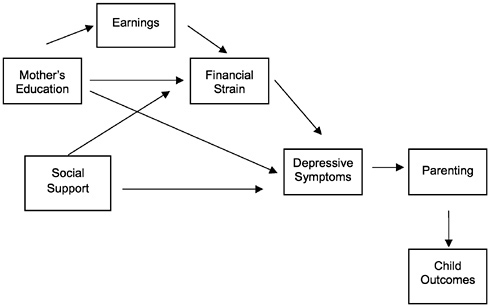
FIGURE 1 Proposed model for SES effects on parental mental health, parenting, and child outcomes.
ckgrounds, a significant indirect relationship between family income and IQ scores at 3 and 5 years was mediated by the home learning environment and authoritative parenting. This model accounted for 84% of the variance in child IQ. Both of these studies focus on maternal emotional distress, given the high proportion of single mothers in IHDP in general and the exclusive focus on mothers in the New York City study. These results parallel those for fathers reported by Elder (1974) in his work on the children of the Great Depression, that paternal emotional distress and parenting mediated the link between job loss and child outcomes (see also Conger et al., 1992, for a similar model for children from rural farm families).
Similar results are found for linking these pathways with children 's emotional problems. Jackson et al. (in press) found significant indirect effects of financial strain on preschoolers' behavior problems, mediated by maternal depressive symptoms and parenting behaviors. Likewise, Linver and colleagues (1999) report a significant link between family income and home learning environment, which is associated with fewer child behavior problems (accounting for about one-third of the variance in child behavior problems). However, these researchers did not find evidence for maternal emotional distress as a mediator of the link between family income and either IQ or problem behaviors.
Similar pathways could be operating for parent's physical health, with low SES being associated with parental health problems and these health problems affecting parents' ability to provide warm, consistent, or stimulating environ-
ments for their children. Comparable work examining parenting variables as pathways for SES effects has not been conducted for young children 's physical health and well-being. However, physical health problems might be as prevalent as emotional distress in low-SES mothers.
Neighborhood Processes
Researchers from many varying fields have attempted to define the potential mechanisms by which characteristics of neighborhoods may affect children. These neighborhood mechanisms fall into the categories of resources (e.g., availability and accessibility of quality schools, child care, recreational activities, services, and opportunities); relationships (e.g., parental characteristics, support networks available to parents, and the quality and structure of the home environment); and norms or collective efficacy (existence of formal and informal institutions to monitor residents' behavior and the presence of physical risk to residents) (Leventhal and Brooks-Gunn, 2000). We have hypothesized that the effects of neighborhood-level SES disparities on outcomes for children may be both direct and indirect. For very young children, most effects are likely to be indirect, as parents control the child 's access to neighborhood resources, relationships, and collective norms (Klebanov et al., 1994; Leventhal and Brooks-Gunn, 2000; in press).
Indeed, living in a poor neighborhood has been linked to less cognitively stimulating home environments for 3- to 4-year-olds in the IHDP and the NLSY, and less maternal warmth in the IHDP (Klebanov et al., 1994, 1997), setting the stage for indirect effects on children through these parenting variables. Neighborhood effects on social support are curvilinear: lower levels of social support are found among those living in low-income as well as affluent neighborhoods, relative to middle-income neighborhoods (Klebanov et al., 1997). These studies have also linked parenting characteristics (cognitively stimulating environment and maternal warmth) to preschoolers' cognitive outcomes. Although the complete model, showing neighborhood effects on cognitive outcomes being mediated by home learning environments, was not statistically significant for preschoolers, it was for young school-aged children. In both the IHDP and the NLSY, living in a neighborhood with affluent neighbors was associated with higher verbal and ability scores as well as lower behavior problem scores, and these effects were mediated by the cognitive stimulation parents provided in the home (Klebanov et al., 1997, 1998).
Again, we need to specify the processes through which neighborhood income operates to affect children's outcomes, even when the effect is indirect, through parenting and home environments. Neighborhood income is similar to family income in that it is a structural feature. The question here is how neighborhood residence might influence parental provision of stimulating experiences, sensitivity, and warmth. Three general processes that may be operating
are presented above: institutional resources, relationships, and norms or collective efficacy. Institutional resources include the availability of learning, social and recreational activities, child care, schools, and health care services. These resources may be of most interest regarding children's achievement outcomes since the availability of libraries, museums, and learning programs in the community may affect parent's provision of such experiences outside the home and, in turn, children's school readiness and achievement. Social and recreational activities may affect children's physical and social development, and the availability of quality child health care may affect parent's usage of health care services for their children and, in turn, children's physical health.
In terms of relationships, there are several possible ways for parental relationships to be involved in the links between neighborhood characteristics and child outcomes. One extends the theory underlying Figure 1: perhaps neighborhood poverty affects parental mental health, which influences parenting behaviors and, ultimately, child outcomes. Furthermore, access to neighborhood sources of social support may help alleviate the stress of living in poor or dangerous neighborhoods, and this may reduce the negative effects of parent stress on child outcomes (McLoyd, 1990; Conger et al., 1994). Parental warmth, sensitivity, harshness, supervision, and monitoring are all dimensions of parenting that could both be affected by neighborhood characteristics and affect child outcomes. There is evidence that living in poor neighborhoods is associated with harsher parenting, though a link between this association and outcomes for adolescents shows an interaction effect, such that in particularly high-risk neighborhoods, having a highly controlling parent is actually positive for adolescent academic, behavioral, and social outcomes (Gonzales et al., 1996; Lamborn et al., 1996).
The structural features of neighborhoods, such as income, residential stability, family stability, and ethnic heterogeneity, determine the extent to which formal and informal institutions are in place to monitor and socialize the behaviors of the residents. The dimension of norms and collective efficacy has mostly been examined in the context of direct effects on problem behavior of adolescents (e.g., Sampson, 1997; Sampson et al., 1997). However, one line of work suggests that young children (ages 2 to 5 years) experience most exposure to aggressive peers in neighborhood settings and play aggressively in unstructured, unsupervised settings. Furthermore, low-SES children are most likely to be involved in these types of settings that expose them to aggressive peers, possibly putting them at risk for behavior problems (Sinclair et al., 1994). Kupersmidt and her colleagues (Kupersmidt et al., 1995) have found that living in a middle-SES neighborhood can protect poor black children of single parents from developing aggressive behavior, perhaps because of the higher prevalence of successful adult or peer role models outside the family. For all three of these proposed mechanisms between neighborhood income and child outcomes, the links for young children are mostly speculative at this point.
Child Care Settings
A third setting that may mediate between SES and child outcomes is non-parental child care. Child care for infants and young children is extremely expensive, so very low income families spend a much higher proportion of their income on child care (25–33%) than affluent families (6% of their income) (Phillips and Bridgman, 1995). Family income is associated with the quality of nonparental care that young children receive. When children receive care from relatives or in home-based arrangements, lower family income is associated with lower quality of these settings (Galinsky et al., 1994; National Institute of Child Health and Human Development [NICHD] Early Child Care Research Network, 1997). For children in center-based care, the associations are somewhat different: the quality of center-based care is higher for the lowest-income families (with income-to-needs ratios of less than 1.0, indicating that families are below the poverty line), who receive subsidies for purchasing child care and who may qualify for high-quality intervention programs, such as Head Start, than for less poor families (families with incomes above the poverty line). In fact, a curvilinear association is found—middle-income families receive lower-quality center-based care than high- or low-income families (Phillips et al., 1994; NICHD Early Child Care Research Network, 1997).
The curvilinear findings relating child care quality and family income illustrate two different processes that may be operating in families ' use of out-of-home child care. First, highly educated and employed families purchase high-quality child care in order to continue their high rates of employment. The high usage of child care among this group is exemplified by the fact that children from high-income families are more likely to enter care as early as ages 3–5 months and those whose mothers' income is high (as a proportion of total family income) are most likely to enter care even before 3 months; whereas children from families who are continuously poor or continuously receiving assistance are more likely to enter care later or not at all (NICHD Early Child Care Research Network, 1997). On the other hand, families who are in the lowest-income groups may qualify for high-quality government-subsidized child care as they continue schooling, job training, or working in low-wage jobs.
An important aspect of quality in center-based child care is the number and stability of caregivers, which requires generating enough income to pay and retain a larger staff. Thus, centers that generate more income, either through charging high rates to parents or through government subsidies (e.g., Head Start or universal pre-kindergarten programs) are more likely to provide optimal levels of staffing. The government-funded Head Start programs have indeed been found to be of relatively high quality in comparison with many other center-based programs, including school-based, nonprofit, for-profit, and preschool centers (Zill et al., 1998).
These findings suggest that it is the families in the middle whose children may experience the poorest center-based care, while children from poor families experience poor-quality home-based child care. Researchers are only now beginning to explore child care quality at a neighborhood level. We look forward to future data that will see whether neighborhood residence is associated with quality of child care available to families.
We do have extensive evidence of the impact of child care quality on child outcomes (e.g., Whitebook et al., 1990; Cost, Quality, and Child Outcomes Study Team, 1995, 1999). For instance, children who experienced poor-quality early child care settings exhibit lower math and language scores, worse peer relations, and more behavior problems in second grade (Cost, Quality and Child Outcomes Study Team, 1999). Within Head Start classrooms, classroom quality is associated with early literacy and math skills (Zill et al., 1998). These two strands of research taken together, one demonstrating links between low family income and the quality of child care settings, and the other linking the quality of early child care to young children' s cognitive, social, and emotional outcomes, illustrate the potential usefulness of considering the child care setting as another mechanism by which SES operates to affect young children.
It is important to note that the majority of the child care quality literature does not control for possible selection bias—the unmeasured family characteristics, such as parental education and family income, that may be accounting for the links between child care and children 's developmental outcomes. Such controls are needed to ensure that higher-income families and/or better-educated mothers are not selecting higher-quality settings. It is unclear, otherwise, whether it is the quality of the child care setting or the characteristics of the home environment independent of the quality of child care accounting for the links. In many analyses of the NICHD child care study, the relatively large effects of maternal education and income level are controlled. Additionally, when examining children younger than 3 years of age, the influences of home environment and maternal parenting are stronger than the quality of child care. While the effects of quality of the child care setting are still present, they are not as prominent when compared with models lacking such controls. Another complication arises due to the curvilinear association between income and quality of child care, due to some low-income families receiving child care subsidies for the use of Head Start facilities that are higher in quality than other child care centers (Zill et al., 1998). The quality of Head Start programs varies, although none of these programs are of the poorest quality, which unfortunately is found in other for-profit, locally run child care centers.
LINKS BETWEEN THE CONCEPTUAL WORK AND PREVENTION STRATEGIES
In recognition of the poorer cognitive, linguistic, social, emotional, and health outcomes of young children from low-SES families, intervention efforts have been designed and conducted in attempts to minimize or prevent these disparities early in life. Prevention strategies have been undertaken in each of the areas discussed above: family-level interventions, child care services, and neighborhood-level interventions. Below, we review the relative successes of such efforts to support and improve the health and development of young children.
Family-Level Interventions
Prevention efforts that focus on the family as the mechanism by which low SES affects young children include home-visiting programs, intergenerational or family literacy programs, and family support programs. Many of these programs focus on the mother or family, without offering direct services to the child, while others include a direct child component. Given this variation, findings are mixed with respect to effects on child outcomes. Some programs show beneficial effects on mothers and weaker effects on children.
Home-Visiting Programs
Home-visiting programs tend to focus on the parent, often beginning service delivery in the prenatal period and continuing through the first months or years of the child's life. A professional (often a nurse) or paraprofessional may visit the home on a weekly, biweekly, or monthly basis, offering a curriculum focused on improving parental functioning and promoting preventive health care usage. A well-known example is the Nurse Home Visitation Program (NHVP) (Olds et al., 1999), aimed at promoting children's health and development, as well as the economic self-sufficiency of low-income families. Some home-visiting programs also include an educational component, to show parents intel-lectually stimulating ways of interacting with their young children. Two large-scale examples of these are Parents as Teachers (PAT), serving parents of diverse socioeconomic backgrounds with children ages 0 to 3 (Wagner and Clayton, 1999), and the Home Instruction Program for Preschool Youngsters (HIPPY), which is designed to train low-income parents of preschoolers to engage in specific educational activities with their preschool-aged children (Baker et al., 1998).
Home-visiting programs that do not provide other services (e.g., center-based early education for the children) tend to report few effects on child cognitive and linguistic outcomes. In a review of 19 home-visiting programs, 15 of which placed specific emphasis on promoting children's cognitive and linguistic
development, only 6 found significant benefits for these outcomes (Olds and Kitzman, 1993). Similarly, a review of 16 home-based programs, 14 of which assessed cognitive outcomes, showed only 9 with immediate positive gains (Benasich et al., 1992). The well-known NHVP reported no intervention effects on children at ages 3 and 4 years, except for the children of mothers who were heavy smokers during pregnancy, at the beginning of the program. These children had mental development scores comparable to children of nonsmoking mothers, about 5 points higher than children whose mothers were heavy smokers during pregnancy but did not receive the home-visiting treatment. There was also less incidence of lower birthweight among adolescent mothers who smoked —an effect that may be partly mediated through program effects on smoking (Olds et al., 1999). A recent evaluation of HIPPY, which is designed specifically to enhance the cognitive skills and school readiness of preschool children but provides its treatment only to the parent (through weekly lessons on activities to engage in with children), found few cognitive effects on children, and these were not consistently replicated across different cohorts of this evaluation (Baker et al., 1998). Similarly, the PAT program, which provides monthly home visits to teach mothers about parenting and stimulating their children, found only modest and inconsistent effects on child cognitive outcomes in two recent demonstrations (Wagner and Clayton, 1999).
In the domain of social and emotional well-being, some home-visiting programs have documented important effects. In the short-term some (but not all) home-visiting programs have improved children's self-confidence and social skills at age 3 years, reduced problem behaviors at 6 years, and improved the quality of mother-infant and mother-child interactions (Olds and Kitzman, 1993). The IHDP, which provided both home-visiting services and a center-based child care component, found significantly fewer mother-reported behavior problems at 2 and at 3 years, especially for children whose mothers had lower levels of education (IHDP, 1990). Also, treatment effects tended to be seen in those children whose mothers rated them as having difficult temperaments at age 1 (Brooks-Gunn et al., 1993). However, these effects were only significant for the heavier low-birthweight children when they were 5 years old (Brooks-Gunn et al., 1994).
Since many home-visiting programs begin prenatally and often focus on the importance of preventive health care, we might expect to see more effects in the area of children's health. However, a recent issue of the journal The Future of Children, devoted to recent evaluations of home-visiting programs (the Comprehensive Child Development Program [CCDP], Hawaii Healthy Start, Healthy Families America [HFA], HIPPY, NHVP, and PAT), reported no program effects on children's immunization rates or the number of well-child medical visits (Gomby et al., 1999). The Hawaii Healthy Start program, designed to promote positive parenting, enhance child development, ensure that children have a regular physician and “medical home,” and prevent child abuse and neglect, did
report a treatment effect on the number of children who had regular medical providers familiar with their needs (Duggan et al., 1999). Home visiting may also improve the physical well-being of children by improving parents' care and treatment of children through decreased stress, more understanding of child development and child rearing, and improved safety of home environments (Gomby et al., 1999). Fewer reported cases of abuse and neglect were found in the home-visited families of the Elmira NHVP (Olds et al., 1999) and a teen-parent demonstration of PAT (Wagner and Clayton, 1999), but not in the Hawaii Healthy Start program, nor in HFA (Gomby et al., 1999). Some home-visiting programs have also reported reductions in the number of hospital visits in the first 4 years of life, particularly those resulting from injuries and ingestions (Olds et al., 1999), and differences in maternal attitudes and behaviors related to abuse and neglect (Gomby et al., 1999). A review of 17 home-based interventions found only 2 with positive effects on child immunizations and well-baby visits out of the 5 that assessed this outcome; all 6 of the evaluations assessing signs of child maltreatment found positive intervention effects (Brooks-Gunn et al., 2000a).
Family Literacy Programs
Intergenerational, or family literacy programs, are designed to enhance the skills of both the young child and one or more adult family members in order to improve the well-being and future prospects for the entire family (St. Pierre and Swartz, 1995). These programs tend to offer a combination of early childhood education, adult education, and parenting education, and vary in the extent to which these services are provided exclusively in center-based settings or in a combination of center- and home-based services. Children are expected to benefit both directly from the child-focused component and indirectly from the two parent-focused services. Family resources and well-being are expected to be influenced by improved educational and occupational status of adults participating in adult education, and parenting education is expected to improve both the provision of literacy and cognitively stimulating parent-child activities and the amount of literacy-related materials in the home environment (St. Pierre and Swartz, 1995).
Evaluations of family literacy programs lack the rigor of the home-visiting program evaluations described above (in particular, few studies have been conducted using randomly assigned control groups). One evaluation of the national Even Start Family Literacy Program that randomized treatment at five sites found positive program effects on school readiness and language scores for 3-and 4-year-old program participants (St. Pierre et al., 1995). Pre-test/post-test designs have been used to document improved preschool cognitive outcomes for children in Even Start and other, smaller-scale family literacy programs (He-
berle, 1992; Philliber et al., 1996; Richardson and Brown, 1997; St. Pierre et al., 1998; Tao et al., 1998).
Given their focus on literacy, family literacy program evaluation has not focused on child outcomes beyond cognitive and language achievement. The research to date does not provide data on social, emotional, or behavioral outcomes for children, nor does it follow the children longitudinally to assess the stability of the cognitive gains into the school years.
However, the effects of family literacy programs on parents and home environments have been examined. Participation in parenting education as part of a family literacy program is associated with modest improvements in parents' own literacy skills as measured by standardized assessment tests and improved rates of GED attainment (Heberle, 1992; St. Pierre and Swartz, 1995; Richardson and Brown, 1997; Tao et al., 1997). Furthermore, Even Start participants had larger gains than control group families on the number of reading materials for children in the home, but there were no treatment-control differences on measures of parent-child reading interactions or parental educational expectations for their children (St. Pierre et al., 1995). Although most evaluations tend not to measure effects on maternal mental and physical health, even as they postulate effects on these areas, one national evaluation of Even Start reported no program effects on maternal depression or locus of control. Neither were there measurable pre-test/post-test program effects on family income, perceived social support, family resources, or parental employment (St. Pierre et al., 1995).
Family Support Programs
Traditionally, family support programs were community-based efforts designed to offer a broad array of support and information that could be accessed on a voluntary basis by all families in the community. According to this “universal access” model, the programs are designed for all families, not targeted to a special population. However, because of the growing crisis among certain groups of families, such as those living in poverty, poor housing, and poor neighborhoods, family support programs have emerged that are specifically designed for families that are considered to be “at risk.” The populations that have been the focus of such specialized efforts include families who are environmentally at risk because of low income or low education of the parents, or families with children who are biologically at risk due to conditions such as premature birth, low birthweight, or developmental disability (Barnes et al., 1995).
Because of their definition as grass roots, preventive efforts to serve the individual needs of families, “family support programs” are actually quite variable in the design of their programs and the services they provide. What these programs have in common is the goal to serve the family as a system: to serve multiple members of the family with appropriate educational services, to help empower family members to achieve their personal goals by giving them relevant
skills and strategies, to bring families together to share common problems and solutions, and to provide links to other social and health services available in the community as needed. Programs go about these goals in many different ways, some offering home-visiting services, others providing center-based child care, and some simply serving as community centers. All programs seek to improve the lives of children and families by improving parents' education and resources, improving parents' understanding of child development and parenting skills, improving the resources available to children in the home, and improving the health care and education they receive outside the home.
A comprehensive review of 87 different family support programs has been conducted by Abt Associates and Yale University's Bush Center in Child Development and Social Policy (Barnes et al., 1995). Overall, findings suggest that universal access programs show an inconsistent pattern of short-term effects on child development, with the strongest effects occurring for children from higher-risk families and attending center-based interventions. However, many of these studies are weakened by the fact that they did not use control or comparison groups. Among programs that specifically targeted environmentally at-risk families, mixed results were also found: similarly to the results reported above, home-visiting programs show only a few effects on infant cognitive development, with no evidence for long-term effects, whereas center-based interventions serving preschool-aged children document stronger shortand long-term effects on cognitive development, school-based indicators, and some positive effects on parental caregiving and child health and health care service use (Barnes et al., 1995).
Summary of Family-Level Interventions
The three types of family-focused intervention described above (home-visiting programs, two-generation literacy programs, and family support programs) tend to overlap somewhat in their definitions. For instance some would argue that some of the family literacy programs fall under the definition of family support programs, and many family support programs serving families with infants utilize a home-visiting approach. What they have in common is a focus on improving child outcomes by serving the family. Services may focus on the mother or family, seeking to influence child outcomes indirectly.
Findings for effects on parents are relatively few: for universal-access programs, some associations have been found for increased parent knowledge of child development, parenting attitudes and behaviors, and improved parental feelings of social support, coping, and reduced family stress (Pfannenstiel and Seltzer, 1989; Pfannenstiel et al., 1991; Barnes et al., 1995). Physical health, education, and employment effects on mothers in universal-access family support programs have not been reported (Barnes et al., 1995). In programs specifically targeting at-risk families, positive effects have been found on home learn-
ing environment, parenting attitudes, and parent child interactions (e.g., Andrews et al., 1982; Travers et al., 1982; Johnson and Walker, 1991; Quint et al., 1994; St. Pierre et al., 1994), but almost no effects on parent mental health are reported (Barnes et al., 1995). Although many programs are successful in getting mothers with low education to continue schooling and complete GEDs, there have not been strong effects of program participation on high school graduation or employment (Barnes et al., 1995).
A recent review has focused specifically on the effects of early intervention programs on parents, and also found variation based on program type (Brooks-Gunn et al., 2000a). Among home-visiting programs for infants and toddlers, program effects on mothers included greater maternal work force participation and reduced use of welfare and food stamps (Olds et al., 1986a,b; 1988; 1994, 1995, 1997; Kitzman et al., 1997), more supportive and less harsh parenting (Field et al., 1980; Gray and Ruttle, 1980; Larson, 1980; Madden et al., 1984; Barrera et al., 1986; Olds et al., 1988, 1994; Lieberman et al., 1991), and some effects on home environment and child-rearing attitudes (e.g., Field et al., 1980; Gray and Ruttle, 1980; Larson, 1980; Ross, 1984; Barrera et al., 1986; Osofsky, Culp and Ware, 1988; Erickson et al., 1992; Olds et al., 1994). Family-focused interventions including a center-based component (particularly the IHDP, Teenage Pregnancy Intervention Program, and the Yale Child Welfare Project) found some positive effects on maternal education and employment (Andrews et al., 1982; Brooks-Gunn et al., 1994; Field et al., 1982; Seitz and Apfel, 1994), and maternal mental health (Klebanov et al., 1993). Six out of seven studies reporting on parenting behaviors found that program participation improved the quality and sensitivity of parent-child interactions, but only two of four studies assessing children's home environment found positive effects of program participation (Brooks-Gunn et al., 2000a).
Although family-focused intervention programs aim to affect children both directly and indirectly through improving outcomes for parents and families, few evaluations have directly tested these pathways. Three exceptions are worth noting (Brooks-Gunn et al., 2000a). First, an analysis of Abecedarian and Project CARE programs tested both the quality of the home environment and parental authoritarian attitudes as possible mediators of program effects on children. The analysis showed a direct effect of the quality of the home environment on children's cognitive test scores, but none of this effect was mediated through the effect of the intervention upon the home environment. Furthermore, there was no direct relationship between parents' authoritarian attitudes and child outcomes, so this pathway was ruled out (Burchinal et al., 1997). Second, IHDP data were used to test the pathway from program effects on parents to child outcomes. The data supported a pathway, similar to that found in Figure 1, by which participation in the intervention program reduced maternal depression, which was associated with improved parenting behaviors and, in turn, affected child test scores. The treatment also had a direct effect on parenting in addition
to the indirect one through depression (Linver et al., 1999). A third test of this pathway was conducted in an attempt to link program participation to child outcomes through its effect on parents' ability to cope with stressful life events (Klebanov et al., in press). Although intervention affected depression, it did not affect coping. Instead, the authors found that the intervention affected maternal mental health only for those mothers with a large number of stressful life events and that child test scores and depressive symptoms at age 3 were positively influenced by the intervention through its effects on mothers with high depression and a high number of stressful life events. Evaluation research explicitly testing these types of pathways is important for assessing the effects of interventions that seek to influence children's development through affecting the family. As we discuss below in our conclusion, more research of this type is needed.
Early Childhood Education Interventions
The research findings above have suggested that providing a direct intervention component to the child may have the strongest impact on child outcomes. Indeed, many interventions designed to enhance the healthy development of children from low-SES families have focused on the provision of high-quality, developmentally appropriate center-based child care. Model preschool programs, such as the Perry Preschool, and large-scale public programs such as Head Start, each emerged in the 1960s War on Poverty—a movement to enhance the learning experiences and other support of children from poor families. These programs often also include a focus on services for the family, but the main centerpiece is the provision of services directly to the child outside the home. Examples of programs combining center-based services with other forms of family support include the Perry Preschool, the Houston Parent Child Development Center, and the IHDP.
Several recent reviews have summarized the findings of the many evaluations that have been conducted on center-based interventions (Barnett, 1995; Yoshikawa, 1995; Bryant and Maxwell, 1997; Brooks-Gunn et al., 2000a; Farran, 2000). Center-based programs beginning in infancy, such as the Carolina Abecedarian program and the IHDP, have shown immediate and strong effects on children's IQ scores (IHDP, 1990; Brooks-Gunn et al., 1994; Campbell and Ramey, 1994). Programs for preschool-aged children have smaller but still significant effects on IQ. Across 11 early education programs that served poor children in the 1960s and 1970s, IQ gains for program children averaged 7.42 points higher than those for control group children (Royce et al., 1983). Barnett (1995) reported that 11 of 12 model preschool programs showed significant IQ effects, but only 1 out of 5 large-scale public programs positively affected IQ scores.
The findings by some researchers that early IQ gains from these programs may diminish over time as children from program and control groups progress through school (e.g., Royce et al., 1983; McKey et al., 1985; Lee et al., 1990)
have led researchers to consider the importance of the ongoing schooling and support received by children through the transition to schooling and beyond (Lee and Loeb, 1995; Head Start Bureau, 1996). The continuation of supports for these children does appear to be associated with better long-term outcomes, including higher IQ scores, reduced rates of grade retention and special education placement, and fewer delinquent behaviors (Campbell and Ramey, 1994, 1995; Burchinal et al., 1997; Reynolds, 1997).
In addition to IQ and school-related outcomes, early childhood intervention programs have documented long-term effects on children's social and emotional outcomes. For instance, the Perry Preschool has documented lasting effects on reducing delinquent behaviors at age 14 and less involvement with the criminal justice system at ages 19 and 27 (Schweinhart et al., 1993). In a summary across 40 early intervention studies, Yoshikawa (1995) identified four programs with particular success in reducing antisocial and delinquent behavior. In addition to the Perry Preschool, these include the Syracuse University Family Development Research Project (Lally et al., 1988), the Yale Child Welfare Project (Seitz and Apfel, 1994), and the Houston PCDC (Johnson and Walker, 1987). Important associations are noted between early program effects on child verbal and cognitive abilities and on parents' parenting skills and these long-term outcomes (Yoshikawa, 1995).
Participation in early childhood education intervention may improve children's physical well-being in several ways. First, programs require that children be up-to-date on their immunizations in order to participate. Second, referrals may be made to necessary health services, some of which may be provided onsite. Third, vision, hearing, and developmental screenings may be conducted at the center, identifying children with delays or deficits in these areas. Fourth, nutritious meals and snacks provided at centers may substantially improve the diets of economically disadvantaged children (Gomby et al., 1995). However, few studies have focused on children's physical health.
Overall, the research points to strong effects of high-quality center-based child care programs for economically disadvantaged children. Effects are found in cognitive, literacy, emotional, and behavioral domains, and long-term effects are seen in related adult outcomes such as high school graduation, employment, less welfare use, and less delinquent behavior. Many researchers have therefore concluded that in order to achieve effects on the child, direct early childhood education is needed, in addition to the provision of comprehensive services to the family (Barnett, 1995; Yoshikawa, 1995; Bryant and Maxwell, 1997; Berlin et al., 1998).
Neighborhood-Focused Interventions
The research presented earlier suggests growing evidence that neighborhood environments may operate independently of family characteristics to influence
child outcomes. Accordingly, an argument could then be made for focusing intervention for low-SES children on improving the characteristics of poor neighborhoods. Interventions focusing on the neighborhood (as opposed to focusing on individuals or families) are emerging and are termed “comprehensive community initiatives.” These initiatives target the physical, economic, and social conditions of neighborhoods in order to improve the lives of the low-income individuals and families living there (Connell et al., 1995; Brown and Richman, 1997; Roundtable on Comprehensive Community Initiatives for Children and Families, 1997). Thus, comprehensive community initiatives expect to directly influence individuals, families, and communities, and they also expect to have an indirect effect on individuals and families through their effect on communities (Berlin et al., in press).
Comprehensive community initiatives (CCIs) represent a new approach to increasing the social capital of a community by improving the number and quality of connections among residents of the community (Brooks-Gunn, 1995). Although many have been developed, few have focused directly on young children. Berlin and her colleagues have argued that CCIs typically incorporate many of the qualities that are found to be associated with developmental outcomes for young children, including a focus on neighborhood social capital, comprehensive approaches to service delivery, provision of high-quality services, and the development of trusting relationships between service providers and recipients. Specifically, these authors recommend that “through their support of anti-poverty policies and programs and through system reform and community building strategies, CCIs can directly and indirectly support young children's most pressing developmental needs for supportive home and out-of-home experiences that promote both emotional security and learning” (Berlin et al., in press, p. 26).
At this point, there is no research to support the effectiveness of the CCI approach in improving the developmental outcomes of low-SES children. However, we believe such initiatives can be beneficial for poor children if (1) they do in fact improve the community characteristics that have been found to influence children's healthy development, such as neighborhood income and employment levels, and (2) they include high-quality child care as a form of direct service to young children.
CONCLUSIONS AND OPPORTUNITIES FOR FUTURE RESEARCH
There is great interest currently in positive child development and health, which is being discussed under the rubric of positive child outcomes, well-being, and health (Moore et al., in press). There are parallels to this approach in the literature on adult outcomes, with new work on positive well-being that grows out of more clinically oriented approaches such as those of Erikson,
Maslow, and Allport (e.g., Green et al., 1993). In this context, we need more consideration of what positive health or well-being looks like for children. Discussions should be initiated across disciplines to work toward acceptable definitions of well-being. For example, definitions of well-being might include trust and security in the family context, curiosity and exploration, age-appropriate self-regulatory behavior, and age-appropriate autonomy (Moore et al., in press).
In this paper, we have considered healthy development of the whole child to include outcomes in all of these domains and discussed how SES seems to operate to create disparities in the health and well-being of poor versus more affluent children. In particular, we have focused on the arenas of the family, child care setting, and neighborhood as important contexts in which SES may be operating. Interventions targeting these contexts have been described, and their relative success has been evaluated.
In general, the research suggests that economically disadvantaged children benefit from high-quality, center-based child care programs, augmented by services that support other family members and the family as a whole. However, beyond this general finding, attention must be paid to subgroups of participants who may benefit the most. Aspects of programs (e.g., duration, intensity, and mode of service delivery), participants (e.g., maternal education and the number of risk factors the family has), and the interactions between the program and participants (e.g., the degree of participation of the family and the match between program services and the individual needs of the family) all work to influence the effectiveness of a program (Berlin et al., 1998). Program evaluations should incorporate all of these factors to assess program success more accurately.
We have attempted to illustrate the importance of considering the possible pathways through which SES may affect young children by reporting findings of the few studies that have explicitly tested such models. Exploring the processes linking SES and child health and development is critical in the design of prevention strategies and policies that are conceptually driven. For instance, most program developers to date have not explicated the ways in which they expect their interventions to influence children. The theoretical bases for the programs have not been spelled out. Recently, however, prevention scholars have begun to outline their theories of change in order to articulate program goals and the ways in which specific program components are thought to relate to these goals (Weiss, 1995; see also Barnard, 1998; Berlin et al., 1998). Services should be designed to address the stated goals as directly as possible—when attempting to influence parenting behavior, parenting education should be offered; if attempting to influence child behavior, direct early childhood education should be provided. We believe that the “theory of change ” approach is crucial in order to design the most effective programs, as well as to document the successes of such programs—an important component in ensuring their continued funding. We expect that such efforts will continue in the next decade.
In addition to knowing the specific goals and methods of achieving those goals, Barnard (1998) points out that levels of implementation often fall short of optimum program goals. The “implementation gap ” represents the difference between the amount, or “dose,” of intervention that is prescribed by the program and the actual amount of intervention that participating families receive. This gap should be measured when assessing program effects in order to determine levels of implementation or doses that result in positive outcomes for children and families and those that do not.
Examining the theory of change of a specific program goes beyond determining the theory held by the program's designers. Theories of change may vary even within programs, according to different program staff members. For instance, discussions with staff members at Early Head Start site visits as part of the implementation study of the Early Head Start Research and Evaluation Project (Mathematica Policy Research, 1999), reveal variation in what staff mention as important. Many Early Head Start staff mention that strengthening relationships is an important goal, both relationships between parent and child and relationships between parents and program staff. If strengthening relationships is considered to be an important goal of the staff implementing the intervention, it is important to find effective ways of measuring these when evaluating program effectiveness. Barnard (1998) also asserts that an emphasis on the participant-staff relationship is essential for successful intervention programs. Similarly for child physical health, the relationships between medical care providers and parents are an important component in the successful administration of medical recommendations and treatments.
We believe that the range of what are considered to be “good outcomes” should be broad enough to truly capture young children's healthy development. In part, this means accepting maternal outcomes and parenting outcomes as important in their own right, as well as focusing on children's social, emotional, and physical health. The overwhelming historical focus on IQ and cognitive outcomes has not represented this broad conceptualization of healthy development and arguably has resulted in underestimation of the effects of intervention programs on children.
In fact, the broad conceptualization of child development and well-being presented in our introduction to this paper may not go far enough. To determine what constitutes “success” of an early intervention program, we must attend to the views of the parents and families served. Parents may have their own theories of change and these voices must be heard in order to develop programs that will successfully engage parents and, via parents' participation, children. Parents' goals for their children and reasons for participating in intervention programs may be somewhat different from those espoused by program designers. For instance, parent perceptions of program success may be more deeply rooted in cultural or moral values, or religious beliefs, than in such things as school readiness. In a study of the different views held by parents and service provid-
ers, Goldenberg and Gallimore (1995) described how immigrant Latino parents would sacrifice school activities that might further their children's academic skills if they perceived the activities as possible threats to their child's moral development. These parent's viewed the buen camino (good path) as being primarily moral. Program designers should “listen” to these parental voices, attempting to take into account the cultural background of the families served, not just as a token to represent cultural sensitivity but to really provide services that are perceived as meaningful and important to the families served.4
This argument leads to the issue of “top-down” versus “bottom-up” program design (e.g., Brooks-Gunn, 1995; Leventhal et al., 1997). The philosophy of top-down design assumes that the problems of low-income children and families are similar across different communities, and therefore standard programs may be brought into the community and have a positive effect. Bottom-up design involves the input of community members to identify the problems and needs specific to their community in order to tailor-make a program that addresses those needs. While many of the issues faced in poor communities do seem to be universal, such as few neighborhood resources, poor-quality housing, or unsafe streets, individual communities will differ in their cultural or ethnic makeup, which will have implications both for what family members value in terms of program goals and the steps that must be taken to foster trust and community buy-in of a new program.
One of the big gaps in the literature on the efficacy of early childhood intervention programs is that studies have not looked at the efficacy of such programs for immigrant children. With the growing population of immigrant children who may need special early childhood services (Lewitt and Baker, 1994), this is a critical area of inquiry. Part of the reason for this gap is a cohort effect: many of the interventions that have been evaluated served children in the 1960s, 1970s, and early 1980s, before the recent new waves of immigration to this country. Another reason is that there has been differential access to some programs for immigrant families. For instance, in the IHDP, a decision was made in the early stages of program design that program services could not be provided in all the languages spoken by families that would otherwise qualify for the trial. Families who could not receive services in English were excluded from participating. One-quarter of the IHDP families did indicate that a language other than English was spoken in their home, but they were proficient enough to receive services in English. Thus, there is less information available about the efficacy of family- and child-focused services for children from other countries and children who are not English language proficient. Such exclusion criteria, while arguably necessary for a smaller-scale clinical trial, are not appropriate for larger-scale provision of services to needy families. There are rich data being
|
4 |
We are grateful to P.Hauser-Cram for providing this example in her review of an earlier version of this paper. |
collected about differential beliefs relating to health practices, educational practices, and socialization practices in different groups, and these should be helpful in informing culturally sensitive program development (see, e.g., Greenfield and Cocking, 1994; Garcia Coll et al., 1995; Harkness and Super, 1995). The gap in the research on efficacy of intervention programs in immigrant populations can hopefully be remedied in the next decade, as several studies currently in the field are attending to the issue by adding oversamples of Latinos and other minority populations, and ensuring that at least some program intervention staff are fluent in the languages spoken by the families they serve (Brooks-Gunn et al., 2000).
Even if programs continue to improve their ability to address the needs of families, there remains the issue of discrimination against certain minority populations. In our discussion of SES disparities in the health and well-being of young children, we have not addressed the probability that racial discrimination may be a root of many disparities seen, especially vis-à-vis access to health services, the continued and increasing segregation of poor neighborhoods, and the experiences of minority children in their communities, schools, and other social institutions. Racial discrimination probably also plays a role both in the access of minority children and families to early intervention services, and in their interactions with program staff members. Coates (1992) argues that the specific experiences of African-American youth, in terms of the racism they experience and the strength of their extended family connections, may make interventions at the level of the social network particularly beneficial for this group. Intervention efforts for younger children and families must also attend to the experiences of discrimination faced by the families they serve. Programs need to identify barriers affecting service participation of certain groups and to develop culturally diverse services and skills (Coates and Vietze, 1996). Attention to eliminating discriminatory attitudes and practices, even at their most subtle levels, continues to be a necessary process for programs and society as a whole if we hope to have a significant effect on reducing SES disparities in children's outcomes.
We have argued for the importance of considering social and emotional development as indicators of healthy development and school readiness, and have highlighted teachers' concerns about children's behavioral functioning in the classroom. Parents of young children also express concern about these areas of functioning. In fact, in families of children with disabilities studied in the Early Intervention Collaborative Study, parents' well-being was more strongly affected by children's behavior problems and difficulty with self-regulation than by the type of disability the child had or the child's cognitive abilities (P.Hauser-Cram, personal communication, February 2, 2000). This finding suggests that parenting may be affected by children's problem behaviors.
The estimates of emotional or behavioral disorders in young children range from 7 to 22%, with approximately 9% having severe emotional disorders, and social-emotional problems are disproportionately found among children in low-
income groups (Knitzer, in press). However, rates of referral into mental health services for emotional disturbances among Head Start children are relatively low: only 4% of those with identified disabilities are diagnosed with an emotional or behavioral disability (Knitzer, in press). There may be a stigma associated with identifying young children with emotional or behavioral problems, yet young children from poor families are much more likely to have parents with depressive symptoms, who may have difficulty forming warm, nurturing relationships with their children. Early emotional experiences lay the groundwork for children's developing emotional self-regulation and will be important for later school performance. Thus, it appears that sufficient attention is not being paid to children's emotional and behavioral development in intervention efforts for low-income children (Lara et al., 2000).
Mental health services for young children living in conditions that are associated with emotional disorder (e.g., low-income families with depressed mothers) should be more widely available, with attention to prevention rather than the more stigmatizing classification and diagnosis. Some intervention studies have found stronger effects on children's test scores and attachment security for children with depressed mothers (Lyons-Ruth et al., 1990) and children whose mothers had low cognitive scores or poor social skills (Barnard et al., 1988). The IHDP had stronger effects on maternal distress outcomes among mothers with lower levels of education and less active coping strategies (Klebanov et al., in press). These findings point to the particular efficacy of intervention for children in families at risk for poor mental health outcomes.
Returning to our initial discussion of the goal of ensuring that by 2000 all children will start school ready to learn, we believe that the current progress falls short of the needs of America's young children. To be optimally ready to learn when entering school, today 's youngest children need families and neighborhoods that can support them economically, physically, and emotionally. Interventions targeting needy families, with services addressing these broad categories (i.e., economic support, nutritional support, health care, child care, parental education and employment, parenting education, and neighborhood economic and social stability) are clearly needed, but such expenditures must be made with the awareness of where success has and has not been achieved in previous programs. Guarded optimism is warranted, based on findings in several areas: the long-term effects of small-scale, child-focused early education programs, such as the Perry Preschool; the few findings indicating intervention effects on children mediated by effects on parenting; and home-based programs that may influence parent behaviors. Combining comprehensive intervention approaches with careful theory- and research-based goal setting will improve the settings in which young children develop and help ensure that they enter school ready in every way to learn.
Based on the findings and discussion above, we present a number of specific recommendations for early childhood intervention:
-
If programs want to have positive effects on child cognitive, literacy, and school outcomes, they most likely must provide intensive programs directly to the child. Child- and family-focused programs will need to offer high-quality, center-based care to children on a consistent basis, not just by providing care while the parents attend meetings and parenting classes but for a substantial amount of time each week.
-
High-quality center-based child care should also be a component of programs striving to influence social and emotional development. Less evidence supports the effectiveness of center-based programs on these outcomes (as compared to cognitive and school achievement), largely because either social and emotional well-being have not been the primary focus of preschool-type interventions, measurement of such outcomes has been weak, and/or theories of change have not been made explicit. Preschool intervention programs need to be more explicit about their social and emotional goals and to develop specific intervention components, including preventive mental health and physical health services to foster these goals.
-
Although early education research has found benefits from intensive intervention and long-term intervention (e.g., 2 years or more), the focus in many programs is often on the preschool years. Projects should consider expanding infant/toddler services. If these services are expanded, efforts would also have to be made to retain families for longer periods of time and to provide some service continuity over child care and school transitions (just as the health care field has done).
-
Service providers, whether from the education, health, or social service sector, must pay attention to research on quality. Lessons from the well-developed field of assessing child care quality could be a beacon for such efforts. For example, issues of promoting staff development, reducing child-staff ratios, providing developmentally appropriate curriculum and continuity of care for the child, and adhering to safety regulations are all important for child well-being (Whitebook et al., 1990; Cost, Quality and Child Outcomes Study Team, 1995, 1999; Howes et al., 1995). Recent longitudinal data from more than 800 children who had attended 170 different child care centers suggests that early child care quality is associated with math and language skills as well as peer relations and behavior problems in second grade (Cost, Quality and Child Outcomes Study Team, 1999).
The National Association for the Education of Young Children has outlined the characteristics of developmentally appropriate practices in early childhood settings (Bredekamp and Copple, 1997), and these practices form the basis for an extensive observational research measure of early childhood classrooms (Early Childhood Environment Rating Scale [ECERS]; Harms and Clifford, 1990; Harms et al., 1998). Research assessing child care environments using this measure has found that across a diverse sample of child care centers, quality is
generally in the medium range (3 to 5 points on a scale from 1 to 7), with more than 11% scoring below the minimal quality rating of 3 points (Cost, Quality and Child Outcomes Study Team, 1999). A recent assessment using the ECERS in Head Start classrooms found somewhat different results: although the average quality score was 4.9 (indicating “good” quality), only 1.5% of classrooms had an overall score of 3 (“minimal”), and no Head Start classrooms had scores below 3 points, indicating an “inadequate” environment (Zill et al., 1998). These findings suggest that technical assistance and monitoring of service quality could use the Head Start experience as a guidepost. The ECERS instrument can also be used as an internal self-assessment, and many programs would benefit from using such a tool to guide quality improvement efforts.
The early childhood education field has done a better job of defining quality than have other types of programs. Intervention scholars targeting health and behavior should similarly delineate factors of program quality in order to create an ECERS-like scale for other types of interventions.
-
More programs should consider how they can facilitate continuity of services for families as children progress through preschool and elementary school. Programs must be realistic about the number of families they can keep in the program through the transition to elementary school. Are pieces of the program, such as literacy activities in the home, more tailored to preschoolers than to school-aged children? Do different techniques need to be used to help parents with children of different ages? What types of links are programs forging with elementary schools and existing preschools (including, but not limited to, Head Start)? Attention to all of these issues will be important for continuing to serve children throughout these early years.
-
Programs should work on defining what full implementation is. This is important for medical interventions as well. Benchmarks should be created regarding the percentage of families served with particular services, the intensity of services, staff training, the percentage of families served for only a brief time, and links to other service agencies in the community. Often, evaluations are conducted on programs that are not being fully implemented, and this reduces the likelihood of getting positive results. Currently, the Early Head Start Research and Evaluation Project is paying more attention to the definitions of full implementation across a variety of dimensions (Mathematica Policy Research, 1999). Measures of levels of intervention received by families (or participation levels) can be included in analyses to determine effects for high-participation versus low-participation families.
-
Program designers and program staff should spend some time explicating their theories of change—their philosophies about how their program helps children and how it may help children differently for different types of outcomes (emotional, cognitive, school success). Programs may need to hire a facilitator to guide this process. Awareness of different theories of change held by staff
-
members within programs and the theories of change held by parents in the families served by the program will be important in this process.
-
Given a program's theory of change (see recommendation 7, above) and the research literature to date, specific programs should consider what their primary goals are. Given funding constraints, some programs may not be able to be all things to all members of a family. A program may be more likely to influence adult literacy and perhaps parent-child literacy activities in the home, rather than strongly influencing child outcomes. Programs should focus their resources on the areas they are most likely to influence.
-
Programs should realistically consider the intensity of the services they offer to families. There is a trade-off between the amount of intervention that can be provided and the number of families that can be served. If a program can only offer thin services in order to serve all families, there may be no positive child outcomes at all. Instead, programs should determine how many families can be served with a program that is intense enough to make a difference. In particular, with the evidence that high-risk families may be most likely to benefit from program participation, the question then is whether high-risk families are receiving high enough doses of intervention. Often, these families may be the hardest to reach because of barriers to their participation: transportation difficulties, the convergence of multiple family crises making program participation a lower priority, substance abuse, domestic abuse, mental health problems, and many more. So in many cases, these families may actually be receiving the lowest levels of service.
The question then becomes whether or not we should specifically target different bundles of services for different subgroups of families. Even within groups of families with low education or low income, differential treatment effects can be seen. For instance, in the IHDP, the treatment had a stronger effect on children's cognitive test scores when mothers experienced fewer negative life events (Klebanov et al., in press). Some families with high numbers of risk factors may be overwhelmed, making it harder for them to attend to the services they are receiving. It may be necessary to individualize some services for families experiencing high numbers of negative life events, who may not be helped by the standard package of services.
-
A related issue has to do with whether some services should be universal. This is not to be confused with the more extensive services that are needed for poor children. However, when programs become known as “where the poor kids go,” this contributes to the labeling and stigmatization of children and families, may reduce participation rates, and contributes to continued stereotyping and segregation in our society (P.Hauser-Cram, personal communication, February 2, 2000). Thus, some may argue that high-quality early childhood programs should be made more universally available, and indeed, we are beginning
-
to see movement in this direction with the introduction of universal pre-kindergarten programs in many states, and home-visiting programs for all babies born in some counties and states. Universal services, then, are converging, with newborns and 4-year-olds currently being served in many areas. Policymakers should consider whether early childhood and family services should be made available to all families consistently from birth, or at least starting at age 3.
-
Projects will need to tailor both core and support services to be responsive (and relevant) to the needs of working parents by scheduling them on off-hours, providing more home-based services, and providing supports such as transportation, child care, and meals to help remove barriers to participation. Since working parents have less time, coordination of services will be important, so that more services, such as child care and parenting education, are offered at the same site. While these issues are important for all parents, the problems will be even more serious when programs include parents who are moving from welfare to work. Consistent with this recommendation, programs have to consider the changing needs of poor parents, especially in light of welfare reform.
Concluding Remarks
The study of early childhood interventions is not a new topic. In fact, some of the conclusions are strikingly similar to those made by Urie Bronfenbrenner more than 25 years ago in a review of the effects of early intervention (Bronfenbrenner, 1974). We conclude, as did Bronfenbrenner, that high-quality early childhood programs can have significant effects on cognitive outcomes for children, especially when the children are from low-income families and especially when the programs provide both child and family services. What has changed in the more than 30 years since the programs that began in the 1960s and 1970s were first evaluated is a change from deficit models to models focusing on the strengths of families. Families are considered to be at risk due to the inequities of opportunities and differential obstacles faced by low-income families. The field has broadened its focus to consider the multiple contexts in which children develop and consider the interrelationships among parents, program staff, and neighborhood providers, all of whom jointly provide opportunities for growth. With the increased numbers of mothers of young children in the workforce, we have learned more about the difficulties families have managing family and work responsibilities, and the limited choices that families often have in procuring high-quality child care. We have made strides in addressing questions about who ought to be targeted in early intervention efforts, how to successfully integrate services, how programs affect outcomes for mothers and other family members, what effects programs have on outcomes other than child IQ, and how staff and family perceptions influence program processes and outcomes.
At the same time, some of Bronfenbrenner's statements have stood the test of time over a quarter of a century. Parents need supports in multiple arenas of
functioning. High-quality programs can make a difference in the health and well-being of children and families. And finally, there are no quick fixes— families need intensive services of substantial duration in order to reap significant benefits.
REFERENCES
Adler, N.E., Boyce, T., Chesney, M.A., Cohen, S., Folkman, S., Kahn, R.L., and Syme, S.L. ( 1994). Socioeconomic status and health: The challenge of the gradient. American Psychologist, 49, 15–24.
Andrews, S.R., Blumenthal, L.B., Johnson, D.L., Kahn, A.J., Ferguson, C.J., Lasater, T.M., Malone, P.E., and Wallace, D.B. ( 1982). The skills of mothering: A study of parent child development centers . Monographs of the Society for Research in Child Development, 47(6), Serial No. 198.
Baker, A., Piotrkowski, C.S., and Brooks-Gunn, J. ( 1998). The effects of the Home Instruction Program for Preschool Youngsters (HIPPY) on children's school performance at the end of the program and one year later. Early Childhood Research Quarterly, 13, 571–588.
Barnard, K.E. ( 1998). Developing, implementing, documenting interventions with parents and young children. In L.J.Berlin (Ed.), Opening the black box: Understanding how early intervention programs work [Special Issue]. Zero to Three, 18, 23–29.
Barnes, H.V., Goodson, B.D., and Layzer, J.I. ( 1995). Review of Research on Supportive Interventions for Children and Families: Vol. 1. Cambridge, MA: Abt Associates, Inc.
Barnett, W.S. ( 1995). Long-term effects of early childhood programs on cognitive and school outcomes. The Future of Children, 5, 25–50.
Barrera, M.E., Rosenbaum, P.L., and Cunningham, C.E. ( 1986). Early home intervention with low-birthweight infants and their parents . Child Development, 57, 20–33.
Benasich, A.A., Brooks-Gunn, J., and Clewell, B.C. ( 1992). How do mothers benefit from early intervention programs? Journal of Applied Developmental Psychology, 13, 311–362.
Berlin, L.J., Brooks-Gunn, J., and Aber, J.L. Promoting early childhood development through comprehensive community initiatives. Children's Services.
Berlin, L.J., O'Neal, C.R., and Brooks-Gunn, J. ( 1998). What makes early intervention programs work? The program, its participants, and their interaction. In L.J.Berlin (Ed.), Opening the black box: What makes early child and family development programs work? [Special Issue]. Zero to Three, 18, 4–15.
Bredekamp, S., and Copple, C. ( 1997). Developmentally Appropriate Practice in Early Childhood Programs. Washington, DC: National Association for the Education of Young Children.
Bronfenbrenner, U. ( 1974). Is early intervention effective? Teachers College Record, 76(2), 279–303.
Brooks-Gunn, J. ( 1995). Strategies for altering the outcomes for poor children and their families. In P.L.Chase-Lansdale and J.Brooks-Gunn (Eds.), Escape from Poverty: What Makes a Difference for Children? (pp. 87–117). Cambridge: Cambridge University Press.
Brooks-Gunn, J., Berlin, L.J., and Fuligni, A.S. ( 2000a). Early childhood intervention programs: What about the family? In J.P.Shonkoff and S.J.Meisels (Eds.), Hand
book of Early Childhood intervention (2nd ed. pp. 549–588). New York: Cambridge University Press.
Brooks-Gunn, J., Berlin, L.J., Leventhal, T., and Fuligni, A. ( 2000). Depending on the kindness of strangers: Current national data initiatives and developmental research. Child Development 71, 257–267.
Brooks-Gunn, J., and Duncan, G.J. ( 1997). The effects of poverty on children. The Future of Children, 7(2), 55–71.
Brooks-Gunn, J., Duncan, G.J., and Aber, J.L. (Eds.). ( 1997a). Neighborhood Poverty: Vol. 1. Context and Consequences for Children. New York: Russell Sage Foundation.
Brooks-Gunn, J., Duncan, G.J., and Aber, J.L. (Eds.). ( 1997b). Neighborhood Poverty: Vol. 2. Policy Implications in Studying Neighborhoods. New York: Russell Sage Foundation.
Brooks-Gunn, J., Duncan, G.J., and Britto, P.R. ( 1999). Are socioeconomic gradients for children similar to those for adults? In D.P.Keating and C.Hertzman (Eds.), Developmental Health and the Wealth of Nations (pp. 94–124). New York: GuilfordPress.
Brooks-Gunn, J., Duncan, G.J., Klebanov, P.K., and Sealand, N. ( 1993). Do neighborhoods influence child and adolescent development? American Journal of Sociology, 99(2), 353–395.
Brooks-Gunn, J., Duncan, G.J., Leventhal, T., and Aber, J.L. ( 1997c). Lessons learned and future directions for research on neighborhoods in which children live. In J.Brooks-Gunn, G.J.Duncan and J.L.Aber (Eds.), Neighborhood Poverty: Vol. 1. Context and Consequences for Children (pp. 279–297). New York: Russell Sage Foundation.
Brooks-Gunn, J., Klebanov, P.K., and Duncan, G.J. ( 1996). Ethnic differences in children's intelligence test scores: Role of economic deprivation, home environment, and maternal characteristics. Child Development, 67, 396–408.
Brooks-Gunn, J., McCarton, C., Casey, P., McCormick, M., Bauer, C., Bernbaum, J., Tyson, J., Swanson, M., Bennett, F., Scott, D., Tonascia, J., and Meinert, C. ( 1994a). Early intervention in low birthweight, premature infants: Results through age 5 years from the Infant Health and Development Program . Journal of the American Medical Association, 272, 1257–1262.
Brooks-Gunn, J., McCormick, M.C., Shapiro, S., Benasich, A.A., and Black, G. ( 1994b). The effects of early education intervention on maternal employment, public assistance, and health insurance: The Infant Health and Development Program. American Journal of Public Health, 84, 924–931.
Brown, P., and Richman, H.A. ( 1997). Neighborhood effects and state and local policy. In J.Brooks-Gunn, G.J.Duncan and J.L.Aber (Eds.), Neighborhood Poverty: Vol. 1. Context and Consequences for Children (pp. 161–184). New York: Russell Sage Foundation.
Bryant, D., and Maxwell, K. ( 1997). The effectiveness of early intervention for disadvantaged children . In M.J.Guralnick (Ed.), The Effectiveness of Early Intervention (pp. 23–46). Baltimore: Brookes.
Burchinal, M.R., Campbell, F.A., Bryant, D.M., Wasik, B.H., and Ramey, C.T. ( 1997). Early intervention and mediating processes in cognitive performance of children of low-income African-American families. Child Development, 68, 935–954.
Campbell, F., and Ramey, C. ( 1994). Effects of early intervention on intellectual and academic achievement: A follow-up study from low-income families. Child Development, 65, 684–698.
Campbell, F., and Ramey, C. ( 1995). Cognitive and school outcomes for high risk African-American students at middle adolescence: Positive effects of early intervention. American Educational Research Journal, 32, 743–772.
Chase-Lansdale, P.L., and Gordon, R.A. ( 1996). Economic hardship and the development of five- and six-year-olds: Neighborhood and regional perspectives. Child Development, 67, 3338–3367.
Chase-Lansdale, P.L., Gordon, R.A., Brooks-Gunn, J., and Klebanov, P.K. ( 1997). Neighborhood and family influences on the intellectual and behavioral competence of preschool and early school-age children. In J.Brooks-Gunn, G.J.Duncan and J. L.Aber (Eds.), Neighborhood Poverty: Vol. 1. Context and Consequences for Children (pp. 79–118). New York: Russell Sage Foundation.
Coates, D.L. ( 1992). Social network analysis as mental health intervention with African-American adolescents. In F.C.Serafica, A.I.Schwebel, R.K.Russell, P.D.Isaac, and L.B.Myers (Eds.), Mental Health of Ethnic Minorities (pp. 5–37). New York: Praeger.
Coates, D.L., and Vietze, P.M. ( 1996). Cultural considerations in assessment, diagnosis, and intervention . In J.W.Jacobson and J.A.Mulick (Eds.), Manual of Diagnosis and Professional Practice in Mental Retardation (pp. 243–256). Washington, DC: American Psychological Association.
Collins, J.W., and David, R.J. ( 1990). The differential effect of traditional risk factors on infant birthweight among blacks and whites in Chicago. American Journal of Public Health, 80(6), 679–681.
Conger, R.D., Conger, K.J., and Elder, G.H., Jr. ( 1997). Family economic hardship and adolescent adjustment: Mediating and moderating processes. In G.J.Duncan and J. Brooks-Gunn (Eds.), Consequences of Growing up Poor (pp. 288–310). New York: Russell Sage Foundation.
Conger, R.D., Conger, K.J., Elder G.H., and Lorenz, F.O. ( 1992). A family process model of economic hardship and adjustment of early adolescent boys. Child Development, 63, 526–541.
Conger, R.D., Ge, X., Elder, G., Lorenz, F., and Simons, R. ( 1994). Economic stress, coercive family process and developmental problems of adolescents. Child Development, 65, 541–561.
Connell, J.P., Walker, G., and Aber, J.L. ( 1995). How do urban communities affect youth? Using social science research to inform the design and evaluation of comprehensive community initiatives . In J.P.Connell, A.C.Kubisch, L.B.Schorr, and C. H.Weiss (Eds.), New Approaches to Evaluating Community Initiatives: Vol. 1. Concepts, Methods, and Contexts (pp. 93–124). Washington, DC: The Aspen Institute.
Cost, Quality and Child Outcomes Study Team ( 1995). Cost, Quality, and Child Outcomes in Child Care Centers. Denver: Economics Department, University of Colorado at Denver.
Cost, Quality and Child Outcomes Study Team ( 1999). The Children of the Cost, Quality, and Outcomes Study Go to School: Executive Summary. Chapel Hill, NC: Frank Porter Graham Child Development Center, University of North Carolina at Chapel Hill.
Duggan, A.K., McFarlane, E.C., Windham, A.M., Rohde, C.A., Salkever, D.S., Fuddy, L., Rosenberg, L.A., Buchbinder, S.B., and Sia, C.C.J. ( 1999). Evaluation of Hawaii's Healthy Start Program. Future of Children, 9(1), 66–90.
Duncan, G.J., and Brooks-Gunn, J. ( 1997). Income effects across the life span: Integration and interpretation . In G.J.Duncan and J.Brooks-Gunn (Eds.), Consequences of Growing up Poor (pp. 596–610). New York: Russell Sage Foundation.
Duncan, G.J., Brooks-Gunn, J., and Klebanov, P.K. ( 1994). Economic deprivation and early childhood development. Child Development, 65, 296–318.
Duncan, G.J., Brooks-Gunn, J., Yeung, W.J., and Smith, J.R. ( 1998). How much does childhood poverty affect the life chances of children? American Sociological Review, 63, 406–423.
Elder, G.H., Jr. ( 1974). Children of the Great Depression: Social Change in Life Experience. Chicago: University of Chicago Press.
Erickson, M.F., Korfmacher, J., and Egeland, B. ( 1992). Attachments past and present: Implications for therapeutic intervention with mother-infant dyads. Development and Psychopathology, 4, 495–507.
Farran, D.C. ( 2000). Another decade of intervention for children who are low income or disabled: What do we know now? In J.P.Shonkoff and S.J.Meisels (Eds.), Handbook of Early Childhood Intervention (2nd ed., pp. 510–548). New York: Cambridge University Press.
Field, T., Widmayer, S., Greenburg, R., and Stoller, S. ( 1982). Effects of parent training on teenage mothers and their infants. Pediatrics, 69, 703–707.
Field, T.M., Widmayer, S.M., Stringer, S., and Ignatoff, E. ( 1980). Teenage, lower-class, black mothers and their preterm infants: An intervention and developmental follow-up. Child Development, 51, 426–436.
Galinsky, E., Howes, C., Kontos, S., and Shinn, M. ( 1994). The Study of Children in Family Child Care and Relative Care. New York: Families and Work Institute.
Garcia Coll, C.T., Meyer, E.C., and Brillon, L. ( 1995). Ethnic and minority parenting. In M.H.Bornstein (Ed.), Handbook of Parenting: Vol. 2. Biology and Ecology of Parenting (pp. 189–209). Mahwah, NJ: Lawrence Erlbaum Associates.
Goal 1 Technical Planning Group. ( 1993). Reconsidering children's early development and learning: Toward shared beliefs and vocabulary. Draft report to the National Education Goals Panel. Washington, DC: National Education Goals Panel.
Goldenberg, C., and Gallimore, R. ( 1995). Immigrant Latino parents' values and beliefs about their children's education: Continuities and discontinuities across cultures and generations. Advances in Motivation and Achievement: Vol. 9 (pp. 183–228). Greenwich, CT: JAI Press.
Gomby, D.S., Culross, P.L., and Behrman, R.E. ( 1999). Home visiting: Recent program evaluations—Analysis and recommendations. Future of Children, 9(1), 4–26.
Gomby, D.S., Larner, M.B., Stevenson, C.S., Lewit, E.M., and Behrman, R.E. ( 1995). Long-term outcomes of early childhood programs: Analysis and recommendations . Future of Children, 5(3), 6–24.
Gonzales, N.S., Cauce, A., Friedman, R.J., Mason, C.A. ( 1996). Family, peer, and neighborhood influences on academic achievement among African-American adolescents: One-year prospective effects . American Journal of Community Psychology, 24(3), 365–387.
Gould, J.B., and LeRoy, S. ( 1988). Socioeconomic status and low birthweight: A racial comparison. Pediatrics, 82(6), 896–904.
Gray, S.W., and Ruttle, K. ( 1980). The Family-Oriented Home Visiting Program: A longitudinal study. Genetic Psychology Monographs, 102, 299–316.
Green, D.P., Goldman, S.L., and Salovey, P. ( 1993). Measurement error masks bipolarity in affect ratings. Journal of Personality and Social Psychology, 64(6), 1029–1041.
Greenfield, P.M., and Cocking, R.R. (Eds.). ( 1994). Cross-Cultural Roots of Minority Child Development. Hillsdale, NJ: Lawrence Erlbaum Associates.
Harkness, S., and Super, C. ( 1995). Culture and parenting. In M.H.Bornstein (Ed.), Handbook of Parenting: Vol. 2. Biology and Ecology of Parenting (pp. 211–234). Mahwah, NJ: Lawrence Erlbaum Associates, Publishers.
Harms, T., and Clifford, R.M. ( 1990). The Early ChildhoodEnvironment Rating Scale. New York: Teachers College Press.
Harms, T., Clifford, R.M., and Cryer, D. ( 1998). Early Childhood Environment Rating Scale: Rev. ed. New York: Teachers College Press.
Head Start Bureau ( 1996). Head Start Children's Entry into Public School: An Interim Report on the National Head Start-Public School Early Childhood Demonstration Study. Washington, DC: Department of Health and Human Services.
Heberle, J. ( 1992). PACE: Parent and child education in Kentucky. In T.G.Sticht, M.J. Beeler, and B.A.McDonald (Eds.), The Intergenerational Transfer of CognitiveSkills: Vol. I. Programs, Policy, and Research Issues (pp. 136–148). Norwood, NJ: Ablex.
Hoff-Ginsberg, E., and Tardiff, T. ( 1995). Socioeconomic status and parenting. In M.H. Bornstein (Ed.), Handbook of Parenting: Vol. 2. Biology and Ecology of Parenting (pp. 161–188). Mahwah, NJ: Lawrence Erlbaum Associates.
Howes, C., Smith, E., and Galinsky, E. ( 1995). The Florida Child Care Quality Improvement Study: Interim Report. New York: Families and Work Institute.
Infant Health and Development Program (IHDP) ( 1990). Enhancing the outcomes of low-birthweight, premature infants. Journal of the American Medical Association, 263, 3035–3042.
Jackson, A.P., Brooks-Gunn, J., Huang, C., and Glassman, M. (in press). Single mothers in low-wage jobs: Financial strain, parenting, and preschoolers' outcomes. Child Development.
Johnson, D.L., and Walker, T. ( 1987). Primary prevention of behavior problems in Mexican-American children . American Journal of Community Psychology, 15(4), 375–385.
Johnson, D.L., and Walker, T. ( 1991). A follow-up evaluation of the Houston Parent-Child Development Center: School performance. Journal of Early Intervention, 15(3), 226–236.
Kitzman, H., Olds, D.L., Henderson, C.R., Hanks, C., Cole, R., Tatelbaum, R., McConnochie, K.M., Sidora, K., Luckey, D.W., Shaver, D., Engelhardt, K., James, D., and Barnard, K. ( 1997). Effect of prenatal and infancy home visitation by nurses on pregnancy outcomes, childhood, childhood injuries, and repeated childbearing: A randomized controlled trial. Journal of the American Medical Association, 278, 644–652.
Klebanov, P.K., Brooks-Gunn, J., Chase-Lansdale, P.L., and Gordon, R.A. ( 1997). Are neighborhood effects on young children mediated by features of the home environment? In J.Brooks-Gunn, G.J., Duncan, and J.L.Aber (Eds.), Neighborhood poverty: Vol. 1. Context and Consequences for Children (pp. 79–118). New York: Russell Sage Foundation.
Klebanov, P.K., Brooks-Gunn, J., and Duncan, G.J. ( 1994). Does neighborhood and family poverty affect mothers' parenting, mental health, and social support? Journal of Marriage and the Family, 56, 441–455.
Klebanov, P.K., Brooks-Gunn, J., McCarton, C., and McCormick, M.C. ( 1998). Thecontribution of neighborhood and family income to developmental test scores over the first three years of life. Child Development, 69, 1420–1436.
Klebanov, P.K., Brooks-Gunn, J., and McCormick, M.C. ( 1994b). Classroom behavior of very low birthweight elementary school children . Pediatrics, 94(5), 700–708.
Klebanov, P.K., Brooks-Gunn, J., and McCormick, M.C. (in press). Maternal coping strategies and emotional distress: Results of an early intervention program for low birthweight young children. Developmental Psychology.
Knitzer, J. (in press). Early childhood mental health services: A policy systems development perspective. In J.P.Shonkoff and S.J.Meisels (Eds.), Handbook of Early Childhood Intervention (2nd ed.). New York: Cambridge University Press.
Korenman, S., and Miller, J.E. ( 1997). Effects of long-term poverty on physical health of children in the National Longitudinal Survey of Youth. In G.J.Duncan and J. Brooks-Gunn (Eds.), Consequences of Growing up Poor (pp. 70–99). New York: Russell Sage Foundation.
Kupersmidt, J.B., Griesler, P.C., DeRosier, M.E., Patterson, C.J., and Davis, P.W. ( 1995). Childhood aggression and peer relations in the context of family and neighborhood factors. Child Development, 66, 350–375.
Lally, R.J., Mangione, P.L., and Honig, A.S. ( 1988). The Syracuse University Family Development Research Program: Long-range impact of an early intervention with low-income children and their families. In D.R.Powell (Ed.), Advances in Applied Developmental Psychology: Vol. 3. Parent Education as Early Childhood Intervention: Emerging Directions in Theory, Research, and Practice (pp.79–104). Norwood, NJ: Ablex.
Lamborn, S.D., Dornbusch, S.M., and Steinberg, L. ( 1996). Ethnicity and community context as moderators of the relations between family decision making and adolescent adjustment. Child Development, 67, 283–301.
Lara, S.L., McCabe, L.M., and Brooks-Gunn, J. ( 2000). From horizontal to vertical management models: A qualitative look at Head Start staff strategies for addressing behavior problems [Special Issue on “Mental Health and Head Start”]. Early Education and Development 2 (3), 283–306.
Larson, C.P. ( 1980). Efficacy of prenatal and postpartum home visits on child health and development. Pediatrics, 66, 191–197.
Lee, K., and Brooks-Gunn. (under review). Maternal conceptions of development and social skills: Its consequences on children's outcomes.
Lee, V.E., Brooks-Gunn, J., Schnur, E., and Liaw, F. ( 1990). Are Head Start effects sustained? A longitudinal follow-up comparison of disadvantaged children attending Head Start, no preschool, and other preschool programs. Child Development, 61, 495–507.
Lee, V.E., and Loeb, S. ( 1995). Where do Head Start enrollees end up? One reason why preschool effects fade out. Educational Evaluation and Policy Analysis, 17, 62–82.
Leventhal, T., and Brooks-Gunn, J. ( 2000). The neighborhoods they live in: The effects of neighborhood residence upon child and adolescent outcomes. Psychological Bulletin, 126, 309–337.
Leventhal, T., and Brooks-Gunn, J. (in press). Changing neighborhoods and child well-being: Understanding how children may be affected in the coming century. Advances in Life Course Research.
Leventhal, T., Brooks-Gunn, J., and Kamerman, S. ( 1997). Communities as place, face, and space: Provision of services to poor, urban children and their families. In J. Brooks-Gunn, G.J.Duncan, and J.L.Aber (Eds.), Neighborhood Poverty: Policy Implications in Studying Neighborhoods: Vol. 2. Policy Implications in Studying Neighborhoods (pp. 182–205). New York: Russell Sage Foundation.
Lewit, E.M., and Baker, L.G. ( 1994). Child indicators: Race and ethnicity—Changes for children. Future of Children, 4(3), 134–144.
Lewit, E.M., and Baker, L.S. ( 1995). School readiness. Future of Children, 5(2), 128–139.
Liaw, F., and Brooks-Gunn, J. ( 1994). Cumulative familial risks and low-birthweight children's cognitive and behavioral development. Journal of Clinical Child Psychology, 23(4), 360–372.
Lieberman, A.F., Weston, D.R., and Pawl, J.H. ( 1991). Preventive intervention and outcome with anxiously attached dyads . Child Development, 62, 199–209.
Linver, M.R., Brooks-Gunn, J., and Kohen, D. ( 1999). Parenting Behavior and Emotional Health as Mediators of Family Poverty Effects Upon Young Low Birthweight Children's Cognitive Ability. Annals of the New York Academy of Sciences, 896, 376–378.
Loeber, R. ( 1990). Development and risk factors of juvenile antisocial behavior and delinquency. Clinical Psychology Review, 10, 1–41.
Love, J.M., Aber, L., and Brooks-Gunn, J. ( 1994). Strategies for Assessing Community Progress Toward Achieving the First National Educational Goal. Princeton, NJ: Mathematica Policy Research, Inc.
Lyons-Ruth, K., Connell, D.B., Grunebaum, H.U., and Botein, S. ( 1990). Infants at social risk: Maternal depression and family support services as mediators of infant development and security of attachment. Child Development, 61, 85–98.
Madden, J., O'Hara, J., Levenstein, P. ( 1984). Home again: Effects of the mother-child home program on mother and child. Child Development, 55, 636–647.
Marmot, M.G., and Shipley, M.J. ( 1996). Do socioeconomic differences in mortality persist after retirement? 25 year follow-up of civil servants from the first Whitehall study . BioMedical Journal, 313(7066), 1177–1180.
Marmot, M.G., Shipley, M.J., and Rose, G. ( 1984). Inequalities in death-specific explanations of a general pattern. Lancet, i, 1003–1006.
Marmot, M.G., Smith, G., Stansfeld, S., Patel, C., North, F., Head, J., White, L., Brunner, E., and Feeney, A. ( 1991). Health inequalities among British civil servants: The Whitehall II study. Lancet, 337, 1387–1393.
Massey, D.S., and Eggers, M.L. ( 1990). The ecology of inequality: Minorities and the concentration of poverty, 1970–1980. American Journal of Sociology, 95(5), 1153–1188.
Mathematica Policy Research, Inc. ( 1999). Overview of the Early Head Start Research and Evaluation Project. Princeton, NJ: Mathematica Policy Research, Inc.
McCormick, M.C., and Brooks-Gunn, J. ( 1989). Health care for children and adolescents. In H.Freeman and S.Levine (Eds.), Handbook of Medical Sociology (pp. 347–380). Englewood Cliffs, NJ: Prentice Hall.
McCormick, M.C., Brooks-Gunn, J., Workman-Daniels, K., Turner, J., and Peckham, G. ( 1992). The health and developmental status of very low birthweight children at school age. Journal of the American Medical Association, 267(16), 2204–2208.
McKey, R.H., Condelli, L., Granson, H., Barrett, B., McConkey, C., and Plantz, M. ( 1985). The Impact of Head Start on Children, Families, and Communities: Final Report of the Head Start Evaluation, Synthesis, and Utilization Project . Washington, DC: CSR.
McLoyd, V.C. ( 1990). The impact of economic hardship on black families and children: Psychological distress, parenting, and socioeconomic development. Child Development, 61, 311–346.
McLoyd, V.C. ( 1998). Children in poverty: Development, public policy, and practice. In W.Damon (Ed.), Handbook of Child Psychology: Vol. 4. Child Psychology in Practice (pp. 135–210). New York: John Wiley and Sons, Inc.
Moore, K., Evans, J., Brooks-Gunn, J., and Roth, J. (in press). What are good child outcomes? In A.Thornton (Ed.), The Well-Being of Children and Families: Research and Data Needs. Ann Arbor, MI: University of Michigan Press.
National Education Goals Panel. ( 1998). The National Education Goals Report: Building a Nation of Learners, 1998. Washington, DC: U.S. Government Printing Office.
NICHD Early Child Care Research Network ( 1997). Poverty and patterns of child care. In G.J.Duncan and J.Brooks-Gunn (Eds.), Consequences of Growing up Poor (pp. 100–131). New York: Russell Sage Foundation.
O'Campo, P., Xue, X., Wang, M.C., and Caughy, M. ( 1997). Neighborhood risk factors for low birthweight in Baltimore: A multilevel analysis. American Journal of Public Health, 87(7), 1113–1118.
Olds, D.L., Eckenrode, J., Henderson, C.R., Kitzman, H., Powers, J., Cole, R., Sidora, K., Morris, P., Pettitt, L.M., and Luckey, D. ( 1997). Long-term effects of home visitation on maternal life course and child abuse and neglect: Fifteen-year follow-up of a randomized trial . Journal of the American Medical Association, 278, 637–643.
Olds, D.L., Henderson, C.R., Chamberlin, R., and Tatelbaum, R. ( 1986a). Preventing child abuse and neglect: A randomized trial of nurse home visitation. Pediatrics, 78, 65–78.
Olds, D.L., Henderson, C.R., Chamberlin, R., and Tatelbaum, R. ( 1988). Improving the life-course development of socially disadvantaged mothers: A randomized trial of nurse home visitation. American Journal of Public Health, 78, 1436–1445.
Olds, D., Henderson, C., and Kitzman, H. ( 1994). Does prenatal and infancy nurse home visitation have enduring effects on qualities of parental caregiving and child health at 25–50 months of life? Pediatrics, 93, 89–98.
Olds, D.L., Henderson, C.R., Kitzman, H., and Cole, R. ( 1995). Effects of prenatal and infancy nurse home visitation on surveillance of child maltreatment. Pediatrics, 95, 365–372.
Olds, D.L., Henderson, C.R., Kitzman, H.J., Eckenrode, J.J., Cole, R.E., and Tatelbaum, R.C. ( 1999). Prenatal and infancy home visitation by nurses: Recent findings. Future of Children, 9(1), 44–65.
Olds, D.L., Henderson, C.R., Tatelbaum, R., and Chamberlin, R. ( 1986b). Improving the delivery of prenatal care and outcomes of pregnancy: A randomized trial of nurse home visitation. Pediatrics, 77, 16–28.
Olds, D.L., and Kitzman, H. ( 1993). Review of research on home visiting for pregnant women and parents of young children. Future of Children, 3, 53–92.
Osofsky, J.D., Culp, A.M., and Ware, L.M. ( 1988). Intervention challenges with adolescent mothers and their infants . Psychiatry, 51, 236–241.
Parker, S., Greer, S., and Zuckerman, B. ( 1988). Double jeopardy: The impact of poverty on early child development . Pediatric Clinics of North America, 35, 1227–1240.
Pfannenstiel, J.C., and Seltzer, D.A. ( 1989). New parents as teachers: Evaluation of an early parent education program. Early Childhood Research Quarterly, 4, 1–18.
Pfannenstiel, J.C., Lambson, T., and Yarnell, V. ( 1991). Second wave study of the Parents as Teachers Program: Final Report. Research and Training Associates, Inc.
Philliber, W.W., Spillman, R.E., and King, R. ( 1996). Consequences of family literacy for adults and children: Some preliminary findings. Journal of Adolescent and Adult Literacy, 39(7), 558–565.
Phillips, D., and Bridgman, A. (Eds.). ( 1995). New Findings on Children, Families, and Economic Self-Sufficiency. Washington, DC: National Academy Press.
Phillips, M., Brooks-Gunn, J., Duncan, G.J., Klebanov, P., and Crane, J. ( 1998). Family background, parenting practices, and the black-white test score gap. In C.Jencks and M.Phillips (Eds.), The Black-White Test Score Gap (pp. 103–145). Washington, DC: Brookings Institution Press.
Phillips, D., Voran, M., Kisker, E., Howes, C., and Whitebook, M. ( 1994). Child care for children in poverty: Opportunity or inequity? Child Development, 65, 472–492.
Power, C., Matthews, S., and Manor, O. ( 1998). Inequalities in self-rated health: Explanations from different stages of life. Lancet, 351, 1009–14.
Quint, J.C., Polit, D.F., Bos, H., and Cave, G. ( 1994). New Chance: Interim Findings on a Comprehensive Program for Disadvantaged Young Mothers and Their Children. New York: Manpower Demonstration Research Corporation.
Reynolds, A.J. ( 1997, April). Long-Term Effects of the Chicago Child-Parent Center Program Through Age 15. Paper presented at the biennial meeting of the Society for Research on Child Development, Washington, DC.
Richardson, D.C., and Brown, M. ( 1997). Family Intergenerational Literacy Model. Fact Sheet and Impact Statements. Oklahoma City, OK: National Diffusion Network.
Richman, N., Stevenson, J., and Graham, P.J. ( 1975). Prevalence of behaviour problems in three year old children: An epidemiological study in a London borough. Journal of Child Psychology and Psychiatry, 12, 5–33.
Rimm-Kaufman, S.E., Pianta, R.C., and Cox, M.J. (in press). Teachers judgments of problems in the transition to kindergarten. Early Childhood Research Quarterly.
Ross, G.S. ( 1984). Home intervention for premature infants of low-income families. American Journal of Orthopsychiatry, 54, 263–270.
Roundtable on Comprehensive Community Initiatives for Children and Families. ( 1997). Voices from theFfield: Learning from the Early Work of Comprehensive Community Initiatives. Washington, DC: The Aspen Institute.
Royce, J.M., Darlington, R.B., and Murray, H.W. ( 1983). Pooled analyses: Findings across studies. In As the Twig is Bent.…Lasting Effects of Preschool Programs. Hillsdale, NJ: Lawrence Erlbaum Associates.
Sameroff, A.J., Seifer, R., Barocas, R., Zax, M., and Greenspan, S. ( 1987). Intelligence quotient scores of 4-year old children: Social and environmental risk factors. Pediatrics, 79, 343–350.
Sampson, R.J. ( 1997). Collective regulation of adolescent misbehavior: Validation results from eighty Chicago neighborhoods. Journal of Adolescent Research, 12(2), 227–244.
Sampson, R.J., Raudenbush, S.W., and Earls, F. ( 1997). Neighborhoods and violent crime: A multilevel study of collective efficacy. Science, 277, 918–924.
Schweinhart, L.J., Barnes, H.V., Weikart, D.P., Barnett, W.S., and Epstein, A.S. ( 1993). Significant Benefits: The High/Scope Perry Preschool Study Through Age 27. Ypsilanti, MI: High/Scope Press.
Seitz, V., and Apfel, N.H. ( 1994). Parent-focused intervention: Diffusion effects on siblings. Child Development, 65, 677–683.
Sinclair, J.J., Pettit, G.S., Harrist, A.W., Dodge, K.A., and Bates, J.E. ( 1994). Encounters with aggressive peers in early childhood: Frequency, age differences, and correlates of risk behaviour problems. International Journal of Behavioral Development, 17(4), 675–696.
Smith, J.R., Brooks-Gunn, J., and Klebanov, P.K. ( 1997). Consequences of living in poverty for young children's cognitive and verbal ability and early school achievement. In G.J.Duncan and J.Brooks-Gunn (Eds.), Consequences of Growing up Poor (pp. 132–189). New York: Russell Sage Foundation.
St. Pierre, R., Goodson, B., Layzer, J., and Bernstein, L. ( 1994). National Evaluation of the Comprehensive Child Development Program: Report to Congress. Cambridge, MA: Abt Associates Inc.
St. Pierre, R.G., Ricciuti, A., and Creps, C. ( 1998). Synthesis of State and Local Even Start Evaluations: Draft. Cambridge, MA: Abt Associates.
St. Pierre, R.G., and Swartz, J.P. ( 1995). The Even Start Family Literacy Program. In S.Smith (Ed.), Advances in Applied Developmental Psychology: Vol. 9. Two Generation Programs for Families in Poverty: A New Intervention Strategy (pp. 37–66). Norwood, NJ: Ablex Publishing Corporation.
St. Pierre, R., Swartz, J., Gamse, B., Murray, S., Deck, D., and Nickel, P. ( 1995). National Evaluation of the Even Start Family Literacy Program: Final Report . Washington, DC: U.S. Department of Education.
Starfield, B. ( 1992a). Child and adolescent health status measures. The Future of Children, 2(2), 25–29.
Starfield, B. ( 1992b). Effects of poverty on health status. Bulletin of the New York Academy of Medicine, 68, 17–24.
Tao, F., Gamse, B., and Tarr, H. ( 1998). National Evaluation of the Even Start Family Literacy Program: 1994–1997 Final Report. Washington, D.C.: U.S. Department of Education, Planning and Evaluation Service.
Tao, F., Swartz, J., St. Pierre, R., and Tarr, H. ( 1997). National Evaluations of the Even Start Family Literacy Program. Washington, DC: U.S. Department of Education.
Travers, J., Nauta, M.J., Irwin, N. ( 1982). The Effects of a Social Program: Final Reportof the Child and Family Resource Program's Infant-Toddler Component. Cambridge, MA: Abt Associates Inc.
Wachs, T.D., and Gruen, G.E. ( 1982). Early Experience and Human Development. New York: Plenum Press.
Wagner, M.M., and Clayton, S.L. ( 1999). The Parents as Teachers program: Results from two demonstrations. Future of Children, 9(1), 91–115.
Weiss, C.H. ( 1995). Nothing as practical as a good theory: Exploring theory-based evaluation for Comprehensive Community Initiatives for children and families . In J. P.Connell, A.C.Kubisch, L.B.Schorr, and C.H.Weiss (Eds.), New Approaches to Evaluating Community Initiatives: Vol. 1. Concepts, Methods, and Contexts (pp. 65– 92). Washington, DC: The Aspen Institute.
Werner, E.E., and Smith, R.S. ( 1982). Vulnerable but Invincible: A Longitudinal Study of Resilient Children and Youth. New York: Adams.
Whitebook, M., Howes, C., and Phillips, D.A. ( 1990). Who Cares? Child Care Teachers and the Quality of Care in America: Final Report, National Child Care Staffing Study. Oakland, CA: Child Care Employee Project.
World Health Organization ( 1978). Primary Health Care. Report of the International Conference on Primary Health Care, Alma Ata, USSR. Geneva: World Health Organization.
Yoshikawa, H. ( 1995). Long-term effects of early childhood programs on social outcomes and delinquency. Future of Children, 5(3), 51–75.
Zill, N., Resnick, G., McKey, R.H., Clark, C., Connell, D., Swartz, J., O'Brien, R., and D'Elio, M. ( 1998). Head Start Program Performance Measures: Second Progress Report. Washington, DC: U.S. Department of Health and Human Services.


