
PAPER CONTRIBUTION F
Behavioral and Social Science Contributions to the Health of Adults in the United States
Karen M.Emmons, Ph.D.
The purpose of this paper is to briefly review the major causes of morbidity and mortality during adulthood and to provide a selected review of the literature that addresses efforts to reduce the prevalence of preventable disease among adults in the United States. Substantial progress has been made in reducing risk factor prevalence among adults. The premise of this paper is that the social and behav-
|
Dr. Emmons is associate professor, Department of Adult Oncology, Dana-Farber Cancer Institute, Dana-Farber/Harvard Cancer Center, and associate professor, Department of Health and Social Behavior, Harvard School of Public Health. This paper was prepared for the symposium, “Capitalizing on Social Science and Behavioral Research to Improve the Public's Health,” the Institute of Medicine and the Commission on Behavioral and Social Sciences and Education of the National Research Council, Atlanta, Georgia, February 2–3, 2000. The author would like to thank Edwin Fisher, Russ Glasgow, Ellen Gritz, David Hemenway, Bernard Glassman, Sue Curry, Barbara Rimer, Tracy Orleans, and Judy Ockene for their thoughts on the topic of this paper and the future directions of the field. The author would also like to thank Glorian Sorensen for her contributions to the conceptualization of this manuscript and her ongoing contributions to the author's research. Jocelyn Pan contributed significantly to reviewing the literature discussed in this paper, and Mary Eileen Twomley provided editorial and manuscript preparation assistance. Portions of this paper are drawn from the author's previous writings (Sorensen et al., 1998, 1999; Emmons, in press). This work was supported by grants from the Liberty Mutual Insurance Group, NYNEX, Aetna, the Boston Foundation, and NIH Grants 1RO1CA73242 and 1RO1HL50017 Best Beginnings: 5RO1 CA73242–04; PO1:1 PO1CA75308 –01A2; Polyp: 5RO1CA74000–02; CCSS: 1 R01 CA77780–02. |
ioral sciences have made a significant contribution to these improvements. These contributions include providing a broader perspective on disease causation that goes beyond biomedical approaches, utilizing theory-based interventions, evaluating intervention strategies that vary in intensity and cost, and utilizing population-based approaches that extend intervention research beyond high-risk populations. A great deal of what we have learned has considerable potential for yielding greater intervention outcomes than have been achieved to date. A number of issues will be discussed that need to be considered in the design and evaluation of health behavior interventions in order to further advance our progress. These issues are presented briefly here and discussed in further detail later in the paper.
First, research is needed that connects and bridges individual, community, environmental, and policy-level interventions. Second, more research is needed in how to effectively target multiple risk factors for chronic disease and to take advantage of naturally occurring relationships between health behaviors. Third, behavioral scientists need to anticipate the impact that advances in computer technology may have on intervention development and delivery, and to be prepared to take advantage of the resources that this technology has to offer. Fourth, it is argued that while there have been a number of innovations emanating from the behavioral and social sciences related to intervention design and delivery, such strategies are not typically implemented outside the research setting. Significant attention needs to be given to the issues of sustainability and dissemination because current efforts to disseminate effective interventions are poor. Finally, increased attention to social contextual factors that influence the development and maintenance of health behaviors is needed.
Major Risks to Health During Adulthood
Leading causes of morbidity and mortality among adults vary by age and gender, but are largely preventable. A brief review follows of the three leading causes of morbidity and mortality during early to middle and middle to older adulthood (see Table 1).
Leading Causes of Mortality in Early to Middle Adulthood (Ages 20 –45)
In early to middle adulthood, the leading cause of mortality is unintentional injuries. Among very young adults (≤24 years), injuries account for 77% of all deaths. The homicide rate among young males is almost 20 times higher than that found in most other industrialized nations (MMWR, 1993; Rachuba et al., 1995; Rosenburg, 1995). Across all age groups during adulthood, motor vehicle accidents account for the majority of deaths due to injury, although the death rate per miles driven has been reduced substantially in the past three decades (Bonnie, et al., 1999). Death rates for motor vehicle accidents are nearly equi-
TABLE 1. Leading Causes of Death and Numbers of Death, According to Age and Gender, United States, 1996
|
Age 25–44a |
Age 45–64b |
Malesc |
Femalesd |
|||||
|
Cause of Death |
Deaths |
Rank |
Deaths |
Rank |
Deaths |
Rank |
Deaths |
Rank |
|
Unintentional injuries |
27,092 |
1 |
16,717 |
3 |
61,589 |
4 |
33,359 |
7 |
|
Malignant neoplasms |
21,894 |
2 |
131,455 |
1 |
281,898 |
2 |
257,635 |
2 |
|
HIV |
21,685 |
3 |
8,053 |
8 |
25,227 |
8 |
||
|
Heart disease |
16,567 |
4 |
102,369 |
2 |
360,075 |
1 |
373,286 |
1 |
|
Suicide |
12,602 |
5 |
7,762 |
9 |
24,998 |
9 |
||
|
Homicide and legal intervention |
9,322 |
6 |
||||||
|
Chronic liver disease and cirrhoses |
4,210 |
7 |
10,743 |
7 |
16,311 |
10 |
||
|
Cerebrovascular diseases |
3,442 |
8 |
15,468 |
4 |
62,475 |
3 |
97467 |
3 |
|
Diabetes |
2,526 |
9 |
12,687 |
6 |
27,646 |
7 |
34,121 |
6 |
|
Pneumonia and influenza |
2,029 |
10 |
5,706 |
10 |
37,991 |
6 |
45,736 |
5 |
|
Chronic obstructive pulmonary disease |
12,847 |
5 |
54,485 |
5 |
51,542 |
4 |
||
|
Alzheimer's disease |
14,426 |
8 |
||||||
|
Nephritis |
12,662 |
9 |
||||||
|
Septicemia |
12,177 |
10 |
||||||
|
aAll cause mortality = 147,180. bAll cause mortality = 378,054. cAl1 cause mortality = 1,163,569. dAll cause mortality = 1,151,121. |
||||||||
valent for black, white, and Hispanic men, although much lower for Asian men. Motor vehicle death rates among women are about one-third of those found in men. Fires also cause a substantial proportion of unintentional injuries; cigarettes are a major cause of residential fires (Baker et al., 1992). On average, one out of every 200 households experiences a fire each year; this rate is greater among poor households (National Center for Health Statistics, 1996b).
Cancer is the second leading cause of death in early to middle adulthood. The death rate due to cancer among men and women is roughly equivalent for whites, Hispanics, and Asians; it is significantly higher among black men than black women, and is higher among Native American women than Native American men (USDHHS, 1998). In this age range, cancer morbidity is greater among women, especially those ages 35–44, and is most common among blacks, followed by whites. Similar patterns in morbidity rates by race or ethnicity are found among men. Cancer morbidity has also consistently been found to have an inverse relationship with socioeconomic status (SES) (Devesa and Diamond, 1980, 1983; McWhorter et al., 1989; Morton et al., 1983; Tomatis, 1992; Williams and Horm, 1977). The third leading cause of death in early to middle adulthood is HIV; incidence is clustered in large metropolitan areas. Gay and bisexual men still represent most prevalent HIV infections; although overall incidence is significantly lower now than in the 1980s; incidence among young and minority gay men remains high (Holmberg, 1996). Roughly half of all new infections occur among injection drug users (IDUs). Black and Hispanic IDUs are more likely to be HIV infected than are white IDUs (Friedman et al., 1999). In 1997, 22% of all new adult AIDS cases were in women. In the United States, AIDS cases among women have been concentrated in blacks and Hispanics (Kamb and Wortley, 2000). The primary routes of transmission among women are injection drug use and heterosexual contact with an HIV-infected male sex partner.
Leading Causes of Mortality in Middle to Older Adulthood (ages 45 –64)
The leading cause of death from ages 45 to 64 is cancer. Heart disease is the second leading cause of death in this age group; death rates are three times greater in men than women. Death rates due to heart disease are twice as high in black men as in white men, and slightly higher for Native American men than white men. Unintentional injury is the third leading cause of death in this age range (USDHHS, 1999).
Leading Causes of Morbidity in Adulthood
Morbidity related to a number of chronic conditions can cause substantial reductions in quality of life and contribute significantly to medical care costs. In the United States, 24% of adults have been diagnosed with hypertension (Burt et
al., 1995); prevalence increases with age and is slightly higher among men than women (He and Whelton, 1997); age-adjusted prevalence is higher in non-Hispanic blacks than non-Hispanic whites (Burt et al., 1995; Hall et al., 1997). Among both blacks and whites, hypertension is higher among men than women. The prevalence of hypertension in Mexican Americans is lower than in non-Hispanic whites. Asian Americans have lower prevalence of hypertension compared to other ethnic groups. The severity of hypertension is greater among those of low SES (Moorman et al., 1991).
The prevalence of diabetes has increased over the past decade (USDHHS, 1996a). It is estimated that 15.7 million persons in the United States have diabetes (MMWR, 1997; National Diabetes Information Clearinghouse, 1999). The overall prevalence of diabetes increases with age. The prevalence rate among blacks is more than 80% higher than for the total population; rates among American Indians or Alaskan Natives and Mexican Americans are also quite elevated, compared to the total population (Harris, 1998; MMWR, 1997). Heart disease is the leading cause of diabetes-related deaths. Type 2 diabetes, which accounts for more than 90% of all diagnosed diabetes, is associated with modifiable risk factors (e.g., obesity, physical inactivity) and nonmodifiable risk factors (e.g., genetic factors or family history, age, and race or ethnicity).
Mental health problems are a major concern in adulthood. Between 10 and 15% of adults in the United States have a diagnosable mental disorder, and up to 24% of adults have experienced a mental disorder during the preceding year (MMWR, 1998; Regier et al., 1993a; Robins et al., 1981). The impact of mental health problems on functional disability and quality of life is profound (Wells et al., 1989a). Marital status (being divorced or separated) and having low SES are powerful correlates of mental health problems (Bebbington et al., 1981; Henderson et al., 1979; Hodiamont et al., 1987; Mavreas et al., 1986; Regier et al., 1993a; Surtees et al., 1983; Vazquez-Barquero et al., 1987). After controlling for other factors, there are no racial or ethnic differences in mental health disorders (Regier et al., 1993a). Substance use disorders are most common among very young adults, while affective disorders are elevated in early to middle adulthood; all mental disorders are less common during older adulthood than in the younger age group. Men are more likely to have substance use disorders and personality disorders; women are more likely to have affective and anxiety disorders (Kessler et al., 1994).
Unintentional injuries are also the cause of significant morbidity during adulthood, as well as mortality as noted above. In addition to the morbidity associated with motor vehicle and other types of accidents, occupational injuries and exposures cause 13.2 million nonfatal injuries and 862,200 illnesses occurring among the American workforce annually (Leigh et al., 1997).
Risk Factors for Primary Causes of Morbidity and Mortality During Adulthood
Over the past three decades there has been extensive research into the causes of heart disease, cancer, and other chronic diseases. As noted above, age and gender are nonmodifiable risk factors for certain diseases, although the direction of this effect varies considerably across diseases. Genetic causes of chronic disease have become the focus of intense research attention in the past decade. Genetic factors have been implicated in certain forms of diabetes (Kahn et al., 1996), cancer (Easton and Peto, 1990), stroke (Rastenyte et al., 1998), and myocardial infarction (Marian, 1998). However, in most cases the overall contribution of genetics to disease incidence is likely to be relatively small compared to behavioral or environmental factors (Lerman, 1997).
Social epidemiology has demonstrated the profound effect that social class has on health (Emmons, 2000). Although SES is typically thought of as a non-modifiable modifying condition in epidemiological and behavioral research, a growing body of work suggests that if we are ever to make a significant impact on economic disparities in health, we need to begin efforts in which we reconceptualize socioeconomic status as a modifiable variable, both in our research efforts and in political dialogue.
Modifiable risk factors for chronic disease morbidity and mortality include individual and environmental-level exposures. Strong relationships exist between health behaviors and risk for all of the leading causes of morbidity and mortality during adulthood. For example, heart disease, stroke, and cancer have been linked to a number of modifiable risk factors, including physical inactivity, obesity, hypertension, cholesterol level, diet, smoking, and sun exposure (He and Whelton, 1997; Wilson and Culleton, 1998). For many diseases, screening and early detection strategies are available that can reduce the severity of disease and substantially increase survival time. Environmental or organizational-level risk factors include occupational exposure and work practices, motor vehicle and other product design, and environmental design (e.g., highway redesign).
A number of recommendations have been put forth for the adoption of health-promoting behaviors in order to reduce the incidence of chronic disease morbidity and mortality (Greenwald et al., 1995; U.S. Preventive Services Task Force, 1996; USDHHS, 1996b, 1996c). The latest health promotion guidelines related to the primary causes of morbidity and mortality among adults are outlined in Box 1.
WHERE DO WE STAND?
There have been some significant improvements in morbidity and mortality rates over the past several decades; deaths from cardiovascular disease have declined dramatically (Cole and Rodu, 1996; USDHHS, 1996c), and cancer mortality has recently declined for the first time since such records have been kept (Heath et al., 1995). Recent data from the Framingham Heart Study suggest that
there have been secular changes toward a less disabled and generally healthier population among adults aged 55 to 70 (Allaire et al., 1999). Of note, there have been improvements on 59% of the Healthy People 2000 target objectives (National Center for Health Statistics, 1996b). These successes should be celebrated, and social and behavioral scientists should be recognized for their contributions to these gains and to our understanding of the factors that influence health behaviors among diverse populations (Airhihenbuwa et al., 1996; Braithwaite et al., 1994; Kirsch et al., 1993; Kumanyika and Morssink, 1997; Kumanyika and Charleston, 1992; Pasick et al., 1996; Resnicow et al., 1999; Snow, 1974; Weiss et al., 1992). However, despite these gains, many diseases continue to have disproportionately high prevalence among minority groups. In addition, a number of studies highlight the importance of further improving behavioral risk factor prevalence on a population level, across all race, ethnicity, and gender groups. It has been estimated that community-based cholesterol interventions are cost-effective if cholesterol is reduced by as little as 2% (Tosteson et al., 1997). Other estimates suggest that implementation of currently available cancer prevention and early detection strategies at the population level could reduce U.S. cancer mortality by approximately 60% (Colditz et al., 1996; Willett et al., 1996).
Given the encouraging estimates of the additional health gains that could be achieved from population-level adoption of recommended health behaviors, and the fact that many gains have been made, it is still disheartening that more than 50 years after the Framingham Heart Study demonstrated that behavioral risk factors greatly increase the risk of developing coronary heart disease, the prevalence of risk factors for this and many other diseases remains high. Only 24% of Americans engage in light to moderate physical activity at recommended levels (National Center for Health Statistics, 1996b). Racial and ethnic minority populations are less active than white Americans, with the largest differences found among women (Caspersen et al., 1986; Caspersen and Merritt, 1992; DiPietro and Caspersen, 1991). Physical activity patterns are also directly related to educational level and income (Caspersen et al., 1986; Centers for Disease Control and Prevention, 1990; Folsom et al., 1985; Siegal et al., 1993). Obesity is considered by some to be reaching epidemic proportions in the United States, with 18% of the U.S. adult population being obese and almost 60% being overweight (Must et al., 1999). Of particular concern is the recent finding that across most population groups, the prevalence of obesity and overweight is increasing rapidly (Mokdad et al., 1999).
Significant improvements have been made in dietary habits over the past several years. Although the median intake of fruits and vegetables among adults is still less than five servings per day (Subar et al., 1995), intake has increased significantly since 1989 (National Cancer Institute, 1997). Consumption of red meat has also decreased substantially (U.S. Department of Agriculture, 1991). Fruit and vegetable consumption is higher among women than men at all ages, although the gender difference appears to increase with age. Lower-income households have significantly lower consumption of fruits and vegetables (Krebs-Smith et al., 1995), and have experienced less reduction in red meat con-
sumption compared to higher-income households (Interagency Board for Nutrition Monitoring and Related Research, 1993). Recent data indicate that 24.7% of adults smoke in the United States (MMWR, 1999), which represents a dramatic reduction in smoking prevalence over the past 30 years (Centers for Disease Control and Prevention, 1996). However, overall smoking prevalence has been virtually unchanged in the past 5 years. Educational status remains the strongest predictor of smoking status (Novotny et al., 1988; Pierce et al., 1989). Of particular concern is the recent finding that smoking prevalence among very young adults (ages 18–24) has increased substantially.
Although there have been many increases in the prevalence of safety and injury prevention behaviors, only 61% of people in the United States wear seat belts (Bonnie et al., 1999). Although 49 states have seat belt laws, such regulations are rarely enforced. Other areas where injuries remain high, such as injuries involving firearms, have been the subject of little regulatory action (Freed et al., 1998).
Unfortunately, the higher-than-ideal prevalence of modifiable risk factors is not limited to disease-free groups. There is an astonishingly low rate of action taken to control disease among those who have already been diagnosed with a chronic disease. For example, only 30% of white hypertensive men and 50% of black hypertensive men take action to control their blood pressure (USDHHS, 1999). Only 50% of people who have undergone angioplasty comply with postsurgical regimens for diet and exercise. Among diabetics, only 43% attend diabetes management classes, although significant progress has occurred among blacks in the past several years, with 50% of black diabetics now receiving this type of education (National Center for Health Statistics, 1996a).
The data presented in this section illustrate that clear progress has been made on many risk factors for chronic disease as well as morbidity and mortality among adults. Effective strategies are available for reducing most risk factors. If applied effectively at the population level, such strategies could substantially reduce risk and improve disease outcomes. However, population-level interventions have been limited, and preventable risk factors remain the primary cause of morbidity and mortality.
INTERVENTION OUTCOMES—EXAMPLES OF EFFECTIVE INTERVENTIONS
The next section of this paper provides a brief discussion of outcomes for selected interventions targeting the causes of morbidity and mortality in adults. In particular, examples of intervention outcomes in key channels (e.g., communities, work sites, churches) that may exert influence on adults' health are provided. The social ecological model offers a framework for much of the discussion in this section (Stokols et al., 1996b). An ecological framework recognizes that behavior is affected by multiple levels of influence, including intrapersonal factors (e.g., motivation, skills, knowledge); interpersonal processes (e.g., social support, social network, social norms); institutional or organizational factors
(e.g., company management characteristics, workplace policies); community factors (e.g., social capital, neighborhood effects); and public policy (e.g., regulatory laws, tobacco taxes). A number of intervention studies have been conducted targeting health behaviors, occupational health, and injury prevention; the available literature for these targets varies by intervention level. For example, health behavior interventions often address intrapersonal and interpersonal levels, while occupational health and injury prevention interventions typically address policy and regulatory levels. Examples of interventions at each of the levels in the social ecological model are provided in Box 2. Examples of strategies for operationalizing the principles of the social ecological model at each level of influence are provided in Table 2.
Reviews of behavior change interventions suggest that more intensive programs and those targeted at high-risk populations have the strongest outcome effects (Bowen and Tinker, 1995; Bowen et al., 1994; Sorensen et al., in press). These intervention strategies typically focus on intrapersonal factors and are studied in a reactive model, where participants who are ready to change are more likely to approach a specialty clinic or respond to advertisements for study programs. However, more recently many individual-level interventions have proactively recruited participants from a de- fined population. Common intervention modalities that have been utilized across a variety of intervention channels include individual counseling, group programs, telephone, computer-based interventions, and self-help or other mailed materials. These modalities vary in terms of their intensity, level of interpersonal interaction, and cost.
Individual-level counseling interventions have come out of the medical model and psychological traditions, and generally have been found to be highly effective, while at the same time quite costly (Compas et al., 1998; Fisher et al., 1993). Individual counseling is limited in terms of its reach, and public health models are being developed that provide alternative strategies to intensive one-to-one counseling (Emmons and Rollnick, in press). Efforts to reach individuals who are at especially high risk have increasingly used home visitation models to deliver individualized counseling (Olds et al., 1986, 1997). One strategy is to combine a very limited number of counseling sessions with less costly intervention modalities (e.g., mailed materials, telephone counseling).
Group sessions are also utilized as a way to deliver interpersonal counseling at a reduced cost. For some health behaviors, such as smoking and obesity, group programs have been found to outperform self-help materials, although their effectiveness relative to individual counseling has not been well evaluated (Hayaki and Brownell, 1996; Stead and Lancaster, 1999). Further, group approaches share the concerns about reach and generalizability that have been raised about individual counseling. Incorporating group sessions into community-based channels that attend to social contextual factors may be one way of improving generalizability. Telephone counseling has also become increasingly utilized as a modality for individual counseling (Ferguson, 1996; Glasgow et al., in press-b; Street et al., 1997). The impact of telephone-based interventions
TABLE 2. Health Recommendations Related to Primary Causes of Morbidity and Mortality Among Adults
|
Health Promotion |
|
• accumulation of at least 30 minutes of moderate physical activity on most days of the week • consumption of a prudent diet |
|
⇒ 30% or less of calories from fat ⇒ 20–30 grams or more of fiber per day ⇒ five or more servings of fruits and vegetables per day ⇒ daily multivitamin ⇒ limit alcohol intake |
|
• avoidance of unprotected sun exposure • avoidance of weight gain • practice of safe sex |
|
Health Protection |
|
• use seat belts and other safely equipment • minimize exposure to occupational hazards • use of smoke detectors |
|
Screening |
|
• comply with age-appropriate guidelines and health care provider's recommendations for the following screening tests: |
|
⇒ cholesterol, blood pressure ⇒ pap tests ⇒ mammography ⇒ colon cancer screening ⇒ prostate cancer screening ⇒ depression |
|
SOURCE: Adapted from U.S. Preventive Services Task Force Guidelines,Healthy People 2000 Objectives, and Healthy People 2010 Objectives. |
on long-term behavior change is somewhat equivocal, although continued evaluations of its impact are needed (Bastani et al., 1999; Lichtenstein et al., 1996). Research is also needed on the effectiveness of telephone counseling with underserved and low-income populations, because this group is less likely to have telephones and thus may be more difficult to reach effectively with this strategy. It is also unclear whether removal of the face-to-face contact diminishes the impact of telephone intervention, especially among lower-income populations that may already be somewhat disenfranchised.
Self-help materials are another strategy for reaching large numbers of people. With most health behaviors, self-help interventions are more effective than
no-intervention controls, although the overall intervention effects seen with self-help materials are generally small (Curry, 1993; Fiore et al., 1996; Glanz, 1997; Lancaster and Stead, 1999). However, the cost of self-help materials is low and the potential reach is high, which makes self-help an important component of many intervention programs.
There is evidence for the contribution made by individual approaches to health behavior change. For example, Orleans and colleagues (Orleans et al., in press) evaluated interventions for six health-damaging behaviors, including tobacco use, alcohol abuse, drug abuse, unhealthy diet, sedentary life-style, and risky sexual practices. They conclude that at the individual level, there are reasonably effective interventions for these six risk factors. Minimal intervention strategies for several risk factors have produced clinically meaningful changes when extrapolated to the population level (Abrams et al., 1996; Calfas et al., 1996; Jeffrey, 1989; McLeroy et al., 1988; O'Malley et al., 1992; Velicer et al., 1999; Warner et al., 1997). However, there is also increasing recognition of the limitations of the individual perspective. Such approaches have contributed enormously to our understanding of health behavior, and they play an important role in a comprehensive approach to public health. However, individual-level approaches are limited in their potential for health behavior change if they are conducted in isolation without the benefit of interventions and policies that also address interpersonal and societal factors that influence health behaviors.
McKinlay (1995) argued for the adoption of a population perspective to health promotion. He has proposed that effective behavior change at the population level requires concerted effort across the full spectrum of intervention levels posited by the social ecological model, which would include downstream interventions (e.g., individual-level interventions for those at risk or already affected); mainstream interventions (e.g., population-level or channel-based interventions that target defined populations for prevention); and upstream interventions (e.g., macro-level public policy and environmental interventions to create and strengthen social norms for healthy behaviors to reduce access to unhealthy products, and provide incentives for engaging in healthy behaviors).
Population-based approaches to health promotion have arisen out of an interest in broadening the reach of prevention interventions. The work of Rose (1992) provided a particularly good illustration of the paradox of health promotion and prevention efforts. Individually based interventions may be more effective for the individual participants, particularly those at high risk, but have limited population coverage. In contrast, population-based efforts target a large percentage of the population, but typically have lower levels of effectiveness compared to individually based intervention approaches. However, as noted earlier, small changes at the population level can lead to large effects on disease risk. In evaluating health promotion interventions, the level of intervention impact must be judged as a function of the intervention's efficacy in terms of producing individual change, as well as its reach or penetration within the population (Abrams et al., 1996; Glasgow et al., 1999; Sorensen et al., in press). Focusing on impact and reach is a more useful dialogue than the increasingly
common arguments pitting individual and population approaches against each other and would argue for interventions that bridge intervention levels, thus taking advantage of higher change levels found in individual intervention, while simultaneously expanding reach into the population.
The next section provides a brief review of outcomes for selected interventions targeting the causes of morbidity and mortality in adults. In particular, examples of intervention outcomes in key channels (e.g., communities, work sites, health care settings, churches) that may exert influence on adults' health are provided. In summarizing the work done in each channel, the review criteria suggested by Hancock and colleagues (Hancock et al., 1997) have been considered. Their criteria for rigorous scientific evaluation of community intervention trials include four domains: (1) design, including the randomization of communities or organizations to condition; (2) measures, including the use of outcome measures with demonstrated validity and reliability, and use of intervention process measures; (3) analysis, including consideration of both individual- and community-level variation within each treatment condition; and (4) specification of the intervention in enough detail to allow replication. Although this paper is not intended to be a thorough review of each channel, a summary statement will be provided regarding the extent to which research within each channel meets these criteria.
COMMUNITY-BASED TRIALS
Community-based health promotion interventions were first studied in the late 1970s and early 1980s, as a result of the increased recognition that coronary heart disease prevention requires efforts beyond the individual level (Farquhar, 1978; Farquhar et al., 1977, 1985; Kottke et al., 1985; Puska et al., 1983; Rose, 1982). The behavioral sciences made key contributions to the development and evaluation of these trials and to the movement of chronic disease prevention and management out of the medical model. Community-based population-level approaches do have much greater potential for impacting behavior among a larger number of people, although these interventions are typically much less intensive than individually targeted interventions and therefore the intervention effects for the individual tend to be much smaller. Some of the community-based studies conducted to date have found no intervention effects across all studied risk factors (Glasgow et al., 1995); others have found effects on some of the targeted behaviors (Carleton et al., 1987; Luepker et al., 1994; Sorensen et al., 1996a). Overall, community interventions have yielded many significant effects. Further, economic policy models suggest that population-level application of the results found in community trials (Winkleby et al., 1996) would be highly cost-effective when compared with most accepted medical interventions (Tosteson et al., 1997).
Unlike the heart disease prevention trials that targeted a specific disease, other community-based trials have targeted specific health behaviors that confer risk for a number of diseases. In 1989, the National Cancer Institute (NCI)
launched the Community Intervention Trial for Smoking Cessation (COMMIT) (COMMIT, 1991, 1995a, 1995b) in an effort to increase smoking cessation rates, using methods similar to those utilized in the heart disease prevention programs. COMMIT utilized a randomized control design, with 11 matched pairs of communities. A significant intervention effect was found among light-to-moderate smokers, and quit rates were higher among less educated smokers in the intervention group (COMMIT, 1995a); no intervention effect was found among heavy smokers (COMMIT, 1995a, 1995b). There is mixed support for community-based nutrition interventions with adults, although there have been promising findings related to point-of-choice information, risk reduction for coronary heart disease in medical settings, and work sites (Glanz et al., 1992, 1996; Levy et al., 1985; Sorensen et al., 1992, 1996a).
It should be noted that few community-based studies meet the criteria specified by Hancock and colleagues (Hancock et al., 1997) for rigorous scientific evaluation (Sorensen et al., in press). The community is rarely used as the unit of analysis, and response rates are often low. Because of cost, outcomes are typically self-report and not validated. Thus, even though there have been some positive outcomes from community trials, our ability to draw firm conclusions on the basis of the existing trials is limited.
CHANNELS WITHIN THE COMMUNITY
The community trials have focused on community-level effects, randomizing communities instead of individuals. Other studies within the community have utilized a range of different intervention modalities and different units of analysis (e.g., individuals, workplaces, and health care settings). Channel-based interventions have the advantage of having defined populations that can be reached through direct contact, environmental-, organizational-, and policy-level interventions. They also provide the opportunity for delivery of a more intensive intervention dose. Although all studies have not uniformly had significant results, social and behavioral scientists have made significant progress in identifying a number of key channels in which prevention interventions can be effectively and efficiently delivered.
Work Site Interventions
There is a relatively large body of work site health promotion research; work sites are now considered key channels for disease prevention among adults (Abrams, 1991; Abrams et al., 1994a; Fielding, 1984; Heimendinger et al., 1990). Work site interventions have the advantage of being able to reach across intervention levels and include interventions targeting individuals, the organization, and the environment. A number of risk factors have been targeted through the workplace, including smoking (Jeffery et al., 1993; Sorensen et al., 1993, 1996b), nutrition (Byers et al., 1995; Sorensen et al., 1996a, 1999), cholesterol
(Byers et al., 1995; Glasgow et al., 1995, 1997b), physical activity (Shepard, 1996), and alcohol (Roman and Blum, 1996), HIV (Wilson et al., 1996b), colorectal cancer screening (Tilley et al., 1999b), and occupational exposures (Ellenbecker, 1996; Heaney and Goldenhar, 1996; Sorensen et al., 1995). Sorensen et al. (in press) recently reviewed the results of 15 representative, randomized control work site studies that targeted smoking, nutrition, weight management, physical activity and/or cholesterol reduction (Byers et al., 1995; Dishman et al., 1998; Emmons et al., 1999b; Glasgow et al., 1995, 1997b; Heirich et al., 1993; Jeffery et al., 1993, 1994; Salina et al., 1994; Sorensen et al., 1992, 1993, 1996a, 1999). At least half of the studies reviewed achieved significant effects on the target behavioral outcomes (Glasgow et al., 1997b; Jeffery et al., 1993; Salina et al., 1994; Sorensen et al., 1992, 1993, 1996a, 1996b; Tilley et al., 1999a). The studies that included extended follow-up periods found that intervention effects were maintained or increased beyond the postintervention follow-up (Byers et al., 1995; Salina et al., 1994; Sorensen et al., 1993). Studies of workplace physical activity interventions have found increased physical activity levels and favorable changes in body mass index (BMI) and fitness levels, as well as improved illness and injury rates (Evans et al., 1994; Farquhar et al., 1985; Peterson and Aldana, 1999; Shepard, 1996), although a recent review of work site physical activity interventions concluded that the generally poor scientific quality of these studies limits the conclusions that can be drawn (Dishman et al., 1998). Concerns about quality of study designs have been raised about other areas of work site research (Glanz et al., 1996; Hennrikus and Jeffery, 1996; Wilson et al., 1996a), although Sorensen et al. (Sorensen et al., in press) conclude that the majority of work site intervention trials do meet many of the criteria for scientific quality outlined by Hancock et al. (1997).
Although few work site health promotion interventions effectively include multiple levels of intervention over a sustained period of time, those that do have improved outcomes and have shown effects for more difficult-to-reach subgroups (Sorensen et al., 1998c; Willemsen et al., 1998). Patterson et al. (1997) demonstrated that longer, interactive interventions in the workplace result in more positive outcomes. Given the number of work site health promotion intervention studies that have been conducted, it is surprising that so few studies have provided data on the impact of the intervention on the environmental-or organizational-level outcomes. One of the few such evaluations used data from the Working Well Trial (Biener et al., 1999). This multilevel intervention led to significant increases in the availability of fruit and vegetables, access to nutrition information at work, and positive social norms regarding dietary choice; no effects were observed for smoking policies. The impact of the intervention on the environment tracked well with employee behavior changes, in which significant improvements were observed for dietary outcomes but not for smoking (Sorensen et al., 1996c).
The most substantial study of regulatory and policy interventions in the workplace has been in occupational health (Wilson et al., 1996a). Much of the emphasis in comprehensive approaches to occupational health is to be as far
upstream in the causal pathway as possible (e.g., preventing exposure and injury is the optimal strategy) (LaMontagne and Christiani, in press). This emphasis is in part driven by the Occupational Safety and Health Act of 1970, which requires employers to provide employees a workplace that is free from recognized hazards that can lead to death or serious physical harm (NIOSH, 1996). A continuum of strategies, known as the “hierarchy of controls,” is a comprehensive set of exposure prevention and control measures used by occupational health professionals to reduce exposures at the organizational and individual levels (Wegman and Levy, 1995). Hazard elimination or substitution is the first step in the hierarchy. There are a number of examples where hazards testing led to elimination or substitution of processes that were known to be carcinogenic (LaMontagne and Christiani, in press). Other upstream interventions that have been effective in reducing occupational hazards include installation of effective ventilation systems, substitution of toxic chemicals, and job redesign (Becker, 1990; Erfurt et al., 1991; Sundstrom, 1986; Williams, 1982). Several states have also passed toxics use reduction laws that integrate reduction of occupational exposures to hazardous chemicals with reduction of environmental exposures in surrounding communities. Such laws have been associated with substantial reduction in the use of toxic chemicals in affected industries (LaMontagne and Christiani, in press).
Integration of Office Practice Systems and Health Care Provider Training in Prevention into the Standard of Health Care Delivery
The health care system provides an important channel for prevention interventions. Several national and clinical care guidelines recommend that physicians routinely advise their patients regarding behavioral risk factors for chronic disease (American Cancer Society, 1980; National Cancer Institute, 1987; USDHHS, 1991) and screen for mental health problems such as depression (Elkin et al., 1989; U.S. Preventive Services Task Force, 1996). A substantial number of controlled clinical trials have shown that brief physician counseling is effective in changing a number of patients' health behaviors (Adams et al., 1998; Calfas et al., 1997; Dietrich et al., 1992; Friedman et al., 1994; Hunt et al., 1995; Kottke et al., 1988; Levine, 1987; Lewis, 1988; Manley et al., 1992; Marcus et al., 1997; Ockene et al., 1991, 1999), and proactive depression screening results in improved recognition of and treatment for depression (Elkin et al., 1989; Regier et al., 1993b). However, in clinical practice it is difficult for primary care physicians to accomplish recommended activities. The rates of physician interventions for key preventive interventions are quite low; 20–50% of patients are given dietary advice (Dietrich et al., 1992; Hunt et al., 1995; Lewis, 1988; Orleans et al., 1985; Wells et al., 1986; Wells and Lewis, 1984); only 15% of patients are given advice to be more active (Friedman et al., 1994); only 42% of obese patients report that their health care provider has advised them to lose weight (Galuska et al., 1999); and only 50% of physicians report providing
smoking cessation counseling to their patients who smoke (Thorndike et al., 1998). Mental health problems are also unrecognized and undertreated in the primary care setting; primary care providers do not recognize major depression in approximately 50% of their patients with this disorder (Attkisson et al., 1990; Borus et al., 1988; Coyne et al., 1991; Panzarino, 1998; Schulberg et al., 1985; Wells et al., 1989b). Further, in community settings, health care providers demonstrate relatively low levels of competence in many prevention topics as well as chronic disease management (Griffin and Kinmonth, 1999; Levine et al., 1993; Velasquez et al., in press).
It has been shown that structured office systems that include physician reminders to conduct counseling and brief screenings are a critical component of provider-based interventions (e.g., computerized reminders, chart stickers, chart checklists, nurse-initiated reminders). Such office system interventions have been found to significantly increase the rate of several health promotion or prevention interventions among community physicians (Dietrich et al., 1992; Harvey et al., 1999). Although provider education is also important, education alone does not increase provider's provision of prevention counseling, but education plus office systems do (Ockene et al., 1995, 1996, 1999; Wilson et al., 1988).
The quality of the provider-delivered intervention studies has generally been high, with a majority of studies meeting the criteria outlined by Hancock et al. (1997), including inclusion of the provider as the unit of randomization, adequate response rates, and validation of outcomes related to provider counseling.
Family-Based Intervention
The important role that families play in determining health behaviors among both children and adults has been well documented (Baranowski, 1997; Kintner et al., 1981; Schafer, 1978; Schafer and Keith, 1982). However, most family interventions have targeted health behaviors in children, and thus there has been relatively little behavioral intervention work utilizing family interventions to impact on health behaviors among adults (Baranowski, 1997). There is a relative scarcity of studies on health behavior that specify the sequence or causal linkages by which individuals influence and are influenced by the larger social context, including the family (Altman and King, 1986; Sorensen et al., 1998b; Winett et al., 1989). One exception is the evaluation of a family and work site intervention conducted by Sorensen et al. (1999). The work site plus family intervention lead to a 19% increase in total fruit and vegetable increase, compared to a 7% increase found in a work site intervention-only group; there was no change in the control group. This is an excellent example of the synergy in intervention channels and the potentially powerful impact that family interventions may play in improving the health of adults.
Church-Based Interventions
With increasing disparities in chronic disease morbidity and mortality between black and white Americans (Lundberg, 1991; McBeath, 1991; National Research Council, 1989; Thomas et al., 1994), public health researchers have begun to investigate alternative strategies for delivering health interventions to black communities. The church has a long history of addressing unmet health and human service needs of the black community, and therefore health behavior interventions are likely to fit well within the church's priorities (Eng et al., 1985; Levin, 1984; Thomas et al., 1994; Wiist and Flack, 1990). Several recent studies suggest that church-based interventions are an important strategy for contextualizing health behavior interventions (Davis et al., 1994; DePue et al., 1990; Eng et al., 1985; Levin, 1984; Thomas et al., 1994; Voorhees et al., 1996; Wiist and Flack, 1990). Becker and colleagues have conducted a number of church-based interventions as part of a model partnership program between the Johns Hopkins Academic Health Center and the East Baltimore community, within which organizations such as Clergy United for Renewal of East Baltimore and other community organizations play key leadership roles (Becker et al., 1999; Levine et al., 1994; Voorhees et al., 1996). Much of this work has utilized spiritually based “environmental” interventions (e.g., pastoral sermons on smoking, testimony during church services, training of volunteers as lay smoking cessation counselors) and individually oriented interventions (individual and group support supplemented with spiritual audiotapes containing gospel music, day-by-day scripturally guided behavior change booklets, and health fairs targeting cardiovascular risk and personalized health feedback). A spiritually based smoking intervention yielded impressive quit rates but was not significantly different from an American Lung Association program that was also delivered in the church setting (Voorhees et al., 1996). A church-based obesity intervention among African-American women yielded small but significant overall changes at the 1-year follow-up in weight, waist circumference, and diastolic blood pressure. Of note, 20% of participants achieved highly significant long-term reductions in these outcomes (Becker et al., 1999). Campbell and colleagues (Campbell et al., 1999) conducted an intervention focused on increasing fruit and vegetable consumption among members of rural African-American churches. Ten counties comprising 50 churches were matched and assigned to 20-month intervention or delayed intervention. At the 2-year follow-up, the intervention group consumed 0.85 servings per day more than the comparison group; effects were even greater among subgroups.
These studies demonstrate that the church is a viable setting for conducting health interventions and that substantial effects can be achieved. Interventions that place health in the context of religion and emphasize the church's religious values have been particularly effective. Utilization of peer health advisers and church volunteers for intervention design and delivery is particularly promising because these strategies not only help to contextualize the intervention messages, but also increase the likelihood of program institutionalization within both the
church culture and its ministry. Evaluations of organizational characteristics of churches suggest that larger churches with more educated clergy are most likely to offer church-based health promotion programs (Thomas et al., 1994). Although response rates of church-based studies have been variable, many studies have used the church as the unit of analysis, and validated measures are typically included. There is excellent process data available regarding church-based interventions, and intervention details are well specified (Emmons, 2000).
Regulatory Channels
There have been some examples of regulatory action to promote preventive health behaviors, although the potential of regulatory interventions has not nearly been realized. For example, legislative and policy efforts that create a safe physical environment and incentives for increased activity have been virtually untested in the United States (Bauman et al., in press; King et al., 1995). The recent federal nutrition labeling laws represent important progress at the regulatory level in terms of diet. Labeling is an important innovation because the use of food nutrition labels is associated with lower fat intake (Guthrie et al., 1995; Kreuter and Brennan, 1997; Neuhouser et al., 1999). There are many other potentially effective regulatory strategies that have not been adopted (e.g., price supports for healthy foods, taxes on unhealthy foods). In addition, there are virtually no data about the effects of combining regulatory approaches with dietary counseling (Glanz et al., 1995; Glanz, 1997). Tobacco control is one health behavior in which there has been considerable use of upstream interventions (e.g., tobacco taxes, access policies to prevent minors from buying cigarettes, workplace smoking policies) (Emmons et al., 1997), with significant effects observed on smoking prevalence (Glasgow et al., 1997a). It has been estimated that requiring all work sites to be smoke-free would reduce smoking prevalence by at least 10% (see Paper Contribution K for further discussion of tobacco control policies) (Farrelly et al., 1999).
Two areas in which considerable progress has been made at the policy and regulatory levels are injury prevention and occupational health. Legislation to reduce driving under the influence of alcohol is credited in part with the 26% reduction observed in deaths from alcohol-related crashes between 1983 and 1993 (National Highway Traffic Safety Administration, 1996b). Introduction of lap and shoulder restraints and car seats is estimated to have reduced the risk of death or serious injury by 45% and 70%, respectively (Johnson and Walker, 1996; MMWR, 1991; National Highway Traffic Safety Administration, 1996a). Laws requiring installation of smoke detectors are common, and it is estimated that they have resulted in an 80% decrease in fire-related mortality and similar levels of decrease in injury (Mallonee et al., 1996). A number of laws (e.g., Occupational Safety and Health Act of 1970, Toxic Substances Control Act of 1976) have led to reduced occupational hazards at the workplace, although there have been a number of court challenges to efforts to strengthen regulatory control over occupational hazards that have significantly reduced and/or delayed
adoption of important controls at the regulatory and policy levels (LaMontagne and Christiani, in press).
HOW CAN SOCIAL AND BEHAVIORAL SCIENCES EXPAND ON PROGRESS TO DATE?
One of the key goals of this IOM committee is to explore the untapped potential of social and behavioral sciences to improve health, and to determine how to build on the current knowledge base to achieve this goal. Despite the relatively limited resources available for widespread population-level public health endeavors, there have been a number of successes in specific intervention channels. Some might argue that more progress should have been made to date. However, in evaluating the contributions of the social and behavioral sciences to health promotion, there are a number of factors that must be considered. First, the history of involvement of the social and behavioral sciences in prevention is relatively limited. For example, this history spans only about four decades, compared to the lengthy history of work conducted in the medical sciences. Second, treatment advances in medicine have been developed in large part as the result of the very large investments that drug companies and the federal government have made in the development of drugs. Although there have been substantial government resources available in the past decade for social and behavioral science research, there is no funding stream for the behavioral and social sciences parallel to that seen in drug development. Third, there has been considerable success in developing behavioral interventions to improve health at the individual level. The upstream approaches that are a central part of efforts to make an impact at the population level require coordinated, sustained effort, and lobbying for policy and legislative changes at the local, state, and national levels. Although advocacy is an established tradition within public health, the available resources are typically swamped in comparison to those available to businesses and corporations. The best example of what is possible within public health is the case of tobacco, in which the coordinated efforts of scientists, public health advocates, teachers, parents, and the legal system came together to force change on an industry that had spent tremendous resources on making itself invulnerable. States that have used tobacco taxes to organize and fund comprehensive tobacco control programs have had significant reductions in smoking prevalence, while prevalence has remained relatively stable in states without such comprehensive programs (MMWR, 1999). This is a wonderful example of what can be done if resources are available and coordinated.
This section of the paper focuses on a discussion of factors that have an impact on the success of health behavior change interventions, including the need to link multiple levels of intervention, development of effective strategies for targeting multiple risk factors, anticipation of the impact that advanced computer technology may have on intervention design and delivery, a focus on sustainability and dissemination, and consideration of the social context of health behaviors. These issues will be discussed and examples of interventions
provided that show promise for making further progress on risk factor prevalence. It should be noted that while the majority of studies discussed in the remainder of this paper are randomized controlled trials, examples of demonstration projects or quasi-experimental studies are utilized where such work demonstrates promise and further exploration is warranted.
LINKAGES BETWEEN MULTIPLE LEVELS OF INTERVENTION
One key contribution of social and behavioral sciences has been to broaden the perspectives that are used to study and improve health beyond biomedical approaches to disease causation, as illustrated in Figure 1. As this figure illustrates, different disciplines have different “lenses” through which the mechanisms of disease causation are viewed. The broadened focus contributed by the social and behavioral sciences has led to increased interdisciplinary research and the development of frameworks such as the social ecological model that consider the domains of interest across disciplines. Proponents of the social ecological model strongly emphasize the importance of conducting cross-level interventions (Stokols et al., 1996b). The injury prevention area has provided some good examples of efforts to link upstream or regulatory interventions with those targeting other levels of the social ecological model (Bonnie et al., 1999). Perhaps the most compelling example is the prevention of motor fatalities. Although educational campaigns to encourage increased use of safety belts by individuals are important, air bags, minimum legal drinking age laws, redesign of cars to include safety features, and redesign of highways have been credited with making the greatest contribution to reduced fatality rates per mile driven (Henry et al., 1996; Rivara et al., 1997; Womble, 1988). Another example of multilevel injury prevention is the use of smoke detectors (Bonnie et al., 1999). Passage of legislation that requires installation and/or inspection of smoke detectors at the time of home sales increases the likelihood that homes will have smoke detectors; educational campaigns reminding people to test their smoke detectors and change their batteries every year on their birthday increase the likelihood that homes will have functioning smoke detectors. There are also a number of examples of effective multilevel interventions in occupational health. For example, exposure to occupational carcinogens has been reduced by implementing engineering solutions to limit the source of exposure and conducting training sessions to improve worker awareness and efforts to reduce personal exposure (LaMontagne et al., 1992).
In the health promotion area, there have been efforts to link access and policy-level interventions with individual-level interventions, although this is rarely
done in the context of randomized studies. The Massachusetts farmer 's market coupon program for low-income elders (Webber et al., 1995) is an excellent example of an intervention designed to increase individual fruit and vegetable consumption by increasing access. Through collaboration between the Massachusetts Department of Public Health and Department of Food and Agriculture, farmer's market coupons were distributed through elderly nutrition projects throughout the state. In 1992, almost $86,000 in coupons was distributed by 23 agencies to 17,200 older adults; 73% of the coupons were redeemed, and 32% of the seniors reported buying significantly more fruit and vegetables since receiving the coupons. Coupons distributed through this program brought an additional $62,000 in revenue to the markets, in addition to money spent at the markets after the coupons had been spent. This is an excellent example of an accessoriented intervention that targets both individual behavior and organizational-and policy-level change, building on an interagency collaboration that addresses separate and overlapping goals of each agency.
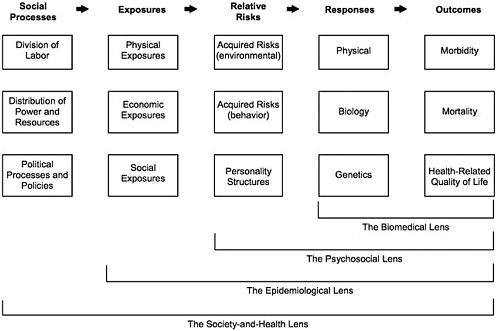
FIGURE 1. The Contribution of Social and Behavioral Sciences to the Biomedical Perspective on Disease Causation. SOURCE: Adapted from Walsh, Sorensen, and Leonard in Amick BC, Levin S.Tarlov AR, and Walsh DC (eds), Society and Health, Oxford University Press, Oxford, 1995.
Environmental- or policy-level changes also can provide improved access to health promotion opportunities. Linenger et al. (1991) used a quasi-experimental design to evaluate the impact of an environmental intervention for physical activity on fitness levels among two naval communities and a Navy-wide sample. The environmental intervention included building bicycle paths along roadways, extending hours at recreation facilities, purchasing new exercise equipment for gyms, holding basewide athletic events, organizing running and bicycling clubs, opening women's fitness centers, and marking running courses at various sites. This comprehensive environmental and norm-based intervention led to significantly greater improvements in fitness in the intervention community. Although policy interventions on physical activity may be somewhat easier to implement in the context of the military, there are many environmental approaches to physical activity in civilian communities that could be relatively easy to implement. Passive approaches to promoting physical activity (e.g., restricting downtown centers for foot or bicycle traffic, placing parking lots at a distance from buildings, and making stairways more convenient and safe) have important potential for achieving widespread increases in physical activity at the population level (King et al., 1995).
Linkages between channels are also important. Wang et al. (1999) evaluated the impact of a recommendation to see one's physician as part of a work site cholesterol screening program on compliance with the recommendation and on change in risk factors for heart disease. Only 35% of participants with an elevated cholesterol level saw their provider following receipt of a recommendation for follow-up. This fact illustrates the importance of finding better ways to link such key intervention channels.
There is growing evidence that full-spectrum interventions (McKinlay, 1995) show substantial promise for improving the effectiveness of behavior change interventions related to health promotion topics, although few interventions targeting adults have provided a substantial intervention dose across all levels of the social ecological model. At the population level, stepped-care ap
proaches, in which increasingly intense strategies are applied only after a person has been unsuccessful with less intense approaches, have been recommended as one way to improve intervention delivery across levels (Abrams et al., 1996). While stepped-care models do provide an important means of insuring the availability of a broad range of services, they do not necessarily provide linkages across levels of the social ecological model. Strong interventions across all levels are needed in order to consistently outperform secular trends (Bauman et al., 1999; Glasgow et al., 1995; Sorensen et al., 1998a; Winkleby et al., 1997). In their “report card” on progress in population health promotion, Orleans and colleagues (Orleans et al., in press) concluded that the ideal of a “full court press” involving interventions across levels is seldom met.
Glasgow and colleagues (1999) have taken an important step toward developing a theoretically driven framework for use in multilevel community-based and public health interventions. In particular, they argue that many multilevel interventions are not amenable to classic evaluation strategies (e.g., randomized controlled, double-blind trials) and thus require alternative evaluation approaches. The goal of identifying interventions that have significant effects often is met at the expense of developing interventions that can be institutionalized (Bandura, 1977; Flora et al., 1993; Lefebvre and Flora, 1988; Rogers, 1983). Even when interventions are found to be cost-effective, structural and political issues can delay or impede implementation (Glasgow et al., in press-a; Vogt et al., 1998). The RE-AIM evaluation framework proposed by Glasgow is designed to be compatible with social ecological approaches to promoting health in communities. Central to the RE-AIM framework is that the public health impact of an intervention is a function of the interaction of a program's performance on five separate evaluative dimensions, including (1) Reach into the population of interest; (2) Efficacy of the intervention; (3) Adoption by representative organizations; (4) Implementation under real world conditions; and (5) Maintenance over time (see Table 3). This framework allows for the calculation of a “public health impact summary score,” which is a multiplicative combination of the component dimensions. The RE-AIM model highlights the limitations of the classic randomized controlled trial methodology that is frequently applied to community-based intervention trials and particularly points out the insufficiencies of the exclusive emphasis on efficacy inherent in this latter approach. Assessing intervention outcomes across multiple levels of influence can make it possible to determine what programs are worth sustained investment.
COLLABORATION BETWEEN ACADEMIC AND COMMUNITY PARTNERS
It has become clear that there is a great need for community-based research efforts that are not conducted on communities, but that are conducted by communities. In the past several years there has been an increased emphasis on the importance of greater community involvement and control through partnerships
TABLE 3. Social Ecological Model: Examples of Interventions at Each Level of Influence
|
Intrapersonal Level |
|
⇒ motivational interventions ⇒ skills building opportunities ⇒ tailored intervention materials |
|
Interpersonal Level |
|
⇒ interventions targeting social norms and social networks |
|
Organizational/Environmental Level |
|
⇒ interventions in health care system ⇒ interventions in workplaces ⇒ interventions in schools |
|
Community Level |
|
⇒ networking with community resources ⇒ social service advocacy ⇒ structural/environmental interventions in communities ⇒ community-based interventions |
|
Policy Level |
|
⇒ local, state, and federal laws ⇒ intervention with federal regulatory agencies |
among academic, health, and community organizations (Clark and McLeroy, 1995; Israel et al., 1995; Minkler and Wallerstein, 1997; Novotny and Healton, 1995; Sorensen et al., in press). Israel distinguishes between community-based research, which is characterized by community members being actively engaged and having influence and control in all aspects of the research process, and community-placed research, in which research is conducted in a community as a place or setting, but the role of community members is restricted to that of study participants. Community-placed research is not usually the result of an interest to exclude the community from the research planning process, but more likely a function of researchers finding themselves in the situation of having an idea for a study or a funding opportunity with a very tight time line and then approaching community organizations or members with the agenda well formulated. Although many trials have been conducted under these circumstances, such an approach often ignores the agenda and context of the community and thus is likely to lead to difficulties in implementation and/or suboptimal outcomes.
The Centers for Disease Control and Prevention's (CDC's) Prevention Research Centers (PRCs) are an excellent example of academic-community partnerships. Twenty-three centers were recently funded to conduct community-based prevention research. A variety of health and social problems are targeted
in diverse populations (CDC, 1999). This funding mechanism is designed to support interdisciplinary research on risk conditions and social determinants of health, and to focus on sustainability and dissemination (CDC, 1997). The centers are also charged with enhancing the process by which communities become equal partners in all phases of research. The PRC program holds great promise for larger-scale collaboration with communities and the development of effective strategies for sustaining and disseminating research programs.
Increased Emphasis on Multiple Risk Factor Interventions
It is clear that risk increases proportionally with the number of risk factors an individual has (Anderson et al., 1991; Berglund et al., 1996; Sebastian et al., 1989; Taylor, Robson, and Evans, 1992). Reduction of multiple risk factors leads to substantial increases in cost-effectiveness (Tosteson et al., 1997). Multiple behavioral risk factors are prevalent across the life span (Emmons et al., 1994; French et al., 1996; Neumark Sztainer et al., 1996; Pate et al., 1996); between 40% and 60% of adults have more than one risk factor for chronic disease (Emmons et al., 1994, 1999a; Greenlund et al., 1998). Certain risk factors have been found to cluster, and there are important relationships in how people think about their different health behaviors. For example, there are inverse relationships between expected consequences for exercise and smoking; individuals who rate the negative consequences of smoking highly are also more likely to rate the positive benefits of exercise highly (King et al., 1996). Self-efficacy levels for these two behaviors are also positively related. Development of effective interventions for changing multiple risk factors is important for a number of reasons. First, the clustering of risk factors and the interrelationships in cognitive mediators across health behaviors suggest that there may be some efficiency in targeting more than one risk factor at a time. Second, prevalence of multiple risk factors is high. Third, there is some evidence available to suggest that change on one behavioral risk factor may serve as a stimulus or gateway for change in other health behaviors. Recent studies suggest that leisure time activity may increase among smokers who quit (French et al., 1996; Gomel et al., 1997), and combined exercise and smoking cessation interventions have led to increased smoking cessation rates (Marcus et al., 1991, 1995, 1999). Changes in smoking prevalence and smoking behavior have been found in a number of studies following introduction of workplace physical activity interventions (Shepard, 1996). Intentions to become more physically active and to limit alcohol consumption have been found to be higher among recent quitters than among continuing smokers (Unger, 1996), and there is increasing evidence that smoking cessation may benefit alcohol relapse prevention among alcoholic smokers (Abrams et al., 1994b; Sobell et al., 1990).
Despite the relationships that have been found across multiple risk factors, not all investigations of multiple risk factor interventions have been positive (Hall et al., 1992). A recent review of multiple risk factor interventions for primary prevention of coronary heart disease concluded that multiple risk factor
changes in such trials are modest (Ebrahim and Davey Smith, 1999). Thus, the authors conclude that multiple risk factor interventions have limited value. However, the trials reviewed were primarily individual risk factor interventions that did not utilize multiple levels of intervention. Further, multiple risk factor interventions typically have been several different individual risk factor interventions delivered simultaneously. Rarely have multiple risk factor interventions paid attention to the methodology of implementing changes on more than one risk factor at a time. Rather, such interventions typically target several risk factors in a single population, but do not link the process of changing the target behaviors. Little is known about how to best approach multiple risk factor change, and thus it is premature to dismiss this approach. The interrelationships among risk behaviors cannot be ignored and may provide an important opportunity to maximize the potency of health promotion interventions. Key questions that need to be addressed include at what point multiple risk factor approaches are overwhelming to participants and thus affect recruitment and retention rates, which risk factors are most facilitative for change in other risk factors (e.g., What risk factors should be targeted together and in what sequence?), the optimal intervention dose needed to accomplish change in more than one behavior, and whether multiple risk factor approaches are cost-effective. Efforts to develop and evaluate strategies for reducing multiple risk factors simultaneously are an important part of efforts to improve the outcome of health promotion interventions.
Use of Computer Technology for Intervention Development and Delivery
Computer technology offers several new options for intervention development and delivery. It is estimated that 33% of all U.S. adults have on-line access, and 38% of these adults have used the Internet for health and medical information in the past 12 months (American Internet User Survey, 1999); use rates are increasing dramatically each year. Computers are also playing an increasingly important role in health care practice, and computer-based integrated practice systems are becoming key tools to help health care providers effectively manage the time and administrative burdens of today's health care system. For example, WebMD is an Internet-based health care service system that currently has more than 35 major health care system members (representing 42,000 physicians). Such integrated systems may include use of the Internet for prescription refills and ordering lab tests, on-line drug interaction services, increased e-mail correspondence between patients and providers, customized websites for patient education, use of the Internet for referral and patient information services, and provision of on-line continuing medical education courses. These are trends that behavioral scientists must be keenly aware of, because they provide new and unique opportunities for delivery of health promotion and protection interventions.
There is also an increasing emphasis on the use of computer technology to improve the effectiveness and reach of behavior change interventions. Computers offer the opportunity for computer-assisted learning, which can teach prevention and self-management skills in an interesting and standardized manner (Lehmann and Deutsch, 1995; Marrero, 1993). For example, diabetes simulations have been developed that allow diabetics to explore various therapeutic options with a physiologically appropriate computer-based model (Glasgow et al., in press-b). Such an approach allows participants to learn how to manage error and build their self-management skills without the real health risks that are associated with real-life trial and error.
Another technology-based innovation is telephone-linked care (TLC), which is computer-controlled telephone counseling of patients in their homes (Friedman, 1998; Ramelson et al., 1999). TLC uses a digitized human voice that delivers counseling based on theoretically determined algorithms. A randomized trial of TLC applied to medication adherence resulted in significantly increased adherence in the intervention group at the 6-month follow-up (Friedman, 1998). Importantly, the intervention group experienced a substantial reduction in diastolic blood pressure, while the control group experienced an increase. A TLC intervention for dietary modification in hypercholesterolemic patients led to significant intervention effects for cholesterol level (Dutton et al., 1995), and a TLC intervention for exercise resulted in large intervention effects differences that reached marginal levels of significance (Cullinane et al., 1994). Delivery of TLC interventions is low cost; for example, the cost of the TLC adherence intervention was $32.50 per patient, for a cost-effectiveness ratio of $5.42 per 1% improvement in adherence (Friedman et al., 1996). These results suggest that this approach has great promise as a tool that can be integrated into the health care delivery system.
A growing body of research has been conducted on tailored interventions that use computer algorithms to prepare intervention materials in which messages are designed especially for a particular individual based on relevant and important personal information (Crane et al., 1998; Curry et al., 1995; King et al., 1994; Rimer and Glassman, 1997; Rimer et al., 1994; Velicer et al., 1993). Tailored interventions typically utilize computer-based “expert systems” programs that match a large library of messages to patient information needs, combining specific statements and graphics into a personalized intervention at relatively modest cost (Skinner et al., 1993). These are often proactive interventions that deliver tailored materials to a defined population (e.g., health maintenance organizations [HMO] members), regardless of whether or not the individuals are seeking to change.
Many tailored interventions have been found to increase short- and long-term behavior change rates (Bastani et al., 1999; Brug et al., 1998, 1996; Curry et al., 1995; King et al., 1994; Koffman et al., 1998; Rakowski et al., 1998; Rimer and Glassman, 1997; Rimer et al., 1994; Strecher et al., 1994), although other studies have not yielded significant results across all (Bull et al., 1999; Crane et al., 1998; Kreuter and Strecher, 1996; Lutz et al., 1999; Rimer et al.,
1999). There is some evidence that iterative tailored communications can increase behavior change over single tailored communications (Brug et al., 1998). A recent review by Skinner and colleagues (1999) reached the conclusion that tailored print materials have been demonstrated to attract notice and readership and to influence behavior change. The impact of tailored interventions on long-term behavior change requires further evaluation (Bastani et al., 1999).
Tailored intervention strategies could be an effective means of targeting the pockets of heightened prevalence in which disease risk is clustered (Feinleib, 1996; Fisher, 1995b); however, unless such interventions are perceived as relevant to the issues faced on a daily basis by the target population, the likelihood of achieving either short-term or sustained intervention impact is greatly diminished. Interventions may be tailored to the unique needs and cultures of communities and could include factors such as social class, literacy level, culture, or neighborhood of residence (Rothman, 1970; Sorensen et al., in press). One example of an excellent effort to address contextual factors utilized a combination of a tailored health care provider prompting intervention (tailored to patients' stage of change) with tailored interventions to promote smoking cessation among low-income African Americans who were patients in a community health center (Lipkus et al., in press). Participants were randomly assigned to receive the provider prompting intervention only, the provider intervention plus tailored print materials (birthday cards and birthday newsletters); or the provider intervention, tailored print materials, and tailored telephone counseling (tailored variables included reasons for quitting, nicotine dependence, and previous quit attempts). Of note, the tailored print materials reflected the context of participants' lives (e.g., a section on transportation barriers included information about bus routes; messages about life stresses reflected participants' low-income status; art and graphics were designed by a local African-American artist and tailored by gender). Smoking cessation rates at the 16-month follow-up were significantly greater among those who received provider prompting plus tailored print materials, compared to both those who received all three levels of intervention and those who received provider prompting alone.
It is important to recognize that there may be some limits to the use of tailored interventions with lower-income populations. For example, tailored interventions typically rely upon completion of extensive questionnaire batteries, either by telephone or in person (Velicer et al., 1993). Lower-income individuals are less likely to be accessible by telephone (Resnicow et al., 1996) and are more likely to have low literacy skills that can limit the length of assessments that are feasible (Kirsch et al., 1993; Williams et al., 1995). Interactive computer-assisted videos have been developed and may be one alternative for delivering tailored interventions that addresses some of these constraints (USDHHS, 1994).
Sustainability
There is ample evidence from a number of community intervention trials demonstrating that community-wide behavior change is possible (Farquhar et al., 1990; Pietinen et al., 1996, 1983). These studies clearly state that health education, social policies, and economic conditions cause risk factor change (Fortmann et al., 1993a, 1993b, 1990). However, too often there is insufficient community-level buy-in to sustain interventions, and thus they typically end when the research is over. Sustainability refers to the infrastructure that remains in a community after a research project ends and includes consideration of interventions that are maintained; organizations that modify their behavior as a result of participation in research; and individuals who, as part of their involvement in the research process, gain knowledge and skills that are used in other life domains (Altman, 1995; Bracht et al., 1994; Goodman and Steckler, 1989; Jackson et al., 1989). There has generally been limited emphasis on assessing intervention Sustainability, and when it has been measured, there has been limited success. Sorensen et al. (1998d) found that 2 years following completion of a work site intervention, the infrastructure for continuing the program was in place (e.g., committees existed that had responsibility for health promotion planning, specific individuals had job responsibilities that included health promotion planning). However, program Sustainability was poor, with intervention activities at the 2-year follow-up almost returning to baseline levels. Altman (1995) recommended several types of policy interventions that could facilitate infrastructure support for Sustainability, including use of revenues from tobacco or alcohol taxes to fund community interventions on an ongoing basis, requiring federally funded researchers to have a plan for Sustainability in all research proposals, including community workers in the review process for research grants to help evaluate the Sustainability plan, and supporting research on methods to enhance Sustainability. More attention is needed to the development of community relationships if we are to maximize efforts to transfer innovations from the experimental context to community systems (Altman, 1995).
The community capacity-building (CCB) approach used following the original research phase of the Stanford Five-City Project is a good example of how the Sustainability process can work (Jackson et al., 1994). The emphasis of the CCB approach was on strengthening community resources related to intervention development, evaluation, and maintenance, working within existing community organizations, and developing skills to adapt and innovate interventions. Technical assistance, training, and professional development were provided, and the benefits of participation in research were shared among both community and academic partners. As a result of this collaborative, a local health department became the community focal point for the Sustainability efforts, and a Division of Health Promotion was created within the health department to support these efforts.
Social Context
Work in the social and behavioral sciences has led to increased recognition of the impact that social contextual factors have on health behaviors and chronic disease morbidity and mortality (Adler et al., 1994; Kennedy et al., 1996; Krieger et al., 1993; Marmot et al., 1978, 1996; Marmot and Davey Smith, 1997; Wilkinson, 1992). Social context is comprised of factors in one's physical, social, and cultural environment that influence health (e.g., access to health-promoting opportunities; social support, social networks, social norms, cultural beliefs, language, SES, stressors of having a low income, multiple roles, or role strain). Distal social structural forces clearly shape people 's day-to-day experiences in ways that are typically not considered by health promotion interventions (Amick et al., 1995; Kaplan, 1995; Sorensen et al., in press). For example, it may be much more difficult for low-income individuals to change their health behaviors, compared to their middle-income counterparts, because of the social forces surrounding them. The population density per food market is much greater in poor neighborhoods, compared to middle- and upper-class neighborhoods; the typical cost of food is approximately 15–20% higher in poor neighborhoods, while the quality of food available is poorer (Troutt, 1993). Thus, an individual in a low-income neighborhood who wishes to improve his or her diet may find many fewer local resources to support this goal. Many low-income neighborhoods are unsafe, with parks and local areas in which physical activity could occur being sources of criminal activity. As a result, people living in low-income areas are much less able to access opportunities to participate in healthful activities in their own neighborhoods. Further, children growing up in these neighborhoods are regularly exposed to cues supporting development of norms that support unhealthy life-styles. If we are to achieve significant improvements in the health of the nation, these factors must begin to play more of a central role in the development and evaluation of public health-oriented health promotion efforts.
Several models have been proposed that nicely illustrate the contributions that the social and behavioral sciences have had in expanding our view of disease causation. Figure 2 illustrates the context of health related to intervention delivery in cross-cultural and multicultural settings (Kumanyika and Morssink, 1997). This model illustrates the importance of factors at all levels of the social ecological model on health and well being. Figure 3 illustrates a conceptual model of the ecology of urban violence in low-income minority communities that addresses the impact that exposure to violence may have on health promotion behaviors (Sanders-Phillips, 1996). This model illustrates that the relationship between income level and health behaviors goes well beyond access and knowledge, but may be a function of the impact of increased exposure to violence, which significantly affects an individual's ability to respond to other barriers effectively.
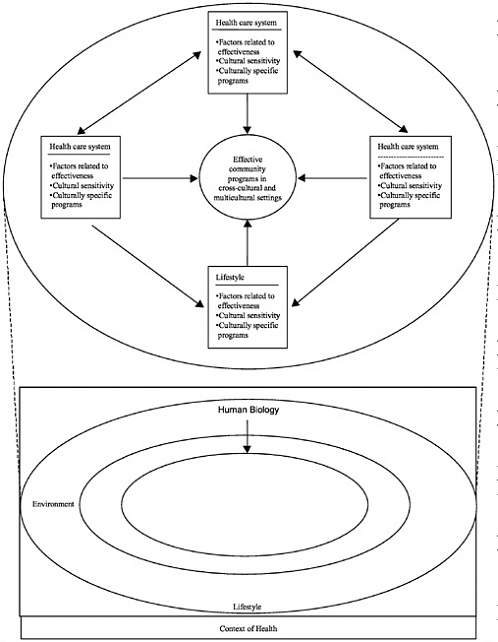
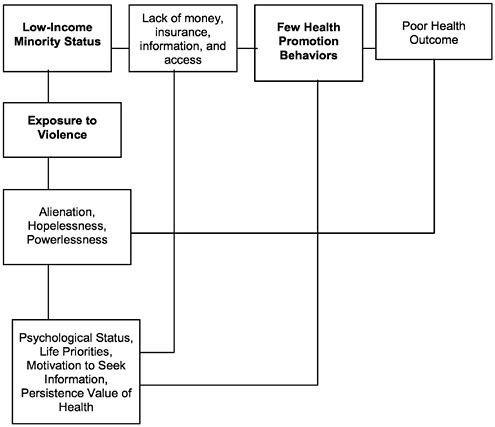
FIGURE 3. A conceptual model of the relationship between exposure to violence and health promotion behaviors among low-income, minority groups. Adapted from Sanders-Phillips, 1996.
Other studies have found that the social context plays a key role in driving the smoking habits of low-income women (Graham, 1994) and that the overall pattern of difficulties and disadvantage faced by low-income women who smoke suggests that their adaptive capacity may be taxed to the limit. Interventions that acknowledge the experiences that come with having a low income (e.g., exposure to violence, frequent housing disruption), that help to reduce the burden of heavy caring responsibilities, and that improve participants' social material circumstances may be a step toward lifting the barriers that prevent low-income individuals from focusing on health behaviors.
An example of work focused on addressing social contextual factors is Fisher et al.'s (1993) evaluation of the role of community health workers as “asthma coaches” for parents of low-income African-American children who have been hospitalized for asthma. The coach's role is to promote coordinated preventive care, reduce hospitalizations and acute care visits, reduce exposure to asthma triggers (e.g., environmental tobacco smoke and cockroach allergen),
encourage adherence to asthma management practices, and provide support for the families. The coaches interact with parents via face-to-face and telephone contact on a flexible schedule determined by the parents ' needs, circumstances, and preferences. Process evaluations of the asthma coaches' intervention have demonstrated that the coaches can establish and maintain effective working relationships with parents, improve avoidance of environmental triggers, and promote adherence to asthma management practices (Tarr et al., 2000). Use of community health workers (CHWs) such as the coaches is an important strategy for developing more contextually based interventions. CHWs typically live in the target neighborhoods, are embedded and active members of their social networks, and have a basic philosophy and values that are consistent with those of the program. Because of shared experiences, CHWs can translate or contextualize interventions in a way that increases their relevance to participants (Eng, et al., 1997; Eng and Smith, 1995; Eng and Young, 1992; Meister et al., 1992; Parker et al., 1998; Schultz et al., 1997). Another key to the success of the Asthma Coaches Project may be the fact that it capitalizes on an existing situation that provides a context for a focus on the health problem at hand (e.g., having a child hospitalized for asthma). Interventions that have adopted this approach in other risk factor areas, such as conducting HIV prevention programs in the context of sexually transmitted disease (STD) clinics (Kelly et al., 1994) and prenatal care (Hobfoll et al., 1994) have also found significant treatment effects.
Over the past decade, there has been increased emphasis on social contextual factors within social epidemiology, but this focus is just beginning to be considered in the behavioral sciences. Careful and thoughtful collaboration between social epidemiologists who are examining the relationship between social factors and health behaviors, and behavioral scientists who are developing interventions will increase the likelihood that health promotion interventions more systematically address these contextual factors.
Contamination
Increasingly, community-based trials have utilized communities or organizations as the unit of analysis and have utilized the intention-to-treat principle to guide outcome analysis. Although contributing to improved scientific rigor, these approaches have not been without an impact on the ability to detect intervention effects. Kalsbeek and colleagues (Kalsbeek et al., under review) recently conducted a very important analysis of the impact of “noncompliance,” or exposure to the nonassigned intervention in community trials (e.g., control community members' exposure to intervention in the experimental community). This analysis used data from a study of churches in which counties were randomized, and a stratified sample of churches within each group of counties received either the intervention or the delayed intervention (Campbell et al., 1999). Based on data from the intervention process evaluation, the authors concluded that the
intervention effect was underestimated by as much as 16.6%. The authors point out the importance of adjusting for the biasing effect of treatment contamination, which may lead to a serious misrepresentation of the health importance of community intervention programs. This analysis also provides a different perspective on the modest effect sizes found in many studies and highlights the importance of using standards for interpretation of community-based interventions that are based on the public health significance of the effects, rather than on clinical significance (Sorensen et al., in press).
SUMMARY
This selected review highlights the many contributions that the behavioral and social sciences have made to improving the health and health behaviors of adults. However, it is also evident that the full potential of these disciplines has not been realized. This paper has attempted to suggest several factors that may improve intervention effectiveness. This final section focuses on key research issues within each of these areas that need to be considered in the next generation of research studies.
Linked, Multilevel Interventions Should Be the Norm, Rather than the Exception
Individual-level behavior change approaches should not be abandoned in the search for an exclusive focus on societal solutions to health problems, but, rather, should become integrated within population-level approaches. Societal and policy-level changes are likely to be slow in the making, and thus exclusion of behavior change efforts at the individual level is likely to lead to generations of children being exposed to even higher prevalence of poor health behaviors in the future. Further, it is likely that there will always be population groups that need additional, individual assistance with health behavior change, and it would be unfortunate indeed if this likelihood was not considered in the development of disease prevention paradigms for entire populations.
A top research priority for behavioral and social scientists is to determine how to create better linkages between interventions at different levels of influence. By linking interventions across delivery channels, consistent intervention messages, support, and follow-up can be provided over time. For example, preventive options that are available through employee benefits programs could be actively promoted through interventions and incentive programs at the workplace. Workplace intervention efforts could be linked to local and statewide prevention efforts through departments of health. Larger employers in a community could collaborate with schools to send consistent messages to entire family systems, rather than sporadically to children or parents. Statewide services (e.g., tobacco hotlines) could be linked with both primary care and hospital-based
systems, so that patients receive continuity of care and access to services on an ongoing basis.
However, at present, we know little about how best to integrate across levels in order to achieve the greatest benefit. Key empirical questions include how interventions across levels should be ordered to offer the maximal benefit. For example, should social policy interventions precede individual and social network-level interventions? At what point do multilevel interventions support change from several directions, rather than bombard an individual with unwanted messages, thus increasing resistance to change? How can organizational systems (e.g., workplaces, schools, health care providers, families) be linked to maximize intervention effectiveness? Recent studies have revealed that smokers who have household smoking bans and/or work in environments with smoking restrictions are more likely to try to quit smoking, have lower rates of relapse, and lower cigarette consumption compared to those who do not have restriction at home or work (Farkas et al., 1999). However, we don 't yet know the effect of combining bans at home and work, and how the relationships between home and work can be applied to other health behaviors. Can workplace-based interventions be effectively linked with health care provider messages about health promotion? Do policy-level interventions have a consistent impact on individuals and networks, or does the effect vary over time? Further study is needed of the impact of combined interventions, across levels, including policy interventions, on the initiation and maintenance of behavior change. It is critical that the next generation of health promotion research begin to address the need to develop truly integrated, multilevel interventions that provide continuity of intervention, so that societal influences reinforce healthy behaviors and serve to shift population norms in a healthful direction.
More Regulatory and Policy Research Is Needed in Key Areas
A number of regulatory interventions could contribute to improved health outcomes, including increased availability of mental health services, price supports for healthy foods, legislative efforts to mandate the manufacture of fire-safe cigarettes, firearms design requirements that would prevent unauthorized use of guns, incorporation of an assessment of physical activity opportunities into building permits for public buildings, legislative or incentive programs for walk- or bike-to-work programs, and price supports for sun protection products that meet SPF standards.
Computer Technology Can Enhance Intervention Design and Delivery
As more behavioral and social scientists turn to the Web or Internet to deliver health-related interventions, careful attention must be given to the issue of
the “digital divide” so that interventions are not developed that exclude certain population subgroups. Although there have been unprecedented increases in Internet access, the disparities in penetration levels between upper- and lower-income households, and among racial groups, have also increased in the past 5 years (McConnaughy et al., 1997). There is currently no infrastructure for access to computer-based resources for health information in the public sector. Although health departments and community health centers may be in an excellent position to adapt research-based tailored algorithms for use in routine care delivery, this will not be possible unless such settings have access to the equipment needed to deliver these interventions. As technology improves and equipment costs decrease, there should be increased emphasis on providing the computer infrastructure to disseminate tailored interventions through public health channels.
Tailoring shows significant promise as a means for increasing intervention reach and impact, but there is a clear need to increase our understanding about the specific mechanisms that drive the effectiveness of tailoring (Abrams et al., in press; Rimer and Glassman, 1999; Skinner et al., 1999). Research must address mechanistic questions such as how best to operationalize theoretical variables within tailored communications, whether tailoring is more effective for some behaviors than others or more effective in certain settings than others, what optimal types and number of variables should be included in tailored communications, and how to use advanced computer technologies to enhance the effectiveness of tailoring (Dijkstra et al., 1998; Kreuter et al., 1999). Other technologies that deserve further exploration include computer-based risk assessment and behavior change programs that can be incorporated into primary care practice (Emmons et al., in press) and use of computer-assisted telephone technologies for intervention delivery (Friedman, 1998; Ramelson et al., 1999). Research on health and risk communication will likely play a central role in tailored interventions that address primary prevention of chronic disease (Lipkus et al., in press; Weinstein, 1988).
Dissemination Must Become a Central Focus
Given the relatively large amount of money that has been spent on clinical research, very little attention has been paid to means for translating effective strategies into routine clinical practice (Bero et al., 1998). Overall, there is relatively little guidance in the literature related to effective dissemination, and what little dissemination has occurred has been uncoordinated (Brunner et al., 1997; Glanz, 1991a, in press; Sorensen et al., in press); a strong emphasis on dissemination research is clearly needed. It is tempting to focus primarily on efforts to work with existing interventions to increase their effectiveness. However, Rose (1992) and others (Tosteson et al., 1997) have clearly demonstrated that at the population level, even small to moderate effects can shift population distributions of health behavior and health outcomes. In addition, if currently available intervention strategies are disseminated effectively, population-level shifts in
social norms about health behaviors may also occur, which may lead to larger effect sizes than seen within the context of a single research project.
Although there is an increasing amount of research focusing on dissemination, the most common strategies—passive dissemination approaches (e.g., publication of consensus conferences, mailing of educational materials) —are least effective (Bero et al., 1998; Freemantle et al., 1999). Following completion of the Working Well Trial, intervention materials were disseminated to the 42 control work sites; no increase in the number of tobacco control activities offered was observed by the 2-year follow-up (Sorensen et al., 1998d). Bero and colleagues emphasize the importance of conducting studies that will help to clarify the circumstances that are likely to modify intervention effectiveness and the importance of economic evaluations of dissemination efforts. Careful thought about appropriate evaluation approaches is also needed. In the context of dissemination, impact and outcome evaluations are less relevant, but increased emphasis on process evaluation is critical and could provide important clues as to how successfully an intervention is disseminated. Process evaluation focusing on dissemination would include evaluation of program reach, the development of effective relationships to support and implement the program's dissemination (Israel et al., 1995), the percentage of organizations or settings that try to implement the intervention, the consistency and quality of the intervention delivery, and the extent to which the intervention continues to be delivered over time (Glasgow et al., in press-a).
Best et al. (unpublished) and others (Orleans et al., in press; Seetharam, 1999) have advocated the use of a “best-practices” model in tobacco control as one part of the diffusion process. In this approach, a common definition of effectiveness is identified for different levels of practice (e.g., individual, population), channel, and target population. Rules for evaluating the evidence in determining best practices need to be articulated (Best et al., unpublished). This recommendation is exceedingly complex since there are many examples of different disciplines reviewing the same evidence and reaching different conclusions. However, achieving multidisciplinary consensus on best practices is a key part of dissemination efforts and should be a priority. The National Cancer Institute has undertaken an effort to identify the evidence base in cancer control and is posting a review of evidence in selected areas on its website (http://dccps.nci.nih.gov/DECC). This is an important effort that can build the foundation from which best practices can be identified and dissemination can occur.
Infrastructures for Dissemination Are Needed
Another central issue is how to develop an infrastructure for disseminating effective interventions. One way to do this may be to form effective partnerships with key organizations and corporations that share common goals. There are excellent models for such efforts at both the local and the national levels that were the result of effective partnerships between public health organizations and the private sector. For example, the 5-a-Day for Better Health program has resulted
in there being persistent and inescapable cues regarding fruits and vegetables in most supermarkets in the United States (e.g., produce bags with the 5-a-Day logo, recipe card, posters, and other signage in grocery stores). A similar model is being used by the American Sun Protection Association, a trade association comprised of public health experts and sun protection manufacturers with the goal of improving skin cancer prevention in the United States (Buller, August 30, 1999). The mission of this association is to join skin cancer prevention advocates and all businesses in the sun protection industry under one umbrella organization and to raise funds through product certification that will be used for public education, point-of-purchase campaigns, and legislative initiatives.
We have only begun to tap the potential of such public-private partnerships. Although caution is certainly warranted, utilizing the resources of private sector enterprises that manufacture or market health-promoting products may be an effective way to increase the reach of intervention messages and to sustain interventions outside of research settings. Further, corporate leaders can disseminate effective interventions, which can further increase the penetration and reach. An upstream approach to selecting partners for dissemination may be most fruitful. For example, efforts to increase physical activity would be greatly aided by involving architects, engineers, and city planners. If the key groups that design our physical environments became invested in the role that their work could have in improving the health of the nation, they might be better positioned to advocate design of buildings and city spaces that maximize opportunities for physical activity. Product designers and engineers have a long history of developing products to reduce and prevent injury. Extending this focus to include prevention of chronic disease and developing strong collaborations with building design and trade organizations might form the infrastructure from which more widespread design of health-promoting environments is possible (Christoffel and Gallagher, 1999). This discussion also emphasizes the need for social and behavioral scientists to collaborate with other disciplines in identifying solutions to improve population health.
A System for Disseminating Office Systems Interventions to Health Care Providers Is Essential
Particular consideration should be given to building an infrastructure for institutionalization and dissemination of effective programs in the health care setting. Health care providers are effective at providing prevention interventions, and office systems greatly increase the likelihood that providers will address health behaviors. However, the mounting fiscal pressures within the health care delivery system are eroding physicians' capabilities to deliver any health behavior interventions. Efforts are needed to develop physician extender strategies that are feasible within today's health care climate. Further, technologic strategies that are known to facilitate provision of counseling (e.g., computer-based office reminder systems) are imperative. Cooley et al. (1999) demonstrated that 4 years after implementation of a computer-based office systems intervention,
provider compliance and use of the system were very high (80%), yet there is no systematic structure for incorporating these systems into the standard of care. Consideration should be given regarding how to build the infrastructure to make such systems available to providers in all types of delivery systems (e.g., group practices, neighborhood health centers, IPAs). Partnerships with Internet health care systems may be one strategy for systematically incorporating prevention topics into office management systems. NCQA and other oversight bodies provide incentives for providers in some health care environments to implement office systems, although incentives for prevention are limited in many settings.
One way to increase provider interest in adopting office systems for prevention might be to incorporate multiple risk factors and screening, so that the systems can be utilized with all patients, and to also incorporate strategies for addressing adherence to treatment recommendations. Poor compliance with recommendations for secondary prevention is of considerable concern, and has substantial cost implications for providers in capitated systems. Health care providers need to be linked into existing mechanisms and delivery structures for disease prevention (e.g., tobacco control hotlines) that can be used as referral sources; provider influence could connect people with resources and thus extend physician involvement as well as provide follow-up services. It is critical that efforts now focus on developing an infrastructure for assisting providers in developing effective office systems. Physician groups (e.g. American College of Chest Physicians, American College of Preventive Medicine) may be particularly good partners for these efforts.
Workplace Interventions Should Be Disseminated
There is also enough evidence currently available to suggest that workplace health promotion should be an integral part of corporate activities and benefits programs (Evans et al., 1994; Farquhar et al., 1985; Glasgow et al., 1997b; Jeffery et al., 1993; Peterson and Aldana, 1999; Salina et al., 1994; Sorensen et al., 1992, 1996a). In particular, policy interventions have been found to be effective at increasing preventive health behaviors (Farrelly et al., 1999; Glasgow et al., 1997a). It is encouraging that the prevalence of workplace health promotion activities has increased considerably in the past decade, although most of the workplace programs that are offered are typically quite low intensity (e.g., self-help materials, intermittent classes) and consist of approaches that have the weakest effects. Consideration of how to disseminate what is known about effective health promotion practice and policy implementation in the workplace setting is needed, particularly in small businesses. The importance of developing an organizational infrastructure to foster and sustain comprehensive health promotion programs in workplaces has been noted (Stokols et al., 1996a). Such an undertaking is likely to require that a coordinating group or agency provide vision in order to ensure adequate planning, implementation, and sustainability. A recent study found that a management training intervention for human resource managers yielded highly significant levels of change in measures of organiza-
tional and environmental support for health promotion (Golaszewski et al., 1998). This model may be effective for increasing dissemination and impacting on organization support for health promotion. In addition, efforts to integrate health promotion and health protection interventions have shown significant promise (Sorensen et al., 1995).
Social Context Must Be Considered in Intervention Design
Much of health promotion research has been conducted in a social vacuum, with limited attention to the influence of sociopolitical and regulatory factors (Altman, 1995; Wallack and Winkleby, 1986). It is becoming increasingly clear that effective health promotion interventions can no longer ignore social contextual factors. Recent reviews of the status of health promotion interventions highlight the urgent need for treatment advances that target new insights through innovative study designs, careful qualitative and process evaluations, and partnerships with the community, rather than from incremental improvements of existing approaches (Fisher et al., 1993; Shiffman, 1993). This paper has argued that innovations in behavior change approaches must also draw upon insights from social epidemiology and integrate strategies for dealing with social factors with those developed for individual-level change. Historically, there has been a divergence between social epidemiologists, who focus on documenting the relationship between social conditions and health outcomes, and behavioral scientists, who develop health-related interventions that are often devoid of social contextual factors. Intervention research must begin to address the role of social factors in health behaviors, to expand our theoretical models to incorporate social factors, and to develop innovative intervention designs that will help to elucidate the most effective strategies for intervening within this context. Intervention research that represents a collaboration with existing community groups, social service agencies, and health care providers, and utilizes existing social networks and relationships to creatively design interventions that address social contextual factors, is critical if we are to make a significant impact on health risk factors in the United States.
As recently noted by Syme (1997) and Altman (1995), efforts to develop the next generation of prevention interventions must focus on building relationships with communities and developing interventions that derive from the communities' assessments of their needs, rather than the experts' assumptions about what is needed. Israel (Israel et al., 1998) has offered some strategies for forming effective community-based partnerships. Funders should give careful consideration to the impact that these steps have on the time lines for research development, implementation, and evaluation.
Theoretical Issues Need Further Attention in Health Behavior Change Research
Theory may play an important role in improving the effectiveness and efficacy of prevention interventions. There has been an increased focus on theory in the past decade (Abrams et al., 1997; Glanz et al., 1997), although many studies conducted have not used well-articulated theoretical constructs to guide the intervention development or evaluation. Further, few studies have clearly articulated key hypothesized mediating variables, and fewer still have longitudinally assessed the impact of an intervention on mediating variables; those studies that have often show that interventions have not substantially effected change in those hypothesized mechanisms (Baranowski et al., in press; Hansen and McNeal, 1996). The ability of interventions to yield change in mediating variables will determine to some extent the ability of the intervention to impact on the target outcome behaviors. Baranowski et al. (in press) call for a priority to be placed on research that increases our understanding of the relationships between theoretical variables and outcomes, and the impact of community-based interventions on these mediating variables, a move that is necessary if we are to take our intervention efforts to the next level of effectiveness.
Theory is needed that is grounded in social experience and thus creates more effective practice (Altman, 1995; Israel et al., 1998; Schensul, 1985). Cultural influences on both mediating mechanisms and health behaviors are also important to consider. In some cultures, concepts such as self-efficacy do not have meaning because of the emphasis on societal well-being. In other cultural groups or communities, strong social support may come from parents or family members who are overall very supportive but do not believe that their adult children need to lose weight or watch their fat intake. Many intervention programs would recommend that the participant avoid this source of negative influence, which in some cases may be tantamount to asking people to forsake strong and positive sources of influence in their life in order to change their diet (Airhihenbuwa et al., 1996).
Expectations for Effect Sizes Need to Be Realistic
Concerns have been raised about the relatively modest magnitude of effects found in community-based and behavioral risk factor reduction interventions (Fisher, 1995a; Susser, 1985; Winkleby, 1994). It is likely that at the level of individual behavior change outcomes, community-based interventions will always have more modest effects than reactive, clinic-based interventions that rely on motivated volunteers. However, economic policy models suggest that population-level application of even the modest level of results found in community trials (Winkleby et al., 1996) would be highly cost-effective compared with
TABLE 4. The Application of the Social Ecological Model to Health Behavior Interventions
|
Operating Guidelines |
Application in Health Behavior Interventions |
|
Encompass multiple settings and life domains |
• Provide methods/strategies to involve participants' families, friends, community • Design interventions that span multiple settings and have enduring positive effects on well-being • Integrate biomedical, behavioral, regulatory, and environmental interventions |
|
Reinforce health-promoting social norms through existing social networks |
• Provide cues for healthy behaviors throughout target community • Involve health care providers; engage family members and significant others; provide follow-up counseling • Connect participants with community organizations that support the individual's target goals |
|
Target changes in the organization and environment in support of participant health |
• Utilize input from advisory boards of constituents/representatives of target population to develop appropriate intervention methods and materials • Identify behavioral and organizational “leverage points” for health promotion • Train key community gatekeepers to deliver cancer prevention messages (e.g. healthcare providers, teachers, community leaders, preachers, camp counselors) • Provide key community leaders with materials and resources for extending their intervention efforts • In target organizational settings, review policies that can impact on norms for health behaviors (e.g., choice of foods for vending machines, smoking policies, youth access to cigarettes), and make recommendations • Utilize “other-directed,” passive policy intervention strategies |
|
Tailor programs to the setting through community participation and ownership |
• Develop Community Advisory Boards, comprised of key leaders and representatives of target population • Collaborate with Community Advisory Board to develop appropriate resources and networks of community organizations that can support participants' behavior change goals • Develop interventions that enhance the fit between people and their surroundings |
|
Empower individuals to make behavior change |
• Provide motivational strategies to empower participants to make changes • Provide opportunities for making small steps toward target changes • Impact on social norms related to targeted changes |
|
Utilize multiple delivery points for intervention messages |
• Deliver interventions through multiple channels, and embed interventions into ongoing community programs and activities |
TABLE 5. Characteristics of the RE-AIM Framework
|
Evaluation Dimension |
Ecological Target Level |
Units and Level of Measurement |
Prevalence of Research |
|
Reach |
Individual |
Percent and representativeness of members of an organization that participate |
Modest |
|
Adoption |
Organization or community |
Magnitude or percent of improvement on outcome(s) of concern |
Substantial |
|
Efficacy |
Individual, organization, or community |
Percent of organizations or settings that try an intervention |
Minimal |
|
Implementation |
Individual and organization or community |
Consistency and quality of intervention delivery under real world conditions |
Moderate |
|
Maintenance |
Individual and organization or community |
Extent to which individuals or implementation agents continue to deliver a program over time |
Little |
|
Public Health Impact |
End result of interaction of factors |
None |
most accepted medical interventions (Tosteson et al., 1997). This work highlights the importance of evaluating the impact of behavior change programs based on cost-effectiveness within the population, rather than based solely on absolute levels of change among individuals. Further, requirements of standard approaches to research, such as use of the randomized controlled trial, may reduce our ability to detect effects in population-level interventions. For example, Kalsbeek et al. (under review) found that contamination (e.g., control participants exposed to interventions) led to an underestimation of intervention effects in one community-based study. It is quite unusual for investigators to consider the results of as much as 16% contamination on effect sizes, and this study illustrates the importance of doing so. Other investigators have demonstrated that secular trends greatly impact the ability to detect intervention effects, with program effects being larger when secular trends were smaller in control communities (Bauman et al., 1999). Although it is unlikely that the randomized controlled trial will continue to be the gold standard for intervention research, it is increasingly being recognized that because of the dynamic nature of communities, this evaluation format has limitations in its applicability for evaluation of community-based interventions (Cummings, 1999; Sorensen et al., in press). The restricted hypotheses that the randomized controlled trial is able to test may fail to consider the complexities of communities, and this evaluation strategy may alter the interaction between the intervention and community, resulting in an attenuation of the intervention's effectiveness. McKinlay (1995) further argues that alternative evaluation strategies are needed for interventions where individual behavior change is not the target. Sorensen and colleagues (in press) propose that a fuller range of research methodologies be applied and that careful consideration be given to the conditions under which the use of randomized controlled trials is appropriate in community settings.
Adapted from Glasgow et al., in press.
CONCLUSIONS
Social and behavioral sciences have added significant understanding to the factors needed to accomplish health objectives in the context of human culture, needs, and behavior (Morrow and Bellg, 1994). These disciplines have provided a solid foundation of knowledge about intervention and evaluation strategies for improving health and have contributed to an improved understanding of health at virtually every level of intervention and evaluation research. In order to continue to build on these contributions, innovations are needed that draw upon insights from social epidemiology, policy, and regulatory approaches, and interventions are needed that integrate strategies for dealing with social factors with those developed for individual-level change. Health behavior research also needs to stretch beyond the individual and interpersonal levels and continue to explore ways to work together with communities to systemically integrate social, governmental, and policy-level factors into behavior change interventions. Future
studies must utilize rigorous methods that are appropriate to the study population, yet are flexible enough to address some of the inherent challenges of conducting population-based research of this nature. Public health interventions realistically may lead to small changes that, when observed at the population level, contribute to meaningful public health benefits (Rose, 1985; Rose, 1992; Tosteson et al., 1997). By adopting multilevel approaches, increasing the focus on social contextual factors, and building infrastructures for sustaining and disseminating effective interventions, we will be well-positioned to expand on the contributions to date in the next generation of social and behavioral science research.
REFERENCES
Abrams, D. ( 1991). Conceptual models to integrate individual and public health interventions: The example of the workplace. In M.Henderson (Ed.), Proceedings of the International Conference on Promoting Dietary Change in Communities pp. 173–194. Seattle: The Fred Hutchinson Cancer Research Center.
Abrams, D., Orleans, C., Niaura, R., Goldstein, M., Prochaska, J., and Velicer, W. ( 1996). Integrating individual and public health perspectives for treatment of tobacco dependence under managed health care: A combined stepped-care and matching model. Annals of Behavioral Medicine, 18(4), 290–304.
Abrams, D.B., Boutwell, W.B., Grizzle, J., Heimendinger, J., Sorensen, G., and Varnes, J. ( 1994a). Cancer control at the workplace: The Working Well Trial. Preventative Medicine, 23(1), 15–27.
Abrams, D.B., Emmons, K.M., and Linnan, L. ( 1997). Past, present, and future directions in health education theory and research. In K.Glanz, F.M.Lewis, and B.K. Rimer (Eds.), Health Behavior and Health Education, 2nd ed., pp. 453–478. San Francisco: Jossey-Bass.
Abrams, D.B., Emmons, K.M., Linnan, L., and Biener, L. ( 1994b). Smoking cessation at the workplace: Conceptual and practical considerations . In R.Richmond (Ed.), International Perspective on Smoking: An International Perspective , Section II, Chapter 7, pp. 137–169.
Abrams, D.B., Mills, S., and Bulger, D. (in press). Challenges and future directions for tailored communication research . Annals of Behavioral Medicine, 21(4), 299–306.
Adams, A., Ockene, J.K., Wheller, E.V., and Hurley, T.G. ( 1998). Alcohol counseling: Physicians will do it. Journal of General Internal Medicine, 13(10), 692–698.
Adler, N.E., Boyce, T., Chesney, M.A., Cohen, S., Folkman, S., Kahn, R.L., and Syme, S.L. ( 1994). Socioeconomic status and health. The challenge of the gradient. American Psychologist, 49(1), 15–24.
Airhihenbuwa, C.O., Kumanyika, S., Agurs, T.D., Lowe, A., Saunders, D., and Morssink, C.B. ( 1996). Cultural aspects of African American eating patterns. Ethnicity and Health, 1(3), 245–260.
Allaire, S., La Valley, M., Evans, S. et al. ( 1999). Evidence for decline in disability and improved health among persons aged 55–70 years: The Framingham Heart Study. American Journal of Public Health, 89, 1678–1683.
Altman, D., and King, A. ( 1986). Approaches to compliance in primary prevention. Journal of Compliance in Health Care, 1(1), 55–73.
Altman, D.G. ( 1995). Sustaining interventions in community systems: On the relationship between researchers and communities. Health Psychology, 14(6), 526–536.
American Cancer Society. ( 1980). Guidelines for cancer-related check-up: Recommendations and rationale . Cancer, 30, 194–240.
American Internet User Survey. ( 1999). Cyber dialogue study shows US internet audience growth slowing. Cyberdialogue, Internet report: www.cyberdialogue.com.
Amick, B., Levin, S., Tarlov, A., and Walsh, D. ( 1995). Community and Health. In D. Patrick and T.Wickizer (Eds.), Society and Health. Oxford: Oxford Press.
Anderson, K.M., Wilson, P.W., Odell, P.M., and Kannel, W.B. ( 1991). An updated coronary risk profile. A statement for health professionals . Circulation, 83(1), 356–362.
Attkisson, C., Zich, J., and eds. ( 1990). Depression in Primary Care: Screening and Detection. New York: Routledge.
Baker, S., O'Neill, B., Ginsburg, M., and Li, G. ( 1992). The Injury Fact Book. New York: Oxford Press.
Bandura, A. ( 1977). Social Learning Theory. Englewood Cliffs: Prentice-Hall.
Baranowski, T. ( 1997). Families and Health Actions. In D.S.Gochman (Ed.), Handbook of Health Behavior Research I: Personal and Social Determinants (pp. 179–205). New York: Plenum Press.
Baranowski, T., Lin, L., Wetter, D., Resnicow, K., and Davis Hearn, M. (in press). Theory as mediating variables: Why aren't community interventions working as desired? American Psychologist, 51(1), 42–51.
Bastani, R., Maxwell, A.E., Bradford, C., Das, I.P., and Yan, K.X. ( 1999). Tailored risk notification for women with a family history of breast cancer. Preventative Medicine, 29(5), 355–364.
Bauman, A., Sallis, J., and Pratt, M. (in press). Environmental/policy approaches to increasing physical activity. American Journal of Preventative Medicine.
Bauman, K.E., Suchindran, C.M., and Murray, D.M. ( 1999). The paucity of effects in community trials: Is secular trend the culprit? Preventative Medicine, 28(4), 426–429.
Bebbington, P., Hurry, J., Tennant, C., Sturt, E., and Wing, J. ( 1981). Epidemiology of mental disorders in camberwell. Psychological Medicine, 11, 561–579.
Becker, D., Yanek, L., Raqueno, J., Griffin, T., and Garrett, D. ( 1999). Changes in weight and blood pressure in African American women in a church-based risk reduction trial (Abstract); Presented at the 72nd Scientific Sessions of the American Heart Association; November 8, 1999; Atlanta. Circulation, 18 (Suppl), 1–219.
Becker, F. ( 1990). The Total Workplace: Facilities Management and the Elastic Organi zation. New York: Van No strand Reinhold.
Berglund, G., Eriksson, K., Israelsson, B., Kjellstrom, T., Lindegarde, F., Mattlaason, I., Nilsson, J., and Stavenow, L. ( 1996). Cardiovascular risk groups and mortality in an urban Swedish male population: The Malmo Prevention Project. Journal of Internal Medicine, 239, 489–497.
Bero, L.A., Grill, R., Grimshaw, J.M., Harvey, E., Oxman, A.D., and Thomson, M.A. ( 1998). Closing the gap between research and practice: An overview of systematic reviews of interventions to promote the implementation of research findings. British Medical Journal, 317, 465–468.
Best, J., Lovato, C., Olsen, L., and Banwell, W. (unpublished). Tobacco preventionstrategies for adolescent women: A literature review.
Biener, L., Glanz, K., McLerren, D., Sorensen, G., Thompson, B., Basen-Engquist, K., Linnan, L., and Varnes, J. ( 1999). Impact of the Working Well Trial on the worksite health environment . Health Education and Behavior, 26(4), 478–494.
Bonnie, R., Fulco, C., Overman, C., eds. ( 1999). Reducing the Burden of Injury-Advancing Prevention and Treatment. Washington, DC: National Academy Press.
Borus, J.F., Howes, M.J., Devins, N.P., Rosenberg, R., and Livingston, W.W. ( 1988). Primary health care providers' recognition and diagnosis of mental disorders in their patients. General Hospital Psychiatry, 10(5), 317–321.
Bowen, D., and Tinker, L. ( 1995). Controversies in changing dietary behavior. In F. Bronner (Ed.), Nutrition and Health. Topics and Controversies. Boca Raton, FL: CRC Press.
Bowen, D.J., Henderson, M.M., Iverson, D., Burrows, E., Henry, H., and Foreyt, J. ( 1994). Reducing dietary fat: Understanding the Success of the Women's Health Trial. Cancer Prevention International, 1, 21–30.
Bracht, N., Finnegan, J., Rissel, C., Weisbrod, R., Gleason, J., Corbett, J., and Velblen-Mortenson, S. ( 1994). Community ownership and program continuation following a health demonstration project. Health Education and Research, 9, 243–255.
Braithwaite, R., Bianchi, C., and Taylor, S. ( 1994). Ethnographic approach to community organization and health empowerment . Health Education Quarterly, 21(3), 407–416.
Brug, J., Glanz, K., Van Assema, P., Kok, G., and van Breukelen, G.J. ( 1998). The impact of computer-tailored feedback and iterative feedback on fat, fruit, and vegetable intake. Health Education and Behavior, 25(4), 517–531.
Brug, J., Steenhuis, I., van Assema, P., and de Vries, H. ( 1996). The impact of a computer-tailored nutrition intervention. Preventative Medicine, 25(3), 236–242.
Brunner, E., White, I., Thorogood, M., Bristow, A., Curle, D., and Marmot, M. ( 1997). Can dietary interventions change diet and cardiovascular risk factors? A metaanalysis of randomized controlled trials. American Journal of Public Health, 87(7), 1415–1422.
Bull, F.C., Jamrozik, K., and Blanksby, B.A. ( 1999). Tailored advice on exercise—does it make a difference? American Journal of Preventative Medicine, 16(3), 230–239.
Buller, M. ( August 30, 1999). Personal Communication.
Burt, V., Whelton, P., Roccella, E. et al. ( 1995). Prevalence of hypertension in the U.S. adult population. Hypertension, 25, 305–313.
Byers, T., Mullis, R., Anderson, J., Dusenbury, L., Gorsky, R., Kimber, C., Krueger, K., Kuester, S., Mokdad, A., Perry, G., and Smith, C.A. ( 1995). The costs and effects of a nutritional education program following work-site cholesterol screening. American Journal of Public Health, 85(5), 650–655.
Calfas, K.J., Long, B.J., Sallis, J.F., Wooten, W.J., Pratt, M., and Patrick, K. ( 1996). A controlled trial of physician counseling to promote the adoption of physical activity. Preventative Medicine, 25(3), 225–233.
Calfas, K.J., Sallis, J., F., Oldenburg, B., and French, M. ( 1997). Mediators of change in physical activity following an intervention in primary care. Preventative Medicine, 26, 297–304.
Campbell, M.K., Demark-Wahnefried, W., Symons, M., Kalsbeek, W.D., Dodds, J., Cowan, A., Jackson, B., Motsinger, B., Hoben, K., Lashley, J., Demissie, S., and McClelland, J.W. ( 1999). Fruit and vegetable consumption and prevention of cancer: The Black Churches United for Better Health project. American Journal of Public Health, 89(9), 1390–1396.
Carleton, R.A., Lasater, T.M., Assaf, A., Lefebvre, R.C., and McKinlay, S.M. ( 1987). The Pawtucket Heart Health Program: I. An experiment in population-based disease prevention. Rhode Island Medical Journal, 70, 533–538.
Caspersen, C., Christenson, G., and Pollard, R. ( 1986). The status of the 1990 PhysicalFitness Objectives—evidence from NHIS 1985. Public Health Reports, 101, 587–592.
Caspersen, C., and Merritt, R. ( 1992). Trends in physical activity patterns among older adults: The behavioral risk factor surveillance system. Medical Science, Sports and Exercise, 24(Suppl), S26.
CDC. ( 1999). Prevention research centers begin a new era. Chronic Disease Notes and Reports, 12(1).
CDC. ( 1997). Linking Research and Public Health Practice: A Review of CDC's Program of Centers for Research and Demonstration of Health Promotion and Disease Prevention. Washington, DC: National Academy Press.
Center for Disease Control and Prevention. ( 1990). Coronary heart disease attributable to sedentary lifestyle-selected states, 1988. Journal of the American Medical Association, 264, 1390–1392.
Centers for Disease Control and Prevention. ( 1996). Cigarette smoking among adults—United States. Morbidity and Mortality Weekly Report, 45(27), 588–590.
Christoffel, T., and Gallagher, S. ( 1999). Injury Prevention: Environmental Modification, Injury Prevention and Public Health: Practical Knowledge, Skills, and Strategies, pp. 161–179. Gaithersburg, MD: Aspen Publishers.
Clark, N., and McLeroy, K. ( 1995). Creating capacity through health education: What we know and what we don't. Health Education Quarterly, 22, 273–289.
Colditz, G., DeJong, W., Hunter, D., Trichopoulos, D., and Willett, W. ( 1996). Harvard Report on Cancer Prevention: Causes of human cancer. Cancer Causes and Control, 1(7), 1569–1574.
Cole, P., and Rodu, B. ( 1996). Declining cancer mortality in the United States. Cancer, 78(10), 2045–2048.
COMMIT. ( 1991).Community Intervention Trial for Smoking Cessation (COMMIT): Summary of Design and Intervention. Journal of the National Cancer Institute, 83(22), 1620–1628.
COMMIT. ( 1995a). Community interventional trial for smoking cessation (COMMIT): I Cohort results from a four-year community intervention. American Journal of Public Health, 85, 183–192.
COMMIT. ( 1995b). Community interventional trial for smoking cessation (COMMIT): II Changes in adult cigarette smoking prevalence. American Journal of Public Health, 85, 193–200.
Compas, B.E., Haaga, D.A., Keefe, F.J., Leitenberg, H., and Williams, D.A. ( 1998). Sampling of empirically supported psychological treatments from health psychology: Smoking, chronic pain, cancer, and bulimia nervosa. Journal of Consulting and Clinical Psychology, 66(1), 89–112.
Cooley, K.A., Frame, P.S., and Eberly, S.W. ( 1999). After the grant runs out. Long-term provider health maintenance compliance using a computer-based tracking system. Archives of Family Medicine, 8(1), 13–17.
Coyne, J.C., Schwenk, T.L., and Smolinski, M. ( 1991). Recognizing depression: A comparison of family physician ratings, self-report, and interview measures. Journal of the American Board of Family Practice, 4(4), 207–215.
Crane, L.A., Leakey, T.A., Rimer, B.K., Wolfe, P., Woodworth, M.A., and Warnecke, R.B. ( 1998). Effectiveness of a telephone outcall intervention to promote screening mammography among low-income women. Preventative Medicine, 27(5 Pt 2), S39–49.
Cullinane, P., Hyppolite, K., Zastawney, A., and Friedman, R. ( 1994). Telephone linked communication-activity counseling and tracking for older patients. Journal of General Internal Medicine (Suppl), 9(86A).
Cummings, K. ( 1999). Community-wide interventions for tobacco control. Nicotine and Tobacco Research, 1, S113–S116.
Curry, S., McBride, C., Grothaus, L., Louie, D., and Wagner, E. ( 1995). A randomized trial of self-help materials personalized feedback and telephone counseling with nonvolunteer smokers. Journal of Consulting and Clinical Psychology, 63(6), 1005–1014.
Curry, S.J. ( 1993). Self-help interventions for smoking cessation. Journal of Consulting and Clinical Psychology, 61(5), 790–803.
Davis, D.T., Bustamante, A., Brown, C.P., Wolde-Tsadik, G., Savage, E.W., Cheng, X., and Howland, L. ( 1994). The urban church and cancer control: A source of social influence in minority communities. Public Health Report, 109(4), 500–506.
DePue, J.D., Wells, B.L., Lasater, T.M., and Carleton, R.A. ( 1990). Volunteers as providers of heart health programs in churches: A report on implementation. American Journal of Health Promotion, 4(5), 361–366.
Devesa, S., and Diamond, E. ( 1980). Association of breast cancer and cervical cancer incidence with income and education among whites and blacks. Journal of the National Cancer Institute, 65, 515–528.
Devesa, S., and Diamond, E. ( 1983). Socioeconomic and racial differences in lung cancer incidence. American Journal of Epidemiology, 118, 818–831.
Dietrich, A.J., O'Connor, G.T., Keller, A. et al. ( 1992). Cancer: Improving early detection and prevention. A community practice randomized trial. British Medical Journal, 304, 687–691.
Dijkstra, A., De Vries, H., Roijackers, J., and van Breukelen, G. ( 1998). Tailored interventions to communicate stage-matched information to smokers in different motivational stages. Journal of Consulting and Clinical Psychology, 66(3), 549–557.
DiPietro, L., and Caspersen, C. ( 1991). National estimates of physical activity among white and black Americans . Medicine, Science, Sports, and Exercise, 23(Suppl), S105.
Dishman, R.K., Oldenburg, B., O'Neal, H., and Shephard, R.J. ( 1998). Worksite physical activity interventions. American Journal of Preventative Medicine, 15(4), 344–361.
Dutton, J., Posner, B., Smigelski, C., Noonan, J., and Friedman, R. ( 1995). Use of an automated telephone counselor to reduce serum lipids in hypercholesterolemia. Clinical Research (Suppl), 10(99A).
Eastern, D., and Peto, J. ( 1990). The contribution of inherited predisposition to cancer incidence. Cancer Surveys, 9, 395–416.
Ebrahim, S., and Davey Smith, G. ( 1999). Multiple risk factor interventions for primary prevention of coronary heart disease. The Cochrane Library, Oxford: Update Software.
Elkin, I., Shea, M.T., Watkins, J.T., Imber, S.D., Sotsky, S.M., Collins, J.F., Glass, D. R., Pilkonis, P.A., Leber, W.R., Docherty, J.P., et al. ( 1989). National Institute of Mental Health treatment of depression collaborative research program. General effectiveness of treatments. Archives of General Psychiatry, 46(11), 971–982; discussion 983.
Ellenbecker, M.J. ( 1996). Engineering controls as an intervention to reduce worker exposure . American Journal Industrial Medicine, 29(4), 303–307.
Emmons, K. ( 2000). Health Behaviors in Social Context. In L.Berkman and I.Kawachi, Eds., Social Epidemiology. New York: Oxford Press.
Emmons, K., Atwood, K., Dart, H., Weinstein, N., and Colditz, G. (in press). The Harvard Cancer Risk Index: A interactive tool designed to increase understanding of risk for colorectal cancer. Information Design Journal.
Emmons, K., Marcus, B., Linnan, L., Rossi, J., and Abrams, D. ( 1994). Mechanisms in multiple risk factor interventions: Smoking, physical activity, and dietary fat intake among manufacturing workers. Preventative Medicine, 23, 481–489.
Emmons, K., and Rollnick, S. (in press). Motivational interviewing in public health settings: Opportunities and limitations. American Journal of Preventative Medicine.
Emmons, K., Shadel, W., Linnan, L., Marcus, B., and Abrams, D. ( 1999a). A prospective analysis of change in multiple risk factors for cancer . Cancer Research Therapy and Control, 8, 15–23.
Emmons, K.M., Kawachi, I., and Barclay, G. ( 1997) Tobacco control: A brief review of its history and prospects for the future. In: A.Elias, B.Barlogie (Eds.), Multidisciplinary Care of Lung Cancer Patients, Part I: Multiple Myeloma, Part II: Hematology/Oncology Clinics of North America, chapter 11:177–196.
Emmons, K.M., Linnan, L.A., Shadel, W.G., Marcus, B., and Abrams, D.B. ( 1999b). The Working Healthy Project: A worksite health-promotion trial targeting physical activity, diet, and smoking. Journal of Occupational and Environmental Medicine, 41(7), 545–555.
Eng, E., Hatch, J., and Callan, A. ( 1985). Institutionalizing social support through the church and into the community. Health Education Quarterly, 12(1), 81–92.
Eng, E., Parker, E., and Harlan, C. ( 1997). Lay health advisor intervention strategies: A continuum from natural helping to paraprofessional helping. Health Education and Behavior, 24, 413–417.
Eng, E., and Smith, J. ( 1995). Natural helping functions of lay health advisors in breast cancer education. Breast Cancer Research Treatment, 35, 23–29.
Eng, E., and Young, R. ( 1992). Lay health advisors as community change agent. Family and Community Health, 15(1), 24–40.
Erfurt, J., Foote, A., Heirich, M., and Brock, B. ( 1991). Worksite Wellness Programming: How to Do It Effectively. Bethesda, MD: National Heart, Lung and Blood Institute.
Evans, R., Barer, M., and Marmor, T. ( 1994). Why Are Some People Healthy and Others Not? The Determinants of Health of Populations. New York: Aldine de Gruyter.
Farkas, A., Gilpin, E., Diatefan, J., and Pierce, J. ( 1999). The effects of household and workplace smoking restrictions on quitting behaviours. Tobacco Control, 8, 261–265.
Farquhar, J.W. ( 1978). The community-based model of life style intervention trials. American Journal of Epidemiology, 108(2), 103–111.
Farquhar, J.W., Fortmann, S.P., Flora, J.A., Taylor, B., Haskell, W.L., Williams, P.T., Maccoby, N., and Wood, P.D. ( 1990). Effects of communitywide education on cardiovascular disease risk factors. Stanford Five-City Project, 264(3), 359–365.
Farquhar, J.W., Fortmann, S.P., Maccoby, N., Haskell, W.L., Williams, P.T., Flora, J. A., Taylor, C.B., Brown Jr, B.W., Solomon, D.S., and Hulley, S.B. ( 1985). The Stanford five-city project: Design and methods. American Journal of Epidemiology, 122(2), 323–334.
Farquhar, J.W., Wood, P.D., Breitrose, H., Haskell, W.L., Meyer, A.J., Maccoby, N., Alexander, J.K., Brown Jr, B.W., McAlister, A.L., Nash, J.D., and Stern, M.P. ( 1977). Community education for cardiovascular health. Lancet, 1192–1195.
Farrelly, M., Evans, W., and Sfekas, A. ( 1999). The impact of workplace smoking bans: Results from a national survey . Tobacco Control, 8, 272–277.
Feinleib, M. ( 1996). Editorial: New directions for community intervention studies. American Journal of Public Health, 86(12), 1696–1697.
Ferguson, T. ( 1996). Health Online. Reading, MA: Addison-Wesley Publishing.
Fielding, J. ( 1984). Health promotion and disease prevention at the worksite. Annual Review of Public Health, 5, 237–265.
Fiore, M., Bailey, W., and Cohen, S. ( 1996). Smoking cessation (No. 96–0692). Rockville, MD: U.S. Department of Health and Human Services.
Fisher, E.B.J. ( 1995a). Editorial: The Results of the COMMIT Trial. American Journal of Public Health, 85(2), 159–160.
Fisher, E.B.J. ( 1995b). The results of the COMMIT Trial. American Journal of Public Health, 85, 159–161.
Fisher, E.B.J., Lichtenstein, E., Haire-Joshu, D., Morgan, G.D., and Rehberg, H.R. ( 1993). Methods, successes, and failures of smoking cessation programs. Annual Review of Medicine, 44, 481–513.
Flora, J., Lefebvre, R., Murray, D., et al. ( 1993). A community education monitoring system: Methods from the Stanford Five-City Project, the Minnesota Heart Health Program, and the Pawtaucket Heart Health Program. Health Education and Research, 8, 81–95.
Folsom, A.R., Caspersen, C.J., Taylor, H.L., Jacobs, D.R., Jr., Luepker, R.V., Gomez-Marin, O., Gillum, R.F., and Blackburn, H. ( 1985). Leisure time physical activity and its relationship to coronary risk factors in a population-based sample. The Minnesota Heart Survey . American Journal of Epidemiology, 121(4), 570–579.
Fortmann, S.P., Taylor, C.B., Flora, J.A., and Jatulis, D.E. ( 1993a). Changes in adult cigarette smoking prevalence after 5 years of community health education: The Stanford Five-City Project. American Journal of Epidemiology, 137(1), 82–96.
Fortmann, S.P., Taylor, C.B., Flora, J.A., and Winkleby, M.A. ( 1993b). Effect of community health education on plasma cholesterol levels and diet: The Standard Five City Project. American Journal of Epidemiology, 137, 1039–1055.
Fortmann, S.P., Winkleby, M.A., Flora, J.A., Haskell, W.L., and Taylor, C.B. ( 1990). Effect of long-term community health education on blood pressure and hypertension
control. The Stanford Five-City Project. American Journal of Epidemiology, 132(4), 629–646.
Freed, L.H., Vernick, J.S., and Hargarten, S.W. ( 1998). Prevention of firearm-related injuries and deaths among youth. A product-oriented approach. Pediatric Clinics of North America, 45(2), 427–438.
Freemantle, N., Harvey, E., Wolf, F., Grimshaw, J., Grilli, R., and Bero, L. ( 1999). Printed educational materials: Effects on professional practice and health care outcomes. The Cochrane Library, Oxford: Update Software.
French, S.A., Hennrikus, D.J., and Jeffery, R.W. ( 1996). Smoking status, dietary intake, and physical activity in a sample of working adults. Health Psychology, 15(6), 448– 454.
Friedman, C., Brownson, R.C., Peterson, D.E., and Wilkerson, J.C. ( 1994). Physician advice to reduce chronic disease risk factors. American Journal of Preventative Medicine, 10(6), 367–371.
Friedman, R.H. ( 1998). Automated telephone conversations to assess health behavior and deliver behavioral interventions. Journal of Medical Systems, 22(2), 95–102.
Friedman, R.H., Kazis, L.E., Jette, A., Smith, M.B., Stollerman, J., Torgerson, J., and Carey, K. ( 1996). A telecommunications system for monitoring and counseling patients with hypertension. Impact on medication adherence and blood pressure control. American Journal of Hypertension, 9(4 Pt 1), 285–292.
Friedman, S.R., Chapman, T.F., Perlis, T.E., Rockwell, R., Paone, D., Sotheran, J.L., and Des Jarlais, D.C. ( 1999). Similarities and differences by race/ethnicity in changes of HIV seroprevalence and related behaviors among drug injectors in New York City, 1991–1996. Journal of Acquired Immune Deficiency Syndrome, 22(1), 83–91.
Galuska, D.A., Will, J.C., Serdula, M.K., and Ford, E.S. ( 1999). Are health care professionals advising obese patients to lose weight? Journal of American Medical Association, 282(16), 1576–1578.
Glanz, K. ( 1997). Progress in dietary behavior change. American Journal of Health Promotion, 14(2), 112–117.
Glanz, K. ( 1997a). Behavioral research contributions and needs in cancer prevention and control: Dietary change. Preventative Medicine, 26(5Pt 2), S43–S55.
Glanz, K. ( 1997b). Dietary Change. Cancer Causes and Control, 8 Suppl 1, S13–16.
Glanz, K., Hewitt, A., and Rudd, J. ( 1992). Consumer behavior and nutrition education: An integrative review. Journal of Nutrition Education, 24(261–77).
Glanz, K., Lankenau, B., Foerster, S., Temple, S., Mullis, R., and Schmid, T. ( 1995). Environmental and policy approaches to cardiovascular disease prevention through nutrition: Opportunities for state and local action. Health Education Quarterly, 22(4), 512–527.
Glanz, K., Lewis, F., and Rimer, B. ( 1997). Linking Theory, Research, and Practice. In K.Glanz, F.Lewis, and B.Rimer (Eds.), Health Behavior and Health Education: Theory, Research and Practice, pp. 19–40. San Francisco: Jossey-Bass.
Glanz, K., Sorensen, G., and Farmer, A. ( 1996). The health impact of worksite nutrition and cholesterol intervention programs. American Journal of Health Promotion, 10(6), 453–470.
Glasgow, R., McKay, H., Piette, J., and Reynolds, K. ( 1999). The RE-AIM criteria for evaluating population-based interventions: What can they tell us about different
chronic illness management strategies? American Journal of Public Health, 89, 1322–1327.
Glasgow, R., Vogt, T., and Bowles, S. (in press-a). Evaluating the public health impact of health promotion interventions: The RE-AIM framework. American Journal of Public Health, 89(9), 1322–1327.
Glasgow, R., Wagner, E., Kaplan, R., Vinicor, F., Smith, L., and Norman, J. (in press-b). If diabetes is a public health problem, why not treat it as one? A population-based approach to chronic illness. Annals of Behavioral Medicine.
Glasgow, R.E., Cummings, K.M., and Hyland, A. ( 1997a). Relationship of worksite smoking policy to changes in employee tobacco use: Findings from COMMIT. Community Intervention Trial for Smoking Cessation. Tobacco Control, 6(Suppl 2), S44–48.
Glasgow, R.E., Terborg, J.R., Hollis, J.F., Severson, H.H., and Boles, S.M. ( 1995). Take heart: Results from the initial phase of a work-site wellness program. American Journal of Public Health, 85(2), 209–216.
Glasgow, R.E., Terborg, J.R., Stycker, L.A., Boles, S.M., and Hollis, J.F. ( 1997b). Take Heart II: Replication of a Worksite Health Promotion Trial. Journal of Behavioral Medicine, 20, 143–161.
Golaszewski, T., Barr, D., and Cochran, S. ( 1998). An organization-based intervention to improve support for employee heart health. American Journal of Health Promotion, 13(1), 26–35.
Gomel, M.K., Oldenburg, B., Simpson, J.M., Chilvers, M., and Owen, N. ( 1997). Composite cardiovascular risk outcomes of a work-site intervention trial. American Journal of Public Health, 87(4), 673–676.
Goodman, R., and Steckler, A. ( 1989). A model for the institutionalization of health promotion programs . Family and Community Health, 11, 63–78.
Graham, H. ( 1994). When Life's a Drag: Women, Smoking and Disadvantage. London: University of Warwick, Department of Health.
Greenlund, K.J., Giles, W.H., Keenan, N.L., Croft, J.B., Casper, M.L., and Matson-Koffman, D. ( 1998). Prevalence of multiple cardiovascular disease risk factors among women in the United States, 1992 and 1995: The Behavioral Risk Factor Surveillance System. Journal of Women's Health, 7(9), 1125–1133.
Greenwald, P., Kramer, B., Weed, D., and eds. ( 1995). Cancer Prevention and Control. New York: Marcel Dekker.
Griffin, S., and Kinmonth, A. ( 1999). Diabetes care: The effectiveness of systems for routine surveillance for people with diabetes. The Cochrane Library(4), Oxford: Update Software.
Guthrie, J., Fox, J., Cleveland, L., and Welsh, S. ( 1995). Who uses nutrition labeling, and what effects does label use have on diet quality? Journal of Nutrition and Education, 27, 163–172.
Hall, H., May, D., Lew, R., Koh, H., and Nadel, M. ( 1997). Sun protection behaviors of the U.S. white populations. Preventative Medicine, 26, 401–407.
Hall, S.M., Tunstall, C.D., Vila, K.L., and Duffy, J. ( 1992). Weight gain prevention and smoking cessation: Cautionary findings . American Journal of Public Health, 82(6), 799–803.
Hancock, L., Sanson-Fisher, R., Redman, S., Burton, R., Burton, L., Butler, J., Girgis, A., Gibberd, R., Hensley, M., McClintock, A., Reid, A., Schofield, M., Tripodi, T., and
Walsh, R. ( 1997). Community action for health promotion: A review of methods and outcomes 1990–1995. American Journal of Preventative Medicine, 13(4), 229–239.
Hansen, W.B., and McNeal, J.R.B. ( 1996). The law of maximum expected potential effect: Constraints placed on program effectiveness by mediator relationships. Health Education and Research Theory Practice, 11, 501–507.
Harris, M. ( 1998). Diabetes in America: Epidemiology and scope of the problem. Diabetes Care, 21(Suppl 3), C11–C14.
Harvey, E., Glenny, A., Kirk, S., and Summerbell, C. ( 1999). Improving health professionals' management and organization of care for overweight and obese people . The Cochrane Library(4), Oxford: Update Software.
Hayaki, J., and Brownell, K.D. ( 1996). Behaviour change in practice: Group approaches. International Journal of Obesity Related Metabolism Disorders, 20 Suppl 1, S27–30.
He, J., and Whelton, P. ( 1997). Epidemiology and prevention of hypertension. Medical Clinics North America, 81(5), 1077–1097.
Heaney, C., and Goldenhar, L. ( 1996). Worksite health programs: Working together to advance employee health . Health Education Quarterly, 23(2), 133–136.
Heath, G.W., Temple, S.P., Fuchs, R., Wheeler, F.C., and Croft, J.B. ( 1995). Changes in blood cholesterol awareness: Final results from the South Carolina Cardiovascular Disease Prevention Project. American Journal of Preventative Medicine, 11(3), 190–196.
Heimendinger, J., Thompson, B., Ockene, L., Sorensen, G., Abrams, D.B., Emmons, K. M., Varnes, J.W., Eriksen, M.P., Probart, C., and Himmelstein, J.S. ( 1990). Reducing the risk of cancer through worksite intervention, Occupational Medicine: State of the Art Reviews, Vol. 7. Philadelphia: Henley and Belfus, Inc.
Heirich, M.A., Foote, A., Erfurt, J.C., and Konopka, B. ( 1993). Work-site physical fitness programs: Comparing the impact of different program designs on cardiovascular risks. Journal of Occupational Medicine, 35(5), 510–517.
Henderson, S., Duncan-Jones, P., Byrne, D., Scott, R., and Adcock, S. ( 1979). Psychiatric disorder in Canberra. Acta Psychiatrica Scandinavica, 60, 355–374.
Hennrikus, D.J., and Jeffery, R.W. ( 1996). Worksite intervention for weight control: A review of the literature . American Journal of Health Promotion, 10(6), 471–498.
Henry, M., Hollander, J., Alicandro, J., Cassara, G., O'Malley, S., and Thode, H. ( 1996). Prospective countrywide evaluation of the effects of motor vehicle safety device useon hospital resource use and injury severity. Annals of Emergency Medicine, 28, 627–634.
Hobfoll, S.E., Jackson, A.P., Lavin, J., Britton, P.J., and Shepherd, J.B. ( 1994). Reducing inner-city women's AIDS risk activities: A study of single, pregnant women. Health Psychology 13(5), 397–403.
Hodiamont, P., Peer, N., and Syben, N. ( 1987). Epidemiological aspects of psychiatric disorder in a Dutch health area. Psychological Medicine, 17, 495–505.
Holmberg, S. ( 1996). The estimated prevalence and incidence of HIV in 96 large US metropolitan areas. American Journal of Public Health, 86, 642–654.
Hunt, J.R., Kristal, A.R., and White, E. ( 1995). Physician recommendations for dietary change: Their prevalence and impact in a population-based sample. American Journal of Public Health, 85(5), 722–725.
Interagency Board for Nutrition Monitoring and Related Research. ( 1993). Nutrition monitoring in the United States. Chartbook I: Selected findings from the national nutrition monitoring and related research program. Hyattsville, MD: Public Health Service.
Israel, B.A., Cummings, K.M., Dignan, M.B., Heaney, C.A., Perales, D.P., SimonsMorton, B.G., and Zimmerman, M.A. ( 1995). Evaluation of health education programs: Current assessment and future directions. Health Education Quarterly, 22(3), 364–389.
Israel, B.A., Schultz, A.J., Parker, E.A., and Becker, A.B. ( 1998). Review of community based research: Assessing partnership approaches to improve public health. Annual Review of Public Health, 19, 173–202.
Jackson, C., Altman, D., Howard-Pitney, B., and Farquahar, J. ( 1989). Evaluating community level health promotion and disease prevention interventions. New Directions for Program Evaluation, 43, 19–32.
Jackson, C., Fortmann, S., Flora, J., Melton, R., Snider, J., and Littlefield, D. ( 1994). The capacity-building approach to intervention maintenance implemented by the Stanford Five-City Project. Health Education and Research, 9, 385–396.
Jeffrey, R. ( 1989). Risk behaviors and health: Contrasting individual and population perspectives. American Psychologist, 44, 194–202.
Jeffery, R., French, S., Raether, C., and Baxter, J. ( 1994). An environmental intervention to increase fruit and salad purchases in a cafeteria. Preventative Medicine, 23, 788–792.
Jeffery, R.W., Forster, J.L., Dunn, B.V., French, S.A., McGovern, P.G., and Lando, H. A. ( 1993). Effects of work-site health promotion on illness-related absenteeism . Journal of Occupational Environmental Medicine, 35(11), 1142–1146.
Johnson, S., and Walker, J. ( 1996). The Crash Outcome Data Evaluation System (CODES) (DOT HS 808 338). Springfield, VA: National Technical Information Service.
Kahn, C., Vicent, D., and Doria, A. ( 1996). Genetics of non-insulin dependent (type II) diabetes mellitus. Annual Review of Medicine, 47, 509–531.
Kalsbeek, W., Mauney, J., Brock, S., and Campbell, M. (under review). Assessing the bias effect of noncompliance in community intervention trials.
Kamb, M., and Wortley, P. ( 2000). Human immunodeficiency virus and AIDS in women. In M.Goldman and M.E.Hatch (Eds.), Women and Health, pp. 336–351. NewYork: Academic Press.
Kaplan, G. ( 1995). Where do shared pathways lead? Some reflections on a research agenda . Psychosomatic Medicine, 57, 208–212.
Kelly, J.A., Murphy, D.A., Washington, C.D., Wilson, T.S., Koob, J.J., Davis, D.R., Ledezma, G., and Davantes, B. ( 1994). The effects of HIV/AIDS intervention groups for high-risk women in urban clinics. American Journal of Public Health, 84(12), 1918–1922.
Kennedy, B.P., Kawachi, I., and Prothrow-Stith, D. ( 1996). Income distribution and mortality: Cross sectional ecological study of the Robin Hood index in the United States. British Medical Journal, 312(7037), 1004–1007.
Kessler, R.C., McGonagle, K.A., Zhao, S., Nelson, C.B., Hughes, M., Eshleman, S., Wittchen, H.U., and Kendler, K.S. ( 1994). Lifetime and 12-month prevalence of
DSM-III-R psychiatric disorders in the United States. Results from the National Comorbidity Survey. Archives of General Psychiatry, 51(1), 8–19.
King, A.C., Jeffery, R.W., Fridinger, F., Dusenbury, L., Provence, S., Hedlund, S.A., and Spangler, K. ( 1995). Environmental and policy approaches to cardiovascular disease prevention through physical activity: Issues and opportunities. Health Education Quarterly, 22(4), 499–511.
King, E., Rimer, B., Seay, J., Balshem, A., and Enstrom, P. ( 1994). Promoting mammography use through progressive interventions: Is it effective? American Journal of Public Health, 84(1), 104–106.
King, T.K., Marcus, B.H., Pinto, B.M., Emmons, K.M., and Abrams, D.B. ( 1996). Cognitive-behavioral mediators of changing multiple behaviors. Preventative Medicine, 25(6), 681–691.
Kintner, M., Boss, P., and Johnson, N. ( 1981). The relationship between dysfunctional family environments and family member food intake. Journal of Marriage and the Family, 43, 633–641.
Kirsch, I., Jungeblut, A., Jenkins, L., and Kolstad, A. ( 1993). Adult Literacy in America: A First Look at the Results of the National Adult Literacy Survey . Washington, DC: National Center for Education Statistics, Educational Testing Service .
Koffman, D.M., Lee, J.W., Hopp, J.W., and Emont, S.L. ( 1998). The impact of including incentives and competition in a workplace smoking cessation program on quit rates. American Journal of Health Promotion, 13(2), 105–111.
Kottke, T., Puska, P., Salonen, J., Tuomilehto, J., and Nissinen, A. ( 1985). Projected effects of high risk versus population based prevention strategies in coronary heart disease. American Journal of Epidemiology, 121, 697–704.
Kottke, T.E., Battista, R.N., and DeFriese, G.H. ( 1988). Attributes of successful smoking cessation interventions in medical practice. A meta-analysis of 39 controlled trials. Journal of the American Medical Association, 259, 2883–2889.
Krebs-Smith, S., Cook, A., Subar, A., Cleveland, L., and Friday, J. ( 1995). U.S. adults' fruit and vegetable intakes, 1989–1991: A revised baseline for the Healthy People 2000 objective. American Journal of Public Health, 85, 1623–1629.
Kreuter, M., and Brennan, L. ( 1997). Do nutrition label readers eat healthier diets? Behavioral correlates of adults use of food labels. American Journal of Preventative Medicine, 13, 277–283.
Kreuter, M.W., Bull, F.C., Clark, E.M., and Oswald, D.L. ( 1999). Understanding how people process health information: A comparison of tailored and nontailored weight-loss materials. Health Psychology, 18(5), 487–494.
Kreuter, M.W., and Strecher, V.J. ( 1996). Do tailored behavior change messages enhance the effectiveness of health risk appraisal? Results from a randomized trial. Health Education Research, 11(1), 97–105.
Krieger, N., Rowley, D.I., Herman, A.A., Avery, B., and Phillips, M.T. ( 1993). Racism, sexism, and social class: Implications for studies of health, disease, and well-being. American Journal of Preventative Medicine, 9(Suppl 6), 82–122.
Kumanyika, S., and Morssink, C. ( 1997). Cultural appropriateness of weight management programs. Overweight and Weight Management. Gaithersburg, MD: Aspen Publishers.
Kumanyika, S.K., and Charleston, J.B. ( 1992). Lose weight and win: A church-based weight loss program for blood pressure control among black women. Patient Education Counsel, 19, 19–32.
LaMontagne, A., and Christiani, D. (in press). Prevention of work-related cancers, Cancer Causes, Cancer Prevention, (Vol. 1). The Netherlands: Klewer Publishers.
LaMontagne, A., Kelsey, K., Ryan, C., and Christiani, D. ( 1992). A participatory workplace health and safety training program for ethylene oxide. American Journal of Industrial Medicine, 22(5), 651–664.
Lancaster, T., and Stead, L. ( 1999). Self-help interventions for smoking cessation. The Cochrane Library(4), Oxford: Updated software.
Lefebvre, R., and Flora, J. ( 1988). Social marketing and public health intervention. Health Education Quarterly, 15, 299–315.
Lehmann, E.D., and Deutsch, T. ( 1995). Application of computers in diabetes care—a review. II. Computers for decision support and education. Medical Informatics, 20(4), 303–329.
Leigh, J., Markowitz, S., Fahs, M., Shin, C., and Landrigan, P. ( 1997). Occupational injury and illness in the United States. Estimates of costs, morbidity, and mortality. Archives of Internal Medicine, 157, 1557–1568.
Lerman, C. ( 1997). Translational behavioral research in cancer genetics. Preventative Medicine, 26(5 Pt 2), S65–69.
Levin, J. ( 1984). The role of the black church in community medicine. Journal of the American Medical Association, 76, 477–483.
Levine, B.S., Wigren, M.M., Chapman, D.S., Kerner, J.F., Bergman, R.L., and Rivlin, R.S. ( 1993). A national survey of attitudes and practices of primary-care physicians relating to nutrition: Strategies for enhancing the use of clinical nutrition in medical practice. American Journal of Clinical Nutrition, 57, 115–119.
Levine, D.M. ( 1987). The physician's role in health-promotion and disease prevention. Bulletin of the New York Academy of Medicine, 950–956.
Levine, D.M., Becker, D.M., Bone, L.R., Hill, M.N., Tuggle, M.B., 2nd, and Zeger, S. L. ( 1994). Community-academic health center partnerships for underserved minority populations. One solution to a national crisis. Journal of the American Medical Association, 272(4), 309–311.
Levy, A., Matthews, O., Stephenson, M., Tenney, J., and Schucker, R. ( 1985). The impact of a nutrition information program on food purchases. Journal of Public Policy Marketing, 4(1), 1–13.
Lewis, C.E. ( 1988). Disease prevention and health promotion practices of primary care physicians in the United States. American Journal of Preventative Medicine, 4(suppl), 9–16.
Lichtenstein, E., Glasgow, R., Lando, H., Ossip Klein, D., and Boles, S. ( 1996). Telephone counseling for smoking cessation: Rationales and meta-analytic review of evidence. Health Education and Research Theory Practice, 11(2), 243–257.
Linenger, J.M., Chesson, C.V. d., and Nice, D.S. ( 1991). Physical fitness gains following simple environmental change. American Journal of Preventative Medicine, 7(5), 298–310.
Lipkus, I., Lyna, P., and Rimer, B. (in press). Using tailored interventions to enhance smoking cessation among African-Americans at a community health center. Nicotine Tobacco Research, 1 77–85.
Luepker, R.V., Murray, D.M., Jacobs, D.R. J., Mittlemark, M., and Bracht, N. ( 1994). Community education for cardiovascular disease prevention: Risk factor changes in the Minnesota Heart Health Program. American Journal of Public Health, 84, 1383–1389.
Lundberg, G. ( 1991). National health care reform: An aura of inevitability is upon us. Journal of the American Medical Association, 265, 2566–2567.
Lutz, S.F., Ammerman, A.S., Atwood, J.R., Campbell, M.K., DeVellis, R.F., and Rosamond, W.D. ( 1999). Innovative newsletter interventions improve fruit and vegetable consumption in healthy adults. Journal of the American Dietetic Association, 99(6), 705–709.
Mallonee, S., Istre, G.R., Rosenberg, M., Reddish-Douglas, M., Jordan, F., Silverstein, P., and Tunell, W. ( 1996). Surveillance and prevention of residential-fire injuries. New England Journal of Medicine, 335(1), 27–31.
Manley, M.W., Epps, R.P., and Glynn, T.J. ( 1992). The clinician's role in promoting smoking cessation among clinic patients. Medical Clinics of North America, 76(2), 477–494.
Marcus, B., Albrecht, A., Niaura, R., Taylor, E., Simkin, L., Feder, S., Abrams, D., and Thompson, P. ( 1995). Exercise enhances the maintenance of smoking cessation in women. Addictive Behavior, 20(1), 87–92.
Marcus, B.H., Albrecht, A.E., King, T.K., Parisi, A.F., Pinto, B.M., Roberts, M., Niaura, R.S., and Abrams, D.B. ( 1999). The efficacy of exercise as an aid for smoking cessation in women: A randomized controlled trial. Archives of Internal Medicine, 159(11), 1229–1234.
Marcus, B.H., Albrecht, A.E., Niaura, R.S., Abrams, D.B., and Thompson, P.D. ( 1991). Usefulness of physical exercise for maintaining smoking cessation in women. American Journal of Cardiology, 68(4), 406–407.
Marcus, B.H., Goldstein, M.G., Jette, A., Simkin-Silverman, L., Pinto, B.M., Milan, F., Washburn, R., Smith, K., Rakowski, W., and Dube, C.E. ( 1997). Training physicians to conduct physical activity counseling. Preventive Medicine, 26, 382–388.
Marian, A. ( 1998). Genetic risk factors for myocardial infarction. Current Opinion in Cardiology, 13, 171–178.
Marmot, M., Adelstein, A., Robinson, N., and Rose, G. ( 1978). The changing social class distribution of heart disease. British Medical Journal, 2, 1109–1112.
Marmot, M., Bobak, M., and Davey Smith, G. ( 1996). Explanations for social inequalities and health. In B.Amick, S.Levine, A.Tarlov, and D.Walsh (Eds.), Society and Health. London: Oxford University Press.
Marmot, M., and Davey Smith, G. ( 1997). Socioeconomic differentials in health: The contribution of the Whitehall studies. Journal of Health Psychology, 2(3), 283–296.
Marrero, D. ( 1993). Computers in the assessment of diabetes control: In C.Mogensen and E.Staid (Eds.), Diabetes Forum Series, Volume IV: Concepts of the Ideal Diabetes Clinic. Berlin/New York: Walter de Gruyter.
Mavreas, V., Beis, A., Mouyias, A., Rigoni, F., and Lyketsos, G. ( 1986). Prevalence of psychiatric disorders in Athens. Social Psychiatry, 21, 172–181.
McBeath, W. ( 1991). Health for all: A public health vision. American Journal of Public Health, 81, 1560–1565.
McConnaughy, J., Lader, W., Chin, R., and Everette, D. ( 1997). Falling Through the Net II: New Data on the Digital Divide; National Telecommunications and Information
Administration : Office of Policy Analysis and Development. Internet report: www. ntia.doc.gov.
McKinlay, J. ( 1995). The new public health approach to improving physical activity and autonomy in older populations. In E.Heikkinon (Ed.), Preparation for Aging. New York: Plenum Press.
McLeroy, K.R., Bibeau, D., Steckler, A., and Glanz, K. ( 1988). An ecological perspective on health promotion programs. Health Education Quarterly, 15(4), 351–377.
McWhorter, W., Schtzhin, A., Horm, J. et al. ( 1989). Contribution of socioeconomic status to black/white differences in cancer incidence. Cancer, 63, 982–987.
Meister, J.S., Warrick, L.H., Zapien, J.G., and Wood, A.H. ( 1992). Using lay health workers: Case study of a community-based prenatal intervention. Journal of Community Health, 17(1), 37–51.
Minkler, M., and Wallerstein, N. ( 1997). Improving Health Through Community Organization and Community Building, 2nd ed. San Francisco: Jossey-Bass.
MMWR. ( 1991). Child passenger restraint use and motor vehicle related fatalities among children—United States, 1982–90. Morbidity and Mortality Weekly Review, 40, 600–602.
MMWR. ( 1993). Mortality trends and leading causes of death among adolescents and young adults. Morbidity and Mortality Weekly Review, 42, 459–462.
MMWR. ( 1997). Trends in the prevalence and incidence of self-reported diabetes mellitus—United States, 1980–1994. Morbidity and Mortality Weekly Review, 46, 1014–1018.
MMWR. ( 1998). Self-reported frequent distress among adults—United States, 1993– 1996. Morbidity and Mortality Weekly Review, 279, 1772–1773.
MMWR. ( 1999). State-specific prevalence of current cigarette and cigar smoking among adults—United States, 1998. Morbidity and Mortality Weekly Review, 48(45), 1034–1039.
Mokdad, A.H., Serdula, M.K., Dietz, W.H., Bowman, B.A., Marks, J.S., and Koplan, J.P. ( 1999). The spread of the obesity epidemic in the United States, 1991–1998. Journal of the American Medical Association, 282(16), 1519–1522.
Moorman, P., Hames, C., and Tyroler, H. ( 1991). Socioeconomic status and morbidity and mortality in hypertensive blacks. In E.Saunders (Ed.), Cardiovascular Diseases in Blacks, pp. 179–194. Philadelphia: FA Davis Co.
Morrow, G.R., and Bellg, A.J. ( 1994). Behavioral science in translational research and cancer control. Cancer, 74(4 Suppl), 1409–1417.
Morton, W., Baker, H., and Fletcher, W. ( 1983). Geographic pathology of uterine cancers in Oregon: Risks of double primaries and effects of socioeconomic status. Gynecologic Oncology, 16, 63–77.
Must, A., Spadano, J., Coakley, E.H., Field, A.E., Colditz, G., and Dietz, W.H. ( 1999). The disease burden associated with overweight and obesity. Journal of the American Medical Association, 282(16), 1523–1529.
National Cancer Institute. ( 1987). Working guidelines for early cancer detection: Rationale and supporting evidence to decrease mortality. Internet report: National Cancer Institute. www.NCI.gov.
National Cancer Institute. ( 1997). Americans Closer to Eating “5-a-Day,” Food Survey Finds. Bethesda, MD: National Cancer Institute.
National Center for Health Statistics. ( 1996a). Healthy People 2000 Progress Review: Diabetes and Chronic Disabling Conditions. Hyattsville, MD: Department of Health and Human Services.
National Center for Health Statistics. ( 1996b). Healthy People 2000 Review: 1995–1996 (DHHS Pub No. 96–1256). Hyattsville, MD: Public Health Service.
National Diabetes Information Clearinghouse. ( 1999). Diabetes Statistics (NIH Publication No. 99–3892). Bethesda, MD: National Institute of Health.
National Highway Traffic Safety Administration. ( 1996a). Effectiveness of Occupant Protection Systems and Their Use: Third Report to Congress. Washington, DC: NHTSA.
National Highway Traffic Safety Administration. ( 1996b). Traffic Safety Facts 1995: A Compliance of Motor Vehicle Crash Data from the Fatal Accident Reporting System and the General Estimates System. Washington, DC: NHTSA.
National Research Council. ( 1989). A Common Destiny: Blacks and American Society. Washington DC: National Academy of Sciences. Neuhouser, M., Kristal, A., and Patterson, R. ( 1999). Use of food nutrition labels is associated with lower fat intake. Journal of the American Dietetic Association, 99, 45–50,53.
Neumark Sztainer, D., Story, M., French, S., Cassuto, N., Jacobs, D.R.J., and Resnick, M.D. ( 1996). Patterns of health-compromising behaviors among Minnesota adolescents: Sociodemographic variations. American Journal of Public Health, 86(11), 1599–1606.
NIOSH. ( 1996). National Occupational Research Agenda (Public Law 91–596, Section 5 (al). Bethesda, MD: US Public Health Service, Centers for Disease Control, National Institute for Occupational Safety and Health.
Novotny, T., Warner, K., Kendrick, J., and Remington, P. ( 1988). Smoking by blacks and whites: Socioeconomic and demographic differences . American Journal of Psychiatry, 78, 1187–1189.
Novotny, T.E., and Healton, C.G. ( 1995). Research linkages between academia and public health practice. American Journal of Preventative Medicine, 11(supp), 1–61.
Ockene, I.S., Hebert, J.R., Ockene, J.K., Merriam, P.A., Hurley, T.G., and Saperia, G. M. ( 1996). Effect of training and a structured office practice on physician-delivered nutrition counseling: The Worcester-Area Trial for Counseling in Hyperlipidemia (WATCH). American Journal of Preventative Medicine, 12(4), 252–258.
Ockene, I.S., Hebert, J.R., Ockene, J.K., Saperia, G.M., Stanek, E., Nicolosi, R., Merriam, P.A., and Hurley, T.G. ( 1999). Effect of physician-delivered nutrition counseling training and an office-support program on saturated fat intake, weight, and serum lipid measurements in a hyperlipidemic population: Worcester Area Trial for Counseling in Hyperlipidemia (WATCH). Archives of Internal Medicine, 159(7), 725–731.
Ockene, J.K., Kristeller, J., and Goldberg, R. ( 1991). Increasing the efficacy of physician delivered smoking interventions: A randomized clinical trial. Journal of General Internal Medicine, 6(1), 1–8.
Ockene, J.K., Ockene, I.S., Quirk, M.E., Hebert, J.R., Saperia, G.M., Luippold, R.S., Merriam, P.A., and Ellis, S. ( 1995). Physician training for patient-centered nutrition counseling in a lipid intervention trial. Preventative Medicine, 24, 563–570.
Olds, D.L., Eckenrode, J., Henderson, C.R.J., Kitzman, H., Powers, J., Cole, R., Sidora, K., Morris, P., Pettott, L. M, and Luckey, D. ( 1997). Long-term effects of home visitation on maternal life course and child abuse and neglect. Journal of the American Medical Association, 278(8), 637–643.
Olds, D.L., Henderson, C.R. J., Tatelbaum, R., and Chamberlin, R. ( 1986). Improving the delivery of prenatal care and outcomes of pregnancy: A randomized trial of nurse home visitation. Pediatrics, 77(1), 16–28.
O'Malley, S.S., Jaffe, A.J., Chang, G., Schottenfeld, R.S., Meyer, R.E., and Rounsaville, B. ( 1992). Naltrexone and coping skills therapy for alcohol dependence. A controlled study. Archives of General Psychiatry, 49(11), 881–887.
Orleans, C., Gruman, J., Ulmer, C., Emont, S., and Hollendonner, J. (in press). Rating our progress in population health promotion: Report card on six behaviors. American Journal of Health Promotion.
Orleans, C.T., George, L.K., Houpt, J.L. et al. ( 1985). Health promotion in primary care: A survey of U.S. family practitioners . Preventative Medicine, 14, 636–647.
Panzarino, P., Jr. ( 1998). The costs of depression: Direct and indirect; treatment versus nontreatment . Journal of Clinical Psychiatry, 59, 11–14.
Parker, E.A., Schulz, A.J., Israel, B.A., and Hollis, R. ( 1998). Detroit's East Side Village health worker partnership: Community-based health advisor intervention in an urban area. Health Education and Behavior, 25(1), 24–45.
Pasick, R., D'Onofrio, C., and Otero Sabogal, R. ( 1996). Similarities and differences across cultures: Questions to inform a third generation for health promotion research. Health Education Quarterly, 23(Supplement), S142–S161.
Pate, R.R., Heath, G.W., Dowda, M., and Trost, S.G. ( 1996). Associations between physical activity and other health behaviors in a representative sample of U.S. adolescents. American Journal of Public Health, 86(11), 1577–1581.
Patterson, R.E., Kristal, A.R., Glanz, K., McLerran, D.F., Hebert, J.R., Heimendinger, J., Linnan, L., Probart, C., and Chamberlain, R.M. ( 1997). Components of the working well trial intervention associated with adoption of healthful diets. American Journal of Preventative Medicine, 13(4), 271–276.
Peterson, T.R., and Aldana, S.G. ( 1999). Improving exercise behavior: An application of the stages of change model in a worksite setting. American Journal of Health Promotion, 13(4), 229–232, iii.
Pierce, J.P., Fiore, M.C., Novotny, T.E., Hatziandreu, E.J., and Davis, R.M. ( 1989). Trends in cigarette smoking in the United States: Projections to the year 2000. Journal of the American Medical Association, 26(1), 61–65.
Pietinen, P., Vartianinen, E., Seppanen, R., Aro, A., and Puska, P. ( 1996). Changes in diet in Finland from 1972 to 1992: Impact on coronary heart disease risk. Preventative Medicine, 25, 243–250.
Puska, P., Salonen, J.T., Nissinen, A., Tuomilehto, J., Vartianinen, E., Korhonen, H., Tanskanen, A., Ronnqvist, P., Koskela, K., and Huttunen, J. ( 1983). Change in risk factors for coronary heart disease during 10 years of a community intervention programme (North Karelia project). British Medical Journal, 287, 1840–1844.
Rachuba, L., Stanton, B., and Howard, D. ( 1995). Violent crime in the United States. An epidemiologic profile. Archives of Pediatric and Adolescent Medicine, 149, 953–960.
Rakowski, W., Ehrich, B., Goldstein, M.G., Rimer, B.K., Pearlman, D.N., Clark, M.A., Velicer, W.F., and Woolverton, H., 3rd. ( 1998). Increasing mammography among women aged 40–74 by use of a stage-matched, tailored intervention. Preventative Medicine, 27(5 Pt 1), 748–756.
Ramelson, H.Z., Friedman, R.H., and Ockene, J.K. ( 1999). An automated telephone-based smoking cessation education and counseling system. Patient Education Counseling, 36(2), 131–144..li
Rastenyte, D., Tuomilehto, J., and Sarti, C. ( 1998). Genetics of stroke—A review. Journal of Neurologic Science, 153, 132–145.
Regier, D.A., Farmer, M.E., Rae, D.S., Myers, J.K., Kramer, M., Robins, L.N., George, L.K., Karno, M., and Locke, B.Z. ( 1993a). One-month prevalence of mental disorders in the United States and sociodemographic characteristics: The Epidemiologic Catchment Area Study. Acta Psychiatrica Scandinavica, 88(1), 35–47.
Regier, D.A., Narrow, W.E., Rae, D.S., Manderscheid, R.W., Locke, B.Z., and Goodwin, F.K. ( 1993b). The de facto U.S. mental and addictive disorders service system. Epidemiologic catchment area prospective 1-year prevalence rates of disorders and services. Archives of General Psychiatry, 50(2), 85–94.
Resnicow, K., Baranowski, T., Ahluwalia, J.S., and Braithwaite, R.L. ( 1999). Cultural sensitivity in public health: Defined and demystified. Ethnicity and Disease, 9(1), 10–21.
Resnicow, K., Futterman, R., Weston, R., Royce, J., Parms, C., Freeman, H., and Orlandi, M. ( 1996). Harlem Hospital smoking prevalence. Smoking Prevalence in Harlem, New York, 10(5), 343–346.
Rimer, B., Conaway, M., Lyna, P., Glassman, B., Yarnell, K., Lipkus, I., and Barber, L. ( 1999). The impact of tailored interventions on a community health center population. Patient Education Counseling, 37(2), 125–140.
Rimer, B., and Glassman, B. ( 1997). Tailored communications for cancer prevention in managed care settings . Outlook, 4–5.
Rimer, B., and Glassman, B. ( 1999). Is there a use for tailored print communications (TPC's) in cancer risk communication (CRC)? 25, 140–148.
Rimer, B.K., Orleans, C.T., Fleisher, L., Cristinzio, S., Resch, N., Telepchak, J., and Keintz, M.K. ( 1994). Does tailoring matter? The impact of a tailored guide on ratings and short-term smoking-related outcomes for older smokers. Health Education and Research, 9(1), 69–84.
Rivara, F., Grossman, D., and Cummings, P. ( 1997). Injury Prevention (2 part review article). New England Journal of Medicine, 337(8), 543–618; 613–618.
Robins, L., Helzer, J., Croughan, J., Williams, J., and Spitzer, R. ( 1981). Diagnostic Interview schedule: Version III. Rockville, MD: NIMH.
Rogers, E.M. ( 1983). Diffusion of Innovations, 3rd ed. New York: The Free Press.
Roman, P., and Blum, T. ( 1996). Alcohol: A review of the impact of worksite interventions on health and behavioral outcomes. American Journal of Health Promotion, 11(2), 136–149.
Rose, G. ( 1982). Strategy of prevention: Lessons from cardiovascular disease. British Medical Journal, 282, 1847–1851.
Rose, G. ( 1985). Sick individuals and sick populations. International Journal of Epidemiology, 14(1), 32–38.
Rose, G. ( 1992). The Strategy of Preventive Medicine. New York, NY: Oxford University Press.
Rosenburg, M. ( 1995). An integrated approach to understanding and prevention. Journal of Health Care for the Poor and Underserved, 6, 102–110.
Rothman, J. ( 1970). Three models of community organization practice. In E.J.Cox, Rothman J., Tropman J.E. (Ed.), Strategies of Community Organization, pp. 86–162. Itasca, NJ: Peacock.
Salina, D., Jason, L.A., Hedeker, D., Kaufman, J., Lesondak, L., McMahon, S.D., Taylor, S., and Kimball, P. ( 1994). A follow-up of a media-based worksite smoking cessation program. American Journal of Community Psychology, 22(2), 257–271.
Sanders-Phillips, K. ( 1996). The ecology of urban violence: Its relationship to health promotion behaviors in low-income black and latino communities. American Journal of Health Promotion, 10(4), 308–317.
Schafer, R. ( 1978). Factors affecting food behavior and the quality of husbands' and wives' diets. Journal of the American Dietetic Association, 72, 138–143.
Schafer, R., and Keith, P. ( 1982). Social psychological factors in the dietary quality of married and single elderly. Journal of the American Dietetic Association, 81, 30–34.
Schensul, S. ( 1985). Science, theory and application in anthropology. American Behavioral Scientist, 29, 164–185.
Schulberg, H., Saul, M., McLelland, M., Ganguli, M., Christy, W., and Frank, R. ( 1985). Assessing depression in primary medical and psychiatric practices . Archives of General Psychiatry, 44, 152–156.
Schultz, A., Israel, B., Becker, A., and Hollis, R. ( 1997). “It's a 24-hour thing A living for each other concept”: Identity, networks, and community in an urban village health worker project. Health Education and Behavior, 24(4), 465–480.
Sebastian, J.L., McKinney, W.P., and Young, M.J. ( 1989). Epidemiology and interaction of risk factors in cardiovascular disease . Primary Care, 16(1), 31–47.
Seetharam, S. ( 1999). Selecting a Process for Identifying Tobacco Reduction Best Practices: A preview of the issues. Ottawa, Canada: Office of Tobacco Reduction Programs.
Shepard, R. ( 1996). Worksite fitness and exercise programs: A review of methodology and health impact. American Journal of Health Promotion, 10(6), 436–452.
Shiffman, S. ( 1993). Smoking cessation treatment. Journal of Consulting and Community Psychology, 61(5), 718–722.
Siegal, P., Fraizer, E., and Mariolis, P. ( 1993). Behavioral Risk Factor Surveillance, 1991: Monitoring Progress Toward the Nation's Year 2000 Health Objectives. Morbidity and Mortality Weekly Report, 42(SS-4), 1–30.
Skinner, C., Campbell, M., Rimer, B., Curry, S., and Prochaska, J. ( 1999). How effective is tailored print communication? Annals of Behavioral Medicine, 21(4), 290–298.
Skinner, C.S., Siegfried, J.C., Kegler, M.C., and Strecher, V.J. ( 1993). The potential of computers in patient education. Patient Education and Counseling, 22(1), 27–34.
Snow, L.F. ( 1974). Folk medical beliefs and their implications for care of patients. A review bases on studies among black Americans. Annals of Internal Medicine, 81(1), 82–96.
Sobell, L.C., Sobell, M.B., Kozlowski, L.T., and Toneatto, T. ( 1990). Alcohol or tobacco research versus alcohol and tobacco research. British Journal of Addiction, 85(2), 263–269.
Sorensen, G., Emmons, K., Hunt, M., Eisenberg, M., and Johnston, D. (in press). Public Health Interventions Targeting Health Behaviors: Building on Research to Date. Washington, DC: Institute of Medicine.
Sorensen, G., Emmons, K., Hunt, M., and Johnston, D. ( 1998a). Implications of the results of community intervention trials. Annual Review of Public Health, 19, 379–416.
Sorensen, G., Himmelstein, J., Hunt, M., Youngstrom, R., Hebert, J., Hammond, S. et al. ( 1995). A model for worksite cancer prevention: Integration of health protection and health promotion in the Wellworks Project. American Journal of Health Promotion, 10(1), 55–62.
Sorensen, G., Hunt, M., Cohen, N., Stoddard, A., Stein, E., Phillips, J., Baker, F., Combe, C., Hebert, J., and Palombo, R. ( 1998b). Worksite and family education for dietary change: The Treatwell 5-a-Day Program. Health Education and Research, 13(4), 577–591.
Sorensen, G., Lando, H., and Pechacek, T.F. ( 1993). Promoting smoking cessation at the workplace: Results of a randomized controlled intervention study. Journal of Medicine, 35(2), 121–126.
Sorensen, G., Morris, D., Hunt, M., Hebert, J., Harris, D., Stoddard, A., and Ockene, J. ( 1992). Work-site nutrition intervention and employees' dietary habits: The Treatwell program. American Journal of Public Health, 82(6), 877–880.
Sorensen, G., Stoddard, A., and Hunt, M. ( 1998c). Behavior change in a worksite cancer prevention intervention: The WellWorks Study. American Journal of Public Health, 88, 1685–1690.
Sorensen, G., Stoddard, A., Peterson, K., Cohen, N., Hunt, M., Stein, E., Palumbo, R., and Lederman, R. ( 1999). Increasing fruit and vegetable consumption through worksites and families in the Treatwell 5-a-Day Study. American Journal of Public Health, 89(1), 54–60.
Sorensen, G., Thompson, B., Basen-Enquist, K., Abrams, D., Kuniyuki, A., DiClemente, C., and Biener, L. ( 1998d). Durability, dissemination, and institutionalization of worksite tobacco control programs: Results from the Working Well Trial. International Journal of Behavioral Medicine, 5(4), 335–351.
Sorensen, G., Thompson, B., Glanz, K., Feng, Z., Kinne, S., DiClemente, C., Emmons, K., Heimendinger, J., Probart, C., and Lichtenstein, E. ( 1996a). Work site-based cancer prevention: Primary results from the Working Well Trials. American Journal of Public Health, 86(7), 939–947.
Sorensen, G., Thompson, B., Glanz, K., Feng, Z., Kinne, S., DiClemente, C., Emmons, K., Heinmendinger, J., Probart, C., and Lichtenstein, E. ( 1996b). Work site-basedcancer prevention: Primary results from the Working Well Trial. American Journal of Public Health, 86(7), 939–947.
Sorensen, G., Thompson, B., Glanz, K., Feng, Z., Kinne, S., DiClemente, C., Emmons, K.M., Heimendinger, J., Probart, C., and Lichtenstein, E. ( 1996c). Working Well: Results from a worksite based cancer prevention trial . American Journal of Public Health, 86, 939–947.
Stead, L., and Lancaster, T. ( 1999). Group behaviour therapy programmes for smoking cessation. The Cochrane Library(4), Oxford: Updated software.
Stokols, P., Allen, J., and Bellingham, R.L. ( 1996b). The social ecology of health promotion: Implications for research and practice. American Journal of Health Promotion, 10, 247–251.
Stokols, D., Pelletier, K.R., and Fielding, J.E. ( 1996a). The ecology of work and health: Research and policy directions for the promotion of employee health. Health Education Quarterly, 23(2), 137–158.
Strecher, V.J., Kreuter, M., Den Boer, D.J., Kobrin, S., Hospers, H.J., and Skinner, C. S. ( 1994). The effects of computer-tailored smoking cessation messages in family practice settings. Journal of Family Practice, 39(3), 262–270.
Street, R., Jr., Gold, W., and Manning, T. ( 1997). Health Promotion and Interactive Technology: Theoretical Applications and Future Directions. London: Lawrence Erlbaum Associates.
Subar, A.S., Heimdinger, J., Krebs-Smith, S.M., Patterson, B.H., Kessler, R., and Pivonka, E. ( 1995). Fruit and vegetable intake in the United States: The baseline survey of the Five a Day for Better Health Program. American Journal of Health Promotion, 9(5), 352–360.
Sundstrom, E. ( 1986). Workplaces: The Psychology of the Physical Environment in Offices and Factories. New York: Cambridge University Press.
Surtees, P., Dean, C., Ingham, J., Kreitman, N., Miller, P., and Sashidharan, S. ( 1983). Psychiatric disorder in women from an Edinburgh community: Associations with demographic factors. British Journal of Psychiatry, 142, 238–246.
Susser, M. ( 1985). Editorial: The tribulations of trials-Intervention in communities . American Journal of Public Health, 85(2), 156–158.
Syme, S. ( 1997). Individual vs. community interventions in public health practice: Some thoughts about a new approach. Vic Health(2).
Tarr, K., Highstein, G., Sykes, R., Musick, J., Strunk, R., and Fisher, E. ( 2000). Asthma Coaches Reach Underserved Medicaid Enrolled Through Nondirective Support and Proactive Strategies. Paper presented at the SBM Annual Meeting. Nashville, TN.
Taylor, V., Robson, J., and Evans, S. ( 1992). Risk factors for coronary heart disease: A study in inner London. British Journal of General Practice, 42(362), 377–380.
Thomas, S.B., Quinn, S.C., Billingsley, A., and Caldwell, C. ( 1994). The characteristics of northern black churches with community health outreach programs. American Journal of Public Health, 84(4), 575–579.
Thorndike, A., Rigotti, N., Stafford, R., and Singer, D. ( 1998). National patterns in the treatment of smokers by physicians. Journal of the American Medical Association, 279(8), 604–608.
Tilley, B.C., Glanz, K., Kristal, A.R., Hirst, K., Li, S., Vernon, S.W., and Myers, R. ( 1999a). Nutrition intervention for high-risk auto workers: Results of the next step trial. Preventative Medicine, 28, 276–283.
Tilley, B.C., Vernon, S.W., Myers, R., Glanz, K., Lu, M., Hirst, K., and Kristal, A.R. ( 1999b). The Next Step Trial: Impact of a worksite colorectal cancer screening promotion program. Preventative Medicine, 28(3), 276–283.
Tomatis, L. ( 1992). Poverty and cancer. Cancer Epidemiology, Biomarkers, and Prevention, 1, 167–175.
Tosteson, A.N., Weinstein, M.C., Hunink, M.G., Mittleman, M.A., Williams, L.W., Goldman, P.A., and Goldman, L. ( 1997). Cost-effectiveness of populationwide
educational approaches to reduce serum cholesterol levels . Circulation, 95(1), 24–30.
Troutt, D. ( 1993). The Thin Red Line: How the Poor Still Pay More. San Francisco: Consumers Union of the United States.
Unger, J. ( 1996). Stages of change of smoking cessation: Relationships with other health behaviors. American Journal of Preventative Medicine, 12, 134–138.
U.S. Department of Agriculture. ( 1991). USDA Continuing Survey of Food Intakes by Individuals, 1989–1991. Washington, DC: ARS, Beltsville Hum. Nutr. Res. Cent. Food Surv. Res Group.
U.S. Preventative Services Task Force. ( 1996). Guide to Clinical Preventative Services. Baltimore: Williams & Wilkins.
USDHHS. ( 1991). Healthy People 2000: National Health Promotion and Disease Prevention. Bethesda, MD: Public Health Service.
USDHHS. ( 1994). A Report on Research, Training, Career Development, Education, and Other Activities Related to Nutrition, Fiscal Year 1994. Washington, DC: U.S. Department of Health and Human Services, National Institutes of Health, National Heart Lung and Blood Institute Programs in Nutrition .
USDHHS. ( 1996a). Healthy People 2000 Progress Review: Diabetes and Chronic Disabling conditions. Hyattsville, MD: National Institute of Health.
USDHHS. ( 1996b). Physical Activity and Health: A Report of the Surgeon General. Atlanta: Center for Disease Control and Prevention; National Center for Chronic Disease Prevention and Health Promotion .
USDHHS. ( 1996c). Vital Statistics of the U.S., 1992, vol. 2, Mortality Part A (Pub No. 96–1101). Hyattsville, MD: National Center for Health Statistics.
USDHHS. ( 1998). Socioeconomic Status and Health Chartbook. Washington, DC: Department of Health and Human Services.
USDHHS. ( 1999). Healthy People 2000, Progress Review: Heart Disease and Stroke. Bethesda, MD: Department of Health and Human Services.
Vazquez-Barquero, J., Diez-Manrique, J., Pena, C. et al. ( 1987). A community mental health survey in Cantabria: A general description of morbidity. Psychological Medicine, 17, 227–241.
Velasquez, M., Hecht, J., Quinn, V., Emmons, K., DiClemente, C., and Mullen, P. (in press). The application of motivational interviewing to prenatal smoking cessation: Training and implementation issues. Tobacco Control.
Velicer, W.F., Prochaska, J.O., Bellis, J.M., DiClemente, C.C., Rossi, J.S., Fava, J.L., and Steiger, J.H. ( 1993). An expert system intervention for smoking cessation. Addictive Behavior, 18, 269–290.
Velicer, W.F., Prochaska, J.O., Fava, J.L., Laforge, R.G., and Rossi, J.S. ( 1999). Interactive versus noninteractive interventions and dose-response relationships for stage-matched smoking cessation programs in a managed care setting. Health Psychology, 18(1), 21–28.
Vogt, T., Hollis, J., Lichtenstein, E., Stevens, V., Glasgow, R., and Whitlock, E. ( 1998). The medical care system and prevention: The need for a new paradigm . HMO Practice, 12, 6–14.
Voorhees, C.C., Stillman, F.A., Swank, R.T., Heagerty, P.J., Levine, D.M., and Becker, D.M. ( 1996). Heart, body, and soul: Impact of church-based smoking cessation interventions on readiness to quit. Preventative Medicine, 25, 277–285.
Wallack, L., and Winkleby, M. ( 1986). Primary prevention: A new look at basic concepts. Social Science and Medicine, 25, 923–930.
Wang, J., Carson, E., Lapane, K., Eaton, C., Gans, K., and Lasater, T. ( 1999). The effect of physician office visits on CHD risk factor modification as part of a worksite cholesterol screening program. Preventative Medicine, 28, 221–228.
Warner, K.E., Slade, J., and Sweanor, D.T. ( 1997). The emerging market for long-term nicotine maintenance. Journal of the American Medical Association, 278(13), 1087–1092.
Webber, D., Balsam, A., and Oehlke, B. ( 1995). The Massachusett's farmer's market coupon program for low-income elders. American Journal of Health Promotion, 9(4), 251–253.
Wegman, D., and Levy, B. ( 1995). Preventing occupational disease. In D.Wegman and B.Levy (Eds.), Occupational Health: Recognizing and Preventing Work-Related Disease, pp. 83–101. Boston: Little, Brown, and Company.
Weinstein, N. ( 1988). The precaution adoption process. Health Psychology, 7, 355–386.
Weiss, B.D., Hart, G., McGee, D.L., and D'Estelle, S. ( 1992). Health status of illiterate adults: Relation between literacy and health status among persons with low literacy skills. Journal of the American Board of Family Practice, 5, 257–264.
Wells, K., Lewis, C., Leake, B., Schleiter, M., and Brook, R. ( 1986). The practice of general and subspecialty internists in counseling about smoking and exercise. American Journal of Public Health, 76, 1009–1013.
Wells, K., Stewart, A., Hays, R. et al. ( 1989a). The functioning and well-being of depressed patients. Journal of the American Medical Association, 262, 914–919.
Wells, K.B., Hays, R.D., Burnam, M.A., Rogers, W., Greenfield, S., and Ware, J.E., Jr. ( 1989b). Detection of depressive disorder for patients receiving prepaid or fee-for-service care. Results from the Medical Outcomes Study. Journal of the American Medical Association, 262(23), 3298–3302.
Wells, K.B., and Lewis, B. ( 1984). Do physicians practice what they preach? Journal of the American Medical Association, 252, 2846–2848.
Wiist, W.H., and Flack, J.M. ( 1990). A church-based cholesterol education program. Public Health Reports, 105(4), 381–388.
Wilkinson, R.G. ( 1992). Income distribution and life expectancy. British Medical Journal, 304(6820), 165–168.
Willemsen, M.C., de Vries, H., van Breukelen, G., and Genders, R. ( 1998). Long-term effectiveness of two Dutch work site smoking cessation programs. Health Education and Behavior, 25(4), 418–435.
Willett, W., Colditz, G., and Mueller, N. ( 1996). Strategies for minimizing cancer risk. Scientific American, 275(3), 58.
Williams, A. ( 1982). Passive and active measures for controlling disease and injury: The role of health psychologists. Health Psychology, 1, 399–409.
Williams, M.V., Parker, R.M., Baker, D.W., Parikh, N.S., Pitkin, K., Coates, W.C., and Nurss, J.R. ( 1995). Inadequate functional health literacy among patients at two public hospitals. Journal of the American Medical Association, 274(21), 1677–1682.
Williams, R., and Horm, J. ( 1977). Association of cancer sites with tobacco and alcohol consumption and socioeconomic status of patients: Interview study from the Third National Cancer Study. Journal of the National Cancer Institute, 58, 525–547.
Wilson, D. M, Taylor, D.W., Gilbert, J.R., Best, J.A., Lindsay, E.A., Willms, D.G., and Singer, J. ( 1988). A randomized trial of a family physician intervention for smoking cessation. Journal of the American Medical Association, 260(11), 1570–1574.
Wilson, M.G., Holman, P.B., and Hammock, A. ( 1996a). A comprehensive review of the effects of worksite health promotion on health-related outcomes. American Journal of Health Promotion, 10(6), 429–435.
Wilson, M.G., Jorgensen, C., and Cole, G. ( 1996b). The health effects of worksite HIV/AIDS interventions: A review of the research literature. American Journal of Health Promotion, 11(2), 150–157.
Wilson, P.W., and Culleton, B.F. ( 1998). Epidemiology of cardiovascular disease in the United States. American Journal of Kidney Disease, 32(5 Suppl 3), S56–65.
Winett, R., King, A., and Altman, D. ( 1989). Health Psychology and Public Health: An integrative approach. New York: Pergamon Press.
Winkleby, M. ( 1994). The future of community-based cardiovascular disease intervention studies. American Journal of Public Health, 84(9), 1369–1371.
Winkleby, M.A., Feldman, H.A., and Murray, D.M. ( 1997). Joint analysis of three U.S. community intervention trials for reduction of cardiovascular disease risk. American Journal of Public Health, 87.
Winkleby, M.A., Taylor, B., Jatulis, D., and Fortmann, S.P. ( 1996). The long-term effects of a cardiovascular disease prevention trial: The Stanford five-city project. American Journal of Public Health, 86(12), 1773–1779.
Womble, K. ( 1988). The Impact of Minimum Drinking Age Laws on Fatal Crash Involvements: An Update of the NHTSA Analysis. Washington, DC: National Highway Traffic Safety Administration.


