
A
Origin and Framework of the Development of Dietary Reference Intakes
This report is one of a series of publications resulting from the comprehensive effort being undertaken by the Food and Nutrition Board 's Standing Committee on the Scientific Evaluation of Dietary Reference Intakes and its panels and subcommittees.
ORIGIN
This initiative began in June 1993, when the Food and Nutrition Board (FNB) organized a symposium and public hearing entitled “Should the Recommended Dietary Allowances Be Revised?” Shortly thereafter, to continue its collaboration with the larger nutrition community on the future of the Recommended Dietary Allowances (RDAs), the FNB took two major steps: (1) it prepared, published, and disseminated the concept paper “How Should the Recommended Dietary Allowances Be Revised?” (IOM, 1994), which invited comments regarding the proposed concept, and (2) it held several symposia at nutrition-focused professional meetings to discuss the FNB's tentative plans and to receive responses to this initial concept paper. Many aspects of the conceptual framework of the Dietary Reference Intakes (DRIs) came from the United Kingdom 's report Dietary Reference Values for Food Energy and Nutrients for the United Kingdom (COMA, 1991).
The five general conclusions presented in the FNB's 1994 concept paper are as follows:
-
Sufficient new information has accumulated to support a
-
reassessment of the RDAs.
-
Where sufficient data for efficacy and safety exist, reduction in the risk of chronic degenerative disease is a concept that should be included in the formulation of future recommendations.
-
Upper levels of intake should be established where data exist regarding risk of adverse effects.
-
Components of food of possible benefit to health, although not meeting the traditional concept of a nutrient, should be reviewed, and if adequate data exist, reference intakes should be established.
-
Serious consideration must be given to developing a new format for presenting future recommendations.
Subsequent to the symposium and the release of the concept paper, the FNB held workshops at which invited experts discussed many issues related to the development of nutrient-based reference values, and FNB members have continued to provide updates and engage in discussions at professional meetings. In addition, the FNB gave attention to the international uses of the earlier RDAs and the expectation that the scientific review of nutrient requirements should be similar for comparable populations.
Concurrently, Health Canada and Canadian scientists were reviewing the need for revision of the Recommended Nutrient Intakes (RNIs) (Health and Welfare Canada, 1990). A consensus was reached following a symposium for Canadian scientists cosponsored by the Canadian National Institute of Nutrition and Health Canada in April 1995. This consensus was that the Canadian government should pursue the extent to which involvement with the developing FNB process would be of benefit to both Canada and the United States in terms of leading toward harmonization.
On the basis of extensive input and deliberations, the FNB initiated action to provide a framework for the development and possible international harmonization of nutrient-based recommendations that would serve, where warranted, for all of North America. To this end, in December 1995, the FNB began a close collaboration with the government of Canada and took action to establish the Standing Committee on the Scientific Evaluation of Dietary Reference Intakes.
THE CHARGE TO THE COMMITTEE
In 1995 the Standing Committee on the Scientific Evaluation of Dietary Reference Intakes (DRI Committee) was appointed to oversee and conduct this project. To accomplish this task, the DRI Com-
mittee devised a plan involving the work of expert nutrient group panels and two overarching subcommittees (Figure A-l).
The Subcommittee on Interpretation and Uses of Dietary Reference Intakes (Uses Subcommittee) is composed of experts in nutrition, dietetics, statistics, nutritional epidemiology, public health, economics, and consumer perspectives. The Uses Subcommittee is charged to review the scientific literature regarding the uses of dietary reference standards and their applications and (1) provide guidance for the appropriate application of DRIs for specific purposes and identify inappropriate applications, (2) provide guidance for adjustments to be made for potential errors in dietary intake data and the assumptions regarding intake and requirement distributions, and (3) provide specific guidance for use of DRI values of individual nutrients.
The Uses Subcommittee was charged with examining the appropriate use of each of the DRI values in assessing nutrient intakes of groups and of individuals for this report; a future report will present information on the appropriate use of specific DRI values in the planning of diets for groups and for individuals. Each report will present the statistical underpinnings for the various uses of the DRI values and also will indicate when specific uses are inappropriate. This report reflects the work of the DRI Committee, the Uses Subcommittee, and the Subcommittee on Upper Reference Levels of Nutrients, all under the oversight of the Food and Nutrition Board.
PARAMETERS FOR DIETARY REFERENCE INTAKES
Life Stage Groups
Nutrient intake recommendations are expressed for 16 life stage groups, as listed in Table A-1 and described in more detail in the first Dietary Reference Intake (DRI) nutrient report (IOM, 1997). If data are too sparse to distinguish differences in requirements by life stage and gender group, the analysis may be presented for a larger grouping. Differences will be indicated by gender when warranted by the data.
Reference Heights and Weights
The reference heights and weights selected for adults and children are shown in Table A-2. The values are based on anthropometric data collected from 1988 through 1994 as part of the Third National Health and Nutrition Examination Survey (NHANES III) in the United States.
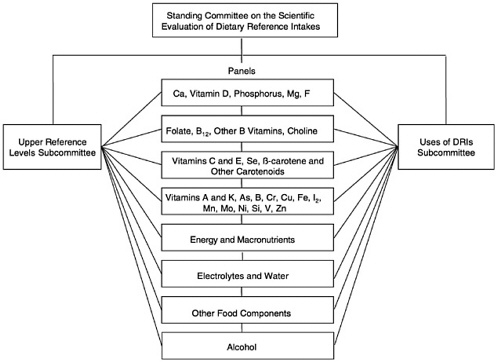
TABLE A-1 The 16 Life Stage Groups for Which Nutrient Recommendations Are Expressed a
|
Life Stage Groups |
|
|
Infants 0–6 mo 7–12 mo |
|
|
Children 1–3 y 4–8 y |
|
|
Males 9–13 y 14–18 y 19–30 y 31–50 y 51–70 y >70 y |
|
|
Females 9–13 y 14–18 y 19–30 y 31–50 y 51–70 y > 70 y |
|
|
Pregnancy ≤ 18 y 19–30 y 31–50 y |
|
|
Lactation ≤18 y 19–30 y 31–50 y |
|
|
a Differences will be indicated by gender when warranted by the data. |
|
TABLE A-2 Reference Heights and Weights for Children and Adults in the United Statesa
|
Gender |
Age |
Median Body Mass Index |
Reference Height cm (in) |
Reference Weightb kg (1b) |
|
Male, female |
2–6 mo |
– |
64 (25) |
7 (16) |
|
7–11 mo |
– |
72 (28) |
9 (20) |
|
|
1–3 y |
– |
91 (36) |
13 (29) |
|
|
4–8 y |
15.8 |
118 (46) |
22 (48) |
|
|
Male |
9–13 y |
18.5 |
147 (58) |
40 (88) |
|
14–18 y |
21.3 |
174 (68) |
64 (142) |
|
|
19–30 y |
24.4 |
176 (69) |
76 (166) |
|
|
Female |
9–13 y |
18.3 |
148 (58) |
40 (88) |
|
14–18 y |
21.3 |
163 (64) |
57 (125) |
|
|
19–30 y |
22.8 |
163 (64) |
61 (133) |
|
|
a Adapted from the Third National Health and Nutrition Examination Survey, 1988– 1994. Body mass index expressed as kg/m2. b Calculated from body mass index and height for ages 4 through 8 y and older. |
||||
The reference weights chosen for this report were based on NHANES III data because these are the most recent data available for either the United States or Canada. The most recent nationally representative data available for Canadians are from the 1970–1972 Nutrition Canada Survey (Demirjian, 1980).
Reference weights are used primarily when setting the Estimated Average Requirement (EAR), Adequate Intake (AI), or Tolerable Upper Intake Level (UL) for children or when relating the nutrient needs of adults to body weight. For the 4- through 8-year-old age group, it can be assumed that a small 4-year-old child will require less than a large 8-year-old. However, the RDA or AI for the 4- through 8-year-old age group should meet the needs of both.


