
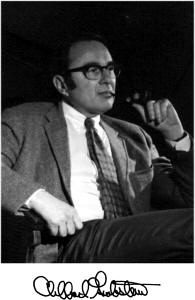
CLIFFORD GROBSTEIN
July 20, 1916–September 6, 1998
BY NORMAN K. WESSELLS
DISCS OF TRANSPARENT, exquisitely thin filters, branching embryonic salivary glands and kidneys, collagen fibers and extracellular glue—the artifacts of Clifford Grobstein's science. New science buildings for research and teaching, new ways to organize biological knowledge for teaching, reorganization of biological and medical institutions, and the recruitment of the first faculty to a new medical school—products of Clifford Grobstein as an academic leader and administrator. Development of public policy on assisted human reproduction, on recombinant DNA usage, and on other controversial topics where science and society meet—contributions of Clifford Grobstein as biomedical ethicist.
These diverse landmarks trace the career of Clifford Grobstein, regarded by many as the preeminent bridge between classical embryology and late twentieth-century developmental biology. Grobstein as scientist made the key discoveries that implicated extracellular materials as essential elements during embryonic induction processes. He made the startling observation that different developing cell populations from embryos could interact across membranous filters that prevented direct cell-to-cell contact. And, he defined the specificity rules for inductive interactions: which
combinations of epithelium and mesenchyme (the two kinds of interacting embryonic tissues) would result in morphogenesis or cellular differentiation. Those results, amplified over 40 years by new techniques and molecular biology, have established the importance of the extracellular materials and matrix, cell adhesion molecules, and extracellular enzymes that modify those materials in a variety of normal developmental processes, as well as in cancer metastasis, wound healing, and related biological processes.
Grobstein was a pioneering advocate in reorganizing the way contemporary biology is taught and how university life science departments are organized. His enormous intellectual capacity to think beyond his scientific discipline, coupled to a palpable integrity and trustworthiness, made him a successful builder and recruiter of faculty and programs in his universities and in a new medical school at the University of California, San Diego. Grobstein had a truly deep social conscience and awareness and brought his analytical and problem-solving skills to bear as a biomedical ethicist on pressing issues generated by scientific advances of the past 30 years, as he contributed wisdom and insight, no matter how complex or controversial the topic might be.1
Clifford Grobstein's career, interrupted near its start by the Second World War, is an odyssey of success in science and service to students and society that stretched from Bethesda (the National Cancer Institute) to Palo Alto (Stanford University) to La Jolla (the University of California, San Diego). Grobstein personifies the group of brilliant, creative American scientists who emerged from the Depression and war years, lived and worked in such marvelous communities and universities, and who transformed the sciences, our country's universities, and society itself.
GROWING UP—BRILLIANCE SEEN EARLY
Clifford Grobstein was born in New York City on July 20, 1916, the son of Aaron “Harry” Grobstein and Birdie Grobstein. Fern, a sister, and Richard, a brother, shared the family adventures that included two years in Colorado Springs as father Harry recuperated from tuberculosis. Cliff attended what would later become Bronx High School of Science, where at one point he tested above the “genius” level, prompting the principal to call in Birdie to inquire why Cliff was not doing better at school. Graduation was at the age of sixteen and enrollment at City College of New York followed. By his junior year Cliff had decided on biology and graduate school; it was the practice of many undergraduate biology majors, most of whom were destined for medical schools, to walk home with a particularly friendly CCNY professor to talk and obtain a letter of recommendation to medical school. When asked if that was what Grobstein wanted, Cliff responded, no, he wanted a letter for graduate school so that he could become a professor. The response was, “Well, that's fine, but you know there are only six Jewish biologists in the country and I'm one.” The letter and Cliff's credentials worked. He headed west for Berkeley, and on the way visited the University of California, Los Angeles (by that time his parents had moved to Los Angeles), where wind of his remarkable record had surfaced. He was induced to go there to work in endocrinology on the pituitary and hormones.
This early personal history reflects a process that transformed American science in the mid-century: highly intelligent, creative Jewish children in New York and other major cities became educated in science, and then in the postwar years joined the faculties of the major universities and research institutes. This changed the cultures of those places
even as the excellence of the new science brought Nobel Prizes, elections to learned societies, and other forms of recognition.
THE EARLY RESEARCH YEARS—BACKGROUND TO SUCCESS
The late 1930s witnessed many searches for experimental systems in which defined chemicals exerted clearly interpretable actions on whole embryos or other developing tissues. Clifford Grobstein's earliest published experiments, stemming from the UCLA graduate student days, focused on endocrine organs and, in particular, how the thyroid gland hormone, thyroxine, and androgens such as testosterone affected anal fin regeneration and morphogenesis in fishes. Here at the very start of his career were two of the ingredients central to his later seminal studies in mammals: diffusible causative agents and the process of morphogenesis, the phenomenon by which populations of cells form complex structures.
The hormone studies continued at Oregon State University in the zoology department and then were resumed after World War II at the National Cancer Institute in Bethesda. Aviation physiology was Cliff's wartime job and focus while he served in the U. S. Army Air Force between 1943 and 1946. He was in a small group of scientists identified by Detlev W. Bronk (then coordinator of research for the Office of the Air Surgeon and later president of Johns Hopkins University and Rockefeller University) that was in a special category of the military doing war-related research. During the late 1930s, early 1940s, and the first war years, Charles A. Lindbergh and others were undertaking the first flights above 40,000 and 50,000 feet, so it became important to the Allied war effort to discover how the human body reacted to high altitudes, oxygen deprivation, and the high G forces being experienced in the new fighter planes. Cliff
retained a lifelong passion for flying from those war days. During the 1970s and 1980s, he and his colleague and friend Harold J. Simon (professor and chief, Division of International Health and Cross-cultural Medicine, University of California, San Diego, Medical School) often flew in one of Mr. Piper's monoplanes along the La Jolla coast looking for whales or over the rugged hills around San Diego, enjoying the art of nature.
Beginning in 1948 Grobstein entered what I view as the real preparative years for his major research focus. He realized the importance of using simplified experimental systems rather than intact organisms or even embryos, and so employed intra-ocular grafts (a procedure in which the anterior chamber of the adult mouse eye is used as a culture chamber). Even that in vivo procedure presented problems in interpretation of results, so he explored various culture techniques. He also began to think hard about determination of embryonic cells, the process in which developing cells become committed or stable toward a subsequent developmental fate. He and his friend and collaborator Edgar Zwilling of Brandeis University observed different patterns of cell maturation when variously sized pieces of early chick embryo blastoderms were cultured. They carefully distinguished the difference between the determined state of a tissue and that of its component cells. What may appear to be a determination to form, say, neural tissue may lie more in the pattern of cell interactions than in the cells themselves. It is no surprise, therefore, to see in the same year as that work (1953) the four papers that established Grobstein 's eminent position in American biology.
THE CORE YEARS—ACTION AT A DISTANCE
Grobstein switched his research focus to mammalian embryos and to developing internal organs that had obvious,
easily identifiable forms of morphogenesis, namely, characteristic branching of sheets of cells called epithelia into hollow, tree-like structures. He recognized that in vitro culture methods were essential to study experimentally such organs. Next, he chose several organs to investigate because of earlier observations of E. Borghese in Italy, employed a number of the culture techniques of Honor B. Fell at the Strangeways Laboratory in Cambridge, England, and used enzyme solutions perfected by Aaron A. Moscona at the University of Chicago to separate the epithelial and mesenchymal components of the tiny organs. Cliff was always generous in recognizing and thanking these and other scientists for their discoveries and techniques that he used in his own research program.
Some major conclusions of the 1953 quartet are that epithelium of the embryonic mouse submandibular salivary gland will only carry out morphogenesis (branching) if it is in proximity to its own normal mesenchyme. Similarly, epithelium of the metanephric kidney requires its enveloping mesenchyme to branch. Furthermore, he found that there is specificity in the interaction between epithelial and mesenchymal cell populations, so that salivary mesenchyme will not support kidney morphogenesis or kidney mesenchyme salivary morphogenesis. Grobstein also discovered that not all systems are so specific in their requirements; for instance, kidney mesenchyme will respond to salivary epithelium by forming proper kidney tubules that, in an intact embryo, would become the tubular portion of nephrons (the sites where urine initially forms). Elegant, simple experimental design, employment of combinations of techniques in new ways, and parsimony of interpretation mark these early papers that brought new visual and analytical clarity to the process of organogenesis. These papers, more than any others,
began to establish the phenomenon of epithelio-mesenchymal interaction as a principle of development.2
Even more followed in that same year. Grobstein placed salivary epithelium on one side of a newly available kind of porous filter (special types of very thin Millipore filter) and mesenchyme cells on the other side, and behold, the epithelium branched! A few years later we knew that Moscona's enzyme procedures used to separate epithelium from mesenchyme really did remove 100% of the mesenchyme cells, as well as the collagen and basal lamina materials to which epithelial cells adhere. In 1953, before electron microscopy was used to view such developing systems, the induction of morphogenesis across a filter in the apparent absence of direct cell-to-cell contact surely implied the existence of diffusible causal agents, that is, “action at a distance.” The transfilter results in combination with the other 1953 papers were exciting indeed. A new door appeared to be opening for the investigation of embryonic induction. In the words of William Telfer,10 Grobstein's experiments “seemed to be getting mechanisms of induction down to an experimentally practical form.”
Experiments published by Grobstein over the following 17 years built on the 1953 foundation. A search for the kinds of extracellular materials involved in embryonic tissue interactions focused on collagen and glucosamine-containing polysaccharides, as well as investigation of effects of enzymes (as, collagenase) that degrade such materials. A collaboration at Stanford with electron microscopist Frances L. Kallman was particularly important to Cliff, and defined the ultrastructural features of cell interaction across Millipore filters, as well as the distribution of isotopically labeled materials as morphogenesis took place. Undergraduate research students, graduate students, postdoctoral fellows (the author was one of the first), and a stream of more senior
scientists worked with Grobstein at Stanford and later at the University of California, San Diego, to extend the Grobstein-type studies to a variety of embryonic systems. Similar such studies ensued in laboratories around the world. Skin, hair, teeth, mammary glands, pancreas, thyroid, cartilage—only a partial list of cases in which distinct cell populations interact to stimulate the morphogenesis of cell populations or the differentiation of component cells. Of course, advances in electron microscopy, molecular biology, and biochemistry occurred during those years, so that the sophistication of analysis and kind of experimental questions evolved dramatically. Grobstein's initial sets of questions and answers were the foundation, and a number continue to be cited prominently in literature as the millennium turns.
Two examples from the Grobstein laboratory give perspective on Cliff. In 1962 Cliff worked with Stanford undergraduate Nicholas Golosow and showed that the differentiation of mammalian pancreatic epithelial cells (ones that synthesize and secrete such digestive enzymes as amylase and trypsin) was dependent on the nearby mesenchyme cells. The following year William J. Rutter, a future member of the National Academy of Sciences, worked in Grobstein's laboratory along with me, an assistant professor in the department. Thus began a series of experiments that defined biochemically and ultrastructurally the earliest stages of cell differentiation of exocrine and endocrine pancreas. I still recall the long exchanges with Rutter, Grobstein, and our colleagues and how Grobstein was open to the importance and impact of developing and using the supersensitive assay procedures that Rutter, as biochemist, knew were essential if we were to understand the earliest stages of differentiation. Parenthetically, the student dishwasher and lab assistant for Rutter that year was undergraduate Edward E. Penhoet, later a graduate student with Rutter, professor of
biochemistry at the University of California, Berkeley, and co-founder with Rutter of the Chiron Corporation. It was no accident that such bright people gathered about Grobstein, and their subsequent successes remain as testimonies to the Grobstein impact.
A second thread of scientific history involves Merton R. Bernfield, a research fellow with Grobstein at the University of California, San Diego. After participating at the National Institutes of Health in early studies of the genetic code, Bernfield learned about tissue interactions from Grobstein and began to carry out detailed analysis of the biochemistry of the interface between interacting mesenchyme and epithelium. Later at Stanford Medical School and Harvard Medical School, Bernfield and his collaborators studied in unprecedented exactness the deposition and turnover of extracellular materials in the developing salivary glands pioneered by Grobstein. Included were the very first observations of localized effects in morphogenetic systems of what we call today matrix metalloproteases—enzymes that can degrade such substances as collagens, laminin, fibronectin, nidogen, and other stabilizing agents to which the integrin cell surface adhesion molecules of epithelial cells are linked. Others have extended these studies to developing mammary glands and other systems as a general explanation has emerged of the processes that Grobstein observed through a much more primitive lens in 1953.
SCIENTIST AS TEACHER
Cliff was, in the words of Michael Flower, “a superb teacher in both the classroom and laboratory. I arrived at Stanford as an undergraduate headed for a career in biochemistry. However, after the first meeting of Cliff's embryology class (“developmental biology” was not yet the name for this field) in which he introduced development by an accounting of
the cellular slime mold, I was hooked.”3 Superb organization, logical presentation, both the forest and the trees in useful measure, and the perspectives of a deep mind came across in those lectures as I recall them. In his laboratory, Cliff taught his postdocs, graduate students, and undergraduate research students one on one. Everyone was expected to learn and share in every phase of the day-to-day labor (for instance, by working in the mouse colony and identifying newly impregnated female mice early on lonely Sunday mornings) and the material infrastructure underpinning the laboratory and the experiments. Each of Cliff's students regularly met alone with him in his office to review research data, progress since the last meeting, and ideas about the next experiments. Getting ready for those meetings was serious and sometimes daunting business, for one could be quite sure that every stone would be turned and that all alternative explanations of experimental results would be chewed over before the next experiments were planned. Cliff let every student see that good science is hard intellectual work that must be pursued with utmost objectivity and integrity.
The weekly lab meetings were enlivened by the presence of so many fine visiting scientists who came to Bethesda, Palo Alto, or La Jolla to be with Cliff. E. Zwilling, L. Saxen, W. J. Rutter, F. H. Wilt, K. Kratochwill, W. H. Telfer, M. R. Bernfield, B. Unsworth, and many others came. Some of those visits spawned lifelong friendships; the Lauri Saxens from Helsinki and the Grobsteins from La Jolla were especially close. Some visitors worked closely with Cliff on tissue interactions and cell differentiation and morphogenesis. Others were free to pursue lines of experimentation they brought to the Stanford basement laboratory or ones that emerged in the conversations with Cliff. They all had experiences like those of Fred Wilt, professor at the University
of California, Berkeley: “My clearest and dearest memories of Cliff are those daily meetings, you (the author), he, and I had in the basement in Palo Alto. I don't know who made the coffee, but I think we three spent a lot of time in front of the blackboard in the hallway in very stimulating discussion about tissue interactions and other such matters. His personal generosity to me was just incredible, and I shall never forget it as he welcomed me to his lab, let me go my own wayward way, and supported me to the hilt in my attempt to learn something about how tissues do interact”4 (Wilt worked that year on interactions in blood islands of chick embryos). Every visitor participated in the personal meetings with Cliff and in the weekly lab discussions, where results, progress, and plans sank or swam after intense questioning and debate.
Grobstein's fundamental generosity and concern for the well-being of his students and scientific collaborators was reflected in the authorship of publications from his laboratory. Dozens of publications stemming from work in the Grobstein laboratory bear only the name of a graduate student, postdoctoral fellow, or senior visitor. Cliff added his name to a paper only when he knew that he had been a major contributor of ideas, hands-on experimentation, writing, and editing. He got real pleasure from seeing his younger associates establish their independence and careers, and knew that independent publication without the added name of a heavyweight in developmental biology would help that process.
AN IMPORTANT SIDE PATH—REORGANIZING BIOLOGY
Even as Grobstein and his associates were engaged in fruitful research, Cliff took time to help reshape the American biological community and its teaching. The early 1960s were, of course, a time of ferment and challenge in biology,
as new techniques and results from biochemistry, electron microscopy, and biochemical genetics began to force biologists to take new ideas and discoveries into account. Most university and college departments were organized around kinds of organisms—zoology, botany, microbiology —and the undergraduate curriculum each department offered focused on those animals or plants or microbes. Embryology, Grobstein's field, was just beginning to confront new views of cells and organelles and how genes might play roles in developing embryos. As Cliff recognized, the very character of the biological community would be changed by advances at the cell and molecular levels; the new cadre of scientists trained in physics, chemistry, and mathematics who were studying biological problems; and the vast increase in federal funding of biomedical research.
Grobstein took a leadership role in stimulating life scientists to think differently about their science. He was one of the key people espousing the new “levels of organization” approach to teaching undergraduates and, more importantly, to thinking about then contemporary biology. He articulated the need for a multilevel research approach and simultaneous study at molecular, cellular, and supra-cellular levels. He and David Goddard brought together a diverse group of talented researchers to write three volumes published by John Wiley & Sons: David Nanney and Herbert Stern on cell biology, Donald Kennedy and William Telfer on organismal biology, and Robert MacArthur and Joseph Connell on population biology. He proselytized by writing in The American Biology Teacher and American Scientist about the levels of organization approach and defined the concept of a core curriculum as the essential knowledge common to all subdivisions of a science. Cliff recognized that the old-time religion would be hard to overcome and that most college and university teachers would find it hard not
to teach what they learned when they were young. As a result, new material, to the extent it was covered at all, was being pushed into the upper-division advanced courses and was not incorporated as basic foundational material. In 1966, in a major presidential address before the American Society of Zoology, he said forthrightly that the biology of animals was no longer an optimal common interest for a scientific group (or professional society); the organism would be the better focus for that group, and the equivalent for the botanists et al. Unsettling words to the old-guard zoologists present! Even as he called for changes in the old, Cliff was helping to spawn the new: he was one of the early advocates and participants in the formation of the new Society for Cell Biology.
Cliff's experience in academic administration by that time (department chairman at both Stanford and at the University of California, San Diego, as will be described below) let him see firsthand how department structures were a key to adapting to the new kind of biology. It was only later, of course, that cell biology and structural biology departments would emerge from anatomy in medical schools, and that the terms “molecular biology” and “developmental biology” would assume special connotations and corresponding legitimacy in university organization and curricular content. Grobstein argued strongly that it was the responsibility of faculty in research-intensive universities to take the lead during the early and mid-1960s in defining these new levels of organization and patterns for teaching, and he argued that “joint performance of faculty in universities of research and teaching is nowhere more important than in defining the (new) core curriculum.” He called such activity a primary creative function of faculty.
Cliff's perceptiveness is nowhere better illustrated than in his arguments that combined approaches of research at
several levels would be required to crack some of the knottiest biological problems. To do this, members of these interacting sciences ought to share a common multilevel training, and he recognized that a person at any one level is no better equipped to formulate powerful, trans-level concepts, or to appreciate the need for them, than persons at other levels. These thoughts were prescient harbingers of what was to come in the following 30 years as molecular biologists, cell biologists, geneticists, physicists, and scientists from other disciplinary backgrounds teamed together for multifaceted investigations of the embryos and cells that were Cliff's main love in science.
A NATURAL CULMINATION—SCIENCE AND SOCIAL VALUES
Grobstein's administrative positions as department chairman and medical school dean, plus his involvement in science policy and advisory committees, necessarily diverted attention from laboratory science. Beginning in 1976 and continuing through the rest of his career, Cliff published a series of books, articles, and public commentaries in areas where science, ethics, and the public welfare interweave. Recombinant DNA policy and guidelines and the whole complex issue of in vitro fertilization, human embryos, and assisted reproduction were two topics he studied at length and which he could interpret cogently for the public.
The so-called self-policing by scientists of recombinant DNA procedures began with the Asilomar conference in 1973. Guidelines governing experiments with different levels of possible risk were promulgated by the National Institutes of Health in 1976; but the public debate continued to rage as some local governments entered the science policy area and some legitimate scientists expressed grave worries about untoward consequences of escaped engineered organisms. Grobstein 's lengthy, careful analysis published in
Scientific American (1976) provided a clear view of the way Cliff attacked complex controversial subjects. Scientific thoroughness and accuracy, fair presentation of different sides of issues, and balanced argumentation were his hallmarks. Most importantly, he took positions and recommended rational procedures that were practical, did not go beyond what was needed or could be delivered, and that safeguarded the public where safeguarding was warranted. Cliff's sensitivity to and understanding of the public 's uneasiness with science, which it does not understand, was extraordinary. Instead of expressing impatience, his effort was to educate and guide in a responsible way, for he saw in this case that genetic engineering was truly a momentous advance, one that marked a beginning of the “age of intervention” in biomedicine.
Typical of Cliff's service in Washington, D.C., was his chairmanship of the Committee on Diet, Nutrition, and Cancer, which in 1982 issued the first clear summary of the linkage between diet and cancer. The evidence that dietary fat intake increases the risk of breast, prostate, and colorectal cancers came from searching studies of worldwide data and provided compelling arguments that lifestyle, specifically diet, correlates with cancer incidence. Cliff was a voice of reason and authority, as such controversial conclusions contradicted the 1980 National Academy of Sciences' Food and Nutrition Board report and made the American Meat Institute and similar vested interests very unhappy. Cliff had faith that many people would respond to such information by changing their own behavior; his message was strong and simple: “What we eat does affect our chances of getting cancer, especially particular types of cancer. This is good news because it means that by controlling what we eat we may prevent such diet-sensitive cancers.”5
Grobstein's depth and breadth of understanding of mam-
malian development provided ideal perspective to the issues of in vitro human fertilization, defining “personhood” qualities of human embryos, assisted human reproduction, and abortion. Just a year after Louise Joy Brown, the first human born after fertilization of the human egg outside the mother's body, was born in 1978, Grobstein summarized the field and the practical, legal, and ethical issues it posed for society in another Scientific American article. He provided one of the deepest explorations of human personhood: just when does the developing human embryo go beyond being a developing group of cells, tissues, and organs, and attain a state that physicians, scientists, parents, the lay public, or our legal system call a human being? In 1985 Grobstein worked hard to stimulate the National Science Foundation to support a formal study of these aspects of human reproduction. The result was a series of articles and books addressed to the lay public, the medical research and practice communities, and the government and foundations involved in regulating or supporting such new science and medicine. Important ones were published with co-authors M. Flower (who, as an undergraduate research student with Grobstein at Stanford, had published on tissue induction problems) and J. Mendeloff and were addressed to the medical community in several papers, among which is one in the New England Journal of Medicine, which treats the vexing issues raised by the storage of frozen human embryos. What rights do such embryos attain, if any, since they could apparently be stored indefinitely, perhaps well beyond the reproductive capacity or even lifetime of the original parental donors of egg and sperm? Grobstein focused his scientific understanding and argumentative abilities on the new powers and processes that late twentieth-century science and medicine was giving to society, and which posed complex philosophical, ethical or practical
questions. All the papers and books are marked by specific recommendations —to scientists, to physicians, to the public and its representatives —for Cliff wanted to help solve these controversial questions, not just critique them. His attitude was stated succinctly in response to a charge that to ask science to define human life is a travesty: “Not only is it not a travesty, it is precisely what science should do to assist any public decision making that involves substantive scientific content.” The American Publisher's Association recognized the excellence of Cliff 's writing in these areas with its award for best publication of the year in 1989 for From Chance to Purpose, an Appraisal of External Human Fertilization.
ACADEMIC LEADER AND MEDIATOR
Grobstein's personal qualities as a large, room-filling presence and person marked him for leadership roles, but they would come only after several years as professor at Stanford University. During the late 1950s and early 1960s, it was the newly arrived easterners Charles Yanofsky from Western Reserve University and Cliff from the NIH who were shocked by how little concern there was among older department faculty about adding new faculty who could become outstanding researchers. Applicants for graduate study were selected on the basis of their teaching assistantship credentials, not on their interests in research or research careers. Yanofsky recalls that Cliff's was the strongest voice for change, as the two argued vigorously for different criteria for hiring and a refocusing of the Department of Biological Sciences toward strong research appointments to the faculty. This was the department, after all, where George Beadle and Edward Tatum had done their Nobel Prize experiments on genes and enzymes and where C. B. van Neil had elucidated the key chemical principles of photosynthesis. The
new kinds of biology made possible by advances in biochemistry, biophysics, and neurobiology were absent until Yanofsky and Grobstein worked hard to establish the concept that topflight young investigators using the new techniques could also be outstanding undergraduate and graduate teachers. Grobstein “deserves credit for pointing us in the right direction,” says Yanofsky about those times.6
Grobstein played an analogous role in the broader Stanford setting, where fractures were beginning to appear in the new center of excellence created by the recruitment of Arthur Kornberg, Paul Berg, Joshua Lederberg, David Hogness, Dale Kaiser, Yanofsky, Grobstein, and others. In the words of participant Melvin Cohn, who spent the rest of his career at the Salk Institute, Stanford's Garden of Eden was becoming a battlefield about who owned the apple tree. For instance, medical and premedical students revolted against the subject matter the new kinds of faculty were teaching. Two intransigent cultures were clashing on classic grounds, utilitarian-driven versus curiosity-driven research and teaching.
Cohn's description provides a perfect image of Grobstein: “It was at a faculty meeting where the collective creativity was failing to cope with the problem that I first met Cliff. He was a handsome figure as he reflectively chewed on his empty pipe. He dominated the meeting when he good-naturedly admonished us to stop defending self-serving values. One would think that a committee of remarkably ‘creative' people, a number of whom would be Nobel Prize winners, would have been able to cope, in a meaningful way, with this complex issue. ” Cohn continues, “Cliff immediately stood out as being special. He showed us by example that there is a difference between ‘creativity' and ‘intelligence.' The ability to manipulate objective knowledge in novel and unexpected ways (my definition of creativity) is
not equivalent to the ability to deal with moral and esthetic values in a Socratic way (my definition of intelligence). Everyone at the meeting was creative; Cliff, in addition, was intelligent. He was unique in that he brought a fresh understanding of human nature, as an evolved part of the biological world, to bear on his thinking about values.”7 Cohn goes on to remark that Cliff “had a quiet way of making you feel guilty about your irrationalities. He distinguished strongly between being erroneous (with which he could deal) and being irrational (with which he could not deal). At one faculty meeting he brusquely said to a colleague, “there is no way to refute an absurdity.”
Grobstein, as I knew him, was surely a curiosity-driven scientist and it was not easy for him to gradually shift focus and time from laboratory bench to desk and meeting room, as time after time he was asked to chair committees and negotiate crises. Cliff was truly excited by the new discoveries in developmental biology, and he recognized that this was an area of science whose time had come. Cliff also had a special sense of social responsibility as well as a gift for dealing with people, policy, and controversy. The administrative path began in a formal way when Cliff assumed the chairmanship of the biological sciences department at Stanford in 1963, where he soon played a pivotal role in convincing the university administration that expansion and modernization of the department on the main campus was critical to the future of the whole university. He recognized the importance of having a new laboratory home for the department and exploited the availability of federal funds by winning funding for construction of two new biology buildings for research and teaching. Just two years later, in 1965, Cliff moved to the University of California, San Diego, in La Jolla, where he became chairman of biology. The move from private to public higher education fit, I believe,
with Cliff's sympathy and support for widespread educational opportunity; and the move allowed him to be with Jonathan Singer, who had recently moved from Yale University to the new UCSD campus, and with Donald Helinski and others who gathered at that new university with so much potential before it. Those were times of faculty hiring and expansion and even more opportunity for Cliff, for in 1967 he became the dean of the School of Medicine and vice-chancellor of health sciences at UCSD just before the first medical school class matriculated. The appointment of a non-M.D. as medical school dean anywhere is controversial, and astonishment and no doubt some chagrin greeted the appointment that proved to be just right for the mid-1960s, as a self-consciously innovative institution emphasizing the sciences in medicine in both teaching and research was just getting going. Grobstein brought key vision and persuasive powers to bear as the new medical school took form and recruited its first faculty.
John Alksne, who was recruited to the medical school by Grobstein and is currently vice-chancellor for health sciences and dean sums up key issues: “Those were exhilarating times as the school's intellectual as well as structural foundations were being laid. He (Grobstein) was well suited to leading recruitment efforts that successfully attracted many eminent physicians and scientists from around the country to La Jolla, creating a medical school that remains committed to excellence in biomedical science as well as academics and clinical medicine.”8 Indeed, Cliff was at the center of the debates and planning that brought the strongest possible faculty in clinical medicine, in academic medicine, and in the basic medical sciences to the new campus. Here again was the possibility of the two-cultures problem, but one that could be muted or avoided as the new school was built. An institution strong in both medical and science
teaching and research was ideal for the place and time: the Salk Institute was emerging with great strengths, the biological components of the Scripps Institution of Oceanography just down the hill were getting stronger, and the new basic sciences on the UCSD campus were attracting fine young faculty in many disciplines. The training of physicians, physician-scientists, and Ph.D.'s in the basic biomedical sciences went on in an atmosphere that also created one of this country 's premier centers for biomedical research and development. That was not done at the expense of medical student well-being. The still skeptical component of the medical academic community looked on with awe and wonder, Harold Simon recalls, when UCSD's charter medical school class placed first in the nation on the basic science section of the National Board Examinations!
Just as Grobstein in the early 1960s had helped formulate and advance the levels-of-organization debate in the life sciences, he used his decanal pulpit to stimulate thinking about medical education. Beginning in 1970, a series of five papers published in such places as The Journal of Medical Education and The British Journal of Medical Education focused on the two-cultures issue, and more specifically on research, teaching, and curriculum in clinical and basic science departments of medical schools. Those were days when new medical schools were being started in the United States and when both new and old ones were being impacted by the early stages of the revolution in biomedical knowledge that continues ever faster today. Cliff used the UCSD Medical School as example, but really tried to help medical school faculty to think about what kinds of training could best help graduate physicians remain current during their careers as biomedical knowledge expands at unprecedented rates.
The practice of being a dean was Cliff's cup of tea. He
was at his best in recruiting senior faculty. His impeccable scientific credentials were an immediate source of respect. His integrity communicated itself to people, especially the ones immersed in the traumatic process of making career decisions and moves. Daniel Steinberg was chief of the Laboratory of Metabolism at the National Heart, Lung, and Blood Institute, where over several years on Saturday afternoons in the 1950s he and Grobstein had edited the newsletter of the Federation of American Scientists. When Steinberg walked into Grobstein's dean 's office in La Jolla in 1968, he recalls: “He was puffing on his pipe and, as usual looked very calm and reassuring. We discussed my ambivalence about basic medical science versus medical science and my desire to participate in the governance of this new venture if I were to come. Right then and there Cliff created a new position—program director for basic sciences in medicine—that would entitle me to a seat on the Council of Chairs. I was not actually a chair, but I could participate in the planning and growth of the place where I was going to be for the next 30 years. ”9 That kind of decisiveness and ability to act was Cliff at his best as administrator. Complementing it was Grobstein's insistence on exploring all sides of issues and policies, giving all the players opportunity to chime in before decisions were taken. In Melvin Cohn 's words, Cliff had a native ability to be fair even when it was not in his own interest, and that became the driving force that shaped his whole later career as leader and mediator.
Cliff's leadership and social conscience met several challenges during the deanship years. Just after addressing the entering charter class of medical students, Cliff asked the “affirmative action” question, then a new one on most campuses: Had any underrepresented minority group members enrolled or even been recruited? The negative response to both queries by Harold Simon led to an immediate deci-
sion by Cliff that necessary and appropriate efforts would be undertaken at once.10 Much hard work, failure, and success ensued, some involving intense efforts by Ruth Grobstein; the result was that the UCSD Medical School, along with those at the University of California, San Francisco, and Stanford became national leaders in attracting minority and women candidates. In this case, and in leading toward useful dialogue rather than confrontation and the thwarting of concerns of students and faculty about Viet Nam, Grobstein demonstrated the marriage of values, knowledge of human behavior, and how to lead that so marked him as special.
THE PRIVATE MAN AND PUBLIC RECOGNITION
Grobstein's children, Paul (subsequently chairman of biology at Bryn Mayr College) and Joan (subsequently a practicing physician in Philadelphia), were born during the NIH years and grew up with Cliff and his wife, Rose Grobstein, in the Stanford campus home. Rose was a handsome, warm, and gracious person who had a successful career as a social worker. Neighbors of the Grobsteins were Joshua and Esther Lederberg and Victor C. and Florence Twitty, he a member of the National Academy of Sciences, leading amphibian embryologist, and chairman of biological sciences who had recruited Cliff to Stanford. The Grobstein home was a welcoming place for students and lab visitors. Many a weekend trip to Bean Hollow or Pescadero, nearby ocean beaches, for mussel collecting on the low tide ended with Gibsons and wine and steaming mussels and intense, noisy conversations for hours in the jammed Grobstein living room. Every senior lab visitor had experiences like the Wilts, newly arrived from the Midwest: “Almost the first day we headed up to San Francisco for a meal. He drove like a bat out of Hell, wind whipping us as we careened in his oversized convertible to the city. We (Grobsteins, Wessells, and Wilts)
ended up at La Pantera on North Grant, where Cliff held forth in fine fettle.” Indeed, “fine fettle” describes perfectly Cliff in so many of his social situations and actions. Palo Alto Sunday mornings for Cliff were spent on the doubles tennis court with Yanofsky, Donald Helinski, and the author—there Cliff's competitiveness was fierce but always in bounds, as he ran and sweated and reveled in the California sun.
Grobstein's new life in La Jolla beginning in the mid-1960s was shared with Ruth Grobstein, M.D. and Ph.D., and stepdaughters, Sandy Wilbur, Beth Beloff, and Robin Beloff-Wachsberg, all of whom were exceptionally close to him. Ruth Grobstein was the first Ph.D. student of J. P. Trinkaus at Yale University. In New Haven, Ruth and Jon Singer had done the first experiment using an electron-dense agent, ferritin, to trace the localization of a molecule inside cells with the electron microscope. She was to become the founding head of radiation oncology and a founder and interim director of the Ida M. and Cecil Green Cancer Center at the Scripps Clinic in La Jolla. Those accomplishments were a huge source of pride to Cliff, and the two professionals approaching the apices of their careers were perfect helpmates. Embracing warmth, intensity of involvement in social and medical and scientific issues, and savoring enjoyment of life at its fullest—those phrases describe the Grobsteins during their 32 years in La Jolla.
Scientific and professional recognitions for Grobstein marked the La Jolla years. When elected to the National Academy of Sciences in 1966 at the age of forty-nine, Cliff was its youngest member. Election to the National Academy of Medicine and the American Academy of Arts and Sciences followed, as did scientific honors with the award of the Brachet Medal by the Belgium Royal Society (named for Jean Brachet, the distinguished chemical embryologist)
and the Anniversary Medal from his undergraduate institution, City College of New York. He served as president of the Society for Developmental Biology and the American Society of Zoologists, those elected offices reflecting the high esteem of his peers in science. Membership on editorial boards, on literally dozens of committees of the National Academy of Sciences, NIH, National Science Foundation, and the Institute of Medicine, and service to various foundations filled many hours, involved innumerable flights across the country, and were generous uses of Grobstein's special insights and wisdom. In the years after the medical deanship, Grobstein served as professor of biological science and public policy at UCSD, and it was, of course, during those years that Cliff's engagement with science, policy, and public welfare produced the stream of papers and books that culminated his career.
Clifford Grobstein died following a long illness in La Jolla on Sunday, September 6, 1998, at the age of eighty-two.
A FULL LIFE SUMMED UP
Clifford Grobstein was a leading American developmental biologist of the last half of the twentieth century who defined the basic rules of the tissue interactions that support development—cell differentiation and morphogenesis—in embryos of mammals (and we know today all vertebrates). The roles of extracellular materials and matrix during such development and the ability of different cell populations (epithelial and mesenchymal) to interact at a distance are landmark findings that have stimulated and guided experimentation worldwide as deeper understanding of development in embryos and developmental phenomena in adults has been gained.
Grobstein's intelligence and creativity were coupled to generosity toward students and scientific colleagues and af-
fected deeply many people and their careers. Capacities to lead effectively and to bring wisdom and judgment to bear on complex, often controversial problems marked Grobstein's years as successful medical school dean, department chairman, and public servant. Warmth and humor, penetrating insights into human behavior, and fundamental concern for the well-being of others and of our society marked Clifford Grobstein as a very special human being, remembered with affection by so many who knew him.
I THANK DONALD KENNEDY, Charles Yanofsky, Melvin Cohn, Daniel Steinberg, Harold J. Simon, Fred H. Wilt, William H. Telfer, Mary Telfer, and Michael Flower for their aid in preparing this biography. They serve history well and honor Clifford Grobstein by sharing their memories. Ruth Grobstein more than anyone has provided insights, details of early life, and unique perspectives on her beloved husband.
NOTES
1. R. C. Dynes. Scientist and policy expert Clifford Grobstein dies at age 82.
2. W. H. Telfer and M. Telfer. Personal communication.
3. M. Flower. Personal communication.
4. F. H. Wilt. Personal communication.
5. C. Grobstein quoted in “Research News,” Science 217(1982):36-37
6. C. Yanofsky. Personal communication.
7. M. Cohn, 1998. Clifford Grobstein: In memoriam, the Stanford years
8. J. Alksne: Scientist and policy expert Clifford Grobstein dies at age 82.
9. D. Steinberg. Personal communication.
10. H.J. Simon. To Clifford Grobstein, a tribute of memories.
SELECTED BIBLIOGRAPHY
1953
Analysis in vitro of the early organization of the rudiment of the mouse sub-mandibular gland. J. Morphology 93:19-44.
Inductive epithelio-mesenchymal interaction in cultured organ rudiments of the mouse. Science 118:52-55.
Epithelio-mesenchymal specificity in the morphogenesis of mouse sub-mandibular rudiments in vitro. J. Exp. Zool. 124:383-414.
Morphogenetic interaction between embryonic mouse tissues separated by a membrane filter. Nature 172:869.
1955
Tissue interaction in the morphogenesis of mouse embryonic rudiments in vitro. In Aspects of Synthesis and Order in Growth, ed. D. Rudnick, pp. 233-56. Princeton, N.J.:Princeton University Press.
Inductive interaction in the development of the mouse metanephros J. Exp. Zool. 130:319-40.
1957
With A. J. Dalton.Kidney tubule induction in mouse metanephric mesenchyme without cytoplasmic contact. J. Exp. Zool. 135:57-74.
1959
Differentiation of vertebrate cells. In The Cell,eds. J. Brachet and A. Mirsky, pp. 437-96. New York:Academic Press.
1961
Levels and ontogeny. Am. Sci. 50:46-58.
1964
Cytodifferentiation and its control. Science 143:643-50.
With W. J. Rutter and N. K. Wessells.Control of specific synthesis in the developing pancreas. National Cancer Institute Monograph 13, pp. 51-65.
1965
With F. Kallman.Source of collagen at epithelio-mesenchymal interfaces during inductive interaction. Dev. Biol. 11:169-83.
With J. Cohen.Effect of collagenase on the morphogenesis of embryonic salivary epithelium in vitro. Science 150:626-78.
1966
New patterns in the organization of biology. Am. Zool. 6:621-26.
Defining the core of a science. Am. Biol. Teach. 28:804-808.
1970
Toward fully university-based health professional schools. J. Med. Educ. 45:684-88 and Int. Med. Dig.86:261-63.
1972
University of California, San Diego, School of Medicine.In Case Histories of Ten New Medical Schools, eds.V. W. Lippard and E. Purcell, pp. 85-110. New York:Josiah Macy Foundation.
1974
The Strategy of Life. 2nd ed. San Francisco:W. H. Freeman & Co.
1975
Developmental role of intercellular matrix: Retrospective and prospective In Extracellular Matrix Influences on Gene Expression. New York:Academic Press.
1976
Recombinant DNA research: Beyond the NIH guidelines. Science 194:1133-35. Also Sci. Am. 237:22-33.
1979
A Double Image of the Double Helix. San Francisco:W. H. Freeman & Co.
External human fertilization. Sci. Am. 240(6):57-67.
1983
With M. Flower and J. Mendeloff.External human fertilization: An evaluation of policy. Science 222:127-33.
1985
With M. Flower and J. Mendeloff.Frozen embryos: Policy issues. N. Engl. J. Med. 312(24):1584-88.
1988
Biological characteristics of the preembryo. Ann. N. Y. Acad. Sci. 541:346-48.
Science and the Unborn. New York:Basic Books.
From Chance to Purpose, an Appraisal of External Human Fertilization. Menlo Park, Calif.:Addison Wesley.


