
6
The Itinerant Chemist—Where Will the Jobs Be in 2020?
Alvin L. Kwiram
University of Washington
This commitment to the promotion of human resources and their mobility is based on the idea that because of the increasing complexity and interdependence of modern science, scientists will increasingly need a strong international component as part of their scientific pedigree. There is no good reason to believe that such a high level of scientific pedigree can only be obtained in the United States. Investing into the development of human resources in science and for science by promoting their mobility is insofar an essential contribution to the European Research Area [emphasis added].
—The European Commission, Research Directorate General, Sixth Framework Program
WORKFORCE
This statement, both a vision and a challenge, bears directly on the topic of this workshop. It will be touched on again later, but first the larger context of workforce is addressed.
Workforce requirements are a perennial topic, and rightly so. Most workshop participants are involved in one way or another in producing students in the university or hiring them in industry, government, or academia. Understanding future needs for graduates in the sciences in general and in chemistry and chemical engineering in particular is very important. There are several dimensions to the workforce problem:
-
the ability of industry to hire the people it needs to remain competitive;
-
the importance of maintaining some balance in supply and demand:
-
employers want a large supply in order to have the best choices,
-
producers want a large supply because this feeds their programs, and
-
employees want a small supply because that drives up wages;
-
-
the importance of giving students a realistic sense of job opportunities and career paths (it is generally agreed that academe does not do a good job in this);
-
the importance of adjusting academic curricula to adapt to changing societal needs (industry is not impressed with academe’s record here); and
-
the importance at the federal level of funding directions and policy decisions.
During the last two decades, there have been three major flare-ups on the topic of workforce needs and what the nature of workforce training should be. There was extensive coverage and discussion in the late 1980s of the huge impending shortage of scientists and engineers (Atkinson, 1990; Bowen and Sosa, 1989; NSF, 1989). It was most visible in the National Science Foundation (NSF) report predicting a shortage of a half-million or more science and engineering employees within the decade. Some were skeptical and questioned the feasibility of adequately predicting future workforce needs.
These reports soon gave workforce prediction studies a bad name even though there were some good data in them. In part, the analysis just reflected the “groupthink” of the community at that time, coupled with typical linear extrapolations about the future.
This is an edited transcript of speaker and discussion remarks at the workshop. The discussions were edited and organized around major themes to provide a more readable summary.
Things quieted down in the early 1990s until physicists began to notice a serious problem with employment opportunities for their graduates after the end of the Cold War. They also saw evidence, to their chagrin, that their decades-long hegemony in the science policy arena might not go on forever. David Goodstein, of the California Institute of Technology, did the community a great service by pointing out that unrestrained production of Ph.D. physicists who all wanted to be faculty at “Research I” universities would lead to serious disappointment (Goodstein, 1994). Unfortunately, academic pundits made wild extrapolations from his analyses and groupthink went overboard in the opposite direction.
There was an American Association for the Advancement of Science symposium titled “Whither Research Intensive Universities” in 1996 when this topic was actively being discussed. Most of the speakers at that symposium were in favor of seriously reducing Ph.D. production. However, others (including me) argued that reducing Ph.D. production should be viewed with caution. One of the points was that in the future there could be a reverse brain drain as the developing economies picked up steam and began to import scientific talent to be competitive in the modern knowledge-based economy. That trend is now beginning. It was also argued that to understand long-term trends in workforce requirements, one had to consider historical context.
During World War II, the United States and its allies prevailed, and the rest of the world’s economic base was essentially destroyed. In the boom years after the war, the United States was in an almost monopolistic position to benefit from the enormous demands for new products and materials to help the rest of the world rebuild. Consequently, there was enormous growth in the economy, and many in the United States began to believe that this growth occurred because of the country’s great business sense, work ethic, special intellectual horsepower, and entrepreneurial spirit. In fact, all of these things were important, but success was in large part an artifact of the world situation.
Today, that world is changing with surprising speed. Look at what Japan has achieved in the automobile industry, what Japan and Korea have achieved in the semiconductor industry, and what China is doing in the manufacturing sector. Indeed, even this country’s pride and joy, research, is increasingly farmed out to other countries. The best-known example is the software industry: India has become a major supplier to U.S. corporations. Equally well known is the work in chemical synthesis that is increasingly shipped off to Eastern Europe, Russia, and other nations. As recently as a year ago, a representative of Hewlett Packard (HP) essentially said that it is too hard to work with U.S. universities and HP would simply go overseas to get its research done because it could control the intellectual property, pay after the work was done and only if it liked the results, and pay very little for the service. This strategy might seem somewhat unpalatable to U.S. observers, but it suggests that the nature of the trends has to be better understood especially in terms of what they mean for the national economy and the academic enterprise.
Another more recent example of the workforce discussion centered on the information technology (IT) explosion in the late 1990s, which was exacerbated by the Y2K problem. Projections during this period suggested the need for nearly one million new IT workers in the next five years. Needless to say, the year 2000 came and went, and today programmers are having a hard time finding work. Nonetheless, IT jobs will continue to grow, and the need for people with this expertise seems to have no end in sight. In other words, we have to keep a balanced perspective when projecting workforce needs.
OBSERVABLE EMPLOYMENT TRENDS
Some long-term observable trends should concern us: the decline of strategic research in industry (the most notable example is the dismantling of the formerly superb Bell Labs), the decline of the traditional chemical industry in the United States, the decline of manufacturing jobs in general in the United States, the growing trend of shipping even R&D offshore, and the growing competition internationally.
It is clear that companies have a hard time justifying fundamental research to their shareholders—in part because it is difficult to demonstrate convincingly that the “curiosity-driven” discoveries that scientists make are going to lead to new products. That factor, combined with other forces, influenced companies to jettison not only fundamental research but also, inexplicably, strategic research. It is hard to see how in the long run a company can be competitive without a reasonable strategic research arm. If for no other reason, it seems that in-house expertise would be needed to recognize when an important new discovery is relevant to the future of the enterprise.
When Bill Gates announced the creation of a strategic research arm of Microsoft a few years ago, which is now funded at about $500 million a year, he felt compelled to argue (as reported in the New York Times) that this was a justified and prudent investment by the company. The fact is that the Microsoft strategy was recognized as an anomaly on the U.S. industrial landscape. The present de-emphasis on corporate research is neither wise nor constructive for the U.S. economy, but there might not be any substantial reversal in this behavior. If there is not, it can be expected that employment opportunities, especially for Ph.D. chemists, will continue to decline (except in the biosciences; see below).
There is an equally worrisome challenge: the gradual loss of the traditional chemical enterprises in the United States. For many years the United States was one of the top exporters of chemicals, with trade surpluses of $15 billion or more. In 2000, the balance of trade in chemicals dropped to essentially zero. Estimates for 2003 show a trade deficit of about $8.9 billion, and there is no evidence to suggest that will ever get back to its former levels (Storck, 2004).
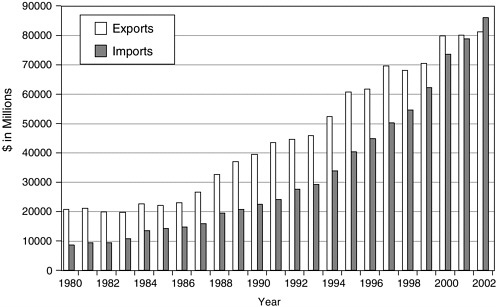
FIGURE 6.1 U.S. imports and exports over time. SOURCE: American Chemistry Council.
It may be worth examining this situation in a bit more detail on the basis of data generously provided by Kevin Swift, of the American Chemistry Council. Exports have not dropped dramatically, as seen in Figure 6.1. On the contrary, they have continued to grow. However, imports have grown more.
The purchasing of basic chemicals, basic industrial chemicals, fertilizers, and consumer products has remained more or less flat after factoring in inflation, despite the strongest economic growth in several decades. Why have exports grown at all? Specialty chemicals and life sciences have roughly tripled in the last 15 years or so, as seen in Figure 6.2. The contrast with the traditional chemicals sector is striking.
Even though traditional commodity chemical production will continue to decline in the United States, there is a good chance that the United States will remain strong in the biosciences arena for the foreseeable future. However, if this is the trend, it seems to suggest that the emphasis in undergraduate and graduate programs and faculty appointments in chemistry departments should all be reevaluated. Nevertheless, just as the rest of the world has caught up with the United States in the traditional fields (physical sciences, engineering, etc.) it will not be long until they are serious competitors in the biosciences. Other countries are making huge investments and are committed to being serious competitors in these sectors in 10 to 20 years. Obviously, not all will succeed, but this determined onslaught should not be ignored.
Unless substantial steps are taken to bolster the U.S. position scientifically and economically, there will continue to be a relative decline in employment of chemists (except in
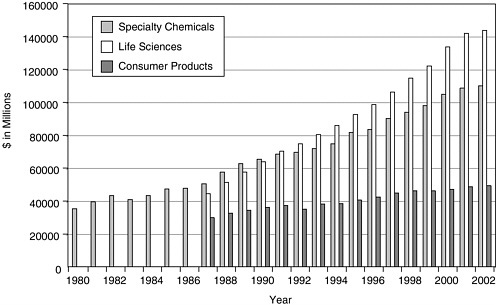
FIGURE 6.2 Purchase of chemicals. SOURCE: American Chemistry Council.
the biosciences). Of course, it might not be a serious problem inasmuch as fewer of the best and brightest are choosing to make the Ph.D. journey in the physical sciences in any case, and a large fraction of Ph.D. students in the sciences and engineering are foreign born. If those students return to their own countries or do not come to the United States in the first place, the problem may be conveniently solved.
EDUCATION REFORM
The size of the workforce is one of the major issues in graduate education; a second is the nature of graduate education and its character. The Carnegie Foundation recently launched a major program called the Carnegie Initiative on the Doctorate. It has chosen six disciplines in which it hopes to encourage serious experimentation in reforming the doctoral program. In each field, two or three persons have been asked to write a provocative white paper to help to catalyze a conversation and stimulate the thinking of the participating institutions. In chemistry, the three invited white papers were written by Ron Breslow, Angelica Stacy, and me. My recommendations fall into two broad categories: functional reform and structural reform.
Functional Improvements
Functional improvements, or “enhancements,” essentially represent the development of a more-complete repertoire of professional skills. Here is a list of elements that may be appropriate for our graduate students’ training:
-
more training in patent law;
-
improved communication skills, both written and oral;
-
early introduction to the nature of a career in industry;
-
learning to work in teams;
-
counteracting the tendency toward increasingly narrow training;
-
developing an appreciation for economic factors in an industry setting;
-
greater emphasis on safety training;
-
the need for instruction on human behavior and personal interactions;
-
an emphasis on strategies for research planning; and
-
greater faculty attention to their mentoring role.
This list may look familiar; it was compiled from a 1947 American Chemical Society study based on Committee on Professional Relations surveys of chemistry department chairs, recent graduates who had taken jobs in industry, and directors of research in industry. The concerns identified more than 50 years ago have a striking similarity to those identified in the most recent discussions of problems with the chemistry Ph.D.
No one would dispute that these are worthy topics, but the likelihood that any departments will take action to include such instruction is very low, not only because there is little time or interest to give these matters serious attention, but especially because it would distract from so-called “more-important” endeavors.
Structural Improvements
The second category is structural, and it in turn has two parts. First, the time needed to get a Ph.D. has gotten far too long. In 2001, the median number of years between award of bachelor’s and award of doctoral to doctoral degree was 7.0 years in the physical sciences, 8.1 years in the biological sciences, and 8.4 years in engineering (National Science Board, 2004). The situation has several adverse features. It tends to discourage some bright students from entering the program because of the long delay in obtaining a degree. It also reduces the “window of creativity” because students often do not become independent scientists until their mid-30s. It sometimes constitutes an exploitation of the student for the benefit of the program. It reduces opportunity for other students, both in access to programs and in access to financial resources. Other avenues will develop to train people for the workforce, as evidenced by the growth in certification programs and the renewed interest in the professional master’s degree. At a time when there is a systematic and long-term decline in the number of U.S. citizens entering doctoral programs in the sciences, it is imperative that programs be reexamined. It is more and more difficult to be competitive for the best and brightest who perceive that the time to degree (and even time to career) in medicine, law, and business is much more predictable, and shorter, and the outcome financially more rewarding.
Some will argue that science today is complicated and that students therefore need more time to have a chance to make an original contribution. In that case, U.S. science must be much more complex than European science—the Ph.D. is a three-year degree in the United Kingdom and it is only slightly longer in Germany. (One has to recognize, of course, that undergraduate training in Europe is more focused on the discipline, and this is one factor in the shorter time to degree.) There is no good excuse for the long time it takes to obtain a Ph.D. in this country. In part, the lengthening time to degree is driven by increasing competitive pressures and the nature of the funding structure at the federal level.
The second part of the structural category is less global because it is limited to those who are going to seek academic jobs. Our doctoral programs have inexcusably failed to provide those aspiring to university teaching and research careers with the tools that they need for these roles. Indeed, it should be considered an outrage that someone starting as an assistant professor has had virtually no systematic preparation for the job. The entire period of seven to ten years of postbaccalaureate training is essentially an intensive
research-focused activity. Then, suddenly, the newly minted Ph.D. is expected to take on major responsibilities in an academic setting. There are many responsibilities beyond carrying out research that many Ph.D. graduates are not prepared for.
INTERNATIONAL EXPERIENCE
A broader international outlook and experience are especially relevant in view of the earlier discussion on trends in workforce needs in the United States. If there are going to be fewer job opportunities of the traditional variety in industry in the United States in the coming decades, graduates may have to be prepared to look elsewhere. In a discipline in which nearly two-thirds of the bachelor’s graduates and roughly one-third of the doctoral candidates have historically gone on to work in industry, this trend deserves serious attention.
What might it mean for students? It would not be surprising, 25 years from now, to find many U.S. Ph.D. graduates working in other countries (whether for U.S. or foreign companies or for research institutions). The flow of talent from other lands to the United States could very well reverse, and the best and brightest from the United States will be hired by major corporations and academic institutions abroad or at least be expected to spend considerable time abroad. They will become itinerant chemists. Other nations have awakened to the fact that the economy of the future is the knowledge-based economy and that brains and education are the raw material, for that economy.
Students in the United States, especially at the Ph.D. level, need to be prepared to become part of the global workforce and be better prepared to seek their fortune in foreign settings, at least for part of their career. This, of course, will not always be comfortable or easy. U.S. students often take for granted what others who are foreign born struggle with daily. They do not have nearly enough sympathy for foreign students and the challenges they face. More time and energy should be spent in educating U.S.-born students about these challenges. Our guests have taken huge risks and made major sacrifices to come here to study and to contribute to this society. They should be treated with the respect and the support that one day U.S. students will, I hope, be accorded when they are in a strange culture trying to make their way economically and culturally. There is nothing so debilitating as the inability to be articulate on topics of interest in another country because of a language barrier. No matter how smart someone might be, without the proper language skills it is easy to be seen as limited in capacity.
Even if everyone agrees that doctoral students should be given a more international outlook, how can this be achieved? One obvious answer is to encourage them to take an international postdoctoral position. That is not always seen as an attractive option. There are language barriers, family considerations, questions about how it might affect competitiveness for a U.S.-based job, lack of information about the opportunities, and questions about the quality. Consequently, not many students choose to take advantage of such opportunities; they should be encouraged.
For the last few years, the University of Washington has been involved in an initiative to try to address the problem at a very modest level by participation in the Worldwide University Network (WUN). This initiative was spearheaded by the vice chancellors of four U.K. universities: Sheffield, York, Southampton, and Leeds. The key idea was to create a worldwide network of major research institutions to promote research collaboration, e-learning, and graduate student and researcher exchanges. The initial idea was to have five institutions on each of the major continents of the world serve as the core administrative group. The hope was that corporate interest in the potential intellectual property and the e-learning resources might be the source of financing for this effort. Unfortunately, that was not realistic and has not panned out. However, after three years, there is a surprising amount of activity.
Initially, several broad fields were selected to try to identify potential opportunities for collaboration: geography of the new economy, public policy and management, materials science and nanotechnology, and biomedical informatics. Others areas have begun to emerge, including wireless communication, nursing, marine and ocean sciences, and fuel cells.
E-learning has had the most visible activity. The United Kingdom has been motivated to be an active participant in the anticipated worldwide explosion of the e-learning business. Hence, the e-university program was launched by the U.K. government, which earmarked 100 million pounds (as of 5-10-04, 1 British pound was equal to 1.77 U.S. dollars) to promote the development of a wide array of e-learning modules. The WUN was ideally positioned to respond to that funding opportunity and promptly won a $1 million award for a public policy and management program at the master’s degree level and another $1 million for a bioinformatics master’s.
In each case U.S. partner institutions have been participants. Because all of the funding was from the United Kingdom and because the U.K. government put fairly tight intellectual property constraints on the products, this has not been as effective as it might have been. Had there been comparable funding from the United States, it might have been possible to ensure that these courses and later courses yet to be developed could be made widely available and used broadly by individual institutions in their own branded degree programs. There is still a chance to move in that direction, but the lack of any U.S. funding is a serious impediment.
With respect to research and student exchanges, the results are a bit more mixed, in part because of national and institutional “silos.” It takes effort and time to build relation-
ships, and money is required. The only source of support is the individual institutions that feel that this is an important investment. To make such collaboration truly attractive, there has to be some incentive, such as more financial support for the research. Again, there are virtually no mechanisms for this. A prime example of the problem in the United States is the failure to achieve serious collaboration between national laboratories and universities because there are no funding sources to support it. Likewise, although many thoughtful observers might argue that international collaboration is important—and indeed the National Science Board (NSB) declared so for NSF—there are hardly any formal programs (apart from modest grant supplement or travel programs) whereby investigators can seek such funding.
There are a few exceptions. The National Institutes of Health (NIH) Fogarty program is a venerable example. NSF has recently sponsored a joint effort with the U.K. Joint Information Systems Committee (JISC) program. NSF was urged to expand the Integrative Graduate Education and Research Traineeship (IGERT) Program by providing supplements to encourage international exchange of students, and it is now doing this. More recently, the European Union (EU) has launched Framework VI. In this new 5-year plan, the European Union provides an opportunity for the first time to fund researchers in the United States who participate with EU partners. Indeed, there are excellent opportunities for graduate students, postdoctoral scientists, and faculty to receive funding to work in the European Union on collaborative projects. It may be worth while, as a part of the NSB directive, for NSF to work constructively with the United Kingdom and the European Union to find appropriate programs whereby joint research efforts could yield important benefits, but a separate pot of money has to be earmarked for international collaboration or it may not work. The overhead for the individual principal investigator (PI) is just too high to try to do this on a shoestring, especially because PIs are already too stressed out.
The student exchange program has also been active. In just over two years, about 150 students have spent a couple of months on the average at an international site. The University of Washington has the largest number of U.K. students visiting in the United States, but it has been the least successful in sending students to the United Kingdom.
COLLABORATION
People and policy makers are beginning to look at the issue of international collaboration with new interest and to talk about implementing new initiatives. There is, however, an unspoken underlying concern that tends to weaken the commitment: Is collaboration a good idea? Maybe the best ideas will be stolen, maybe this will just help to develop the competition more quickly, or maybe it is less efficient than simply focusing on local programs. The inverse is also true in each case. Very good science is going on around the world, and although at a macroscopic scale there is significant advantage in the United States, at the level of an individual research group the advantage often disappears or even goes over to the other side.
A far more fundamental issue has to be thought about in new ways, especially in view of the fact that the United States is entering a period of severe financial difficulty, given the explosive deficits and long-term problems with the economy. Global challenges of huge dimensions require a more concerted and aggressive approach. It is not acceptable for us to fumble around erratically with piecemeal approaches, because the security and survival of the country are at stake. Even with the most effective worldwide collaboration imaginable, the United States will be severely tested to meet the challenges of global health, sustainable energy resources, protection of the environment, and global climate change in a timely manner.
In a recent talk in Seattle, the former head of the National Cancer Institute and now global health director for the Gates Foundation, Richard Klausner, pointed out that 90 percent of the health resources are spent on 10 percent of the world’s population. What is even worse is that people in the United States can afford to be complacent and sloppy in medical methods because there is the wealth to do follow-up tests and have repeat visits to physicians’ offices. He argued that this should not be tolerated. Demands should be made for the kinds of tests that can be done once and with a high degree of definitiveness. Thinking about how to address the needs of Third World countries, where tests have to be cheap and accurate, may improve health care in the United States.
A serious public conversation concerning our ambivalence about cooperation is long overdue. This issue needs to be deliberated at the highest levels of government because there are policies currently that are not conducive to collaboration. Should there be collaboration or isolation? If it is believed that the United States is well in the lead and can dominate the rest of the world in science as well as defense, maybe the country can afford to work alone.
CONCLUSION
In conclusion, there is a serious decline in manufacturing activity in the United States. Every state has experienced it. It is argued that manufacturing is being displaced by a service industry, which is expected in a knowledge-based economy. However, the assumptions that underlie that argument should be questioned seriously. Much of current U.S. trade policy focuses on reducing trade barriers and tariffs. This is of great importance to major corporations. It also means that it is easier for them to send production and R&D offshore. Is this trend in the national interest? If it is not, who is minding the store? What is the long-term prospect for the U.S. economy, to say nothing of defense, if most of the major manufacturing sectors shrivel up in the United States? Maybe it can be tolerated in textiles and even automobiles,
but how about semiconductors, telecom, IT, and aerospace? If manufacturing and then R&D continue to decline, what will the service industries service? This nation is going to be in for some difficult times unless there is a much more public and spirited debate about the future of the economy. It is not enough just to mention the platitudes about how the classic market works and how this should be expected in a knowledge-based economy.
It is highly likely that the chemical industry will also experience continued pressure and relative decline with the rest of the manufacturing economy and that jobs in general will become less abundant in relative terms. Thus, it is necessary to take a serious look at how this country positions itself and its students to become members of a global community, because that is where a goodly number of them will be working in the latter half of this century. If this premise is correct, there has to be substantially more public debate at the national level on what the trends mean for the future of this nation.
REFERENCES
Atkinson, R. 1990. Supply and demand for scientists and engineers: A national crisis in the making., Science April 27: 425.
Bowen, W.A. and J.A. Sosa. 1989. Prospects for Faculty in the Arts and Sciences: A Study of Factors Affecting Demand and Supply. Princeton, NJ: Princeton University Press.
Goodstein, D. 1994. The Big Crunch, NCAR48 Symposium, Portland, OR. September 19.
National Science Board. 2004. Science and Engineering Indicators 2004 (NSB 04-01). Arlington, VA: National Science Foundation.
National Science Foundation. 1989. The State of Academic Science and Engineering, Arlington, VA: National Science Foundation.
Storck, W.J. 2004 World Chemical Outlook. Chem. Eng. News 82(2), 18-20.
DISCUSSION
Much conversation arose out of Alvin Kwiram’s presentation. Particular attention was given to the many opportunities for U.S. students to broaden their international experience.
Graduate Student Funding
Paul Hopkins, of the University of Washington, requested a comment on how funding agencies could possibly change to take some corrective steps on some of the items mentioned in the presentation.
Kwiram responded that he is not prepared to provide piecemeal solutions off the cuff but thinks that the intensive pressure that all researchers face at institutions today, the way graduate students are funded, and the reluctance to fund technician support mean that research groups have to be extremely productive to remain competitive for grants. It is attractive to keep graduate students around longer because their later years are when they most productive. Initiating serious discussions on these factors should have high priority. The pressure has to be reduced somehow.
Art Ellis, of NSF, stated that NSF is trying to provide longer-duration grants in the hope of relieving some of the stress for a principal investigator and has started making some four-year awards based on peer review. He said that NSF is also open to ideas from the academic community about mechanisms to address these very important points.
An unidentified participant stated that the United States is probably the only country that provides an academic investigator with the funds to support personnel. In other countries, funding is done by various relationships that depend on national need. In Europe, personnel support is not associated with the funding necessary for a particular grant program, except in the large grants and consortium grants. The speaker asked Kwiram whether he would recommend that the personnel element be dissociated from the research grant award process in U.S. federal agencies.
Kwiram responded that it was an important question. In the United Kingdom, the government provides all of the funding for graduate students; the funding is not in connection with the research grant but as a block fund to the university. There is some reluctance to go that route in this country for a number of reasons, including the nature of private and public institutions in this country. Again, it is a complex issue that would benefit from a broadly informed conversation in this country. Obviously, there is a strong motivation in the United Kingdom to finish in three to three-and-a-half years because funding ends after that period. However, to craft the right mechanism for the United States and one that is politically realistic would require a lot of serious thought and discussion.
James Martin, of North Carolina State University, claimed that the United States does not have to come up with different ways to think about funding. He said that the United States has a competitive edge in education because of its history of openness. These competitive edges should be looked at more carefully and leveraged in a market sense. He questioned how funding could be achieved by taking advantage of the competitive edge.
Steven Buelow, of Los Alamos National Laboratory, had found that a reason for the lack of an even flow of students in and out of the country is that the United States is funding most of the foreign students directly from laboratory grants, but it is not getting the same reciprocity abroad.
Martin added that many foreign countries have strict rules that do not allow students from other countries to be paid.
Education of International Students
Hopkins asked whether we should be educating more or fewer international students in the United States than we are now. Clearly, legislators want more students from their home state (rather than foreign students) educated and deans and
presidents are concerned about the language skills of international students who would be teaching assistants. Yet the faculty would like the very best students, and this is important for the nation.
Kwiram replied that the growth in international students in U.S. universities in the last 25 years has been healthy and important, but it is unfortunate that there are not more U.S. students going overseas for their Ph.D.s. The number of domestic students in engineering is too low, and efforts should be made to balance that proportion.
If there is a continuing decline of U.S. citizens in particular fields of science and if the decline is only partially made up by international students, we risk not having the human resources that the nation needs. It is much easier to work in one’s native culture and language, so it is not surprising that foreign students are increasingly returning to their home countries.
Hiring Students with International Experience
Karin Bartels, of Degussa, asked why more U.S. graduate students are not doing work abroad, such as postdoctoral work in Europe and in Asia. One of the main reasons may be that students think that they do not increase their chances of finding jobs in industry when they return. There needs to be different thinking about this and greater effort to increase their international experience. She thinks that family issues and language are not the big obstacles but that employment opportunities are not as good as they would be if the students had stayed in the United States. Kwiram believes that family, language, and cultural issues do represent important obstacles to international engagement.
Miles Drake, of Air Products and Chemicals, Inc., believes that someone who has worked overseas for some time in an academic institution and is coming to his or her first position in a company is going to be very popular because of an assumption of increased breadth.
B.J. Evans, of the University of Michigan (retired), reminded the audience of the difficulties in our educational process in instilling international perspectives and an understanding of the global nature of chemistry in students. It appears to him that the difficulty is in training students appropriately so that they will have experience in another language; educated people should know another language.
Kwiram thinks that problems reach back into high school. He recommends looking at German high-school education to get a different insight into the problem
Douglas Selman, of ExxonMobil, said his company hires students who have an international perspective because it needs access to the academic and government research institutions around the world. A lot of Europeans with Ph.D.s are hired because they have access to Europe. They are expected to work collaboratively across international boundaries. With skill and training, people can accomplish this.
E-Learning
Ned Heindel, of Lehigh University, addressed the e-learning issue. In 1991, Lehigh got a Department of Education grant to buy a transmitter and begin distance education broadcasting in materials chemistry. It had four partner companies: Exxon, Air Products and Chemicals, DuPont, and 3M. Twenty students started, and Merck provided $450,000 for Lehigh to create a master’s degree in pharmaceutical sciences taught by industrial scientists. Now, there are 1,500 students in 72 companies, including students in Canada. The market for e-learning is not in chemistry but in pharmaceuticals. Some 87 percent of the enrollment is in pharmaceutical companies, and the rest is scattered over government laboratories and the chemical industry. More programs are being added.
Drivers for Chemical Industry Relocation
Selman believes that the chemical industry is being driven offshore, particularly for the commodity end of businesses, by raw materials pricing and access. The trend is also promoted by markets, and the big market growth is in Asia. He thinks that the trend will continue, at least for commodity chemicals, and the import and export balance will probably continue in this direction. If the United States has opportunities, they would be more in the specialty end, where we bring special skills that are not necessarily as driven by raw materials pricing and market access to large-volume commodity products.
Interface of Government Laboratories and Universities
Esin Gulari, of NSF, asked whether there are many unique facilities that researchers in the universities can access at the government laboratory-university interface.
Kwiram believes that the national laboratories are superb resources for scientist-to-scientist collaboration. Laboratories and universities have complementary capabilities and resources, but there is negligible cooperation overall compared with what should and could be achieved.
Similar Trends in Agriculture
Heindel’s experience in agriculture mirrors the discussions in the workshop. Agriculture has experienced a decline for at least twice as long in numbers of people coming into programs. He made two observations. First, the agriculture schools are reinventing themselves constantly. Second, despite external pressures, the universities continue to push internationalization. He predicts that the trend will continue in chemistry as well.


