National Academy of Sciences | 150 Year Anniversary

Questions? Call 800-624-6242

| Items in cart [0]

The National Academies Press

Read this book online, free! Click here to proceed to linked table of contents

Proceedings of a Workshop on Deterring Cyberattacks:

Informing Strategies and Developing Options for U.S. Policy

Book Cover

Status: Available Now

Size: 400 pages, 8 1/2 x 11

Publication Year:2010


E-mail this page
Print List Price    
Order online and save 10%
PAPERBACK
ISBN-10: 0-309-16035-9
ISBN-13: 978-0-309-16035-3
$78.50   Add to Cart
PDF     About PDF

Authors:
Committee on Deterring Cyberattacks: Informing Strategies and Developing Options; National Research Council
Authoring Organizations

Description:

In a world of increasing dependence on information technology, the prevention of cyberattacks on a nation's important computer and communications systems and networks is a problem that looms large. Given the demonstrated limitations of passive cybersecurity defense measures, it is ...
Read More


Paste into your Web page:

Preview
Free Resources
Read

Full Text
Jump to this book's table of contents to begin reading online for free.

Research Tools
Download Free
No free downloads available for this title.
Rights & Permissions

Reprint Permission
Request permission to license or reprint the book's content through Copyright Clearance Center's Rightslink.

Request Permission to Distribute a PDF

Request Translation Rights

Questions About Rights and Permissions?

Table of Contents
Select a link below to start reading online free!
Front Matter i-xii  
Group 1 - Attribution and Economics 1-2 (skim)
Introducing the Economics of Cybersecurity: Principles and Policy Options--Tyler Moore 3-24 (skim)
Untangling Attribution--David D. Clark and Susan Landau 25-40 (skim)
A Survey of Challenges in Attribution--W. Earl Boebert 41-52 (skim)
Group 2 - Strategy, Policy, and Doctrine 53-54 (skim)
Applicability of Traditional Deterrence Concepts and Theory to the Cyber Realm--Patrick M. Morgan 55-76 (skim)
Categorizing and Understanding Offensive Cyber Capabilities and Their Use--Gregory Rattray and Jason Healey 77-98 (skim)
A Framework for Thinking About Cyber Conflict and Cyber Deterrence with Possible Declaratory Policies for These Domains--Stephen J. Lukasik 99-122 (skim)
Pulling Punches in Cyberspace--Martin Libicki 123-148 (skim)
Group 3 - Law and Regulation 149-150 (skim)
Cyber Operations in International Law: The Use of Force, Collective Security, Self-Defense, and Armed Conflicts--Michael N. Schmitt 151-178 (skim)
Cyber Security and International Agreements--Abraham D. Sofaer, David Clark, and Whitfield Diffie 179-206 (skim)
The Council of Europe Convention on Cybercrime--Michael A. Vatis 207-224 (skim)
Group 4 - Psychology 225-226 (skim)
Decision Making Under Uncertainty--Rose McDermott 227-242 (skim)
Group 5 - Organization of Government 243-244 (skim)
The Organization of the United States Government and Private Sector for Achieving Cyber Deterrence--Paul Rosenzweig 245-270 (skim)
Group 6 - Privacy and Civil Liberties 271-272 (skim)
Civil Liberties and Privacy Implications of Policies to Prevent Cyberattacks--Robert Gellman 273-310 (skim)
Group 7 - Contributed Papers 311-312 (skim)
Targeting Third-Party Collaboration--Geoff A. Cohen 313-326 (skim)
Thinking Through Active Defense in Cyberspace--Jay P. Kesan and Carol M. Hayes 327-342 (skim)
Appendixes 343-344 (skim)
Appendix A: Reprinted Letter Report from the Committee on Deterring Cyberattacks 345-374 (skim)
Appendix B: Workshop Agenda 375-376 (skim)
Appendix C: Biosketches of Authors 377-384 (skim)
Appendix D: Biosketches of Committee and Staff 385-388 (skim)

Description

In a world of increasing dependence on information technology, the prevention of cyberattacks on a nation's important computer and communications systems and networks is a problem that looms large. Given the demonstrated limitations of passive cybersecurity defense measures, it is natural to consider the possibility that deterrence might play a useful role in preventing cyberattacks against the United States and its vital interests. At the request of the Office of the Director of National Intelligence, the National Research Council undertook a two-phase project aimed to foster a broad, multidisciplinary examination of strategies for deterring cyberattacks on the United States and of the possible utility of these strategies for the U.S. government.

The first phase produced a letter report providing basic information needed to understand the nature of the problem and to articulate important questions that can drive research regarding ways of more effectively preventing, discouraging, and inhibiting hostile activity against important U.S. information systems and networks.

The second phase of the project entailed selecting appropriate experts to write papers on questions raised in the letter report. A number of experts, identified by the committee, were commissioned to write these papers under contract with the National Academy of Sciences. Commissioned papers were discussed at a public workshop held June 10-11, 2010, in Washington, D.C., and authors revised their papers after the workshop.

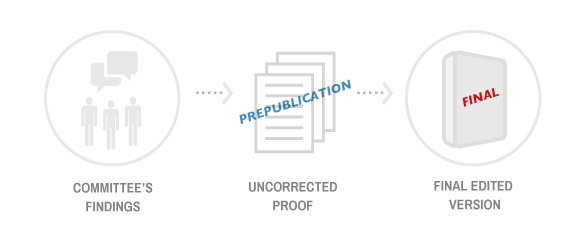
Although the authors were selected and the papers reviewed and discussed by the committee, the individually authored papers do not reflect consensus views of the committee, and the reader should view these papers as offering points of departure that can stimulate further work on the topics discussed. The papers presented in this volume are published essentially as received from the authors, with some proofreading corrections made as limited time allowed.

Search This Book

»Find more like this book

SIGN UP FOR...

New Title Emails
Read about the newest releases and receive special offers.