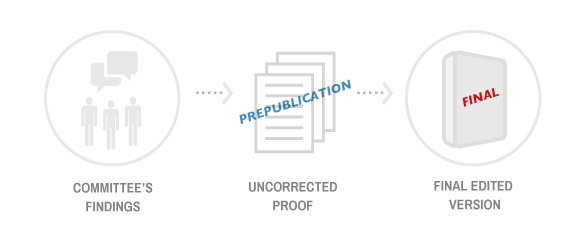
Below are the first 10 and last 10 pages of uncorrected machine-read text (when available) of this chapter, followed by the top 30 algorithmically extracted key phrases from the chapter as a whole.
Intended to provide our own search engines and external engines with highly rich, chapter-representative searchable text on the opening pages of each chapter.
Because it is UNCORRECTED material, please consider the following text as a useful but insufficient proxy for the authoritative book pages.
Do not use for reproduction, copying, pasting, or reading; exclusively for search engines.
OCR for page 100
ESSAY
Preserving
Biological Diversity
global change the worldwide modification of the envi-
ronment as a result of human activities has become front-page news. Three
broad trends seem responsible for this new-found concern with the environ-
ment. Industrial pollution, long a problem at the local level, has become
national and international in scope, particularly through its contributions to
acid rain. Increasing levels of greenhouse gases in the atmosphere are co-
inciding with a gradual warming of global temperatures, raising fears about
the effects of future warmings on agriculture, rainfall, and sea levels. And
an observed thinning of the ozone layer, including its virtual disappearance
over Antarctica in the spring, has sparked concern that continued releases of
chlorofluorocarbons could dramatically increase the ultraviolet radiation reaching
the earth's surface.
However, discussions of global change often overlook another critical trend,
according to Edward O. Wilson, professor of science at Harvard University.
"There is a fourth horseman in the environmental apocalypse, which needs
to be much more closely monitored and acted upon. Unlike the others, it is
truly irreversible and hence unpredictable in its consequences. I'm speaking
of the extinction of species caused by habitat destruction, especially the
destruction of tropical forests."
Human beings are now causing a mass extinction that rivals any of the
extinction events that have occurred in the earth's 4.5-billion-year history.
Over the course of a hundred years little more than a human lifetime as
many as half of the species living on the earth could become extinct. The
biological diversity of the world is being irrevocably reduced, not through any
conscious decision to reduce diversity but because no decision has been made
to preserve it. "This is the folly our descendants are least likely to forgive
us," Wilson believes.
Ethical beliefs inevitably shape a person's attitudes toward the extinction
of species. Some people may hold with the Book of Genesis that (~3 gave
lo, ~ ~ ~ ~ ~ ~ ~ 1 1 1 . 1
IlUtildllb Q~111~11~1 over all living Inlngs to use as we see fit. Others may believe
that we are charged with the stewardship of other species and are responsible
Too
OCR for page 101
for their welfare. Some people may see humans as a self-contained species,
with no intrinsic responsibility toward other species except as they influence
human welfare. Others might feel that because humans are a product of
evolution, it diminishes humanity to let the other products of evolution be
destroyed.
"The field biologist is impatient with these niceties of moral reasoning,"
says Wilson. `'He is like a molecular biologist watching the laboratory burn
down." Species are disappearing much too fast to withhold action until an
ethical consensus emerges, Wilson says. Given the many known benefits of
biological diversity and the unknown consequences of reducing that diversity,
simple prudence would dictate that we act to preserve the world's biological
heritage.
Measures of Diversity
C`It is a remarkable fact that no one knows the amount of biological diversity
in the world even to the nearest order of magnitude," Wilson points out.
1.4 million species of all types
since formal systems of class~cahon were inaugurated in the 1750s. But
except for a few well-studied categories such as flowering plants and verte-
brates, many more species exist than have been named and described. Wilson
estimates that there may be anywhere between 4 and 30 million species on
the earth, over half of them insects.
Biologists have named and described over
Each of these species is an irreplaceable repository of genetic information.
The estimated number of genes in various organisms are about 1,000 in
bacteria, approximately 10,000 in some fungi, from 50,000 to 100,000 in
humans and many other animals, and around 400,000 in many flowering
plants. Moreover, the individual members of a species contain different genes
and different versions of the same gene, resulting in diversity within as well
as between species.
"A species is not like a molecule in a cloud of molecules," says Wilson.
"It is a unique population of organisms, the terminus of a lineage that split
off from the most closely related species thousands or even millions of years
ago. It has been hammered and shaped into its present form by mutations
and natural selection, during which certain genetic combinations survived
and reproduced differentially out of an almost inconceivably large possible
total."
Relatively few genes have been studied in great detail, and except for a
handful of laboratory organisms the nucleotide sequences for any given or-
ganism, including humans, are largely unknown. Hence, when a species
becomes extinct, the genetic information it contained is lost forever.
PRESERVING BlOEOGICAE DIVERSITY 101
OCR for page 102
Diversity in the Tropics
By far the richest known collections of species in the world occur in tropical
rain forests. Though such forests cover only about one-fourteenth of the worlcl's
lane! surface, they contain over half of the worId's species. More accurately
known as closed moist tropical forests, these forests typically contain three
or more canopies of vegetation. The top canopy, formed by evergreen broadleaf
trees, is very thick, so that little direct light reaches the forest floor. This
absence of direct light reduces the amount of undergrowth, so that humans
can walk through such forests with relative ease.
The diversity of living things within these forests is legendary among bi-
ologists. ``Every tropical biologist has a favorite example to offer," Wilson
says. "From a single leguminous tree in Peru, I recovered 43 species of ants
belonging to 26 genera. That's approximately the same as the entire ant
population of the British Isles or Canada." In ten plots totaling 25 acres in
Borneo, one tropical biologist identified about 700 species of trees, more than
the number of native tree species occurring in all of North America. A square
kilometer of forest in Central or South America may contain several hundred
species of birds and many thousands of species of butterflies, beetles, and
other insects.
This increclible biodiversity is colliding head-on with a harsh reality of
modern history: these areas are under some of the most intense development
pressures of any ecosystems in the world. Most tropical forests occur in
developing countries with rapidly growing populations. Already, 40 percent
of the land that once supported tropical forests no longer does so because of
human activities. And as population and economic pressures continue to grow,
so will the pressures on the remaining tropical forests.
By the most conservative estimates, about 1 percent of the existing tropical
forest is being clearer] or permanently disrupted each year an area about
the size of West Virginia. Other estimates are much higher, though in the
politically charged atmosphere surrounding (reforestation such numbers are
inevitably controversial. '`The important point is that the rates are very very
high, however you look at them,' says Wilson.
Most of these areas are being permanently cleared to make way for agri-
culture. But one of the tragedies of tropical deforestation is that these lands
are not particularly well suited to agriculture. The existence of lush tropical
forests can give the impression of an abundant fertility. ``But the existing
+~: ~] (~ ~ _ ~ ~ ~ ~L ~ .: _1_ r~ ~ 1 ~
Ll~J~l~1 lUlO~ ~ IlOt tIl~ rears Peruse environments easily regenerated that
most people imagine," says Wilson. ``They're quite the contrary. They are
what you could call wet deserts."
Most tropical forests exist on what are known as tropical red and yellow
earths, which are acidic and poor in nutrients. When the trees are cut down
102 SHAPING THE FUTURE
OCR for page 103
and burnt, they release their nutrients into the soil, and for two or three years
these nutrients can support crops. But after that the nutrients are used up or
washer] away, and agricultural yields decline precipitously without extensive
use of fertilizers.
Once the forests are chopped down, it will take centuries for comparable
ecosystems (minus the exterminated species) to regenerate fully. In some cases
where damage is severe and the soil is particularly poor, the forests may never
regenerate naturally. Tropical forests are therefore not necessarily a renewable
resource, like forests in temperate areas. In many respects they are a non-
renewable resource, like oil or minerals.
If current rates of deforestation continue, the tropical rain forests will be
virtually gone by the beginning of the twenty-seconl(l century. However, some
areas are disappearing much faster than the average and will be gone within
a decade or two. The rate of deforestation is also increasing, leading many
tropical biologists to place the disappearance of the rain forests well within
the twenty-first century.
The amount of extinction that this destruction of habitat will cause cJepencis
on the number of species living in these ecosystems now (a number that is
not yet known with certainty) and on how much of the forests can be preserver!.
Studies of island biogeography indicate that, as a general rule, when the area
of a particular habitat is reduced by 90 percent, the number of species living
in that habitat drops by half. In the tropics, however, this general rule may
underestimate the true loss of species. Many tropical species occur in small
geographical areas, so a relatively small loss of habitat can spell their ex-
tinction. Such habitat destruction can also reduce the genetic diversity within
a species, leaving it more vulnerable to future disruptions.
Without conservation efforts on a massive scale, existing tropical forests
will eventually be reduced to much less than 10 percent of their current area.
It is therefore likely that more than half of the species now living in these
areas will be lost.
Linking Development and Conservation
In the industrial world, development anal conservation are often seen as
competitors in a zero-sum game: when development wins, conservation loses.
But that equation does not necessarily hole! in the developing world. There,
the biological wealth contained in natural environments can be a valuable
source of increased human prosperity.
`'Wild species in the rain forests and other natural habitats are among the
most important human resources," says Wilson, ``and so far the least utilized."
Food production is the prime example. At present, people rely on only 15 to
PRESERVING BlOEOGICAL DIVERSITY 103
OCR for page 104
20 species of plants for the great majority of their food supplies, and just
three species wheat, maize (corn) and rice supply more than half. Yet
there are at least 75~000 plants that are edible, Wilson observes, and many
of them have qualities superior to those of the crops now in use.
Even if a wild plant is not grown as a crop, its qualities can be introduced
; ~ [A ; ~· 1 ~1 . 1 . 1 1 1 -
.
lilt ~IlL~l~;~UlAAv crops Inrougn Iraultlona1 reefing programs. Furthermore,
using genetic engineering it should soon be possible to transfer valuable traits,
such as disease or pest resistance. between Hint that An not n~tilroll`7 ;-
terbreed.
Wild species are also a vast and larg`P,]V l]nt.nnnP~ rP~~r`7~ir.Af-n=~`r ~h~'
~ ~ ~ A,, I: ~ _ 1 ~ 1_ _ _ , 1
---7 -~ ~ '' It's ~--TV L,A1C4L ~ll~L 11aLul "fly 111
1 1 . ·.
V J A ~ - ' ~ ~^ ~ ~^ ~ . A ~ ~ '' ~11~1
lll~;~;ULll;~l~v' 1loers, petroleum substitutes, and other products. For instance,
one in ten plants contains anticancer compounds of some degree of effec-
tlveness. The rosy periwinkle of Madagascar provides two alkaloids, notes
Wilson, vinblastine and vincristine, that can largely cure Hodgkin's disease
and acute childhood lymphocytic leukemia. Now the basis of a $100 million
a year industry, the rosy periwinkle is one of six related species on Madagascar.
Tithe other five have largely been unstudied," Wilson notes, '`and one is at
the moment on the verge of extinction due to the destruction of natural habitats."
Plants are not the only wild species of potential value. Insects can act as
crop pollinators, control agents for weeds, and parasites and predators of other
, ~ new me
dicinals, foods, and procedures of soil restoration. Proposals for how wild
species can promote human welfare C`fill volumes," says Wilson.
.
insect pests. Bacteria, yeast, and other microorganisms can yield
Approaches to Conservation
C`You can't stop a Mexican peasant from shooting the last imperial wood-
pecker to feed his family, which in fact happened 15 years ago," says Wilson.
C`But in less desperate cases you can persuade people and governments, at
least to some extent. that it is to their short-term and long-term benefit to
preserve biodiversity. In the short term, they can get longer and richer yields
from existing resources. In the l`^,n~ term- thPv~rp Bovine one of th-;' m~;~1
treasures. "
V 7 - -~ ~ ~ ~ ' ^~ ~ ~' ~AA~11 11~1~1~1
A number of methods have been developed that can ~imlllt~nPollclv filrthPr
· 1 1
~ ~ Am -- ~~- ~4 V-A^~ ~ - BRA t ~_~J-V1) 1 ~1 L11~1
economic development and preserve biological diversity, Wilson notes. New
methods of strip lumbering can yield income from tropical forests while pre-
servina forest tracts. PronPr a~rio.liltilr~l m~n~PmPnt non m.~nec`~rm th~ ~'
V _ 1 ~=--- --- _~ we ,,,,~,,_,~,,,~,^~ BAA ~11~1 V I_ Lll~ llU
trlents in tropical soils, so that farmers do not have to keep moving to be able
to work fertile ground. Land that has already been cleared needs to be enriched
or restored to take the pressure off undeveloped land. And crops especially
stilted in id iropies, such as fast-growing trees that can be mowed to yield
fiber and wood pulp, should find much wider use.
~ ~ I ~ { ~T A r ~ A t~A~ ~ ~ ~A,, ~ ~{_ ~. 1 .
104 SHAPING THE FUTURE
OCR for page 105
Governments and international development organizations need to make
biodiversity a major consideration when planning and supporting development
projects, Wilson observes. Encouraging steps in this direction have been
taken; for instance, the U.S. Congress has mandated that programs funded
by the Agency for International Development include an assessment of en-
vironmental impact. But much more needs to be done.
More innovative measures have also been proposed. Some people have
advocated that the international debts of developing countries be partially
forgiven if they undertake conservation projects. A similar approach is to buy
the debt of developing countries at a substantial discount and use that credit
to purchase land for preservation. "There are a lot of techniques that have
been developed," says Wilson, '`and it is not going to take an enormous
amount of money in terms of foreign aid compared with what we have been
contributing, for example, in military aid to many of these countries."
The Role of Biologists
Biological research will be an important complement to policy measures in
preserving biological diversity. First of all, research in systematics and ecology
is needed to get a better idea of the dimensions of biodiversity and the
magnitude of the threat facing it. `'There's clearly a need for a strong new
effort in systematic biogeography to find out where the species are located,
which areas are in need of protection, and where the species exist that might
be put to immediate use in the economic sphere," says Wilson. "We're going
to have to rebuild our museums and other institutes devoted to biodiversity
studies to concentrate a lot more fieldwork out there in the real world."
Wilson is in favor of a biotic survey of every species plants animal, and
microorganism that exists on the earth, "a project comparable to mapping
the human genome." Such a survey could help answer a number of vital
questions in evolutionary biology. For instance, what accounts for the number
of species on the earth? Is it due to something about the nature of the planet
or to something about evolution? Why do hot spots of biological diversity
exist? Can the diversity of natural systems be increased through human in-
tervention?
The restoration of damaged ecosystems is another area in which biologists
can make a major contribution. What are the best methods to promote the
regeneration of a natural ecosystem? How can ecosystems be maintained in
such a way as to promote diversity? These areas of biological research need
to undergo substantial growth in the near future, Wilson contends.
Biology is not the only science that needs to become more involved in
preserving biodiversity. Economics has traditionally had difficulty assigning
PRESERVING BlOLOGICAE DIVERSITY 105
OCR for page 106
value to biological diversity and other environmental assets because these
entities exist outside the narrowly definecl market economy. Psychology and
sociology have never made serious efforts to study the relation of mental and
social health to the vitality of the natural environment. In general, Wilson
asserts, the social sciences need to become much more integrated into the
realities of the natural environment and the uses of biodiversity.
Stuclies of biodiversity are unusual in science, because there is a strict
time limit on when they can be done. Biologists and other scientists are in a
race with time, and the competition is running ever faster as population
pressures increase. "The study of biodiversity has unexpectedly gained a new
urgency," Wilson says. `'It has become as important to humanity now as
medicine or molecular biology."
106 SHAPING THE FUTURE
Representative terms from entire chapter:
biological diversity