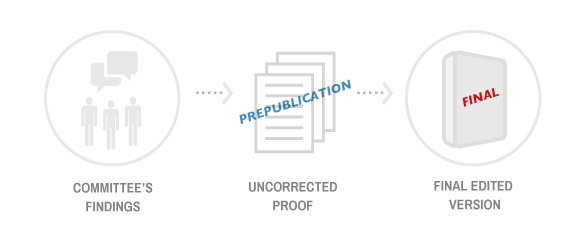
Below are the first 10 and last 10 pages of uncorrected machine-read text (when available) of this chapter, followed by the top 30 algorithmically extracted key phrases from the chapter as a whole.
Intended to provide our own search engines and external engines with highly rich, chapter-representative searchable text on the opening pages of each chapter.
Because it is UNCORRECTED material, please consider the following text as a useful but insufficient proxy for the authoritative book pages.
Do not use for reproduction, copying, pasting, or reading; exclusively for search engines.
OCR for page 3
Quality of Care and the
Health Needs of the
Elderly Patient
Avedis Donabedian
The aged are Everyman. They share in the human condition in ah its
aspects, all its vicissitudes. They are rich and poor, weld and ill, com-
petent and disabled, resilient and Untie, enlightened and ignorant, au-
tonomous and dependent, familied and bereft, involved and isolated, con-
tented and troubled, fun of hope and despairing. In aU these ways the
aged are as we aD are. It is undikely, therefore, that what they need or look
for shad be, in any fundamental way, different from that which we aU
need or wish to have.
Yet, we aD know that the aged are also different. They are
different in the odds that they face of experiencing He evils and blessings
of living, and in the future duration of life itself. Even at Weir healthiest,
the aged are vulnerable and fragile; they have a smaller fund of reserves to
draw upon, whether these reserves be physiological, psychological, so-
cial, or economic. Should an old person fan off the razor's edge into
disaster, recovery is seldom complete. There is a bias toward irreparabil-
ity in the misfortunes of the aged. And these misfortunes, when they
occur, tend to be many and interconnected, forming a constellation of
physical, social, and economic ins Cat kindle and fuel each other. So, the
ins of the aged persist and they progress in a hardly containable decline
into debility, disablement, dependency, and disengagement. In the end,
Be aged may become too passive, too accepting of all they suffer, even
severe illness tending to masquerade in less alarming, though treacherous,
masks.
Therefore, heady care for the aged, if it is to be successful, must
overcome the many handicaps Tat the aged more often face. Even the
meaning of quality may have to be altered to adapt to Me particular
3
OCR for page 4
4
AVEDIS DONABEDIAN
circumstances and perspectives of the aged. Appropriateness and adapta-
tion win be, therefore, my central theme in this discourse. But, since
these properties are also necessary attributes of quality in ad health care,
hope to show that what is distinctive of quality In caring for the aged is
only a set of differences in emphasis, rather than a radical departure. In
seeking quality for the aged, we shad rediscover the pnnciples that govern
quality for us an.
THE MEANING OF QUALITY
~ must begin with the meaning of quality itself, since we must
understand and agree upon the property Hat we seek before we can take
steps to find it.
Quality, as an attribute of heady care, is usually held to be propor-
tionate to the improvements in health that health care can achieve. But,
because our ability to achieve improvements in health is limited by the
state of our knowledge and our technology, quality is more realistically
definable as a ratio of improvements achieved by any instance of health
care to He improvements Hat could have been achieved by He best health
care. If this ratio is taken to be a measure of"effectiveness," He property
of "effectiveness" and He property of "quality" become the same.
By defining quality as effectiveness, in the manner described, we
lose sight of the means that we use to achieve improvements In health
We seem to say that the means do not matter, so long as the objective of
health improvement is attained. But this is hardly the case. Not all the
means are equally approved; some may even fail to be legitimate.
We should also entertain He possibility Hat the greatest achiev-
able improvement In health may be, in some circumstances, an inappro-
pnate objective. It is best, therefore, to define quality as the attainment of
desirable objectives using legitimate means. If so, we need to examine, in
turn, the objectives of health care and the means for attaining them.
THE OBJECTIVES OF HEALTH CARE
For the sake of simplicity I shah accept the objective of health care
to be an improvement in health, putting aside, for now, the uses of heals
itself. In order to assess the quality of care we would need to know,
therefore, the natural history of morbid conditions when untreated, when
treated by the "best care," and when treated by the particular example of
OCR for page 5
CARE AND [lEALTHNF5Flr)s OF THE F7J)ERLY PATIENT
s
care that we wish to provide or to assess. With regard to Al these items of
information, our knowledge is often inadequate. And considering how
complex and how unstable the problems of the aged are, ~ would expect
that, in their case, our ability to make valid judgments is even more
subject to question. Yet, seeing how little the aged have in reserve, and
how much even small losses must count relative to that smaller balance, a
precise accounting of prospects becomes even more necessary to a wiser
choice.
Knowledge contributed by He health care sciences is, therefore,
the rock upon which aR quality and aU assessments of quality must rest.
We need to know more about the natural course of illness and the relative
efficacy of alternative methods of management in the aged, as in everyone
else.
Next, we need to come to an understanding on what we mean by
"health" Be several components that make it up, the many aspects of
performance that it subsumes. Consensus on these matters is not easy to
achieve, and it may be particularly difficult for us to agree where the aged
are concemed. We disagree on what is inevitable and what is remediable
in the manifestations of aging; we are unsure to what standard of health
the perfo'Tnance of the aged is to be compared.
Then, there is the problem of valuation. Because measurement
always implies valuation, it may be foolishness to speak of objective
measurement. Rather, we may need to consider whose valuations deter-
mine the measure: those of the health care practitioner, those of the
patient, those of family members, or those of some social instrumentality,
more or less legitimate.
It is generally accepted that, in choosing among alternative meth-
ods of management, the valuations of the patient are paramount or, at the
very least, are to be seriously considered. Yet, even if we were willing to
make a determined effort to do so, our ability to obtain fully informed
valuations is limited at best. How are patients to assess future conse-
quences that they have not personally or vicariously experienced? How
are they to weigh rather small differences in probabilities for which
personal exposure provides no familiar counterpart?
When intellectually impaired or emotionally withdrawn, the aged
are even less able to accomplish these tasks. And should one or more
family members undertake to do so, we cannot be sure whether the
judgments made are those that the patients would have made or whether,
out of selfishness or a sense of duty, those judgments undervalue or
overvalue the patients' prospects.
OCR for page 6
6
AVEDIS DONABEDIAN
In the choice of alternative methods of management, it is, of
course, the individual patient's preferences that matter. But, it would be
interesting also to know if old age, as a shared attribute, introduces biases
in the valuation of survival and in the quality of life during the period
survived. It would not be surprising if the lowered expectations of
survival and good function that ordinarily accompany aging were to
influence the valuations that the aged place on alterations in these expec-
tations. If so, interventions that represent the highest quality might differ,
on the average, for the aged as compared with others.
These considerations would also influence the judgment passed by
patients on the present consequences of past care. We often hear that
these expectations are frequently too high. If so, the patient may not have
been properly informed. And, on the contrary, it is also possible that the
patient is content only out of ignorance of how inferior the results exper~-
enced are, compared with what might have been reasonably expected.
It follows that a weld-informed, assertive patient is a key player In
the process of defining and assessing the objectives of care. The patient's
role, as we shad see, is at least equally critical in the choice and assess-
ment of the means for achieving these objectives.
THE MEANS FOR ATTAINING THE OBJECTIVES OF CARE
~ shad discuss the means for attaining the objectives of care under
five headings: (~) access, (2) the practitioner's contributions to care, (3)
the patient's own contributions to care, (4) the contributions of health care
programs and institutions, and (5) money.
~ realize that by including access in this particular list ~ do violence
to me purity of my classification. Nevertheless, it is important to begin
with access to care because, without initial access, no care can be given
and, without continued access, care is prematurely discontinued. We
must be disturbed, therefore, when we hear Hat gains in access achieved
during the recent past are now in danger of being lost. The aged,
especially if also poor, are apparently among those affected by this rever-
sal. On particular, we need to know if the methods of cost containment Hat
seem to single out the old, because they are the beneficiaries of publicly
financed programs, have had an adverse effect on the duration, content,
and outcomes of care.
The duration and content of care are, of course, matters that health
care practitioners have traditionally controlled, although recently other
OCR for page 7
CARE AND HEALTH NEEDS OF THE Fill )ERLY PATINA
7
agencies have intruded more and more on the practitioners' prerogatives
in this domain. StilU, the practitioners' contributions to care, irrespective
of whether the contributors are fully autonomous or partly constrained,
are the key determinant of quality.
It is customary to distinguish two components in the conical role
of practitioners. One is the management of technical care and the other
the management of the personal interaction with the patient. For this
occasion, ~ shad add a third: the management of the patient's social
situation.
Technical care is, itself, divisible into components; these include
knowledge, judgment, and skill. If I may be allowed a brief digression, I
would like to remark that in our usual assessments of process, based upon
medical records, we are more able to evaluate knowledge and judgment
than skin. Skillful execution usually reveals itself in the health outcomes
achieved.
More to the point, in our present context, are the peculiar demands
that the medical problems of the aged, as already described, make on the
technical competence of practitioners. Special preparation and experi-
ence are needed. That means more attention to the education and training
of clinical specialists in the field. It means a larger emphasis on learning
about care for the aged in the education and training of health care
generalists and specialists of every kind. It means the reorganization of
care so that the aged, at least when very in, have the benefit of specialized
attention, either directly through care by specialists in specialized units, or
indirectly through established policies and procedures for consultation
and support to generalists who assume the burden of primary care.
The second component of professional care is the management of
the personal interaction with patient and family. This includes respect,
concern, personal interest, courtesy, understanding, privacy, conf~dential-
ity, and a single-minded devotion to the patient's interests. Meticulous
attention to the patient's wishes and values is particularly important. If
these are legitimate, the practitioner is under an obligation to comply. If
they are not, the practitioner is obligated to explain the matter and arrive
at an ethically defensible conclusion.
To an audience as expert as this ~ need not expatiate upon the
central importance of the patient-practitioner interaction to the quality of
care. In this respect, we owe the aged what we owe to ah our patients.
But, the aged, if frail and handicapped, will require even more time and
attention. The aged, deeply rooted In times long past, and sometimes also
OCR for page 8
8
AVEDIS DOIVABEDIAN
in a possibly alien cultures are pardal strangers in this more tumultuous
present
The management of the patient's social situation is the third com-
ponent in the contributions of the practitioners to care. Once again, this is
a responsibility to be faced In caring for an patients. It assumes greater
importance when the patient is older because of He social and economic
vuinerabilides to which I have alluded already.
In almost an the practitioner's ministrations the contributions of
the patient are, of course, of cndcal importance. The patient provides
information necessary for diagnosis and management, doing so at the
initial encounter and throughout the care that follows. Without Be pa-
tient's participation, Me practidoner's recommendations are implemented
poorly or not at all. The patient has an additional responsibility to pursue
a more healthful mode of living. In some cases, me aged may be more
wining to make the modifications necessary to improve their threatened
prospects and more able, by virtue of circumstances, to take the time to do
so. At other times, the aged may be unable to communicate or collabo-
rate, and, because of their relative isolation, there may be no one else to
speak or act effectively on their behalf. As a result, plans for care Cat
might earn admiration when the patient's medical record is reviewed do
not translate into improvements in health because the patient has failed to
cooperate.
~ shah add the contributions of institutions and organized programs
to this catalogue of means for achieving the objectives of quality. ~ do so
only to remind ourselves of the critical importance of social effort in
providing the resources that enable patients to gain access to care and
make it possible for practitioners and patients to collaborate effectively in
the production of care under circumstances that are satisfying to both.
The critical resource, of course, is money, an instrumentality so important
that I have given it a separate position in this list.
The purpose of care for the aged, as of course, for everyone else, is
appropriateness, which is the precise matching of care to medical need.
Without it, we may have too little or too much. In the technical care of the
aged, redundancy and surfeit in the process of care are particularly at~ac-
tive responses to uncertainty in the practitioners and to nonresponsiveness
or inevitable fatality in the patients' illness. Our too-ready recourse to
prodigal technical care is also abetted by a widespread tendency to "medi-
calize," as some have said, so many of our problems. Thus, we create
spunously "medical" representations of problems that could be more
OCR for page 9
CARE AND HEALTH NF-F-OS OF THE Fi:r)E.RLY PATIENT
9
amenable to successful management by means simpler and less costly
than outpourings of technical care. The solutions to this misapplication of
technology are, first, a level of technical expertise sufficiently high to
recognize the limits of technology; second, Me availability of expertise in
the alternative modalities of care; and Bird, the presence of the social
mechanisms that permit a choice of the most appropriate modality of care.
For some reason, we have provided more readily for highly techni-
cal health care than for health care that is less dependent on technology;
and we have been more wiring to provide for heath care than for care that
does not fit so easily in that exalted category. As soon as we can, let us
forsake this foolishness. We can, then, pursue magnum improvements
in health at a cost that we may perhaps be able to afford.
There are those who ten us, however, that maximum effectiveness,
even if it is obtained with due regard to efficiency, is not He proper goal
for a society to pursue. This is because, in any given situation, these
critics say, Were are elements of health care that, though useful, are too
costly in comparison to the improvements in health that they can be
expected to confer. Therefore, we are told, optimum effectiveness, not
maximum effectiveness, should be Be goal.
The choice between maximum effectiveness and optimum effec-
tiveness as the proper goal for health care policy is not confined, of
course, to the aged. But the welfare of the aged is peculiarly sensitive to
the consequences of the choice. The aged are usually unemployed and,
therefore, get very much undervalued in methods that set a monetary
value on me benefits of care. Besides being "unproductive" in this sense,
the aged tend to need larger amounts of care and, if kept alive even though
in, win require more and more in the future. Thus, in addition to being
unproductive, the aged are a drain on our collective treasure. And even if
the rules that govern the availability of care were to reject a crass eco-
nomic calculus and, instead, value the life and weld-being of the aged as
highly as those of anyone else, the much shorter life expectancy of the
aged would give them much less to bargain with.
Following these baleful lines of reasoning, the aged would be
denied useful interventions that would be available to a younger person
with the same disability. In some cases, no care might be thought
worthwhile beyond Cat needed to relieve pain or to assure a degree of
comfort. No one denies, of course, the right of the ill, at any age, to decide
that added survival may carry too large a burden of pain and disablement
to be worm accepting. But, should anyone else have the right to make that
decision?
OCR for page 10
10
AVEDIS DONABEDIAN
We are told that rationing of heals care is now taking place, as it
always has. If so, we need to know who does the rationing, on what
grounds, and with what consequences. And if still more rationing is to be
expected, the same questions win need to be answered. Do we wish to
strip the patient of insurance coverage so that economic necessity be-
comes me rationer, while we stand at a distance, seemingly innocent?
Shall we, openly or by insinuation, suggest to the aged that they have a
duty to expect and ask for less? Should we make health care practitioners
more direct accomplices in the deed, by placing upon them a duty to put
me public interest above that of their individual patients? Or do we
intend, rather, by differential reimbursement to providers, to subvert their
judgments so Hat they conform more readily to our implicit social pur-
poses? And who, in ad these questions, are Me "we" who both ask and
answer the questions? In what arena? By what right?
These and similar questions, lead us to the most fundamental issue
we must face: the nature of the social commitment to health care in
general, and to the care of the aged in particular. Respecting the aged we
have proceeded waveringly, every fit of progress seemingly followed,
first, by hesitation, and then by an insidious retreat. It is against this
background of uncertainty Mat we must, alas, consider those features of
system design that are needed to accommodate the peculiar requirements
of the aged.
SOME ASPECTS OF SYSTEM DESIGN
The secret of success in planning health care for the aged is to take
a comprehensive view of their total situation, so that its marry complexi-
ties can be accommodated by corresponding features of system design.
Accordingly, we cannot consider heath care independently of the social
services required to support the aged when Heir individual capabilities
begin to decline. And the system of health care, itself, must consist of
many finely articulated parts, each serving a distinct function, yet each
closely related to every other part. Only In this way can we achieve the
many objectives that we pursue. Among these are preservation of func-
tion, maintenance of autonomy, effective therapy at reasonable cost, and
resort to institutional care only when all else fails.
As ~ have already said, access to care is the first consideration. It is
particularly so for the aged, since many of their disabilities are perhaps
easier to prevent by anticipatory care than to remedy once Hey have
become established.
OCR for page 11
CARE AlID HEALTH NEEDS OF THE F7 J)ERLY PATIENT
11
Access depends, most fundamentally, upon a method of financing
Mat makes care affordable. Because He financial resources of the aged,
even- when relatively ample, are usually nonreplenishable, as little health
care as possible should be financed from current resources, and as much
as possible from funds put aside for the purpose in advance of retirement.
Regrettably, at least in this regard, recent history has been a record of
unremitting retreat.
But lack of financial means, although critical, is not the only
barrier to access. To get tome sites of care Be aged must overcome the
barriers of physical and psychological remoteness while hampered by
their own relative immobility and isolation, and also by the unavailability
of suitable Formation. Even when Hey can reach the sites of care, He
physical design of the environment may impose furler discomforts on
the disabled and infirm. We must, of course, create the means by which
the aged can be brought to health care. At the same time, the outposts of
the health care system can be placed closer to where the aged live, making
these sites both handy and familiar.
Home care, itself, can be regarded as one means by which services
are brought to patients in a sewing that offers much in patient autonomy,
social integrity, familiarity, safety, efficacy, and low cost. Through the
availability of home care we reduce our dependence on the hospital; we
lessen exposure to its depersonalizing effects, to the pernicious conse-
quences of the immobility it may impose, and, above all, to the costs and
injuries of that frenetic playing out of the "technological imperative" for
which the hospital is the natural stage. Through home care we also avoid,
or at least postpone, the horrors that, too often, attend consignment to
certain institutions. For these reasons, and many others, we applaud and
endorse home care as an advance of signal importance. Nevertheless,
with respect to home care, as with aB else in the health care system, we
must maintain the wholesome skepticism that leads to furler research, on
the one hand, and to fiercer improvement, on the other.
Even after so many years of experience, there are some doubts as
to whether home care for the chronically id and disabled reduces costs,
raises them, or leaves them largely unchanged. It is clear, however, that
the costs of home care, whatever their magnitude, are in danger of being
shifted, more of the burden fading directly on patients or on members of
their families. To this are added the many other responsibilities attendant
to the patient's remaining at home. We must find a remedy for aU this.
There is also a degree of uncertainty about the effectiveness of
home care in improving the heath of the chronically in, or, if small
OCR for page 12
12
AVEDIS DONABEDIAN
improvements do occur, about Me justifiability of the high cost of achiev-
ing such improvements. Pardy, these uncertainties may reflect the "over-
medicalization" to which home care is not immune. Possibly, although
this may sound even more heretical than what ~ have said so far, the
quality of home care needs to be more carefully assessed and monitored.
doubt Mat nursing care is immune to Me failings to which ad professional
performance is heir, and it is even possible mat too much of it, besides
being costly, may debilitate persona] and familial responsibility, leading
to an overreliance on the kindness of strangers. Even the privacy of me
home, one of its crowning attractions, may also do harm by obscuring We
visibility of professional performance, while isolation and infirmity ex-
pose the homebound patient to neglect, manipulation, intimidation, or
abuse, usually at the hands of nonprofessional personnel who perform
housekeeping functions.
In the professional domain, a major weakness has been our inabil-
ity, so far, to determine the appropriate balance of nursing initiative and
physician responsibility in canny for the homebound patient, and to make
that necessary partnership of equals a working reality. The attenuation,
even the disruption, of physician responsibility is itself part of He larger
problem of assuring a seamless continuity in care as the patient moves
from hospital to home, to nursing home, to physician's office' round and
round, in a sorry peregrination to an ultimate departure. Of aU the
necessary objectives of system design in caring for the aged, coordination
and continuity are the most fundamental and, seemingly, me most diffi-
cult to attain.
Greater coordination and continuity can be achieved to some de-
gree by making more effective use of devices already at our command.
Discharge planning for the hospitalized patient can become more preva-
lent, more judicious, and more thorough. The communications that ac-
company patients as they are transferred from site to site can be more
timely, more discerning, and more complete. But, ultimately, we need to
assure, by some means, a direct responsibility for the care of Be aged, in
weEness and illness, irrespective of Be site of care. So far, that pluralism
in our health care system in which we take so much pride has obstructed
progress on this paw. There are, nevertheless, promising developments.
It is no longer so farfetched to conceive of an integrated system of
health care facilities that includes at least a health maintenance orgaruza-
tion, a hospital, a home care program, a nursing home, and a hospice. In a
context such as this, assuming that a parallel system for financing care
OCR for page 13
CARE AND HEALTH NF:F'r)S OF TlIE ELDERLY PATIENT
13
were present, me patient, aged or otherwise, could move from site to site
assured of appropriate placement in each and continuity of care ~ugh-
out.
A unit record, on paper or in Me computer, and a flow of other
information of similar kind could serve as the vehicles of continuity. No
doubt, patients and members of their families, if properly instructed,
could also play a more active role in bringing about a higher degree of
coordination and continuity. But perhaps We most effective vehicle
would be a health care practitioner who would give care or at least oversee
it at aU sites. ~ win betray a personal bias and an inalienable attachment to
my own professional roots by saying that ~ hope that practitioner to be the
patient's personal physician; but some other health care practitioner could
assume that role, or perhaps no more than a patient advocate versed in the
intricacies of the system, able to pull the right ropes.
A concomitant of this design would be an ability to assess and
monitor the quality of care not In artificially disjointed slices, as is now
the case, but for functionary related wholes. In doing so, it may also be
possible to accomplish something so many have so devoutly hoped for: to
rely more heavily on the outcomes of heath care Tan it has been possible
to do when no one could ten who was to be held responsible for what.
CONCLUSIONS
In these ways and others, we ought to offer the aged, in their
declining years, release from needless pain, impairment, neglect, and
humiliation. For the prospect of a liberated but protected old age is a gift
not only to the aged. Sometime, sooner or later, we shad an be as they are.
Their present is our own future. In serving them we serve no over than
ourselves.
Representative terms from entire chapter:
avedis donabedian