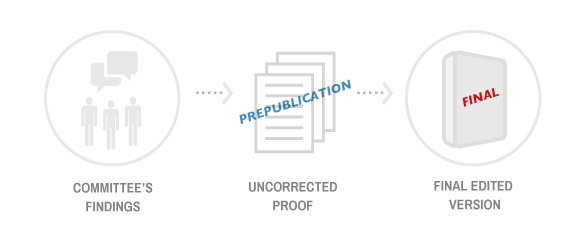
Below are the first 10 and last 10 pages of uncorrected machine-read text (when available) of this chapter, followed by the top 30 algorithmically extracted key phrases from the chapter as a whole.
Intended to provide our own search engines and external engines with highly rich, chapter-representative searchable text on the opening pages of each chapter.
Because it is UNCORRECTED material, please consider the following text as a useful but insufficient proxy for the authoritative book pages.
Do not use for reproduction, copying, pasting, or reading; exclusively for search engines.
OCR for page 48
Special Perspectives on
Home and Community Care
Charlotte K. Flynn
The Gray Panthers is an advocacy group that is concerned about people
having access to what they need, whether it be health care, income
maintenance, or housing, regardless of chronological age. We are also
very concerned about "ageism," a subtle factor in our society that some-
times produces problems for older people. The observations I would like
to share today come from two perspectives. One as a listener to those who
call our office for help and the other as an advocate.
SURVEY OF ABUSE AND NEGLECT OF THE ELDERLY
This past year, ~ have been involved with the State of Texas,
coordinating a statewide survey of abuse and neglect of the elderly. The
survey was conducted specifically to point out to our legislature He needs
for community-based services. We surveyed key informants including
people in the medical, judiciary, financial, law enforcement, and social
service fields.
The survey was a collaborative effort: the Gray Panthers coordi-
nated the survey; He Texas Senate Select Subcommittee chaired by
Senator Barr~entos offered support; Dr. Tra Iscoe, chairman of He Geron-
tology Committee at the University of Texas, assisted us by having ad He
information from the returned surveys entered into He university com-
puter, the data from the survey was given to Dr. Jeffrey Anderson and Dr.
John Thiess of the Texas Department of Human Services, who made the
analysis.
The survey provided us He documentation to reinforce the need
for an adequate continuum of care through quality community-based
48
OCR for page 49
SPECIAL PERSPECTIVES ON HOME AND COMMUNITY CARE
49
programs. Providing education and support to caregivers win provide
significant help in preventing elder abuse and neglect.
PROBLEMS IN CARE OF THE ELDERLY
Case Management and Control
Our members attach great importance to case management and
control. They Link that the client or the patient does not have enough
say in controlling what happens to him or her. The patient is not being
given choices or being informed of those choices. The family and the
patient need to participate in making choices based on what the family
arrangements are, what the cost of services will be, what types of proce-
dures are needed, and what services are available.
Autonomy and Social Support
There are two very important psychosocial aspects of growing
older: autonomy or control, and social support When an elderly person
has these, old age can be enhanced; when they are not in place, old age
can become very defeating. In their article published in Science in May
1987, called "Human Aging, Usual and Successful," John Rowe and
Robert L. Kane commented that past research has dealt with the negative
aspects of aging and not win the extrinsic factors that might be preventive
in the aging process. These factors apply to Hose who are ill as well as to
those who are healthy.
Record Keeping
Better record keeping would be a great help, from He client's point
of view. CoRect~ng records from aU of one's doctors becomes a night-
mare for patients or their families. I fee] hopeful that there win be
improvement In this situation after hearing Dr. Kane say Cat there may be
some way of getting a data base that would be transportable from one
place to another by the patient or by the family.2
' See Earl M. Collier, Jr., "Framing the Issues of Home and Community Care: Response,"
in this volume.
2 See Robert L Kane, "Home and Community Care of the Elderly: Framing the Issues," in
this volume.
OCR for page 50
so
CHARL07TE K. FLYNN
Continuity of Care
Continuity of care should be planned so that the patient receives
appropriate care. At times, temporary placement in nursing homes fol-
lowing surgery, for example, might be advantageous, especially if the
nursing homes emphasized rehabilitation of the patient.
Planning Patient Services
Patients need their hospital discharge preplanned. Services need
to be more specific to the individual patient. If a person has arthritis and
needs help in the morning to get going, ~ hour of assistance in the
mowing every day win be much more helpful then 3 hours every other
day.
Education
Caregivers need education. Our organization has several members
who are hospital social workers and handle discharge planning. They are
very much aware of the lack of knowledge on He part of caregivers. As a
result, we published a caregivers' manual Ail. It lists Be see/ices avail-
able in Austin, but it also has "how-to's," not only for the caregiver but for
Me individuals ~emseIves who need the support—helping them to iden-
tify their feelings and work Hugh them. This area is an onnorh~ni~v for
the private sector to initiate needed activities.
Payment
Hi .
~-~¢r~ ~
In-home services do not have adequate standards, are often of poor
quaky, and are very expensive. As a result, many older persons exhaust
their meager incomes quickly. This area is a challenge to aB of us. We ad
know that Medicare is cutting back on community care services. One of
our survey informants stated that "the only conspicuously absent category
of abuse In our list is government abuse, be it by cutback of funds or
withdrawal of services." We need especially to look at He problem of the
large segment of older people who live just above the poverty level and do
not have the resources to pay for those (or indeed other) services.
OCR for page 51
SPECIAL PERSPECTIVES ON HOME AND COMMUNITY CARE
51
REFERENCE
1. Aging: Every Generadon's Conce~A Manual for Caregivers.
Austin, Tex., Gray Panders of Austin, no date.
Representative terms from entire chapter:
special perspectives