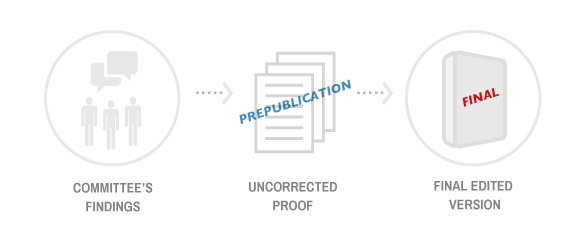
Below are the first 10 and last 10 pages of uncorrected machine-read text (when available) of this chapter, followed by the top 30 algorithmically extracted key phrases from the chapter as a whole.
Intended to provide our own search engines and external engines with highly rich, chapter-representative searchable text on the opening pages of each chapter.
Because it is UNCORRECTED material, please consider the following text as a useful but insufficient proxy for the authoritative book pages.
Do not use for reproduction, copying, pasting, or reading; exclusively for search engines.
OCR for page 71
Home and Community
Care of the Elderly:
Research and Policy Issues
Lisa V. Rubenste~n
According to Webster's Second New International Dictionary, tech-
nology is "any practical art utilizing scientific knowledge; applied
science contrasted with pure science." A practical art is "a system of
rules or organized modes of operation serving to facilitate the perform-
ance of certain actions." By these definitions, home and community care
of elderly people ought to become a technology. I am not sure, however,
mat it qualifies as a technology yet. To become a technology, home and
community care needs clearly stated, scientifically based rules or prin-
ciples that can guide its users and practitioners. To develop such prin-
ciples, two major types of research are needed. These two types of
research, which advance synergistically, might be called "methodologic
research" and "policy-type research."
METHODOLOGIC RESEARCH
By methodologic research, ~ mean basic research directed toward
understanding the organism caned "Home and Community Care." What
does it look like? What are its roles in society? How can its success be
measured? Methodologic research in the area of home and community
care includes community-based needs assessments and the development
of interventions to meet those needs. It should include He development or
further testing of reliable, valid instruments to stratify the populations that
would receive care, as well as instruments to measure the economic
impact of this care, the quality of the interventions delivered, and the
health status and quality of life of recipients of the interventions.
71
OCR for page 72
72
I~SA V. RUBENSTE]N
Methodologic studies should also include studies of the effective-
ness of particular types of home- or commun~ty-care programs. Examples
of me~odolog~c studies concerned win program development might
include studies of methods for educating careg~vers, consensus panels on
Be relative effectiveness of different care strategies, and studies of the
relative benefits of vacations in the liming, quantity, or content of a
particular service.
POLICY-TYPE RESEARCH
Policy-type research, in contrast, focuses on studying He impact of
programs composed of multiple components. A home care program
might include components such as Meals On Wheels, visiting nurses,
social workers, and others.
The independent variables for policy studies might be variations in
enticement, financing, or types of services offered. Such research often
begins win a me~odologic phase during which instruments and interven-
tions are developed, but it ultimately must proceed using the best avail-
able knowledge, assumptions, or instn~ments, whether or not these are
adequate to support completely the effort being undertaken. Typically,
policy-type studies would include experimental or quasi-experimental
evaluations of large-scale demonstration projects. Such projects evaluate
the effectiveness of services defined at a level that might be specified in
government policy.
For example, policymakers might cover or not cover certain seIv-
ices, change the payment formula, or change eligibility requirements. But
policymakers do not specify whether the diets offered by Meals On
Wheels will permit ethnic variations, even though 90 percent of the meals
delivered may remain on the tray in the absence of such adjustments.
That level of specification is left to the practicing heals and social service
professionals operating within the experimental program.
PROBLEMS IN RESEARCH
Do we, as heady and social service professionals, know enough
about what people over age 65 need and want so we can proceed with the
next major policy studies? Do we know the nuts and bolts about our
services that would let us design them appropriately? Or, should we urge
the granting agencies to spend more resources on methodology develop-
OCR for page 73
HOME AND COI~MUNITY CARE: RESEARCH AND POLICY ISSUES
73
meet? Both methodology and policy-type research are imperative if
home and community care for id elders is to become a scientifically based
technology.
On one hand, a field that bogs down in the interminable definition
of instruments, in minor variations in education, or in arguments about
types of services delivered win not blossom. Policy research must often
be done quickly for He sake of politicians faced win making difficult
legislative or bureaucratic decisions. On the other hand, policy research
based on inadequate data about what it should be testing win be mislead-
ing. I believe strongly that the next major priority in home and commu-
nity care is to make sure that the next round of demonstration projects and
randomized trials are based on a substantial, methodologic development
phase.
IMPLICATION OF RECENT POLICY STUDIES
We are fortunate in this field to have access to the results of several
large, weH-conceived demonstration projects and experiments in He areas
of home and community care. Expenments such as He Triage experiment
and the National Channelling Demonstration can be criticized on a num-
ber of grounds, but they were certairdy examples of Fought research
all. From the results of these and other studies, we know that home and
community care are not simple, low-cost panaceas to shorten hospital
stays, to replace nursing home days, or to improve health status. Positive
effects on patient and caregiver satisfaction and wet/-being were found
but were not staggering. The lack of positive results from these studies
should force us to rethink our goals and methods. Was it the lack of
physician and nurse participation that made case management only mini-
maBy successful in the channelling study? Was the target population
appropriate?
RESEARCH QUESTIONS
A basic question we have not yet answered is how wed our models
meet He needs of a community of elders. ~ thought at first Hat ~ would be
refening ondy to care of sick elders, but we do not know at this time
whether very sick elders should be He major or He only focus for health
professionals in the area of community care.
OCR for page 74
74
LISA V. RUBE:NSIEIN
Functional Assessment
We might also study the population of elders who are able to
perfonn, for example, aU basic activities of daily living. People are now
expected to live an average of 20 years after age 65, often with chronic
diseases. What kind of services does this nonfra~l group need or use, if
any? Do we know what activities these people usually perform or which
activities they value? Do they care for grandchildren? Do Hey do
volunteer work? What happens to these activities during periods of
illness? We might want to find out what role medical and community
services should play during this period. A successful program for this
group would not be measured by fewer nursing home days but by im-
proved function and wet/-being of the patients at affordable costs.
Caregivers
Most young women now work. We are headed toward a demo-
graphic situation in which a single young worker may be supporting as
many as four elders. We do not understand the fun economic, social, and
health status impacts on these caregivers of canny for very sick people in
the home. Caregivers for frail elders are another major population of
concern. Caregiver strain and health effects need to be assessed in rela-
tionship to different types of community care.
VALUES
Major research efforts must be undertaken to understand what
people value. For example, many elders may not want their children to
take care of them at home at major economic and vocational sacrifices.
Many elderly people do not want to live win relatives. ~ have had many
patients who have said that under no circumstances did they want to move
in with their children. Would it be better to foster the development of
small, local, higher-quality nursing homes, perhaps of the 20-bed size, as
has been tried in parts of Scandinavia, than to try to care for increasingly
more elders in the home as has been the pattern in the United Kingdom?
We need answers to these questions.
OCR for page 75
HOME AND COMMUNITY CARE: RESEARCH AND POLICY ISSUES
75
Community Resources
Research studies should, focus on how and whether we can make
better use of existing community resources. For example, we have
recently developed a problem-oriented, computerized resource guide.
This guide defines problems in terms of impairments in physical, psycho-
log~cal, or social function and can be used by physicians, social workers,
and patients.
Ultimately, our approach to aD resources should be more problem
oriented and less institutionally oriented. We tend to define services in
terms of locations and institution~for example, we Link that fug geriat-
ric care includes something like a day hospital, an assessment unit, an
acute unit, a nursing home, and home care. Much less is known about
variations in He patient population, staffing, or services provided by these
programs. How many people or patient days in private day hospitals are
accounted for by respite care, how many for monitoring of medications,
and how many for preparation for colonoscopies or barium enemas? How
many patients get assessments? How many get rehabilitation, and of
what, exactly, does the rehabilitation consist?
As we measure the effectiveness of different forms of subacute
services for elders, we should be sure to measure effectiveness against He
best current standard. Previous research has shown that a post-hospital
geriatric assessment unit can improve outcomes for a highly selected
group of frail elders. Home care and nursing home care outcomes should
be measured against a standard rather than against no post-hospital care,
as is often done now.
Policy Directions
~ think that He next major policy direction from He federal gov-
ernment is likely to be aimed at seeing whether prospective payment
strategies that have been so effective in reducing length of stay in the
acute hospital, if not in reducing overall costs, can be used to unprove the
cost-effectiveness of post-hospital care and to increase He hospital's
accountability for what happens to patients after hospitalization.
In the face of pressures to reduce costs, we need to improve
hospital and home care coordination. We need to build interventions into
OCR for page 76
76
LISA V. RUB~NSIEIN
home and community care projects such as education for hospitals about
long-term care and education for patients regarding care alternatives. We
need to develop new measures for the quality of care delivered in me
long-tenn care setting.
Finally, we must watts a fine line over He next decade between
patient advocacy and solid, weH-designed research into heady care alter-
natives. We must help promote efficient care but not care mat decreases
quality of life. Our sick elders are not always able to defend themselves
against negative impacts of new policies.
REFERENCE
1. Quinn, V., and Hodgson, J. Triage: A long term care study.
Zawadski, R., ea., Community Based Systems of Long Term Care,
pp. 171-194. New York, Haworth, 1984.
Representative terms from entire chapter:
home care