
The New England Journal of Medicine
©Copyright, 1989, by the Massachusetts Medical Society
Volume 320 APRIL 27, 1989 Number 17
COMMUNITY OUTBREAKS OF ASTHMA ASSOCIATED WITH INHALATION OF SOYBEAN DUST
JOSEP M.ANTÓ, M.D., JORDI SUNYER, M.D., ROBERT RODRIGUEZ-ROISIN, M.D., MARIA SUAREZ-CERVERA, PH.D., LUIS VAZQUEZ, PH.D., AND THE TOXICOEPIDEMIOLOGICAL COMMITTEE*
Abstract Since 1981, 26 outbreaks of asthma have been detected in the city of Barcelona. The geographic clustering of cases close to the harbor led us to consider the harbor as the probable source of the outbreaks. We therefore studied the association between the unloading of 26 products from ships in the harbor and outbreaks of asthma in 1985 and 1986.
All 13 asthma-epidemic days in these two years coincided with the unloading of soybeans (lower 95 percent confidence limit of the risk ratio, 7.2). Of the remaining 25 products, only the unloading of wheat was related to the epidemics of asthma, although when adjusted for the unloading of soybeans the relation was not statistically significant. High-pressure areas and mild southeasterly to southwesterly winds, which favored the movement of air from the harbor to the city, were registered on all epidemic days. Particles of starch and episperm cells that were recovered from air samplers placed in the city had morphologic characteristics identical to those of soybean particles. Furthermore, the lack of bag filters at the top of one of the harbor silos into which soybeans were unloaded allowed the release of soybean dust into the air.
We conclude that these outbreaks of asthma in Barcelona were caused by the inhalation of soybean dust released during the unloading of soybeans at the city harbor. (N Engl J Med 1989;320:1097–102.)
OUTBREAKS of asthma characterized by short-term increases in emergency admissions for severe asthma have been reported in various parts of the world.1–7 Although castor-bean dust has been reported to be a specific cause of asthma epidemics,8–10 the
causes of most other asthma epidemics remain controversial.11
Since 1981, 26 outbreaks of asthma have occurred in the city of Barcelona, affecting a total of 687 persons and causing 1155 emergency room admissions (mean number of admissions per outbreak, 44.4; range, 12 to 96). Between 1981 and 1984, outbreaks were identified by hospital-based clinicians who documented that on eight different days, sudden increases in emergency room admissions for acute severe asthma had overwhelmed the emergency services.12,13 Informing public health officials of these episodes led to the development of the Asthma Collaborative Group of Barcelona, which designed a monitoring system to record all asthma emergencies on a daily basis, beginning in 1985.
A clustering of the asthma cases geographically, in time, and in both time and space simultaneously was noted during all the outbreaks. The observations strongly suggested that the outbreaks were caused by an agent released from a point source.14,15 The geographic clustering of asthma cases next to the harbor and near an industrial area led us to consider these places as possible sources of the outbreaks.14,15 The data did not support an association between the outbreaks of asthma and short-term increases in levels of air pollution.14–16
Reprinted with permission from The New England Journal of Medicine 320(17):1097–102, Copyright 1989, Massachusetts Medical Society.
During 1987 a coincidence between the unloading of soybeans in the harbor and outbreaks of asthma was observed. In this study we investigated the association between the unloading of products in the harbor, particularly soybeans, and the occurrence of asthma epidemics during the years 1985 and 1986.
METHODS
Identification of Asthma-Epidemic Days
All daily emergency room admissions of Barcelona residents with asthma were recorded during 1985 and 1986. Data were collected from the clinical records of the four largest urban hospitals, which account for approximately 90 percent of the emergencies in the city. An emergency room admission for asthma was defined as a visit during which any asthma-related diagnosis was recorded.14 “Asthma” refers to a disease in which wide variations in resistance to flow in the airways of the lungs occur over short periods.17
The present study included only patients over 14 years of age, because no abnormal increases in the number of cases of acute severe asthma in childhood had ever been observed in the pediatric emergency services in Barcelona.14,15
An “unusual asthma day” was defined as a day on which the number of emergency room visits was so high that the probability that such a number or a higher one was the result of chance was 0.025 or less. This probability was calculated by assuming a Poisson distribution, with the 15-day moving average representing the number of cases expected.18
An “asthma-epidemic day” was defined as an unusual asthma day on which the cases were clustered on an hourly basis. An “hourly cluster” was defined as the occurrence in one four-hour period of so many emergency visits for asthma that the probability that such a high number of visits was the result of chance was 0.05 or less. The four-hour periods were selected on the basis of the distribution of cases during asthma outbreaks. This probability was calculated by the Knox and Lancashire approximation19 to the scan method.20
Data on Products Unloaded at the Harbor
All products identified as having been loaded or unloaded during at least one asthma outbreak were studied. We recorded the days on which each product was loaded or unloaded during 1985 and 1986. In the case of soybeans, additional variables were examined, including the use of two harbor silos (A and B) for soybean storage,
Table 1. Emergency Room Admissions during Outbreaks of Asthma in Barcelona, 1985–1986.
|
DATE |
TOTAL DAILY ADMISSIONS |
ADMISSIONS WITHIN A 4-HOUR PERIOD |
|||
|
|
ACTUAL |
EXPECTED* |
P VALUE |
ACTUAL |
P VALUE |
|
1985 |
|||||
|
7/10 |
17 |
5.6 |
<0.001 |
9 |
<0.001 |
|
8/21 |
12 |
3.9 |
<0.001 |
8 |
<0.01 |
|
9/10 |
14 |
5.3 |
<0.01 |
8 |
0.017 |
|
9/12 |
24 |
5.8 |
<0.001 |
13 |
<0.001 |
|
9/13 |
17 |
5.3 |
<0.001 |
7 |
0.016 |
|
9/23 |
17 |
4.8 |
<0.001 |
7 |
<0.01 |
|
1986 |
|||||
|
1/21 |
96 |
11.8 |
<0.001 |
49 |
<0.001 |
|
5/6 |
34 |
6.9 |
<0.001 |
10 |
<0.01 |
|
5/7 |
15 |
6.3 |
<0.01 |
12 |
<0.001 |
|
9/17 |
33 |
6.8 |
<0.001 |
10 |
<0.001 |
|
11/11 |
54 |
10.5 |
<0.001 |
23 |
<0.001 |
|
11/24 |
32 |
7.7 |
<0.001 |
22 |
<0.001 |
|
11/25 |
18 |
6.9 |
<0.001 |
9 |
0.015 |
|
*Values are the number of admissions expected on the basis of a 15-day moving average. |
|||||
Table 2. Association between Asthma Epidemic Days (“Asthma Days”) and Various Products That Were Unloaded in the Harbor, over the 730-Day Period Studied.
|
PRODUCT |
UNLOADING |
NO UNLOADING |
RISK RATIO |
95 PERCENT CONFIDENCE INTERVAL |
||
|
|
TOTAL DAYS |
ASTHMA DAYS |
TOTAL DAYS |
ASTHMA DAYS |
|
|
|
Soybeans |
262 |
13 |
468 |
0 |
UH* |
7.17-UH* |
|
Wheat |
30 |
3 |
700 |
10 |
7.0 |
2.33–20.99 |
|
Cement |
503 |
12 |
227 |
1 |
5.42 |
0.89–32.00 |
|
Potassium chloride |
511 |
11 |
219 |
2 |
2.36 |
0.55–10.04 |
|
Petroleum |
56 |
2 |
674 |
11 |
2.19 |
0.51–9.39 |
|
Phosphates |
217 |
6 |
513 |
7 |
2.03 |
0.70–5.84 |
|
Gas |
229† |
6 |
500† |
7 |
1.87 |
0.65–5.42 |
|
Coal |
200 |
4 |
530 |
9 |
1.18 |
0.37–3.78 |
|
Fuel oil |
153 |
3 |
577 |
10 |
1.13 |
0.32–4.06 |
|
Cotton |
406 |
7 |
324 |
6 |
0.93 |
0.32–2.74 |
|
Coffee |
305 |
5 |
425 |
8 |
0.87 |
0.29–2.64 |
|
Minerals‡ |
276 |
4 |
454 |
9 |
0.73 |
0.23–2.34 |
|
Gasoline |
182 |
2 |
548 |
11 |
0.55 |
0.13–2.39 |
|
Chemicals§ |
548 |
8 |
182 |
5 |
0.53 |
0.18–1.58 |
|
Corn |
136 |
1 |
594 |
12 |
0.36 |
0.05–2.53 |
|
Butane |
141 |
1 |
589 |
12 |
0.35 |
0.05–2.40 |
|
*UH denotes unquantifiably high. †Value for one day is missing. ‡Including pyrite, perlite, bauxite, and granite. §Including acetone, ethylene, kerosene, latex, perchloroethylene, sulfuric acid, styrene, and vegetable oils. |
||||||
the form of the soybeans (in bulk, or as derivatives in the form of meal or pellets), and the country of the port of origin.
Aerobiologic and Meteorologic Data
During three nonconsecutive outbreaks—on November 11, 1986, February 8, 1987, and September 7, 1987—particles were collected in small samplers with cellulose ester filters21 placed in the district bordering the harbor, where most cases had occurred. Morphologic analysis was performed by optical microscopy on mineral oil-mounted slides. Lugol’s solution was used for starch staining, and Coomassie blue solution for the detection of protein.22,23 Soybean samples, collected from the hold of the ship that had unloaded soybeans during the two most recent documented outbreaks (September 4 and 7, 1987), were examined by optical microscopy and transmission and scanning electron microscopy.22,23 Meteorologic information was collected on epidemic days from four stations in different parts of the city and a fifth at the airport, 5 miles to the southwest.
Statistical Analysis
For each product unloaded, a risk ratio was calculated between the probability of an asthma epidemic on the days when the product was being unloaded and the probability of an epidemic on the days when it was not being unloaded. The unit of observation and analysis was the 24-hour day.
Confidence intervals for the risk ratios were estimated by the Miettinen method.24 When there was a zero in one cell of the two-by-two table, the lower limit of the confidence interval was calculated with use of the exact confidence-limit test25; in such a case, the null hypothesis was also tested with Fisher’s exact test.26 Evaluations of the independent effect of each product on the occurrence of asthma epidemics, with control for the other products, were carried out with use of the Mantel-Haenszel method.27
RESULTS
Thirteen of 23 “unusual asthma days” identified during the study period had hourly cluster patterns
Table 3. Association between Asthma Days and the Unloading of Soybeans, According to Unloading Site and Soybean Characteristics.
|
VARIABLE |
ASTHMA DAYS (N=13) |
TOTAL DAYS (N=730) |
LOWER CONFIDENCE LIMIT* |
P VALUE |
|
No unloading |
0 |
468 |
— |
— |
|
Unloading |
|
|||
|
Silo |
|
|||
|
A |
9 |
88 |
14.57 |
4×10⁻⁸ |
|
B |
1 |
132 |
0.16 |
0.22 |
|
Both |
3 |
42 |
6.71 |
5×10⁻⁴ |
|
Soybean type |
|
|||
|
Bulk |
13 |
237 |
7.96 |
5×10⁻⁷ |
|
Derivatives |
0 |
15 |
— |
— |
|
Both |
0 |
10 |
— |
— |
|
Bulk soybeans in silo A |
9 |
69 |
19.03 |
<10−8 |
|
Country of origin |
|
|||
|
United States |
9 |
148 |
8.37 |
2×10⁻⁶ |
|
Brazil |
3 |
86 |
3.22 |
3×10⁻³ |
|
Argentina |
1 |
20 |
1.23 |
0.041 |
|
Brazil and Argentina |
0 |
8 |
— |
— |
|
*Values are the lower limits of the 95 percent confidence intervals for the risk ratios. |
||||
and were classified as asthma-epidemic days (Table 1). All 13 asthma-epidemic days coincided with the unloading of soybeans, whereas no epidemic days occurred when soybean unloading did not take place. A risk ratio significantly higher than 1 was obtained only for soybeans and wheat (Table 2). The risk ratio for soybeans was too high to be quantifiable (lower limit of the confidence interval, 7.17). Only 3 of 13 asthma-epidemic days coincided with the unloading of wheat (risk ratio, 7.0; 95 percent confidence interval, 2.33 to 20.99). After adjustment for the unloading of soybeans, the risk ratio for wheat was lower (risk ratio, 5.03; 95 percent confidence interval, 0.95 to 26.46).
When the site of soybean unloading (silo A or B) was taken into account, the association was statistically significant for silo A (P<0.001), but not for silo B (P=0.22). All the outbreaks occurred when soybeans were unloaded in bulk form, not as meal or pellets. Furthermore, there was a statistically significant relation between the unloading of soybeans and the asthma epidemics, regardless of the country of the port of origin of the soybeans (Table 3).
The daytime wind patterns remained constant throughout the epidemics, characterized by mild southeasterly to southwesterly winds (less than 5 m per second on all epidemic days except for one day on which the maximal speed was 6.1 m per second). There were periods of no wind at all. The epidemics occurred on days of high barometric pressure. The temperature (range of low temperatures, 8 to 21°C) and relative humidity (range, 46 to 70 percent) varied widely among the epidemic days.
In the air filters collected on the epidemic days, spheroidal particles that were positive for Lugol’s solution and Coomassie blue solution were found (about 380 particles per cubic meter). They were identified as starch. Large, trumpet-shaped cells (soybean-wall cells) were also recovered (Fig. 1). On analysis, the bulk soybeans collected directly from the hold of the ship that had unloaded soybeans had surface aggregates of starch particles. Large, trumpet-shaped cells, morphologically identical to those in the filters, were also found in the episperm of cross-sectioned soybeans (Fig. 2).
DISCUSSION
There was a strong association between the asthma-epidemic days and the unloading of soybeans in bulk form. No epidemics occurred when soybeans were not being unloaded. Of the remaining 25 products investigated, only the unloading of wheat was related to asthma epidemics, but less strongly so than the unloading of soybeans.
The finding of this association could have been biased by a misclassification in the determination of epidemic and nonepidemic days. Asthma-epidemic days were determined on the basis of two objective criteria—an unusually large number of emergency cases of acute severe asthma, and an hourly cluster of cases. The method of recording “unusual asthma days” was developed by Goldstein and Rausch and was used to detect asthma epidemics in New York18 and New Orleans,28 having been recommended as a method of epidemiologic surveillance.29 The criterion
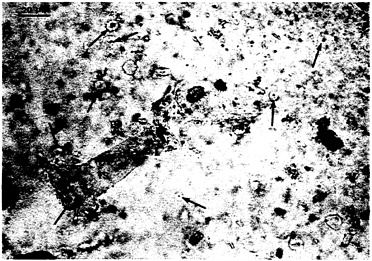
Figure 1. Optical-Microscope Image of the Filter of an Air Sampler Placed in the City during an Epidemic Day.
Starch particles (arrows) and soybean-wall cells (trumpet-shaped cells [TS]) are visible.

Figure 2. Scanning-Electron-Microscope Images of the Cross Section of a Soybean from the Hold of a Ship from Which Soybeans Were Unloaded on an Epidemic Day.
Starch aggregates (SA) and soybean-wall cells (episperm cells [EP]) appear in Panel A, and episperm cells and trumpet-shaped cells (TS) appear in Panel B.
of hourly clusters was used to discriminate asthma-epidemic days from the unusual asthma days that would be expected to occur normally by chance. Since the asthma-epidemic days were identified before we developed our hypothesis about soybean dust30 and also before the data on soybean unloading were collected, a bias in the direction of a strong effect of soybean dust seems unlikely.
Although outbreaks of asthma were noted in Barcelona from 1981 to 1987, the present study covered only the 1985–1986 period, for which complete monitoring data were available. The fact that all known outbreaks of asthma since 1981 occurred on days when soybeans were unloaded strongly suggests that the analysis of a more extended period than 1985–1986 might yield similar results.
The lack of temporal independence in both variables—unloading of soybeans and outbreaks of asthma—may have biased the estimated significance of the risk ratio. However, the strong association between the variables makes it unlikely that this problem would explain the high degree of association found. In addition, the association between the unloading of soybeans and the outbreaks of asthma remained statistically significant when we adjusted for auto-correlation31,32 (and unpublished data).
We observed a significant difference between the risk ratios associated with the unloading of soybeans into the two silos, A and B. Silo A was closer than silo B to the urban area in which the asthma outbreaks most frequently occurred. Although both silos used the same unloading procedure (soybeans were unloaded by a vacuum system, raised to the top of the silo, and thrown down into it), silo A was higher than silo B (70 as compared with 20 m), and unlike silo B, it did not have bag filters installed in the cyclone dust-collection system, thereby allowing the release of large amounts of soybean dust into the air.
High barometric pressure and low southeasterly to southwesterly wind speeds were registered on epidemic days—appropriate weather conditions for moving air from the harbor to the city. High-pressure areas with still air have been identified in other asthma outbreaks, such as those in New Orleans33 and New York City.34
Likewise, the conclusion that soybean dust reached the city is supported by the morphologic similarity between the starch particles and trumpet-shaped cells
recovered from the air samplers and those recovered from the cargo hold, together with the placement of the samplers close to the harbor and inside the urban district in which most cases of asthma were registered. Spheroidal particles identified as starch have already been described as a component of soybean dust.22
All the above findings led us to conclude that the unloading of soybeans gave rise to a sudden, massive release of soybean dust that reached the urban area under appropriate meteorologic conditions and caused the outbreaks. In addition, a preliminary analysis of the data on asthma emergencies in Barcelona each day during the 16-month period after the installation of appropriate bag filters at silo A (September 1987) indicates that outbreaks of asthma have disappeared completely.
These results are consistent with those obtained in a serologic case-control study that we carried out recently.35 In 64 of 86 cases occurring during asthma epidemics (74.4 percent), a reaction with commercial soybean-antigen extracts was shown, as compared with only 4 of the 86 matched controls (odds ratio, 61; lower limit of the 95 percent confidence interval, 8.07). No other serologic covariates (total serum IgE levels or specific IgE levels against the most common airborne allergens or legumes) confounded the association between serum antisoybean IgE antibodies and epidemics of asthma. In addition, preliminary characterization of the antigens involved in the outbreaks of asthma in Barcelona has shown that the patients with asthma reacted specifically to an acidic and low-molecular-weight protein band of the dust and hull of the soybean (Morell F, Rodrigo MJ: personal communication).
Asthma epidemics have been described in other cities, including New Orleans,2 New York,1 and Birmingham, England,5 but their specific causes have been controversial. Only castor-bean dust has been reported to be specifically causative of asthma epidemics.8–10 In New Orleans, the marked decline in asthma outbreaks has recently been attributed both to better socioeconomic conditions and the availability of better medical care for indigent patients with asthma, rather than to the disappearance of specific allergens or industrial chemical pollutants.11 In New York City, asthma-epidemic days were more likely to occur when susceptible persons spent more time indoors, suggesting an exposure to agents in the home.28 No relation was found, however, between outdoor air pollution and outbreaks of asthma,36 as in Barcelona.16 In Birmingham, a large asthma outbreak appeared to be caused by Didimella exitialis,5 but a more recent study could not confirm this hypothesis,37 and the question of the origin of the epidemic remains open.38
Soybeans have been identified as causing bronchial asthma, although infrequently so. Most of the cases reported were among mill workers,39–44 and soybean dust is included among the occupational causes of asthma.45–47 Both the frequency of the Barcelona epidemics and the large number of persons affected contrast sharply with the relatively few cases reported hitherto. This unusual epidemiologic presentation may be explained, at least in part, by several local factors: the harbor borders the most densely populated district of the city, soybean dust was released during unloading because of the lack of bag filters in a silo, and outbreaks occurred on days when weather conditions favored the transportation of dust to the city. These conditions may not be unique to Barcelona, and we recommend that whenever outbreaks of asthma occur, the release of soybean dust be considered as a possible cause.
We are indebted to the following members of the Barcelona Asthma Collaborative Group, who participated in various parts of this study: Area de Salut Pública, Ajuntament de Barcelona: José I. Cuervo, Salvador Rueda; Consell Superior d’Investigacions Científiques: Josep Rivera, Domènec Turuguet; Conselleria de Sanitat, Generalitat de Catalunya: Joan Puigdollers; Corporació Metropolitana de Barcelona: Mercè Aceves, Josep M.Serena; Hospital Clínic: Albert Agustí-Vidal, Antoni Ferrer, Francisco Muñoz-López, César Picado, Evaristo Tardío; Hospital de l’Esperança: Josep Lloreta, Carles Sanjuas; Hospital del Mar: Xavier Aran, Joan Broquetas, Eulàlia Tauler; Hospital de Sant Pau: Raimon Cornudella, Joan Nadal, Ignacio Vidal-Quadras; Hospital Sant Joan de Deu: Francesc Fibla, José L.Séculi; Hospital Vall d’Hebron: Jaume Botey, Javier Degracia, José L.Eseverri, Ramon Orriols, María J. Rodrigo; Institut Nacional de Seguretat i Higiene en el Treball: María J.Berenguer, Emili Castejón; and Institut Nacional de Toxicologia: Antonio Garfia, José L.Valverde. We are also indebted to Joan Clos for his constant encouragement and general support; to the medical and nursing staff of the medical wards for their support; to Edwin Kilbourne, Ruth Etzel, Alice Greife, and Henry Falk for scientific advice and technical help; to George Knox for constant scientific support; to Inge Goldstein for her critical review of the epidemic identification method; and to Marta Pulido and Penny Lock for their assistance in editing the manuscript.
REFERENCES
1. Greenburg L, Field F, Reed JI, Erhard CL. Asthma and temperature change. Arch Environ Health 1964;8:642–7.
2. Weill H, Ziskind MM, Dickerson RC, Derbes VJ. Epidemic asthma in New Orleans. JAMA 1964;190:811–4.
3. Phelps HW, Koike S. “Tokyo-Yokohama Asthma”: the rapid development of respiratory distress presumably due to air pollution. Am Rev Respir Dis 1962;86:55–63.
4. Derrick EH, Thatcher RH, Trappett LG. The seasonal distribution of hospital admissions for asthma in Brisbane. Australas Ann Med 1960;9:180–7.
5. Packe GE, Ayres JG. Asthma outbreak during a thunderstorm. Lancet 1985; 2:199–204.
6. Egan P. Weather or not. Med J Aust 1985;142:330.
7. Salvaggio J, Seabury J, Schoenhardt A. New Orleans asthma. V. Relationship between Charity Hospital asthma admission rates, semiquantitative pollen and fungal spore counts, and total particulate serometric sampling data. J Allergy 1971;48:96–114.
8. Figley KD, Elrod RH. Endemic asthma due to castor bean dust. JAMA 1928;90:79–82.
9. Ordman D. An outbreak of bronchial asthma in South Africa, affecting more than 200 persons, caused by castor bean dust from an oil-processing factory. Int Arch Allergy Appl Immunol 1955;7:10–24.
10. Mendes E, Ulhôa Cintra A. Collective asthma, simulating an epidemic, provoked by castor-bean dust. J Allergy 1954;25:253–9.
11. Goldstein IF, Salvaggio J. The decline of New Orleans asthma epidemics. Rev Environ Health 1984;4:133–46.
12. Ussetti P, Roca J, Agustí AGN, Montserrat JM, Rodríguez-Roisín R, Agustí-Vidal A. Asthma outbreaks in Barcelona. Lancet 1983;2:280–1.
13. Idem. Another asthma outbreak in Barcelona: role of oxides of nitrogen. Lancet 1984;1:156.
14. Antó JM, Sunyer J, Asthma Collaborative Group of Barcelona. A point-source asthma outbreak. Lancet 1986;1:900–3.
15. Plasencia A, Sunyer J, Antó JM, Galbe A. Epidemiology of Barcelona asthma outbreaks: a retrospective analysis of 12 epidemics. In: Proceedings and abstracts of the 11th Scientific Meeting of the International Epidemiological Association, Helsinki, August 8–13, 1987. Helsinki: International Epidemiological Association, 1987:291. abstract.
16. Antó JM, Sunyer J, Plasencia A. Nitrogen dioxide and asthma outbreaks. Lancet 1986;2:1096–7.
17. Scadding JG. Definition and clinical cateogorization. In: Weiss EB, Segal MS, Stein M, eds. Bronchial asthma: mechanisms and therapeutics. 2nd ed. Boston: Little, Brown, 1985:3–14.
18. Goldstein IF, Rausch LE. Time series analysis of morbidity data for assessment of acute environmental health effects. Environ Res 1978;17:266– 75.
19. Knox EG, Lancashire R. Detection of minimal epidemics. Stat Med 1982; 1:183–9.
20. Wallenstein S. A test for detection of clustering over time. Am J Epidemiol 1980;111:367–72.
21. Suárez-Cervera M, Seoane-Camba JA. Sobre el sistema de filtración automática en aerobiologia. An Asoc Palinol Leng Esp 1985;2:307–17.
22. Goynes WR, Ingber BF, Palmgren MS. Microscopical comparison of cotton, corn, and soybean dusts. Environ Health Perspect 1986;66:125– 33.
23. Dashek WV, Olenchock SA, Mayfield JE, Wirtz GH, Wolz DE, Young CA. Carbohydrate and protein contents of grain dusts in relation to dust morphology. Environ Health Perspect 1986;66:135–43.
24. Kleinbaum DG, Kupper LL, Morgenstern H. Epidemiologic research: principles and quantitative methods. New York: Van Nostrand Reinhold, 1982:296–302.
25. Schlesselman JJ. Case control studies: design, conduct, analysis. New York: Oxford University Press, 1982:180.
26. Armitage P, Berry G. Statistical methods in medical research. 2nd ed. Boston: Blackwell, 1987:129–32.
27. Mantel N, Haenszel W. Statistical aspects of the analysis of data from retrospective studies of disease. JNCI 1959;22:719–48.
28. Goldstein IF, Cuzick J. Daily patterns of asthma in New York City and New Orleans: an epidemiologic investigation. Environ Res 1983;30:211– 23.
29. Gross J, Goldsmith JR, Zangwill L, Lerman S. Monitoring of hospital emergency room visits as a method for detecting health effects of environmental exposures. Sci Total Environ 1984;32:289–302.
30. Antó JM, Sunyer J, Plasencia A, Galbe A, Roca J. Time and space clusters on unusual asthma days in Barcelona. In: Proceedings and abstracts of the 11th Scientific Meeting of the International Epidemiologic Association, Helsinki, August 8–13, 1987. Helsinki: International Epidemiological Association, 1987:28. abstract.
31. Box GEP, Jenkins GM. Time series analysis: forecasting and control. Rev. ed. San Francisco: Holden-Day, 1976.
32. Box GEP, Tiao GC. Intervention analysis with applications to economic and environmental problems. J Am Stat Assoc 1975;70:70–9.
33. Salvaggio J, Hasselblad V, Seaburg J, Heiderscheit LT. New Orleans asthma. II. Relationship of climatologic and seasonal factors to outbreaks. J Allergy 1970;45:257–65.
34. Goldstein IF. Weather patterns and asthma epidemics in New York City and New Orleans, USA. Int J Biometeorol 1980;24:329–39.
35. Sunyer J, Antó JM, Rodrigo M-J, Morell F, Clinical and Toxicoepidemiological Committee. Case-control study of serum immunoglobulin-E antibodies reactive with soybean in epidemic asthma. Lancet 1989;1:179–82.
36. Goldstein IF, Weinstein AL. Air pollution and asthma: effects of exposures to short-term sulfur dioxide peaks. Environ Res 1986;40:332–45.
37. Packe GE, Ayres JG. Aeroallergen skin sensitivity in patients with severe asthma during a thunderstorm. Lancet 1986;1:850.
38. Morrow Brown H. Skin sensitivity to aero-allergens. Lancet 1986;1:980.
39. Duke WW. Soybean as a possible important source of allergy. J Allergy 1934;5:300–2.
40. Olsen AM, Prickman LE. Hypersensitivity to soybeans. Proc Staff Meet Mayo Clin 1936;11:465–9.
41. Charpin J, Zafiropoulo A. Les accidents allergiques respiratoires dus aux oléagineux. Poumon Coeur 1961;17:601–12.
42. Peters GA. Bronchial asthma due to soybean allergy: report of a case with audiovisual documentation. Ann Allergy 1965;23:270–2.
43. Bush RK, Cohen M. Immediate and late onset of asthma from occupational exposure to soybean dust. Clin Allergy 1977;7:369–73.
44. Bourgeois M. Asthme sévère par inhalation de poussière de soja. Rev Fr Allergol 1984;4:209–10.
45. Brooks SM. Bronchial asthma of occupational origin: a review. Scand J Work Environ Health 1977;3:53–72.
46. Reed CE, Swanson MC, Agarwal MK, Yunginger JW. Allergens that cause asthma: identification and quantification. Chest 1985;87:Suppl 1:40S–44S.
47. Pepys J. Occupational allergic lung diseases caused by organic agents. J Allergy Clin Immunol 1986;5:1058–62.


