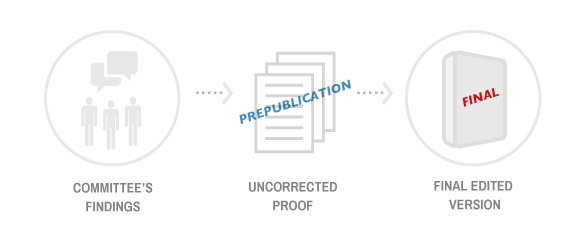
Below are the first 10 and last 10 pages of uncorrected machine-read text (when available) of this chapter, followed by the top 30 algorithmically extracted key phrases from the chapter as a whole.
Intended to provide our own search engines and external engines with highly rich, chapter-representative searchable text on the opening pages of each chapter.
Because it is UNCORRECTED material, please consider the following text as a useful but insufficient proxy for the authoritative book pages.
Do not use for reproduction, copying, pasting, or reading; exclusively for search engines.
OCR for page 81
Page 81
Appendixes
OCR for page 82
OCR for page 83
Page 83
Appendix A Financial Performance of a Commercial Office Building For the purposes of this analysis, it is assumed that the building under consideration is a typical speculative mid-rise commercial office building that has been conventionally constructed. The building is located in a developed American urban area, is mid-life in age, has a rentable area of 250,000 square feet, and is occupied by a single tenant with a five-year, full-service lease. The building appraises at its cost basis, and its debt is a nonamortizing mortgage with a loan-to-value ratio of 0.8 and 9 percent interest. The building and land are privately owned so the project is subject to all applicable taxes. The financial profile for this building is given in Table A-1, and the figures used in the analysis are the averages shown in the column labeled ''Average.''
The U.S. national average cost to build a conventionally constructed, speculative commercial office building in an urban location is approximately $83.50 per square foot (/sf) including land, development costs, core and shell construction, and tenant improvements (build-out) (see Table A-2).
The analysis makes the assumption that blast-hardening the subject building will increase the owner's cost basis by 5 percent. This figure is highly dependent on numerous factors, and while the argument could be made that 5 percent is an arbitrary assignment, the more important aspect of the analysis is to examine the sensitivity of blast-hardening costs to the financial performance of a commercial property.
Blast-hardening will increase soft costs, core and shell construction, and build-out, but land cost would not be affected. The blast-hardening premium is therefore applied to the project costs before adding the cost of land. Referring again to Table A-2, it can be seen that a 5 percent blast-hardening cost would
OCR for page 84
Page 84
TABLE A-1 Conventional Building Income and Expense Analysis (U.S. national average for an urban, commercial office building in the 100,000–300,000 sf range, 1993 dollars)
Income and Expenses
Average
Low
High
Conventionally Configured
Blast- Hardened
Unoccupiable
INCOME
Office rent
16.29
9.95
19.97
4,072,500
4,189,381
0
Retail rent
17.18
8.78
26.79
Other rents
4.62
2.76
10.02
Total Rent
16.13
9.89
19.65
4,072,500
4,189,381
0
Parking Income
0.86
0.30
1.18
215,000
215,000
0
Miscellaneous Income
0.20
0.02
0.18
50,000
50,000
0
Total Income
16.82
10.41
20.21
4,337,500
4,454,381
0
EXPENSES
Cleaning
1.07
0.72
1.23
267,500
267,500
66,875
Repairs/maintenance
1.24
0.82
1.56
310,000
325,500
162,750
Utilities
1.87
1.46
2.18
467,500
467,500
116,875
Roads/grounds/security
0.48
0.27
0.64
120,000
132,000
132,000
Administrative
0.97
0.62
1.23
242,500
254,625
254,625
Total Operating Expense
5.57
4.46
6.46
1,407,500
1,447,125
733,125
Taxes and Insurance
2.29
1.02
3.02
572,500
595,400
595,400
Total Operating + Fixed
7.87
5.72
9.49
1,980,000
2,042,525
1,328,525
Debt Service
5.95
1,487,500
1,532,125
1,532,125
Leasing Expense
1.46
0.20
2.07
365,000
365,000
0
Total Expense
3,832,500
3,939,650
2,860,650
NET INCOME
505,000
514,731
(2,860,650)
Operating + Fixed/sf
7.92
8.17
5.31
All Costs/sf
15.33
15.76
11.44
Cash Flow per Business Day
(11,433)
NOTE: National average data from BOMA Experience Exchange Report (1994:86)
OCR for page 85
Page 85
TABLE A-2 Return on Investment Analysis ($/sf)
Conventional Building
Blast-Hardened Building
Construction Cost
Shell and core
43.50
45.68
Tenant improvements
11.00
11.55
Development (soft) costs
6.25
6.56
Miscellaneous
1.75
1.84
Subtotal construction costs
62.50
65.63
Land
21.00
21.00
Total Building and Land for a Triple Net Lease
83.50
86.63
Net effective rent rate to achieve 10% return on investment
8.35
8.66
Blast-Hardening Premium for a Full-Service Lease
3.74
Add back
Operating expenses and taxes
7.92
8.17
Net effective rent rate to achieve 10% return on investment
16.27
16.83
Blast-Hardening Premium Assumptions
3.46
1. Land is owned by the project partnership
2. The partnership desires a return on investment of 10%
3. Blast-hardening increases investment by 5%
NOTES: Construction costs from Means Building Construction Cost Data, 50th Edition, 1992. National average square foot costs, mid-rise office building, escalated to 1993 dollars. Operating expenses and taxes are from Table A-1.
represent approximately $3.13/sf increased cost for a total construction cost of $86.63/sf. Assuming a 10 percent return on investment, this incremental cost requires a full-service rent premium of about 3.5 percent to recover the increased construction cost.
Blast-hardening may also increase a building's operating costs through increased inspection and maintenance of blast-hardening features. These may be specialized services that are of limited availability and therefore more expensive than inspection and maintenance services would be in a building not so equipped. Furthermore, a tenant with concerns about terrorist activity may also require increased security measures such as perimeter and zone access control. Such security measures may include a uniformed guard service to screen and process visitors and the operation of a facility to X ray incoming mail and deliveries.
OCR for page 86
Page 86
Ordinary operating, repair, and maintenance expense for a building as described above would be approximately $7.92/sf. Table A-1 attempts to compare operating costs between a conventional and blast-hardened building by making assumptions about which operating-cost elements could be affected. These assumptions result in a new operating cost of $8.17/sf or an increase of slightly more than 3 percent. The lease escalation would increase by $0.25/sf if all of these additional costs were borne by the owner and passed on to the tenant. Certain lease forms, particularly with government tenants, may disallow certain costs that could be otherwise escalated to a commercial tenant, which means the ownership must bear these costs directly.
Taken together, increased construction, operating, and repair and maintenance expenses can represent approximately $0.81/sf ($0.56 in lease rate plus $0.25 in escalations) in increased cost to a tenant desiring to occupy a blast-hardened building. For the sample building used in this analysis, the incremental cost would represent $1,012,500 over the five-year lease term.
Table A-1 also attempts to examine the operating cost of the subject building should the building sustain sufficient damage that it cannot be occupied. Certain fixed costs would continue unchanged while others would be reduced or eliminated altogether. The most damaging effect is the complete loss of revenue due to the abatement of rent. Most commercial leases require the owner to abate rent in the event the tenant cannot occupy the building for the period that the building is unoccupiable. Note that the building's cash flow under these circumstances becomes negative at about $11,400 for each business day that it cannot be occupied, and this does not include revenue losses suffered by the occupant businesses because of reduced or suspended operations. While it is common to insure against loss of revenues, most policies have a limit on either the number of days covered or a cap on the total amount that will be paid. Loss of revenues from a building that experiences damage to such a magnitude that it cannot be occupied will most probably exceed the policy limits before operations are restored.
Overall, the construction and operating and maintenance costs of a blast-hardened building are not significantly different from a conventional building when using the assumptions of this analysis. If the model shown in Table A-2 is indexed through different construction premium assumptions, the change in lease-rate premium is small in comparison.
Assumed Cost Premium
Resulting Lease Premium
3%
2.69%
5%
3.46% (used in the analysis)
7%
4.23%
One percent change in the construction-cost premium produces a 0.385 percent change in the lease-rate premium. This negative sensitivity tends to lessen the importance of validating the construction-cost premium assumption.
Representative terms from entire chapter:
construction cost