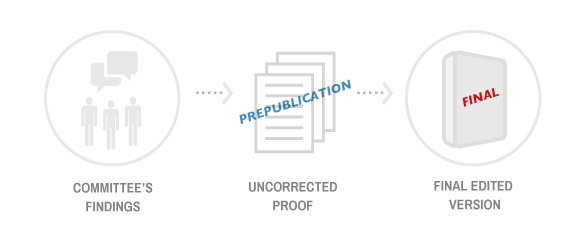
Below are the first 10 and last 10 pages of uncorrected machine-read text (when available) of this chapter, followed by the top 30 algorithmically extracted key phrases from the chapter as a whole.
Intended to provide our own search engines and external engines with highly rich, chapter-representative searchable text on the opening pages of each chapter.
Because it is UNCORRECTED material, please consider the following text as a useful but insufficient proxy for the authoritative book pages.
Do not use for reproduction, copying, pasting, or reading; exclusively for search engines.
OCR for page 81
ForcQs HffQcting
SufQty NQ! Providers in ~
Changing Health Core Environment
Several recent studies have warned that changes in the health care
marketplace may threaten the ability of safety net providers to continue
serving the poor and uninsured (Altman et al., 1998; Andrulis, 1997; Baxter
and Mechanic, 1997; Fishman and Bentley, 1997; Lipson and Naierman,
1996; Norton and Lipson, 1998~. To date, safety net providers have dem-
onstrated considerable resiliency in maintaining their missions of caring
for uninsured and other vulnerable populations. Recent changes within
the health care marketplace, however, threaten to intensify pressures on
safety net Providers. This chanter Provides a detailed examination of the
J 1 1 1
~ rr ~ · ~ ~ ~ · 1 ~ r- 1 · 1 ·1 - ~ 1 e1 · 1 ·1 ·
many forces affecting safety net providers fiscal viability and their ability
to care for uninsured and other vulnerable populations.
There are major and increasing variations in states' capacities and
willingness to support care for vulnerable populations. The organization,
financing, and adequacy of the health care safety net varies substantially
from state to state and from community to community. In the absence of
federally sponsored universal insurance coverage, care for uninsured and
other vulnerable populations is increasingly influenced by state and local
policies. The wide variation in the structures and the conditions of the
safety nets across states, however, make national tracking and compara-
tive analysis in this area difficult.
The sources and intensities of the pressures facing individual pro-
viders depend on the level of demand, amount of support, and the struc-
ture of the safety net in a community. The structural characteristics of the
81
OCR for page 82
82 AMERICA'S HEALTH CARE SAFETY NET: INTACT BUT ENDANGERED
safety net and the factors that affect safety net providers are illustrated in
Figure 3.1.
The horizontal continuum of Figure 3.1 depicts the major structural
factors that influence local safety net systems. Essential factors that deter-
mine the structure of local safety nets include
· The degree of formal or informal organization of the safety net,
· The extent to which care for Medicaid beneficiaries and uninsured
individuals is concentrated among a few providers or shared among
many,
· The degree to which the safety net system is comprised of public or
private entities,
· The level of price competition, and
· The extent of Medicaid managed care penetration.
The safety net system itself can be formal in its organization, relying
on horizontal or vertical networks, public authorities, or other defined
governance structures, or it can be informal, relying on the actions of
individual providers to cover care for uninsured and other vulnerable
Demand
Number
of Medicaid Patients with
uninsured patients special needs
l
Shared/
dispersed
. · ,
Structural
Factors
Concentration
of care for:
· Uninsured
· Medicaid
· Special needs
Public
system
Non-price
competitive
Minor Medicaid
managed care
penetration
l
T T
Federal State and Medicaid
policy/$ local payment
policy/$ rates
Support
FIGURE 3.1 Factors affecting the health care safety net.
l
l
Community
attitudes
toward the
safety net
Private
system
Price
competitive
Substantial
Medicaid
managed care
penetration
OCR for page 83
FORCES AFFECTING SAFETY NET PROVIDERS
83
populations. In some communities one or two publicly subsidized pro-
viders, such as a large public hospital or a hospital partnered with a well-
defined network of community health centers (CHCs), may be responsible
for nearly all of the health care for the uninsured population. In other
communities health care for uninsured individuals might be widely dis-
persed among many providers, including not-for-profit providers and
other mission-driven hospitals. Highly concentrated safety net systems
tend to rely on public providers and tight organizational structures,
whereas widely dispersed systems are more likely to comprise a mix of
public and private providers and rely on less formal organizational struc-
tures. The level of price competition in a community and the degree of
Medicaid managed care penetration can also significantly shape local
safety net systems and influence their stability.
Safety net systems are neither uniform nor static; that is, no single
paradigm describes them perfectly and no single approach will sustain
them. Moreover, it is important to understand the structural aspects of
each safety net to predict the effects of major forces of change on its future
viability. The paragraphs below offer three examples of different safety
net structures, those in Miami, Florida; Philadelphia, Pennsylvania; and
Boston, Massachusetts.
Miami's safety net is an example of a moderately concentrated, for-
mally organized public safety net in a community with large numbers of
uninsured people. Dade County, where Miami is located, is a highly com-
petitive, mature managed care market for both commercial and Medicaid
businesses (Lipson et al., 1997~. Jackson Memorial Hospital, a public teach-
ing hospital, is the major provider of care for vulnerable populations. It
not only provides services at its own locations but also is responsible for
operating the clinics of the local health department. Health care for indi-
gent populations in Miami as well as in many other parts of the state is
supported primarily by local taxing districts. Jackson Memorial Hospital
has recently reached out to a larger community of providers by affiliating
with CHCs and other hospitals, although there are still some safety net
providers that are not part of the Jackson Memorial Hospital network.
On the other end of the continuum is Philadelphia, a city with large
uninsured and Medicaid populations but without a publicly owned hos-
pital since 1978. With the closing of Philadelphia General, the city's nine
public health stations were converted to community-based primary care
programs. The health department clinics, along with six federally quali-
fied health centers (FQHCs), have been participating in some form of
managed care since the mid-1980s. Philadelphia's inpatient safety net is
informally organized and is dispersed among several academic health
centers and other public and private hospitals. Philadelphia has an active
health care market that offers some degree of choice to vulnerable popu-
OCR for page 84
84 AMERICA'S HEALTH CARE SAFETY NET: INTACT BUT ENDANGERED
rations and high-price competition. As a result, the safety net comprises
multiple competing networks, each of which provides some care to the
safety net population (National Health Policy Forum, 1998~.
Boston is a market with significant managed care penetration.
Prompted by state Medicaid policies, Boston has an array of small and
large, public and private not-for-profit organizations that work together
to craft the local safety net. In this configuration, the treatment of vulner-
able populations is dispersed among CHCs, private not-for-profit pro-
viders, and the public hospital systems organized into relatively formal
networks. CHCs have formed networks, have sponsored health plans,
and have entered into multiple affiliations to strengthen their ability to
serve the indigent population. Concurrently, Boston City Hospital merged
with Boston University Medical Center to create the Boston Medical
Center with the expectation that an integrated organization would be
better able to provide continued services to vulnerable populations. Local
health center networks have linked with the medical center to provide a
cohesive, integrated system of care for vulnerable populations. To sup-
port these efforts, organizations can receive funds from a pool of funds
for state-sponsored health care for the indigent population (Baxter and
Feldman, 1999~.
These examples provide only snapshots of very complicated safety
net systems. They are intended simply to illustrate the local variability of
safety net systems. Although virtually all local safety net systems rely on
a core group of providers for either ambulatory care, inpatient care, or
both, no single structural configuration of the safety net is right for all
communities. It is clear, however, that the way in which a local safety net
is structured will have a lot to do with how it adapts to the major forces of
change described in the remainder of this chapter.
The primary challenges that currently affect safety net providers can
be grouped into three areas: (1) increasing demand for care by uninsured
and other vulnerable populations, (2) uncertain public support (federal,
state, and local) for safety net providers, and (3) the changing structure
and environment of the broader health care system and the resulting
disequilibrium caused by changes in the payer mix. This chapter exam-
ines each of these forces in detail.
INCREASING DEMAND FOR CARE
The increasing demand for safety net care can be traced to several
phenomena, including trends in the number of uninsured individuals
(including the length of time that they remain without coverage and the
geographic variation in the number of uninsured people across the
country), the number of underinsured Americans, the impact of welfare
OCR for page 85
FORCES AFFECTING SAFETY NET PROVIDERS
50 -
Q
o
~ 25-
o
o
. _
31.8
85
33 6 34 3 35.6 36 3
38 3 39 3 39 4 40 3
43.1 43 9
oil I I I I I I I I I I I
1987 1988 1989 1990 1991 1992 1993 1994 1995 1996 1997 1998
Year
FIGURE 3.2 Number of uninsured nonelderly Americans (in millions), 1987 to
1998. Medicaid and uninsured data from 1998 are not completely consistent with
previous years. Starting with the March 1998 Current Population Survey (CPS),
the Bureau of the Census modified its definition of the population with Medicaid
and the population without health insurance. Previously, individuals covered
solely by the Indian Health Service were counted in the Medicaid population.
Beginning with data from the 1998 CPS, individuals covered solely by the Indian
Health Service are counted as uninsured. SOURCE: Fronstin (2000~. Reprinted
with permission of the Employee Benefit Research Institute.
reform, and the limited success of recent efforts to expand insurance
coverage.
Trends in the Number of Uninsured
The level of demand for safety net care is driven most directly by the
sheer number of persons without health insurance in the local area.
Despite the overall strength of the U.S. economy, the number of uninsured
nonelderly Americans increased by 30 percent between 1988 and 1998,
from 33.6 million to 43.9 million (Figure 3.2~. During that time, the per-
centage of uninsured Americans rose from 15.5 to 18.4 percent of the
nonelderly population.] Nearly all the increase between 1996 and 1998,
from 17.7 to 18.4 percent, was accounted for by adults ages 18 to 64.
1These figures represent the most recent data available, which are from the March 1998
Supplement of the Current Population Survey (CPS) (Fronstin, 2000~.
OCR for page 86
86 AMERICA'S HEALTH CARE SAFETY NET: INTACT BUT ENDANGERED
Several factors contributed to the growing number of uninsured indi-
viduals in the United States and thus the increased demand for free ser-
vices faced by safety net providers. These are delineated in the following
sections.
Decline in Employer-Sponsored Coverage
The proportion of nonelderly Americans receiving health insurance
through their employers declined 4.1 percent between 1988 and 1998,
with the greatest declines being among low-income workers and families.
More than 83 percent of those without insurance in 1998 lived in families
headed by workers (Fronstin, 2000~. The proportion of nonelderly em-
ployees who receive their health insurance from employers declined
sharply from 69.2 percent in 1987 to a low of 63.5 percent in 1993, but it
then increased to 64.2 percent in 1997, according to the Census Bureau.
Slightly more employers are offering health insurance, but fewer workers
are taking it either because the employee's portion of the coverage is too
costly or because of a lack of eligibility due to waiting periods or number
of hours worked. However, the largest number of uninsured are salaried
workers whose employers do not sponsor health insurance.2
Exacerbating the erosion of employer-based coverage is the rapid
growth of part-time, contract, and temporary jobs that typically offer no
benefits. In 1997, 29 percent of the U.S. workforce held "nonstandard"
jobs that were temporary, part-time, contract, or day-labor positions
(Mishel et al., 1998~. Figure 3.3 shows that over the last decade the per-
centage of low-wage workers who had access to employer-sponsored
insurance through their own job or that of a family member decreased.
Even greater declines occurred in the percentage of low-wage workers
who had access to insurance and were actually covered by it (i.e., family
take-up rate).
Workers with incomes of between 100 and 200 percent of the federal
poverty level,3 often referred to as the "near poor," are especially vulner-
able. Caught between ineligibility for Medicaid and inadequate resources
2virtually all large employers offer health insurance coverage to their full-time workers,
although only 60 percent of small businesses do so. The most recent 1999 Annual Employer
Health Renews survey found little change in the number of plans that offer health insur-
ance coverage over the last 2 years Kaiser Family Foundation/Health Research and Educa-
tional Trust, 1999~.
3The federal poverty level in 1997 for a family of three with two adults and one child was
$12,919 and for a family of three with one adult with two children was $12,931; 300 percent
of the poverty level is the equivalent of $39,000. The median family income in 1997 for a
family of three was $46,783 tDalaker and Naifeh, 1998~.
OCR for page 87
FORCES AFFECTING SAFETY NET PROVIDERS
20
~9
a, 1 5
1
a) 10
.~ 5
s
. _
o
_5
-10
87
Hourly Wage
All Workers $15
-15
0.4
-4
-5
-7
-0.2
· Access
cD Family Take-Up Rate
FIGURE 3.3 Employers offering health insurance and worker participation, 1987
to 1996, by wage of workers. SOURCE: O'Brien et al. (1999~. Calculations based
on data from Cooper and Schone (1997~. Reprinted with permission of the Insti-
tute of Health Care Research and Policy.
to buy their own insurance, the near poor run the highest risk of being
uninsured. In 1997 a third of individuals in families with incomes less
than 200 percent of the federal poverty level were uninsured, whereas just
9 percent of those with family incomes above 300 percent of the federal
poverty level were uninsured (O'Brien et al., 1999~. It is precisely these
low-income uninsured families who most often rely on safety net providers
for their health care. The rising number of uninsured individuals at a time
when unemployment rates are approaching a 30-year low does not bode
well for the future unless there is a dramatic change in national policy
(Kuttner, 1998~. The demand for uncompensated care and the need for
safety net services in this environment promise to increase and accelerate.
Decline in Public Coverage
Since 1993, increases in the number of uninsured individuals have
been driven by declines in public coverage (Fronstin, 1999~. Although
Medicaid covers many low-income families who meet program eligibility
requirements, a large number of eligible families do not gain access to
OCR for page 88
o
.—
Q
o
o
A
o
rim
88 AMERICA'S HEALTH CARE SAFETY NET: INTACT BUT ENDANGERED
18.3 18.4
17.0 17 3 171 17,~__
14.8
15.5 15.7 16.1 16.3
8.6 8.7 8.8
11.8 12.5 12.5
No Health Insurance
Medicaid
11.0 104
1 987 1 988 1 989 1 990 1 991 1 992 1 993 1 994 1 995 1 996 1 997 1 998
Year
FIGURE 3.4 Trends in Medicaid coverage and a lack of health insurance cover-
age, 1987 to 1998. Medicaid and uninsured data from 1998 are not completely
consistent with previous years. Starting with the March 1998 Current Population
Survey, the Bureau of the Census modified its definition of the population with
Medicaid and the population without health insurance. Previously, individuals
covered solely by the Indian Health Service were counted in the Medicaid pop-
ulation. Beginning with data from the 1998 CPS, individuals covered solely by
the Indian Health Service are counted as uninsured. SOURCE: Fronstin (2000~.
Reprinted with permission of the Employee Benefit Research Institute.
coverage. In 1998 less than half (44.8 percent) of nonelderly Americans
with family incomes below the federal poverty level were covered by
publicly sponsored health insurance.4 Declines in public coverage are
especially important to safety net providers since publicly insured indi-
viduals make up a large proportion of safety net providers' paying patient
base. Declines in public coverage are apt to have a large effect on safety
net providers' bottom line. Figure 3.4 illustrates the changing trends in
Medicaid coverage and the number of uninsured individuals from 1987
to 1998.
4According to March 1999 CPS data, 41.6 percent of nonelderly respondents with family
incomes below the federal poverty level were insured by Medicaid, with the remaining 3.2
percent accounted for by other sources of public coverage, including Medicare, the Civilian
Health and Medical Program of the Uniformed Services, the Civilian Health and Medical
Program of the Veterans Administration, and U.S. Department of Veteran's Affairs health
insurance (Fronstin, 2000~.
OCR for page 89
FORCES AFFECTING SAFETY NET PROVIDERS
Growth in Length of Time Without Insurance
89
The demand for uncompensated care from safety net providers also is
affected by the length of time that uninsured individuals remain without
coverage. Point-in-time estimates or "snapshots" of the number of unin-
sured, such as those generated by the Current Population Survey (CPS),
must be placed in context. If the average length of time that each unin-
sured person remains without coverage grows, overall demand for un-
compensated care can also be expected to grow. An analysis of the 1994-
1995 Survey of Income and Program Participation data found that
approximately half of all spells without health insurance lasted for 8
months or longer,5 and about a third of all uninsured individuals are
uncovered for the entire year (Copeland, 1998~. This subgroup of chroni-
cally uninsured individuals is especially likely to depend on safety net
providers for health care.
Geographic Variation in the Number of Uninsured
Although national trends are clearly troubling, it is the distribution of
uninsured families across states and local communities that most directly
determines the pressure that individual safety net providers will face. As
seen in Figure 3.5, uninsured Americans are heavily concentrated in the
southwestern and south-central states. In 12 states,6 more than 20 percent
of the population is uninsured (Fronstin, 2000~.
The variation in the concentration of uninsured individuals is more
dramatic when comparing different metropolitan areas. According to the
March 1999 CPS data, the Houston, Texas, metropolitan area had the
highest percentage of uninsured nonelderly residents in 1998, with more
than 30 percent, followed by Los Angeles, California, with more than 29
percent and Miami, Florida, with 25 percent (Fronstin, 2000~. Safety net
providers in these metropolitan areas are likely to face much greater de-
mand for uncompensated care than those safety net providers located in
areas with fewer uninsured individuals. Several factors explain such
variation. Perhaps most importantly, immigrant populations both legal
and illegal immigrants are highly concentrated in a handful of states.
Three states (California, New York, and Texas) account for 64 percent of
the estimated 5 million undocumented immigrants and 57 percent of the
5The median spell of 8 months is longer than that reported in earlier studies by Bennefield
(1996) and Swartz et al. (1993), which found the median spell without insurance to be
approximately 6 months.
6Arizona, Texas, California, New Mexico, Nevada, Mississippi, Montana, Arkansas, Loui
siana, Oklahoma, Florida, and West Virginia.
OCR for page 90
90 AMERICA'S HEALTH CARE SAFETY NET: INTACT BUT ENDANGERED
11 _
- ~603, at
Percent Uninsured
(states)
· 20.9to27.7(12)
~ 17.1to19.7(12)
· 13.5 to 16.6 (14)
~ 10.3 to 13.2 (13)
FIGURE 3.5 Variations in percentage of nonelderly uninsured among U.S. states
and the District of Columbia, 1998. SOURCE: Unpublished calculations by A.
Shields based on Current Population Survey data presented in Fronstin (2000~.
Reprinted with permission of the Institute of Health Care Research and Policy.
legal immigrants in the United States.7 Changes enacted in the Personal
Responsibility and Work Opportunity Reconciliation Act (PRWORA; P.L.
104-193) of 1996, discussed in greater detail below, have increased the
number of legal immigrants who are ineligible for publicly sponsored
health insurance. Safety net providers in states with large immigrant
populations will thus experience greater demand for uncompensated care
than providers in other states.
7These states account for only 26 percent of the total u.s. population Us. Bureau of the
census, 1999~. Calculations by A. Shields, Institute for Health care Research and Policy,
Georgetown university, based on Immigration and Naturalization service estimates as of
April 1996 See Immigration and Naturalization service, 2000a; Immigration and Natural-
ization service, 2000b).
OCR for page 91
FORCES AFFECTING SAFETY NET PROVIDERS
91
The number of uninsured individuals and the demand for free care
are also directly affected by individual states' Medicaid eligibility rules,
the breadth and depth of their Medicaid benefits packages, and their
payment rates. In states with meager benefits packages, safety net providers
may provide free services to individuals who have Medicaid coverage
but who need services not included in the benefits package. Lastly, the
relative wealth and the tax base of each state vary greatly. A study by
Marquis and Long (1997) showed serious geographic disparity between
the distribution of uninsured individuals and the distribution of the abil-
ity to finance subsidized health insurance for them. States with the largest
number of uninsured people, which would be required to tax their resi-
dents more heavily to have a significant impact on the problem, are pre-
cisely the states with lower income bases to begin with (Marquis and
Long, 1997~.
Underinsurance
Demand for uncompensated care comes not only from uninsured
individuals but also from those whose insurance is inadequate to cover
the costs of their health care needs. As many as one of every eight families
(12 percent) without elderly members spent, on average, more than 10
percent of the family income on out-of-pocket health care costs and pre-
mium cost-sharing in 1997; families with members over age 65 spent 50
percent of the family income on health-related costs (Shearer, 1998~. An
earlier study found 18.5 percent of the U.S. population to be underinsured
in 1994 (Short and Banthin, 1995~. Depending on the definition of under-
insurance that one uses, between 10 and 25 percent of those with health
insurance have inadequate coverage to protect them against financial risk.
In times of medical crisis, many of these individuals are unable to pay for
uncovered services and must rely on safety net providers for free care.
The committee also read and heard evidence during its workshops and
deliberations suggesting that rising drug costs are leading many unin-
sured and low-income insured individuals to seek care from safety net
providers where drugs may be free or heavily subsidized. Findings from
a 1997 United Hospital Fund survey on the access of uninsured indi-
viduals to outpatient services in New York City showed that 74 percent of
public hospitals, 39 percent of financially distressed hospitals, and 47
percent of FQHCs provided discounts on drugs, whereas 8 percent of
voluntary hospitals provided such discounts (United Hospital Fund,
1998~.
OCR for page 121
FORCES AFFECTING SAFETY NET PROVIDERS
TABLE 3.5 Trends in Federally Qualified Health Center Users,
1990-1998
121
Number (percent) of Users (in millions)
Users 1990 1995 1996 1997 1998
Total 5.84 (100) 8.05 (100) 8.09 (100) 8.25 (100) 8.66 (100)
Medicaid 1.87 (32) 3.14 (39) 2.77 (34) 2.82 (34) 2.84 (33)
Medicare 0.58 (10) 0.75 (9) 0.63 (8) 0.63 (8) 0.62 (7)
Other insurance 1.17 (20) 1.38 (17) 1.45 (18) 1.52 (18) 1.645 (19)
Uninsured 2.22 (38) 2.79 (35) 3.24 (40) 3.33 (40) 3.55 (41)
NOTES: The 1990 data are only for community and migrant health centers; the 1995 data
for CHC users include an estimate for homeless patients; the data for 1996-1998 include all
Bureau of Primary Health Care grantees. The 1990 and 1995 data for FQHC users by payer
are from grant applications; data for 1996-1998 are from Uniform Data System reports.
SOURCE: Unpublished tabulations of Uniform Data System data by the Health Resources
Services Administration, U.S. Department of Health and Human Services.
TABLE 3.6 Trends in Federally Qualified Health Center Revenues per
Patient User, 1990-1998
Revenue per User
1990 1995 1996 1997 1998
Total revenue/total user $212 $306 $340 $345 $359
Medicaid revenue/Medicaid user 136 260 338 349 369
Federal grants/uninsured user 235 249 243 230 231
Noninsurance patient care
revenuea/uninsured user 273 319 308 288 297
aEstimated by adding revenues from federal grants, patient payments, state/local/other
sources and subtracting the portion of total revenues (15 percent) attributable to social and
enabling services.
SOURCE: Calculated from data in Tables 3-1 and 3-4, Bureau of Primary Health Care,
Health Resources and Services Administration, U.S. Department of Health and Human
Services.
implementation of FQHC cost-based reimbursement. There was also a
big jump between 1995 and 1996, from $260 to $338 in 1996, partially due
to continuing FQHC implementation but also due to the 12 percent de-
crease in Medicaid users in that year. At this point participation in Medic-
aid managed care was minimal in most areas and its impact had yet to be
OCR for page 122
122 AMERICA'S HEALTH CARE SAFETY NET: INTACT BUT ENDANGERED
felt. Thereafter, Medicaid revenue per Medicaid user grew slowly to $349
in 1997 and $369 in 1998.
In an effort to understand the dynamics behind these trends, MDS
Associates analyzed components of Medicaid revenues for the Health
Resources and Services Administration (HRSA). They found that in 14
states, FQHCs received unusually large reconciliation payments in 1998
which were attributable to multiple prior years, and thus were unlikely to
be part of a past or future trend. These payments accounted for $37 million,
or 10 percent of all health center Medicaid revenues in the relevant states.
Excluding this sum from 1998 Medicaid revenues in all states would
reduce Medicaid revenue per user to $356 only a 2 percent increase over
1997, less than an inflation adjustment (MDS Associates, 1999~.
Growth in revenue per uninsured user was slower than for Medicaid
in the early l990s, slowing or in some cases reversing in more recent
years. Federal grants, the major source of revenue for care for people
lacking coverage, totaled $235 per uninsured user in 1990 and $249 in
1995, a scanty increase over the five-year period. Thereafter they decreased
to $243 in 1996 and $230 in 1997 and rose slightly to $231 in 1998.
A more inclusive method of estimating the funds available for medi-
cal care to uninsured patients is to add all non-insurance revenue
sources federal grants, patient sliding fee payments, and state, local and
other grants and then, since these funds are also the source of social
support and enabling services for all FQHC users, to subtract out the
amount attributable to such services. This yields larger amounts but a
pattern not dissimilar to that found for federal grants alone. Non-insurance
revenues per uninsured user were $273 in 1990, rose to $319 in 1995, fell to
$308 in 1996 and $288 in 1997, and rose slightly to $297 in 1998.
In sum, in the early part of the decade Medicaid and non-insurance
revenues balanced each other out as components of total revenues, so that
the total revenue increased from $212 per user in 1990 to $306 in 1995 and
$340 in 1996. As with the components, growth in total per patient revenue
has flattened in recent years, to $345 in 1997 and $359 in 1998.
Analysis of possible reasons for shifts in revenues and utilization by
HRSA did not reveal consistent relationships with state variables, includ-
ing changes in the number of individuals eligible for Medicaid and
changes in Medicaid expenditures for ambulatory care. Some centers that
lost Medicaid patients or revenues were in states where Medicaid enroll-
ments or expenditures for ambulatory care increased, while others were
in states where enrollments or expenditures decreased. However, this
analysis also suggested that national and state figures might be masking
more targeted distress: centers with 30 percent or more of their patients in
Medicaid managed care averaged losses in Medicaid revenues per Medic-
aid user of 13 percent (Lewis-Idema and Bryant, 1998~. Revenue losses are
OCR for page 123
FORCES AFFECTING SAFETY NET PROVIDERS
60 -
50-
o
CO 40-
a)
a) 30-
a)
20 -
10 -
123
+ CHC Rates
_ National Rates
26
31 32/
49
/ ~
14 14
1990 1991 1992
Base Year
1993 1994 1995 1996 1997
Year
FIGURE 3.15 Percentage growth in numbers of uninsured compared with 1990
levels: rates for CHCs versus national rates. SOURCE: Health Resources and
Services Administration calculations based on Current Population Survey and
Bureau of Primary Health Care Annual Reporting Systems for 1990 and 1997.
likely to become more prevalent as managed care participation grows and
FQHC protections are phased out.
The ability of CHCs to succeed in future years is directly related to
their ability to respond to the increasing number of uninsured patients
that they serve in a more competitive, demanding environment. The num-
ber of uninsured patients served by FQHCs has grown at nearly double
the rate of the number of uninsured persons in the general population
since 1990 (see Figure 3.15~. In addition, there is evidence that a signifi-
cant proportion of the new uninsured patients had previously used other
providers who were now demanding payments they could not make
(Lefkowitz and Todd, 1999~. The rising number of uninsured patients in
the absence of revenue streams to support such care could threaten the
fiscal viability of CHCs.
Local Health Departments
Since most LHDs do not provide the full range of services and hours
of operation typically specified in managed care contracts, their safety net
role has been affected by Medicaid managed care. As Medicaid managed
OCR for page 124
124 AMERICA'S HEALTH CARE SAFETY NET: INTACT BUT ENDANGERED
care has become more widespread, it has been more difficult for LHDs to
participate in the Medicaid market and thus garner Medicaid revenues to
offset the costs of caring for uninsured patients. In many instances, LHDs
lack the required infrastructure, such as 24-hour coverage or provision of
the full range of primary care services, needed to secure Medicaid man-
aged care contracts. Although some LHDs have been successful in con-
tracting with Medicaid HMOs, many more have encountered barriers to
inclusion in managed care networks.
The inability of some health departments to respond to these require-
ments combined with a preexisting trend to focus on population-based
public health activities has led many health departments to reduce or
eliminate direct health care services. The extent of this shift away from the
direct provision of primary care services was confirmed in national survey
of 413 LHDs conducted in March 1999 (Shields et al., 1999~. The LHDs
surveyed included all LHDs in a jurisdiction with a population of greater
than 100,000 (urban LHDs) as well as a national sample of LHDs with
smaller jurisdictions (nonurban LHDs). Among LHDs that were provid-
ing comprehensive primary care services in 1995, 22.9 percent of urban
and 17.5 percent of nonurban34 LHDs had stopped providing such ser-
vices by 1999 (Shields et al., 1999~. Although some LHDs began providing
direct health care services during the period from 1995 to 1999,35 many
more curtailed such programs, particularly in the area of services for
women and children. Nearly 20 percent of urban LHDs and 9.4 percent of
nonurban LHDs that provided comprehensive primary care services to
women in 1995 had eliminated these services by 1999. Approximately 20
percent of urban health departments and 15.5 percent of nonurban health
departments had eliminated comprehensive primary care services for chil-
dren over the same period. These figures most likely underestimate the
net loss of services provided to Medicaid and uninsured patients since
they reflect absolute curtailment only and do not capture reductions in
volume.
The primary reason for the elimination of direct care services differed
among urban and nonurban LHDs. For urban agencies, the decision to
stop providing direct primary care services most often reflected a shift in
34Nonurban LHDs refer to those in jurisdictions with populations of less than 100,000
and include members of the National Association of city and county Health Officials
~NACCHO'. Urban health departments include those LHDs in jurisdictions with popula-
tions of 100,000 or more, all of which are CityMatCH members and many of which are
NACCHO members "Shields et aL, 1999~.
35some LHDs actually began providing comprehensive primary care services, particu-
larly to women and children, during the period from 1995 to 1999, although many more
eliminated such services "Shields et aL, 1999~.
OCR for page 125
FORCES AFFECTING SAFETY NET PROVIDERS
125
mission and focus, with inadequate funding or inadequate Medicaid reim-
bursement being the second most prevalent reason offered. Inadequate
funding and inadequate Medicaid reimbursement were the primary rea-
sons cited by health departments that serve jurisdictions with less than
100,000 people (Shields et al., 1999~. Few public health officers reported
having mechanisms in place to track whether former clients were receiv-
ing health care services elsewhere or were going without health care as a
result of the reduction or elimination of services in their areas.
In many areas, LHDs not only provide primary care but also provide
other health care services that may not be readily available elsewhere.
These, too, may be affected by reduced Medicaid revenues and payment
rates and the increasing number of uninsured clients. Since 1995 urban
LHDs reported decreases in the number of specific services provided in
all areas except human immunodeficiency virus (HIV) infection and
Acquired Immune Deficiency Syndrome (AIDS) treatment (Shields et al.,
1999~. The trend among nonurban LHDs is quite different. Between 1995
and 1999, there was a net increase in direct service programs for a number
of areas, including HIV infection and AIDS treatment, sexually trans-
mitted disease (STD) treatment, adult immunizations, family planning,
substance abuse services, and dental health treatment.36 This trend reflects
the reliance on LHDs for a significant amount of direct services in areas
with fewer providers.
In many instances, LHDs have not curtailed direct services altogether
but rather have delegated the provision of specific services to outside
organizations. A recent study of the privatization of services provided by
LHDs found that 57 percent of the 380 LHDs surveyed now delegate the
direct performance of at least one service that was formerly performed
within the health department (Keane et al., 1999~. Approximately half (52
percent) have contracted out at least one public health service from the
very inception of the service. Personal health services are most commonly
privatized; 67 percent of all services privatized over the last decade were
some form of personal health services. The primary reasons cited for
privatization were lack of capacity or expertise, cost or efficiency, low
volume, and a desire to collaborate with and not compete with other
providers (Keane et al., 1999~. LHDs that serve the largest jurisdictions
were 4.3 times more likely to privatize services than LHDs that serve the
smallest jurisdictions (Keane et al., 1999~.
36Interestingly, more than 40 percent of local health departments surveyed began pro-
viding direct dental services, 14.6 percent began providing HIV infection- and AIDS-related
services, and 4.7 percent began offering STD treatment services since 1995 (Shields et al.,
1999~.
OCR for page 126
126 AMERICA'S HEALTH CARE SAFETY NET: INTACT BUT ENDANGERED
Few data are available that track trends in the volume of services
provided by LHDs and the insurance status of the clients served. It is
difficult, therefore, to assess the impact of Medicaid managed care and
state and local support on the role of LHDs in providing safety net care.
Research shows that between 1992 and 1996, the number of users of
Medicaid Early Periodic Screening, Detection, and Testing services in Ala-
bama fell 24 percent, whereas the number of users of maternity services
declined by 15 percent (Wall, 1998~. In Florida, health departments expe-
rienced a 19 percent reduction in clients between 1991 and 1996. In Missis-
sippi health departments provided 57 percent of the state's prenatal care
services in 1993, but this fell to less than 50 percent in 1996 following
implementation of its Medicaid primary care case management plan. The
extent to which these service reductions at LHDs represent a shift of
volume to other providers or a net loss of safety net services to vulnerable
populations in the community is unknown.
CONCLUSION
In summary, the combined forces of increasing demand for uncom-
pensated care because of the rising number of uninsured people, uncer-
tain revenues from federal, state and local sources, and increased price
competition and managed care penetration have placed safety net pro-
viders in a highly tenuous financial position. Despite a robust economy
and budget surpluses at the federal and state levels, the number of Ameri-
cans without health insurance and thus the number who rely on safety
net providers for their health care continues to grow. At the same time,
Medicaid managed care and increased competition have more generally
led to increased competition for Medicaid patients and thus have threat-
ened Medicaid revenues for safety net providers.
The hospitals, health centers, clinics, and LHDs that continue to serve
large numbers of uninsured patients are coping with fewer paying Medic-
aid patients and restrictions on payments for the Medicaid patients who
remain. The stability and adequacy of the revenue streams that support
such care are further threatened by the future impact of reduced DSH
payments to hospitals, the end of cost-based reimbursement for FQHCs,
and the unreliability of local support.
Despite these challenges, safety net providers have demonstrated
resiliency and an ability to participate in the managed care marketplace.
Few, however, have secured long-term stability, even as the number of
uninsured individuals continues to rise and demand for charity care is
becoming more acute. The impacts of these forces of change on the health
care safety net demand close monitoring. At risk is the availability of
needed medical care for the nation's 44 million people who are uninsured.
OCR for page 127
FORCES AFFECTING SAFETY NET PROVIDERS
REFERENCES
127
Aizer, A. Gold, M., and Schoen, C. 1999. Managed Care and Low-Income Populations: Four
Years' Experience with TennCare. Washington, DC: The Henry J. Kaiser Family Founda-
tion.
Altman, S., Reinhardt, U., and Shields, A. (eds.~. 1998. The Future U.S. Health Care System:
Who Will Carefor the Poor and Uninsured? Chicago, IL: Health Administration Press.
Andrulis, D. 1997. The Public Sector in Health Care: Evolution or Dissolution? Health Affairs
16(4), 131-140.
Bailey, J., Van Brunt, D., Mirvis, D., McDaniel, S., Spears, C., Chang, C., and Schaberg, D.
1999. Academic Managed Care Organizations and Adverse Selection Under Medicaid
Managed Care in Tennessee. JAMA 282~11), 1067-1072.
Baxter, R., and Feldman, R.L. 1999. Staying in the Game: Health System Change Challenges Care
for the Poor. Fairfax, VA: Center for Studying Health System Change.
Baxter, R., and Mechanic, R.E. 1997. The Status of Local Health Care Safety Nets. Health
Affairs, 16~4), 7-23.
Bennefield, R.L. 1996. Dynamics of Economic Well-Being: Health Insurance, 1992 to 1993, pp.
70-54. In: Current Population Reports. U.S. Bureau of the Census. Washington, DC: U.S.
Government Printing Office.
Carmody, K. 1998. State Options to Assist Legal Immigrants Ineligiblefor Federal Benefits. Wash-
ington, DC: Center on Budget and Policy Priorities.
Claxton, G., Feder, J., Shactman, D., and Altman, S. 1998. Converting from Nonprofit to For-
Profit. Health Affairs, 16~2), 9.
Congressional Budget Office. 1997. Budgetary Implications of the Balanced Budget Act of 1997.
Washington, DC: Congressional Budget Office.
Congressional Budget Office. 1998. The Economic and Budget Outlook: Fiscal Years 1999-2008.
Washington, DC: Congressional Budget Office.
Cooper, P., and Schone, B. 1997. More Offers, Fewer Takers for Employment-Based Health
Insurance: 1987 and 1996. Health Affairs, 16~6), 142-149.
Copeland, C. 1998. Characteristics of the Nonelderly with Selected Sources of Health Insur-
ance and Lengths of Uninsured Spells. EBRI Issue Brief, 198, 1-26.
Coughlin, T., and Liska, D. 1997. The Medicaid Disproportionate Share Hospital Payment Pro-
gram: Background and Issues. New Federalism Issues and Options for States, Series A,
No. A-14. Washington, DC: The Urban Institute.
Coughlin, T., and Liska, D. 1998. Changing State and Federal Payment Policies for Medic-
aid Disproportionate Share Hospitals. Health Affairs, 17~3), 118-135.
Coughlin, T., Ku, L., and Kim, J. 2000. Reforming the Medicaid Disproportionate Share Program
in the 1990s. Washington, DC: The Urban Institute.
Cunningham, P., Grossman, J., St. Peter, R., and Lesser, C. 1999. Managed Care and Physi-
cians' Provision of Charity Care. JAMA, 281~12), 1087-1092.
Dalaker, J., and Naifeh, M. 1998. Poverty in the United States: 1997. U.S. Bureau of the Census
Series P60-201. Washington, DC: U.S. Government Printing Office.
Ellwood, M., and Ku, L. 1998. Welfare and Immigration Reforms: Unintended Side Effects
for Medicaid. Health Affairs, 17~3), 137.
Fishman, L.E., and Bentley, J. 1997. The Evolution of Support for Safety-Net Hospitals.
Health Affairs, 16~4), 30-47.
Fronstin, P. 1998. Sources of Health Insurance and Characteristics of the Uninsured: Analysis of
the March 1998 Current Population Survey. EBRI Issue Brief No. 204. Washington, DC:
Employee Benefit Research Institute.
Fronstin, P. 1999. Both Job-Based Health Coverage and Uninsured Continue to Rise. EBRI
Notes, 20~2), 4-9.
OCR for page 128
128 AMERICA'S HEALTH CARE SAFETY NET: INTACT BUT ENDANGERED
Fronstin, P. 2000. Sources of Health Insurance and Characteristics of the Uninsured: Analysis of
the March 1999 Current Population Survey. EBRI Issue Brief No. 217. Washington, DC:
Employee Benefit Research Institute.
Gaskin, D., Hadley, J., and Freeman, V.2001. Are Urban Safety Net Hospitals Losing Medic-
aid Maternity Patients? Health Services Research, forthcoming.
Gold, M., Sparer, M., and Chu, K. 1996. Medicaid Managed Care: Lessons from Five States.
Health Affairs, 15~3), 153-166.
Gray, B. 1998. Hospital Ownership Form and Care of the Uninsured. In: The Future U.S.
Health Care System: Who Will Carefor the Poor and Uninsured? Altman, S., Reinhardt, U.,
and Shields, A. (eds.~. Chicago, IL: Health Administration Press.
Health Care Financing Administration. 1999. Medicaid Managed Care Enrollment Report, Sum-
mary Statistics as of June 30, 1998 [WWW document]. URL http://hcfa.gov/ medicaid/
trends98.htm (accessed February 14, 2000~.
Hoag, S., Norton, S., and Raj an, S. 1999. Effects of Medicaid Managed Care Demonstrations on
Safety Net Providers in Hawaii, Rhode Island, Oklahoma, and Tennessee. Princeton, NJ:
Mathematica Policy Research, Inc.
Holahan, J., Rangarajan, S., and Schirmer, M. 1999. Medicaid Managed Care Payment Rates
in 1998. Health Affairs, 18(3), 217-227.
Hurley, R., and McCue, M. 1998. Medicaid and Commercial HMOs: An At-Risk Relationship.
Princeton, NJ: Center for Health Strategies, Inc.
Immigration and Naturalization Service. 2000a. INS Releases Updated Estimates of U.S. Illegal
Population [WWW document]. URL: http://www.ins.usdoj.gov/graphics/publicaffairs/
newsrels/illegal.htm (accessed February 29, 2000~.
Immigration and Naturalization Service. 2000b. State Population Estimates: Legal Permanent
Residents and Aliens Eligible to Applyfor Naturalization [WWW document]. URL: http: / /
www.ins.uSdOj.gov/graphics/aboutins/statistics/lprest.htm (accessed February 29,
2000~.
Internal Revenue Service. 1998. Internal Revenue Service Announcement 98-788. Washington,
DC: Internal Revenue Service.
InterStudy. 1997. The Interstudy Competitive Edge 7.1, Part III: Regional Market Analysis.
Bloomington, MN: InterStudy Publications.
InterStudy. 1998. The Interstudy Competitive Edge 8.2, Part III: Regional Market Analysis.
Bloomington, MN: InterStudy Publications.
InterStudy. 1999. The Interstudy Competitive Edge 9.1, Part III: Regional Market Analysis.
Bloomington, MN: InterStudy Publications.
The Kaiser Commission on the Future of Medicaid. 1997. Medicaid Facts: Medicaid and Man-
aged Care. Washington, DC: The Henry J. Kaiser Family Foundation.
The Kaiser Commission on Medicaid and the Uninsured. 1998a. Choices Under the New State
Child Health Insurance Program: What Factors Shape Cost and Coverage? Policy Brief. Wash-
ington, DC: Henry J. Kaiser Family Foundation.
The Kaiser Commission on Medicaid and the Uninsured. 1998b. Market Facts. Washington,
DC: The Henry J. Kaiser Family Foundation.
The Kaiser Commission on Medicaid and the Uninsured. 1999. Medicaid Enrollment and
Spending Trends. Washington, DC: The Henry J. Kaiser Family Foundation.
The Kaiser Family Foundation/Health Research and Educational Trust. 1999. The 1999 An-
nual Employer Health Benefits Survey. Menlo Park, CA: The Henry J. Kaiser Family
Foundation and Health Research and Educational Trust.
Kalkines, Arky, Zall and Bernstein, LLP. 1999. The Health Care Safety Net: Preserving Access to
Care for Low-Income New Yorkers. New York, NY: Kalkines, Arky, Zall and Bernstein,
LLP.
OCR for page 129
FORCES AFFECTING SAFETY NET PROVIDERS
129
Keane, C., Marx, J., and Ricci, E. 1999. Privatization and the Scope of Public Health: A
National Survey of Local Health Departments. Working paper. Graduate School of
Public Health, University of Pittsburgh, Pittsburgh, PA, August 19, 1999
Ku, L., and Coughlin, T. 1995. Medicaid Disproportionate Share and Other Special Financ-
ing Programs. Health Care Financing Review, 16~3), 27-54.
Kuttner, R. 1998. The American Health Care System: Health Insurance Coverage. JAMA,
340~2), 163-168.
Langreth, R. 1998. After Seeking Profits from the Poor, Some HMO's Abandon Them. Wall
Street Journal, April 7, section B1.
Lefkowitz, B., and Todd, J. 1999. An Overview: Health Centers at the Crossroads. Journal of
Ambulatory Care Management, 22~4), 1-12.
Legnini, M., Anthony, S., Wicks, E., Meyer, J., Rybowski, L., and Stepnick, L. 1999. Summary
of Findings: Privatization of Public Hospitals. Washington, DC: Economic and Social
Research Institute.
Lewis-Idema, D., and Bryant, S. 1998. Trends in Medicaid and Uninsured Users Served by
BPHC Grantees, 1995-1997. Report to the Bureau of Primary Health Care, Health
Resources and Services Administration. Wheaton, MD: MDS Associates.
Lipson, D., and Naierman, N. 1996. Effects of Health System Changes on Safety-Net Pro-
viders. Health Affairs, 15~2), 33~8.
Lipson, D., Norton, S., and Dubay, L. 1997. Health Policy for Low-Income People in Florida.
Washington, DC: The Urban Institute.
Maloy, K.A., and Pavetti, L. 1998. Diversion as a Work-Oriented Welfare Reform Strategy: The
Experiences of Five Local Communities. Washington, DC: Center for Health Policy
Research, The George Washington University.
Maloy, K.A., Rosenbaum, S., Darnell, J. and Silver, K. 1998. Results of a Multi-Site Study of
Mandatory Medicaid Managed Care Enrollment Systems and Implications for Policy and
Practice. Washington, DC: Center for Health Policy Research, The George Washington
University.
Mann, J., Melnick, G., Bamezai, A., and Zwanziger, J. 1997. A Profile of Uncompensated
Hospital Care, 1983-1995. Health Affairs 16~4), 233-241.
Marquis, S., and Long, S. 1997. Federalism and Health System Reform. Prospects for State
Action. JAMA, 278(6), 514-517.
MDS Associates. 1999. The Contribution of Reconciliation Payments to Total Medicaid Revenue
Received by BPHC Grantees in 1998. Washington, DC: MDS Associates.
Medicare Payment Advisory Commission. 1999. Report to the Congress: Medicare Payment
Policy. Washington, DC: Medicare Payment Advisory Commission.
Meyer, J., Legnini, M., Fatula, E., and Stepnick, L. 1999. The Role of Local Governments in
Financing Safety Net Hospitals: How Vulnerable to Change? Washington, DC: Economic
and Social Research Institute.
Mishel, L., Bernstein, J., and Schmitt, J. 1998. The State of Working America, 1998-1999, p. 243.
Washington, DC: Economic Policy Institute.
Mittler, J., Gold, M., and Lyons, B. 1999. Managed Care and Low-Income Populations: Four
Years' Experience with the Oregon Health Plan. Kaiser/Commonwealth Low-Income and
Access Project. Washington, DC: The Henry J. Kaiser Family Foundation.
National Association of Community Health Centers. 1998. 1998 Survey of Community Health
Centers. Washington, DC: National Association of Community Health Centers.
National Association of Community Health Centers 1999a. Compromise Delays Phase-Out of
Health Center Payment System Orders Congressional Report on Impact and Alternative
Payment Mechanisms [WWW document]. URL: http: / /www.nach.com/FSA/ Federal/
Agenda/PPS/Compromise%20 Announcement.htm (accessed February 1, 2000~.
OCR for page 130
130 AMERICA'S HEALTH CARE SAFETY NET: INTACT BUT ENDANGERED
National Association of Community Health Centers. l999b. Health Centers and the BBA: A
Mixed Review on State Efforts; A Call to Federal Action. Washington, DC: National Asso-
ciation of Community Health Centers.
National Health Policy Forum. 1998. Site Visit Report: Providing Community-Based Primary
Care: Nursing Centers, CHCs, and Other Initiatives. Washington, DC: The George Wash-
ington University.
National Health Policy Forum. 1999. Margins as Measures: Gauging Hospitals' Financial Health:
Issue Brief Number 734. Washington, DC: The George Washington University.
Needleman, J., Chollet, D., and Lamphere, J. 1997. Hospital Conversion Trends. Health Af-
fairs 16~2), 187-195.
Needleman, J., Lamphere, J., and Chollet, D. 1999. Uncompensated Care and Hospital Con-
versions in Florida. Health Affairs, 18~4), 125-133.
Norton, S., and Lipson, D. 1998. Public Policy, Market Forces, and the Viability of Safety
Net Providers. Occasional Paper No. 13. Washington, DC: The Urban Institute.
O'Brien, E., Shields, A., and Pollitz, K. 1999. The Uninsured: A Report on Health Insurance
Coverage in America and Considerations for Reform. Washington, DC: Institute for Health
Care Research and Policy, Georgetown University.
Reschovsky, J., and Cunningham, P. 1988. CHIPing Away at the Problem of Uninsured
Children. Washington, DC: Center for Studying Health Systems Change.
Renter, J., and Gaskin, D. 1997. Academic Health Centers in Competitive Markets. Health
Affairs, 16~4), 242-252.
Renter, J., and Gaskin, D. 1998. The Role of Academic Health Centers and Teaching Hospi-
tals in Providing Care for the Poor. In: The Future U.S. Healthcare System: Who Will Care
for the Poor and Uninsured? Altman, S., Reinhardt, U., and Shields, A. (eds.~. Chicago,
IL: Health Administration Press.
Rosenbaum, S., and Darnell, J. 1997. An Analysis of the Medicaid and Health-Related Provisions
of the Personal Responsibility and Work Opportunity Reconciliation Act of 1996 (PL 104-
193). Washington, DC: Center for Health Policy Research, The George Washington
University.
Rosenbaum, S., Johnson, K., Sonosky, C., Markus, A., and DeGraw, C. 1998. The Children's
Hour: The State Children's Health Insurance Program. Health Affairs, 17~1), 75-89.
Schneider, A. 1997. Overview of Medicaid Managed Care Provisions in the Balanced Budget Act of
1997. Washington, DC: The Henry J. Kaiser Family Foundation.
Schwalberg, R. 1997. The Development of Capitation Rates Under Medicaid Managed Care Pro-
grams: A Pilot Study, Vol. 1. Summary and Analysis of Findings. Washington, DC: The
Henry J. Kaiser Family Foundation.
Selden, T.M., Banthin, J.S., and Cohen, J.W. 1999. Waiting in the Wings: Eligibility and
Enrollment in the State Children's Health Insurance Program. Health Affairs, 18~2~:
126-133.
Shearer, A. 1998. Hidden From View: The Growing Burden of Health Care Costs. Washington,
DC: Consumers Union.
Shields, A. 1998. Medicaid Managed Care and Plan Performance: The Case of Pediatric Asthma.
Ann Arbor, MI: UMI Dissertation Services.
Shields, A., Peck, M., and Sappenfield, W. 1999. Local Health Departments and the Health
Care Safety Net. Working paper. Washington, DC: Institute for Health Care Research
and Policy, Georgetown University.
Short, P., and Banthin, J. 1995. Caring for the Uninsured and Underinsured. JAMA, 274~113),
1302-1306.
Smith, V. 1999. Enrollment Increases in State CHIP Programs: December 1998 to June 1999.
Washington, DC: The Henry J. Kaiser Family Foundation.
OCR for page 131
FORCES AFFECTING SAFETY NET PROVIDERS
131
Smith, V., Lovell, R., Peterson, K., and O'Brien, M. 1998. The Dynamics of Current Medicaid
Enrollment Changes. Washington, DC: The Henry J. Kaiser Family Foundation.
State Health Notes. 1998. In the Wake of Welfare Reform: Is the "Safety Net" Shredding, or
Still Strong? State Health Notes, 19~279), 1,5.
Swartz, K., Marcotte, J., and McBride, T. 1993. Personal Characteristics and Spells Without
Health Insurance. Inquiry 30~1), 64-76.
Thorpe, K., Seiber, E., and Florence, C. 1998. The Impact of Managed Care on Hospital-Based
Uncompensated Care. New Orleans, LA: Institute for Health Services Research, Tulane
University Medical Center.
United Hospital Fund. 1998. Serving the Uninsured in a Managed Care Environment [WWW
document]. URL: http: / /www.uhfnyc.org/archive/cur/curv3n4.html#2 (accessed
March 7, 2000~.
U.S. Bureau of the Census. 1999. Population Estimates for the U.S., Regions, and States by
Selected Age Groups and Sex: Annual Time series, July 1, 1990 to July 1, 1998 [WWW
document]. URL http: / /www.census.gov/population/estimates/state/sage/sage9890.tXt
(accessed February 2, 2000~.
U.S. General Accounting Office. 1999. Medicaid Enrollment: Amid Declines, State Efforts to
Ensure Coverage After Welfare Reform Vary. (GAO/HEHS-99-163~. Washington, DC:
U.S. General Accounting Office.
Wall, S. 1998. Transformations in Public Health Systems. Health Affairs, 17~3), 64-80.
Wang, P. 1999. The Changing Market, Managed Care and the Future Viability of Safety Net
Providers: Graduate Medical Education. New York, NY: Greater New York Hospital Asso-
ciation.
Wilensky, G. 1998. Incremental Reform: The Health Insurance Portability and Accountabil-
ity Act of 1996. In The Future U.S. Health Care System: Who Will Care for the Poor and
Uninsured. Altman, S., Reinhardt, U., and Shields, A. (eds.~. Chicago, IL: Health Admin-
istration Press.
Representative terms from entire chapter:
net providers