
9
Uses of Dietary Reference Intakes
OVERVIEW
The Dietary Reference Intakes (DRIs) may be used for many purposes. These fall into two broad categories: assessing nutrient intakes and planning for nutrient intakes. Each category may be further subdivided into uses for individual diets and uses for diets of groups (Figure 9-1).
For example, the Estimated Average Requirement (EAR) and Tolerable Upper Intake Level (UL) may be used as components of a dietary assessment of an individual client in a health care clinic; the Recommended Dietary Allowance (RDA) and Adequate Intake (AI) may be used as components to plan an improved diet for the same client. Likewise, the EARs and ULs may be used to assess the nutrient quality of a group of individuals participating in a dietary survey (such as those regularly conducted as part of the National Nutrition Monitoring System) or to plan nutritionally adequate diets for groups of people receiving meals in nursing homes, schools, and other group-feeding settings.
In the past, RDAs in the United States and Recommended Nutrient Intakes (RNIs) in Canada were the primary values available to health professionals for planning and assessing the diets of individuals and of groups and as a basis for making judgments about inadequate or excessive intake. However, these former RDAs and RNIs were not ideally suited for many of these purposes (IOM, 1994). The DRIs provide a more complete set of reference values. The transition from using RDAs or RNIs alone to using each different
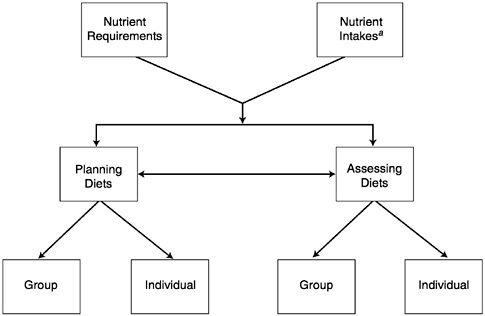
FIGURE 9-1 Conceptual framework—uses of Dietary Reference Intakes.
DRI appropriately will require time and effort by health professionals and others.
aFood plus supplements.
Appropriate uses of each of the new DRIs are described briefly in this chapter and in more detail in upcoming reports on the uses and applications of the DRIs. Also included in this chapter are specific applications to the nutrients discussed in this report. Details on how the DRIs are set with reference to specific life stages and genders and the primary criteria used to define adequacy or adverse effects for each of these groups are given in Chapter 5, Chapter 6, Chapter 7 through Chapter 8 of this report.
ASSESSING NUTRIENT INTAKES OF INDIVIDUALS
Using the Estimated Average Requirement for Individuals
The Dietary Reference Intakes (DRIs) were not designed to be used alone in assessing the adequacy of the diet of a specific individual because there is a wide range of requirements among individu-
als. The Estimated Average Requirement (EAR) estimates the median requirement of a distribution of requirements for a life stage or gender group, but it is not possible to know where an individual falls on this distribution without further physiological or biochemical measures. Thus, from dietary data alone, it is only possible to estimate the likelihood of nutrient adequacy. Furthermore, it is rare to have precise and representative data on usual intake of an individual, which adds additional uncertainty to the evaluation of an individual's dietary adequacy. Thus, true nutrient status can usually be determined only by obtaining physiological and biochemical data for the individual, and not from dietary assessment alone.
There are a number of inherent inaccuracies in dietary assessment methods. One is that individuals often underreport their intakes (Briefel et al., 1997; Mertz et al., 1991), and it appears that obese individuals do so to a greater extent than normal-weight individuals (Heitmann and Lissner, 1995). Furthermore, large day-to-day variations in intake, which occur for almost all individuals, necessitate many days of measurement to approximate usual intake. As a result, substantial caution must be used when interpreting nutrient assessments based on self-reported dietary data covering relatively few days of intake. Given the difficulties in accurately estimating usual intake, as well as the variance in requirements, a qualitative interpretation is recommended as described below:
-
If usual intake of an individual is greater than or equal to the Recommended Dietary Allowance (RDA), there is little likelihood that intake is inadequate. Intake at this level is expected to be inadequate for fewer than 2 to 3 percent of individuals (IOM, 1997, 1998).
-
If usual intake is between the RDA and the EAR, there is a great deal of uncertainty about whether that intake is inadequate and additional information about the individual may be needed. Usual intake between the RDA and the EAR is inadequate for about 3 to 50 percent of the individuals in the life stage group. If these individuals maintained intakes at this level over a prolonged time period, they might demonstrate the signs of inadequacy used to establish the EAR. For example, inadequate intake of vitamin C would lead to low ascorbate saturation of neutrophils.
-
If usual intake is less than the EAR, there is a high likelihood that intake is inadequate. Usual intake at the EAR is expected to be inadequate for at least 50 percent of individuals.
-
Because usual intakes are so difficult to measure, and because an individual's actual requirement is usually unknown, evaluation
-
based on dietary assessment should be confirmed by other measures, especially when a high likelihood of inadequacy is suspected.
For example, a 30-year-old woman who consumes an average of 55 mg/day of vitamin C from her food and takes a multiple vitamin four times a week containing 60 mg of vitamin C would average 89 mg/day (55 mg + [60 mg × 4/7]). Thus, her diet alone would put her at high likelihood of inadequacy, since it is below the EAR of 60 mg/day. Addition of the supplement, however, would add up to a sum on average above the RDA of 75 mg/day for adult women, thus suggesting little likelihood that intake is inadequate if the dietary assessment represents her true usual intake.
Using the Adequate Intake for Individuals
For vitamin C, vitamin E, and selenium, Adequate Intakes (AIs), rather than EARs or RDAs, have been set only for infants. By definition and observation, healthy infants who are exclusively fed human milk for the first 6 months of life by apparently healthy mothers are consuming an adequate amount of these nutrients. Infants who are consuming formulas with a nutrient profile similar to human milk (after adjustment for differences in bioavailability) for these three nutrients are also consuming adequate levels. In the case where an infant formula contains a lower level of these nutrients than human milk, the likelihood of nutrient adequacy for infants consuming this formula cannot be determined as data on infants at lower concentrations of intake are not available for review.
Using the Tolerable Upper Intake Level for Individuals
The Tolerable Upper Intake Level (UL) is used to determine the possibility of overconsumption of a nutrient. If an individual's usual nutrient intake remains below the UL, there is little risk of adverse effects from excessive intake. At intakes above the UL, the risk of adverse effects increases. However, the intake at which a given individual will develop adverse effects as a result of taking large amounts of a nutrient is not known with certainty. For example, an individual consuming supplements of vitamin C that exceed 2,000 mg/day may be at increased risk of adverse effects. In the case of vitamin C, the first adverse effects are osmotic diarrhea and gastrointestinal disturbances. It should be noted that there is no established benefit for presumably healthy individuals in consuming amounts of nutrients that exceed the RDA or AI.
ASSESSING NUTRIENT INTAKES OF GROUPS
Using the Estimated Average Requirement for Groups
The prevalence of nutrient inadequacy for a group of individuals may be estimated by comparing the distribution of usual intakes with the distribution of requirements. The Estimated Average Requirement (EAR) is the appropriate Dietary Reference Intake (DRI) to use for this purpose. In most situations, a cutpoint approach may be used to estimate the prevalence of inadequate intakes within the population group under study; this approach is a simplification of the full probability method of calculating the prevalence of inadequacy described by the National Research Council (NRC, 1986). The cutpoint approach allows the prevalence of inadequate nutrient intakes in a population to be approximated by determining the percentage of the individuals in the group whose usual intakes are less than the EAR for the nutrient of interest. This approach assumes that the intake and requirement distributions are independent, that the variability of intakes among individuals within the group under study is greater than the variability of their requirements, and that the requirement distributions are symmetrical.1
Before determining the percentage of the group whose intake is below the EAR, the intake distribution should be adjusted to remove the effect of day-to-day variation in intake (Nusser et al., 1996). This can be accomplished by collecting dietary data for each individual over many days or by statistical adjustments to the distribution that are based on information or assumptions about the day-to-day variation (Nusser et al., 1996). When this adjustment is performed (and intakes are thus more representative of the usual diet), the intake distribution narrows and gives a more precise estimate of the proportion of the group with usual intakes below the EAR. An explanation of an adjustment procedure was presented by the National Research Council (NRC, 1986) and is also described in the upcoming report on using DRIs for dietary assessment.
Figure 9-2 and Figure 9-3 are a graphical representation of this approach for vitamin C. They compare the adjusted distribution of intakes of vitamin C for men and women 19 years of age and older from the Third National Health and Nutrition Examination Survey
|
1 |
For free-living populations, it is reasonable to assume that the variability in requirements is smaller than the variability in intakes. For vitamin C, vitamin E, and selenium, requirement distributions are assumed to be symmetrical, and the intake and requirement distributions are thought to be independent. |
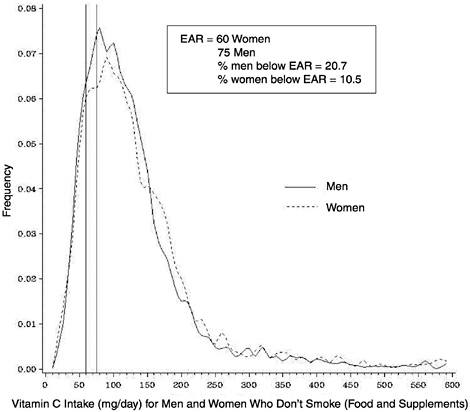
FIGURE 9-2 Distribution of reported vitamin C intake from all sources for men and women aged 19 years and older who don't smoke, from the Third National Health and Nutrition Examination Survey (NHANES III), 1988 –1994. The area under the curve represents almost 100 percent of that population (the right tail of the distributions are not shown here). Approximately 21 percent of men and 11 percent of women who don' t smoke have reported total vitamin C intakes (food plus supplements) below the Estimated Average Requirement (EAR) of 75 mg/day for men and 60 mg/day for women. Data have been adjusted for within-person variability (see note below).
NOTE: Nutrient intake from supplements in NHANES III is collected via an instrument similar to a food frequency questionnaire. Thus, the correct method for combining nutrient intake from food (collected with a 24-hour recall) and nutrient intake from supplements to assess total intake is uncertain. For the specific examples shown above, the following process was followed: (1) usual intakes from food were estimated for each individual using the Nusser et al. (1996) approach; (2) self-reported usual intake from supplements were added to obtain an estimate of the individual's total usual intake; and (3) these total usual intakes were compared to the EAR to obtain an estimate of the prevalence of inadequate intakes. This approach may not be optimal because it assumes that the self-reported usual supplement intake has no day-to-day variability. Therefore, the examples may not provide the best estimate of the prevalence of inadequacy of a nutrient, but they still serve to illustrate the use of the EARs when assessing intakes of groups.
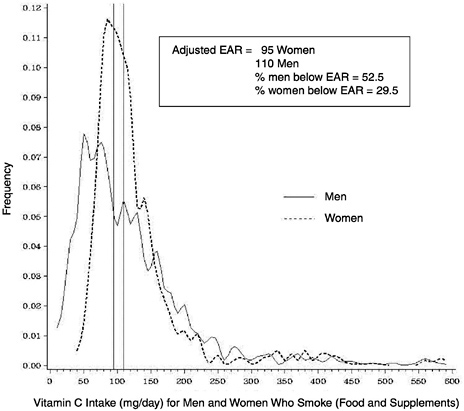
FIGURE 9-3 Distribution of reported vitamin C intake from all sources for men and women who smoke aged 19 years and older, from the Third National Health and Nutrition Examination Survey (NHANES III), 1988–1994. The area under the curve represents almost 100 percent of that population (the right tail of the distributions are not shown). Approximately 53 percent of men who smoke and 30 percent of women who smoke have reported total vitamin C intakes (food plus supplements) below the Estimated Average Requirement (EAR) adjusted for the effect of smoking to 110 mg/day for men and 95 mg/day for women. Data have been adjusted for within-person variability (see note below).
NOTE: Nutrient intake from supplements in NHANES III is collected via an instrument similar to a food frequency questionnaire. Thus, the correct method for combining nutrient intake from food (collected with a 24-hour recall) and nutrient intake from supplements to assess total intake is uncertain. For the specific examples shown above, the following process was followed: (1) usual intakes from food were estimated for each individual using the Nusser et al. (1996) approach; (2) self-reported usual intake from supplements were added to obtain an estimate of the individual's total usual intake; and (3) these total usual intakes were compared to the EAR to obtain an estimate of the prevalence of inadequate intakes. This approach may not be optimal because it assumes that the self-reported usual supplement intake has no day-to-day variability. Therefore, the examples may not provide the best estimate of the prevalence of inadequacy of a nutrient, but they still serve to illustrate the use of the EARs when assessing intakes of groups.
(NHANES III) with the EARs for vitamin C. These data include intake from both food and supplements. Although the NHANES food intake data are based on a single 24-hour recall for all individuals, replicate 24-hour recalls were conducted on a subset of the participants, and these estimates of day-to-day variation derived from this subset have been used to adjust the intake distributions (see Appendix Table C-1 and Table C-2).
The EARs for vitamin C are 60 mg/day for women and 75 mg/day for men. Based on the U.S. population that doesn't smoke, approximately 11 percent of women and 21 percent of men did not consume adequate amounts of vitamin C (from food sources and supplements) (Figure 9-2).
Those who smoke require an additional 35 mg/day of vitamin C, which would result in an adjusted average requirement of 95 mg/day for females and 110 mg/day for males. This is shown in Figure 9-3, in which a higher prevalence of inadequacy is estimated for smokers compared to nonsmokers. Even when vitamin C supplements are included, 53 percent of men and 30 percent of women who smoke were below the requirement. These prevalences indicate that a substantial percentage of Americans who smoke may have inadequate intakes of vitamin C and thus would be expected to have less than optimal ascorbate saturation of neutrophils.
The assessment of nutrient adequacy for groups of people requires unbiased, quantitative information on the intake of the nutrient of interest by individuals in the group. Care must be taken to ensure the quality of the information on which assessments are based, so they are not underestimates or overestimates of total nutrient intake. Estimates of total nutrient intake, including amounts obtained from supplements, should be acquired. It is also important to use appropriate food composition data with valid nutrient values for the foods consumed. In the example for vitamin C intakes, a database of vitamin C values for all foods that contribute substantially to the intakes of this nutrient, as well as a database with the vitamin C composition of the supplements consumed by the population under study, are required.
Overestimates of the prevalence of inadequate intakes could result if the data used are based on intakes that are systematically underreported or if foods rich in vitamin C are underreported. Conversely, underestimates of the prevalence of inadequacy would result if vitamin C-rich foods were overreported. A more extensive discussion of potential sources of error in self-reported dietary data can be found in the upcoming report on using DRIs in dietary assessment.
Using the Recommended Dietary Allowances for Groups
The Recommended Dietary Allowances (RDAs) are not useful in estimating the prevalence of inadequate intakes for groups. As described above, the EAR should be used for this purpose.
Using the Adequate Intake for Groups
In this report, Adequate Intakes (AIs) are assigned only for infants and reflect the average intake of the nutrient from human milk. Human milk and, in the case of nutrients reviewed in this report, infant formulas with the same nutrient composition as human milk (after adjustment for bioavailability) provide the appropriate levels of nutrients for infants of presumably healthy well-nourished mothers. Groups of infants consuming formulas with lower levels of nutrients than human milk may be at some risk of inadequacy, but the prevalence of inadequacy cannot be quantified.
Using the Tolerable Upper Intake Level for Groups
The proportion of the population with usual intakes below the Tolerable Upper Intake Level (UL) is likely to be at no risk of adverse effects due to overconsumption, while the proportion above the UL may be at some risk. In the case of vitamin C, the UL is 2,000 mg/day for adults; the NHANES III data in Figure 9-2 and Figure 9-3, which include reported intake from supplements, illustrate that the U.S. adult population did not exceed this UL at the time of the survey.
In typical food-based diets, ULs for vitamin C, vitamin E, and selenium can rarely be exceeded. Supplement use would be the primary way to exceed these ULs.
The mean intake of a population cannot be used to evaluate the prevalence of intakes above the UL. A distribution of usual intakes, including intakes from supplements, is required in order to assess the proportion of the population that may be at risk of overconsumption.
PLANNING NUTRIENT INTAKES OF INDIVIDUALS
Using the Recommended Dietary Allowance for Individuals
Individuals should use the Recommended Dietary Allowance (RDA) as the target for their daily nutrient intakes. For example, to increase their vitamin C consumption to the RDA level (75 mg/day for women and 90 mg/day for men), adults can increase their intake of foods that provide ascorbate, such as citrus fruits, broccoli, or tomatoes. An 8-ounce glass of orange juice (from frozen concentrate) supplies about 100 mg of vitamin C (USDA, 1991).
Using the Adequate Intake for Individuals
For the nutrients in this report, vitamin C, vitamin E, and selenium, Adequate Intakes (AIs) are set only for infants. Human milk content for these nutrients should supply the AI, so it is not necessary to plan additional sources of intakes for infants exclusively fed human milk. Likewise, for these nutrients, an infant formula with a nutrient profile similar to human milk (after adjustment for any differences in bioavailability) should supply adequate nutrients for an infant.
PLANNING NUTRIENT INTAKES OF GROUPS
The Estimated Average Requirement (EAR) may be used as a basis for planning or making recommendations for the nutrient intakes of groups. The mean intake of a group should be high enough so that only a small percentage of the group would have intakes below the EAR, thus indicating a low prevalence of dietary inadequacy.
Using the EAR and Tolerable Upper Intake Level (UL) in planning intakes of groups involves a number of key decisions and the analysis of issues such as the following:
-
determination of the current nutrient intake distribution of the group of interest;
-
an evaluation of interventions to shift the current distribution, if necessary, so there is an acceptably low prevalence of intakes below the EAR, as well as an acceptably low prevalence of intakes above the UL (some interventions may increase the intake of those most at risk of inadequacy—usually by individual intervention—whereas others may increase the intake of the entire group [e.g., fortification of the food supply]); and
-
the selection of the degree of risk that can be tolerated when planning for the group (e.g., a 2 to 3 percent prevalence versus a higher or lower prevalence).
NUTRIENT-SPECIFIC CONSIDERATIONS
Vitamin C
The effect of cigarette smoking on vitamin C status has led to recommending an increase to cover the higher vitamin C requirements for those who smoke. Thus, smoking status has to be considered in assessing and planning ascorbate intakes. Another consideration in evaluating vitamin C intake is the variability in the food supply and the loss during cooking of this water-soluble and heat-labile vitamin. Destruction of vitamin C in processing and cooking (Williams and Erdman, 1999) may be different than assumed by the values in the food composition tables resulting in an over- or under-estimation of the population at risk, while underreporting of dietary intakes in general may lead to an overestimate of the population at risk.
The Tolerable Upper Intake Level (UL) for vitamin C for adults is 2,000 mg/day. Sensitive individuals who regularly consume more than 2,000 mg/day may be at risk of osmotic diarrhea and gastrointestinal disturbances.
Vitamin E
The Estimated Average Requirements (EARs), Recommended Dietary Allowances (RDAs), and Adequate Intakes (AIs) for vitamin E are based on α-tocopherol only and do not include amounts obtained from the other seven naturally occurring forms of vitamin E (β-, γ-, δ- tocopherol and the four tocotrienols). Although absorbed, these forms do not contribute to meeting the vitamin E requirement because they are not converted to α-tocopherol. Only the 2R-stereoisomeric forms of α-tocopherol are preferentially secreted by the liver into the plasma for transport to tissues. Since the 2S-stereoisomeric forms of α-tocopherol are not maintained in human plasma or tissues, vitamin E is defined in this report as limited to the 2R-stereoisomeric forms of α-tocopherol to establish recommended intakes. However, all eight stereoisomers of supplemental α-tocopherol are used as the basis for establishing the Tolerable Upper Intake Level (UL) for vitamin E.
Currently, most nutrient databases, as well as nutrition labels, do
not distinguish among all the different forms of vitamin E (Figure 6-1) in food. These databases often present the data as α-tocopherol equivalents (α-TE) and thus include the contribution of all eight naturally occurring forms of vitamin E, after adjustment for bioavailability using previously determined equivalencies (e.g., γ-tocopherol has been usually assumed to have only 10 percent of the availability of α-tocopherol) based on fetal resorption assays. This report (see Chapter 6) recommends that the use of α-TE be abandoned due to the lack of evidence of bioavailability via transport in plasma or tissues. Because these other forms of vitamin E occur in foods (e.g., γ-tocopherol is present in widely consumed oils such as soybean and corn oils), the intake of α-TE is greater than the intake of α-tocopherol alone.
All α-tocopherol in foods is RRR-α-tocopherol, but the all rac-α-tocopherol in fortified foods and supplements is an equal mix of the 2R- and 2S-stereoisomers. The EARs, RDAs, and AIs given in Chapter 6 apply only to the intake of the RRR-α-tocopherol from food and the 2R-stereoisomeric forms of α-tocopherol (RRR-, RSR-, RRS-, and RSS-α-tocopherol) that occur in fortified foods and supplements (see Chapter 6, Figure 6-2). The UL applies to all eight stereoisomeric forms of α-tocopherol that occur in fortified foods and supplements.
Conversion Factor for Vitamin E in Food and Supplements
The reported median vitamin E intake in the United States of all individuals surveyed in the Third National Health and Nutrition Examination Survey (NHANES III) was 9 mg (21 µmol)/day of α-TE (see Appendix Table C-3). Additional data from the NHANES III database indicate that α-tocopherol contributed 7 mg/day of the 9 mg/day median intake of total α-TE from food (see Appendix Table C-4). Thus, based on NHANES III, approximately 80 percent of the α-TE from foods in the survey are reported to be contributed by α-tocopherol. So to estimate the α-tocopherol intake from food surveys in the United States in which food intake data are presented as α-TE, the α-TE should be multiplied by 0.8.
mg of α-tocopherol in a meal = mg of α-tocopherol equivalents in a meal × 0.8.
In addition, the amount of chemically synthesized all rac-α-tocopherol compounds added to foods and multivitamin supplements in milligrams should be estimated at 50 percent to calculate
the intake of the 2R-stereoisomers of α-tocopherol when assessing intakes to meet requirements.
If vitamin E in foods, fortified foods, and multivitamin supplements is reported in international units (IUs), the activity in milligrams of α-tocopherol may be calculated by multiplying the number of IUs by 0.67 if the form of vitamin E is RRR-α-tocopherol (natural vitamin E) (historically and incorrectly labeled d-α-tocopherol) (Horwitt, 1976), and by 0.45 if the form is all rac-α-tocopherol (synthetic vitamin E) (historically and incorrectly labeled dl-α-tocopherol compounds) (Horwitt, 1976)2 (see Chapter 6, Table 6-1).
mg of α-tocopherol in food, fortified food, or multivitamin
= IU of the RRR-α-tocopherol compound × 0.67.
or
= IU of the all rac-α-tocopherol compound × 0.45.
For example, a person with intake from food of 15 mg/day of α-TE would have consumed approximately 12 mg/day of α-tocopherol (15 × 0.8 = 12). If this person took a daily multivitamin supplement with 30 IU of RRR-α-tocopheryl acetate, an additional 20 mg/day of α-tocopherol would have been consumed (30 × 0.67 = 20). Thus, this person would have an effective total intake of 32 mg/day of α-tocopherol (12 + 20). If the daily multivitamin supplement contained 30 IU of all rac-α-tocopherol, it would be equivalent to 13.5 mg/day of α-tocopherol (30 × 0.45 = 13.5), and the person's total intake of α-tocopherol would be 25.5 mg/day (12 + 13.5).
Vitamin E Intake from Food
Estimation of vitamin E intake is difficult. There is a propensity to
|
2 |
The original international standard for vitamin E, dl-α-tocopheryl acetate (one asymmetric carbon atom in the 2 position on the chromal ring, ambo-α-tocopheryl acetate) is no longer commercially available. It was synthesized from natural phytol and was a mixture of two stereoisomers of α-tocopherols, RRR-α-tocopheryl acetate and SRR-α-tocopheryl acetate (Horwitt, 1976). For practical purposes at the time, the activity of 1 mg of dl-α-tocopheryl acetate was defined as equivalent to one IU of vitamin E. The dl-α-tocopheryl acetate of commerce currently available is synthesized from synthetic isophytol, has eight stereoisomers, and is labeled as dl-α-tocopheryl acetate. However, it is more accurately called all rac-α-tocopheryl acetate (AIN, 1990; IUPAC, 1974) because it contains three asymmetric carbon atoms in the 2, 4', and 8' positions (2RS, 4'RS, 8'RS-α-tocopherol). The all rac and ambo-α-tocopheryl acetates were shown to have the same biological activity in rats (Weiser et al., 1986). |
underreport energy intake in national surveys, and fat intake is more underreported than energy intake in the NHANES III survey (Brief-el et al., 1997). Since vitamin E is associated with fat in the food matrix, underreporting of the total intake of fat also results in the underreporting of vitamin E intake. Furthermore, there are uncertainties in the amount of α-tocopherol in fats and oils consumed, particularly when food labels do not provide the specific fat or oil used (e.g., “this product may contain partially hydrogenated soybean and/or cottonseed oil or vegetable oil”); in addition, because of the small number of samples, the vitamin E content of the foods in the Continuing Survey of Food Intake of Individuals (CSFII) and NHANES III databases are very variable (J. Holden, Agricultural Research Service, U.S. Department of Agriculture, personal communication, April 13, 1999). Finally, the amounts of fats and oils added during food preparation (and absorbed into the cooked product) is difficult to assess using diet recall methodologies, yet may contribute substantially to vitamin E intake.
UL for Vitamin E
The UL for α-tocopherol for adults is 1,000 mg/day of all eight stereoisomers of α-tocopherol. This UL is based on the intake of α-tocopherol from supplements only, because there is no evidence of adverse effects from the consumption of vitamin E naturally occurring in foods. In addition, the UL was based on animal studies feeding either RRR-α-tocopherol (natural vitamin E) or all rac-α-tocopherol (synthetic vitamin E), both of which had equivalent adverse effects. Although adults should not exceed the UL of 1,000 mg/day of any form of supplemental α-tocopherol, intakes above this amount may be appropriate for investigation in well-controlled clinical trials.
Sources of vitamin E available as supplements are usually labeled as international units (IUs) of natural vitamin E and its esters or as synthetic vitamin E and its esters. Table 9-1 shows the IUs of various sources of supplemental vitamin E that are equivalent to the UL for adults of 1,000 mg/day of any form of supplemental α-tocopherol.
Recommendation
Because the various forms of vitamin E are not interconvertible in humans, it is recommended that nutrient databases be specific enough to identify and report α-tocopherol intake separately from intake of other tocopherols. However, until this is done, it is possi-
TABLE 9-1 Amounts in International Units (IU) of Any Forms of α-Tocopherola Contained in Vitamin Eb Supplements Equivalent to the UL for Adultsc
|
Sources of Vitamin E Available as Supplements |
UL for Adults Total α-Tocopherol (mg/day) |
IU from Source Providing Adult UL |
|
Synthetic Vitamin E and Esters |
||
|
dl-α-Tocopheryl acetate |
1,000 |
1,100 |
|
dl-α-Tocopheryl succinate |
1,000 |
1,100 |
|
dl-α-Tocopherol |
1.000 |
1,100 |
|
Natural Vitamin E and Esters |
||
|
d-α-Tocopheryl acetate |
1,000 |
1,500 |
|
d-α-Tocopheryl succinate |
1,000 |
1,500 |
|
d-α-Tocopherol |
1,000 |
1,500 |
|
a All forms of supplemental α-tocopherol include all eight stereoisomers of α-tocopherol. The UL was based on animal studies feeding either all racemic- or RRR-α-tocopherol, both of which resulted in equivalent adverse effects. b Vitamin E supplements have historically although incorrectly been labeled d- or dl-α-tocopherol (Horwitt, 1976). Sources of vitamin E include the all racemic- (dl-α-tocopherol [RRR-, RRS-, RSR-, RSS-, SSS-, SRS-, SSR-, and SRR-] or synthetic) form and its esters and the RRR-α-tocopherol (d-α-tocopherol or natural) form and its esters. All of these forms of vitamin E may be present in supplements. c Conversion factors given in Table 6-1 to determine equivalency for meeting requirements are not directly applicable as they take into account lack of documented biological activity of 2S-forms of α-tocopherol in meeting requirements. The conversion factors used in this table are based on 2S-forms contributing to the adverse effects identified. |
||
ble to estimate α-tocopherol intakes by multiplying the total α-TE in food (obtained from food composition tables) by 0.8. Also, the form of chemically synthesized α-tocopherol in fortified foods, multivitamin supplements, and vitamin E supplements has to be identified so that appropriate adjustments for activity can be made before calculating total intake of α-tocopherol.
Selenium
Dietary intakes of selenium depend on the selenium content of the soil where the plant was grown or the animal was raised. Food animals in the United States and Canada usually have controlled diets to which selenium is added, and thus, the amounts found in muscle meats, milk, and eggs are more consistent than for plant foods.
While the food distribution system in the United States and Canada ensures a mix of plant and animal foods from the broad range of soil selenium conditions (see Chapter 7), local foods (e.g., from farmers' markets) may vary considerably from the mean values in food composition databases. However, the variation in selenium content of food sources does not appear to exceed that for many other nutrients. For example, the variation in β-carotene content of
|
Box 9-1 Uses of Dietary Reference Intakes for Healthy Individuals and Groups
|
||||||||||||||||||||||||
food sources is similar to that of selenium (J. Holden, Agricultural Research Service, U.S. Department of Agriculture, personal communication, April 13, 1999).
Infant formulas are often fortified with selenium, and selenium supplements for adults (usually inorganic selenium salts) are becoming more common. The bioavailability of selenate and selenite, the two inorganic forms of selenium commonly used for supplementation, is roughly equivalent and generally exceeds 50 percent (Thomson and Robinson, 1986). Selenium found naturally in foods is primarily in the forms of selenomethionine and selenocysteine, which are organic selenium compounds. The bioavailability of selenium in the form of selenomethionine is greater than 90 percent (Thomson and Robinson, 1986). The selenium in selenocysteine is also highly bioavailable (Swanson et al., 1991). Thus selenium supplements with yeast as the selenium source have higher bioavailability than inorganic supplements. In general, food composition tables do not distinguish these sources. Estimated intakes through self-selected diets are shown in Appendix Table C-6, and total intakes (food and supplements) according to NHANES III are shown in Appendix Table C-7.
The contribution of water to selenium intakes is generally trivial in comparison to food selenium (NRC, 1980) and does not have to be added to intake assessments, unless water from an area known to be high in selenium is consumed.
The UL for adults for selenium is 400 µg/day. Individuals who regularly consume more than 400 µg/day may be at risk of adverse effects that include brittle nails and hair loss.
SUMMARY
With careful consideration to the points mentioned above, the various Dietary Reference Intakes (DRIs) may be used to assess as well as to plan nutrient intakes. Box 9-1 summarizes the appropriate uses of the DRIs for individuals and groups.
REFERENCES
AIN (American Institute of Nutrition). 1990. Nomenclature policy: Generic d scriptors and trivial names for vitamins and related compounds. J Nutr 120:12–19.
Briefel RR, Sempos CT, McDowell MA, Chien S, Alaimo K. 1997. Dietary methods research in the third National Health and Nutrition Examination Survey: Underreporting of energy intake. Am J Clin Nutr 65:1203S–1209S.
Heitmann BL, Lissner L. 1995. Dietary underreporting by obese individuals—Is it specific or non-specific? Br Med J 311:986–989.
Horwitt MK. 1976. Vitamin E: A reexamination. Am J Clin Nutr 29:569–578.
IOM (Institute of Medicine). 1994. How Should the Recommended Dietary Allowances be Revised? Washington, DC: National Academy Press.
IOM (Institute of Medicine). 1997. Dietary Reference Intakes for Calcium, Phosphorus, Magnesium, Vitamin D, and Fluoride. Washington, DC: National Academy Press.
IOM (Institute of Medicine). 1998. Dietary Reference Intakes for Thiamin, Riboflavin, Niacin, Vitamin B6, Folate, Vitamin B12, Pantothenic Acid, Biotin, and Choline. Washington, DC: National Academy Press.
IUPAC-IUB Commission on Biochemical Nomenclature. 1974. Nomenclature of tocopherols and related compounds. Recommendations 1973. Eur J Biochem 46:217–219.
Mertz W, Tsui JC, Judd JT, Reiser S, Hallfrisch J, Morris ER, Steele PD, Lashley E. 1991. What are people really eating? The relation between energy intake d rived from estimated diet records and intake determined to maintain body weight. Am J Clin Nutr 54:291–295.
NRC (National Research Council). 1980. Drinking Water and Health, Volume 3. Washington, DC: National Academy Press.
NRC (National Research Council). 1986. Nutrient Adequacy. Assessment Using Food Consumption Surveys. Washington, DC: National Academy Press.
Nusser SM, Carriquiry AL, Dodd KW, Fuller WA. 1996. A semiparametric transfo mation approach to estimating usual daily intake distributions. J Am Star Assoc 91:1440–1449.
Swanson CA, Patterson BH, Levander OA, Veillon C, Taylor PR, Helzlsouer K, McAdam PA, Zech LA. 1991. Human [74Se]selenomethionine metabolism: A kinetic model. Am J Clin Nutr 54:917–926.
Thomson CD, Robinson MF. 1986. Urinary and fecal excretions and absorption of a large supplement of selenium: Superiority of selenate over selenite. Am J Clin Nutr 44:659–663.
USDA (U.S. Department of Agriculture). 1999. USDA Nutrient Database for Sta dard Reference, Release, [Online]. Available: http://www.nal.usda.gov/fnic/foodcomp.
Weiser H, Vecchi M, Schlachter M. 1986. Stereoisomers of alpha-tocopherol ac tate. IV. USP units and alpha-tocopherol equivalents of all-rat-, 2-ambo- and RRR-alpha-tocopherol evaluated by simultaneous determination of resorptiongestation, myopath and liver storage capacity in rats. Int J Vitam Nutr Res 56:45–56.
Williams AW, Erdman JW Jr. 1999. In: Shils ME, Olson JA, Shike M, Ross AC, eds. Modern Nutrition in Health and Disease. Baltimore, MD: Williams and Wilkins. P. 181.


