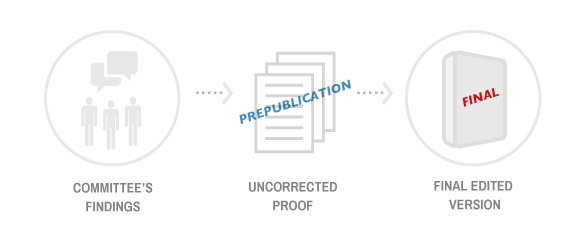
Below are the first 10 and last 10 pages of uncorrected machine-read text (when available) of this chapter, followed by the top 30 algorithmically extracted key phrases from the chapter as a whole.
Intended to provide our own search engines and external engines with highly rich, chapter-representative searchable text on the opening pages of each chapter.
Because it is UNCORRECTED material, please consider the following text as a useful but insufficient proxy for the authoritative book pages.
Do not use for reproduction, copying, pasting, or reading; exclusively for search engines.
OCR for page 178
8 Water
Water is the most important nutrient for dairy cattle. It
is required for all of life's processes transport of nutrients
and other compounds to and from cells; digestion and
metabolism of nutrients; elimination of waste materials
(urine, feces, and respiration) and excess heat (perspira-
tion) from the body; maintenance of a proper fluid and
ion balance in the body; and provision of a fluid environ-
ment for the developing fetus (Houpt, 1984; Murphy,
1992~. A loss of 20 percent of the body water is fatal
(Houpt, 1984~.
The total body water content of dairy cattle is 56 to 81
percent of their body weight (Murphy, 1992~. Physiologic
stage and body composition affect the body's water content.
Cows in early lactation have more body weight in water
(69.0 percent) than cows in late lactation (62.4 percent)
with late-gestation dry cows intermediate in body water
content (64.7 percent) (Andrew et al., 1995~. Fat cows
have a lower water content than thin lactating cows, and
younger, leaner animals have a higher water content than
older animals (Murphy, 1992~.
Body water is divided into intracellular and extracellular
compartments. Intracellular water is the largest compart-
ment, accounting for about two-thirds of the water in the
body. The extracellular fluid comprises water around cells
and connective tissue, water in plasma, and transcellular
water or water in the gastrointestinal tract. Intestinal water
accounts for 15-35 percent of body weight (Odwongo et
al., 1985; Woodford et al., 1984~. Cows in early lactation
had about 15 percent of their body weight in gastrointesti-
nal water, while cows in late lactation and in gestation had
10 to 11 percent (Andrew et al., 1995~. Resident time of
a water molecule in the rumen was estimated to be 61
minutes in sheep (Faichney and Boston, 1985) and 62
minutes in lactating dairy cattle (Woodford et al., 1984~.
Loss of water from the body occurs through milk produc-
tion, urine excretion, fecal excretion, sweat, and vapor loss
from the lungs. Water losses through milk of cows produc-
ing 33 kg/day were about 34 percent (Holler and Urban,
1992),29 percent (Dado and Allen, 1994), and 26 percent
(Dahlborn et al., 1998) of total water intake (feed plus free
water consumed). Fecal water losses are similar to those
of milk (30 to 35 percent of total water intake), and urine
losses are about half of fecal losses (15 to 21 percent) in
lactating cows (Holler and Urban, 1992; Dahlborn et al.,
1998~. Factors that affect fecal water loss include dry mat-
ter intake (DMI), dry matter (DM) content of the diet
being fed, and digestibility of the diet (Murphy, 1992~.
Dahlborn et al. (1998) reported that fecal DM percentage
did not change with changing dietary DM, but water loss
via feces increased with increasing dietary forage content.
Urinary water excretion in cattle is variable at 4.5 to 35.4
L/day in cows producing an average of 34.6 kg/day of milk
and 5.6 to 27.9 L/day in dry cows (Holler and Urban,
1992~. Urinary water excretion was related positively to
water availability, amount of water absorbed from the intes-
tinal tract (total intake minus fecal loss), urinary nitrogen,
and urinary potassium excretion and negatively related to
dietary DM content (Murphy, 1992~. Increasing forage in
the diet increased urinary water loss (Dahlborn et al.,
1998~. Sweat, salivary, and evaporative losses combined
account for about 18 percent of water loss (Holler and
Urban, 1992~.
WATER INTAKE
Cattle require large amounts of water every day. They
meet this requirement via three sources: drinking or free
water intake (FWI), ingestion of water contained in feed,
and water produced by the body's metabolism of nutrients.
Metabolic water is an insignificant source compared with
the water ingested freely or in feed. The sum of FWI and
the water ingested in feed is the total water intake (TWI).
Several factors that affect the amount of FWI of dairy
cows each day have been identified. Of studies in which
equations were developed to predict daily FWI, DMI was
included as a variable in four (Holler and Urban, 1992;
Little and Shaw, 1978; Murphy et al., 1983; Stockdale
178
OCR for page 179
Water 179
and King, 1983), daily milk production in five (Castle and
Thomas, 1975; Dahlborn et al., 1998; Holter and Urban,
1992; Little and Shaw, 1978; Murphy et al., 1983), DM
content of the diet (DM percent of diet) in four (Castle
and Thomas, 1975; Dahlborn et al., 1998; Holter and
Urban, 1992; Stockdale and King, 1983), temperature or
environmental factors in two (Holler and Urban, 1992;
Murphy et al., 1983) and sodium intake in one (Murphy
et al., 1983~. Equations for predicting FWI, (kg/day) of
lactating dairy cows are shown below:
—15.3 + 2.53 X milk, kg/d + 0.45
x DM% of diet. (Castle and Thomas, 1975) (8-1)
14.3 + 1.28 X milk, kg/d + 0.32
x DM% of diet. (Dahlborn et al., 1998) (8-2)
—32.39+2.47X DMI,kg/d
+ 0.6007 X milk, kg/d
+ 0.6205 X DM% of diet
+ 0.0911 x Julian Day(;JD)
— 0.000257 X ;JD2 (Holler and Urban, 1992) (8-3)
12.3 + 2.15 X DMI, kg/d
+ 0.73 X milk, kg/d (Little and Shaw, 1978) (8-4)
15.99 + 1.58 X DMI, kg/d
+ 0.90 x milk, kg/d
+ 0.05 X Na intake g/d
+ 1.20 X min temp C (Murphy et al., 1983) (8-5)
—9.37 + 2.30 X DMI, kg/d
+ 0.053 X DM% of diet
(Stockdale and King, 1983) (8-6)
Winchester and Morris (1956) indicated that 0.87 kg of
water per kilogram of milk was an expected requirement
for water based on milk being 87 percent water. The 0.90
coefficient of Murphy et al. (1983 j is close to this coefficient
with the lower coefficients of 0.73 and 0.6007 reported by
Little and Shaw (1978) and Holter and Urban (1992~. Thus,
because the milk coefficient in the Murphy et al. (1983)
equation is biologically closest to the water content of milk
(87 percent) and other variables in the equation have been
shown to affect water intake, this equation is recommended
for predicting FWI.
In studies in which milk production was 33-35 kg/d,
FWI was 2.0 kg (Holler and Urban, 1992), 2.3 kg (Dado
and Allen, 1994), and 2.7 kg (Murphy et al., 1983) per
kilogram of milk produced. Total water intake was 3.0 kg
(Dado and Allen, 1994; Murphy et al., 1983) and 2.6 kg
(Holler and Urban, 1992) per kilogram of milk produced.
In studies (Dahlborn et al., 1998; Little and Shaw, 1978;
Castle and Thomas, 1975) with lower milk production (less
than 26 kg/d), both FWI(2.6-3.0 kg/kg of milk) and TWI
(3.3-4.2 kg/kg of milk) were higher.
Results of seven studies (Castle and Thomas, 1975; D ado
and Allen, 1994; Dahlborn et al., 1998; Holter and Urban,
1992; Little and Shaw, 1978; Murphy et al., 1983; Nocek
and Braun, 1985) indicated that an average of 83 percent
(range, 70-97 percent) of the total water consumed by
lactating cows was by drinking. DM content of the diet is
one of the major factors affecting FWI. Holter and Urban
(1992) reported no difference in FWI of cows fed diets
that contained 50 to 70 percent DM, but FWI decreased
by 33 kg/d when diets decreased from 50 to 30 percent
DM. That observation is supported by other studies (Castle
and Thomas, 1975; Dahlborn et al., 1998) and the research
of Stockdale and King (1983), in which cattle grazing pas-
ture consumed only 38 percent of their TWI by drinking.
Diets high in salt, sodium bicarbonate, or protein appear
to stimulate water intake (Holler and Urban, 1992; Mur-
phy, 1992~. Sodium intake alone was found to increase
water intake by 0.05 kg/day per gram of sodium intake
(Murphy et al., 1983~. High-forage diets might also increase
water requirements by increasing the loss of water in feces
and urine (Dahlborn et al., 1998)
Water is an especially important nutrient during periods
of heat stress. The physical properties of water, thermal
conductivity and latent heat of vaporization, are important
for the transfer of heat from the body to the environment.
During periods of cold stress, the high heat capacity of
body water acts as insulation conserving body heat. As air
temperature increases above the thermal neutral zone,
shifts in the amount of water consumed and how water is
lost from the body occur. McDowell (1967) reported that
increasing temperatures from 18 to 30°C increased water
consumption by 29 percent, decreased fecal water loss by
33 percent, but increased water loss via urine, sweating,
and respiration by 15, 59, and 50 percent, respectively.
The equations of Murphy et al. (1983) and Holter and
Urban (1992) contain an environmental variable. Murphy
et al. (1983) included a variable associated with minimal
daily temperature that increased FWI by about 25 percent
as minimal temperatures increased from O to 25°C. Holter
and Urban (1992) included Julian days in their FWI equa-
tion and going from 1 to peak intake at 178 days, increased
FWI by about 10 percent. Besides air temperature, the
effect of exposure to direct sunlight has been shown to
affect FWI. During summer months, cows provided with
no shade consumed 18 percent more water per day than
cows provided shade (Muller et al., 19941.
Dry Cows
Holter and Urban (1992) developed the following equa-
tion to predict FWI of dry cows:
OCR for page 180
180 Nutrient Requirements of Dairy CattIe
FWI, kg/d =
—10.34 + .2296 X DM% of diet
+ 2.212 X DMI kg/d
+ 0.03944 X (CP% of diet)2 (8-7)
where CP = crude protein.
The major factors affecting FWI of dry cows are DMI
and the percentage of DM in the diet. Increasing dietary
DM from 30 to 60 percent increased FWI, but increasing
dietary DM content above 60 percent had only a minor
effect on either FWI or TWI. The increased FWI of dry
cows caused by increasing crude protein content of the
diet is a physiologic response to dilute and excrete nitrogen
in excess of needs.
Calves and Heifers
During the liquid feeding stage, calves receive most of
their water via milk or milk replacer. It is recommended
water be provided free choice to calves receiving liquid
diets to enhance growth and DMI. Kertz et al. (1984)
reported calves offered water free choice in addition to
the liquid diet gained faster and consumed dry feed quicker
than calves provided water only in their liquid diet. Water
intakes increased from about 1 kg/day during the first week
of life to over 2.5 kg/d during the fourth week of life; with
most of the increase occurring during the fourth week.
Drinking Behavior
Water consumption occurs several times per day and is
generally associated with feeding or milking. Nocek and
Braun (1985) reported that the relationship between feed-
ing frequency and voluntary water intake was not signif~-
cant; however, cows fed once per day consumed slightly
less DM and water than cows fed eight times per day.
Peak hourly water intakes were associated with peak hourly
intakes of DM. D ado and Allen (1994) reported that lactat-
ing cows housed in tie stalls drank an average of 14 times
per day. Water intake was correlated positively with both
total DMI and number of eating bouts per day. In loose
housing with water bowls, lactating cows consumed water
an average of 6.6 times per day (Andersson, 1985). Nocek
and Braun (1985) and Castle and Watson (1973) indicated
that most water is consumed during daylight hours.
Reported rates of water intake vary from 4 to 15 kg/
minute (Dado and Allen, 1994; Castle and Thomas, 1975).
On the basis of the farm studies of Castle and Thomas
(1975), the length of water troughs should be 5 cm/cow
with an optimal height of 90 cm. A minimum of one water
bowl per 10 cows was recommended.
The temperature of drinking water has only a slight
effect on drinking behavior and animal performance. Cool-
ing of drinking water to 10°C had a transient effect on
reducing body temperature but did not allect milk produc-
o
tion relative to production when water was at 27.7°C (Ster-
mer et al., 1986). In other studies, the chilling of drinking
water to 10°C increased milk production (Milam et al.,
1986; Wilks et al., 1990) and DMI (Baker et al., 1988;
Stermer et al., 1986; Wilks et al., 1990). Responses to
chilling of water under most conditions would not warrant
the additional cost of cooling water. Given a choice of water
temperature, cows prefer to drink water with moderate
temperatures (17-28°C) rather than cold or hot water
(Andersson, 1987; Lanham et al., 1986; Wilks et al., 1990).
WATER QUALITY
Water quality is an important issue in the production
and health of dairy cattle. The five criteria most often
considered in assessing water quality for both humans and
livestock are: organoleptic properties (odor and taste), phy-
siochemical properties (pH, total dissolved solids, total dis-
solved oxygen, and hardness), presence of toxic compounds
(heavy metals, toxic minerals, organophosphates, and
hydrocarbons), presence of excess minerals or compounds
(nitrates, sodium, sulfates, and iron), and presence of bacte-
ria. Research information on water contaminants and their
effects on cattle performance is sparse. The following
attempts to define some common water-quality problems
in relation to cattle performance.
Salinity, total dissolved solids (TDSJ, and total soluble
salts (TSSJ are measures of constituents soluble in water.
Sodium chloride is the first consideration in this category,
but other components associated with salinity, TDS, or
TSS are bicarbonate, sulfate, calcium, magnesium, and
silica (National Research Council, 1974). A secondary
group of constituents, found in lower concentrations than
the major constituents, consists of iron, nitrate, strontium,
potassium, carbonate, phosphorus, boron, and fluoride.
Guidelines forTSS in water for dairy cattle are in Table 8-1.
Research at Arizona (Ray, 1986; Wegner and Schuh,
1986) has evaluated the effects of saline water on feedlot
TABLE 8-1 Guidelines for Total Soluble Salts (TSS)
in Water for Cattle
TSS (mg/L)
<1,000
1,000-2,999
Comments
3,000-4,999
7,000
Safe and should pose no health problems.
Generally safe but may cause a mild temporary
diarrhea in animals not accustomed to the water.
Water may be refused when first offered to animals
or cause temporary diarrhea. Animal performance
may be less than optimum because water intake is
not maximized.
5,OOO-6,999 Avoid these waters for pregnant or lactating animals.
May be offered with reasonable safety to animals
where maximum performance is not required.
These waters should not be fed to cattle. Health
problems and/or poor production will result.
SOURCE: National Research Council (1974).
OCR for page 181
Water 181
steers and lactating dairy cows. Feedlot cattle drinking
saline water (TDS, 6,O00 mg/L) had lower weight gains
than cattle drinking normal water (1,300 mg/L) when
energy content of the ration was low and during heat stress.
High-energy rations and the cold of the winter months
negated the detrimental effects of high-saline water con-
sumption. Likewise, milk production of dairy cows drinking
high saline water (TDS, 4,400 mg/L) was not different from
that of cows drinking normal water during cool months
but was significantly lower during summer months. Cows
offered the salty water drank more water per day (136 vs
121 kg/cow) over a 12-month period than cows drinking
normal water.
The performance of dairy cows consuming high-saline
waters has been variable. In a study that compared water
with dissolved solids from sodium chloride at 196 mg/L
and 2,500 mg/L, lactating cows consuming water with the
high salt content increased water intake by 7 percent and
exhibited a tendency for less milk yield and DMI compared
with cows consuming low-saline water ([aster et al., 19781.
An Israeli study (Solomon et al., 1995) with Holstein cows
producing milk at over 30 kg/day showed that cows con-
suming desalinated water consumed 11 kg more water per
day and produced 2.2 kg more milk per day than cows
consuming salty water. A1SO7 both milk protein percentage
(2.89 vs 2.84 percent) and lactose percentage (4.50 vs 4.44
percent) were higher for cows consuming the desalinated
water. Similar results were observed by Challis et al. (1987)
under hot desert conditions. They reduced the TDS of
water from about 4,400 to 440 mg/L and obtained a greater
than 20 percent increase in milk production, water intake,
and feed intake. Cooling of the desalinated water resulted
in a small additional increase in milk production. Bahman
et al. (1993) offered cows natural water that contained
TDS at 3,574 mg/L and desalinated water at 449 mg/L
and observed no differences in milk production. The equa-
tion of Murphy et al. (1983), which considers sodium
intake, predicted intake of high-saline water better than
the equations of Hotter and Urban (19921.
Sanchez et al. (1994) indicated that high intakes of chlo-
ride and sulfate are detrimental to milk production during
summer months. Saline water generally contains high con-
centrations of chloride and sulfate and so would contribute
to high intakes of these elements. Likewise, saline waters
are high in sodium, but feeding high amounts of sodium
does not reduce milk production or lactation performance
(Sanchez et al., 19941. The cation-anion differences (CAD,
mEq/L) of the high-saline water in studies in which milk
production or water intake reductions were observed was
—1.9 (Solomon et al., 1995) and—4.4 (Challis et al., 19871.
Reductions in milk production or water consumption were
not observed in the study of Bahman et al. (1993) when
brackish well water with a CAD of—3.0 mEq/L was
offered for 196 days.
Hardness is generally expressed as the sum of calcium
and magnesium reported in equivalent amounts of calcium
carbonate. Other cations in water such as zinc, iron,
strontium, aluminum, and manganese can contribute to
hardness but are usually in very low concentrations com-
pared with calcium and magnesium. Hardness categories
are listed in Table 8-2. The hardness of water had no
effect on animal performance or water intake (Graf and
Holdaway, 1952; glosser and Soni, 19571.
Nitrate can be used in the rumen as a source of nitrogen
for synthesis of bacterial protein, but reduction to nitrite
also occurs. When absorbed into the body, nitrite reduces
the oxygen-carrying capacity of hemoglobin and in severe
cases results in asphyxiation. Symptoms of acute nitrate or
nitrite poisoning are asphyxiation and labored breathing,
rapid pulse, frothing at the mouth, convulsions, blue muz-
zle and bluish tint around eyes, and chocolate-brown blood.
More moderate levels of nitrate poisoning have been
incriminated in poor growth, infertility problems, abor-
tions, vitamin A deficiencies, and general unhealthiness,
but research has not always substantiated these claims
(Crowley et al., 1974; Stuart and Oehme, 19821.
The general safe concentration of nitrate-nitrogen (NO3-
N) in water is less than 10 mg/L and of nitrate less than 44
mg/L (Table 8-31. In evaluating potential nitrate problems,
feeds also should be analyzed for nitrate in that the effects
of feed and water nitrate are additive.
Sulfate guidelines for water are not well defined, but
general recommendations are less than 500 mg/L for calves
and less than 1,000 mg/L for adult cattle. When sulfate
exceeds 500 mg/L, the specific salt form of sulfate or sulfur
TABLE 8-2 Water Hardness Guidelines
Category
Soft
Moderately hard
Hard
Very hard
Hardness (mg/L)a
0-60
61-120
121-180
>180
At grain/gal = 17.1 mg/L.
SOURCE: National Research Council (1980).
TABLE 8-3
Nitrate in Water
Nitrate (NO3)
(my/)
Nitrate Nitrogen
(NOUN) (mg/L) Guidelines
0-44
45-132
133-220
221-660
661
0-10
10-20
20-40
40-100
100
Safe for consumption by
ruminants
Generally safe in balanced diets
with low nitrate feeds
Could be harmful if consumed
over long periods
Cattle at risk; and possible death
Unsafe possible death; should
not be used as a source of
water
SOURCE: National Research Council (1974).
OCR for page 182
182 Nutrient Requirements of Dairy CattIe
should be identified. The form of sulfur is an important
determinant of toxicity (National Research Council, 19801.
Hydrogen sulfide is the most toxic form, and concentrations
as low as 0.1 mg/L can reduce water intake. Common
forms of sulfate in water are calcium, iron, magnesium,
and sodium salts. All are laxative, but sodium sulfate is
the most potent. Cattle fed water that is high in sulfates
(2,OOO-2,500 mg/L) show diarrhea initially but appear to
become resistant to the laxative effect. Iron sulfate was
reported by Horvath (1985) to be a more potent depressor
of water intake than other forms of sulfate.
Research from Nevada (Digest) and Weeth, 1976; Weeth
and Capps, 1972; Weeth and Hunter, 1971) has shown
that cattle can tolerate sulfate at up to 2,500 mg/L in
water for short periods (less than 90 days) with no major
metabolic problems. At 2,500 mg/L, heifers increased renal
filtration of sulfate by 37 percent compared with heifers
drinking water that contained 110 mg/L. Heifers also
rejected water that contained 2,500 mg/L if lower-sulfate
water was available. Research from Canada (Smart et al.,
1986) has shown that beef cows drinking water that con-
tained sulfate at 500 mg/L had lower concentrations of
copper in plasma and liver than cows consuming water that
contained 42 mg/L. No significant differences in health,
reproduction, weight changes of cows, or birth weight of
calves were reported, but calves of cows that received the
high-sulfate water had lower weaning weights than calves
of cows that received low-sulfate water. Water and feed
with high sulfate contents have been linked to polioenceph-
alomalacia in beef calves (Hibbs and Thilsted, 1983;
Gould, 19981.
pH guidelines of water for dairy cattle have not been
established. The EPA (1997) recommendation for the pH
of human drinking water is between 6.5 and 8.5. No infor-
mation was found in the scientific literature as to what
effects the pH of water has on water intake, animal health,
animal production, or the microbial environment in the
rumen.
Other nutrients and contaminants are sometimes found
in water and can pose a health hazard to cattle. For safe
consumption, water contaminants should not exceed the
guidelines in Table 8-4. However, many dietary, physio-
logic, and environmental factors affect these guidelines and
make it impossible to determine precisely the concentra-
tions at which problems will occur.
Microbiologic analysis of water for coliform bacteria and
other microorganisms is necessary to determine sanitary
quality. A common microbiologic analysis is for total coli-
forms, not specific coliforms. Results from the assay are
usually reported as a most probable number (MPN), which
is an index of the number of coliforms present (0 MPN =
satisfactory; 1-8 MPN = unsatisfactory; over 9 MPN =
unsafe). A more specific analysis for contamination is a
fecal-coliform test. Coliforms found in human and animal
TABLE 8-4 Generally Considered Safe
Concentrations of Some Potentially Toxic
Nutrients and Contaminants in Water for Cattle
Item
Upper-limit guideline
(mg/L or ppm)
0.5
0.05
5.0
0.005
0.1
1.0
1.0
2.0
0.015
0.05
0.01
0.25
0.05
0.1
5.0
Aluminum
Arsenic
Boron
Cadmium
Chromium
Cobalt
Copper
Fluorine
Lead
Manganese
Mercury
Nickel
Selenium
Vanadium
r7.
zinc
SOURCE: National Research Council (1974, 1980); Environmental Pro-
tection Agency (1997).
feces can be determined directly, and information as to
the source of contamination can be obtained. The effect
of coliforms in water on health of cattle or ruminal microor-
1
ganlSmS IS unknown.
SUMMARY
Water availability and quality are extremely important
for animal health and productivity. Limiting water availabil-
ity to cattle will depress production rapidly and severely.
Some water contaminants such as nitrates, sodium
chloride, and sulfates have been reported to affect animal
performance and health. However, most water contami-
nants have an unknown effect on animal performance. That
is particularly true for water that has low concentrations
of contaminants and is consumed over a long period.
On the basis of the scientific literature, no widespread
specific beef cattle or dairy cattle production problems
have been caused by consumption of water of low quality.
Water quality might cause poor production or nonspecific
diseases and should be one aspect of the procedures used
to investigate such problems.
REFERENCES
Andersson, M. 1985. Effects of drinking water temperatures on water
intake and milk yield of tied-up dairy cows. Eivest. Prod. Sci.
12:329-338.
Andersson, M. 1987. Effects of number and location of water bowls and
social rank on drinking behaviour and performance of loose-housed
dairy cows. Livest. Prod. Sci. 17:19-31.
Andrew, S. M., R. A. Erdman, and D. R. Waldo. 1995. Prediction of
body composition of dairy cows at three physiological stages from
deuterium oxide and urea dilution. J. Dairy Sci. 78:1083-1095.
OCR for page 183
Water 183
Bahman, A. M., J. A. Rooke, and J. H. Topps. 1993. The performance
of dairy cows offered drinking water of low or high salinity in a hot
arid climate. Anim. Prod. 57:23-28.
Baker, C. C., C. E. Coppock, J. K. Lanham, D. H. Nave, J. M. Labore,
C. F. Brasington, and R. A. Stermer. 1988. Chilled drinking water
effects on lactating Holstein cows in summer. J. Dairy Sci.
71:2699-2708.
glosser, T. H., and B. K. Soni. 1957. Comparative influence of hard and
soft water on milk production of dairy cows. J. Dairy Sci.40:1519-1524.
Castle, M. E., and T. P. Thomas.1975. The water intake of British Friesian
cows on rations containing various forages. Anim. Prod. 20:181-189.
Castle, M. E., and J. N. Watson. 1973. The intake of drinking water by
grazing dairy cows; the effect of water availability. J. Br. Grassland
Soc. 28:203-207.
Challis, D. J., J. S. Zeinstra, and M. J. Anderson. 1987. Some effects of
water quality on the performance of high yielding dairy cows in an
arid climate. Vet. Rec. 120:12-15.
Crowley, J. W., N. A. Jorgensen, L. W. Kahler, L. D. Satter, W. J. Tyler,
and M. F. Finner.1974. Effect of nitrate in drinking water on reproduc-
tive and productive efficiency of dairy cattle. Tech. Rep. 74-06. Univ.
of Wisconsin-Madison.
Dado, R. G., and M. S. Allen. 1994. Variation in and relationships among
feeding, chewing, and drinking variables for lactating cows. J. Dairy
Sci. 77:132-144.
Dahlborn, K., M. Akerlind, and G. GustaLson. 1998. Water intake by
dairy cows selected for high or low milk-fat percentage when fed
two forage to concentrate ratios with hay or silage. Swedish J. Agric.
Res. 28:167-176.
Digesti, R. D., and H. J. Weeth.1976. A defensible maximum for inorganic
sulfate in drinking water of cattle. J. Anim. Sci. 42:1498-1502.
Environmental Protection Agency. 1997. Current drinking water stan-
dards (Human). Office of Ground Water and Drinking Water. U.S.
Environ. Protection Agency. Wash., DC. EPA 815-k-97-002
Faichney, G. J., and R. C. Boston. 1985. Movement of water within the
body of sheep fed at maintenance under thermoneutral conditions.
J. Biol. Sci. 38:85-94.
Gould, D. H. 1998. Polioencephalomalacia. J. Animal Sci. 76:309-314.
Graf, G. C., and C. W. Holdaway. 1952. A comparison of hard and
commercially softened water in the ration of lactating dairy cows.
J. Dairy Sci. 35:998-1000.
Hibbs, C. M., and J. P. Thilsted. 1983. Toxicosis in cattle from contami-
nated well water. Vet. and Human Toxicol. 25:253-254.
Holter, J. B., and W. E. Urban, Jr. 1992. Water partitioning and intake
in dry and lactating Holstein cows. J. Dairy Sci. 75:1472-1479.
Horvath, D. 1985. The transparent nutrient. Water: Its quality and impor-
tance in production and health. Proc., 14th Biennial Ruminant Health
Conf. Syracuse, NY.
Houpt, T. R. 1984. Water balance and excretion. In: Duke's Physiology
of Domestic Animals. 10th Edition. M. J. Swenson, Ed. Comstock
Publishing Co., NY.
Jaster, E. H., J. D. Schuh, and T. N. Wegner. 1978. Physiological effects
of saline drinking water on high producing dairy cows. J. Dairy Sci.
61:66-71.
Kertz, A. F., L. F. Reutzel, and J. H. Mahoney. 1984. Ad libitum water
intake by neonatal calves and its relationship to calf starter intake,
weight gain, feces score, and season. J. Dairy Sci. 67:2964-2969.
Lanham, J. K., C. E. Coppock, K. Z. Milam, J. M. Labore, D. H. Nave,
R. A. Stermer, and C. F. Brasington. 1986. Effects of drinking water
temperature on physiological responses of lactating Holstein cows in
summer. J. Dairy Sci. 69:1004-1012.
Little, W., and S. R. Shawl 1978. A note on the individuality of the intake
of drinking water by dairy cows. Anim. Proc. 26:225-227.
McDowell, R. E.1967. Water exchange of cattle under heat stress. Biome-
terology 2:414.
Milam, K. Z., C. E. Coppock, J. W. West, J. K. Lanham, D. H. Nave,
J. M. Labore, R. A. Stermer, and C. F. Brasington. 1986. Effects of
drinking water temperature on production responses in lactating Hol-
stein cows in summer. J. Dairy Sci. 69:1013-1019.
Muller, C. J. C., J. A. Botha, and W. A. Smith. 1994. Effect of shade on
various parameters of Friesian cows in a Mediterranean climate in
South Africa. 1. Feed and water intake, milk production and milk
composition. S. Afr. J. Anim. Sci. 24(2):49-55.
Murphy, M. R., C. L. Davis, and G. C. McCoy. 1983. Factors affecting
water consumption by Holstein cows in early lactation. J. Dairy Sci.
66:35-38.
Murphy, M. R. 1992. Water metabolism of dairy cattle. J. Dairy Sci.
75:326-333.
National Research Council. 1974. Nutrients and Toxic Substances in
Water for Livestock and Poultry. Washington, DC: National Acad-
emy Press.
National Research Council. 1980. Mineral Tolerance of Domestic Ani-
mals. Washington, DC: National Academy Press.
Nocek, J. E., and D. G. Braun. 1985. Effect of feeding frequency on
diurnal dry matter and water consumption, liquid dilution rate, and
milk yield in first lactation. J. Dairy Sci. 68:2238-2247.
Odwongo, W. O., H. R. Conrad, A. E. Staubus, and J. H. Harrison. 1985.
Measurement of water kinetics with deuterium oxide in lactating dairy
cows. J. Dairy Sci. 68:1155-1164.
Ray, D. E. 1986. Water salinity and performance of feedlot cattle. Proc.,
Southwest Nutr. Conf. Univ. of Arizona.
Sanchez, W. K., M. A. McGuire, and D. K. Beede. 1994. Macromineral
nutrition by heat stress interactions in dairy cattle: Review and original
research. J. Dairy Sci. 77:2051-2079.
Smart, M. E., R. Cohen, D. A. Christensen, and C. M. Williams. 1986.
The effects of sulphate removal from drinking water on the plasma
and liver copper and zinc concentrations of beef cows and their calves.
Can. J. Anim. Sci. 66:669-680.
Solomon, R., J. Miron, and D. Ben-Ghedalia. 1995. Performance of high
producing cows offered drinking water of high and low salinity in the
Arava desert. J. Dairy Sci. 78:620-624.
Stermer, R. A., C. F. Brasington, C. E. Coppock, J. K. Lanham, and K. Z.
Milam. 1986. Effect of drinking water temperature on heat stress of
dairy cows. J. Dairy Sci. 69:546-551.
Stockdale, C. R., and K. R. King. 1983. A note on some of the factors
that affect the water consumption of lactating dairy cows at pasture.
Anim. Prod. 36:303-306.
Stuart, L. D., and F. W. Oehme. 1982. Environmental factors in bovine
and porcine abortion. Vet. and Human Toxicol. 24:435-441.
Weeth, H. J., and D. L. Capps. 1972. Tolerance of growing cattle for
sulfate-water. J. Anim. Sci. 34:256-260.
Weeth, H. J., and J. E. Hunter. 1971. Drinking of sulfate-water by cattle.
J. Anim. Sci. 32:277-281.
Wegner, T., and J. Schuh. 1986. Water quality and animal performance
lactating dairy cows. Proc., Southwest Nutr. Conf. Univ. of Arizona.
Wilks, D. L., C. E. Coppock, J. K. Lanham, K. N. Brooks, C. C. Baker,
W. L. Bryson, R. G. Elmore, and R. A. Stermer. 1990. Responses of
lactating Holstein cows to chilled drinking water in high ambient tem-
peratures. J. Dairy Sci. 73:1091-1099.
Winchester, C. F., and M. J. Morris. 1956. Water intake rates of cattle.
J. Anim. Sci. 15:722-740.
Woodford, S. T., M. R. Murphy, and C. L. Davis. 1984. Water dynamics
of dairy cattle as affected by initiation of lactation and feed intake.
J. Dairy Sci. 67:2336-2343.
Representative terms from entire chapter:
water intake