




Below is the uncorrected machine-read text of this chapter, intended to provide our own search engines and external engines with highly rich, chapter-representative searchable text of each book. Because it is UNCORRECTED material, please consider the following text as a useful but insufficient proxy for the authoritative book pages.
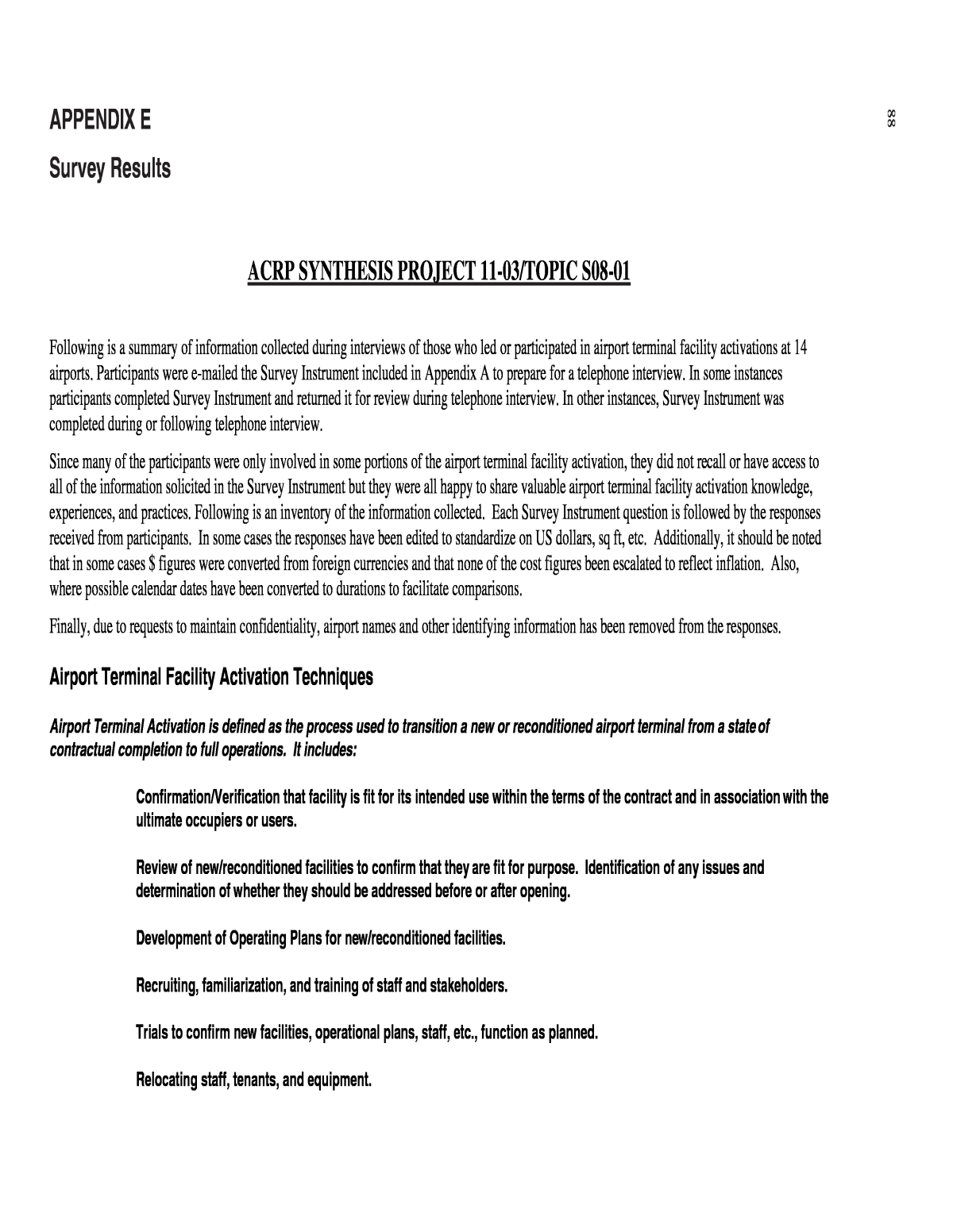
88 ACRP SYNTHESIS PROJECT 11-03/TOPIC S08-01 Following is a summary of information collected during interviews of those who led or participated in airport terminal facility activations at 14 airports. Participants were e-mailed the Survey Instrument included in Appendix A to prepare for a telephone interview. In some instances participants completed Survey Instrument and returned it for review during telephone interview. In other instances, Survey Instrument was completed during or following telephone interview. Since many of the participants were only involved in some portions of the airport terminal facility activation, they did not recall or have access to all of the information solicited in the Survey Instrument but they were all happy to share valuable airport terminal facility activation knowledge, experiences, and practices. Following is an inventory of the information collected. Each Survey Instrument question is followed by the responses received from participants. In some cases the responses have been edited to standardize on US dollars, sq ft, etc. Additionally, it should be noted that in some cases $ figures were converted from foreign currencies and that none of the cost figures been escalated to reflect inflation. Also, where possible calendar dates have been converted to durations to facilitate comparisons. Finally, due to requests to maintain confidentiality, airport names and other identifying information has been removed from the responses. Airport Terminal Facility Activation Techniques Airport Terminal Activation is defined as the process used to transition a new or reconditioned airport terminal from a state of contractual completion to full operations. It includes: Confirmation/Verification that facility is fit for its intended use within the terms of the contract and in association with the ultimate occupiers or users. Review of new/reconditioned facilities to confirm that they are fit for purpose. Identification of any issues and determination of whether they should be addressed before or after opening. Development of Operating Plans for new/reconditioned facilities. Recruiting, familiarization, and training of staff and stakeholders. Trials to confirm new facilities, operational plans, staff, etc., function as planned. Relocating staff, tenants, and equipment. APPENDIX E Survey Results
89 Please review above definition and provide suggested edits or indicate that you agree with it. Respondent No. 1 Agrees Does not agree Respondent No. 2 Agrees Does not agree Respondent No. 3 Agrees Does not agree If No, explain If No, explain If No, explain Respondent No. 4 Agrees Does not agree Respondent No. 5 Agrees Does not agree Respondent No. 6 Agrees Does not agree If No, explain If No, explain Need to emphasize that trial must be realistic and stress people, processes and systems. Also, program should include development of âwhat-ifâ scenarios and contingencies for everything. It is as, if not more important to train staff in contingencies than normal operations. Recommendations Also include the Fire Marshall and Building Inspection/Code Enforcement Certificate of Occupancy; suggest soft opening, Airline Terminal Systems integration, BHS In-Line EDS TSA certification, OSHA Moving Conveyance Certification. Include completion of Tenant Improvements, such as Concessions, Airline Operations Spaces, Airline Proprietary Systems, which are all required for full operation. Also; completion of punch lists, turnover of contract close-out documentation (manuals, as-builts, etc). Respondent No. 7 Agrees Does not agree Respondent No. 8 Agrees Does not agree Respondent No. 9 Agrees Does not agree If No, explain If No, explain Item 1 is usually in the scope of work of the âProject Managerâ following up the airport construction from the beginning (usually the PM reports to the Airport Operator). I agree with the above definition. Would it be beneficial to call out AOA security sweep specifically? Respondent No. 10 Agrees Does not agree Respondent No. 11 Agrees Does not agree Respondent No. 12 Agrees Does not agree If No, explain If No, explain If No, explain Respondent No. 13 Agrees Does not agree Respondent No. 14 Agrees Does not agree If No, explain If No, explain
Project Information Budget Respondent No 1 Respondent No 2 Respondent No 3 Respondent No 4 Respondent No 5 Respondent No 6 Respondent No 7 Planned $140 Million $4.2 Billion $4.1 Billion $5.8 Billion $3.4 Billion $386 million before events of 9/11/01 occurred. Actual $6 Billion $140 Million $4.1 Billion $5.8 Billion $436 million Respondent No 8 Respondent No 9 Respondent No 10 Respondent No 11 Respondent No 12 Respondent No 13 Respondent No 14 Planned $593 Million $1.1 Billion $4 Billion $1.8 Billion $431 Million $348 Million $155 Million Actual $623 Million $1.1 Billion N/A $1.8 Billion $425 million $577 Million $161 Million Schedule Respondent No 1 Respondent No 2 Respondent No 3 Respondent No 4 Respondent No 5 Respondent No 6 Respondent No 7 Design Planned 1 year 2 years N/A 7 years Actual 3 years 1 year 2.5 years N/A 4 years Construction Planned 27 months 5 years Airportâ6 years Terminalâ3 years 5 years Actual 7 years 27 months 5.5 years Airportâ6 years Terminalâ3 years 3 years** Commissioning Planned Throughout Construction 18 months 3 months Summer 2000 6 months Actual 1 year 18 months 3 months Summer 2000 6 months Activation Planned 01/08 2 years July 2005 5 years Summer 2000 2010 Actual 2008 1 Month 2.5 years 9 Gates July 2005 19 Gates Oct 2005 5 years Summer 2000 September 2005 Respondent No 8 Respondent No 9 Respondent No 10 Respondent No 11 Respondent No 12 Respondent No 13 Respondent No 14 Design Planned 79 Million End 1999 6/2001 Actual 91 Million End 1999 10/2004 102,511,000*** Construction Planned Completion (handover): 1 July 2009 780 Million 09/2000 4/2001 1 Sept.2008 Actual Completion (handover); 9 July 2009 836 Million 09/2000 6/2005 453,538,000 3 Sept. 2008 90
91 Commissioning Planned Part of D&B Contract 12 Million 02/2001 Summer 2008 Part of D&B Contract Actual 12 Million 02/2001 Summer 2008 * Activation Planned 20 Nov. 2009 Included in Commissioning 03/2001 9/17/08 20 Nov. 2008 Actual 10 Nov. 2009 03/2001 9/17/08 N/A**** 13 Nov. 2008 *Design and construction were extended due to new post 9-11 requirements. **Two key factors allowed our project to move forward rapidly: (1) Executive Directorâs ability to secure airline commitments early (on the first try); and (2) Environmental Permits secured and âgrandfatheredâ in under a previous DRI. I will describe these in more detail when we discuss the survey over the phone on Tuesday afternoon. ***Total soft costs associated with project including design and PM/CM. ****A full-time consultant was engaged for 22 months supported by a part-time scheduler. Approximately 3,500 hours of consultant time. The other costs of activation are the hours spent by airport staff to plan and prepare for opening day. Number of Passengers Respondent No 1 Respondent No 2 Respondent No 3 Respondent No 4 Respondent No 5 Respondent No 6 Respondent No 7 Capacity Pre- Expansion 60 Million 32 Million 60 Million* 29 Million 41,040,995 (actual calendar year 2000) 3 Million Percent O&D (%) 90% 60% 40% 80% 77.6% 100% Percent Transfer (%) 10% 40% 60% 20% 22.4% 0 Capacity Post- Expansion 90 Million 45 Million 60 Million 48 Million 34,632,474 (actual calendar year 2001) 12 Million Percent O&D (%) 90% 60% 40% 70% 76.6% 100% Percent Transfer (%) 10% 40% 60% 30% 23.4% 0 Respondent No 8 Respondent No 9 Respondent No 10 Respondent No 11 Respondent No 12 Respondent No 13 Respondent No 14 Capacity Pre- Expansion 5 million 8 Million 15 Million N/A N/A* 1.7 million Percent O&D (%) 99% 100% 30% 90% 100% Percent Transfer (%) 1% 0 70% 10% 0 Capacity Post- Expansion 7.5 Million 8 Million 30 Million 16 Million 2.7 Million Percent O&D (%) 99% 100% 30% 85% 90% 100% Percent Transfer (%) 1% 0 70% 15% 105 0 *Project was a replacement of existing facilities.
Project Size (sq. ft.) Respondent No 1 Respondent No 2 Respondent No 3 Respondent No 4 Respondent No 5 Respondent No 6 Respondent No 7 Size 27,986,167 350,000 including: 100,000 Public 130,000 Back of House 120,000 APM Station 3.5 Million 2 Million 5 Million Terminal building on 1200 hectare airport island 2.5 Million 800,000 Respondent No 8 Respondent No 9 Respondent No 10 Respondent No 11 Respondent No 12 Respondent No 13 Respondent No 14 Size 1.1 Million 1.2 Million 1,185,000 1,500,000 850,000 900,000 200,000 Size of New Concession Space (sq. ft.) Respondent No 1 Respondent No 2 Respondent No 3 Respondent No 4 Respondent No 5 Respondent No 6 Respondent No 7 Size (sq. ft.) 200,000 169,000 34,000 # of Concessionaires 150 11 67 Unknown 37 4 # of Concessionaires operational at opening 7 Additional 6 will open when APM starts 49 All 37 4 (31,000 sq. ft.) Respondent No 8 Respondent No 9 Respondent No 10 Respondent No 11 Respondent No 12 Respondent No 13 Respondent No 14 Size (sq. ft.) 194,000 86,000 # of Concessionaires 2 54 30 42 29 2 # of Concessionaires operational at opening 2 Master Concessionaires with various offerings 53 50% 36 25 ~9 2 Master Concessionaires with various offerings Number of Check-in Desks/Kiosks/Screening Positions Respondent No 1 Respondent No 2 Respondent No 3 Respondent No 4 Respondent No 5 Respondent No 6 Respondent No 7 Domestic 15 in hold rooms 80 99âAll dual- function (Dom/Int) N/A 168 110 International N/A 142 â 288âT1 56âT2 168 7 Kiosks 232 N/Aâconcourse expansion 94 20 None 0â(35 added in 2005) 62 Common Use Kiosks N/Aâconcourse expansion 94 20 None See above. 36 Screening Positions N/Aâconcourse expansion 5 locations with total of 43 lanes 3 locations with ~12 positions each 30 Departures 15 Transfer 13 12 (4 per Concourse) 92
93 Respondent No 8 Respondent No 9 Respondent No 10 Respondent No 11 Respondent No 12 Respondent No 13 Respondent No 14 Domestic N/A ~60 N/A 144 Domestic and International Common Use 79 Positions 0 International 53 0 190 (including express check-in) â 16 Positions 20+ (CUTE) 28 Kiosks N/A 60 with and without baggage 18 24 0 Common Use Kiosks 8 0 N/A 18 8 0 Screening Positions 7 45 10 8+ 4 Number of Gates Respondent No 1 Respondent No 2 Respondent No 3 Respondent No 4 Respondent No 5 Respondent No 6 Respondent No 7 Gates 47; 5A has 19, 5B has 14, 5C will have 14 15 28 49 24 28 Common Use Gates 15 100% 9 but all set up for common use 49 24 12 Respondent No 8 Respondent No 9 Respondent No 10 Respondent No 11 Respondent No 12 Respondent No 13 Respondent No 14 Gates 22 40 26 (including 5 A380 Gates) 44 26 14 6 Common Use Gates 22 N/A 44 5 CUTE 0 Number of Airlines International Number of Immigration Positions Transborder Number of Customs Positions Respondent No 1 Respondent No 2 Respondent No 3 Respondent No 4 Respondent No 5 Respondent No 6 Respondent No 7 Airlines British Airways 5 at opening - planning for 7 18 9 85 25 19 Immigration Positions N/A 30 60 Departuresâ90 inclusive of 16 e-gates Arrivalsâ120 92 8 Customs Positions N/A 16 N/A N/A 20 0 Respondent No 8 Respondent No 9 Respondent No 10 Respondent No 11 Respondent No 12 Respondent No 13 Respondent No 14 Airlines 53 11 Passenger 2 Cargo 1 ~93 9 At least 2 Domestic operated at gates, 5 International for check-in counter 22
positions Immigration Positions 20 52+12 eGates 11 Arrs. / 14 Deps. 14 N/A 10 Customs Positions N/A N/A 2 with three positions each 4 N/A Did project involve transition from Dedicated to Common Use facilities? Respondent No 1 Respondent No 2 Respondent No 3 Respondent No 4 Respondent No 5 Respondent No 6 Respondent No 7 Yes No Yes No Yes No Yes No Yes No Yes No Yes No If âNoâ, explain Airport was already common use. Some check-in counters and gates are also provided with proprietary airline equipment Already had common use but it was expanded Partial âcommon useâ was in place at the old terminal. The new terminal was intended to transition into more expanded use of CUTE and CUSS environments. Respondent No 8 Respondent No 9 Respondent No 10 Respondent No 11 Respondent No 12 Respondent No 13 Respondent No 14 Yes No Yes No Yes No Yes No Yes No Yes No Yes No If âNoâ, explain Terminal 3 is a dedicated terminal for Emirates so no provision for Common Use Terminals What were training implications? Respondent No 1 Respondent No 2 Respondent No 3 Respondent No 4 Respondent No 5 Respondent No 6 Respondent No 7 New Jet Bridges with different controls systems from rest of airport. Lots of burn in uses (particularly with ground power units) identified during trials 3 weeks prior to opening. Staff and stakeholders were not familiar with facility and processes and procedures required for common use. Staff + Airlines needed training Major carrier (American) used train trainer approach Foreign flag carrier staff were all trained by Authority Lots of new and different processes, procedures, systems, equipment meant that lots of training was required. Yes, we provided training and certification of all employees on the use of common use systems prior to opening. 94
95 Respondent No 8 Respondent No 9 Respondent No 10 Respondent No 11 Respondent No 12 Respondent No 13 Respondent No 14 No implications apart from familiarization to the new concept and proactive consultation with the airlines No training implications for Check-in facilities as same system used by Emirates previously. General familiarization and orientation training issues. New gate system required extensive training by airline staff. Personnel unfamiliar with new facilities and equipment. The only carriers that use common use positions at the new terminal are the two international carriers and the charters. Dedicated signatory carriers insisted on remaining at dedicated positions in the new facility, thus training necessities were very limited. International airlines using new CUTE system for counter check in. Gate podiums on CUTE. Airlines needed to be trained. New BHS system, international and one domestic airline staff had to be trained on use of system. New biometric access control system implemented for access doors and BHS. How were they addressed? Respondent No 1 Respondent No 2 Respondent No 3 Activation Team identified issues that were then remedied by contractor/vendor. Formal training syllabuses and courses were put together to familiarize staff with new building, new procedures, and new ways of working. Tailored courses were developed for: Air Carriers â ~ 2 day course (1 for terminal familiarization and 1 for use of CUTE) with addition ½ day for staff who would operate jet bridges. Airport Operations Staffâ1 day for familiarization plus additional training ranging from 1 to several days depending upon roles and responsibilities. First Respondersâ1 day for familiarization Government/Support Agenciesâ1 day for familiarization and use of new screening equipment. More than 100 courses tailored to the needs of each organization were offered 7 days a week often for 2 shifts for ~3 ½ months prior to AOD. 88% to 89% of staff was trained prior to AOD.
Respondent No 4 Respondent No 5 Respondent No 6 Authority managed and tracked progress of training Worked with vendors to develop standard agendas and curriculums Gap analysis performed on regular basis to confirm all staff trained Soft trials (no public) for training Training started 9 months out and became more intensive 3 months out. Train the trainer approach was used. Everyone working at airport participated in familiarization training with additional training tailored to specific jobs/roles. Training progress for all was managed, monitored, and reported on from central training center. Respondent No 7 Respondent No 8 Respondent No 9 Respondent No 10 Respondent No 11 Respondent No 12 Extensive training and familiarization programme for all stakeholder staff managed by the ORAT team. Specific trials were executed in advance of opening focusing on the systems and process training. Extensive transfer program included a full train-the-trainer program followed by full testing period of all functions including ATC, ground handling, airport operations etc. Common use equipment vendors provided training to project staff in a âtrain-the-trainerâ position. Respondent No 13 Respondent No 14 Organized training program with airlines and implemented operational readiness trials. Activation Information Did you have a formal Activation Team/Program? Respondent No 1 Respondent No 2 Respondent No 3 Respondent No 4 Respondent No 5 Respondent No 6 Respondent No 7 Yes No Yes No Yes No Yes No Yes No Yes No Yes No If âNoâ, explain Respondent No 8 Respondent No 9 Respondent No 10 Respondent No 11 Respondent No 12 Respondent No 13 Respondent No 14 Yes No Yes No Yes No Yes No Yes No Yes No Yes No If âNoâ, explain 96
97 Was there a Charter or Mission Statement for the Team/Program? If so, what was it? Respondent No 1 Respondent No 2 Respondent No 3 Yes No Yes No Yes No Ensure the Activation Team works through, not in place of, the existing organizational structure The Activation Team coordinatesâ existing organizations must continue to carry out their assigned responsibilities Costs for this service will be isolated and separately accounted for Provide direct support to Authority, Airport Users, Airport Service Providers Act to resolve disputes, anticipate problems The Activation Team can include Authority staff, Program Manager staff, outside consultant, airport user group (e.g. airline), or airport service provider (e.g. TSA) Yes, for Stage 2. Respondent No 4 Respondent No 5 Respondent No 6 Yes No Yes No Yes No âProvide excellent customer service on opening day that is seamless with no surprises.â Intension was to meet or exceed expectations of stakeholders. This remains Charter/Mission for future projects and we have done a much better job of managing expectations and achieving this goal. Strive to ensure all facilities and systems were tested and ready for operation by the established deadline. All problems were to be elevated for resolution immediately. Respondent No 7 Respondent No 8 Respondent No 9 Yes No Yes No Yes No While there was no âformalâ charter or mission statement, there were âGuiding Principles,â which the Transition Team formulated in the early months as the Activation process got underway. Achieve a safe and timely opening as perceived by the passengers, media and the airport community and be prepared to cope with any contingencies. The mission of the Midfield Transition Team is to ensure that all people, processes, technologies, and tools are aligned and prepared for operating at the new Midfield Terminal.
Respondent No 10 Respondent No 11 Respondent No 12 Yes No Yes No Yes No YesââNo surprises on opening day.â Respondent No 13 Respondent No 14 Yes No Yes No Beyond commissioning, activation is the process of moving from the construction phase to full operation of a facility. The process requires the engagement and participation of the airport operations, business and facilities management and staff (all the members of the organization that are accountable for the execution and continuation of facility management programs to new or expanded works). Activation is ultimately the responsibility of the owner-operator of the facility and is carried out by the existing organization. This includes complete familiarity with all elements of the construction project deliverables and electronic systems that will be added or introduced into a facility. Activation includes: Implementing comprehensive orientation and technical familiarity training with the project. This effort extends to all users of the facility including airlines, tenants, government agencies and POS Completing staffing requirements and job training for new positions and enhancing skills of existing staff to operate and maintain new or upgraded equipment and systems Concluding business arrangements with tenants particularly defining and implementing those contractual responsibilities delegated between the tenant and POS Revising and conducting simulations on operations/emergency plans Preparing and conducting trials and simulations, which include actual loading of systems and equipment as would be experienced in full operations. Achieve a safe and timely opening as perceived by the passengers, media and the airport community and be prepared to cope with any contingencies. 98
99 Were there protocols for communications, issue identification/resolution, etc.? Could you share these with us? Respondent No 1 Respondent No 2 Respondent No 3 Yes No Yes No Yes No Protocols Governance was led by a Steering Committee and included Stakeholder Engagement Meetings, where issues could be raised and recorded in Risk Registers. Unfortunately, each group of stakeholders had their own Risk Register; this made coordination and prioritization of issues challenging. Activation Team developed and updated centralized Activation Log that was shared across project teams. This proved to be a good vehicle for sharing Activation concerns across the various teams working on the project. The construction/design team used the system that they used throughout the project. The Activation Team used a database that allowed issues to be sorted and tracked in several ways. They could be sorted and tracked by: Importance/criticality to opening day SPOC/Division that raised issue Trial that identified issue Respondent No 4 Respondent No 5 Respondent No 6 Yes No Yes No Yes No Protocols Risk Registers 60 Day Count Down âBiggest value of Facilities Transition Program (FTP) was ability to bring issues and communications together. Construction team was not set up to do things that wayâ Stakeholders (Users, Operators, Maintainer, etc) are involved from start and remain involved throughout project. This mitigates possibility of surprises at end of project. Since many Stakeholders are not familiar with design/construction documentation, we now review information with them to make sure they understand. We also prepare animations, simulations, mock ups, etc., to make sure stakeholders know what is being built. To keep stakeholders engaged throughout construction we conduct walk throughs to make sure they understand what they will be receiving. All departments were to work towards completion of full turnover, training and activation of responsible systems. Problems were to be communicated to the Project Team and resolved. Where this was not possible problems were then elevated to the Activation Steering Committee, which was composed of a panel of Senior Management Staff. Respondent No 7 Respondent No 8 Respondent No 9 Yes No Yes No Yes No Protocols Internally, issues raised by the various stakeholders were asked to be submitted to the Transition Manager, where they were put on a Master List. Externally, a similar process followed, where issues were captured during meetings between tenants, airlines, TSA, etc. and then these were transferred to the Master List. Both internal and external official communication followed protocols to ensure (a) record keeping and access, (b) monitoring and follow-up of implementation, (c) prioritization and clarity Working Groups were established around functional areas. These Working Groups addressed transition-related issues in their regular meetings. As issues arose, a Working Group member was given responsibility for resolution. A master list of issues by Working Group was kept in order to keep the project and the team members on track.
Cross functional working groups (Director Level) were established to manage issues that could not be resolved between working group (on working group level) Working Group Chairs responsible for escalating issues Respondent No 10 Respondent No 11 Respondent No 12 Yes No Yes No Yes No Protocols There was a formal governance structure and issue resolution procedure where any stakeholder could raise issues that were not being addressed. Communications to Stakeholders were also managed through this steering committee with regular updates and bulletins. Process was handled through the Operational Readiness Experts (OREX) program. Under leadership of the Airport Company all key stakeholders appointed OREXes that were in charge of preparing their internal SOPs and matching them to the airport procedures, including communication protocols. During testing phase the SOPs were tested and during test debriefing sessions communication issues were determined for correction. Follow-on testing determined that issues had been properly corrected. A regularly scheduled âTAGâ meeting was held to resolve/identify issues. Core tag team members were required to attend all meetings. 100
101 Respondent No 13 Respondent No 14 Yes No Yes No Protocols An Activation Committee was established and led by a Deputy Managing Director reporting directly to the Managing Director. Sub- Committee chairs were established filled by senior managers. Team leaders responsible for specific tasks were established reporting to select sub-committee chairs. The Committee met regularly. The Activation Manager met with individual members to support activities and reported progress to the Committee. Both internal and external official communication followed protocols to ensure (a) record keeping and access, (b) monitoring and follow-up of implementation, (c) prioritization and clarity Was there a formal issue resolution structure? What was it? Respondent No 1 Respondent No 2 Respondent No 3 Yes No Yes No Yes No Issue Resolution Structure Issues were identified and resolved by individual work streams. Six months prior to opening, issues that could not be resolved by individual work streams were escalated to Steering Committee for resolution. However, since each group had their own registers, and there was no centralized/ consolidated register; prioritizing issues and issue resolution across departments was challenging. Activation Committee met every 2 weeks. Activation Team participated in weekly construction meetings throughout the 9 month (March to December) Activation Period. During the Activation Period End Users inspected new facilities and bought any issues to the attention of the Activation Committee, which characterized issues as: Construction Defects Design Omissions Nice to Haves Construction Defects and Design Omissions were dealt with through the construction team. Nice to Haves were prioritized and paid for via Start-up Funds, which were allocated on the basis of 0.25% of construction cost ($5 million out of overall 5 year $2 billion construction program) The construction/design team used the system that they used throughout the project. The Activation Team used a database that allowed issues to be sorted and tracked in several ways. They could be sorted and tracked by: Importance/criticality to opening day SPOC/Division that raised issue Trial that identified issue Respondent No 4 Respondent No 5 Respondent No 6 Yes No Yes No Yes No Issue Resolution Structure Hierarchal Structure consisting of: Technical Review Group (chaired by construction group and comprising all stakeholders) where most issues are resolved. If unresolved, escalated to Project Control Group. Then to client (Department sponsoring project). Then to Executive Director and finally to Board. Yes, see above: Department-Project Team-Steering Committee.
Respondent No 7 Respondent No 8 Respondent No 9 Yes No Yes No Yes No Issue Resolution Structure The Transition Team was afforded much flexibility to deal with issues as they arose. Generally, an issue was resolved by measuring it against three criteriaâ monetary impact (to the project); construction changes; or whether the issue was actually a âshow stopperâ. However, the Transition Team was always aware that a more important âcommittee-of-oneâ (Executive Director) had the ability to override any decisions we had made previously. Identify issue, record it, confirm action leader, set target date, monitor resolution and log progress. Generally speaking, most transition issues were addressed within the hierarchy of each Working Group; however, issues that were cross- functional in nature or that required executive buy-in were escalated to the SWAT (Swift Action Team). This team was comprised of directors and project team executives. Respondent No 10 Respondent No 11 Respondent No 12 Yes No Yes No Yes No Issue Resolution Structure Online issue resolution system would capture issues and ORAT team would assign party to deal with resolution. Escalation to Steering Committee if resolution was not forthcoming or party could not be assigned. Through EMORAT program, debriefing sessions to identify issues during testing and OREXes responsible to resolve issues. An issue list was maintained with a responsible party/person identified. The running list was issued discussed at each tag core group meeting. Respondent No 13 Respondent No 14 Yes No Yes No Issue Resolution Structure A matrix was created that linked schedule data from Primavera Schedule that included project construction milestones. Progress was updated weekly on this matrix and reported to the Activation Committee. Any issues or anticipated issues were raised at the Committee level and resolved. (Excerpt Attached) Identify issue, record it, confirm action leader, set target date, monitor resolution and log progress. 102
103 Was there a formal Activation/Terminal Opening Plan? Could you share this with us? Respondent No 1 Respondent No 2 Respondent No 3 Yes No Yes No Yes No Activation/ Terminal Opening Plan Plan was to integrate the independent Activation, Systems, Construction work streams with each other 6 months prior to opening and then transition to Operations via a familiarization, training, and trials process prior to opening. These work streams should have been transparently integrated with each other throughout the project. While operating in silos facilitated focus on the discrete deliverables of each work stream, it hid the big picture. Original Activation and Trial plans were based on entire facility being available 6 months prior to opening. Six months prior to opening, Construction Team acknowledged and Activation Team accepted that construction was not complete. Activation Team started meeting with Construction Team on a weekly basis to attempt to integrate trials into construction program. Unfortunately, sequencing of construction was not based upon how Activation Team needed to trial facility. This resulted in need to adjust construction sequences so that facilities incorporating new processes could be trialed first. This resulted in further construction delays. Activation program included 72 trials consisting of : 31 Unit Trials (equipment & facilities fit checks) 36 Basic Trials [individual process & sub processes (e.g. check-in, boarding, screening, etc)] 5 Big Trials (entire departures, arrivals, and/or transfer processes) Airport Authority rotated staff thru trials, Airline dedicated staff to trials. Result was that at opening day Airport staff was much more familiar with facilities and new processes than Airline staff. Structured plan for fitting out concession and airline space in advance with the soft opening of concessions to employees and overnight move of airlines for opening to passengers. Yes there was a formal and structured overnight transition plan, which included management scripts and called for several metrics to be monitored and tracked to provide early warning of any issues. SPOCs representing each stakeholders played active roles in the Command Center making sure that all involved were aware of current status.
Respondent No 4 Respondent No 5 Respondent No 6 Yes No Yes No Yes No Activation/ Terminal Opening Plan Team Established 20 months prior to opening. Activation/Terminal Opening Plan was competed 10 months later (10 months prior to opening). The leadership of the Facilities Transition Program visited Toronto Pearson to learn about how they managed to successfully open new facilities. Information gained during these visits provided a good foundation. ~5 years prior to AOD ORAT team started to plan overnight move. Terminal Operations Plan was prepared during design but involvement of eventual operator should have been done earlier. Original design was based upon UK/North American standards. When Terminal Operations Plan was developed, several changes were required to address operational issues. Respondent No 7 Respondent No 8 Respondent No 9 Yes No Yes No Yes No Activation/ Terminal Opening Plan It was as formal as the general construction progress would allow. There were five (5) components that guided the target date and plan: (1) Proper staffing (Maintenance had to be increased since we were moving to a bigger facility and would be responsible for more self- maintenance); (2) Training (PA system, FIDS equipment, loading bridges, etc.); (3) Tenant & vendor & employee access and familiarization with the new facility; (4) Public Information (media, PR, community events, etc.); (5) The Moveâours was planned to be an overnight expedition from old terminal to the new one. Called: Transition / Opening Sequence (TOS) Plan The plan incorporated many facets of activation, of course. In general, though, the activation of the new airport occurred by having all passenger flights terminate at the new terminal on the evening of November 11th, and then opening on November 12th with all departures and arrivals at the new facility. This eliminated the problem of having to transport aircraft overnight from the old terminal to the new. The plan also included a robust post- opening support plan, which included a fully-staffed Situation Room for the first 2 weeks of operation. Respondent No 10 Respondent No 11 Respondent No 12 Yes No Yes No Yes No Activation/ Terminal Opening Plan A four stage opening plan starting with 15% of flights covering local/regional flights first. Further stages added flights by geography of origin/destination. Total transition took 4 weeks and went very smoothly. Program was called Evaluation & Monitoring of Operational Readiness & Airport Transfer (EMORAT). A dedicated project team was established to run EMORAT plan. The plan was prepared to identify key areas and testing plans. A tag milestone schedule was developed and used as the basis for the opening plan. 104
105 Respondent No 13 Respondent No 14 Yes No Yes No Activation/ Terminal Opening Plan How was progress managed and reported on? Respondent No 1 Respondent No 2 Respondent No 3 Dashboards were used to report on progress. Each work stream was responsible for populating their own dashboard resulting. There were not consistent objective metrics to measure progress. On AOD there was a lot of red on several dashboards. Items requiring coordination were entered into appropriate section of Activation Log and distributed via e-mail to interested parties. Items were categorized as either Active (open) or Closed (resolved) or passed on to Construction Team Activation Team reported progress and reviewed Activation Log at Construction Meetings Activation Team led informal walk throughs with 4-5 member Integration Team including representatives from Engineering, Maintenance, Business Admin, Airline to identify and determine path to resolution of open items. Yes, detailed check lists and schedules were used to monitor and track progress of all mission critical functions with critical milestones for âgoâââno goâ decisions to be made. Functions tracked ranged from relocation of ground service equipment to uncovering and covering roadway signs. Respondent No 4 Respondent No 5 Respondent No 6 Consolidated Integrated Activation Schedule was used to track progress of Activation (trials), move. Construction Team âloanedâ a planner to the operations team to develop a detailed plan/ schedule that included many milestones/key dates. Progress was tracked against this plan and reported on a monthly then weekly and finally daily basis Weekly meetings were held and Project Manager reviewed each facility, system, procedure, training, etc and tracked the status towards meeting the goal of activating and opening. Respondent No 7 Respondent No 8 Respondent No 9 Lots of meetings. Some formal (e.g., with the airline properties and technical reps), and many informal meetings. Updates were provided, and milestones achieved were reported on. Feedback was sought on issues, which were pertinent to specific groups. Individual ORAT Stakeholder Meetings for the follow up of each domain General ORAT Coordination Meetings for critical issues and interfaces involving key Stakeholders and top management Steering Technical Meeting with Contractor All issues logged for follow up
Respondent No 10 Respondent No 11 Respondent No 12 All stakeholders had to complete a bi- weekly readiness report in the form of a 90, 60, 30 day countdown format. The report outlined all items that needed to be complete (as minimum 90 days out from opening). The ORAT team tracked progress against each activity across all stakeholders [in total there were over a 1100 key tasks that had to be complete at the same time in order to commence the Airport Opening Day (AOD) countdown.] There were also Regular Senior Steering Committee meetings where progress reports from all stakeholders on recruitment, training, process definition and other activation activities were reported to management. Construction and project delivery progress was also reported by contractors. Frequent site visits and pre-trial inspections were also carried out by the ORAT team to verify construction and facility readiness. Progress was managed as a project with identified goals and milestones up to full airport opening. Progress was managed via the issue list mentioned in Item D; as items were resolved they were note as âcomplete.â Respondent No 13 Respondent No 14 Routine meetings were conducted with the Activation Committee starting twice monthly to daily. Activation was a regular agenda topic at weekly airport development program meetings that included the Airport Director, Occasional meetings with the Activation Committee Chairman and the Airport Director, and regular weekly project meetings that included the participation of the Activation Manager. Were check lists or other reporting mechanisms used? Could you share them with us? Respondent No 1 Respondent No 2 Respondent No 3 Yes No Yes No Yes No Reporting Mechanism Individual work streams used own metrics to measure progress. Dashboards were used to report but methods of measurement were not consistent. There was no independent 3rd party involved in verifying what was being reported. Concerns were categorized as Facilities Maintenance, Tenant, Safety, Testing/ Commissioning, etc and logged in XL based spreadsheets that identified them as either âActiveâ or âClosed/ Constructionâ issues. These logs were circulated via e-mail to interested parties. Yes, detailed check lists and schedules were used to monitor and track progress of all mission critical functions with critical milestones for âgoâââno goâ decisions to be made. Functions tracked ranged from relocation of ground service equipment to uncovering and covering roadway signs. 106
107 Respondent No 4 Respondent No 5 Respondent No 6 Yes No Yes No Yes No Reporting Mechanism âConstruction schedule was full of BSâ. Personal relationships enabled Activation Team to go around formal construction hierarchy to find out what was really happening from subcontractors. Detailed Construction and Operational Readiness plan was developed and progress was tracked using check lists and milestones. Unable to locate. Respondent No 7 Respondent No 8 Respondent No 9 Yes No Yes No Yes No Reporting Mechanism Yesâa variety of check lists and spreadsheets and documents were created and used. Will share these with you electronically later. ORAT Stakeholder Action Lists (SAL) ORAT Weekly Coordination Log Sheet ORAT Live Trial Reports ORAT Integrated Validation Tests (IVT) Reports Technical Steering Log Respondent No 10 Respondent No 11 Respondent No 12 Yes No Yes No Yes No Reporting Mechanism Key activity progress reports developed for each stakeholder with specific targets developed to measure progress and readiness for opening. Facility check lists were also produced broken down by geographic area (i.e., Landside, Terminal, Airside etc). Regular meetings to monitor progress, identify open issues and prepare list of actions to be taken up. See Items E and F above. Respondent No 13 Respondent No 14 Yes No Yes No Reporting Mechanism
Who led activation? Explain. Respondent No 1 Respondent No 2 Respondent No 3 Airport Authority Airport Operations & Maintenance with support from Airport Manager. When projects are small, Activation is often included in Design & Construction scope. Activation was led by Operations department with input from airlines, construction/development team, government agencies, and other stakeholders. Respondent No 4 Respondent No 5 Respondent No 6 Airport Operations & Facilities Management led FTP (Facilities Transition Program). It had to live with a construction program and construction schedule that did not incorporate activation requirements. The FTP should have been part of program from day 1. Construction led construction of airport & terminal but as construction was completed Operations assumed leadership. Program Manager and Individual Project Managers with the support of the department staff responsible for the facility or system (Operations, ITT, Security, Facilities, Custodial, etc). Respondent No 7 Respondent No 8 Respondent No 9 Activation was led by Gary Duncan (Division Director of Aviation), under whom a Transition Team (comprised of Port Authority staff and DMJM project management staff) worked. I was the Transition Team Manager. ORAT Integrated Team (Core Team + Stakeholders). Activation was led by consultant engaged by the Capital Projects Group because airport operator was being kicked out. Respondent No 10 Respondent No 11 Respondent No 12 The airport established an ORAT team, which was made up of key staff from the airport plus their anchor tenant (Emirates), the team was heavily supplemented by external resources (temporary staff gap during the transition period). The overall ORAT process was managed by SVP Operations. The operator of the airport. Activation was led by the airline liaison office (ALO) who was contracted to the authority and reported to the North Terminal Team as well as the airlines. Respondent No 13 Respondent No 14 Deputy Managing Director for airport. ORAT Integrated Team (Core Team + Stakeholders). Who was involved airlines, agencies, public, media? What were their priorities? Explain. Respondent No 1 Respondent No 2 Respondent No 3 Everyone was involved. Public were registered for trials with fixed dates. When construction delays meant required facilities would not be ready as scheduled, trials needed to be re-scripted to avoid potential negative publicity. The result was that many of the trials did not achieve what was planned. Everyone was involved. Successful opening day. Airport, Airline, Government Agency, Senior Municipal and Federal Government Officials, the Media and the public were all involved. #1 priority of all parties was a seamless opening day. However one suspects that the media would have appreciated an even more newsworthy eventâwe are glad they were disappointed!!! Trials and Gala helped control/manage media and public introduction to new terminal so focus 108
109 Successful/seamless transition of airline operations to new facility. was on what went well. Respondent No 4 Respondent No 5 Respondent No 6 All above-listed parties. Everyone bought into mission/vision to âProvide excellent customer service on opening day that is seamless with no surprises.â Everyone. Public was invited to see terminal prior to opening and a decision was made to host the Miss Hong Kong competition at airport. This resulted in lots of distractions for construction workers and perhaps led to some of the trials not adequately stressing systems, processes, people. Airport, stakeholders, and public all wanted success and anticipated perfection. Media perceived this as arrogance and looked for/focused on failures. Airport decided to go with a Soft Opening and solicited a volunteer airline. SkyService USA was selected due to their limited flight schedule and mix of domestic and international flights. This allowed all systems to be checked from check-in through handling of the aircraft on departure. On arrival, FIS facilities and processing was fully tested to ensure optimal functionality and operation of system and processes. Respondent No 7 Respondent No 8 Respondent No 9 The Transition Team Sub-teams or committees were created to deal with specific issues or focus (e.g. Media was handled by both our PR department as well as a local PR consulting firm). Senior staff sat with the airlines properties and facilities reps when they flew into town twice a year to review the project status. Designated External ORAT Representatives from the airport community (Airlines, Ground Handlers, State Authorities & Tenants). Training & Familiarization Review & Assessment of the Operational Procedures & Planning Integrated / Validation Tests (Operations, Technical, IT&T) Live Trials & Push-back Trials Relocation Planning Everyone listed above. Open days for community & press. Simulation/Trials Airlinesâuneventful opening low cost (wanted to minimize what they paid for). Office space quality/quantity. Check-in counter assignments. TSA was great to work with. Respondent No 10 Respondent No 11 Respondent No 12 All stakeholders had minimum two staff dedicated to the ORAT process including Airline, Airport Management Company, Ground Handler, Airport and Airline Communications/Marketing departments, IT Engineering Services, Duty Free, Police/Customs/Immigration. Each stakeholder had different priorities according to their role/function in the new terminal. This was managed through the 90/60/30 day process. All of the above, and ground handlers. Airport Authority, Airlines, Construction Manager, TSA, CBP. Meeting airlines requirements. Meeting airport authority requirements Meeting scheduled opening date
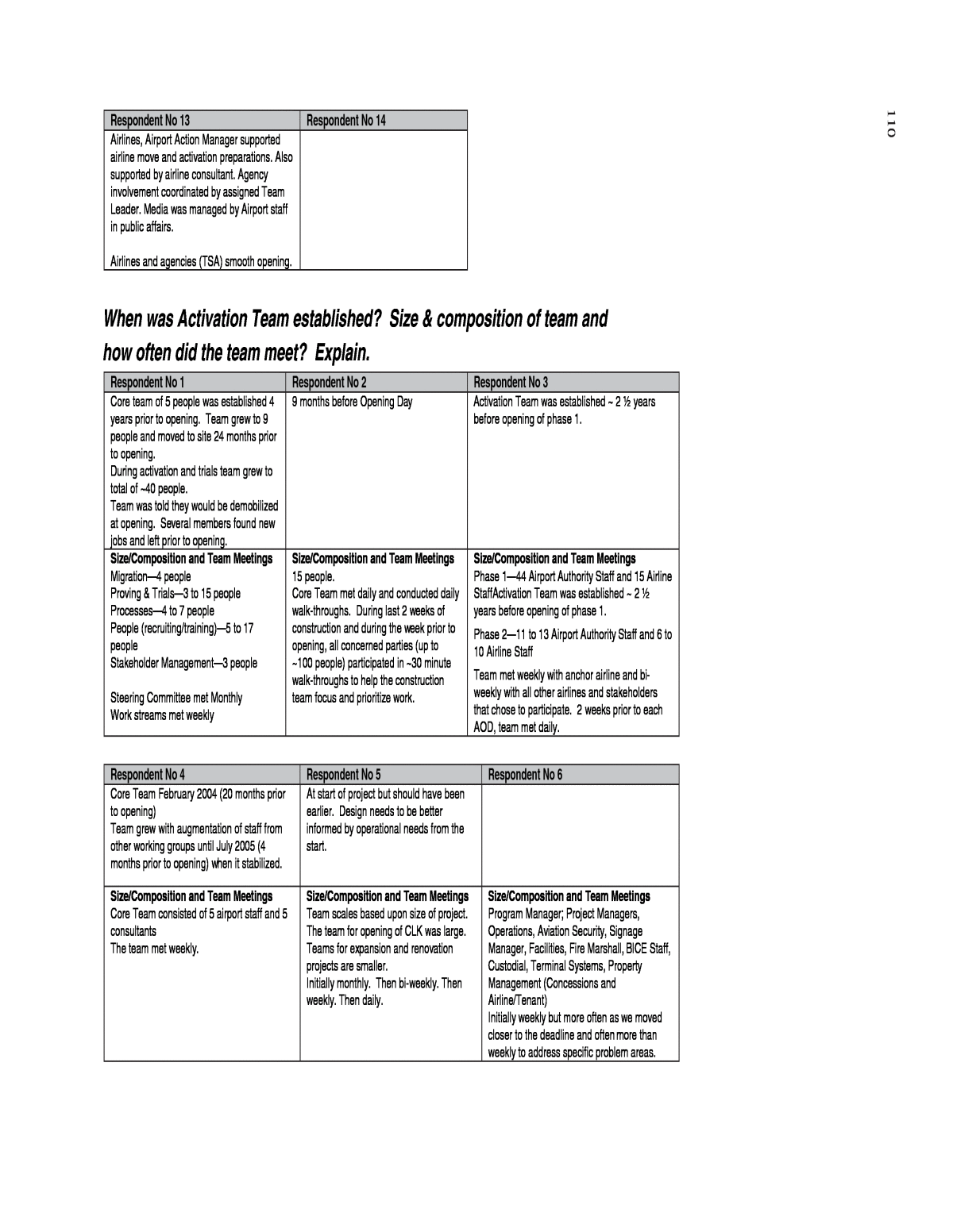
Respondent No 13 Respondent No 14 Airlines, Airport Action Manager supported airline move and activation preparations. Also supported by airline consultant. Agency involvement coordinated by assigned Team Leader. Media was managed by Airport staff in public affairs. Airlines and agencies (TSA) smooth opening. When was Activation Team established? Size & composition of team and how often did the team meet? Explain. Respondent No 1 Respondent No 2 Respondent No 3 Core team of 5 people was established 4 years prior to opening. Team grew to 9 people and moved to site 24 months prior to opening. During activation and trials team grew to total of ~40 people. Team was told they would be demobilized at opening. Several members found new jobs and left prior to opening. 9 months before Opening Day Activation Team was established ~ 2 ½ years before opening of phase 1. Size/Composition and Team Meetings Migrationâ4 people Proving & Trialsâ3 to 15 people Processesâ4 to 7 people People (recruiting/training)â5 to 17 people Stakeholder Managementâ3 people Steering Committee met Monthly Work streams met weekly Size/Composition and Team Meetings 15 people. Core Team met daily and conducted daily walk-throughs. During last 2 weeks of construction and during the week prior to opening, all concerned parties (up to ~100 people) participated in ~30 minute walk-throughs to help the construction team focus and prioritize work. Size/Composition and Team Meetings Phase 1â44 Airport Authority Staff and 15 Airline StaffActivation Team was established ~ 2 ½ years before opening of phase 1. Phase 2â11 to 13 Airport Authority Staff and 6 to 10 Airline Staff Team met weekly with anchor airline and bi- weekly with all other airlines and stakeholders that chose to participate. 2 weeks prior to each AOD, team met daily. Respondent No 4 Respondent No 5 Respondent No 6 Core Team February 2004 (20 months prior to opening) Team grew with augmentation of staff from other working groups until July 2005 (4 months prior to opening) when it stabilized. At start of project but should have been earlier. Design needs to be better informed by operational needs from the start. Size/Composition and Team Meetings Core Team consisted of 5 airport staff and 5 consultants The team met weekly. Size/Composition and Team Meetings Team scales based upon size of project. The team for opening of CLK was large. Teams for expansion and renovation projects are smaller. Initially monthly. Then bi-weekly. Then weekly. Then daily. Size/Composition and Team Meetings Program Manager; Project Managers, Operations, Aviation Security, Signage Manager, Facilities, Fire Marshall, BICE Staff, Custodial, Terminal Systems, Property Management (Concessions and Airline/Tenant) Initially weekly but more often as we moved closer to the deadline and often more than weekly to address specific problem areas. 110
111 Respondent No 7 Respondent No 8 Respondent No 9 January 2004 9 months before opening Transition effort began 4 years prior to opening for assessment and planning purposes. Actual Activation Team was established approximately 10 months prior to opening. Size/Composition and Team Meetings Transition Team initially composed of 1 individual (me). Then it became two people (DMJM project manager and myself). Then it grew to encompass other team players from both staff as well as the consulting and project management groups. Formally, once a week. Informally more frequently (to address a specific issue or planning concern, etc.). Size/Composition and Team Meetings ORAT Core Team: 8 members: ORAT Manager (1), ITT Controller (1), Operations Controllers (2), Technical Systems & Maintenance (2), Project specialist (1), Personal Assistance (1) ORAT Stakeholders: 9 Managers The team met depending on the phase of the program Size/Composition and Team Meetings Transition Team consisted of 6-8 consultants from Chrysalis from 4 years out. 10 months 6-8 consultants from Sebesta Blomberg & 3 consultants from Chrysalis, 20 or so Airport Authority, airline, TSA, and FAA staff formed Activation Team. Working Groups met ev ery 2 weeks until close to opening, then often weekly. Daily last week and a half SWAT met twice weekly . Respondent No 10 Respondent No 11 Respondent No 12 2 years before opening Three years before airport opening. The TAG Team was formed approximately 9 months prior to terminal activation. Size/Composition and Team Meetings 15 Consultants 20 Stakeholder representatives The ORAT team monthly to start with and then 9 months out bi-weekly dropping down to weekly meetings 6 months out from opening. Size/Composition and Team Meetings Project manager with a team of dedicated experts responsible for identified parts of the project. Also specific functions of the airport were participating in their own preparations for airport opening. Weekly and during testing twice per week. Size/Composition and Team Meetings 16 members, airport ops, maintenance, bus development, public safety, planning, airlines, CM, CBP, TSA, airline consortium, all were represented. For the first 6 months, meetings were monthly, next 2 months, 2 times/month. Final month prior to opening, the meetings were weekly. Respondent No 13 Respondent No 14 December 2002. Opening was June 2004 6 months before opening Size/Composition and Team Meetings Approximately 45 sub-committee chairs, team leaders and support people Weekly and daily as opening day drew near. Size/Composition and Team Meetings ORAT Core Team 5 members The team met depending on the phase of the program
When was activation plan established? Was opening at fixed date or soft? If soft, how much time elapsed between first flight/passenger activity and fully operational terminal and what activities occurred between soft and final opening? Explain. Respondent No 1 Respondent No 2 Respondent No 3 Activation Plan 24 Months prior to planned opening Fixed/Soft Date 24 Months prior to opening fixed dateâ all at once 18 Months prior to opening 2 stages separated by 3 days First opening day decision made to complete opening in 6â8 Steps with schedule to be determined based upon success. Original Plan was hard opening Revised Planâ3 days Actual ~2 months Activities Bad Press. Upset Public. Upset Airlines. Repairing defects, completing construction Familiarization, training Activation Plan 9 months before opening Fixed/Soft Date Initial plan was for a fixed date but airlines did not want to open during holiday season so decision was made to go with a soft opening. One month elapsed between when facility was complete and airlines wanted to use it. The delay was due to airline hesitance to move to new facility during holiday season. Activities Airport, Airline, and other staff used concessions. This was a good vehicle for staff familiarization. Activation Plan It is critical to get Ops input early in the design process and maintain this input throughout delivery of project. Activation plan informed design and delivery of project. Fixed/Soft Date Fixed Activities None. Respondent No 4 Respondent No 5 Respondent No 6 Activation Plan Started development during Feb 2004 (20 months prior to opening) Completed July 2004 (12 months prior to planned opening) Fixed/Soft Date Fixed date was July 2005. During June American decided to move transition to new facility to October due to concerns about BHS. Completion of BHS was late; this did not allow sufficient time for American to test and prove system. 3 months (July to August) Activities BHS Commissioning and Testing Activation Plan Terminal Activation Plan was established 1 year before AOD Fixed/Soft Date Date was fixed 12 months before AOD. It should have been kept soft for as long as possible. Ideally, it should not have been fixed more than 2 months prior to AOD, but this was not practical for the opening of the new airport where so many other interfaces existed (overnight move of business partners, opening of new rail link, etc). It happened over night. Old airport was closed to flight activity. Activities There was not a soft opening for passengers but old airport was used for ground processing of some cargo for first ~2 months (no flights were possible from the old airport once the new airport opened). Cargo was trucked from new airport to old airport for processing. Activation Plan Discussions began at least 6 months out and became more formalized the further in we got and the more systems and components were completed. Fixed/Soft Date A Soft Opening was established with a general Opening Date Announced until it was clear that all aspects of the Activation were successful, and then an official opening date was announced with a formal ribbon cutting. Activities Additional and continuous testing of systems; training on the operation and maintenance of the facilities for airport staff and airline staff who would be operating the system. 112
113 Respondent No 7 Respondent No 8 Respondent No 9 Activation Plan October 2004 Fixed/Soft Date Both. Mostly it was a fixed date; which consistently became a moving target because of issues associated with the Baggage Handling System certification towards the tail end of the project. Strategically we wanted a fixed date so that the contractors would always know there was a deadline under which they were mandated to finish up their work. Activities Activation Plan First draft within 2 months after establishment of the ORAT Team Fixed/Soft Date Fixed Dates Activities 7 days Activation Plan Actual plan for the weeks immediately preceding and following activation was developed approximately 3 months prior. Fixed/Soft Date The opening was a fixed date of November 11, 2008. Fixed in September (2 months prior). Activities N/A Respondent No 10 Respondent No 11 Respondent No 12 Activation Plan Outline plan established approx 12 months out. Date not fixed until 90 days out from opening. Fixed/Soft Date Date was fixed 3 months from opening, 4 x phase soft opening over 4 weeks. 4 weeks between first and last phases. Activities All staff was rotated through the new facility in the first week so ensure familiar with facility for later transition phases. Ongoing load tests and system checks were also conducted in advance of ramping up to the next phase Activation Plan Two years before opening. Fixed/Soft Date Fixed date of 28/3/01. Activities Activation Plan Approximately 6 months prior to activation. Fixed/Soft Date Fixed Activities
Respondent No 13 Respondent No 14 Activation Plan November 2002 Fixed/Soft Date Soft. Terminal international counter first followed by gates. Gates all opened at once. Entire concourse opened with screening and concessions at one time. Activities Operational readiness trials and moves for airlines and airport staff. Activation Plan First draft within 2 months after establishment of the ORAT Team Fixed/Soft Date Fixed Dates Activities 4 days Was opening phased? How much time elapsed between first and final phase? Explain. Respondent No 1 Respondent No 2 Respondent No 3 Yes No Yes No Yes No Original plan 3 days Actual ~2 months Phase 1 was ~2 million sq. ft. and Phase 2 was ~1.5 million sq. ft. 2 years (plan was always to construct and open the terminal in 2 phases) Respondent No 4 Respondent No 5 Respondent No 6 Yes No Yes No Yes No If so, what was size of each phase: 9 foreign flag carriers were willing to move in before the complete BHS was fully tested and commissioned? So, they moved in accord with schedule. 3 months. Terminal opened at once. Teething issues were worked out in a couple days. Cargo took about 2 months to fully transition to new facility. Once activation resulted in a successful testing of all facilities and systems, the official opening date was established and the airlines began to move into the new facility with all being in the new facility by December 20, 2000. Respondent No 7 Respondent No 8 Respondent No 9 Yes No Yes No Yes No Our plan was to have an overnight move. Operate at the old terminal until the last flightâthen engage in a massive overnight moveâthen start activity at the new terminal the next morning. 34% in Phase 1 (only 2 airlines) & 100% (all) in Phase 2 Time Lapse Between Phases: 7 days 114
115 Respondent No 10 Respondent No 11 Respondent No 12 Yes No Yes No Yes No Phase 1â15% flights transferred (40 flights), Phase 2 37% flights (99 flights), Phase 3â60% flights (168 flights, Phase 4 100% (268 flights) Time Lapse Between Phases: 4 weeks Phase Iâ24 gates, entire terminal. Phase IIâ2 gates. Time Lapse Between Phases: 12 months Respondent No 13 Respondent No 14 Yes No Yes No Two phases as stated aboveâ international ticket counters then opening of entire 14 gate concourse. Time Lapse Between Phases: About 2 months. Arrivals in Phase 1 and full (Arrivals and Departures) in Phase 2 Time Lapse Between Phases: 4 days When was terminal operation plan developed? Explain. Respondent No 1 Respondent No 2 Respondent No 3 Respondent No 4 Respondent No 5 Respondent No 6 Respondent No 7 12 months prior to opening. Project consisted of expanding an existing International & Domestic concourse; the operating plan was same as before, only simpler because the expanded area was all for domestic flights. It was ready at start of design. Plan was established 2 years prior to opening of Phase 1. It was updated ~2 months prior to opening to incorporate lessons learned during trials and republished ~90 days after AOD to incorporate lessons learned during initial operations. During first quarter of 2005â4 months prior to planned opening. Minor revisions were required to incorporate lessons learned during trials and initial (soft) opening. During construction. It would have been better if it was developed during design. Design had to be modified to address operational issues during late construction phase that was costly and led to construction delays, which in turn put pressure on the final stages of the operation readiness plan. Respondent No 8 Respondent No 9 Respondent No 10 Respondent No 11 Respondent No 12 Respondent No 13 Respondent No 14 First draft within 6 months after project establishment Finalized before Live Trials Terminal operation plan (which included Security, Airline/Tenant operations, etc.) was developed in 12 months before openingâit was crucial to inform the Trials Program. Two years before airport opening. Adapted existing operations plans to the STEP. First draft within 6 months after project establishment Finalized before Live Trials
Validated during the Trials the 6 months preceding activation. Some documentation was completed post- activation. Validated during the Trials Were there any changes to design during construction? If so, when were they identified and what was value of changes made during design, during construction during activation post opening? Respondent No 1 Respondent No 2 Respondent No 3 Yes No Yes No Yes No 8 months prior to opening it was noted that there were an insufficient number of security screening positions. So a restaurant/bar was removed to accommodate additional screening positions. Following opening it was determined that there were an insufficient number of transfer positions. Spaces were reconfigured to accommodate additional positions. No significant changes were made. There were no significant changes made during construction. Respondent No 4 Respondent No 5 Respondent No 6 Yes No Yes No Yes No Following 9/11, structural changes were made to mitigate impact of a bomb blast. Significant layout changes were made during construction. Customs/Immigration hall was modified after construction to double amount of queuing space. Baggage Handling SystemâUnknown amount Signage (wayfinding)âestimated $1 million additional Respondent No 7 Respondent No 8 Respondent No 9 Yes No Yes No Yes No Yes. During our project a D.E.R.T. process was created and utilized to deal with changes and change orders. This was unique to our facility. To save space, I will describe it when we talk on Tuesday. Mainly during construction. Parking Garageâhelix too narrow; had to be enlarged to avoid collisions. Number and placement of electrical outlets inadequate; more had to be added 116
117 Respondent No 10 Respondent No 11 Respondent No 12 Yes No Yes No Yes No Trials identified some changes required because of operational requirements, construction work ongoing until opening and beyond to support changes and rectifications. Major changes value was approximately $10 Million. These were made in early stages of construction. Respondent No 13 Respondent No 14 Yes No Yes No Substantial changes due to formation of TSA and requirement for in-line bag screening. Was activation program successful? What metrics were used to measure success? What were the benefits/challenges? Respondent No 1 Respondent No 2 Respondent No 3 Yes No Yes No Yes No Metrics Used to Measure Success Opening on time as planned with no surprises, good press, happy public, happy airlines. We have identified areas for improvement for future facilities activations. No bad press. Airline operations normal and on time from day one Satisfied passengers. Concession sales at predicted levels On time performance, which ranged between 95% and 98% during first week of operations Media and public reaction, which were both very positive Need for changes post-AODâNo significant changes were required Facilities operate as envisionedâupdates to terminal operation plan were minimal IATA ASQ survey of customer service/satisfaction indicated significant improvements; Steve to provide details Air carriers acknowledge greater efficiency but this has not been quantified Reduced energy costs More airlines want to come to airport Benefits/ Challenges Trials pushed construction & commissioning but failed to achieve complete readiness. This was largely due to the independence of the various work streams. Remedying defects particularly the issues with Jet Bridges and Ground Power Units. Minor changes were also required to: Keeping air carriers in line and actively participating in activationâDay of Ops always takes precedence. Bankruptcy of anchor carrier Costs and lack of flexibility in program
Lack of coordination and transparency between work streams Lack of commitment from operationsâthey all have day jobs and did not have time to support Activation program. Many elevators and escalators were not functioning at opening and airline staff (and others) did not know other ways to get to work. Nobody wanted to admit they were late and there was no objective/consistent metric for measuring readiness of each stakeholder. Apron Lighting Light Level Sensor Locations Challenges included coordination multiple contracting entities to complete on time. Each concession and airline had their own contractors fitting out their respective spaces. What Went Well Airport Authority staff were all familiar with the facility. Unfortunately, Airline and Ground Handlers did not force all staff to participate in familiarization and training programs resulting in an insufficient number of staff being familiar with and trained on new facilities and systems. Health & Safety were successful . Relocation of GSE and migration to new terminal went as planned. Airport Maintenance personnel were trained and familiar with the facility. Activation period allowed completion of access control and closed circuit television (security) system All key concessions and airline tenants were in normal operations on opening day. Overall Programâother airports are now embracing similar approaches Training Trials Transition AOD Common Use Kiosks & Web Check-in Processes and FlowsâOriginal plan still work 118
119 Respondent No 4 Respondent No 5 Respondent No 6 Yes No Yes No Yes No Metrics Used to Measure Success The Press, Focus Groups and Surveys were used to measure the success of the opening. There were no negative press accountsâeverything was positive. Initial opening of CLK had lots of issues so Activation could have been more successful. We still follow similar model and have successfully opened several additions and expansions (Terminal 2). We now keep all stakeholders involved in process and keep AOD soft as long as possible. Operations department has a comprehensive set of KPIs to measure performance of airport. These along with IATA surveys are analyzed before and after each activation. We dovetail with these during construction and agree with project owners and users on a set project specific KPIâs, which measure impact of construction on existing facilities, business partners and public (or hopefully lack of impact). Our aim is for our construction works to remain invisible. Established a path and goal with a set common deadline for everyone to work towards. Resulted in systems being fully tested, problems resolved and necessary training taking place. Ultimately resulted in the confidence in setting a soft opening and grand opening with ribbon cutting ceremony. Benefits/ Challenges Getting Construction Team to listen to Activation needs and provide accurate information about progress of construction Getting activation requirements incorporated into overall project schedule. Construction was not on boardâfocus was completing construction not successfully opening facilities. Lack of alignment between Construction and Activation. Getting Operations and Construction to work to the same plan. Managing media expectations. It is important that media and all stakeholders understand the complexity and challenge of activating new facilities. It is a mistake to let them think it is easy. Keeping stakeholders engaged throughout the process. This is critical to mitigating surprises at AOD. Familiarization and training were compromised since construction and commissioning of systems were late. Developing contingency plans for everything and training staff in them. Keeping track of all the moving parts and the magnitude of the project. Managing change orders and having a formal process for approving them was helpful as this appeared to get out of control towards the end. What Went Well Opening Day!!! Integrated Schedule prepared by Activation Team. TrainingâActivation Team consolidated contractor training programs and incorporated them into an overall program Soft TrailsâAirport and Stakeholder (i.e. Airline) staff (no community volunteers were usedâthis facilitated staff orientation Peer ReviewsâActivation Team visited Toronto, San Francisco, & Detroit to review programs and incorporate lessons We learned a lot and now plan for contingencies. As much emphasis is placed on what to do when systems donât work as on how to operate when everything is normal. Good project management and over- sight, regular meetings, sound program management, focused Activation Team and a decisive and empowered steering committee.
learned Move Control Command Center provided centralized coordination, Respondent No 7 Respondent No 8 Respondent No 9 Yes No Yes No Yes No Metrics Used to Measure Success Although no formal âmetricsâ were usedâ other than to ensure that our Guiding Principles were being metâwe considered our Transition Program a success based on the number of âattaboysâ received from the community, media, FAA & TSA. The feedback was very positive, so the return-on-investment (ROI) was high. Overall perception (public, media) Number & impact of occurrences Qualitatively & quantitatively assessed staff-induced errors Systems performance (KPIs where applicable) The activation was extremely successful. Situation Room monitored issues as they arose (which were few). Media coverage was used as an external feedback mechanism, and it was overwhelmingly positive. Opening day was just another day. Benefits/ Challenges The challenges were seen and felt mostly post-opening when it became evident that we had issues with the BHS and Fire Alarm systems. Also because training was not properly covered by scope and spec earlier, there were issues with personnel and employees not understanding how certain pieces of equipment or software worked. We discovered that our signage was causing the general travelling public some headaches. Our Computerized Maintenance Management System (CMMS) was not functional, which created its own set of problems for our Facilities group. I will describe these more fully when we chat next week. Fit-out schedule for concessionaires Political aspects relating to âgrandfatherâ rights of entities or unions System-wise: Baggage Handling System Specific system interfaces The new security system caused a lot of behind-the-scenes grief for airline and airport employees. Alarms were going off continuously (no exaggeration), and security personnel had to be outsourced to guard doors where security system was not operational. This ended up being very costly. In hindsight, a cutover plan, which allowed more time for employees to become familiar with the new system would have made things easier. Another challenge was ensuring that all of the necessary training occurred prior to terminal opening. Training is best done immediately before the knowledge is put to use, but some employees (such as maintenance personnel) were required to attend as much as 120 hours of training. Wayfinding was a bit difficult for the back- of-house staff. It was difficult for airline/airport personnel to determine secure areas from non-secure areas. Immediately upon activation, we went through the terminal and hung several sheets of green poster board to identify areas of transition between non-secure and secure areas. What Went Well The Transition Team worked well together. There was lots of communication both upline and downline, as well as formal and informal. A large amount of faith and trust was Cooperation with the airport community Operational & Contingency Planning Tests & Trials The opening itself went amazingly smoothly. The staff in the Situation Room was quite frankly bored. A member of the media complained that he had been âhanging around the terminal for 8 hours waiting for something to go wrong, with nothing to show for it.â 120
121 shown by the Executive Director and senior staff towards the Transition Team. In many respects we were building the plan as we went along; I guess our thinking was strategically on track and correct for the most part. The physical move from the old terminal to the new also went extremely well. The move was meticulously planned and executed. Most move activity occurred in the two weeks prior to opening, and some occurred after opening. Only mission- critical items were moved during the overnight period, and the move was completed in plenty of time for opening the next morning. Respondent No 10 Respondent No 11 Respondent No 12 Yes No Yes No Yes No Metrics Used to Measure Success No formal metrics for success. 1st phase all flights left within 15 minutes of departure times, no adverse publicity for any phase of the transition Metrics were the on-time transfer of operations from the old airport and the opening of the new airport in one day. Benefits were a clear goal setting that was recognized by all participants. Project was supported by specific milestones that had to be met: completion of construction, dates for testing specific functions and entire operation, transfer and opening of the airport. Terminal opened as scheduled. No flights were delayed as a result of facility. Benefits/ Challenges Delays in the construction programme meant trials overlapped with construction significantly. True state of construction progress not always known. The establishment of a new airport operator, the alignment of all stakeholdersâ procedures and determining that procedures had been properly tested. Schedule and budget. What Went Well A comprehensive training and familiarization programme with all staff having visited the facility a number of times prior to opening. The 90/60/30 method of reporting on readiness was also extremely successful in getting all the stakeholders aiming towards same goal in a controlled manner. Having previous experience in the ORAT team meant that we could know what mattered and what didnât. The equipment transfer from the old airport to the new airport. Baggage handling system was contracted as design-build and was a major success.
Respondent No 13 Respondent No 14 Yes No Yes No Metrics Used to Measure Success Pax complaints (none recalled) airline complaints, maintenance calls from tenants, performance of BHS screening. Overall perception (public, media) Number & impact of occurrences Qualitatively & quantitatively assessed staff-induced errors Systems performance (KPIs where applicable) Benefits/ Challenges Operation of the in-line BHS and cut- overs to new conveyor devices installed in the existing line. Also, implementing alternative plans for MuFIDS errors in displays Late establishment of ORAT program Short duration between handover and opening Fit-out schedule for concessionaires Political aspects relating to âgrandfatherâ rights of entities or unions System-wise: Baggage Handling System Specific system interfaces What Went Well Coordination and cooperation amongst the airport staff and between the airline staff and airport staff. Cooperation with Construction Manager and General Contractor Public open house that loaded the building prior to operationâexcellent public turn-out. International Airline staff familiarity with new BHS and access control system. Move of the airport staff to new office. TSA staff familiarization and operational readiness trails on the BHS. Cooperation with the airport community Operational & Contingency Planning Tests & Trials What would you do again? What would you do differently? Explain. Respondent No 1 Respondent No 2 Respondent No 3 What would you do Again? More joint working groups to encourage more transparency between groups. Same activation format Same program with adjustments to reflect scope of project. What would you do differently? Integrate Activation plan with Construction & Commissioning plans. Formalize interface management and expand to include systems, processes, people, construction, operations, and other stakeholders. Enforce joint/consistent metrics for reporting progress and have it audited by More involvement during design phase to prevent âchangesâ during construction. Better engage airlines More time spent with maintenance personnel and airline tenants. Testing jet bridges, apron lighting, other SPOCs (single points of contact) for each department should have hard line reporting to Activation Team and dotted line to department. For this project it was other way around and at times this led to conflicts in demand for SPOC focus/time. 122
123 an independent 3rd party. Better engage operations (particularly airline) Make sure that Authority Staff, Airline Staff, and other significant stakeholders complete familiarization and training prior to opening. Develop and communicate contingency plans to address what happens should systems, equipment, people, processes fail. airline operational components. Respondent No 4 Respondent No 5 Respondent No 6 What would you do Again? We would do the same program but would start sooner and make sure it was incorporated upfront as part of the overall program. We would engage the same group of consultants and make sure it was led by Kim Arnold from Jacobs. Follow similar plan but keep AOD soft. Development of the Activation Team, a formal process, established goals and measures to control change orders and costs. What would you do differently? Start sooner Enforce transparency regarding progress of construction. Make sure activation requirements are incorporated from the start. Foster closer cooperation and better more transparent communications between all stakeholders. Start detailed planning earlier Keep all stakeholders engaged throughout Increase rigor of testing, commissioning, and trials Have contingencies for everything. Respondent No 7 Respondent No 8 Respondent No 9 What would you do Again? Would follow same methodologies and implementation strategies. The use of Airport Ambassadors (volunteers with red sweaters placed strategically throughout the new terminal to assist passengers) was particularly well received. The plan to terminate the last flights of the day at the new terminal worked splendidly. What would you do differently? Add more structure. Define metrics and measurements to be achieved. Ensure that training and elements of the design of the facility be revised to better meet our needs. Seek ways to optimize Coordination and Communication. Communication could have been improved considerably. Generally speaking, project team executives were very guarded with information, and this resulted in an information vacuum, which quickly got filled with misinformation and a lot of paranoia. The key stakeholders were not engaged early enough in the process to make key decisions affecting the operation of the terminal, and this resulted in either a lack of goodwill or last- minute design changes and/or added expense.
Respondent No 10 Respondent No 11 Respondent No 12 What would you do Again? Soft opening 90,60, 30 Process SPOC Process: The establishing of an operational readiness Single Point of Contact (SPOC) and deputy SPOC for each organisation was very successful and ensured the participation of all key stakeholders and facilitated easier flow of information. Treat ORAT as a specialist activity that warrants expert help Establish a dedicated team responsible to monitor preparations and to perform testing. Yes, I would hope to. What would you do differently? Review effectiveness of large trials (3,000 + people) against targeted smaller trials (load tests) without members of the public. Recognise the detailed planning and logistics involved in big trials and resource accordingly. Better access and integration with the construction commissioning team. Complete commissioning before opening!! Perform more detailed assessment of the level of training and familiarization of stakeholders through more extensive testing. Try to mitigate Owner/Airline directed changes. Respondent No 13 Respondent No 14 What would you do Again? Same organization strategy with the same commitment from senior executive management. Operational readiness trials. Creation of Plan A, Plan B and sometimes even Plan C Regular communication with all parties Employee same tracking tools Make the airlines and tenants part of the activation programâtrack their progress on tasks. Would follow same methodologies and implementation strategies. What would you do differently? Conduct earlier readiness trials on modification on existing BHS systems with seasoned airlines. Considerable attention was paid to the international carriers because they were operating new systems and not enough attention paid to the domestic carrier that was to only experience a relatively minor change in the BHS. Ghost flights for MuFIDS to test consistency between monitor and back- wall displays. Seek ways to optimize Coordination and Communication. 124
125 With the benefit of hindsight are there any changes you would make or suggest making regarding? Explain. Respondent No 1 Respondent No 2 Respondent No 3 Define activation requirement early and incorporate into construction schedule. If this is done it should be possible to conduct many early trials while portions of the facility are still in construction. Activation format was good. Would not recommend any material changes. Respondent No 4 Respondent No 5 Respondent No 6 Start sooner Enforce transparency regarding progress of construction. Make sure activation requirements are incorporated from the start. If possible, always phase opening. This was not possible for opening of CLK but has been possible for T2 and other expansions Respondent No 7 Respondent No 8 Respondent No 9 Fine tuning on certain processes and use of more e-tools for higher visibility by all parties involved to ensure same level of information and common understanding. Respondent No 10 Respondent No 11 Respondent No 12 Minimize changes to airport operational IT systems whilst airport transition programme ongoing. Freeze construction at least 90 days out from AOD. Work closer with engineering and delivery team so true extent of facility readiness can be gauged in advance of trials etc., to avoid duplication of efforts or time wasting. More detailed testing would identify weaknesses in level of familiarization of stakeholders with new airport environment. Respondent No 13 Respondent No 14 Plan and execute operational readiness trials even on the apparent simplest process. Fine tuning on certain processes and use of more e-tools for higher visibility by all parties involved to ensure same level of information and common understanding
Are there any other lessons learned or caveats you can share with us? Explain. Respondent No 1 Respondent No 2 Respondent No 3 Familiarization and training of all staff and stakeholders is critical. Transparent, consistent, objectiv e reporting and metrics to measure progress w ould prov ide management wi th information needed to make better decisions. Active invol v ement of design and construction team wi th Activ ation Team produces best results (partnering across staff/organizational boundaries) Activation Team invo lv ement during design can impro ve the final product as we ll as smooth the transition to opening day . Canât start too early Detailed terminal operation plan is critical for dev elopment of trials and for prov ing terminal functions as planned Training is critical In addition to prov ing terminal sy stems, processes, procedures, staff, etc., function as planned; they prov ide great opportunity to introduce media and public to ne w facility in a controlled ma nner. Detailed highly scheduled transition plans are critical to measuring success and eliminating surprises on AOD. Respondent No 4 Respondent No 5 Respondent No 6 Complete concession construction sooner. Have full time liaisons between various constituents and stakeholders. Have contingencies for everything and make sure ev ery one is as trained in contingencies as norm al operations. Keep AOD soft as long as possibleâdonât commit until ev erything and ev ery one is ready . Familiarization and training take time. People do not take training and familiarization seriously until they are in new facility . Make sure ev ery thing gets tested before the contractor packs up and leav es as it is ve ry difficult to get them mobilized and back onsite once they leav e. Ensure a good hand-off to sy stem maintainers and make sure training of maintenance staff takes place and they receiv e manuals for all sy stem. A good understanding of wa rranty items and w ho is responsible for what is critical in such a large project. Respondent No 7 Respondent No 8 Respondent No 9 Training Back Door Ops to restaurants Ov ersize belt for the BHS Standards (signage, graphics, etc.) Div ing into details Creative use of IT (W iF i netw ork) Lessons learned are on secondary issues or subjects not directly controlled by ORAT. Respondent No 10 Respondent No 11 Respondent No 12 All large construction projects or new builds need to have a defined end to end project deliv er y process that is bought into and most im portantly understood by all stakeholders inv olv ed in the project. The process for mo vi ng out of one phase of the project needs to be understood and adhered to by all (w hat are the project gatew ay s, w hat form of controls are administered to ensure the timin g is ri g ht No formal debriefing took place to collect all data relev ant to actual transfer and opening. Also importance of home-based carrier in successful transfer. 126
127 to mov e to the ne xt stage and ensure all pre-requisites hav e been met?). The communications need to be clearâ (w ho is in charge, w ho makes the decisions, w ho is responsible for w hat). There should to be a corporate-wide Information Sharing toolâ a project ex tranet for ex ample wh ere everyone can get access to the most up to date information, draw ings and status reports. It should be obligatory for all parties inv olv ed in the ne w facility to use a collaboration tool. End users need to be inv olv ed in all phases of the project not just the start and the endâthe ev olution of the project needs to be an iterativ e process. Recognise that not everything can be completed for opening da y and put in place a decision process to m anage the risk and to accept the asset in a particular condition wi th a follow up team to complete w hat remains to be done. Respondent No 13 Respondent No 14 Scores but none significant.
